Reading view

Primeiro campus comum entre universidades de Portugal e Macau vai nascer na China

professores

O primeiro campus comum entre universidades de Portugal e Macau vai nascer na China, perto de Macau, e segundo o ministro da Educação português terá impacto direto na investigação, inovação e mobilidade académica entre Portugal e a China.

Um protocolo foi hoje assinado pelos reitores da Universidade de Coimbra (UC) e a Universidade Politécnica de Macau (UPM) para a criação de um Campus Global Conjunto UPM-UCoimbra em Hengqin, uma zona económica especial estabelecida na cidade chinesa de Zhuhai, perto de Macau.

“Este é um passo decisivo para a projeção da Universidade de Coimbra a nível internacional”, afirmou o reitor da UC, sublinhando que o campus permitirá “desenvolver programas conjuntos de licenciatura, mestrado e doutoramento com graus duplos reconhecidos em Portugal e Macau”, e dinamizar projetos de investigação, criar incubadoras e laboratórios conjuntos, e fomentar o intercâmbio académico.

As duas universidades têm vindo a celebrar várias parcerias ao longo dos anos, nas áreas da investigação, formação avançada e inovação tecnológica nos domínios da Engenharia e Tecnologia, Ciências da Saúde, Ciências da Linguagem, Negócios e Comércio.

Estes levaram à criação do Laboratório Conjunto de Investigação em Tecnologias Avançadas para Cidades Inteligentes, o Laboratório Conjunto de Investigação em Inteligência Artificial para a Longevidade Saudável, o Laboratório Conjunto de Investigação em Humanidades Digitais e Ciências da Linguagem Aplicadas e o Programa de Doutoramento Conjunto em Informática.

O ministro da Educação, Ciência e Inovação, Fernando Alexandre, explicou que a inovação do acordo reside na criação de um campus físico em Hengqin, com dois laboratórios dedicados onde “trabalharão investigadores das duas instituições”.

O ministro detalhou que os laboratórios incidirão em áreas estratégicas como “Envelhecimento” do qual a Universidade de Coimbra tem uma investigação “muito relevante”, com um “novo instituto criado recentemente e que ganhou um projeto europeu Horizonte Europa, de mais de 15 milhões de euros”.

“Depois há uma parte ligada ao digital, onde as duas instituições têm competências e especialidade”, destacou.

Segundo o ministro, este acordo insere-se numa rede já consolidada de cooperação académica e científica entre Portugal e a China.

Fernando Alexandre indicou que entre 2022 e 2026 foram submetidos mais de 700 pedidos de reconhecimento de graus académicos chineses em Portugal, refletindo o “aumento da mobilidade entre os dois sistemas de ensino superior”.

“No âmbito do programa Erasmus+, registaram-se 59 mobilidades entre Portugal e a China, incluindo 21 com Macau”, apontou.

Na área científica, Portugal e a China desenvolveram mais de 100 projetos conjuntos desde os anos 1990, apoiados por sete programas de cooperação, e entre 2014 e 2025, a Fundação para a Ciência e a Tecnologia financiou 88 projetos de investigação e desenvolvimento com participação de instituições chinesas.

Segundo o ministro português, Macau ocupa uma “posição singular” nesta rede, com universidades locais a manterem parcerias ativas com instituições portuguesas em áreas como medicina, tradução, artes digitais, design e doutoramentos conjuntos.

“Macau hoje começa a ter instituições de referência no ensino superior, o que é demonstrativo do grande progresso que esta região fez nas últimas décadas”, acrescentou, lembrando também protocolos ativos entre universidades portuguesas, como o da Universidade de Lisboa com a Universidade de Macau.

O ministro revelou ainda que nos próximos dias estará em Pequim para se reunir com os ministros da Ciência e Tecnologia e da Educação da China, com o objetivo de “fazer um balanço (…) daquilo que está em curso e olhar para o futuro”.

O responsável volta depois a Macau para participar no XXXV Encontro da Associação das Universidades de Língua Portuguesa (AULP) entre 15 e 17 de junho, que coincide com o IV Fórum de Reitores da China, Macau e Países de Língua Portuguesa.

  •  

Trump diz que Irão “pagará o preço” por demorar “demasiado tempo” a negociar acordo

O presidente dos Estados Unidos, Donald Trump, afirmou esta quarta-feira que o Irão “pagará o preço” por demorar “demasiado tempo” a negociar o acordo, numa altura em que já se contam várias semanas de conversações entre os dois lados.

“As forças armadas do Irão estão num caos total. Grande parte delas, como a Marinha e a Força Aérea, já nem sequer existe — foram completamente derrotadas. O Irão é só conversa e nada de ação. (…)”, lê-se numa publicação feita na sua página na rede social Threads, na qual refere que o acordo que “teria sido excelente” para Teerão. “Agora vão ter de pagar o preço”.

A ameaça surge horas depois de ser noticiado que um helicóptero Apache dos EUA tinha sido abatido enquanto patrulhava o estreito de Ormuz. O anúncio foi feito pelo próprio presidente dos EUA, que prometeu dar resposta ao ataque, que foi materializada em três novas vagas de ataques sobre solo iraniano às 17:00 de terça-feira em Washington (21:00 TMG).

“Estavam envolvidos dois pilotos, ambos estão bem e ilesos. No entanto, os Estados Unidos têm, necessariamente, de responder a este ataque”, escreveu ontem o líder republicano na mesma rede social.

À sucessão de eventos dos últimos dias juntam-se os ataques desta manhã do Irão contra bases dos EUA no Bahrein, Kuwait e Jordânia, em resposta aos ataques de retaliação dos Estados Unidos na terça-feira.

Irão: China pede “calma e moderação” após ataques dos Estados Unidos e retaliação

  •  

Nuclear Powers Spent Record of $119 Billion on Arsenals in 2025, Report Says

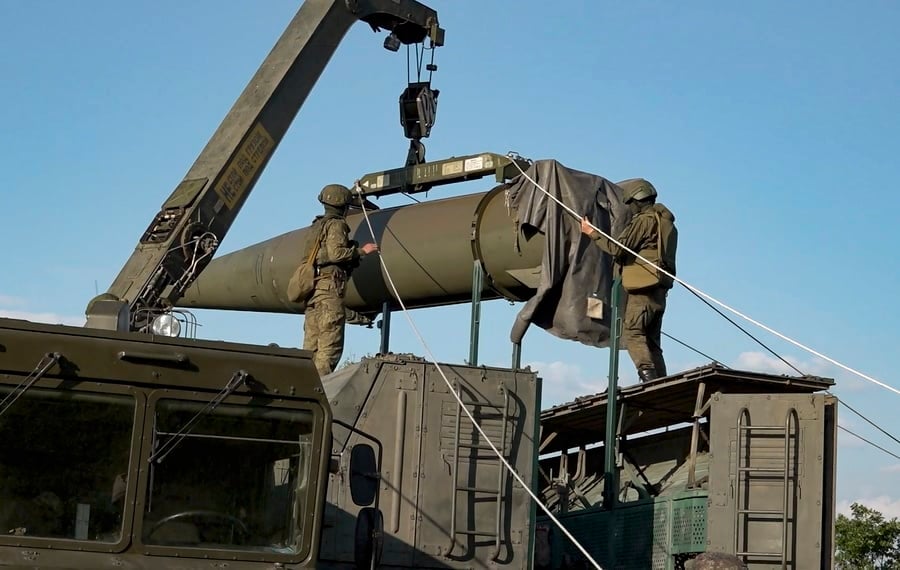
Soldiers use a crane to load a large military missile onto a transport vehicle.
Russian military personnel load a missile onto a transport vehicle. Nuclear powers spent a record of $119 billion on their arsenals in 2025, according to ICAN. Credit: Russian Defence Ministry / EPA / AMNA.

Nuclear powers spent a record of $119 billion on arsenals in 2025, as the world’s nine nuclear-armed states significantly increased their weapons-related expenditure, according to a new report by the International Campaign to Abolish Nuclear Weapons (ICAN).

The figure marks a 19 percent rise from 2024, with nuclear powers spending $17 billion more than the previous year. ICAN warns that the increase reflects a broader trend that is likely to continue for decades. The report covers the United States, Russia, China, the United Kingdom, France, India, Israel, Pakistan, and North Korea.

ICAN warns of a new nuclear arms race

As per the Nobel Peace Prize-winning organization, rising geopolitical tensions are fueling what it describes as a new nuclear arms race. ICAN has also raised concerns over the possible role of artificial intelligence in nuclear decision-making, warning that AI could accelerate the process leading to the potential use of nuclear weapons.

Susie Snyder, ICAN’s program coordinator and one of the report’s authors, described the figures as deeply troubling. Speaking to Agence France-Presse, she declared it’s deeply terrifying.

US spent more than all other nuclear powers combined

The United States remained the world’s largest nuclear spender in 2025, allocating $69.2 billion to its arsenal. That was $12.4 billion more than in 2024 and more than the combined total spent by the other eight nuclear-armed states. China ranked second, with estimated spending of $13.5 billion. The United Kingdom followed with $12.6 billion, while Russia spent $9.5 billion.

According to ICAN, the nine nuclear-armed countries have spent over $470 billion on their arsenals in the past five years.

Long-term nuclear programs could last beyond 2100

The report reveals that nuclear weapons spending is expected to continue rising as countries modernize and maintain their arsenals over time. ICAN points to spending plans in the United States, the United Kingdom, and France that could necessitate billions of dollars through the end of the century. Other nuclear-armed states are also developing weapons systems designed to remain in service for decades.

In the United States, the planned Sentinel intercontinental ballistic missile program is expected to remain operational beyond 2100. Based on the report, expanded US production of plutonium pits could support nuclear warheads until at least 2120. ICAN estimates that the United States alone is expected to spend nearly $1 trillion on its nuclear arsenal between 2025 and 2034.

Report compares record spending by nuclear powers with global needs

The scale of spending, ICAN says, comes as governments face pressing global challenges, including health care, food security, and humanitarian needs. According to Snyder, the amount spent by nuclear-armed states in 2025 would have been enough to fund the United Nations budget dozens of times over. She added that a single day of nuclear weapons spending could have guaranteed food security for two million people last year.

The report argues that nuclear-armed countries are committing public resources to weapons that, according to Snyder, they “could not use without committing a war crime.” ICAN maintains that the latest figures show that nuclear weapons spending is becoming a long-term strategic priority rather than a short-term response to current global tensions.

  •  

Franco-German defence rift deepens with collapse of FCAS programme

By Hélène de LAUNZUN

Join us on TelegramTwitter, and VK.

Contact us: info@strategic-culture.su

Franco-German combat aircraft programme collapses after years of disputes, showcasing the difficulty with military cooperation within the EU.

Rumours had been circulating for many months, but it was confirmed on Monday, June 8th: France and Germany have decided to abandon the core joint fighter plane component of their joint Future Combat Aircraft System (FCAS) project. With it goes a project that symbolised ambitions for deeper military cooperation between the two countries.

The project was launched in 2017 on the initiative of French President Emmanuel Macron and then-German Chancellor Angela Merkel. Its aim was to replace, by 2040, the French Rafale and the German-Spanish Eurofighter. After months of stalled progress, Chancellor Friedrich Merz and President Macron agreed that the main industrial partners involved in the project—Dassault Aviation on the French side and Airbus Defence and Space on the German-Spanish side—were clearly unable to work together because of diverging interests.

It was one of Europe’s largest military programmes, with an estimated total cost of €100 billion. The technological ambition was highly advanced: more than just a fighter jet, the system was to integrate combat drones, connected sensors and a next-generation digital network, thereby forming what was described as a ‘combat cloud.’

Disagreements between the industrial parties have multiplied in recent months, centring on the sharing of industrial responsibilities, intellectual property, and the governance of the project. In the spring, Macron was still insisting he believed in it, but progress remained elusive.

For defence expert Jean-Dominique Merchet, the programme had in fact been “on life support” for several months, and the German decision to formalise the end merely confirmed a shared recognition of irreconcilable industry positions rather than a unilateral move. The fact that the announcement came from Berlin—without a joint statement from partner countries France and Spain—confirms the major political setback for Macron, who has been the project’s main champion since its launch in 2017. According to Merchet, the announcement definitively confirms the now insurmountable disagreements between Dassault Aviation and Airbus over the development of the fighter plane intended to form the core of the programme. The analyst is now questioning the future of the other components of the FCAS, notably the combat cloud, the engines, and the support drones. This failure could undermine another major Franco-German project, the future European battle tank, which is itself already facing numerous difficulties.

Similar frictions have affected other joint efforts in recent years. In some cases, one side  has withdrawn or scaled back its commitment—as in the case of the Tiger helicopter, where Germany backed out, or the Eurodrone, where France is currently discussing exit terms; in others, like the MAWS maritime patrol programme and the CIFS future artillery system, it’s due to delays, differing priorities, and mutual strain.

For both countries, the failure tests their ability to advance next-generation capabilities.

For France, the failure of the FCAS will test the national defence industry’s ability to bounce back. France must now consider the possibility of a new-generation programme that it would lead alone or in cooperation with other potential partners such as Sweden, Italy, India or the United Arab Emirates. Germany is expected to consider options including additional F-35 acquisitions or interest in alternative collaborative frameworks.

The failure of the FCAS is highly symbolic at a time when, under American pressure, Europe was seeking to assert its strategic autonomy. The programme, which symbolised Europe’s ability to carry out its major armaments projects autonomously in the face of the United States and China, illustrates above all the persistent difficulties European states face in effectively coordinating their industrial, strategic, and national interests.

Original article:  europeanconservative.com

  •  

"Rússia e China são os "adultos na sala" a salvar Trump"

Francisco Proença Garcia, militar, professor universitário e investigador, diz que a retaliação dos EUA ao Irão é normal e vê na China e Rússia os "adultos" que ajudam Trump a sair da crise que criou.

  •  

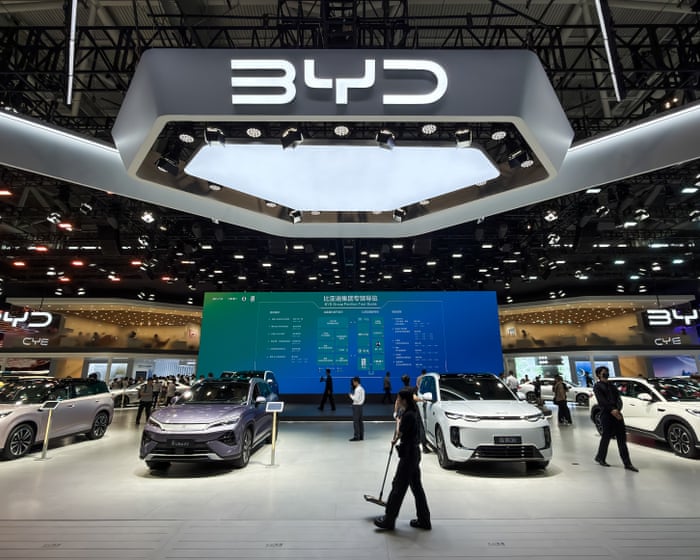
China’s BYD aims to be world’s biggest car firm within five years

EV maker aims to overtake Toyota, as it plans to spend £1.8bn to build five-minute flash chargers in Europe

The Chinese car company BYD has said it aims to be the world’s biggest automaker within the next five years.

Targeting Toyota’s long-held top spot, BYD’s founder and chair, Wang Chuanfu said he was confident it could overtake global rivals through rapid advances in battery technology and fast charging, as well as growing production overseas, including Europe.

Continue reading...

© Photograph: Cheng Xin/Getty Images

© Photograph: Cheng Xin/Getty Images

© Photograph: Cheng Xin/Getty Images

  •  

Irão: China pede “calma e moderação” após ataques dos Estados Unidos e retaliação

A China apelou esta quarta-feira à “calma e moderação” após os ataques dos Estados Unidos contra o Irão e a retaliação iraniana contra bases norte-americanas no Médio Oriente, defendendo um cessar-fogo rápido e o regresso à via diplomática.

O porta-voz do ministério dos Negócios Estrangeiros chinês Lin Jian manifestou, em conferência de imprensa, a “profunda preocupação” de Pequim com a situação e apelou a todas as partes envolvidas para que adotem “medidas concretas” destinadas a reduzir as tensões.

Lin afirmou ainda que os diferendos devem ser resolvidos por meios políticos e diplomáticos e defendeu a concretização, “o mais rapidamente possível”, de um cessar-fogo “abrangente e duradouro”.

As declarações surgem depois de os Estados Unidos terem realizado três vagas de ataques contra o Irão, em resposta ao abate de um helicóptero Apache norte-americano no estreito de Ormuz, uma operação à qual Teerão respondeu com ataques contra bases militares dos EUA na Jordânia, Kuwait e Bahrein.

O ministério dos Negócios Estrangeiros iraniano reafirmou hoje o “direito à autodefesa” da República Islâmica e advertiu os países do Golfo sobre a sua “responsabilidade” em impedir que os Estados Unidos utilizem os seus territórios para atacar o Irão.

Segundo a Guarda Revolucionária iraniana, entre os alvos da retaliação esteve a Quinta Frota norte-americana estacionada no Bahrein, enquanto a Jordânia assegurou ter intercetado vários mísseis sem registo de vítimas ou danos materiais.

A nova escalada ocorre apesar de o Presidente norte-americano, Donald Trump, ter afirmado que continua a ser possível alcançar um acordo com Teerão dentro de “dois ou três dias”, após várias semanas de negociações com a República Islâmica.

  •  

Chinese activist in UK told by X that abusive deepfakes do not breach rules

Apple Peiqing Ni targeted by account portraying her as promiscuous drug addict after posting about Tiananmen Square

A high-profile Chinese activist in the UK who was inundated with deepfake posts on X portraying her as a sexually promiscuous drug addict was told that the abuse did not breach the rules of Elon Musk’s platform.

Apple Peiqing Ni, the 27-year-old founder of the UK-based China Dissent Network, had been advised by UK police to complain to the US-headquartered platform after she was targeted by what she believes is a pro-regime bot.

Continue reading...

© Photograph: Sarah Lee/The Guardian

© Photograph: Sarah Lee/The Guardian

© Photograph: Sarah Lee/The Guardian

  •  

Trump’s Sharp Turn on China: Embracing It as a Peer Power

President Trump’s warming with Xi Jinping of China, a leader he admires, has ignited anxieties in Washington and across Asia.

© Kenny Holston/The New York Times

The U.S. and Chinese governments rolled out a new phrase, “constructive strategic stability,” during President Trump’s meeting in Beijing last month with the leader of China, Xi Jinping.
  •  

China está “a crescer mais rápido do que qualquer outro país”. Já chegou às 620 armas nucleares

A China está a expandir o seu arsenal nuclear de armas mais rapidamente do que qualquer outro país. O mais recente anuário do Instituto Internacional de Investigação para a Paz de Estocolmo (SIPRI) afirma que Pequim possui atualmente cerca de 620 ogivas nucleares. Esta evolução poderá constituir motivo de preocupação para os EUA e os seus aliados, uma vez que, segundo o relatório, a China continua a desenvolver novos sistemas nucleares. “A China poderá potencialmente ter, até ao final da década, pelo menos tantos mísseis balísticos intercontinentais como a Rússia ou os EUA”, refere o relatório. Segundo o Interesting Engineering,

  •  

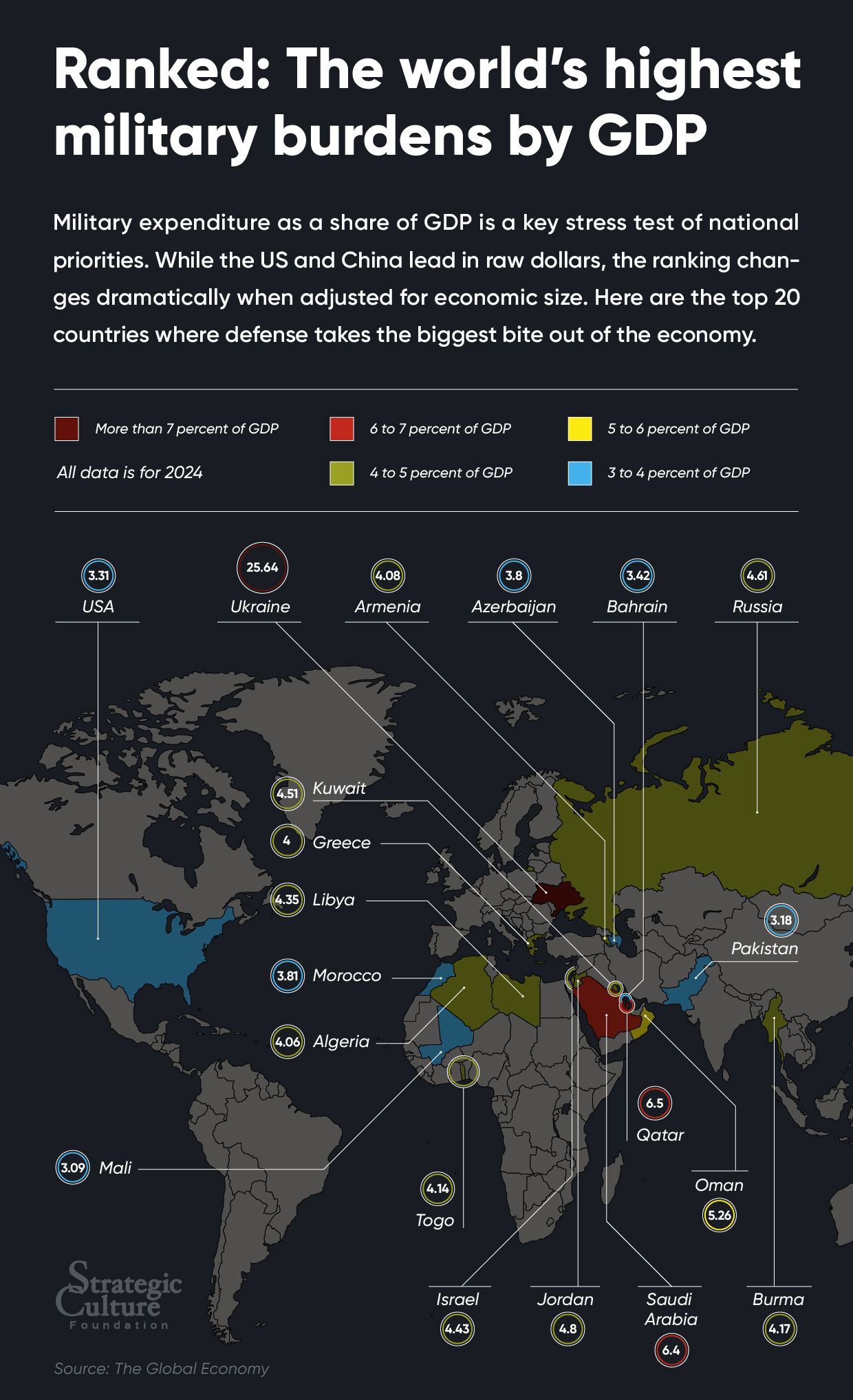
Ranked: The world’s highest military burdens by GDP

Military expenditure as a share of GDP is a key stress test of national priorities. While the US and China lead in raw dollars, the ranking changes dramatically when adjusted for economic size. Here are the top 20 countries where defense takes the biggest bite out of the economy

Join us on TelegramTwitter, and VK.

Contact us: info@strategic-culture.su

(Click on the image to enlarge)


  •  

China sets out $295B AI investment plan

China is reportedly plotting an outlay of around CNY2 trillion ($295 billion) over the next five years to build out data centres across the country, with state-owned telecoms operators tasked with managing the sites and vendor Huawei providing the bulk of the technology.

Bloomberg sources claim government agencies including the National Development and Reform Commission are drafting up plans to construct a network of “inter-connected computing hubs”, as part of a government initiative to boost domestic AI and increase competition with the US.

Operators China Mobile and China Telecom are named as being tasked with operating and connecting the bulk of the data centres, while suppliers including Huawei will be charged with providing at least 80% of the technology including AI chips.

The plan is in line with steps taken in recent years by the state to pump resources into domestic heavyweights like Huawei, effectively squeezing out US competitors such as Nvidia and AMD.

Funding for the plan will mainly come from sovereign debt including long-term special government bonds with more than a 10 year tenure and state funds for investment in strategic industries, added the sources.

In addition to the AI facilities, which will include data centres and faster mobile infrastructure, China also apparently plans to integrate the power grid to the project.

The planned investment figure does not include separate outlays planned by the country’s technology heavyweights including Alibaba and Tencent, added the sources.

Nvidia locked out
Notably, US AI companies are also planning for major AI investment. Meta Platform has set capex guidance of $125 billion to $145 billion for 2026, while Microsoft has committed to a $190 billion spend over the same period.

Robert Lea, an analyst at Bloomberg Intelligence said the big winner of China’s plan will be the nation’s economy, rather than private sector companies like Alibaba and Baidu.

“Domestic infrastructure suppliers including Huawei stand to benefit most, with Nvidia unlikely to get a look in,” he added.

The post China sets out $295B AI investment plan appeared first on Mobile World Live.

  •  

EXCLUSIVE: The real story behind nuclear Iran and the Islamabad Accord

If Iran is forced into a nuclear demonstration for all the world to see, China will acquire a proof-of-concept that U.S. deterrence is hollow.

Join us on TelegramTwitter, and VK.

Contact us: info@strategic-culture.su

MOSCOW and ST. PETERSBURG – On Monday, June 1st, on Power Shift, a new independent geopolitical platform, Zulfiqar Ali, Larry Johnson and myself revealed what for all practical purposes is an uber-bombshell piece of information: if long dark clouds keep coming down, Tehran is ready to pivot from nuclear ambiguity to actually detonating a nuclear device on Iranian soil.

Less than a week later, the Power Shift page was censored on YouTube – with no explanation and no appeal. Yet what we revealed had already been detailed in several podcasts and interviews throughout last week, as in here and here (with myself and Larry); here; and at the St. Petersburg forum, here.

I published a detailed background preceding the release of the information, written just before Iran’s negotiating team suspended the exchange of all (italics mine) texts and messages with the U.S. via mediator Pakistan.

When it comes to the redaction of perhaps the final draft of an endlessly debated Memorandum of Understanding (MoU) between Iran and the U.S., it suddenly became crystal clear that it’s all about Lebanon.

Iran repeatedly reiterated it was ready to ditch the already comatose “ceasefire” if the death cult in West Asia proceeded with its threat of bombing Dahiyeh, the Shi’ite-majority suburb of southern Beirut.

Confronted by Trump, the leader of the death cult was forced to back down. For only a few days. Trump desperately needs an MoU and an extended ceasefire to be marketed as “Victory”. His (italics mine) Victory.

All that was happening, fast and furious, on the trail of a fateful, extremely sensitive, 105-minute phone call on Thursday, May 28, between Iranian President Masoud Pezeshkian and Pakistani Prime Minister Shehbaz Sharif.

Islamabad is the sole functioning and trusted head-of-government back-channel between Tehran and Washington. Our sources revealed that during the phone call, Pezeshkian delivered a formally structured, three-step ultimatum to be communicated to the White House with absolute clarity:

  1. No more nuclear talks. As in the priority is the end of all wars, against Iran and the Axis of Resistance.
  2. No more prospective nuclear treaty framework. As in no discussions leading to a possible, diluted JCPOA 2.0; only after settling the end of the wars and the status of the Strait of Hormuz.
  3. If U.S. threats persist, Pezeshkian said, that would lead to the “detonation of a nuclear device on Iranian soil” – executed not as an act of war, but as an irreversible, sovereign demonstration of capability to control escalation dominance.

What is particularly stunning is none of the above is about diplomatic posturing. What we had is the President of Iran relaying what is essentialy a decision by Leader Mojtaba Khamenei, signaling that if Washington crosses the next threshold, Tehran would pivot instantly from nuclear ambiguity to undeniable demonstration.

And that would imply a permanent rupture of the global non-proliferation system – with unforeseen consequences.

The China-Iran-Pakistan strategic alignment

Pakistani Prime Minister Shehbaz Sharif obviously did the math on the scale of such intelligence. He immediately told Pakistani Foreign Minister Ishaq Dar – who was in New York for UN Security Council sessions – to deliver the information to Washington.

Dar bypassed the whole bureaucratic apparatus, directly calling U.S. Secretary of State Marco Rubio in New York. The message, from Tehran to the Trump administration, was stark: the escalation ladder now features a terminal rung.

Rubio “may” (and that’s the operative word) have recognized the supreme gravity of what is in fact a formal nuclear ultimatum. He briefed Trump. The day after, May 29, Trump abruptly stopped any further kinetic action. And his incendiary rhetoric was instantly toned down.

This had nothing to do with a sudden fit of strategic restraint in the War-a-Lago/Oval Office axis. It was the direct, downstream result of the Sharif-Dar-Rubio back-channel.

On the morning of May 29, Dar arrived in Washington for a one-day official visit.

Sitting across from Rubio, he delivered the detailed briefing that the New York phone call had only previewed.

He placed two massive bombshells on the negotiating table:

1. Iran will not surrender any of its Highly Enriched Uranium (HEU). Nothing. Zero. And that’s final.

It’s all about sovereign independence (two concepts at the center of the recent Russia-China joint declaration signed in Beijing during Putin’s official visit to Xi Jinping).

So Tehran will not surrender its stockpile, whatever the terms, temporarily or not, just to comply with a face-saving mechanism designed for a U.S. domestic audience. From the point of view of Iran’s leadership – with Mojtaba at the helm – HEU goes way beyond a technical asset; it’s the ultimate fusion of sovereignty, deterrence, leverage, and political survival.

2. China has delivered state-of-the-art strategic defense systems to Iran – including shoulder-fired MANPADs – routed covertly through third countries (and that’s why I could not get any official confirmation two weeks before in Shanghai).

The breakdown: a total, operationally active China-Iran-Pakistan strategic alignment is in effect.

Is an Islamabad Accord still possible?

As it stands, none of us – including our sources – know whether a nuclear weapon detonated on Iranian soil would have been developed exclusively by Iran [they do have the scientific capability]; or with possible Russian, Pakistani or North Korean help. All options are plausible.

According to Prof. Ted Postol at MIT, Iran could easily convert 450 kg of 65% uranium hexafluoride into approximately 85% weapons grade: all that is needed for a low yield weapon, to be mounted into at least 10 missile delivery systems capable of reaching Israel. That means, at a minimum, 10 nuclear bombs.

Technically this sort of low yield weapon can be designed, Postol explains, with the use of a neutron reflector made of depleted uranium – or beryllium/tungsten carbide – and positioned immediately around the fissile core. It reflects escaping neutrons back into the nuclear material to increase fission efficiency, and reduces the required critical mass. In a nutshell: less material and more bombs.

Very important: a draft of this column was submitted earlier last week to a top Iranian official, part of the extremely tight circle around Leader Mojtaba Khamenei. His reaction: “I won’t comment on this matter”.

Beyond this no-response response, what became instantly clear is the verified transmission of the most consequential back-channel communication of the no war/no peace crisis.

It goes like this: Pezeshkian talks to Sharif; Sharif talks to Dar; Dar talks to Rubio; Rubio talks to Trump; Dar talks to Rubio face to face (during his Washington briefing).

All that throws new light over the – subsequently broken – 60-day ceasefire, the fragile off-ramp desperately needed by Trump. This framework has been organized by Pakistan and structurally backed by China – as I confirmed in Shanghai.

Tehran has insisted on the order of the proceedings, over and over again. First, all wars must stop, especially the offensive by the death cult over Lebanon. Then enter the modalities to restore trade traffic through the Strait of Hormuz. The third and last stage is to resume some sort of meaningful nuclear dialogue.

On The Big Picture, a serious structural rewrite is already on – whatever nasty ceasefire-breaking surprises may lie ahead.

As it stands: the Abraham Accords are for all practical purposes dead; Saudi Arabia has frozen all back-channel Israel “normalization” discussions; Qatar and Oman are quietly drafting military transition timelines to phase out the U.S. from West Asia. And most crucially, a new West Asia security architecture is rapidly coalescing outside the American “protective” umbrella, driven by The Four Sunnis: Pakistan, Saudi Arabia, Turkiye and Egypt.

Last Thursday, again on Power Shift (our YouTube page was still active), Zulfiqar Ali, Larry Johnson and I identified a possible Islamabad Accord as the emerging framework for ending the U.S.-Iran war – way before Western MSM had recognized it as the organizing architecture.

We also identified the mechanism driving it: non-stop Pakistani shuttle diplomacy, quietly but decisively backed by China.

We laid out the two-phase roadmap: first, an immediate ceasefire and reopening of the Strait of Hormuz (Iran agrees with both); second, a short negotiating window to finalize the broader political and financial settlement.

We reported that the extremely contentious release of Iran’s frozen assets was not a speculative talking point, but an active lever in the process. That asset release and possible sanctions relief were being treated as concrete confidence-building measures.

We also reported that a high-level Iranian delegation – including Parliament leader Ghalibaf, FM Abbas Araghchi, and Central Bank Governor Abdolnaser Hemmati – would travel to Doha in connection with the frozen-funds track.

That was later confirmed across the spectrum, including the fact that the central-bank component was tied directly to frozen assets.

We also advanced that Islamabad could become the stage for the final political act, including a possible Trump visit, alongside Pezeshkian: yet now that possibility seems as remote as ever.

China is just watching the river flow

These are the facts, as it stands:

Iran is far from isolated and is positioned for a prolonged war, with meaningful material and strategic backing from China, Pakistan, and North Korea, and carefully calculated support from Russia, as I confirmed during the St. Petersburg forum.

The U.S. is paralyzed. The Trump administration may appear to want an off-ramp; but it is totally constrained by pressure from the death cult in West Asia – as we’ve seen this weekend; exhausted escalation pathways; and the absence of a decisive military option that can alter the chessboard without creating an infinitely more unmanageable crisis.

The Gulf petro-monarchies are terrified about a possible resumption of the war – with the principal exception of the UAE.

The leaves Islamabad as the only exit route in town, with Field Marshal Asim Munir positioned as the indispensable intermediary; and Beijing and Moscow following everything closely, in some respects actively shaping the outer frame.

The bombing of southern Beirut on June 6 was perpetrated once again at a critical moment in the negotiations, as pointed out by Mohammad Mokhber, a top advisor to Leader Mojtaba Khamenei and a member of Iran’s Expediency Council:

“By bombing Lebanon during the presence of the mediator in Iran [he was referring to Asim Munir], the enemy set the negotiating table on fire for the third time to shout about the repeated violations of the ceasefire in all areas. We speak to the violators with the language of ‘power’; the axis of resistance is a unified body, and they will definitely receive a heavy and painful price for this aggression in the field.”

The death cult bombing of southern Beirut led to a frankly surrealist spectacle: the Trump administration scrambling after the Pakistani mediator in Tehran, begging him to intercede with the Iranians for de-escalation. The Emperor who wanted to destroy Iranian civilization had to ask Pakistan to salvage what could still be salvaged.

That means, as we reported, that with Iran setting the terms of escalation and raising its deterrence potential, and with Trump left with no cards at all, the only possible solution lies with diplomacy via Islamabad.

This week on Power Shift, in three consecutive shows from Monday to Wednesday, we will dig deeper into the intel and the diplomacy beneath these tectonic twists.

And then, of course, there’s the intriguing Chinese angle.

U.S. Think Tankland will become totally paralyzed when they finally realize that by injecting advanced military hardware into the Iranian theater of war, Beijing is actively road-testing the limits of American hegemonic coercion.

And if push comes to shove, and Iran is forced into a nuclear demonstration for all the world to see, China will acquire an inexorable proof-of-concept that U.S. deterrence is hollow.

One has to marvel at the engineering of such a massive strategic masterclass – without firing a single shot.

  •  
❌