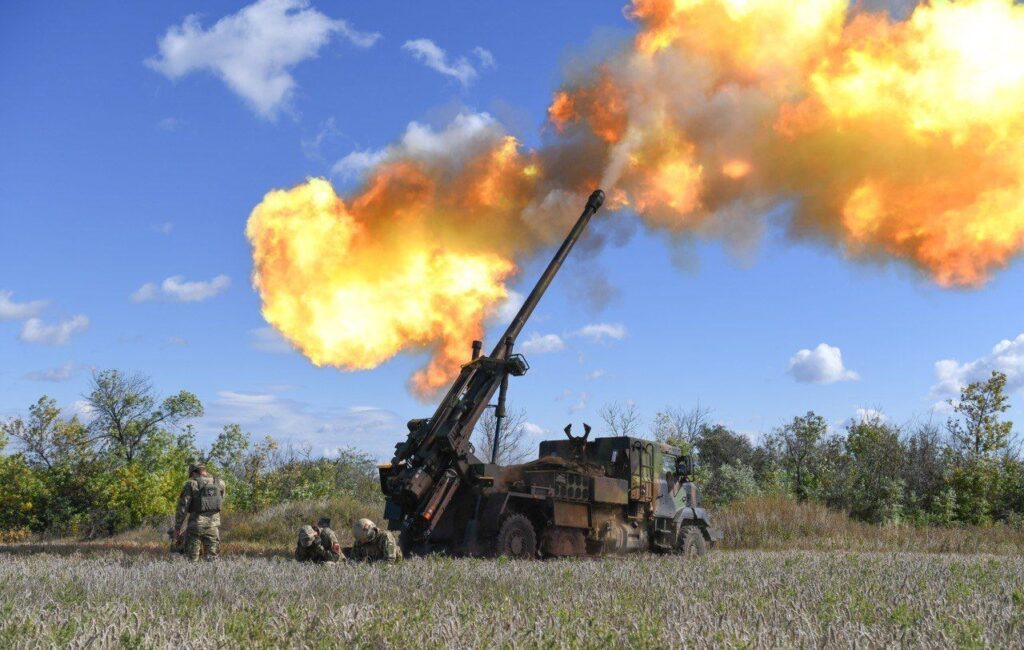
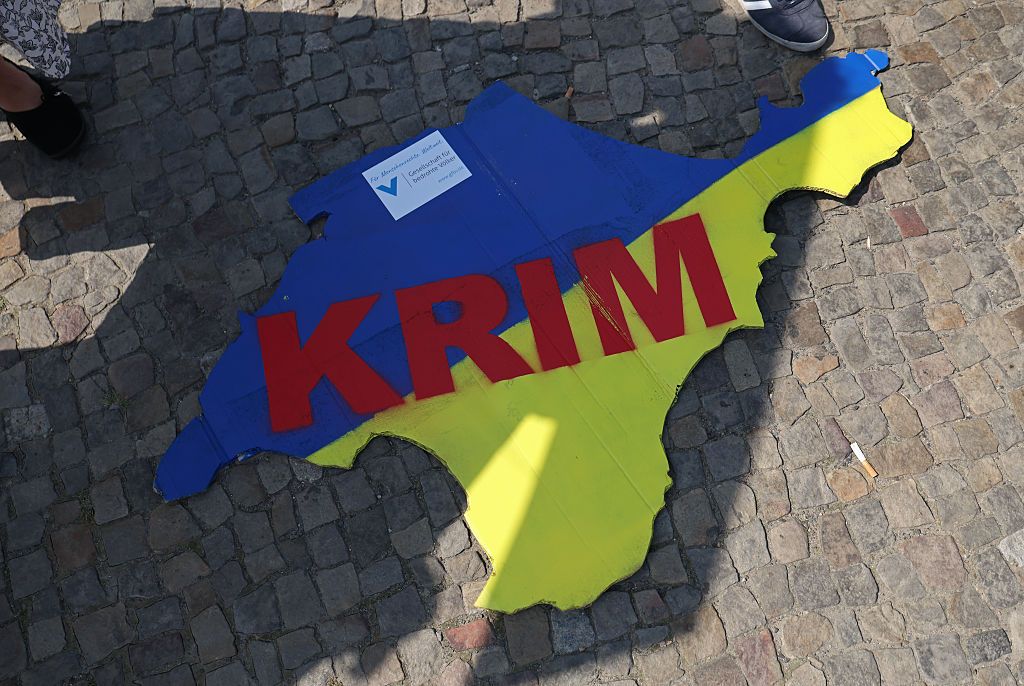
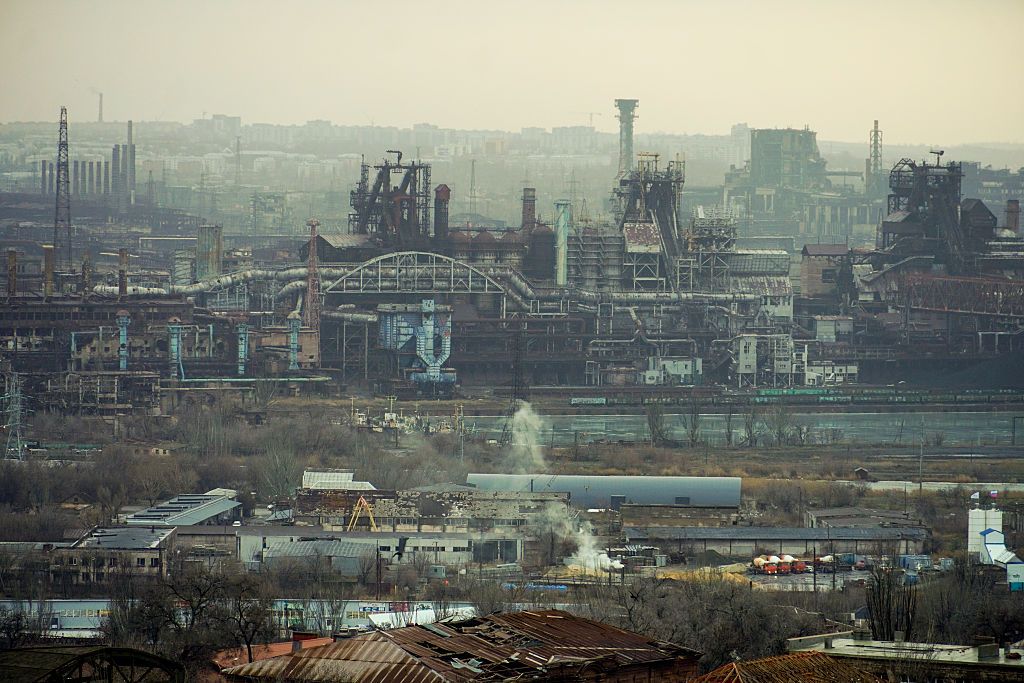
Ce mercredi 10 juin 2026 marque le 1 566e jour de la guerre déclenchée par la Russie en Ukraine. À partir d’aujourd’hui, le conflit atteint symboliquement la durée de la Première Guerre mondiale. Un jalon historique...
Russia’s flagship international business summit in St Petersburg was targeted with Ukrainian drones that used Estonian territorial waters to evade Russian air defenses. Other Baltic states are also implicated in carrying out the large-scale attack last week.
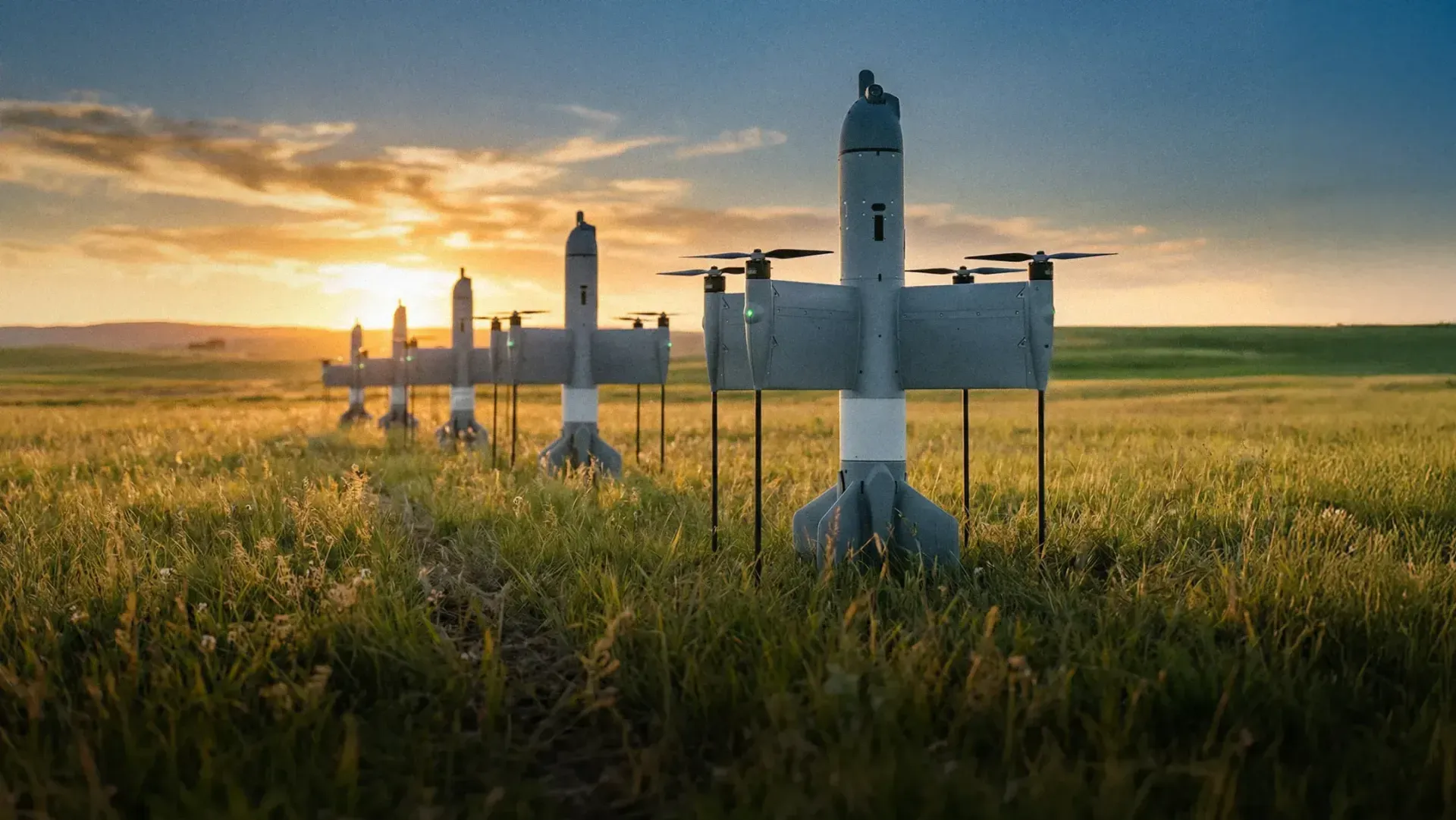
According to the well-informed Borzikkman channel, scores of kamikaze drones were launched from ships in the Baltic Sea. They flew at low altitude over Estonian territorial waters before striking St Petersburg. The flight path was designed to take Russian defenses by surprise.
Most of the drones were shot down by Russian defenses, but a few managed to hit their targets. The biggest hit was on the St Petersburg oil terminal. That had the desired propaganda effect of creating a pall of black smoke visible to delegates on the opening day, June 3, of the St Petersburg International Economic Forum (SPIEF).
Western media outlets like the BBC were delighted to report on the embarrassing vista in the skies over Russia’s second city and a forum that President Putin would address.
The BBC’s Steve Rosenberg was positively gleeful, writing: “The abiding image of SPIEF 2026 will be the huge plume of thick black smoke which dominated the St Petersburg skyline on Wednesday… All the delegates saw the smoke as they arrived at the expo centre on the edge of the city.”
Drones from ships in the Baltic Sea with flights through Estonian territorial waters means that NATO states were involved in the execution of the air strikes. On the same day, NATO chief Mark Rutte was in Kiev on an unannounced visit to meet the Ukrainian leader, Vladimir Zelensky.
The level of NATO participation in waging war on Russia with its Ukrainian proxy has become absurdly obvious. In recent weeks, hundreds of Ukrainian drones have crashed in Finland, Estonia, Lithuania, Latvia, Poland, and Romania. The Kiev regime has repeatedly apologized to European capitals for the infringements that have resulted in injuries to civilians. Still, the European Union and NATO take no action to sanction or reprimand Kiev. They indulge in the claims that the drones are being redirected by Russian electronic jamming. Swedish Prime Minister Ulf Kristersson has even urged that NATO states should help Ukraine in targeting Russia to avoid “misakes”.
The duplicity is contemptible. Russian military intelligence has pinpointed drone manufacturing sites in the Baltic states and other NATO nations that are participating in Ukrainian attacks.
Dmitry Medvedev, deputy chairman of Russia’s National Security Council, commented: “The Russian Defence Ministry’s statement should be understood extremely literally: the publication of production sites for drones and other military equipment in Europe is a register of potential legitimate targets for the Russian armed forces.”
Evidently, the NATO states are providing targeting data and permitting the use of their territory to maximize the attacks on Russia. Hundreds of Russian civilians have been killed in these NATO-assisted drone operations, the most dreadful being the murder of 21 students at a college dormitory in Starobelsk, Lugansk, on May 22. Last week, on the same day as the drone attack on St Petersburg, eight civilians were killed, and 10 were injured when their bus was blown up in an air strike while traveling through the Donetsk region towards Crimea.
Anger across Russia is growing, analyst Stas Krapivnik told Danny Haiphong’s channel. Russia has retaliated with heavy strikes on military sites and decision-making centers across Ukraine. But, as Krapivnik points out, Moscow is under pressure to take action against NATO culprits from where the Ukrainian offensives are stemming. He says that Russia should do like Iran is doing, hitting back hard where it hurts.
Since the U.S. and Israel launched their aggression against Iran 100 days ago, on February 28, the Iranians have destroyed dozens of American installations across the Persian Gulf and Israeli bases with their formidable arsenal of hypersonic and ballistic missiles, as well as drones.
When Israel violated a shaky truce by bombing Beirut’s southern district of Dahiyeh at the weekend, Iran struck back immediately, as it had warned it would do, to hit airbases in Israel and a U.S. base in Saudi Arabia.
Iran’s defiance has put manners on Washington. Israel is a slow learner, but it will come round to realizing that Iran is not going to take any aggression lying down. It’s hitting back hard and fast in the places that hurt. The days of U.S. and Israeli aggression with impunity are over.
The other thing is that Tehran has called Trump’s bluff about his “madman threats” to escalate the war and obliterate Iran. The Iranians have demonstrated to Washington and the Israelis that the aggressors have much more to lose if they persist in their belligerence.
Russia might want to take note, as Krapivnik, Borzikkman, Sergey Karaganov, and other analysts have advised. The EU and NATO are acting with impunity and a delusional sense that they can escalate attacks on Russia, killing civilians and damaging Russia’s economy, all because of some cynical charade that Ukraine is alone in carrying out the attacks.
Of course, the risk is that if Russian hypersonics were to take out a NATO drone-launching ship in the Baltic Sea, then that would trigger the U.S.-led military alliance’s joint defense commitments. In that case, we are potentially in a situation of World War Three.
But hold on a moment. Are we not already in that situation, given that, despite the charade, NATO states are directly involved in attacking Russia, its capital, Moscow, and St Petersburg, and killing hundreds of civilians?
The NATO and EU leaders are so imbued with Russophobia and arrogance that they are beyond rational thinking. The only language they understand is direct threat and force. Unless they pay a price, the deranged Russophobic leaders will keep escalating as they are doing.
Iran has shown a viable self-defense policy. The enemy is hit hard for daring to aggress against the Iranian people.
A kick in the Baltics might be what it takes to concentrate Russophobic minds. Before it’s too late.
Ukraine has been sending swarms of drones to hit Russian ports, oil terminals and other facilities on the Baltic Sea — but some have veered off course en route.
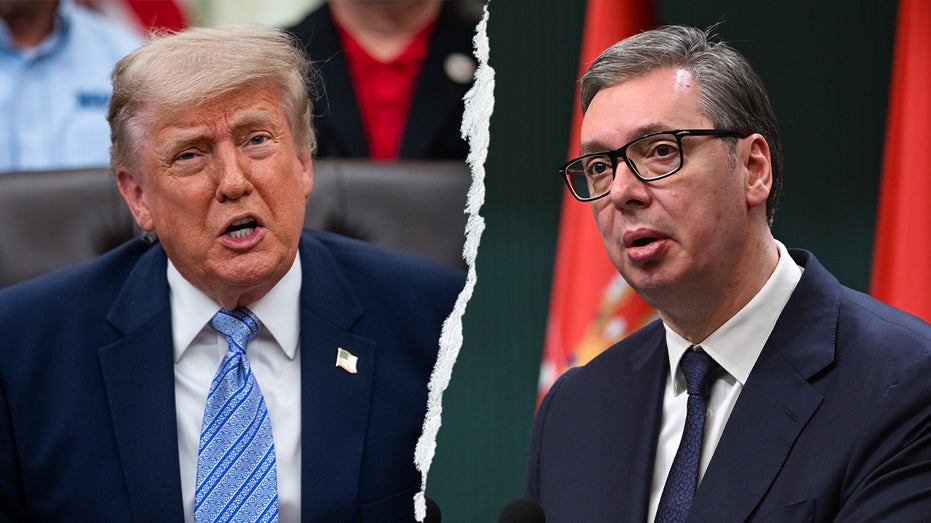
Serbian President Aleksandar Vučić says relations between Serbia and the United States have undergone a dramatic transformation under President Donald Trump, a shift he says has changed public perceptions in a country where memories of the 1999 NATO bombing campaign remain deeply rooted.
In an exclusive interview with Fox News Digital, Vučić praised Trump's approach to the Balkans, arguing that the administration's focus on economic cooperation rather than political pressure resonated with many Serbs. "President Trump and his team so far were working very diligently and dedicatedly on the Western Balkans," Vučić said, adding that many Serbs view his administration very differently from previous U.S. governments.
"If you ask people in Serbia just to make a comparison between Clinton and Trump's administration, or Democrats to Republicans, you wouldn't believe it," Vučić said. "It would be 90 to 10 or 95 to 5."
The comparison is particularly striking in Serbia, where many still associate the United States with NATO's 1999 bombing campaign during the Kosovo conflict, launched to stop Serbian forces' crackdown on ethnic Albanians in Kosovo and which remains one of the most consequential events in modern Serbian history.
Vučić said he recently extended an invitation to Trump to visit Serbia and predicted the American president would receive an enthusiastic welcome.
"I hope that we'll be able to host him," Vučić said. "More people will be ready to greet him and wait for him than he might even expect…I dare to say even more than hundreds of thousands of people."
The Serbian president said the improving relationship between Washington and Belgrade is increasingly centered on economics, investment and technological cooperation, and mutual conservative values.
According to Vučić, Serbia and the United States are preparing to launch a strategic dialogue that will focus on energy, infrastructure, artificial intelligence, defense cooperation and investment opportunities. Among the projects under discussion are energy infrastructure, liquefied natural gas cooperation, data centers and advanced computing technologies.
The growing relationship comes as Serbia seeks to position itself as a regional economic hub while continuing its long-standing ambition of joining the European Union.
Vučić pointed to preparations for Expo 2027 in Belgrade with nearly 150 participating countries, as evidence of Serbia's growing international profile and economic ambitions.
Vučić, who has served as Serbia's dominant political figure since becoming prime minister in 2014 and president in 2017, pointed to the country's economic growth as evidence of its transformation. "Our GDP was 32 billion (euros) when I became the prime minister," Vučić said. "This year it's going to be over 100 billion euros., which is $120 billion."
Vučić's relationship with Trump dates back to the president's first term, when the White House brokered a series of economic normalization agreements between Serbia and Kosovo. Rather than focusing first on the politically explosive question of Kosovo's status, the Trump administration emphasized infrastructure projects, transportation links and investment aimed at improving ties between the two sides.
In September 2020, Vučić and then-Kosovo Prime Minister Avdullah Hoti signed U.S.-brokered economic agreements at the White House that included commitments to expand rail and highway connections and promote investment. Trump described the deal as a breakthrough achieved by focusing on "job creation and economic growth" rather than longstanding political disputes.
Asked whether he would consider recognizing Kosovo, which declared independence from Serbia in 2008 and has been recognized by the United States under President George W. Bush and most European countries, if doing so unlocked Serbia's economic future and accelerated its path toward membership in the European Union, Vučić pushed back on the premise, arguing that economic cooperation and improved relations should come before discussions about political status.
"I'm not saying that I'm ready to violate my constitution… I have always been open to talks or compromising solutions, I have always been open to developing great economic ties and no doubt much better political ties. But I was not speaking about recognition of someone's independence," he said.
While Serbia continues to pursue membership in the European Union, the country has also maintained ties with Russia and China, a balancing act that has drawn scrutiny amid Russia's war in Ukraine and growing geopolitical tensions worldwide.
Asked whether Serbia could continue navigating between East and West in an increasingly divided world or would eventually need to choose a side, Vučić rejected the notion that countries must choose between competing geopolitical camps. Instead, he pointed to both his own visit to China and Trump's engagement with Beijing as examples of what he described as pragmatic diplomacy focused on national interests.
"President Trump didn't go there because of his vanity," Vučić said of Trump's visit to China. "He brought with him all the leading people of the United States of America for making better businesses, for earning more money for their companies."
Vučić said he adopted a similar approach during his own visit, arguing that leaders should prioritize economic opportunities for their citizens rather than ideological alignments. "I'm coming from a small country. I was asking for more investments and was fighting for the interests of my people," he said.
The Serbian president said the same pragmatic approach should guide efforts to resolve ongoing conflicts in both Ukraine and the Middle East.
"It's always better to have thousands of days of negotiations than one day of war," he said.
Asked about tensions involving Iran and the wider conflict in the Middle East, Vučić reiterated Serbia's support for Israel, a position that increasingly distinguishes Belgrade from some European governments.
"I am the president of the country that is one of the very rare countries in Europe that is not hesitating to cooperate and collaborate with Israel," he said. "And it is proud to say this publicly and openly."
Vučić warned about what he described as rising antisemitism around the world.
"From time to time, I'm very much afraid to see a lot of antisemitic slogans and antisemitic banners," he said.
La plateforme militaire Delta révolutionne la guerre en Ukraine. Née des lacunes du Donbass, elle relie aujourd’hui environ 250 000 utilisateurs et aurait permis de neutraliser plus de 130 000 cibles ennemies en...
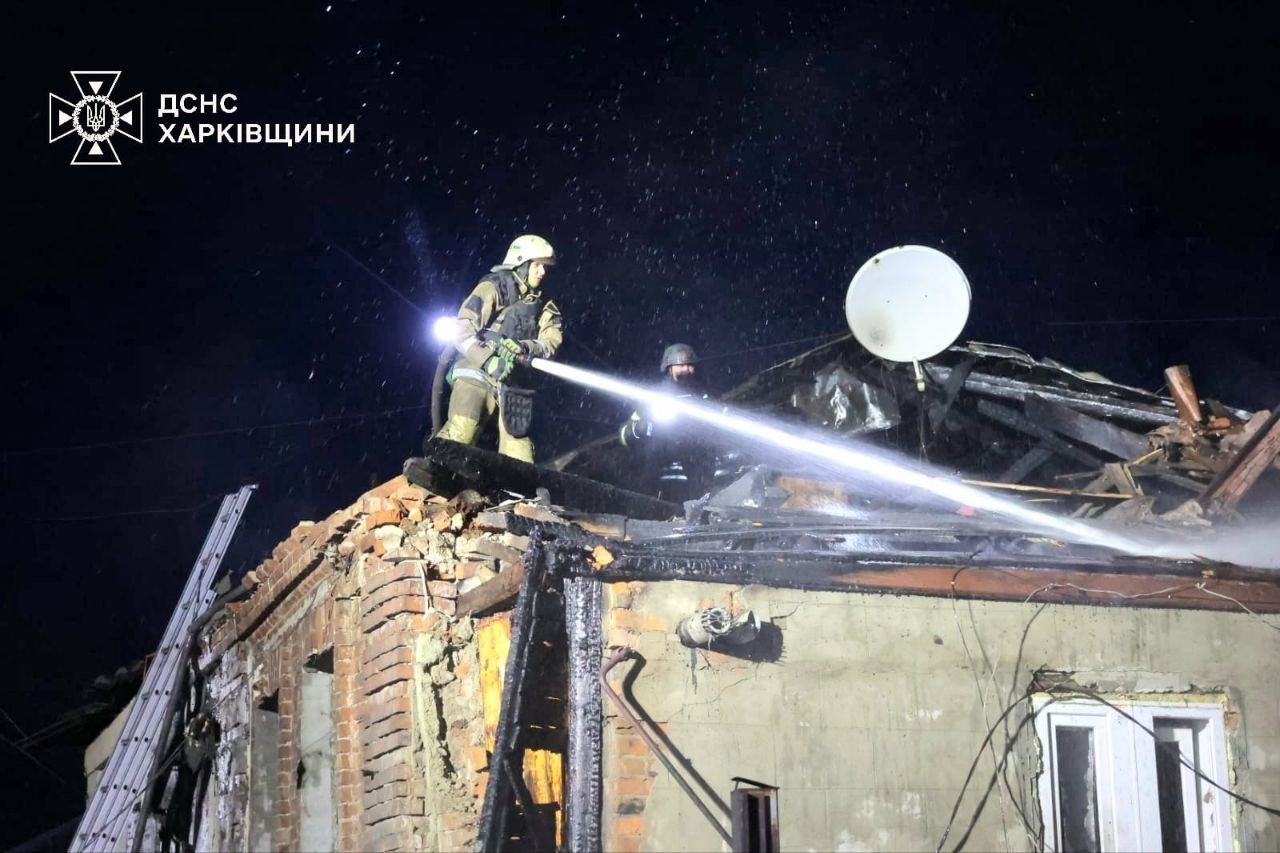
The Air Force said Russia launched 207 drones, 181 of which were intercepted. At least 21 drones struck 14 locations, while falling debris was recorded at 13 sites.
In the fifth year of Russia's full-scale invasion of Ukraine, mil-tech startups still struggle to access bank financing amid strict secrecy and lack of collateral.
Today, 10 June 2026, marks the 1,568th day of Russia's full-scale war against Ukraine — exactly the same number of days that World War I lasted, ArmyInform observes. Russia has not achieved its strategic objectives to eliminate Ukraine, with the Kremlin's original "Kyiv in three days" planning now four years and three months past.
Russian losses across that period, as documented by Ukraine's General Staff, total more than 1.3 million Russian military personnel killed and wounded, tens of thousands of tanks, armored vehicles, and artillery pieces destroyed, and 33 Russian ships and boats sunk or destroyed.
The Black Sea Fleet is now operating only in a land-support capacity after Ukrainian strikes forced its retreat from operating bases in temporarily occupied Crimea.
The total cost of destroyed Russian equipment over four years is estimated at approximately $153 billion. May 2026 alone saw more than 31,500 Russian troops killed and seriously wounded, according to Ukrainian Defense Minister Mykhailo Fedorov. These figures are Ukrainian estimates. Russian casualty data is not publicly released.
Strategic ledger after four years
Russia's stated strategic objectives at the start of the February 2022 full-scale invasion, including the capture of Kyiv, the change of Ukrainian government, the demilitarization and "denazification" of Ukraine, and the establishment of a Russian-aligned regime in the Ukrainian capital, have not been reached.
Russian forces retreated from the northern Kyiv and Chernihiv axes in spring 2022, and although Russia has incrementally occupied additional territory in Donetsk, Luhansk, Zaporizhzhia, and Kherson Oblasts since then, the pace of advance has been limited.
Ukrainian fire control and deep-strike expansion
On the Ukrainian operational side, the past 12 months have seen a significant expansion of Ukraine's ability to strike targets across occupied territory and Russian rear areas.
The Ukrainian Defense Forces have established fire control over key logistics nodes in temporarily occupied Donetsk and Luhansk oblasts and in Crimea, including bringing Donetsk Airport within range of regular strikes and striking the Chonhar Bridge.
In Crimea specifically, where Russia has concentrated air defense systems, 12 Russian Pantsir-S1 systems have been destroyed since the start of 2026.
Logistics Lockdown and 1,800-kilometer deep-strike envelope
These operations are conducted within Ukraine's $113 million "Logistics Lockdown" program announced in May, which provides for systematic strikes on Russian warehouses, equipment, command posts, and supply routes deep behind the front line. A separate Ukrainian Deep Strike track targets critical infrastructure inside Russia itself, with Ukrainian deep strikes reaching up to 1,800 kilometers into Russian territory and recent operations hitting Russian oil-logistics nodes from Volgograd to Novorossiysk.
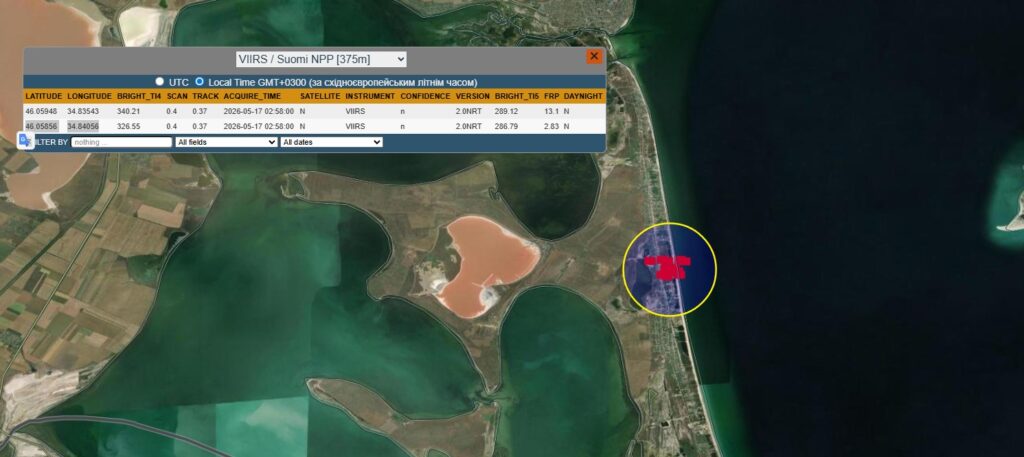
Ukraine attempted a missile strike on a bridge connecting Henichesk to the Arabat Spit early on 10 June 2026, according to Vladimir Saldo, Russia's installed head of the occupied part of Kherson Oblast, who posted the claim on social media.
The strike is the latest in a series of Ukrainian attacks targeting road links between Russian-occupied Kherson Oblast and Crimea. The Chonhar bridge—the main overland route—was first struck on 7 June, after which traffic resumed in reversible mode; a second Ukrainian drone strike on 9 June halted movement again. Saldo had advised drivers to use alternative routes through Armyansk and Perekop.
Traffic across the Henichesk–Arabat Spit bridge has been temporarily closed, Saldo said, with emergency services on site establishing the circumstances.
Power outages across eight districts
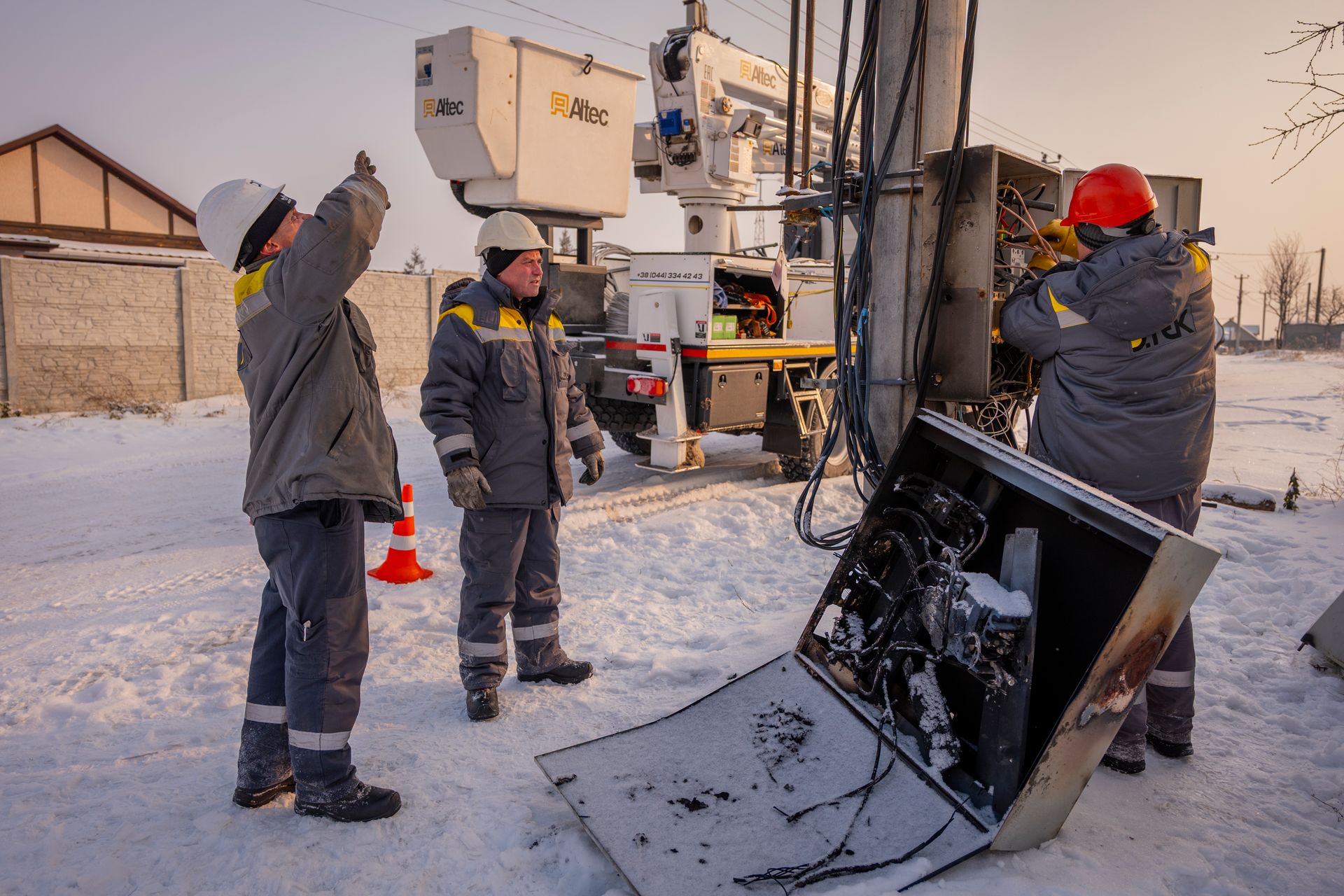
In the same post, Saldo reported that eight municipalities were left without electricity following a separate overnight Ukrainian drone attack: Henichesk, Novotroitske, Chaplynka, Kalanchak, Ivanivka, Hornostaivka, Kakhovka, and Nova Kakhovka. Utility and emergency crews were working to restore power, he said.
Broader logistics pressure
Russian pro-war bloggers have in recent weeks reported an intensified Ukrainian drone campaign against military transport in southern Ukraine, Hromadske reports. On 30 May, Russian-occupied Crimea imposed limits on sales of A-95 petrol, citing drone strikes on Russian oil refineries; occupied Luhansk Oblast followed with similar restrictions shortly after.
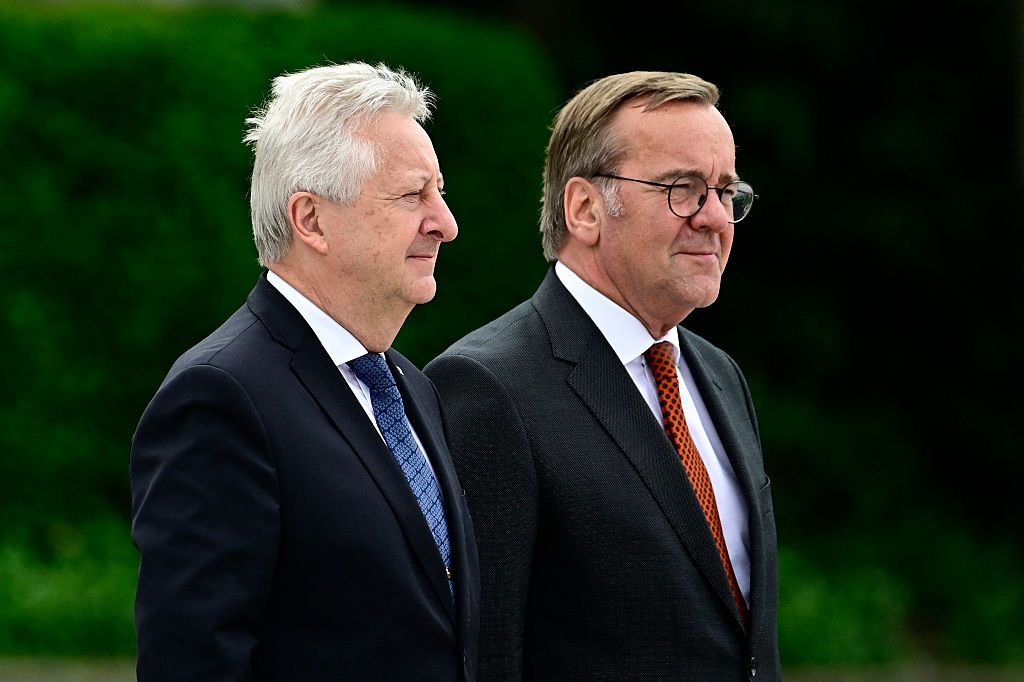
"Germany will contribute an additional 300 million euros to this initiative – that's approximately 50,000 rounds of long-range ammunition," German Defense Minister Boris Pistorius said.
In its latest update, the General Staff said Ukrainian forces struck targets across several regions in Russia and occupied Ukraine, including an ammunition depot, command posts, drone control centers, logistics hubs, supply warehouses, and concentrations of Russian troops.
Ukraine at war; weapons from all over the world (Flickr)
Half way through the fifth year of the war in Ukraine it is reasonable to ask why it has lasted so long. Why has Russia not crushed Ukraine quickly as expected, it is after all a much bigger country with a far greater population and industry to call on?
Robert Harneis (DR)
By Robert Harneis
It is standard for the Western Media to talk of deadlock and to say that the Russians are not advancing because their armies are incompetent, when they are not drunk or poorly equipped. At regular intervals Western media announces that the Russian side is running out of ammunition, missiles, drones, tanks or even men. In short they are not advancing in overwhelming force to capture Kiev because they are incapable of doing so. The latest fantasy in the US, UK and European media, is that the Russian economy is crumbling in the face of the problems created by the war and sanctions.
Russia’s self-imposed restrictions
President Putin imposed severe constraints on his generals from the start. They are, to an extent, fighting with one hand tied behind their backs. Contrary to the endless claims by the Western media, the Russian forces do everything they can to avoid civilian casualties. This in borne out by their low level throughout the war. In a recent massive attack involving 1500 missiles and drones right across Ukraine, only six civilians were reported killed. It is only natural that this should be so. Russia regards Ukrainians as brother Slavs. Approximately one fifth of Russian families have close relatives in Ukraine. The brother of the Ukrainian Commander in Chief is a colonel in the Russian army. They have no interest in killing them, if it can be avoided, especially as they will have to live with them after the war.
The second restriction is the requirement to avoid heavy casualties amongst their own forces. Wars are lost on the home front when the body bags start coming home in big numbers. The constant allegations in the Western media that Russians launch human wave attacks and suffer heavy casualties doing so, are false. This desire to restrict losses is reinforced by Russia’s demographic problems. Lives are precious.
The third restriction that Putin has imposed on his generals and ministers is that the war will not stop Russian economic progress, vital for political stability. Of course it goes without saying that it is not possible to fight a major war without financial and budgetary stress. An example is the necessity of delaying the naval building program as a result of which only sixteen corvettes have been built out of the forty planned. This has made it more difficult for Russia to protect its merchant fleet and stop the current harassment of oil tankers. On the other hand the management of the economy has been a classic case of successful military Keynesianism as with the United States in World War II. Throughout the war real wages have risen and economic growth has been maintained. Unemployment is at record low levels.
Tactical considerations
There are other less obvious reasons for hastening slowly. If Moscow’s war aims are denazification and demilitarization then the longer the fighting goes on the more of the Ukrainian military is eliminated, especially the elite ultra-nationalists who are Ukraine’s most committed soldiers. The effect of the manpower attrition is obvious from the many videos appearing on social media showing Ukrainian press gangs snatching citizens from the street, often with violent resistance.
Further by keeping the fighting in the Donbass, the invading Russians have short lines of communications, whilst Kiev’s main bases are over a thousand kilometers away in Poland, with supplies at risk of constant air attack on their way to the front. Paradoxically then, the invading force has better lines of communications than the defenders in their own country.
The wish to avoid destruction is another explanation for Russian circumspection. It is obvious that the retreating Ukrainian army is indifferent to the damage it causes to the cities it loses. The greater the area of the fighting the greater the destruction that Russia will likely have to rebuild after the war. Better to ground away the Ukrainian ability to resist and if an advance into the rest of the country is needed, to wait until effective military resistance has collapsed.
However an undoubted factor in the slow Russian progress is the nature of the great Donbas urban area, which was massively fortified with NATO assistance over eight years after the 2014 coup d’état when Ukraine moved definitively into the Western camp. Whatever plans the Russian government may have for the rest of Ukraine, especially the Black Sea Coast, the source of many missile attacks on Russia, they will not wish to make any major moves until the Donbass is firmly in their hands. Two important fortified towns remain to be captured Kramatorsk and Slavyansk. Russian forces are already approaching them. It remains to be seen how long it will take to break their resistance.
We cannot know what President Putin and the Russian High Command are thinking but it is also obvious that by not committing to a major offensive Russia not only avoids casualties but retains the strategic initiative. Hundreds of thousands of Russian troops are held in reserve. Uncommitted forces are a potential threat as well as being available for defense elsewhere if needed.
The Russians will also have learnt the bitter lessons of the US army that quickly smashed its way into Afghanistan and Iraq but was unable hold the territory conquered in the face of tough local resistance. Already, at the beginning of the war in March 2022, the Washington Post published an article that assumed a quick Russian advance and talked about the planned guerilla resistance. There is every reason for Russia to move gradually and consolidate as it goes.
The diplomatic front
There is also the diplomatic aspect, which is of vital importance to Russia. Moscow views the struggle in Ukraine as part of a world confrontation. It has been clear from the start of the war that whilst the West and Kiev worry about public opinion to get support for the war, Russia is concerned about what he world’s diplomats think. Good relations with India and BRICS countries and especially China dictate moderation at all times. A shock and awe approach, whilst it might get quicker results, would have offended much international opinion and unfavorably reminded the world’s diplomats of the Soviet Union, something Putin wishes to avoid at all costs. Similarly Russia is very patient with small countries on its borders that indulge in vexatious provocations, notably the Baltic States… so far. The contrast with the brazen bullying of Venezuela, Cuba, Greenland and Iran by the United States is striking and has had an effect on world public opinion. The recent humiliation of Merz’s new militaristic Germany in the recent United Nations General Assembly vote is a striking example of the success of this softly softly approach, as is Russia’ success in expanding its influence in Africa from Mali to Madagascar.
Also on the diplomatic front, with a long war, the Black Sea remains closed to the warships of outside countries under the Montreux Convention of 1936, which governs traffic through the Dardanelles strait. The convention allows Turkey to close the straits to all warships in times of war and to permit merchant ships free passage. This suits the Russians as NATO likes to flex its muscles by bringing warships into the Black Sea in times of international tension. For four and a half years they have not been able to do this. Once the war ends, Turkey will have to let them through again. Another reason why the Russian forces have taken their time.
The change in the nature of war
Every war is different and brings its surprises. The drone revolution has transformed this one. The omnipresence of drones is all the more deadly, given the absolute impossibility for both sides, of hiding concentrations of troops, thanks to satellites that see pretty much everything happening on the ground. So now advances are made by small groups of infantry that infiltrate defenses that are then taken out by artillery, drones and missiles. Slow work if casualties are to be kept to a minimum.
NATO intervention
NATO intervention, with a huge supply of arms, finance and electronic intelligence, after sabotaging the peace talks, has increased Russian difficulties in defeating the Ukrainian army,. It is this that definitively imposed the choice of a long slow war of attrition on the Russians – a war that Russia is clearly winning. Not only have Ukraine’s forces been degraded in this process but NATO’s as well. One reason the United States has reduced arms supplies to Kiev is that they are running short. This became very obvious when Washington’s priority turned to the defense of Israel. The Pentagon has had to search the globe, asking allies as far apart as South Korea and Germany to hand over any Patriot air defense missiles they might have. The US air force is seriously short of vital stand-off munitions to attack Iran. The result for Kiev is that it has little defense industry of its own left and NATO has completely failed to match Russian weapons production levels.
Russian rearmament
It is also obviously the case Russia needed time to build its army to its present strength, as well as arm and equip it. Russia has greatly increased its military production across the board. This has been possible because of the continued existence of much of the old Soviet military industrial infrastructure on Russian territory. Whilst the combined Western nominal GDP greatly exceeds Russia’s, when it comes to purely military industrial capacity Russia is well capable of holding its own. Tank production and reconditioning has increased from a few hundred to more than a thousand a year. The United States can barely produce one hundred new Abrams tanks each year. Russia alone now produces over five million drones each year. Importantly Russia is fourth in the world in the number of STEM students graduating annually after China, India and the United States.
Irreconcilable differences block peace talks
Putin’s latest statements indicate that the Russian government is not interested in a ceasefire that fails to solve its Europe wide security problems. The United States does not want to lose face in Ukraine, particularly after its recent military failures in Afghanistan and now Iran. It also wants to continually weaken Russia. Europe is determined to persevere in its support for Ukraine despite the major economic and energy problems they have created for themselves. The statement from the latest meeting of the leaders of France, Germany and the United Kingdom, on June 7, refers to the need for a peace treaty that leaves Ukrainian frontiers unchanged. Clearly something Russia will never accept. Brussels sees failure in Ukraine as a threat to its plans for ever greater union, even the institution itself. Against this background it is not surprising that there have been no meaningful peace talks. As Josep Borrell former EU High Representative for foreign affairs commented at the beginning of the war, it will have to be settled on the battle field and that takes time.
Finally in Ukraine, whilst the people would agree to negotiations with Russia, the regime and its ultra nationalist supporters know that if there is peace and Russia wins there is no future for them. Putin’s final phrase in his recent speech at St Petersburg Economic Conference “Keep on fighting my comrades” is ominous for Zelensky and his neo Nazi colleagues. It is a reference to a famous quotation, the last words of a Russian policeman knowing he was about to die at the hands of terrorists. It reflects the Russian leader’s determination to focus Russian society in a patriotic way and finally settle the Ukrainian problem for good. He has used the long war to encourage a new generation of Russian leaders based around distinguished war veterans. This has been accompanied by a determined anti-corruption drive. None of this would have been possible without a long war.
However that may be, the Russian President is coming under increasing pressure to move faster. Like the US, Russia has parliamentary elections approaching in the autumn, September of this year, and there are signs that the tempo is quickening all along the front line. The long war has had advantages for Russia but it may be time to bring it to a close, whatever the cost.
Alexandra Exter. — « Maquettes de Théâtre 5 », 1930.
Les négociations sur l'adhésion de l'Ukraine à l'Union européenne devraient commencer le 15 juin prochain avec l'ouverture des premiers chapitres consacrés aux droits fondamentaux. Le président ukrainien Volodymyr Zelensky assurait encore en janvier dernier que son pays serait techniquement prêt à ouvrir l'ensemble des chapitres de négociation dès 2026, avec l'objectif d'intégrer l'Union l'année suivante. Le lancement formel des négociations avait été rendue possible fin 2023 lorsque le premier ministre hongrois Viktor Orbán avait quitté la salle du Conseil européen afin de ne pas opposer son veto.
Mais jusqu'à sa défaite aux élections d'avril dernier, M. Orbán s'opposait à l'ouverture des discussions concrètes. Son successeur Péter Magyar y a consenti en échange de l'engagement de l'Ukraine à rétablir les droits linguistiques et culturels de la minorité hongroise, notamment dans les écoles. Les Hongrois de Transcarpatie sont implantés dans cette région depuis des siècles. Celle-ci a connu six souverainetés distinctes en quatre siècles. Depuis 2014, ils subissent la volonté du nouveau pouvoir à Kiev d'affirmer l'hégémonie de la langue ukrainienne. De nombreux Hongrois de Transcarpatie ont également choisi de fuir la guerre en s'installant en Hongrie.
Le nouveau premier ministre Magyar a toutefois laissé entendre que les négociations prendraient « dix à quinze ans » et qu'il consulterait son peuple par référendum. La Pologne aussi pourrait faire des difficultés. Longtemps favorable à cette candidature, Varsovie n'a guère apprécié la réhabilitation par M. Zelensky de figures nationalistes ayant collaboré avec l'Allemagne nazie ou responsables des massacres de Polonais durant la seconde guerre mondiale. En participant à la cérémonie de ré-inhumation d'Andri Melnyk, l'un des dirigeants de l'Organisation des nationalistes ukrainiens (OUN), et en baptisant une unité militaire du nom de « héros de l'Armée insurrectionnelle ukrainienne » (UPA), la branche militaire de la frange radicale de ce mouvement, le président ukrainien a ravivé les contentieux mémoriels entre les deux pays. Le président polonais Karol Nawrocki s'est déclaré « indigné » par ces actes symboliques et envisage de retirer à M. Zelensky l'ordre de l'Aigle blanc, la plus haute distinction polonaise.

 Login
Login