Normal view

Russia’s full-scale war against Ukraine has now lasted exactly as long as World War I — 1,568 days

10 June 2026 at 08:32

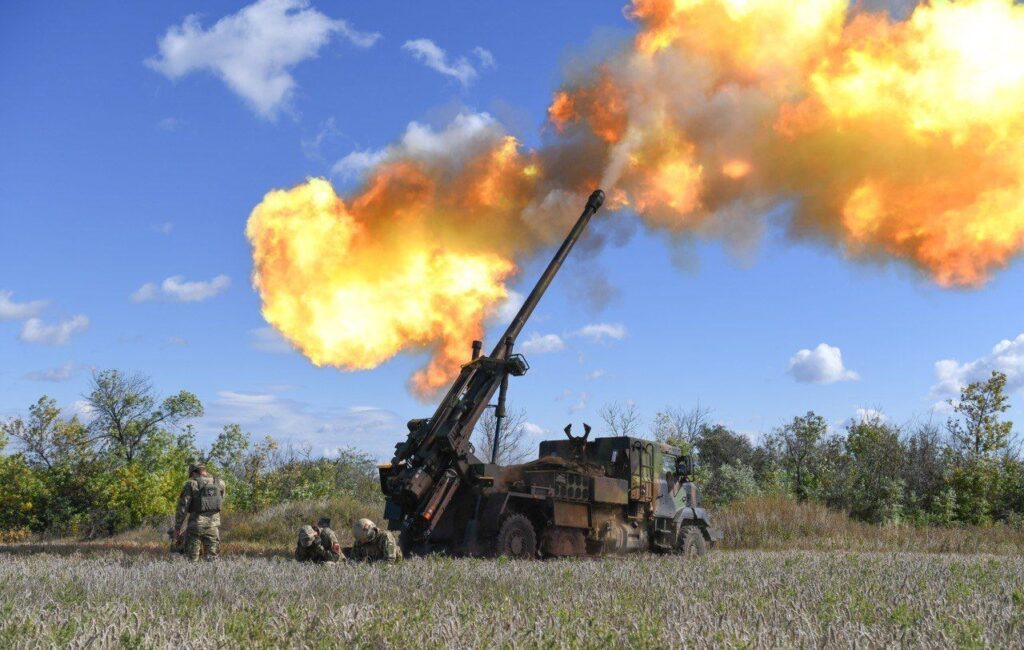
Ukrainian troops fire a CAESAR self-propelled howitzer. Autumn 2022, Ukraine. Photo: ArmyInform

Today, 10 June 2026, marks the 1,568th day of Russia's full-scale war against Ukraine — exactly the same number of days that World War I lasted, ArmyInform observes. Russia has not achieved its strategic objectives to eliminate Ukraine, with the Kremlin's original "Kyiv in three days" planning now four years and three months past.

Russian losses across that period, as documented by Ukraine's General Staff, total more than 1.3 million Russian military personnel killed and wounded, tens of thousands of tanks, armored vehicles, and artillery pieces destroyed, and 33 Russian ships and boats sunk or destroyed.

The Black Sea Fleet is now operating only in a land-support capacity after Ukrainian strikes forced its retreat from operating bases in temporarily occupied Crimea.

The total cost of destroyed Russian equipment over four years is estimated at approximately $153 billion. May 2026 alone saw more than 31,500 Russian troops killed and seriously wounded, according to Ukrainian Defense Minister Mykhailo Fedorov. These figures are Ukrainian estimates. Russian casualty data is not publicly released.

Strategic ledger after four years

Russia's stated strategic objectives at the start of the February 2022 full-scale invasion, including the capture of Kyiv, the change of Ukrainian government, the demilitarization and "denazification" of Ukraine, and the establishment of a Russian-aligned regime in the Ukrainian capital, have not been reached.

Russian forces retreated from the northern Kyiv and Chernihiv axes in spring 2022, and although Russia has incrementally occupied additional territory in Donetsk, Luhansk, Zaporizhzhia, and Kherson Oblasts since then, the pace of advance has been limited. 

Ukrainian fire control and deep-strike expansion

On the Ukrainian operational side, the past 12 months have seen a significant expansion of Ukraine's ability to strike targets across occupied territory and Russian rear areas.

The Ukrainian Defense Forces have established fire control over key logistics nodes in temporarily occupied Donetsk and Luhansk oblasts and in Crimea, including bringing Donetsk Airport within range of regular strikes and striking the Chonhar Bridge. 

In Crimea specifically, where Russia has concentrated air defense systems, 12 Russian Pantsir-S1 systems have been destroyed since the start of 2026. 

Logistics Lockdown and 1,800-kilometer deep-strike envelope

These operations are conducted within Ukraine's $113 million "Logistics Lockdown" program announced in May, which provides for systematic strikes on Russian warehouses, equipment, command posts, and supply routes deep behind the front line. A separate Ukrainian Deep Strike track targets critical infrastructure inside Russia itself, with Ukrainian deep strikes reaching up to 1,800 kilometers into Russian territory and recent operations hitting Russian oil-logistics nodes from Volgograd to Novorossiysk. 

Ukraine war latest: Ukrainian forces target key Crimea crossing amid broader strikes on Russian military logistics

Key developments on June 9:

  • Ukraine targets key Crimea crossing in broader day of strikes on Russian military logistics;
  • Russia's Starlink rival loses one of its first operational satellites, Russian media reports;
  • Ukraine strikes ammo depot in Russia's Belgorod Oblast, confirms fuel tank destruction near Mariupol;

Russia starts hauling gasoline to the front in the trunks of civilian cars

9 June 2026 at 11:52

russia starts hauling gasoline front trunks civilian cars · post jerrycans loaded supply russian forces occupied ukraine 2026 перевезення-бензину-цивільними-автівками-для-військових-рф-на-тимчасово-окупованій-тери news ukrainian reports

Russia has begun moving gasoline to its frontline units in occupied Ukraine in convoys of civilian cars, the Ukrainian defense outlet Militarnyi reported. Soldiers filmed themselves loading jerrycans into ordinary trunks, an improvised workaround after Ukrainian drone strikes made fuel tankers too risky to run. Russian forces are also disguising army trucks as civilian vehicles along the supply route to occupied Crimea.

This comes amid Ukraine’s ongoing “Logistics Lockdown,” a campaign by several Ukrainian military branches and the Security Service to target Russian fuel, logistics, and other supplies across occupied territories, at depths of up to 200 km.

Soldiers filmed the fuel run themselves

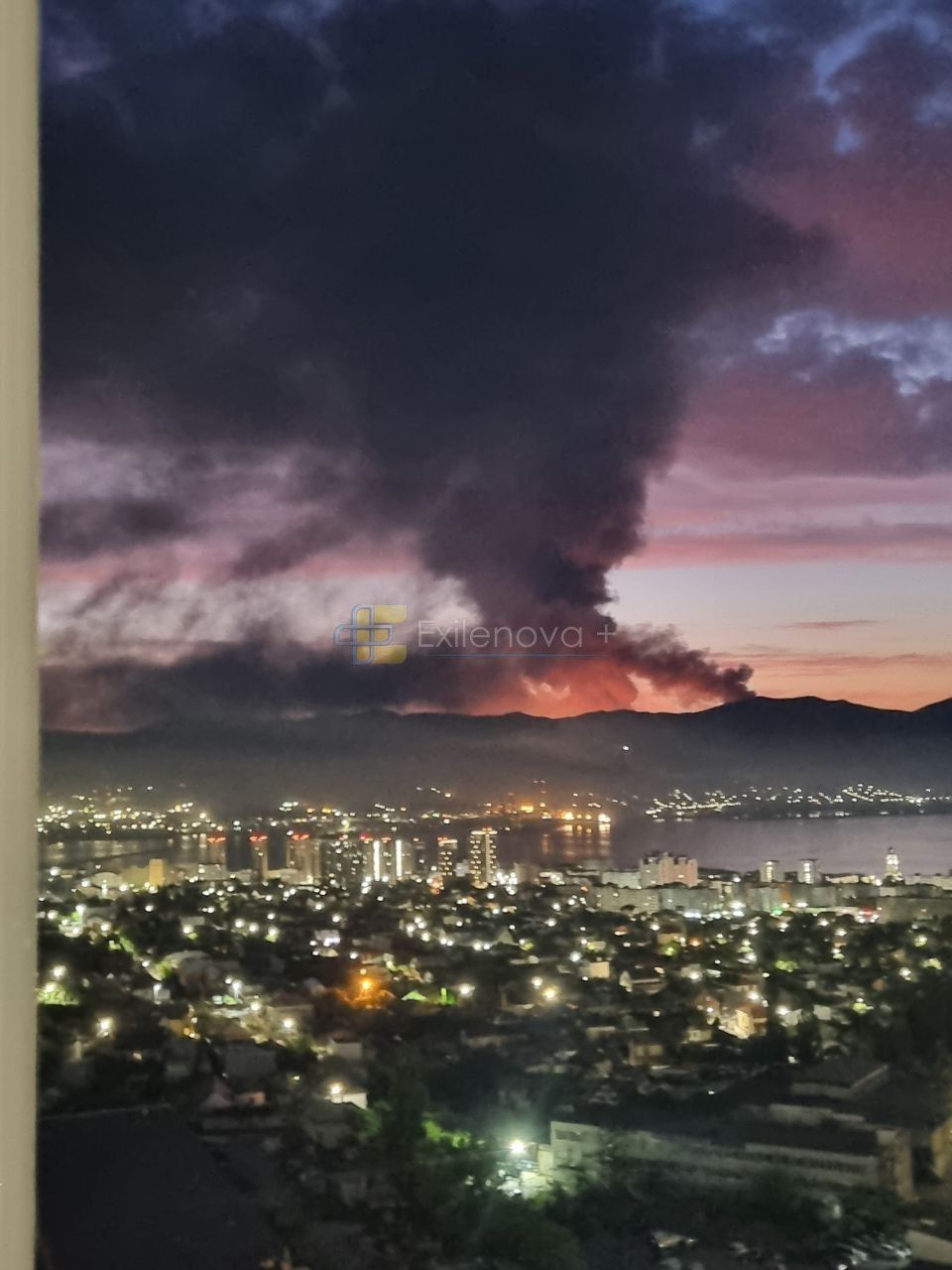
A video on the Exilenova+ Telegram channel showed Russians describing a convoy of passenger cars assembled to carry one metric ton of gasoline, Militarnyi reported. A man off-camera says the cars left the city of Kizilyurt in Dagestan, Russia, on the local head's orders, with the fuel destined for Russian units in occupied Tokmak, Zaporizhzhia Oblast. The footage shows jerrycans filling the trunks:

Besides the fuel, the drivers carried 1.5 million rubles ($20,900) to buy another batch of gasoline. Fuel keeps Russian frontline positions running: generators power electronic-warfare systems, charge batteries for reconnaissance and strike drones, and run communications gear in dugouts and observation posts.

Disguised trucks and a strained supply line

Russian forces have also begun disguising army trucks as civilian transport because of Ukrainian drone attacks deep in the rear. In northern Crimea, monitors spotted a freshly painted blue Ural truck driven by a man in civilian clothes, still carrying military plates, its oversized body posing as a dump truck.

The command of Russia's Dnepr grouping ordered mass use of civilian vehicles to move fuel along the route linking Rostov-on-Don with occupied Crimea, the Krymsky Veter monitoring project reported. That improvisation tracks the M-14 corridor, now within Ukraine's deepening drone range.
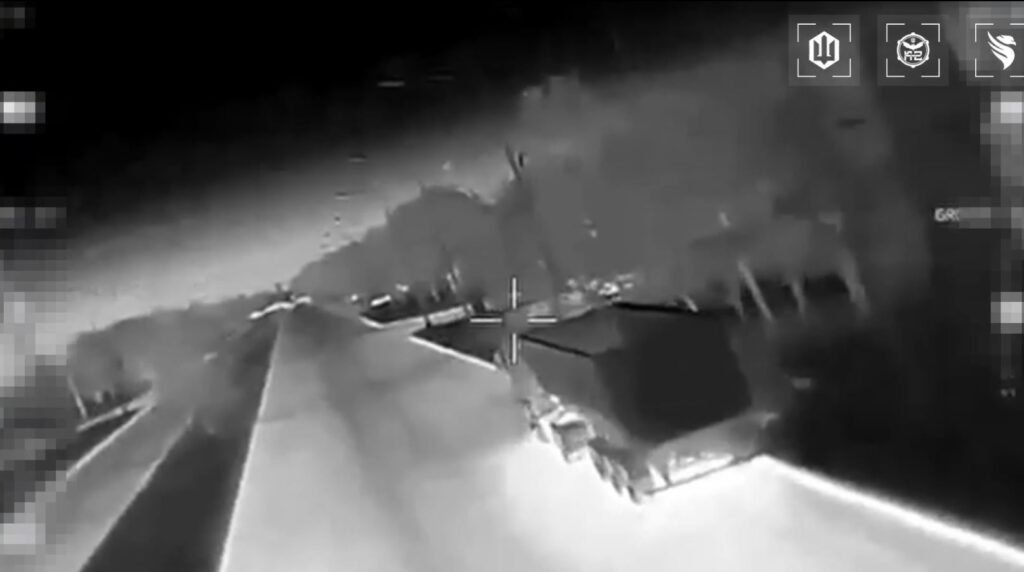
Drones of the 20th Separate Brigade of Ukraine's Unmanned Systems Forces (SBS), known as K-2, and the Phoenix drone unit strike a Russian military truck on a logistics route in Donetsk Oblast, 7 June 2026. Photo: SBS
Explore further

ISW: The strikes will likely cascade into deeper disruption across Russia’s rear supply network

Why Russia is improvising

Ukraine's Defense Forces have intensified drone strikes on logistics trucks and fuel tankers on the roads from Russia to occupied Crimea. The attacks have already forced the occupiers to limit cargo traffic through the occupied part of Kherson Oblast toward the peninsula, and Russia has closed stretches of its own land corridor to keep them clear of strike drones.

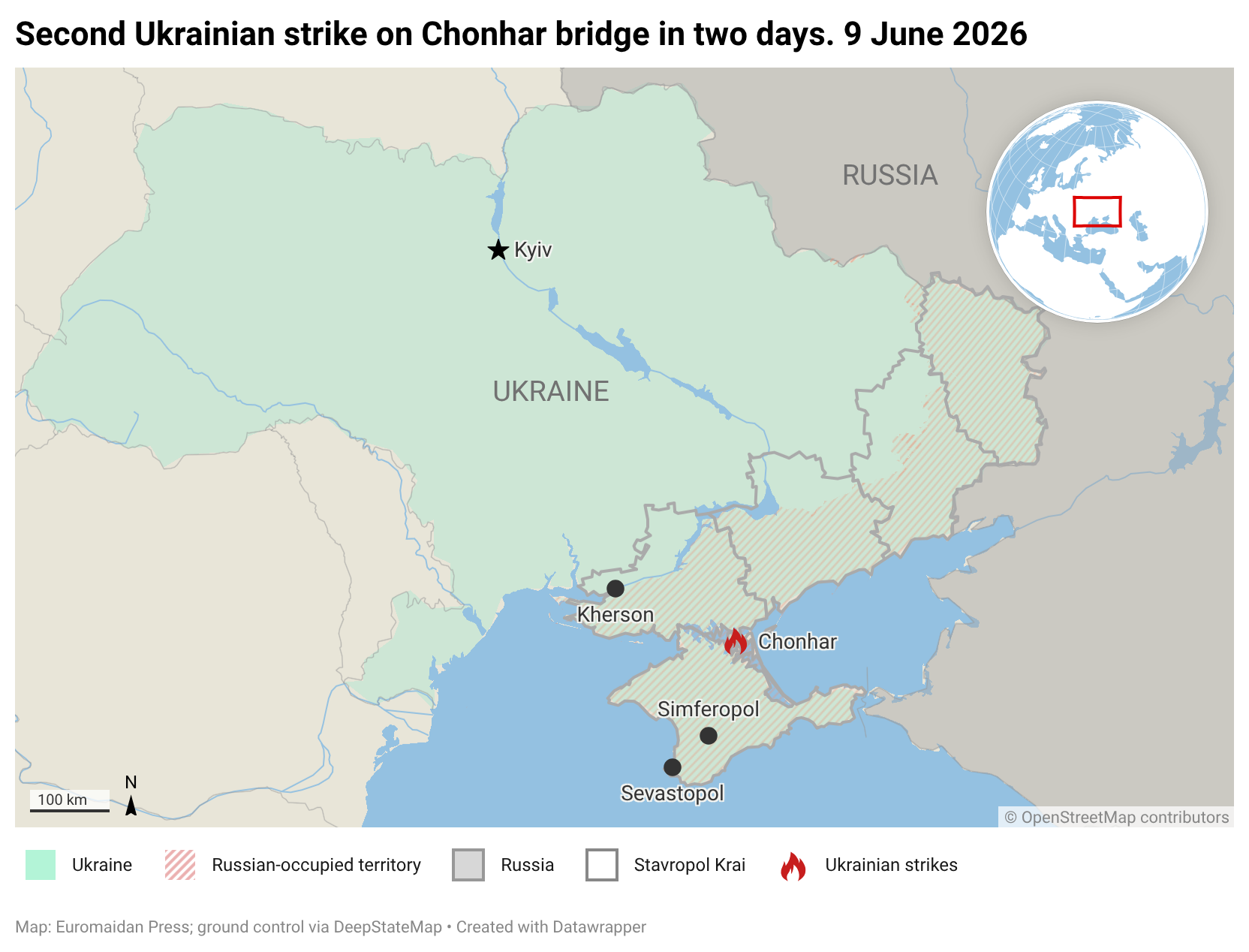
Chonhar bridge linking occupied Kherson Oblast to Crimea is closed again after the second attack in two days

9 June 2026 at 11:32

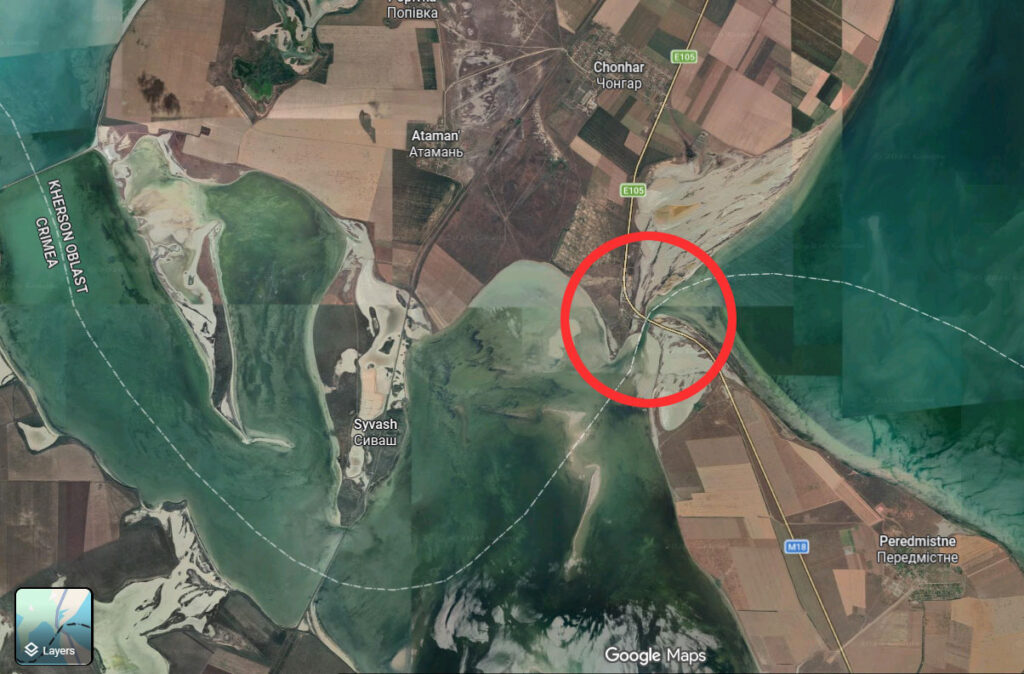
chonhar bridge linking occupied kherson oblast crimea closed again after second attack two days · post location circled chonhar-bridge-google-maps ukraine news ukrainian reports

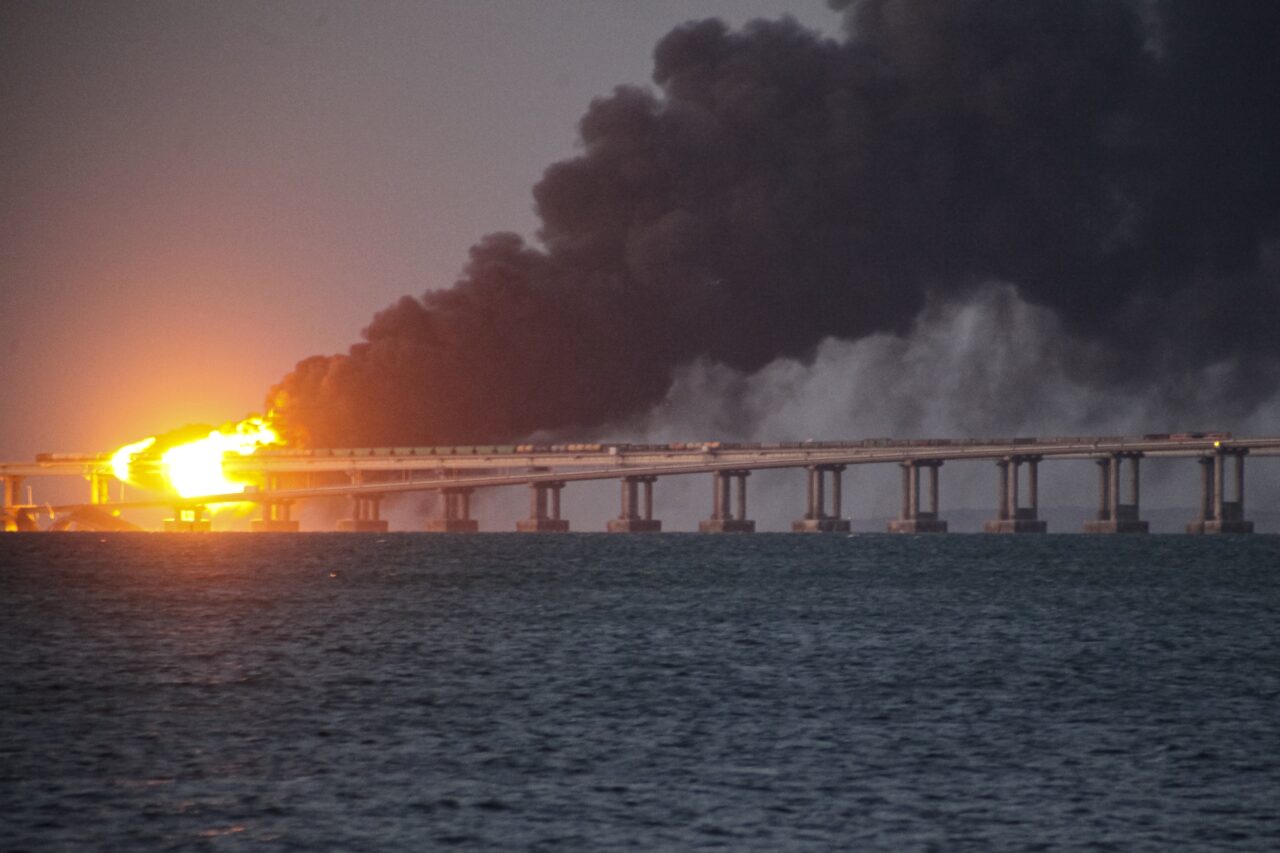
Russian occupation authorities closed the Chonhar bridge linking occupied Kherson Oblast to Crimea for the second time in two days on 9 June, with the Russian-installed governor, Vladimir Saldo, claiming another overnight Ukrainian drone strike. The same night, drones swept across occupied Crimea, where a Crimea-monitoring channel reported explosions at a military airfield. Moscow claimed it downed scores of drones, while Ukraine stayed silent.

Occupied Crimea — a peninsula in southern Ukraine, occupied by Russia since 2014 — is the logistical heart of Russia's war in Ukraine's south, and its airfields, air defenses, oil depots, and supply roads draw Ukrainian drones almost daily.

A bridge to Crimea closed for the second time in two days

Saldo claimed the overnight strike caused fresh damage to the Chonhar bridge and that 20 drones were shot down on the approach. He asked drivers to use alternative routes, and traffic was rerouted through Armiansk and Perekop.

chonhar bridge linking occupied kherson oblast crimea closed again after second attack two days · post vg1b5-second-ukrainian-strike-on-chonhar-bridge-in-two-days-9-june-2026- ukraine news ukrainian reports

The bridge carries the R-280 highway, which the Russians built to link their Rostov-on-Don to occupied Crimea through occupied Donetsk and Zaporizhzhia oblasts, one of their main supply lines to the peninsula. 

Drones over Crimea

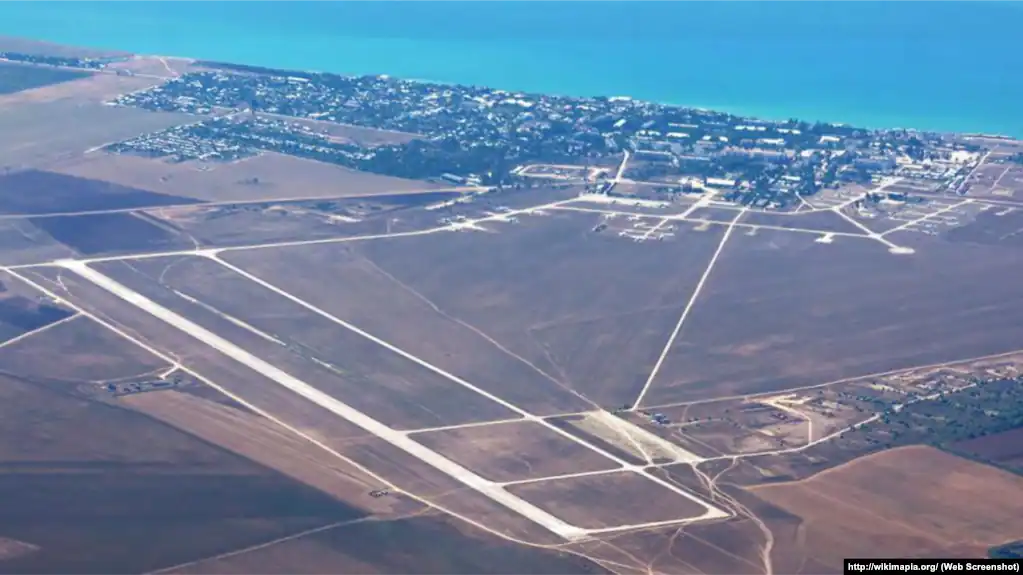
The strike on the peninsula came the same night, according to RFE/RL. The Crimea-monitoring Telegram channel Krymsky Veter reported an explosion in the Saky district (western Crimea) at 21:14, then an incoming strike in Dzhankoi (northern Crimea) before midnight. Drones also reached Sevastopol (southwestern Crimea), where a strong explosion hit the Kacha airfield at 00:36, followed by a second and third blast in the early hours.

chonhar bridge linking occupied kherson oblast crimea closed again after second attack two days · post kacha military airfield near sevastopol archive wikimapiaorg военный аэродром «кача» под аннексированным севастополем архивное
The Kacha military airfield near occupied Sevastopol, Crimea. Archive photo: wikimapia.org

Sevastopol's Russian-installed head, Mykhail Razvozhaev, claimed the military was repelling the attack with air defense and mobile fire groups. The city declared air alerts three times, at 22:33, 00:08, and 06:52, and lifted the last at 07:20. In its morning report, Russia's Defense Ministry claimed its air defenses destroyed 140 drones over seven regions, occupied Crimea, and the Azov and Black seas. 

The 7 June Chonhar strike and the wider campaign

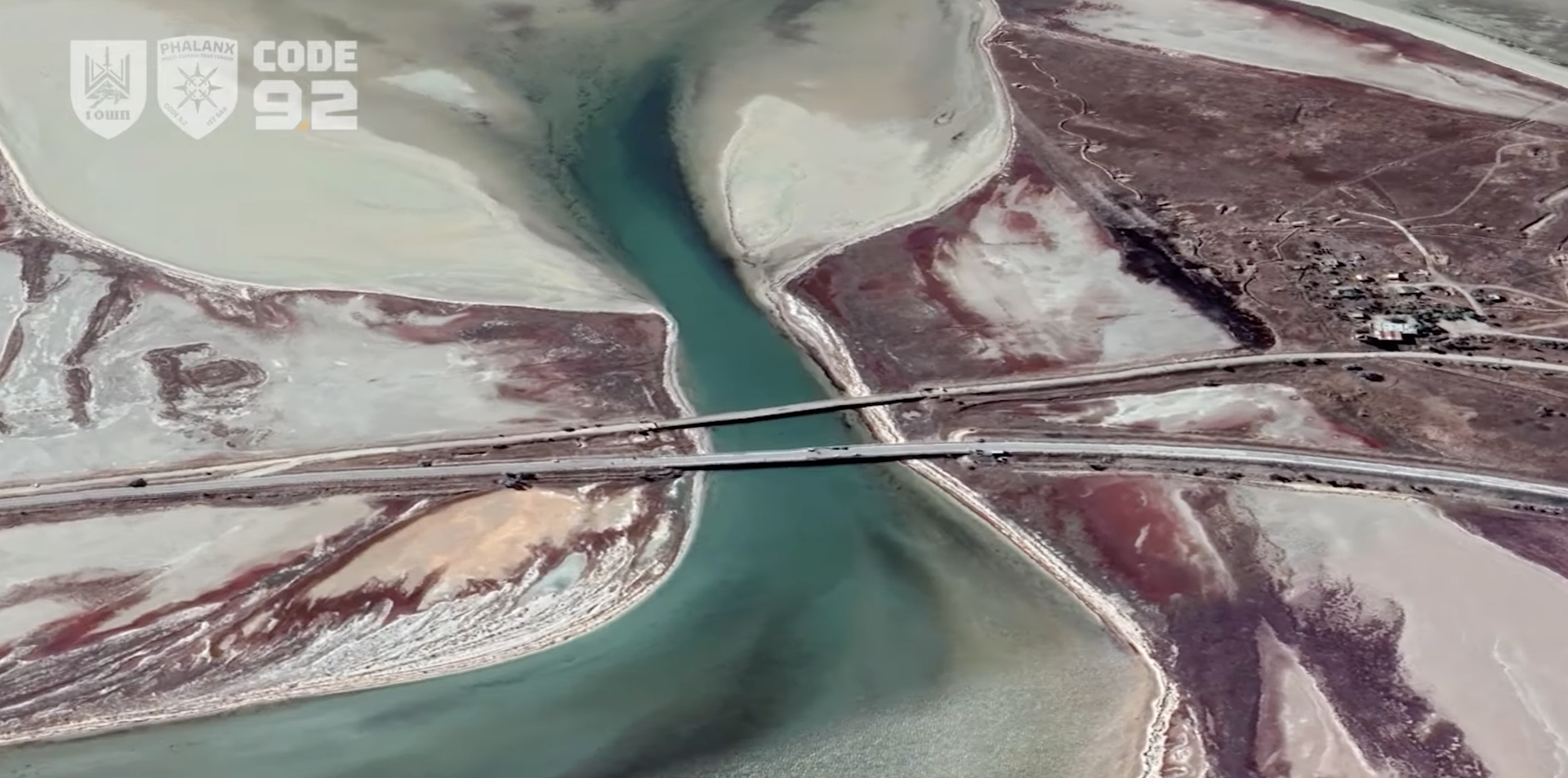
The first closure came overnight into 7 June, when Ukrainian FP-2 and Behemoth drones struck the Chonhar bridge. The Falanga multidomain operations center of the 1st separate assault regiment and the 475th separate assault regiment Code 9.2 carried out the strike. Militarnyi reported it was the first known combat use of the Behemoth kamikaze drone, unveiled in late May 2026 by the companies GLEFA and Culver Aerospace. The same day, the occupiers also halted traffic through their "Dzhankoi checkpoint."

A Russian “Svitlyak” border patrol ship seen from a Ukrainian drone before a strike near Yurkine, occupied Crimea. Screenshot from video: Madyar
Explore further

The Crimean Bridge is heavily guarded. Ukraine struck its maritime security layer in the Kerch Strait.

Ukraine's head of the Office of the President, Kyrylo Budanov, said in early June that the strikes on Crimea's land corridor are a systematic campaign meant to complicate Russian plans. Ukraine's forces are also hitting the sea routes: the General Staff reported a Russian ship struck near Crimea, and overnight into 4 June, a Russian patrol boat was destroyed near the peninsula. Days before, occupation officials in Sevastopol had reported a similar overnight attack on the city.

Riprendersi la Crimea, il sogno di Kyjiv non è più irrealizzabile

9 June 2026 at 03:45

«La cosa più triste è che non sono solo i fatti a essere spaventosi, ma anche le incredibili dinamiche che minacciano di spazzare via tutte le conquiste, i sacrifici fatti e i piani di una guerra che va avanti da dodici anni» scrive MartynoVa di Donetsk. Si definisce “esperta della vita in zona di guerra” e ha 6892 iscritti su Telegram. Descrive una situazione che le autorità russe non riescono più a dissimulare e che MartynoVa definisce «un’estate di terrore sanguinoso». 

L’Ucraina ha interrotto quasi del tutto la logistica nemica in Crimea e nelle zone del Kherson occupate, questo grazie alla supremazia nei cieli assicurata da droni kamikaze di medio raggio che da un paio di settimane martellano qualsiasi mezzo militare o autocisterna che tenti di raggiungere la penisola. La benzina è introvabile, «apri il cellulare al mattino e vedi i video di persone che raccontano di non riuscire a tornare a casa dalla Crimea perché sono rimaste senza carburante». Le autorità hanno provato a ovviare razionando le scorte. A Sebastopoli, per esempio, si ha diritto a venti litri per veicolo a settimana: dovrebbero essere erogati tramite codici QR, ma il sistema non funziona, e a caos si è aggiunto caos. Prima dei disgraziati QR Code, il governo aveva tentato la strada dei coupon. Risultato? Una vera e propria borsa nera, con i tagliandi rivenduti a prezzo maggiorato. 

Basta “navigare” per un po’ sui social per farsi un’idea. C’è chi filma un Hornet ucraino che pattuglia indisturbato l’autostrada in attesa di una preda, chi la prende con ironia e posta auto trainate da mute di cani, chi si vanta di «poter andare a lavoro in macchina» su strade semi-deserte. C’è chi si mostra visibilmente incazzato, come la donna che ha portato i tre figli in vacanza a Eupatoria, sulle rive del Mar Nero, e da due giorni non riesce a trovare una stazione di servizio: «Cosa dobbiamo fare con tre figli? Camminare? Perché nessuno pensa ai turisti?». Surreale.

Anche perché le forze speciali ucraine continuano a colpire con precisione chirurgica snodi nevralgici della logistica russa, segno che si tratta di una strategia studiata da tempo, con un obiettivo chiaro e adesso favorito dalla prevalenza tecnologica e dal deterioramento della capacità di combattimento e di reclutamento dell’esercito di Putin. Solo nella notte tra sabato e domenica gli ucraini in Crimea hanno messo fuori uso il deposito petrolifero di Semykolodezianska e il terminal marittimo di Feodosia: hub di stoccaggio del carburante e del gas – necessari a rifornire il primo la macchina militare, l’altro la popolazione della penisola occupata – che si trovano a oltre duecento chilometri dalla linea del fronte. «L’Ucraina fa con efficacia ciò che l’Iran ha fatto con lo Stretto di Hormuz – nota ChrisO_wiki, blogger militare con 250 mila follower su X -: avrebbe spaventato così tanto le compagnie di assicurazione russe che tutte le forniture di petrolio trasportate da camionisti civili verso la Crimea e l’Ucraina meridionale sono bloccate per il timore dei droni».

«Accelera come un pazzo se incroci un’autocisterna in autostrada. E se la vedi alle tue spalle, cerca di allontanarti il più rapidamente possibile» consiglia ancora MartynoVa, che mostra il proprio stupore per aver capito quanto accade solo dalle parole dei crimeani, disperati per la stagione turistica che rischia di andare in fumo, con «le prenotazioni che vengono già cancellate in tutta fretta». Sarebbero il trentuno per cento in meno, secondo il corrispondente della Bbc Steve Rosenberg. Conferma ulteriore di come i russi più ambienti abbiano vissuto questi quattro anni in una bolla, imbesuiti dalla propaganda del Cremlino, mentre almeno un milione di poveracci di vario tipo e provenienza andava al massacro. 

Vero è che le unità UAV di Kyjiv, anche grazie agli Hornet di produzione americana e ai nuovi Martian controllati dall’intelligenza artificiale, hanno acquisito la capacità di attaccare a media e lunga distanza su gran parte del territorio russo, e le centinaia di droni che hanno raggiunto l’area di San Pietroburgo lo testimoniano. Ma vero è anche che la Crimea per l’Ucraina è qualcosa di più. È l’inizio di tutto, e riconquistarla, da quel febbraio 2014 in cui venne occupata nel silenzio complice della comunità internazionale, è la vera ossessione nazionale.

Sotto l’impulso di Kyrylo Budanov, i comandanti ucraini hanno prima messo fuori gioco i trasporti su rotaia, poi forti del dominio nel Mar Nero, hanno reso un’avventura la traversata in traghetto verso i porti della Crimea, con attese ai moli anche di quattro giorni. A quel punto, percorrere il corridoio terrestre che collega alla penisola, attraverso la M14/E58 da Melitopol a Sinferopoli, è diventato impossibile con un tiro al bersaglio giornaliero su centinaia di camion (e il traffico crollato del settantuno per cento), fino all’estremo tentativo russo: far arrivare navi ombra direttamente nei porti del Mar d’Azov conquistati nella primavera del 2022, per poi da lì rifornire di combustibile e munizioni le truppe impegnate nel Donetsk e a Zaporizhzhia. Tentativo già naufragato dopo le cinque imbarcazioni colate a picco in pochi giorni. Con l’aggiunta nelle ultime ore di un colpo mortale al ponte di Chongar, l’unico che resta a collegare la penisola al fronte meridionale, senza passare dalla M14.

Una situazione che non può che peggiorare, perché in Crimea dopo il carburante, potrebbero mancare l’acqua e la luce. La Crimea viene fornita di energia elettrica attraverso cavi sottomarini, ma le sottostazioni di partenza e di arrivo rimangono punti sensibili. Ecco perché Putin ha fatto costruire due centrali termoelettriche destinate a compensare in caso di guasti o danneggiamenti, se non fosse che per farle funzionare è necessario proprio quel petrolio che inizia a scarseggiare.

Non meno grave è la questione idrica: nel giugno del 2023 per fermare la controffensiva ucraina si decise di far saltare l’imponente diga di Kakhovka sul fiume Dnipro, allagando la regione del Kherson. Una scelta disperata, anche se vincente e con una conseguenza che non era stata messa in conto. Il crollo della diga, ha spiegato l’attivista pro-Ucraina Marco Setaccioli «ha di fatto azzerato la portata del Canale Nord-Crimeano (Severo-Krymskiy Kanal), che storicamente forniva l’85% dell’acqua utilizzata dalla penisola. I bacini idrici che alimentano il sud-est e il centro della Crimea (in particolare il bacino di Belogorsk e quello di Taigan) mostrano ampie aree completamente deidratate. Il fiume Biyuk-Karasu, che dovrebbe alimentarli, è quasi in secca». L’estate nella penisola sarà un incubo anche per questo. 

Qual è il vero obiettivo degli strateghi di Volodymyr Zelensky? Cominciano a chiederselo gli analisti e anche i blogger russi. C’è chi preconizza che a cadere sarà il Kherson tagliato fuori dai rifornimenti e presto raggiungibile solo attraverso il percorso più lungo, cioè dalla Crimea. Altri notano, invece, che il ponte di Kerch viene risparmiato in maniera sistematica dagli attacchi, dopo essere stato l’obiettivo principale nelle prime fasi della guerra. Colpirlo non sarebbe una passeggiata, ma avrebbe un impatto sull’opinione pubblica russa devastante. «Se continua così, il prossimo obiettivo degli ucraini sarà di nuovo il ponte di Crimea» avverte sui social Lev Vershinin, ascoltato scrittore e Z-patriota.

Ne è convinto anche Ben Hodges, ex comandante dell’esercito americano in Europa: «Budanov distruggerà il maledetto ponte di Crimea». A meno che il braccio destro di Zelensky e i suoi generali non abbiano letto Sun Tzu: «Al nemico lasciate sempre una via di fuga».

L'articolo Riprendersi la Crimea, il sogno di Kyjiv non è più irrealizzabile proviene da Linkiesta.it.

News from occupied Ukraine: Crimea faces food shortages amid Ukrainian strikes on Russian logistics

8 June 2026 at 17:18

This weekly update from the Kyiv Independent aims to shed light on the situation facing Ukrainians living under Russian occupation and the ever-tightening control of information imposed by the Kremlin.

Key news as of June 8:

  • Crimea faces food shortages amid Ukraine's intensified drone attacks
  • Bridge linking Crimea

ISW: The strikes will likely cascade into deeper disruption across Russia’s rear supply network

8 June 2026 at 10:05

Drones of the 20th Separate Brigade of Ukraine's Unmanned Systems Forces (SBS), known as K-2, and the Phoenix drone unit strike a Russian military truck on a logistics route in Donetsk Oblast, 7 June 2026. Photo: SBS

Ukraine's drone strikes on the highways that feed Russian forces in occupied southern and eastern Ukraine are disrupting Russian logistics and will likely bite deeper in the near future, according to the Institute for the Study of War (ISW). The campaign is also rattling Russia's pro-war online community, where bloggers have begun turning their anger on the Kremlin's own military leadership. Russian forces are already rerouting and disguising convoys to keep supplies moving.

Ukraine's drone war has dragged the fight off the trench line and into Russia's rear, where fuel and transport increasingly decide how long Moscow can keep its invasion supplied. If Ukrainian crews keep the main arteries under watch, Russia faces a slow squeeze on its rear and the political cost of admitting those roads are no longer safe.

Ukraine's drones now own a key supply road

Ukraine's 3rd Army Corps said on 31 May that its drones had won "fire control" over five occupied cities. All five sit on or near the M-04 highway: Luhansk City, Starobilsk, Alchevsk, Bryanka, and Kadiivka. In plain terms, Ukrainian crews can now strike traffic on that road.

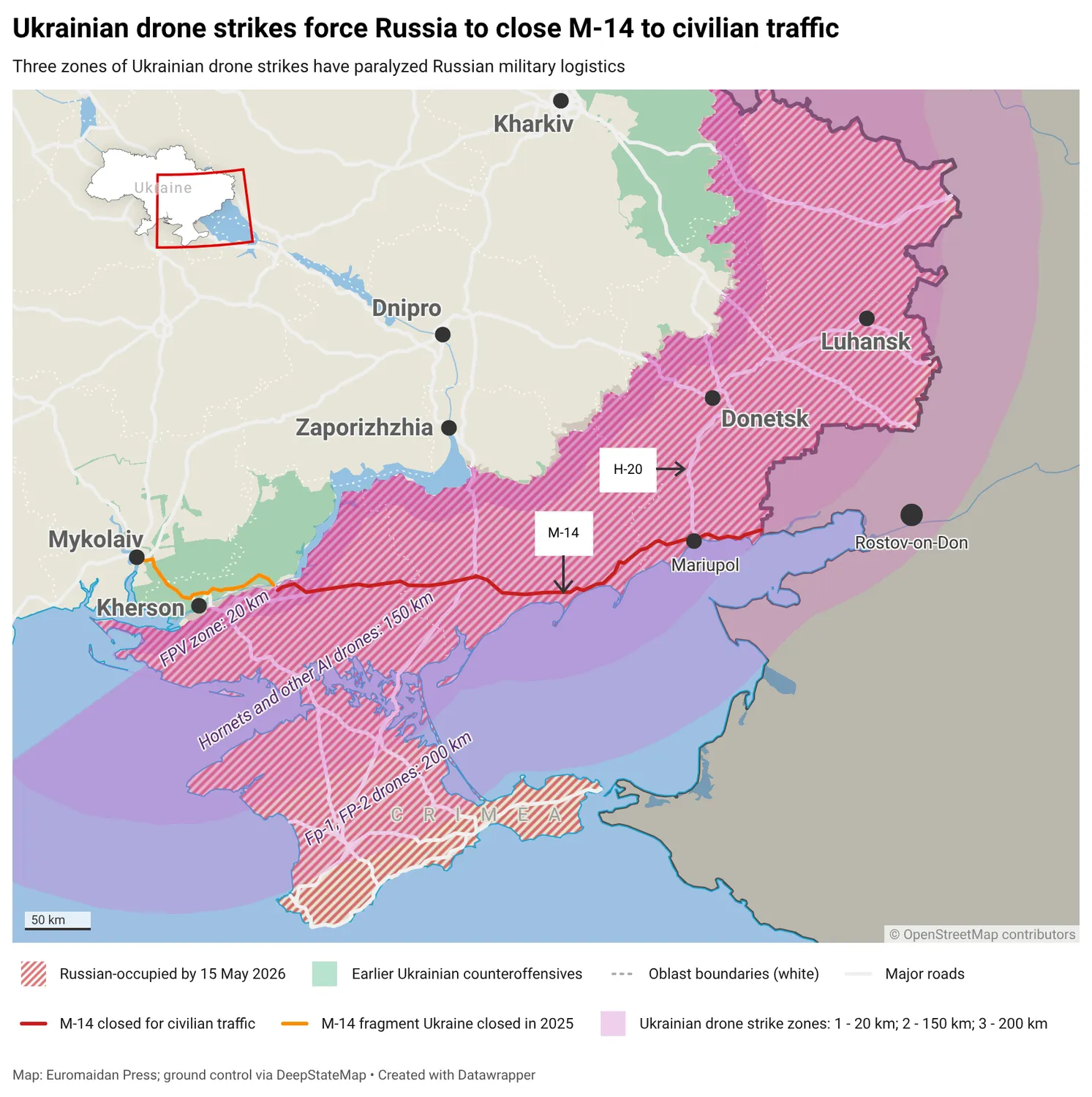
Map of southern Ukraine and adjacent Russian territory showing three concentric Ukrainian drone strike zones — FPV at 20 km, AI-assisted Hornets at 150 km, and FP-1/FP-2 long-range drones at 200 km — layered over the M-14 highway (Rostov to occupied Crimea) and the H-20 (Mariupol north into Donetsk Oblast). The Mariupol-Crimea-Rostov segment of M-14 is highlighted as closed by Russia for civilian traffic. The Mykolaiv-Kherson segment is highlighted as closed by Ukraine in 2025.
Ukrainian drone strike zones layered over Russia's southern supply network. FPVs reach roughly 20 km from the front, Hornets and other AI-assisted drones to 150 km, and FP-1 and FP-2 long-range drones to 200 km. The M-14 highway (Rostov-on-Don to occupied Crimea) and H-20 (branches north from Mariupol into Donetsk Oblast) both fall inside the deeper rings. Russian authorities have closed the M-14 to civilian traffic. The Ukrainian segment of the same highway, between Kherson and Mykolaiv, was closed by Ukrainian authorities in August 2025 after Russian drones turned it into a "human safari" killing ground. Map: Euromaidan Press.

A Ukrainian drone operator argued the M-04 matters more to Russia than the better-known M-14. The M-14 links Rostov Oblast to occupied Crimea. The M-04 begins near Moscow and reaches Rostov-on-Don before carrying on to Russia's Black Sea coast and into the Caucasus. It feeds occupied Crimea, southern Ukraine, and Luhansk Oblast through the Russian towns of Millerovo and Kamensk-Shakhtinsky. It also supplies Donetsk Oblast through Novoshakhtinsk in Rostov Oblast.

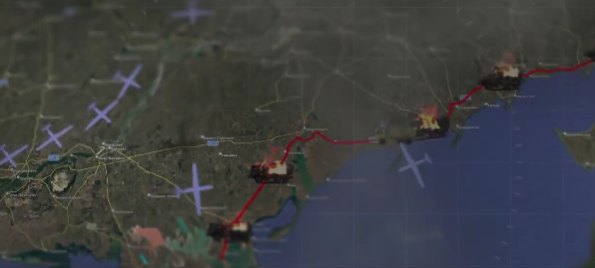
The Russian vehicles are burning on the route to Crimea. Source: The 3rd Separate Special Purpose Regiment
Explore further

Flat steppe: Ukraine is strangling Crimea’s supply lines from air. Melitopol-Chonhar road is latest target

The two highways connect, and Ukrainian forces are also hitting the H-20 road that joins them through Donetsk City. ISW assessed that the strikes will likely generate "even more profound cascading effects" across Russia's rear. The effort extends Ukraine's wider push to drive deep strikes further behind the front.

Russia bans buses and repaints its trucks

The strikes are already forcing changes on the ground. Leonid Pasechnik, the Russian-installed head of occupied Luhansk Oblast, issued a decree on 6 June. It bars regular bus and coach services on the section of the highway crossing occupied Luhansk.

A Russian “Svitlyak” border patrol ship seen from a Ukrainian drone before a strike near Yurkine, occupied Crimea. Screenshot from video: Madyar
Explore further

The Crimean Bridge is heavily guarded. Ukraine struck its maritime security layer in the Kerch Strait.

Ukrainian Mariupol mayoral adviser Petro Andriushchenko reported on 7 June that Russian forces had changed their Mariupol–Berdiansk route. They now use local coastal roads instead of the M-14. ndriushchenko said the troops are passing army vehicles off as civilian, recoloring the tarpaulins over each cargo bed and spraying the trucks white. ISW assessed the detours will likely slow Russian supply runs as Ukraine keeps hunting vehicles.

Russia's war bloggers turn on the Kremlin's generals

Ukraine's strikes are landing in Russia's information space too. Russia's pro-war military bloggers are voicing discontent and panic over the campaign.

Russian military truck on fire after a Ukrainian drone strike near occupied Horlivka, Donetsk Oblast, 5 June 2026. Screenshot from video: Supernova+
Explore further

Ukraine doubles deep strikes beyond 50 km as “Logistics Lockdown” shifts priority deeper into Russia’s transport nodes and rear logistics chains

A pro-war blogger and former Storm-Z assault-unit instructor complained on 7 June that Ukraine is now striking factories and defense plants deep inside Russia while degrading Russian air-defense radars and systems. He blamed bureaucracy and state-corporate infighting for Moscow's failure to respond, and separately complained that Russia cannot read Ukraine's battlefield trends and underrates its capabilities. Other bloggers piled on: one claimed fuel shortages were stoking panic in occupied Crimea, while others faulted the Russian Defense Ministry and top general Valery Gerasimov for not striking Ukrainian logistics, especially the Dnipro River bridges.

ISW found the complaints are escalating, and that the strike campaigns are becoming "points of neuralgia" in Russia's ultranationalist crowd. It noted the discontent feeds on Russia's poor battlefield results, rising casualties, and economic strain. Even before this, Russia's war bloggers had turned on the Kremlin's commanders over inflated victory claims.

Flat steppe: Ukraine is strangling Crimea’s supply lines from air. Melitopol-Chonhar road is latest target

6 June 2026 at 15:52

The Russian vehicles are burning on the route to Crimea. Source: The 3rd Separate Special Purpose Regiment

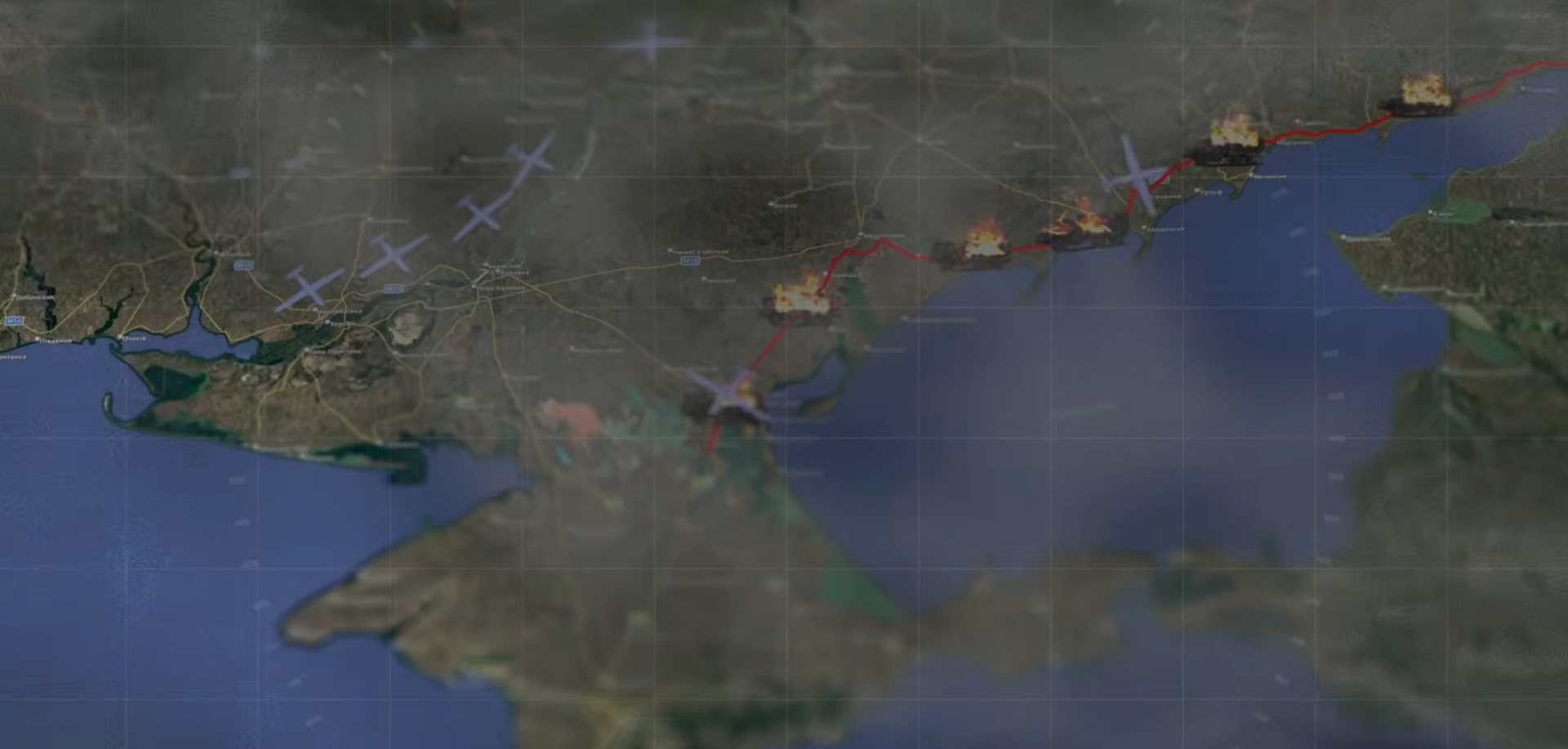
Ukrainian Special Operations Forces drone operators have established aerial control over part of the Russian land supply route from occupied Melitopol to Chonhar. The path is the entry point to Crimea, and they are destroying Russian equipment and disrupting Russian military logistics on the road, the 3rd Separate Special Purpose Regiment announces.

Russian forces on the peninsula already depend on a constrained set of supply lines: the Kerch Bridge (under sustained Ukrainian threat since 2022), the rail and road corridor through occupied Donetsk Oblast, and the Melitopol-Chonhar bottleneck. Ukrainian aerial denial of any one of these links compounds pressure on the others. 

Squeezing land corridor from both ends

The new operation puts pressure on the land corridor's western end. On 31 May, Mariupol residents reported in local group chats that Russia shut down part of its land corridor from Crimea to occupied Donetsk because of Ukrainian drones.

The Melitopol-Chonhar segment crosses flat steppe with limited cover and funnels Russian convoys through narrow bridge crossings over the Syvash to reach the peninsula, the terrain optimal for drone operators to deny the air with persistent surveillance and strike capability. 

SSO drones as the strangulation instrument

The 3rd Separate Special Purpose Regiment is one of Ukraine's veteran Special Operations Forces units, named after the tenth-century Kyivan Rus prince.

The regiment's deployment of drone operators against Russian logistics on the Melitopol-Chonhar route fits within Ukraine's broader "logistics lockdown" approach to occupied territory. Ukraine's Defense Ministry has recently committed $113 million to medium-strike drones designed to target Russian rear logistics.

"Drones of the Special Operations Forces unit are destroying equipment and breaking the enemy's logistics routes on the Melitopol-Chonhar route," the 3rd Regiment said.

What does this change for Russia on peninsula? 

Russia's military presence in Crimea depends on a continuous supply of fuel, ammunition, and food, as well as on personnel rotation. 

"As a result, the already-difficult logistics for supplying the Russian army and fuel to the peninsula have grown harder," the SSO said.

Ukraine strikes Russia's oil depot, radar station, other military targets, General Staff confirms

8 June 2026 at 02:47
Ukraine's military reportedly launched another onslaught of middle strikes on Russian and Russian-occupied regions overnight on June 8, striking multiple oil depots and electrical substations, Russian Telegram media channels reported.

Ukraine war latest: Chornobyl's spent nuclear fuel depot hit by Russian drone

Editor's note: Got an opinion on anything you've read in the Kyiv Independent so far? Send it to letters@kyivindependent.com, and it may appear in our Letters section.

Key developments on June 6-7:

  • 'Sky-high arrogance' — Russian drone strikes spent nuclear fuel depot

Evacuan trenes de pasajeros en Crimea tras ataque ucraniano

8 June 2026 at 07:02

Moscú, 8 jun (Prensa Latina) Los trenes de pasajeros en Crimea fueron desalojados luego de que un ataque ucraniano con un dron dejara un muerto y un herido en el convoy Moscú-Simferópol, comunicó hoy el operador ferroviario Grand Service Express.

The post Evacuan trenes de pasajeros en Crimea tras ataque ucraniano first appeared on Noticias Prensa Latina.

❌