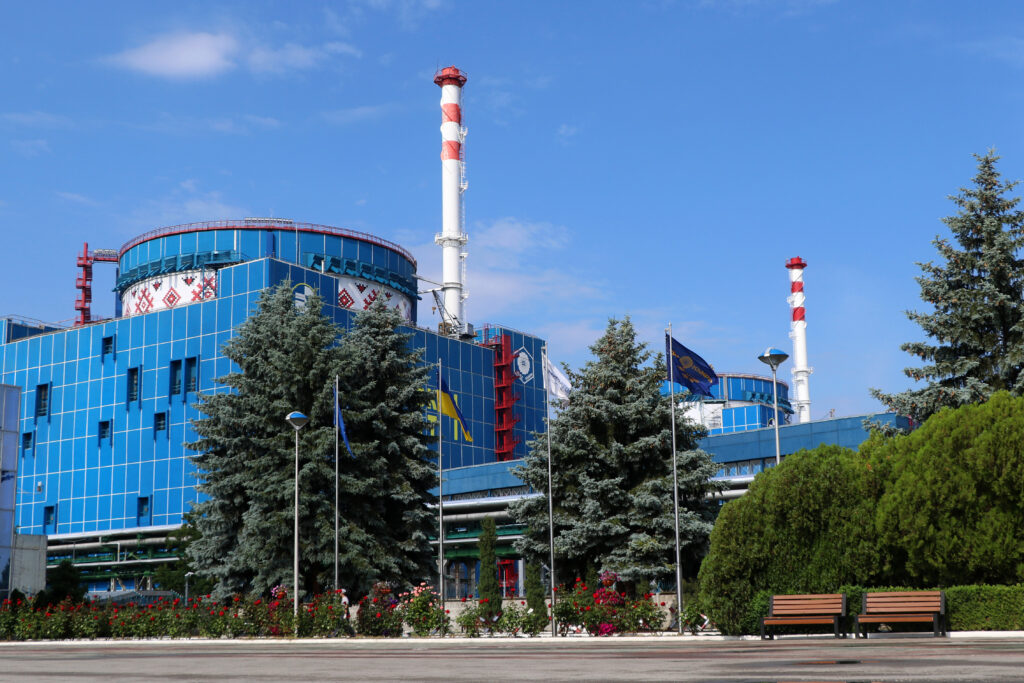
Military activity has been reported near all Ukraine’s operating nuclear power plants: Khmelnytskyy, Rivne, and South Ukraine, and the Chornobyl site, according to the International Atomic Energy Agency (IAEA). IAEA teams recorded more than 100 drones within observation zones around nuclear facilities over the past two weeks, with some as close as 2 kilometers from the facilities.
The Chornobyl drone strike landed at a centralized spent-fuel storage facility in the exclusion zone, just hundreds of meters from where spent nuclear fuel from Ukrainian operating reactors is kept in containers.
“Attacking a facility with large amounts of nuclear material is extremely dangerous. It must not happen,” IAEA Director General Rafael Grossi said.
What happened at Zaporizhzhia NPP on 30 May
On 30 May 2026, a drone struck the turbine hall of Unit 6 at the Russian-occupied Zaporizhzhia NPP.
During subsequent inspections, IAEA specialists documented a hole in the wall and local damage to the metal cladding of an empty pipe located several meters from the impact point.
Experts are continuing to assess the condition of the affected area and the potential consequences of the incident.
“This is the first time since April 2024 that military activity has directly impacted the ZNPP site,” Grossi said.
ZNPP has been under Russian military occupation since March 2022 and remains a continuous focus of IAEA monitoring. The IAEA statement does not attribute the drone strike to either Russia or Ukraine.
Nuclear power plants and similar installations containing dangerous forces are explicitly protected under Article 56 of Additional Protocol I to the Geneva Conventions, which prohibits attacks that may release dangerous forces and cause severe losses among the civilian population.
The IAEA does not formally categorize incidents at Ukrainian nuclear sites as war crimes within this framework, which would require a UN Commission of Inquiry or ICC finding. The IAEA's role is technical and monitoring-focused.
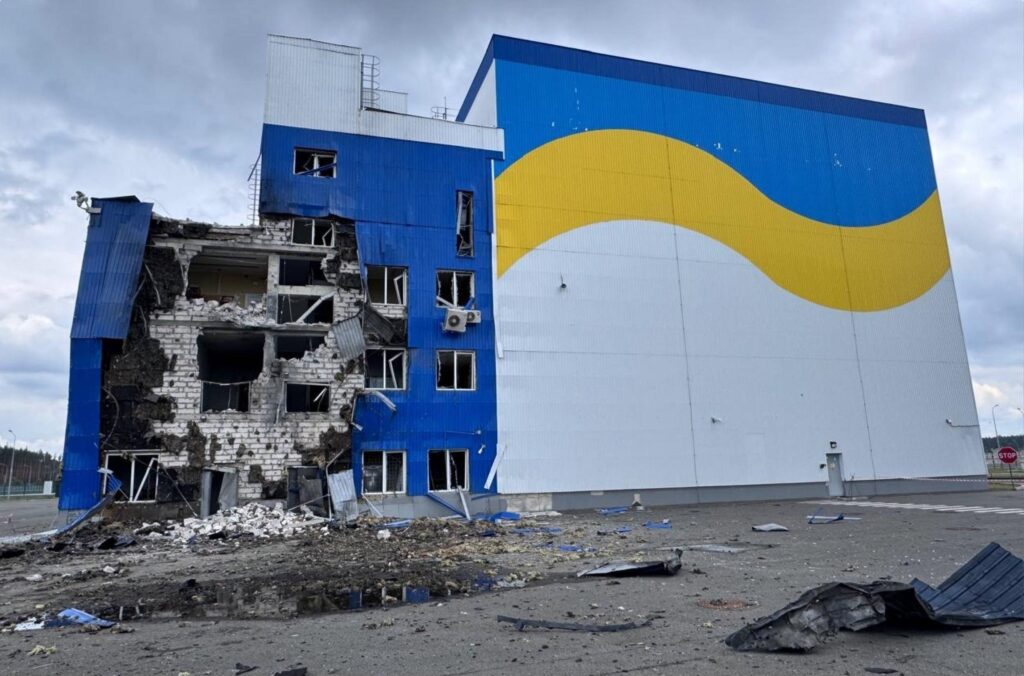
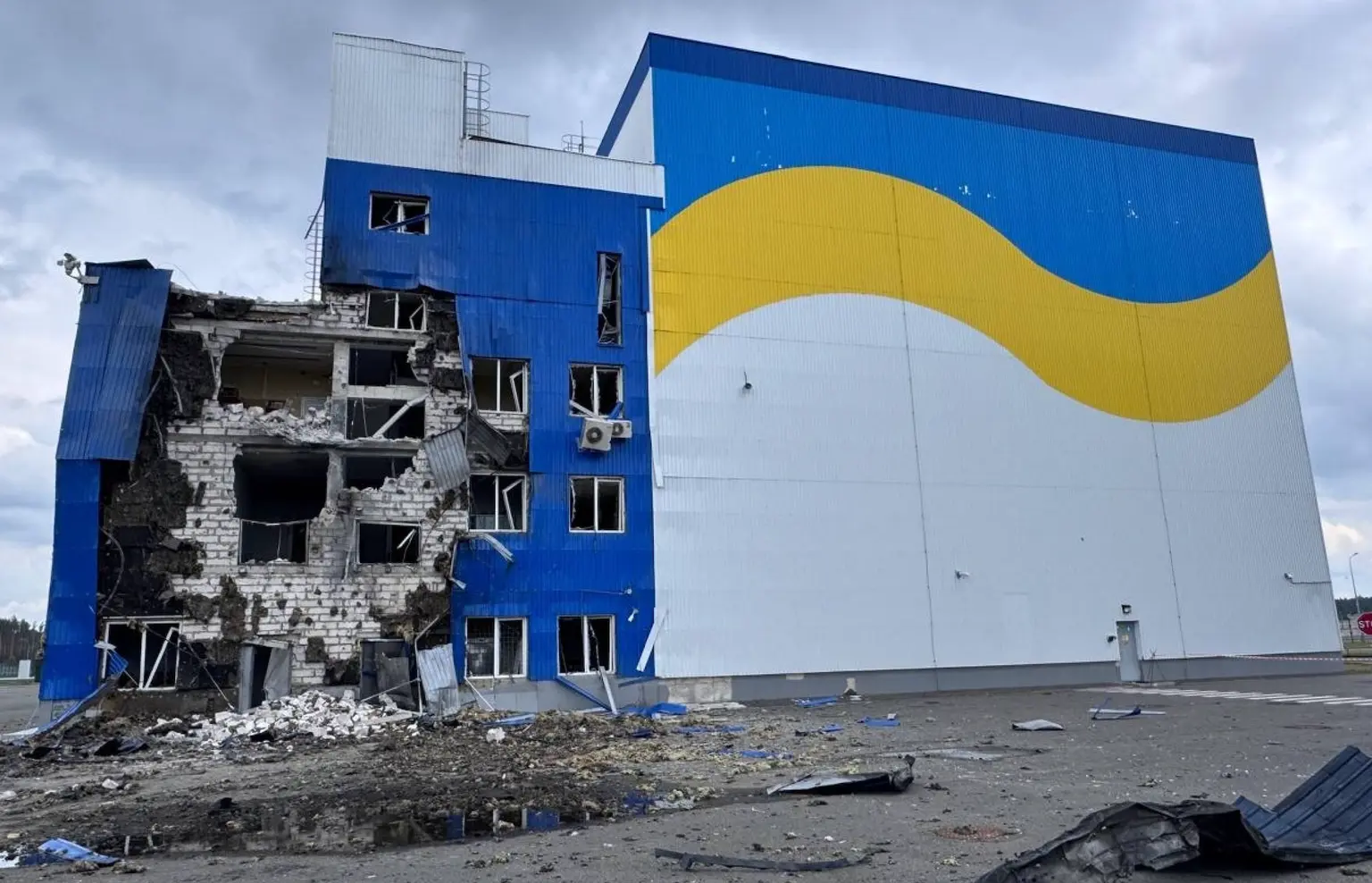
A Russian drone struck the site of Ukraine’s Centralized Spent Fuel Storage Facility (CSFSF) in the Chornobyl exclusion zone overnight on 7 June, damaging a non-storage building and causing a fire that was later extinguished, according to Ukraine’s state nuclear operator Energoatom.
The attack occurred at approximately 02:10, when a Russian UAV hit the facility’s container reception building, Energoatom said. The building was partially destroyed, although no spent nuclear fuel was stored inside at the time.
Fire contained, radiation levels normal
Energoatom reported that a fire covering about 40 square meters broke out after the strike but was quickly localized and fully extinguished. No personnel were injured.
The company said radiation levels at the site remain within normal limits and are being continuously monitored.
“The radiation situation at the CSFSF site remains within normal parameters,” Energoatom said in a statement, adding that it is coordinating with relevant state agencies and continuing to monitor the situation.
The Centralized Spent Fuel Storage Facility is an important part of Ukraine’s nuclear infrastructure, designed to store spent fuel from the country’s nuclear power plants.
SBU opens war crimes case over drone strike on Chornobyl spent fuel facility
Update 17:00: Ukraine’s Security Service (SBU) said it is treating the Russian drone strike on the Centralized Spent Fuel Storage Facility near Chornobyl as a war crime and has opened a criminal case under Article 438 of the Criminal Code.
Investigators said Russian forces used a “Geran-2” type drone for the 7 June strike, which hit the facility at around 02:05. Fragments of the drone were reportedly recovered at the site.
The SBU said the blast damaged the spent nuclear fuel reception and handling building, as well as an administrative building used by the International Atomic Energy Agency.
It added that the strike did not disrupt operations at the facility and no casualties were reported.
Damage at Ukraine’s spent nuclear fuel storage facility in the Chornobyl exclusion zone after a Russian drone strike, which officials say hit a non-storage building and triggered a fire. Photo: General Staff of Ukraine's Armed Forces
IAEA to inspect Chornobyl spent fuel site after drone strike damage
Update 14:40: The International Atomic Energy Agency (IAEA) said it will soon send its team at Chornobyl to inspect damage caused by a drone strike on the Centralized Spent Fuel Storage Facility in the exclusion zone.
The agency said it was informed by Ukraine that the 7 June attack caused “significant damage” to the fuel reception building, including the facade, windows, and doors, with nearby structures also affected by the blast wave.
IAEA Director General Rafael Grossi said the incident is “deeply concerning,” noting it occurred at a facility storing nuclear material just meters from the impacted structure.
He said attacks on nuclear facilities are “completely unacceptable” and violate core nuclear safety principles, including the agency’s “Seven Indispensable Pillars” for nuclear safety and security during armed conflict.
Ukrainian officials condemn strike on nuclear infrastructure
Ukrainian Foreign Minister Andrii Sybiha condemned the attack, describing it as another example of what he called Russia’s systematic disregard for nuclear safety.
“This is not the first time Russia has endangered Ukrainian nuclear facilities,” Sybiha said. “Russian nuclear blackmail and disregard for nuclear safety principles are systemic, deliberate, and unacceptable.”
Ukrainian President Volodymyr Zelenskyy said the drone that struck the facility was a Shahed-type attack drone and accused Russia of deliberately targeting critical nuclear infrastructure.
“Russia consciously struck this nuclear infrastructure facility,” Zelenskyy said. He noted that radiation levels had not exceeded safety limits and praised emergency responders for extinguishing the fire.
The president linked the strike to a broader wave of Russian attacks across Ukraine, saying Russia had launched attacks on civilian targets in 13 regions overnight. According to Zelenskyy, Russia fired 88 missiles, more than 3,250 attack drones, and around 1,800 guided aerial bombs against Ukraine over the past week.
Ukraine has repeatedly accused Russia of using threats to nuclear facilities as part of its broader war strategy. Concerns over nuclear safety have remained high throughout the full-scale invasion, particularly following repeated incidents involving nuclear-related infrastructure and the Russian occupation of the Zaporizhzhia Nuclear Power Plant.
Editor's note: Got an opinion on anything you've read in the Kyiv Independent so far? Send it to letters@kyivindependent.com, and it may appear in our Letters section.

 Login
Login