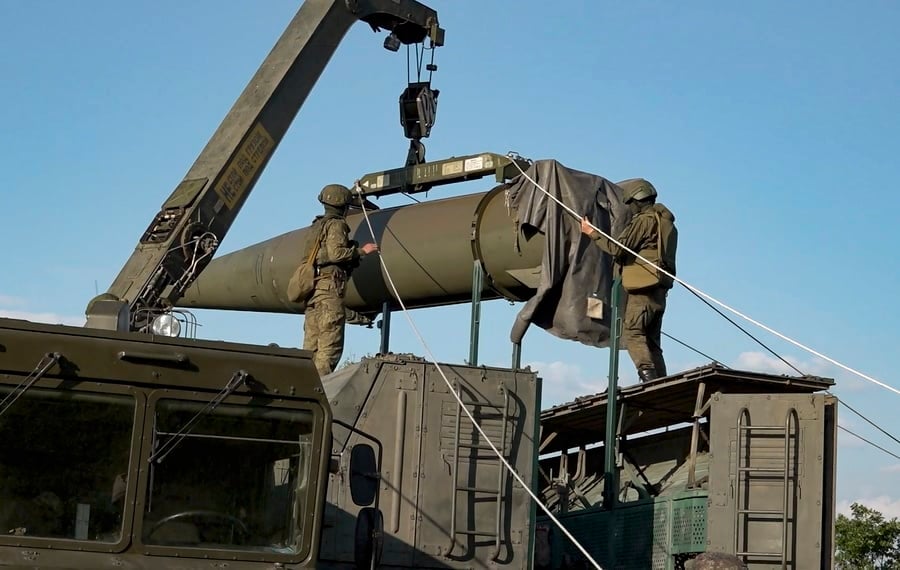
Russian military personnel load a missile onto a transport vehicle. Nuclear powers spent a record of $119 billion on their arsenals in 2025, according to ICAN. Credit: Russian Defence Ministry / EPA / AMNA.
Nuclear powers spent a record of $119 billion on arsenals in 2025, as the world’s nine nuclear-armed states significantly increased their weapons-related expenditure, according to a new report by the International Campaign to Abolish Nuclear Weapons (ICAN).
The figure marks a 19 percent rise from 2024, with nuclear powers spending $17 billion more than the previous year. ICAN warns that the increase reflects a broader trend that is likely to continue for decades. The report covers the United States, Russia, China, the United Kingdom, France, India, Israel, Pakistan, and North Korea.
ICAN warns of a new nuclear arms race
As per the Nobel Peace Prize-winning organization, rising geopolitical tensions are fueling what it describes as a new nuclear arms race. ICAN has also raised concerns over the possible role of artificial intelligence in nuclear decision-making, warning that AI could accelerate the process leading to the potential use of nuclear weapons.
Susie Snyder, ICAN’s program coordinator and one of the report’s authors, described the figures as deeply troubling. Speaking to Agence France-Presse, she declared it’s deeply terrifying.
US spent more than all other nuclear powers combined
The United States remained the world’s largest nuclear spender in 2025, allocating $69.2 billion to its arsenal. That was $12.4 billion more than in 2024 and more than the combined total spent by the other eight nuclear-armed states. China ranked second, with estimated spending of $13.5 billion. The United Kingdom followed with $12.6 billion, while Russia spent $9.5 billion.
According to ICAN, the nine nuclear-armed countries have spent over $470 billion on their arsenals in the past five years.
Long-term nuclear programs could last beyond 2100
The report reveals that nuclear weapons spending is expected to continue rising as countries modernize and maintain their arsenals over time. ICAN points to spending plans in the United States, the United Kingdom, and France that could necessitate billions of dollars through the end of the century. Other nuclear-armed states are also developing weapons systems designed to remain in service for decades.
In the United States, the planned Sentinel intercontinental ballistic missile program is expected to remain operational beyond 2100. Based on the report, expanded US production of plutonium pits could support nuclear warheads until at least 2120. ICAN estimates that the United States alone is expected to spend nearly $1 trillion on its nuclear arsenal between 2025 and 2034.
Report compares record spending by nuclear powers with global needs
The scale of spending, ICAN says, comes as governments face pressing global challenges, including health care, food security, and humanitarian needs. According to Snyder, the amount spent by nuclear-armed states in 2025 would have been enough to fund the United Nations budget dozens of times over. She added that a single day of nuclear weapons spending could have guaranteed food security for two million people last year.
The report argues that nuclear-armed countries are committing public resources to weapons that, according to Snyder, they “could not use without committing a war crime.” ICAN maintains that the latest figures show that nuclear weapons spending is becoming a long-term strategic priority rather than a short-term response to current global tensions.
Russia should move more quickly to remove Visa and Mastercard payment cards from circulation, according to Dmitry Dubynin, head of the National Payment Card System (NSPK), the operator of the Mir payment card network.
Dubynin told Rossiyskaya Gazeta that extending the validity of Visa and Mastercard cards became critically important after the two international payment systems exited the Russian market. That decision helped prevent disruption for a large portion of the population and ensured the stable functioning of domestic payment transactions.
Support Measures No Longer Considered Necessary
According to Dubynin, the circumstances that justified extending the operational life of Visa and Mastercard cards no longer exist.
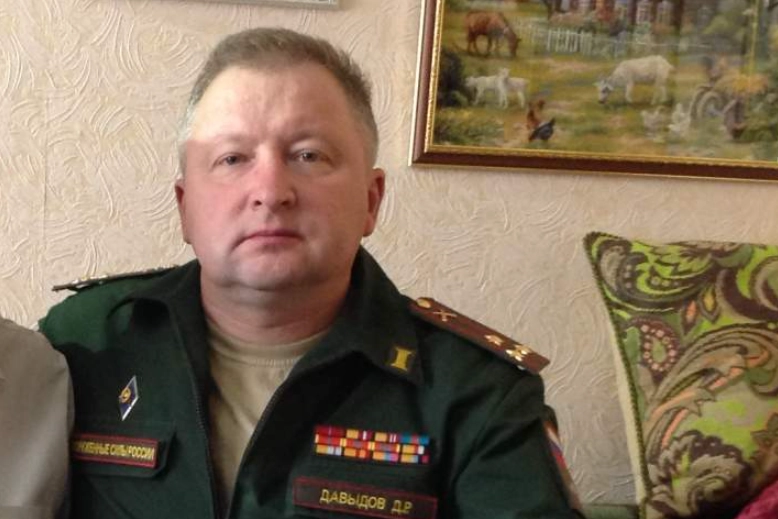
The car exploded around 5:30 am on 9 June as Davydov pulled the BMW X3 out of its parking spot on Koldunova Street in Balashikha's Aviatorov microdistrict. Bystanders pulled him from the wreckage still alive, but he died at the scene before medical teams arrived, The Insider said. The outlet published the SUV's license plate and the apartment address on Kozhedub Street, several hundred meters from the blast, to confirm the identification.
Davydov, 57, had headed the missile and artillery ammunition supply directorate within the Main Missile and Artillery Directorate (GRAU) of Russia's Defense Ministry since 2017. Ukraine's Myrotvorets database lists him as a participant in planning and organizing Russia's full-scale invasion on 24 February 2022, with operational responsibility for keeping Russian forces supplied with shells and missiles. Russia's Investigative Committee confirmed the death of one man in the blast and opened a criminal case but did not name the victim.
The improvised explosive device carried the force of up to 500 grams of TNT and was attached to the underside of the vehicle, the Russian business daily Kommersant reported. Conflict Intelligence Team founder Ruslan Leviev reviewed the footage and concluded the bomb had been hidden in a separate parked vehicle and detonated remotely as the BMW drew alongside. The Insider attributed the operation to Ukraine's Security Service (SBU) without citing further sources, and Ukrainian officials had not commented as of late Tuesday.
A second device, then a third
Hours after the Balashikha blast, a Zeekr electric vehicle caught fire in a parking lot at the intersection of Butlerova and Vvedensky streets in Moscow's Konkovo district. Bomb technicians found a device under the car and neutralized it with a controlled detonation. Around 6 p.m., Moscow police evacuated the Nebo shopping center in Solntsevo after another suspicious object was discovered beneath a parked vehicle. Russian authorities ordered mass under-vehicle inspections across the capital region.
The pattern of four
Tuesday's killing fits a deepening pattern: the fourth senior Russian officer assassinated in the rear since late 2024. Lt. Gen. Igor Kirillov, head of Russia's chemical defense troops, was killed by a scooter bomb outside his Moscow apartment in December 2024 in an operation the SBU claimed openly. Lt. Gen. Yaroslav Moskalik, deputy chief of the General Staff's Main Operational Directorate, died in April 2025 in a car bombing 350 meters from Tuesday's blast site, also in the Aviatorov microdistrict; Russia's FSB later sentenced Ignat Kuzin, who said he worked for the SBU, to life in prison. Lt. Gen. Fanil Sarvarov, who oversaw the General Staff's operational training, was killed by a bomb planted under his Kia Sorento in southern Moscow in December 2025.
Background
The slain officer grew up in the closed nuclear city of Penza-19, now called Zarechny, where his father worked at the Start production association, a facility that built nuclear warheads until 2002. He held patents in rocket-engine design and artillery ammunition. In 2009 he led the Central Testing Technical Bureau attached to the 51st GRAU arsenal in the Vladimir region, and bought the BMW X3 in 2024 from a businessman in that same area, the Russian Telegram channel VChK-OGPU reported. The Kremlin, the Defense Ministry, and the SBU had not commented publicly as of late Tuesday.
A explosão matou o coronel Damir Davydov, que chefiava a direção de fornecimentos de munições de artilharia e mísseis das Forças Armadas da Rússia. Um alto oficial militar russo foi morto num atentado com um carro armadilhado perto de Moscovo, no que parece ser o mais recente de uma série de ataques dirigidos contra figuras ligadas ao esforço de guerra da Rússia na Ucrânia. Segundo relatos dos meios de comunicação russos, o coronel Damir Davydov, de 57 anos, morreu depois de um engenho explosivo plantado sob o seu BMW ter detonado na madrugada de terça-feira na cidade de Balashikha, a
Francisco Proença Garcia, militar, professor universitário e investigador, diz que a retaliação dos EUA ao Irão é normal e vê na China e Rússia os "adultos" que ajudam Trump a sair da crise que criou.
Francisco Proença Garcia, militar, professor universitário e investigador, diz que a retaliação dos EUA ao Irão é normal e vê na China e Rússia os "adultos" que ajudam Trump a sair da crise que criou.
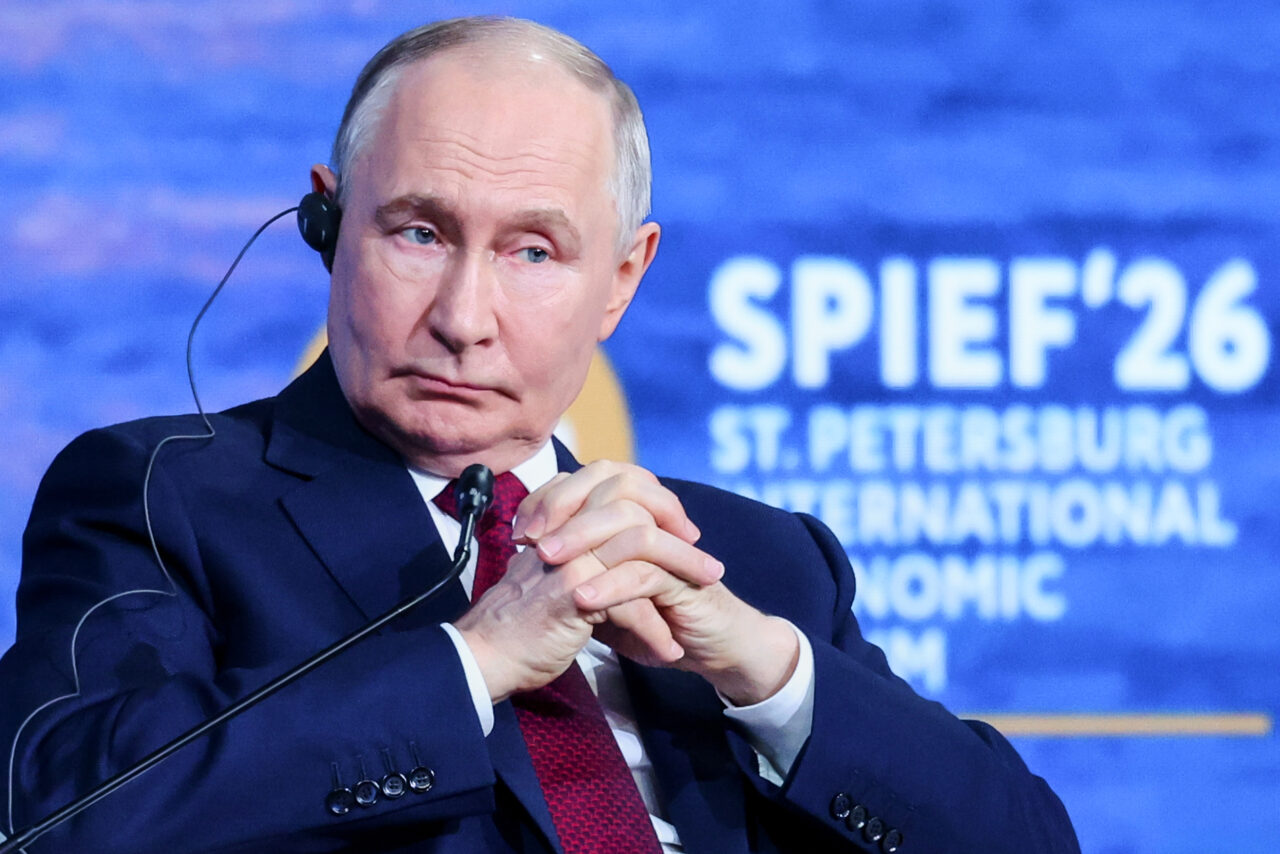
Russia’s flagship international business summit in St Petersburg was targeted with Ukrainian drones that used Estonian territorial waters to evade Russian air defenses. Other Baltic states are also implicated in carrying out the large-scale attack last week.
According to the well-informed Borzikkman channel, scores of kamikaze drones were launched from ships in the Baltic Sea. They flew at low altitude over Estonian territorial waters before striking St Petersburg. The flight path was designed to take Russian defenses by surprise.
Most of the drones were shot down by Russian defenses, but a few managed to hit their targets. The biggest hit was on the St Petersburg oil terminal. That had the desired propaganda effect of creating a pall of black smoke visible to delegates on the opening day, June 3, of the St Petersburg International Economic Forum (SPIEF).
Western media outlets like the BBC were delighted to report on the embarrassing vista in the skies over Russia’s second city and a forum that President Putin would address.
The BBC’s Steve Rosenberg was positively gleeful, writing: “The abiding image of SPIEF 2026 will be the huge plume of thick black smoke which dominated the St Petersburg skyline on Wednesday… All the delegates saw the smoke as they arrived at the expo centre on the edge of the city.”
Drones from ships in the Baltic Sea with flights through Estonian territorial waters means that NATO states were involved in the execution of the air strikes. On the same day, NATO chief Mark Rutte was in Kiev on an unannounced visit to meet the Ukrainian leader, Vladimir Zelensky.
The level of NATO participation in waging war on Russia with its Ukrainian proxy has become absurdly obvious. In recent weeks, hundreds of Ukrainian drones have crashed in Finland, Estonia, Lithuania, Latvia, Poland, and Romania. The Kiev regime has repeatedly apologized to European capitals for the infringements that have resulted in injuries to civilians. Still, the European Union and NATO take no action to sanction or reprimand Kiev. They indulge in the claims that the drones are being redirected by Russian electronic jamming. Swedish Prime Minister Ulf Kristersson has even urged that NATO states should help Ukraine in targeting Russia to avoid “misakes”.
The duplicity is contemptible. Russian military intelligence has pinpointed drone manufacturing sites in the Baltic states and other NATO nations that are participating in Ukrainian attacks.
Dmitry Medvedev, deputy chairman of Russia’s National Security Council, commented: “The Russian Defence Ministry’s statement should be understood extremely literally: the publication of production sites for drones and other military equipment in Europe is a register of potential legitimate targets for the Russian armed forces.”
Evidently, the NATO states are providing targeting data and permitting the use of their territory to maximize the attacks on Russia. Hundreds of Russian civilians have been killed in these NATO-assisted drone operations, the most dreadful being the murder of 21 students at a college dormitory in Starobelsk, Lugansk, on May 22. Last week, on the same day as the drone attack on St Petersburg, eight civilians were killed, and 10 were injured when their bus was blown up in an air strike while traveling through the Donetsk region towards Crimea.
Anger across Russia is growing, analyst Stas Krapivnik told Danny Haiphong’s channel. Russia has retaliated with heavy strikes on military sites and decision-making centers across Ukraine. But, as Krapivnik points out, Moscow is under pressure to take action against NATO culprits from where the Ukrainian offensives are stemming. He says that Russia should do like Iran is doing, hitting back hard where it hurts.
Since the U.S. and Israel launched their aggression against Iran 100 days ago, on February 28, the Iranians have destroyed dozens of American installations across the Persian Gulf and Israeli bases with their formidable arsenal of hypersonic and ballistic missiles, as well as drones.
When Israel violated a shaky truce by bombing Beirut’s southern district of Dahiyeh at the weekend, Iran struck back immediately, as it had warned it would do, to hit airbases in Israel and a U.S. base in Saudi Arabia.
Iran’s defiance has put manners on Washington. Israel is a slow learner, but it will come round to realizing that Iran is not going to take any aggression lying down. It’s hitting back hard and fast in the places that hurt. The days of U.S. and Israeli aggression with impunity are over.
The other thing is that Tehran has called Trump’s bluff about his “madman threats” to escalate the war and obliterate Iran. The Iranians have demonstrated to Washington and the Israelis that the aggressors have much more to lose if they persist in their belligerence.
Russia might want to take note, as Krapivnik, Borzikkman, Sergey Karaganov, and other analysts have advised. The EU and NATO are acting with impunity and a delusional sense that they can escalate attacks on Russia, killing civilians and damaging Russia’s economy, all because of some cynical charade that Ukraine is alone in carrying out the attacks.
Of course, the risk is that if Russian hypersonics were to take out a NATO drone-launching ship in the Baltic Sea, then that would trigger the U.S.-led military alliance’s joint defense commitments. In that case, we are potentially in a situation of World War Three.
But hold on a moment. Are we not already in that situation, given that, despite the charade, NATO states are directly involved in attacking Russia, its capital, Moscow, and St Petersburg, and killing hundreds of civilians?
The NATO and EU leaders are so imbued with Russophobia and arrogance that they are beyond rational thinking. The only language they understand is direct threat and force. Unless they pay a price, the deranged Russophobic leaders will keep escalating as they are doing.
Iran has shown a viable self-defense policy. The enemy is hit hard for daring to aggress against the Iranian people.
A kick in the Baltics might be what it takes to concentrate Russophobic minds. Before it’s too late.
Ukraine has been sending swarms of drones to hit Russian ports, oil terminals and other facilities on the Baltic Sea — but some have veered off course en route.
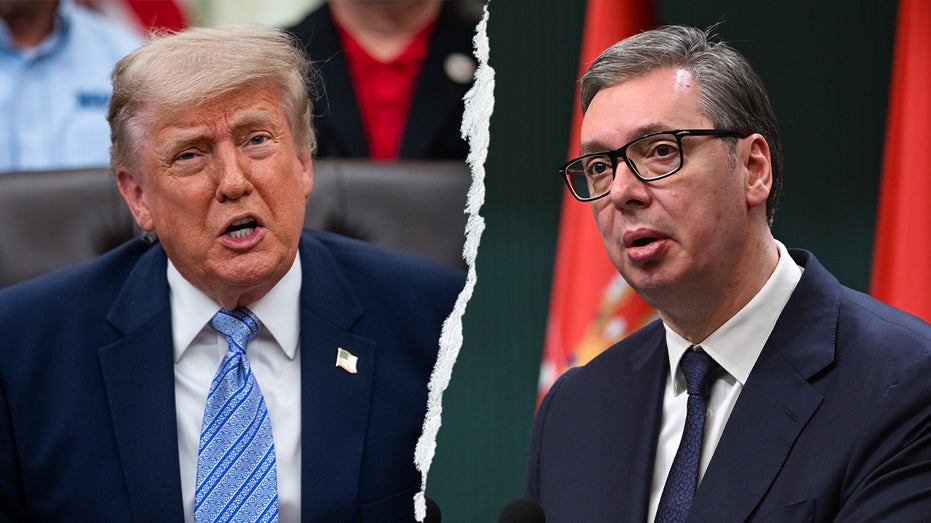
Serbian President Aleksandar Vučić says relations between Serbia and the United States have undergone a dramatic transformation under President Donald Trump, a shift he says has changed public perceptions in a country where memories of the 1999 NATO bombing campaign remain deeply rooted.
In an exclusive interview with Fox News Digital, Vučić praised Trump's approach to the Balkans, arguing that the administration's focus on economic cooperation rather than political pressure resonated with many Serbs. "President Trump and his team so far were working very diligently and dedicatedly on the Western Balkans," Vučić said, adding that many Serbs view his administration very differently from previous U.S. governments.
"If you ask people in Serbia just to make a comparison between Clinton and Trump's administration, or Democrats to Republicans, you wouldn't believe it," Vučić said. "It would be 90 to 10 or 95 to 5."
The comparison is particularly striking in Serbia, where many still associate the United States with NATO's 1999 bombing campaign during the Kosovo conflict, launched to stop Serbian forces' crackdown on ethnic Albanians in Kosovo and which remains one of the most consequential events in modern Serbian history.
Vučić said he recently extended an invitation to Trump to visit Serbia and predicted the American president would receive an enthusiastic welcome.
"I hope that we'll be able to host him," Vučić said. "More people will be ready to greet him and wait for him than he might even expect…I dare to say even more than hundreds of thousands of people."
The Serbian president said the improving relationship between Washington and Belgrade is increasingly centered on economics, investment and technological cooperation, and mutual conservative values.
According to Vučić, Serbia and the United States are preparing to launch a strategic dialogue that will focus on energy, infrastructure, artificial intelligence, defense cooperation and investment opportunities. Among the projects under discussion are energy infrastructure, liquefied natural gas cooperation, data centers and advanced computing technologies.
The growing relationship comes as Serbia seeks to position itself as a regional economic hub while continuing its long-standing ambition of joining the European Union.
Vučić pointed to preparations for Expo 2027 in Belgrade with nearly 150 participating countries, as evidence of Serbia's growing international profile and economic ambitions.
Vučić, who has served as Serbia's dominant political figure since becoming prime minister in 2014 and president in 2017, pointed to the country's economic growth as evidence of its transformation. "Our GDP was 32 billion (euros) when I became the prime minister," Vučić said. "This year it's going to be over 100 billion euros., which is $120 billion."
Vučić's relationship with Trump dates back to the president's first term, when the White House brokered a series of economic normalization agreements between Serbia and Kosovo. Rather than focusing first on the politically explosive question of Kosovo's status, the Trump administration emphasized infrastructure projects, transportation links and investment aimed at improving ties between the two sides.
In September 2020, Vučić and then-Kosovo Prime Minister Avdullah Hoti signed U.S.-brokered economic agreements at the White House that included commitments to expand rail and highway connections and promote investment. Trump described the deal as a breakthrough achieved by focusing on "job creation and economic growth" rather than longstanding political disputes.
Asked whether he would consider recognizing Kosovo, which declared independence from Serbia in 2008 and has been recognized by the United States under President George W. Bush and most European countries, if doing so unlocked Serbia's economic future and accelerated its path toward membership in the European Union, Vučić pushed back on the premise, arguing that economic cooperation and improved relations should come before discussions about political status.
"I'm not saying that I'm ready to violate my constitution… I have always been open to talks or compromising solutions, I have always been open to developing great economic ties and no doubt much better political ties. But I was not speaking about recognition of someone's independence," he said.
While Serbia continues to pursue membership in the European Union, the country has also maintained ties with Russia and China, a balancing act that has drawn scrutiny amid Russia's war in Ukraine and growing geopolitical tensions worldwide.
Asked whether Serbia could continue navigating between East and West in an increasingly divided world or would eventually need to choose a side, Vučić rejected the notion that countries must choose between competing geopolitical camps. Instead, he pointed to both his own visit to China and Trump's engagement with Beijing as examples of what he described as pragmatic diplomacy focused on national interests.
"President Trump didn't go there because of his vanity," Vučić said of Trump's visit to China. "He brought with him all the leading people of the United States of America for making better businesses, for earning more money for their companies."
Vučić said he adopted a similar approach during his own visit, arguing that leaders should prioritize economic opportunities for their citizens rather than ideological alignments. "I'm coming from a small country. I was asking for more investments and was fighting for the interests of my people," he said.
The Serbian president said the same pragmatic approach should guide efforts to resolve ongoing conflicts in both Ukraine and the Middle East.
"It's always better to have thousands of days of negotiations than one day of war," he said.
Asked about tensions involving Iran and the wider conflict in the Middle East, Vučić reiterated Serbia's support for Israel, a position that increasingly distinguishes Belgrade from some European governments.
"I am the president of the country that is one of the very rare countries in Europe that is not hesitating to cooperate and collaborate with Israel," he said. "And it is proud to say this publicly and openly."
Vučić warned about what he described as rising antisemitism around the world.
"From time to time, I'm very much afraid to see a lot of antisemitic slogans and antisemitic banners," he said.
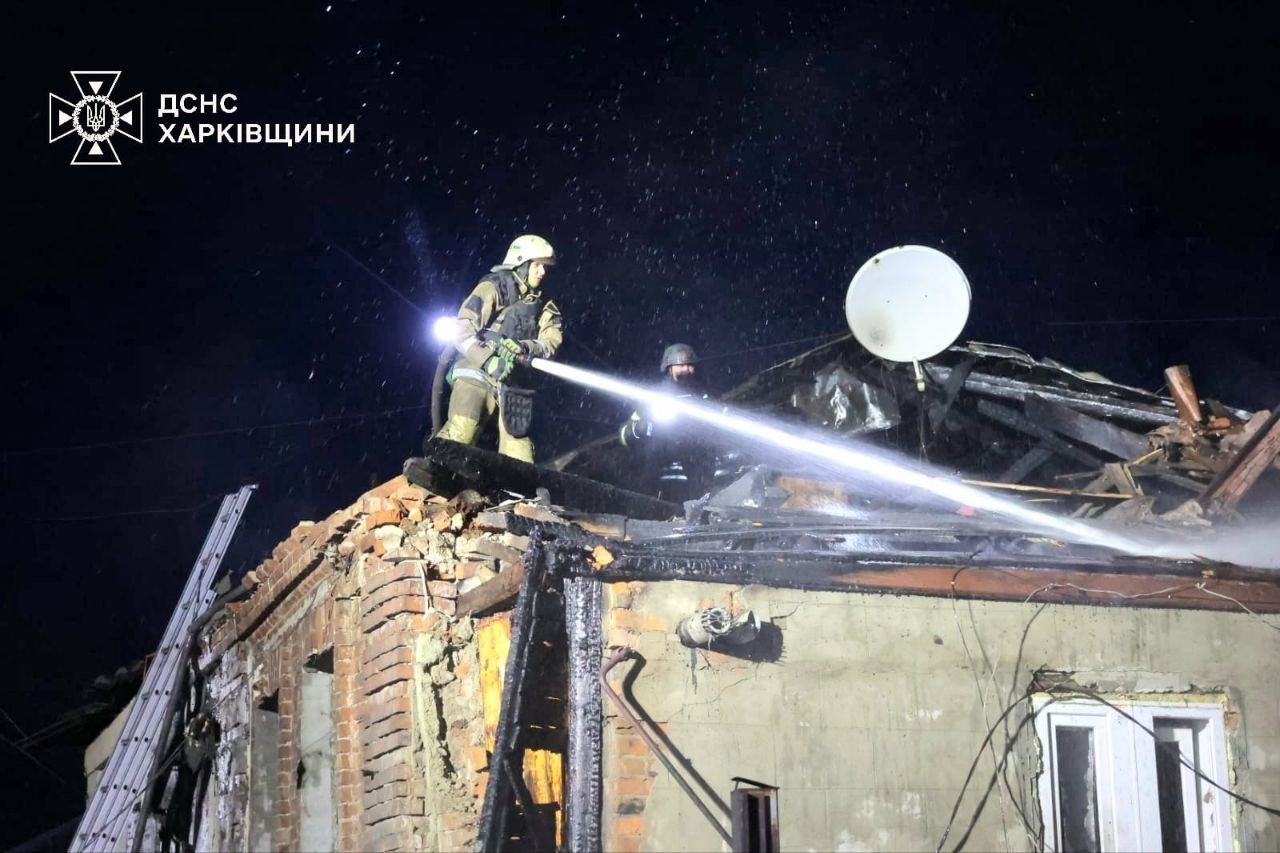
The Air Force said Russia launched 207 drones, 181 of which were intercepted. At least 21 drones struck 14 locations, while falling debris was recorded at 13 sites.
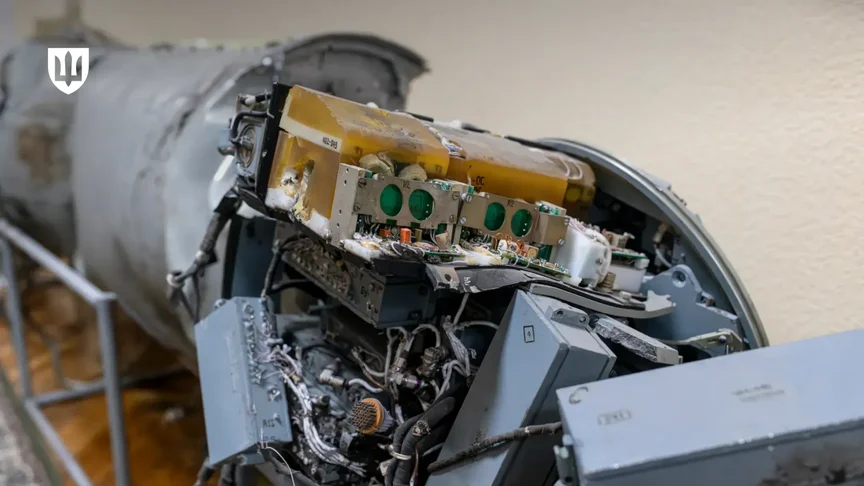
Russia has made two significant modifications to its Kalibr cruise missiles since the start of the full-scale invasion, Ukraine's Ministry of Defense reported.
The cluster payload mirrors the one Russia already uses on its Kh-101 cruise missiles, expanding the lethal radius across dispersed targets like airfields, hangars, and open positions. Russia is not a signatory to the Convention on Cluster Munitions, which 124 states have ratified.
From 2022 through early 2026, Kalibr missiles carried a fragmentation-high-explosive warhead. Researchers documented a cluster warhead for the first time on missiles shot down in spring 2026. Russia made the change to substantially increase the strike area and deploy the missile against dispersed targets, the ministry said.
Russia's failed attempt to replace imported electronics
The second modification concerns the missiles' onboard electronics. Between 2023 and 2024, Russia gradually shifted Kalibr production to domestic components. The attempt failed. Analysis of the onboard digital computing unit from a Kalibr manufactured in 2025 again found imported components. The homing boards are "more than 80–90% foreign-made," the ministry stated, calling it "a confirmed fact, not an estimate" — each part is marked and verified by military representatives.
The shift to domestic electronics likely degraded guidance accuracy, the MoD suggested, prompting the return to foreign parts despite sanctions exposure. A Russian Kh-101 that killed 12 people in Kyiv this May was built in the second quarter of 2026 — pointing to components still reaching Russia after 21 EU sanctions packages and years of Western export controls, President Volodymyr Zelenskyy said last month.
Manufacturers and designers identified for sanctions
The ministry said it had identified all electronics manufacturers supplying Kalibr production, as well as the chief designers and managers involved. "The Ministry of Defense has established all electronics manufacturers for the Kalibrs, as well as the chief designers and managers involved in missile production. This data is being transferred for further processing within the framework of sanctions policy," the ministry stated.
The MoD has previously published technical analyses of downed Russian Kh-101 missiles and North Korean KN-23 and KN-24 ballistic missiles used against Ukraine.
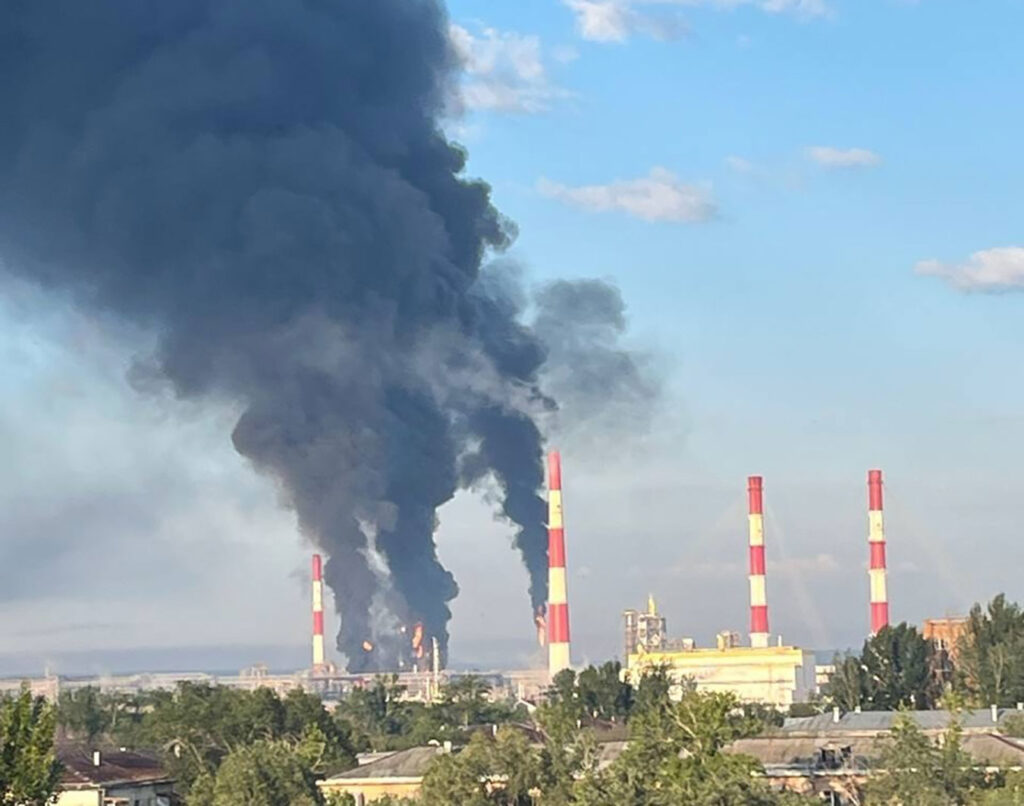
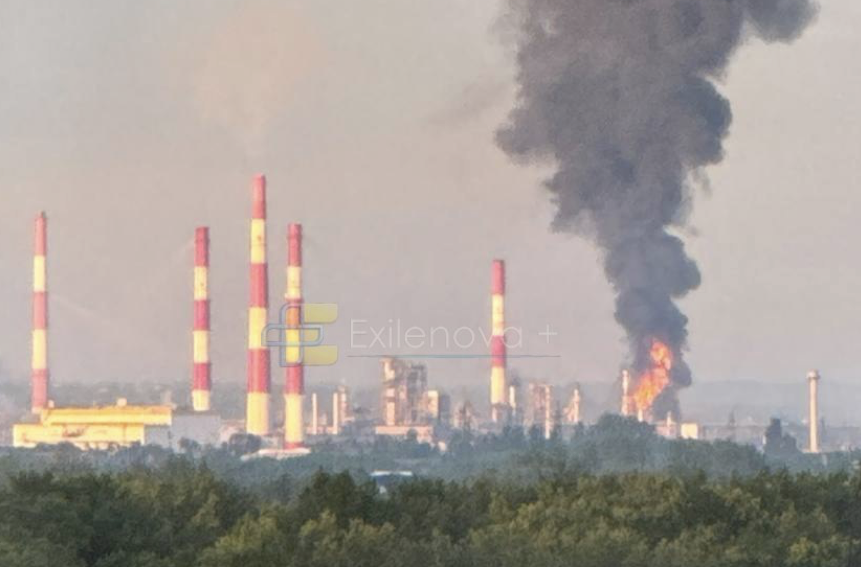
A fire broke out at the Kuibyshev oil refinery in Samara, Russia, following a drone strike on 10 June, according to OSINT analysis by Astra and Russian Telegram channels.
The Kuibyshev refinery is one of the largest oil industry facilities in the region and is part of Rosneft. The 10 June strike is the third reported attack on the plant since August 2025.
What happened overnight
Residents of Samara Oblast reported explosions during the night of 9–10 June. The regional governor wrote of a missile threat in the oblast.
Astra said its analysis of eyewitness footage established that the Kuibyshev refinery in Samara was struck and caught fire.
The same refinery halted operations in August 2025 following a drone attack, Russian social media channels reported. It was struck again in January 2026.
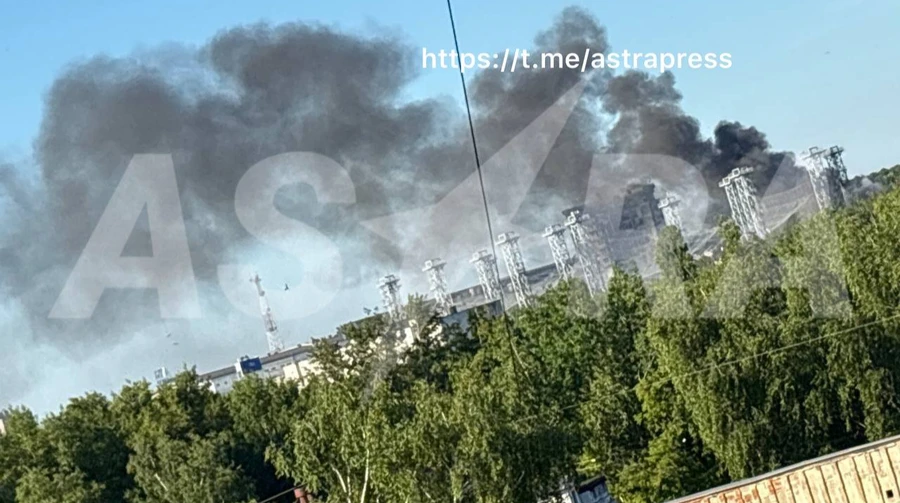
A fire broke out at what is reportedly the Progress defense plant in Cheboksary, Russia, following a missile strike on 10 June, the governor of Russia's Chuvash Republic said, according to Russian telgram channel Astra.
The incident marks the second reported strike on the same facility in under a week — on 5 May, Ukrainian FP-5 Flamingo missiles were reported to have struck the VNІIR-Progress defense enterprise in the same city, with President Volodymyr Zelenskyy confirming the attack.
Oleg Nikolaev, governor of Chuvash Republic, confirmed on Telegram that Cheboksary had come under missile attack. He did not specify casualties or damage.
What the strike targeted
Photos and video of a fire following the strike in Cheboksary were published by Russian social media channels, including footage of a missile passing over the city. According to OSINT analysis by Astra, the targeted facility is the VNIIR-Progress defense enterprise.
The plant manufactures Kometa antennas — systems designed to protect drones from electronic warfare — as well as other components used in Russian Shahed drones and Iskander-M and Kalibr missiles.
Astra analysts also noted that the VNIIR-Progress premises had been fully covered with camouflage netting following the previous strike.
The weapon used
Monitoring channel Exilenova+ identified the missiles used as Ukrainian FP-5 Flamingo cruise missiles. Denis Shtilerman, founder of the Ukrainian company FirePoint, which produces the Flamingo, published a photo of a launch on X on 10 June, without providing further details.
Previous strike
The 5 May attack on the same plant caused a large-scale fire after a missile struck the facade of one of the factory buildings, according to OSINT analysts. Zelensky confirmed the use of Flamingo missiles in that incident.
Mosca sta sempre più utilizzando il diritto internazionale come uno strumento di pressione geopolitica. Non si tratta di una semplice strategia difensiva nei contenziosi legali, ma di un vero e proprio impiego del sistema giuridico come arma: la cosiddetta lawfare. È questo il quadro delineato da un recente rapporto del servizio di intelligence lettone Satversmes aizsardzības birojs (Sab), che analizza come la Russia stia integrando strumenti legali, politici e comunicativi nella più ampia architettura della guerra ibrida contro l’Occidente.
Secondo il rapporto, la lawfare russa si manifesta attraverso un uso sistematico di ricorsi, contenziosi e iniziative giuridiche a livello internazionale, spesso con l’obiettivo di rallentare, delegittimare o complicare le decisioni di governi occidentali e organizzazioni sovranazionali. Non si tratta soltanto di vincere una causa, ma di produrre effetti politici: pressione diplomatica, costi reputazionali e frizioni tra alleati. In questa logica, il diritto non è più uno spazio neutrale di risoluzione delle controversie, ma un’estensione del confronto strategico tra Stati.
Per affinare questa strategia, Mosca guarda a Teheran. Secondo il rapporto del Sab, funzionari russi hanno analizzato in dettaglio il ricorso presentato dall’Iran nel 2016 alla Corte Internazionale di Giustizia contro gli Stati Uniti, relativo alle sanzioni e ai beni finanziari congelati. La conclusione degli esperti russi è che le sanzioni possono essere contestate come illegittime nei casi in cui esistano accordi bilaterali tra i Paesi in questione – un precedente che Mosca intende replicare nei propri contenziosi contro i Paesi occidentali. L’obiettivo non è solo ottenere ragione in giudizio, ma costruire una giurisprudenza alternativa in cui le sanzioni occidentali appaiano violazioni del diritto internazionale, non strumenti legittimi di pressione.
Il documento sottolinea come questa strategia si inserisca in un disegno più ampio di indebolimento della coesione euroatlantica. L’uso del contenzioso legale e delle istituzioni internazionali mira a generare attrito tra i Paesi membri dell’Unione europea e della Nato, alimentando divergenze politiche e rallentando i processi decisionali, in particolare su dossier sensibili come le sanzioni, il sostegno all’Ucraina e le politiche di difesa. La lawfare, in questa prospettiva, non agisce mai in isolamento, ma come parte di un ecosistema di strumenti ibridi: disinformazione, operazioni cyber, pressione energetica e campagne di influenza.
Il caso più avanzato riguarda i Paesi baltici. Il Sab rivela che la Russia ha già preparato un ricorso contro Estonia, Lettonia e Lituania da depositare alla Corte Internazionale di Giustizia delle Nazioni Unite, formalmente fondato sull’accusa di discriminazione dei cittadini russi e russofoni in violazione della Convenzione internazionale sull’eliminazione di ogni forma di discriminazione razziale. Il ricorso è pronto: Mosca si sta preparando al deposito. L’intelligence lettone nota che, indipendentemente dall’esito giudiziario, la sola presentazione della domanda servirà scopi propagandistici, consentendo alle narrative russe sui Baltici di entrare nell’agenda delle corti internazionali. Il precedente storico è esplicito: anche la guerra in Ucraina fu presentata come protezione dei residenti del Donbas. La lawfare, in questo schema, non è alternativa all’aggressione militare: può esserne il prologo.
Il concetto chiave del rapporto è l’integrazione. Le azioni legali vengono combinate con campagne narrative e mediatiche, creando un effetto moltiplicatore: un ricorso internazionale non è solo un atto giuridico, ma diventa anche un messaggio politico amplificato nei media e nei canali di propaganda. A questo si aggiunge una dimensione più strutturale: secondo il Sab, la Russia starebbe costruendo un registro di giudici internazionali e stranieri considerati favorevoli a Mosca, promuovendo al contempo magistrati russi nelle corti internazionali e intensificando lo scambio di pratiche con giudici ritenuti affidabili. Non si tratta di corruzione in senso stretto, ma di un tentativo sistematico di modellare dall’interno le istituzioni che si intende utilizzare come strumento.
La forza della lawfare risiede nella sua asimmetria. Mentre gli Stati occidentali tendono a considerare il diritto internazionale come un insieme di regole condivise, attori come la Russia lo interpretano anche come uno spazio competitivo, in cui è legittimo utilizzare ogni strumento disponibile per ottenere vantaggi strategici. Questo squilibrio crea una zona grigia: azioni formalmente legali possono produrre effetti sostanzialmente destabilizzanti. Il risultato è un logoramento progressivo dei processi decisionali occidentali, più che uno scontro frontale.
Il segnale più inquietante è arrivato a fine maggio 2026, quando Putin ha firmato una legge che lo autorizza a inviare le forze armate all’estero per proteggere cittadini russi soggetti a procedimenti legali stranieri. L’obiettivo dichiarato è rispondere ai mandati d’arresto della Corte Penale Internazionale e al Tribunale speciale istituito per i crimini di aggressione contro l’Ucraina. Ma l’effetto pratico è trasformare un atto giuridico – un procedimento penale contro un cittadino russo – in potenziale casus belli. È il momento in cui la lawfare smette di essere solo deterrenza reputazionale e diventa copertura normativa per l’uso della forza.
Il rapporto del servizio di intelligence lettone evidenzia infine una sfida più ampia per le democrazie europee: come difendersi da un uso strumentale delle proprie stesse regole. La risposta non può essere la rinuncia ai principi dello Stato di diritto, ma una maggiore consapevolezza del loro potenziale sfruttamento in chiave strategica. In altre parole, la lawfare obbliga l’Occidente a ripensare il confine tra diritto e sicurezza nazionale. Non più due sfere separate, ma dimensioni sempre più intrecciate.
The attack on Cheboksary was part of a broader Ukrainian assault that also struck the Kuibyshev oil refinery in Russia's Samara Oblast, as well as two oil infrastructure facilities in Russia's Vladimir Oblast.
A Rússia pode, um dia, sentar-se à mesa. Mas não deve ser a Europa a puxar-lhe a cadeira enquanto os drones russos continuam a cair sobre cidades ucranianas
A Rússia pode, um dia, sentar-se à mesa. Mas não deve ser a Europa a puxar-lhe a cadeira enquanto os drones russos continuam a cair sobre cidades ucranianas
O número baixou de 3.800 veículos de carga militar que costumavam circular diariamente numa autoestrada que liga a Crimeia a Donetsk e outras regiões ocupadas da Ucrânia para 1.100 veículos.

 Login
Login