Normal view

Woman airlifted to hospital with serious injuries after shark attack at popular Sydney beach

13 June 2026 at 10:28

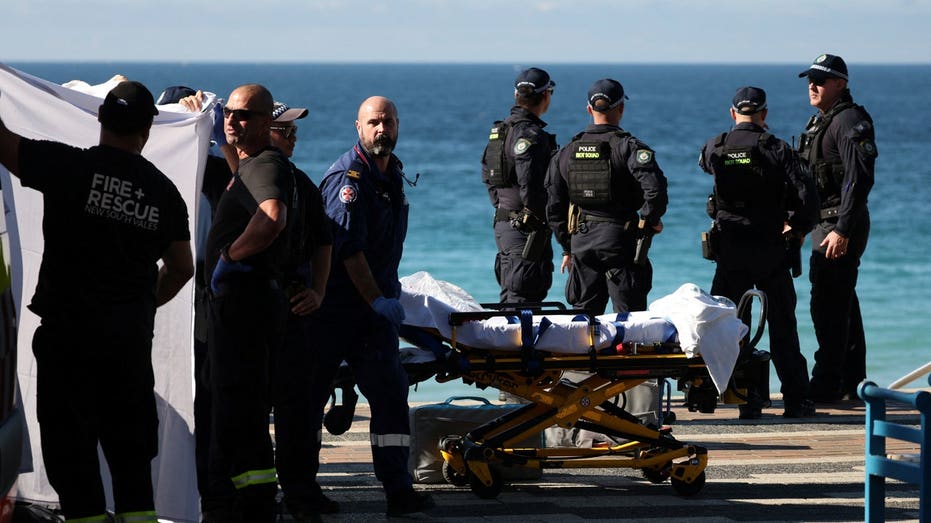
A 30-year-old woman was rushed to a hospital Saturday with serious injuries after being attacked by a shark at a Sydney beach, the latest in a string of recent shark attacks off Australia's coast.

Officials said emergency crews responded to Coogee Beach on Saturday morning following reports that a swimmer had been bitten.

The woman was airlifted to a hospital for treatment, police said in a statement.

"The woman was pulled from ⁠the water by members of the public who commenced ​first aid," police said.

AUSTRALIAN TEENAGER DIES IN DEVASTATING SHARK ATTACK, NEARLY 100 YARDS FROM POPULAR BEACH: REPORT

Authorities said she suffered serious injuries to her arm and leg.

Coogee Beach and two nearby beaches were closed following the attack.

The incident comes amid a recent series of fatal shark attacks across Australia.

SHARK ATTACK DEATHS SURGE ABOVE DECADE AVERAGE IN 2025

Last week, officials said a 35-year-old fisherman was killed by a suspected shark measuring nearly 15 feet long off the coast of Western Australia.

The man was spearfishing near Michaelmas Island, a protected sand cay near Albany.

On May 24, 39-year-old Michael Jensz was killed after suffering fatal injuries during a suspected bull shark attack while spearfishing along the Great Barrier Reef.

'LARGE SHARK' KILLS MAN AT AUSTRALIAN BEACH, WITH WITNESS DESCRIBING HEARING SCREAMS OF 'DON'T BITE ME!'

Just days earlier, on May 16, 38-year-old Steve Mattabonni was killed in a suspected great white shark attack near Rottnest Island, a popular tourist destination off Western Australia.

Earlier this year, a 12-year-old also died following a shark attack in Sydney Harbour.

Dozens of beaches along Australia's east coast were temporarily closed in January after four shark attacks were reported over a two-day period.

Officials said heavy rain had created murky water conditions that may have attracted sharks while reducing visibility.

CLICK HERE TO DOWNLOAD THE FOX NEWS APP

Australia averages about 20 shark attacks each year, according to the Australian Institute of Health and Welfare.

Fox News Digital's Brie Stimson and Reuters contributed to this report.

Mike Waltz says Gulf allies back Trump’s Iran pressure campaign after regional trip: ‘Zero daylight’

12 June 2026 at 21:01

U.S. Ambassador to the United Nations Mike Waltz said Gulf allies are backing President Donald Trump’s blockade and economic pressure campaign against Iran, telling Fox News Digital after a trip to Bahrain, the United Arab Emirates and the United Kingdom that regional leaders believe Tehran is feeling the pain.

Waltz spoke to Fox News Digital on Thursday evening shortly after landing back in the United States, as reports of a possible deal with Iran began to emerge. He said the situation was still shifting by the hour, noting that Iran had launched another strike on Bahrain shortly after he left the region.

Waltz, the highest-level U.S. official to visit the region since the war began, said Gulf partners strongly support the administration’s efforts to keep pressure on Iran through both the blockade and Treasury Secretary Scott Bessent’s "Operation Economic Fury."

SCOTT BESSENT SAYS IRAN UNDERSTANDS 'BRUTE FORCE' AS TRUMP WEIGHS OPTIONS AMID NUCLEAR STANDOFF

"They very much support the blockade," Waltz said, adding that allies shared with him "in a number of ways" how Bessent’s economic campaign is affecting the regime. The pressure campaign, Waltz said, is designed to squeeze Tehran while Trump continues negotiations aimed at preventing Iran from obtaining a nuclear weapon.

On Friday, an unnamed U.S. official told reporters in a briefing: "We do expect to be signing this agreement with Iran over the next few days. We assess it at 85%, but not 100%. We feel very good about the deal. We are not quite at the finish line, but we are very close"

Waltz said, "The UAE, in particular, believes that you have to keep that pressure and a very credible pressure," he told Fox News Digital. "That’s what the Iranians understand and respond to."

Waltz said leaders in the region validated U.S. assessments that Iran’s economy is deteriorating under the combined weight of sanctions, military pressure and isolation. He said Iran’s currency is "tanking," foreign currency reserves are running out, inflation is continuing to rise and the regime is struggling to pay the military, government employees and police.

TRUMP’S 'ECONOMIC FURY' SQUEEZES IRAN — BUT CAN TEHRAN OUTLAST THE PRESSURE?

"I think the regime is going to be increasingly desperate," Waltz said, adding that Trump, Secretary of State Marco Rubio, Scott Bessent, Steve Witkoff and Jared Kushner would use that pressure "to their advantage."

In the UAE, Waltz met with President Sheikh Mohammed bin Zayed and the foreign minister, describing the Emiratis as among the most active regional partners against Iran. "There is zero daylight," Waltz said.

Waltz added the UAE has "both the capability and the will" to act, and said the Emiratis are prepared to take "short-term pain" to achieve the longer-term goal of blocking Iran from obtaining a nuclear weapon.

The UAE has been hit hard during the war. Waltz said the country had taken "by far the most missiles, the most drones, the most hits," but had moved quickly to repair damage and restore operations. 

Waltz also pointed to the Abraham Accords as a major factor in the UAE’s posture, saying the country’s growing partnership with Israel has become an "important shift" in the regional alignment against Iran.

Bahrain was another central stop on Waltz’s trip. The country hosts the headquarters of the U.S. Fifth Fleet and has been directly exposed to Iran’s attacks and threats around the Strait of Hormuz.

MIKE WALTZ PUSHES UN RESOLUTION TO STOP IRAN MINING KEY GLOBAL SHIPPING ROUTE

"Until you go and really sit with them, you can’t appreciate what a strong ally they are," Waltz said.

He said U.S. and allied teams in Bahrain are working with global shipping companies, local shipping officials, insurance companies and other maritime actors as the U.S. seeks to keep vessels moving through the Strait of Hormuz, one of the world’s most important energy chokepoints.

Waltz accused Iran of making a "phenomenally bad decision" by attacking its neighbors, including hotels, port facilities and energy infrastructure. During one visit to a petroleum site, he said he saw evidence that Iran had targeted fire suppression systems and first responders before striking storage tanks, in an apparent effort to maximize damage.

"The Iranians were deliberately targeting fire suppression systems," Waltz said. "They were deliberately targeting first responders first."

Despite the strikes, Waltz said allied air defenses have had "over a 90% success rate" in shooting down Iranian missiles and drones, with U.S. forces working "hand in glove" with Gulf partners.

CLICK HERE TO DOWNLOAD THE FOX NEWS APP

Waltz ended his trip in the United Kingdom, where he said officials have been strong partners at the U.N. Security Council on Iran. He acknowledged "hiccups" and "speed bumps" over basing and access issues, but said many of those concerns had been "smoothed over."

"When we’re working to keep the Iranians isolated diplomatically," Waltz said, "they’ve been very good to work with."

Expert warns of 'general escalation' of fighting if Houthis resume Red Sea campaign

12 June 2026 at 14:47

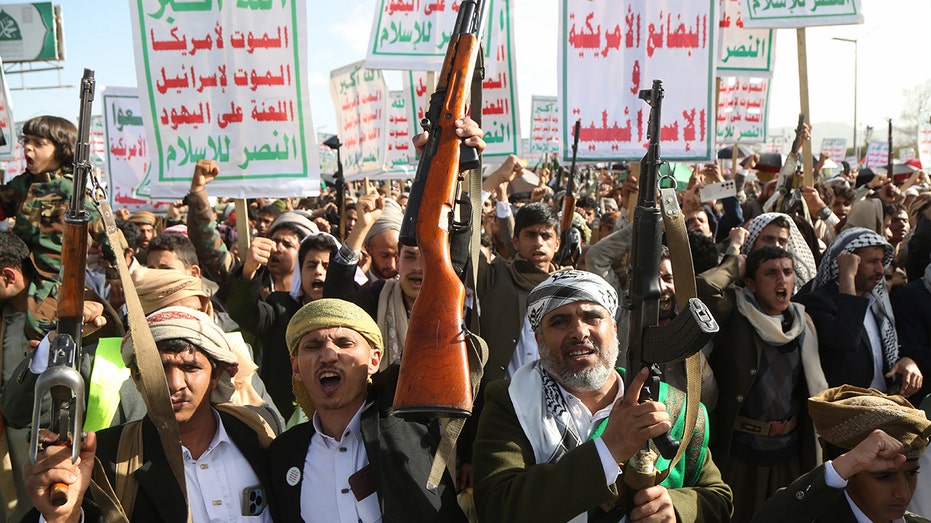
The U.S. has hit back against threats to now block another Middle East waterway by Iranian terror proxy, the Houthis.

Earlier this week, the group declared a complete ban on Israeli-owned ships using the Red Sea, declaring them to be "legitimate targets."

The Red Sea and the waterway through its narrow Bab-el Mandeb Strait has become the main route for oil to ship out of the Middle East to Asia since the Strait of Hormuz has effectively stopped functioning as the main route of navigation for shipping.

IRAN'S AFRICA ACTIVITIES POSE 'SIGNIFICANT THREATS TO US NATIONAL SECURITY'

Houthi spokesperson Yahya Saree posted on Monday, "We declare a complete and total ban on Israeli maritime navigation in the Red Sea, and we consider all enemy movements to be legitimate targets."

In a statement to Fox News Digital, a State Department spokesperson struck back: "The escalatory actions of Iran and their Houthi proxies are unacceptable. These dangerous actions only serve to further enflame tensions and further disrupt global supply chains. We will continue to work with our partners to ensure freedom of navigation in the Red Sea and the Strait of Hormuz." 

Edmund Fitton-Brown, a senior fellow at The Foundation for Defense of Democracies, told Fox News Digital, "The Houthis have indeed risen to the challenge, at least verbally. In common with much ‘Axis of Resistance’ rhetoric at present, the intention appears to be to leverage U.S. political nervousness and market volatility, and to drive a wedge between the Americans and the Israelis."

Fitton-Brown, a former U.K. ambassador to Yemen, added, "Provided the allies keep talking to each other, the Israelis respond proportionately, as they have done, and the Iranians continue to provoke President Trump with actions like the downing of the helicopter, these tactics are unlikely to achieve significant success."

"It will be interesting if the Houthis do go all in, and resume their campaign against Red Sea shipping with full intensity," Fitton-Brown said, adding, "This will draw international anger and likely result in Israeli and U.S. strikes on Sana'a and Hodeida. There is potential for a general escalation if this happens, albeit one in which the allies have a clear military advantage."

US STRIKES ON YEMEN CONTINUE AFTER HOUTHI MISSILE HITS BY ISRAELI AIRPORT; TERROR GROUP VOWS 'AERIAL BLOCKADE'

Landlocked Ethiopia acts as regional anti-terrorism buffer

Such actions come as reports emerge that Ethiopia, the Red Sea region’s most populous country, is stepping up as a major U.S. ally against Islamic terrorism.

While landlocked, Ethiopia has a population of some 130 million, making it the largest nation in the Horn of Africa. Located near parts of the Red Sea corridor, the country is roughly 60% Christian, according to a recent report by the Association of Religion Data Archives.

And despite it being landlocked, Ethiopian researcher Blen M. Diriba told Fox News Digital that the country acts as a strategic roadblock or "a keystone state" on the Islamist expansionist "highway" that has formed all the way from Iran to Sudan.

Diriba, executive director of the Horn Review — an Addis Ababa-based research and publication think tank — told Fox News Digital that "Ethiopia, long a frontline U.S. security partner, now sits at the center of an expanding pressure zone where maritime disruption, insurgent violence, terrorist threats, and proxy competition converge."

Diriba added. "Iran’s Bab el-Mandeb threat transforms the Horn of Africa into a militarized frontline, placing Ethiopia at the center of a choke point crisis. With Iranian influence radiating through conflict ecosystems in Sudan, Eritrea and Somalia, the region is beginning to resemble a continuous arc of instability stretching from the Arabian Peninsula into East Africa."

"Ethiopia sits at the center of one of the world's most combustible security corridors," Diriba continued. "And in strategic terms, its relevance to the United States is amplified, not diminished, by that reality: From the Red Sea disruptions driven by the Houthis to the persistent insurgency threat of al-Shabab in Somalia, Ethiopia functions as a massive inland security buffer whose stability directly shapes whether these threats expand or are contained."

IRAN’S KILLER DRONES INCREASE SLAUGHTER IN SUDAN AMID WORLD’S FORGOTTEN WAR

But in addition to being pro-U.S., Ethiopia also has relations with Iran.

Fitton-Brown believes to some extent Ethiopia can be accused of playing both sides, as he said Tehran "has helped Ethiopia with its internal conflicts, giving drone support and military aid to the Ethiopian government during the recent Tigray War."

He added, "There is a new memorandum of understanding built upon that basis, with Iran gaining influence in Ethiopia, while Ethiopia receives military, police and intelligence support to counter its domestic ethnic insurgencies."

 However, Diriba said, "Ethiopia’s engagement with Iran is neither affinity nor alignment, it’s strategic awareness: keeping channels open to engage where necessary, cooperate selectively, and strategically manage its relations with a complex regional actor, while firmly anchoring its core partnerships with its emerging and long-standing partners — the United States being on the top of that list."

"Ethiopia has pursued a flexible multi-alignment strategy, Diriba said, "prioritizing its entrenched security partnership with Washington while keeping open channels with Tehran to preserve diplomatic room to maneuver in an increasingly fragmented Horn of Africa–Red Sea order."

CLICK HERE TO DOWNLOAD THE FOX NEWS APP

Fitton-Brown said relations between the U.S. and Ethiopia "are good, especially in the field of counterterrorism. Both countries use Somaliland to their advantage without having gone so far as to recognize it as an independent state."

Fox News Digital reached out to both the Department of War and the Ethiopian government for comment, but received no response by the time of publication.

Former South Korean President Yoon Suk Yeol sentenced to 30 years over North Korea drone flights

12 June 2026 at 08:30

A South Korean court sentenced former President Yoon Suk Yeol to 30 years in prison Friday in a case that accused him of ordering drone flights over North Korea in an effort to justify his declaration of martial law.

Yoon, 65, was sentenced alongside former Defense Minister Kim Yong Hyun by the Seoul Central District Court.

The ousted president was previously sentenced to life in prison for leading an insurrection following his declaration of martial law in December 2024.

North Korea accused South Korea of flying drones over Pyongyang to drop propaganda leaflets on three occasions in October 2024.

SOUTH KOREAN LAWMAKERS SUPPORT SUSPENDING PRESIDENT’S POWERS AFTER SHORT-LIVED MARTIAL LAW DECLARATION

Then-Defense Minister Kim initially issued a vague denial before South Korea's Defense Ministry said it could neither confirm nor deny the allegations.

Although tensions between the two Koreas escalated following the incident, the drone flights did not lead to any military clashes.

Prosecutors accused Yoon of attempting to create a crisis with North Korea while plotting an authoritarian power grab aimed at removing political opponents and consolidating control.

SOUTH KOREAN COURT RULES EX‑PRESIDENT YOON SUK YEOL GUILTY IN INSURRECTION TRIAL

Before declaring martial law, Yoon delivered a televised address accusing liberal lawmakers of sympathizing with North Korea.

Yoon has argued that he possessed the constitutional authority to declare martial law and said the move was intended to draw attention to what he viewed as obstruction by opposition parties.

His attempt to impose martial law lasted roughly six hours before lawmakers voted to overturn it amid mass public protests.

Yoon was arrested in July 2025 and continues to face multiple criminal proceedings.

CLICK HERE TO DOWNLOAD THE FOX NEWS APP

The insurrection verdict has been appealed by both Yoon and prosecutors, who had sought the death penalty.

The Associated Press contributed to this report.

Starmer in 'seismic' crisis, UK defense chief quits before high-stakes Trump NATO summit

11 June 2026 at 22:00

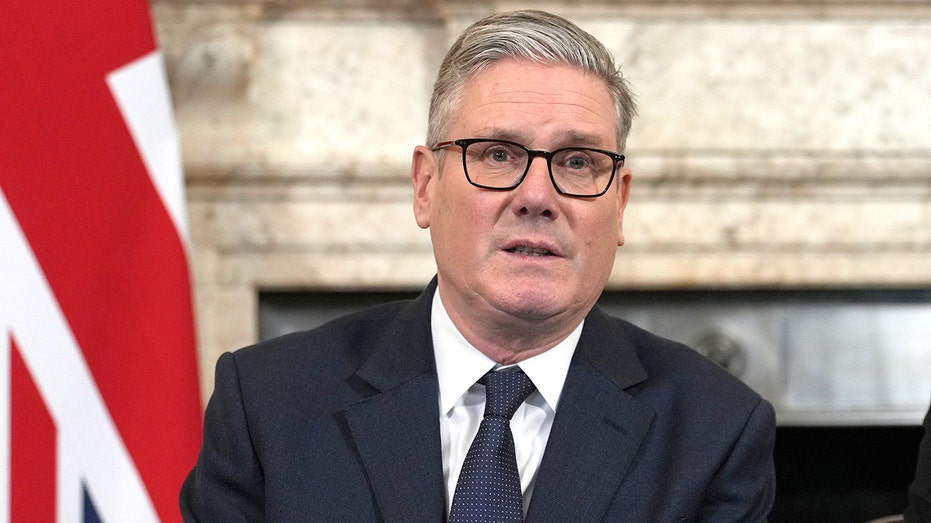
U.K. Defense Secretary John Healey resigned Thursday after clashing with Prime Minister Keir Starmer's government over military spending, dealing the British leader a setback weeks before a critical NATO summit to include President Donald Trump.

Healey's departure stemmed from a dispute over the delayed Defense Investment Plan (DIP) — the government's long-promised roadmap for military investment and readiness — and as NATO allies face renewed pressure from Trump to boost defense spending.

"John Healey’s resignation is a seismic moment for the government and the Ministry of Defense," Royal United Services Institute (RUSI) Senior Associate Fellow Ed Arnold told Fox News Digital.

"For the government, it creates a sequence of political headaches in terms of a replacement, and trying to get the Defense Investment Plan published."

BRITISH PM KEIR STARMER MOVES UK MILITARY INTO 'WAR-FIGHTING READINESS'

Healey had been in intense, late-stage negotiations with Starmer and Chancellor of the Exchequer Rachel Reeves over the scale and timelines of the DIP.

Starmer reportedly refused to set out a timeline to reach 3.5% of gross domestic product (GDP) on defense by 2035 — a promise he made to Trump at last year's NATO summit — and would not commit to a firm date for reaching 3%.

Instead, Starmer offered Healey a deal to spend 2.68% of GDP on defense by 2030, up only marginally from 2.6% next year, Reuters reported.

"You have been unable, and the Treasury has been unwilling, to commit the resources that the nation needs to defend the country," Healey wrote to Starmer in his resignation letter, warning that the financial constraints would "make the country less safe," the outlet reported.

NATO CHIEF URGES MEMBERS TO 'TURBOCHARGE' DEFENSE PRODUCTION AS HE PAINTS PICTURE OF A WORLD BOUND FOR WAR

"If the delay to the Defense Investment Plan was already undermining the government’s credibility on defense, John Healey’s resignation has blown a hole in its side," professor Kevin Rowlands of the RUSI defense and security think tank told Fox News Digital.

"The immediate consequence is not just political embarrassment for No. 10, but a significant loss of planning certainty at a time when the British Armed Forces, the Ministry of Defense, and industry really need clarity on what will be funded, and when," he added.

The political fallout is expected to reverberate across the Atlantic, where Washington has increased pressure on European allies to fulfill their defense obligations. Trump has frequently criticized NATO alliance members as "free riders."

On June 3, Secretary of State Marco Rubio also told the House Foreign Affairs Committee that the upcoming Ankara summit would be the "most important meeting" in NATO’s history because there are some things "that need to be cleared up and fixed."

He added, "The United States is still in the NATO alliance, and we'll be there."

TRUMP EFFECT FORCES GERMANY TO REPRIORITIZE DEFENSE AS NATION PLAYS CATCH-UP IN MILITARY SPENDING

However, U.S. officials have made it clear that patience is wearing thin.

"Ahead of next month’s NATO summit, POTUS has been clear: Allies must fulfill their commitment to spending 5% of GDP on defense," U.S. Ambassador to NATO Matthew Whitaker posted on X this week.

Furthermore, a U.S. official noted that a U.K. funding package far lower than 18 billion pounds ($23 billion) would send a highly "negative" signal to Trump ahead of the Ankara meeting, according to The Times.

Starmer has pledged to lift spending to 3% in the next Parliament but Healey’s exit has exposed that the current strategy leaves the U.K. lagging behind key allies. By comparison, Germany plans to spend 3.7% of its GDP on defense by 2030.

CLICK HERE TO DOWNLOAD THE FOX NEWS APP

"Healey knows the threats we face, he knows the capabilities and shortfalls the armed forces have, and if he believes that the financial settlement is not enough to keep the country safe — to the extent that he cannot honorably stay in post — then we are in trouble," Rowlands added.

"While the impact will mainly be felt on Whitehall, the international implications are severe with a NATO summit just three weeks away," Arnold noted.

The New Documentary ‘An Ordinary Insanity’

11 June 2026 at 20:41
Movie poster for "An Ordinary Insanity"

This article was originally published by Progressive Hub on June 11, 2026. It is shared here with permission.

This film presents a synthesis of my father’s book The Doomsday Machine. His book depicts the evil murderousness of nuclear war plans, and the particular dangers posed by ICBMS, with their first strike capability, intended to be launched on warning.

He believed that with these weapons both the U.S. and the USSR/now Russia had constructed Doomsday Machines, capable of destroying most life on earth — machines that are particularly dangerous because neither side acknowledges this reality but continue to proceed as if there were some circumstances in which it was possible to win a nuclear war.

The epigraph from Dad’s book is from Nietzsche: “Madness in individuals is something rare; but in groups, parties, nations and epochs, it is the rule.”

And I am very glad that this film expands on that particular theme with the title: “Ordinary Insanity” — ordinary, as he says, because it is so widely shared.

And that points to a theme that underlies his most recent, posthumous book, Truth and Consequence: Reflections on Catastrophe, Civil Resistance, and Hope. These reflections, drawn from notes he wrote for himself over fifty years, reflect his deep meditation on what kind of flaw in the human species makes us vulnerable to this kind of insanity.

In other words, we have to face, on the one hand, the particular danger posed by the weapons we have created and the strategies that dictate their function and use. But we also have to contend with the kind of danger posed by human beings — all of us capable of participating in projects that are evil, participating in the widest sense through our silence.

If we are to dismantle the Doomsday Machine, it will require widespread and concerted efforts to awaken from the spell of this ordinary insanity. In other words, we need to cultivate an ordinary sanity.

One of the ways of promoting that is through educational efforts such as this film, which may alert the public to the dangers we are facing. But it will also require widespread conscientious action, a kind of pandemic of courage, wisdom, enlightenment, and dedication to the survival of our planet.

Only when such sanity becomes ordinary will we have a chance of surviving the nuclear era.

My dad said that until his last breath he would continue to do everything he could to avert this peril. I am happy that through this film, even after his last breath, he may continue to plant seeds of sanity and hope.

      An Ordinary Insanity is free for viewing on the film’s website or on YouTube.

Inside Tehran: Iranians describe IRGC's brutal rule, poverty — ask Trump to 'stay the course'

11 June 2026 at 19:09

A fragile ceasefire that many Iranians say does not feel like a ceasefire has given some people inside Iran the courage to speak out, despite what they describe as enormous personal risk.

The accounts come as President Donald Trump said from the Oval Office that the U.S. had reached what he called "a great settlement of the war with Iran," adding that the agreement was still "subject to finalization of documents" and could be signed in Europe in the coming days. The announcement followed weeks of military escalation and fragile negotiations, including U.S. strikes after Trump blamed Iran for the downing of a U.S. Apache helicopter near the Strait of Hormuz and earlier warnings that Tehran would be hit "very hard" if it failed to accept a deal.

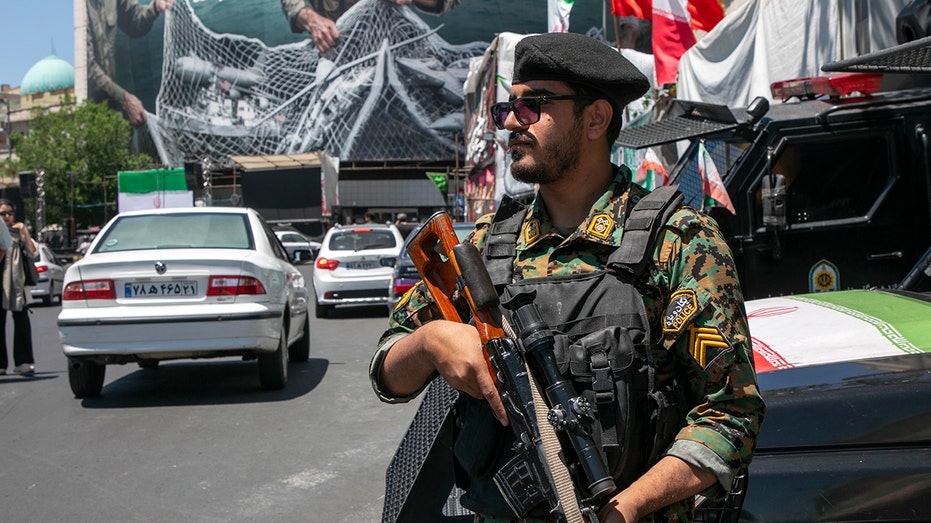
Inside Iran, three young voices described a country where repression is becoming even more visible, the Islamic Revolutionary Guard Corps is expanding its presence on the streets, and ordinary people are struggling to afford basic necessities.

RED CROSS SHARES AUDIO OF IRANIAN CIVILIAN EXPLAINING SITUATION ON THE GROUND IN TEHRAN: 'NO RESPITE'

All three spoke to Fox News Digital through written messages because of security concerns and internet restrictions inside Iran. Their names have been changed to protect their identities.

They described a similar reality: checkpoints across major streets, fear of the Basij, the hardline volunteer militia under the Islamic Revolutionary Guard Corps, and the Revolutionary Guards itself, renewed enforcement of hijab rules, mass layoffs, long lines outside bakeries and a growing sense among young Iranians that the future has disappeared.

‘The curtain has been pulled back' 

"The influence of the Revolutionary Guards always has been present, and everything has operated within their ideological framework. Now, their interference is more obvious and easier to see," Hassan said. "Now the curtain has simply been pulled back."

Milad described a city transformed by security forces.

"The atmosphere in cities and government offices has become much more securitized. Security forces are now visible around almost every major square and intersection, and there are numerous checkpoints throughout the cities," he said. "Individuals affiliated with the security apparatus or the Basij are increasingly being given positions of authority and influence."

At the beginning of the war, Milad said, authorities appeared to ease some social restrictions, including enforcement of hijab rules. But he said that pressure has since returned, adding that the regime is not only targeting opponents, but also silencing supporters who cross political red lines.

IRAN REGIME REPORTEDLY ISSUED NATIONWIDE SHOOT-TO-KILL ORDERS AS PROTEST DEATH TOLL SURGES

"For example, a group staged a sit-in protest against negotiations with the United States," Milad said. "Security forces intervened and told them that they were disrupting public security. They were warned that if they did not leave, they would be arrested."

Ali, a student in Tehran, Iran, said the Islamic Revolutionary Guard Corps control feels more open than ever.

"It can be said that if previously 80% of the country was controlled by the Revolutionary Guard and the rest by the government, now 100% of the country is in the hands of the IRGC," Ali told Fox News Digital. "When you drive through the streets and reach checkpoints, you don’t even dare look them in the eye because they can do whatever they want."

"No one dares get into trouble with people who are members of organizations like the Basij, because they can report your name and have you arrested," he added. "They have become more brutal than ever, and people know that if they take to the streets, the Revolutionary Guards can easily kill them and no one can do anything about it."

Ali said Basij members who once hid their affiliation now display it openly. 

FORMER IRANIAN PRISONERS REVEAL TORTURE HORRORS AS REGIME KILLS PROTESTERS ON SIGHT DURING CRACKDOWN

‘We couldn’t even breathe' 

The accounts come against the backdrop of Iran’s long history of violent crackdowns on dissent. 

Iran International reported that more than 36,500 people were killed during the January crackdown, while Amnesty International described January 2026 as the deadliest period of repression by Iranian authorities in decades and said deaths rose into the thousands.

Milad, who said he witnessed the crackdown, described the impact it had on ordinary Iranians.

"Before the war, we couldn’t even breathe. We couldn’t sleep at night," he said. "The conditions were very difficult for most people who had seen that massacre. After the war, we were able to sleep more easily at night, and we felt a bit more at ease. Now, even though the war is still ongoing, we continue to worry about the families of the martyrs and those who are in prison, under torture, and facing the executioner."

The new war and the U.S.-led pressure campaign that began Feb. 28 have raised hopes among some opponents of the regime that the Islamic Republic could be weakened or even collapse. But the Iranians who spoke to Fox News Digital said that, for now, the result on the ground has been a more visible security state.

US ECONOMIC CHOKEHOLD ON IRAN REACHES PEAK LEVERAGE AS COLLAPSE RISKS EMERGE

Bread lines and vanishing future 

The economic pressure also is being felt across daily life.  

Iran already was struggling with inflation, currency collapse, corruption and sanctions before the war. 

Since then, growing economic strain has been reported, with businesses crushed by high prices, supply-chain disruptions, internet blackouts and rising unemployment. Iran’s official statistics center reported annual inflation of 53.7% in April, with food inflation above 115%, according to the Associated Press.

Ali said, many young Iranians see almost no path forward.

"The economic situation has become so bad that almost all industries are on the verge of collapse and are simply trying to survive," he said. "Many companies have laid off workers, including me. Many of my engineering-student friends have also been laid off. Families can no longer financially support their children." 

"I see many more older men and women than before who clearly were not garbage collectors but are now searching through trash," Ali said.

"Almost all of us young people are convinced that we have no future," he added. "At best, if there is anything left from what we earn, we can spend it on going to a café. Buying a phone or clothes has become difficult; buying a car is a dream. Prices have become so high that some days we can barely afford our two main meals and nothing else. Snacks, fruit and similar things are no longer part of life."

Milad described a similar picture, saying layoffs, unpaid salaries and rising utility bills are crushing families.

"The government is trying to collect more money from people through higher taxes. Utility bills for water, electricity and gas have become extremely expensive," he said.

He said bakeries remain crowded not only because of war fears, but because bread has become one of the only affordable foods left.

"Bread has become the main staple on many family tables," Milad said. "Medical costs are extremely high, and many people are afraid to visit a doctor because the costs of medication, tests and treatment are so expensive."

Hassan, however, said the economic pain is bearable only because some Iranians believe it could eventually help bring down the Islamic Republic.

"We believe that with the return of a government that truly represents the people, under the leadership of Crown Prince Reza Pahlavi, economic conditions will improve in the future," he said.

Reza Pahlavi, the son of Iran’s late shah, has lived in exile for decades and has increasingly presented himself as a unifying figure for Iranians seeking a post-Islamic Republic future. His supporters inside and outside Iran argue that any transition should lead to a referendum and a democratic system.

EXILED IRANIAN PRINCE SAYS REGIME ‘VERY CLOSE TO COLLAPSING' AMID NATIONWIDE UNREST

Warning against appeasement 

The Iranians who spoke to Fox News Digital warned the Trump administration against negotiating with the regime or easing pressure too soon.

"I would like to tell the Western world that appeasement of the Islamic Republic is futile," Hassan said. "These are dishonest and deceptive people who, according to their religious beliefs, practice taqiyya in order to deceive others and maneuver their way through difficult situations."

"These are not people who can be reformed," he added. "Appeasement of them is harmful to the entire world. It is extremely naive to believe that meaningful negotiations can be conducted with such individuals."

Ali said he believes the clerical regime would give up uranium if it allowed its leaders to stay in power.

"We only hope that the Islamic Republic falls, whether through war or through an agreement," Ali said. "The clerics are far too shameless to fight to the death over uranium. They would be willing to hand over the uranium to the United States if it meant staying in power and continuing to plunder Iran. But they are certainly careful to avoid suffering the same fate as Gaddafi."

His message to Washington was direct.

"The only message I have for the U.S. government is: save the people of Iran from the clerics and free Iran from the Islamic Republic," Ali said.

CLICK HERE TO DOWNLOAD THE FOX NEWS APP

Milad said many Iranians are watching Trump closely and fear another moment when the West chooses negotiation over the people in the streets.

"Iranian people have hope that the American administration will be strong and stand on their side," he said. "We don’t want another Obama situation. Iranian people and their blood are not oil prices."

"We have one message to the president, and that is to continue," Milad said. "Here in Iran, we no longer say, ‘Obama, Obama, either with us or with them.’ Now we’re saying: ‘Trump, don’t be Obama. You are with us, not with them. President Trump, stay the course.’"

Fox News Digital reached out to Iran’s mission to the United Nations for comment. 

Pope Leo hits beaches of popular European migrant entry point after criticizing global immigration policies

11 June 2026 at 17:25

Pope Leo XIV landed in Spain's Canary Islands, an epicenter for incoming migrants seeking entry into Europe, on Thursday just days after criticizing the country's immigration policies in a speech to Spain's Parliament.

Pope Leo will meet with 1,000 migrants on Friday to cap off his apostolic journey to Spain, the European country with the sixth largest Christian population on the continent.

Following his parliamentary speech Monday in which he took aim at Europe's immigration polices, Pope Leo landed Thursday on the island chain's Gran Canaria, according to Reuters.

On Thursday he met with migrants and leaders of international organizations that assist migrants, holding a moment of silence for migrants who died trying to reach Gran Canaria at Port of Arguineguin, a dock which made headlines in 2020 after over 1,000 migrants ended up stranded there during the Covid-19 pandemic.

POPE LEO SAYS COUNTRIES HAVE RIGHT TO CONTROL THEIR BORDERS, ADVOCATES FOR HUMANE TREATMENT OF MIGRANTS

Relief organizations came to call the Port of Arguineguin the "Dock of Shame" after the migrant crisis, a theme Pope Leo seemed to pick up on while speaking at the port Thursday.

"Dear migrants, before saying anything else to you, I want to bow before your dignity," the pope said. "You are not just numbers or files. You are people who have left behind families and homes. You have dreams that no one has the right to despise," Pope Leo said at the dock.

"We cannot grow accustomed to counting the dead," he added.

POPE LEO CALLS FOR CHRISTIANS TO TREAT FOREIGNERS WITH KINDNESS AS HE CLOSES CATHOLIC HOLY YEAR

He also called for "legal and safe pathways" for immigration worldwide.

Located less than 100 miles off the coast of West Africa, Gran Canaria has been the destination for thousands of Africans, many of whom have lost their lives attempting to traverse the volatile waters in small boats.

Over 3,000 people died trying to make the journey in 2025 alone, according to the non-governmental organization (NGO) Caminando Fronteras.

'YOU'RE DESTROYING YOUR COUNTRIES': IS EUROPE FINALLY HEEDING TRUMP'S WARNING ON ILLEGAL IMMIGRATION?

The Canaries have seen a massive uptick in migrant entries since 2015. In 2024 the archipelago broke records with 46,843 irregular migrants compared to under 1,000 in 2015, according to Reuters.

Speaking to media at Pope Leo's event, a boat captain who assists charities and NGOs in ferrying migrants said he had personally helped save over 20,000 migrants in the last 18 years, Reuters reported.

"It's a number that makes me sick and that you cannot forget," the captain, Tito Villarmea, told Reuters. "I wish we ​didn't have to save anyone," he continued.

'60 MINUTES' ACCUSED OF USING CATHOLIC CARDINALS TO PUSH LIBERAL AGENDA WHILE IGNORING ABORTION STANCE

Under Prime Minister Pedro Sanchez, Spain's socialist government has liberalized the country's policies on migration, approving a plan in April to grant 500,000 undocumented migrants legal status.

Spain's conservative lawmakers, meanwhile, fired back after Pope Leo's Monday speech to Parliament.

During his address to lawmakers, Pope Leo called migration a "tragic drama" and said discrimination against people based on "national, ethnic, religious or linguistic origin, or because of their economic or social status" was a violation of the "universal principle of the equal dignity of all human beings."

CLICK HERE TO DOWNLOAD THE FOX NEWS APP

But Santiago Abascal, who heads Spain's conservative Vox party, countered making a point that Vatican City has policies against illegal immigration as well.

"I like the Vatican state's migration policy. If someone enters illegally or with violence, they are fined, imprisoned and banned from entry. I would like a similar migration policy for Spain," Abascal told reporters Monday.

Google’s new AI-fueled search bar threatens to further upend journalism industry

The Google logo is seen in Krakow, Poland, on October 1, 2025. Photo by Artur Widak/NurPhoto via Getty Images

This article was originally published by Truthout on June 09, 2026. It is shared here under a  Creative Commons (CC BY-NC-ND 4.0) license.

Google made an announcement last month that could turn the journalism world upside down, accelerating the internet’s shift toward an overwhelmingly AI-driven landscape and serving the Trump agenda of media suppression.

At its developer conference in May, the company announced the most disruptive changes to Google Search in over 25 years. Google Search will further demote its index of the web — a list of links that information-seekers can explore as they choose. Instead of prominently displaying links, it will increasingly become a destination that answers questions directly through AI, linking only to the sources it decides to reference in its overview. On the majority of our tests, the AI overview was followed by a heavy block of sponsored results and a combination of videos, short clips, trending posts, and discussions. Index links — for example, to articles on news sites and research studies — were given only a small fraction of real estate. Additionally, Google is aggressively pushing readers to use AI Mode, which completely removes the index links.

In practical terms, this means users of the world’s largest search engine will see, in response to their queries, a summary generated by an AI bot developed by a corporate behemoth with close ties to the Trump White House.

This seismic move builds upon the launches of AI Overview in 2024 and AI Mode in 2025, shifting toward nearly eliminating the user’s ability to search autonomously, and toward an overwhelmingly AI-driven experience of the internet (and therefore, for many people, of life).

We must take into account the political context in which this shift transpires. Alphabet (Google’s parent company), along with Facebook’s parent company (Meta), as well as Amazon, Apple, Microsoft, and Nvidia, were among major tech companies that donated to President Donald Trump’s inauguration. They have also consistently capitulated to Trump’s recent manipulations.

Last fall, Alphabet’s subsidiary YouTube agreed to a $24.5 million settlement in a lawsuit stemming from the platform’s suspension of Trump’s YouTube channel. The majority of the settlement will go toward Trump’s now-infamous White House ballroom. Meta, similarly, agreed to a $25 million settlement in 2025. $22 million of that sum was designated to go to Trump’s presidential library.

Meta, like Google, has long been making moves that have severely destabilized the news industry. Facebook CEO Mark Zuckerberg decided in 2018 that the platform would prioritize showing Facebook users posts made by their friends and dramatically reduce their ability to see posts made by news organizations that they had chosen to follow. In other words, due to a single algorithm change, the more than 758,000 people who had at the time eagerly signed up to receive links to all of Truthout’s articles in their Facebook feeds suddenly stopped seeing the majority of our posts. This caused a major drop in traffic across the board to news sites, many of which had been persistently encouraged by Facebook to grow their brands on the platform. At Truthout, over 90 percent of our traffic from Facebook disappeared, which decreased our overall traffic by 40 percent and, consequently, the donations we rely on to survive.

Chaotic changes at Twitter also played a role in destabilizing the journalism ecosystem. In 2022, when Elon Musk finalized his takeover of that platform, the move quickly turned the social media site into a cesspool of far right trolls, disinformation, and bot-generated content. This toxicity and disinformation spiral forced many people on the left to leave X, which decreased traffic to progressive websites from the platform.

Over the course of these changes, news organizations like ours have struggled to respond to corresponding significant declines in readership and revenue, along with our readers’ understandable loss of trust in the social media platforms and search engines that initially allowed us to grow. Sudden algorithmic changes, news deprioritization, and increased implementation of AI summaries are shaking the economic foundation of journalism itself. Meanwhile, publishers are being sold the idea that they can cut costs by replacing staff with AI.

The connections to the Trump agenda aren’t hard to see. Trump has been an outspoken critic of news organizations, particularly those that are left-leaning and critical of his administration. Facebook and Google are suppressing journalism on their platforms and weakening news organizations’ ability to hold Trump to account, while also donating to Trump and settling multimillion-dollar lawsuits in his favor.

Whether Facebook and Google are capitulating to Trump due to fear of economic retribution, shared politics, or a desire to increase their stock prices or keep up with technology, the impact is devastating for journalism and democracy.

AI is eroding journalism — and obscuring truth

We’ve already seen some corporate publishers try to jump on the AI bandwagon, arguing that AI will come for our costly but necessary industry one way or another. They frame AI as a way to solve journalism’s most intractable problem: the cost of reporting. But in reality, they’re proposing a vision of journalism resembling content without the journalists — just regurgitated slop of varying accuracy.

Take one high-profile example from last year: Just two months after the Chicago Sun-Times laid off 20 percent of its staff, the paper issued an AI-generated summer reading list sourced from a third-party company. One key problem: Several of the books on the list didn’t actually exist. Some outlets are going so far as to create AI-generated “writers,” complete with fake names and photos, to author their AI-generated articles. And in one notable case, an AI news initiative meant to provide more information in areas with limited access to local news was scrapped after it repeatedly plagiarized the local journalists actually doing that work.

The irony is that the misinformation and deepfakes created by AI make the need for journalists more urgent than ever. For example, during the height of the war on Iran, we watched AI-generated fakery wreak havoc on the sphere of public information. And it should come as no surprise that Grok, Elon Musk’s AI chatbot most known for spewing racist hate and distributing child sexual abuse material, further spread inaccuracies when users called upon it for help with fact checking. Right now, those of us who are real human journalists are still able to act as a bulwark against AI-introduced errors. What happens when we’re taken out of the mix?

These inaccuracies are perhaps one of the reasons why people are reluctant to get their news from AI chatbots in the first place. Make no mistake — these changes are being forced upon an unwilling public. Fewer than 1 percent of Americans say they prefer getting their news from chatbots, compared to other news sources, a recent Pew Research survey found. For people who do use chatbots for news, roughly a third of them say they have a hard time determining what’s actually true, and about half say they see news from chatbots that they think is inaccurate.

They are right to be skeptical. A recent study from the AI research company Forum AI found that the answers that top AI chatbots provided on questions about elections were riddled with errors; more than one-third of responses included fact errors of some type. Oftentimes those errors sounded incredibly precise, the research found, giving an undeserved air of confidence to factual inaccuracies. Those chatbots also regularly pulled from commercial sources in their summaries — even using websites like firearm retailer Ammo.com to answer questions about gun control, the researchers discovered.

Trusted news outlets have policies for issuing corrections and clarifications. Publications like ours maintain policies and avenues for offering such corrections and feedback. Who can a reader hold accountable if a Google AI summary is incorrect? Matched with the likelihood of factual errors, the lack of accountability has terrifying implications.

On a deeper level, the hyperindividualization of chatbots also poses some bleak questions about the escalating fragmentation of our shared sense of reality. For years, we’ve heard media critics sound the alarm about how social media has helped false information travel far further at much quicker speeds. Additionally, Big Tech companies, understanding that their bottom line requires eyeballs to stay on their platforms as long as possible, designed the algorithms that feed us information to be as addictive as possible by sticking us in echo chambers.

Now AI could atomize us all even further. Study after study has shown that AI chatbots are sycophantic, offering users excessive praise and telling them what they want to hear. And the timing — ahead of a high-stakes election, at a moment when trust in media is at new lows, and in a period where the future of journalism itself is at risk — could not be worse.

An existential threat to journalism

As the Google Search changes take their toll, we will very likely see a new round of cost-saving measures at longstanding newsrooms. These steps will likely include massive layoffs and downsizing, more aggressively invasive revenue generation tactics, mergers, consolidation and closures. It will be harder for existing news sites to continue publishing and nearly impossible for new newsrooms to reach a large enough audience to become financially viable.

Organizations like Truthout — ones that depend on community-building and audience growth to sustain their work — will be among the most impacted.

For 25 years, Truthout has survived by publishing impactful investigative journalism and analysis; distributing full editions 365 days a year; and building a community of readers who support us with small, hard-earned donations.

Eighty percent of our $3 million yearly budget comes from small donors alone. Of those, 8,000 readers support us with monthly donations. Back in 2018, when Facebook decided to suppress the circulation of posts made by organizations, thereby cutting readers off from seeing many articles shared by the news organizations they had intentionally decided to follow, Truthout’s total traffic declined by 40 percent, as nearly all of our traffic from that platform disappeared.

The consequences of the impending changes to Google’s search engine promise to be even more explosive. Google Search is our single largest source of traffic; it’s the route by which 27 percent of our readers find us. And visitors who find us via Google Search are more likely to stay for longer, engage with our work, and donate than those who find us through social media.

If even half of that 27 percent disappears, it will have a devastating impact on our journalism.

Truthout is just one example; journalism organizations across the field will be devastatingly affected by Google’s new move, just as they were impacted by Meta’s abrupt algorithmic shift. The entire journalism ecosystem will shoulder this blow, particularly independent publishers and news sites that depend on traffic and aren’t bankrolled by large corporations.

How do we resist?

The sudden shift in Google Search presents us with a pointed question, not only about journalism, but about the future of humanity: How much of our autonomy will we cede to AI? To what extent will we adopt an “oh well!” mentality? Or will we seek creative ways to resist, even when it may feel impossible to confront the largest corporations on the planet?

We cannot allow ourselves to become mired in the trap of inevitability-based thinking.

When grappling with questions around the future of AI, it’s helpful to remind ourselves of how the people — yes, actual humans — are relating to all this. The truth is, most people in the United States are concerned about AI. In fact, in a deeply divided country, AI is something of a uniting cause. A significant majority of Americans rate the “societal risks” of AI as high, with majorities worried that AI will disrupt human connection and inhibit creativity. People in this country are overwhelmingly more worried than excited about how AI has become enmeshed in everyday life. Meanwhile, across political lines, most people in the U.S. oppose the building of data centers in their communities. This is a mobilizable base.

Why should an entirely AI-driven future be inevitable, when most people don’t really want one? Instead of assuming the die is cast, let’s imagine a world in which the onslaught of AI threats is fuel for a broad-based movement.

This movement isn’t just aspirational: It’s already begun. Some of the most hopeful organizing in recent years can be seen in local fights against data centers. Communities are pushing back against corporate giants like Blackstone, BlackRock, and xAI. And from Arizona to New York to Wisconsin and beyond, they’re often winning. According to Data Center Watch, in 2025, local opposition efforts prevented or stalled dozens of data centers, totaling around $156 billion in investment funds.

Meanwhile, we can all respond to Google’s shift toward AI with concrete steps to support independent media and reject the “inevitability” assumption.

Instead of jumping to social media or a search engine for our news, let’s return to visiting news websites directly. Each of us can maintain a list of trusted publications to visit each day. Bookmark your favorites, and return to them. Sign up for email newsletters from your trusted publications, and create filters so that those newsletters arrive in your primary inbox instead of in spam or “promotions.” Subscribe to print publications. Commit to simply reading the news.

Double down on media literacy, practicing discernment and critical thinking as you read and watch the news. In a time when mammoth corporations are attempting to literally tell us what to believe, these commitments are acts of rebellion.

Additionally, since Google Search’s overwhelming prioritization of AI will severely impact revenue for many publications, it’s time to support independent journalism with your money as well as your readership. If you can afford to give, do so, at any level. Without material support from readers and viewers, many independent journalism organizations will fall by the wayside amid the AI onslaught.

For foundations and major donors, there’s a clear mandate here: It’s time to fund our journalism organizations while we experiment and determine new ways of expanding our audiences and driving traffic. We need room to try things — to test out strategies to map an online world beyond Google.

Funding these experiments doesn’t just help one organization or even one sector: As journalism organizations figure out new methods to reach readers, we can share those strategies with other groups, expanding the potential for grassroots groups, unions, and more to connect with human beings in a manner not dictated by the whims of giant corporations’ platforms.

Truthful journalism is an essential public good, and as Google and Meta wage algorithmic warfare against it, it’s essential to protect it. Foundations, donors, and folks connected with money should prioritize journalism alongside other urgent issues, recognizing that trustworthy information is a bulwark against rising fascism.

Finally, we must all adopt a resistance mindset in relation to AI’s slippery slope. Each day, we have an opportunity to choose another way. Resist inevitability. Resist inertia.

Our ability to access facts — and to discern truth from disinformation — is at stake. How will we fight back?

Screwworm parasite ‘no longer contained in Texas’ as Trump USDA doubles down on efforts to blame Biden

11 June 2026 at 15:36
Cattle are herded in a stable on June 05, 2026 in Hamilton, Texas. U.S. Secretary of Agriculture Brooke Rollins has confirmed the detection of the New World screwworm—a parasitic fly whose larvae feed on the living tissue of warm-blooded animals—in a cow in Zavala County, Texas. Photo by Brandon Bell/Getty Images
Common Dreams Logo

This story originally appeared in Common Dreams on June 09, 2026. It is shared here under a Creative Commons (CC BY-NC-ND 3.0) license.

The Trump administration has emphasized in recent days that the New World screwworm infection found in a calf in Texas did not pose a threat to the United States’ larger cattle herd, which is at its lowest point in 75 years due largely to drought conditions—but the US Department of Agriculture is now acknowledging that cases of the parasite have been found outside the Texas containment zone and as far away as in New Mexico, as Republican officials attempt to blame the Biden administration for the outbreak.

While Democratic lawmakers are among those connecting the arrival of screwworm—a flesh-eating bug that feeds off the living tissue of warm-blooded animals and had been eradicated in the US in 1966—to cuts by President Donald Trump’s Department of Government Efficiency (DOGE) that specifically targeted screwworm monitoring programs, Agriculture Secretary Brooke Rollins doubled down on claims that an “open border policy” under the Biden administration was to blame.

“This does trace back to the last administration and the open border policy, and the movement of millions of people and their animals up from South America through Central America,” said Rollins with certainty on Monday.

As David Dayen explained at The American Prospect Tuesday, former President Joe Biden placed a ban on bison, horse, and cattle imports from Mexico in 2024, which Trump lifted in February 2025. At the same time, DOGE, under the leadership of Trump megadonor and tech billionaire Elon Musk, cut screwworm monitoring efforts and animal disease control and prevention efforts, slashing 1,300 employees from USDA’s Animal and Plant Health Inspection Service.

Rollins did reinstate the live import ban last May as screwworm cases were rising in Mexico and began funding prevention programs in Texas. But a $600 million facility for breeding sterile screwworm flies—a key component of successful eradication efforts—is not scheduled to be completed until late next year, and sterile flies that have been dispersed from a facility that opened in February at Moore Air Force Base in South Texas only amount to “about one one-hundredth of what it would take each week to eradicate the pest,” Dayen wrote.

He also noted that Rollins has attempted to blame Biden—who has not been in office since January 2025—despite the fact that the total average lifespan of a screwworm fly is 21 days.

“The more likely explanation is that an administration with an antipathy to government ignored government’s purpose until it was too late,” wrote Dayen.

The USDA established a 12-mile quarantine area around the affected area last week when the case was detected in South Texas, but on Monday the agency said another case had been found in Gillespie County, over 100 miles from where the initial case was reported.

A dog was also found to be infested in Lea County, New Mexico, more than 400 miles away.

UPDATE: New World Screwworm is no longer contained to Texas.

USDA says that the infested dog announced earlier today lives in Lea County, New Mexico and will be reclassified as the first detection in that state.

And now a goat in Gillespie County, TX, has also been confirmed. pic.twitter.com/KkEYGPTTZZ

— Jonathan Richie (@JRichieTX) June 8, 2026

The parasite is not expected to affect food safety, as it feeds on living tissue, but the outbreak raises concerns about rising beef prices, which are already high due to the low volume of cattle in the US. The high prices of fertilizer and fuel due to the war in Iran, and of equipment and repairs due to Trump’s tariff policy, have also put a strain on the cattle industry.

“The cattle producer in the US has already been under extreme financial stress,” Joe Maxwell, president of Farm Action Fund and a farmer in Missouri, told The American Prospect. “This is serious, the screwworm outbreak. But it’s even more serious because of the financial position they were already under.”

In response to Rollins’ claims, Sen. Patty Murray (D-Wash.) said Tuesday: “Let’s be clear about what happened: DOGE cut the programs and staff that tracked dangerous outbreaks like screwworm.”

“So this has nothing to do with Joe Biden,” she said, “but Trump and DOGE definitely screwed our cattle industry.”

Christian leaders hold emergency summit in Jerusalem to confront global rise in antisemitism

11 June 2026 at 12:40

JERUSALEM — The International Christian Embassy Jerusalem (ICEJ) convened an emergency summit this week amid growing concern over the global rise in antisemitism following the Hamas-led Oct. 7 massacre in 2023.

The three-day conference in the Israeli capital comes at a time when social media influencers are consistently pushing antisemitic hate to their millions of followers.

"Attacking the Jews means attacking the very roots of one’s own faith. It means fighting against the people who gave us the Bible. Jesus was Jewish," ICEJ President Jürgen Bühler told Fox News Digital.

CANADA'S CARNEY PLEDGES ACTION ON ANTISEMITISM AMID BACKLASH OVER NEW ANTI-HATE COUNCIL MEMBERS

"If you don’t fight antisemitism, you are sawing off the branch you sit on. For the church to survive, we need to connect to our roots, (and) fighting antisemitism needs to be at the forefront of every pastor and every leader around the world," he added.

One of the central themes of the conference is replacement theology, a doctrine that holds the church has replaced the Jewish people in God’s plan.

"The Bible is full of God’s eternal plan, which includes the Jewish people. Paul’s statement in Romans 11 that ‘the gifts and the calling of God are irrevocable' relates to Israel. This is a doctrine that goes contrary to what the New and Old Testament are teaching and that’s why we need to have this conference," Bühler said.

"One cannot deny the Jewishness of the Bible. The most frequent word in the Bible is the name of God, and the second most used name is Israel. Jesus was born in Bethlehem, he died in Jerusalem, resurrected in Jerusalem, rose to heaven from Jerusalem, and he is coming back to Jerusalem. If you read the Bible, it is so easy to see the connection to Israel," he added.

HUCKABEE CONDEMNS EFFORTS TO ERASE JEWISH HISTORY TO THE HOLY LAND AS ‘ABSURD’

Israel’s newly appointed special envoy to the Christian world, George Deek, addressed the meeting on Wednesday, while Foreign Minister Gideon Sa’ar and U.S. Ambassador to Israel Mike Huckabee are scheduled to attend the summit’s closing event Thursday at the foreign ministry as keynote speakers.

In a recorded message broadcast at the summit, Israeli President Isaac Herzog thanked Christian leaders for mobilizing against antisemitism.

"We are witnessing a very disturbing surge of antisemitism all over the world. This is a major challenge for humanity. This is the age-old, perhaps the oldest plague in humanity, and we have to stand up together — thought leaders and religious leaders — and say, ‘No more' and teach people about the sources of this evil and how to counter antisemitism," Herzog said.

"I believe that countering antisemitism requires a combination of three major elements: law enforcement, adjudication and education.

"You, dear leaders, have a huge capability of fighting back, and I bless you. Truly, I bless you as the president of Israel for coming here and fighting back, for coming here and discussing how to fight back," Herzog concluded.

Dr. Andrew J. Nolte, who launched Regent University’s Israel Institute in 2024, said students often repeat antisemitic claims, including the accusation that Jews killed Jesus.

"The answer from a Christian theological perspective is that we all killed Jesus. He died for our sins. There is a theological understanding of the guilt we bear for Jesus’s blood," Nolte told Fox News Digital.

ISRAEL LOOKING FOR 'SOLUTIONS' TO OPEN CHRISTIAN SITES AFTER BARRING CHURCH LEADER ON PALM SUNDAY DUE TO WAR

While Israel has faced recent criticism over treatment of Christians — mostly at the hands of a few extremists — the country is seen as a beacon of freedom of religion in the Middle East.

According to Israel's Central Bureau of Statistics, as of December 2025, Israel’s Christian population stood at approximately 184,200, representing 1.9% of the country’s total population. The community grew by 0.7% over the previous year.

Arab Christians account for 78.7% of Israel’s Christian population and comprise 6.8% of the country’s overall Arab population.

Most Arab Christians reside in northern Israel. Among non-Arab Christians, 42% live in the Tel Aviv and Central districts, compared to 33.9% in the Northern and Haifa districts.

Nolte said that Christians in Israel hold prominent positions, noting that the provost of the University of Haifa is a Maronite Christian and that Christian communities in the country report relatively high income levels. He also said that, in most cases involving civil rights and religious freedom brought by Christians in Israel, the outcomes have been decided in their favor.

"If you are comparing Israel to any Muslim country in the Middle East, the status of Christians is much higher. As a Christian, you are better off here than anywhere else in the region," he added.

CHRISTOPHER RUFO: THE POLITICAL RIGHT AND THE ANTISEMITIC INFLUENCER PROBLEM

Christopher Kuehl, founder of Present Witness and co-host of the "One New Man" podcast, emphasized that biblical illiteracy among younger generations is fueling confusion about Israel.

He opened his remarks at the conference by citing a recent U.S. study on Gen Z’s alignment with biblical teachings and how closely its worldview corresponds with scripture, noting that only about 5% demonstrated strong adherence.

"Israel gets thrown into that ignorance, that biblical ignorance. Social media is what teaches children and Gen Z; they spend eight hours a day on it and go to church once a week for 20 minutes. How does one create a message in 20 minutes that will overcome spending eight hours on social media every day?" Kuehl told Fox News Digital.

FAITH UNDER FIRE: NETANYAHU CALLS OUT EFFORTS TO DIVIDE CHRISTIANS AND ISRAEL IN US

Pastor Matthew Earls joined the summit as part of Eagles’ Wings Ministries’ Israel Christian Nexus program, which focuses on young Christian leaders and gives them the opportunity to experience Israel early in their careers and build a well-rounded perspective.

"We want to teach biblical truth so that the church does not look completely different in the next generation," Earls told Fox News Digital. "The greater mission is one of solidarity with the people of Israel and of equipping people with talking points in the hope that dialogue can take place and lead to greater understanding, or at least mutual respect for one another’s positions."

Sacha Roytman, CEO of the Combat Antisemitism Movement, told Fox News Digital Christians and Jews face many of the same challenges in defending their faith, history and future, adding that those who reject Jews and Zionism also reject the Christian worldview because the two are aligned.

"I’m here to share this message with Christian leaders who go back to their communities empowered with more knowledge, more energy and different tools to fight this battle," Roytman said.

CLICK HERE TO DOWNLOAD THE FOX NEWS APP

As part of its research, CAM has examined how social media algorithms amplify antisemitic content and conspiracy theories. 

"We discovered that the algorithms are trained to deliver engaging content that upsets people and keeps them hooked. Often, it is anti-establishment content and conspiracy theories that fuel antisemitism," Roytman said.

More than 200 theologians, pastors and ministry leaders from over 30 countries are attending in person, alongside approximately 3,000 online participants.

UK spy powers draw US scrutiny over alleged Apple encryption backdoor demand

11 June 2026 at 01:32

U.K. surveillance laws drew scrutiny from House Judiciary Committee Chairman Jim Jordan, R-Ohio, June 5 amid warnings they could expose communications of officials and American citizens, according to reports.

The concern centered on the U.K.'s use of secret Technical Capability Notices under the Investigatory Powers Act, which critics say could make U.S. companies weaken encryption or create "backdoors" that weaken encryption while preventing firms from disclosing requests without U.K. government approval.

Critics have argued this could undermine privacy, create vulnerabilities and limit congressional oversight, with one former intelligence official warning of a "standing invitation to Beijing."

"We have already seen how this ends," former Department of Defense official Andrew Badger told Fox News Digital.

JD VANCE 'DIRECTLY' CONVINCED UK TO DROP APPLE BACKDOOR DATA DEMAND, PROTECTING AMERICANS' RIGHTS: US OFFICIAL

"There are legitimate privacy concerns here, and those have been well aired. The less examined issue is national security," Badger said.

"A backdoor compelled by one ally becomes a standing invitation to Beijing, Moscow and Tehran. So, once one government can quietly compel access, others will demand the same, and a one-off concession hardens into a permanent vulnerability," he warned.

According to The Telegraph, a June 5 letter sent by Jordan to U.K. Home Secretary Shabana Mahmood, showed the Trump ally had called for a review.

The report said Mahmood's decision had been to deny a U.S. company permission to speak with Congress about an alleged encryption backdoor notice.

Jordan was also said to have warned that a lack of bilateral coordination raised concerns about the "trust and effective partnership between our two countries."

"Five Eyes works because every partner trusts the others not to weaken the systems they all depend on," said Badger, co-author of "The Great Heist: China's Epic Campaign to Steal America's Secrets."

"If Washington also concludes that U.K. surveillance powers could inadvertently expose Americans and American officials to espionage, it puts real strain on the relationship and makes future cooperation on intelligence and cyber harder to sustain."

US SPIES URGED TO REFOCUS EFFORTS ON AMERICA'S BACKYARD, NEW HOUSE INTEL CHAIR SAYS

On the encryption issue, Badger noted that mainstream encrypted platforms now function as "de facto infrastructure for sensitive communication well beyond the consumer market."

"Any access point built into them becomes a permanent target. It is not a private key the requesting government gets to keep to itself," he said.

U.S. and British cyber officials have also repeatedly warned that an axis of hostile states — including Russia, China and Iran — poses threats to Western security and infrastructure.

As previously reported by Fox News Digital, cyberespionage by groups such as Salt Typhoon, linked to China, has carried out operations targeting sensitive communications.

"China is actively running one of the largest state-backed cyberespionage operations ever uncovered. The Salt Typhoon campaign has targeted hundreds of organizations in roughly 80 countries and, through those intrusions, gained access to sensitive communications and networks used by senior Western officials," Badger warned.

"Chinese state hackers didn't defeat encryption. They walked straight through the lawful-intercept systems telecom providers had built, reaching the communications of senior officials and even information about surveillance targets."

CHINESE BIOWEAPON SMUGGLING CASE SHOWS US 'TRAINS OUR ENEMIES,' 'LEARNED NOTHING' FROM COVID: SECURITY EXPERT

Reports also surfaced that U.K. Foreign Secretary Yvette Cooper used a burner phone during a recent trip to Beijing, raising further concerns about state-sponsored espionage.

Badger noted that the episode reflects a broader pattern of Chinese targeting of British democratic institutions, including the "hacking of senior Downing Street officials' phones and an Electoral Commission breach that exposed the data of roughly 40 million voters," he said.

"The telling thing is that no one issues burner phones for a trip to Sweden or Germany," he said.

"The precaution is itself an admission of the threat environment. The working assumption — correctly — is that anything digital taken into China should be treated as potentially compromised."

The systemic vulnerability also highlights a fundamental contradiction in Western diplomatic strategy, according to Badger.

CLICK HERE TO DOWNLOAD THE FOX NEWS APP

"This case perfectly underscores the contradiction at the heart of the U.K. Labour government's China policy: chasing positive economic relations and expanded trade with Beijing on one hand, while being forced to take elaborate precautions against a state whose core interests remain fundamentally at odds with its own on the other," Badger said.

"You can't simultaneously treat China as a trusted economic partner and a hostile intelligence threat. It's a fundamental contradiction. The need to use burner phones symbolically underscore this."

Colombian lawmakers seek suspension of Trump foe Gustavo Petro over alleged meddling in upcoming election

10 June 2026 at 23:27

Colombian lawmakers are considering a proposal that would temporarily suspend President Gustavo Petro from office amid an investigation into allegations that he improperly intervened in the country's presidential election.

Gloria Arizabaleta, president of Colombia's Commission of Investigation and Accusation, filed a motion Wednesday seeking to suspend Petro from his duties through June 21, according to a document published by the commission.

The proposal stems from an ongoing probe into allegations that Petro engaged in political meddling during the campaign and cites conduct described as "extremely serious or serious."

Petro, whose four-year term is set to expire in August, has been accused of involvement in the presidential campaign of leftist candidate Ivan Cepeda, who represents Petro's Pacto Historico coalition.

US SANCTIONS COLOMBIAN PRESIDENT AND FAMILY OVER DRUG TRAFFICKING ALLEGATIONS

Cepeda is scheduled to face conservative attorney Abelardo De La Espriella in a June 21 runoff election.

The race is being closely watched in Washington because Colombia remains one of the United States' closest security partners in Latin America and a key ally in counternarcotics efforts. The country has long been central to U.S.-backed efforts to combat drug trafficking and organized crime throughout the region.

The suspension proposal faces significant hurdles before it can take effect. Lawmakers and legal experts said the measure would first need approval from all 16 members of the Commission of Investigation and Accusation before advancing to Colombia's Senate for further consideration.

ANTI-CARTEL HARDLINER CHANNELS TRUMP IN BID TO END COLOMBIA'S LEFTIST ERA IN PIVOTAL ELECTION

"President Gustavo Petro has not been suspended; he remains in office," commission member Miguel Silvera Padilla said in a video statement, according to Reuters.

The Commission of Investigation and Accusation, which operates within Colombia's lower house of Congress, is responsible for reviewing complaints and potential criminal or disciplinary charges against high-ranking government officials.

Petro has repeatedly faced scrutiny from political opponents during his presidency, though the latest proposal comes less than two weeks before Colombians head to the polls to choose his successor.

CLICK HERE TO DOWNLOAD THE FOX NEWS APP

The runoff election between Cepeda and De La Espriella is expected to help determine whether voters continue Petro's leftist political project or shift toward a more conservative approach to security and governance.

Representatives for Petro did not immediately respond to a request for comment from Fox News Digital.

Britain introduces sweeping new powers to target foreign state-linked groups including Iran's IRGC

10 June 2026 at 22:00

Britain is moving to give authorities sweeping new powers to target foreign state-linked groups as officials warn of growing threats tied to Iran and other hostile governments.

The National Security (State Threats) Bill introduced Tuesday would give the UK government new powers to crack down on foreign state-linked organizations involved in activities such as assassination plots, surveillance and sabotage. The legislation could potentially be used against Iran's Islamic Revolutionary Guard Corps (IRCG), though officials have not indicated whether the group would be among the first organizations designated.

The proposal comes as British intelligence officials warn of increasing Iran-backed activity inside the UK. Last year, MI5 Director General Ken McCallum said the security service had tracked more than 20 potentially lethal Iran-backed plots and recorded a 35% increase in state-threat investigations.

UK COUNTERTERRORISM POLICE PROBE ANTISEMITIC ARSON ATTACK AS IRAN-LINKED GROUP CLAIMS RESPONSIBILITY

Under the legislation, Home Secretary Shabana Mahmood would have the authority to designate groups responsible for what the government calls "foreign power threat activity." Supporting designated organizations or accepting money from them could carry prison sentences of up to 14 years.

British authorities have also investigated possible Iranian links to several recent incidents, including arson attacks targeting Jewish sites. The UK has separately secured convictions against individuals accused of spying for or acting on behalf of Russian and Chinese entities.

The bill would create a new framework for tackling threats posed by foreign governments and their proxies, an area critics say Britain's existing counterterrorism laws were not designed to address.

UK DEFENSE SHORTFALLS HIGHLIGHTED AS BRITAIN AVOIDS IRAN OFFENSIVE ROLE AMID TRUMP CRITICISM

Labour MP Luke Akehurst, one of Parliament's leading advocates for action against the IRGC, said the organization presents a unique challenge because it operates as part of the Iranian state.

"As well as brutally repressing freedoms within Iran, the IRGC poses a dangerous threat here in the UK, which our existing terrorism proscription regime was ill-equipped to deal with as it is a state actor," Akehurst told The Jerusalem Post.

CLICK HERE TO DOWNLOAD THE FOX NEWS APP

Supporters of the legislation argue it would close gaps in Britain's ability to target hostile state-backed actors without relying solely on terrorism laws.

If approved, the legislation could take effect as soon as next month, with officials expected to make a limited number of designations during the law's first year.

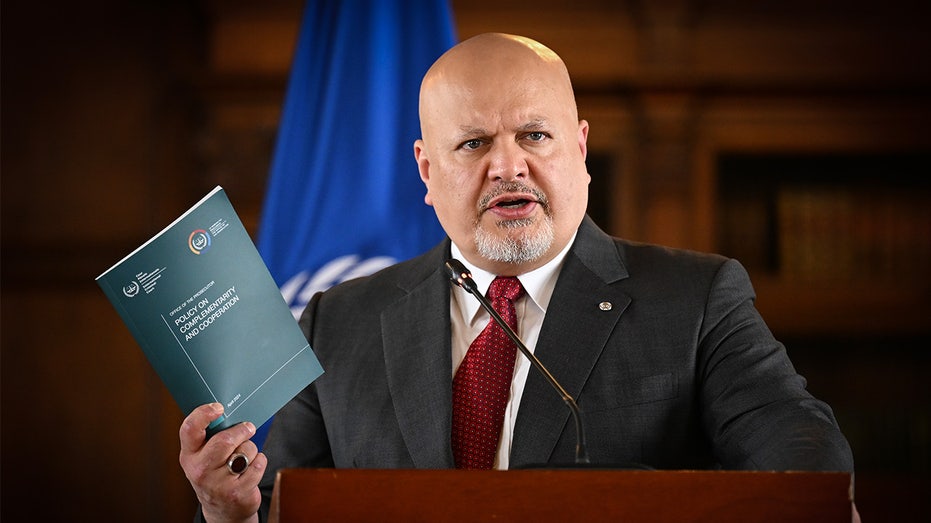
World court prosecutor who went after Netanyahu for war crimes suspended over sexual misconduct

10 June 2026 at 20:39

The International Criminal Court’s chief prosecutor has been suspended with immediate effect after the court’s governing body referred disciplinary proceedings against him to member states following a sexual misconduct investigation.

The ICC, based in The Hague, is a permanent international court created under the Rome Statute to prosecute individuals accused of genocide, war crimes, crimes against humanity and the crime of aggression when national courts are unable or unwilling to act. 

Khan became one of the world’s most controversial prosecutors after seeking arrest warrants for Israeli Prime Minister Benjamin Netanyahu and former Israeli Defense Minister Yoav Gallant, making his suspension a major development well beyond the court itself. Israel and the United States have rejected the International Criminal Court’s jurisdiction, and neither country is a member of the court.

The Bureau of the Assembly of States Parties to the Rome Statute had decided to refer the disciplinary proceedings against Prosecutor Karim Khan to the full Assembly of States Parties, suspend him from duty pending a final decision and convene a special session to consider the matter, the International Criminal Court’s Presidency said in a Tuesday statement. 

ICC PROSECUTOR BEHIND NETANYAHU ARREST WARRANTS STEPS ASIDE AMID SEXUAL MISCONDUCT PROBE

"The Court respectfully invites the Assembly of the State Parties to conclude the process with the highest priority," the court's presidency said. 

Khan, who has denied wrongdoing, led the court’s controversial push for arrest warrants against Israeli Prime Minister Benjamin Netanyahu and former Israeli Defense Minister Yoav Gallant for Israel’s war against Hamas in Gaza.

Khan’s suspension followed an 18-month investigation into allegations of sexual misconduct involving a lawyer in his office. 

Khan’s lawyers have denied the allegations and called the decision "unlawful, procedurally unfair and unsupported by evidence." 

The findings have moved through several layers of review. 

A U.N. Office of Internal Oversight Services investigation found evidence supporting the allegations, while a separate judicial review found the evidence was not enough to prove misconduct beyond a reasonable doubt, Reuters reported. The Assembly of States Parties Bureau, which oversees the court on behalf of member states, nevertheless found that Khan had committed serious misconduct involving nonconsensual sexual activity and recommended his removal, Reuters reported.

The disciplinary probe found Khan had engaged in "serious misconduct" and a "serious breach of duty," The Associated Press reported. 

The case now goes to a special session of the Assembly of States Parties, the International Criminal Court’s 125 member governing body. The final decision lies with the assembly and a date for the special session has not yet been set.

Liz Evenson, international justice director at Human Rights Watch, told Fox News Digital that, "The fact that states parties appear to be taking this seriously is important but the decision is confidential so we can’t comment on it. We will be monitoring next steps closely. Meanwhile, state parties should continue to support the court in its important work across its docket."

CHIEF PROSECUTOR BEHIND ISRAEL WAR CRIMES CHARGES FACES DISCIPLINARY ACTION AMID SEXUAL MISCONDUCT ALLEGATIONS

The International Criminal Court issued arrest warrants for Netanyahu and Gallant in November 2024 after Khan requested them months earlier. Israel and the United States condemned the move, accusing the court of equating Israeli leaders with Hamas terrorists. 

The Trump administration sanctioned Khan in February 2025 over the court's actions targeting Israeli officials, under an executive order targeting ICC officials involved in actions against the U.S. or its allies. The order authorized asset freezes and U.S. entry restrictions, and Treasury later added Khan to its sanctions list.

U.S. Ambassador to the United Nations Mike Waltz told Fox News Digital that the U.S. position on the International Criminal Court "has never wavered."

"We oppose any overreach by the ICC against the United States or our allies. Period," Waltz said. "And we expect our partners to stand shoulder-to-shoulder with us against these outrageous actions."

Waltz said the U.S. is watching the disciplinary proceedings against Khan, while declining to comment on the specifics of the case.

"As for the situation with Prosecutor Karim Khan, this is a bit rich that this prosecutor sought to jail a democratically elected prime minister and now we are tracking his immediate suspension and the ongoing disciplinary proceedings," Waltz said. "Of course, we aren't going to comment on the specifics of that case while it plays out."

The suspension drew immediate reaction from Israeli officials, who argued that the decision further undermines the court’s case against Netanyahu and Gallant.

"Want to divert attention from sex crime accusations? Just make up war crime accusations against Israel! Classic," Netanyahu wrote Wednesday on X. "The ICC is corrupt to the core."

TRUMP, CONGRESS LOOKING TO PUT SUFFOCATING SANCTIONS ON 'KANGAROO' ICC OVER NETANYAHU ARREST WARRANT

Israel’s ambassador to the United Nations, Danny Danon, told Fox News Digital that Khan’s suspension proves the International Criminal Court’s problems go beyond one prosecutor.

"The International Criminal Court's decision to immediately suspend the Chief Prosecutor in The Hague, Karim Khan, following the UN investigation, proves that this body is rotten to the core," Danon said. "Now is the time to cancel the absurd indictments against Prime Minister Netanyahu!"

Anne Bayefsky, president of Human Rights Voices and director of the Touro Institute on Human Rights and the Holocaust, told Fox News Digital that the scandal has damaged the credibility of the entire court.

"The astounding story of the world’s International Criminal Court and its lead prosecutor headed by a criminal, an alleged rapist, is not just about one rotten apple," Bayefsky said. "The entire ICC machine let the process to hold Khan to account drag on for two years after his crimes were first reported."

Bayefsky argued that the court’s actions against Israeli officials should now face renewed scrutiny.

US ANNOUNCES MORE SANCTIONS ON ICC OFFICIALS FOR TARGETING AMERICANS, ISRAELIS

"ICC judges decided that Khan’s efforts to criminalize Israel’s Prime Minister and Defense Minister weren’t tainted by the clear evidence that Khan was trying desperately to use his attack on Israelis to save himself," Bayefsky said. "Khan has taken the credibility of the whole shameful ICC apparatus down with him."

The Presidency said the court’s leadership remains committed to "independent and impartial proceedings," recognition and redress for victims of mass atrocities, and the "dignity, rights and aspirations" of court personnel.

The statement also sought to defend the institution itself, calling the ICC "one of the most significant achievements of human civilisation" and saying the court has a duty to protect "the proper functioning of the Court as a whole and its reputation," the integrity of judicial proceedings, the rights of victims and suspects, and the well-being of court staff.

CLICK HERE TO DOWNLOAD THE FOX NEWS APP

The court did not say whether Khan’s suspension would affect the cases involving Netanyahu and Gallant. 

Fox News Digital has reached out to the International Criminal Court for comment.

Balkans imaginaires

Ceux qui en ignoraient à peu près tout les ont rêvés longtemps et confusément. Les Balkans étaient de remarquables embrayeurs de fantasmes. Frontières indécises, paysages contrastés, ils apparaissaient secrets, à l'écart de la modernité, d'une singularité qui favorise leur réinvention en principautés d'opérette ou en contrées vaguement primitives.

JPEG - 63.3 kio
Hergé. – Image tirée de l'album « Le Sceptre d'Ottokar », 1939
© Hergé-Tintinimaginatio 2026

Les Balkans ont longtemps eu une étrange réputation. À la fois inquiétante et fascinante. Zone floue, aux contours indécis, ils ont, dans l'imaginaire « occidental », fait rêver et frissonner : visage mystérieux d'une « autre Europe », sauvage, primitive, mais aussi riche d'une authenticité qui aurait déserté le monde moderne. De quoi nourrir toutes sortes d'entreprises et de rêveries. La charmante romance ruritanienne par exemple. Un genre littéraire bien particulier, qui s'est développé dans le monde anglo-saxon à la fin du XIXe siècle, puis dans le reste de l'Europe. La Ruritanie, c'est une monarchie d'opérette, une fantaisie jouant des clichés entourant les Balkans, un pays inventé par l'écrivain britannique Anthony Hope dans Le Prisonnier de Zenda (1894), qui connut de nombreuses déclinaisons, témoins d'un succès persistant (1). La Ruritanie est l'un des premiers pays imaginaires, qui vont se multiplier, vaguement situés dans une Europe sud-orientale, à la toponymie d'allure tantôt slave, tantôt germanique. La Syldavie et la Bordurie qu'arpente le reporter Tintin en sont les exemples dessinés les plus célèbres (2).

Ces pays rêvés sont presque toujours des monarchies, grands-duchés ou principautés, dont le souverain légitime est victime d'une usurpation ou disparaît sans héritier direct, avant qu'un heureux hasard ne vienne arranger la situation, grâce à un étranger arrivé dans un pays dont il ignorait tout, mais qui devient l'ami du prince, quand il ne se révèle pas son héritier. Seule l'une des toutes premières romances ruritaniennes, Prince Otto (1885), de l'Écossais Robert Louis Stevenson, connaît une évolution différente, puisque l'indolent souverain de la principauté du Grunewald finit par être déposé et que le pays devient une république.

Ces petits États évoquent bien sûr le Saint Empire romain germanique, dissous en 1806, et surtout l'empire d'Autriche, qui lui succède et deviendra ensuite la double monarchie austro-hongroise. Après l'unification italienne, seule cette dernière connaissait encore un pullulement de seigneuries et de principautés — réunies sous le sceptre des Habsbourg, dont la domination était toutefois contestée par des revendications nationales de plus en plus vives. Les romans ruritaniens, pour l'essentiel des utopies se déroulant dans un présent indéfini mais généralement contemporain de leur création, n'ont d'autre message politique qu'une nostalgie pour des institutions archaïques. Le peuple, généralement légitimiste, y est presque toujours passif, et les intrigues ignorent superbement l'émergence des nationalismes, grande caractéristique du long XIXe siècle.

Or, ce moment fut très particulier dans la région, et son déroulement va contribuer au légendaire balkanique. Alors que nombre de ces pays, qui ont très longtemps connu sous des formes diverses la domination de Constantinople, veulent leur indépendance, les « grandes puissances » vont chercher à les contrôler en leur imposant des dynasties de leur choix. C'est un Wittelsbach, fils de Louis Ier de Bavière, qui devient roi de Grèce dès 1832 sous le nom d'Otton Ier. C'est un prince danois, Guillaume de Schleswig-Holstein-Sonderbourg-Glücksbourg, qui le remplace — sous le nom de Georges Ier, il régnera de 1863 à 1913. En 1866, c'est encore un prince, mais de la famille des Hohenzollern-Sigmaringen, qui est fait roi de Roumanie, sous le nom de Carol Ier (1839-1914). Un cadet de la famille de Saxe-Cobourg-Gotha devient en 1887 prince souverain sous le nom de Ferdinand Ier d'une Bulgarie toujours vassale de l'Empire ottoman. Seuls l'Albanie, le Monténégro et la Serbie ont connu des dynasties autochtones, même si l'on tenta aussi d'imposer en 1913 un prince allemand, Guillaume de Wied, à l'Albanie nouvellement indépendante ; c'est un notable local, Ahmed Zogu, qui finira par se proclamer roi.

Cet investissement par des cadets de familles princières a contribué à fixer la place de la région dans l'imaginaire d'une Europe qui s'attribuait alors la mission de civiliser le monde en le colonisant. Les Balkans n'ont pas été colonisés, ils ont eu des protecteurs. Car le « balkanisme » (3) selon l'historienne bulgare Maria Todorova, dans le droit fil des travaux d'Edward Saïd, serait non pas, comme l'Orient fantasmé, un « envers » de l'Occident, mais plutôt un Occident inachevé, bancroche, bloqué dans son développement par son appartenance pluriséculaire à l'Empire ottoman, et qui devrait retrouver le chemin d'une évolution « normale ». Seule échappe à cette règle la Bosnie-Herzégovine, placée sous mandat austro-hongrois en 1878, après plusieurs siècles sous occupation ottomane, puis annexée en 1908. Directement rattachée à l'administration viennoise, elle fut l'objet du même type d'investissement idéologique que les colonies britanniques ou françaises : l'Autriche devait lui apporter la « civilisation » (4). Ce thème de l'« européanisation » des Balkans va resurgir avec force dans les années 2000 : il ne s'agissait pas seulement de les rapprocher de l'Union européenne, mais de les amener à se défaire de leurs pratiques invétérées de mauvaise gouvernance, de corruption et d'autoritarisme, de leurs « archaïsmes », bref, de les engager sur la voie d'une transformation ontologique. La tutelle ottomane les avait freinés dans leur accès à la modernité, à cause de la guerre des années 1990 ils abordaient la transition postcommuniste avec retard par rapport aux autres, leur destin semblait bien de n'être jamais à l'heure aux rendez-vous de l'histoire… C'est peut-être la raison pour laquelle l'appartenance aux Balkans semble, pour chaque nationalisme, une marque infamante qu'il vaut mieux attribuer aux voisins. Et que fait rage le débat pour savoir si la Slovénie, la Croatie, la Roumanie… relèvent de cette zone mal délimitée comprise entre les mers Adriatique, Égée et Noire, longtemps nommée la « Turquie d'Europe », et que le géographe allemand Johann August Zeune (1778-1853) fut le premier à nommer Balkanhalbinsel, « péninsule balkanique ».

Elle suscita bien des désirs pourtant, cette péninsule. Et il n'est pas question ici des rêves d'exploitation économique, voire de conquête, notamment ceux des Italiens, attirés par cet outre-mer adriatique, empli de souvenirs vénitiens et gros de la promesse d'un empire (5), ou des accomplissements d'explorateurs ou de géographes, comme l'étonnant Guillaume Lejean, « ce promeneur fébrile et mal peigné », petit paysan du Trégor, qui cartographia et dessina la région pour le compte du gouvernement français sous le Second Empire, de 1857 à 1870 (6). Les Balkans ont cristallisé des rencontres bien autrement étonnantes. Ainsi, une voyageuse anglaise qui s'y rendit au début du XXe siècle, presque par hasard, en fut définitivement transformée. Edith Durham (1863-1944), jeune fille de la bonne bourgeoisie londonienne restée célibataire, aquarelliste reconnue, s'occupe de sa mère malade ; le médecin de famille lui recommande de changer d'air pour ne pas elle-même sombrer. C'est donc presque sur prescription médicale qu'elle arrive au Monténégro, dont elle apprend la langue, avant d'entreprendre en 1908 une périlleuse tournée dans les montagnes qui donnera naissance à un ouvrage de référence, Haute Albanie (7). Outre la performance physique et la prise de risques bien réels dans ces « Balkans en feu », où l'Empire ottoman achevait de se disloquer, le regard quasi ethnologique de la voyageuse est d'une grande modernité, s'abstenant de juger des pratiques sociales pourtant fort éloignées des siennes.

Trois décennies plus tard, sa compatriote Rebecca West (1892-1983), romancière féministe, aux idées bien plus « avancées » que la conservatrice Durham, ne prend pas, pour autant, le risque d'une telle immersion. Le célèbre récit qu'elle tire de son voyage dans les Balkans en 1937, Agneau noir et faucon gris (8), est celui d'une Britannique fortunée qui vient noter les « progrès » de la région, c'est-à‑dire son rapprochement des standards sociaux occidentaux, dont la valeur ne saurait être questionnée, mais aussi en contempler l'exotisme. C'est une ogresse : elle ne mange pas, elle dévore — viandes grillées, tourtes, gâteaux dégoulinants de miel. La nourriture balkanique est primitive, les apprêts inexistants, certes, mais les Balkans offrent l'opportunité de festins un peu barbares, propres à réveiller l'appétit fatigué d'une Anglaise. Même s'ils doivent s'aligner politiquement sur l'Occident, les Balkans conservent une vitalité farouche, disparue du reste du continent.

Le thème ruritanien quant à lui n'en finit jamais de se réinventer. En 1929, des députés de gauche au Parlement français reçurent une lettre les implorant de venir au secours d'un petit peuple, les Poldèves, « haletant sous le joug de quelques dizaines de grands propriétaires fonciers ». Il s'agissait d'un canular de l'Action française, qui avait inventé la Poldévie pour ridiculiser l'interventionnisme « moral » de la représentation nationale. À la veille de la seconde guerre mondiale, le futur collaborationniste Marcel Déat publiait dans L'Œuvre un article appelé à connaître une durable notoriété, sous le titre « Faut-il mourir pour Dantzig ? », dans lequel il assurait que « les paysans français n'ont aucune envie de mourir pour les Poldèves ».

En 2019, l'écrivain Aurélien Bellanger inventait une principauté du Karst, sans doute nichée dans les montagnes du nord de l'Adriatique, non loin de Trieste, de l'Istrie et de Rijeka, ces zones si longtemps disputées entre l'Italie et la Yougoslavie, puis la Slovénie et la Croatie (9), pour écrire une fable sur l'Europe, qualifiée par antiphrase de « continent de la douceur » (10). C'est l'un des rares romans consacrés à la construction européenne, comme si le détour par des Balkans imaginaires était toujours le meilleur biais pour parler de l'Europe « réelle ».

Voir en ligne : /2026/03/DERENS/69360

(1) Il existe de nombreuses adaptations au cinéma, muet et parlant, dont une parodie (avec Peter Sellers), mais aussi une opérette, une comédie musicale et une série télévisée.

(2) Les deux pays apparaissant dans plusieurs albums d'Hergé, notamment Le Sceptre d'Ottokar (1939) et L'Affaire Tournesol (1956). Le Sceptre d'Ottokar est une évocation à peine voilée de l'Anchsluss, L'Affaire Tournesol, un récit d'espionnage en pleine guerre froide. Sur la Ruritanie, cf. Blanche El Gammal, La Ruritanie ou l'Europe introuvable, Presses universitaires Blaise-Pascal, Clermont-Ferrand, 2025.

(3) Maria Todorova, Imaginaire des Balkans, Éditions de l'EHESS, Paris, 2011.

(4) Pieter M. Judson, L'Empire des Habsbourg. Une histoire inédite, Perrin, Paris, 2021.

(5) Fabrice Jesné, La Face cachée de l'Empire. L'Italie et les Balkans, 1861-1915, École française de Rome, 2021.

(6) Guillaume Jan, Alias Lejean, Stock, Paris, 2022. Cf. aussi Guillaume Lejean, Voyages dans les Balkans, 1857-1870, Non Lieu, Paris, 2011.

(7) Edith Durham, Haute Albanie. L'odyssée d'une voyageuse anglaise dans les Balkans, Non Lieu, 2022.

(8) Rebecca West, Agneau noir et faucon gris. Un voyage à travers la Yougoslavie, réed., Noir sur blanc, Lausanne, 2026.

(9) Lire Jean-Arnault Dérens et Laurent Geslin, « Trieste, la conscience d'une frontière », Le Monde diplomatique, septembre 2023.

(10) Aurélien Bellanger, Le Continent de la douceur, Gallimard, Paris, 2019.

Lire aussi le courrier des lecteurs dans notre édition de mai 2026.

« Stranger Things », la vertu selon Netflix

Un des paradoxes de l'ère numérique tient à ceci : d'un côté, les grandes plates-formes mondialisent certaines formes culturelles ; de l'autre, elles fractionnent les publics en silos autonomes. Des séries à succès émergent comme des références communes à des populations relativement hétérogènes. Elles portent la marque contradictoire d'une époque où tout est marchandise, même la contestation.

JPEG - 100.9 kio
Nam June Paik. — « Video Flag Z » (Drapeau vidéo Z), 1986
© Succession Nam June Paik - Photographie : LACMA - 2025 Museum Associates - RMN-Grand Palais

Série phare de Netflix au succès planétaire, Stranger Things (2016-2026) a été rapidement accueillie comme une œuvre progressiste. Probablement parce que, entre fantastique et science-fiction, cette histoire d'enfants passionnés de jeux de rôles et confrontés à des forces maléfiques cultive la nostalgie des années 1980 — où elle se déroule — sous l'angle du féminisme, de la diversité culturelle et de la marginalité. Lors de la remise d'un prix couronnant la série en 2017, l'acteur David Harbour s'est enflammé, au nom de tous ses collègues : « Cette récompense (…) est un appel (…) à construire, à travers notre art, une société plus empathique et plus compréhensive (…). Nous repousserons les brutes, nous protégerons les marginaux et les exclus, ceux qui n'ont pas de foyer (1). » Il n'en fallait pas davantage, au début de l'ère Trump, pour voir dans ce programme l'avant-garde d'une résistance culturelle portée par Netflix, plate-forme réputée proche des idées démocrates. L'univers parallèle au cœur de l'histoire (le « Monde à l'envers ») et ses inquiétantes créatures ont même été perçus comme une métaphore de l'Amérique ravagée par le néolibéralisme (2). Et comment ne pas assimiler au président républicain le traître de la troisième saison (un politicien blond, affairiste et corrompu par les Russes) ?

Fondamentalement bons

Le contenu politique s'avère en fait très modéré. Certes, l'héroïne (Eleven) est en révolte contre l'État fédéral et les services secrets, qui se sont servis d'elle et d'autres enfants comme cobayes dans un mystérieux laboratoire. Mais c'est auprès d'un shérif qu'elle trouve refuge, celui de Hawkins, une petite ville fictive dans l'Indiana. Dès le début, c'est là le cadre : les États-Unis ont bien des défauts, mais ils demeurent fondamentalement bons. De ce postulat découle l'arrière-plan idéologique de l'histoire, condensé dans un épisode-clé de la deuxième saison. Eleven y rencontre une autre fugitive, Kali, d'origine indienne. Celle-ci s'est entourée d'une bande de rebelles à Chicago, dont le style rappelle les punks et les militants afro-américains. Eleven se sent attirée par la violence de leur résistance ; mais, lorsque la situation dégénère, elle retourne dans les bras de son protecteur en uniforme. De même, le motif de l'arc-en-ciel est probablement une référence au mouvement antiraciste et anticapitaliste lancé à Chicago en 1969, la Rainbow Coalition, mais elle est valorisée ici dans une déclinaison délestée de toute conflictualité sociale (3). De fait, l'image du pays est parfois écornée, mais pas question d'en dire trop de mal. Son militarisme, par exemple, sera critiqué, mais il restera évident qu'il est nécessaire. Et, dans ses efforts pour pallier les insuffisances des institutions, c'est le caractère épanouissant de la société américaine que le groupe intergénérationnel qui se forme autour d'Eleven fait ressortir. Chaque personnage y trouve sa place, malgré les imperfections de l'économie de marché. Le centre commercial au cœur de la troisième saison, par exemple, tue les petits commerces, mais ça n'empêche pas la petite sœur d'un des héros d'y proclamer (pour obtenir des glaces gratuites en échange de son aide) : « Tu sais ce que j'aime le plus à propos de ce pays ? Le capitalisme. Tu sais ce qu'est le capitalisme ? Cela signifie un système de marché libre. Ce qui veut dire que les gens sont payés pour leurs services, en fonction de la valeur de leur contribution. » À côté de cet éloge, l'ironie de Murray, un enquêteur privé qui décrit le capitalisme comme une « arnaque » enrichissant les riches, sonne paranoïaque. Quoi qu'il en soit, les travers du modèle américain semblent dérisoires par rapport à l'horreur soviétique : l'URSS est un ennemi sournois, qui n'hésite pas à construire une base secrète sous le centre commercial de Hawkins et à emprisonner son shérif au Kamtchatka. Et la Russie, où se déroule une grande partie de la quatrième saison, est un système concentrationnaire dans lequel les gens rêvent de manger du beurre de cacahuètes en grelottant de froid.

Les créateurs de la série, les frères Matt et Ross Duffer, nourris dans leur enfance aux fictions des années 1980, y ont sélectionné les représentations à déconstruire pour paraître audacieux (à commencer par les stéréotypes de genre et les préjugés raciaux), sans toucher à la société de consommation. Ce positionnement n'a rien d'étonnant, compte tenu de l'importance des placements de produits (la troisième saison en compte cent cinquante, soit dix-huit par épisode en moyenne) (4). Fondus dans la narration, ils sont conçus pour entraîner des partenariats publicitaires fructueux : collections spéciales de prêt-à-porter, séries limitées de chaussures de sport, céréales « vintage »… Aux produits dérivés s'ajoute l'« activation » du public par une multitude d'opérations (jeux-concours, boutiques éphémères, événements festifs, etc.). Coca-Cola épaule Netflix pour ressusciter dans le récit un soda oublié — dont plusieurs centaines de milliers de canettes seront commercialisées pour l'occasion. La chaîne de grande distribution Target contribue à la reconstitution d'un de ses magasins de 1987, avant d'accueillir dans ceux de 2025 plus de cent cinquante articles aux couleurs de la série (5).

Dans ce cadre idéologique ouvert à gauche aux enjeux sociétaux et borné à droite par l'anticommunisme et le consumérisme, la clientèle libérale de Netflix peut apprécier quelques touches d'anticonformisme : l'un des personnages refuse le rôle de subordonnée et de mère que lui réserve le patriarcat, le traitement du thème de l'homosexualité est un pied de nez aux conservateurs… Autant de positions qui ont l'avantage de faire parler de l'œuvre (y compris par M. Elon Musk) sur les réseaux sociaux. Mme Bela Bajaria, la responsable des contenus des programmes, a vanté la capacité de Stranger Things à générer « des conversations, une communauté, des partages et des groupes de fans (6) ».

La stratégie est payante : 1,2 milliard de vues et une contribution au PIB américain estimée à 1,4 milliard de dollars (7). Les souscriptions et recettes annexes, complétées par l'ouverture aux coupures publicitaires depuis 2022, ont largement compensé l'explosion des budgets de réalisation (jusqu'à plusieurs dizaines de millions de dollars par épisode). On imagine les dirigeants de l'entreprise sabler le champagne et rire aux éclats en se rappelant leurs débats sur la portée subversive et anticapitaliste de Stranger Things.

Voir en ligne : /2026/03/PINSOLLE/69361

(2) Cf. Davis Smith-Brecheisen, « Horror show », Jacobin, 27 octobre 2017.

(3) Aaron Giovannone, « Stranger Things 2 relies on nostalgic race politics », The Conversation, 3 janvier 2018.

(4) Jean-Philippe Danglade, « Le placement de produit dans Stranger Things, stratégie marketing classique ou instrument narratif ? », dans Florent Giordano, Romain Pierronnet, Mathias Szpirglas et Claire Edey Damassou (coord.), Management en séries, EMS Éditions, Caen, 2025.

(5) « Netflix's Stranger Things at Target : the end begins here », Target, 3 décembre 2025.

(7) Carl Arnaud, « Stranger Things en chiffres : records Netflix, impact économique majeur et succès mondial », Les Inrockuptibles, 24 décembre 2025.

British Muslim police group called IDF a terrorist organization, questioned Hamas atrocity reports

10 June 2026 at 17:07

The National Association of Muslim Police (NAMP) is facing intense backlash after it was revealed that a policy paper it promoted contained what critics say are "antisemitic lies," while also facing accusations that the organization is "infiltrated or controlled by Islamists."

This latest embarrassment for British police authorities comes as the government continues to face criticism for alleged two-tier policing, especially when it comes to anti-Israel and pro-British protests.

The paper from the organization, titled "From Past Prejudices to Present Policies: Confronting Anti-Muslim Hatred and Promoting Human Rights," was recently unearthed by The Spectator

In it, then-NAMP Vice President Khaldoun Kabbani refers to Zionism as "a narrow, nationalist, and colonialist viewpoint that fosters anti-Muslim hatred, among other forms of xenophobia, distancing itself from the inclusive and compassionate teachings of Judaism."

EVEN BEFORE GLASTONBURY FESTIVAL HATE CHANTS, UK JEWS WARNED OF ALARMING RISE IN ANTISEMITISM

In addition to calling the IDF a Zionist terrorist group, the paper surmises that "eventually" the IDF’s actions following Oct. 7 "will be recognized as terrorism, though likely without any reference to the Jewish faith." The report appeared to be deleted from the web, though it continues to be hosted online through an archive at the Wayback Machine.

Andrew Fox, senior associate fellow at the Henry Jackson Society, told Fox News Digital that the paper is filled with "antisemitic lies and blood libels."

Kabbani’s paper calls for "dismantling myths through education," but he presents unsourced facts about Hamas’ Oct. 7 attack. 

In one segment, Kabbani notes that "as the hostilities commenced, reports in Israeli and Western media outlets began circulating alarming and unverified stories about acts of violence by Hamas, including claims of beheadings and assaults. These reports have significantly contributed to increasing hatred towards Islam."

SIGN UP FOR ANTISEMITISM EXPOSED NEWSLETTER

Dr. Chen Kugel, head of the National Center for Forensic Medicine in Israel, told the themedialine in Nov 2023 that many of the burned bodies of Oct. 7 victims, including those of babies, are "without heads." He admitted it was "difficult to ascertain whether they were decapitated before or after death, as well as how they were beheaded."

Kabbani also said that reports of 120 children being killed by Hamas "have been challenged by more recent disclosures indicating that not a single Israeli infant was a casualty during the said attacks. It was later confirmed that only one child’s death occurred two days following the attack, with circumstances involving IDF gunfire and lacking precise details."

I EXPOSED HAMAS LINKS IN BBC GAZA FILM: 'WHEN THE MEDIA SPREAD LIES IT HAS CONSEQUENCES'

Contrary to its report, the United Nations Office for the Coordination of Humanitarian Affairs (OCHA) has stated that at least 29 of the fatalities from Oct. 7 whose ages had been provided by Oct. 25 were children.

The Campaign Against Antisemitism’s Director of Investigations and Enforcement, Stephen Silverman, said in a public statement that the NAMP paper is "evidence that a major national policing association has been infiltrated by or is controlled by Islamists." Silverman called for those "responsible for publishing this extremist screed" to be "immediately investigated by their respective forces’ professional standards departments and dismissed."

The National Police Chiefs’ Council did not respond to Fox News Digital’s questions about whether they were concerned by the NAMP’s paper, whether it would take action in reference to it, and whether its statements were problematic for public trust.

CLICK HERE TO DOWNLOAD THE FOX NEWS APP

Fox News Digital also received no response from NAMP or the British government.

Noting the "skyrocketing antisemitism" in the United Kingdom, Fox said that the NAMP’s policy paper is "grossly inappropriate." He said that "whilst it is important that minority groups have dialogue with the police to ensure their issues are considered, divisive internal organizations, such as a group for Muslim officers, are clearly counterproductive to public trust. This practice should be clamped down on immediately and no police force should engage with this organization going forward."

Portrait de groupe à la Banque mondiale

Organisation mondiale du commerce, Fonds monétaire international, Banque mondiale... Par leur action, les organismes financiers internationaux occupent le cœur stratégique de la mondialisation libérale. Avec une ironie mordante, Jean Ziegler montre comment, malgré de cuisants échecs — désastreux pour le tiers-monde —, leurs dirigeants — ici ceux de la Banque mondiale — multiplient les théories justificatrices, récupèrent les discours contestataires et parviennent toujours, in fine, à maintenir le cap fixé par le « consensus de Washington ».

La Banque mondiale a connu son âge d'or de la fin des années 1960 au début des années 1980 (1). Ancien ministre de la défense des présidents John F. Kennedy et Lyndon B. Johnson, Robert McNamara la dirigea de 1968 à 1981. Sous sa présidence, le volume annuel des prêts est passé de 1 milliard à 13 milliards de dollars, le personnel a été multiplié par quatre et le budget administratif par 3,5. Avec l'aide de son trésorier Eugène Rotberg, McNamara parviendra à lever sur les différents marchés nationaux de capitaux près de 100 milliards de dollars d'emprunts. Ironie de l'histoire : une grande partie de cette somme a été obtenue auprès des banquiers suisses, ceux-là mêmes qui abritent l'essentiel des capitaux en fuite provenant des nababs, des dictateurs et des classes parasitaires d'Afrique, d'Asie et d'Amérique latine.

Selon Jerry Mander (2), McNamara a tué plus d'êtres humains à la tête de la Banque mondiale que lorsqu'il était, en tant que ministre de la défense des Etats-Unis, préposé aux massacres du Vietnam. Jerry Mander dessine ainsi son portrait : « Honteux du rôle qu'il avait joué pendant la guerre du Vietnam, il voulut se racheter en volant au secours des pauvres du tiers-monde. Il se mit à l'ouvrage en bon technocrate, avec l'arrogance d'un authentique croyant : “Je vois dans la quantification un langage qui ajoute de la précision au raisonnement. J'ai toujours pensé que plus une question est importante, moins nombreux doivent être ceux qui prennent les décisions”, écrit-il dans Avec le recul : la tragédie du Vietnam et ses leçons (3). Faisant confiance aux chiffres, McNamara a poussé les pays du tiers-monde à accepter les conditions attachées aux prêts de la Banque mondiale et à transformer leur économie traditionnelle afin de maximaliser la spécialisation économique et le commerce mondial. Ceux qui s'y refusaient étaient abandonnés à leur sort. » Et, plus loin : « Sur ses instances, de nombreux pays n'eurent d'autre choix que de passer sous les fourches caudines de la Banque. McNamara ne détruisait plus les villages pour les sauver, mais des économies entières. Le tiers-monde se retrouve maintenant avec des grands barrages envasés, des routes qui tombent en ruine et ne mènent nulle part, des immeubles de bureaux vides, des forêts et des campagnes ravagées, des dettes monstrueuses qu'il ne pourra jamais rembourser. (…) Aussi grande soit la destruction semée par cet homme au Vietnam, il s'est surpassé pendant son mandat à la Banque. »

L'actuel président de la banque est un Australien de 68 ans, à la crinière blanche, au beau regard triste, du nom de James Wolfensohn. Un homme exceptionnel par son destin et ses dons. Ancien banquier de Wall Street, multimilliardaire, idéologue et impérialiste dans l'âme, il est aussi un artiste accompli. D'abord pianiste, il s'adonne actuellement à la pratique du violoncelle et déploie une intense activité d'auteur. D'où son surnom : « le Pianiste ».

Activité prométhéenne et multiforme

Alors que les mercenaires de l'Organisation mondiale du commerce (OMC) veillent à la circulation des flux commerciaux, ceux de la Banque mondiale et du Fonds monétaire international (FMI) s'occupent des flux financiers. FMI et Banque mondiale forment les plus importantes des institutions dites de Bretton-Woods (4). Le terme « Banque mondiale » est d'ailleurs imprécis : officiellement, l'institution s'appelle « The World Bank Group ». Elle comprend la Banque internationale pour la reconstruction et le développement (BIRD), l'Association internationale pour le développement, la Compagnie financière internationale, l'Agence multilatérale pour la garantie des investissements et le Centre international pour la gestion des conflits relatifs aux investissements.

Dans ses propres publications, le groupe utilise le terme « Banque mondiale  » pour désigner la Banque internationale pour la reconstruction et le développement et l'Association internationale pour le développement. Nous procéderons de même ici. Les trois autres instituts faisant partie du groupe assument des fonctions limitées, marginales par rapport au sujet traité. (…)

Le World Bank Group emploie un peu plus de 10 000 fonctionnaires. Il est probablement l'organisation interétatique qui renseigne le plus complètement l'opinion publique sur ses propres stratégies, intentions et activités. Un flot quasi continu de statistiques, de brochures explicatives, d'analyses théoriques s'écoule depuis sa forteresse de verre et de béton du numéro 1818 H Street Northwest, à Washington.

La Banque mondiale exerce sur la planète un pouvoir immense, déploie une activité prométhéenne et multiforme. Elle seule, aujourd'hui, alloue des crédits aux pays les plus démunis. Durant la décennie passée, elle a ainsi accordé aux pays du tiers-monde des crédits à long terme pour une somme supérieure à 225 milliards de dollars. Elle assure la création d'infrastructures par des crédits d'investissement. Dans certains cas - au Niger, par exemple -, elle couvre aussi (en deuxième position, derrière des donateurs bilatéraux) le déficit budgétaire d'un Etat particulièrement démuni. Elle finance également chaque année des centaines de projets de développement.

En termes de technique bancaire, cet organisme est partout le « prêteur de dernière instance » (« the lender of last resort »), celui qui se trouve en situation d'imposer au débiteur les conditions de son choix. Qui d'autre que lui serait prêt à accorder le moindre crédit au Tchad, au Honduras, au Malawi, à la Corée du Nord ou à l'Afghanistan ?

Entre la Banque mondiale et Wall Street, l'alliance est, bien entendu, stratégique. La Banque a d'ailleurs sauvé à maintes reprises certains instituts financiers imprudemment engagés dans des opérations de spéculation ici ou là sur d'autres continents. Dans sa pratique quotidienne, elle fonctionne selon des critères strictement bancaires. Sa charte exclut expressément toute conditionnalité politique ou autre. Sa pratique est néanmoins surdéterminée par un concept totalisant d'origine non bancaire, et idéologique celui-là : le « Consensus de Washington » (5).

Chaque année, la Banque publie une sorte de catéchisme : The World Development Report. Cette publication fait autorité dans les milieux universitaires et onusiens. Elle tente de fixer les grands thèmes qui, pendant un certain temps, occuperont les agences spécialisées de l'ONU, les universités et, au-delà, l'opinion publique. Ce rapport porte la marque personnelle du président James Wolfensohn. Son édition 2001 s'ouvre sur cette profession de foi : « La pauvreté dans un monde riche constitue pour l'humanité le plus grand défi (6).  » Les idéologues de la Banque mondiale témoignent traditionnellement d'une admirable souplesse théorique. Malgré les évidents échecs de leur institution, ils n'ont cessé, au cours des cinq décennies passées, de multiplier les théories justificatrices. Ils ont réponse à tout. Ils sont infatigables. Ils accomplissent un travail de Sisyphe. Regardons-y de plus près.

Du temps de McNamara, la théorie préférée de la Banque était celle de la « croissance ». Croissance = progrès = développement = bonheur pour tous. Vint une première vague de contestation, portée notamment en 1972 par les savants du Club de Rome, sur le thème : « La croissance illimitée détruit la planète. » Les théoriciens de la Banque réagirent au quart de tour : « Comme vous avez raison, estimés érudits ! La Banque mondiale vous approuve. Désormais, elle mettra en œuvre le “développement intégré”. » Autrement dit, elle ne prendra plus seulement en compte la croissance du produit intérieur brut d'un pays, elle examinera aussi les conséquences produites par cette croissance sur d'autres secteurs de la société. Voici les questions que la Banque entreprit alors de se poser : la croissance est-elle équilibrée ? Quelle conséquence produit-elle sur la distribution intérieure des revenus ? Une trop rapide croissance de la consommation énergétique d'un pays ne risque-t-elle pas d'affecter les réserves énergétiques de la planète ? Etc.

D'autres rapports critiques contre le capitalisme débridé furent alors publiés, notamment ceux établis par des groupes de chercheurs présidés respectivement par Gro Harlem Brundtland et par Willy Brandt. Ces critiques s'adressaient à l'« économisme » de la Banque. Elles revendiquaient d'autres paramètres, non économiques, du développement, ceux notamment de l'éducation, de la santé, du respect des droits de l'homme, et reprochaient à la Banque de ne pas les prendre en considération. Celle-ci réagit illico. Elle produisit une superbe théorie sur la nécessité du « développement humain ».

Nouvelle étape de la contestation : le mouvement écologiste prit de l'ampleur et gagna de l'influence partout en Europe, en Amérique du Nord. Pour développer les forces de production d'une société, disaient les écologistes, il ne suffit pas d'avoir l'œil fixé sur les indicateurs classiques ni même sur les fameux paramètres du développement humain. Il faut aussi prévoir sur le long terme les effets des interventions dites de développement, notamment sur l'environnement. Les idéologues de la Banque sentirent immédiatement le vent tourner. Désormais, ils seraient les partisans farouches du « développement durable » — le « sustainable development ».

En 1993, se tint à Vienne la Conférence mondiale sur les droits de la personne. Contre les Américains et certains Européens, les nations du tiers-monde imposèrent la reconnaissance des « droits économiques, sociaux et culturels ».

Une conviction présidait à cette révolution : un analphabète se soucie comme d'une guigne de la liberté de la presse. Avant de se préoccuper des droits civils et politiques, donc des droits démocratiques classiques, il est indispensable de satisfaire les droits sociaux, économiques, culturels. James Wolfensohn publia alors rapport sur rapport, déclaration sur déclaration. La Banque mondiale, comme de bien entendu, serait à l'avant-garde du combat pour la réalisation des droits économiques, sociaux et culturels. A Prague, en septembre 2000, « le Pianiste » fit même un discours émouvant sur le sujet.

Un maître du langage ambigu

Une des dernières en date des pirouettes des intellectuels organiques de la Banque mondiale concerne l'« empowered development », l'exigence d'un développement économique et social contrôlé par les victimes du sous-développement elles-mêmes. Pourtant, aucune des déclarations d'intention successives de la Banque n'est parvenue à masquer durablement cette évidence : l'échec éclatant des différentes stratégies de « développement » mises en œuvre par ses soins. Que faire ? La Banque n'est jamais à court d'idées. Désormais, elle plaidera les circonstances atténuantes. Elle invoquera la fatalité. La conférence prononcée le 8 avril 2002 dans la salle XI du Palais des nations de Genève, devant les cadres de l'ONU et de l'OMC, par le vice-président chargé des relations extérieures de la Banque, était intitulée : « L'aide au développement parviendra-t-elle jamais aux pauvres ? ». Réponse de l'éminent vice-président : « Personne n'en sait rien. »

Pour porter la bonne parole au monde, James Wolfensohn s'assure les services d'un certain nombre de messagers triés sur le volet. Ce que les jésuites sont à l'Eglise catholique, les missi dominici du « Pianiste » le sont à la Banque mondiale : ces « envoyés du maître » exécutent les missions les plus diverses. Exemples.

A Lagos, capitale du Nigeria, grande puissance pétrolière et l'une des sociétés les plus corrompues du monde, James Wolfensohn a installé un bureau de la « good governance » (contrôle de la corruption). Son préposé recueille des informations venues de particuliers, de mouvements sociaux, d'organisations non gouvernementales, d'Eglises, de syndicats ou de fonctionnaires révoltés, concernant des affaires de corruption. Il observe les mises aux enchères truquées des grands chantiers de la région, les dessous-de-table payés à des ministres par des directeurs locaux de sociétés multinationales, l'abus de pouvoir pratiqué par tel ou tel chef d'Etat contre rémunération sonnante et trébuchante. En bref, il enregistre, se documente, essaie de comprendre les multiples voies empruntées par les corrompus et les corrupteurs. Mais que devient ensuite ce savoir ? Mystère.

Wolfensohn a également désigné un vice-président exécutif, tout spécialement chargé de la lutte contre l'extrême pauvreté. Lui aussi se documente et s'informe… Jusqu'à récemment, ce poste était occupé par Kemal Dervis. Il s'agit d'un économiste d'une cinquantaine d'années, de nationalité turque, chaleureux et fin, qui a grandi en Suisse. Musulman, il a passé son baccalauréat dans un établissement privé catholique, le collège Florimont, au Petit-Lancy, près de Genève. Au début 2001, il a quitté la Banque. Il est aujourd'hui ministre de l'économie et des finances de Turquie [NDLR : depuis le 14 août 2002, son parti a rejoint l'opposition].

Autre personnage totalement atypique travaillant au service de Wolfensohn : Alfredo Sfeir-Younis. Depuis novembre 1999, ce dernier dirige à Genève le World Bank Office, la représentation de la Banque auprès du quartier général européen de l'ONU et auprès de l'OMC. L'homme n'est pas banal. Voici comment le journaliste André Allemand le décrit : « Avec le charisme un peu retenu d'un Richard Gere barbu, le tout nouveau représentant de la Banque mondiale dépeint une organisation en pleine mutation philosophique, à l'écoute des plus démunis et cherchant activement à éliminer la pauvreté dans le monde (7). » Allemand le surnomme « l'Enjoliveur ».

Sfeir-Younis est un Chilien d'origine libanaise, cosmopolite et diplomate-né. Fils d'une grande famille maronite dont une branche s'est fixée au Chili, il est le neveu de Nasrallah Sfeir, le patriarche de l'Eglise maronite. Dès 1967, son père ayant été nommé ambassadeur du Chili à Damas et à Beyrouth, le jeune Alfredo a assisté à toutes les convulsions, guerres et turbulences du Croissant fertile.

« L'Enjoliveur » est un pionnier. Il a été le premier économiste de l'environnement (« environmental economist ») à entrer dans la Banque. Aujourd'hui, elle en compte 174. Il a par ailleurs travaillé pendant sept ans, dans des conditions souvent difficiles, en Afrique sahélienne. Témoignant de convictions antifascistes solides, il s'est autrefois opposé à la dictature de Pinochet. Bouddhiste, il pratique la méditation.

Mais Don Alfredo est surtout un maître du langage ambigu : « Les difficultés économiques actuelles relèvent d'abord de la distribution des richesses et non pas tant de problèmes relatifs à la production ou à la consommation… Le monde souffre du manque de gouvernance globale (8). » Tout pasteur calviniste genevois lisant ces lignes sera saisi d'enthousiasme. Voici un frère ! Enfin un responsable bancaire qui n'a pas la croissance, la productivité et la maximalisation des profits à la bouche ! Mais ce que le naïf lecteur de ces propos ne sait pas, c'est que le messager du « Pianiste » à Genève est un partisan farouche de la « stateless global governance », du gouvernement mondial sans Etat, et du Consensus de Washington.

Don Alfredo est un dur. Un agent d'influence de haut vol : à certains moments, et sur ordre du « Pianiste », il joue aussi les agents secrets, comme lors de la Conférence mondiale du commerce à Seattle, en 1999. « En décembre dernier, j'étais dans les rues de Seattle, chargé de rapporter à mon organisation les points soulevés par les manifestants (9).  »

Un autre missus totalement atypique du « Pianiste » s'appelle Mats Karlsson. Collaborateur étroit et disciple de Pierre Schori — le principal héritier intellectuel et spirituel d'Olof Palme -, Karlsson a été économiste en chef du ministère suédois des affaires étrangères et secrétaire d'Etat à la coopération. C'est un socialiste convaincu. Outre Pierre Schori, il a pour ami Gunnar Sternave, la tête pensante des syndicats suédois. Or Karlsson est aujourd'hui vice-président chargé des affaires étrangères et des rapports avec l'ONU de la Banque mondiale. Je le dis sans ironie : certains de ces idéologues me séduisent. Leur brio intellectuel, leur culture sont attachants. Certains sont même de bonne foi. Alfredo Sfeir-Younis et Mats Karlsson, pour m'en tenir à eux, sont des hommes profondément sympathiques. Le problème est que si leurs théories changent et s'adaptent, la pratique, elle, est constante : elle découle de la pure rationalité bancaire, impliquant l'exploitation systématique des populations concernées et l'ouverture forcée des pays aux prédateurs du capital mondialisé.

Car à l'instar de l'OMC et du FMI, la Banque mondiale est, elle aussi, un bastion du dogme néolibéral. En toute circonstance et à tous les pays débiteurs, elle impose le consensus de Washington. Elle promeut la privatisation des biens publics et des Etats. Elle impose l'empire des nouveaux maîtres du monde.

En janvier 2000, tremblement de terre ! Le messager le plus important, le plus proche de Wolfensohn, Joseph Stiglitz, économiste en chef et premier vice-président de la Banque mondiale, démissionne en dénonçant publiquement la stratégie de privatisation à outrance et l'inefficacité des institutions de Bretton Woods (10). Wolfensohn, tout à coup, éprouve des doutes. Il en vient même à se poser des questions : les capitaux rentrent, les crédits sortent, les barrages se construisent, donnent de l'électricité… et partout autour les êtres humains meurent de faim. Partout dans le tiers-monde, la malaria revient au galop et tue un million de personnes par an, les écoles ferment, l'analphabétisme progresse, les hôpitaux tombent en ruine, les patients décèdent faute de médicaments. Le sida fait des ravages.

Désastre sur désastre

Quelque chose ne va pas. Alors, Wolfensohn interroge, voyage, invite à sa table des militants des mouvements sociaux, les écoute, réfléchit, et tente de comprendre l'échec gigantesque de sa Banque (11). Des doutes du « Pianiste », un nouvel organigramme est né (12). Le département social (« Social Board »), dont il a renforcé le personnel, doit désormais être consulté impérativement par tout chef de projet.

Ce département a pour tâche d'examiner et d'évaluer les conséquences humaines et sociales provoquées dans la société d'accueil par l'intervention de la Banque : construction d'une autoroute, d'un barrage, d'une correction de fleuve, d'un port, d'un conglomérat d'usines, etc.

De quelle façon la nouvelle autoroute affectera-t-elle la vie dans les villages qu'elle traversera ? Comment un conglomérat industriel pèsera-t-il sur le marché du travail dans la région ? Que deviendront les paysans chassés par l'expropriation des terres qui précède la construction d'un barrage ? Des plantations extensives de cultures destinées à l'exportation exigent la destruction de milliers d'hectares de forêts : dans quelle mesure le climat de la région en sera-t-il affecté ? Les questions examinées par le département social sont innombrables. Mais il n'a aucun pouvoir. Même si ses conclusions sont entièrement négatives, même s'il prévoit désastre sur désastre, il ne pourra empêcher la construction du conglomérat industriel, l'arrachage des arbres ou le détournement du fleuve.

La décision des banquiers est toujours souveraine.

Voir en ligne : /2002/10/ZIEGLER/9499

Cet article est tiré des Nouveaux Maîtres du monde, Fayard, Paris, 2002.

(1) Elle a commencé à fonctionner en 1946.

(2) Jerry Mander, « Face à la marée montante », in Edward Goldsmith et Jerry Mander, Le Procès de la mondialisation, Fayard, Paris, 2001, p. 42.

(3) Seuil, Paris, 1996.

(4) Bretton-Woods, bourg du New Hampshire aux Etats-Unis, a vu se réunir en 1944 les délégations des alliés occidentaux. Ils ont mis en place les principes et les institutions (FMI, Banque mondiale, etc.) devant assurer la reconstruction de l'Europe et d'un ordre économique mondial.

(5) Ensemble d'accords informels conclus tout au long des années 1980-1990 entre les principales sociétés transcontinentales, les banques de Wall Street, la Federal Bank américaine et les organismes financiers internationaux, avec comme maître d'œuvre les Etats-Unis.

(6) Préface de James Wolfensohn, The World Development Report, Oxford University Press, 2001, p. 5.

(7) La Tribune de Genève, 8 juin 2000.

(8) Alfredo Sfeir-Younis, in La Tribune de Genève, 8 juin 2000.

(9) Ibid.

(10) Joseph Stiglitz, La Grande Désillusion, Paris, Fayard, 2002.

(11) Voir notamment l'interview de James Wolfensohn dans Libération, 10 juillet 2000.

(12) Laurence Boisson de Chazournes, « Banque mondiale et développement social », in Pierre de Senarclens, Maîtriser la mondialisation, Presses de la Fondation nationale des sciences politiques, Paris, 2001.

❌