A Sudanese asylum seeker accused of blinding a Belfast man in one eye during a stabbing attack appeared in court Wednesday as anti-immigrant unrest spread across Northern Ireland.
Hadi Alodid, 30, was ordered to be held in jail after appearing by video in Belfast Magistrates' Court, where prosecutors accused him of blinding Stephen Ogilvie in his left eye during Monday's attack.
Alodid was charged with attempted murder, threatening to kill a radiographer and possessing a knife. He declined legal representation through an Arabic interpreter and did not enter a plea.
The attack, which occurred shortly after 10:30 p.m. Monday in north Belfast and was captured in graphic video footage that quickly spread online, sparked outrage and fueled demonstrations that turned violent overnight. Police said Ogilvie, a man in his 40s, suffered serious injuries to his face, neck, back and eyes, and officers recovered what they believe was a kitchen knife from the scene.
Video circulating online appeared to show members of the public confronting the attacker, including one person wielding a hurling stick. PSNI Assistant Chief Constable Ryan Henderson praised the bystanders as "heroic," saying their intervention helped save the victim's life.
Police said Alodid entered Northern Ireland from the Republic of Ireland in 2023, applied for asylum and was granted a five-year permit to remain. Authorities initially identified him as Somali before later correcting his nationality to Sudanese.
PSNI Assistant Chief Constable Ryan Henderson said investigators had "no information to suggest that this was a terrorist-related incident" and were not seeking additional suspects.
Masked men set fire to several homes they believed housed immigrants following the incident. They also burned trash bins, torched a Belfast bus and threw objects at police officers. Firefighters rescued multiple people from burning homes.
Police said they had declared a critical incident and increased their presence across Northern Ireland amid concerns about further unrest.
Anselme Shima, a Belfast resident originally from the Democratic Republic of the Congo, said he witnessed the aftermath of the unrest near his home.
"I've lived on my street for almost 10 years, I have a good relationship with my neighbors, but last night was a horrific one," he told Reuters. "We don't know what to do. I'm scared. Seeing this, I'm wondering if I'm next."
First Minister Michelle O'Neill of Sinn Fein described the unrest as "thuggery."
"Groups of masked men burning families out of their homes is nothing less than disgusting cowardice," she said.
Deputy First Minister Emma Little-Pengelly of the Democratic Unionist Party said that "taking frustration at the evil actions of a person out on those who had no part in it is utterly wrong."
British Prime Minister Keir Starmer called the stabbing attack "sickening" and condemned violence targeting people because of their background.
"The scenes in Belfast last night were shocking and completely unacceptable," Starmer wrote on X. "There is no justification for the violence and disorder that we saw threatening our communities, nor for those who encouraged it, online or elsewhere. It is clear that people were targeted last night because of their background and I will not tolerate it."
The unrest was amplified online by anti-immigration activists, including Stephen Yaxley-Lennon, better known as Tommy Robinson.
Some politicians said the stabbing should prompt a review of the open border between Northern Ireland and the Republic of Ireland, a highly sensitive issue because free movement across the border is a central pillar of the peace process that largely ended decades of violence known as "The Troubles." The conflict involving Irish republican and British loyalist militants, as well as U.K. security forces, left nearly 3,600 people dead before the 1998 peace accord.
Much of Tuesday's unrest took place in working-class areas where former paramilitary groups continue to wield influence.
The case comes amid ongoing debate in Britain over another fatal stabbing that drew national attention in Southampton, England, last year.
Henry Nowak, who was White, was killed by Vickrum Digwa, a Sikh man who falsely claimed to police that he had been the victim of a racist assault by Nowak. Officers initially treated the wounded Nowak as a suspect before recognizing his injuries and attempting to save his life.
Digwa was convicted of murder and sentenced last week to life in prison with a minimum term of 21 years. The case has fueled debate about policing and race, and a protest following the killing turned violent, with some participants attacking officers with chairs and rocks. Several people were later charged with violent disorder.
Fox News Digital's Efrat Lachter and The Associated Press contributed to this report.
Les crises passent mais le constat demeure : le dogme européen du libre-échange n'en finit pas de détruire des emplois industriels en France. À l'heure où les États renforcent la surveillance des migrants aux frontières, l'urgence est de lutter contre le dumping social en réinstaurant des tarifs douaniers massivement amoindris depuis la fin des années 1980.
Peter Klasen. — « Aspiration - refoulement », 1989
Pour les vainqueurs de la guerre froide, la chute du mur de Berlin en 1989 devait entraîner l'effondrement de toutes les barrières. À commencer par celles qui quadrillaient la géographie. La « fin de l'histoire », proclamée par l'essayiste Francis Fukuyama (1), annonçait donc la fin de la frontière : un instrument de délimitation devenu obsolète puisqu'un même système idéologique, politique, économique avait vocation à s'étendre à l'échelle planétaire. Le monde était devenu un village marchand, il devenait possible de commercer sans entraves. L'heure du libre-échange planétaire avait sonné.
Trente ans plus tard, bon nombre des restrictions qui concernaient les mouvements de biens et de capitaux ont été levées, au point que le processus de libéralisation des échanges a pu sembler achevé. Toutefois, au milieu des années 2010, sans que le dogme du libre-échange soit brutalement remis en question, les médias annoncent un retour de la frontière en Europe : « Revivre avec des frontières » barre par exemple la « une » de Libération les 6 et 7 août 2016, dans un contexte où les crises en Syrie et en Libye provoquent des mouvements migratoires majeurs aux frontières de l'Union européenne, principalement en Grèce.
La dilution de la frontière utilisée pour réguler les flux marchands transnationaux s'est alors accompagnée d'un renforcement de celle consistant à empêcher la libre circulation des êtres humains, au premier rang desquels les populations migrantes. L'outil de politique économique a disparu, pour ne laisser que la barrière. Ce qui n'est pas tout à fait un hasard.
Soucieux de ne pas remettre en cause le nouvel ordre économique mondial, mais ne pouvant rester sans réponse face aux inquiétudes générées par les déséquilibres liés à la mondialisation, les dirigeants européens ont renforcé leurs contrôles frontaliers en les concentrant sur les seules interventions migratoires. Il s'agissait de créer l'illusion d'une maîtrise du processus de mondialisation par les États. Des murs se sont alors hérissés aux points de passage les plus utilisés par les migrants : en Hongrie, sur la route des Balkans à la frontière avec la Serbie et la Croatie, ou encore autour des enclaves espagnoles au Maroc de Ceuta et Melilla. En Grèce, à Leros, c'est le camp de demandeurs d'asile qui est entouré d'une enceinte fermée. Au sein de l'espace Schengen, plusieurs pays ont pris des mesures de suspension de la libre circulation des personnes, en particulier l'Autriche, qui a rétabli en 2016 une clôture à ses frontières avec la Slovénie et l'Italie.
Autoritaire, cette politique complète néanmoins parfaitement le libéralisme économique. Quand elle ne profite pas aux grands groupes internationaux : la militarisation de l'espace frontalier requiert une technologie de pointe (caméras thermiques, détecteurs de présence, drones, etc.). Le groupe Thales va ainsi installer le système biométrique d'entrée et de sortie de l'espace Schengen (2). Des dispositifs de surveillance sont installés sur 60 % des quatorze mille kilomètres de frontières extérieures de l'Union européenne (3). Sur la seule frontière franco-britannique, il est estimé que les technologies de contrôle ont coûté 1,28 milliard d'euros depuis 1998, dont 425 millions pour la seule période 2017-2021 (4).
Franchir sans s'arrêter
Comme la fermeture d'un point de passage provoque un déplacement vers un autre, les autorités européennes étendent leur zone d'intervention au-delà de la seule ligne frontalière. Notamment en amont, vers les pays de départ et de transit. L'accord signé avec Ankara, le 18 mars 2016, prévoit ainsi le renvoi vers la Turquie des migrants en situation irrégulière qui y sont passés avant d'arriver en Europe, en contrepartie du versement de 6 milliards d'euros au gouvernement de M. Recep Tayyip Erdoğan. Cette politique est également menée avec les pays d'Afrique sahélienne et la Libye. En dépit de la faiblesse des garanties démocratiques que Tripoli offre à ses ressortissants, l'Union européenne ne rechigne pas à recourir à des interlocuteurs liés aux milices (5).
Sans soutenir la comparaison avec l'immense (et très onéreux) mur érigé à leur frontière avec le Mexique par les États-Unis, ni le cynisme du Royaume-Uni, qui organise l'externalisation de sa gestion des migrants jugés indésirables auprès du Rwanda, l'Union européenne suit un chemin semblable. L'Agence européenne de garde-frontières et de garde-côtes (plus connue sous le nom de Frontex) constitue le seul corps opérationnel véritablement intégré de l'espace Schengen, chargé d'élaborer et de coordonner les contrôles des mouvements de population sur sa frontière extérieure. Elle a récemment été mise en cause par une enquête de l'Office européen de lutte antifraude (OLAF) pour violation des droits fondamentaux lors de refoulements à la frontière gréco-turque, ce qui a conduit à la démission de son directeur exécutif, M. Fabrice Leggeri (6).
Dans le même temps, alors même que Bruxelles durcit sa politique migratoire, ses dirigeants approfondissent la dérégulation des échanges commerciaux transfrontaliers. La libre circulation des biens et des capitaux constitue même le socle du fonctionnement de l'Union. Le marché unique européen proscrit ainsi l'utilisation de mesures douanières. En corollaire, la compétence sur les marchandises importées a été déléguée à la Commission européenne, qui poursuit une politique commerciale dérégulatrice. Ces choix sont gravés dans les traités, qui priment sur les droits nationaux. De sorte que le droit européen « constitutionnalise » ainsi le libre-échange.
En 2022, le niveau moyen des droits de douane appliqués à l'importation sur les produits entrant dans l'Union s'établit à 1,48 %. Avant la signature du traité de Rome en 1957, ce taux atteignait 18 % en France et 26 % en Allemagne. Grâce au recul des instruments douaniers, les multinationales ont pu sans contrainte déplacer sites de production et capitaux, en privilégiant les pays à bas salaires.
Le phénomène s'est avéré particulièrement sensible dans les filières intensives en main-d'œuvre. En premier lieu l'industrie, secteur qui, en France, a perdu 1,9 million de postes de travail entre 1980 et 2007, passant de 5,3 à 3,4 millions de salariés. La filière habillement-cuir a vu ses effectifs diminuer des trois quarts entre 1989 et 2007 et ne compte plus que 132 288 emplois à cette date (7). La désindustrialisation a déstabilisé des régions entières, notamment les bassins d'emploi peu diversifiés : le textile dans les Vosges, la coutellerie à Thiers (Puy-de-Dôme).
La disparition des mesures de régulation des échanges commerciaux autorise donc les entreprises à plier bagage pour maximiser leurs profits et leur permet ainsi d'exercer un chantage permanent sur les États. Cette exigence de « compétitivité » consiste à ne consentir à maintenir production et emplois sur leur sol qu'à la condition d'un alignement sur les normes que les entreprises édictent. À travers les accords de libre-échange, les États sont ainsi devenus les artisans de leur propre impuissance sociale.
Sur le territoire de l'Union européenne, le dumping lié à la disparition des instruments douaniers aux frontières a été aggravé par l'intégration, à partir de 2004, de pays de l'ancien bloc socialiste. Ces derniers sont entrés dans le marché intérieur sans harmonisation préalable, en particulier sur les niveaux de salaire. Dix ans après, le salaire minimum mensuel brut variait toujours de un à neuf sur le territoire européen : 159 euros mensuels en Bulgarie, contre 1 430 euros en France. En 2017, la majorité (62 %) des délocalisations réalisées par les entreprises depuis l'Hexagone le sont ainsi à destination d'autres pays de l'espace européen (8).
La priorité donnée au libre-échange s'est confirmée au moment de la sortie du Royaume-Uni de l'Union européenne. Les pays demeurant dans l'Union ont partagé l'objectif des dirigeants conservateurs britanniques : ne pas rétablir de mesures douanières sur les échanges commerciaux entre les deux entités. C'est ce à quoi aboutit le traité signé le 24 décembre 2020, qui réintroduit des « formalités douanières », mais sur la base du concept de « douane intelligente ».
Développée par l'Organisation mondiale des douanes depuis 2019, cette notion promeut des « échanges commerciaux fluides et le mouvement sans entraves des personnes et des marchandises (9) ». En pratique, il s'agit de réaliser l'opération de dédouanement avant même l'arrivée de la marchandise sur le territoire d'importation. Dans le cadre de l'accord douanier Royaume-Uni — Union européenne, les échanges de biens post-Brexit s'opèrent donc avec l'objectif de ne pas « arrêter les véhicules en point frontière (10) ». Le traitement des formalités est anticipé par l'association de l'immatriculation des poids lourds avec la déclaration en douane par le moyen d'un code-barres, avant même la traversée de la Manche. Seuls ceux pour lesquels une nécessité de contrôle aura été identifiée avant leur débarquement seront contraints de stopper leur route à la frontière. En 2022, la douane se félicitait du succès de ce dispositif : 80 % des 3,6 millions de camions qui passent annuellement la frontière avec le Royaume-Uni la franchissent sans avoir à s'y arrêter.
Cette approche s'inscrit dans la continuité des objectifs politiques fixés à l'administration des douanes. La marchandise ne doit pas subir de retard ou de rupture de charge, ce qui se concrétise autour de l'objectif annuel d'un indicateur : le délai moyen d'immobilisation des marchandises, calculé en rapportant le temps consacré aux contrôles douaniers au volume global des marchandises franchissant la frontière. En 2021, il était de deux minutes et douze secondes (11), en baisse constante, puisque dix ans auparavant ce temps moyen de passage en douane était de cinq minutes et cinquante secondes, et de treize minutes en 2004. Cette évolution reflète avant tout une forte diminution des opérations de contrôle. S'il n'existe pas de statistique officielle, il est estimé qu'à leur arrivée au Havre, plus grand port de France, moins de 1 % des conteneurs font l'objet d'un contrôle physique.
La pandémie de Covid-19 a jeté une lumière crue sur les conséquences de l'option libre-échangiste. « Il nous faut produire davantage en France, sur notre sol, a déclaré le président français Emmanuel Macron, le 31 mars 2020. Cette crise nous enseigne que sur certains biens, certains produits, certains matériaux, le caractère stratégique impose d'avoir une souveraineté européenne. Produire plus sur le sol national pour réduire notre dépendance et donc nous équiper dans la durée. » Quelques mois plus tard, les usines de fabrication de masques ont fermé, incapables de s'aligner sur le niveau de prix des produits est-asiatiques. L'hiver 2022-2023 a été marqué en France par des pénuries de médicaments tels le paracétamol et l'amoxicilline. Le libre-échange continue de servir de boussole à Bruxelles, qui souhaite signer de nouveaux accords avec le Mercosur, le Mexique et le Chili.
Inverser la logique
L'heure est peut-être revenue d'inverser la logique de la frontière : de renforcer l'outil contre le dumping et d'abaisser les barrières à la circulation des femmes et des hommes. Le premier permet de dessiner un espace au sein duquel droits de douane, quotas, prohibitions permettent d'empêcher que des biens dont le commerce contribue à fragiliser les conditions sociales, fiscales et écologiques de production pénètrent le marché intérieur. Cette frontière-là délimite un territoire sur lequel les options choisies par le peuple souverain et ses représentants s'appliquent. Ces choix démocratiques peuvent (et, souvent, doivent) conduire à repenser les flux de marchandises et de capitaux.
Améliorer les conditions de vie des populations européennes exige donc moins une course en avant technologique pour tenter (en vain) de rendre la citadelle européenne imprenable qu'une administration douanière dotée de moyens juridiques et humains. L'aménagement matériel frontalier peut demeurer d'autant plus léger que le contrôle douanier peut s'exercer à l'intérieur du territoire. Ainsi définie, la frontière n'entrave pas la circulation des personnes et ne remet pas en cause ce droit dans l'espace européen, en vigueur depuis l'entrée en application du traité de Schengen. Seule difficulté, cette construction de la frontière est en contradiction avec les traités européens, qui interdisent toute régulation des échanges commerciaux au sein du marché unique. Dans ce domaine comme dans d'autres, la volonté de rompre avec la trajectoire néolibérale de l'Europe telle qu'elle a été construite impliquera une mise en cohérence des programmes politiques.
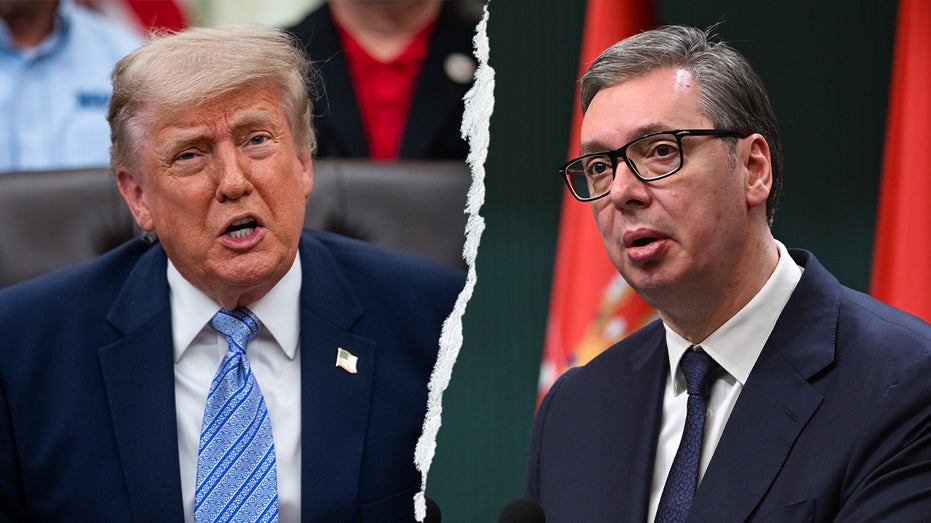
Serbian President Aleksandar Vučić says relations between Serbia and the United States have undergone a dramatic transformation under President Donald Trump, a shift he says has changed public perceptions in a country where memories of the 1999 NATO bombing campaign remain deeply rooted.
In an exclusive interview with Fox News Digital, Vučić praised Trump's approach to the Balkans, arguing that the administration's focus on economic cooperation rather than political pressure resonated with many Serbs. "President Trump and his team so far were working very diligently and dedicatedly on the Western Balkans," Vučić said, adding that many Serbs view his administration very differently from previous U.S. governments.
"If you ask people in Serbia just to make a comparison between Clinton and Trump's administration, or Democrats to Republicans, you wouldn't believe it," Vučić said. "It would be 90 to 10 or 95 to 5."
The comparison is particularly striking in Serbia, where many still associate the United States with NATO's 1999 bombing campaign during the Kosovo conflict, launched to stop Serbian forces' crackdown on ethnic Albanians in Kosovo and which remains one of the most consequential events in modern Serbian history.
Vučić said he recently extended an invitation to Trump to visit Serbia and predicted the American president would receive an enthusiastic welcome.
"I hope that we'll be able to host him," Vučić said. "More people will be ready to greet him and wait for him than he might even expect…I dare to say even more than hundreds of thousands of people."
The Serbian president said the improving relationship between Washington and Belgrade is increasingly centered on economics, investment and technological cooperation, and mutual conservative values.
According to Vučić, Serbia and the United States are preparing to launch a strategic dialogue that will focus on energy, infrastructure, artificial intelligence, defense cooperation and investment opportunities. Among the projects under discussion are energy infrastructure, liquefied natural gas cooperation, data centers and advanced computing technologies.
The growing relationship comes as Serbia seeks to position itself as a regional economic hub while continuing its long-standing ambition of joining the European Union.
Vučić pointed to preparations for Expo 2027 in Belgrade with nearly 150 participating countries, as evidence of Serbia's growing international profile and economic ambitions.
Vučić, who has served as Serbia's dominant political figure since becoming prime minister in 2014 and president in 2017, pointed to the country's economic growth as evidence of its transformation. "Our GDP was 32 billion (euros) when I became the prime minister," Vučić said. "This year it's going to be over 100 billion euros., which is $120 billion."
Vučić's relationship with Trump dates back to the president's first term, when the White House brokered a series of economic normalization agreements between Serbia and Kosovo. Rather than focusing first on the politically explosive question of Kosovo's status, the Trump administration emphasized infrastructure projects, transportation links and investment aimed at improving ties between the two sides.
In September 2020, Vučić and then-Kosovo Prime Minister Avdullah Hoti signed U.S.-brokered economic agreements at the White House that included commitments to expand rail and highway connections and promote investment. Trump described the deal as a breakthrough achieved by focusing on "job creation and economic growth" rather than longstanding political disputes.
Asked whether he would consider recognizing Kosovo, which declared independence from Serbia in 2008 and has been recognized by the United States under President George W. Bush and most European countries, if doing so unlocked Serbia's economic future and accelerated its path toward membership in the European Union, Vučić pushed back on the premise, arguing that economic cooperation and improved relations should come before discussions about political status.
"I'm not saying that I'm ready to violate my constitution… I have always been open to talks or compromising solutions, I have always been open to developing great economic ties and no doubt much better political ties. But I was not speaking about recognition of someone's independence," he said.
While Serbia continues to pursue membership in the European Union, the country has also maintained ties with Russia and China, a balancing act that has drawn scrutiny amid Russia's war in Ukraine and growing geopolitical tensions worldwide.
Asked whether Serbia could continue navigating between East and West in an increasingly divided world or would eventually need to choose a side, Vučić rejected the notion that countries must choose between competing geopolitical camps. Instead, he pointed to both his own visit to China and Trump's engagement with Beijing as examples of what he described as pragmatic diplomacy focused on national interests.
"President Trump didn't go there because of his vanity," Vučić said of Trump's visit to China. "He brought with him all the leading people of the United States of America for making better businesses, for earning more money for their companies."
Vučić said he adopted a similar approach during his own visit, arguing that leaders should prioritize economic opportunities for their citizens rather than ideological alignments. "I'm coming from a small country. I was asking for more investments and was fighting for the interests of my people," he said.
The Serbian president said the same pragmatic approach should guide efforts to resolve ongoing conflicts in both Ukraine and the Middle East.
"It's always better to have thousands of days of negotiations than one day of war," he said.
Asked about tensions involving Iran and the wider conflict in the Middle East, Vučić reiterated Serbia's support for Israel, a position that increasingly distinguishes Belgrade from some European governments.
"I am the president of the country that is one of the very rare countries in Europe that is not hesitating to cooperate and collaborate with Israel," he said. "And it is proud to say this publicly and openly."
Vučić warned about what he described as rising antisemitism around the world.
"From time to time, I'm very much afraid to see a lot of antisemitic slogans and antisemitic banners," he said.
Alors que les bombardements israéliens et les combats se poursuivent dans la bande de Gaza et que la situation humanitaire ne cesse de s'y dégrader, un nouveau conflit aux conséquences potentiellement dévastatrices vient d'être évité entre Tel-Aviv et Téhéran. Pour autant, rien ne semble pouvoir mettre fin à la logique d'affrontement entre ces deux ennemis.
Waqas Khan. – « Detonate » (Exploser), 2022
Courtesy Waqas Khan et Galerie Krinzinger, Vienne
Répliquer mais sans trop faire de mal, c'est la ligne de conduite choisie par l'Iran et Israël pour clore une passe d'armes dont on a pu craindre pendant plusieurs jours qu'elle dégénère en conflit régional de grande intensité. La séquence en trois temps a commencé le 1er avril avec un bombardement israélien contre une annexe du consulat iranien de Damas. Cette attaque a provoqué la mort de plusieurs gardiens de la révolution affectés au soutien militaire et logistique des alliés régionaux de Téhéran. Moins de deux semaines plus tard, dans la nuit du 13 au 14 avril, la République islamique déclenchait l'opération « Promesse honnête » avec une salve de trois cents drones et missiles, que la défense antiaérienne israélienne interceptait, pour la plupart, avec l'aide des États-Unis, de la France et du Royaume-Uni. Présentée comme un échec total par Israël et les Occidentaux, la riposte avait en réalité été annoncée plusieurs heures avant son déclenchement : la diplomatie iranienne avait en effet pris soin d'avertir les États-Unis et, par conséquent, Israël. L'opération n'a pas ciblé de centres urbains ou économiques. Les Iraniens signifiaient ainsi qu'ils ne souhaitaient pas faire de victimes civiles, et que « l'affaire [était] close ».
Dès lors, le monde a attendu avec appréhension « la riposte à la riposte à l'attaque », pour reprendre la boutade d'un commentateur d'Al-Jazira (16 avril). Elle est venue le vendredi 18 avril à l'aube sous la forme de tirs de drones israéliens contre une base aérienne proche d'Ispahan. Un bombardement hautement symbolique puisque l'attaque a ciblé sans trop faire de dégâts matériels une province où se situe le site nucléaire de Natanz, pièce maîtresse du programme iranien d'enrichissement de l'uranium. « Une riposte de désescalade », estime M. Guillaume Ancel, ancien officier français et écrivain (1). Mais les choses pourraient bien ne pas en rester là.
L'armée israélienne — qui a livré bataille à sept reprises contre ses voisins depuis 1948, la dernière fois au Liban en 2006 (2) — est bel et bien au seuil d'un huitième conflit : il l'opposerait cette fois à l'Iran. Le prélude à cet affrontement annoncé débute à la fin des années 2000, avec l'assassinat de plusieurs scientifiques iraniens impliqués dans le programme de développement nucléaire de leur pays et de pasdarans déployés en Syrie pour soutenir le régime de M. Bachar Al-Assad ou au Liban afin d'appuyer la branche armée du Hezbollah. Comme l'a montré le triptyque singulier d'avril, cette confrontation à bas bruit risque à tout moment de déraper puis d'embraser le Machrek, et au-delà.
En éclairer les contours implique de montrer comment l'évolution de la guerre en cours à Gaza pourrait inciter le premier ministre israélien Benyamin Netanyahou à durcir les hostilités avec l'Iran et à prendre le risque d'un conflit généralisé. Au grand regret des États-Unis, qui tentent vaille que vaille de maintenir le statu quo entre ces deux puissances régionales.
Aux massacres (1 160 morts et 7 500 blessés) et à la prise d'otages (250) commis par le Hamas le 7 octobre lors de son opération « Déluge d'Al-Aqsa », Tel-Aviv répond depuis par une dévastation systématique. Plus de 70 % des habitations de l'enclave palestinienne ont été détruites (3). Au 22 avril, selon un bilan fourni par le ministère de la santé de Gaza, on dénombrait 34 000 morts parmi les Gazaouis et 75 000 blessés, sans compter les disparus. Bombardée nuit et jour, parfois avec l'aide de programmes d'intelligence artificielle (4) ; ciblée sans discernement par des snipers et des drones ; forcée de se déplacer vers le sud, où elle s'entasse à la frontière égyptienne ; privée de soins après la destruction de la quasi-totalité des hôpitaux et d'aide humanitaire en raison du blocus imposé par Tel-Aviv, la population civile vit un calvaire. Au cours d'une conférence de presse le 31 janvier, le directeur du programme des urgences sanitaires de l'Organisation mondiale de la santé (OMS) Michael Ryan a évoqué une « catastrophe massive » pour une population « qui meurt de faim et qui est poussée au bord du gouffre ».
En pareilles circonstances, l'un des résultats diplomatiques majeurs de la guerre est le retour au premier plan de la question palestinienne. Les chancelleries occidentales tendaient à l'avoir perdue de vue depuis la signature des accords Abraham en 2020 et la normalisation entre, d'une part, Israël et, d'autre part, les Émirats arabes unis (EAU), Bahreïn, le Maroc et le Soudan, en attendant l'Arabie saoudite. Faute de pressions de pays arabes jusqu'alors demandeurs d'une restitution des terres palestiniennes en contrepartie d'un accord de paix, la proclamation d'un État palestinien devenait moins urgente. La guerre à Gaza a démontré l'inanité d'un tel raisonnement. Certes, aucun des États concernés n'a remis en cause cette normalisation, et si Riyad a officiellement suspendu ses discussions avec Tel-Aviv, ce n'est, de l'aveu même des proches du premier ministre et prince héritier Mohammed Ben Salman (« MBS »), que temporaire (5).
Mais Israël doit désormais faire face à un regain d'intérêt mondial pour le sort des Palestiniens. Au-delà des protestations populaires massives un peu partout dans le monde contre les crimes de guerre israéliens commis à Gaza (lire « La rue avec Gaza, les élites derrière Israël »), une âpre bataille se livre sur les plans juridique et diplomatique. Le 29 décembre, l'Afrique du Sud, soutenue par de nombreux pays non occidentaux, engageait une procédure devant la Cour internationale de justice (CIJ) demandant à cette institution dépendant des Nations unies de rendre une mesure conservatoire de protection des Gazaouis. Pretoria plaçait sa requête dans le « contexte plus large de la conduite d'Israël envers les Palestiniens pendant ses soixante-quinze ans d'apartheid, ses cinquante-six ans d'occupation belligérante du territoire palestinien et ses seize ans de blocus de la bande de Gaza ». Moins d'un mois plus tard, la CIJ rendait une décision ordonnant à Tel-Aviv d'empêcher tout éventuel acte génocidaire et d'autoriser l'accès humanitaire dans l'enclave. Cette décision ouvre la voie à de potentielles poursuites contre les principaux dirigeants israéliens. Par ailleurs, le 19 avril, la télévision israélienne Channel 12 rapportait la crainte de ces mêmes dirigeants de voir la Cour pénale internationale (CPI), qui siège à La Haye, émettre des mandats d'arrêt contre le premier ministre Netanyahou et d'autres personnalités politiques et militaires pour des violations présumées du droit international à Gaza.
Le Conseil de sécurité des Nations unies a de son côté examiné un projet de résolution algérien demandant à l'Assemblée générale « que l'État de Palestine soit admis comme membre des Nations unies » (18 avril). Si les États-Unis lui ont opposé leur veto, le texte a tout de même été approuvé par douze voix, dont celle de la France, tandis que le Royaume-Uni et la Suisse s'abstenaient. Au grand dépit de Tel-Aviv et de ses soutiens, plusieurs pays européens, dont l'Espagne, l'Irlande, Malte et la Slovénie, se disent prêts à reconnaître l'État de Palestine au nom d'une paix durable et de la stabilité au Proche-Orient. La question devient de nouveau un thème majeur au sein des organisations internationales. Conscient de l'isolement de plus en plus marqué de Washington sur ce sujet, l'ambassadeur américain Robert Wood s'est empressé de préciser que le veto ne signifiait pas une « opposition à [l'existence] d'un État palestinien » mais que la reconnaissance de ce dernier passerait par la « négociation entre les deux parties ». Les Palestiniens devraient ainsi attendre que la classe politique israélienne, farouchement opposée dans son ensemble à la solution dite « des deux États », change d'avis… (6)
Volonté de M. Netanyahou d'en découdre
Pressions internationales pour la reconnaissance de la Palestine, risque de poursuites judiciaires, surtout si Tel-Aviv décide d'appliquer son projet d'expulsion d'une partie des Gazaouis vers le Sinaï : quelle peut-être la stratégie de M. Netanyahou dans un contexte où aucun de ses objectifs militaires — élimination du Hamas et récupération des otages — n'a été atteint ? La réponse tient en quelques mots : l'extension du domaine de la guerre. Même si la désescalade avec Téhéran à laquelle Washington a beaucoup contribué se confirme, il est évident qu'un palier a été franchi dans le face-à-face irano-israélien.
C'est en effet la première fois que la République islamique vise directement le territoire israélien. Désormais, rien ne garantit que les pasdarans accepteront comme par le passé d'encaisser sans répliquer les coups portés par Tel-Aviv, y compris ceux qui les visent en Syrie. Après l'attaque du consulat iranien à Damas, nombre d'experts occidentaux ont postulé une absence de réaction de l'Iran. Ne subissait-il pas depuis des années l'élimination de ses scientifiques et de ses officiers sans riposter ? En novembre 2020, un robot mitrailleur piloté par satellite a tué Mohsen Fakhrizadeh, vice-ministre de la défense et chef de l'Organisation de la recherche et de l'innovation (Sépand) — considéré comme le « père » du programme nucléaire iranien —, sans que Téhéran concrétise sa menace de « vengeance implacable » (7).
Mais, cette fois, l'Iran n'a pas tardé à répliquer et a surtout démontré que son armée était capable d'infliger des dommages à Israël. Certes, les trois cents engins utilisés ont presque tous été neutralisés. Mais que se passera-t-il demain si, fort des enseignements tirés de l'analyse du mode de défense utilisé par Israël et ses protecteurs, Téhéran déclenche sans crier gare une attaque avec du matériel balistique bien plus rapide et sophistiqué ? « En cas d'action décisive d'Israël, nous répondrons de manière immédiate et maximale », a prévenu le ministre des affaires étrangères iranien, M. Hossein Amir Abdollahian (20 avril).
Dans ce possible crescendo, il ne faut pas non plus négliger la volonté obsessionnelle de M. Netanyahou d'en découdre avec l'Iran. Pour le premier ministre, il ne s'agit pas uniquement de concevoir une manœuvre afin d'échapper aux poursuites judiciaires dans son pays en maintenant ce dernier dans un état de guerre exigeant l'unité nationale et réduisant la probabilité d'élections anticipées lors desquelles son impopularité lui vaudrait à coup sûr une défaite (8). Cibler l'Iran ne vise pas non plus seulement à détourner l'attention internationale des tueries à Gaza et à torpiller les initiatives diplomatiques en faveur de la naissance d'un État palestinien. M. Netanyahou tient bel et bien l'Iran pour le principal ennemi d'Israël — la seule force militaire, depuis la chute du régime irakien de Saddam Hussein, à constituer une menace existentielle.
Waqas Khan. – « Eruption », 2022
Courtesy Waqas Khan et Galerie Krinzinger, Vienne
Le 27 septembre 2012, à la tribune des Nations unies, il brandissait le dessin sommaire d'une bombe à mèche en affirmant que Téhéran était en passe de se doter de la bombe nucléaire. « Au printemps prochain, affirmait-il, au maximum l'été prochain, au rythme où [les Iraniens] poursuivent actuellement l'enrichissement [de l'uranium], ils pourront passer à l'étape finale. Ils n'ont besoin que de quelques mois, peut-être quelques semaines, avant d'avoir suffisamment d'uranium enrichi pour la première bombe nucléaire. » Un arrangement avec la vérité, un de plus, puisque quelques mois plus tôt, le ministre de la défense israélien Ehoud Barak et son chef d'état-major Benny Gantz affirmaient publiquement que l'Iran n'avait ni l'intention ni les moyens de se doter de la bombe (9).
Quelques semaines plus tard, et tandis que les informations se multipliaient à propos de négociations entre les États-Unis et l'Iran pour parvenir à un accord sur cet enjeu nucléaire — conclu en juillet 2015 au grand dam de Tel-Aviv —, M. Netanyahou affirmait dans un discours à Jérusalem se sentir « prêt s'il le faut » à déclencher une attaque contre les sites nucléaires iraniens. Par la suite, lors de la campagne électorale de mars 2015 qui allait lui permettre d'obtenir un quatrième mandat, il martelait à l'envi son mot d'ordre : « Pas d'État palestinien, pas de nucléaire iranien. »
Cette possibilité d'une guerre israélo-iranienne structure les rapports de forces au Proche-Orient et dans le Golfe. Pour les monarchies pétrolières, l'hostilité de Tel-Aviv à l'égard de Téhéran tient à la fois de la bénédiction et de la menace. Riyad comme Abou Dhabi comptent sur Israël pour remédier au désengagement des États-Unis de la région. Même si l'Arabie saoudite et l'Iran sont convenus d'atténuer leurs tensions bilatérales grâce à l'entremise de la Chine, la défiance demeure (10). Dans les mosquées du royaume, on continue de qualifier les chiites d'apostats. En 2010, le roi Abdallah demandait au président Barack Obama de « couper la tête du serpent », autrement dit de détruire le programme nucléaire iranien. Les dirigeants saoudiens et émiratis estiment que Téhéran doit avoir tiré les leçons de l'invasion de l'Irak et du changement de régime de 2003. Se prémunir d'un tel risque nécessite, pour la République islamique, l'acquisition de l'arme atomique. Mais, dans le même temps, les monarchies pétrolières craignent les retombées immédiates d'une guerre. La peur est particulièrement perceptible à Dubaï ou au Qatar, dont les installations pétrogazières, énergétiques et de dessalement d'eau sont à portée immédiate. Pour ces monarchies incapables de se défendre seules et tétanisées à l'idée de subir les affres endurées par les Koweïtiens en 1990, l'idéal serait de laisser Israël s'occuper seul du sale boulot. Riyad et Abou Dhabi se sont d'ailleurs employés à minimiser leur rôle dans la défense d'Israël lors de l'attaque du 13 avril.
Côté iranien, on a toujours nié le caractère militaire du programme nucléaire en avançant même parfois que fabriquer la bombe serait contraire aux préceptes islamiques réservant la capacité d'une destruction totale de l'humanité au seul pouvoir divin. Et, si Israël continue d'être vilipendé par la propagande du régime, le temps semble loin où le président Mahmoud Ahmadinejad qualifiait ce pays de « créature artificielle qui ne survivra pas (11) ».
Pourtant, jeudi 18 avril, le général Ahmad Haghtalab, chef de la division de la sécurité nucléaire au sein du Corps des gardiens de la révolution, mettait en garde Israël en affirmant que son pays pourrait réviser sa doctrine nucléaire en utilisant de nouvelles armes : « Si le régime sioniste veut prendre des mesures contre nos centres et installations nucléaires, il fera certainement face à notre réaction. Pour la contre-attaque, les installations nucléaires de ce régime seront ciblées avec des armements avancés. »
Un discours qui va conforter l'attitude belliciste de M. Netanyahou tout en compliquant la tâche des États-Unis. Quelle sera en effet l'attitude de Washington si M. Donald Trump revient à la Maison Blanche, lui qui fut à l'origine du torpillage de l'accord de 2015 ? Peu enclin à engager son pays dans une nouvelle guerre, il pourrait néanmoins lâcher la bride au premier ministre israélien et lui assurer un approvisionnement constant en armements. Quoi qu'il en soit, M. Netanyahou dispose d'une solution de rechange : mettre à exécution sa menace d'une guerre totale contre le Hezbollah libanais. Fin mars, l'armée israélienne annonçait avoir frappé « environ 4 500 cibles du Hezbollah » et en avoir tué « plus de 300 membres » depuis le 7 octobre 2023. Dans un contexte d'échanges de tirs quotidiens, le parti chiite et Tel-Aviv ont veillé jusqu'à présent à éviter l'escalade mais, là aussi, l'embrasement guette. Et, contrairement à 2006, où il avait opté pour la retenue, rien ne dit que Téhéran ne volera pas cette fois au secours de son allié.
(2) Lire Tania-Farah Saab, « Un conflit de trente-trois jours », dans « Liban. 1920-2020, un siècle de tumulte », Manière de voir, n° 174, décembre 2020 — janvier 2021.
What happens to higher education when institutions dedicated to critical thought increasingly align themselves with the logics of war, surveillance, and national security? Unless we mount an organized resistance, we may viscerally experience the answer to this question all too soon.
We are already watching this transformation play out in both the U.S. and Canada as universities face growing pressure to align their missions, research agendas, and pedagogical practices with the values, priorities, and imperatives of a society increasingly organized around the logic of war.
Militarized policies, values, identities, and modes of governance no longer merely creep into U.S. society. Under the Trump administration, they increasingly define it. Militarization now extends far beyond the battlefield, reshaping everyday life, public institutions, and the very meaning of citizenship. War is celebrated as a moral imperative, often wrapped in the language of religious righteousness and white Christian nationalism. Due process gives way to abductions and arbitrary detention, dissent is met with threats and repression, soldiers occupy U.S. cities, and political violence is normalized through a steady stream of incendiary rhetoric and state-sponsored spectacles that glorify force, exclusion, and domination. Democratic ideals are displaced by a culture of fear, manufactured insecurity, and the belief that the nation is besieged by enemies both within and beyond its borders — largely immigrants and people of color.
In this militarized landscape, critical thought is derided, informed judgment is replaced by ideological conformity, and institutions charged with nurturing democratic agency increasingly come under attack. This fusion of militarism, toxic masculinity, religious fundamentalism, and white nationalist politics functions as a powerful form of public pedagogy, producing the authoritarian values, identities, and modes of agency that have historically provided the cultural foundations for fascist politics.
The Dangers of the “Military-Industrial-Academic Complex”
The late U.S. President Dwight D. Eisenhower warned of the dangers posed by what he called the “military-industrial-academic complex.” In an earlier draft of his famous 1961 farewell address on the military-industrial complex, Eisenhower included the word “academic,” recognizing that universities could become deeply entangled with military power, corporate interests, and state security agendas in ways that threatened their intellectual independence and democratic mission.
This warning extends to countries that increasingly live in the shadow of the U.S.’s expanding warfare state and its militarized culture. For instance, against an increasingly militarized global order, the Canadian government has unveiled an expansive “Defence Industrial Strategy” backed by 81.8 billion Canadian dollars (around 60 billion in U.S. dollars) in new defense spending in Budget 2025, including 6.6 billion Canadian dollars devoted specifically to expanding the country’s defense-industrial infrastructure. The strategy marks the largest long-term expansion of Canada’s military economy since the Second World War.
What once appeared to be limited partnerships between North American universities and defense industries has evolved into a far broader transformation of higher education itself. As Canada dramatically expands military spending through its Defence Industrial Strategy, universities are increasingly being drawn into the orbit of defense priorities. Federal initiatives encourage partnerships between universities, defense contractors, and government agencies in fields such as artificial intelligence, cybersecurity, quantum computing, autonomous systems, and advanced surveillance technologies. Research funding is increasingly directed toward projects framed around national security, defense innovation, and military competitiveness. As these priorities gain influence, higher education is being reshaped by the social logics of militarization, technological control, and permanent security, altering not only what knowledge is produced but also the purposes to which it is put, raising urgent questions about the future of the university as a democratic public sphere.
Militarized knowledge production blurs the line between education and warfare, transforming universities into laboratories for the development of technologies whose ultimate purpose is often surveillance, social control, and lethal violence.
The growing use of drones and AI-driven warfare systems is not simply a military development. It signals a broader transformation in how research and knowledge are produced, funded, and valued. As universities deepen their involvement in military research, fields ranging from artificial intelligence and data analytics to robotics and cybersecurity are increasingly organized around the imperatives of surveillance, security, and warfare. AI technologies are already being deployed by state agencies to monitor migrants, journalists, activists, and political dissidents, while drones have revolutionized warfare by making it cheaper, more remote, and less accountable. Under such conditions, knowledge is not viewed primarily as a public good serving democratic life. Instead, it is increasingly organized around military imperatives of prediction, control, targeting, and domination. The result is a form of militarized knowledge production that blurs the line between education and warfare, transforming universities into laboratories for the development of technologies whose ultimate purpose is often surveillance, social control, and lethal violence.
Michael S. Sherry rightly argues that in an age in which state power is increasingly organized through militarized values and security logics, military culture now shapes not only state policy but “broad areas of national life.” As David Theo Goldberg argues, militarization no longer operates only through armies and weapons systems. It increasingly shapes culture, technology, modes of governance, and everyday life. As Goldberg observes:
The military is not just a fighting machine…. It serves and socializes. It hands down to society, as big brother might, its more or less perfected goods, from gunpowder to guns, computing to information management … In short, while militarily produced instruments might be retooled to other, broader social purposes, the military shapes pretty much the entire range of social production from commodities to culture, social goods to social theory.
The implications for higher education are profound. Militarization does not simply reshape culture, technology, and governance. It also reorganizes the production of knowledge itself, aligning university research with the imperatives of surveillance, security, and warfare while legitimating authoritarian forms of power. The rapid expansion of artificial intelligence research tied to military and surveillance applications deepens these dangers. Universities are increasingly helping to develop technologies used for predictive policing, automated warfare, mass surveillance, and forms of digital authoritarianism that blur the line between security and repression. Such developments are routinely justified in the language of innovation, efficiency, and national security, yet they raise profound ethical questions about the role of higher education in designing technologies that deepen inequality, expand state violence, erode civil liberties, and facilitate the killing of civilians, including children, in conflicts largely removed from public scrutiny.
The militarization of the university is not simply a matter of research contracts or funding priorities. It is pedagogical, cultural, and deeply political.
The militarization of the university is not simply a matter of research contracts or funding priorities. It is pedagogical, cultural, and deeply political. Universities do more than train workers; they shape civic identities, ethical sensibilities, and the capacity for democratic agency itself. When higher education embraces military partnerships and military-driven research agendas, it legitimates a worldview in which security eclipses justice, technological efficiency displaces ethical reflection, and dissent is recast as a threat rather than a democratic necessity.
How Militarization Reorganizes the Production of Knowledge
As militarization becomes woven into the fabric of political culture, universities increasingly reorganize knowledge, research priorities, and technological innovation around the assumptions of permanent conflict, geopolitical competition, and security management. In doing so, higher education normalizes the belief that militarized knowledge and military solutions should govern everyday life. Yet militarization does not merely reshape research priorities and institutional culture. It also reorganizes historical memory, civic identity, and the very terms through which democracy is understood.
Militarization also bears heavily on the production of knowledge itself. As Fintan O’Toole observes, contemporary authoritarian movements do more than expand military power; they seek to reshape historical memory and civic consciousness. Shameful histories are recast as heroic achievements, while assaults on democracy are reimagined as acts of patriotism. The Confederate rebellion is transformed from a defense of slavery into a noble cause, much as the January 6 attack on the U.S. Capitol is increasingly celebrated by its defenders as a patriotic uprising rather than an assault on democratic institutions. Equally troubling are efforts to remake the military itself through demands that soldiers be trained for loyalty to political leaders rather than to constitutional principles. Here, power seeks not only to command institutions but also to militarize knowledge, memory, and civic identity. Universities have a crucial responsibility to resist such distortions by defending historical truth, critical inquiry, and the capacity to distinguish education from propaganda.
As Kevin Baker notes, military solutions increasingly displace diplomacy, democratic institutions, and other civic responses to social problems. Within a culture saturated by militarism, aggression is celebrated as prevention, repression is justified in the name of security, and military force is invoked to discipline dissent and erode democratic values. Under such conditions, education is organized less around the imperatives of democratic culture than around the demands of the arms industry, surveillance systems, technological acceleration, and the national security state.
These developments become even more troubling when they intersect with the ongoing marketization of higher education. At its best, higher education functions as a democratic public sphere, a place where students learn to think critically, question authority, engage history, and imagine alternative democratic futures. Yet under the pressures of neoliberalism, universities have increasingly abandoned this mission. Education is now often reduced to job training, students are treated as consumers, faculty are deskilled and casualized, and learning is defined largely in instrumental terms. Questions about how education might nurture civic courage, ethical imagination, social responsibility, and democratic agency are increasingly sidelined in a market-driven university culture.
Yet the assault on higher education is not only economic. It is also ideological and political. In recent years, a growing chorus of liberal and conservative critics has claimed that universities have lost their way, charging that the humanities and critical scholarship have corrupted higher education through ideology and activism. Under the seductive language of “reform,” “balance,” “civility,” “institutional trust,” and “neutrality,” these critics present themselves as defenders of academic integrity while advancing a profoundly reactionary project. In some cases, liberal critics go so far as to treat “social justice” as a threat to scholarship rather than asking how power, exclusion, race, gender, class, empire, and inequality have always shaped what counts as knowledge. Their calls for neutrality, which function as a cover for depoliticization, do not protect intellectual freedom; they align with a broader assault on critical thought, historical memory, and democratic culture. They are aghast at the notion put forward by Thomas Chatterton Williams that “For humanities departments [and higher education in general] to continue to matter, they must challenge the modern world rather than accommodate it.” In doing so, they obscure the far more dangerous attacks on higher education coming from the right: censorship, book bans, assaults on DEI programs, the repression of student protest, and efforts to align universities with corporate, state, and military interests.
Critical scholarship is condemned as ideological, while militarized research, donor influence, state-directed threats of defunding, and forms of ideological indoctrination are celebrated as common sense. The real danger is not that universities have become too political, but that they are being stripped of their democratic mission and transformed into institutions that normalize conformity, surveillance, militarization, and authoritarian power. Higher education is not under attack because it has been ruined by the left. On the contrary, it is under assault by the Trump administration and a broader network of far right forces precisely because it keeps alive a dangerous truth: education is not merely about credentials, careers, or conformity to the status quo. At its best, it cultivates the capacity for critical judgment, informed dissent, compassion, and democratic agency. What authoritarian movements fear most is not ideological indoctrination but an educated public capable of questioning power, holding authority accountable, and imagining a more just future.
Militarization deepens anti-democratic tendencies. Research is increasingly tied to military applications, geopolitical competition, and outside funding rather than to the public good. Universities adopt the language of security, risk management, efficiency, and competitiveness while corporate and military values increasingly shape institutional priorities. As a Simons Foundation policy briefing warns, militarization has increasingly become a “default response” to political instability and global insecurity, reinforcing a culture in which social problems are framed through the logics of surveillance, strategic competition, and military preparedness rather than diplomacy, public investment, and democratic cooperation. As Professor Catherine Lutz notes, such actions run the risk of eroding legal and moral boundaries. In such a climate, higher education loses its civic character and becomes subordinated to the interests of the warfare state and defense industries.
As universities become increasingly tied to military and security logics, they risk abandoning their civic purpose in favor of a pedagogy of permanent emergency, one that privileges surveillance, strategic competition, and technological domination over critical inquiry, civic imagination, ethical responsibility, and social solidarity. What disappears in this militarized vision of higher education is the conviction that universities should cultivate informed citizens capable of holding power accountable rather than simply servicing the imperatives of the national security state.
Equally troubling, militarization reshapes the culture of the university itself. Militarized institutions reward conformity, secrecy, technocratic thinking, and instrumental rationality. Ethical questions about violence, disposability, colonialism, and state power are pushed aside in favor of managerial efficiency and national competitiveness. Students protesting Israel’s war in Gaza, settler colonialism, genocide, sexual violence, or war crimes are too often met not with dialogue but with surveillance, administrative repression, and policing.
The dominance of war-like values in both higher education and the wider civic culture prepares “civil society itself for the production of violence.”
In such instances, the university ceases to function as a space for critical engagement and becomes instead an extension of a broader authoritarian culture. As scholar John Gills notes, the dominance of war-like values in both higher education and the wider civic culture prepares “civil society itself for the production of violence.” In this way, universities risk becoming agents of militarized socialization rather than sites of democratic education. Such developments raise not only political and educational concerns but also urgent ethical questions about the kinds of institutions that universities are becoming and the values they choose to endorse.
The militarization of higher education raises a profound ethical question: What happens when universities enter into partnerships with military institutions while remaining silent about documented human rights abuses associated with those same institutions? Such silence is never politically neutral. It suggests that violations of human rights can be overlooked, rationalized, or normalized when carried out in the name of security, defense, or national interest.
This issue extends beyond universities themselves and raises broader questions about the responsibilities of democratic governments. As Canada, among other countries, deepens military cooperation with allies and expands investments in defense industries, it cannot exempt those relationships from ethical scrutiny. If credible allegations of war crimes, torture, collective punishment, or sexual violence are ignored in the name of strategic alliances or national security, democratic principles are hollowed out from within. Universities, precisely because they are charged with fostering critical inquiry and ethical judgment, have a responsibility to challenge such silences rather than reproduce them.
Such allegations also raise broader concerns about how security regimes can be used not only against occupied populations but also against those who challenge state policies. Reuters reported that organizers of a flotilla attempting to deliver humanitarian aid to Gaza alleged that some activists detained by Israeli authorities experienced physical abuse and that at least 15 reported sexual assaults, including allegations of rape. Zeteo provided shocking and wrenching video testimonies from some of the activists, largely ignored by Western media. Whatever the final findings regarding these allegations, they underscore the need for independent scrutiny of security institutions and the dangers of granting them unquestioned legitimacy in the name of national defense. When accusations of abuse are met with silence rather than investigation, the boundaries between security, impunity, and state-sanctioned violence become increasingly blurred.
If universities claim to uphold principles of human rights, social responsibility, and ethical inquiry, they cannot selectively ignore such evidence when it implicates states or institutions with which they maintain research, military, or security partnerships. To do so risks transforming universities from spaces of critical inquiry into institutions that legitimate power while remaining silent about its abuses. At stake is more than the question of particular research contracts. It is the moral integrity of higher education itself.
These concerns are not confined to particular institutions or isolated abuses. They are symptomatic of a broader culture in which militarized values increasingly shape public life, political discourse, and social priorities. From sporting events and military recruitment in schools to popular films, social media spectacles, gun culture, and state-sponsored propaganda, aggression, domination, and war are normalized as features of everyday life.
Nowhere is this more visible than in the influence of Trump’s Secretary of Defense, Pete Hegseth, who celebrates “maximum lethality, not tepid legality” and wraps militarism in the language of white Christian nationalism and religious righteousness. As Jasper Craven observes, Hegseth champions a form of “military manliness” stripped of any ethical center. Such a worldview elevates domination as a virtue, defines violence as a moral ideal, and transforms, in Craven’s words, “the Pentagon into the staging ground for an ideological religious crusade.” As these values circulate through culture and public institutions, they increasingly shape higher education itself, influencing not only what universities teach but also the forms of knowledge they produce, fund, and legitimate.
Universities cannot claim to defend democracy while simultaneously aligning themselves with industries and state policies organized for state violence, war, and imperial aggression.
Defenders of militarized partnerships insist that universities must remain pragmatic and “neutral” in securing funding and advancing national interests. But neutrality in such cases is largely a myth. Universities cannot claim to defend democracy while simultaneously aligning themselves with industries and state policies organized for state violence, war, and imperial aggression. Higher education has no legitimate ethical mandate to function as a research arm of militarized power.
Universities Must Refuse to Become Laboratories for War
The issue is not whether universities are political, but what kind of politics they embody and in whose interests they function. In an age marked by rising authoritarianism, widening inequality, climate catastrophe, and endless wars, universities cannot escape matters of power and values, and they must decide whether they will serve democracy or militarized power. Nor can educators retreat into the call for neutrality. At stake here is more than institutional policy. It is the fate of the university as a democratic institution. Few writers understood these dangers more clearly than Toni Morrison, who warned: “If the university does not take seriously and rigorously its role as a guardian of wider civic freedoms, as interrogator of more and more complex ethical problems, as servant and preserver of deeper democratic practices, then some other regime or menage of regimes will do it for us, in spite of us, and without us.”
Higher education may be one of the few public spheres left where knowledge, values, and learning can nurture radical hope, civic responsibility, informed agency, critical thinking, and substantive democracy. The struggle against the militarization of Canadian universities is therefore not merely a fight over funding priorities. It is a struggle over whether education will serve democracy or become an extension of the warfare state. Activists from groups like World Beyond War Canada and the Canadian Federation of Students are right to insist that genuine security comes not from militarism and permanent war, but from investing in education, housing, public health, and the social good.
Universities must refuse their transformation into laboratories for war, surveillance, and technological domination. At stake is whether higher education will further accommodate militarized and authoritarian power or become a crucial site of resistance, critical consciousness, and democratic possibility, one that refuses to confuse security with fear, civic responsibility with obedience, and education with the demands of war and domination. In an age when militarism increasingly shapes culture, politics, and everyday life, universities must remain among the few institutions willing to defend critical inquiry, civic responsibility, and democratic freedom against the expanding reach of the warfare state.
A man in his 40s was hospitalized with serious injuries after a brutal knife attack in Northern Ireland, as police arrested a Sudanese migrant on suspicion of attempted murder.
The attack happened shortly after 10:30 p.m. Monday in north Belfast, according to the Police Service of Northern Ireland. The victim suffered serious injuries to his face, neck, back and eyes, while police said they recovered what they believe was a kitchen knife at the scene.
Video circulating online appeared to show members of the public confronting the attacker, including one person wielding a hurling stick. PSNI Assistant Chief Constable Ryan Henderson praised the bystanders as "heroic," saying their intervention helped save the victim’s life, according to the BBC.
Police initially said the suspect was Somali but later corrected that he is believed to be Sudanese, describing the change as part of a "fast-time investigation." Henderson said police understand the suspect came into Northern Ireland from Dublin, Ireland and had been granted leave to remain, though he said the Home Office would provide further clarity on his status.
On Monday evening, protesters burned down a bus as tensions rose in Belfast following the gruesome stabbing, despite earlier calls from authorities for calm.
"At this stage, we have no information to suggest that this was a terrorist-related incident," Henderson said, while stressing that the investigation remains in its early stages. "However, I must stress, we are still at the early stages of our investigation," he said, according to The Sun.
Alan Mendoza, executive director of the Henry Jackson Society, told Fox News Digital that the attack exposed what he described as failures in Britain’s immigration system.
"Britain’s broken border and migration system has been put into stark relief once more with this tragic — and entirely avoidable — case," Mendoza said. "This man should never ever have been in the U.K., let alone been granted ‘leave to remain.’ The Irish border is the soft underbelly for a process the British public has long since lost confidence in, as well as in those administering it politically. Nothing short of a revolution in who we allow into the U.K. and how will satisfy a people fed up with false promises about immigration change."
The swift response from Prime Minister Keir Starmer marked a notable contrast with the case of Henry Nowak, an 18-year-old who was stabbed and then handcuffed by police after his attacker accused him of making racist remarks. Starmer faced criticism from some conservatives over his response to that case.
Starmer quickly posted on X that the attack was "sickening," adding: "I have absolutely no tolerance for abhorrent scenes of violence like this on our streets." He said his thoughts were with the victim and thanked first responders, including members of the public who intervened.
The attack prompted political reaction across the U.K. Reform UK leader Nigel Farage called on authorities to reveal the suspect’s identity and immigration status.
"What happened in Belfast last night is horrific. The authorities must reveal the identity and status of the attacker immediately. The public are entitled to the truth," Farage wrote on X.
Robert Jenrick also wrote on X: "We’ve woken up to truly barbaric footage on a street in Belfast. Of a kind you’d think you’d never see in this country. For years now I’ve urged the police to spell out the basic, sober facts, as they have them, when there are horrors like this."
Conservative Party leader Kemi Badenoch said people would ask whether there had been "failings around our borders," according to GB News.
Northern Ireland’s main political parties issued a joint statement condemning the violence and urging the public not to share graphic footage of the attack.
"There is no place in our society for this kind of brutality. Our immediate thoughts are with the victim and his family, and we hope he makes a full and complete recovery," the parties said, according to GB News.
Police said they had declared a critical incident and would increase their presence across Northern Ireland amid calls for protests. Officials urged calm and asked the public to allow the investigation to proceed.
This story originally appeared in Common Dreams on June 09, 2026.It is shared here under a Creative Commons (CC BY-NC-ND 3.0) license.
The climate emergency is sharply increasing the risk of crop failure in regions that produce an outsized share of the world’s staple food grains, according to a report published Tuesday that warns of “serious threats to Europe, the NATO alliance, and global stability” if cooperative resilience initiatives and other mitigation strategies aren’t pursued.
The report, “Global Breadbaskets: Food System Resilience as a Strategic Imperative,” was published by the Center for Climate and Security—part of the Council on Strategic Risks, a Washington, DC-based security policy think tank—and the Woodwell Climate Research Center, an independent nonprofit located in Falmouth, Massachusetts.
“Geopolitical fragmentation, conflict, extreme weather, and global aid cuts already strain food security. Meanwhile, climate change is increasing the likelihood of crop failures in the American, European, and Asian breadbaskets, which produce most of the staple crops underpinning global food security,” the report states.
🆕 Across India, France, and Germany, in the next decade and a half, the odds of key crops failing are set to increase by between two- and six-fold. This isn't just a food story. It's also a #NATO security story.
The publication follows an April report from a pair of United Nations agencies on how extreme heat is impacting food production and food security around the planet. The new report includes a storymap that explores climate change-driven threats to wheat, rice, and maize (corn) crops in France, Germany, and India—three of the world’s “global breadbaskets.”
The analysis’ authors note that compared with 2010 threat levels, by 2040, “the risk of a given year’s crop failing is projected to grow roughly twofold for Indian wheat and German maize, roughly threefold for French wheat, roughly fourfold for French maize, and roughly sixfold for Indian rice, with sharp increases in critical producing regions.”
Climate-driven extreme heat “not only threatens crops, but also the laborers and infrastructure that translate them into food security,” the report continues. “Extreme heat is projected to reduce the suitability of 15-40% of India’s rain-fed rice-growing regions by 2050, and to reduce physical work capacity during the average growing season to as little as 40% of 2000-era levels by 2100.”
“By 2040, southwestern France will average up to 16 additional days per year above 35°C (95°F), exceeding thresholds that reduce yields, impact grain quality, and cause heat stroke,” the paper warns. “Extreme heat also threatens to damage or disable road and rail networks critical to food transportation, agricultural machinery, civil defense, and military mobilization.”
The publication also states that global breadbasket failures in Europe “could open rifts for Russian meddling, fuel instability in key partners, and elevate food production as a geopolitical lever.”
The Council on Strategic Risks operates within the transatlantic security policy community, whose work often overlaps with NATO’s interests.
“We have plenty of examples of how crop failures can contribute to political instability, from the French Revolution to the Arab Spring,” Center for Climate and Security deputy director and report lead author Tom Ellison said Tuesday in a statement. “In today’s environment, global breadbasket failures could strain NATO priorities, prompt unrest in key countries, and upend trade relationships.”
Woodwell Climate Research Center scientist and report co-author Alexandra Naegele warned that “climate change doesn’t just threaten crop yields and grain quality—it destabilizes entire food systems, from labor and livestock to food storage and transport.”
“Quantifying these climate-driven risks is an essential step toward building resilient food systems and safeguarding global food security,” she added.
The report recommends steps countries—specifically members of the European Union and NATO—can take to mitigate risks to food security, including strengthening cooperative resilience, anticipating instability and hybrid warfare, supporting strategic and vulnerable partners, coordinating trade responses, and investing in agricultural research and development.
“Amid climate change, geopolitical uncertainty, food shocks from the war in Iran, and Russian hybrid warfare, investing in a resilient food system isn’t in competition with security—it’s a key part of it,” Ellison stressed.
Monica Caparas, a scientist at the Woodwell Climate Research Center and report co-author, said, “Understanding and preparing for breadbasket failures is both a national security priority and a humanitarian imperative—one that can help protect lives, reduce instability, and strengthen food resilience before a regional shock becomes a wider crisis.”
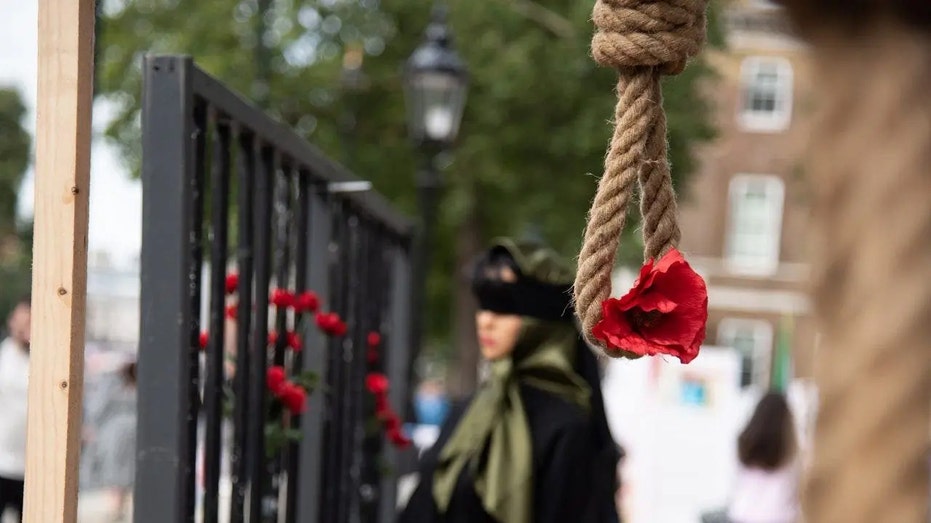
The Islamic Republic of Iran has accelerated its executions of dissidents and activists, with the true number of victims likely obscured by the regime’s internet censorship and blackout.
The Iran Human Rights Society has documented 784 executions so far in 2026. A representative from the organization told Fox News Digital that "these figures indicate a rapidly accelerating trend in executions since March," and explained that "in particular, the execution of political prisoners has reached a level not seen in the past 37 years."
A State Department official told Fox News Digital that "we are aware of disturbing reports about the recent surge in executions in Iran." The official noted that "we strongly condemn the Iranian regime’s use of executions to punish people for exercising basic human rights, including Iranians peacefully protesting for a better life."
The official said that "for decades, Iranians have been subjected to torture and sham trials resulting in executions and severe punishments, often with coerced confessions as the only evidence presented against them."
According to information provided to Fox News Digital by the Secretariat of the National Council of Resistance of Iran (NCRI) on June 4, the Islamic Republic of Iran executed at least 18 prisoners between May 31 and June 1. These included 12 prisoners hanged on May 31, and an additional six prisoners executed on June 1, one of whom was said to be "hanged in public with utmost brutality."
The NCRI has counted a total of 32 executions between March 19 and June 1. These included eight members of Iranian dissident organization People’s Mojahedin Organization of Iran (PMOE/MEK) and 24 participants in Iran’s January 2026 protests.
In documents provided to Fox News Digital, the NCRI said on June 7 that there was "an imminent risk of execution" for five political prisoners in the Sheiban Prison in Ahvaz, four of whom were sentenced to death because they were charged with being members of PMOI/MEK.
Maryam Rajavi, President-elect of the NCRI, posted on X a call for "urgent action" from the U.N. "to prevent the execution."
Days earlier on June 2, following two other executions against January protesters, Rajavi said on X that the "clerical regime has committed another horrific crime in Iran." She called on the U.N. Security Council and European Union "to decisively condemn these criminal executions and take effective action to stop the killing of political prisoners and protesters in Iran."
The Iran Human Rights Society echoed NCRI’s account of 18 recent executions between May 31 and June 1. Their representative explained that despite the internet blackout, they receive reports from "a network of prison sources, prisoners' families, lawyers, and local contacts" and explained that "all reports are reviewed and cross-checked through multiple independent sources before publication." Though they say "internet restrictions make documentation more difficult," they stated they "continue to receive, verify, and document information."
Alp Toker, the director of NetBlocks, a global internet monitor, told Fox News Digital that "internet connectivity in Iran is largely restored but the service that is available remains limited compared to the state of things before the protests and the war this year. For most users, in practice, that means international access is slow with indications of throttling and there's also increased filtering, particularly targeting messaging apps.
"It's been in this limbo state since the restoration with no significant change for better or worse," he said.
However, the Iran Human Rights Society representative noted that the actual number of executions is "almost certainly" higher than the figure they have captured. "The ruling authorities in Iran frequently carry out executions in secret and do not publicly announce many of them," the representative explained. Additionally, the representative added that "a significant number of executions, particularly in remote areas or locations with limited access to information, may remain undocumented or reach us only after a considerable delay."
The representative also noted that the quantity of executions the Iran Human Rights Society documents "has consistently been lower than the actual number carried out."
The United Nations Special Rapporteur on the situation of human rights in the Islamic Republic of Iran, Dr. Mai Sato, did not respond to Fox News Digital’s request for comment on the increased executions in Iran.
On June 20th, up to 100,000 Iranian expats from both sides of the Atlantic are expected to hold a major rally in Paris to urge an end to the executions. More than 100 lawmakers, officials, former heads of state and ministers are also expected to join, according to the NCRI.
« Gardienne de la liberté individuelle », selon la Constitution, l'autorité judiciaire prête pourtant main forte à la politique répressive de l'État : la lourdeur des condamnations infligées aux « gilets jaunes » contraste ainsi avec la clémence envers les violences de la police. Paupérisée et dénigrée, la justice est gagnée par l'idéologie sécuritaire. Mais certains magistrats refusent cette dérive.
Tomas van Houtryve ///// Série « Blue Sky Days » (Journées de ciel bleu), « Prison », 2014
Contrairement aux clichés sur son prétendu « laxisme », la justice pénale fonctionne à plein régime. Son taux de réponse, c'est-à-dire le nombre d'affaires auxquelles elle a donné suite, rapporté au nombre de celles dont elle a été saisie, s'élève à 91 % contre 35 % il y a trente ans. Les 9 % restants consistent en des classements sans suite de dossiers « non élucidés » ou ne relevant pas de sa compétence. La justice a donc presque « réponse à tout ». Cette augmentation constante des condamnations s'explique par la conjonction d'une idéologie sécuritaire et d'un accroissement de la fonction répressive d'un État néolibéral qui délaisse son rôle d'opérateur économique et social et sa mission redistributive.
Depuis la loi organique relative aux lois de finances (LOLF) de 2001 et la révision générale des politiques publiques (RGPP), même la justice est soumise à la vision technocratique du new public management (« nouvelle gestion publique »), comme d'ailleurs la police : les statistiques déterminent l'orientation des procédures et la carrière des magistrats, en fonction des stocks et des flux de dossiers, sur le seul critère du rendement, au détriment de la motivation et de la qualité des décisions (1). En France, le nombre de détenus a crû de plus d'un tiers en vingt ans (de 40 000 en 2000 à presque 70 000 en 2021) (2), alors que la population carcérale diminue depuis plusieurs années dans la plupart des pays de l'Union européenne, comme l'Allemagne, l'Italie et les pays du nord de l'Europe Les Pays-Bas, la Belgique, la Norvège et la Suède ont même fermé plusieurs établissements pénitentiaires depuis cinq ans, faute de détenus. Si la France fait partie, avec la Turquie, des cinq États parmi les quarante-sept membres du Conseil de l'Europe à afficher la densité carcérale la plus élevée (lire l'extrait du rapport sur les prisons, « Dans les geôles de la République »), ce n'est pas lié à l'évolution de la délinquance. C'est le résultat de la poursuite systématique de petites infractions par les parquets, de la suppression — de fait — des lois d'amnistie, ainsi que du durcissement continu des peines
Or, la politique pénale actuelle et sa traduction judiciaire sont socialement discriminantes. Cela s'explique d'abord par le fait que les audiences de comparutions immédiates explosent dans les tribunaux. On sait que les peines prononcées dans ces conditions sont beaucoup plus sévères à délit égal en raison de l'urgence, de la faible place accordée à la défense, du manque d'éléments informant sur la personnalité du prévenu et de la « justice d'abattage » imposée aux magistrats. Mais, surtout, la situation socio-économique de cette petite délinquance génère des peines de prison ferme, car elle n'a pas, comme l'écrivent les juges dans nombre de décisions, « de garantie de représentation », c'est-à-dire pas de logement permettant, par exemple, la pose d'un bracelet électronique au lieu de l'incarcération, pas d'argent pour payer une amende, pas de proches pour soutenir une injonction de soins ou une démarche d'insertion professionnelle.
Pénalisation de la misère
Mme Dominique Simonnot, aujourd'hui contrôleuse générale des lieux de privation de liberté, a relaté chaque semaine, pendant quatorze ans, cette pénalisation de la misère dans ses chroniques du Canard enchaîné. Ainsi, lors de l'audience banale du 14 octobre 2016 au tribunal judiciaire de Nanterre, sur les sept prévenus qui comparaissaient, un seul possédait le baccalauréat, deux avaient vécu dans des foyers de l'Aide sociale à l'enfance, l'un était sans domicile fixe (SDF), un autre percevait le revenu de solidarité active (RSA), deux étaient au chômage, deux en contrats précaires, et un seul en contrat à durée indéterminée (CDI). Tous étaient français. Exemple de peine prononcée : deux mois de prison ferme avec mandat de dépôt pour le vol de deux montres d'une valeur de 35 et 20 euros dans un magasin de sport…
Le traitement judiciaire du mouvement des « gilets jaunes », entre novembre 2018 et fin 2019, constitue un autre exemple de ce qu'on aurait nommé jadis « une justice de classe ». Selon le bilan de la chancellerie, 3 100 « gilets jaunes » ont été condamnés, dont un millier d'entre eux à des peines de quelques mois à trois ans de prison ferme — un chiffre inédit pour un mouvement social. À Paris, où furent concentrées le tiers des gardes à vue, la moitié de celles-ci se sont terminées par une remise en liberté et un classement sans suite, ce qui confirme l'usage préventif de la garde à vue et sa fonction d'intimidation des mouvements de protestation. En une année, il y eut autant de manifestants blessés par la police, et parfois mutilés à l'œil ou aux mains par des tirs de lanceurs de balles de défense, que pendant les vingt ans précédents. Pour autant, seules 313 procédures ont été ouvertes à l'inspection générale de la police nationale (IGPN) — la police des polices —, et très peu ont abouti à une sanction contre des membres des forces de l'ordre ou à des condamnations judiciaires (3). Le retentissement médiatique des affaires politico-financières (4), qui représentent à peine 1 % des condamnations pénales, ne doit pas occulter cette réalité du fonctionnement quotidien de la justice, à coups d'audiences de comparutions immédiates et d'expulsions locatives.
S'il est vrai que la sévérité des condamnations prononcées en matière financière s'accroît depuis quelques années, cette tendance masque la remise en cause du rôle de la justice comme autorité d'équilibre entre les pouvoirs législatif et exécutif. En effet, au sein de l'institution judiciaire, la fonction même du juge s'efface au profit du parquet, qui est dépendant du gouvernement de par son organisation et son statut. Progressivement, le procureur se fait juge puisque le parquet rend désormais environ 40 % des décisions pénales (5).
Dépourvus de garanties
Ainsi, la procédure de comparution préalable de culpabilité (CRPC) ou « plaider coupable », massivement utilisée, est en réalité une négociation de la peine entre le procureur, qui propose une sanction, et l'avocat de la défense, qui n'a que quelques minutes pour l'accepter ou non, encourant le risque, s'il la refuse, de voir le tribunal aggraver la peine par la suite. En outre, beaucoup de sanctions pénales sont prononcées, non pas par des magistrats professionnels, mais par des personnels précaires dépourvus des garanties statutaires d'indépendance des juges professionnels : magistrats à titre temporaire, juges de proximité et délégués du procureur, recrutés sur contrat à durée déterminée (CDD)… Ils comptent désormais pour 10 % des magistrats et la chancellerie entend en recruter encore mille. Des peines d'emprisonnement ferme, jusqu'à trois ans, sont infligées chaque année à l'encontre de milliers de personnes dans des affaires de vols et de petits trafics de stupéfiants, sans qu'un juge intervienne pour s'interroger sur leur culpabilité, sans réelle audience publique, sans véritable défense.
La France est en passe d'instaurer une justice sans juge, comme aux États-Unis, où 90 % des décisions pénales sont rendues de cette manière, c'est-à-dire par « négociation » (plea bargaining). La chancellerie semble faire sienne cette orientation, comme l'attestent certaines questions posées aux professionnels, aux citoyens et aux associations sur le site des états généraux de la justice, Parlons justice ! : « Faut-il réserver l'accès au juge pour les cas les plus complexes ou urgents, et systématiser pour les autres cas une tentative de règlement amiable… ? Faut-il réserver l'audience aux infractions les plus graves… et systématiser pour les autres cas une peine négociée ? Que pensez-vous d'un modèle de justice pénale dans lequel… les victimes et les mis en cause doivent contribuer à apporter les preuves utiles ? » Il n'est pas précisé que dans ce modèle, dit accusatoire, les frais d'avocats sont très élevés car ceux-ci recherchent les preuves (expertises, témoignages…). En France, actuellement, ils sont payés par l'État, au titre des frais de justice. On comprend que, dans un tel système où l'intervention du juge devient marginale, il ne soit pas prévu de recruter des magistrats, la plupart des litiges se réglant sans eux, entre les parties et leurs avocats.
Règlement amiable
« Le problème de la police, c'est la justice », clamaient certains groupes de policiers lors de la grande manifestation parisienne du 15 mai 2021. La réalité est tout autre. Dans la nouvelle conception des pouvoirs publics, la justice n'est plus qu'une « chaîne pénale » qui doit homologuer les initiatives policières. Pourtant, ce n'est pas le rôle qui lui est assigné par la Constitution, laquelle énonce dans son article 66 que « l'autorité judiciaire est gardienne de la liberté individuelle ». Cela suppose que les juges contrôlent la validité des procédures policières et s'interrogent sur la culpabilité et les preuves avant de prononcer une condamnation.
(1) Alain Supiot, La Gouvernance par les nombres. Cours du Collège de France (2012-2014), Fayard, Paris, 2015.
(2) Rapport « Statistiques pénales annuelles du Conseil de l'Europe », Strasbourg, 8 avril 2021.
(3) Selon le ministère de la justice, sur plus de 10 000 gardes à vue, 3 166 au total se sont déroulées à Paris, dont 1 459 n'avaient débouché sur aucune poursuite. Cf. Le Monde, 8 novembre 2019.
(4) Entre un an et cinq ans d'emprisonnement ferme à l'encontre de MM. Nicolas Sarkozy, François Fillon, Patrick Balkany, pour des infractions de dépassements de plafond de dépenses électorales, de corruption, de détournements de fonds publics et de fraudes fiscales.
(5) Chiffres de la Conférence nationale des procureurs de la République dans son interpellation du 6 janvier 2022 à l'endroit des candidats à la présidentielle.
Tandis que d'âpres combats sévissent dans l'est de l'Ukraine, la pointe occidentale du pays voit fuir sa population magyare. Séparée des bassins du Dniestr et du Dniepr par les Carpates, cette région abrite depuis plusieurs siècles une mosaïque de peuples. Une diversité culturelle aux confins des anciens empires qui appartient toujours davantage au passé.
Trois heures de route séparent Budapest de la frontière ukrainienne. Point d'ancrage de la communauté magyare, Berehove se situe juste de l'autre côté de cette délimitation fixée en 1920 par le traité de Trianon, qui organisa le démantèlement de l'Empire austro-hongrois. Inutile de passer à l'heure de Kiev, située à plus de 800 kilomètres de route : cette extrémité sud-ouest de l'Ukraine fonctionne à l'heure « occidentale » ou « de Budapest », selon l'expression de ses habitants. Comme dans beaucoup de villes hongroises, on trouve au centre de cette commune de 25 000 habitants la place des Héros (Hősök). Mais ceux d'ici (Heroyiv) sont ukrainiens. Un mémorial expose les visages de la centaine de morts de la « révolution » du Maïdan il y a dix ans. Sur l'obélisque rassemblant les noms des morts de la seconde guerre mondiale ont été ajoutés ceux des vingt soldats originaires de la ville tombés depuis le 24 février 2022 au front, près de 1 000 kilomètres plus à l'est.
Le maire, M. Zoltán Babják, qui se présente comme « un Hongrois et un patriote ukrainien », a décidé de faire flotter aux côtés du drapeau national le drapeau rouge et noir aujourd'hui banalisé, mais qui fut celui de l'armée insurrectionnelle ukrainienne (UPA en ukrainien). Durant la seconde guerre mondiale, ce bras armé de la branche la plus radicale de l'Organisation des nationalistes ukrainiens (OUN-b) dirigée par Stepan Bandera — virulent nationaliste et antisémite — fut tantôt adversaire et tantôt allié des nazis contre les Soviétiques, et commit de nombreux massacres de civils juifs et polonais (1).
La minorité hongroise se trouve prise au piège de la dégradation des relations entre Budapest et Kiev. D'abord en raison de la délivrance massive de passeports hongrois aux Magyars à partir de 2012, alors que l'Ukraine proscrit la double citoyenneté, puis avec l'adoption par le Parlement ukrainien en 2017 de lois prévoyant de restreindre l'enseignement en langue hongroise dans les écoles. Les ressentiments se sont renforcés avec la guerre et le refus de Budapest de rompre ses bonnes relations avec Moscou et sa volonté d'entraver l'aide européenne à accorder à Kiev (2). Sur le marché de Berehove, fréquenté surtout par des personnes âgées, le dirigeant hongrois Viktor Orbán reste visiblement populaire auprès des magyarophones. « Tout le monde soutient Orbán ici », affirme József, un retraité qui vend ses légumes sur le marché depuis vingt ans. « On ne fait pas de mal aux Ukrainiens, ce sont eux qui agressent les Hongrois en voulant nous empêcher de parler notre langue. » József recueille l'approbation de ses clients, mais s'interrompt pour répondre en ukrainien à un autre. Si les personnes âgées des bourgades paysannes ne parlent parfois que le hongrois, le multilinguisme est la norme courante au sein des familles. On jongle facilement avec le hongrois, l'ukrainien ou le russe. « À cause de la guerre, tous les jeunes sont partis. Avec leurs retraites misérables, les vieux n'ont pas les moyens d'acheter mes produits », regrette József, dont les deux enfants sont exilés en Allemagne. Une partie importante de la communauté magyare aurait quitté la région avec le flot de réfugiés depuis le 24 février 2022. De nombreux hommes en âge de combattre ont profité de leurs passeports hongrois pour fuir avant que la frontière ne se referme pour eux quelques semaines plus tard.
Une minorité marginalisée
Le versant sud-ouest de cette partie des Carpates a connu diverses souverainetés au cours des siècles : polonaise, autrichienne, tchécoslovaque, hongroise, soviétique puis ukrainienne (voir les cartes ci-dessous). Désignée par l'Autriche-Hongrie comme la Ruthénie subcarpatique, la région correspond aujourd'hui à l'oblast ukrainien de Transcarpatie. Dans le cimetière en périphérie de Berehove, les drapeaux ukrainiens permettent de repérer les tombes fraîches des soldats. Les sépultures hongroises, russes, ukrainiennes, slovaques, allemandes, juives, etc., témoignent de l'entremêlement des cultures. Au dernier recensement de 2001, les Ukrainiens — auxquels ont été assimilés les Ruthènes (ou Rusyns), des Slaves de confession gréco-catholique et de rite uniate — représentaient 80 % de la population de la région. Les personnes de langue maternelle hongroise constituaient la plus forte minorité (12,7 %), à laquelle s'ajoutaient trente mille Russes, autant de Roumains, des Roms le plus souvent magyarophones se déclarant Hongrois, quelques milliers de Slovaques et d'Allemands (3).
Dans son bureau du ministère des affaires étrangères à Budapest, le secrétaire d'État responsable des minorités, M. Levente Magyar, développe une perspective hongroise : « Après le déclenchement de la guerre dans le Donbass en 2014, Kiev s'est engagé dans un processus de construction nationale, prévoyant d'affirmer l'hégémonie de la langue ukrainienne. Cela visait principalement à réduire l'influence de la culture russe. Mais les autres minorités ont perdu des droits dont elles bénéficiaient parfois depuis l'URSS. Elles sont des victimes collatérales de ce combat historique entre le nationalisme ukrainien et l'héritage culturel russe. »
La fuite de courriels de l'ancien stratège en chef de M. Vladimir Poutine, M. Vladislav Sourkov, a révélé dès 2016 certains aspects de sa stratégie de déstabilisation de l'Ukraine : le Kremlin entendait provoquer des conflits interethniques en Transcarpatie en encourageant les revendications nationalistes (4). Après l'annexion de la Crimée en 2014, le Jobbik, un parti d'extrême droite prorusse, qui concurrençait alors sérieusement le Fidesz de M. Orbán, manifestait à Budapest pour exiger l'autonomie de la Transcarpatie. En 2018, Budapest pointa un peu hâtivement l'« extrémisme » ukrainien après un incendie criminel visant le centre culturel hongrois d'Oujhorod, la capitale de la région. Des vidéos ont démontré la responsabilité de trois Polonais appartenant au groupuscule d'extrême droite prorusse Falanga (Phalange), dont deux avaient combattu avec les séparatistes du Donbass. Lors du procès, qui s'est tenu en Pologne, l'un des accusés a désigné comme commanditaire l'Allemand Manuel Ochsenreiter, conseiller d'un député du parti d'extrême droite Alternative pour l'Allemagne (AfD) et journaliste intervenant régulièrement dans les médias pro-Kremlin (5).
Dans un restaurant du quartier du château d'Oujhorod, le politologue Dmytro Toujanski explique : « La Russie pense vraiment que la Transcarpatie est une région de tensions ethniques qu'il est possible d'attiser, ou du moins qu'il est possible de véhiculer cette image. Avec un certain succès, semble-t-il, car même en Ukraine une partie de la population croit qu'il existe des problèmes ethniques et un séparatisme hongrois. Or, poursuit-il, avec une équipe d'universitaires, nous avons cherché des traces de ce séparatisme. Nous n'avons rien trouvé. Quant à la cohabitation interethnique, elle est excellente, pas la moindre tension entre les différentes communautés. C'est remarquable ! »
Plusieurs représentants politiques et hauts fonctionnaires ukrainiens — tels que la vice-première ministre Iryna Verechtchouk (6) et le secrétaire du Conseil de la sécurité nationale Oleksiy Danilov — ont accusé la Hongrie de velléités irrédentistes, voire d'être de mèche avec la Russie pour reprendre son ancienne Ruthénie subcarpatique. Au cours des trois dernières décennies, Budapest a soutenu des plans d'autonomie culturelle et territoriale pour la minorité hongroise. Mais, rendus inaudibles à Kiev par le séparatisme dans le Donbass, ils ont été remisés au placard. La suspicion reste toutefois de mise, alimentée par le financement très généreux attribué par Budapest aux institutions éducatives et culturelles hongroises, et par les symboles irrédentistes comme des cartes de la Grande Hongrie affichées parfois par des officiels en Hongrie, voire par M. Orbán lui-même lors du match de football Hongrie-Grèce en novembre 2022.
Au mois de décembre 2023, le Parlement ukrainien a adopté une loi qui ouvre la voie à une restitution des droits des minorités dans le sens des demandes de Budapest et de Bucarest, relayées par le Conseil de l'Europe. Il reste que l'équilibrisme géopolitique de Budapest fragilise la position de cette minorité. Le 15 décembre dernier, le premier ministre hongrois a opportunément quitté la salle du Conseil européen pour ne pas avoir à voter pour ou contre l'ouverture des négociations d'adhésion de l'Ukraine à l'Union européenne adoptée par les vingt-six autres membres. M. Orbán considère ouvertement que toute aide financière et militaire occidentale à l'Ukraine est vaine et ne fait que retarder l'issue diplomatique à une guerre qu'elle ne peut gagner. S'il a finalement cédé le 1er février quand les chefs d'État et de gouvernement de l'Union ont adopté à l'unanimité une enveloppe financière de 50 milliards d'euros sur quatre ans en faveur de Kiev, il entend continuer à évoquer son potentiel veto sur le dossier ukrainien. Signe qu'en dépit de sa très grande dépendance au gouvernement hongrois la minorité n'est pas monolithique, des représentants des Hongrois d'Ukraine ont pris le contrepied en demandant publiquement à Budapest de ne pas faire obstacle au rapprochement de l'Ukraine avec l'Union.
Pour autant, la loyauté de la communauté hongroise reste mise en doute. Plus largement, tout ce territoire, situé par-delà les montagnes, peut sembler suspect aux yeux de Kiev. Au siège de l'administration régionale à Oujhorod, le gouverneur, M. Viktor Mikita, est issu du parti Serviteur du peuple du président Volodymyr Zelensky. « Il n'y a pas de séparatistes et pas d'extrémistes ici, affirme-t-il. Depuis le 24 février 2022, tout le monde en Ukraine a pu voir qu'il n'y a pas de problème avec les minorités. » M. Mikita vante le multiculturalisme pacifique qui prévaut toujours en Transcarpatie. Il loue l'accueil et la solidarité des habitants et a fortiori des Hongrois envers les déplacés, et les centaines de combattants d'origine magyare enrôlés et engagés volontaires dans les forces ukrainiennes — bien qu'il soit impossible de les dénombrer. Dans son bureau, le gouverneur a affiché les drapeaux des unités combattantes régionales signés par les soldats, dont celle de drones Madyar's Birds, commandée par son ami Robert Brovdi, surnommé « Madyar » (magyar en ukrainien). « Sans sa minorité hongroise, la Transcarpatie n'est plus la Transcarpatie », résume le gouverneur.
La présence hongroise en Ukraine n'en reste pas moins menacée. Des 150 000 Magyars recensés en 2001 ne restaient approximativement que 130 000 personnes en 2017 (7) et autour de 100 000 avant le déclenchement de la guerre en 2022 (8). En l'absence de statistiques officielles plus précises, le ministère des affaires étrangères hongrois reconnaît que, depuis deux ans, « plusieurs dizaines de milliers de personnes issues de la minorité ont vraisemblablement quitté l'Ukraine ».
Dans le même temps, la Transcarpatie, épargnée par les combats, constitue un refuge pour les déplacés arrivés en masse au début de la guerre. Beaucoup sont retournés dans les territoires repris aux Russes à l'automne 2022 dans les régions de Kharkiv et de Kherson, mais environ 300 000 personnes seraient restées. En outre, 400 entreprises des zones occupées sont délocalisées en Transcarpatie, indique le gouverneur Mikita. Cette situation fait écho aux conséquences des guerres yougoslaves dans le nord de la Serbie, où la minorité hongroise de Voïvodine est passée de 433 000 personnes en 1948 à 343 000 en 1991 et 184 000 en 2022 (9). « La situation est différente, mais les conséquences risquent d'être les mêmes en Ukraine : une marginalisation des Hongrois, dans la politique locale et régionale. Il y a une crainte réaliste que, lorsque la guerre sera finie, la réalité culturelle et ethnique de la Transcarpatie soit profondément différente », observe le secrétaire d'État Levente Magyar.
« Dans ma jeunesse dans les années 1990, les Hongrois jouissaient d'un grand prestige en Ukraine », se remémore Andriy Lioubka, écrivain originaire d'Oujhorod et bénévole au profit de l'armée. « Aujourd'hui, cette minorité est en voie de ghettoïsation. Être hongrois peut être perçu comme une honte. La politique d'Orbán la ronge de l'intérieur, son étreinte l'étouffe, considère-t-il. Le moment est vital pour les Ukrainiens, et les Hongrois ont aussi d'importantes décisions à prendre. Des jeunes ont fait le choix de se définir maintenant comme ukrainiens, d'autres pas, et beaucoup de ces derniers partiront lorsque la frontière sera rouverte. » La guerre aura ainsi mis à mal l'héritage humain de l'une des régions les plus multiculturelles d'Europe.
EXCLUSIVE: Finnish Foreign Minister Elina Valtonen said Ukraine has gained new leverage against Russia, arguing that Moscow’s renewed talk of negotiations comes as Kyiv has strengthened itself militarily, politically and diplomatically.
Valtonen’s comments carry particular weight because Finland is one of NATO’s newest members and now sits on the alliance’s longest border with Russia. Finland joined NATO in April 2023 after Russia’s full-scale invasion of Ukraine, ending decades of military nonalignment and transforming the country into a frontline state in Europe’s security posture.
"Ukraine certainly is now holding the cards," Valtonen told Fox News Digital Monday in an interview at the United Nations headquarters in New York. "They have strengthened themselves immensely over the course of the past three, four months, both militarily and politically, diplomatically. And I think this opens a great window of opportunity for actually advancing the peace talks."
Her assessment comes as Reuters reported that Ukraine’s top military commander said Ukrainian forces had recaptured more than 600 square kilometers, or roughly 230 square miles, of territory so far in 2026, a shift after years of slow Russian gains. It also follows renewed diplomatic activity, including Zelenskyy’s stated willingness to halt fighting along current lines as a path to talks and Putin’s public rejection of a direct meeting for now.
Finland shares a roughly 820-mile border with Russia, making it one of the alliance’s most strategically exposed members.
Valtonen said Moscow has shown little willingness to make concessions and argued that the responsibility for ending the war remains with the Kremlin.
"So far, Russia hasn’t been willing to make any concessions, and essentially Russia could end the war today if they wanted to, because it was their war in the first place," she said. "So I’m hopeful that this could be the right time to relaunch those talks."
Peace efforts remain stalled over the same core divide that has shaped the war for years: Ukraine has called for a ceasefire and negotiations without surrendering territory, while Russia has continued to demand control over occupied Ukrainian regions. Putin said in early June there was "no point" in meeting Zelenskyy for now and repeated Moscow’s broader war aims.
Asked about U.S.-led efforts to negotiate an end to the war, Valtonen praised Washington’s role but stressed that Ukraine alone must decide whether to accept any concessions, including on territory.
"I think the U.S. involvement in this entire process has been a very good one, and it’s important that the U.S. stays engaged, because at the end of the day, it’s about freedom, it’s the future of not only Europe, but also of global peace," she said.
Valtonen said Europe also needs to be part of the process because Russia’s war directly affects the continent’s security architecture.
She said any serious negotiations would require Russia to accept a full ceasefire.
"First and foremost, we would need Russia at the table willing to end the war," Valtonen said. "And that would need to happen through a full ceasefire, because only that would open the possibility for true negotiations."
Valtonen also credited President Donald Trump with pushing European allies to increase defense spending, saying the pressure had moved the continent in the right direction after years of imbalance inside NATO.
Finland has moved aggressively to increase defense spending. Helsinki plans to raise defense spending to 3.2% of GDP by 2030, up from 2.5% in 2025, Reuters reported in April.
Secretary of State Marco Rubio also praised Finland and Sweden Tuesday during a Senate Foreign Relations Committee hearing, saying the two newest NATO members had strengthened the alliance by bringing "their own defense industry" and "advanced technologies."
He called them "a great partner" and "an extraordinary partner."
Valtonen said Finland’s approach is shaped by its own history with Moscow.
"Finland obviously has taken the Russian threat extremely seriously because we have the longest border with them," she said. "We certainly worship our status as the happiest country in the world, i.e. democracy, the rule of law and human rights, which we hold dear as values over anything that Russia could offer."
She also pointed to Finland’s experience in World War II, when the Soviet Union invaded Finland, as a reminder of why deterrence matters.
"The last time the Soviet Union, i.e. Russia, tried to invade us was during the Second World War," Valtonen said. "Happily, we were able to fend them off, but of course at the massive cost to the society."
"For us, it has been clear that if we invest in our deterrence, then that’s a signal to Russia — do not come here," she added.
On Iran, Valtonen said Finnish President Alexander Stubb’s March comments, reported by The Guardian, that the conflict was not a NATO matter should not be understood as Europe washing its hands of the crisis.
"I don’t think our president meant that this has nothing to do with European countries or NATO allies," Valtonen said. "I think what he probably meant more is that NATO obviously is not directly involved as an organization, which is true."
Her comments came after another weekend escalation in the Iran war, with Tehran launching missiles at Israel and Israel striking military targets in western and central Iran overnight. The flare-up unfolded as the U.S. and its allies continue efforts to prevent Iran from becoming a nuclear state and keep pressure on Tehran over threats to Israel and regional shipping.
The Strait of Hormuz, a critical global energy choke point, has become a central focus for Western governments after Iranian threats and restrictions on maritime traffic. Reuters reported Monday that the European Union sanctioned Iranian-linked individuals and an Islamic Revolutionary Guard Corps navy unit over threats to shipping in the strait.
"We as individual member states in Europe have definitely been helping the U.S. effort," Valtonen said. "We don’t want to see Iran as a nuclear state. We know what kind of a threat Iran has projected towards the region, especially toward Israel."
Valtonen added Finland has also joined efforts led by France and the United Kingdom to keep the Strait of Hormuz open once conditions allow for safe operations in the area.
"It’s so important that such straits are not weaponized by any country around the world," Valtonen said.
Asked whether European countries had refused U.S. requests to use bases during the Iran crisis, Valtonen said Finland has no U.S. bases to shut down but argued that most European allies have supported Washington’s requests.
"Finland has been helping the U.S. through so many ways," she said. "We don’t have any U.S. bases in Finland, so there’s nothing we can shut down."
"But having said this, the vast majority of European countries have said yes to everything that the U.S. has asked during the past couple of months when this war effort has been ongoing, independent of the fact that, of course, we are not directly involved as countries in the war," she added.
Valtonen said that support demonstrated NATO allies’ willingness to help Washington even when the alliance itself is not formally involved.
"I think that really shows the engagement by NATO allies in this and our willingness to help when the U.S. really needs some assistance," she said.
Earlier in June, the European Union appeared to finally react to concerns raised by President Donald Trump and many European voters over illegal immigration by introducing tougher border entry rules for the 27-nation bloc.
The EU agreed on new, stricter rules regarding migration and asylum. The laws are specifically designed to ensure that illegal/undocumented migrants who enter the bloc are processed and, where necessary, quickly sent to deportation centers in countries outside the EU.
People seeking asylum will be screened for identity, security, and their health before even entering any asylum system. The border officials will now track and record non-EU citizens entering and exiting the bloc. Plus, it will use biometric data such as fingerprints and facial recognition. And all member states must now help one another and share information.
The Associated Press reported that the provisional deal struck by the EU's three main institutions is expected to go to EU lawmakers and governments, where approval is expected.
Alan Mendoza, founder and executive director of the Henry Jackson Society, told Fox News Digital that "The EU’s demography is changing Europe’s culture. We are now having to deal with people who are not integrating with the local customs."
While the U.K. is not part of the EU, he said, "Britain’s efforts are behind the new EU rules." Noting the country has "not managed to have offshore migrant holding centers, which would make sure Britain is not seen as a soft touch."
Other experts say the longer countries take to fix the problem, the harder it will be to deal with. Some say it’s already too late.
While Europe’s workaday men and women have clearly seen the problems of illegal immigration for years, their leaders are only just getting the message.
President Donald Trump told world leaders about the damage caused by a flood of undocumented migrants into Europe during his speech to the United Nations General Assembly last year. "You’re destroying your countries," he said. "Europe is in serious trouble; they’ve been invaded by a force of illegal aliens like nobody’s ever seen before."
Just last week, Vice President JD Vance commented on the stabbing death of the 18-year-old British man who was stabbed to death.
In part, Vance posted, "Henry Nowak died the same way a civilization dies: abandoned, handcuffed by authorities who neither trusted nor cared for him, and accused of hate crimes he did not commit. His murder is as tragic as it is enraging. He should still be alive today, and he would be if the last few generations of European elites had stood their ground against the politics of self-hatred and the mass invasion of migrants, many of whom despise the West and the people who love it."
Secretary of War Pete Hegseth also made reference to the topic during a speech to commemorate D-Day in France on the weekend. "Sadly, today, different European beaches are stormed by different dangerous ideologies. Beaches in Spain and Italy and Greece and Bulgaria, boats and men arrive. When will European capitals do something about that invasion? Or is it too late? I pray not, and I believe not," he said.
Elsewhere in the EU, Spain seems to have broken with the rest of the bloc on its new stance on undocumented immigration. The country decided to legalize half a million undocumented migrants.
"When undocumented migrants arrive, they get papers, and they get social security," Javier Negre, owner of the La Derecha Diario newspaper, told Fox News Digital. He says a lot of the push to house migrants has come via nongovernmental organizations. "NGOs had a big business, and they promoted illegal immigration," he says.
Another problem is that many undocumented migrants don’t choose to integrate into their new domicile. "They don’t have the same values," Negre said. "We import a lot of people, and some realize they can steal iPhones and wallets," he said, commenting on the rise in crimes.
Critics of the move mostly came from the European left and NGOs. Mélissa Camara, from the French Green party, said the deal was "a historic setback" for human rights in the bloc," the Associated Press reported.
"The legalization of return hubs outside the European Union, the green light for the detention of minors, home visits inspired by ICE practices: the legal arsenal serving a xenophobic ideology is now complete," she said.
Cocaine production and use are at record levels worldwide. West Africa has become a major transit hub, where traffickers exploit weak states, under-resourced enforcement and high-level corruption.
A pair of U.S. adversaries — China and North Korea — appear to be strengthening relations, with Chinese President Xi Jinping's arrival in Pyongyang on Monday for a rare state visit.
This is Xi's first trip to North Korea in seven years, and experts say the visit is likely aimed at reasserting China’s unique influence over North Korea in exchange for providing economic and political benefits.
Xi is scheduled to meet North Korean leader Kim Jong Un in what will be their first summit since September, when they met in Beijing after viewing a military parade alongside Russian President Vladimir Putin and other foreign leaders.
No specific agenda has been mentioned, but foreign experts predict the meeting to have a significant impact on bilateral ties and more, as both sides seek to fully restore their traditional alliance amid separate disputes with the U.S. government.
Xi’s trip comes after his back-to-back summits with U.S. President Donald Trump and Putin in Beijing last month. Xi plans to meet Trump again for a U.S. visit in September.
China has, for years, been North Korea's economic lifeline and primary diplomatic backer. China has refrained from fully enforcing U.N. sanctions on North Korea and sent clandestine aid to support its impoverished neighbor.
This year marks 65 years since the two nations signed a mutual defense treaty.
Despite this, there have been questions about their ties in recent years, as North Korea has prioritized cooperation with Russia by supplying troops and weapons to support its war against Ukraine and received economic and military assistance from Moscow in return.
Experts warn that restoring China's exclusive influence over North Korea would give Xi leverage with Trump, who has repeatedly expressed his wish to restart diplomacy with Kim.
Analysts said Xi would likely offer Kim economic aid packages such as shipments of rice and fertilizers, a resumption of Chinese group tourism to North Korea and joint economic projects.
Xi may also avoid the issue of denuclearization of North Korea, which wants to achieve international recognition as a nuclear weapons state, as a way to call for lifting of U.N. sanctions on North Korea, according to experts.
After last month’s summit between Trump and Xi, the U.S. government said the two leaders affirmed their shared goal to denuclearize North Korea.
But China only said the leaders spoke about the nuclear issue on the Korean Peninsula. Kim’s sister and senior official Kim Yo Jong dismissed the readout of the meeting as "false information."
Last week, Kim unveiled a new plant to produce nuclear ingredients and pledged to bolster the country’s nuclear forces "at an exponential rate." He also said he is seeking to speed up efforts to build a nuclear-armed navy.
On Sunday, Kim Yo Jong described a U.S. plan for the denuclearization of North Korea as an "escapist and anachronistic dream."
Kim Jong Un has dismissed U.S. and South Korean offers for talks as he focuses on enlarging and modernizing his nuclear arsenal. The North Korean leader in September urged the U.S. to withdraw its demand for North Korea to denuclearize as a precondition for resuming diplomacy.
Israel launched retaliatory airstrikes on sites it described as Hezbollah command centers in Beirut's southern suburbs Sunday, hours after Israeli officials said Hezbollah fired rockets into northern Israel. Hezbollah did not immediately claim responsibility.
The escalation came days after the U.S., Israel and Lebanon announced a renewed conditional ceasefire framework requiring Hezbollah to halt fire and withdraw from parts of southern Lebanon. It also followed the release of IDF footage that Israel said showed troops dismantling a Hezbollah explosives facility, where an outside expert said components appeared consistent with anti-personnel shrapnel devices designed to wound or kill people on foot.
The strikes mark a major cross-border escalation days after the U.S., Israel and Lebanon announced a renewed conditional ceasefire framework requiring Hezbollah to halt fire and withdraw from parts of southern Lebanon.
Israeli Prime Minister Benjamin Netanyahu’s office announced the military action was direct retaliation for the group's violation earlier in the day.
The multipurpose assembly hub appeared to contain materials that could be used in makeshift shrapnel and propane tanks to create a distributed, lethal network.
Nick Reese, an adjunct professor at NYU’s Center for Global Affairs and a former U.S. national security adviser, told Fox News Digital that the captured weapons cache suggests a deliberate emphasis on personnel casualties, which could be military or civilian targets.
"Given the current situation, they probably targeted more military personnel. Shrapnel bombs are intended to hurt and kill people on foot," Reese said.
"The video cuts between the IDF entering the building and showing the contents. It's at this moment that they probably cleared any booby traps," Reese added. "It would be standard practice to look for and disable any booby traps in a facility like this before going inside and before filming anything."
"It's possible the booby traps could be using shrapnel methods, but I can't see evidence of that in the video. It shows what appears to be a shrapnel bomb, but it is not hidden so likely not a booby trap unless the IDF disarmed it off camera," he said.
Among the items found in the raid was a container filled with nails and other sharp objects, which Reese noted are specific indicators of anti-personnel targeting.
"This video shows what appears to be a container with nails or other sharp implements in it," Reese noted. "This is likely for creating shrapnel bombs intended to kill, wound, and maim targets."
"Such devices are both effective and cause significant fear among the population, which was likely the intent," Reese continued. "The method is not particularly sophisticated but shows that they were targeting humans, not simply hardware or infrastructure."
"Making shrapnel bombs also tends to be cheap, easily concealed, and effective, especially against personnel. These types of bombs would likely have been in significant use."
"The video shows a variety of materials that could have been used to create bombs, from makeshift shrapnel to what appears to be a propane tank," Reese explained.
"These components would be used for very different purposes, so the location seems to have been a central general-purpose explosives-making facility."
"Propane tanks would be used for larger targets like tanks or buildings, while shrapnel would be used against infantry or in public places," Reese said.
The IDF announced Friday that an airstrike in Lebanon killed Hezbollah’s chief explosives engineer, Abed Harb, the commander of Hezbollah’s engineering unit, after he "attempted to harm" Israeli soldiers.
The military said Harb was a veteran commander responsible for "numerous attacks against IDF soldiers" over the decades.
When considering the expertise required to manage such operations, Reese observed: "Over a 20-year career, this is difficult to say. Given Iran's well-known funding and support to Hezbollah and its experience fighting the Israelis in multiple conflicts, he likely had a mix of internal and external training combined with combat experience."
"Harb was targeted as part of an effort to disrupt Hezbollah's war-making infrastructure and limit its ability to continue to plan and execute large bombing operations against the IDF and civilian targets."
"The loss of Abed Harb by Hezbollah is not just a loss of leadership but of institutional knowledge," Reese added.
"His two decades of battlefield experience were significant to Hezbollah not only because of his bomb-making abilities but because of how he understood the IDF, Hezbollah, and the junior ranks.
"As a member of Hezbollah since 2006, Harb likely had significant skills in making and disguising bombs over a 20-year career, which will be a blow to Hezbollah's operational capabilities and infrastructure," Reese said.
New details from Iran’s top diplomat about the strike that killed Supreme Leader Ali Khamenei provide some of the clearest evidence yet of the precision and strategy behind the joint U.S.-Israeli operation that launched Operation Epic Fury, counterterrorism experts said Sunday.
The account, revealed by Iranian Foreign Minister Abbas Araghchi in a new television interview, also highlights what analysts describe as a defining feature of President Donald Trump’s national security doctrine: using a decapitation strike against a hostile regime while simultaneously creating an off-ramp to end the conflict.
"Well, the building we were sitting in was targeted, but the wing we were in remained intact while the other wing of the building was destroyed," Araghchi said in an interview that aired June 4 on the Lebanon-based, Hezbollah-backed Al Mayadeen television network.
While Araghchi survived the Feb. 28 strike because he was in a different wing of Khamenei's compound when the attack occurred, he went on to detail how Khamenei was in his office and how others survived.
Reviewing the original segment, counterterrorism expert Dr. Omar Mohammed told Fox News Digital that Araghchi’s account confirms the operation targeted a specific section of the complex rather than flattening the entire site.
"In the Arabic version, Araghchi says he was in a different wing of the compound, briefing another official, and his wing survived while the leader’s office was destroyed," Mohammed explained.
Araghchi also told the interviewer that he had an appointment that day with an official at the compound regarding the Geneva negotiations and that, based on the usual workflow, Khamenei "had to be present in his office."
Mohammed, director of the Antisemitism Research Initiative at the Program on Extremism at George Washington University, added that if Araghchi’s account is accurate, this was Iran's glaring acknowledgment of U.S. strategic capabilities.
"They did not flatten a building; they took one wing and left the one next to it standing. That is President Trump’s whole doctrine in a single strike — he does not want a war of occupation, he wants to show the United States can reach the center of a hostile regime with precision and then offer it a way out," Mohammed said.
The daylight strike on elder Khamenei’s compound was carried out by Israeli jets targeting the site with 30 precision munitions alongside Sparrow air-launched ballistic missiles.
Military officials confirmed that a precise strike sequence killed Khamenei, 86, alongside Defense Minister Amir Nasirzadeh, IRGC Commander Mohammed Pakpour and multiple top security leaders.
"He was unable to avoid our intelligence and highly sophisticated tracking systems, and, working closely with Israel, there was not a thing he or the other leaders killed alongside him could do," the president wrote.
"Iran was handed the clearest message an adversary can get — we can reach your leader in his own office, and here is the off-ramp," Mohammed noted. "A rational state takes the exit. Tehran did the opposite. It fired on Israel, killed a civilian in Bahrain, struck Kuwait, Qatar and the United Arab Emirates, and closed the Strait of Hormuz, setting off a global energy crisis. The surgical strike was American. The months-long war that followed was Iran's choice."
Following the leadership transition, Ali Khamenei's son, Mojtaba Khamenei, became Iran's new supreme leader.
He has since been involved in back-channel discussions with the U.S. while maintaining a confrontational public stance.
"In Arabic, Araghchi calls the new leader ‘the young Khamenei in place of the elderly Khamenei.’ That is the language of a monarchy, not a republic of clerics," Mohammed observed. "They are rewriting the theology on air to fit a son who lacks the religious rank, who was wounded in the same strike and who then vanished for weeks. A revolution that came to power by ending a monarchy is handing the throne from father to son."
"The real story is not that Iran is strong," Mohammed continued. "It was shown the precision of American power and the door was held open, and it chose to widen the war instead."
A suspected Hamas terrorist, reportedly granted asylum a year from the Gaza war, was arrested by Greek police for allegedly plotting an attack on an Israeli cruise line.
The Gaza man, 37, was arrested on the Greek island of Crete on Sunday for his alleged ties to one of four suspected Hamas terrorists previously arrested in Cyprus, having traveled with him to Malaysia, where they allegedly received training in making explosives from commercially available chemical agents.
The Israeli cruise ship MS Crown Iris was the believed target of the attack before it was scheduled to arrive in Crete on Tuesday. Police did not publicly identify the man or name a target in their initial statement.
Searches in homes in both Crete and the Greek capital, Athens, turned up a number of mobile phones, a laptop, external hard drives and bank cards, The Associated Press reported.
The suspect, an electrician who has been reportedly living in Crete for the past year and working at a hotel there after being granted asylum, will appear before a magistrate later Sunday.
The suspected terrorist had placed an online order for what police said were "chemical agents" that could be used in the manufacture of explosives, according to the report.
State broadcaster ERT, cited by Israeli and Greek media, reported that police also found laboratory equipment.
The case appears to be part of a broader regional counterterrorism probe. Cypriot authorities arrested two Palestinians on May 22 after intelligence led investigators to materials in two residences that police said could be used to manufacture explosives. Two more Palestinian men were detained May 29 as part of the same investigation, according to Greek police.
The Crown Iris has become a recurring flashpoint at Greek ports amid anger over the war in Gaza. Protesters gathered near the ship when it docked in Piraeus on Wednesday, June 3, and demonstrations against the vessel have followed it at Greek ports since last year.
Protesters allege that Mano Maritime, the owner of the MS Crown Iris, is profiting from the Hamas-Israel war by selling tourist services to Israel Defense Forces soldiers during breaks from active duty.
In July 2025, Greek police used tear gas and made arrests as demonstrators tried to block the ship at Agios Nikolaos on Crete.
Idaho resident Aaron Hutchings arrived at a Pakistani brick factory in January. The devout Christian told Fox News Digital that he was shocked to see children turning bricks under the hot sun to work off the debts that their families had incurred, sometimes over the course of generations.
Within hours of his arrival, Hutchings paid off the debts for two enslaved Christian families and escorted them to freedom, breaking the "curse that they’ve had for hundreds of years."
There are up to one million Christians working in slave and bonded labor in Pakistan, according to Emma Hall, a persecution researcher working with charity Open Doors U.K. and Ireland, told Fox News Digital. This could comprise as much as 30% of Pakistani Christians, counted at 3.3 million in the 2023 census and accounting for 1.37 percent of the population.
Hall noted that "extreme poverty drives desperate families to accept advance loans (peshgri) for emergency and basic needs, trapping them in cycles of debt bondage where repayment systems are structured in ways that make exit extremely difficult."
Emmanuel Hernandez said he was shocked when he first heard that Christians in Pakistan were living in debt-based enslavement in Pakistan’s brick-making industry. After traveling to Pakistan to meet the woman who would later become his wife, Hernandez witnessed bonded laborers at a brick factory for the first time.
"Never in my life have I seen such hopelessness," he told Fox News Digital. "At that moment, I committed myself to rescuing one family a year for the rest of my life."
In January 2025, Hernandez started the nonprofit Project Jubilee. He says that it is "by the grace of God" that people have already donated enough through the nonprofit to save 300 Pakistanis from slavery.
Though Project Jubilee will save any bonded slave, regardless of race or faith, Hernandez said that "98% of the people we rescue are Christians, and that’s because they’re second-class citizens" in their country.
The average cost to help one family is about $8,500, Hernandez said, because Project Jubilee recognizes that slaves needed more than debt relief to escape the cycle of bonded labor.
"Our goal is for them to succeed in life and make sure that they never go back," he explained. To accomplish this, Hernandez and his team pay lawyers to take care of all applicable paperwork, and help each family with two months of rent and food. They also get families in touch with a local minister, pay for children to attend school and purchase every family a tuk tuk, a motorcycle taxi, which they can use to create income.
He said that in most cases, factory owners are grudgingly accepting of letting slaves go after their debts are paid off. But in some cases, he says owners have put a cap on the number of families Hernandez’s group can free in a month, or told them that they’re "never allowed to come back again."
Hutchings found Hernandez’s online profile in late 2025 and messaged him, asking to be part of his effort. Retired from the IT world, Hutchings said he is "just a normal guy who wanted to do something…to help people."
After a short conversation over the phone, Hernandez invited Hutchings to come along to a trip to Pakistan in January. Hutchings agreed. It was during this visit that Hutchings freed two families and reported he "just got hooked." He admits that the process is highly emotional. "It changes an entire family’s future for generations," he explained.
Hutchings said that it is especially impactful to witness the change that freedom brings to children. "We get to ask them, ‘what do you want to be when you grow up?" Hutchings said. "They probably haven’t even really thought about that. They’re [thinking] ‘I’m going to be a brick worker for the rest of my life, just like my parents.’"
Hutchings started his own nonprofit, Intentional Faith Foundation, which he now uses to collect donations from people who want to help free more slaves.
Just months after his first journey, Hutchings returned to Pakistan in May to free an additional ten families. After video of his visit went viral, Hutchings said that his nonprofit raised enough funds to save another family from enslavement.
The practice of bonded slavery was outlawed formally in Pakistan in 1992, Hall says, but "enforcement remains weak." Discrimination extends beyond the bonded labor environment, with the U.S. Commission on International Religious Freedomnoting in 2025 that there were "recent and escalating attacks against religious minorities" in Pakistan, including Christians.
During his recent visit, Hutchings learned that securing housing was difficult, with many landlords refusing to rent to Christians. Eventually, a Pakistani Christian group working with families was able to find housing and jobs for parents, and located a teacher for the children who were largely illiterate.
In a 2023 report, Pakistan's National Commission for Human Rights released a series of recommendations for diminishing the pain that bonded labor brings to approximately three million Pakistanis. In her introduction, the group's chairperson stated, "It is deeply appalling that in the 21st century, slavery persists in the form of bonded labor."
Among its recommendations are forbidding children from laboring in brick kilns, helping laborers access justice and creating unions for collective representation. They suggest registering all brick kilns, increasing the use of automated machinery, and encouraging brick purchasers to buy bricks from kilns "that provide a safe and decent working environment."
Representatives of the Pakistani government did not respond to Fox News Digital's questions about the enforcement of laws against bonded labor, or about the treatment of Pakistani Christians. Neither Hutchings nor Hernandez reported having complications with the Pakistani government when working to free brick kiln laborers.
For Hutchings, the work has been transformative. "Looking back, it is hard to see any of it as random. I believe God's hand was in it from the beginning, and even though we were doing all of this to show Jesus' love towards these people, we ended up receiving more than we gave."
This is part six of a series examining the challenges confronting the NATO alliance.
As President Donald Trump presses NATO allies to shoulder more of Europe's defense burden, countries closest to Russia are moving fastest — while some of Western Europe's biggest economies face growing pressure to catch up.
Retired Rear Adm. Mark Montgomery, senior director at the Foundation for Defense of Democracies and former deputy director for strategy, policy and plans at U.S. European Command, said the shift is already visible across the alliance.
"Europe is clearly stepping up, but they're stepping up by geographic variation," Montgomery told Fox News Digital.
"If you ask me who's doing the most, the Eastern Europeans are clearly."
Montgomery pointed to the Baltic states, Poland, Romania and Bulgaria as countries moving aggressively to strengthen deterrence against Russia.
His assessment comes as NATO allies work toward a new defense spending benchmark agreed at the 2025 summit in The Hague, which calls on members to invest 5% of GDP in defense and security-related spending by 2035, including 3.5% for core defense requirements and 1.5% for defense-related infrastructure and security investments.
John Deni, a research professor at the U.S. Army War College, said the trend shouldn't be surprising.
"Given the threat of Russia, allies in the East are acquiring capabilities more quickly, and they're spending even more than allies in the West," Deni told Fox News Digital. "This shouldn't surprise us because they're the ones closest to the threat."
Deni noted that many eastern allies are rapidly purchasing equipment already available on the market rather than waiting years for domestic defense programs to mature.
The transformation is visible across NATO's eastern and northern flanks. Poland has become one of the alliance's largest military spenders, Romania is increasing defense investments, and Finland and Sweden have added advanced military capabilities to NATO following their accession.
Secretary of State Marco Rubio praised Finland and Sweden Thursday at the Senate Foreign Relations Committee hearing, using them as examples of allies strengthening the alliance.
"Sweden and Finland have actually contributed because they brought their own defense industry, their own advanced technology," Rubio said. "They have been great partners."
Romanian Foreign Minister Oana-Silvia Ţoiu echoed that message in an interview with Fox News Digital following an emergency U.N. Security Council session convened after a Russian drone strike injured civilians in the Romanian city of Galați.
"We do agree with President Trump on the need to increase budgets," Ţoiu said.
Ţoiu said Romania raised defense spending to 2% of GDP during Trump's previous term and plans to allocate "an average of 3.4 percent" next year through military procurement and strategic infrastructure investments.
"We need better deterrence, better defense capabilities there in order to ensure our responsibility in protecting not just the Romanian border, which is the longest border to the war, but also it is in the same time a European border and the border of the Allied territory," Ţoiu said.
For frontline states, the urgency is driven by geography as much as politics. Romania shares a border with Ukraine and repeatedly has dealt with Russian drones entering its airspace. Poland has become one of NATO's top military spenders, while the Baltic states are racing toward defense expenditures approaching 5% of GDP.
Montgomery said the eastern flank's urgency contrasts sharply with the pace in much of Western Europe.
Among the continent's five largest economies, and despite a slight decrease in military spending in 2025, the U.K. remains the largest investor relative to GDP, with 2.4%, trailed by Germany (2.3%), Spain (2.1%), France (2%) and Italy (1.9%), according to the Stockholm International Peace Research Institute (SIPRI).
"The Germans are the one country, I think, with a large economy that is starting to make the right kind of investments."
Germany, he argued, could become the backbone of Europe's future defense industrial base.
"Germany developing a large, impressive defense industrial base is good for NATO, it's good for Western security, and it's even good for our primes," Montgomery said.
German Chancellor Friedrich Merz has embraced higher defense spending and backed NATO's new spending goals, positioning Berlin as a potential hub for Europe's future defense industrial base as allies seek to reduce long-term dependence on the United States.
Barak Seener, a senior fellow at the Henry Jackson Society, said Europe still relies on the United States for many of the systems required to fight a modern war.
"Europe is heavily dependent on NATO for its strategic airlift and sea lift, its air-to-air refueling, its cyber capabilities, its space assets, its intelligence, surveillance and reconnaissance," Seener said.
Without those capabilities, he warned, European forces would struggle to maintain situational awareness during a major conflict.
Montgomery said Europe faces three major challenges: expanding military capacity, rebuilding its defense industrial base and developing high-end support capabilities that have long been provided by the United States.
"When you are freeloading for 30 years, you create enormous deficits in terms of people, equipment, technology and know-how," he said.
"The primary forces to defend Europe should be European," he said. "The United States should provide additional forces that allow maneuver and offensive operations."
Montgomery also criticized reported Pentagon deliberations over delaying long-range strike deployments to Germany and reconsidering future Tomahawk missile sales, arguing the systems are critical for deterring Russia.
"The goal here is not to fight Russia in the Baltics or in Poland. The idea here is we want to deter Russia from even trying to attack."
Looking ahead, Montgomery remains optimistic about NATO's future.
Montgomery predicted Europe will continue increasing defense spending and expanding its defense industrial base, while the alliance benefits from steadier transatlantic relations.
"I think you'll have a U.S. president that probably doesn't provoke the Europeans as much. You'll have Europe that's investing more," he said.
Peruvians head to the polls in a pivotal presidential runoff June 7 in an election that could reshape not only the country’s future but also the balance of power across Latin America.
Two candidates are vying to become the country's ninth president in just 10 years. Conservative candidate Keiko Fujimori is campaigning on law and order, free-market policies and closer ties with the United States, while left-wing challenger Roberto Sánchez represents a political movement that many see as a continuation of the leftist currents that have challenged U.S. interests in the region.
José Ignacio Beteta, executive director of Asociación de Contribuyentes, a think tank in Peru, told Fox News Digital, "Peru’s June 7 runoff carries consequences well beyond its borders. When analyzed against the current U.S. National Security Strategy, this election will determine whether Peru consolidates its alignment as a U.S. partner or devolves into deeper geopolitical contention. Peru’s institutional weakness has already allowed China to expand into strategic sectors."
Beteta added, "Meanwhile, the vote is seen as a choice between a return to freer and more competitive economic and security policies with Fujimori and a second attempt at left-wing governance with Sanchez, a binary that mirrors South America’s broader ideological fractures."
The election follows years of political instability in Peru, a country that has seen multiple presidents removed from office over the past decade and remains deeply divided between urban and rural constituencies.
Sunday’s election's outcome is expected to be very close, with the possibility of a final result not being known for days, according to the Associated Press.
For Washington, Peru’s election represents more than a domestic political contest. It is another test of the broader political direction of Latin America. Over the past several years, several countries in the region have experienced electoral shifts toward center-right or conservative governments, including Argentina under Javier Milei and Ecuador under Daniel Noboa who are all more friendly to Washington.
A Fujimori victory would reinforce that trend and could position Peru alongside a growing bloc of governments favoring tougher approaches to crime, stronger ties with the United States and market-oriented economic policies.
Presidential candidate Keiko Fujimori told Fox News Digital that if she wins, "My government's foreign policy will be based on a very clear premise: defending Peru's interests. Specifically, regarding the United States, my government will seek a relationship of cooperation, mutual respect and investment promotion. We welcome the Trump administration's renewed perspective on Latin America and, especially, on Peru, which occupies a strategic geopolitical position in the region."
Fujimori continued: "We want to seize this opportunity by generating greater stability, legal certainty, and confidence for investment. Peru must always be a country open to the world, committed to freedom, free competition, and the free market. Our goal is to lay the groundwork so that investors from the United States and around the world find in Peru a reliable, stable, and attractive country in which to invest, produce, and create jobs."
Fox News Digital reached out to Sánchez’ campaign but did not get a response.
Peruvian analyst and legal expert Lucas Ghersi told Fox News Digital, "Roberto Sánchez represents a rather radical left. His platform includes nationalizations and expropriations, and he is close to Evo Morales and Nicolás Maduro. This election is highly polarizing Peruvian society."
Ghersi continued, "If Keiko Fujimori wins, she would have a good relationship with the United States. She is a reasonable person who defends the constitutional framework and the rule of law, and she has ties to the United States because she has done academic work at Florida International University (FIU).
"Roberto Sánchez, on the other hand, would create tension in the relationship with the United States. During his campaign and in the presidential debate, he bitterly criticized Peru's purchase of F-16 jets from the United States. He said that Peru shouldn't buy from the United States and should instead use that money for health or education. He also has ties to illegal mining and has been accused of drug trafficking. This could create tensions in the relationship with the United States."
Ghersi concluded, "Peru is a very strategic country and has been the focus of competition between the United States and China. Peru has one of the largest proven copper reserves and is a major gold producer. Therefore, both China and the United States are vying for influence in Peru, and China has been promoting mega-investment projects there, such as a mega-port that is already operational. In response, the United States offered to renovate the Peruvian Navy's base and invest in large port projects."
A Fujimori victory would likely be interpreted in Washington as a continuation of the recent trend toward center-right governance in parts of Latin America. Fujimori has campaigned on restoring public security, strengthening economic growth, and maintaining Peru’s market-oriented model. Her supporters argue that these policies could encourage greater foreign investment and closer cooperation with the United States on security and economic issues.
A Sánchez victory would present a different scenario. Although he has recently moderated portions of his platform, emphasizing respect for private property, free trade agreements and macroeconomic stability, questions remain about how his administration would approach relations with Washington and regional left-wing movements.
The next Peruvian president will help determine whether one of South America’s most important countries moves closer to Washington, or charts a leftward course.
The Associated Press reports that voting is mandatory in Peru for citizens from the ages of 18 to 70, with more than 27 million people registered.

 Login
Login