
Normal view

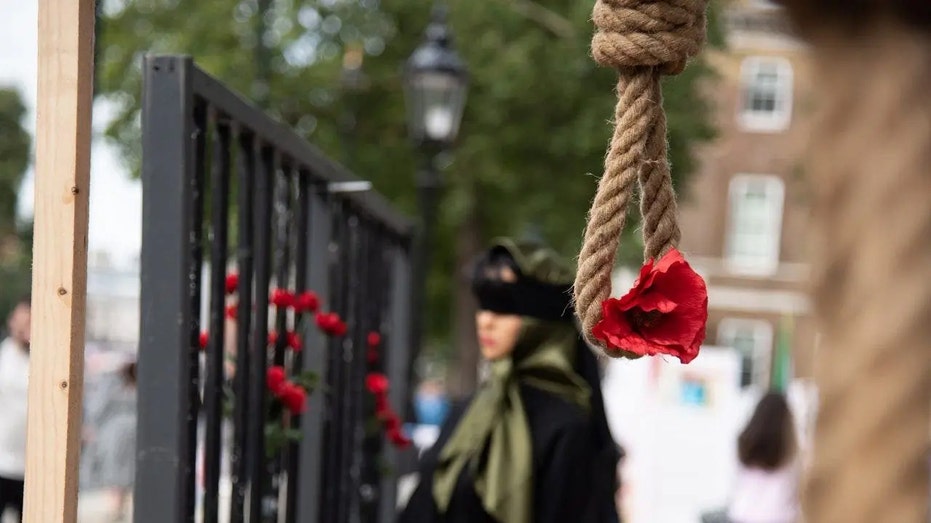
Iran accelerates execution campaign against anti-regime activists amid internet censorship

9 June 2026 at 18:49

The Islamic Republic of Iran has accelerated its executions of dissidents and activists, with the true number of victims likely obscured by the regime’s internet censorship and blackout.

Ever since the January uprisings against the regime, Tehran has enforced a bloody clampdown against its opponents.

The Iran Human Rights Society has documented 784 executions so far in 2026. A representative from the organization told Fox News Digital that "these figures indicate a rapidly accelerating trend in executions since March," and explained that "in particular, the execution of political prisoners has reached a level not seen in the past 37 years."

'KILLING OFF THE COUNTRY': IRAN EXECUTES DOZENS, ARRESTS 4,000+ IN WAR CRACKDOWN

A State Department official told Fox News Digital that "we are aware of disturbing reports about the recent surge in executions in Iran." The official noted that "we strongly condemn the Iranian regime’s use of executions to punish people for exercising basic human rights, including Iranians peacefully protesting for a better life."

The official said that "for decades, Iranians have been subjected to torture and sham trials resulting in executions and severe punishments, often with coerced confessions as the only evidence presented against them."

According to information provided to Fox News Digital by the Secretariat of the National Council of Resistance of Iran (NCRI) on June 4, the Islamic Republic of Iran executed at least 18 prisoners between May 31 and June 1. These included 12 prisoners hanged on May 31, and an additional six prisoners executed on June 1, one of whom was said to be "hanged in public with utmost brutality."

IRAN REGIME USES WAR TO MASK 'BRUTAL' EXECUTION SURGE AGAINST POLITICAL OPPONENTS

The NCRI has counted a total of 32 executions between March 19 and June 1. These included eight members of Iranian dissident organization People’s Mojahedin Organization of Iran (PMOE/MEK) and 24 participants in Iran’s January 2026 protests.

In documents provided to Fox News Digital, the NCRI said on June 7 that there was "an imminent risk of execution" for five political prisoners in the Sheiban Prison in Ahvaz, four of whom were sentenced to death because they were charged with being members of PMOI/MEK.

Maryam Rajavi, President-elect of the NCRI, posted on X a call for "urgent action" from the U.N. "to prevent the execution."

Days earlier on June 2, following two other executions against January protesters, Rajavi said on X that the "clerical regime has committed another horrific crime in Iran." She called on the U.N. Security Council and European Union "to decisively condemn these criminal executions and take effective action to stop the killing of political prisoners and protesters in Iran."

The Iran Human Rights Society echoed NCRI’s account of 18 recent executions between May 31 and June 1. Their representative explained that despite the internet blackout, they receive reports from "a network of prison sources, prisoners' families, lawyers, and local contacts" and explained that "all reports are reviewed and cross-checked through multiple independent sources before publication." Though they say "internet restrictions make documentation more difficult," they stated they "continue to receive, verify, and document information."

IRAN GOES DARK AS REGIME UNLEASHES FORCE, CYBER TOOLS TO CRUSH PROTESTS

Alp Toker, the director of NetBlocks, a global internet monitor, told Fox News Digital that "internet connectivity in Iran is largely restored but the service that is available remains limited compared to the state of things before the protests and the war this year. For most users, in practice, that means international access is slow with indications of throttling and there's also increased filtering, particularly targeting messaging apps.

"It's been in this limbo state since the restoration with no significant change for better or worse," he said.

However, the Iran Human Rights Society representative noted that the actual number of executions is "almost certainly" higher than the figure they have captured. "The ruling authorities in Iran frequently carry out executions in secret and do not publicly announce many of them," the representative explained. Additionally, the representative added that "a significant number of executions, particularly in remote areas or locations with limited access to information, may remain undocumented or reach us only after a considerable delay."

CLICK HERE TO DOWNLOAD THE FOX NEWS APP

The representative also noted that the quantity of executions the Iran Human Rights Society documents "has consistently been lower than the actual number carried out."

The United Nations Special Rapporteur on the situation of human rights in the Islamic Republic of Iran, Dr. Mai Sato, did not respond to Fox News Digital’s request for comment on the increased executions in Iran.

On June 20th, up to 100,000 Iranian expats from both sides of the Atlantic are expected to hold a major rally in Paris to urge an end to the executions. More than 100 lawmakers, officials, former heads of state and ministers are also expected to join, according to the NCRI.

Americans travel to Pakistan to free Christians trapped in modern-day slavery: 'God's hand was in it'

7 June 2026 at 16:30

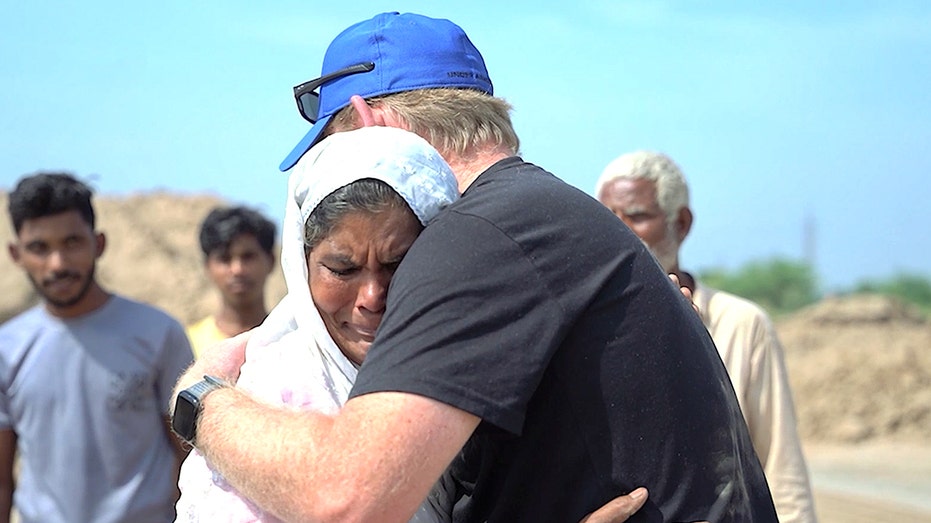
Idaho resident Aaron Hutchings arrived at a Pakistani brick factory in January. The devout Christian told Fox News Digital that he was shocked to see children turning bricks under the hot sun to work off the debts that their families had incurred, sometimes over the course of generations.

Within hours of his arrival, Hutchings paid off the debts for two enslaved Christian families and escorted them to freedom, breaking the "curse that they’ve had for hundreds of years."

There are up to one million Christians working in slave and bonded labor in Pakistan, according to Emma Hall, a persecution researcher working with charity Open Doors U.K. and Ireland, told Fox News Digital. This could comprise as much as 30% of Pakistani Christians, counted at 3.3 million in the 2023 census and accounting for 1.37 percent of the population.

WATCHDOG HIGHLIGHTS NATIONS WHERE CHRISTIANS FACE PERSECUTION AROUND THE GLOBE

Hall noted that "extreme poverty drives desperate families to accept advance loans (peshgri) for emergency and basic needs, trapping them in cycles of debt bondage where repayment systems are structured in ways that make exit extremely difficult."

Emmanuel Hernandez said he was shocked when he first heard that Christians in Pakistan were living in debt-based enslavement in Pakistan’s brick-making industry. After traveling to Pakistan to meet the woman who would later become his wife, Hernandez witnessed bonded laborers at a brick factory for the first time.

"Never in my life have I seen such hopelessness," he told Fox News Digital. "At that moment, I committed myself to rescuing one family a year for the rest of my life."

In January 2025, Hernandez started the nonprofit Project Jubilee. He says that it is "by the grace of God" that people have already donated enough through the nonprofit to save 300 Pakistanis from slavery.

GRAHAM FAMILY RESPONDS TO GLOBAL CRACKDOWN ON CHRISTIANS WITH $1.3M DEFENSE FUND AND URGENT CALL TO ACTION

Though Project Jubilee will save any bonded slave, regardless of race or faith, Hernandez said that "98% of the people we rescue are Christians, and that’s because they’re second-class citizens" in their country.

The average cost to help one family is about $8,500, Hernandez said, because Project Jubilee recognizes that slaves needed more than debt relief to escape the cycle of bonded labor.

"Our goal is for them to succeed in life and make sure that they never go back," he explained. To accomplish this, Hernandez and his team pay lawyers to take care of all applicable paperwork, and help each family with two months of rent and food. They also get families in touch with a local minister, pay for children to attend school and purchase every family a tuk tuk, a motorcycle taxi, which they can use to create income.

He said that in most cases, factory owners are grudgingly accepting of letting slaves go after their debts are paid off. But in some cases, he says owners have put a cap on the number of families Hernandez’s group can free in a month, or told them that they’re "never allowed to come back again."

AFRICA’S CHRISTIAN CRISIS: HOW 2025’S DEADLY ATTACKS FINALLY DREW GLOBAL ATTENTION AFTER TRUMP’S INTERVENTION

Hutchings found Hernandez’s online profile in late 2025 and messaged him, asking to be part of his effort. Retired from the IT world, Hutchings said he is "just a normal guy who wanted to do something…to help people."

After a short conversation over the phone, Hernandez invited Hutchings to come along to a trip to Pakistan in January. Hutchings agreed. It was during this visit that Hutchings freed two families and reported he "just got hooked." He admits that the process is highly emotional. "It changes an entire family’s future for generations," he explained.

Hutchings said that it is especially impactful to witness the change that freedom brings to children. "We get to ask them, ‘what do you want to be when you grow up?" Hutchings said. "They probably haven’t even really thought about that. They’re [thinking] ‘I’m going to be a brick worker for the rest of my life, just like my parents.’"

Hutchings started his own nonprofit, Intentional Faith Foundation, which he now uses to collect donations from people who want to help free more slaves.

NIGERIA NAMED EPICENTER OF GLOBAL KILLINGS OF CHRISTIANS OVER FAITH IN 2025, REPORT SAYS

Just months after his first journey, Hutchings returned to Pakistan in May to free an additional ten families. After video of his visit went viral, Hutchings said that his nonprofit raised enough funds to save another family from enslavement.

The practice of bonded slavery was outlawed formally in Pakistan in 1992, Hall says, but "enforcement remains weak." Discrimination extends beyond the bonded labor environment, with the U.S. Commission on International Religious Freedom noting in 2025 that there were "recent and escalating attacks against religious minorities" in Pakistan, including Christians.

During his recent visit, Hutchings learned that securing housing was difficult, with many landlords refusing to rent to Christians. Eventually, a Pakistani Christian group working with families was able to find housing and jobs for parents, and located a teacher for the children who were largely illiterate.

In a 2023 report, Pakistan's National Commission for Human Rights released a series of recommendations for diminishing the pain that bonded labor brings to approximately three million Pakistanis. In her introduction, the group's chairperson stated, "It is deeply appalling that in the 21st century, slavery persists in the form of bonded labor."

Among its recommendations are forbidding children from laboring in brick kilns, helping laborers access justice and creating unions for collective representation. They suggest registering all brick kilns, increasing the use of automated machinery, and encouraging brick purchasers to buy bricks from kilns "that provide a safe and decent working environment."

CLICK HERE TO DOWNLOAD THE FOX NEWS APP

Representatives of the Pakistani government did not respond to Fox News Digital's questions about the enforcement of laws against bonded labor, or about the treatment of Pakistani Christians. Neither Hutchings nor Hernandez reported having complications with the Pakistani government when working to free brick kiln laborers.

For Hutchings, the work has been transformative. "Looking back, it is hard to see any of it as random. I believe God's hand was in it from the beginning, and even though we were doing all of this to show Jesus' love towards these people, we ended up receiving more than we gave."

❌