Normal view

EXCLUSIVE: Serbian President Vučić says support for US 'surged' under Trump, invites him to visit Belgrade

10 June 2026 at 10:58

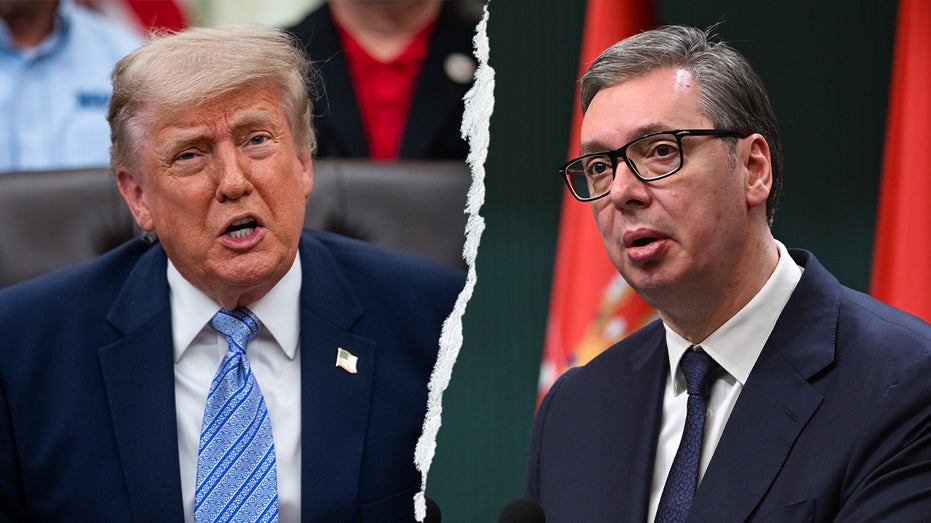
Serbian President Aleksandar Vučić says relations between Serbia and the United States have undergone a dramatic transformation under President Donald Trump, a shift he says has changed public perceptions in a country where memories of the 1999 NATO bombing campaign remain deeply rooted.

In an exclusive interview with Fox News Digital, Vučić praised Trump's approach to the Balkans, arguing that the administration's focus on economic cooperation rather than political pressure resonated with many Serbs. "President Trump and his team so far were working very diligently and dedicatedly on the Western Balkans," Vučić said, adding that many Serbs view his administration very differently from previous U.S. governments.

"If you ask people in Serbia just to make a comparison between Clinton and Trump's administration, or Democrats to Republicans, you wouldn't believe it," Vučić said. "It would be 90 to 10 or 95 to 5."

FORMER TRUMP ADVISORS WAGE BALKAN CAMPAIGN AS MAGA MOVES INTO EUROPE

The comparison is particularly striking in Serbia, where many still associate the United States with NATO's 1999 bombing campaign during the Kosovo conflict, launched to stop Serbian forces' crackdown on ethnic Albanians in Kosovo and which remains one of the most consequential events in modern Serbian history.

Vučić said he recently extended an invitation to Trump to visit Serbia and predicted the American president would receive an enthusiastic welcome.

"I hope that we'll be able to host him," Vučić said. "More people will be ready to greet him and wait for him than he might even expect…I dare to say even more than hundreds of thousands of people."

The Serbian president said the improving relationship between Washington and Belgrade is increasingly centered on economics, investment and technological cooperation, and mutual conservative values.

According to Vučić, Serbia and the United States are preparing to launch a strategic dialogue that will focus on energy, infrastructure, artificial intelligence, defense cooperation and investment opportunities. Among the projects under discussion are energy infrastructure, liquefied natural gas cooperation, data centers and advanced computing technologies.

EUROPEAN LEADER PRAISES TRUMP'S 'PEACE THROUGH STRENGTH' FOR KEEPING COUNTRY SAFE FROM CONFLICT

The growing relationship comes as Serbia seeks to position itself as a regional economic hub while continuing its long-standing ambition of joining the European Union.

Vučić pointed to preparations for Expo 2027 in Belgrade with nearly 150 participating countries, as evidence of Serbia's growing international profile and economic ambitions.

Vučić, who has served as Serbia's dominant political figure since becoming prime minister in 2014 and president in 2017, pointed to the country's economic growth as evidence of its transformation. "Our GDP was 32 billion (euros) when I became the prime minister," Vučić said. "This year it's going to be over 100 billion euros., which is $120 billion."

Vučić's relationship with Trump dates back to the president's first term, when the White House brokered a series of economic normalization agreements between Serbia and Kosovo. Rather than focusing first on the politically explosive question of Kosovo's status, the Trump administration emphasized infrastructure projects, transportation links and investment aimed at improving ties between the two sides.

In September 2020, Vučić and then-Kosovo Prime Minister Avdullah Hoti signed U.S.-brokered economic agreements at the White House that included commitments to expand rail and highway connections and promote investment. Trump described the deal as a breakthrough achieved by focusing on "job creation and economic growth" rather than longstanding political disputes.

PRESIDENT ALEKSANDAR VUČIĆ: EUROPE VILIFIES TRUMP, BUT WE IN SERBIA SEE A FRIEND

Asked whether he would consider recognizing Kosovo, which declared independence from Serbia in 2008 and has been recognized by the United States under President George W. Bush and most European countries, if doing so unlocked Serbia's economic future and accelerated its path toward membership in the European Union, Vučić pushed back on the premise, arguing that economic cooperation and improved relations should come before discussions about political status.

"I'm not saying that I'm ready to violate my constitution… I have always been open to talks or compromising solutions, I have always been open to developing great economic ties and no doubt much better political ties. But I was not speaking about recognition of someone's independence," he said.

While Serbia continues to pursue membership in the European Union, the country has also maintained ties with Russia and China, a balancing act that has drawn scrutiny amid Russia's war in Ukraine and growing geopolitical tensions worldwide.

Asked whether Serbia could continue navigating between East and West in an increasingly divided world or would eventually need to choose a side, Vučić rejected the notion that countries must choose between competing geopolitical camps. Instead, he pointed to both his own visit to China and Trump's engagement with Beijing as examples of what he described as pragmatic diplomacy focused on national interests.

"President Trump didn't go there because of his vanity," Vučić said of Trump's visit to China. "He brought with him all the leading people of the United States of America for making better businesses, for earning more money for their companies."

KOSOVO ACCUSES SERBIA OF 'TERRORIST ATTACK' RESEMBLING RUSSIAN ACTIONS IN UKRAINE

Vučić said he adopted a similar approach during his own visit, arguing that leaders should prioritize economic opportunities for their citizens rather than ideological alignments. "I'm coming from a small country. I was asking for more investments and was fighting for the interests of my people," he said.

The Serbian president said the same pragmatic approach should guide efforts to resolve ongoing conflicts in both Ukraine and the Middle East.

"It's always better to have thousands of days of negotiations than one day of war," he said.

Asked about tensions involving Iran and the wider conflict in the Middle East, Vučić reiterated Serbia's support for Israel, a position that increasingly distinguishes Belgrade from some European governments.

"I am the president of the country that is one of the very rare countries in Europe that is not hesitating to cooperate and collaborate with Israel," he said. "And it is proud to say this publicly and openly."

Vučić warned about what he described as rising antisemitism around the world.

"From time to time, I'm very much afraid to see a lot of antisemitic slogans and antisemitic banners," he said.

CLICK HERE TO DOWNLOAD THE FOX NEWS APP

"The Serbian president said Serbia has resisted those trends and pledged that it would continue to do so under his leadership."

"It does not happen in Serbia, and it won't happen as long as I'm the president."

Finland’s foreign minister says Ukraine ‘is now holding the cards’ as Russia signals talks

8 June 2026 at 21:01

EXCLUSIVE: Finnish Foreign Minister Elina Valtonen said Ukraine has gained new leverage against Russia, arguing that Moscow’s renewed talk of negotiations comes as Kyiv has strengthened itself militarily, politically and diplomatically.

Valtonen’s comments carry particular weight because Finland is one of NATO’s newest members and now sits on the alliance’s longest border with Russia. Finland joined NATO in April 2023 after Russia’s full-scale invasion of Ukraine, ending decades of military nonalignment and transforming the country into a frontline state in Europe’s security posture.

"Ukraine certainly is now holding the cards," Valtonen told Fox News Digital Monday in an interview at the United Nations headquarters in New York. "They have strengthened themselves immensely over the course of the past three, four months, both militarily and politically, diplomatically. And I think this opens a great window of opportunity for actually advancing the peace talks."

UKRAINE MAKES FASTEST GAINS IN YEARS AS RUSSIA TALKS STALL, EXPLOITING CRACKS IN KREMLIN COMMAND

Her assessment comes as Reuters reported that Ukraine’s top military commander said Ukrainian forces had recaptured more than 600 square kilometers, or roughly 230 square miles, of territory so far in 2026, a shift after years of slow Russian gains. It also follows renewed diplomatic activity, including Zelenskyy’s stated willingness to halt fighting along current lines as a path to talks and Putin’s public rejection of a direct meeting for now.

Finland shares a roughly 820-mile border with Russia, making it one of the alliance’s most strategically exposed members.

Valtonen said Moscow has shown little willingness to make concessions and argued that the responsibility for ending the war remains with the Kremlin.

"So far, Russia hasn’t been willing to make any concessions, and essentially Russia could end the war today if they wanted to, because it was their war in the first place," she said. "So I’m hopeful that this could be the right time to relaunch those talks."

Peace efforts remain stalled over the same core divide that has shaped the war for years: Ukraine has called for a ceasefire and negotiations without surrendering territory, while Russia has continued to demand control over occupied Ukrainian regions. Putin said in early June there was "no point" in meeting Zelenskyy for now and repeated Moscow’s broader war aims.

Asked about U.S.-led efforts to negotiate an end to the war, Valtonen praised Washington’s role but stressed that Ukraine alone must decide whether to accept any concessions, including on territory.

"I think the U.S. involvement in this entire process has been a very good one, and it’s important that the U.S. stays engaged, because at the end of the day, it’s about freedom, it’s the future of not only Europe, but also of global peace," she said.

ZELENSKYY SAYS US WILL ONLY GUARANTEE UKRAINE'S SECURITY IF KYIV AGREES TO GIVE UP DONBAS

Valtonen said Europe also needs to be part of the process because Russia’s war directly affects the continent’s security architecture.

She said any serious negotiations would require Russia to accept a full ceasefire.

"First and foremost, we would need Russia at the table willing to end the war," Valtonen said. "And that would need to happen through a full ceasefire, because only that would open the possibility for true negotiations."

Valtonen also credited President Donald Trump with pushing European allies to increase defense spending, saying the pressure had moved the continent in the right direction after years of imbalance inside NATO.

Finland has moved aggressively to increase defense spending. Helsinki plans to raise defense spending to 3.2% of GDP by 2030, up from 2.5% in 2025, Reuters reported in April. 

WHY NATO’S DEFENSE SPENDING IMBALANCE LASTED FOR DECADES

Secretary of State Marco Rubio also praised Finland and Sweden Tuesday during a Senate Foreign Relations Committee hearing, saying the two newest NATO members had strengthened the alliance by bringing "their own defense industry" and "advanced technologies." 

He called them "a great partner" and "an extraordinary partner."

Valtonen said Finland’s approach is shaped by its own history with Moscow.

"Finland obviously has taken the Russian threat extremely seriously because we have the longest border with them," she said. "We certainly worship our status as the happiest country in the world, i.e. democracy, the rule of law and human rights, which we hold dear as values over anything that Russia could offer."

She also pointed to Finland’s experience in World War II, when the Soviet Union invaded Finland, as a reminder of why deterrence matters.

"The last time the Soviet Union, i.e. Russia, tried to invade us was during the Second World War," Valtonen said. "Happily, we were able to fend them off, but of course at the massive cost to the society."

"For us, it has been clear that if we invest in our deterrence, then that’s a signal to Russia — do not come here," she added.

On Iran, Valtonen said Finnish President Alexander Stubb’s March comments, reported by The Guardian, that the conflict was not a NATO matter should not be understood as Europe washing its hands of the crisis.

"I don’t think our president meant that this has nothing to do with European countries or NATO allies," Valtonen said. "I think what he probably meant more is that NATO obviously is not directly involved as an organization, which is true."

EX-NATO AMBASSADOR WARNS US AND ALLIES MUST 'STOP THE SNIPING' AND UNITE TO END IRAN CONFLICT

Her comments came after another weekend escalation in the Iran war, with Tehran launching missiles at Israel and Israel striking military targets in western and central Iran overnight. The flare-up unfolded as the U.S. and its allies continue efforts to prevent Iran from becoming a nuclear state and keep pressure on Tehran over threats to Israel and regional shipping.

The Strait of Hormuz, a critical global energy choke point, has become a central focus for Western governments after Iranian threats and restrictions on maritime traffic. Reuters reported Monday that the European Union sanctioned Iranian-linked individuals and an Islamic Revolutionary Guard Corps navy unit over threats to shipping in the strait.

"We as individual member states in Europe have definitely been helping the U.S. effort," Valtonen said. "We don’t want to see Iran as a nuclear state. We know what kind of a threat Iran has projected towards the region, especially toward Israel."

Valtonen added Finland has also joined efforts led by France and the United Kingdom to keep the Strait of Hormuz open once conditions allow for safe operations in the area.

"It’s so important that such straits are not weaponized by any country around the world," Valtonen said.

Asked whether European countries had refused U.S. requests to use bases during the Iran crisis, Valtonen said Finland has no U.S. bases to shut down but argued that most European allies have supported Washington’s requests.

"Finland has been helping the U.S. through so many ways," she said. "We don’t have any U.S. bases in Finland, so there’s nothing we can shut down."

CLICK HERE TO DOWNLOAD THE FOX NEWS APP

"But having said this, the vast majority of European countries have said yes to everything that the U.S. has asked during the past couple of months when this war effort has been ongoing, independent of the fact that, of course, we are not directly involved as countries in the war," she added.

Valtonen said that support demonstrated NATO allies’ willingness to help Washington even when the alliance itself is not formally involved.

"I think that really shows the engagement by NATO allies in this and our willingness to help when the U.S. really needs some assistance," she said.

NATO's eastern flank races to rearm as Trump pressure exposes Western Europe's defense gap

7 June 2026 at 12:00


This is part six of a series examining the challenges confronting the NATO alliance.

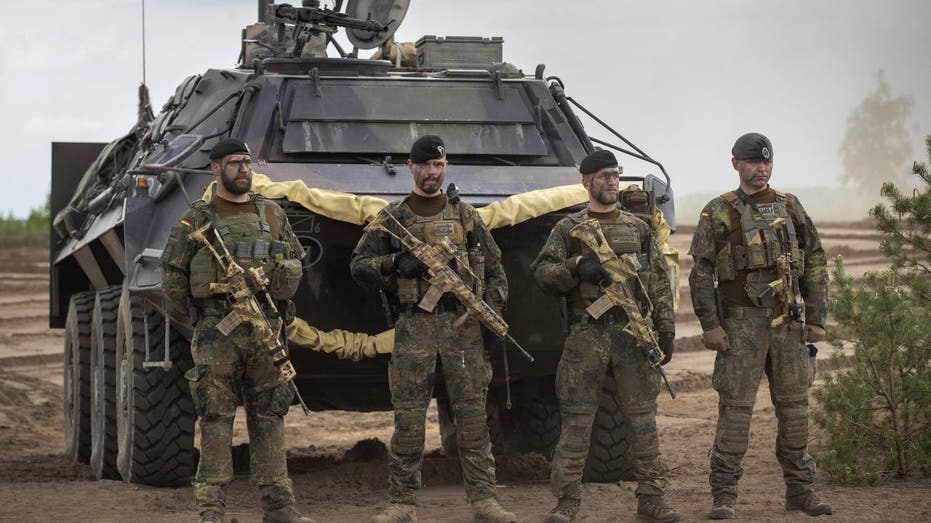
As President Donald Trump presses NATO allies to shoulder more of Europe's defense burden, countries closest to Russia are moving fastest — while some of Western Europe's biggest economies face growing pressure to catch up. 

Retired Rear Adm. Mark Montgomery, senior director at the Foundation for Defense of Democracies and former deputy director for strategy, policy and plans at U.S. European Command, said the shift is already visible across the alliance.

"Europe is clearly stepping up, but they're stepping up by geographic variation," Montgomery told Fox News Digital.

"If you ask me who's doing the most, the Eastern Europeans are clearly."

RUSSIAN DRONES TEST NATO'S ARTICLE 5 DEFENSE GUARANTEE AHEAD OF FRIDAY SANCTIONS DEADLINE

Montgomery pointed to the Baltic states, Poland, Romania and Bulgaria as countries moving aggressively to strengthen deterrence against Russia.

His assessment comes as NATO allies work toward a new defense spending benchmark agreed at the 2025 summit in The Hague, which calls on members to invest 5% of GDP in defense and security-related spending by 2035, including 3.5% for core defense requirements and 1.5% for defense-related infrastructure and security investments.

John Deni, a research professor at the U.S. Army War College, said the trend shouldn't be surprising. 

"Given the threat of Russia, allies in the East are acquiring capabilities more quickly, and they're spending even more than allies in the West," Deni told Fox News Digital. "This shouldn't surprise us because they're the ones closest to the threat."

Deni noted that many eastern allies are rapidly purchasing equipment already available on the market rather than waiting years for domestic defense programs to mature.

UK, GERMAN DEFENSE OFFICIALS DEFEND MILITARY BUILDUP UNDER RUSSIAN THREATS

The transformation is visible across NATO's eastern and northern flanks. Poland has become one of the alliance's largest military spenders, Romania is increasing defense investments, and Finland and Sweden have added advanced military capabilities to NATO following their accession.

Secretary of State Marco Rubio praised Finland and Sweden Thursday at the Senate Foreign Relations Committee hearing, using them as examples of allies strengthening the alliance.

"Sweden and Finland have actually contributed because they brought their own defense industry, their own advanced technology," Rubio said. "They have been great partners." 

Romanian Foreign Minister Oana-Silvia Ţoiu echoed that message in an interview with Fox News Digital following an emergency U.N. Security Council session convened after a Russian drone strike injured civilians in the Romanian city of Galați.

"We do agree with President Trump on the need to increase budgets," Ţoiu said.

Ţoiu said Romania raised defense spending to 2% of GDP during Trump's previous term and plans to allocate "an average of 3.4 percent" next year through military procurement and strategic infrastructure investments.

POLAND SEEKS ANSWERS AFTER PENTAGON SCRAPS PLANNED US ARMORED BRIGADE ROTATION

"We have launched initiatives that are directed at the eastern flank because it is increasingly more clear that that needs to be protected," she said.

She argued that Romania's role extends beyond national defense.

"We need better deterrence, better defense capabilities there in order to ensure our responsibility in protecting not just the Romanian border, which is the longest border to the war, but also it is in the same time a European border and the border of the Allied territory," Ţoiu said.

For frontline states, the urgency is driven by geography as much as politics. Romania shares a border with Ukraine and repeatedly has dealt with Russian drones entering its airspace. Poland has become one of NATO's top military spenders, while the Baltic states are racing toward defense expenditures approaching 5% of GDP.

Montgomery said the eastern flank's urgency contrasts sharply with the pace in much of Western Europe.

Among the continent's five largest economies, and despite a slight decrease in military spending in 2025, the U.K. remains the largest investor relative to GDP, with 2.4%, trailed by Germany (2.3%), Spain (2.1%), France (2%) and Italy (1.9%), according to the Stockholm International Peace Research Institute (SIPRI).

WHY NATO’S DEFENSE SPENDING IMBALANCE LASTED FOR DECADES

"The Germans are the one country, I think, with a large economy that is starting to make the right kind of investments."

Germany, he argued, could become the backbone of Europe's future defense industrial base.

"Germany developing a large, impressive defense industrial base is good for NATO, it's good for Western security, and it's even good for our primes," Montgomery said.

German Chancellor Friedrich Merz has embraced higher defense spending and backed NATO's new spending goals, positioning Berlin as a potential hub for Europe's future defense industrial base as allies seek to reduce long-term dependence on the United States.

But despite rising defense budgets, experts warn Europe remains heavily dependent on American military capabilities.

Barak Seener, a senior fellow at the Henry Jackson Society, said Europe still relies on the United States for many of the systems required to fight a modern war.

NATO CHIEF WARNS EUROPE CAN’T DEFEND ITSELF WITHOUT US AS TENSIONS RISE OVER GREENLAND

"Europe is heavily dependent on NATO for its strategic airlift and sea lift, its air-to-air refueling, its cyber capabilities, its space assets, its intelligence, surveillance and reconnaissance," Seener said.

Without those capabilities, he warned, European forces would struggle to maintain situational awareness during a major conflict.

Montgomery said Europe faces three major challenges: expanding military capacity, rebuilding its defense industrial base and developing high-end support capabilities that have long been provided by the United States.

PENTAGON CUTS BRIGADE COMBAT TEAMS IN EUROPE AS TRUMP PRESSURES NATO ON SPENDING

"When you are freeloading for 30 years, you create enormous deficits in terms of people, equipment, technology and know-how," he said.

"The primary forces to defend Europe should be European," he said. "The United States should provide additional forces that allow maneuver and offensive operations."

Montgomery also criticized reported Pentagon deliberations over delaying long-range strike deployments to Germany and reconsidering future Tomahawk missile sales, arguing the systems are critical for deterring Russia.

"The goal here is not to fight Russia in the Baltics or in Poland. The idea here is we want to deter Russia from even trying to attack."

Looking ahead, Montgomery remains optimistic about NATO's future.

Montgomery predicted Europe will continue increasing defense spending and expanding its defense industrial base, while the alliance benefits from steadier transatlantic relations.

"I think you'll have a U.S. president that probably doesn't provoke the Europeans as much. You'll have Europe that's investing more," he said.

CLICK HERE TO DOWNLOAD THE FOX NEWS APP

He also predicted NATO Secretary-General Mark Rutte would be remembered for helping hold the alliance together through a period of significant change.

"I think five years from now, NATO will be stronger," he said. "And I hope we have Ukraine in there."

Zelenskyy issues open letter to Putin proposing meeting as US 'fully focused' on Iran

5 June 2026 at 13:49

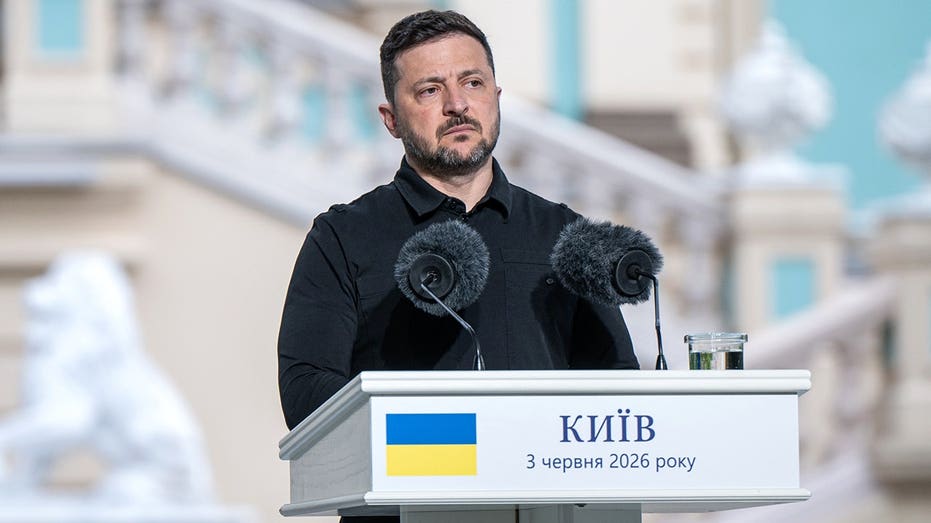
In an open letter to Russian President Vladimir Putin, Ukrainian President Volodymyr Zelenskyy proposed meeting to reach a resolution to the years-long war between their two nations.

"We see that the United States is fully focused on the issue of Iran, and it would be wrong to simply wait until the war in Europe returns to the center of its attention. Ukraine proposes ending this war through direct engagement between us — and you. I am proposing a meeting," Zelenskyy said in the letter.

"There are countries that have traditionally hosted leaders to resolve issues of war and peace. Switzerland, Türkiye, the countries of the Arab world — many are able and willing to host such a meeting. It is leaders who resolve the key issues. That has always been the case, and it always will be," he asserted.

18 HOUSE REPUBLICANS DEFY TRUMP TO PASS UKRAINE AID PACKAGE HEADED FOR VETO FIGHT

Zelenskyy suggested that Europe and the U.S. should also be involved in the peace process.

"Since the war is taking place in Europe, and since Ukraine needs security guarantees, while you also seek security guarantees for yourself, it would be logical to involve those who can genuinely serve as guarantors. We believe Europe should be part of this process — those who truly have the capacity to influence the situation. We also believe that the United States must be part of the process. This is what could help shape a new security architecture for our part of the world," he said.

HOUSE REPUBLICAN DON BACON SAYS HE WANTS 'PARIAH STATE' RUSSIA BOOTED FROM UN SECURITY COUNCIL

He indicated that Ukraine would agree to a ceasefire during the proposed negotiations.

"Ukraine is ready for a full ceasefire for the duration of the negotiations. This is standard practice, and current developments around Iran only reinforce that point. An attempt to establish real silence is the best way to begin talking to one another. We believe it would not simply be an attempt, but a real ceasefire — if that is what you want," he noted.

He also suggested a prisoner swap between the two nations, noting, "Ukraine is ready for an all-for-all exchange of prisoners of war, and this could become a good prologue to ending the war. Serious steps must be taken to return civilians and children who were taken away during the war."

PENTAGON SLASHES NATO COMBAT COMMITMENTS AS TRUMP PUSHES EUROPE TO DEFEND ITSELF

CLICK HERE TO DOWNLOAD THE FOX NEWS APP

"If you do not personally come to the conclusion that it is time to end this war, Ukraine will continue fighting for its existence. We will have those who support us. But you, too, will have to fight much harder for your own existence — not Russia’s, but your own. And this is not a threat from me or from Ukraine. It is a fact of Russian history that you know well: when Russia grows tired, change comes," Zelenskyy warned Putin.

❌