President Trump late Tuesday shared a clip from the series “The West Wing” dismissing the concept of a “proportional response” after the U.S. launched a new round of strikes on Iran in retaliation for an attack on an Apache helicopter. The president first shared on Truth Social the statement issued by U.S. Central Command (Centcom)…
President Trump late Tuesday shared a clip from the series “The West Wing” dismissing the concept of a “proportional response” after the U.S. launched a new round of strikes on Iran in retaliation for an attack on an Apache helicopter. The president first shared on Truth Social the statement issued by U.S. Central Command (Centcom)…
The recent developments in the Middle East indicate that the dynamics of the regional conflict are entering a new phase. Although the ceasefire reached in recent months has reduced the intensity of direct confrontations, recent events demonstrate that the structural factors fueling the war remain in place. The exchange of attacks between Iran and Israel reveals not only the fragility of existing agreements but also an important shift in Tehran’s strategic posture.
For years, Iranian military policy was characterized primarily by responses to actions it considered hostile. Since 2024, every case of direct confrontation between Iran and Israel occurred with an Iranian response to a previous Israeli attack. However, the events of the past weekend suggest a significant change in this behavior. By launching an offensive against Israeli targets following military operations conducted in Lebanon, Iran demonstrated a willingness to act before additional threats materialize, presenting its actions as part of the right to collective self-defense, expressed through the protection of regional partners.
The Iranian justification is based on the interpretation that Israeli attacks on Lebanese territory constitute violations of previously established understandings. According to this view, the continuation of military operations in urban areas and the expansion of actions against different regions of Lebanon create a scenario that legitimizes a proportional response. In addition, Tehran also links its reaction to incidents involving what it describes as American piracy on strategic maritime routes.
The most significant aspect of this escalation lies not merely in the launching of missiles or drones, but in the political message it conveys. Iran appears to be signaling that it no longer intends to limit its actions to the direct defense of its own territory. Instead, it is showing a willingness to respond to military operations targeting actors considered part of its regional alliance network. This represents a shift with the potential to profoundly alter the strategic calculations of all parties involved.
At the same time, the international response highlights the difficulties faced by powers attempting to manage the crisis. Fears of an uncontrolled expansion of the conflict come at a particularly sensitive moment for the global economy. Military tensions in one of the world’s most important regions for energy production and transportation tend to generate immediate impacts on financial markets, logistics chains, and investor expectations.
Israel’s response to the Iranian attacks, followed by further military actions by Tehran and the involvement of regional allies, demonstrates that the cycle of retaliation remains active. The involvement of Yemen, which has moved to restrict access to the Red Sea for vessels linked to Israel, adds an additional factor of insecurity for the Zionist regime, creating a supporting front for Iran.
In light of this scenario, it becomes evident that the current ceasefire has significant limitations. Although it has temporarily reduced the level of violence, it has not resolved the principal elements sustaining regional rivalry. Issues related to the American military presence and Israeli territorial expansionism remain unresolved, prolonging the atmosphere of tension.
However, perhaps the main consequence of recent events is the emergence of a new strategic precedent. By demonstrating a willingness to respond to actions carried out against third parties, Iran is establishing a broader deterrence logic than previously observed. This means that future military operations conducted by Israel or the United States against Tehran’s partners could trigger direct responses, even when Iranian territory itself is not the immediate target.
Just as Iran is now responding to Israeli attacks against Lebanon, in the future such retaliatory measures could be launched to punish Tel Aviv for its actions in Gaza, Iraq, Yemen, and other countries in the region. In practical terms, this means that the regional balance of power has changed substantially: Iran is now making it clear to Israel that its actions will not go unanswered.
The Air Force said Russia launched 207 drones, 181 of which were intercepted. At least 21 drones struck 14 locations, while falling debris was recorded at 13 sites.
In the fifth year of Russia's full-scale invasion of Ukraine, mil-tech startups still struggle to access bank financing amid strict secrecy and lack of collateral.
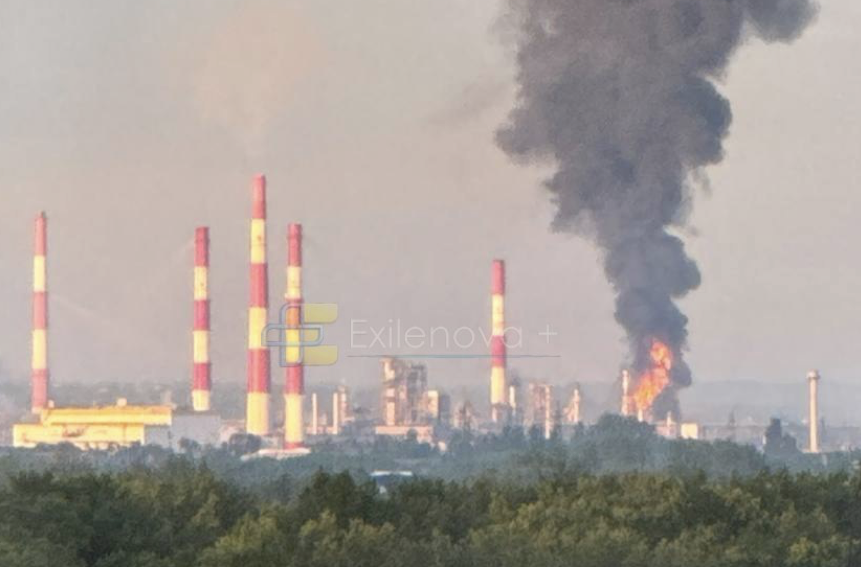
The attack on Cheboksary was part of a broader Ukrainian assault that also struck the Kuibyshev oil refinery in Russia's Samara Oblast, as well as two oil infrastructure facilities in Russia's Vladimir Oblast.
A think tank has recommended that Democratic messaging on foreign policy needs to be revamped following drastic moves by the Trump administration. “Voters are increasingly uncomfortable with Republicans’ chaos and escalation, but many remain unconvinced that Democrats project enough strength and decisiveness on foreign policy,” the think tank Third Way wrote in a memo published…
A think tank has recommended that Democratic messaging on foreign policy needs to be revamped following drastic moves by the Trump administration. “Voters are increasingly uncomfortable with Republicans’ chaos and escalation, but many remain unconvinced that Democrats project enough strength and decisiveness on foreign policy,” the think tank Third Way wrote in a memo published…
The U.S. military started what it called "self-defense strikes" against Iran for the downing of an Army helicopter near the Strait of Hormuz. President Trump said the two crew members were both "safe and uninjured" after the Apache helicopter went down while on patrol off the coast of Oman. Geoff Bennett discussed the latest with Dan Lamothe of The Washington Post.
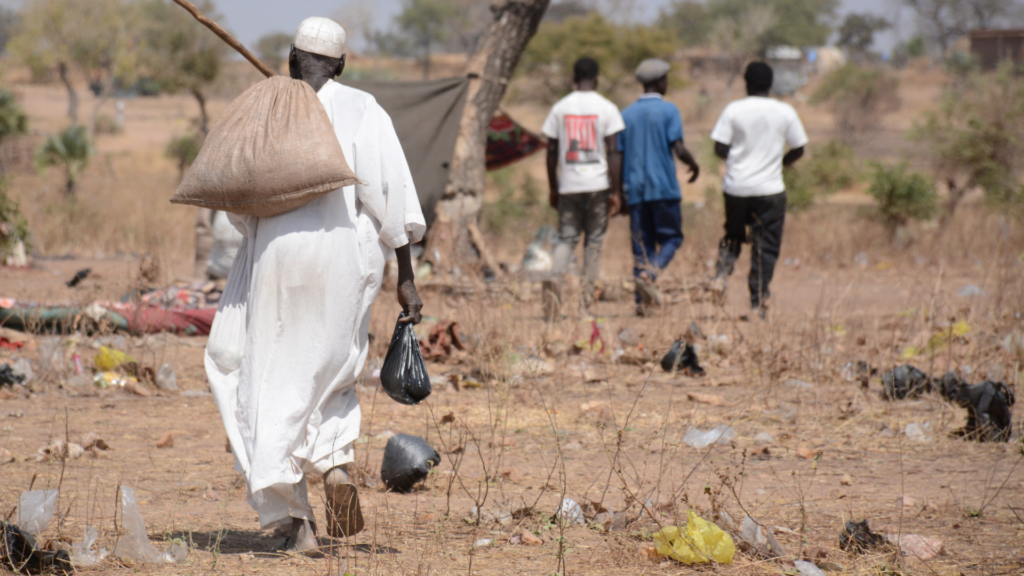
It's the world's largest humanitarian crisis, yet aid groups say it has received far too little attention. As Sudan's civil war enters its fourth year, nearly two out of every five people face emergency-level hunger and humanitarian officials warn the crisis has been compounded by the closure of the Strait of Hormuz. Nick Schifrin reports. A warning, some images in this story are disturbing.
Lo scorso dicembre, Israele è diventato il primo Paese a riconoscere formalmente il Somaliland, una regione autonoma separatasi dalla Somalia decenni fa. Il Somaliland, nella Somalia nordoccidentale, è da tempo in conflitto con il governo di Mogadiscio, avendo dichiarato l’indipendenza nel 1991 mentre la Somalia sprofondava nella guerra civile e nel caos. Da allora, il Somaliland ha governato la maggior parte del territorio che rivendica senza ricevere il riconoscimento internazionale.
Il primo ministro Netanyahu ha dichiarato che Israele moltiplicherà gli sforzi per istituire una cooperazione immediata con il Somaliland in settori quali agricoltura, sanità, tecnologia ed economia. Si è inoltre si è congratulato con il presidente del Somaliland, Abdirahman Mohamed Abdullahi, elogiandone la leadership e invitandolo a visitare Israele.
Il premier israeliano ha affermato che la dichiarazione «rientra nello spirito degli Accordi di Abramo, firmati su iniziativa del presidente Trump» nel 2020 per normalizzare le relazioni diplomatiche di Israele con gli Emirati Arabi Uniti e il Bahrein, a cui si sono aggiunti successivamente altri Paesi.
Netanyahu, il ministro degli Esteri Saar e il presidente Abdullahi hanno firmato una dichiarazione congiunta di reciproco riconoscimento. Abdullahi ha dichiarato in una nota che il Somaliland avrebbe aderito agli Accordi di Abramo, definendoli un passo avanti verso la pace regionale e globale, e annunciato che il Somaliland si impegna a costruire partenariati, a rafforzare la prosperità reciproca e a promuovere la stabilità in Medio Oriente e Africa.
Senonché, rivela un’inchiesta della «Cnn», il Somaliland ha fornito a Israele una base logistica sistematicamente impiegata come scalo per i bombardamenti strategici sull’Iran condotti nel contesto dell’Operazione Roaring Lion. In tali condizioni, il riconoscimento diplomatico accordato al Somaliland viene a configurarsi come una sorta di contropartita per la concessione di un avamposto strategico situato all’imboccatura del Mar Rosso.
La “relazione speciale” istituita con il Somaliland rappresenta tuttavia una singola tessera di un mosaico molto più ampio, in cui rientrano Paesi parimenti cruciali come Iraq ed Emirati Arabi Uniti.
Sempre nel corso della guerra contro l’Iran, l’Israeli Defense Force si è avvalsa di due basi segrete in territorio iracheno che fungevano da basi avanzate per il supporto logistico e l’espletamento di operazioni di ricerca e soccorso. L’esistenza di queste due basi in Iraq era già stata segnalata dal «Wall Street Journal» e dal «New York Times», che smentivano seccamente le rassicurazioni fornite dal governo iracheno sul punto.
Le strutture sono andate a rafforzare l’influenza israeliana sul Paese, che storicamente si esercita attraverso il Kurdistan. I legami tra Israele e i rappresentanti kurdi risalgono infatti agli anni ’50 , quando il Mossad avvicinò il potente Mustafà Barzani per minare le aspirazioni nazionalistiche del Baath iracheno che era salito al potere a Baghdad, identificato fin da allora come il più temibile nemico regionale dello Stato ebraico.
L’intesa ha aperto progressivamente le porte all’addestramento dei peshmerga kurdi da parte di istruttori militari israeliani e agli investimenti dello Stato ebraico, cresciuti in maniera esponenziale in seguito alla guerra contro l’Iraq sferrata dagli Usa nel 2003. Molti sono stati infatti gli appalti ottenuti da società israeliane per la ricostruzione e l’ammodernamento delle infrastrutture nelle regioni settentrionali dell’Iraq, tra cui anche quello, ottenuto grazie anche all’intercessione del ministro per le Infrastrutture Yosef Paritzky, per la rimessa in sesto dell’oleodotto Kirkuk-Haifa, rimasto chiuso fin dal 1948. «Non passerà molto prima che il greggio iracheno fluisca verso Haifa. È solo una questione di tempo e il petrolio iracheno inonderà il Mediterraneo», dichiarò nel 2003 un raggiante Netanyahu (allora ministro degli Esteri).
Sempre nell’area kurda, imprese israeliane hanno acquistato terreni per costruire case, fabbriche e capannoni, alimentando la crescita economica della regione, e consolidando la profondità strategica israeliana nel nord dell’Iraq, come spiega Seymour Hersh: «in una serie di interviste in Europa, in Medio Oriente e negli Stati Uniti, svariati funzionari mi hanno confidato che alla fine dello scorso anno Israele era giunto alla conclusione che l’amministrazione Bush non sarebbe stata in grado di stabilizzare l’Iraq, e che Israele aveva bisogno di altre opzioni». Il governo di Ariel Sharon aveva quindi «deciso di rafforzare la posizione strategica di Israele intensificando i legami stretti molto tempo prima con i kurdi iracheni e stabilendo una presenza significativa sul terreno della regione semi-autonoma del Kurdistan. Molti funzionari hanno descritto la decisione di Sharon – che prevede un notevole impegno finanziario – come una mossa potenzialmente spregiudicata che potrà creare persino più caos e violenza, mentre la ribellione in Iraq continua ad allargarsi». L’intelligence di Tel Aviv «è silenziosamente al lavoro nella regione nord-irachena, fornendo addestramento ad unità kurde e, cosa più importante per Israele, guidando covert-operation all’interno del Kurdistan siriano ed iraniano. Israele si sente particolarmente minacciato dall’Iran, la cui posizione nell’area è stata rafforzata dalla guerra».
Durante gli anni precedenti, le autorità israeliane avevano evitato che i rapporti con il Kurdistan raggiungessero una dimensione strategica per evitare di guastare la relazione che stavano costruendo con Ankara. Eppure, nemmeno l’importanza capitale rivestita dalla Turchia si è rivelata capace di spezzare i contatti israelo-kurdi. Non stupisce quindi che all’indomani della rottura diplomatica con Ankara, il legame con i kurdi abbia assunto un accresciuto valore geopolitico.
Allo sfruttamento del territorio iracheno come trampolino di lancio per le operazioni contro l’Iran, Israele ha affiancato un netto avvicinamento agli Emirati Arabi Uniti. Nelle scorse settimane, il governo Netanyahu ha autorizzato lo schieramento negli Emirati di sistemi Iron Dome e Iron Beam, unitamente al personale preposto alla loro gestione.
Il principale snodo cruciale di cui Israele ha beneficiato per condurre operazioni militari contro l’Iran è tuttavia costituito dall’Azerbaijan, uno dei pochissimi alleati di Israele tra i Paesi musulmani che copre qualcosa come il 40% del fabbisogno petrolifero dello Stato ebraico. A loro volta, le aziende belliche israeliane hanno rifornito nel corso degli anni l’Azerbaijan di droni, sistemi radar, apparati di intelligence ed equipaggiamenti militari, e sono anche entrate a far parte di un consorzio costituito per fornire a Baku la collaborazione necessaria a realizzare un satellite di osservazione dal costo stimato di circa 200 milioni di dollari.
Il volume dell’interscambio tra i due Paesi raggiunge ogni anno cifre alquanto ragguardevoli, ma molte operazioni commerciali rimangono coperte da segreto, come confermato da un cablogramma classificato reso pubblico da «WikiLeaks» in cui l’ambasciata statunitense paragonava le relazioni bilaterali fra Azerbaijan e Israele a «un iceberg, visto che come questi grandi blocchi di ghiaccio nasconde i nove decimi della sua consistenza sotto la superficie».
Secondo Joshua Kucera, analista senior del Crisis Group, la relazione altamente collaborativa instaurata con Tel Aviv garantisce per di più a Baku la possibilità di trarre indirettamente beneficio dall’incessante attività di condizionamento su Casa Bianca e Congresso svolta dalla potente Israel Lobby.
Nel corso dei due più recenti conflitti del Nagorno-Karabakh, le forze azere hanno messo in campo contro l’esercito armeno tecnologie e sistemi d’arma israeliani e beneficiato dell’assistenza militare e di intelligence di Tel Aviv. Già nel 2016, lo specialista israeliano Yossi Melman sottolineava che la penetrazione israeliana nel sistema di difesa azero si era spinta molto più in profondità di quanto i numeri disponibili non potessero acclarare: «apparentemente, Israele e Azerbaijan sono una strana e male assortita coppia, ma d’altra parte Israele non è mai troppo selettivo nella scelta degli amici quando si tratta di vendita di armi ed interessi nazionali. Un rapido sguardo alla mappa mostra che l’Azerbaijan confina con l’Iran, nemico giurato di Israele».
Durante l’Operazione Roaring Lion, sostiene la «Cnn» sulla base di confidenze rese da ben quattro fonti di alto livello, unità speciali israeliane di commando e intelligence avrebbero portato avanti azioni in territorio iraniano coordinandosi con una serie di basi operative impiantate nelle zone di territorio azero limitrofe al confine settentrionale dell’Iran.
Le sortite in Iran partite dalle basi azere hanno registrato il coinvolgimento di diverse decine di soldati, tra cui membri delle forze speciali israeliane, delle forze d’élite di elisoccorso e personale del Mossad.
Secondo una delle fonti sentite dalla «Cnn», è dall’Azerbaijan che sarebbe stato pianificato l’assassinio, consumato il 4 marzo, di Rahman Moghaddam, direttore della divisione intelligence del Corpo delle Guardie Rivoluzionarie Islamiche.
Dal quadro dipinto dalla «Cnn» emerge una vasta rete di collusione fondata su specifiche convergenze di interessi, che pone Israele nelle condizioni di espandere la propria presenza militare e di intelligence fino alle frontiere dei Paesi nemici.
La mappa che ne risulta «è inedita nella storia di Israele: basi avanzate in Iraq — paese con cui Israele è tecnicamente in stato di belligeranza — operazioni da territorio azero, Iron Dome negli Emirati, scali nel Corno d’Africa, coordinamento con gli Stati Uniti che usavano la stessa rete come infrastruttura logistica per i propri attacchi. Netanyahu ha visitato segretamente gli Emirati con il capo del Mossad e il capo di stato maggiore. Gli Emirati hanno detto di non averlo mai visto. L’Iraq ha detto che non c’erano basi straniere. Il Somaliland ha incassato il riconoscimento e non ha commentato. È la diplomazia del silenzio conveniente: ognuno nega quello che tutti sanno, e nel frattempo le operazioni continuano».
What happens to higher education when institutions dedicated to critical thought increasingly align themselves with the logics of war, surveillance, and national security? Unless we mount an organized resistance, we may viscerally experience the answer to this question all too soon.
We are already watching this transformation play out in both the U.S. and Canada as universities face growing pressure to align their missions, research agendas, and pedagogical practices with the values, priorities, and imperatives of a society increasingly organized around the logic of war.
Militarized policies, values, identities, and modes of governance no longer merely creep into U.S. society. Under the Trump administration, they increasingly define it. Militarization now extends far beyond the battlefield, reshaping everyday life, public institutions, and the very meaning of citizenship. War is celebrated as a moral imperative, often wrapped in the language of religious righteousness and white Christian nationalism. Due process gives way to abductions and arbitrary detention, dissent is met with threats and repression, soldiers occupy U.S. cities, and political violence is normalized through a steady stream of incendiary rhetoric and state-sponsored spectacles that glorify force, exclusion, and domination. Democratic ideals are displaced by a culture of fear, manufactured insecurity, and the belief that the nation is besieged by enemies both within and beyond its borders — largely immigrants and people of color.
In this militarized landscape, critical thought is derided, informed judgment is replaced by ideological conformity, and institutions charged with nurturing democratic agency increasingly come under attack. This fusion of militarism, toxic masculinity, religious fundamentalism, and white nationalist politics functions as a powerful form of public pedagogy, producing the authoritarian values, identities, and modes of agency that have historically provided the cultural foundations for fascist politics.
The Dangers of the “Military-Industrial-Academic Complex”
The late U.S. President Dwight D. Eisenhower warned of the dangers posed by what he called the “military-industrial-academic complex.” In an earlier draft of his famous 1961 farewell address on the military-industrial complex, Eisenhower included the word “academic,” recognizing that universities could become deeply entangled with military power, corporate interests, and state security agendas in ways that threatened their intellectual independence and democratic mission.
This warning extends to countries that increasingly live in the shadow of the U.S.’s expanding warfare state and its militarized culture. For instance, against an increasingly militarized global order, the Canadian government has unveiled an expansive “Defence Industrial Strategy” backed by 81.8 billion Canadian dollars (around 60 billion in U.S. dollars) in new defense spending in Budget 2025, including 6.6 billion Canadian dollars devoted specifically to expanding the country’s defense-industrial infrastructure. The strategy marks the largest long-term expansion of Canada’s military economy since the Second World War.
What once appeared to be limited partnerships between North American universities and defense industries has evolved into a far broader transformation of higher education itself. As Canada dramatically expands military spending through its Defence Industrial Strategy, universities are increasingly being drawn into the orbit of defense priorities. Federal initiatives encourage partnerships between universities, defense contractors, and government agencies in fields such as artificial intelligence, cybersecurity, quantum computing, autonomous systems, and advanced surveillance technologies. Research funding is increasingly directed toward projects framed around national security, defense innovation, and military competitiveness. As these priorities gain influence, higher education is being reshaped by the social logics of militarization, technological control, and permanent security, altering not only what knowledge is produced but also the purposes to which it is put, raising urgent questions about the future of the university as a democratic public sphere.
Militarized knowledge production blurs the line between education and warfare, transforming universities into laboratories for the development of technologies whose ultimate purpose is often surveillance, social control, and lethal violence.
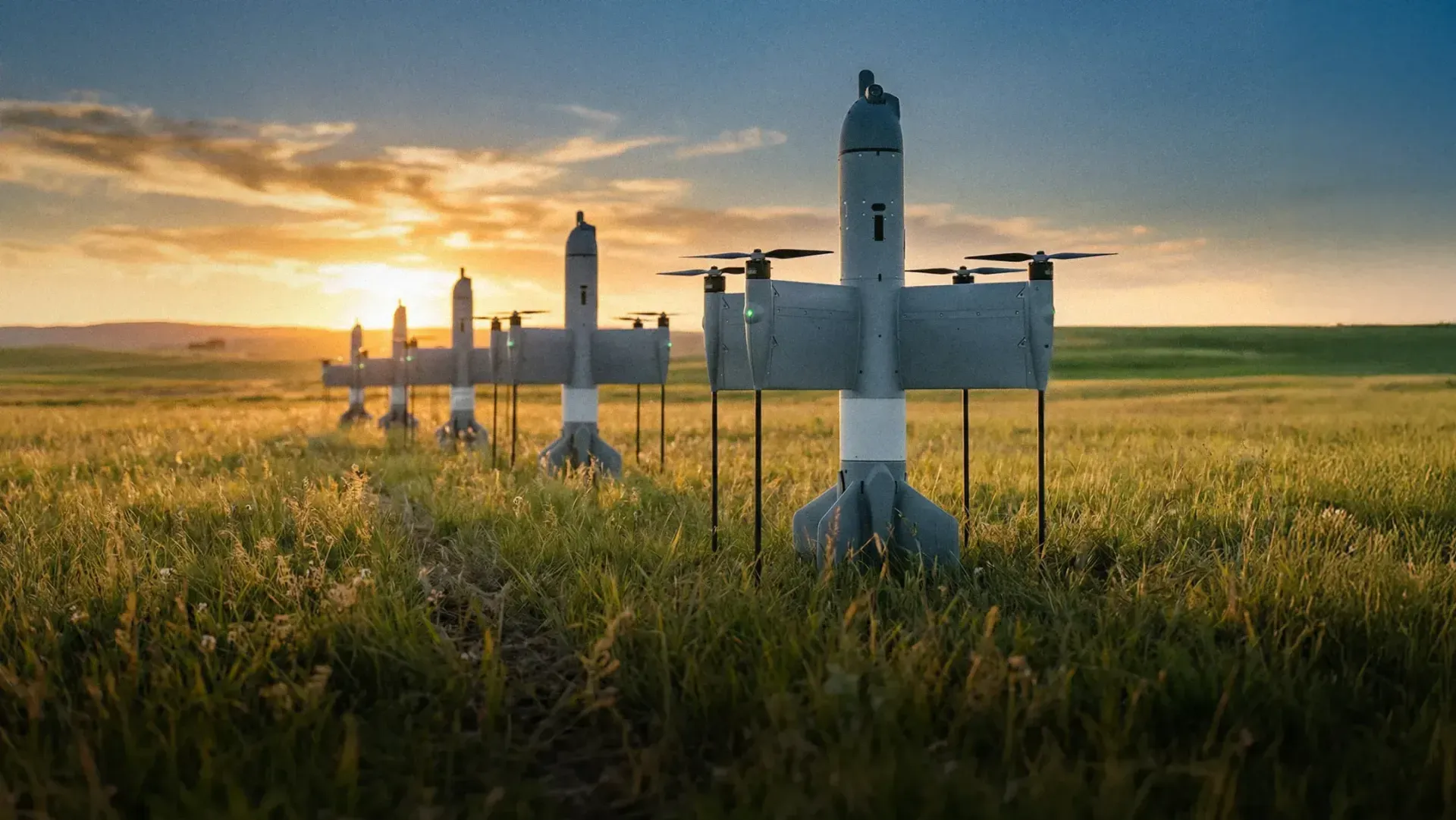
The growing use of drones and AI-driven warfare systems is not simply a military development. It signals a broader transformation in how research and knowledge are produced, funded, and valued. As universities deepen their involvement in military research, fields ranging from artificial intelligence and data analytics to robotics and cybersecurity are increasingly organized around the imperatives of surveillance, security, and warfare. AI technologies are already being deployed by state agencies to monitor migrants, journalists, activists, and political dissidents, while drones have revolutionized warfare by making it cheaper, more remote, and less accountable. Under such conditions, knowledge is not viewed primarily as a public good serving democratic life. Instead, it is increasingly organized around military imperatives of prediction, control, targeting, and domination. The result is a form of militarized knowledge production that blurs the line between education and warfare, transforming universities into laboratories for the development of technologies whose ultimate purpose is often surveillance, social control, and lethal violence.
Michael S. Sherry rightly argues that in an age in which state power is increasingly organized through militarized values and security logics, military culture now shapes not only state policy but “broad areas of national life.” As David Theo Goldberg argues, militarization no longer operates only through armies and weapons systems. It increasingly shapes culture, technology, modes of governance, and everyday life. As Goldberg observes:
The military is not just a fighting machine…. It serves and socializes. It hands down to society, as big brother might, its more or less perfected goods, from gunpowder to guns, computing to information management … In short, while militarily produced instruments might be retooled to other, broader social purposes, the military shapes pretty much the entire range of social production from commodities to culture, social goods to social theory.
The implications for higher education are profound. Militarization does not simply reshape culture, technology, and governance. It also reorganizes the production of knowledge itself, aligning university research with the imperatives of surveillance, security, and warfare while legitimating authoritarian forms of power. The rapid expansion of artificial intelligence research tied to military and surveillance applications deepens these dangers. Universities are increasingly helping to develop technologies used for predictive policing, automated warfare, mass surveillance, and forms of digital authoritarianism that blur the line between security and repression. Such developments are routinely justified in the language of innovation, efficiency, and national security, yet they raise profound ethical questions about the role of higher education in designing technologies that deepen inequality, expand state violence, erode civil liberties, and facilitate the killing of civilians, including children, in conflicts largely removed from public scrutiny.
The militarization of the university is not simply a matter of research contracts or funding priorities. It is pedagogical, cultural, and deeply political.
The militarization of the university is not simply a matter of research contracts or funding priorities. It is pedagogical, cultural, and deeply political. Universities do more than train workers; they shape civic identities, ethical sensibilities, and the capacity for democratic agency itself. When higher education embraces military partnerships and military-driven research agendas, it legitimates a worldview in which security eclipses justice, technological efficiency displaces ethical reflection, and dissent is recast as a threat rather than a democratic necessity.
How Militarization Reorganizes the Production of Knowledge
As militarization becomes woven into the fabric of political culture, universities increasingly reorganize knowledge, research priorities, and technological innovation around the assumptions of permanent conflict, geopolitical competition, and security management. In doing so, higher education normalizes the belief that militarized knowledge and military solutions should govern everyday life. Yet militarization does not merely reshape research priorities and institutional culture. It also reorganizes historical memory, civic identity, and the very terms through which democracy is understood.
Militarization also bears heavily on the production of knowledge itself. As Fintan O’Toole observes, contemporary authoritarian movements do more than expand military power; they seek to reshape historical memory and civic consciousness. Shameful histories are recast as heroic achievements, while assaults on democracy are reimagined as acts of patriotism. The Confederate rebellion is transformed from a defense of slavery into a noble cause, much as the January 6 attack on the U.S. Capitol is increasingly celebrated by its defenders as a patriotic uprising rather than an assault on democratic institutions. Equally troubling are efforts to remake the military itself through demands that soldiers be trained for loyalty to political leaders rather than to constitutional principles. Here, power seeks not only to command institutions but also to militarize knowledge, memory, and civic identity. Universities have a crucial responsibility to resist such distortions by defending historical truth, critical inquiry, and the capacity to distinguish education from propaganda.
As Kevin Baker notes, military solutions increasingly displace diplomacy, democratic institutions, and other civic responses to social problems. Within a culture saturated by militarism, aggression is celebrated as prevention, repression is justified in the name of security, and military force is invoked to discipline dissent and erode democratic values. Under such conditions, education is organized less around the imperatives of democratic culture than around the demands of the arms industry, surveillance systems, technological acceleration, and the national security state.
These developments become even more troubling when they intersect with the ongoing marketization of higher education. At its best, higher education functions as a democratic public sphere, a place where students learn to think critically, question authority, engage history, and imagine alternative democratic futures. Yet under the pressures of neoliberalism, universities have increasingly abandoned this mission. Education is now often reduced to job training, students are treated as consumers, faculty are deskilled and casualized, and learning is defined largely in instrumental terms. Questions about how education might nurture civic courage, ethical imagination, social responsibility, and democratic agency are increasingly sidelined in a market-driven university culture.
Yet the assault on higher education is not only economic. It is also ideological and political. In recent years, a growing chorus of liberal and conservative critics has claimed that universities have lost their way, charging that the humanities and critical scholarship have corrupted higher education through ideology and activism. Under the seductive language of “reform,” “balance,” “civility,” “institutional trust,” and “neutrality,” these critics present themselves as defenders of academic integrity while advancing a profoundly reactionary project. In some cases, liberal critics go so far as to treat “social justice” as a threat to scholarship rather than asking how power, exclusion, race, gender, class, empire, and inequality have always shaped what counts as knowledge. Their calls for neutrality, which function as a cover for depoliticization, do not protect intellectual freedom; they align with a broader assault on critical thought, historical memory, and democratic culture. They are aghast at the notion put forward by Thomas Chatterton Williams that “For humanities departments [and higher education in general] to continue to matter, they must challenge the modern world rather than accommodate it.” In doing so, they obscure the far more dangerous attacks on higher education coming from the right: censorship, book bans, assaults on DEI programs, the repression of student protest, and efforts to align universities with corporate, state, and military interests.
Critical scholarship is condemned as ideological, while militarized research, donor influence, state-directed threats of defunding, and forms of ideological indoctrination are celebrated as common sense. The real danger is not that universities have become too political, but that they are being stripped of their democratic mission and transformed into institutions that normalize conformity, surveillance, militarization, and authoritarian power. Higher education is not under attack because it has been ruined by the left. On the contrary, it is under assault by the Trump administration and a broader network of far right forces precisely because it keeps alive a dangerous truth: education is not merely about credentials, careers, or conformity to the status quo. At its best, it cultivates the capacity for critical judgment, informed dissent, compassion, and democratic agency. What authoritarian movements fear most is not ideological indoctrination but an educated public capable of questioning power, holding authority accountable, and imagining a more just future.
Militarization deepens anti-democratic tendencies. Research is increasingly tied to military applications, geopolitical competition, and outside funding rather than to the public good. Universities adopt the language of security, risk management, efficiency, and competitiveness while corporate and military values increasingly shape institutional priorities. As a Simons Foundation policy briefing warns, militarization has increasingly become a “default response” to political instability and global insecurity, reinforcing a culture in which social problems are framed through the logics of surveillance, strategic competition, and military preparedness rather than diplomacy, public investment, and democratic cooperation. As Professor Catherine Lutz notes, such actions run the risk of eroding legal and moral boundaries. In such a climate, higher education loses its civic character and becomes subordinated to the interests of the warfare state and defense industries.
As universities become increasingly tied to military and security logics, they risk abandoning their civic purpose in favor of a pedagogy of permanent emergency, one that privileges surveillance, strategic competition, and technological domination over critical inquiry, civic imagination, ethical responsibility, and social solidarity. What disappears in this militarized vision of higher education is the conviction that universities should cultivate informed citizens capable of holding power accountable rather than simply servicing the imperatives of the national security state.
Equally troubling, militarization reshapes the culture of the university itself. Militarized institutions reward conformity, secrecy, technocratic thinking, and instrumental rationality. Ethical questions about violence, disposability, colonialism, and state power are pushed aside in favor of managerial efficiency and national competitiveness. Students protesting Israel’s war in Gaza, settler colonialism, genocide, sexual violence, or war crimes are too often met not with dialogue but with surveillance, administrative repression, and policing.
The dominance of war-like values in both higher education and the wider civic culture prepares “civil society itself for the production of violence.”
In such instances, the university ceases to function as a space for critical engagement and becomes instead an extension of a broader authoritarian culture. As scholar John Gills notes, the dominance of war-like values in both higher education and the wider civic culture prepares “civil society itself for the production of violence.” In this way, universities risk becoming agents of militarized socialization rather than sites of democratic education. Such developments raise not only political and educational concerns but also urgent ethical questions about the kinds of institutions that universities are becoming and the values they choose to endorse.
The militarization of higher education raises a profound ethical question: What happens when universities enter into partnerships with military institutions while remaining silent about documented human rights abuses associated with those same institutions? Such silence is never politically neutral. It suggests that violations of human rights can be overlooked, rationalized, or normalized when carried out in the name of security, defense, or national interest.
This issue extends beyond universities themselves and raises broader questions about the responsibilities of democratic governments. As Canada, among other countries, deepens military cooperation with allies and expands investments in defense industries, it cannot exempt those relationships from ethical scrutiny. If credible allegations of war crimes, torture, collective punishment, or sexual violence are ignored in the name of strategic alliances or national security, democratic principles are hollowed out from within. Universities, precisely because they are charged with fostering critical inquiry and ethical judgment, have a responsibility to challenge such silences rather than reproduce them.
Such allegations also raise broader concerns about how security regimes can be used not only against occupied populations but also against those who challenge state policies. Reuters reported that organizers of a flotilla attempting to deliver humanitarian aid to Gaza alleged that some activists detained by Israeli authorities experienced physical abuse and that at least 15 reported sexual assaults, including allegations of rape. Zeteo provided shocking and wrenching video testimonies from some of the activists, largely ignored by Western media. Whatever the final findings regarding these allegations, they underscore the need for independent scrutiny of security institutions and the dangers of granting them unquestioned legitimacy in the name of national defense. When accusations of abuse are met with silence rather than investigation, the boundaries between security, impunity, and state-sanctioned violence become increasingly blurred.
If universities claim to uphold principles of human rights, social responsibility, and ethical inquiry, they cannot selectively ignore such evidence when it implicates states or institutions with which they maintain research, military, or security partnerships. To do so risks transforming universities from spaces of critical inquiry into institutions that legitimate power while remaining silent about its abuses. At stake is more than the question of particular research contracts. It is the moral integrity of higher education itself.
These concerns are not confined to particular institutions or isolated abuses. They are symptomatic of a broader culture in which militarized values increasingly shape public life, political discourse, and social priorities. From sporting events and military recruitment in schools to popular films, social media spectacles, gun culture, and state-sponsored propaganda, aggression, domination, and war are normalized as features of everyday life.
Nowhere is this more visible than in the influence of Trump’s Secretary of Defense, Pete Hegseth, who celebrates “maximum lethality, not tepid legality” and wraps militarism in the language of white Christian nationalism and religious righteousness. As Jasper Craven observes, Hegseth champions a form of “military manliness” stripped of any ethical center. Such a worldview elevates domination as a virtue, defines violence as a moral ideal, and transforms, in Craven’s words, “the Pentagon into the staging ground for an ideological religious crusade.” As these values circulate through culture and public institutions, they increasingly shape higher education itself, influencing not only what universities teach but also the forms of knowledge they produce, fund, and legitimate.
Universities cannot claim to defend democracy while simultaneously aligning themselves with industries and state policies organized for state violence, war, and imperial aggression.
Defenders of militarized partnerships insist that universities must remain pragmatic and “neutral” in securing funding and advancing national interests. But neutrality in such cases is largely a myth. Universities cannot claim to defend democracy while simultaneously aligning themselves with industries and state policies organized for state violence, war, and imperial aggression. Higher education has no legitimate ethical mandate to function as a research arm of militarized power.
Universities Must Refuse to Become Laboratories for War
The issue is not whether universities are political, but what kind of politics they embody and in whose interests they function. In an age marked by rising authoritarianism, widening inequality, climate catastrophe, and endless wars, universities cannot escape matters of power and values, and they must decide whether they will serve democracy or militarized power. Nor can educators retreat into the call for neutrality. At stake here is more than institutional policy. It is the fate of the university as a democratic institution. Few writers understood these dangers more clearly than Toni Morrison, who warned: “If the university does not take seriously and rigorously its role as a guardian of wider civic freedoms, as interrogator of more and more complex ethical problems, as servant and preserver of deeper democratic practices, then some other regime or menage of regimes will do it for us, in spite of us, and without us.”
Higher education may be one of the few public spheres left where knowledge, values, and learning can nurture radical hope, civic responsibility, informed agency, critical thinking, and substantive democracy. The struggle against the militarization of Canadian universities is therefore not merely a fight over funding priorities. It is a struggle over whether education will serve democracy or become an extension of the warfare state. Activists from groups like World Beyond War Canada and the Canadian Federation of Students are right to insist that genuine security comes not from militarism and permanent war, but from investing in education, housing, public health, and the social good.
Universities must refuse their transformation into laboratories for war, surveillance, and technological domination. At stake is whether higher education will further accommodate militarized and authoritarian power or become a crucial site of resistance, critical consciousness, and democratic possibility, one that refuses to confuse security with fear, civic responsibility with obedience, and education with the demands of war and domination. In an age when militarism increasingly shapes culture, politics, and everyday life, universities must remain among the few institutions willing to defend critical inquiry, civic responsibility, and democratic freedom against the expanding reach of the warfare state.
The Middle East conflict has caused global stockpiles of oil to plummet to their lowest level since 2003 while petroleum prices have spiked, according to a new energy data report.
The Middle East conflict has caused global stockpiles of oil to plummet to their lowest level since 2003 while petroleum prices have spiked, according to a new energy data report.
Maybe it's the midlife crisis talking, but the racist purge of straight white men from arts and entertainment has degraded all books and films, says Nick Dixon, and left behind only meaningless, endless culture war.
In its latest update, the General Staff said Ukrainian forces struck targets across several regions in Russia and occupied Ukraine, including an ammunition depot, command posts, drone control centers, logistics hubs, supply warehouses, and concentrations of Russian troops.

 Login
Login