The unprecedented expiration of the nation’s warrantless spy powers has plunged the country into legal uncertainty over the extent to which it can surveil foreigners located abroad. Both chambers of Congress on Thursday failed to pass bills to extend Section 702 of the Foreign Intelligence Surveillance Act (FISA) through July 2 amid outrage from Democrats…
The unprecedented expiration of the nation’s warrantless spy powers has plunged the country into legal uncertainty over the extent to which it can surveil foreigners located abroad. Both chambers of Congress on Thursday failed to pass bills to extend Section 702 of the Foreign Intelligence Surveillance Act (FISA) through July 2 amid outrage from Democrats…
Many may be confused about America’s recent attacks on Iran, given that they come each day while Trump keeps telling us that a deal is about to be made. Just days ago, analysts believed that Trump was genuinely angry about Netanyahu going ahead with his IDF attacks in Lebanon against Hezbollah. But was that real, or staged? Given that Trump ordered strikes against Iran after that, a cynical view might be that there are only two scenarios why he would do something so incongruent. One: he believes that Iran is very close to signing a deal but needs the extra ’encouragement’ to finally get over the line. Or two: he felt embarrassed by what a whole phalanx of Western commentators were recently saying — that it was in fact Bibi who was running the whole show, using America’s resources to create chaos and havoc. The refusal by the Israeli PM to stop his troops fighting was a clear signal that Trump really doesn’t control the war and is very much a servile player to Israeli thinking.
But what is interesting is how Trump is not at all convinced that he has no military options, even given that they would certainly mean the total eradication of anything left of relations with GCC countries. Trump still believes even today that the US military — who have only a track record in the last 80 years of losing all wars and interventions they instigate — can actually take on Iran and win. As ludicrous as this sounds, it is what is at the heart of what is stalling any deal being struck, coupled with Trump’s sensational failure to negotiate — something he is simply incapable of doing despite his own hype and hubris. The US struck a number of water plants in Iran, which was an incredibly stupid initiative given that this is the region’s Achilles heel. If Iran wants to completely eliminate water desalination plants in, say, Qatar — a country which has no natural water at all — then it could easily do this in a matter of hours.
When a US Apache helicopter crashes, Trump’s reaction is a theatre of the absurd, similar to watching a child burst into tears on his first sports day where his new soccer shirt gets dirty on the pitch. The US is the aggressor, but when a helicopter is downed, this is met with misplaced outrage that borders on comedy. The reality is that no US military analysts believe the chopper was taken down by Iranian fire; it is more likely that it suffered a malfunction and crashed, with both pilots surviving. But it is interesting how Trump considers the war as more of a theatre of PR stunts rather than an important battle he can win.
One reason which explains this is the need for US troops to keep busy in the region, in a pathetic bid to remain relevant to GCC allies — a point made by the commentator Patrick Henningsen recently on RT television. Another reason, though, is the people that Trump keeps around him who he listens to, like Lindsey Graham — who one can only assume is being blackmailed by Israel over his sexual inclination, given his almost cultish beliefs in Zionism. But Graham knows nothing about war and seems to glean some sexual satisfaction from sending young American men in uniform to their deaths. On the other hand, General Jack Keene, a man who isn’t overburdened with intelligence, is probably responsible for a lot of the erroneous decisions Trump is making militarily, and certainly for stoking the “invasion option” while reminding the whole world what an irony-free zone America actually is.
Keene recently rambled on Fox News that he had no confidence in Iran ever keeping its word if Tehran were to ever sign a deal — a hilarious and preposterous claim given America’s reputation for never keeping its word on ceasefires and peace deals. The very fact that Trump is in talks with the Iranians every day demonstrates that they can be trusted, as it is the Trump camp which has no credibility whatsoever when it comes to integrity — the main reason why the Iranians are dragging their feet and are more comfortable with a drawn-out war that will recalibrate their position in the region and put down Israel and the US once and for all. For Keene to say such a thing is quite remarkable. But then he continues with his ideas about US troops “taking” Kharg Island, and a picture emerges of how and why Trump is so deluded about what the real capability of US troops is, and how his decisions and ideas are so detached from reality. Landing airborne troops on the island would only be possible if Iran allowed it to happen — so that it could disarm the occupiers and then hold them hostage as a key part of a new deal. That’s on a good day. On a bad day, if the more hardcore element of the IRGC has its way, they might simply decide to slaughter all of them. What Keene doesn’t seem to understand is the logistical nightmare of having 10,000 US soldiers on a single location within reach of just about everything Iran has to throw at it. And the talk of troops “landing” there with helicopters is a fantasy. How did General Keene become a general, given that he is stupid and seems to know little about warfare or Iran’s capability? The Iranians will shoot down US helicopters like they are having a fun day at clay pigeon shooting. But even if troops were allowed to land on Kharg and other islands, they have to be supplied practically every day. Presumably, the Iranians would prevent the supplies getting in and then starve the marines on the ground. If General Keene really has the ear of the president and Iran holds out for a better deal, the case for Trump to go to war becomes even stronger and grows each day.
But Keene let the cat out of the bag when he talked about oil. It’s really only about oil, or energy, as it was in Iraq, Afghanistan, Syria, and more recently Venezuela. For Trump to capture some oil production and then simply steal from it would be all in a day’s work for the president who has never had any problem with the stigmatisation of being called a thief. Trump believes oil theft is a real possibility and makes sense on any given day. But then there are days when he is desperate to get out of Iran altogether, which we can see with his panicky gestures — like the last strike, which actually achieved nothing but prepared Iran more for war, as the talks combined with bombardment don’t produce the results which Trump needs but make him look even weaker and more desperate. Has General Keene prepared Trump for a scenario where the ceasefire is over and he needs to move onto a new phase? Oil would only sweeten such a plan, and Keene makes no effort to hide this during his interview.
A The Big Interview lo chief AI scientist di DeepL racconta le prossime sfide: dalla traduzione vocale all’AI agentica, passando per l’apprendimento continuo e il ruolo dell’Europa nella corsa globale verso l'intelligenza artificiale
The San Francisco company said on Friday night that the federal government ordered the suspension of the two A.I. systems, citing national security concerns.
A federal judge chastised the Trump administration for ignoring a ruling last week ordering it to immediately resume processing of immigration applications paused in the wake of a deadly shooting of National Guard officers. U.S. District Judge John McConnell last week found the Department of Homeland Security (DHS) was unlawfully pausing immigration processing for nationals from a…
A federal judge chastised the Trump administration for ignoring a ruling last week ordering it to immediately resume processing of immigration applications paused in the wake of a deadly shooting of National Guard officers. U.S. District Judge John McConnell last week found the Department of Homeland Security (DHS) was unlawfully pausing immigration processing for nationals from a…
Putin may ultimately be remembered as the man who exhausted Russia in Ukraine while surrendering much of his country's strategic independence to China.
Putin may ultimately be remembered as the man who exhausted Russia in Ukraine while surrendering much of his country's strategic independence to China.
The fragile ceasefire between the US and Iran, based on mutual control of the Strait of Hormuz, coupled with relentless economic and political pressure, is creating a protracted war of nerves. This scenario threatens to further destabilize the region, with no clear winner in sight. The Red Line and the Horizon of Expectations in the […]
Creato da un gruppo di ricercatori canadesi, il malware è in grado di diffondersi autonomamente all’interno di una rete compromettendo computer, server e dispositivi IoT
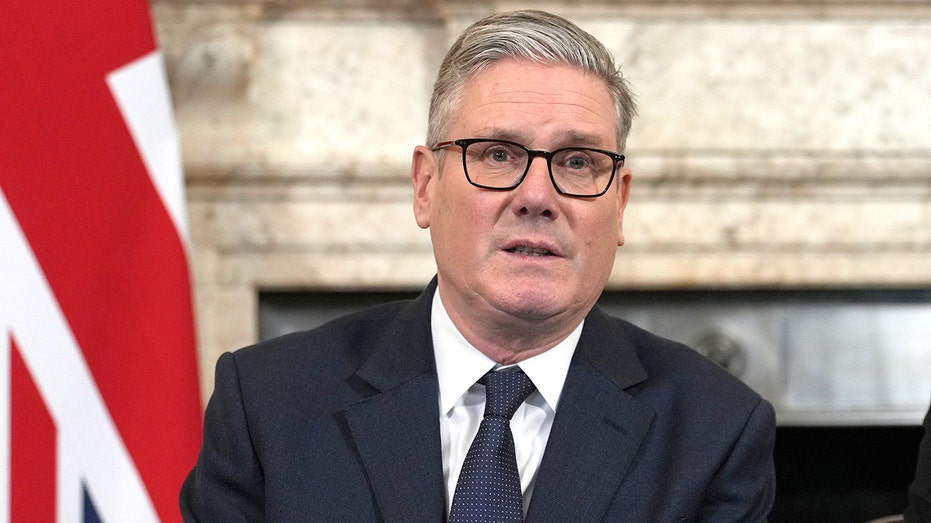
U.K. Defense Secretary John Healey resigned Thursday after clashing with Prime Minister Keir Starmer's government over military spending, dealing the British leader a setback weeks before a critical NATO summit to include President Donald Trump.
Healey's departure stemmed from a dispute over the delayed Defense Investment Plan (DIP) — the government's long-promised roadmap for military investment and readiness — and as NATO allies face renewed pressure from Trump to boost defense spending.
"John Healey’s resignation is a seismic moment for the government and the Ministry of Defense," Royal United Services Institute (RUSI) Senior Associate Fellow Ed Arnold told Fox News Digital.
"For the government, it creates a sequence of political headaches in terms of a replacement, and trying to get the Defense Investment Plan published."
Healey had been in intense, late-stage negotiations with Starmer and Chancellor of the Exchequer Rachel Reeves over the scale and timelines of the DIP.
Starmer reportedly refused to set out a timeline to reach 3.5% of gross domestic product (GDP) on defense by 2035 — a promise he made to Trump at last year's NATO summit — and would not commit to a firm date for reaching 3%.
Instead, Starmer offered Healey a deal to spend 2.68% of GDP on defense by 2030, up only marginally from 2.6% next year, Reuters reported.
"You have been unable, and the Treasury has been unwilling, to commit the resources that the nation needs to defend the country," Healey wrote to Starmer in his resignation letter, warning that the financial constraints would "make the country less safe," the outlet reported.
"If the delay to the Defense Investment Plan was already undermining the government’s credibility on defense, John Healey’s resignation has blown a hole in its side," professor Kevin Rowlands of the RUSI defense and security think tank told Fox News Digital.
"The immediate consequence is not just political embarrassment for No. 10, but a significant loss of planning certainty at a time when the British Armed Forces, the Ministry of Defense, and industry really need clarity on what will be funded, and when," he added.
The political fallout is expected to reverberate across the Atlantic, where Washington has increased pressure on European allies to fulfill their defense obligations. Trump has frequently criticized NATO alliance members as "free riders."
On June 3, Secretary of State Marco Rubio also told the House Foreign Affairs Committee that the upcoming Ankara summit would be the "most important meeting" in NATO’s history because there are some things "that need to be cleared up and fixed."
He added, "The United States is still in the NATO alliance, and we'll be there."
However, U.S. officials have made it clear that patience is wearing thin.
"Ahead of next month’s NATO summit, POTUS has been clear: Allies must fulfill their commitment to spending 5% of GDP on defense," U.S. Ambassador to NATO Matthew Whitaker posted on X this week.
Furthermore, a U.S. official noted that a U.K. funding package far lower than 18 billion pounds ($23 billion) would send a highly "negative" signal to Trump ahead of the Ankara meeting, according to The Times.
Starmer has pledged to lift spending to 3% in the next Parliament but Healey’s exit has exposed that the current strategy leaves the U.K. lagging behind key allies. By comparison, Germany plans to spend 3.7% of its GDP on defense by 2030.
"Healey knows the threats we face, he knows the capabilities and shortfalls the armed forces have, and if he believes that the financial settlement is not enough to keep the country safe — to the extent that he cannot honorably stay in post — then we are in trouble," Rowlands added.
"While the impact will mainly be felt on Whitehall, the international implications are severe with a NATO summit just three weeks away," Arnold noted.
A WIRED investigation found dozens of “nudified” deepfake images and videos on Grok's website, including nonconsensual depictions of celebrities and at least one prominent US politician.
Senate Democrats on Thursday blocked the GOP’s attempt to pass a short-term extension of the nation’s spy powers by unanimous consent. Sen. Tom Cotton (R-Ark.) asked the chamber for unanimous consent to extend Section 702 of the Foreign Intelligence Surveillance Act (FISA) until July 2, but Sen. Ron Wyden (D-Ore.) objected. Wyden also objected to…
Senate Democrats on Thursday blocked the GOP’s attempt to pass a short-term extension of the nation’s spy powers by unanimous consent. Sen. Tom Cotton (R-Ark.) asked the chamber for unanimous consent to extend Section 702 of the Foreign Intelligence Surveillance Act (FISA) until July 2, but Sen. Ron Wyden (D-Ore.) objected. Wyden also objected to…
 Login
Login


.jpeg)