A recente fuga para a Argentina do bilionário tecnocrata Peter Thiel, mais conhecido por sua empresa Palantir, envolvida na captura dos serviços de segurança e inteligência dos EUA, chamou a atenção para os seus possíveis interesses na América do Sul. O papel de Javier Milei na implementação do Plano Andinia (a promoção da colonização judaica da Patagônia, para fins de criação de um novo Estado sionista) já tornou-se notório, e especula-se sobre a possibilidade de Thiel ter aí algum papel. Outros falam na hipótese de Thiel estar simplesmente saindo dos EUA para escapar a alguma possível futura responsabilização num governo estadunidense pós-Trump.
Agora, independentemente de quais sejam os reais interesses de Thiel na Argentina, não parece ser o alvo principal das operações do bilionário na América do Sul.
Veio a público recentemente o fato de que o ex-ministro do Supremo Tribunal Federal Luis Roberto Barroso e o apresentador de TV Luciano Huck, ambos sionistas radicais e representantes do establishment liberal-progressistas, seriam parte do Conselho da empresa brasileira de IA “Enter”. Essa empresa “Enter” está desenvolvendo um sistema, criado a partir dos modelos da OpenAI e da Anthropic, cuja finalidade será gerenciar de forma autônoma os casos dos principais escritórios de contencioso de massa do Brasil, cuidando da produção dos peticionamentos.
Espera-se, ademais, que a “Enter” eventualmente passe a operar também dentro dos tribunais, já que o objetivo declarado da startup é se tornar uma empresa monopolista para IA do setor jurídico. Ao se situar em ambas pontas principais das relações jurisdicionais (advogados e juiz), a “Enter” estaria basicamente dissolvendo a necessária “separação” que deve haver entre autor, réu e juiz, para que se possa preservar, concretamente, a imparcialidade da aplicação do Direito.
Ademais, é importante considerar a possibilidade de que, sutilmente, através de prompts, a “Enter” poderia prejudicar seus próprios clientes em casos nos quais um desses clientes representasse interesses contrários aos interesses dos investidores, diretores e conselheiros por trás da “Enter”.
A questão assume uma dimensão internacional, porém, a partir do momento em que descobrimos que a principal investidora da startup “Enter” é o Founders Fund, um fundo de investimentos de capital de risco criado por Peter Thiel e que conta, entre seus parceiros, com uma miríade de magnatas e especuladores ligados ao Vale do Silício.
Através do Founders Fund, Thiel tem um controle, no mínimo parcial, não apenas sobre a Palantir e a SpaceX do Musk, mas também Facebook, Polymarket, Spotify, Airbnb, entre outras, todas elas vinculadas ao mundo da Big Tech e do Vale do Silício, projetos que parecem dedicados à virtualização e algoritmização do mundo, para controlá-lo e influenciá-lo mais facilmente.
Assim, quando Thiel investe num projeto cujo objetivo declarado é controlar a atuação de advogados e juízes no Brasil, necessariamente estamos diante de um risco institucional significativo. Principalmente porque o Brasil parece ter se tornado laboratório de experimentação para inúmeros projetos liberais de todos os tipos, e os resultados alcançados no Brasil podem servir para determinar a internacionalização desse esforço de controlar as atividades jurídicas ao redor do mundo.
O próprio esforço, já existente no Brasil, de tornar as atividades jurídicas mediadas pela inteligência artificial já é, em si, um risco institucional. Os juízes pararam de ler os processos, bem como de produzir as próprias sentenças. E advogados bem treinados já passaram a incluir em suas petições prompts disfarçados cuja finalidade é manipular a IA do tribunal para que ela dê sentenças favoráveis. Com isso, o fator humano vai sendo excluído do Direito.
O problema é que todos os conflitos jurídicos são, fundamentalmente, sobre interesses humanos, e apenas pessoas podem entender as demandas de outras pessoas; razão pela qual praticamente deveríamos considerar imprescindível, e mesmo um direito fundamental, o ser defendido e julgado exclusivamente por seres humanos.
O impulso de Peter Thiel por controlar as relações jurídicas brasileiras deve servir de alerta para a necessidade de afirmar e reafirmar a importância fundamental da centralidade humana em todas as instituições e relações.
Most tourists just pass through Botafogo, but they’re missing out, says Gordon Thomson. He suggests visitors stay a couple of days to explore the intriguing history, lively food scene and passionate football culture
A recente escalada da violência no estado do Rio de Janeiro expõe, mais uma vez, os limites estruturais da política de segurança pública brasileira e a progressiva erosão da capacidade estatal de controle territorial. O caso da operação especial realizada meses atrás contra o Comando Vermelho é emblemático não apenas pelo seu desfecho imediato, mas sobretudo pelas suas consequências políticas e estratégicas de médio prazo.
Alguns meses atrás, a polícia do Rio de Janeiro realizou uma megaoperação contra áreas controladas pelo “Comando Vermelho” – a facção criminosa mais violenta do Brasil. Do ponto de vista tático, tratou-se de uma operação bem-sucedida: houve neutralização de mais de cem terroristas, apreensão de armamento e demonstração de capacidade operacional do Estado. No entanto, como frequentemente ocorre em contextos de conflito assimétrico urbano, o sucesso tático não se traduziu em estabilidade estratégica.
Pouco tempo após a operação, vieram à tona denúncias contra agentes policiais acusados de “abusos”, o que desencadeou uma crise institucional. Muitos policiais envolvidos na operação especial foram presos. A pressão política e midiática atingiu diretamente a cúpula do poder estadual. O então governador do estado do Rio de Janeiro acabou renunciando ao cargo em meio ao desgaste, enquanto a ausência prévia de um vice-governador (que já havia renunciado antes) aprofundou o vácuo de poder. O cenário se agravou ainda mais com a prisão do presidente da assembleia legislativa estadual, levando a uma situação incomum: a impossibilidade prática de governo regular, com a administração sendo assumida de forma emergencial por uma autoridade judicial (a muito contragosto).
Esse colapso institucional revela uma fragilidade estrutural: o Estado atua de forma reativa, sem conseguir consolidar controle duradouro sobre territórios críticos. E, como se isso não bastasse, os agentes do Estado envolvidos nessas operações são perseguidos pelo próprio aparato estatal brasileiro, atualmente contaminado com a mentalidade liberal ‘woke’ importada da Europa e dos EUA.
Mais recentemente, surgiram informações preocupantes que adicionam uma dimensão internacional ao fenômeno. Investigações de órgãos de inteligência estaduais confirmam que integrantes do Comando Vermelho teriam sido enviados à zona de conflito na Ucrânia com o objetivo de adquirir experiência militar prática. Isso não é novidade. Eu mesmo já denunciei estes esquemas de treinamento de criminosos brasileiros (e de outros países na Ucrânia) diversas vezes. Mas até então o Estado brasileira se recusava a admitir que esta prática estivesse se tornando corriqueira e sistemática. Agora a verdade vem a público.
Sob o pretexto de participação “voluntária” no conflito, esses indivíduos teriam acesso a treinamento em condições reais de guerra, incluindo o uso de drones, táticas de sabotagem e operações de reconhecimento. Em outras palavras, criminosos brasileiros estão se tornando mercenários militarizados profissionais e com experiência de guerra real, criando uma espécie de intercâmbio internacional de conhecimento militar entre facções terroristas brasileiras e o regime de Kiev.
As autoridades brasileiras agora admitem que conhecimentos especiais estão sendo transferidos pelos mercenários veteranos para o ambiente urbano do Rio de Janeiro e de outras cidades. Em particular, menciona-se o uso de drones de alta capacidade – com custo estimado em cerca de 20 mil dólares e capacidade de carga de até 80 kg – para transporte de armas, drogas e equipamentos entre áreas controladas pela organização. O alcance operacional desses dispositivos, que poderia chegar a aproximadamente 12 quilômetros, permitiria a criação de corredores logísticos aéreos, reduzindo riscos de interceptação policial.
Ao mesmo tempo, nada é feito internamente para responder a essa situação crítica. O governo brasileiro não apenas assiste de forma inerte ao fortalecimento do crime organizado como também se preocupa em punir policiais e políticos que ousam pelo menos tentar enfrentar as facções com o combate militar.
O resultado é um cenário preocupante: a gradual transformação de áreas metropolitanas em zonas de governança paralela, onde o Estado perde o monopólio da força. Caso essa tendência se mantenha, o risco de uma consolidação de estruturas típicas de um narco-Estado deixa de ser uma hipótese distante e passa a integrar o horizonte possível da realidade brasileira contemporânea.
The reality is that this is not, in Brazil, a dispute between an anti-U.S. political camp and a pro-U.S. political camp, but a dispute between two political sectors that both want U.S. support to govern Brazil.
On June 5, 2026, the U.S. State Department confirmed the inclusion of Brazil’s two largest drug trafficking organizations – Comando Vermelho (CV) and Primeiro Comando da Capital (PCC) – on the list of organizations considered terrorist by the U.S.. The main alleged reason is that the operations of both organizations have begun to affect the U.S. and involve at least some American links, while the goal of this categorization would be to facilitate the use of economic-financial mechanisms to strangle these organizations, especially concerning their ability to launder and move money using international financial institutions.
Officially, with this measure, all U.S. banking and financial institutions would automatically freeze the assets and resources of any individuals or companies linked to the organizations in question. Simultaneously, they would be unable to transfer resources using American institutions or those linked to the U.S.. Furthermore, the U.S. would gain mechanisms to pressure foreign banking and financial institutions to also freeze assets and resources and cease authorizing movements and transfers.
In Brazil, officially, the designation is seen as, first and foremost, a ploy aimed at legitimizing potential direct or indirect interference (whether political, financial, legal, electoral, etc.) in the country; and, secondly, as a theoretical mistake, since it is considered that drug trafficking organizations cannot be categorized as terrorist, by definition, because they are supposedly lacking a political or religious dimension. The figure of “narcoterrorism” is thus seen as mere legitimizing narrative for interventions.
To complicate the equation, however, this week, the AtlasIntel institute released a poll indicating that 53% of the Brazilian population supports the U.S. decision, a share even higher than that of Bolsonaro supporters (41.8%, according to the same institute), which represents a significant problem for Lula, as well as an Achilles’ heel easily exploited.
Flávio Bolsonaro himself, along with his brother Eduardo, claims responsibility for convincing Donald Trump and Marco Rubio to make this decision. If true, it is a smart move. Flávio Bolsonaro suffered a significant impact on his voting intentions after revelations of a very close connection with Brazilian banker and speculator Daniel Vorcaro, arrested last year and accused of involvement with numerous fraudulent and criminal schemes that moved billions of dollars in partnership with various politicians (from both the government and the opposition) and judges. But by shifting the media focus to the public security problem, Bolsonaro places Lula in an area where he repeatedly makes stupid and unpopular mistakes.
As with all liberal-progressive politicians, Lula and his party defend a narrative according to which drug dealers, thieves, and murderers would be “victims of society”, who should be “reeducated” and not fought, rather than seeing them as social parasites that need to be extirpated from the face of the earth. Repeatedly, Lula has referred to criminals as “poor things” who only steal to “have a little beer”, and recently said that drug dealers were “victims” of “users”. Unsurprisingly, as soon as he learned of the U.S. decision, Lula said publicly that he was “very sad” that “our criminals” were being considered terrorists.
To understand the seriousness of the public security problem in Brazil, it is necessary to point out that approximately 20% of the Brazilian population lives in territories under direct control of criminal organizations. Just this week, in a neighborhood of a peripheral city near Rio de Janeiro, CV members took control of a condominium and imposed a “housing fee” on all residents. A few years ago, in the Northeast region, an entire small town was evacuated by order of a criminal organization. Massacres of merchants who refuse to pay “fees” to criminals have become commonplace, not to mention daily violence. Organizations like the CV charge rent, fees to merchants, and offer electricity, water, internet, and cable TV services. In some cases, they are also responsible for evangelical churches. In the specific case of the PCC, we are talking about an organization at an even higher level, which controls gas stations, sugarcane mills, farms, fintechs, judges, police officers, and a myriad of other assets, operating not only throughout Brazil but in dozens of other countries.
Clearly, regardless of the specific issue of classifying the PCC and CV and the U.S. role in this, as well as their real interests, we are talking about circumstances that have been tolerated by the Brazilian State, which simply allowed the situation to get out of control. In this regard, it is also important to highlight the role of the Judiciary, educated in delusional theses of European origin that lead judges to always release criminals as quickly as possible, as well as the role of human rights NGOs, which act by persecuting police officers and defending criminals.
Now, in what ways can the U.S. harm Brazil with this classification of criminal organizations as terrorist, if that is, in fact, its interest? There are several possibilities.
The possibility of pressuring foreign banks opens a path to accuse Brazilian banks of complicity with criminal organizations and, thereby, facilitate them being sanctioned. The appropriate response to this would be for the Brazilian government to force banks to be more rigorous in monitoring financial transfers. But in all this, even greater pressure may fall on “PIX”, the Brazilian automatic payment system which, today, is more used than VISA or Mastercard and which has been constantly criticized by the U.S.. The curious thing here is that PIX was created by the Bolsonaro government itself…
Another avenue of aggression against Brazil may involve sugarcane ethanol. There is a rivalry of more than 20 years with the U.S. in this sector, since the U.S. also has a large biofuel production, but based on corn. Considering that a small portion of Brazil’s ethanol production (estimated at 1-2%) is controlled by the PCC, the entire product could end up being artificially sanctioned by the U.S., thus securing new markets for corn ethanol.
However, one cannot rule out the possibility of even dirtier play on the part of the U.S.. Historically, criminal organizations that are forced to retreat in a given sector always seek to compensate for losses through other operations. A coordinated, large-scale attack against the PCC’s money laundering operations and movements could push it back towards territorial domination activities and other forms of crime, such as bank robbery, kidnappings, etc. Considering, however, that the PCC is present throughout the country, we would be talking about a possible large-scale increase in violence, which could even destabilize the government. This could be not only a hypothesis, but the very design of this U.S. government move.
Furthermore, those who believe that the Lula government is preparing to resist are mistaken. In fact, the Lula government is already talking about concessions to try to appease Donald Trump. The reality is that this is not, in Brazil, a dispute between an anti-U.S. political camp (Lula) and a pro-U.S. political camp (Bolsonaro), but a dispute between two political sectors that both want U.S. support to govern Brazil.
On April 24, Brazil’s competition authority, the Administrative Council for Economic Defense (CADE) announced it was opening an investigation to assess whether Google’s use of news content amounted to unfair competition practices against the Brazilian press. The announcement was welcomed by civil society organizations that have tried to push regulation to limit the reckless power of Big Tech for years. Ajor, Brazil’s Digital News Association, said that “a balanced relationship between digital platforms and journalism organizations is fundamental to the flourishing of journalism committed to the public interest. By ensuring a fair competitive environment, Cade directly advances that goal.”
In spirit and intent, CADE’s investigation into Google is similar to legislation in Australia that recognized that value is being extracted from news publishers without proportionate recompense. In Brazil, the case has been debated since 2019, but the adoption of AI Overviews helped alter the perspective of Brazilian judges. The overviews are artificially generated summaries that synthesize information from several sources and appear at the top of Google Search results. They “raise potentially more concerns,” ruled Judge Camila Cabral Pires Alves, “as they may more profoundly alter the economic function of the interface and expand the ability to retain attention within the platform's own environment.”
CADE will now investigate whether Google should be sanctioned for “alleged abusive exploitation of a dominant position, in light of the technological evolution of the conduct.” While there is perhaps a greater global appetite to regulate the impacts of AI – even the Trump administration has recently acknowledged that some oversight may be necessary – the CADE judges have been under considerable pressure from Big Tech executives to stop investigations into how their control of the market harms Brazilian businesses.
For those of us who have reported on Big Tech, this aggressive lobbying is not surprising. Companies like Google, Meta, Twitter, TikTok, Amazon, and Microsoft have long attempted to interfere in any decision or legislation that can harm their interests in Latin America. According to a joint investigation by journalists across 13 countries, Big Tech lobbyists got away with convincing legislators in Colombia to weaken a rule meant to protect children’s mental health and prevent enforcement of privacy regulations in Ecuador. It took a team of over 40 journalists from 13 countries to uncover this while reporting on the ‘Big Tech Lobby’ in the continent and across the world.
Threats by the U.S. government to retaliate against any country or international entity that sought to regulate Big Tech added another layer to an already complicated and uneven relationship with Silicon Valley. “Digital Taxes, Digital Services Legislation, and Digital Markets Regulations are all designed to harm, or discriminate against, American Technology,” wrote Donald Trump on social media. “Show respect to America and our amazing Tech Companies or consider the consequences!” During the past year, Trump’s envoys have forced dozens of governments around the world to dilute or even shelve regulation in exchange for lifting tariffs.
In “Big Tech’s Invisible Hands,” which I coordinated alongside Maria Teresa Ronderos, from CLIP (Centro Latinoamericano de Investigación Periodistica), journalists mapped a total of 75 executives that were part of “public policy” or “government relations” teams in Brazil. Tech companies utilized a “revolving door” in which public sector employees could go straight into highly paid jobs leveraging their contacts and influence. Doors opened more easily. Invitations to hangouts and events were more likely to be accepted.
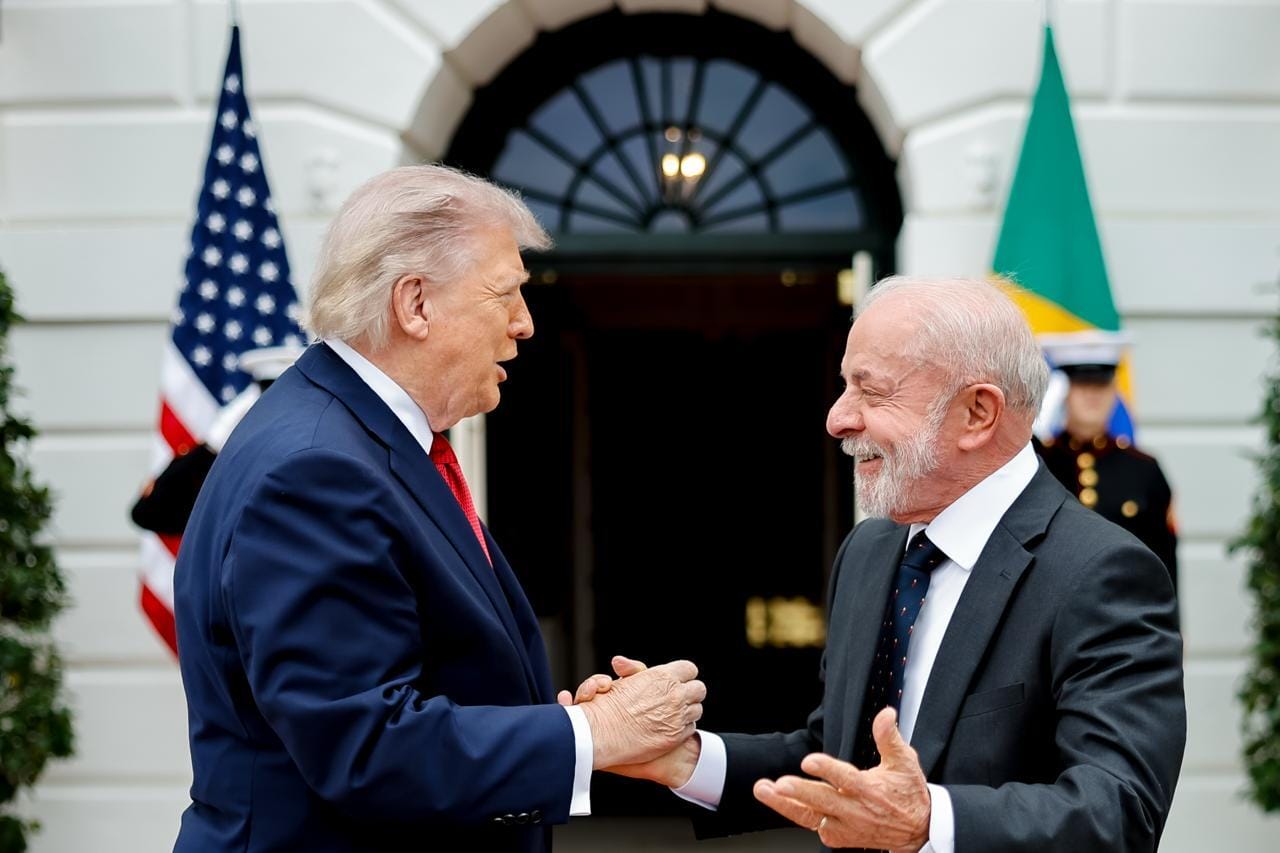
Brazilian President Luiz Inacio Lula da Silva meets with U.S. President Donald Trump at the White House on May 7, 2026. Brazilian Government / Ricardo Stuckert / Handout/Anadolu via Getty Images.
Lobbying in Brazil is dialed up to eleven. The country has 163 million internet users, with over 150 million on WhatsApp, and over 120 million on YouTube, Instagram and Facebook. With AI, Brazil is a similarly large, influential market. Portuguese is the sixth most widely-spoken language in the world, with 70% of speakers based in Brazil. Which means that, if an LLM has been trained in this language, it probably used content created by millions of Brazilians going about their business of making friends, debating politics and football online. It’s not just about journalists; we are all unpaid labor for Big Tech.
In the words of Arthur Lira, the Speaker in Brazil’s Congress who filed a criminal complaint against Big Tech executives in 2023, companies adopted a variety of tactics “to shut down democratic debate and intimidate lawmakers” and defeat any attempt at using legislation to force accountability. Google, he said, used its search homepage, used by over 85% of Brazilians, to spread fear that proposed laws would “make the internet worse” or “make it harder to know what is true or false on the internet.” A report by the Federal University of Rio de Janeiro found that Google invested in ads on its own platform so extensively that it tweaked the search, prominently featuring the word “censorship” in connection to the Brazilian bill. Google also hired Michael Temer, a lawyer and former President of Brazil, to influence lawmakers and Supreme Court Justices. Of course, it was not Google alone. Meta executives, for instance, even argued that proposed legislation in Brazil could lead to the Bible being censored.
But Brazilian lawmakers, the Supreme Court, and civil society have persisted. On August 28, 2025, the “Felca Law” was approved, after a video by the influencer Felca denounced the exploitation and exposure of children on social media. The law establishes that digital platforms must take measures like verifying user age, implementing parental controls, and preventing children's exposure to adult content, gambling, and pornography. They must create reporting channels and may face fines of up to 10% of their annual revenue in Brazil.
Brazil’s president Luiz Inácio Lula da Silva and Donald Trump have had a testy relationship, in part because of Lula’s criticism of Big Tech. In February, at the AI Impact Summit in New Delhi, Lula called for global governance of AI, warning: “When few control the algorithms, it is not innovation, but domination. Regulating the so-called Big Tech companies is linked to the imperative of safeguarding human rights in the digital sphere, promoting information integrity, and protecting our countries’ creative industries.”
By sticking to his guns, Lula may now be seeing the tide turn. He was in the White House on May 7, and though neither he nor Trump took questions, both appeared encouraged by the meeting. “Very dynamic,” was how Trump described Lula, while Lula said he was “very, very satisfied” with how the talks went. With a general election in Brazil approaching in October, Lula will be sensitive to how the White House, as it has done in other elections, and Big Tech might offer vocal support for right wing candidates.
But his willingness to stand up to Big Tech is popular with voters. A recent poll found that 78% of Brazilians want to see tech companies being held responsible for the content they publish. Another poll found that 55% of Brazilians defend regulating Big Tech, with 43.9% against it.
And as scams, fake news, and AI slop dominate ever larger swathes of all our digital space, in Brazil, as in much of the rest of the world, the entire experience of the internet is becoming more unappealing. Big Tech, with the assistance of the U.S. government, may be succeeding in slowing down the pace of regulation and watering down the content of that regulation, but in the long run its victories might be pyrrhic. People have had enough and their governments might be forced to listen.
Oil tankers may be stuck behind strait of Hormuz, but holding the Iata AGM in Brazil defies warnings of impending shortages
Nothing says jet fuel crisis, as one prospective attender put it, like flying everyone to Rio de Janeiro. Aviation leaders will converge in Brazil this weekend for the Iata AGM, the annual global airline summit, with the industry still, for the most part, looking resolutely skyward.
The oil tankers may still be stuck behind the strait of Hormuz as the conflict between the US, Israel and Iran flickers on, but for now, airlines continue to defy dire warnings of impending shortages which had stoked fears of a summer of chaos for European holidaymakers.
Beneath the diplomatic protocol of Lula’s recent visit to Washington lay a strategic contest over rare-earth resources, the ongoing U.S.-China rivalry, and Brazil’s efforts to leverage geopolitical competition for national advantage ahead of the upcoming presidential election. The arrangements for Lula’s visit to Washington came together with remarkable speed after Trump extended the invitation—though, truth […]
 Login
Login