Reading view

Capital paulista amplia locais de vacinação nesta semana; veja lista

Logo Agência Brasil

A Secretaria Municipal da Saúde (SMS) de São Paulo intensificou a vacinação contra a gripe, sarampo e febre amarela, como parte das ações do Dia Nacional da Imunização (9), ampliando o número de postos de vacinação para 400 em todas as regiões da cidade. A mobilização começou nesta segunda-feira (8) e segue até a próxima sexta-feira (12).

As doses estarão disponíveis em locais de grande circulação de pessoas:

  • no Mercado Municipal (dias 08, 09 e 10, das 9h às 16h);
  • no Museu do Ipiranga (dia 9, das 10h às 16h);
  • no Museu Catavento (dias 12 e 13/06, das 10h às 16h),
  • no Centro Olímpico Thomaz Mazzoni (dia 8 a 12, das 10h às 17h);
  • no CEAGESP (dia 10, das 10h às 15h);
  • no Parque da Mooca (de 8 a 12, das 10h às 16h);
  • no Centro Olímpico Thomaz Mazzoni, Vila Maria (8 a 12, das 10h às 17h);
  • na Subprefeitura de Guaianases (dia 11 das 9h às 16h).

Notícias relacionadas:

Também haverá vacinação em shoppings centers, supermercados, terminais de ônibus, estações de trem e metrô. Nesses casos, é preciso consultar o dia e horário, porque os postos não estarão disponíveis em todos os dias e horários.

>> Saiba os endereços e horários para as ações de vacinação extra-muros

“Além das Unidades Básicas de Saúde (UBSs), a estratégia de levar as vacinas para locais de grande circulação de pessoas tem o objetivo de facilitar o acesso aos imunizantes. A mobilização busca ampliar a cobertura vacinal e reforçar a proteção da população contra doenças preveníveis por vacinação”, explica a SMS.

A vacina contra a gripe está disponível para todas as pessoas a partir dos seis meses de idade.

“É importante manter a caderneta de vacinação atualizada, especialmente diante da circulação de vírus respiratórios neste período do ano e da necessidade de prevenção contra doenças como sarampo e febre amarela”, reforça a secretaria.

  •  

Biblioteca Nacional abre inscrições para Prêmio Literário 2026

Logo Agência Brasil

Escritores brasileiros, com obras inéditas em primeira edição, redigidas em língua portuguesa e publicadas por editoras do país - entre 1º de maio de 2025 e 30 de abril de 2026 - já podem se inscrever ao Prêmio Literário Biblioteca Nacional 2026.

As inscrições começaram nesta segunda-feira (8) e permanecem abertas até 8 de julho neste endereço online.

Notícias relacionadas:

De acordo com a Fundação Biblioteca Nacional (FBN), vinculada ao Ministério da Cultura (MinC), e promotora da premiação, o concurso é voltado também a autores independentes, desde que a obra esteja em deepósito legal e traga impresso o número do International Standard Book Number (ISBN).

Cada vencedor das 13 categorias receberá R$ 30 mil. A novidade desta edição é o Prêmio João do Rio, categoria dedicada aos livros de crônicas.

Categorias

Concedido anualmente desde 1994, o Prêmio Literário Biblioteca Nacional visa reconhecer a qualidade intelectual das obras publicadas no Brasil.

O concurso é considerado um dos mais conceituados do país e o mais democrático no cenário nacional, uma vez que não tem taxa de inscrição e concede o mesmo valor de premiação para cada uma das 13 categorias.

São elas: Conto (Prêmio Clarice Lispector); Crônica (Prêmio João do Rio); Ensaio Literário (Prêmio Mario de Andrade); Ensaio Social (Prêmio Sérgio Buarque de Holanda); Histórias de tradição oral (Prêmio Akuli); Histórias em quadrinhos (Prêmio Adolfo Aizen); Ilustração (Prêmio Carybé); Literatura Infantil (Prêmio Sylvia Orthof); Literatura Juvenil (Prêmio Glória Pondé); Poesia (Prêmio Alphonsus de Guimaraens); Projeto Gráfico (Prêmio Aloísio Magalhães); Romance (Prêmio Machado de Assis); Tradução (Prêmio Paulo Rónai).

Treze comissões julgadoras, sendo uma por categoria e compostas por três especialistas da área farão a avaliação das obras inscritas. Originalidade, contribuição à cultura nacional, criatividade no uso dos recursos gráficos e excelência da tradução são os critérios que serão considerados.

O resultado final será divulgado até 30 de outubro no Diário Oficial da União e no portal da Fundação Biblioteca Nacional, após a análise de recursos e homologação do resultado pela presidência da FBN.


  •  

Ministério da Saúde suspende vacina contra a dengue do Butantan

Logo Agência Brasil

O Ministério da Saúde anunciou, nesta segunda-feira (8), a suspensão temporária da imunização contra a dengue no país com a vacina desenvolvida pelo Instituto Butantan.

A pasta informou que 42 pessoas apresentaram sintomas mais severos após a vacinação, sendo que três precisaram de internação e dois desses morreram.

Notícias relacionadas:

O ministro da Saúde, Alexandre Padilha, afirmou que não é possível concluir que os eventos adversos foram causados pela vacina, mas representam um sinal de alerta e serão investigados por um comitê de especialistas.

“Essa descontinuidade tem um objetivo que é a ação de precaução, para que o Ministério da Saúde, a Anvisa [Agência Nacional de Vigilância Sanitária] e o Butantan aprofundem a investigação nos 42 casos, que são episódios de reações adversas da vacina, para buscar fatores de risco nessas pessoas, fazer uma espécie de estudo de caso-controle”, disse em coletiva de imprensa.

“O Ministério da Saúde tem total confiança na capacidade institucional do Butantan”, destacou Padilha ao enfatizar a importância da vacinação para a redução e eliminação de doenças no país.

A suspensão vale apenas para a vacina produzinda pelo Butantan, e não inclui o imunizante Qdenga, produzido pelo laboratório Takeda e aplicado no Sistema Único de Saúde. 

Até o dia 30 de maio, pouco mais de 500 mil doses da vacina do Butantan foram aplicadas em todo o país. O imunizante foi incorporado ao Sistema Único de Saúde (SUS) em janeiro deste ano. Na ocasião, o Ministério da Saúde adotou a estratégia de vacinação para avaliar o impacto do imunizante na dinâmica populacional da dengue.

Para isso, passou a vacinar a população em três municípios-piloto: Botucatu (SP), Maranguape (CE) e Nova Lima (MG). Nessas localidades, o público-alvo é composto por adolescentes e adultos de 15 a 59 anos, que é a indicação aprovada para o Programa Nacional de Imunizações (PNI). Em março, também foi promovida uma ação de vacinação na região de Araguaína (TO).

Em fevereiro, o SUS passou a vacinar contra a dengue os profissionais de saúde da atenção primária, com a previsão de imunizar 1,2 milhão de trabalhadores da linha de frente, de unidades básicas de saúde, por exemplo. Os casos graves registrados foram identificados nesse público-alvo.  

O Ministério da Saúde destaca que a decisão de descontinuar a estratégia de vacinação não invalida a eficácia do imunizante. E as pessoas que foram vacinadas ainda usufruem do benefício que a vacina oferece, que é a proteção contra a dengue.

A recomendação do sistema de farmacovigilância dá mais tempo para que sejam realizados estudos adicionais para encontrar eventuais fatores de risco.

Serão investigados o histórico clínico das pessoas, as doenças preexistentes, os fatores de risco individuais, as causas alternativas, possíveis desvios de qualidade e erros de imunização. 

Brasília (DF), 08/06/2026 - O ministro da Saúde, Alexandre Padilha, anunciou a suspensão temporária da estratégia de aplicação da vacina contra a dengue desenvolvida pelo Instituto Butantan após a identificação de 42 episódios de reações adversas graves registrados pelo sistema nacional de vigilância pós-vacinação. Frame: MS/Youtube Brasília (DF), 08/06/2026 - O ministro da Saúde, Alexandre Padilha, anunciou a suspensão temporária da estratégia de aplicação da vacina contra a dengue desenvolvida pelo Instituto Butantan após a identificação de 42 episódios de reações adversas graves registrados pelo sistema nacional de vigilância pós-vacinação. Frame: MS/Youtube
Ministro da Saúde, Alexandre Padilha, anunciou a suspensão temporária da estratégia de aplicação da vacina contra a dengue desenvolvida pelo Instituto Butantan. Frame: MS/Youtube - MS/Youtube

Casos graves

A vigilância é permanente e parte da rotina do PNI, com fluxo de investigação posterior. Os casos graves foram analisados pelo Comitê Interinstitucional de Farmacovigilância de Vacinas e outros Imunobiológicos (Cifavi) e pela Câmara Técnica de Assessoramento em Imunizações (Ctai), que recomendou a suspensão da vacinação com o imunizante do Butantã.

Das pouco mais de 500 mil doses aplicadas em todo o país, 3.703 pessoas tiveram sintomas parecidos com os da dengue - 0,7% do total de vacinados.

Desses, 42 apresentaram sintomas de alarme, que são: dor abdominal, vômito persistente ou sangramento – 0,008% dos vacinados – eventos raros, porém inesperados, já que não foram relatados durante a fase de estudos da vacina.

Três pessoas apresentaram sintomas graves e foram hospitalizadas:

  • Uma mulher, 39 anos, apresentou febre, mialgia e náuseas seis dias após receber a vacina, evoluindo para sintomas de dengue grave, com choque e necessidade de UTI; recebeu alta.
  • Uma mulher, 48 anos, desenvolveu sintomas de dengue grave, com comprometimento neurológico (meningoencefalite) 19 dias após a vacinação; evoluiu para óbito.
  • Um homem, 58 anos, iniciou quadro febril cinco dias após a vacinação, evoluindo rapidamente para sintomas de dengue graves, com choque refratário; evoluiu para óbito.

Observação

Segundo o ministro Alexandre Padilha, a população que recebeu a vacina do Instituto Butantan nos últimos 21 dias terá um acompanhamento especial para identificar algum sinal ou qualquer outra reação adversa.

A orientação do Ministério da Saúde é procurar uma unidade de saúde em caso de intensificação dos seguintes sintomas: febre, dor abdominal intensa e contínua, vômitos persistentes, tontura, sangramentos, sonolência intensa, irritabilidade, sinais de desidratação ou piora do estado geral.

Reavaliação da estratégia

Em nota, o Instituto Butantan informou que a vacinação contra a dengue será temporariamente interrompida para reavaliação da estratégia vacinal. A medida visa garantir a segurança da população nas próximas etapas da vacinação.

“O Instituto Butantan, como já demonstrado em casos recentes, seguirá trabalhando com o mais absoluto rigor para aprofundar as informações sobre o uso da vacina para que, em se confirmando sua segurança, a vacinação possa ser retomada em breve, com toda a tranquilidade para a população atendida pelo SUS”, disse a instituição. 

Segundo o Instituto, a vacina teve eficácia global de 79,6% e 89% contra a dengue grave em estudo publicado em revista científica internacional. Nos três municípios onde houve vacinação em massa da população, o acompanhamento de farmacovigilância se mostrou positivo, sem casos importantes de reação adversa na população.


*Texto ampliado às 18h08 para acréscimo de informações

  •  

The election interference evidence no one is talking about

U.S. President Donald Trump speaks during an event in the Oval Office of the White House on June 03, 2026 in Washington, DC. Photo by Kevin Dietsch/Getty Images

Are President Donald Trump and MAGA Republicans publicly signaling that they plan to interfere in—and potentially rig—the 2026 midterm elections? If so, why is the media not taking the threat seriously? In this episode of Inequality Watch, Taya Graham and Stephen Janis investigate the connections between wealth inequality, political power, ICE funding, the influence of Super PACs on elections, and growing concerns about democratic accountability in Trump’s America.

Credits:

  • Pre-Production: Taya Graham, Stephen Janis
  • Studio Production / Post-Production: Cameron Granadino, Stephen Janis
Transcript

The following rushed transcript may contain errors. It will be updated as soon as possible.

Taya Graham:

Could President Trump and his MAGA Congress be planning to interfere with the upcoming midterm elections? Well, we have some evidence that might surprise you, which we will unpack on this episode of the Capitol Hill React Report. Hello, this is Taya Graham, myself, along with my reporting partner, Steven Janice, our Capitol Hill correspondence for the Real News Network. We report regularly on what’s happening in the nation’s Capitol, but with a twist. We examine the process of governance through the prism of the most powerful force in today’s politics, economic inequality. Now, before you say, tell you that seems sort of limited. Just let me explain a little bit before we get to the first video. Economic inequality is at its highest point in recent history. Just take a look at the latest report that showed American workers’ share of the economy has fallen to its lowest level since 1947.

That’s right. In 2025, the share of the economy that went to the people who actually make it run was 54% a historic low. Okay. So why is this context essential for reporting on politics? Well, because all that wealth accumulating in fewer and fewer hands translates into concentrated power and that power now flows into our elections in the form of cash. Cash, which translates into victories at the ballot box for the purveyors of an increasingly extractive economy, insulating it from ballot box accountability, which ultimately means that you can’t understand politics on Capitol Hill unless you comprehend what currently defines it, namely the rich getting richer. Stephen, how am I doing?

Stephen Janis:

So you’re doing great. I mean, one of the things we have to think about is we got to look at democracy as a whole here functioning through this prism of inequality. The idea of democracy that delivers a certain amount of freedom to the people who are part of it. Now, freedom is a limited resource. So as people get richer and richer, they hoard that freedom. And so there’s less freedom to go around. Freedom to do what you want, freedom to educate yourself, freedom to live where you want. All those things sort of translate into the affordability crisis we’re seeing now, which means that there’s less freedom for the working people and more and more freedom for the richest 1% and more and more freedom to control how we live. And that’s why we have this sort of crisis on Capitol Hill and that’s how we have to view what goes on on Capitol Hill.

Taya Graham:

Stephen, that is such a great point and brings us right back to the topic at hand. The incredibly tense state of American elections and why wealth inequality will play a key role in that autocratic calculus. So first, let’s be honest, Steven, the mainstream media has, in my opinion, been misreading Trump, specifically his pronouncements that he doesn’t care about gas prices or the quagmire in Iran. Let’s listen to him talk about it and then discuss. When you’re negotiating with Iran, Mr. President, to what extent are American financial situations motivating you to make it?

Donald Trump:

Not even a little bit. The only thing that matters when I’m talking about Iran, they can’t have a nuclear weapon. I don’t think about American financial situation. I don’t think about anybody. I think about one thing. We cannot let Iran have a nuclear weapon. That’s all. That’s the only thing that motivated.

Taya Graham:

Okay. So the interpretation from the TV pundits has been that President Trump is just inexplicably tone deaf or detached or just disinterested, but we think Trump is telegraphing something much more insidious. So Steven, let me ask you a question after watching this video. Is Trump just really disengaged as the mainstream media says, or as they say he’s unhinged, or is there something else a little more troubling going on here?

Stephen Janis:

Well, Ted, this is one of many clips where Trump has kind of downplayed midterm elections or voters concerns or gas prices or whatever. He does it consistently. And of course it would be suicide for a politician in a functioning democracy to say something like that, right? Because this would directly affect how people vote. I really think for some reason gas prices, well, I kind of understand that gas prices are one of the biggest motivators for people when it comes to elections. And so it would be suicide, but what he’s really trying to say is, “I’m not worried about the midterms because I got this locked out. ” And look at what happened in the last presidential election. He tried to overturn it with a lost, but he wasn’t really prepared. He has been preparing for two years now to be able to interfere with the elections.

He subpoenaed ballots all over the country, including Fulton County and Georgia. He has set up this election integrity system run by a person who actually denied the 2020 election. He has increased the funding for ICE and Border Patrol, which we’ll talk about later. He has just simply put people in place who will be able to do what he needs to do. The Justice Department itself does whatever he wants. They’ll prosecute anybody. Very true. So they will certainly be willing to weigh in on this. He is prepared. He’s declared emergencies in so many situations. He is prepared and he is trying to say, “I’m not worried about it because no matter what happens, I’m going to make sure that I come out on top.” And I think that’s what we’re missing here. When he says he’s disinterested, what he’s saying is, “I’ve got this in the bag.”

Taya Graham:

Steven, I think you put your finger right on it here. The real danger here isn’t just what Trump is saying, but the fact that everyone keeps dismissing it. And you know what Trump hasn’t even ruled out paying the people who stormed the Capitol and those who tried to halt the counting of the electoral votes in 2020, despite the fact that his administration said the fund is dead, he was literally just quoted as saying, “I think they should be reimbursed by a crooked government.” Now, his remarks regarding the controversial $1.7 billion weaponization fund bolster, I think the case that he believes he can alter the midterm outcome. It would’ve set aside money for people who believe they were unjustly prosecuted, namely the Jan six insurrectionists. I mean, critics say if Trump has his way, he will literally be able to assemble a pratorian guard to disrupt the elections.

And I’m alluding to the elite core of Roman military officers who guarded the emperor, but who eventually just took power themselves. Steven, what does it mean if he gets his way?

Stephen Janis:

Well, what it means is because ways he has what you need the first … The most important element of any sort of autocratic takeover is having the money to pay people and having the freedom to pay people any way you want. Now this $1.7 billion fund would be an easy way just to dole out cash to people who had done his bidding before. Now he has other ways of doing this that we’ll talk about. But the main thing is it gives them the power of the purse in a way that’s totally up to his discretion and the Justice Department, which is an extension of him. Now what’s interesting about it is I don’t really think they need a fund. Those J6 is going to just sue and then Trump can approve the payouts. That’s right. So he’ll get it one way or another. But the point is he wants to signal to the people, “Hey, if you help interfere with an election, I will pay for it and I’ll reward you because these settlements could be huge.

$1.7 billion is a lot of money.” Sure is. So I think that’s what he’s trying to telegraph is saying, “Help me out with this and you’ll get paid.”

Taya Graham:

Steven, that is not only spot on, but it’s actually really scary. But what’s even more concerning to me is how much this election interference plan is hiding in plain sight with little or no pushback because he can’t do this alone. He needs help from his ever loyal contingent in Congress. And for the most part, they are in lockstep with Trump. And that was more than evident when the MAGA Congress started to plot a strategy to get more money to ice customs and border patrol for purposes that we’re going to touch on a litle bit later. Now their plan was to use a tactic called reconciliation, which allows legislation to bypass the filibuster provided it has significant fiscal impact on federal spending. Now, this was an unprecedented power grab because the funding bill was intended to provide routine annual appropriations and that’s a measure that is usually passed with bipartisan support, which brings me to an interesting encounter we had on Capitol Hill with Republican Congressman Mike Lawler, who didn’t seem to want to answer our question when we asked why ICE and CBP needed an additional $70 billion in funding, but his reluctance is also revealing.

Let’s take a listen to what happened.

Rep. Mike Lawler:

Fuck that up.

Stephen Janis:

Congressman, why does ICE need an additional $75 billion? Why is that funding? How do you justify that to the American people who now are suffering with high gas prices and things like that? Why is that even more money?

Rep. Mike Lawler:

Well, that’s the cost of funding the department. Are you for abolishing ICE?

Stephen Janis:

I’m just asking the question. They already have $14.

Rep. Mike Lawler:

Well, you understand that that is the- I’m not

Stephen Janis:

For against anything.

Rep. Mike Lawler:

You understand that’s the appropriated amount, right? Yes. That’s been appropriated.

Stephen Janis:

Of course, but I’m asking

Rep. Mike Lawler:

Questions. So the reason additional funds, that’s the base budget for ICE and CBP, right? You understand that?

Stephen Janis:

I do.

Rep. Mike Lawler:

Okay. So the additional funds that came through the Working Family’s tax cut bill were to increase border security. Why? Because Joe Biden let in 10 and a half million people into the country.

Taya Graham:

Okay. Steven, just for the record, are you for abolishing ICE? Because you didn’t answer the congressman’s question.

Stephen Janis:

Yeah. I’m for abolishing politicians to be able to answer a question with a question and evade answering the question I ask. I’m for abolishing that. But one thing I want to just say before we move on is that his sort of argument that that’s the appropriate amount for ICE is actually wildly inaccurate. I look back into the ICE funding and what ICE and CPB have been spending roughly eight to $10 billion a year. They already have $140 billion. This is not an appropriate amount for anything. That’s an absolute freaking lie. ICE and CBT do not need that much money. This is excess cash. Taxpayer cash, your taxpayer dollars that are simply being spent without accountability. I think there’s a reason for that we’ll talk about in a second, but really he was just FOS on that. And I just want to point that out because it really was infuriating.

I was trying to get his answer, but I couldn’t sit there and get into an argument with him about what he was saying was actually patently false.

Taya Graham:

Personally, when a politician answers a question with a question, in my opinion, that is a sign they don’t have an answer or they have an answer, they don’t want the public to know. And he

Stephen Janis:

Definitely didn’t have an answer in this point. So good point, Teo.

Taya Graham:

Thank you. But I mean, the question you were asking was not insignificant. I mean, in fact, it was a really big piece of the puzzle, led us to think that the threats to the midterm elections are widely underestimated. Now, the crux of the matter is funding. Now what you asked is why Republicans want to give ICE, customs, and Border Patrol another $70 billion. And what makes this so unusual is that the big beautiful bill dropped roughly $140 billion on both agencies just last year. But with ICE and CBP spending at best $20 billion annually, it begs the question, why so much? What is it really for? And Steven, you have a theory about this. Tell me about it.

Stephen Janis:

Well, I think the thing you have to think about is that they’re moving towards a more autocratic form of government. Autocracies and democracies have different incentives, basically, different incentive systems. Technically speaking, a democracy wants to award beneficial policy for constituents. So to get elected, you got to do stuff that people like. Autocracies don’t work that way. They need to punish people who might push back. They need to crush dissent and that’s through a system of incentivization of punishment. And so in my opinion, this money, which can, I guess when you add up $210 billion for a law enforcement agency is about constructing a great American punishment regime to prepare Americans for a more autocratic government.

When I looked into the records and tried to figure out how much money does ICE and CPP still have on the books, it’s really hard to figure out because the federal government really isn’t oriented towards reporting on multifiscal year cycles about how much money they have. But I looked, I found at least $73 billion that had been unallocated so far. And that’s after they’ve already built all these warehouses, these prisons where they’re incarcerating people. So they literally have what would be for those agencies unlimited funding. And unlimited funding for law enforcement gives you a way to institute punishment throughout all levels of governance. I mean, those detention centers can be used to detain people for a variety of reasons. They’ve already detained Americans. They’ll detain more. Having an unlimited amount of money to swarm CPB and swarm ICE into cities gives you this ability to do what Trump did in Minneapolis, Los Angeles, Chicago.

And when these elections come and when Trump is trying to say, Hey, they weren’t fair, they’re going to need these guys and women to come into cities and to try to disrupt the people who will be pushing back or to seize ballot box. I really think this excess money is insulating both institutions and that’s for a reason to create a punishment regime that will be reflective of the autocratic values that the Trump administration is espousing through their policy choices.

Taya Graham:

Steven, you did the classic thing every reporter should do and actually anyone watching should do, which is follow the money. You follow the money, you figure out what’s really going on. So let me just ask you a question about this. I was thinking back to the first time it really hit home with us that something was afoot with regard to democracy during the shutdown last year. So last year, Democrats wanted to extend the Obamacare tax credits and Republicans refused. But what struck me at the time was how the majority party approached the entire conflict. They simply shut down Congress. They simply stopped town halls and talking to their constituents. No debate, no work, just silence. And of course, all of that was just to deny people healthcare. And that seems like a pretty anti-Democratic strategy. So how does it play into that theme you’re talking about, about the punishment regime theme?

What do you think?

Stephen Janis:

Well, the thing is if you shut it down, you’re kind of punishing people because you’re taking away the deliberative legislative body that’s supposed to represent their interests where you are supposed to hash these things out and figure out how to get people healthcare. So what you’re saying is, we don’t care. You don’t have healthcare, you’re being punished. We’re going to punish you by not doing anything and showing you that we don’t have to do anything and disengaging from our constituents. And so I think it’s a big part of that. I mean, a functioning legislative body should be an accountability mechanism to make sure things like ICE and CBP don’t get out of control. But now when they shut it down and turn it into this absolute desert of democracy, well, then you don’t have a limited legislative body to represent you. Without representation, you’re done.

I mean, what people don’t understand, and I think you’ve talked about this really, really well, is that democracy is a culture that infiltrates all levels of government governance. When you change that to a punishment regime, to an autocratic culture, everything changes.Your ability as a constituent and to vote and to have some impact and some say in how you live diminishes quite quickly. And I think that’s what we’re seeing here.

Taya Graham:

Steven, that’s a really, really good point. And you touched on constituents actually having a voice and this is something we caught at a press conference where that idea that you’re touching on right there was absolutely front and center. Now it was an announcement by Senator Bernie Sanders and Representative Summer Lee to announce a bill that would shut down super PACS. Now Super PACS are of course the campaign behemoths that can spend unlimited amounts of money basically to buy elections. Super PACS are like the corporate love child of Citizens United, that famous decision that allowed corporations to also spend unlimited amounts on electing people to subject us the working class to the extractive tendencies of our current economy. Now this union between them was so fruitful that it gave birth to political organizations with unlimited spending power and an insatiable appetite for television ads, digital marketing, robocalls, and anyone who’s willing to rent out a swing state’s airwaves.

Now, Sanders and Lee basically want to undo all that with a limit on how much Super PACS can raise. Their bill with limit contributions to $5,000 per individual or corporation, essentially disabling the Super PAC system that allowed Elon Musk to dump $280 million over a quarter of a billion dollars into President Trump’s campaign, which resulted in the mess that we’re currently living with. But I asked Senator Sanders a question and he had an interesting answer. Let’s take a listen and you can react on the other side.

Sen. Bernie Sanders:

I don’t want people to think this is just another issue. What somebody said is right. It is the most important issue. If we are the only major country on earth not to guarantee healthcare at all, why is that? You think it may have something to do with the power of the pharmaceutical industry and the insurance companies who spend zillions of dollars making sure we don’t move to a Medicare for all system? Do you think the fact that we have a starvation minimum wage has something to do with the fact that a lot of these corporations and business people don’t want to pay their workers a living wage, don’t want workers to join unions. The point here, this is not another issue. This is an issue that touches every bloody issue facing working people in this country.

Taya Graham:

Okay. Steven, I really want to hear your thoughts here. Is Senator Sanders connecting the right dots?

Stephen Janis:

Yeah, absolutely. Because money, cash, power, adulterates, democracy. And the way you adulterate it is to be able to deliver, to allow people who have the concentrated wealth to throw it all into the election. Now the whole idea of campaign laws is to limit influence of one individual or corporation. You can only donate so much no matter how rich you are. Now with super PACS, you can put everything you have into it if you want and that gives you disproportionate power and that creates an inequality basis for elections. So absolutely. And I want to point out one thing. You were the one who asked the question that set off that answer and I think it’s really vitally important because Sanders is connecting the dots. You can’t afford housing. Look at the super PAC. You can’t afford healthcare super PACs. All these super PACs create disproportionate influence for the smallest number of people possible.

It turns an election into really a choice of the oligarchy to decide who’s going to be in power and what policies they will implement. So it was a great answer and it’s absolutely spot on.

Taya Graham:

Steven, I asked the question because I felt like sometimes we, meaning journalists, don’t really connect the dots. And as we’ve discussed, as you’ve said, the great American punishment regime is a product of President Trump’s desire to diminish democracy, but it’s a political transformation that wouldn’t be happening if the system itself hadn’t failed to deliver for the majority of people who live under it. So what Sanders did is make the connection between big money and bad economics palpable and easy to see. He cut through the noise and made the argument that the wealth imbalance and the cash hoarding that it enables is cycled back into elections and fines forms and things like the affordability crisis or the housing shortage and of course our unresponsive and overly expensive healthcare system. These connections are crucial if political mechanisms like super PACS are both to be understood and mitigated.

If you don’t connect the accumulation of obscene wealth with the fact that you can’t pay your monthly utility bill, then it will be nearly impossible to sustain a movement to reform all of this. So Steven, how does Sanders and Lee’s idea fit into your theory of a punishment regime?

Stephen Janis:

Well, I want to say one thing first though before I answer that question, because it’s a great question, but I want to say this, I want to be the boy who cried wolf here. I am not saying this to be some sort of paranoid conspiracy theorist. I just see the tea leaves sitting up on Capitol Hill, like we talked about how they shut down Congress, like we talk about how Republicans don’t show up on the triangle anymore where most press conferences are held. I want to be wrong in this case, but I can’t ignore what I’m seeing. And when Senator Sanders talked about super PACs, there wasn’t that much media there and there really wasn’t that much media coverage of what he did and what Summer Lee was proposing, Congresswoman Summer League, excuse me. So I really think these elements are all connected.That’s why we did this show to connect them.

The super PACs fuel the oligarchy and the oligarchy fuels autocracy. You can’t have dissent when few people want to hold onto all the wealth. It’s not just and people are going to push back against it, but the only way you can stop it is to incentivize punishment to say, “You know what? You speak up, you’re in trouble.” And the way to use that mechanism is to diminish the value, the integrity, and of course just create uncertainty around elections. Trump has sort up a lot of uncertainty. He’s got unlimited amount of cash to spend to bolster it. I am extremely concerned. I just wish more people would listen to Senator Sanders and Congresswoman Lee on this issue. It’s critically important and you’re right.

Taya Graham:

Steven, I’m so glad you connected the dots for us in this way because once you see it like this, you can’t unsee it. So thank you so much, Steven.

Stephen Janis:

You’re welcome.

Taya Graham:

Okay. So that’s the end of this edition of the Capitol Hill Inequality Watch React. So thank you so much for joining us. We are going to keep reporting for you on Capitol Hill while discussing how wealth inequality influences our politics, our economy, and our lives. I’m Taya Graham, along with my reporting partner, Steve and Janice. People please keep fighting, keep voting, and most of all, please keep caring. Our democracy needs you.

💾

Battles over ICE funding, super PAC money, and the limits of congressional power on Capitol Hill reveal the groundwork being laid for a new kind of election interference in the 2026 midterms.
  •  

Carbono azul ganha espaço na agenda climática dos oceanos

Logo Agência Brasil

Na corrida para frear as emissões causadoras do aquecimento global, ambientalistas chamam a atenção para um aliado pouco lembrado: o "carbono azul". No Dia Mundial dos Oceanos, celebrado nesta segunda-feira (8), especialistas destacam o papel dos ecossistemas costeiros no enfrentamento das mudanças climáticas.

O conceito de carbono azul se refere ao dióxido de carbono (CO₂) capturado e armazenado por ambientes marinhos, como manguezais, marismas (pântanos de água salgada) e pradarias. Esses ambientes funcionam como sumidouros do gás carbônico, ao retirá-lo da atmosfera, reduzindo os impactos do aquecimento global.

Notícias relacionadas:

“O oceano absorve cerca de 30% das emissões globais de CO₂ e produz mais da metade do oxigênio que respiramos, de acordo com dados da SOS Oceano”, diz Natali Piccolo, diretora do Programa Costeiro Marinho da Conservação Internacional (CI-Brasil).

“A Amazônia é comumente chamada de ‘pulmão do mundo’, mas o oceano cumpre o equivalente a esse papel. O que não descarta, claro, a importância da floresta tropical na regulação do clima”, completa.

Além disso, essas vegetações costeiras fornecem abrigo para a biodiversidade, sustentam a pesca artesanal e ajudam a proteger comunidades costeiras contra erosão, ressacas e eventos climáticos extremos.


Paranaguá (PR), 18/05/2026 – Manguezal na Baía de Paranaguá, área da Grande Reserva da Mata Atlêntica, onde ocorre monitoramento por pesquisadores do Programa de Recuperação da Biodiversidade Marinha (Rebimar). Foto: Fernando Frazão/Agência Brasil Paranaguá (PR), 18/05/2026 – Manguezal na Baía de Paranaguá, área da Grande Reserva da Mata Atlêntica, onde ocorre monitoramento por pesquisadores do Programa de Recuperação da Biodiversidade Marinha (Rebimar). Foto: Fernando Frazão/Agência Brasil
 Manguezal na Baía de Paranaguá, área da Grande Reserva da Mata Atlântica, onde ocorre monitoramento por pesquisadores do Programa de Recuperação da Biodiversidade Marinha (Rebimar). Foto: Fernando Frazão/Agência Brasil

Costa brasileira

O Brasil abriga o maior sistema contínuo de manguezais do mundo, na costa da Amazônia, condição que coloca o país em posição estratégica para liderar soluções baseadas na natureza voltadas ao enfrentamento da crise climática.

Porém, para a analista de conservação do WWF-Brasil, Marina Corrêa, o oceano recebe menos atenção do que outros biomas brasileiros.

“O mar ainda é, em muitos aspectos, o sistema invisível da conservação brasileira. Historicamente, o oceano foi tratado como uma imensidão azul vazia, quando na verdade é um território vivo, cheio de biodiversidade, cultura, trabalho e modos de vida”, diz a analista.

Ela lembra que o Sistema Marinho-Costeiro brasileiro ocupa cerca de 5,7 milhões de quilômetros quadrados, equivalente a aproximadamente 40% do território nacional, e que mais da metade da população vive nesse ecossistema. Ainda assim, Amazônia, Cerrado e Mata Atlântica concentram a maior parte da atenção pública, política e financeira voltada à conservação.

Povos tradicionais 

O crescimento do interesse por projetos de carbono azul também tem levantado discussões sobre direitos territoriais e participação das comunidades tradicionais. Para a analista da WWF-Brasil, resultados duradouros dependem do respeito aos direitos territoriais e repartição justa dos benefícios gerados.

“O sucesso dessas iniciativas não deve ser medido apenas pela quantidade de carbono armazenado, mas também pela capacidade de fortalecer territórios, conservar a biodiversidade e melhorar a qualidade de vida das pessoas que historicamente cuidam desses ecossistemas”, diz Marina Corrêa.

Quando degradados, esses ambientes deixam de oferecer serviços essenciais, como a manutenção dos estoques pesqueiros, a proteção natural da costa e a conservação da biodiversidade.

A destruição desses ecossistemas também pode liberar para a atmosfera o carbono acumulado ao longo de décadas ou séculos, agravando o aquecimento global.


Bragança (PA), 13/06/2025 – Garças no manguezal de Ajuruteua, próximo à Vila dos Pescadores, na área da Reserva Extrativista Marinha de Caeté-Taperaçu. Foto: Fernando Frazão/Agência Brasil Bragança (PA), 13/06/2025 – Garças no manguezal de Ajuruteua, próximo à Vila dos Pescadores, na área da Reserva Extrativista Marinha de Caeté-Taperaçu. Foto: Fernando Frazão/Agência Brasil
Garças no manguezal de Ajuruteua, próximo à Vila dos Pescadores, na área da Reserva Extrativista Marinha de Caeté-Taperaçu. Foto: Fernando Frazão/Agência Brasil

Além do carbono

Para organizações ambientais, proteger os oceanos significa também proteger empregos, segurança alimentar, culturas tradicionais e formas de subsistência construídas ao longo de gerações.

“Globalmente, a maior renda do oceano é gerada pela pesca, que sustenta 100 milhões de empregos e produz 80 milhões de toneladas de pescado marinho, além de 30 milhões de toneladas da aquicultura marinha, o que sustenta a segurança alimentar de milhares de pessoas, por fornecer proteína de alta qualidade”, diz Natali Piccolo.

No Brasil, cerca de 1,7 milhão de pescadores artesanais dependem diretamente da saúde dos ecossistemas marinhos, segundo o Registro Geral da Atividade Pesqueira, do Ministério da Pesca e Aquicultura.

Nesse sentido, o trabalho conjunto de instituições públicas com organizações da sociedade civil é essencial para garantir um futuro mais promissor para os oceanos.

“Nossa atuação é sistêmica, para preencher as lacunas da proteção, manejo e restauração dos ecossistemas marinhos (manguezais, recifes de corais, restingas), enquanto ajudamos os povos do mar a prosperarem, bem como a sociedade brasileira a desenvolver o conhecimento e a experiência do oceano”, diz Natali Piccolo, da CI-Brasil.

Marina Corrêa, da WWF Brasil, explica que a estratégia da organização para os próximos anos está organizada em quatro grandes frentes: fortalecimento das áreas marinhas protegidas, conservação e restauração de recifes de coral (ecossistema mais vulnerável às mudanças climáticas), promoção de uma transição energética justa e incidência política para fortalecer a governança dos oceanos no Brasil e internacionalmente.

  •  

Abertas inscrições para 5ª Olimpíada Nacional de Eficiência Energética

A Olimpíada Nacional de Eficiência Energética (ONEE) 2026 abriu inscrições gratuitas nesta segunda-feira (8) para estudantes e professores de todo o Brasil. Poderão se inscrever, pela primeira vez, nesta quinta edição, estudantes do 1º e 2º anos do ensino médio das redes pública e privada, além dos alunos da 8ª e 9ª séries do ensino fundamental. As inscrições podem ser feitas até o dia 15 de setembro no site oficial da ONEE.

Organizada pela Agência Nacional de Energia Elétrica (Aneel), por meio do Programa de Eficiência Energética (PEE), a ONEE é coordenada pelo Instituto Abradee, da Associação Brasileira de Distribuidores de Energia Elétrica (Abradee), que representa 42 distribuidoras de energia elétrica do país, ou 99,6% da distribuição nacional de energia.

Na edição deste ano, a Olimpíada terá o Grupo Equatorial, representado pela Equatorial Piauí, como empresa proponente da iniciativa. No total, 48 distribuidoras de energia elétrica participarão da ONEE 2026, abrangendo todos os estados brasileiros.

A presidente da Abradee, Patricia Audi, disse à Agência Brasil que o certame deverá mobilizar mais de 660 mil alunos de todo o país. Para os professores, será oferecido um curso de formação gratuito, com quatro módulos que tratam de eficiência energética, consumo eficiente, desenvolvimento sustentável e cuidados no uso da energia.

Objetivos

Considerada a maior olimpíada do setor elétrico brasileiro, a competição objetiva estimular os estudantes a entenderem que energia elétrica “é vida, é desenvolvimento, é prosperidade, é dignidade”, ressaltou Patricia Audi. E explicou: “Todos nós que temos esse ativo como uma coisa dada, muitas vezes não entendemos a importância da energia elétrica”.

A presidente da Abradee lembrou que, no caso do Brasil, a energia elétrica é um ativo porque quase 90% da matriz energética do país são sustentáveis, o que “é motivo de orgulho”. Daí um dos objetivos principais da ONEE ser ensinar aos alunos como consumir a energia elétrica com responsabilidade, com eficiência. “E estimular uma visão cidadã desses alunos que serão profissionais no futuro, inclusive nas suas próprias casas, sobre a importância da energia elétrica no desenvolvimento sustentável do país”, explicou Patricia.

Além de incentivar a conscientização sobre eficiência energética, a ONEE também busca fortalecer o aprendizado no campo de Ciências da Natureza e suas Tecnologias, alinhado às diretrizes da Base Nacional Comum Curricular (BNCC).

Etapas

Antes mesmo do encerramento das inscrições, os estudantes participarão de desafios, que se estenderão de 4 a 18 de setembro. Serão games (jogos) e quizzes (questionários curtos de perguntas e respostas) para despertar o interesse e a conscientização das crianças e adolescentes sobre o tema da energia elétrica de forma lúdica.

“Os alunos vão competir entre eles e ganharão pontuações”, disse Patricia Audi. “É uma maneira bastante atrativa e contemporânea de fazer com que eles se interessem sobre o tema”.

Já as provas online serão realizadas no período de 21 a 25 de setembro, em uma primeira etapa, com resultado previsto para a primeira quinzena de outubro. Os melhores classificados participarão da segunda fase de provas, realizando uma prova objetiva disponível pelo site e plataforma oficial da olimpíada, durante a Semana Olímpica, que ocorrerá entre os dias 9 e 13 de novembro. A cerimônia nacional de premiação será no dia 12 de novembro.

A presidente da Abradee destacou que a Semana Olímpica visa a intensificação do conhecimento.

“É muito rico ver a realidade desses jovens entendendo o que é eficiência energética, de que forma eles podem aplicar esse conhecimento no dia a dia, para a vida deles, inclusive em termos de política pública, de economia e, principalmente, com a responsabilização e o viés de cidadania, com a participação de cada um deles”, disse.

Os alunos com melhores resultados receberão medalhas de ouro, prata e bronze. Além disso, o estudante com melhor desempenho de cada estado ganhará um notebook como reconhecimento pelo resultado alcançado na competição e uma viagem para a Semana Olímpica, em Brasília, onde ocorrerá o desafio final, que definirá o grande vencedor nacional. Os familiares e professores dos melhores alunos participarão também da cerimônia nacional de premiação, com tudo pago pela ONEE.

Transformação

Na avaliação do diretor-geral da Aneel, Sandoval Feitosa, a ONEE vai além da competição acadêmica, porque “é por meio do conhecimento que os jovens têm a capacidade de transformar e impactar o meio em que vivem”. Feitosa considera que iniciativas como a ONEE reforçam esse compromisso tão importante com o interesse pelo aprendizado. Ele não tem dúvida de que essa prática transforma os estudantes em protagonistas do futuro do País, “incentivando e valorizando esses jovens para uma sociedade mais sustentável e justa para todos.”

Para Sergio Araújo, superintendente de Digital, Inovação e Projetos Estratégicos do Grupo Equatorial, a Olimpíada Nacional de Eficiência Energética representa uma importante iniciativa de conscientização e formação cidadã, ao aproximar estudantes e professores de um tema estratégico para o desenvolvimento sustentável do país. 


  •  

Ukraine war latest: Kyiv recaptures more territory than it loses in May, Syrskyi says

Key developments on June 8:

  • Russia rejects Ukrainian, European peace initiatives, says battlefield will decide war
  • NATO jets shoot down drone over Latvia in 1st such interception, military says
  • Ukraine strikes Russian oil depot, radar station, other military targets, General Staff confirms
  • Ukraine foils Russian plot to assassinate senior military

  •  

Eleições no Peru: Sanchéz supera Fujimori com 93,9% das urnas apuradas

Logo Agência Brasil

Em uma apuração acirrada pela presidência do Peru, o esquerdista Roberto Sanchéz Palomino superou numericamente a direitista Keiko Fujimori com 93,9% das urnas apuradas. O resultado parcial está 50,008% para Sánchez, contra 49,992% para Keiko. Sánchez começou a apuração atrás da adversária e veio reduzindo a vantagem pouco a pouco até superar a candidata da direita peruana. Sanchéz contabiliza 8.790.560 votos contra 8.787.618 de Keiko. 

O resultado segue indefinido uma vez que Sanchéz têm apenas 4,9 mil mil votos a frente de Fujimori em um universo de 27 milhões de eleitores aptos a votar. Das 92 mil urnas existentes, ainda faltam apurar cerca de 4,6 mil, segundo a Oficina Nacional de Processos Eleitorais (ONPE) do Peru. 

Notícias relacionadas:

O professor de pós-graduação de Integração da América Latina da Universidade de São Paulo (USP), Gustavo Menon, destacou à Agência Brasil que o resultado segue incerto porque as atas que mais faltam apurar são do exterior, que tende a ser mais pró-Fujimori, e da região serrana do país, onde Sánchez é favorito. 

“Faltam-se processar as atas vinculadas mais à região serrana, na região dos Andes, onde Roberto Sanchéz tem uma larga vantagem em termos de votação, especialmente nessa região da Serra Sul peruana”, disse. 

Disputa geopolítica 

Para o especialista em política latino-americana, o resultado no Peru é fundamental na correlação de forças na América do Sul. Isso porque, a vitória de Keiko representaria uma aproximação mais estreita do país com o governo de Donald Trump, nos Estados Unidos, 

“Inclusive, ela já se colocou à disposição dos EUA para fortalecer as políticas de combate aos crimes transnacionais e classificar os grupos peruanos como grupos terroristas. O Peru passa por essas disputas geopolíticas em torno dos seus recursos, pleiteados pelos EUA, e como um país do Pacífico que cada vez mais se conectou com investimentos chineses”, avaliou Menon. 

Keiko vs Sanchéz 

Roberto Sanchéz e Keiko Fujimori disputam o mandato presidencial no Peru para o período de 2026 a 2031, de cinco anos. O vencedor será o nono presidente do país sul-americano em dez anos de crise política. Desde 2016, dois presidentes renunciaram e quatro foram destituídos pelo parlamento peruano, tido como o poder de fato no país. 

Filha do ex-ditador Alberto Fujimori (1990-2000), condenado por violações de direitos humanos, o que inclui esterilização forçada de mulheres indígenas, Keiko perdeu nas últimas três eleições no 2º turno, em 2011, 2016 e 2021. 

Do outro lado, está Roberto Sánchez, aliado do ex-presidente Pedro Castillo, destituído, preso e condenado por tentativa de golpe de Estado ao tentar dissolver o Parlamento. Para seus apoiadores, Castillo foi vítima de um golpe do Legislativo por representar o voto rural e indígena do país. 

Psicólogo de formação, Sanchéz é deputado federal pelo partido Todos pelo Peru, tendo sido ministro de Castillo. Assim que votou ontem (7) em Lima, Sanchéz foi até o presídio de Barbadillo, onde Castillo está detido, permanecendo no local até a divulgação dos primeiros resultados parciais. 

Moderação do discurso 

Ao terminar o primeiro turno com 12% dos votos, contra 17% de Keiko, Sanchéz moderou o discurso e apresentou um ajuste na sua plataforma eleitoral para incorporar propostas de legendas que passaram a lhe prestar apoio. 

Nesse contexto, ele renunciou à proposta de nacionalizar empresas de setores estratégicos da economia. Ao mesmo tempo, manteve a promessa de convocar uma Assembleia Constituinte para redigir nova Constituição, uma vez que a atual é herança do período fujimorista. 

Por outro lado, Sanchéz manteve parte do programa original, em especial a proposta de reforma trabalhista para ampliar direitos e formalizar trabalhadores hoje informais. 

  •  

Plano Brasil Soberano adota novas regras e mais empresas podem aderir

Entrou em vigor nesta segunda-feira (8) as novas regras do Programa Brasil Soberano. Agora, um número maior de empresas poderá solicitar linhas de crédito do programa. O governo federal reduziu de 5% para 1% o percentual mínimo de impacto no faturamento exigido. As mudanças foram anunciadas na última semana, mas passaram a valer hoje.

Com a medida, empresas exportadoras e fornecedores afetados pelas tarifas impostas pelos Estados Unidos ou pelos impactos econômicos dos conflitos no Oriente Médio poderão acessar os financiamentos mesmo com perdas menores de receita.

Quem será atendido

A ampliação beneficia dos grupos 1 e 3 do Plano Brasil Soberano:

  • Exportadores de bens industriais e fornecedores afetados pelas tarifas impostas pelos Estados Unidos (grupo 1);
  • Exportadores industriais e fornecedores com operações em países do Oriente Médio impactados pelos conflitos na região (grupo 3).

Para ter acesso ao crédito, as empresas desses grupos precisarão comprovar que as exportações representaram ao menos 1% do faturamento bruto no período de referência. Antes, o limite mínimo exigido era de 5%.

No caso do grupo 1, as perdas no faturamento deverão ser comparadas com os 12 meses de 1º de julho de 2024 a 30 de junho de 2025. Para o grupo 3, a apuração deve ser comparada com os 12 meses de 1º de janeiro de 2025 a 31 de dezembro de 2025.

Entre os setores contemplados pelo primeiro grupo estão:

  • Aço;
  • Cobre;
  • Alumínio;
  • Automotivo;
  • Moveleiro.

Grupo mantido

A portaria não altera as regras do terceiro grupo do programa, formado por setores considerados estratégicos para a economia brasileira.

  • Entre eles estão:
  • Têxtil;
  • Químico;
  • Farmacêutico;
  • Automotivo;
  • Máquinas e equipamentos;
  • Eletrônicos e informática;
  • Borracha e plástico;
  • Equipamentos de transporte;
  • Minerais críticos.

Como pedir o crédito

As empresas dos grupos 1 e 3 poderão consultar a elegibilidade a partir desta quinta-feira (4), por meio da plataforma Gov.br, utilizando certificado digital.

Já as empresas do segundo grupo devem verificar se a Classificação Nacional de Atividades Econômicas (CNAE) registrada no Cadastro Nacional de Pessoas Jurídicas (CNPJ) está entre os contemplados pela regulamentação.

Linhas disponíveis

O Plano Brasil Soberano oferece financiamento para:

  • Capital de giro;
  • Produção destinada à exportação;
  • Aquisição de máquinas e equipamentos;
  • Ampliação da capacidade produtiva;
  • Inovação tecnológica;
  • Adaptação de produtos, serviços e processos.


  •  

MEC Idiomas: nova plataforma oferta inglês e espanhol gratuitamente

Logo Agência Brasil

O Ministério da Educação (MEC) lançou o MEC Idiomas, plataforma gratuita de estudos de inglês e espanhol.

A ferramenta disponibiliza lições interativas, acompanhamento do aprendizado e certificação, do nível básico ao avançado.

Notícias relacionadas:

De acordo com o MEC, o objetivo é que o sistema seja o primeiro ponto de contato digital do estudante iniciante de línguas e o idioma escolhido. 

MEC Idiomas

A plataforma on-line é gratuita e acessível em dois formatos – site ou aplicativo. 

É possível avaliar o grau de conhecimento; montar trilha de aprendizagem (aula e reforço); testar conhecimento a cada módulo; tirar dúvidas e treinar a conversação.

Os alunos também podem participar de comunidades.  

Tanto as aulas de inglês quanto as de espanhol estão organizadas em seis níveis. Atualmente, há cerca de 800 aulas disponíveis. 

Passo a passo

Para usar a plataforma, o MEC dá as seguintes instruções aos interessados: 

  • acessar o MEC Idiomas, por meio do site ou pelo app
  • fazer login com a senha do Gov.br;  

  • escolher idioma de interesse - inglês ou espanhol;  
  • fazer teste de conhecimento; 
  • assistir às aulas.  

Idiomas sem Fronteiras

O MEC Idiomas é parte do programa Idiomas sem Fronteiras (IsF), do Ministério da Educação. A política pública de ensino bilíngue é voltada à internacionalização da educação superior brasileira para melhorar as produções científicas.

A iniciativa pretende fortalecer a formação de professores de línguas estrangeiras e promover a capacitação linguística de estudantes, docentes e técnicos administrativos das Instituições de Ensino Superior (IES).

O MEC Idiomas também contempla a formação de estrangeiros em língua portuguesa e o apoio à capacitação de professores da educação básica.

  •  

Desembargador e deputado de MT são alvos da PF por venda de sentenças

Logo Agência Brasil

A Polícia Federal (PF) deflagrou nesta segunda-feira (8) a Operação Gemini, tendo como alvo um desembargador e um deputado estadual de Mato Grosso suspeitos de venda de sentenças e lavagem de dinheiro.

Nesta manhã, foram cumpridos mandados de busca e apreensão em endereços ligados ao desembargador Dirceu dos Santos, do Tribunal de Justiça do Mato Groso (TJMT), e do deputado estadual Faissal Calil (PL), além do advogado Bruno Castro.

Notícias relacionadas:

De acordo com a PF, eles são investigados pelos crimes de corrupção passiva, advocacia administrativa e lavagem de dinheiro. Ambos também tiveram quebrados os sigilos bancário, fiscal e telemático.

À imprensa local, que se aglomerou em frente a sua residência, o deputado Faissal Calil declarou ter entregue seu celular e senha para a PF e negou qualquer envolvimento com esquema de venda de sentenças.

Ex-servidor da Justiça matogrossense, tendo trabalhado no gabinete do desembargador Dirceu dos Santos, o parlamentar negou manter contato com o magistrado.

“Desde que virei deputado, que saí do Tribunal de Justiça, perdi todo o meu contato”, afirmou aos jornalistas.

A Agência Brasil tenta contato com o desembargador e com o advogado Bruno Castro, apontado como intermediário. O TJMT ainda não se manifestou sobre as investigações.

CNJ

Dirceu dos Santos já tem contra ele um processo no Conselho Nacional de Justiça (CNJ), que o afastou das funções no início de março, em meio à apuração de movimentações financeiras acima do compatível com o salário de juiz.

De acordo quebras de sigilo bancário e fiscal já promovidas pelo CNJ, o magistrado movimentou nos últimos cinco anos mais de mais de R$ 14,6 milhões. No mesmo período, ele teve rendimentos oficiais de R$ 1,9 milhão.

Segundo o órgão de controle da Justiça, “foram identificados indícios de que o magistrado requerido proferiu decisões mediante o possível recebimento de vantagens indevidas, realizando a intermediação de atos decisórios por intermédio de terceiros, empresários e advogados”.

O afastamento cautelar do desembargador não tem prazo determinado e deve perdurar ao menos até o fim das investigações.

  •  

Governo prepara linha de crédito para motociclistas de aplicativos

Logo Agência Brasil

O governo federal lançará uma nova linha de crédito para motociclistas de aplicativos financiar motos novas. A Move Motos seguirá a lógica do Move Aplicativos, lançada no mês passado para ajudar motoristas de aplicativos e taxistas a financiarem veículos.

A medida foi anunciada pela ministra da Casa Civil, Miriam Belchior, na semana passada, durante reunião ministerial comandada pelo presidente Luiz Inácio Lula da Silva. Na ocasião, Lula lembrou que todas as entregas do governo federal devem ocorrer até 3 de julho, em razão do calendário eleitoral.

Notícias relacionadas:

“Seguimos atuando para sustentar o crescimento e estimular o investimento produtivo.”

Miriam fazer balanço do programa Move Brasil, que também foi ampliado recentemente e visa à renovação da frota de caminhões, ônibus e implementos rodoviários.

No primeiro dia de operações, R$ 3,2 bilhões em crédito foram contratados pelo Move Brasil, dos R$ 21,2 bilhões colocados à disposição pelo Banco Nacional de Desenvolvimento Econômico e Social (BNDES), responsável por operar os recursos. No caso do Movo Máquinas Agrícolas, R$ 10 bilhões estão à disposição para micro e pequenos empreendedores turísticos.

Move Aplicativos

No caso do Move Aplicativos, 740 mil profissionais já atenderam aos requisitos para acessar a linha de financiamento com as condições mais favoráveis. A análise do crédito e contratação com os bancos começa em 19 de junho.

O governo federal abriu crédito extraordinário de R$ 30 bilhões para a compra de veículos por motoristas de táxi e de aplicativo. Os recursos serão repassados pelo Ministério da Fazenda ao BNDES, que também vai operacionalizar a medida.

Para se habilitar, o motorista precisa preencher cadastro na plataforma gov.br/movebrasil. Em um prazo de até cinco dias após o cadastro, o trabalhador será informado se poderá participar do programa.

  •  

Rodovias federais registram 98 mortes no feriado de Corpus Christi

Logo Agência Brasil

Ao longo dos cinco dias de feriado prolongado, 98 pessoas morreram nas rodovias federais e 1.057 ficaram feridas, em meio aos 1.060 sinistros de trânsito registrados durante a Operação Corpus Christi, da Polícia Rodoviária Federal (PRF).

Segundo a PRF, 210.472 pessoas e veículos foram fiscalizados de forma intensa, com o uso de radares portáteis em pontos considerados críticos.

Notícias relacionadas:

Foram identificados 24.212 veículos em velocidade acima da permitida nas vias. A PRF autuou 4.277 motoristas por ultrapassagens proibidas e 3.283 por não uso do cinto de segurança ou do dispositivo para retenção de crianças (cadeirinha).

Encerrada no domingo (7), a Operação Corpus Christi contabilizou 75.413 testes de alcoolemia – com 879 autuações por embriaguez ao volante ou recusa ao teste que identifica o consumo de álcool.

“As estatísticas preliminares indicam que 69 pessoas foram detidas por índice de teor alcoólico no organismo considerado crime ou por apresentar sinais de embriaguez”, detalhou a PRF ao divulgar o balanço do feriado.

Segundo a entidade, os estados que registraram maior número de sinistros foram Minas Gerais, Santa Catarina e Paraná.

Minas Gerais:

135 sinistros de trânsito

10 mortes

155 feridos

Santa Catarina:

130 sinistros de trânsito

6 mortes

143 feridos

Paraná:

112 sinistros de trânsito

5 mortes

113 feridos

Transporte de passageiros

Devido à alta letalidade observada recentemente em sinistros envolvendo transporte de passageiros, a Operação Corpus Christi deste ano se dedicou também à fiscalização deste tipo de veículos. Ao todo, 1.389 ônibus foram fiscalizados.

“De janeiro a abril de 2026, foram 690 sinistros de trânsito que envolveram ônibus, micro-ônibus e vans, com 74 pessoas mortas. O trabalho de fiscalização buscou identificar a documentação dos motoristas e dos veículos e as condições em que os passageiros eram transportados”, justificou a PRF.

Os números apresentados no balanço da PRF são ainda preliminares e poderão ser ampliados na medida em que as informações sejam consolidadas em seus sistemas.

Confira mais detalhes no Repórter Brasil Tarde, da TV Brasil


  •  

Ukraine war latest: Chornobyl's spent nuclear fuel depot hit by Russian drone

Editor's note: Got an opinion on anything you've read in the Kyiv Independent so far? Send it to letters@kyivindependent.com, and it may appear in our Letters section.


Key developments on June 6-7:

  • 'Sky-high arrogance' — Russian drone strikes spent nuclear fuel depot

  •  

Area 51 Mystery Aircraft Prompts Interest In “Christmas Tree” Stealth Fighter Concept

Yesterday, TWZ published an analysis of a thermal image purportedly showing a previously unseen advanced aircraft design, which appears to be a precursor to the U.S. Air Force’s forthcoming F-47 fighter from Boeing. The image, which went viral online and is from a video that has now been released, is said to have been captured near the U.S. military’s secretive Groom Lake test base, better known as Area 51. It turns out, as a number of our readers have pointed out, there may be some interesting similarities between this secret aircraft and a “Christmas tree” fighter design concept crafted decades ago by Darold Cummings, one of the top minds behind Northrop’s YF-23 Black Widow.

You can find our full initial assessment of what we may be seeing in the viral image, first posted online by the Project Fear YouTube channel earlier this week, here. What we saw initially, as shown below, appeared to feature what could be described as a “double arrowhead” profile to its forward fuselage. This is a very distinct design cue, but it could also be a result of the low quality of the image and the artifacts that come with consumer-grade thermal imagers, which was what the aircraft was recorded with.

A close-up look at what is visible in the viral thermal image. Capture via Project Fear

Project Fear has now released the full video it says it captured near Area 51, seen below, and it underscores the aforementioned points about image quality. So, it is possible the aircraft has a more traditional low-observable ‘shovel nose,’ instead. Nonetheless, the Christmas tree fighter is an interesting trip down lesser-known fighter development memory lane that is worth examining, in particular what such a unique nose configuration would provide an advanced fighter aircraft.

The full clip of the mysterious aircraft passing by starts at around 49:34 in the runtime of the video below if it does not automatically start playing at that point.

People are asking why it would be running a very bright light. Multiple reasons, could have had an emergency for all we know. But most likely, would be to keep its silhouette from being seen from certain aspects from the ground. Bright lights are established practice for… https://t.co/mxEvG2EUkz

— Tyler Rogoway (@Aviation_Intel) June 5, 2026

In a post on LinkedIn around the end of last year, Cummings shared an intriguing blueprint of a relevant-looking advanced fighter concept, along with additional details about the design and its genesis. Cummings is currently the founder and president of ForzAero, but has an extensive resume in the aviation industry dating back decades. As noted, he was a key figure at Northrop in the development of the YF-23, which ultimately lost out to what became Lockheed’s F-22 Raptor. He also led the team at Boeing that developed the X-40A Space Maneuver Vehicle, which was used as a testbed in support of work on what evolved into the X-37B reusable spaceplane. He was Chief Engineer/Chief Designer of Rockwell’s Ranger 2000 Jet Trainer, as well.

“I was hired by Bob Sandusky in 1982 to be the Chief Configurator for the Northrop ATF [Advanced Tactical Fighter] program (YF-23). In early 1983 Bob said that Northrop had tried to develop a ‘4-spike’ (like the B-2) fighter, but it couldn’t be done, since a flying wing fighter was not possible,” Cummings wrote in his post on LinkedIn. “I told him I could design one, and he said to give it a try. The only way to accomplish this was with a series of highly swept (55 degree) surfaces over the entire length of the aircraft. The result was the DP-21, created in June of 1983.”

“4-spike” here essentially refers to the total number of radar cross-section hot-spots and where they are located, each pointing in a different direction in azimuth. The fewer ‘spikes’ a low-observable (stealthy) aircraft has, the easier it is to manage its radar signature, and to make it harder to detect and lock onto, but it’s also where those spikes are located that matter.

The blueprint of the DP-21 “Christmas tree” fighter concept. Darold Cummings

A four-spike design like the B-2 critically has nothing from the head-on aspect, as well as from the rear, which helps immensely with survivability. These are the most critical signature areas, especially the front as the aircraft is heading into hostile territory. Also, because these are located along the path of flight, these spikes can stay consistent on a threat radar as the aircraft moves directly toward or away from the sensor, and are not fleeting in nature like those from the side. So a four spike aircraft would be very attractive for a tactical fighter meant to persist in contested territory.

“I never considered this to be a serious contender for the ATF program, as the aircraft was unstable beyond 10 degrees angle of attack!” he also noted.

“Back in 1983, the ‘Christmas Tree’ DP-21 would have been difficult to fly. However, with modern flight control systems, this design could be controlled, even at high angle of attack,” Cummings told TWZ directly today after we reached out for more information. “Low observability is always better served with long edges on the design, so the small arrow-shaped foreplane is not ideal, but it still has low RCS characteristics, just not the optimum.”

“Wing shaping is always a trade-off for maximizing LO. Most of the trades have to do with the leading edge contour, which is a large contributor to signature,” he continued. “The canard has to be designed to be ‘ported’ during penetration, as this minimizes the signature. On the YF-23, the V-Tail was ‘ported’ in penetration for the same reason. This is certainly possible with modern flight control systems.”

“Ported” in this instance refers to keeping the control surface locked in the same geometric plane as the wing while cruising.

A top-down look at the YF-23 during a flight test. USAF

We also asked Cummings directly whether it was possible his DP-21 concept had an influence on what is seen in the viral thermal image, assuming it is authentic. And we asked for his take on what impacts Boeing’s experimental X-36 and Bird of Prey designs may have had on the F-47, as well.

“My DP-21 aircraft image has been available publicly for quite some time, so it is possible it had some influence, but that is only speculation on my part,” he told us. “I believe the X-36 and Bird of Prey have both influenced the F-47 design. I have always been impressed by the X-36, as it seemed to be ahead of its time.”

Boeing’s X-36 demonstrator. NASA/Carla Thomas
Boeing’s Bird of Prey. USAF

“The Groom Lake images are truly intriguing,” he also noted. “It is a viable concept.”

“I think the main thing to remember is that NO ONE thought a 4-spike design (like the B-2) was possible, and my DP-21 was an example of how it was possible,” he added. “A 4-spike design for the F-47 would truly be impressive!”

An official rendering of the F-47. USAF

As TWZ already wrote yesterday, based on what is visible in the image:

“The image shows an exotic design by any interpretation. The aft-set lambda-type wings appear to have a camber and wingtip droop, as on the Boeing Bird of Prey demonstrator. There are very large canard foreplanes — a feature that appears prominently on F-47 renderings and which we have written in detail about in the past. The broad nose, too, is something that has been included in depictions of the F-47, although we have really no idea to what degree these are based in reality. It’s worth noting that in this new thermal image, it has a distinctive double-arrowhead shape, tapering in again in front of the canards. Even the canards themselves may have more than one plane, with the outer tips being drooped, matching similar architecture as the wing. The fuselage then tapers down in the center before the wing roots begin.”

“The aircraft is very likely to be tailless, a feature common to most sixth-generation concepts seen so far. However, since it’s seen from below, we cannot be sure about this aspect of its configuration.”

“As for the powerplant, it is most likely a twin-engine design, like the F-47, a theory reinforced by the sawtooth-type trailing edge. There is no obvious suggestion of any exhaust plumes, which seems odd, but that could be the result of the sensor being used in combination with the aircraft’s power setting at the time of recording, as well as general thermal signature reduction capabilities that are part of the design.”

“Soon after Boeing won the contract for the F-47, we looked at how it might have been influenced by the Phantom Works X-36, also a tailless-canard design.”

Another official rendering of the F-47. USAF

As mentioned earlier, the full video Project Fear released today does raise new questions about the exact profile of the front of the design seen in the footage. The idea of using a shovel nose profile on a stealthy aircraft dates back to Northrop’s Tacit Blue demonstrator, and it was found in its modern form: the YF-23. It has since become common to see on low-observable (stealthy) designs, and has been notably present in official renders of the F-47 released to date.

Beyond the nose end, there are still some very broad similarities in the shaping of the wing and main body of the aircraft seen in the footage and Cummings’ DP-21 concept.

To date, there are no indications that an F-47 EMD prototype has flown. Air Force officials have said on multiple occasions now that first flight of the service’s new sixth-generation fighter is expected to come in 2028.

We do know that Boeing and Lockheed built flying demonstrator designs that fed into the Next Generation Air Dominance (NGAD) initiative, under which initial development of what has become the F-47 was carried out. Past reports have raised the possibility that there was a third NGAD demonstrator, which might have been built by Northrop Grumman. That company voluntarily dropped out of the NGAD combat jet competition around 2023, and is said to have been on the verge of being cut at the time.

As we noted yesterday, what is seen in the viral thermal image could be unrelated entirely to the F-47. The Navy has also been pursuing a carrier-based sixth-generation fighter, commonly referred to as F/A-XX, in recent years. There has been at least some crossover between F/A-XX and the Air Force’s NGAD effort. A rendering Boeing has shared of its proposed F/A-XX design looks very much in line with what has been shown of F-47 to date. Northrop Grumman is the other company currently competing to build the Navy’s sixth-generation carrier fighter, and has released its own renderings.

Boeing’s F/A-XX render. Boeing

We're bringing tomorrow’s horizon into focus, faster, stronger and ready when the warfighter needs it.#SAS2026 pic.twitter.com/r0uORyR5kM

— Northrop Grumman (@northropgrumman) April 20, 2026

In addition, it should be said that official F-47 and F/A-XX renderings released to date will have been carefully manipulated to maximize security of the programs, both of which remain highly classified, and to provide disinformation to adversaries.

As an aside, Cummings also shared his take on a prospective navalized version of the F-47 in a separate post on LinkedIn last year. At that time he wrote:

“I received a DM asking if I had envisioned a Navy version of my recent F-47 fighter concept, such as the F-35A to F-35C approach. I recently completed my F-47 Navy version, which I call the F-47N. However, the approach I took was somewhat different: The F-35C used a larger wing for low speed lift, whereas I used my original F-47 wing planform, and added a canard for more low speed lift and control. The canard design (inspired by the X-36), coupled with the Multi-Axis Thrust Vectoring (inspired by the X-44), provided a very reasonable first cut at a Navy version. In general, a canard layout has been treated as adding more radar signature to a fighter. However, on the YF-23 we found that if the all-moving surface (it was a V-tail on the YF-23) was kept “ported”, in this case aligned with the wing plane during cruise, the impact on LO was not a large impediment to signature reduction. The ability to keep the canard ported is achievable using thrust vectoring for trim in cruise and penetration modes.”

Cummings’ interpretation of the F-47 design at that time notably did not reflect his previous DP-21 concept. The X-44 design he mentioned is also known as the Multi-Axis No-Tail Aircraft (MANTA), and was derived from F-22. At least to our knowledge, the MANTA never came to be. The designation was recycled for an entirely unrelated flying wing-type drone, the existence of which was first reported by TWZ.

Darold Cummings’ drawing of his notional “F-47N.” Darold Cummings
Renderings of the X-44A MANTA. Lockheed Martin/NASA

It’s also worth noting that the design in the newly emerged thermal video could be tied to one of many other programs, including uncrewed ones. Still, it is very much in line with what we would expect to see from a design related to the F-47 and it seems very likely this is the Boeing NGAD demonstrator, if the video is indeed authentic, which it appears to be.

It would be nice to say that we will have to wait and see whether this aircraft turns out to have a more traditional shovel-shaped nose, or even a mild Christmas tree-like design, but we may never see it again. Hopefully that is not the case, especially after the F-47 goes public, but the final design will have significant differences from its technology demonstrator forebears.

Special thanks to @ElectroFluidSys on X for bringing Darold Cummings’ posts on LinkedIn to our attention.

Contact the author: joe@twz.com

The post Area 51 Mystery Aircraft Prompts Interest In “Christmas Tree” Stealth Fighter Concept appeared first on The War Zone.

  •  

USAF Wants “MQ-9 Next” Reaper Replacement To Be Modular, Cheap

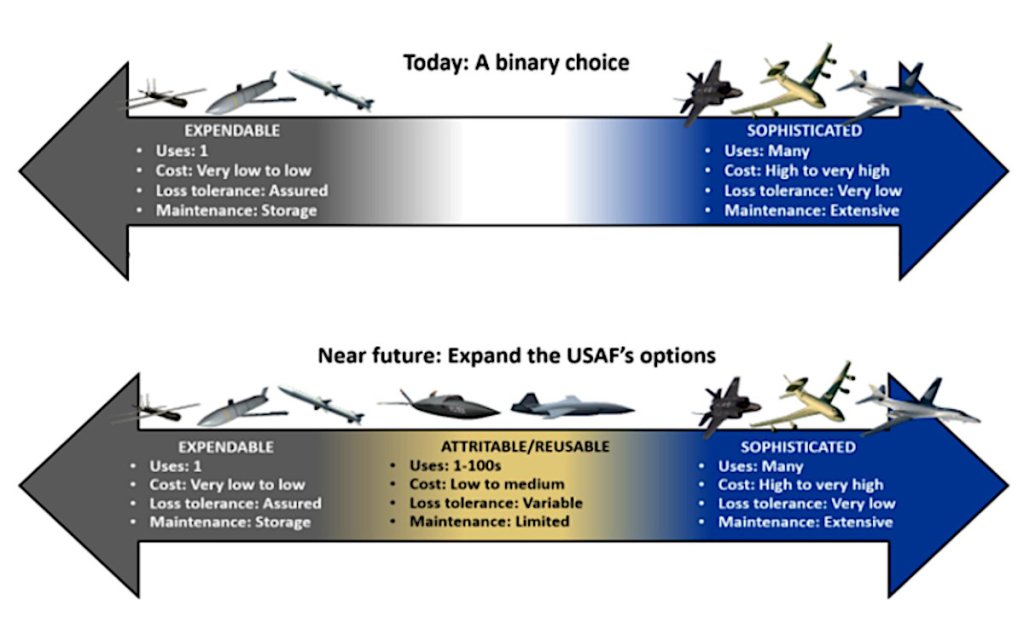
Modularity is a key area of interest as the U.S. Air Force formulates its latest set of requirements for a successor to the MQ-9 Reaper, according to Gen. John Lamontagne, the service’s Vice Chief of Staff. A modular design, both in terms of hardware and software, would help make the chosen platform more flexible and adaptable to different mission sets. Earlier this year, the Air Force did lay out other prospective requirements for a relevant-sounding MQ-9 replacement, including a design that is easier to produce, lower-cost, and that can be more freely sent into higher-risk environments, as we have previously reported.

Gen. Lamontagne talked about what he termed “MQ-9 Next” during a virtual talk hosted by the Air & Space Forces Association’s Mitchell Institute for Aerospace Studies earlier today. His comments came in response to a question about the Reaper performance in the latest conflict with Iran, where the drones have played a critical role, but have also suffered major losses. The latter point is a key factor in this discussion that we will come back to later on. Last month, the Air Force had also confirmed it was in the early phases of putting together a new set of requirements for an MQ-9 replacement. This follows several abortive Air Force attempts in the past to devise a successor to the Reaper.

US Air Force MQ-9 Reaper. USAF

“As we look forward in [sic] having something that is more MQ-9-like – I would characterize it as ‘MQ-9 Next’ – I think what we’d like to have is something that’s perhaps got more range, perhaps a lot more modularity,” Lamontagne explained. “We could hang ISR [intelligence, surveillance, and reconnaissance] sensors, we could hang weapons, we could hang fuel – something that we could line-in/ line-out, very modular.”

The Air Force’s number two officer made clear that his view of modularity in this extends from the hardware side to “very simple software that we own, and we could change, so it’s almost like an iPhone.”

“We have it for several years, and we could change it, and put whatever kind of apps on it, and change the speed of warfare, change the speed of need,” he continued. “We own it, we control it, and we can also change it very quickly.”

Greater control over intellectual property, and software in particular, has emerged as a major guiding principle for the U.S. military, in general, in recent years. This makes it easier to avoid the pitfalls of being locked into a single vendor. Being able to have companies compete for follow-on contracts creates opportunities to lower costs and diversifies supply chains. This diversification in the supplier base, in turn, can be beneficial when it comes to scaling up production of key subcomponents and complete systems.

A row of MQ-9 Reapers. USAF/Staff Sgt. Ariel O’Shea

All of this feeds back into the modularity equation, with the ability to readily integrate new capability and functionality helping keep doors wide open to new possibilities down the road. This is all on top of the more immediate flexibility that modular systems and architectures offer.

For MQ-9 Next, this could translate to more adaptability when it comes to “hey, do we need more ISR? Do we need more strike? Or a combination thereof?” Gen. Lamontagne said.

The general also described the current MQ-9 replacement requirements as “probably less defined” compared to where the service is right now on future Collaborative Combat Aircraft (CCA) drones. “We’re just going through some early work, our Air Force Futures team, to figure out exactly how we want to tackle that going forward [on MQ-9 Next].”

Lamontagne’s remarks today are in line with testimony from Lt. Gen. Christopher Niemi, the acting head of Air Force Futures, at a hearing before the Senate Armed Services Committee last month. At that time, Niemi talked about an MQ-9 replacement that would be “more flexible” by leveraging open architectures, easier and cheaper to produce “in mass numbers,” and usable “in a more attritable way.”

Attritable is generally taken to mean a system that is sufficiently low-cost to be sent out on higher-risk missions where it could be lost, but also capable enough to be relevant for those same missions. It is a term that has been increasingly in disuse by the Air Force in recent years.

An official US military graphic intended to help conceptualize where “attritable” falls into the spectrum of cost and capability, and the value of having capabilities in that category. Defense Systems Information Analysis Center

In April, the Air Force had also used the term in a contracting notice seeking information about prospective designs for a new ISR drone. Though the MQ-9 was not explicitly mentioned in that notice, the specific details do align with the remarks from Niemi and now Lamontagne about new plans for a Reaper replacement, as you can read more about here.

As we previously wrote:

“The latest statements from the service describe a drone with increased flexibility achieved through open architecture, rather than building bespoke batches of drones for particular requirements. Previous statements from the service outlined an aspiration to have its new drone capable of accommodating rapidly reconfigurable payloads, something that open architecture would expedite.”

“Above all else, the MQ-9 successor will still have to operate in contested environments.”

“The Pentagon has long worked on the basis that a future conflict with a peer rival, and especially with China in the Pacific, would see it facing highly robust anti-access/area-denial (A2/AD) scenarios. With that in mind, previous Reaper replacement studies had suggested that low observability would need to be incorporated into the design.”

“The latest thinking seems to reject that, or at least reorient the program toward a lower-cost platform of the kind that the Air Force would be able to field in mass, as well as to absorb the anticipated attrition in a high-end conflict. This does not preclude this airframe from featuring low-observable elements. In fact, it most likely will. But those would be more aggressively balanced against cost.”

A rendering of a stealthy concept Northrop Grumman previously put forward as a possible MQ-9 replacement, underscoring how the thinking in this regard has changed over the years. Northrop Grumman

There remains a question of when the MQ-9 Next requirement might actually be finalized, as well as what the acquisition strategy (and timeline) might be for the drones. As already mentioned, the Air Force has tried multiple times to develop a Reaper replacement without success. As we highlighted in our past report:

“Since MQ-Next, the U.S. drone landscape has changed considerably in terms of manufacturers. A few years ago, Northrop Grumman, Lockheed Martin, and General Atomics would have been seen as the front-runners for the MQ-9 replacement. Now, there are more contenders, often with a founding focus on rapidly scaling up production at low cost. Still, these firms have much to prove, especially considering the risk in replacing an aircraft as important as the MQ-9. At the same time, in the more advanced drone space, the legacy defense “prime” contractors are also making major progress in leveraging new technologies to reduce production costs and migrating away from exquisite, very expensive drones as their default offerings.”

All of this is made more pressing by the worrisome impacts from losses of dozens of MQ-9s just in the past year or so as a result of operations targeting Iranian-backed Houthi militants in Yemen and, more recently, the conflict directly with Iran. The Air Force itself described this attrition as concerning, but there increasingly looks to be limited options for securing any immediate replacements. The Reaper, more formally known as the MQ-9A, is out of production. The company that developed the drone, General Atomics, has moved on to the MQ-9B, an evolved design with significant differences from its predecessor. Any new Air Force purchases of drones in this broader family would have to be of the B model and worked into the existing production schedule.

USAF

General Atomics, the maker of the MQ-9 and a pioneer in the uncrewed marketplace, seems to have pushed back on some of the ideas the USAF now wants in a Reaper replacement.

“Some say we need cheaper, disposable aircraft, so that we can use them and throw them away, or lose them and not feel bad about it. No one is talking about actual capability, ready today,” C. Mark Brinkley, a spokesperson for the company, recently told TWZ. “No one is talking about all of the hard lessons, already learned, about icing and weather and weapons integration. No one is talking about the multiple survivability upgrades available for the existing platforms and the lack of investment in those.”

“These make-believe weapons that don’t exist have the luxury of being anything you imagine them to be,” Brinkely added. “Unscratched lottery tickets, promising all of the win and none of the lose [sic].”

USAF

In the meantime, operational demands for MQ-9s remain high, and Lamontagne lauded their contributions in the latest conflict with Iran during his talk today. He also said that he sees Reaper’s performance as validating his service’s broader plans for new uncrewed platforms, including CCAs, as well as MQ-9 Next.

“I think it affirms the path that we’re on with Collaborative Combat Aircraft,” he said. “Collaborative Combat Aircraft, different [from MQ-9], much more autonomous,” but “still controlled by a man or a woman, and a fighter that is going to direct them to do what they need to do.”

A “very loyal wingman” and “not quite as intensive from a manpower perspective – true both in the air and on the ground,” he continued. “So, I think it very much affirms that’s the right path. And we’re going down that road, and we’re spending really good money on CCAs, and we’re excited about what kind of capability that’s going to deliver.”

“I think we’ve learned a lot of lessons, both with CCAs and MQ-9 Next, to take us into the future.”

When it comes to MQ-9 Next, the requirements are still very much evolving. It remains to be seen when and if this attempt at a Reaper replacement will come to fruition, unlike the various preceding attempts.

Contact the author: joe@twz.com

The post USAF Wants “MQ-9 Next” Reaper Replacement To Be Modular, Cheap appeared first on The War Zone.

  •  
❌