Normal view

Ravenstorm At The Center Of Airbus’s New Combat Drone Portfolio

9 June 2026 at 19:05

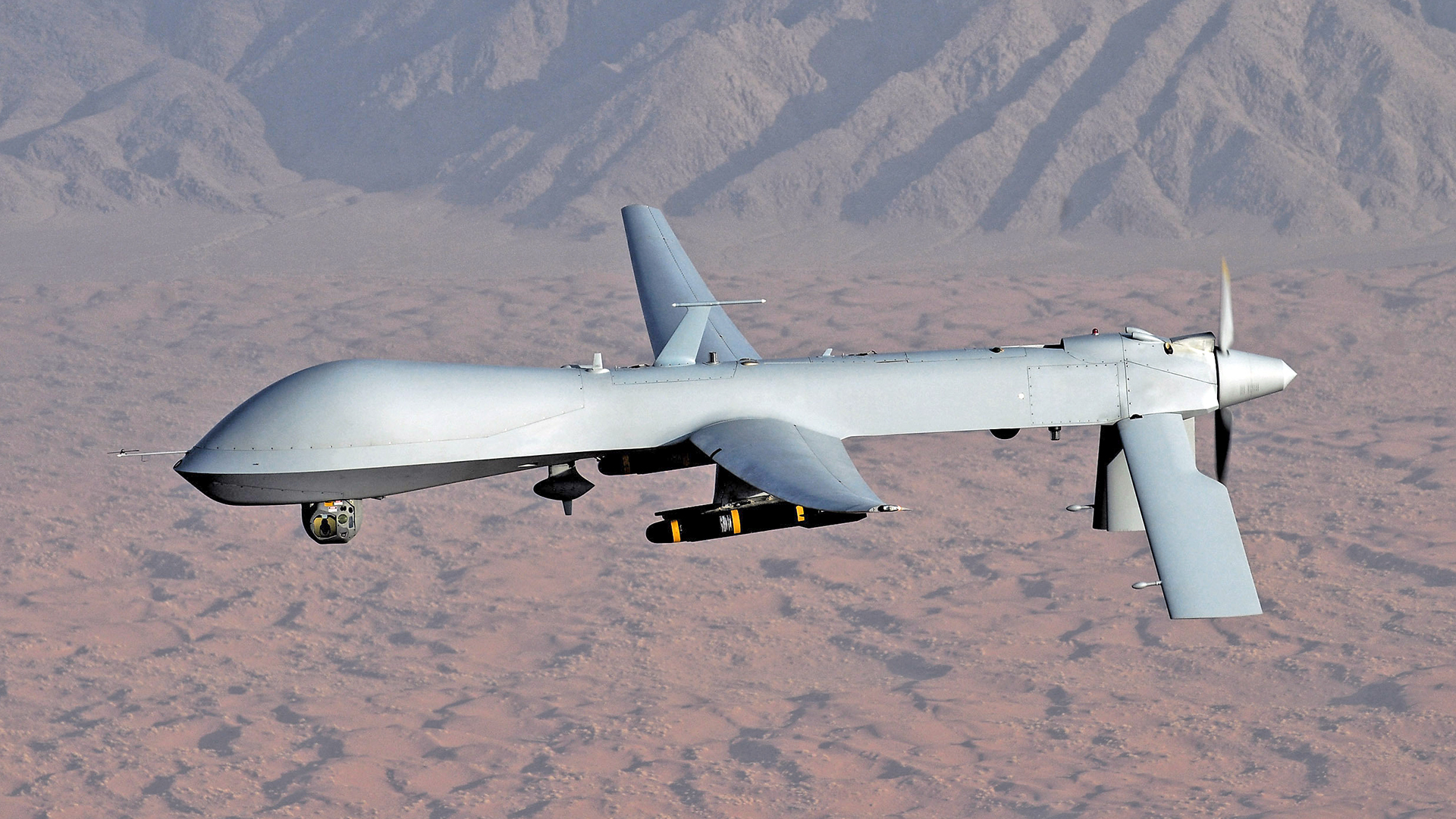
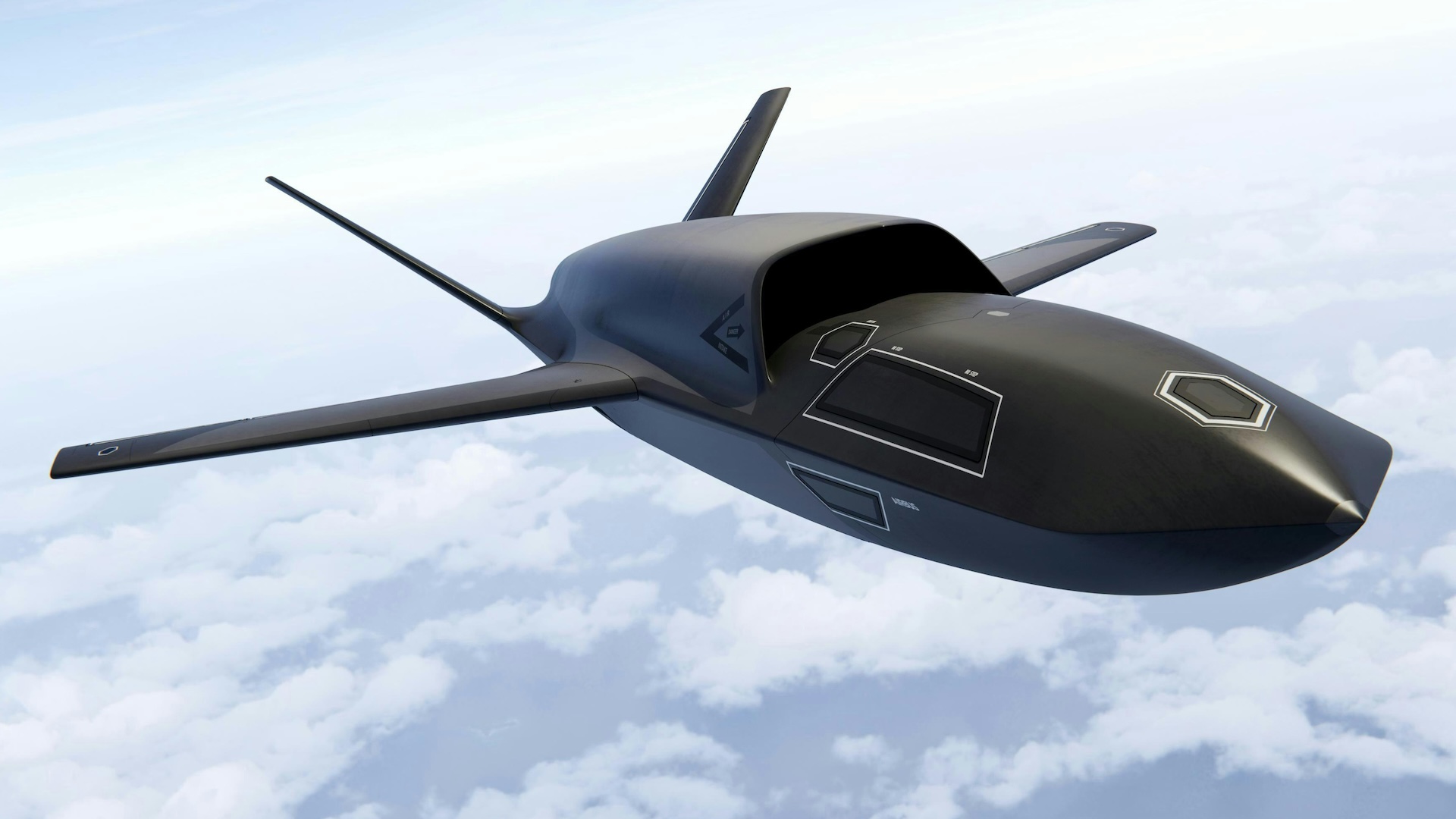
Airbus has pulled the wraps off the U760 Ravenstorm, a combat drone designed to operate alongside fighter aircraft in air-to-air combat, strike missions, and electronic warfare roles. The new uncrewed aircraft is part of a revamped drone portfolio from the company, which also includes a Europeanized version of the stealthy XQ-58A Valkyrie, a medium-altitude long-endurance (MALE) platform, various tactical solutions, counter-drone systems, as well as the U145 uncrewed helicopter that you can read more about here.

The timing of the announcement — and the unveiling of the Ravenstorm, in particular — is especially notable given the recent collapse of the Franco-German-led plan to build a crewed New Generation Fighter (NGF) aircraft, as part of the broader, pan-European Future Combat Air System (FCAS) initiaitive. You can read more about this development here.

Concept artwork of the NGF, the crewed combat jet once intended to operate alongside various classes of drones. Dassault Aviation

On the eve of the ILA Berlin airshow, starting in the German capital tomorrow, Airbus showcased what it describes as “Europe’s most versatile drone portfolio.” The various products have been newly assigned a “U” prefix for uncrewed systems. This reflects the company’s policy of prefixing with an “A” for crewed fixed-wing aircraft, and an “H” for crewed helicopters.

“Whatever uncrewed or ‘drone’ capability our customers need to strengthen sovereign air power, we deliver,” said Mike Schoellhorn, CEO of Airbus Defence and Space, in a company press release. “Our portfolio ranges from rapid-response drone interceptors and various tactical drones, autonomous cargo helicopters to uncrewed fighter aircraft UCCAs (uncrewed collaborative combat aircraft) operating co-operatively with crewed fighter jets.”

A graphic showing the new Airbus drone portfolio includes a Eurofighter (at far left) controlling examples of the U740 Valkyrie and U760 Ravenstorm. Airbus

“On the other side of the spectrum we have the Eurodrone, our very high payload and very long endurance ISTAR (intelligence, surveillance, target acquisition, and reconnaissance) platform,” Schoellhorn continued. “Airbus provides the entire envelope of uncrewed capabilities required for modern multi-domain warfare. All our systems come with open architectures and a European mission system compatible with the wider European and international defence ecosystem.”

The most significant new arrival in the “U”-product line is the Ravenstorm combat drone, or U760.

A 1:1 model of the Ravenstorm will be on display at ILA. The drone is approximately 43 feet long and has a wingspan of 33 feet. In terms of rough size and general appearance, the drone strongly recalls General Atomics’ YFQ-42A ‘fighter drone’ prototype, now flying under the first phase of the U.S. Air Force’s Collaborative Combat Aircraft (CCA) program. Like the U.S. drone, the Ravenstorm features a swept, mid-wing configuration optimized for stealth and maneuverability. It also has the same twin-tail configuration. Like the YFQ-42, the Ravenstorm has a dorsal inlet, although this is closer to that which appeared on the EADS Barracuda demonstrator that flew for the first time 20 years ago. The drone is clearly optimized with low-observable (stealthy) characteristics, although the inlet is notably large and lacks the trapezoidal shape found on the YFQ-42.

Ground crew working on the Barracuda technology demonstrator. Airbus

At the same time, it should be noted that, when it comes to combat drones in general, many of them take on a relatively familiar form driven by similar requirements.

Airbus describes the Ravenstorm as “the next evolution” in its “roadmap towards a scalable family of uncrewed collaborative combat aircraft.” It is not clear how many related designs might be planned, and in what kinds of sizes they may come, but the company has highlighted the kinds of missions they will be expected to fly. These include air-to-surface strikes using precision-guided munitions, air-to-air defense with long and medium-range air-to-air missiles, and electronic warfare for suppressing enemy air defenses. Further offensive counter-air missions will involve UCCAs providing non-kinetic jamming.

Ravenstorm will be available in the early 2030s, according to the manufacturer, which is, interestingly, offering the new design alongside a version of the XQ-58. In Airbus parlance, the Valkyrie is designated U740 and combines the Kratos-designed airframe with Airbus’ proprietary Multiplatform Autonomous Reconfigurable and Secure (MARS) Mission System.

A U.S. Air Force XQ-58A deploying an ALTIUS-600 UAV from a Common Launch Tube. U.S. Air Force

For the U740, Airbus provides a notably precise planned date of service entry: 2029, with the German Air Force. This would appear to reflect a specific Luftwaffe requirement for a drone in this class, although it remains unclear if the Valkyrie has been formally selected by the German military. Airbus furthermore expects the U740 to be used in operational experimentation teamed with the Luftwaffe’s Eurofighter combat jet, including demonstrating initial air-to-ground capabilities.

The U740 Valkyrie on its launcher. Airbus

Returning to MARS, this is Airbus’ sovereign mission system, consisting of an AI-supported software core to enable platform autonomy. The system is scalable so that it can be used across the entire Airbus drone portfolio. It is also planned for use on the U950 Eurodrone — the new designation for the Eurodrone MALE platform. This twin-turboprop drone is now in development for missions including ISTAR, early warning, and anti-submarine warfare, and is planned to make its first flight in 2029.

A rendering of the Eurodrone MALE conducting a maritime mission. Airbus

As for Airbus’s two-track approach to UCCAs — U740 Valkyrie and U760 Ravenstorm — the thinking behind the two offerings, also of broadly similar sizes, likely reflects different cost points. The Valkyrie was designed from the ground up as a lower-cost aircraft and is runway-independent in its original form (since then, Kratos has announced a version with wheeled landing gear and there also exists the ability to launch the Valkyrie from a wheeled launch trolley, if required). Meanwhile, the Ravenstorm appears to be a more capable and costly platform, making it a closer match to Increment 1, the first phase of the U.S. Air Force’s CCA program.

The Anduril YFQ-44, produced for Increment 1, the first phase of the U.S. Air Force’s CCA program. U.S. Air Force

It could be that the company has already identified specific national or service requirements (such as the Valkyrie for the Luftwaffe) that it aims to capitalize on. There could also be a plan to use the Valkyrie more for operational experimentation of the UCCA concept before focusing more on the fully sovereign Ravenstorm, including potentially scaling it up or incorporating other significant airframe changes, for example, higher performance, larger payload, improved low-observable characteristics.

Also unclear is the status of Airbus’s stealthy Wingman, a CCA-like concept that was unveiled at the last ILA Berlin airshow in 2024. This was also presented in the form of a 1:1 model, with a length of 51 feet and a wingspan of 39 feet. The drone was planned to be powered by the same Eurojet EJ200 turbofan as the Eurofighter, providing a proven powerplant and useful commonality.

The Airbus Wingman concept aircraft, which Airbus leadership said should provide a unit cost that’s equivalent to one-third that of a modern crewed fighter. Thomas Newdick

At the time, Airbus noted that the German Air Force had “expressed a clear need” for a drone that would be able to operate in conjunction with crewed fighters before the arrival in service of the NGF, which was then slated for some time in the 2040s.

Whether the Wingman has now been abandoned entirely is unclear, but the Luftwaffe still has a requirement for an uncrewed companion that can work alongside its forthcoming Eurofighter EK electronic warfare jets. This is a role for which Airbus is earmarking the Ravenstorm, in particular, although it should be noted that the U.S. Marine Corps is also focusing heavily on the electronic warfare mission for the Valkyrie drone.

A rendering of a Eurofighter EK for the German Air Force. Airbus

All of these Airbus efforts are being informed by experience testing the Barracuda, work on which began in 2003, initially as a ‘black program.’ After six test campaigns, the Barracuda was retired.

The company will also be leveraging prior work from the Airbus Low Observable UAV Testbed (LOUT) program. A stealthy demonstrator, LOUT was not flown but was run by the company in strict secrecy until finally it was publicly disclosed in 2019, as you can read about here.

A four-ton LOUT model used for aerodynamic and anechoic chamber testing. Airbus

Undoubtedly, the significance of Airbus’s new-look drone roster, and above all the appearance of the U760 Ravenstorm alongside the U740 Valkyrie, is greater now that the FCAS program’s crewed New Generation Fighter is seemingly defunct.

It was always anticipated that the NGF would be operated as part of a wider ecosystem that also included CCA-like drones — what Airbus now refers to as UCCAs. Indeed, there were already efforts in place to start integrating combat drones with crewed fourth-generation-plus fighters like the Eurofighter and Rafale. Now that FCAS, or at least the NGF component of it, has been thwarted, Ravenstorm and Valkyrie offer a glimpse of where Europe’s combat aviation ambitions may be headed instead.

Collaborative combat aircraft like these emerged as a higher-mass, force-multiplying capability for current and future crewed fighters. In the interim, at least, the demise of the NGF means that these kinds of combat drones could be in even greater demand within Europe, where there is already a pressing need for larger tactical air combat fleets, while resources are limited. At the same time, CCA-like drones promise to make existing fourth- and fifth-generation fighters even more potent, further driving demand both in Europe and elsewhere.

Contact the author: thomas@thewarzone.com


The post Ravenstorm At The Center Of Airbus’s New Combat Drone Portfolio appeared first on The War Zone.
USAF Scrambling To Buy What Few MQ-9 Reapers It Can Find After Epic Fury Losses

5 June 2026 at 22:19

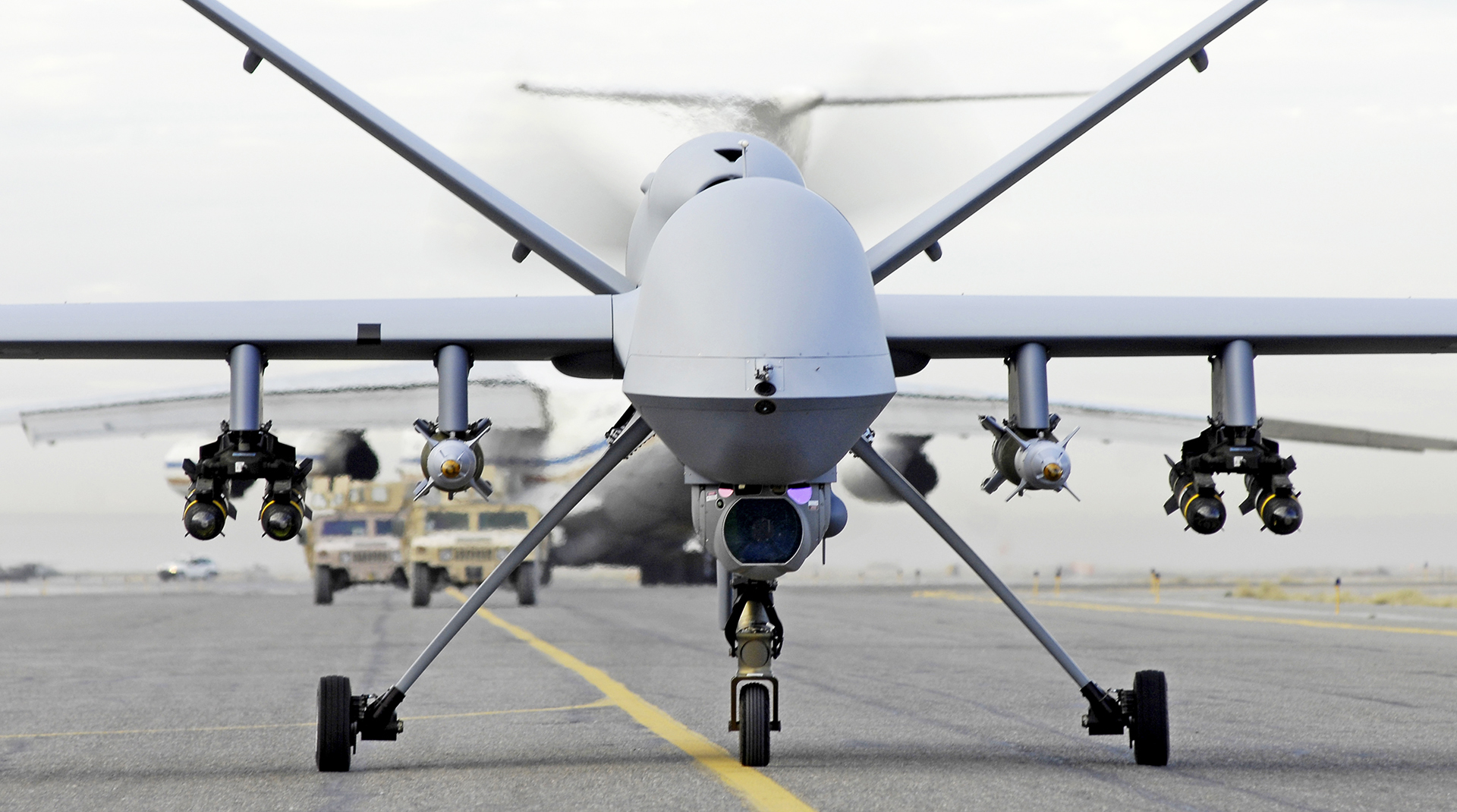
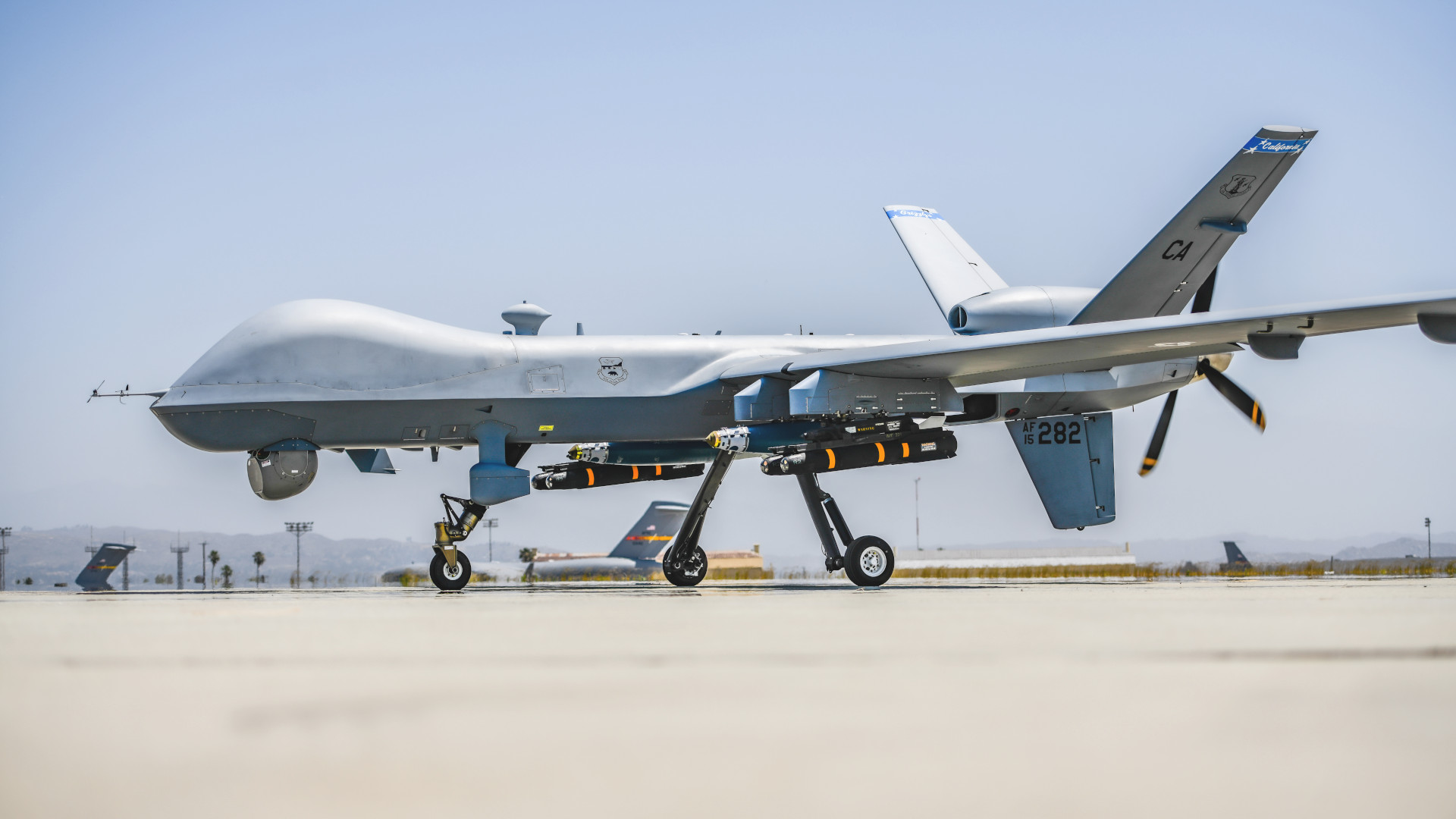
After reportedly losing dozens of MQ-9 Reaper drones while battling Iran, the Air Force on Friday confirmed to TWZ that it is planning to purchase an undisclosed number of unused ones from General Atomics, who made the aircraft. The company, however, said it has less than 10 of these drones to offer, and it remains unclear where else the Air Force can find more.

All of this continues to raise serious questions about the Air Force’s near-term ability to plug gaps left by the losses fighting against Iran and in other recent operations in and around the Middle East. The downed Reapers have a reported combined value of about $1 billion.

The Air Force has reportedly lost dozens of MQ-9 Reaper drones. (USAF)

Furthermore, despite the top Air Force officer recently praising Reaper as “perhaps the most valuable player” in the air war against Iran, the aircraft have been in the crosshairs of service officials. They have openly questioned the drone’s survivability and, by extension, general value in future operations. The Air Force has made several half-hearted efforts, without success, to find a successor. It is now in the early stages of a new attempt at acquiring an “MQ-9 Next.” You can read more about that effort in our story here.

An MQ-9 Reaper. (USAF)

It will be years, if ever, before “MQ-9 Next” comes online. Meanwhile, the search is on for existing replacements.

“The USAF intends to purchase several unused MQ-9A Block 5 from GA-ASI [General Atomics Aeronautical Systems, Inc.],” a spokesperson for the service told TWZ today. “A number of MQ-9A Block 5 aircraft were manufactured based on forecasted purchases for other customers but are no longer needed. The available aircraft are currently GA-ASI owned aircraft.”

“The USAF has received funds to begin the acquisition process,” they added.

A U.S. Air Force service member assigned to the 46th Expeditionary Attack Squadron, conducts pre-flight checks on an MQ-9 aircraft in preparation for an Operation Agile Spartan mission departing from Ali Al Salem Air Base, Kuwait, August 21, 2023. This MQ-9 and three others conducted the 386 AEW's first full air tasking order (ATO) cycle using satellite launch and recovery (SLR), providing crucial time-sensitive intelligence, surveillance and reconnaissance to leaders throughout the CENTCOM area of responsibility. (U.S. Air Force photo by Tech. Sgt. Isaac Garden)
A U.S. Air Force service member assigned to the 46th Expeditionary Attack Squadron, conducts pre-flight checks on an MQ-9 aircraft in preparation for an Operation Agile Spartan mission departing from Ali Al Salem Air Base, Kuwait, August 21, 2023. (U.S. Air Force photo by Tech. Sgt. Isaac Garden) Tech. Sgt. Isaac Garden

The Air Force was responding to our questions about congressional testimony from a top officer highlighting the service’s plans to backfill the combat losses. 

“We’re looking at options to buy back as many of the MQ-9As as we possibly can right now,” Air Force Lt. Gen. David Tabor, Deputy Chief of Staff for Plans and Programs, had told members of Congress at a hearing back on May 13. “So there’s a bit of a short-term effort to buy back things immediately, in this fiscal year.”

Tabor also said at that time that the Air Force’s total MQ-9A fleet had shrunk to 135 aircraft. Official budget documents say the Air Force had 165 Reapers in inventory as of the start of Fiscal Year 2026, which began on October 1 of last year. This had already marked a significant year-over-year decrease, down from 231 MQ-9As at the beginning of Fiscal Year 2025.

Despite Air Force needs, General Atomics told us the number of available Reapers is in short supply.

“Between parts in stock for new builds, and company-owned Reapers with some number of flight hours on them, there are less than 10 total ‘new’ MQ-9As available to any customers anywhere in the world,” General Atomics spokesperson C. Mark Brinkley told TWZ earlier this week. “There are some number of decommissioned Reapers out there, and some number of those could potentially be brought back into service.”

MQ-9A Reaper in flight. (General Atomics)

One place the Air Force won’t be able to find any Reapers is in storage. 

The 309th Aerospace Maintenance and Regeneration Group (The Boneyard) has zero MQ-9s in storage nor have they ever regenerated a MQ-9 back into service,” the spokesperson told us.

The MQ-9A is out of production. General Atomics has moved on to the MQ-9B, and currently offers those drones in multiple configurations. Though an evolution of the original Reaper, the core B model design differs in significant ways from its predecessor. Any new Air Force purchases of drones in this broader family would have to be of the B model and worked into the existing production schedule.

How many MQ-9As the Air Force has lost in operations in and around the Middle East since January 2025 is unclear, but is understood to be substantial. As of May, “nearly 30 MQ-9 Reapers have been lost in the course” of Operation Epic Fury against Iran, Air & Space Forces Magazine reported, citing “people familiar with the matter.” This is on top of dozens of Reapers reportedly downed while conducting operations targeting Iranian-backed Houthi militants in Yemen in the past year or so.

Air Force Chief: MQ-9 Reaper ‘Most Valuable Player’ of Iran War Despite Losseshttps://t.co/qZB4xRh2jA

— Air & Space Forces Magazine (@ASForcesMag) May 21, 2026

At the hearing last month, Tabor did not provide any official accounting of Reaper losses, but did acknowledge that “we are concerned about how they’ve attrited.”

In another effort to bolster the supply of operational Reapers, the Air Force told us that while it never regenerated MQ-1 Predator drones back into service, it was repurposing parts from these aircraft that the service stopped using in 2020. There were dozens on hand after they were retired.

More than 50 were sent to the 309th Aerospace Maintenance and Regeneration Group (AMARG) “and heavily cannibalized for spare parts for the MQ-9 aircraft,” the spokesperson told us.

An MQ-1 Predator flies above the flight line during launch and recovery training at Creech Air Force Base, Nev. Aircrew will fly the MQ-1 for the final time at Creech on March 9, 2018 before it is officially retired from the Air Force inventory. (U.S. Air Force photo by Senior Master Sgt. Cecilio Ricardo)
An MQ-1 Predator flies above the flightline during launch and recovery training at Creech Air Force Base, Nev. Aircrew will fly the MQ-1 for the final time at Creech on March 9, 2018, before it is officially retired from the Air Force inventory. (U.S. Air Force photo by Senior Master Sgt. Cecilio Ricardo) Senior Master Sgt. Cecilio Ricardo

Questions about the status of the MQ-1 fleet arose last week after U.S. Central Command (CENTCOM) acknowledged the loss of an “MQ-1” drone to Iranian fire. This has led many to question whether American forces are flying the venerable Predator again as a result of the Reaper losses.

At the time, the Air Force declined to say if it lost any of theirs and referred us to CENTCOM, which declined comment. However, on Friday, the Air Force told us that in addition to the Predators being used for parts, 20 had been transferred to the Navy. We reached out to them for comment. 

As we previously noted, it is also very possible, if not likely, that the uncrewed aircraft in question was an MQ-1C Gray Eagle, a related but different design still in active U.S. Army service. You can read more about this event in our original story here.

A U.S. Army MQ-1C seen being prepared for a mission somewhere in the Middle East on April 18, 2026. The official caption for this picture erroneously says the drone is an MQ-1 Predator. USAF/Master Sgt. James Cason

At the time of the incident, CENTCOM declined to tell us which variant of the MQ-1 was lost.

Regardless, the Air Force’s mad scramble to find additional Reapers highlights the value of having a high-flying, long-loitering drone that can gather intelligence and fire off munitions, no matter how slow it flies.

Contact the author: howard@twz.com

The post USAF Scrambling To Buy What Few MQ-9 Reapers It Can Find After Epic Fury Losses appeared first on The War Zone.

USAF Wants “MQ-9 Next” Reaper Replacement To Be Modular, Cheap

5 June 2026 at 00:20

Modularity is a key area of interest as the U.S. Air Force formulates its latest set of requirements for a successor to the MQ-9 Reaper, according to Gen. John Lamontagne, the service’s Vice Chief of Staff. A modular design, both in terms of hardware and software, would help make the chosen platform more flexible and adaptable to different mission sets. Earlier this year, the Air Force did lay out other prospective requirements for a relevant-sounding MQ-9 replacement, including a design that is easier to produce, lower-cost, and that can be more freely sent into higher-risk environments, as we have previously reported.

Gen. Lamontagne talked about what he termed “MQ-9 Next” during a virtual talk hosted by the Air & Space Forces Association’s Mitchell Institute for Aerospace Studies earlier today. His comments came in response to a question about the Reaper performance in the latest conflict with Iran, where the drones have played a critical role, but have also suffered major losses. The latter point is a key factor in this discussion that we will come back to later on. Last month, the Air Force had also confirmed it was in the early phases of putting together a new set of requirements for an MQ-9 replacement. This follows several abortive Air Force attempts in the past to devise a successor to the Reaper.

US Air Force MQ-9 Reaper. USAF

“As we look forward in [sic] having something that is more MQ-9-like – I would characterize it as ‘MQ-9 Next’ – I think what we’d like to have is something that’s perhaps got more range, perhaps a lot more modularity,” Lamontagne explained. “We could hang ISR [intelligence, surveillance, and reconnaissance] sensors, we could hang weapons, we could hang fuel – something that we could line-in/ line-out, very modular.”

The Air Force’s number two officer made clear that his view of modularity in this extends from the hardware side to “very simple software that we own, and we could change, so it’s almost like an iPhone.”

“We have it for several years, and we could change it, and put whatever kind of apps on it, and change the speed of warfare, change the speed of need,” he continued. “We own it, we control it, and we can also change it very quickly.”

Greater control over intellectual property, and software in particular, has emerged as a major guiding principle for the U.S. military, in general, in recent years. This makes it easier to avoid the pitfalls of being locked into a single vendor. Being able to have companies compete for follow-on contracts creates opportunities to lower costs and diversifies supply chains. This diversification in the supplier base, in turn, can be beneficial when it comes to scaling up production of key subcomponents and complete systems.

A row of MQ-9 Reapers. USAF/Staff Sgt. Ariel O’Shea

All of this feeds back into the modularity equation, with the ability to readily integrate new capability and functionality helping keep doors wide open to new possibilities down the road. This is all on top of the more immediate flexibility that modular systems and architectures offer.

For MQ-9 Next, this could translate to more adaptability when it comes to “hey, do we need more ISR? Do we need more strike? Or a combination thereof?” Gen. Lamontagne said.

The general also described the current MQ-9 replacement requirements as “probably less defined” compared to where the service is right now on future Collaborative Combat Aircraft (CCA) drones. “We’re just going through some early work, our Air Force Futures team, to figure out exactly how we want to tackle that going forward [on MQ-9 Next].”

Lamontagne’s remarks today are in line with testimony from Lt. Gen. Christopher Niemi, the acting head of Air Force Futures, at a hearing before the Senate Armed Services Committee last month. At that time, Niemi talked about an MQ-9 replacement that would be “more flexible” by leveraging open architectures, easier and cheaper to produce “in mass numbers,” and usable “in a more attritable way.”

Attritable is generally taken to mean a system that is sufficiently low-cost to be sent out on higher-risk missions where it could be lost, but also capable enough to be relevant for those same missions. It is a term that has been increasingly in disuse by the Air Force in recent years.

An official US military graphic intended to help conceptualize where “attritable” falls into the spectrum of cost and capability, and the value of having capabilities in that category. Defense Systems Information Analysis Center

In April, the Air Force had also used the term in a contracting notice seeking information about prospective designs for a new ISR drone. Though the MQ-9 was not explicitly mentioned in that notice, the specific details do align with the remarks from Niemi and now Lamontagne about new plans for a Reaper replacement, as you can read more about here.

As we previously wrote:

“The latest statements from the service describe a drone with increased flexibility achieved through open architecture, rather than building bespoke batches of drones for particular requirements. Previous statements from the service outlined an aspiration to have its new drone capable of accommodating rapidly reconfigurable payloads, something that open architecture would expedite.”

“Above all else, the MQ-9 successor will still have to operate in contested environments.”

“The Pentagon has long worked on the basis that a future conflict with a peer rival, and especially with China in the Pacific, would see it facing highly robust anti-access/area-denial (A2/AD) scenarios. With that in mind, previous Reaper replacement studies had suggested that low observability would need to be incorporated into the design.”

“The latest thinking seems to reject that, or at least reorient the program toward a lower-cost platform of the kind that the Air Force would be able to field in mass, as well as to absorb the anticipated attrition in a high-end conflict. This does not preclude this airframe from featuring low-observable elements. In fact, it most likely will. But those would be more aggressively balanced against cost.”

A rendering of a stealthy concept Northrop Grumman previously put forward as a possible MQ-9 replacement, underscoring how the thinking in this regard has changed over the years. Northrop Grumman

There remains a question of when the MQ-9 Next requirement might actually be finalized, as well as what the acquisition strategy (and timeline) might be for the drones. As already mentioned, the Air Force has tried multiple times to develop a Reaper replacement without success. As we highlighted in our past report:

“Since MQ-Next, the U.S. drone landscape has changed considerably in terms of manufacturers. A few years ago, Northrop Grumman, Lockheed Martin, and General Atomics would have been seen as the front-runners for the MQ-9 replacement. Now, there are more contenders, often with a founding focus on rapidly scaling up production at low cost. Still, these firms have much to prove, especially considering the risk in replacing an aircraft as important as the MQ-9. At the same time, in the more advanced drone space, the legacy defense “prime” contractors are also making major progress in leveraging new technologies to reduce production costs and migrating away from exquisite, very expensive drones as their default offerings.”

All of this is made more pressing by the worrisome impacts from losses of dozens of MQ-9s just in the past year or so as a result of operations targeting Iranian-backed Houthi militants in Yemen and, more recently, the conflict directly with Iran. The Air Force itself described this attrition as concerning, but there increasingly looks to be limited options for securing any immediate replacements. The Reaper, more formally known as the MQ-9A, is out of production. The company that developed the drone, General Atomics, has moved on to the MQ-9B, an evolved design with significant differences from its predecessor. Any new Air Force purchases of drones in this broader family would have to be of the B model and worked into the existing production schedule.

USAF

General Atomics, the maker of the MQ-9 and a pioneer in the uncrewed marketplace, seems to have pushed back on some of the ideas the USAF now wants in a Reaper replacement.

“Some say we need cheaper, disposable aircraft, so that we can use them and throw them away, or lose them and not feel bad about it. No one is talking about actual capability, ready today,” C. Mark Brinkley, a spokesperson for the company, recently told TWZ. “No one is talking about all of the hard lessons, already learned, about icing and weather and weapons integration. No one is talking about the multiple survivability upgrades available for the existing platforms and the lack of investment in those.”

“These make-believe weapons that don’t exist have the luxury of being anything you imagine them to be,” Brinkely added. “Unscratched lottery tickets, promising all of the win and none of the lose [sic].”

USAF

In the meantime, operational demands for MQ-9s remain high, and Lamontagne lauded their contributions in the latest conflict with Iran during his talk today. He also said that he sees Reaper’s performance as validating his service’s broader plans for new uncrewed platforms, including CCAs, as well as MQ-9 Next.

“I think it affirms the path that we’re on with Collaborative Combat Aircraft,” he said. “Collaborative Combat Aircraft, different [from MQ-9], much more autonomous,” but “still controlled by a man or a woman, and a fighter that is going to direct them to do what they need to do.”

A “very loyal wingman” and “not quite as intensive from a manpower perspective – true both in the air and on the ground,” he continued. “So, I think it very much affirms that’s the right path. And we’re going down that road, and we’re spending really good money on CCAs, and we’re excited about what kind of capability that’s going to deliver.”

“I think we’ve learned a lot of lessons, both with CCAs and MQ-9 Next, to take us into the future.”

When it comes to MQ-9 Next, the requirements are still very much evolving. It remains to be seen when and if this attempt at a Reaper replacement will come to fruition, unlike the various preceding attempts.

Contact the author: joe@twz.com

The post USAF Wants “MQ-9 Next” Reaper Replacement To Be Modular, Cheap appeared first on The War Zone.

Is The U.S. Flying MQ-1 Predator Drones Again?

1 June 2026 at 23:19

The U.S. military has confirmed the loss of an “MQ-1” drone to Iranian fire this weekend. This has led many to question whether American forces are flying the venerable Predator again, some eight years after the type’s official retirement. It is also very possible, if not likely, that the uncrewed aircraft in question was an MQ-1C Gray Eagle, a related but different design still in active U.S. Army service. Regardless, rebooting U.S. Predator operations might still be an attractive course of action, especially to help plug gaps left by dozens of MQ-9 Reaper losses to Iran and the Houthis in Yemen, but actually doing it may be harder than it seems.

American forces “conducted self-defense strikes on Iranian radar and command and control sites for drones in Goruk, Iran, and Qeshm Island this weekend,” according to a brief press release that U.S. Central Command (CENTCOM) issued late yesterday. “The measured and deliberate strikes occurred on Saturday and Sunday in response to aggressive Iranian actions that included the shootdown of a U.S. MQ-1 drone that was operating over international waters. U.S. fighter aircraft swiftly responded by eliminating Iranian air defenses, a ground control station, and two one-way attack drones that posed clear threats to ships transiting regional waters.”

There has been a string of tit-for-tat attacks now between the United States and Iran despite an ostensible ceasefire between the two countries. The U.S. military also remains committed to a blockade of Iranian ports, while the regime in Tehran continues to take separate action to throttle routine maritime traffic through the Strait of Hormuz. Negotiations between the two sides toward a more definitive end to the conflict are ongoing, as well.

Thousands of U.S. service members at sea, in the skies, and from land are supporting the ongoing U.S. blockade against Iran. As of June 1, CENTCOM forces have redirected 121 commercial vessels and disabled 5 to ensure compliance. pic.twitter.com/BDtAjp0qOF

— U.S. Central Command (@CENTCOM) June 1, 2026

“No American service members were harmed,” yesterday’s release added. “CENTCOM will continue to protect U.S. assets and interests in response to unwarranted Iranian aggression during the ongoing ceasefire.”

What did Iran actually shoot down?

In response to a direct query from TWZ, CENTCOM declined to say whether the “MQ-1” mentioned in the release was a Predator or Gray Eagle. We also reached out to the U.S. Air Force to ask if it had lost a Predator over the weekend, and were directed to contact CENTCOM. We contacted the Army to ask if one of its Gray Eagles was shot down, as well, and were redirected to the Pentagon.

Army aviation units with MQ-1Cs are known to be deployed in the Middle East. In April, the Air Force notably released several pictures of Gray Eagles somewhere in the region, which misidentified them as Predators.

A U.S. Army MQ-1C seen being prepared for a mission somewhere in the Middle East on April 18, 2026. The official caption for this picture erroneously says the drone is an MQ-1 Predator. USAF/Master Sgt. James Cason

The AP initially reported that the drone Iran shot down was a Predator, but this appears to have been based on CENTCOM’s use of the MQ-1 designation in the press release and not confirmed. The outlet’s story originally said “the U.S. Air Force no longer flies the MQ-1 Predator, the U.S. Army still does,” which was inaccurate, and that passage no longer appears in the piece. While the Gray Eagle is derived from the Predator and has the related MQ-1C designation, it is a distinctly different design more tailored to the Army’s needs. This includes the ability to operate with a smaller logistical footprint and lower crew training requirements.

The U.S. military says it is targeting Iranian radar and drone control sites after Tehran shot down an American MQ-1 Predator drone over the weekend. Meanwhile, Kuwait says its air defenses opened fire to intercept incoming drone and missile fire. https://t.co/b6JyHHBCLa

— The Associated Press (@AP) June 1, 2026
A stock picture of a U.S. Army MQ-1C Gray Eagle. US Army

For its part, Iran has also described what it shot down simply as an “MQ-1,” and has released a video below that it says shows the engagement, as seen through an infrared camera. However, the footage is extremely low resolution, and it is impossible to tell what type of drone it might show. Iranian authorities (as well as the Houthis) routinely release similar, but generally higher-quality clips after claimed shootdowns.

Iran’s IRGC Aerospace Force Downs US MQ-1 Drone Over Territorial Waters

Iran’s IRGC Aerospace Force released the video of detection and elimination of a US MQ-1 drone on early Sunday, after it entered Iranian territorial waters with hostile intent. https://t.co/h8cEPiBKde

— Tasnim News Agency (@Tasnimnews_EN) June 1, 2026

Officially, the Air Force stopped operating the MQ-1 Predator in 2018. As of September 2024, there were 15 MQ-1Bs in storage at the boneyard at Davis-Monthan Air Force Base in Arizona, according to data the 309th Aerospace Maintenance and Regeneration Group (AMARG) previously released. TWZ has also reached out to the Air Force for an updated inventory of Predators in storage, and to ask whether or not any retired examples have been returned to service.

A stock picture of an MQ-1 Predator in U.S. Air Force service. USAF

In addition, TWZ has asked General Atomics, the company behind the Predator and the Gray Eagle, as well as the MQ-9 Reaper, for comment.

Factoring in MQ-9 Reaper losses

Despite not yet having an official confirmation one way or the other, it still seems more likely that what Iran shot down was a Gray Eagle, not a Predator. Still, there remains the potential for the U.S. to have resumed Predator operations, possibly on a contractor-owned and/or operated basis, or that it may be considering doing so in the near future. There is one factor in particular that could be a key driver here now, and that is MQ-9 losses.

A stock picture of a U.S. Air Force MQ-9 Reaper. USAF

At a recent hearing, Air Force Chief of Staff Gen. Kenneth Wilsbach had called the Reaper “perhaps the most valuable player” in the latest conflict with Iran. In early March, we commented on how it appeared MQ-9 strikes were by far the most numerous attacks featured in CENTCOM’s ‘highlight’ reels during the conflict.

MQ-9 Reapers appear do be doing a LOT of the heavy lifting against mobile ground targets and vessels in Epic Fury.

— Tyler Rogoway (@Aviation_Intel) March 5, 2026

However, in May, Air & Space Forces Magazine reported that “nearly 30 MQ-9 Reapers have been lost in the course of those operations,” citing “people familiar with the matter.” On April 9, CBS News said that tally had already risen to “up to 24” Reapers since the fighting began in February, citing unnamed U.S. officials.

This is all on top of the loss of dozens more MQ-9s to Iranian-backed Houthi militants in Yemen in recent years. The Houthis separately claimed to have shot down another U.S. Reaper just this past weekend.

pic.twitter.com/9R4F0eBdHQ
Fresh video evidence is circulating of a US MQ-9 Reaper drone being intercepted and brought down over Yemen’s Marib Governorate. Houthi sources claim responsibility. This is developing rapidly today. 🧵👇🏻

— The Tectonic (@thetect0nic) May 29, 2026

Air Force Lt. Gen. David Tabor, Deputy Chief of Staff for Plans and Programs, told members of Congress at a hearing on May 13 that the service’s MQ-9 fleet had dwindled to 135 aircraft. This is down from the 165 Reapers the service said were in inventory as of the start of Fiscal Year 2026, according to official budget documents. The size of the fleet had already shrunk from 231 at the start of Fiscal Year 2025.

“We are concerned about how they’ve attrited,” Tabor said at that time, according to Air & Space Forces Magazine. “We’re looking at options to buy back as many of the MQ-9As as we possibly can right now, so there’s a bit of a short-term effort to buy back things immediately, in this fiscal year.”

“We are not divesting the MQ-9,” Secretary of the Air Force Troy Meink also said separately on May 20, per the same report from Air & Space Forces Magazine. “We have had some losses in that aircraft, and we’re working to fill those losses, but in parallel, we are looking at what is the follow-on to the MQ-9 aircraft.”

TWZ recently reported in detail on the Air Force’s latest plans, as they are known now, for a successor to the MQ-9. This effort is the latest in a series of abortive Air Force attempts to develop a Reaper replacement that have spanned more than a decade now.

It is also worth noting here that the U.S. Marine Corps has acquired its own much smaller fleet of Reapers in recent years, and plans to operate the type for the foreseeable future. The Central Intelligence Agency (CIA) also operates Reapers, and has flown Predators, at least in the past.

An MQ-9 Reaper in U.S. Marine Corps service. USMC

Last month, Air & Space Forces Magazine reported that General Atomics had “less than 10 new or company-owned MQ-9As to offer to the Air Force,” but that “there are a number of decommissioned Reapers that could be brought back online and refurbished by the company,” citing company spokesperson C. Mark Brinkley.

The Reaper, also more formally known as the MQ-9A, is otherwise out of production. General Atomics has moved on to the MQ-9B, an evolved design with significant differences from its predecessor. Any new Air Force purchases of drones in this family would have to be of the new version.

TWZ has also reached out to the Air Force with questions about Reapers in storage and any efforts to return them to service.

Could Reaper losses prompt a Predator comeback?

The scale of MQ-9 losses, as well as the continued heavy use of those drones, brings us back to the possibility of returning Predators to service, even if this has not happened as of yet. Before their official retirement in 2018, questions had been increasingly raised about the risks of flying Predators in anything but permissive airspace.

For years now, Air Force officials have regularly raised similar questions about the Reaper’s vulnerability, as highlighted by an abrupt attempt to stop buying any more of the drones back in 2020. A self-protection pod has been developed to improve the MQ-9’s survivability, but there is no evidence that it has been fielded on a wide scale despite reported moves to do so in recent years.

An MQ-9 seen carrying a self-protection pod under its central fuselage during a test. General Atomics

More recently, the Air Force has shown a willingness to accept significant MQ-9 losses. Furthermore, many of the missions that Reapers are tasked with today could still be performed, at least to a degree, by Predators with an equivalent level of risk.

The piston-engined Predator is a smaller, shorter-ranged, lighter payload, and lower-performance design overall compared to the turboprop Reaper. At the same time, this would also be mitigated by the geography of the current operating environment in the Middle East vis-a-vis Iran, where the distances between available bases and likely operating areas wouldn’t be too far. This would be especially true for sorties in airspace over and around the Strait of Hormuz. As CENTCOM said, the “MQ-1” shootdown this weekend occurred somewhere over “international waters.”

The U.S. military previously used Predators exactly this way to monitor Iranian activities in and around the Persian Gulf from bases in the region. An Iranian Su-25 Frogfoot ground attack jet notably shot at an MQ-1 flying over that body of water back in 2012. That is just one example of Iranian harassment of U.S. drone operations in that timeframe, which got to be so bad that F-22 Raptors had to be called in to ward off Tehran’s tactical jet crews.

Beyond their continued ability to conduct surveillance and reconnaissance missions, Predators can carry a pair of AGM-114 Hellfire missiles. The Hellfire continues to be a very relevant weapon, including for use against small Iranian boats, including ones capable of firing anti-ship cruise missiles or laying mines. Predators could fire them at missile and drone launchers, road-mobile air defense systems, and other Iranian assets on land, too.

A picture of a Hellfire-armed MQ-1 Predator from circa the late 2000s. USAF

Though the MQ-9 can carry a wider selection of precision-guided munitions, Hellfire has remained a key element of that drone’s arsenal, too, including in recent operations against Iran.

The video below includes a clip of an Iranian Ghadir class diesel-electric midget submarine being struck by what has been confirmed to be an AGM-114 Hellfire missile, likely fired by an MQ-9.

U.S. forces are degrading the Iranian regime's ability to project power at sea and harass international shipping. For years, Iranian forces have threatened freedom of navigation in waters essential to American, regional and global security and prosperity. pic.twitter.com/gIBN02mowh

— U.S. Central Command (@CENTCOM) March 10, 2026

Reapers can carry much more ordnance per sortie than the Predator, but the latter could still provide a useful boost in interdiction capacity even with a smaller payload. There is an argument to be made that interdiction would actually be a better role than surveillance and reconnaissance for any remaining Predators. The older drones could be treated as being more expendable than their Reaper cousins, and more readily sent to hunt targets in higher-risk environments as a result.

There is a question of what kinds of upgrades might be necessary in order to return Predators to active duty, such as new datalinks to connect to more modern networks and ground stations. We also do not know what new training might be required to operate them within the context of currently available infrastructure in the Middle East, or anywhere else.

It’s also worth noting that other branches of the U.S. military beyond the Air Force could support a return of Predators to operational service, as well. The Army was actually originally the main operator of the MQ-1, as you can read more about here.

Back in the late 2010s around the Predator’s retirement, the Air Force confirmed to TWZ that there were active discussions about transferring retired MQ-1s to the Navy, either for use by that service or the U.S. Marine Corps. There is no clear indication the Navy or the Marines operated Predators in the end. At around the same time, the Navy was helping lay the groundwork for what ultimately became the Marines’ MQ-9 fleet.

An early variant of the Predator drone flies near the U.S. Navy’s Nimitz class aircraft carrier USS Carl Vinson during a test in 1995. U.S. military

That being said, as TWZ wrote at the time, the Air Force’s engagement with the Navy underscored how the Predator still offered relevant capability in a variety of operational contexts. We also noted that the steady miniaturization of sensors and other systems could open up new possibilities for the older MQ-1s.

If it is true that there were only 15 MQ-1Bs left in storage as of 2024, there is a separate question of what happened to the many dozens of other Predators the Air Force had in inventory when the type was retired. TWZ had previously raised the additional possibility that Predators could be employed as targets for live-fire training, as well as research and development and test and evaluation activities, or even converted into one way attack munitions.

What we do know is that MQ-9 remains in very high demand in the Middle East, now further driven by operations against Iran that continue to grind on. We also know that the Air Force has sustained what it has itself described as a concerning level of Reaper losses in recent years. It is unclear how many MQ-9s are out there for the service to ‘buy back’ or when its latest plans for a successor to the Reaper might bear fruit.

Even if the U.S. military has not currently put any Predator drones back on active duty, returning even a relatively small fleet of them to service might still be worth considering as a way to meet operational needs and ease pressure on the hard-hit MQ-9 fleet.

Contact the author: joe@twz.com

The post Is The U.S. Flying MQ-1 Predator Drones Again? appeared first on The War Zone.

❌