Normal view

VC-25B Air Force One “Bridge” Aircraft Now Wears Trump’s Preferred Red, White, and Blue Paint Job

9 June 2026 at 02:09

The U.S. Air Force has confirmed that the VC-25B “Bridge” aircraft is now wearing its new (and controversial) red, white, and blue livery as it undergoes final preparations for its official delivery.

Aviation photographer Travis Ghormley shared the first picture of the modified Boeing 747-8i with its new paint scheme yesterday. It was taken the day before in Waco, Texas. The aircraft had been undergoing modification and flight testing at L3Harris’ facility in Greenville, also in Texas, as part of the conversion into its new role, since at least April, before subsequently moving to Waco to be painted. The jet, gifted to the Trump administration by the government of Qatar last year, is set to serve as an interim Air Force One aircraft ahead of the much-delayed arrival of two fully outfitted VC-25Bs from Boeing.

The VC-25B Bridge aircraft seen unpainted sometime circa May 1. Courtesy photo via the USAF

“The VC-25B Bridge aircraft has been painted and is going through final modifications,” an Air Force spokesperson told TWZ today when asked for more information about the aircraft’s current status. “I don’t have any additional details I can provide on delivery dates at this time.”

A press release the Air Force put out on May 1 said that the “VC-25B Bridge aircraft has officially completed modification and flight testing” and was “being painted.” We have confirmed that the completed modifications referred to here were on the contractor side, but the U.S. government still has additional modifications to make to the jet.

Ghormley’s picture does clearly show the jet wearing the same red, white, and blue scheme that has already been appearing on various Air Force and other U.S. government VVIP jets. The livery also includes a large American flag, depicted blowing in the wind, painted on both sides of the tail and “UNITED STATES OF AMERICA” written on both sides of the fuselage. The paint job is virtually identical to what President Donald Trump had previously chosen for the future VC-25B Air Force Ones during his first term. President Joe Biden had previously reversed that decision, bringing back plans to paint the VC-25Bs in the iconic scheme that dates back to President John F. Kennedy’s administration.

A rendering of a future VC-25B with the livery President Trump had originally selected. Boeing
A rendering of a future VC-25B wearing the Kennedy-era scheme. USAF A rendering of a future VC-25B Air Force one jet. USAF

The Bridge aircraft’s current location is also unclear. Video posted on social media yesterday, seen below, purported to be of the jet departing for its new home at Andrews Air Force Base just outside of Washington, D.C. This is where the two current VC-25A Air Force One jets, as well as a host of other Air Force VVIP aircraft, are based.

Full blown operation to get this thing out without us seeing. Fueled, loaded crew, and preflighted in the hangar. Flipped CRANE01 to face me at the south end and beam me with landing lights. Entire airport blacked out, crew and grounds crew all wearing NOD’s.

You can barely see… https://t.co/kaNB5FCdJ5 pic.twitter.com/JprSF5ykXW

— jadams (@jadamzs) June 7, 2026

Online flight tracking data does show that another U.S. military Boeing 747-8i flew from Waco, Texas, to Andrews on June 7, using the callsign Crane 01. However, this callsign has been associated with an ex-Lufthansa 747 the Air Force has also acquired for use as a trainer in support of future Air Force One operations. This aircraft, which may now carry the serial number 25-3200, has been tracked multiple times flying between facilities in Texas and Andrews in recent months. There does not appear to be tracking data for the VC-25B Bridge jet, which may also now have the serial number 25-3300, but it could have made the trip without broadcasting on ADS-B.

Past reports have indicated that the Bridge aircraft could make its public debut on July 4, which this year is also wrapped up in additional celebrations of the 250th anniversary of the founding of the United States. President Trump’s birthday (June 14) is also this weekend.

Otherwise, TWZ has previously laid out significant questions about the general feasibility of actually using the VC-25B Bridge aircraft in the Air Force One role, given the kinds of modifications that should be required for this demanding mission. Potential operational security concerns have been raised about using the gifted jet as a presidential aircraft, as well.

“L3Harris, known for its executive communications systems and services, was selected to undertake a complex modification of the bridge aircraft. L3Harris not only delivers secure, reliable and resilient communications for VC-25A and the executive airlift fleet but has extensive experience with self-protection and customization of VIP aircraft,” the Air Force wrote in the May 1 press release. “The accelerated timeline was further made possible by a mission-focused partnership with Boeing, who provided the necessary engineering data to support the required structural modifications.”

“Additionally, elite specialists from multiple government agencies developed advanced protocols to detect and-if necessary-neutralize potential technical hazards on previously owned aircraft,” it added. “Their rigorous approach on the Bridge aircraft has literally ‘written the book’ and set the benchmark for integrating used airframes into the secure military inventory.”

Another picture of the unpainted VC-25B Bridge aircraft, seen after arriving in Waco, Texas. Courtesy Photo via USAF

“Safety and security were at the forefront of this program. We deliberately minimized interior aesthetic modifications to focus on modifications for safety, security and mission execution. We assessed which requirements were necessary for an interim capability. We had greater flexibility in developing our mission requirements,” the Air Force also told TWZ directly at that time. “After safety and security, we focused on the mission communications systems.”

“We have made deliberate decisions such as the reduction of the number of airstairs, less chiller space, and exclusion of the Golden Eagle mission [to fly the remains of former presidents] to minimize structural modifications, while prioritizing modifications focused on safety, security and secure communications,” the service added.

Getting a new Air Force One aircraft of some kind into service on an accelerated timetable has long appeared to be a major goal for President Trump. The fully-equipped VC-25Bs from Boeing are years behind schedule. Last year, the Air Force announced that there had been some improvement on that front, but that it still did not expect to have the first of the two jets in hand until mid-2028, which would be just months before Trump is set to leave office.

What we do know for sure is that the VC-25B Bridge aircraft is now wearing Trump’s preferred red, white, and blue paint scheme ahead of its official rollout later this summer.

Contact the author: joe@twz.com

The post VC-25B Air Force One “Bridge” Aircraft Now Wears Trump’s Preferred Red, White, and Blue Paint Job appeared first on The War Zone.
Franco-German Future Fighter Effort Collapses Over Irreconcilable Differences

8 June 2026 at 21:44

The troubled pan-European Future Combat Air System (FCAS) appears to have lurched to an undignified — but predictable — end, at least in its current form. A flurry of media reports today indicate that France and Germany, the two major partners in the program, have abandoned their program to develop a crewed New Generation Fighter (NGF) aircraft together, a conclusion supported by a French diplomat who spoke to TWZ today.

According to sources including the Frankfurter Allgemeine Zeitung, German Chancellor Friedrich Merz has urged French President Emmanuel Macron to pull the plug on the NGF. The German newspaper cited unnamed government sources in Berlin. Reportedly, the French and German leaders concluded that the companies involved — Dassault and Airbus — have been unable to reach agreement on key aspects of the project, specifically relating to the jointly developed fighter jet.

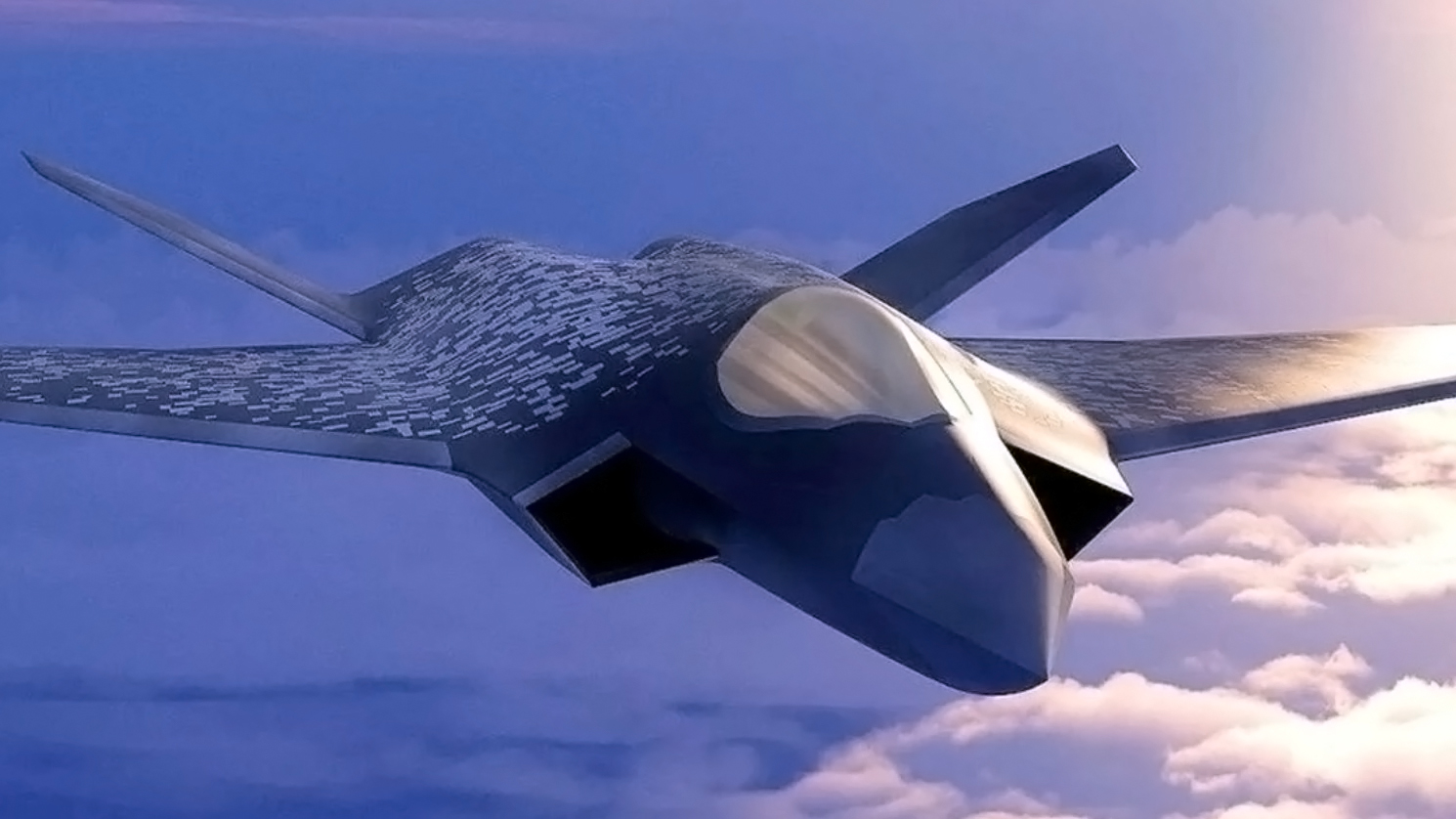
Concept artwork of the NGF future fighter. Dassault Aviation

At this stage, it is reported that Merz and Macron cannot see a future for the NGF, although it is apparently still unclear whether the French government fully shares this assessment and is prepared to accept its consequences.

At this point, it should be recalled that there are at least three separate FCAS initiatives in Europe.

As well as the pan-European version headed up by France and Germany, with Spain and Belgium as junior partners, there is a rival British-led FCAS. This has the Tempest crewed fighter as its centerpiece, involves Italy and Japan, and is now more commonly referred to as the Global Combat Air Program (GCAP). Finally, the Swedish next-generation combat aircraft program, led by Saab, is also known as FCAS.

Returning to today’s developments, French officials are reportedly surprised by what they viewed as uncoordinated messaging from Berlin. From Paris’s perspective, it is the responsibility of political leaders to provide industry with clear direction.

French President Emmanuel Macron talks with Eric Trappier, Chairman and CEO of Dassault Aviation, after the unveiling of the full-scale jet fighter model of the Systeme de Combat Aerien Futur (SCAF), the French-German-Spanish new generation Future Combat Air System (FCAS), during the 53rd International Paris Air Show at Le Bourget Airport near Paris, on June 17, 2019. (Photo by BENOIT TESSIER / POOL / AFP) (Photo credit should read BENOIT TESSIER/AFP via Getty Images)
French President Emmanuel Macron talks with Eric Trappier, chairman and CEO of Dassault Aviation, after the unveiling of a full-scale model of the NGF at the Paris Air Show in 2019. BENOIT TESSIER/AFP via Getty Images BENOIT TESSIER

The French government is also said to be frustrated over what it sees as Germany’s increasing preference for national solutions, which threatens to sideline its own industrial input.

A French diplomat told TWZ: “The President of the Republic and the Federal Chancellor have held extensive and frequent discussions on ways to move forward with this important project for European defense. Both leaders expressed regret that the industrial partners have been unable to reach an agreement on the continuation of the project. The German authorities considered that it was not possible to exert further pressure on the companies involved. France remains convinced that Franco-German cooperation is essential both for our two countries and for our European partners in the fields of defence and security.”

The diplomat added: “The French authorities will continue to encourage our industries and armed forces to explore avenues for ambitious European projects that are consistent with our national security interests.”

According to reports, Macron and Merz discussed the future of FCAS last week, in the latest of several recent efforts to keep the program on track. At the same time, however, Merz had become increasingly vocal about his skepticism regarding the project’s prospects.

The FCAS program was launched back in 2017, with the primary aim of replacing France’s Rafale fleet and Germany’s Eurofighters.

A German Luftwaffe Eurofighter pair. Bundeswehr/Bicker A pair of Eurofighters from Tactical Air Force Wing 73 “Steinhoff” during air-to-air training. Bundeswehr/Bicker

FCAS was envisioned as a next-generation European combat air system entering service around 2040, spearheaded by the NGF crewed fighter. As of 2022, it was envisaged that “in-flight demonstrations” would be achieved by 2028 or 2029. 

Before long, however, the project was overshadowed by arguments over workshare agreements, and it is unclear how far the partners had got in terms of agreeing on NGF requirements and starting its design.

For a while now, there have been reports that Germany is exploring alternative paths, including the possibility of separating itself from France within the program entirely.

By February of this year, Merz was publicly raising doubts about the program’s viability, arguing that key issues had never been fully resolved during the planning phase. According to the German leader, Germany and France have fundamentally different operational requirements for a future combat aircraft.

Merz pointed to the specific French requirements that call for aircraft to be capable of carrying nuclear weapons and operating from aircraft carriers. Merz argued that Paris is seeking to shape the aircraft around French military requirements, which do not necessarily align with Germany’s needs.

PARIS, FRANCE - JANUARY 06: French President Emmanuel Macron (R) greets German Chancellor Friedrich Merz upon his arrival at the Elysee Palace on January 06, 2026 in Paris, France. Leaders from around 30 countries are gathering in Paris to discuss military support for Ukraine, amid ongoing negotiations on a US-brokered peace plan to end Russia's war in Ukraine. (Photo by Tom Nicholson/Getty Images)
French President Emmanuel Macron (right) greets German Chancellor Friedrich Merz at the Elysee Palace in Paris in January 2026. Photo by Tom Nicholson/Getty Images Tom Nicholson

“This is not primarily a political disagreement,” Merz said. “The real issue lies in the requirements profile. If we cannot reconcile those differences, the project cannot continue.”

Within France, Dassault CEO Éric Trappier recently declared the FCAS project dead if Airbus refuses to cooperate, while Macron continued to make efforts to resuscitate the program.

There are indications that Paris will still try to do its best to keep the program alive, and it remains possible that the broader FCAS architecture, or parts of it, could continue even without the NGF. FCAS has always intended to field families of drones, air-launched weapons, and potentially other aerial platforms, within an overarching ‘combat cloud.’

An Airbus concept showing an NGF connected via satellite-based Combat Cloud to Remote Carriers, as well as a variety of legacy combat and support platforms. Airbus

The German government considers that the “true essence of FCAS” should be continued as a European system of systems, according to the Frankfurter Allgemeine Zeitung.

Whatever happens next, the program appears to be at a crossroads, and facing its biggest existential challenge yet.

It is highly questionable whether either France or Germany (even with Spanish industrial support and finance) could develop a fighter without the other major partner.

This could open the door to a radical reshaping of European combat air programs.

There have already been suggestions at the highest military levels that the British-led and Franco-German FCAS efforts could be fused in some way. However, it seems highly unlikely that all these partners could come together with agreement. Just as questionable is whether the GCAP effort would be able to admit new major partners at this late stage.

Then there is the issue of Sweden.

Last month, we reported on Airbus having raised the possibility of teaming with Saab on the manned tactical component of FCAS. That was one of the clearest indications yet that Airbus is actively exploring post-FCAS alternatives, or, at the least, a major overhaul of the program’s structure.

A Saab study for a supersonic uncrewed platform as part of its own FCAS effort. SVT screencap via X

Potentially, Airbus and Saab could now team up to develop a joint next-generation fighter, with their requirements likely to be more closely aligned than those of France. Germany and Sweden also have a less urgent need for a sixth-generation combat jet, with Sweden only now introducing the Gripen E, and with Germany looking forward to receiving F-35s as well as more Eurofighters.

jAS 39 E
The first Gripen E for the Swedish Air Force. Saab SAAB

For France, losing its partners for NGF could be more critical, although it continues to work on advanced versions of the Rafale. In 2024, France also unveiled plans to develop a new uncrewed combat air vehicle (UCAV) that will complement the forthcoming Rafale F5 crewed fighter. The industrial side of the drone program will be headed up by Dassault, drawing upon its previous nEUROn UCAV demonstrator, which has already been used in trials with crewed combat aircraft.

France has unveiled plans to develop a new uncrewed combat air vehicle (UCAV) that will complement the forthcoming Rafale F5 crewed fighter, as part of a new-look French Air and Space Force. The industrial side of the drone program will be headed up by Dassault Aviation, drawing upon its previous nEUROn UCAV demonstrator, which has already been used in trials with crewed combat aircraft.
A Rafale accompanies a nEUROn drone during a test flight. Dassault Aviation/Anthony Pecchi Dassault Aviation/Anthony Pecchi

The F5 standard of the Rafale is planned to keep the multirole combat aircraft in frontline service until around 2060. That will at least give France some time to consider what to do about a future crewed fighter.

A French Air and Space Force Rafale C. Dassault Aviation

Drones are also increasingly part of the combat-air picture in Germany, too. Delays in fielding a sixth-generation fighter could be mitigated, to a degree, by Airbus developing combat drones. Airbus and Kratos are already pitching the stealthy XQ-58A Valkyrie drone to Germany, and Airbus has also been working on a stealthy CCA-like concept of its own, known as Wingman.

A rendering of the Airbus Wingman CCA-like drone. Airbus

In the background, the U.S.-made F-35 continues to expand its customer base in Europe. There is also the prospect that, in the future, the sixth-generation F-47 might be offered for export in the region, although this might only be in a watered-down form.

Overall, though, the latest development is a poor reflection on Franco-German cooperation, which has singularly failed to come to agreement about what should be a flagship program, providing a cornerstone of efforts to strengthen Europe’s defense capabilities.

With the ILA Berlin airshow starting on Wednesday, this news could hardly be worse-timed. On the other hand, we may well learn more about Germany’s vision for its future combat aircraft program before the week is out.

Contact the author: thomas@thewarzone.com

The post Franco-German Future Fighter Effort Collapses Over Irreconcilable Differences appeared first on The War Zone.
KC-135 Tanker Spotted With New Satellite Communications Antenna

8 June 2026 at 20:40

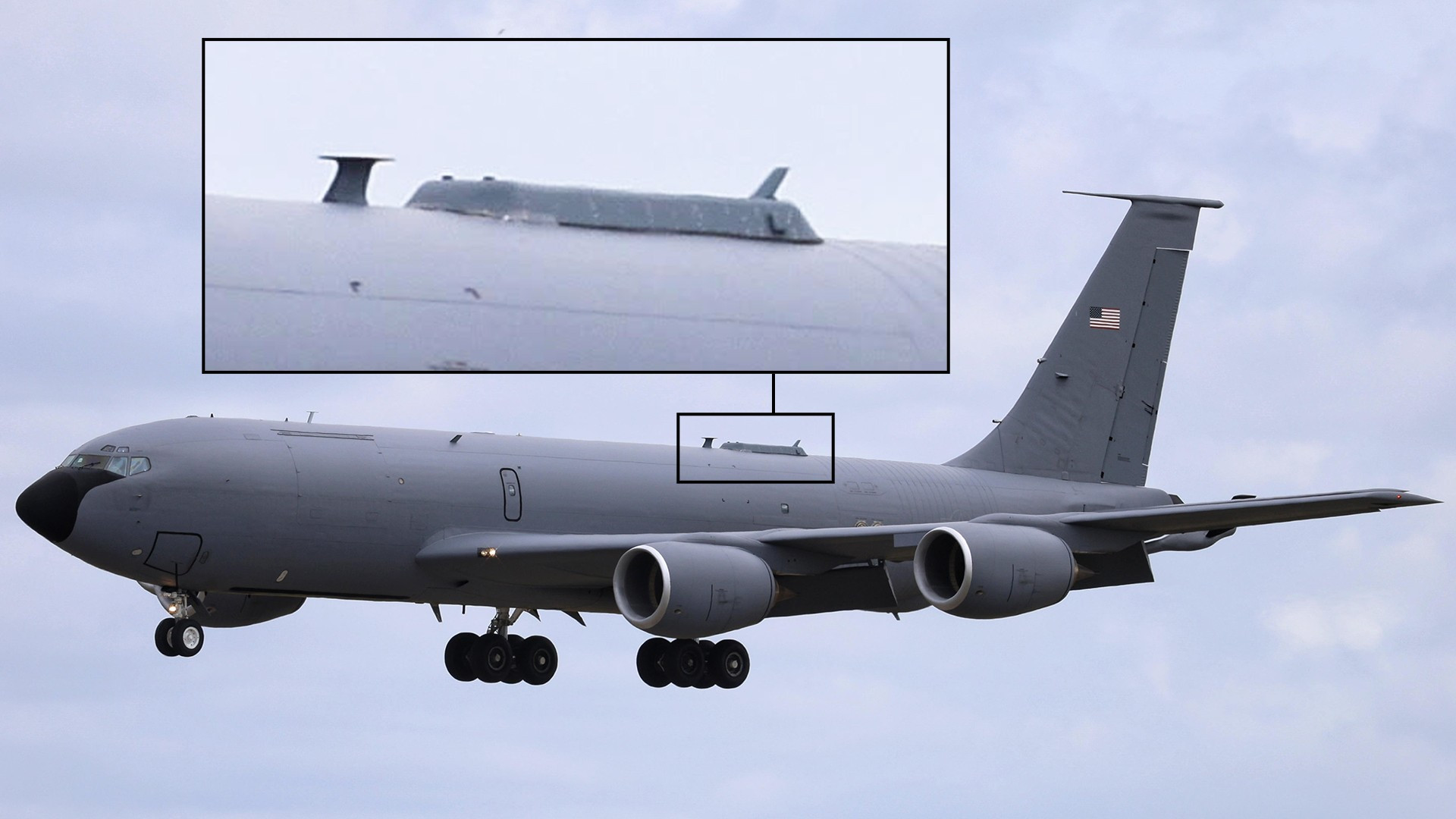
A U.S. Air Force KC-135 tanker appeared in the United Kingdom this weekend with a new antenna on top of the rear of the fuselage. The service has several efforts underway to improve the communications networking capabilities of all of its tankers and cargo planes, including ones that leverage Starshield, the government-focused cousin of SpaceX’s Starlink. This has become an especially critical priority for future survivability and effectiveness of the aging KC-135 fleet.

Aviation photographer Alessandro Ledda, who goes by Aerographist on Instagram, caught the KC-135 in question at RAF Mildenhall yesterday. The base is a major hub for U.S. Air Force operations in the United Kingdom. It has been utilized to support recent operations against Iran, as have other RAF facilities.

A stock picture of a KC-135 tanker taking off from RAF Mildenhall in 2025. USAF/Staff Sgt. Kevin Long

Ledda told TWZ that online flight tracking data says this particular KC-135 is serial number 63-7976, but that this might not be correct. The plane is largely devoid of markings, preventing easy confirmation. Two years ago, the Air Force’s Air Mobility Command (AMC) began removing serial numbers and other unique identifying markings from tankers and other aircraft as an operational security measure, as you can read more about here.

Ledda also told us that this is the first time he has seen a KC-135 with the new dorsal antenna, despite regularly photographing tankers of this type at Mildenhall. The base is home to the Air Force’s 100th Air Refueling Wing, which flies the KC-135, but is also a regular staging point for temporary deployments and a stop-over for aircraft just passing through.

A picture of the same antenna on top of a KC-135 had emerged online in April, but where and when it was taken are unclear. This may or may not be the same aircraft seen at Mildenhall this weekend. It is unknown how many Air Force KC-135s may have received this modification so far, and TWZ has reached out to the Air Force for more information. At the beginning of Fiscal Year 2026, the Air Force had 368 KC-135s in inventory, in total. At least a portion of that fleet is set to remain in service through 2050.

A close-up look at the dorsal antenna on the KC-135 seen this weekend at RAF Mildenhall. Alessandro Ledda

The antenna has a very roughly trapezoidal shape with a mostly flat top. There is a single small blade that sticks up at the rear, as well. The size and shape are broadly reflective of ‘hump’ style antennas associated with high-bandwidth satellite communications (SATCOM) suites seen on large military and commercial aircraft. In both pictures we have seen of this installation on the KC-135 so far, the new antenna is also mounted right behind a much smaller existing platter-shaped type typically used to support ultra-high-frequency SATCOM links.

Back in April, the possibility was raised that the new antenna for the KC-135 could be tied to Airlift/Tanker Open Mission Systems (ATOMS) and/or its successor, MAF NEXUS, both developed by the Sierra Nevada Corporation (SNC). MAF here stands for Mobility Air Forces, a collective term for the Air Force’s tanker and airlifter fleets, and the personnel that support them.

ATOMS is “a Starshield-based BLOS [beyond line of sight] satcom system SNC has been installing on a handful of [KC]-135s, [C]-17s, [KC]-46s, [C]-130s. Saw a C-17 getting it last week in Dayton,” Aviation Week‘s Brian Everstine wrote on X, speaking generally, in a thread discussing the first picture of the new antenna for the KC-135 that had emerged. ATOMS is “now transforming to Air Mobility Commands [sic] ‘MAF Nexus.'”

Elements of at least one iteration of ATOMS are seen, at center, inside a C-17 cargo plane during a briefing for senior officials in 2025. USAF/Staff Sgt. Joshua T. Crossman

As noted, Starshield is a more secure, government-centric offshoot of SpaceX’s Starlink space-based network. Starshield and Starlink have been in increasing use across the U.S. military on aircraft, as well as warships and in various contexts on the ground, for years now, as TWZ has explored on several occasions in the past.

The size and shape of the antenna on the KC-135 at Mildenhall is, broadly speaking, in line with commercial Starlink antennas used on airliners and other civilian aircraft.

An example of a commercial Starlink antenna for use on aircraft, in this case integrated onto a Beechcraft King Air turboprop. AeroMech Incorporated

“The SNC solution for ATOMS, originally provided as a Quick Reaction Capability (QRC) in just six months, delivers enhanced situational awareness through multidomain networking and datalink,” SNC had explained in a press release in August 2025. “The system’s ability to provide a Common Operating Picture improves data interpretation and bolsters decision advantage, strengthening AMC’s effectiveness by leveraging multiple communications paths and sensors to seamlessly share data.”

That release followed the conclusion of the Air Force’s Mobility Guardian 2025 exercise, in which ATOMS “played a pivotal role” by “demonstrating its ability to provide seamless data management and communications solutions on multiple aircraft platforms, including the C-17, KC-135, KC-46 and C-130, as well as numerous ground nodes.”

The Air Force’s 2027 Fiscal Year budget request highlights at least two other potentially relevant communications upgrade efforts for the service’s KC-135, specifically, which could also make use of Starlink/Starshield.

A row of US Air Force KC-135 tankers. USAF

There is the “Hybrid SATCOM capability,” which involves “the employment of Multi-Band, Multi-Orbit SATCOM terminals to switch between different government and commercial constellations,” according to official budget documents. This is tied to another project called MAF Connectivity focused on developing a “path forward as the tanker needs to be able to connect to the Joint fight to close kill chains and logistics chains.”

For MAF Connectivity, “possible capabilities include, but are not limited to, intelligent gateways, antennas, radios, software updates, crew displays, and multiple aperture array housings,” the budget documents also note. An “increment 1 first prototype installation” was also scheduled to be completed in the second quarter of Fiscal Year 2026, which began on January 1 and ended on March 31.

The antenna could be part of a different effort, as well. The Air Force has fielded a number of roll-on/roll-off communications and networking suites for the KC-135 over the years, but in an ad hoc manner and on a relatively limited scale. Last year, the Air National Guard also announced the demonstration of a new communications and data-sharing node packaged inside a heavily modified underwing Multipoint Refueling System (MPRS) pod, but the extent to which that capability may now be available for operational use is unclear. KC-135 and KC-46 tankers use unmodified MPRS pods to transfer fuel to receivers via the probe-and-drogue method.

A repurposed Multipoint Refueling System (MPRS) pod containing a communications and data-sharing package, seen under the wing of a Utah Air National Guard KC-135. MSgt Nicholas Perez/Utah Air National Guard

As an aside, a Boeing 757 called Trailblazer (N-number N473AP), which defense contractor L3Harris uses as a testbed, also recently emerged with a new elongated dorsal fairing. Trailblazer’s new addition is similar in some broad strokes, but also distinctly different from the antenna seen on the KC-135 at Mildenhall this weekend. One of L3Harris’ major business areas is satellite communications systems, including for the U.S. Air Force. TWZ has reached out to the company for more information about this development.

For years now, the Air Force has been trying to more deeply integrate new communications and networking capabilities onto the KC-135, as well as other tankers and aircraft across the MAF. Senior service officials have also described this as a gateway to enabling other new capabilities down the road, including ones to help better protect tankers and airlifters from future threats. TWZ has previously highlighted this as a path to airborne control for “loyal wingman” type drones and other uncrewed aerial systems, something the Air Force has already been experimenting with to differing degrees.

“I gotta keep modernizing the tanker force,” Air Force Lt. Gen. Rebecca Sonkiss told TWZ and others at a roundtable at the Air & Space Forces Association’s annual warfare symposium in February. “If I was going to parcel out the things we care about in that, though, it’s connectivity and survivability. So those are the things that we really care about in that effort.”

“There’s various ways to get after survivability,” she continued. “It starts with being connected so that you have battlespace awareness, and then it continues on to how do we protect those assets.”

Sonkiss’ official title is Deputy Commander of AMC. However, she has been serving as the interim head of the command since her predecessor, Gen. John Lamontagne, became Vice Chief of Staff of the Air Force in January.

Air Force Lt. Gen. Rebecca Sonkiss speaks at the 2026 AFA Warfare Symposium. USAF/Capt. Christian Little

“The single biggest contributor to survivability in a big airplane is connectivity. The biggest contributor is not having a 12-hour-old Intel brief that you’re relying on to get you through the mission,” retired Air Force Gen. Michael “Mini” Minihan, who led AMC from October 2021 to November 2024, told TWZ in an interview in February, as well. “So real-world updates, real-time updates, just like our fighters and our bombers enjoy. Battle management that gets after maneuver and not just kill chain. Those things matter.”

“The reality is that the car I rented right now, driving from the airport to my hotel room, has more connectivity in it than the overwhelming majority of the mobility fleet. So connectivity matters,” he also told us at that time.

New communications and networking suites could enable AMC’s KC-135, as well as the rest of the command’s fleets, to serve as essential ‘translators’ between disparate networks and waveforms in the future. Providing a link between low probability of interception/low probability of detection (LPI/LPD) datalinks that stealthy aircraft use, such as the Multifunction Advanced Data Link (MADL) and Intra-Fighter Data Link (IFDL), and more general-purpose ones, would be especially valuable. IFDL is currently only found on the F-22 Raptor, while all variants of the F-35 fighter (and future B-21 Raider bombers) use MADL, and the two cannot ‘talk’ to each other directly, which has long created challenges. Upgraded tankers could serve as important parts of a beyond-line-of-sight mesh-like network that incorporates other kinds of line-of-sight links like Link16. In this way, they could help relay data to and from forward battle management and other command and control nodes, including ones in the air.

An F-22, in front, flies together with an F-35A, at rear. USAF

In addition, improved connectivity stands to provide additional operational and safety benefits across the MAF.

“According to the Air Force, the tankers’ ability to access tactical data links could increase mission success in contested environments by improving survivability, agility, and situational awareness for command-and-control elements and aircrews,” the Congressional Research Service (CRS) wrote in a report published in January. “The connectivity could provide aircrews with such information as potential threats, fuel availability, and safer landing sites. In addition, tanker aircraft could serve as a backup information conduit for other aircraft in a degraded communications environment.”

The points here have become a broader topic of discussion after two KC-135s collided over Iraq in March during the opening weeks of Operation Epic Fury against Iran. One of the aircraft crashed, killing all six onboard. The other tanker involved was able to land in Israel despite suffering severe damage. At the time of writing, the Air Force has not yet shared any official determinations as to the chain of events that led to that fatal incident.

https://t.co/whZtfocLFb

— OSINTtechnical (@Osinttechnical) March 13, 2026

“We should never put mobility crews, especially tanker crews, in a position during combat operations where they have to choose between being seen by everyone, including the enemy, or being seen by no one, including the joint force and civil aviation,” Minihan subsequently wrote in a post on LinkedIn. “Mobility force connectivity now. Write the damn check.”

“Most KC-135s [sic] communications networks are ‘not the type of battle space awareness that shows you where the red is, where the blue is, and the actions that are being taken in real time in a conflict,'”Defense One reported in March, citing an interview with retired Air Force Gen. Jacqueline Van Ovost, who previously served as head of U.S. Transportation Command (TRANSCOM). “All you have is the intelligence you took off with when you got the brief two hours prior to take off.”

All this being said, the Air Force is still years away from integrating more robust communications and networking capabilities onto the entire KC-135 fleet.

“Over the course of about the next six years, you’ll see the full fleet of KC-135s fully connected,” Lt. Gen. David Tabor, Deputy Chief of Staff for Plans and Programs, told members of Congress at a hearing last month.

The appearance of the KC-135 with the added antenna at Mildenhall does point to new progress on key connectivity upgrades for Air Force tankers and airlifters. At the same time, improved communications and networking capabilities are increasingly critical now, and it remains to be seen when they become more commonplace across the KC-135 fleet.

Special thanks again to Alessandro Ledda for sharing the picture of the KC-135 seen at Mildenhall this weekend with us.

Contact the author: joe@twz.com

The post KC-135 Tanker Spotted With New Satellite Communications Antenna appeared first on The War Zone.
Video Captures Rafale Fighter’s Drone Kill Over Baltic

8 June 2026 at 16:59

Footage has emerged showing the destruction of a drone by a French Rafale fighter over Latvia earlier today. The engagement underscores how the drone war unleashed by the Russian invasion of Ukraine is increasingly spilling over borders, as well as the growing reality of the drone threat to NATO.

The French Air and Space Force confirmed that its Rafales, currently deployed in neighboring Lithuania, were scrambled in response to the drone incursion. The drone was identified before one of the fighters shot it down over an uninhabited area. The incident was a “demonstration of the French Armed Forces’ commitment to contributing to the security of Europe’s eastern flank,” the service said in a statement on X.

📍Lettonie | Destruction d’un drone par les Rafale 🇫🇷💥

➡ Survol d’un drone au dessus du territoire letton 🇱🇻
➡ Décollage sur alerte des chasseurs 🇫🇷 engagés dans la mission de l’OTAN Baltic Air Policing depuis la base aérienne de Šiauliai 🇱🇹
➡ Identification et destruction… pic.twitter.com/NFIMSP7Ibl

— Armée française – Opérations militaires (@EtatMajorFR) June 8, 2026

A detachment of French Air and Space Force Rafale jets is currently engaged in the NATO Baltic Air Policing mission from Šiauliai Air Base, Lithuania.

This morning, French fighter jets deployed to NATO Air Policing at Šiauliai Air Base shot down a drone that entered Latvian airspace.

Lithuania thanks our French allies for their swift and professional action in safeguarding the security of our region.

— Lithuanian MOD 🇱🇹 (@Lithuanian_MoD) June 8, 2026

This is not the first time that a NATO fighter has shot down a drone in the Baltic region as part of the Baltic Air Policing mission. On May 19 of this year, a Romanian F-16 shot down a Ukrainian drone over Estonia after it strayed into NATO airspace, reportedly due to Russian electronic warfare interference. Last September, NATO fighters shot down at least three, and likely four, Russian drones, after 19 reported violations of Polish airspace. Polish authorities assessed that the drones “did not veer off course but were deliberately targeted.”

However, this is the first time that an incident of this kind has been captured on camera.

At least two videos are now circulating on social media showing the engagement playing out.

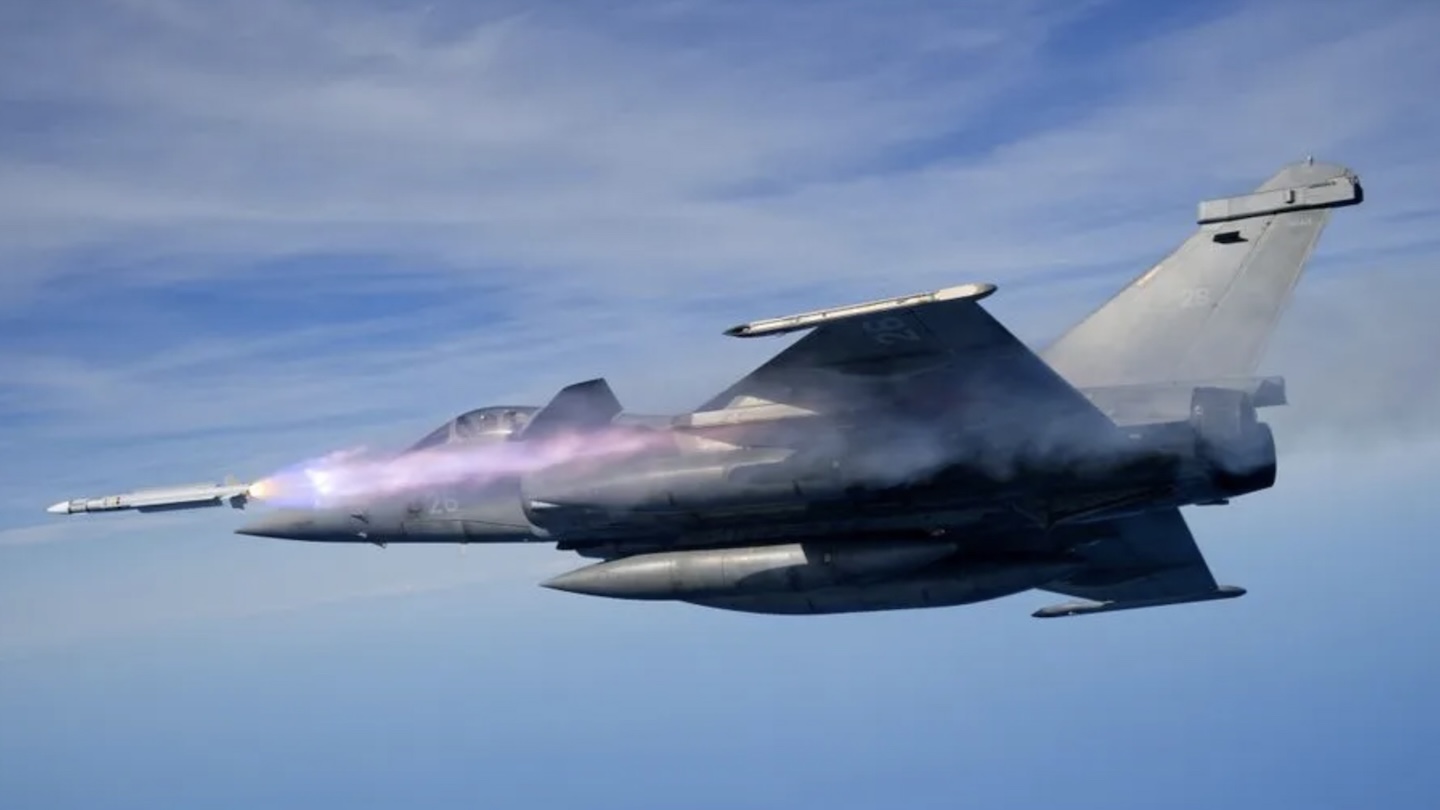
One shows the moment that a Rafale launches an air-to-air missile, leaving a prominent trail of smoke, before detonating seconds later.

NATO airpower in action this morning, safeguarding Latvian airspace. pic.twitter.com/Ugzbx8aaZS

— Marko Mihkelson 🇪🇪🇺🇦🇪🇺 (@markomihkelson) June 8, 2026

Another video, from a different angle, shows the immediate aftermath of the shootdown. Another trail is seen in the background of both videos, but it’s unclear if this is evidence of a previous missile launch, or a contrail from another aircraft that previously transited the airspace at a different altitude.

🇱🇻 Rogovkā, Rēzeknes novadā notriekts lidrobots. NBS apstiprina.#Rogovka #Rēzekne #Latvija pic.twitter.com/kBdojUHanB

— BreakingLV (@breakinglv) June 8, 2026

In a typical Baltic Air Policing configuration, the Rafale is armed with MICA air-to-air missiles. These beyond-visual-range weapons can be fitted with either an active radar seeker or an infrared seeker head, with a mix normally being loaded. The MICA uses a thrust-vectoring motor for improved agility and has a reported maximum range of around 37 miles.

📍 Lituanie | Le succès des vols conjoints commence au sol 🇫🇷🤝🇷🇴
 
➡ Préparation d'un vol d'entraînement avec des avions de chasse 🇫🇷 et 🇷🇴 :

🔧 Montage d'armements entre mécaniciens des deux pays alliés

💬 Échanges sur les procédures, matériel et méthodes des équipes… pic.twitter.com/LPYygu0P5r

— Armée française – Opérations militaires (@EtatMajorFR) June 6, 2026

The Latvian Armed Forces provided more details of the shootdown, noting that a yellow alert was originally issued for the Ludza, Balvi, and Aluksne districts this morning at 9:20 a.m. local time. This led to NATO fighters being launched.

At 9:40 a.m., this alert level was increased to orange for the Ludza and Rēzekne districts. At this point, it was confirmed that some kind of drone was entering Latvian airspace. A military spokesperson told the Reuters news agency that the drone entered Latvian airspace from Russia.

NATO iznīcinātāji šorīt neitralizēja ārvalstu dronu, kas krievijas elektromagnētiskās karadarbības rezultātā bija ielidojis Latvijas teritorijā 🇱🇻✈#WeAreNATO #StrongerTogether pic.twitter.com/07blbd7TUw

— NBS (@Latvijas_armija) June 8, 2026

🟠 Izsludināts gaisa telpas apdraudējums Krāslavas un Ludzas novados, informē Nacionālie bruņotie spēki.

Brīdinājums par iespējamu gaisa telpas apdraudējumu izsludināts Rēzeknes un Balvu novados. pic.twitter.com/PFcMZmhhga

— LTV Panorāma (@ltvpanorama) June 8, 2026

The Latvian Armed Forces warned residents in these areas to “Seek shelter indoors, close windows and doors — follow the two-wall principle.” It added: “If you notice a low-flying, suspicious, or dangerous object, do not approach it and call 112.”

At 10:05 a.m., the Latvian Armed Forces confirmed that NATO fighters were over the Rēzekne district, and a “foreign” drone was shot down over the Berzgale parish.

Berzgale is less than 20 miles from the nearest Russian border, and around 340 miles from the closest Ukrainian border, with Belarus, a close Moscow ally, separating Latvia and Ukraine.

A map showing the approximate location of the drone shootdown in Berzgale, Latvia. Also marked is the Russian naval base at Kronstadt that came under Ukrainian drone attack last week. Google Earth

NATO’s Baltic Air Policing mission has safeguarded the airspace of Estonia, Latvia and Lithuania since the three countries joined the alliance in 2004. Because the Baltic states do not maintain fighter fleets capable of continuous air-defense duties, allied nations rotate detachments of combat aircraft to bases in Lithuania and Estonia, where they remain on quick-reaction alert around the clock.

The mission routinely scrambles fighters to identify and intercept Russian military aircraft operating near NATO airspace, particularly flights to and from Russia’s heavily militarized Kaliningrad exclave that often occur without flight plans, radio contact, or active transponders.

French Rafales recently encountered this Russian Navy Su-24M carrying free-fall bombs during a flight over the Baltic. French Armed Forces
One of two Russian Navy Su-30SMs intercepted over the Baltic by French Rafales during the current Baltic Air Policing detachment. This example carries a Kh-31 series anti-ship or anti-radiation missile. French Armed Forces

Following Russia’s annexation of Crimea in 2014, NATO expanded the mission with additional aircraft and operating locations, making Baltic Air Policing one of the alliance’s most visible peacetime deterrence operations on its eastern flank.

Since Russia’s full-scale invasion of Ukraine, the expanding drone war between the two countries has provided another layer of responsibility to the Baltic Air Policing mission.

A Rafale B standard F4 fighter jet of France's air force is ready for take-off as part of NATO's Enhanced Air Policing (eAP) mission in the Baltic States, on Dezember 17, 2024 at Siauliai airbase in Lithuania. (Photo by PETRAS MALUKAS / AFP) (Photo by PETRAS MALUKAS/AFP via Getty Images)
A Rafale B is ready for takeoff as part of an earlier Baltic Air Policing mission in Lithuania, in the Baltic States, December 2024. Photo by PETRAS MALUKAS / AFP PETRAS MALUKAS

For most of its history, Baltic Air Policing centered on scrambling fighters to identify Russian bombers, fighters, reconnaissance aircraft, and transports flying near NATO airspace. The war in Ukraine has seen the increasing proliferation of drones that can travel hundreds or even thousands of miles, creating a new challenge for NATO air defenses.

Since 2022, there have been several incidents, including drones and missile debris entering or crashing in NATO territory, including in Poland and Romania. Late last month, a Russian kamikaze drone strayed into Romanian airspace before striking a residential building, injuring civilians, in what appears to have been the first incident of its kind.

A russian drone carrying explosives, involved in the bombing of infrastructure in Ukraine crashed in Galați, Romania, causing a fire on the roof of a residential apartment building.

Two persons sustained minor injuries and several residents required medical attention, the… pic.twitter.com/P8jzYFrEEp

— Toiu Oana (@oana_toiu) May 29, 2026

We asked NATO for more details of today’s incident, including whether it could confirm reports citing the Latvian military that the drone had entered its airspace as a result of Russian electronic warfare. This is a threat that is by now commonplace in the Baltic region.

“While the circumstances surrounding this incident are still under review, jamming is known to occur in this region, and can pose serious safety risks, including to civil aviation,” a spokesperson for the alliance told us.

In recent days, Ukraine has carried out a number of high-profile drone attacks against Russian targets in and around the Baltic region.

In the last week, Ukrainian drones appear to have hit the St. Petersburg oil terminal, the Baltic Fleet base at Kronstadt, and a weapons factory in the Tambov region.

As we observed in our previous reporting, there have been very few confirmed Ukrainian attacks of any kind against the Baltic Fleet. However, satellite and other imagery that emerged in the wake of the recent drone strike reveals extensive damage inflicted on the  Steregushchiy class corvette Boikiy.

Footage of the Russian Navy Baltic Sea Fleet corvette Boikiy burning in its Kronstadt drydock after a Ukrainian drone strike yesterday. pic.twitter.com/9CHz4aLdY8

— OSINTtechnical (@Osinttechnical) June 4, 2026

Another satellite image of the Russian corvette Boikiy following yesterday's Ukrainian strike. What is interesting here is that the active fire was captured before firefighting crews managed to extinguish it. @planet image taken on June 3 at 16:30 local time. It burned for hours. pic.twitter.com/PzcHxoSxGk

— Mark Krutov (@kromark) June 4, 2026

Today’s incident provides visual evidence of advanced NATO fighters used to shoot down drones over alliance territory. While effective on this occasion, this kind of interception can be inefficient due to the mismatch in cost between the drone and missile. It is notable that the French Ministry of Defense has plans to introduce a lower-cost counter-drone capability on the Rafale by the summer. Trials of a pod loaded with 68mm laser-guided rockets have already begun.

Un Rafale équipé de roquettes guidées laser aperçu à Istres. Les essais ont donc enfin démarré. Ici une nacelle Thalès JF12, donc 24 roquettes 68mm au total. Une corde de plus à l'arc du Rafale, la chasse au Shahed est OUVERTE ! pic.twitter.com/6v0xSMkUJ1

— bruno aviation (@Bruno_Aviation) April 16, 2026

As a result, NATO has accelerated work on layered defenses that include short-range ground-based air defenses, electronic warfare, and other counter-drone technologies.

Fighters, however, will always remain a critical last-resort option, especially when a drone poses an immediate threat or when a visual identification is required.

Today’s video not only illustrates the changing face of the Baltic Air Policing mission due to the Russian war in Ukraine, but highlights the growing threat posed by drones and cruise missiles that can cross borders with little warning, whether deliberately or not.

Contact the author: thomas@thewarzone.com

The post Video Captures Rafale Fighter’s Drone Kill Over Baltic appeared first on The War Zone.

A-10 Cockpit And Walk-Around Tour With A Warthog Weapons Instructor

7 June 2026 at 17:59

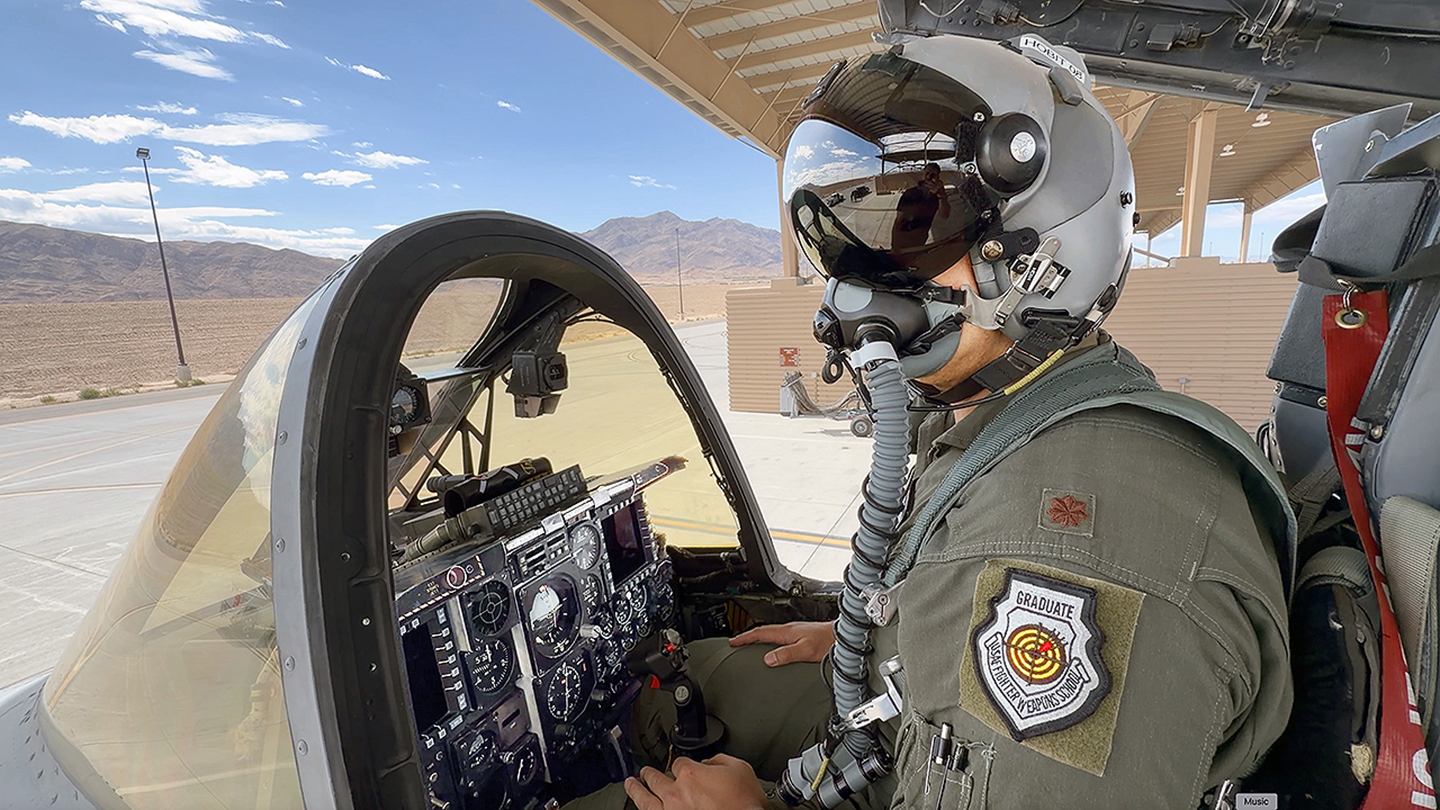
The U.S. Air Force Weapons School at Nellis Air Force Base, in Nevada, recently completed its final weapons instructor course for the A-10 Warthog. Despite an extension in service for three A-10 squadrons to 2030, and recent combat operations in the Middle East, the Weapons School has shuttered its elite training course in line with USAF divestment plans for the type, which were previously set for the end of 2026.

TWZ’s Jamie Hunter recently visited the 66th Weapons Squadron (WPS) and got a detailed cockpit and walk-around tour of an A-10C with “Trippin,” an experienced instructor pilot attached to the unit.

A full episode that goes in-depth with the A-10 Weapons School will kick-off TWZ’s first season of Special Access on YouTube soon, so stay tuned!

The post A-10 Cockpit And Walk-Around Tour With A Warthog Weapons Instructor appeared first on The War Zone.

Congress Throws A-10 Warthog Another Lifeline

5 June 2026 at 19:05

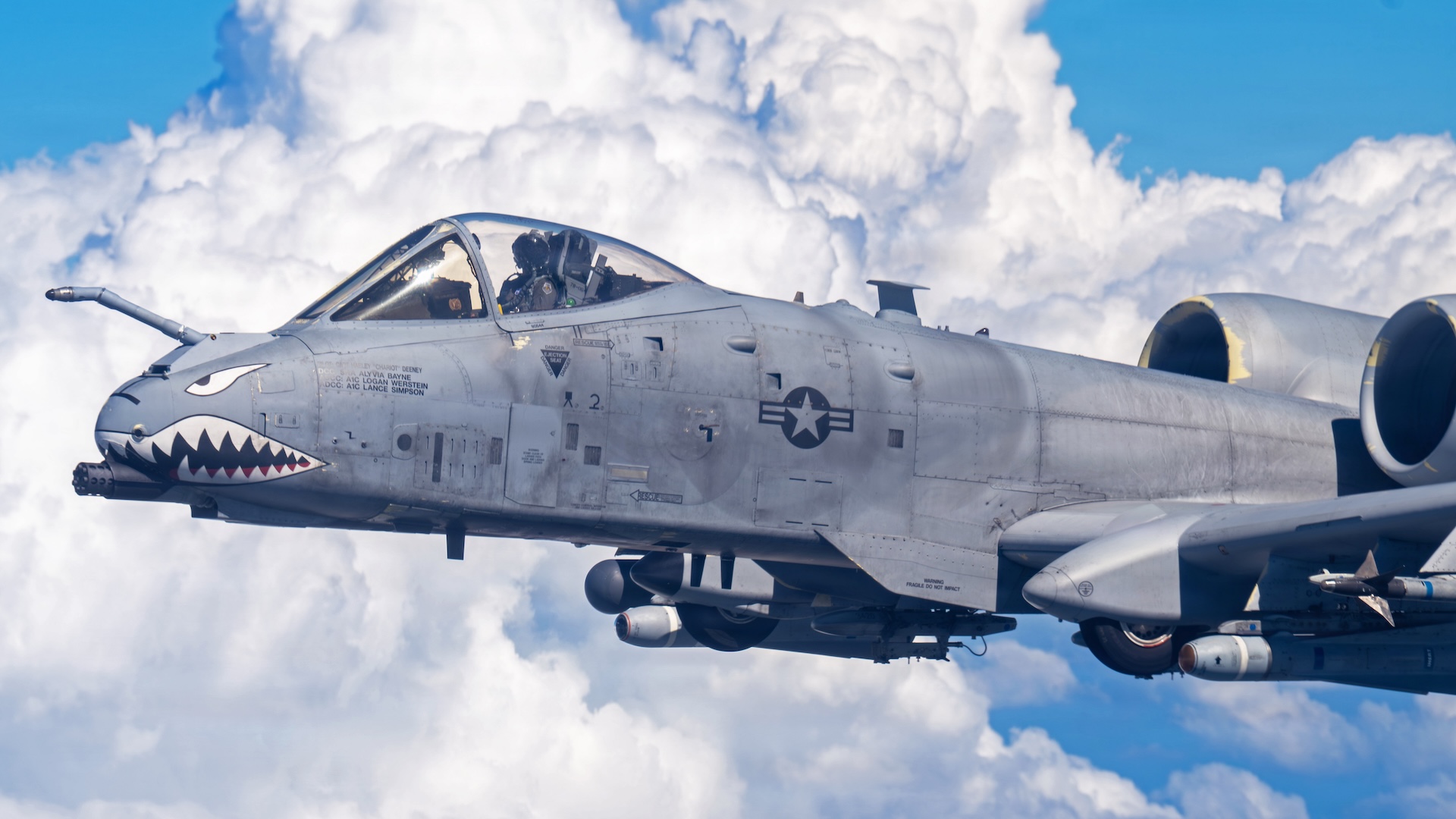
The Air Force will seek new ways to accomplish the missions of the A-10C attack jet, under an amendment added to the House Armed Services Committee’s version of the National Defense Authorization bill. While the Air Force has long campaigned for the Warthog’s retirement, the recent demand for the jet in conflicts in the Middle East has seen it earn a reprieve, with its standdown now scheduled for 2030.

Some of the numerous amendments to the bill come from Abe Hamadeh, the Republican representative for Arizona. He calls for the Secretary of the Air Force to keep supporting A-10 training, testing, experimentation, maintenance, and sustainment efforts through to the planned retirement date, as well as preserving lessons learned and operational expertise from A-10 missions to help shape future replacement systems. This would include keeping a formal training unit to teach pilots until the retirement. This is especially notable, since the unit in question, the 357th Fighter Squadron, graduated the last class of A-10 student pilots at Davis-Monthan Air Force Base, Arizona, back in April.

Four U.S. Air Force A-10C Thunderbolt II aircraft assigned to the 357th Fighter Squadron deploy flares over a training range near Gila Bend, Arizona, May 1, 2026. The training demonstration highlighted the aircraft’s defensive countermeasure capabilities, enhancing survivability in contested environments. (U.S. Air Force photo by Airman 1st Class Samantha Melecio)
Four A-10Cs from the 357th Fighter Squadron deploy flares over a training range near Gila Bend, Arizona, May 1, 2026. U.S. Air Force photo by Airman 1st Class Samantha Melecio

Meanwhile, the Air Force officially concluded A-10 depot-level maintenance in February of this year, with the deactivation of the 571st Aircraft Maintenance Squadron at Hill Air Force Base, Utah, and the A-10 Weapons School is due to be shuttered this year.

An A-10 Thunderbolt II with tail No. 78-0655 is positioned near the hangar during the “Hawg Out” ceremony Feb. 12, 2026, at Hill Air Force Base, Utah. The aircraft is the final A-10 to be maintained by the Ogden Air Logistics Complex's 571st Aircraft Maintenance Squadron, which has performed depot-level maintenance on the aircraft since 1998. (U.S. Air Force photo by Cynthia Griggs)
An A-10C is positioned near the hangar during the “Hawg Out” ceremony, February 12, 2026, at Hill Air Force Base, Utah. The aircraft was the final A-10 to be maintained by the Ogden Air Logistics Complex’s 571st Aircraft Maintenance Squadron, which performed depot-level maintenance on the aircraft since 1998. U.S. Air Force photo by Cynthia Griggs

In terms of “preserving operational expertise,” Hamadeh points directly to the A-10’s recent combat record in the Middle East, including its role in providing close air support during the recovery of two downed F-15E aircrew from Iran during Operation Epic Fury, and its work securing the Strait of Hormuz, a critical maritime chokepoint.

As part of this, the amendment also requests a report on the A-10’s “combat employment, recent operational relevance, lessons for future force design, and modernization options that could improve the return on continued sustainment of the program.”

Hamadeh lists a range of recent modernization efforts for the jet that “could improve the operational return on continued sustainment of the A-10 program.” These include electronic warfare capabilities, decoy or stand-in effects delivery, digital communications, sensor integration, precision weapons integration, survivability improvements, open-systems architecture, and human-machine teaming applications. The amendment also refers to the A-10’s recent “aerial refueling enhancements,” referring to the rapid introduction of a nose-mounted aerial refueling probe, which you can read more about here.

A U.S. Air Force A-10C Thunderbolt II aircraft refuels from an HC-130J Combat King II aircraft in the U.S. Central Command area of responsibility, May 9, 2026. (U.S. Air Force photo)
An A-10C uses its newly added probe to refuel from an HC-130J Combat King II aircraft in the U.S. Central Command area of responsibility, May 9, 2026. U.S. Air Force photo

At the same time, while preparing to retire the Warthog, the amendment calls for “a competitive experimentation plan for autonomous and non-traditional capabilities relevant to the A-10 mission set” — something that is far from new. According to the wording of the amended bill, this should “encourage autonomous replacement and modernization of the A-10, while also prioritizing participation of non-traditional defense firms.”

The amendment specifies that “autonomous, semi-autonomous, artificial intelligence-enabled, and adjunct aircraft capabilities” should all be investigated for carrying out future A-10-type mission sets.

The plan should include ways to ensure operational experiments are done “in a manner consistent with meaningful human command and control, by a qualified military aviator,” the amendment added. That should include mission-critical functions such as target engagement, weapons release, and decisions to abort a mission.

To help with the development of emerging technologies that could replace, or partly replace, the A-10, the amendment also proposes that a limited number of the jets should be used to support these studies.

Two 74th Fighter Squadron A-10C Thunderbolt II aircraft prepare to aerial refuel above Wake Island, 23 Oct. 2022. These aircraft transited from Moody Air Force Base, Georgia, to Andersen AFB, Guam, to participate in a Dynamic Force Employment Operation which is designed as a way for Pacific Air Forces to exercise their ability to generate combat air power from dynamic force elements while continuing to move, maneuver, and sustain these elements in geographically-separated and contested environments. (U.S. Air Force courtesy photo by Tech. Sgt. Eileen Adams)
Two 74th Fighter Squadron A-10Cs above Wake Island, in October 2022. These aircraft transited from Moody Air Force Base, Georgia, to Andersen AFB, Guam, to participate in a Dynamic Force Employment Operation. U.S. Air Force courtesy photo by Tech. Sgt. Eileen Adams

As part of accelerating this initiative, the study could involve nontraditional or venture-backed defense companies, commercial technology firms, or other companies that could rapidly develop the required hardware, software, autonomy, sensing, communication, or mission system capabilities.

This amendment raises the possibility that new technologies may ultimately provide an effective replacement for many A-10 mission sets, rather than a direct one-for-one crewed aircraft successor.

Drone-wise, the current lack of a follow-on to the MQ-9 Reaper, envisaged under a program dubbed MQ-Next, is a problem. The Air Force is now trying to replace the MQ-9 again, as you can read about here, but it remains unclear if the drone that emerges could stand in for a significant part of the A-10 mission. At the same time, the lack of a true uncrewed air combat vehicle (UCAV) program, one that would have emerged out of MQ-Next or otherwise, is also a hindrance in terms of a more survivable drone-based A-10 successor.

While not mentioned specifically, other options could include Collaborative Combat Aircraft (CCA), AI-enabled uncrewed systems that can deliver weapons, conduct reconnaissance, perform electronic warfare, identify and track targets, and operate either independently or with crewed platforms. However, while CCAs could be part of the solution, the A-10 mission has traditionally been seen as better suited to UCAVs.

Advances in autonomy also promise future networks of expendable or attritable drones that can maintain persistent surveillance over the battlefield, rapidly share targeting information, and deliver precision effects while reducing risk to pilots. In such a model, the traditional A-10 mission would not be replaced by one aircraft but by a distributed system of sensors, shooters, and autonomous collaborators. Of course, this is of particular relevance in the kinds of contested environments where a low-flying attack aircraft would be increasingly vulnerable.

A U.S. Air Force XQ-58 Valkyrie drops an ALTIUS-600 drone from its internal bay during a test. U.S. Air Force

Once the A-10s are retired, the amendment directs the Secretary of Defense to evaluate the potential transfer of the jets “to another military department” — presumably, within the U.S. military. While this is a topic that has sometimes come up among the enthusiast community, there is no realistic possibility of either the Marine Corps or the Army getting hand-me-down Warthogs. In the case of the Army, this service has long agreed not to operate fixed-wing crewed combat aircraft. For their part, the Marines have no capacity or funding to take on a whole different tactical platform, especially while winding down the F/A-18 Hornet fleet to standardize the F-35B/C as its tactical fixed-wing jet.

The idea of considering transferring retired A-10s to an ally or partner’s military has come up in the past, however, having been included in the 2024 National Defense Authorization Act (NDAA). As well as Jordan, which was named in the 2024 NDAA, Colombia and Ukraine are also known to have expressed interest in acquiring A-10s in the past.

More immediately, the amendment authorizes the reconstitution of an A-10 demonstration team. This would support “public outreach, recruiting, heritage, airshows, military ceremonies, and commemorative events, including those tied to the 250th anniversary of the founding of the United States.”

For more than four decades, the A-10C Demonstration Team performed dramatic displays around the world, but it ceased operations at the end of the 2024 season. At the time, the 355th Wing at Davis-Monthan Air Force Base said the decision was a part of the Air Force’s divestment of the Warthog.

An A-10C Thunderbolt II aircraft, part of the Demonstration Team from Davis-Monthan Air Force Base, flies behind a KC-135 Stratotanker aircraft from the 171st Air Refueling Wing, Pennsylvania Air National Guard, Nov. 18, 2024. The A-10's needed refueling on their way back to Arizona after their last official demo event Nov. 17, 2024, at the Pittsburgh Steelers game. (U.S. Air National Guard photo by Tech. Sgt. Andrew Stover)
An A-10C, part of the Demonstration Team from Davis-Monthan Air Force Base. The A-10 was refueling on its way back to Arizona after the last official demo event, November 17, 2024, at the Pittsburgh Steelers game. U.S. Air National Guard photo by Tech. Sgt. Andrew Stover

Of course, it should be noted that all of these amendments don’t necessarily preclude the Air Force giving up the A-10. Provided the service can prove that it can retain the knowledge base, as well as plug any capability gaps, the path to letting the Warthog go would remain open.

As we have highlighted many times in the past, the A-10’s combination of capabilities remains difficult to replicate in a single aircraft. It was designed from the ground up for close air support, with significant battle damage tolerance, making it ideal for operating close to friendly forces, providing persistent, highly responsive fire support.

However, with the requirements of modern warfare shifting toward survivability in heavily defended airspace, the F-35A, as the A-10’s designated replacement, offers capabilities the older jet cannot match, including stealth, advanced sensor fusion, networked targeting, and the ability to strike from greater standoff distances. While the effort to replace the A-10 with the F-35 has been a controversial one, regardless of their respective merits, it’s clear that the Air Force needs combat mass, providing more ammunition for the Warthog’s proponents.

A 33rd Fighter Wing F-35A Lightning II streaks by as a 75th Fighter Squadron A-10 Thunderbolt II undergoes preflight checks prior to a Combat Hammer sortie Nov. 2, at Eglin AFB, Fla. A-10s, F-16s, F-22s and MQ-9s visited the base to participate in the 53rd Wing exercise. The 86th Fighter Weapons Squadron’s Combat Hammer is a weapons system evaluation program for air-to-ground munitions. (U.S. Air Force photo/Samuel King Jr.)
An F-35A streaks by as a 75th Fighter Squadron A-10C undergoes preflight checks before a Combat Hammer sortie at Eglin AFB, Florida. Combat Hammer is a weapons system evaluation program for air-to-ground munitions. U.S. Air Force photo/Samuel King Jr.

In the meantime, the Air Force has also moved away from the idea of having the F-35 as a direct successor to the A-10, reflected in the fact that one former Warthog unit, at Selfridge Air National Guard Base in Michigan, has been chosen to receive a squadron of F-15EX Eagle IIs. The balance of capabilities offered by the F-15EX means that it is now being eyed for other units, too, in line with an increased fleet size.

As for the current timeline for the A-10’s withdrawal, Craig McKee, of Phoenix, Arizona-based news channel ABC15, received an outline of the plan from Air Combat Command.

For Fiscal Year 2026, which runs through September 30, 2026, the 357th Fighter Squadron at Davis-Monthan inactivates, and the formal training pipeline ends. Meanwhile, at Nellis Air Force Base, Nevada, the A-10 Weapons School transitions to other types, and the 422nd Test and Evaluation Squadron stands down.

For Fiscal Years 2027 and 2028, Moody Air Force Base, Georgia, is scheduled to retain two active-duty A-10 squadrons, while Whiteman Air Force Base, Missouri, will keep one Air Force Reserve squadron. At this point, the total A-10 inventory is set to be 63 aircraft, with 42 in the active-duty inventory.

In Fiscal Year 2029, Moody Air Force Base is set to lose one squadron, while the total A-10 inventory drops to 42 aircraft.

U.S. Air Force Capts. Andrew Glowa, lead, and William Piepenbring, both with the 74th Fighter Squadron out of Moody Air Force Base, Ga., fly two A-10C Thunderbolt II over the skies of southern Georgia, Aug. 18, 2014. The 74th FS is one of two active-duty, combat-ready squadrons at Moody that performs close air support missions with the A-10. (U.S. Air Force photo by Staff Sgt. Jamal D. Sutter/Released)
A-10Cs from the 74th Fighter Squadron out of Moody Air Force Base, over the skies of southern Georgia, in 2014. The 74th FS is one of two active-duty, combat-ready squadrons at Moody. U.S. Air Force photo by Staff Sgt. Jamal D. Sutter/Released

Finally, Fiscal Year 2030 is planned to see the full divestment of the A-10 fleet.

All of this is in line with Air Force demands for the A-10’s career to come to a close by the end of the decade, the culmination of a long push to retire the jets, primarily due to concerns over the aircraft’s survivability.

At the same time, the special capabilities of the Warthog are clearly still in high demand, including in the Middle East.

Previously, it seemed like the lawmakers’ efforts to retain the A-10 might have come to an end, especially when it lost two of its most vocal supporters. Namely, after the death of Arizona’s Senator John McCain, followed by Republican Representative Martha McSally losing her bid for the Arizona Senate.

Now, with the A-10’s performance in Epic Fury, as well as a brief extension to its service, it looks like a new fight to save the Warthog might be emerging.

Contact the author: thomas@thewarzone.com

The post Congress Throws A-10 Warthog Another Lifeline appeared first on The War Zone.

USAF Wants “MQ-9 Next” Reaper Replacement To Be Modular, Cheap

5 June 2026 at 00:20

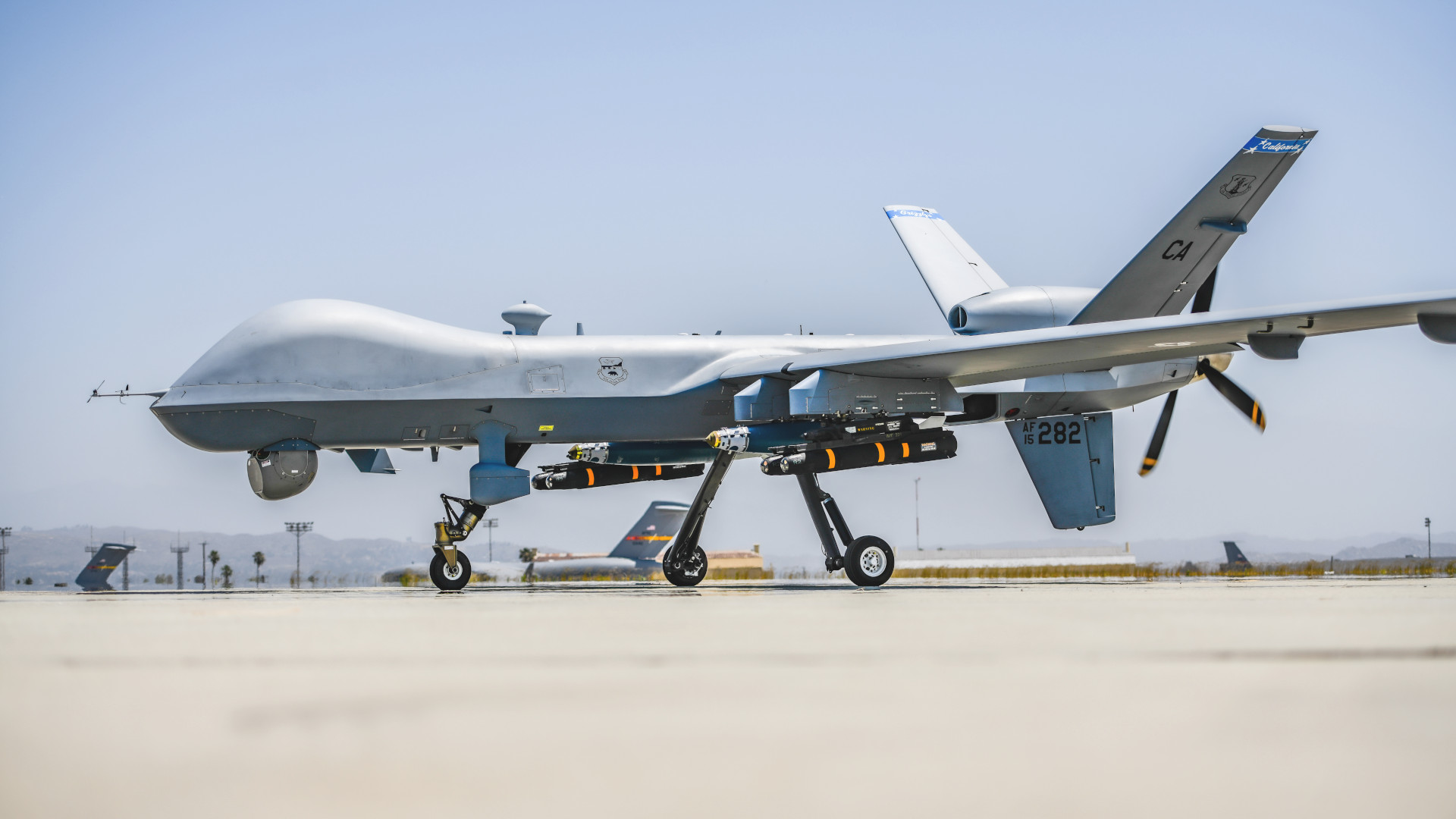
Modularity is a key area of interest as the U.S. Air Force formulates its latest set of requirements for a successor to the MQ-9 Reaper, according to Gen. John Lamontagne, the service’s Vice Chief of Staff. A modular design, both in terms of hardware and software, would help make the chosen platform more flexible and adaptable to different mission sets. Earlier this year, the Air Force did lay out other prospective requirements for a relevant-sounding MQ-9 replacement, including a design that is easier to produce, lower-cost, and that can be more freely sent into higher-risk environments, as we have previously reported.

Gen. Lamontagne talked about what he termed “MQ-9 Next” during a virtual talk hosted by the Air & Space Forces Association’s Mitchell Institute for Aerospace Studies earlier today. His comments came in response to a question about the Reaper performance in the latest conflict with Iran, where the drones have played a critical role, but have also suffered major losses. The latter point is a key factor in this discussion that we will come back to later on. Last month, the Air Force had also confirmed it was in the early phases of putting together a new set of requirements for an MQ-9 replacement. This follows several abortive Air Force attempts in the past to devise a successor to the Reaper.

US Air Force MQ-9 Reaper. USAF

“As we look forward in [sic] having something that is more MQ-9-like – I would characterize it as ‘MQ-9 Next’ – I think what we’d like to have is something that’s perhaps got more range, perhaps a lot more modularity,” Lamontagne explained. “We could hang ISR [intelligence, surveillance, and reconnaissance] sensors, we could hang weapons, we could hang fuel – something that we could line-in/ line-out, very modular.”

The Air Force’s number two officer made clear that his view of modularity in this extends from the hardware side to “very simple software that we own, and we could change, so it’s almost like an iPhone.”

“We have it for several years, and we could change it, and put whatever kind of apps on it, and change the speed of warfare, change the speed of need,” he continued. “We own it, we control it, and we can also change it very quickly.”

Greater control over intellectual property, and software in particular, has emerged as a major guiding principle for the U.S. military, in general, in recent years. This makes it easier to avoid the pitfalls of being locked into a single vendor. Being able to have companies compete for follow-on contracts creates opportunities to lower costs and diversifies supply chains. This diversification in the supplier base, in turn, can be beneficial when it comes to scaling up production of key subcomponents and complete systems.

A row of MQ-9 Reapers. USAF/Staff Sgt. Ariel O’Shea

All of this feeds back into the modularity equation, with the ability to readily integrate new capability and functionality helping keep doors wide open to new possibilities down the road. This is all on top of the more immediate flexibility that modular systems and architectures offer.

For MQ-9 Next, this could translate to more adaptability when it comes to “hey, do we need more ISR? Do we need more strike? Or a combination thereof?” Gen. Lamontagne said.

The general also described the current MQ-9 replacement requirements as “probably less defined” compared to where the service is right now on future Collaborative Combat Aircraft (CCA) drones. “We’re just going through some early work, our Air Force Futures team, to figure out exactly how we want to tackle that going forward [on MQ-9 Next].”

Lamontagne’s remarks today are in line with testimony from Lt. Gen. Christopher Niemi, the acting head of Air Force Futures, at a hearing before the Senate Armed Services Committee last month. At that time, Niemi talked about an MQ-9 replacement that would be “more flexible” by leveraging open architectures, easier and cheaper to produce “in mass numbers,” and usable “in a more attritable way.”

Attritable is generally taken to mean a system that is sufficiently low-cost to be sent out on higher-risk missions where it could be lost, but also capable enough to be relevant for those same missions. It is a term that has been increasingly in disuse by the Air Force in recent years.

An official US military graphic intended to help conceptualize where “attritable” falls into the spectrum of cost and capability, and the value of having capabilities in that category. Defense Systems Information Analysis Center

In April, the Air Force had also used the term in a contracting notice seeking information about prospective designs for a new ISR drone. Though the MQ-9 was not explicitly mentioned in that notice, the specific details do align with the remarks from Niemi and now Lamontagne about new plans for a Reaper replacement, as you can read more about here.

As we previously wrote:

“The latest statements from the service describe a drone with increased flexibility achieved through open architecture, rather than building bespoke batches of drones for particular requirements. Previous statements from the service outlined an aspiration to have its new drone capable of accommodating rapidly reconfigurable payloads, something that open architecture would expedite.”

“Above all else, the MQ-9 successor will still have to operate in contested environments.”

“The Pentagon has long worked on the basis that a future conflict with a peer rival, and especially with China in the Pacific, would see it facing highly robust anti-access/area-denial (A2/AD) scenarios. With that in mind, previous Reaper replacement studies had suggested that low observability would need to be incorporated into the design.”

“The latest thinking seems to reject that, or at least reorient the program toward a lower-cost platform of the kind that the Air Force would be able to field in mass, as well as to absorb the anticipated attrition in a high-end conflict. This does not preclude this airframe from featuring low-observable elements. In fact, it most likely will. But those would be more aggressively balanced against cost.”

A rendering of a stealthy concept Northrop Grumman previously put forward as a possible MQ-9 replacement, underscoring how the thinking in this regard has changed over the years. Northrop Grumman

There remains a question of when the MQ-9 Next requirement might actually be finalized, as well as what the acquisition strategy (and timeline) might be for the drones. As already mentioned, the Air Force has tried multiple times to develop a Reaper replacement without success. As we highlighted in our past report:

“Since MQ-Next, the U.S. drone landscape has changed considerably in terms of manufacturers. A few years ago, Northrop Grumman, Lockheed Martin, and General Atomics would have been seen as the front-runners for the MQ-9 replacement. Now, there are more contenders, often with a founding focus on rapidly scaling up production at low cost. Still, these firms have much to prove, especially considering the risk in replacing an aircraft as important as the MQ-9. At the same time, in the more advanced drone space, the legacy defense “prime” contractors are also making major progress in leveraging new technologies to reduce production costs and migrating away from exquisite, very expensive drones as their default offerings.”

All of this is made more pressing by the worrisome impacts from losses of dozens of MQ-9s just in the past year or so as a result of operations targeting Iranian-backed Houthi militants in Yemen and, more recently, the conflict directly with Iran. The Air Force itself described this attrition as concerning, but there increasingly looks to be limited options for securing any immediate replacements. The Reaper, more formally known as the MQ-9A, is out of production. The company that developed the drone, General Atomics, has moved on to the MQ-9B, an evolved design with significant differences from its predecessor. Any new Air Force purchases of drones in this broader family would have to be of the B model and worked into the existing production schedule.

USAF

General Atomics, the maker of the MQ-9 and a pioneer in the uncrewed marketplace, seems to have pushed back on some of the ideas the USAF now wants in a Reaper replacement.

“Some say we need cheaper, disposable aircraft, so that we can use them and throw them away, or lose them and not feel bad about it. No one is talking about actual capability, ready today,” C. Mark Brinkley, a spokesperson for the company, recently told TWZ. “No one is talking about all of the hard lessons, already learned, about icing and weather and weapons integration. No one is talking about the multiple survivability upgrades available for the existing platforms and the lack of investment in those.”

“These make-believe weapons that don’t exist have the luxury of being anything you imagine them to be,” Brinkely added. “Unscratched lottery tickets, promising all of the win and none of the lose [sic].”

USAF

In the meantime, operational demands for MQ-9s remain high, and Lamontagne lauded their contributions in the latest conflict with Iran during his talk today. He also said that he sees Reaper’s performance as validating his service’s broader plans for new uncrewed platforms, including CCAs, as well as MQ-9 Next.

“I think it affirms the path that we’re on with Collaborative Combat Aircraft,” he said. “Collaborative Combat Aircraft, different [from MQ-9], much more autonomous,” but “still controlled by a man or a woman, and a fighter that is going to direct them to do what they need to do.”

A “very loyal wingman” and “not quite as intensive from a manpower perspective – true both in the air and on the ground,” he continued. “So, I think it very much affirms that’s the right path. And we’re going down that road, and we’re spending really good money on CCAs, and we’re excited about what kind of capability that’s going to deliver.”

“I think we’ve learned a lot of lessons, both with CCAs and MQ-9 Next, to take us into the future.”

When it comes to MQ-9 Next, the requirements are still very much evolving. It remains to be seen when and if this attempt at a Reaper replacement will come to fruition, unlike the various preceding attempts.

Contact the author: joe@twz.com

The post USAF Wants “MQ-9 Next” Reaper Replacement To Be Modular, Cheap appeared first on The War Zone.

Are Ukrainian Mirage 2000s Now Flying Air-To-Ground Strike Missions?

2 June 2026 at 18:36

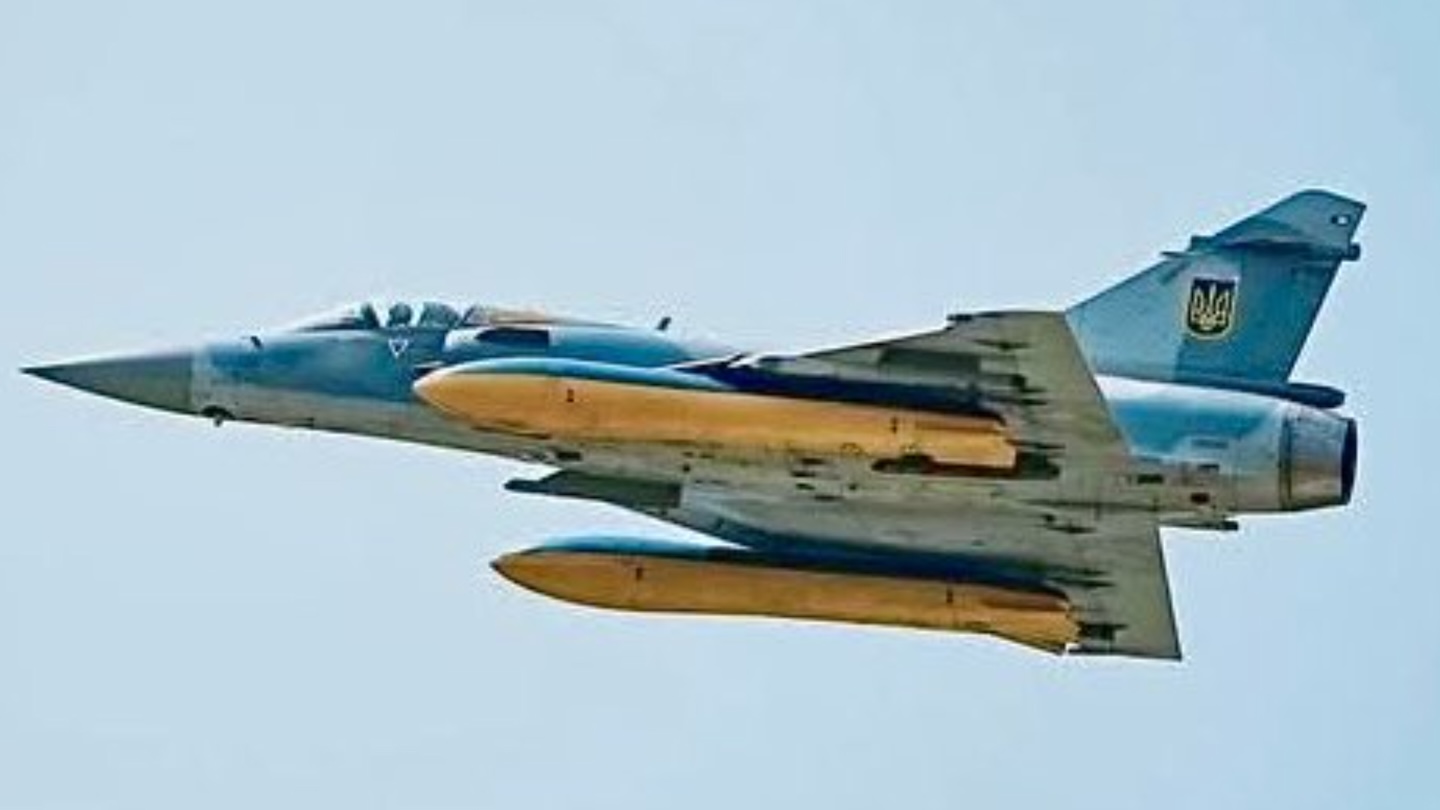
A French-made Mirage 2000-5F, streaking low over Ukraine in a newly emerged video, provides a relatively rare glimpse of the fighter in Ukrainian Air Force service. Compared with the more numerous F-16 fleet, Ukrainian Mirage operations are much less widely seen. Until now, accounts and imagery have shown the delta-wing fighters being used for air-to-air missions, primarily in the fight against Russian long-range attack drones and cruise missiles. The latest footage may suggest that they now have started to embark on air-to-ground sorties, too.

Some of the first footage of a French-supplied Mirage 2000-5F in Ukrainian service conducting a strike mission on the eastern frontline.

Seen here screaming just a few dozen feet over the ground before tossing its load of bombs (likely French AASMs) at a Russian target. pic.twitter.com/EEHgNxIxUg

— OSINTtechnical (@Osinttechnical) June 2, 2026

The footage, taken from a ground position possibly close to the front lines, shows a Mirage flying at a very low-level along a tree line, before pulling up into a steep climb. Potentially, the jet was engaged in an air defense patrol before pulling up to transit outside of the ground-based air defense threat ‘umbrella,’ but this exact maneuver is one we have frequently seen for air-to-ground weapons releases from other platforms.

While the moment of weapons release is not visible, the flight profile is consistent with toss bombing attacks. In particular, the French-made AASM-250 Hammer rocket-boosted munition, associated with the Mirage, has often been seen delivered by other platforms using this technique, which is exactly how the weapon was designed to be used, among other modes of delivery.

Footage reportedly showing Ukrainian MiG-29 fighter jet firing French-supplied AASM-250 Hammer guided bombs at a target in Belgorod Oblast of Russia.

Notice the very low altitude from which the munitions are being launched.

Geolocated impact point: Nekhoteevka border crossing,… pic.twitter.com/mGGuqRAmyK

— Status-6 (War & Military News) (@Archer83Able) June 27, 2024

A video of the moment of release of two French-supplied AASM-250 Hammer guided bombs from a Ukrainian MiG-29 fighter jet.

The pilot of this particular airframe, 27-year-old Captain Oleksandr Myhulia, perished while performing a combat mission on August 12, 2024.… pic.twitter.com/yNEbbaFUPt

— Status-6 (War & Military News) (@Archer83Able) August 14, 2024

After all, toss bombing is a key way to help mitigate the risks to combat jets over the battlefield, specifically ground-based air defenses. Russia’s surface-to-air missile umbrella is well layered and penetrates far beyond the front lines.

“Obviously, the lower you are, and the further away from the surface-to-air missiles that can detect you because of the curvature of the Earth” affect how far the bomb can travel, U.S. Air Force Gen. James Hecker, head of U.S. Air Forces in Europe (USAFE), as well as NATO’s Allied Air Command and U.S. Air Forces Africa (AFAFRICA), explained back in 2023. Hecker was speaking about Ukraine’s use of unpowered JDAM-ER glide bombs, but the same applies to Hammer. “There are tactics where you can go in low and do some things… and get back,” Hecker added.

Head-on view of a Ukrainian Mirage 2000 at a forward operating location. Ukrainian Air Force screencap

The toss/lofted technique does not reduce the accuracy of the Hammer or the U.S.-supplied JDAM-ER, which both come as standard with GPS-assisted inertial navigation system (INS) guidance packages that allow them to zero in on set coordinates even when employed indirectly.

Additionally, the Hammer can offer multi-mode guidance options with either imaging infrared or semi-active laser homing added in, which enables the engagement of moving targets and helps improve overall accuracy. This also offers alternative guidance options in GPS-degraded environments against some targets. So far, however, only the GPS/INS version has been positively identified in Ukrainian service.

A GPS/INS-guided AASM-250 Hammer rocket-assisted precision-guided bomb under the wing of a Ukrainian MiG-29 Fulcrum. via X

Hammers come in a variety of sizes, but Ukraine is understood to have received 250-kilogram (551-pound) class types, also sometimes referred to as AASM-250s.

To date, the Hammer has been seen in use on Ukrainian Air Force MiG-29 Fulcrums, which appear to be the service’s primary launch platform for the munitions, at least so far. Ukraine has also integrated the French-made bombs onto its Su-25 Frogfoot attack jets.

Low pass by a Ukrainian Air Force MiG-29, armed with a French-supplied AASM 250 HAMMER extended-range guided bomb. pic.twitter.com/FlibJ9VZfm

— OSINTtechnical (@Osinttechnical) March 15, 2024

Hammer’s solid-fuel rocket booster also gives the bomb unique benefits. The manufacturer, Safran, says the AASM-250 version can still hit targets at least up to nine miles away (15 kilometers) when released from low altitude. This can increase to around 43 miles (70 kilometers) when launched from higher altitude.

In its original form, the Mirage 2000-5F was not cleared to use the Hammer, reflecting the fighter’s primary air defense mission in French service. However, in March of last year, France confirmed that the Mirages being transferred to Ukraine would have Hammer compatibility. In the past, the Mirage has been tested in France with a six-Hammer load-out.

Today, France confirmed that Ukrainian Air Force Mirage 2000-5Fs will be outfitted with AASM extended-range guided bombs, giving Ukraine another capable strike platform.

Previously, a French Mirage 2000-5F was tested with a massive loadout of up to 6 AASM-250s. https://t.co/qSPdQ5GLHR pic.twitter.com/g2mB8WEpVr

— OSINTtechnical (@Osinttechnical) March 10, 2025

Earlier this year, the Ukrainian Air Force published a video including brief interviews with a Mirage pilot, as well as two members of the ground crew. The unnamed Mirage 2000 fighter pilot came to the delta-wing jet after serving on the Soviet-era Su-27 Flanker.

“Now I pilot the Mirage 2000, and my impressions of this aircraft are extremely positive,” he explained. “I trained in the French Republic together with French fighter pilots for about six months. I learned to fly and employ weapons on the twin-seat Mirage 2000B. Later, we transitioned to the single-seat version, the very aircraft I am flying now.”

The Ukrainian Mirage 2000 pilot in his jet. Ukrainian Air Force screencap

Two Ukrainian Air Force fighter jet technicians, David and Dmytro, shared their experiences of day-to-day combat operations with the Mirage.

“Right now, we’re at a forward operating airfield, our third one this week,” David pointed out, indicating the missile-armed Mirage behind him. “The enemy constantly tries to destroy our aircraft and equipment. Our forward team keeps relocating from site to site.”

Ukraine’s F-16s also routinely operate from dispersed locations around the country, supported, among others, by a fleet of vehicles dedicated to helping maintain them, as you can read about here. Moreover, these kinds of operations, and the challenges of generating air combat power under the constant threat of Russian attack, are something that is being keenly felt in the U.S. military. After all, the Pentagon is planning to operate crewed and uncrewed aircraft from distributed forward locations in future high-end fights, such as one against China in the Pacific. These concepts of operations would also be relevant in the event of a major conflict elsewhere in Europe.

Dmytro added: “During our last combat mission, we came under fire [from Shahed-series long-range one-way attack drones] and missiles, but fortunately, we managed to evacuate the aircraft and save our lives.”

The pilot and technicians praised the Magic 2 infrared-guided air-to-air missile that appears to be the primary air-to-air armament of the Ukrainian Mirage.

Ukrainian Mirage 2000 armed with a Magic 2 missile. Ukrainian Air Force screencap

“It has performed exceptionally well,” one technician said, before claiming that it has a kill probability of “practically 100 percent.”

The pilot further added that the kill probability against enemy drones and cruise missiles stands at 98 percent. No mention was made of the Mirage’s twin onboard 30mm cannons, although these are shown in detail in the video.

A 30mm DEFA 553 cannon on a Ukrainian Mirage 2000. Ukrainian Air Force screencap

As regards air-to-air kills, the particular Mirage seen in the video from earlier this year is marked with six silhouettes denoting Russian Kh-101 air-launched cruise missiles.

However, as the ground crew points out, another six still needed to be added to the same jet.

Six Kh-101 kill markings on a Ukrainian Mirage 2000. Ukrainian Air Force screencap

The prosaic reason behind this: “We don’t always have stencils with us at forward airfields… Sometimes we simply don’t have the time to apply all the markings.”

The reason the Mirage is less frequently seen in Ukrainian hands is chiefly due to numbers.

It’s unclear exactly how many Mirages have now been pledged to Ukraine by France. At first, France offered six, but last October, French President Emmanuel Macron said he would offer more. At least one has so far been lost in Ukrainian service.

On the subject of improving the combat potential of the Ukrainian Air Force, the pilot made a call for continued development, including “more modern aircraft [and] more modern weapons to counter the horde threatening us.” The appearance of the Hammer would provide evidence that this aspiration is being, to some extent, met.

Pre-flight checks on a Ukrainian Mirage 2000 at a forward operating location. The RDY marking behind the radome indicates the RDY radar, a mechanically scanned pulse-Doppler type with look-down/shoot-down capability, found on the Mirage 2000-5F version. Ukrainian Air Force screencap

As regards the particular deficiencies of the Mirage, the pilot said: “In my opinion, and in the opinion of my fellow pilots, this aircraft lacks longer-range air-to-air weapons.” He called for a weapon that represents “something in the middle ground between efficiency and cost so that we can engage the massive number of enemy aerial threats we face.”

It’s unclear if the pilot in question was including the more modern and capable MICA air-to-air missile within this assessment.

The first imagery of Ukrainian Mirages showed the jets exclusively armed with a pair of Magic 2 missiles, broadly analogous to the AIM-9L Sidewinder, rather than the MICA that the aircraft can also carry. At the start of this year, however, the MICA also began to appear on the fighters.

Ukrainian Mirage 2000 fighters have been equipped with French MICA medium-range air-to-air missiles to counter Russian air targets. https://t.co/AuliNF5G7i pic.twitter.com/y5zXa9vgKQ

— Special Kherson Cat 🐈🇺🇦 (@bayraktar_1love) January 5, 2026

Unusual for a modern Western beyond-visual-range AAM, the MICA can be fitted with either an active radar seeker or an infrared seeker head. When using the latter option, the seeker can act as a ‘poor man’s’ infrared search and track system and provide target detection indication in the pilot’s head-up display (HUD).

The MICA uses a thrust-vectoring motor for improved agility and has a reported maximum range of around 37 miles, far superior to the roughly nine-mile range of the Magic 2.

Despite the arrival of Western-supplied equipment, Ukraine continues to rely heavily on its Soviet-era fighters. The entirety of its combat fleet — Mirages and F-16s included — is in the latter stages of its service life and needs to be replaced before too long. With that in mind, Kyiv is planning to bolster its air force with more modern equipment.

“If I had the opportunity to transition to another aircraft superior to the Mirage, I would probably choose the Rafale,” the pilot continued. “It’s from the same country, and retraining for the Rafale would be much faster than transitioning to aircraft from other nations. The Rafale can also carry the Meteor, a missile with very long reach.”

Thanks to its ramjet motor, the Meteor’s all-important ‘no-escape zone’ is much larger than for comparable weapons. This means the enemy’s chance of evading the missile at the endgame of the engagement, using high-energy maneuvering, is considerably reduced. Another advantage of being able to throttle the motor is that the Meteor’s autopilot can calculate the most efficient route to the target for very long-range shots. Ukraine now looks set to receive the Meteor to arm its first Gripen C/D fighters, now scheduled to arrive next year.

Last November, Ukraine signed a letter of intent to buy up to 100 Rafale F4 multirole fighters from France over the next 10 years. The agreement came less than a month after Sweden and Ukraine unveiled a plan to export as many as 150 Gripen E fighters to Kyiv — last week, it was confirmed that Kyiv plans to buy an initial batch of 20 of the new-generation Gripens.

While the Rafale and Gripen E/F would be the most advanced combat aircraft in Ukraine’s inventory, there remain glaring questions about whether the acquisition of one of these aircraft types, let alone two, is actually feasible, especially in such numbers, as we discussed at the time.

Today marks a significant moment, truly historic for both our nations – France and Ukraine. Together with Emmanuel Macron, we signed a Declaration of Intent on Cooperation in the Acquisition of Defense Equipment for Ukraine. This document enables Ukraine to procure military… pic.twitter.com/0qzG41IsnP

— Volodymyr Zelenskyy / Володимир Зеленський (@ZelenskyyUa) November 17, 2025

At the same time, the Mirage pilot would be happy to get his hands on any kind of modern Western-made equipment.

“If I were offered something like the F-35, Rafale, or Gripen, I would gladly, without hesitation, transition to that platform.”

The possibility of Ukraine using Mirage 2000-5F fighters in an air-to-ground strike role would mark an important expansion of their combat role. If the aircraft are now contributing to both defensive and offensive operations, they will be further enhancing Ukraine’s steadily growing Western-origin air capabilities.

Contact the author: thomas@thewarzone.com

The post Are Ukrainian Mirage 2000s Now Flying Air-To-Ground Strike Missions? appeared first on The War Zone.

Next Generation Penetrator Bomb Slated To Replace MOP Has Been Designated GBU-76

2 June 2026 at 17:53

The U.S. Air Force is already moving to lay groundwork for fielding the replacement of its GBU-57/B Massive Ordnance Penetrator (MOP) bunker buster bomb. In the process, it has also revealed that the follow-on Next Generation Penetrator (NGP) has now been designated as the GBU-76/B. The service also has plans to continue upgrading the MOP, which became a household name after the first-ever combat use of the bombs against deeply buried Iranian nuclear facilities during Operation Midnight Hammer last year.

“The Air Force Life Cycle Management Center, Armament Directorate, Attack Division (AFLCMC/EBD) is conducting market research for an industry analysis of capabilities,” according to a contracting notice posted online yesterday. “AFLCMC/EBD is seeking to award a Multiple Award Indefinite Delivery Indefinite Quantity (IDIQ) contract to support all aspects of research & development, production, testing, and delivery of the Next Generation Penetrator (NGP), GBU-76/B weapon system.”

A partially assembled GBU-57/B Massive Ordnance Penetrator, the weapon the GBU-76/B Next Generation Penetrator is set to eventually supplant. USAF

“All interested vendors shall submit a response demonstrating their capability to support the design, production, testing, and bed down of components and specific activities related to the development, performance and sustainment of the GBU-76/B weapon system,” the notice adds. It also stresses that information is only being gathered currently for “planning purposes.”

The notice lists a wide range of “tasks that may be pertinent to this effort.” This includes fuze development and production, the development and testing of the explosive filler, the design and integration of an “Alternate Navigation System” to help guide the bomb to its target, and integration of all components into complete bombs. The full list is reproduced below.

USAF

As TWZ regularly notes, fuzing is a critical element of the design of deep-penetrating munitions. These weapons are designed to be employed against targets that are underground or otherwise present inherent challenges when it comes to establishing their exact location and layout. As such, advanced fuzes that ‘count’ floors to determine depth and/or sense the ‘voids’ of underground mission spaces help maximize the damage from a weapon like MOP or NGP. These fuzes also just need to be highly reliable in order to function after impacting very hard surfaces at high speeds and then drilling even further down into them.

The Air Force has also said in past NGP contracting notices that it “will consider novel, demonstrated, or fielded Guidance, Navigation & Control (GNC) technologies with viability for integration into a warhead guidance system design that can achieve repeatable, high accuracy performance in GPS aided, degraded, and/or denied environments.” The MOP uses a GPS-assisted inertial navigation system (INS) guidance package contained within its tail unit.

Being able to reliably hit a very specific impact point is also essential for bunker buster bombs, especially ones designed for very deep penetration. During Operation Midnight Hammer, Air Force B-2 bombers dropped six MOPs in rapid succession on each of two ventilation shafts – 12 bombs in total – at Iran’s Fordow nuclear site in order to drill down into the facility below.

A graphic offering details about the employment of MOPs on Iran’s nuclear site at Fordow during Operation Midnight Hammer. US Military

Many details about the planned design of the NGP remain unknown, including its expected total weight. The Air Force has previously said that the bomb’s “warhead” is set to tip the scales at around 22,000 pounds, but the complete weapon could be heavier. The contracting notice from yesterday says prospective vendors need to show general understanding of “tasks associated with the lifecycle of Large Penetrator Warhead Systems weighing approximately 20,000 to 30,000 lbs.” The MOP is a 30,000-pound-class bomb that includes a BLU-127/B warhead with a nominal weight of approximately 27,125 pounds.

The GBU-76/B could incorporate other advanced or novel features. The Air Force has raised the possibility of a powered design offering extended reach in past discussions about MOP replacements. An add-on rocket booster could also help further improve the weapon’s penetration characteristics.

As an aside, the B-2 is the only aircraft currently certified to employ MOPs operationally, and each of the bombers can carry just two of the bombs at a time. Making the GBU-76/B lighter and/or smaller than MOP could be beneficial for future integration on the B-21 Raider. The Raider is smaller than the B-2, and is only expected to be able to carry a single MOP at a time. The smaller payload capacity of each B-21, in general, is also set to be offset by a far larger fleet size of at least 100 bombers, and likely more. Only 21 B-2s were ever built, and 19 of them remain in service today.

A B-2 bomber sits at Whiteman Air Force Base in Missouri ahead of Operation Midnight Hammer. USAF

In line with evolving plans to actually field the new bunker busters, the NGP contracting notice the Air Force put out yesterday also asks prospective vendors to outline their ability to provide other related support. This includes supplying mission planning and weaponeering software, training assets and procedures to go along with them, and just the means of getting the bombs from point A to point B and then into waiting aircraft. The Air Force already has specialized equipment to train ground personnel on the movement and loading of MOPs on B-2 bombers, including a full-size mock bomb bay.

An inert MOP seen loaded inside the full-scale B-2 bomb bay training asset. USAF
Another inert MOP seen on a specialized trolley used to move the 30,000-pound-class bomb around and load it onto the B-2. Missouri Air National Guard

When the Air Force expects to start fielding its first operational GBU-76/Bs is unclear. The Air Force’s 2027 Fiscal Year budget request says that “Next Generation Penetrator Prototype Demonstration including Modeling and Simulation, Design, Product Development, and Test” is set to wrap up at the end of Fiscal Year 2028. It also says, unsurprisingly, that the goal of current prototyping efforts is to demonstrate an “Air to Ground penetrator with equivalent or better MOP performance.”

In September 2025, Applied Research Associates, Inc. (ARA) announced it had received a contract for work on NGP to include the production and delivery of full-scale prototypes. ARA also said at that time that “Boeing will drive tail kit development and support all-up-round integration.” Boeing is the prime contractor behind the MOP.

The start of fielding of the GBU-76/B is also unlikely to lead to the immediate retirement of GBU-57/B, and the Air Force is continuing to work on improving that bomb’s capabilities in the interim. The service’s 2027 Fiscal Year budget proposal outlines plans for additional upgrades to the MOP’s tail kit and fuze. After Operation Midnight Hammer, the Pentagon also moved to help the Air Force replenish and potentially expand its stockpile of GBU-57/Bs. How many MOPs have been procured to date is unknown. Boeing has reportedly expanded its capacity to make the bombs in the past, but total production is still understood to be relatively limited.

The budget documents also note that MOP funding has been supporting the construction of a new test target, referred to as MS-34, further details about which are not provided. While significant weaponeering work can be done today in the virtual space, testing against real-world targets continues to be an important aspect of the development of munitions, in general. They are especially important for validating the capabilities of highly specialized weapons like the MOP and NGP. You can read more about this in the context of the development of MOP here.

The ability to defeat very deeply buried and otherwise hardened targets continues to be a top priority for the U.S. military, broadly speaking. Though successfully executed, Operation Midnight Hammer underscored challenges just in holding relevant targets in Iran at risk. There have been reports in the past that some Iranian nuclear facilities might be beyond the reach even of MOP.

Other U.S. competitors and adversaries globally, including China, Russia, and North Korea, already have extensive subterranean and other hardened military infrastructure, including underground naval and air bases, as well as missile silos and command and control bunkers. Those target sets are only continuing to expand, particularly in China, where there has been major work to construct vast new fields of silos for intercontinental ballistic missiles and hardened command and control facilities in recent years.

This is also driving U.S. development of a new deep-penetrating nuclear bunker buster bomb, currently referred to as the Nuclear Deterrent System-Air-delivered (NDS-A). The Air Force’s stockpile of MOPs currently offers the only real conventional alternative to those weapons in many cases. A nuclear weapon would still be required to realistically destroy certain especially deeply buried facilities.

Fielding the NGP bunker buster, now designated GBU-76/B, in the coming years will give commanders a new conventional option for prosecuting strikes on hardened facilities very deep underground.

Contact the author: joe@twz.com

The post Next Generation Penetrator Bomb Slated To Replace MOP Has Been Designated GBU-76 appeared first on The War Zone.

Turkey’s Secretive Electronic Warfare Jet Appears In New Imagery

1 June 2026 at 19:03

Turkey’s new electronic warfare jet appears to be moving closer to operational status, with by far the clearest imagery yet of the aircraft emerging in an anniversary video for the Turkish Air Force. The platform is loosely similar to Western standoff electronic attack platforms such as the U.S. Air Force’s EA-37B Compass Call and once again underscores the widening spectrum of defense aerospace products, crewed and uncrewed, as well as weapons and sensors, that Turkey is now producing.

A very brief clip of the HAVA SOJ (Airborne Standoff Jammer) appears in a video published today on the official X account of the Turkish Ministry of Defense. The video was prepared to mark the 115th anniversary of the foundation of the Turkish Air Force and features various other types, either operated by the service or under development. The footage is embedded below, with the HAVA SOJ appearing at around the 1:39 mark.

115 yıldır Türk milletinin gökyüzündeki sarsılmaz gücü, Gök Vatan’ın yılmaz bekçisiyiz! 🇹🇷✈

Şanlı tarihi, üstün fedakârlığı ve kahraman personeliyle milletimizin gururu olan Hava Kuvvetleri Komutanlığımızın kuruluşunun 115’inci yıl dönümünü kutluyor; görev başındaki tüm… pic.twitter.com/ktxuhgy2jk

— T.C. Millî Savunma Bakanlığı (@tcsavunma) June 1, 2026

The new image shows the HAVA SOJ with its external fairings and antennas, but still unpainted. The aircraft is trailing a cable from the top of its vertical stabilizer, which is likely a trailing cone that is often used for early flight tests of new aircraft configurations. An air-data probe, a temporary fixture associated with test work, is fitted to the nose.

A first, very poor quality image of the HAVA SOJ on March 1 of this year, when the aircraft was making a test flight out of the Turkish Aerospace Industries (TAI) facility in Ankara.

Simultaneously conducted land and air platform based radar and jammer projects

➡Air SOJ
➡MIT Intelligence Aircraft
➡IHA-SOJ (ASOJ-234U)
➡Kara-SOJ 1 (Koral-1)
➡Kara-SOJ 2 (Koral-2)
➡AEW-C (ALP-200A)
➡IHA AEW-C (Baykar-S band early warning radar) https://t.co/pfcATqqKWq pic.twitter.com/rv1sqF5Lt6

— TR_tech (@T_Nblty) March 1, 2026

Previously, two examples of the aircraft had been noted flying on February 20, with their test sorties appearing on publicly available flight-tracking websites.

Türk Hava Kuvvetlerine ait iki adet yerli HAVA SOJ uçağı Ankara'da uçuş gerçekleştirdi. pic.twitter.com/kYJIlfrhGL

— THS Haber (@thshaber) February 19, 2026

Around the late 2000s, Turkey and Aselsan began scheming a homegrown replacement for the Turkish Air Force’s existing standoff jamming capability, based on the Transall C-160 turboprop transport, as seen in the photo embedded below.

Einsatz stationärer wie auch fliegender Jammer C-160 Milkar 2U. pic.twitter.com/JcH0PkuPSk

— MASA (@MASAOMORITR) May 30, 2021

With the program taking longer than anticipated, thought was given to fielding an interim aerial standoff jammer, under a program known as Golge (shadow). This would have provided an urgent operational capability with two Global Express-based systems and would have integrated equipment from local and international companies. Negotiations made no progress and the Golge program was terminated in 2017.

The first Canadian-made Bombardier Global 6000 airframes for the HAVA SOJ program were delivered to TAI facilities back in 2019. Ultimately, four conversions are planned. Interestingly, some early graphics associated with the program had depicted the system installed on a Gulfstream platform.

The Global 6000 airframes are receiving mission payloads from Aselsan, which are integrated by TAI. Several official images of the aircraft had appeared before the integration system had taken place, but, since then, the aircraft has been notably camera-shy.

One of the Global 6000 airframes before receiving its mission equipment. SSB

The Turkish Defense Industry Agency (SSB), a government body that manages defense industry in Turkey, and which runs this program, describes the role of the HAVA SOJ as follows:

“Standoff Jamming (SOJ) platforms are high-value assets that suppress adversary air defense radars, disrupt command and control cycles, and interfere with communications by conducting deception and noise jamming from long ranges without entering hostile airspace. By doing so, they create corridors through which friendly air forces can penetrate enemy airspace. The effective employment of these platforms has become an undeniable reality of modern warfare, acting as a force multiplier and generating powerful asymmetric effects.”

As well as jamming systems, the HAVA SOJ will also have a surveillance capability, with electronic support measures (ESM) equipment, and there are also accounts of an onboard radar.

Most of this equipment is housed within large sensor fairings around the fuselage.

An early Aselsan graphic shows the extensive array of receiver sensors, jammers, and communications equipment around the aircraft. Aselsan

As to the specifics of the equipment, few details have been released, but it is known to be based on Aselsan’s Koral/Kara SOJ land-based electronic support/attack suite that is mounted on two heavy-duty vehicles. All of the systems for the jets are being developed in-country.

We know that the primary stated mission for the HAVA SOJ is electronic attack, in the form of both deception and jamming. For this purpose, the aircraft is likely fitted with powerful active electronically scanned array (AESA) antennas, like those used in the land-based Koral/Kara SOJ. These could be used to send out highly focused beams of electromagnetic energy to jam the radars and other radio frequency sensors and emitters in the air, on land, and at sea. This is a capability we have talked about before in relation to the U.S. Air Force’s EA-37B electronic warfare jet. Additionally, these same AESA antennas could be used to trigger cyber attacks, a capability you can read more about here.

EA-37B Compass call next generation electronic attack jet.
A U.S. Air Force EA-37B Compass Call. U.S. Air Force

Another parallel is found in Australia’s MC-55A Peregrine airborne intelligence, surveillance, reconnaissance, and electronic warfare (AISREW) jet, based on the Gulfstream G550 business jet airframe. As we have discussed in the past, the Peregrine is likely a multi-role platform, providing both intelligence collection and electronic attack functions. 

Australia’s first MC-55A Peregrine at RAAF Base Edinburgh, South Australia, earlier this year. @airman941

In practice, the HAVA SOJ would use its ESM equipment to detect and track enemy radio-frequency emissions. After detecting and geolocating the hostile emitter, its frequency value would be determined. Then, the electronic attack element would be activated, sending out its own emissions to electronically attack that emitter, whether it be via jamming or spoofing. Using its AESAs, with its fast-scanning capability, the jet would be able to make pinpoint attacks, not just barrage jamming, and also execute these attacks against multiple emitters of different types and at various ranges simultaneously.

This kind of capability has a clear application against air defense systems and command and control nodes, as the SSB points to. However, it is also able to degrade, deny, and disrupt some kinds of adversary communications, causing havoc in the enemy’s data-sharing architecture and command-and-control system, and reducing adversary commanders’ ability to make effective decisions and share them. And, in peacetime, the aircraft would be able to conduct surveillance intelligence work, helping to build up an electronic order of battle (EOB) on opposing forces, which would be of high value to NATO.

Interestingly, the wingtip pods on the HAVA SOJ look a lot like those found on the EA-18G Growler, as part of its AN/ALQ-218 Tactical Jamming System Receiver system, which includes radar warning receiver (RWR), electronic support measures (ESM), and electronic intelligence (ELINT) functionality.

An EA-18G, with the AN/ALQ-218 Tactical Jamming System Receiver pods on the wingtips. U.S. Navy

While designed to work from outside hostile airspace, there have been increasing questions about the ability of specialized aircraft like these to survive against more capable air defenses, with the threat of long-range anti-air missile systems only set to grow.

With regard to the long ‘canoe’ fairing under the fuselage, these are similar to that which appears on the U.S. Army’s ME-11B HADES and the Royal Air Force’s now-retired Sentinel R1s, both also based on the Bombardier Global Express. In these applications, the ‘canoe’ houses a synthetic aperture radar/ground moving target indicator (SAR/GMTI) radar. SAR imagery consists of highly detailed ground maps, while GMTI functionality can spot and track moving vehicles on the ground, regardless of cloud cover, smoke, dust, or other obscurants. If a similar radar was installed in the HAVA SOJ, it would confer a powerful intelligence-gathering capability, but we cannot say for sure. It is also possible that AESA arrays on the jet that are primarily used to support the electronic attack mission can also perform some SAR/GMTI and other radar functions. It’s also worth noting this aircraft actually has two ventral fairings, which could feature separate arrays.

A Royal Air Force Sentinel R1 before its retirement. Crown Copyright

Finally, the aircraft features two large dorsal SATCOM enclosures on its spine. This would allow for the data this aircraft collects to be distributed anywhere in near-real time. In addition, the aircraft will clearly feature an impressive communications suite for supporting line-of-sight communications and data sharing as well, which will be critical for working as a force multiplier for the Turkish Air Force.

When Aselsan was awarded the contract for its part of the HAVA SOJ program in 2018, it was planned that the first would be delivered to the Turkish Air Force in 2023. That deadline has clearly been missed, hardly uncommon for a program of this technological complexity.

A head-on view of a Global 6000 before receiving its HAVA SOJ mission equipment. SSB

Bearing in mind Turkey’s success in finding customers for its defence products, the HAVA SOJ could also attract substantial foreign interest, with Pakistan having been identified as a possible opportunity in the past.

Aselsan has also entered a joint venture with Taqnia in Saudi Arabia, with the aim of promoting a version of the HAVA SOJ known as Kasih.

For export customers, the mission suite installed in the HAVA SOJ, like other Turkish military equipment, would not be subject to the restrictions imposed by the U.S. International Traffic in Arms Regulations (ITAR) guidelines, which can limit the transfer of defense and military technologies and services — especially the more sensitive ones — to certain countries. Even among NATO operators in Europe, the HAVA SOJ will likely provide an unmatched set of capabilities. With air defenses becoming more capable, even among lower-end foes, the need for high-end electronic attack capabilities is only growing.

While many questions remain about the exact capabilities of the HAVA SOJ, the aircraft’s increasingly frequent appearances suggest the long-delayed program is entering a more mature phase. As Turkey continues to invest heavily in indigenous technologies, the HAVA SOJ is set to become one of the more significant force multipliers in the Turkish Air Force’s inventory, providing a valuable standoff capability, including against modern integrated air defense networks.

Contact the author: thomas@thewarzone.com


The post Turkey’s Secretive Electronic Warfare Jet Appears In New Imagery appeared first on The War Zone.

❌