The group, Citizens for Responsibility and Ethics in Washington, doubled down on its request to a federal judge to issue a formal order stopping the fund from being set up.
Russia went back to using imported electronics for their Kalibr cruise missiles’ guidance system after failing to replace them with homemade alternatives, according to Ukraine’s Ministry of Defense.
The ship-launched missile’s homing boards “are made up of more than 80–90% foreign-made components,” the MoD wrote. “This is a confirmed fact, not an estimate: each part is marked and has been checked by military representatives.”
Starting in 2023, Moscow began to transition to domestic components in manufacturing their Kalibr missiles, which may have worsened their performance. As a result, the Russians went back to what works, the MoD wrote, citing an analysis of Kalibrs that were shot down.
The announcement did not disclose the manufacturers of these systems. However, according to the General Intelligence Directorate’s website that tracks foreign parts in Russian’s weapons, most chips that went into Kalibrs prior to 2024 came from the US.
Diagram of a Kalibr missile. (Ukraine's Ministry of Defense)
Russia has routinely used foreign electronics in the missiles it fires against Ukraine throughout the course of the war.
A Russian Kh-101 cruise missile that killed 12 people in Kyiv in May was built in the second quarter of 2026, which points to components continuing to reach Russia despite 21 sanctions packages from the EU and years of Western export controls, President Volodymyr Zelenskyy said last month.
Cluster munitions added
Russia has also started using cluster munitions for the Kalibrs' payloads—the first such use was recorded in the Spring of 2026, according to the announcement. Previously, Kalibrs tended to be armed with high explosive fragmentation loads.
Cluster payloads can widen the destructive radius and allow the missiles to more effectively hit spread-out targets. The MoD described them as analogous to the cluster munitions found on Kh-101 missiles.
The use of weapons that cover an area with bomblets is controversial around the world because of the lingering danger they pose to civilians. A total of 124 countries have ratified the Convention on Cluster Munitions, outright banning the use of such weapons, though Ukraine and Russia are not signatories.
Moscow’s army has repeatedly used cluster munitions, including against cities, since the opening days of the full-scale invasion.
A Sudanese man has been arrested after an attempted "beheading" in Belfast last night that left a man in his 40s with serious injuries in a "critical" condition.
Russian forces launched two Kh-59/69 cruise missiles and 168 drones, 146 of which were intercepted, overnight on June 9, according to Ukraine's Air Force.
A Lithuanian court has convicted a man who ran a cyclist off the road and attacked him for wearing a shirt with Ukrainian symbols, according to LRT. Judges treated his hatred of people who support Ukraine as an aggravating circumstance. The verdict is now final, and the court found the assault was deliberate, not an accident.
As Russia continues its all-out war against Ukraine, open support for Ukrainians across the Baltic states through flags, clothing, and fundraisers has become a marker of identity, even as it occasionally provokes hostility.
The roadside attack
On the evening of 27 March 2025, the man drove up to the cyclist on a road in Lithuania's Širvintos district. He repeatedly ordered the cyclist to take off the shirt bearing Ukrainian symbols. When the cyclist refused, the driver passed him, then swung the front of his car toward the roadside and blocked his path. The cyclist braked hard and fell with his bicycle. He suffered injuries, and the bicycle was damaged.
When the cyclist got back up, the man ran over to him. He again demanded that the cyclist remove the shirt, grabbed it, and tried to pull it off. The cyclist reached for his phone to call for help. The man struck him and knocked the phone onto the asphalt, breaking it, the court found.
Explore further
Two Polish citizens detained in Przemyśl for desecrating Ukraine’s flag — sixth such attack in last months
A hate motive, the court ruled
The Vilnius Regional District Court found the 1987-born man guilty of damaging another's property and causing minor bodily harm. Evidence from the investigation showed the violence was not random, the court said. It stemmed from the man's hatred of the victim as someone publicly backing Ukraine against Russia's invasion. The court treated that motive, hostility toward a group for supporting Ukraine, as an aggravating circumstance.
The court handed the man a non-custodial penalty of one year and three months' restriction of liberty. During that time, he must work or register as a jobseeker. He must also complete a program aimed at changing violent behavior. On top of that, he owes the victim for material and non-material harm, and he must repay Lithuania's State Patient Fund for the cost of treating the injuries.
Explore further
Switzerland to limit protection status for Ukrainians from seven western oblasts
A Vilnius District Prosecutor's Office prosecutor, Edvinas Navickas, led the pre-trial investigation and the prosecution. Vilnius County police officers gathered the evidence. The court issued its verdict on 12 May, and it has since taken effect, the prosecutor's office reported. Lithuania, a NATO member bordering Russia, has been one of Ukraine's strongest backers since 2022, sending weapons and welcoming Ukrainian refugees.
Lithuania has prosecuted this hatred before, convicting a man who smashed a displaced family's car.
Ukrainian refugees
Millions of Ukrainians live outside their country because Russia's invasion made home unsafe. Some 5.9 million are abroad as of 2026. Most settle in the European Union, where Poland and Germany host the largest communities. That visibility and open support for Ukraine sometimes draw hostility. Other reported attacks on Ukrainians abroad don't have a clear anti-Ukrainian motive.
Explore further
Latvia sentences man to prison for anti-Ukrainian hate speech and violence
In Poland, isolated cases include a Ukrainian beaten over his accent and a woman detained for telling two Ukrainian women to go back to Ukraine, while a separate knife attack on a Ukrainian selling his car in Wrocław has not been tied to nationality.
In Germany, an attacker killed a teenage athlete, a man went after children for speaking Ukrainian, and others assaulted teenagers while chanting pro-Russian slogans; one Berlin assault and a Murnau double killing both pointed to anti-Ukrainian motives, and a Russian was jailed for life over the latter.
The violence is not confined to those two countries: other attacks on Ukrainians have occurred in other places. Earlier, a Ukrainian was stabbed to death in Ireland in an attack police have not linked to his nationality, and a Ukrainian woman was murdered in the United States by a man who cited a delusional reason.
The United Nations Security Council convened on June 8 to discuss Russia's recent large-scale attacks on Ukraine, as U.N. officials warned that civilian casualties and destruction have reached some of the highest levels seen in the war in recent months.
This weekly update from the Kyiv Independent aims to shed light on the situation facing Ukrainians living under Russian occupation and the ever-tightening control of information imposed by the Kremlin.
Ukraine's military reportedly launched another onslaught of middle strikes on Russian and Russian-occupied regions overnight on June 8, striking multiple oil depots and electrical substations, Russian Telegram media channels reported.
Ukrainian drones continued their medium-range on western Russia, as well as Russian-occupied territories on June 7, damaging and destroying several military targets, Ukraine's Unmanned Systems Forces (USF) reported.
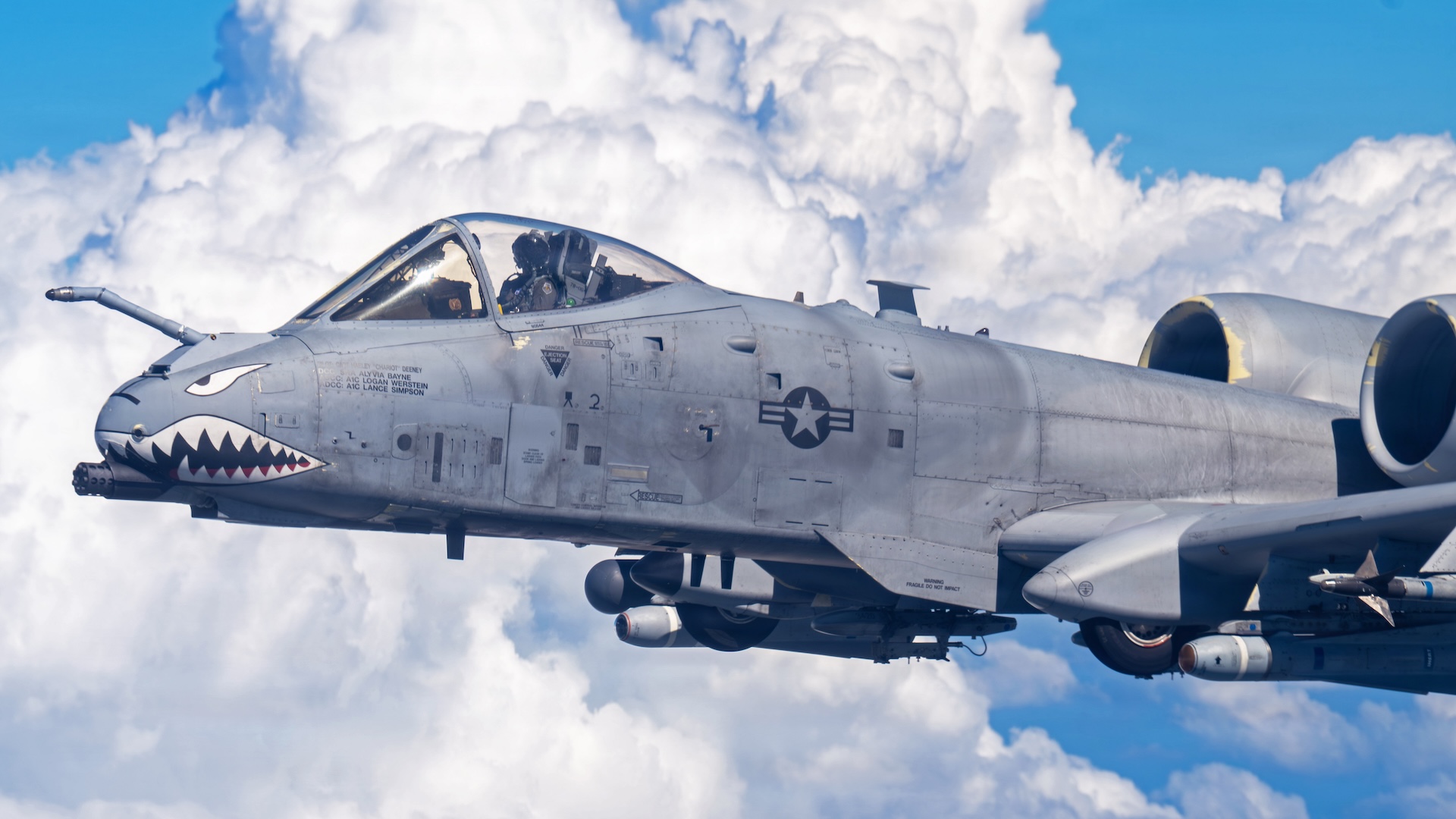
The U.S. Air Force Weapons School at Nellis Air Force Base, in Nevada, recently completed its final weapons instructor course for the A-10 Warthog. Despite an extension in service for three A-10 squadrons to 2030, and recent combat operations in the Middle East, the Weapons School has shuttered its elite training course in line with USAF divestment plans for the type, which were previously set for the end of 2026.
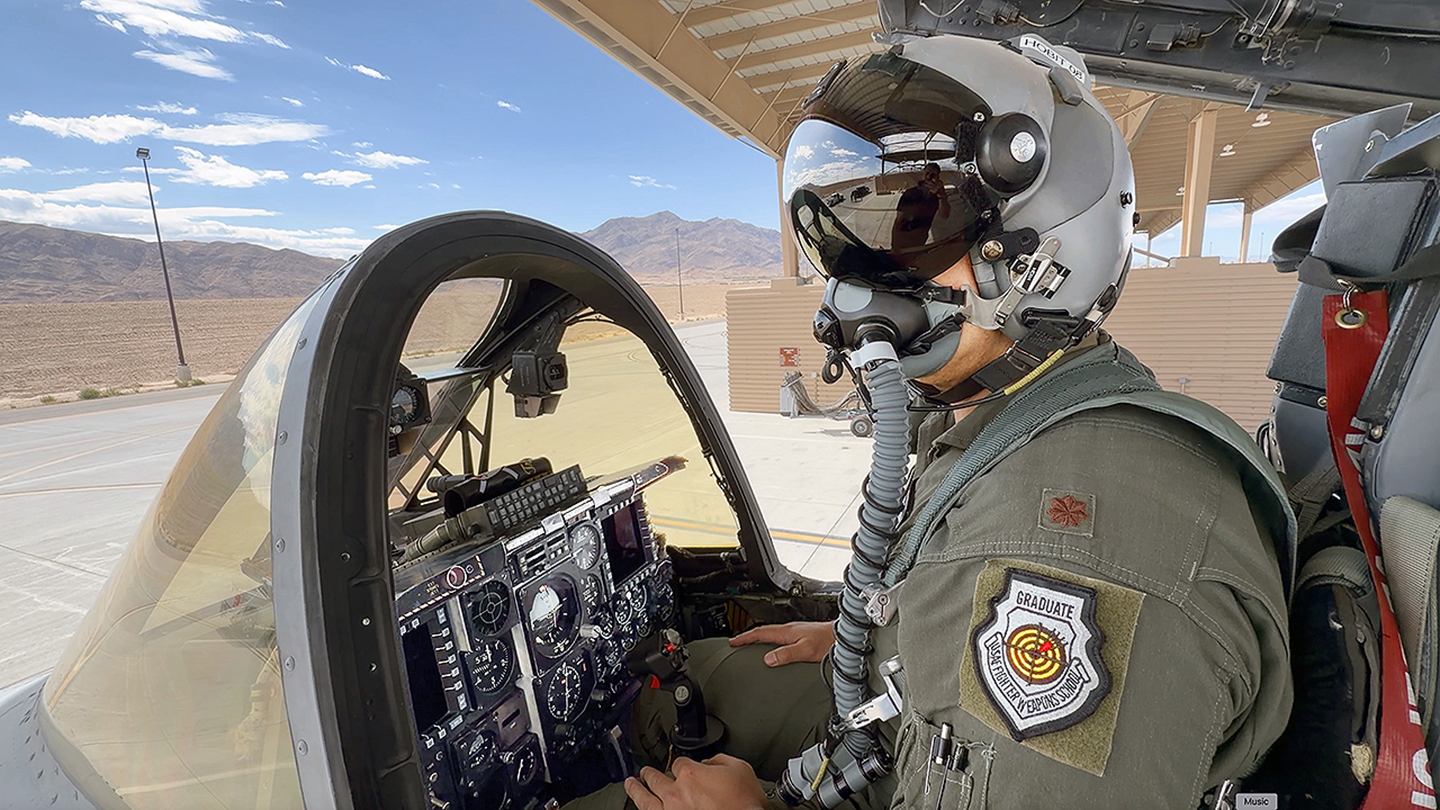
TWZ’s Jamie Hunter recently visited the 66th Weapons Squadron (WPS) and got a detailed cockpit and walk-around tour of an A-10C with “Trippin,” an experienced instructor pilot attached to the unit.
A full episode that goes in-depth with the A-10 Weapons School will kick-off TWZ’s first season of Special Access on YouTube soon, so stay tuned!
The Air Force will seek new ways to accomplish the missions of the A-10C attack jet, under an amendment added to the House Armed Services Committee’s version of the National Defense Authorization bill. While the Air Force has long campaigned for the Warthog’s retirement, the recent demand for the jet in conflicts in the Middle East has seen it earn a reprieve, with its standdown now scheduled for 2030.
Some of the numerous amendments to the bill come from Abe Hamadeh, the Republican representative for Arizona. He calls for the Secretary of the Air Force to keep supporting A-10 training, testing, experimentation, maintenance, and sustainment efforts through to the planned retirement date, as well as preserving lessons learned and operational expertise from A-10 missions to help shape future replacement systems. This would include keeping a formal training unit to teach pilots until the retirement. This is especially notable, since the unit in question, the 357th Fighter Squadron, graduated the last class of A-10 student pilots at Davis-Monthan Air Force Base, Arizona, back in April.
Four A-10Cs from the 357th Fighter Squadron deploy flares over a training range near Gila Bend, Arizona, May 1, 2026. U.S. Air Force photo by Airman 1st Class Samantha Melecio
Meanwhile, the Air Force officially concluded A-10 depot-level maintenance in February of this year, with the deactivation of the 571st Aircraft Maintenance Squadron at Hill Air Force Base, Utah, and the A-10 Weapons School is due to be shuttered this year.
An A-10C is positioned near the hangar during the “Hawg Out” ceremony, February 12, 2026, at Hill Air Force Base, Utah. The aircraft was the final A-10 to be maintained by the Ogden Air Logistics Complex’s 571st Aircraft Maintenance Squadron, which performed depot-level maintenance on the aircraft since 1998. U.S. Air Force photo by Cynthia Griggs
As part of this, the amendment also requests a report on the A-10’s “combat employment, recent operational relevance, lessons for future force design, and modernization options that could improve the return on continued sustainment of the program.”
Hamadeh lists a range of recent modernization efforts for the jet that “could improve the operational return on continued sustainment of the A-10 program.” These include electronic warfare capabilities, decoy or stand-in effects delivery, digital communications, sensor integration, precision weapons integration, survivability improvements, open-systems architecture, and human-machine teaming applications. The amendment also refers to the A-10’s recent “aerial refueling enhancements,” referring to the rapid introduction of a nose-mounted aerial refueling probe, which you can read more about here.
An A-10C uses its newly added probe to refuel from an HC-130J Combat King II aircraft in the U.S. Central Command area of responsibility, May 9, 2026. U.S. Air Force photo
At the same time, while preparing to retire the Warthog, the amendment calls for “a competitive experimentation plan for autonomous and non-traditional capabilities relevant to the A-10 mission set” — something that is far from new. According to the wording of the amended bill, this should “encourage autonomous replacement and modernization of the A-10, while also prioritizing participation of non-traditional defense firms.”
The amendment specifies that “autonomous, semi-autonomous, artificial intelligence-enabled, and adjunct aircraft capabilities” should all be investigated for carrying out future A-10-type mission sets.
The plan should include ways to ensure operational experiments are done “in a manner consistent with meaningful human command and control, by a qualified military aviator,” the amendment added. That should include mission-critical functions such as target engagement, weapons release, and decisions to abort a mission.
To help with the development of emerging technologies that could replace, or partly replace, the A-10, the amendment also proposes that a limited number of the jets should be used to support these studies.
Two 74th Fighter Squadron A-10Cs above Wake Island, in October 2022. These aircraft transited from Moody Air Force Base, Georgia, to Andersen AFB, Guam, to participate in a Dynamic Force Employment Operation. U.S. Air Force courtesy photo by Tech. Sgt. Eileen Adams
As part of accelerating this initiative, the study could involve nontraditional or venture-backed defense companies, commercial technology firms, or other companies that could rapidly develop the required hardware, software, autonomy, sensing, communication, or mission system capabilities.
This amendment raises the possibility that new technologies may ultimately provide an effective replacement for many A-10 mission sets, rather than a direct one-for-one crewed aircraft successor.
Drone-wise, the current lack of a follow-on to the MQ-9 Reaper, envisaged under a program dubbed MQ-Next, is a problem. The Air Force is now trying to replace the MQ-9 again, as you can read about here, but it remains unclear if the drone that emerges could stand in for a significant part of the A-10 mission. At the same time, the lack of a true uncrewed air combat vehicle (UCAV) program, one that would have emerged out of MQ-Next or otherwise, is also a hindrance in terms of a more survivable drone-based A-10 successor.
While not mentioned specifically, other options could include Collaborative Combat Aircraft (CCA), AI-enabled uncrewed systems that can deliver weapons, conduct reconnaissance, perform electronic warfare, identify and track targets, and operate either independently or with crewed platforms. However, while CCAs could be part of the solution, the A-10 mission has traditionally been seen as better suited to UCAVs.
Advances in autonomy also promise future networks of expendable or attritable drones that can maintain persistent surveillance over the battlefield, rapidly share targeting information, and deliver precision effects while reducing risk to pilots. In such a model, the traditional A-10 mission would not be replaced by one aircraft but by a distributed system of sensors, shooters, and autonomous collaborators. Of course, this is of particular relevance in the kinds of contested environments where a low-flying attack aircraft would be increasingly vulnerable.
A U.S. Air Force XQ-58 Valkyrie drops an ALTIUS-600 drone from its internal bay during a test. U.S. Air Force
Once the A-10s are retired, the amendment directs the Secretary of Defense to evaluate the potential transfer of the jets “to another military department” — presumably, within the U.S. military. While this is a topic that has sometimes come up among the enthusiast community, there is no realistic possibility of either the Marine Corps or the Army getting hand-me-down Warthogs. In the case of the Army, this service has long agreed not to operate fixed-wing crewed combat aircraft. For their part, the Marines have no capacity or funding to take on a whole different tactical platform, especially while winding down the F/A-18 Hornet fleet to standardize the F-35B/C as its tactical fixed-wing jet.
The idea of considering transferring retired A-10s to an ally or partner’s military has come up in the past, however, having been included in the 2024 National Defense Authorization Act (NDAA). As well as Jordan, which was named in the 2024 NDAA, Colombia and Ukraine are also known to have expressed interest in acquiring A-10s in the past.
More immediately, the amendment authorizes the reconstitution of an A-10 demonstration team. This would support “public outreach, recruiting, heritage, airshows, military ceremonies, and commemorative events, including those tied to the 250th anniversary of the founding of the United States.”
An A-10C, part of the Demonstration Team from Davis-Monthan Air Force Base. The A-10 was refueling on its way back to Arizona after the last official demo event, November 17, 2024, at the Pittsburgh Steelers game. U.S. Air National Guard photo by Tech. Sgt. Andrew Stover
Of course, it should be noted that all of these amendments don’t necessarily preclude the Air Force giving up the A-10. Provided the service can prove that it can retain the knowledge base, as well as plug any capability gaps, the path to letting the Warthog go would remain open.
As we have highlighted many times in the past, the A-10’s combination of capabilities remains difficult to replicate in a single aircraft. It was designed from the ground up for close air support, with significant battle damage tolerance, making it ideal for operating close to friendly forces, providing persistent, highly responsive fire support.
However, with the requirements of modern warfare shifting toward survivability in heavily defended airspace, the F-35A, as the A-10’s designated replacement, offers capabilities the older jet cannot match, including stealth, advanced sensor fusion, networked targeting, and the ability to strike from greater standoff distances. While the effort to replace the A-10 with the F-35 has been a controversial one, regardless of their respective merits, it’s clear that the Air Force needs combat mass, providing more ammunition for the Warthog’s proponents.
An F-35A streaks by as a 75th Fighter Squadron A-10C undergoes preflight checks before a Combat Hammer sortie at Eglin AFB, Florida. Combat Hammer is a weapons system evaluation program for air-to-ground munitions. U.S. Air Force photo/Samuel King Jr.
In the meantime, the Air Force has also moved away from the idea of having the F-35 as a direct successor to the A-10, reflected in the fact that one former Warthog unit, at Selfridge Air National Guard Base in Michigan, has been chosen to receive a squadron of F-15EX Eagle IIs. The balance of capabilities offered by the F-15EX means that it is now being eyed for other units, too, in line with an increased fleet size.
As for the current timeline for the A-10’s withdrawal, Craig McKee, of Phoenix, Arizona-based news channel ABC15, received an outline of the plan from Air Combat Command.
For Fiscal Year 2026, which runs through September 30, 2026, the 357th Fighter Squadron at Davis-Monthan inactivates, and the formal training pipeline ends. Meanwhile, at Nellis Air Force Base, Nevada, the A-10 Weapons School transitions to other types, and the 422nd Test and Evaluation Squadron stands down.
For Fiscal Years 2027 and 2028, Moody Air Force Base, Georgia, is scheduled to retain two active-duty A-10 squadrons, while Whiteman Air Force Base, Missouri, will keep one Air Force Reserve squadron. At this point, the total A-10 inventory is set to be 63 aircraft, with 42 in the active-duty inventory.
In Fiscal Year 2029, Moody Air Force Base is set to lose one squadron, while the total A-10 inventory drops to 42 aircraft.
A-10Cs from the 74th Fighter Squadron out of Moody Air Force Base, over the skies of southern Georgia, in 2014. The 74th FS is one of two active-duty, combat-ready squadrons at Moody. U.S. Air Force photo by Staff Sgt. Jamal D. Sutter/Released
Finally, Fiscal Year 2030 is planned to see the full divestment of the A-10 fleet.
All of this is in line with Air Force demands for the A-10’s career to come to a close by the end of the decade, the culmination of a long push to retire the jets, primarily due to concerns over the aircraft’s survivability.
At the same time, the special capabilities of the Warthog are clearly still in high demand, including in the Middle East.
Previously, it seemed like the lawmakers’ efforts to retain the A-10 might have come to an end, especially when it lost two of its most vocal supporters. Namely, after the death of Arizona’s Senator John McCain, followed by Republican Representative Martha McSally losing her bid for the Arizona Senate.
Now, with the A-10’s performance in Epic Fury, as well as a brief extension to its service, it looks like a new fight to save the Warthog might be emerging.
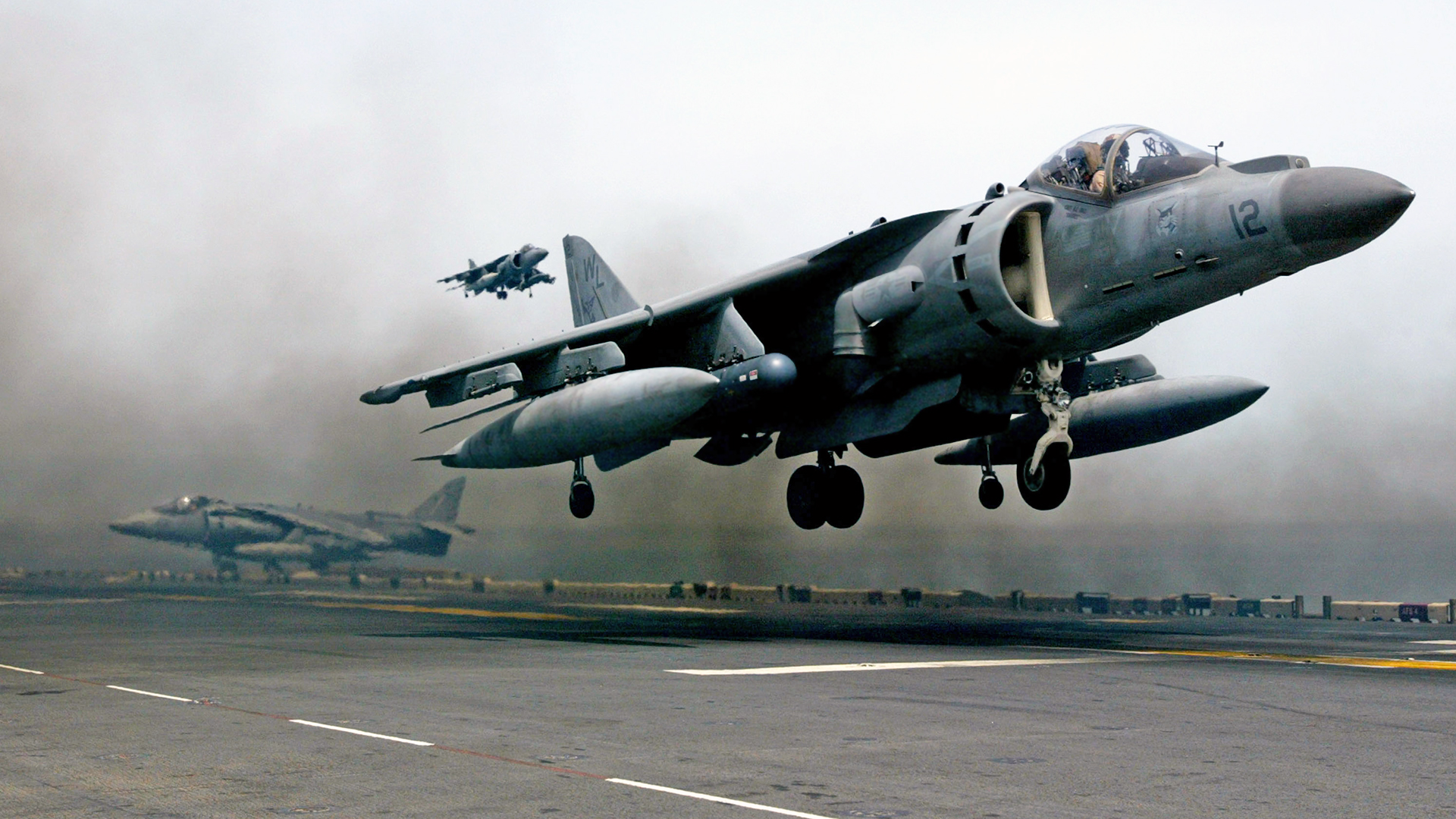
Today, the U.S. Marine Corps celebrated the end of more than half a century of Harrier ‘jump jet’ operations with a sundown ceremony at Marine Corps Air Station Cherry Point in North Carolina. For more than 20 percent of the history of the republic, the British-originated jump jet helped to defend America. The story of how the U.S. military first got involved in the program is a little-known but fascinating one. Michael Pryce, who has worked on various aircraft projects, from the Harrier to the Tempest, explains, and, in the process, connects the dots between the AV-8 and its replacement with the Marine Corps, the F-35B Lightning II.
Read our coverage of the Marine Harrier sundown here.
A British-made U.S. Marine Corps AV-8A of Marine Attack Squadron 231 drops a Mk 20 Rockeye cluster bomb during training, in 1979. U.S. Navy
Right from the start, the Harrier had been of immense interest to Britain’s ‘cousins’ across the pond. In the 1950s, the threat of nuclear war led to the creation of jump jets, and NASA, plus the U.S. Air Force, Navy, and Army soon found that developing rockets seemed easy in comparison to this new class of combat aircraft.
Despite valiant efforts, no American jump jet could be made to work.
A video shows the Ryan X-13 Vertijet during tests. It was one of many Cold War-era jump jet projects that ended in failure:
All three services got involved in trials of the Hawker Siddeley P.1127 Kestrel, the first iteration of what would become the Harrier, initially in a joint British-American-West German trials squadron. Then, six of the Kestrels were taken to America to continue testing there, and they were renamed as XV-6As once on U.S. soil. Unlike other jump jet projects, the P.1127 utilized four adjustable exhaust nozzles beneath the wing, which rotated to provide thrust for vertical, backward, or hovering flight as well as conventional forward movement.
The XV-6A Kestrel demonstrated operations from grass, semi-prepared surfaces, and ship decks, offering great operational flexibility. U.S. Air Force photo
The thing that impressed the Americans was the sheer simplicity of the British jump jet. With just one engine, and ‘not an electron’ needed in its flight controls, the Kestrel soon transformed into the Harrier, and in 1968 the U.S. Marine Corps decided they would acquire them. Despite not having flown any of the Kestrel trials, they knew they wanted to bring the jump jet into the front line as soon as possible.
The British makers of the Harrier, Hawker Siddeley, first found out about the U.S. Marines’ interest when two men in uniform walked into the Hawker Siddeley hospitality chalet at the 1968 Farnborough Airshow and said they wished to fly the jet. Within two weeks, they had. It was the start of the Marines’ love affair with the Harrier, but it was not America’s first encounter with the British jet.
A Royal Air Force Harrier jet involved in a mock bombing run at the Farnborough Airshow in 1968. Photo by PA Images via Getty Images
Over 10 years before, another American had walked into Hawker’s fancy tent at another Farnborough airshow and asked to see their design for what would become the Harrier. Col. Willis “Bill” F. Chapman of the U.S. Air Force was an American in Paris, there to find European weapons that America could fund. Jump jets were all the rage, and the Hawker P.1127 seemed to him to be the most promising.
Six pre-production Hawker Siddeley Harrier GR1s pictured at the manufacturer’s test facility at Dunsfold aerodrome, Surrey, in 1968. The first Royal Air Force squadron to be equipped with the Harrier GR1, No. 1 Squadron, started to convert to the aircraft at RAF Wittering in April 1969. Crown CopyrightCol. Willis F. Chapman was commander of the 340th Bomb Group in 1944. Joseph Heller based the Catch-22 character of Colonel Cathcart on him, stretching artistic licence. Chapman thought Heller was a poor bombardier. Patricia C. Meder
As leader of the 340th Bomb Group in Italy in World War II, Chapman had seen dozens of his B-25 bombers wiped out, first by a volcanic eruption and then by a Luftwaffe attack. He knew nuclear missiles could do much worse. Soon, he had funded the Pegasus engine, the heart of the Harrier, and struck up a strong friendship with the Hawker design team led by Ralph Hooper, driving their design forward, from the drawing board into the sky.
Ralph Hooper, right, after flying in the two-seat Harrier he designed in the 1970s. BAE Systems
In 1968, one of the U.S. Marines who walked in at Farnborough would play an equally vital role in getting the Harrier into Marine service. Col. Tom Miller had flown in Korea and Vietnam, and scored a speed record in a McDonnell F4H Phantom for good measure. Deeply impressed by the Harrier, he went into battle on ‘The Hill’ to secure it for the Corps, then on to lead it into service as the commander of the 2nd Marine Aircraft Wing at Cherry Point — the same unit that retired the Harrier today, 55 years later.
John H. Glenn, Jr., Gen. David M. Shoup, Commandant of the Marine Corps, and then Lt. Col. Thomas H. Miller Jr., at Marine Corps Headquarters in 1960. (Marine Corps Archives)
The rest of the history of the Harrier is well known. From the initial, British-built AV-8A to the jointly-developed, with mostly American technology, second-generation AV-8B Harrier II, the Harrier found more use, and created more jobs, in America than in Britain. The American connection was the making of the British jump jet, and helped cement relations between the two countries’ pilots, engineers and ground crews over decades.
In the 1980s, there were attempts to make a new, supersonic successor, with the speed of the Marines’ F/A-18A Hornet and the vertical flight ability of the Harrier. Once again, the Americans turned to British designers. In 1981, Hooper and a team of engineers from the Harrier factory at Kingston-upon-Thames went to work at McDonnell Douglas in St. Louis, Missouri, to design the ultimate jump jet. Over drawing boards and at tailgate parties after ball games, they evolved a great beast of a jet, the P.1218, with two crew, two engines and the latest tech, to succeed the U.S. Navy’s F-14A Tomcat fleet interceptor and A-6E Intruder all-weather strike aircraft. Despite arriving at a joint design, money was limited, and the work was re-focused on research with NASA — the start of what in time would become the Joint Strike Fighter program.
Images of the British Aerospace P.1218 concept are very hard to come by, but the joint work with McDonnell Douglas fed into the broadly similar Model 279-4 design, seen here. McDonnell Douglas/Boeing
Although the U.S Navy buys jets for the Marines, the big twin-engined design was of less interest to the Corps than another of Hooper’s designs, a smaller, single-engine jet that weighed the same as the Hornet. This supersonic jump jet was seriously studied in the United Kingdom, with tests and design work over many years. The U.S. Marines were involved too, officers visiting the Kingston factory to talk about its prospects. When Britain delayed jump jet plans in favor of what became the Eurofighter Typhoon, it meant Hooper’s single-engined P.1216 design, with its wild-looking twin-boom configuration, seemed to miss its chance with the Marines. The British designer retired too, but he did not let that stop him.
A British Aerospace P.1216 in pseudo-U.S. Navy VFA-14 “Tophatters” markings escorts Soviet Backfire bombers, alongside a British version of the twin-boom supersonic jump jet. BAE Systems
Keen to see a supersonic jump jet in Marine service, he turned to Miller once again. As the accompanying letter in this article shows, in 1992 he gave Miller the technical plans of the new jump jet, and Miller showed it around at Marine HQ at a vital time — just as 10 years of research was turning into the serious acquisition program for the Joint Strike Fighter.
via author
The emerging requirements specified a weight the same as the Hornet — the same, too, as Hooper’s P.1216. Speed, range and weapons load were close too. While avionics and stealth had advanced beyond the British jet’s capabilities, the knowledge that the man who made the Harrier thought a practical jump jet of Hornet size would work helped get the ball rolling on the third generation of jump jets. Miller’s support ensured the Corps got behind it, leading to the Lockheed Martin F-35B now taking over Cherry Point.
An F-35B with Marine Fighter Attack Training Squadron (VMFAT) 501 prepares for takeoff at Marine Corps Air Station Cherry, North Carolina. U.S. Marine Corps photo by Lance Cpl. Christopher Hernandez
Making a fighting jump jet that works is extremely challenging. The Harrier had its problems — without rigid training, accident rates echoed those of its 1950s origins. The F-35B has had to overcome its own hurdles too.
In the early 2000s, Hooper was called in to help fix those. The transatlantic story of the Harrier may have ended today, but the people who found ways to cut bureaucratic corners by trusting each other, and who cracked the technical code of making the Harrier work, continue to support the next generation of F-35Bs.
Hawker Siddeley Aviation Executive Director and Chief Engineer Ralph Hooper talks U.K. Aerospace Minister Michael Heseltine through the features of a mock-up of the HS.1182 cockpit — the future Hawk trainer. Photo by PA Images via Getty Images
The ‘Harrier Mafia’ worked their own way, but always in line with the motto of the Marine Corps. “Semper Fi” was a value shared by British pilots who flew American Harriers in combat operations on exchange as much as by the men and women who made, and supported, 55 years of Harrier operations at Cherry Point.
Jump Jet: The Secret History of the Harrier by Michael Pryce is published on August 27 and is available for pre-order.
The unmistakable howl of the AV-8B Harrier II has been a soundtrack to U.S. Marine Corps aviation for more than four decades. From the deserts of the Middle East and Afghanistan to the decks of amphibious assault ships at sea, the aircraft’s ability to take off from short runways, operate from austere forward bases, and land vertically made it one of the most distinctive combat aircraft ever to wear American markings. Before then, its predecessor, the first-generation AV-8A Harrier, had pioneered the ‘jump jet’ in U.S. service, after entering Marine Corps service in 1971.
Now, that illustrious era has come to an end.
A Marine plane captain from Marine Attack Squadron 223, Cherry Point, North Carolina, observes pre-flight checks of an AV-8B at Gowen Field, Boise, Idaho, in April 2021. U.S. Air National Guard photo by Senior Master Sgt. Joshua C. Allmaras
In a ceremony today, the Marine Corps said its official farewell to the AV-8B when its final operational Harrier II squadron, Marine Attack Squadron 223 (VMA-223), known as the “Bulldogs,” marked the retirement of the aircraft at Marine Corps Air Station Cherry Point, North Carolina.
The event closes a remarkable chapter in Marine aviation history. The Harrier’s departure marks more than the retirement of an aircraft; it represents the conclusion of a concept that shaped Marine air power for generations and helped define the Corps’ expeditionary character.
U.S. Marine Corps AV-8Bs with Marine Attack Squadron 223, Marine Aircraft Group 14, 2nd Marine Aircraft Wing, fly over the coast of North Carolina on May 15, 2026. U.S. Marine Corps photo by Lance Cpl. Perri Wood
The Harrier was more than just another attack jet. It was the embodiment of the Marine Corps’ longstanding determination to bring airpower wherever Marines fought, regardless of whether a conventional airfield existed.
The Harrier’s story began long before the AV-8 entered U.S. military service. Derived from the British Hawker Siddeley Harrier jump jet, the aircraft was built around a revolutionary concept: vertical and short takeoff and landing, or V/STOL. Using swiveling engine nozzles, the aircraft could launch from improvised sites, roads, damaged airfields, and the decks of even relatively small ships. During the Cold War, when planners feared that traditional runways would be among the first targets destroyed in a major conflict, the concept had obvious appeal, but it was only the Harrier that saw real success as a V/STOL combat jet.
The Marine Corps embraced the idea early on. While the first-generation AV-8A proved the concept, the AV-8B Harrier II transformed it into a truly capable battlefield strike aircraft. The AV-8B featured a larger composite wing, improved performance, greater payload capacity, and significantly enhanced avionics. Later upgrades introduced night-attack capabilities and radar-equipped AV-8B Plus variants, keeping the aircraft relevant well into the 21st century. In recent years, all the Marine single-seaters still in service were ‘radar birds’ equipped with the AN/APG-65 radar that was ported over second-hand from F/A-18A/B Hornets and which conferred a significant air-to-air capability.
Marines work on the radar in the nose of an AV-8B on the flight deck of the amphibious assault ship USS Bonhomme Richard (LHD-6). U.S Navy photo by Mass Communication Specialist 1st Class Ty C. Connors/ Released
What made the Harrier exceptional was not simply its ability to hover. Its real value lay in its flexibility. Marine commanders could position Harriers close to frontline forces, reducing response times and increasing the effectiveness of close air support missions. The aircraft became a natural fit for Marine Expeditionary Units operating from amphibious assault ships, where its unique capabilities allowed fixed-wing tactical aviation to accompany Marines far from traditional airfields or aircraft carriers.
An AV-8B assigned to Marine Attack Squadron 311 lands aboard the amphibious assault ship USS Peleliu (LHA-5) as it steams through the South China Sea in June 2008. U.S. Navy photo/Petty Officer 2nd Class Scott Webb
The Harrier quickly earned its combat credentials.
During Operation Desert Storm in 1991, Marine Harriers flew thousands of sorties in support of coalition ground forces. The aircraft demonstrated its ability to sustain a high operational tempo while flying in demanding conditions. In the decades that followed, Harriers participated in virtually every major Marine Corps combat operation, including missions over the Balkans, Afghanistan, Iraq, Libya, and against ISIS.
Two Marine Corps AV-8Bs are given final preflight checks as their pilots prepare for takeoff from the amphibious assault ship USS Nassau (LHA-4) during Operation Desert Shield. U.S. Department of Defense
The post-9/11 period of relentless operations arguably became the Harrier’s defining period. The AV-8B was a natural fit for counterinsurgency warfare. Equipped with advanced targeting pods and precision-guided munitions, Marine Harriers became a common sight over Iraq and Afghanistan, where their ability to remain close to ground forces made them particularly valuable.
Yet, even as the Harrier continued proving its worth in combat, its future was becoming increasingly uncertain.
Lt. Col. Thomas D. Gore, former commanding officer of Marine Attack Squadron 223, pilots an AV-8B over the Kajaki Dam in Helmand province, Afghanistan. Between November 2011 and May 2012, VMA-223 provided close air support for Marines and their Afghan and coalition partners conducting counterinsurgency operations in southwestern Afghanistan. U.S. Department of Defense
The aircraft’s age, maintenance demands, and limited growth potential eventually caught up with it. The jet was also notably demanding on its pilots, requiring a unique training syllabus to operate safely and efficiently.
Looking toward the demands of future potential conflicts against sophisticated adversaries, Marine aviation planners concluded that its next jump jet would require stealth, advanced sensors, networked warfare capabilities, and greater overall survivability than a fourth-generation attack aircraft could provide.
Like the Harrier, the F-35B possesses short takeoff and vertical landing capability. Unlike the Harrier, however, it combines that flexibility with stealth technology, sensor fusion, powerful electronic warfare systems, and the ability to operate as an intelligence-gathering node across the battlespace. For Marine aviation leaders, the F-35B offered a path to preserve the expeditionary advantages pioneered by the Harrier while dramatically expanding combat capability. You can read more about the changes the F-35B is bringing to Marine Corps tactical aviation here and here, as well as on-scene reporting of its operations from an improvised forward arming and refueling point, here.
An F-35B attached to Marine Fighter Attack Squadron 211 is directed to take off from the amphibious assault ship USS Essex (LHD-2), during flight deck operations on April 22, 2026. U.S. Navy photo by Mass Communication Specialist Seaman Ivan A. GarciaAn F-35B about to be rearmed with inert AIM-120 missiles and Stormbreaker guided munitions on a stretch of road next to the Pacific coastline in California. James Deboer
Notably, however, the service is also procuring F-35C versions that can operate from big-deck aircraft carriers, as well as land bases.
One by one, Marine Harrier squadrons began converting to the F-35B. Aircraft were retired, maintainers retrained, and pilots transitioned to the new platform. The process accelerated as the Marine Corps pursued broader modernization efforts focused on preparing for future conflicts, particularly in the Indo-Pacific region.
The transition fully away from the Harrier was outlined in the 2022 Marine Aviation Plan. U.S. Marine Corps
The signs of the Harrier’s approaching retirement became increasingly visible. In 2024, the final two Marine pilots completed AV-8B qualification training, becoming the last aviators ever designated as Harrier pilots by the Corps. Their graduation marked the beginning of the end for the ‘Flying Leatherneck’ Harrier community.
U.S. Marine Corps Maj. Eric Shiebe, an AV-8B Harrier pilot and executive officer, and Sgt. Tatiana Rios, a fixed-wing aircraft airframe mechanic, both with Marine Attack Squadron 223, participate in an incentive flight at Marine Corps Air Station Cherry Point, North Carolina, May 19, 2026. U.S. Marine Corps photo by Lance Cpl. Bryan Giraldo
The final operational chapter belonged to VMA-223, which carried the Harrier banner to the very end. Their deployment aboard the amphibious assault ship USS Iwo Jima (LHD-7) represented the last operational deployment of Marine Corps Harriers.
As part of the Iwo Jima Amphibious Ready Group (ARG), the 22nd Marine Expeditionary Unit and its Harriers were part of Operation Southern Spear, the U.S. strikes on boats suspected of carrying illicit narcotics in the Caribbean. The Iwo Jima ARG was also in the region for the U.S. operation to capture Venezuelan President Nicolás Maduro, earlier this year.
When the squadron completed its mission and the final aircraft returned home, the countdown to retirement entered its final phase.
For the Marines who flew and maintained the aircraft, the retirement is bittersweet.
The Harrier demanded respect. Its unique flight characteristics and vertical landing operations required exceptional skill from pilots. Maintainers often worked tirelessly to keep aging aircraft mission-ready. Yet those challenges helped create a close-knit community built around a platform unlike any other in American service.
An AV-8B and an F-35B during the change of command and redesignation ceremony for Marine Fighter Attack Squadron 214 at Marine Corps Air Station Yuma, Arizona, in March 2022. U.S. Marine Corps photo by Sgt. Samuel Ruiz
In proving that fixed-wing tactical aviation can operate from challenging locales, the Marine Harrier continued a concept of operations that the service had pioneered in the Pacific in World War II. It gave Marine commanders unprecedented flexibility and reinforced the Corps’ expeditionary identity. Long before concepts such as distributed operations and expeditionary advanced bases became buzzwords, the Harrier proved that combat aircraft could operate from unconventional locations and support dispersed forces.
As the Harrier’s designated successor, it is fitting that the F-35B preserves the ability to operate from amphibious ships and austere locations while adding capabilities unimaginable when the AV-8B first entered service.
Still, there will never be another aircraft quite like the AV-8B, especially as far as charisma is concerned, and the type was a firm airshow favourite.
As the final Marine Corps Harriers make their last flights, they leave behind an enduring influence on Marine aviation doctrine and expeditionary warfare. While the United Kingdom gave up its Harrier IIs in a rushed retirement that you can read more about here, the AV-8B remains in frontline service in smaller numbers with Italy and Spain. It remains to be seen if a customer for former Marine Corps Harriers will come forward, but these aircraft remain capable and offer unique capabilities, something we have addressed in the past.
The Marine Corps jump jet era is over. But the impact of the Harrier, and the men and women who flew and maintained it, will continue to shape Marine aviation for years to come.
Kristen Welker questioned Trump’s allegations that races for California governor and 2020 president were ‘rigged’
Donald Trump walked out of an interview with NBC’s Meet the Press after he repeatedly made false claims that the 2020 presidential election was rigged and faced questions about compensation for those charged in the January 6 insurrection.
The US president’s abrupt exit came during a tense exchange between himself and NBC’s Kristen Welker during a Friday interview in Wisconsin that aired on Sunday.
Firefighters work to extinguish a fire engulfing a residential area following a Russian airstrike in eastern Ukraine, FILE PHOTO. Credit: EPA/MARIA SENOVILLA via AMNA
At least ten people were killed and dozens more were injured after Russia launched a major overnight assault on cities across Ukraine.
Six people were killed in Dnipro, and thirty-six were injured following the strikes in the early hours of Tuesday. Four people were killed in Kyiv, and at least fifty-one were injured, with thirty-five of those hospitalized, officials reported.
Kyiv Mayor Vitali Klitschko said two high-rise apartment buildings had been hit in the city, and there are fears people are trapped under rubble. Air raid warnings were in place across most of Ukraine, while large plumes of smoke could be seen rising from the center of Kyiv.
Last week, Moscow warned it would launch “systematic strikes” on Ukraine in response to a drone attack last month on a dormitory in Ukraine’s Russian-held Luhansk region, which killed twenty-one people.
The attacks come after Ukrainian President Volodymyr Zelensky reiterated warnings of a possible large Russian strike on Monday and urged residents to pay special attention to air raid alerts. “Intelligence warnings regarding Russian strikes remain in effect. A massive strike is possible; they have prepared one,” Zelensky said in his nightly video address.

 Login
Login