Normal view

Footage Shows Moment Israeli Soldier Shot Seven-Month-Old Baby in the West Bank

9 June 2026 at 20:47
Footage released by the Israeli rights group B’Tselem shows the moment an Israeli soldier opened fire on a vehicle in the Israeli-occupied West Bank and killed a seven-month-old baby, Sam Abu Haikal. The killing occurred on Friday when Sam’s father, Fahd Abu Haikal, was driving home in the city of Hebron, when IDF soldiers appeared […]

Trump amenaza con represalias a Irán tras derribar un helicóptero de EEUU

9 June 2026 at 18:28
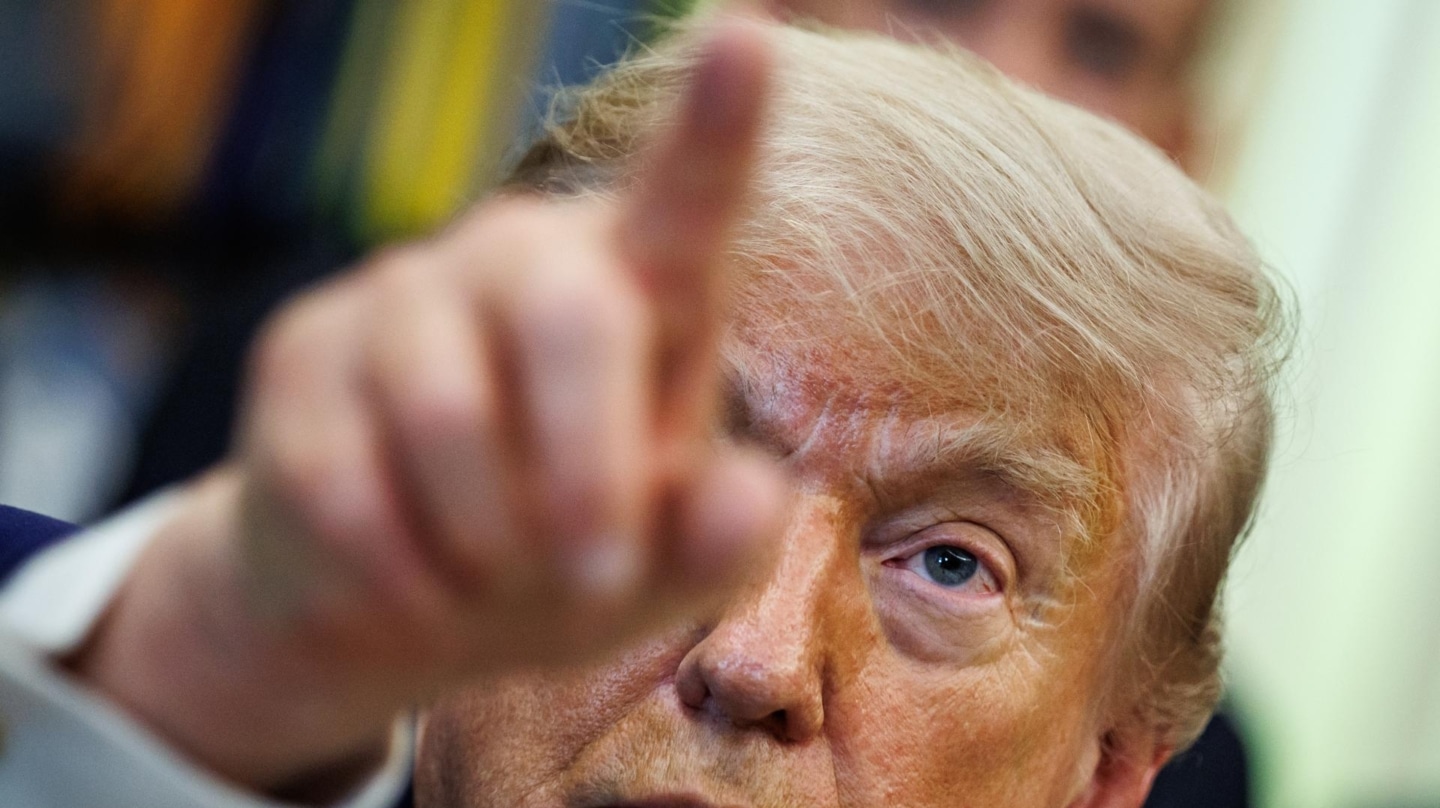
Donald Trump, presidente de EEUU, en una comparecencia en el Despacho Oval.

La tregua entre Estados Unidos e Irán podría estar a punto de saltar por los aires. El presidente de Estados Unidos, Donald Trump, ha dicho este martes que habrá represalias contra Irán por haber derribado un helicóptero estadounidense en el estrecho de Ormuz. El ataque no dejó víctimas. Tuvo lugar 100 días después del inicio de las hostilidades. Desde el 7 de abril está en vigor una tregua cada vez más frágil.

"Acabo de ser informado por nuestras Fuerzas Armadas de que los iraníes derribaron uno de nuestros helicópteros Apache de alta tecnología mientras patrullaba el estrecho de Ormuz", ha escritoTrump en su red Truth Social. "Dos pilotos estuvieron involucrados, ambos sanos y salvos. No obstante, Estados Unidos debe, necesariamente, responder a este ataque", ha añadido.

El helicóptero estadounidense cayó cerca de la costa de Omán, donde los dos soldados a bordo sobrevivieron, según informó este martes el Comando Central de las Fuerzas Armadas de Estados Unidos (Centcom). Fuerzas estadounidenses rescataron a los dos tripulantes del helicóptero AH-64 Apache, según informa la agencia Efe.

En el golfo de Omán, el Ejército estadounidense disparó a un buque petrolero por violar el bloqueo que Washington impone desde el 13 de abril contra embarcaciones que salen y llegan a puertos iraníes.

Discrepancias con Netanyahu

Estos hechos ocurren en medio de los nuevos enfrentamientos en la región, donde Irán e Israel han intercambiado ataques en los últimos días. Trump exigió el lunes a las dos partes que pararan. Las discrepancias con su aliado, el primer ministro israelí, Benjamin Netanyahu, son cada vez más intensas. Netanyahu quiere seguir atacando el Líbano hasta reducir a su mínima expresión a Hizbulá. Pero la campaña militar contra Irán y sus aliados se ha revertido contra Israel y EEUU.

El presidente estadounidense aseguró que podría alcanzar un acuerdo con Irán en "dos o tres días", el enésimo plazo que plantea tras varias semanas de negociación con la República Islámica. Sin embargo, en cualquier momento puede decidir más ataques. Irán no se quedará de brazos cruzados y la escalada salpicará a toda la región.

Ben Gvir Says Israel Should Kidnap Women and Children in Lebanon

9 June 2026 at 19:29
Israeli media reported on Tuesday that Israeli National Security Minister Itamar Ben Gvir suggested at a security cabinet meeting that the Israeli military should kidnap women and children in Lebanon as a way to put pressure on Hezbollah. “Let’s start thinking outside the box about Hezbollah,” Ben Gvir said, according to The Jerusalem Post. “Also, […]

Exodus From Lebanon’s Tyre as Israel Orders Locals Out of Christian Quarter

9 June 2026 at 18:55
For the first time since they invaded Lebanon in March, the Israeli military issued an explicit evacuation warning for the Christian quarter of the ancient city of Tyre, claiming there were Hezbollah secretly hiding amongst the Christians. What followed was an attempt by the remaining Christian population to flee northward, an effort that would’ve been […]

14 Killed, 31 Wounded in Latest Israeli Strikes Across Southern Lebanon

9 June 2026 at 18:41
The ceasefire in Lebanon seems as tenuous as ever, with Israeli troops carrying out a flurry of strikes across southern Lebanon, leaving at least 14 people dead and 31 others wounded, and bringing the overall death toll since the Israeli invasion began to 3,666 killed. The largest number of casualties reported were in the city […]

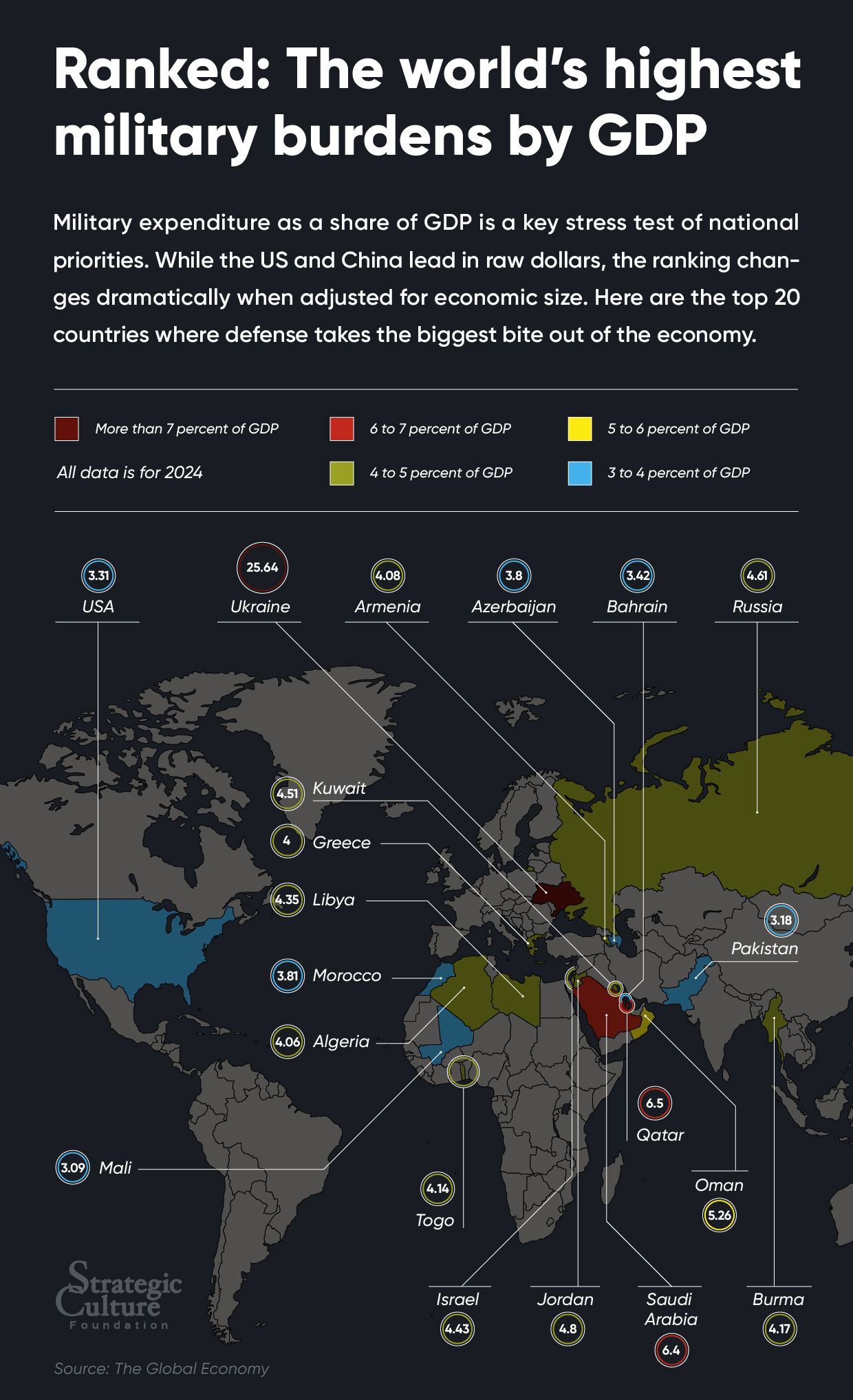
Ranked: The world’s highest military burdens by GDP

By: A A
9 June 2026 at 16:49

Military expenditure as a share of GDP is a key stress test of national priorities. While the US and China lead in raw dollars, the ranking changes dramatically when adjusted for economic size. Here are the top 20 countries where defense takes the biggest bite out of the economy

Join us on TelegramTwitter, and VK.

Contact us: info@strategic-culture.su

(Click on the image to enlarge)


The rise of the Global South

By: A A
9 June 2026 at 15:47

By Chris HEDGES

Join us on TelegramTwitter, and VK.

Contact us: info@strategic-culture.su

The war on Iran has not only ended in a humiliating defeat for the United States, but resulted in a dramatic shift in the balance of power in the Middle East and the Global South.

The humiliating defeat of Israel and the United States in their war on Iran, along with the savagery of the ongoing genocide in Gaza, are ushering in a new world order.

This order is one where voices of reason and stability emanate not from the West — which spent tens of billions of dollars sustaining Israel’s genocide — but from the Global South, including China. It is an order where alliances are being rapidly reconfigured to protect countries from a rogue American state that lashes out like a wounded beast, as it spirals toward terminal decline.

The end of the U.S. Empire, led by an impetuous and clueless Donald Trump, is irreversible.

The U.S. has lost its sixth war in the Middle East in 25 years. Iran’s power has been enhanced not only because it — along with Oman — controls the Strait of Hormuz — where roughly 25 percent of the world’s seaborne oil and 20 percent of the world’s seaborne liquified natural gas pass through — but because it has delivered a stark message, with its drones and missiles, to U.S. allies and bases in the region, while sending the global economy into a tailspin.

Trump and Israeli Prime Minister Benjamin Netanyahu — who reportedly lured Trump into the war with Alice-in-Wonderland visions of easy regime change in Iran following the decapitation strikes against the country on Feb. 28, which included the assassination of Iran’s Supreme Leader Ayatollah Ali Khamenei and other political and military figures, along with 168 school children and their teachers — may strike Iran again.

They are desperate. But a renewed bombing of Iran will not work. Iran’s mosaic defense strategy ensures all political and military commanders are easily replaced.

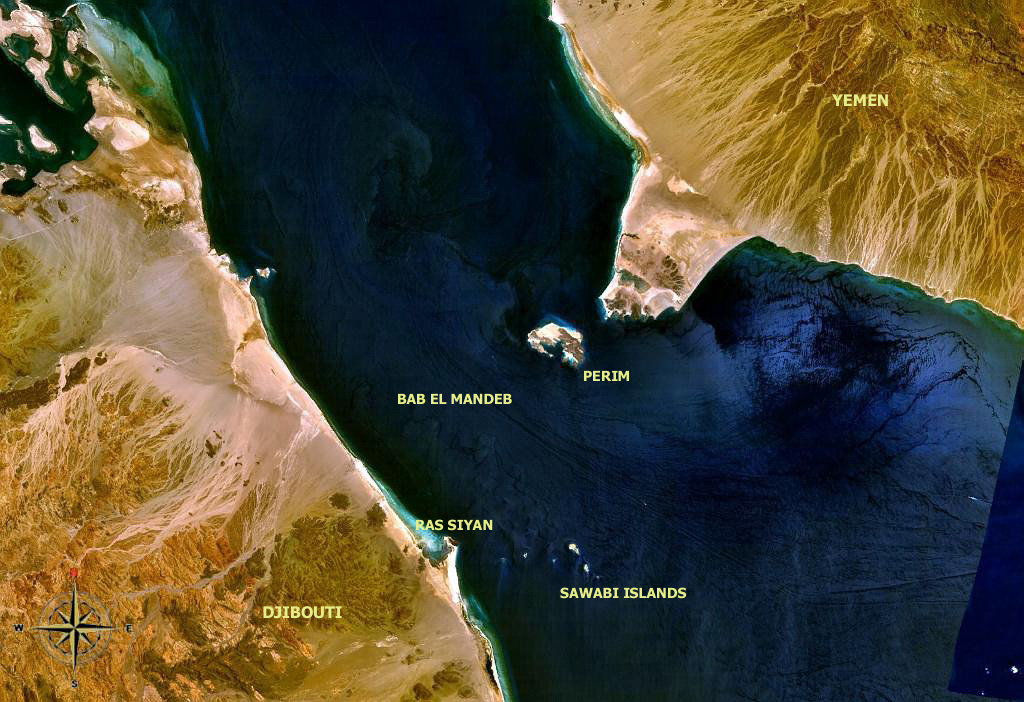
Iran can strangle the world economy by closing the Strait of Hormuz. It can accelerate the pain by getting its Yemeni allies — Ansar Allah — to close the Bab el-Mandeb Strait in the Red Sea, just as they did to Israel-bound ships when defending Palestinians after Oct. 7.

This could result in a complete blockade. Saudi Arabia, with the Bab el-Mandeb Strait open, is able to bypass the Strait of Hormuz and export 5 million barrels a day through its pipeline to tankers in the Red Sea port of Yanbu.

Satellite photo of Bab-el-Mandeb, the strait between the Red Sea and the Gulf of Aden. (WorldWind software/Wikimedia Commons/ Public Domain)

If a ceasefire between the U.S. and Iran is not reached soon, the global economy will crash, perhaps within weeks. The U.S. and its allies, such as Japan, have released some of their extensive strategic oil reserves, however they will not be able to cushion markets indefinitely.

Stockpiles in America’s Strategic Petroleum Reserve are near their lowest in more than 40 years. Once these reserves are depleted, the price of fuel will skyrocket. If a barrel of oil shoots up to $200, the price at the pump could climb as high as $10 per gallon. This, coupled with shortages of other petroleum-based products, along with nitrogen fertilizer, aluminum and helium — an indispensable element in the production of MRI machines and semiconductors — are already shutting down vital industries and driving up prices on basic commodities.

The World Bank projects a 31 percent increase in the cost of nitrogen fertilizers alone — which are produced in the Persian Gulf and transit through the Strait of Hormuz — if the war continues. This will mean a steep rise in the price of food.

Trump is like a dog being pushed unwillingly into a crate. When it appears a deal with Iran is close, he snarls and barks, sabotaging the proposed 30-to-60-day ceasefire agreement. Netanyahu’s apoplectic fits about any agreement that would halt Israeli attacks against Lebanon, along with the potential release of some of Iran’s estimated $100 billion in frozen assets, spurs Trump’s momentary defiance.

But the clock is ticking. There is little time left. And the longer Trump waits, the worse it will get. Neither Trump, nor Netanyahu, are the masters of this game. Iran holds the cards.

Israel’s dream of formalizing its hegemony over the Middle East, codified in the Abraham Accords during Trump’s first term — which normalized relations between Israel and regional states — is dead. This war and the genocide in Gaza killed it.

Trump is attempting to revive them by inserting them into a deal to end the war on Iran. He has demanded states previously uninvolved with the Abraham Accords, such as Pakistan and eventually, Iran, sign up to normalize relations with Israel. Pakistan — the only state to publicly respond — rejected the invitation due to what it called a clash with the country’s “fundamental ideologies.” Every other state Trump appealed to reacted with bewildered silence.

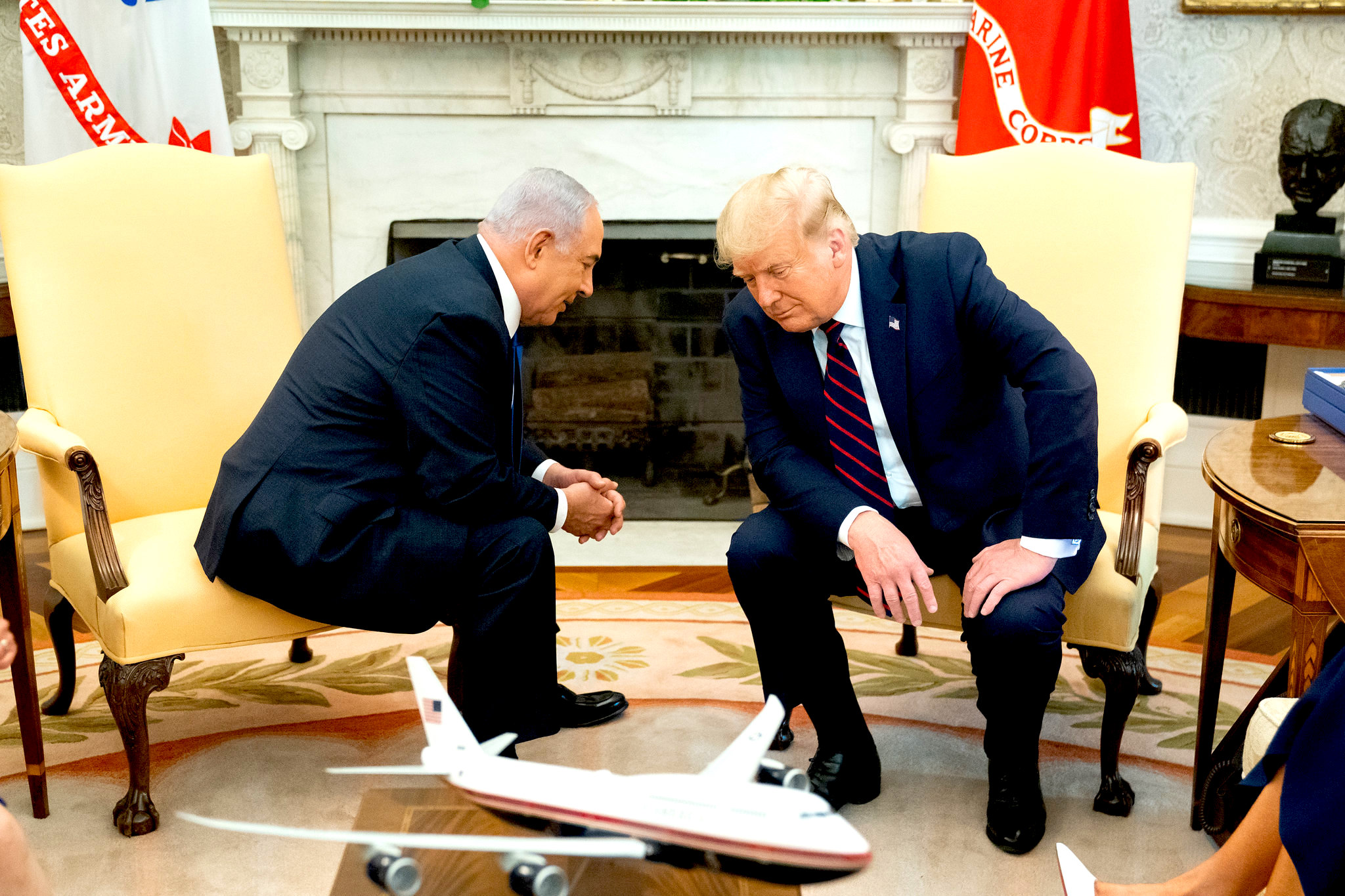
Netanyahu, left, and Trump on Sept. 15, 2020, the signing ceremony day for the Abraham Accords among Israel, Bahrain and the United Arab Emirates. (White House, Andrea Hanks)

Iran demands the removal of sanctions and an end to the naval blockade — which the Central Intelligence Agency concluded Iran can endure for months before it experiences severe economic hardship — in exchange for reopening the Strait of Hormuz. The proposed agreement makes no mention of Iran’s ballistic missile arsenal, which U.S. military and intelligence officials believe remains at 70 percent pre-war levels, according to The New York Times.

Iran, Pakistan, Turkey and Qatar — a lead negotiator with Hamas — are the new powerbrokers in the region.

Pakistan not only signed a mutual defense pact with Saudi Arabia in 2025, it deployed troops, jets and air defense systems to the Gulf dictatorship in April. It has also been hosting ceasefire talks between Trump’s Dumb and Dumber duo of lead negotiators — his feckless son-in-law Jared Kushner and fellow real estate developer and golfing partner, Steve Witkoff.

The war has enhanced the prestige and power of China, which compared to Washington is seen globally as embodying rational, prudent and stable leadership. Iran, in a sign of the new global order, permits Chinese and Pakistani tankers, along with other ships not allied with Israel and the U.S., to travel through the Strait.

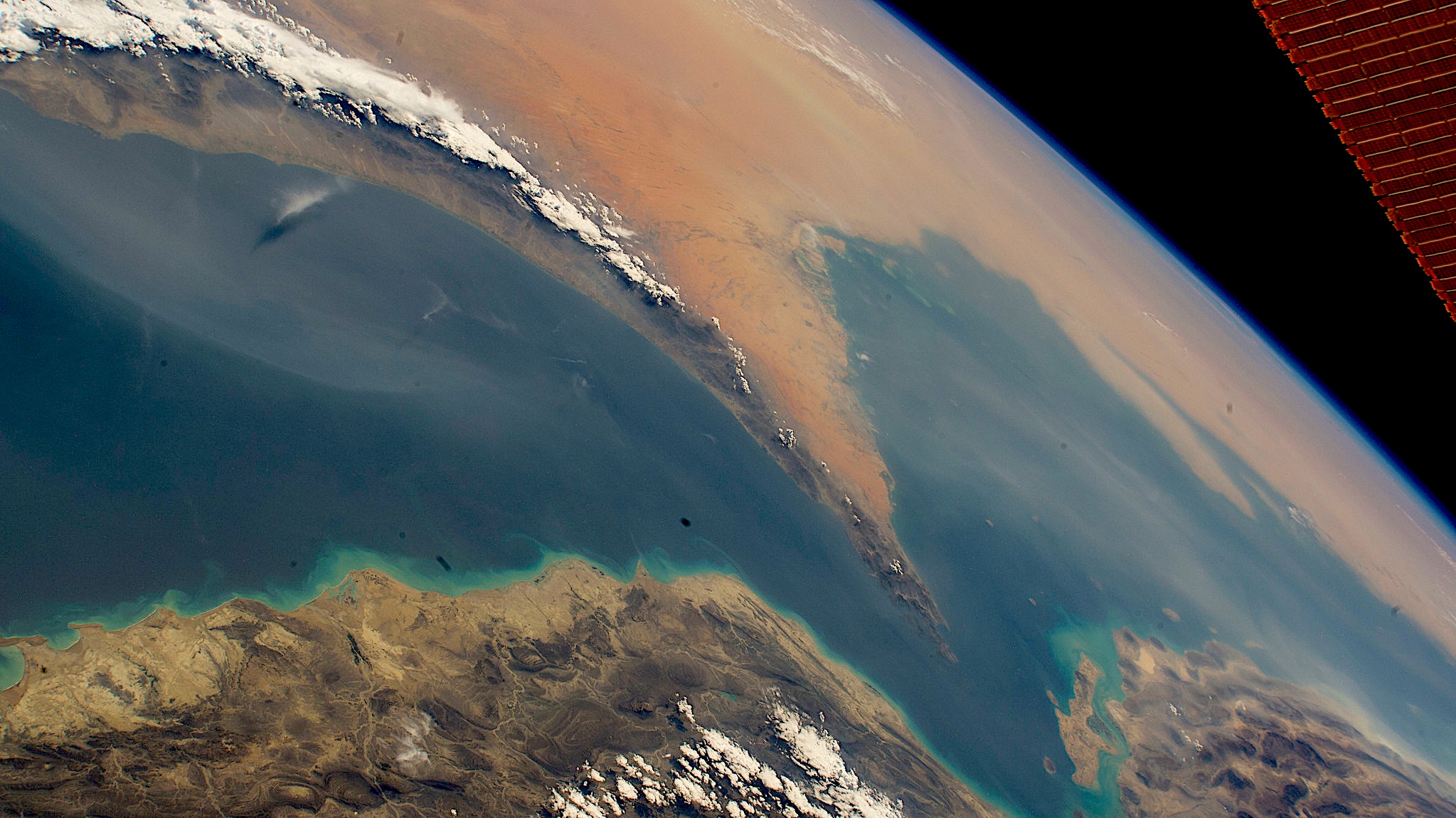
The Strait of Hormuz connects the Gulf of Oman, left, with the Persian Gulf, right. The waterway also separates nation of Iran, bottom, from the Arabian Peninsula nations of Oman, United Arab Emirates, and Qatar, top left to right. (NASA Johnson / Flickr/CC BY-NC-ND 2.0)

Israel, unable to convince the U.S. to do its dirty work of bombing Iran into a failed state, will, I expect, strike out with renewed fury against Gaza, perhaps occupying the remaining 30 percent of what is left of the besieged territory. It will continue its Gaza-like policy of turning every structure south of Lebanon’s Litani River into rubble, which it bombs daily despite Iran stating that attacks on Lebanon violate the current ceasefire agreement.

Trump’s savagery and bluster – he threatened to “blow up” Oman if it fails to “behave” after reports of Oman jointly charging tolls with Iran for ships passing through the Strait of Hormuz – cannot mask the impotence of the U.S.

The refusal by America’s allies to heed Trump’s call to help him reopen the Strait, along with the economic misery visited on nations struggling to cope with shortages and the rising costs of energy and fertilizer supplies, are stark evidence of Washington’s pariah status.

Empires, blinded by the myth of their own omnipotence and military superiority, blunder at the final stages into conflicts with little understanding of where they are headed. They alienate their allies. They stumble from one military fiasco to the next, as the U.S. has done for over two decades in the Middle East.

The British Empire in 1956, already in precipitous decline, was humiliated when it conspired with France and Israel to seize the Suez Canal, which Gamal Abdel Nasser had nationalized. The U.S. forced all three countries to halt the invasion. Britain’s pound sterling gave way to the petrodollar. It signaled the last chapter of the British Empire.

The war on Iran is Washington’s Suez Crisis.

This may not be the end of the American Empire, but it is the beginning of the end.

Original article:  consortiumnews.com

Why America should not ‘integrate’ its military with any foreign nation

By: A A
9 June 2026 at 15:41

By Ron PAUL

Join us on TelegramTwitter, and VK.

Contact us: info@strategic-culture.su

Not since the notorious 2012 National Defense Authorization Act (NDAA) provided for indefinite detention of American citizens, has the annual funding bill been as misused as this year. Embedded in the bill is an insult to every American who values our national sovereignty. The NDAA’s Section 224, the “United States-Israel Defense Technology Cooperation Initiative,” would “integrate” the Israeli military with our own, fusing technology, production, intelligence-sharing, and more.

As Ben Freeman wrote last week in Responsible Statecraft:

“The US and Israel already work together heavily on missile defense, but this provision would greatly expand coordination to seemingly every area of defense tech, including AI, quantum, autonomous systems, directed energy, cyber, biotech, and many more. It also proposes ‘network integration’ and ‘data fusion.’ In other words, the US military’s data could soon be the Israeli military’s data.”

It is hard to think of a more “America last” position than handing the keys to the Pentagon (and our intelligence community) to a foreign country.

The insanity of Section 224 is made even more clear with news over the weekend that the Pentagon has raised to “critical” the threat level of Israel spying on the United States and its officials!

We should not “integrate” our military with any foreign country or organization, but integrating with a country that is a “critical” espionage threat to our national security? How does this make any sense?

The “problem” for American lawmakers is that after the killing in Gaza and now Lebanon, the American people – particularly younger Americans – have turned sharply against the US relationship with Israel. This foreign entanglement has sucked billions from the US treasury over the decades, and it has sucked us into endless conflict in the Middle East, including the current US war on Iran.

Rather than listen to the will of their constituents, Congress has decided to defy the wishes of Americans in favor of the wishes of a foreign government. AIPAC largely controls our Congress and passing Section 224 would be a great victory for the foreign lobby.

It should come as no surprise that Israeli Prime Minister Benjamin Netanyahu endorses Section 224. He may have written it for all we know!

Should Section 224 remain in the NDAA, it would essentially remove future Congresses from any role in determining what level of support, cooperation, and oversight should be included in the US relationship with Israel. It would be worse even than President Obama’s 10 year guaranteed US financial support for Israel. Funding would not only be on autopilot, but the US would be further drawn into Israel’s multiple wars with its neighbors. Worse even than backing up Israel in its regional wars, the wars themselves would become ours.

Americans must speak out against plans to integrate our military with any foreign country. What we should be doing is disentangling from these overseas obligations, whether they be NATO or support for Ukraine or backing Taiwan against China.

We already spend more than a trillion dollars a year on our own military and our national debt is nearing $40 trillion. Taking on the obligation to fight even more wars overseas will hasten our bankruptcy. Section 224 must be stricken from the NDAA and it is up to every American who cares about our sovereignty to demand that Congress do so.

Original article:  ronpaulinstitute.org

Leo XIV, the peacemaker

9 June 2026 at 14:58
.

Spaniards are currently getting a close look at a pope the world still knows little about. He has gone from being a mystery, a man who seemed feeble, to becoming, in the space of two months, a startling revelation after he clashed with Donald Trump in mid-April and, two weeks ago, published a far-reaching encyclical; an argument against the techno-fascism of Silicon Valley. His visit to Spain will culminate in the definitive discovery of Prevost, since it is his first major trip to Europe and he will speak to the entire Western world. But what does this pope think and why has he been so disconcerting?

Seguir leyendo

Trump prevê acordo entre Irã e Israel em poucos dias e fala em reabertura de Ormuz

Donald Trump declarou nesta terça-feira (9) que as negociações para encerrar o conflito entre Irã e Israel estão próximas de um desfecho. Segundo o presidente dos Estados Unidos, um entendimento entre as partes poderá ser concluído em até três dias, abrindo caminho para a retomada da circulação no Estreito de Ormuz e para novas garantias relacionadas ao programa nuclear iraniano.

Ao conversar com jornalistas após acompanhar as finais da NBA, Trump afirmou que as duas nações aceitaram interromper os ataques recentes após uma nova rodada de confrontos registrada nos últimos dias. De acordo com ele, os avanços ocorreram com participação direta da diplomacia americana.

Presidente dos EUA diz que acordo prevê reabertura do Estreito de Ormuz | Foto: Tom Williams/Getty Images

O republicano também declarou estar confiante de que as negociações caminham para um resultado positivo e disse não enxergar obstáculos significativos para a assinatura do acordo. Mesmo com o otimismo, destacou que as restrições impostas pelos Estados Unidos aos portos iranianos permanecem em vigor.

Um dos pontos centrais das conversas, segundo Trump, é impedir que o Irã desenvolva armamento nuclear. Ele afirmou que o eventual acordo incluirá mecanismos para evitar esse cenário e contribuirá para reduzir a instabilidade na região.

Apesar das declarações, o momento segue delicado. Irã e Israel suspenderam temporariamente as ofensivas mútuas após uma escalada recente de violência, mas autoridades iranianas já sinalizaram que novos ataques poderão ocorrer caso operações militares israelenses continuem no sul do Líbano.

The post Trump prevê acordo entre Irã e Israel em poucos dias e fala em reabertura de Ormuz appeared first on Diário da Manhã - O Jornal do leitor Inteligente.

Israel’s Intelligence Overreach Is Becoming a Problem for Everyone

9 June 2026 at 12:30
Reports that U.S. officials are increasingly concerned about Israeli intelligence activity inside the United States should not be dismissed as a minor diplomatic embarrassment. If accurate, they point to a deeper strategic problem: Israel’s security doctrine is now pressing so aggressively outward that it is beginning to step on the toes of nearly everyone around […]

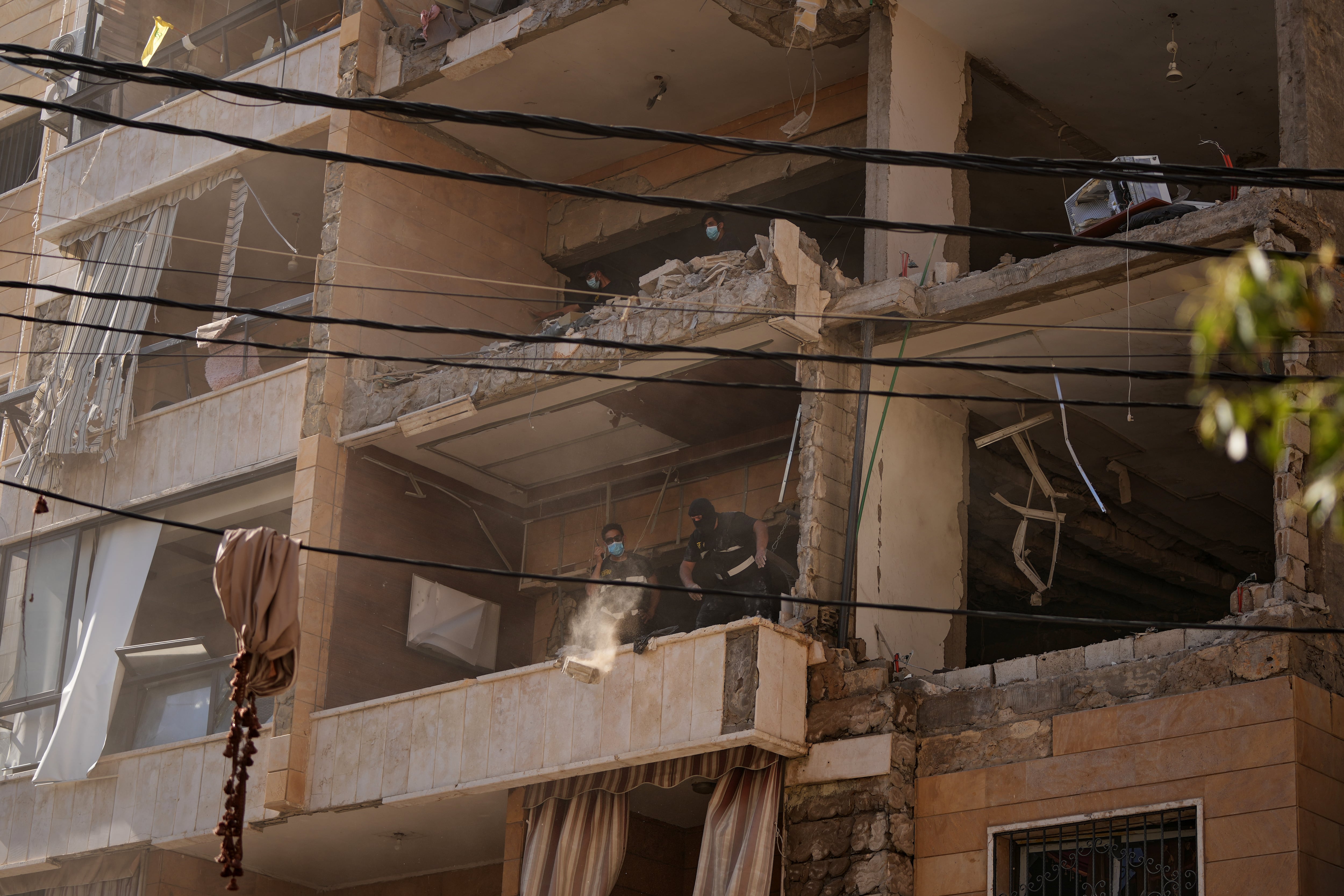
Perpetual war in Beirut’s suburbs: ‘I would move to another planet if that would give me peace’

9 June 2026 at 11:24

On one of the main roads out of Dahieh, the name given to the Beirut suburbs now at the heart of Middle East geopolitics, a row of streetlights bearing the same photograph of Iran’s penultimate supreme leader, the late Ali Khamenei, seem to bid farewell to those leaving the area. A few meters further on, as the city of Beirut begins, the iconography that floods Dahieh with the faces of Iranian and Hezbollah leaders — its Lebanese allies — vanishes, as does, to a large extent, the threat of Israeli strikes.

Seguir leyendo

© Hassan Ammar (AP Photo)

An apartment hit by an Israeli airstrike on Sunday in Dahiyeh.

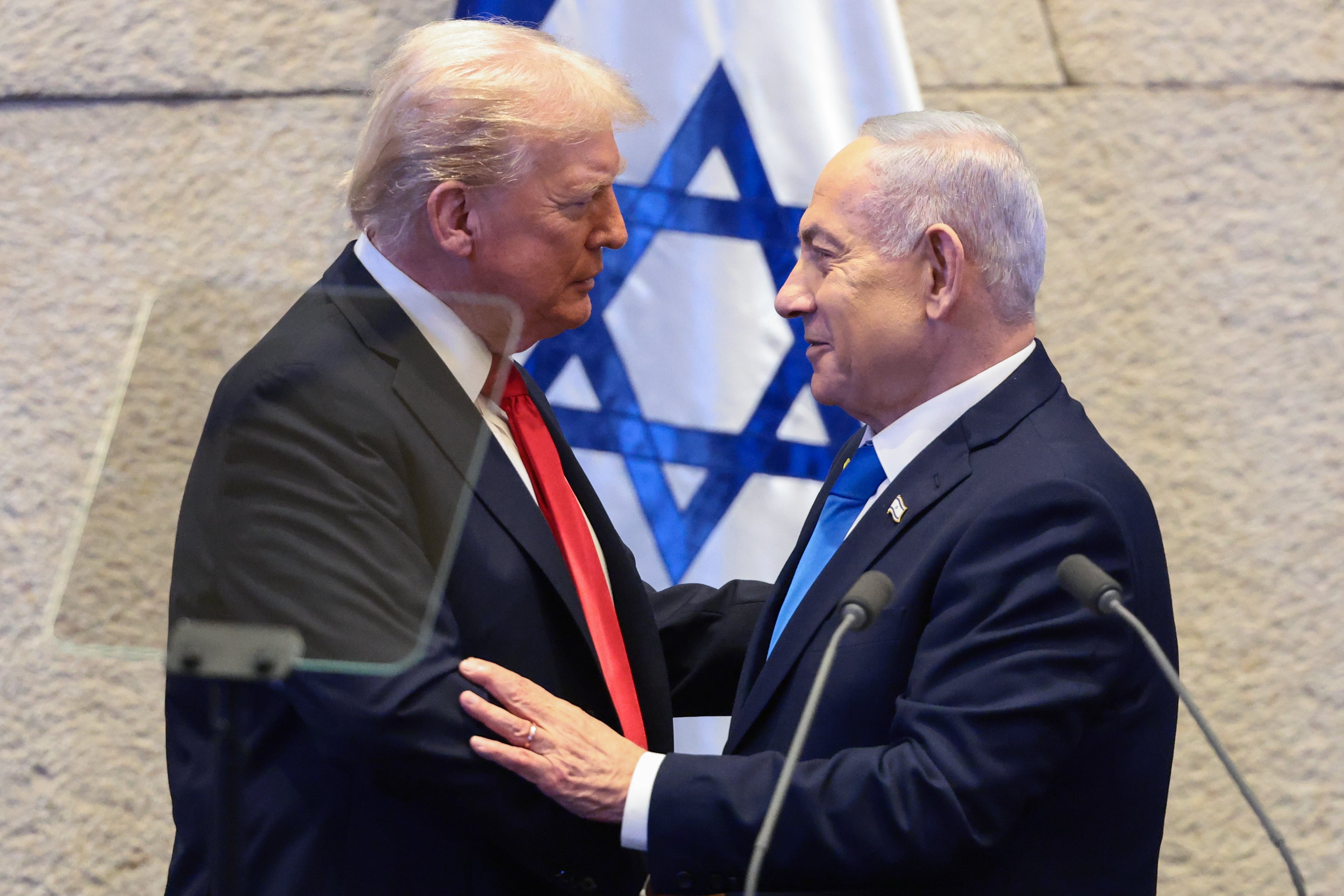
Iran war drives a wedge between Trump and Netanyahu

The relationship between Donald Trump and Benjamin Netanyahu lends itself more to psychological analysis than political, after a decade in which the volatile U.S. president has alternately showered the Israeli prime minister with insults and excessive praise — sometimes almost within the same sentence. The war they launched together against Iran 100 days ago has driven them apart as the original plan dissolved: a short, successful operation with oil-related benefits, modeled on the capture of Nicolás Maduro in Venezuela. Beyond how the Iran war is resolved — if it is resolved — its lasting legacy could well be the rift between the two leaders.

Seguir leyendo

© Pool (Getty Images)

Donald Trump and Benjamin Netanyahu in Jerusalem, October 2025.

Israeli Strike in Northern Gaza Kills Eight-Year-Old Boy

8 June 2026 at 22:06
An eight-year-old boy was among seven Palestinians killed by Israeli attacks in Gaza on Monday as the IDF continues its constant violations of the US-backed Gaza ceasefire deal. The boy, identified as Jad Salman, was killed when an Israeli airstrike struck a group of Palestinians in the northern Jabalia refugee camp. According to the Quds […]
❌