Normal view

Charities in England and Wales ‘donate millions to illegal Israeli settlements’

MP Melanie Ward calls on Charity Commission to look into 32 organisations she says have given at least £28m

Thirty-two charities in England and Wales have donated at least £28m to Israeli settlements that are illegal under international law, an MP has said.

Labour’s Melanie Ward said that if gift aid were claimed against the donations in the usual way, it would mean taxpayers had subsidised illegal settlements to the tune of £5.6m, a situation she described as deplorable. The foreign secretary, Yvette Cooper, announced on Tuesday that the Charity Commission has been tasked with investigating UK charities’ links to settlements.

Continue reading...

© Photograph: Anadolu/Getty Images

© Photograph: Anadolu/Getty Images

© Photograph: Anadolu/Getty Images

Pocock says Australia is ‘sleepwalking’ into AI impacts – as it happened

This blog is closed

Albanese says Australia still impacted by Middle East conflict ‘each and every day’

The prime minister, Anthony Albanese, is now on the ABC News Breakfast couch. He said Australia remains concerned about the economic impact of the turmoil in the Middle East.

Our job now is to demonstrate that we are a genuine and credible alternative to this terrible Labor government.

He’s a great supporter of the party, he’s a great supporter of Angus Taylor, I think this is a great opportunity. The Liberal party has always been what John Howard called the broad church: we like having different opinions.

We listen to everybody’s views, and we represent them.

Continue reading...

© Photograph: Lukas Coch/AAP

© Photograph: Lukas Coch/AAP

© Photograph: Lukas Coch/AAP

Footage Shows Moment Israeli Soldier Shot Seven-Month-Old Baby in the West Bank

9 June 2026 at 20:47
Footage released by the Israeli rights group B’Tselem shows the moment an Israeli soldier opened fire on a vehicle in the Israeli-occupied West Bank and killed a seven-month-old baby, Sam Abu Haikal. The killing occurred on Friday when Sam’s father, Fahd Abu Haikal, was driving home in the city of Hebron, when IDF soldiers appeared […]

Israel puts Palestinian doctor in solitary confinement after 17 months held without charge

Dr Hussam Abu Safiya now in cell barely big enough to sit in, says son, after UN experts demanded his release in March

The son of a prominent Palestinian doctor who was detained by Israeli forces in Gaza in late 2024 and held for more than 500 days without formal charges has spoken of his deep concern for his father’s wellbeing after he was transferred without explanation to solitary confinement in a maximum-security prison.

Dr Hussam Abu Safiya, the director of Kamal Adwan hospital in northern Gaza, was detained at work on 27 December 2024. Physicians for Human Rights Israel said last week it had received information indicating that the 53-year-old had been transferred from Ketziot prison to Ramon prison, part of the Ganot prison complex, where he had been put in solitary confinement. PHRI said it had not been told the reasons for the transfer.

Continue reading...

© Photograph: RFI

© Photograph: RFI

© Photograph: RFI

Who’s afraid of Chris Smalls?

Chris Smalls (left), co-founder and former president of the Amazon Labor Union, speaks with TRNN Editor-in-Chief Maximillian Alvarez (right) at Red Emma's Cooperative Bookstore and Coffeehouse in Baltimore, Maryland, on June 4, 2026.

At a live event hosted at Red Emma’s Cooperative Bookstore and Coffeehouse in Baltimore, Maryland, TRNN Editor-in-Chief Maximillian Alvarez got to sit down for a deep and wide-ranging conversation with Chris Smalls, co-founder and former president of the Amazon Labor Union. Alvarez and Smalls discuss Smalls’ new book, When the Revolution Comes: A Fight for the Future of the Working Class; they recount the incredible story of the formation of the Amazon Labor Union and the unionization of the first Amazon warehouse in the US; and they talk about Smalls’ journey from warehouse worker and labor organizer to becoming an internationally recognized public figure and a human rights activist who has sailed with humanitarian flotilla missions to Gaza and Cuba.

Additional links/info:

Featured Music:

  • Jules Taylor, Working People Theme Song

Credits:

  • Audio Post-Production: Jules Taylor
Transcript

The following rushed transcript may contain errors. It will be updated as soon as possible.

Maximillian Alvarez:

All right Welcome everyone to Working People, a podcast about the lives, jobs, dreams, and struggles of the working class today. Working People is a proud member of the Labor Radio Podcast Network and is brought to you in partnership with In These Times Magazine and the Real News Network. This show is produced by Jules Taylor and made possible by the support of listeners like you. My name is Maximillian Alvarez and we’ve got a really special episode for y’all today, which is a recording of a live event that I recently hosted at Red Emma’s Cooperative Bookstore and Coffeehouse here in Baltimore. And for that event, I got to sit down in front of a big, lively audience and have a real deep and wide ranging conversation with Chris Smalls, co-founder and former president of the Amazon Labor Union. Chris has a new book out called When the Revolution Comes: A Fight for the Future of the Working Class.

And that book recounts the incredible story of how a young working class Black man from Hackensack, New Jersey led a walkout from his Staten Island Amazon warehouse during COVID-19 got fired and then with hardly any resources banded together with a scrappy group of Staten Island warehouse workers to form the independent Amazon Labor Union to fight this epic David and Goliath battle against Amazon, the second largest private employer in the United States and Jeff Bezos, the second richest man in the world, and to win and successfully unionize the first Amazon warehouse in the United States. And the book also traces Chris’s life story before the Amazon Labor Union and his journey from warehouse worker and labor organizer to becoming this internationally recognized public figure and a human rights activist who has sailed with humanitarian glotilla missions to Gaza and to Cuba, even facing detainment and harassment from ICE and imprisonment and abuse from the Israeli military because of it.

I’ve done a number of events with Chris over the years. I’ve interviewed him outside of the JFK8 warehouse on Staten Island and I interviewed him as he was sailing to Gaza with the Global Samuel Flotilla right before they were captured by the Israeli military last year. I’ve seen both up close and from afar what he, his story and the story of ALU mean to working people out there, young and old people across this country and beyond. I’ve seen up close and from afar how the media’s good and awful and obsessive coverage of Chris and ALU, how that’s all affected Chris and different members and factions within ALU. And I’ve watched them all try to do their best to navigate a situation and a spotlight that I don’t think any of them ever expected to be in and that most of us will frankly never be able to fully understand from the outside.

I’ve seen and learned about many of the struggles that Chris has been through. I’ve seen and learned about the things that he’s done to help others. I’ve seen and learned about mistakes that he’s made and regretful things that he’s done and said. I know he’s a controversial figure to different people for different reasons and I know that he’s an inspiration to different people for different reasons. I know that he’s a complex and imperfect person, like you, like me, and like the hundreds and hundreds of working people that I’ve interviewed on this show over the years. And I’ve said from the beginning of this show that the whole point of this project was to honor the full and beautiful and complex humanity of our fellow workers to lift up the unheard voices of working class people and to help them and us and others see ourselves as full people with important lives and stories, not just stereotypes, not just name tags and job titles.

We’re so much more than that. And as a fellow worker, Chris is no different. And whatever your thoughts are about him, I think we all need to remember that because I see a lot of people forgetting that and that is not to excuse or downplay any concerns that folks have about Chris, ALU, or the complicated relationship between media celebrity and political movements today. And of course, no one is above critique, not public figures like Chris and certainly not journalists like me and anyone who is part of the labor movement must hold themselves and be held accountable to that movement. I know that and I believe that, but I also know that movements don’t move and history doesn’t happen without people and people are complicated. And if we don’t have a healthy way as working people of talking and listening to each other and working through our shit, if the world is burning all around us and we cannot find ways to work together or work alongside each other for our common goals and common good, even if we don’t like each other, then to put it bluntly, we’re cooked.

And so with all that said, it was in that full spirit and with that same mission that I’ve had since I started this podcast eight years ago that I sat down with Chris Smalls for this important conversation that we had at Red Emma’s in Baltimore. I hope you guys enjoy it and I want to know what you think, but please first take a listen.

All right. Well, thank you so much to Red Emma’s Cooperative Bookstore and Coffeehouse for hosting us for this great event. I want y’all to give a proper Baltimore welcome to Brother Chris Smalls, the co-founder and former president of the Amazon Labor Union here with us tonight. So we are of course here to talk about Chris’s new book, When the Revolution Comes, the Fight for the Future of the Working Class, but we’re also going to talk about so much more. And by way of getting us into this discussion, I wanted to just roll the clock back a second, right? Let’s go back five years, 2021, right? Feels like forever ago, but let’s not forget how crazy of a year that was. We had all just watched the batshit January 6th insurrection still in the middle of COVID, no vaccines yet. And out of this dark swamp in time, an unexpected source of light emerged in worker struggles and a sort of revived labor movement.

Everyone was talking about the Amazon workers in Bessemer, Alabama who were trying to unionize with the retail wholesale and department store union down there. I went down there. That was actually my first field shoot for the real news. And of course those workers lost that election and it was very heartbreaking for a lot of us and it was really incredible to see that heartbreak turn into the energy that we would see later in the year with the first Starbucks store to unionize in Buffalo, New York and the emergence of this ragtag group of badass workers from Staten Island who were trying to unionize their Amazon warehouse. And so it can be easy to forget all that we were going through in that moment. And so I wanted that to sort of be the start. And Chris, I wanted to ask you to take us back there.

Remind us who Chris Smalls was before COVID and then talk us through, because I think we need a refresher. Talk us through the incredible saga from the walkout that you led to you guys winning that first union election.

Chris Smalls:

And thank you all for being here. It’s been a while since I’ve been to Baltimore, so I’m glad and honored to be back and good company and some good comrades, familiar faces in the crowd. So thank you all once again for showing up and supporting my book and being here tonight. I really appreciate that. Yeah. As you said, we have amnesia in America. We all know that. One thing being a news cycle for a few weeks and then it’s always something else, especially under this Trump administration. And ironically, six years ago when I got fired from Amazon, that was also an election year. Trump was still in the headlines still. So we wasn’t garnishing any attention. As you mentioned, leading up to 2021, 2020, COVID was the peak at its peak, especially in New York City being one of the epic centers of the world.

Yeah, workers were afraid, workers were catching COVID. I remember walking into my warehouse and how seeing my comrades at work just really sick and not really themselves. So it’s a really eerie moment. But for those who don’t know, I was an assistant manager at Amazon for four and a half years. I opened up three warehouses in the tri-state area, New Jersey, Connecticut, Staten Island New York was my last building. People’s person always, the same way you see me today, it was the same way I went to work at Amazon. Definitely loved my people. I spent 70 hours a week with them. They were like my extended family. And when COVID hit, I definitely was afraid for all of us and I wanted to speak up on their behalf as well, which led to my firing after I led the walkout on March 30th, 2020, which once again was six years ago.

Seems like it was a long time ago, but it was six years ago it flew. It flew past. But just giving you a background about myself, what you’re going to read about in the book if you haven’t already, is that I’m just like anybody else in this crowd. I’m a single parent. My twins at the time was, well, damn, they were maybe eight or nine years old. And yeah, you can imagine how much time that I’ve lost spending with them over the last years, especially during COVID, the years of COVID, if I was lucky to see them half a year, that was a thing as well. And I love sports, grew up playing basketball, football, track. You going to see that in the book. I also was a rapper. I

Maximillian Alvarez:

Was going to say, don’t bury the lead. There’s a little juicy story about your rap history in there.

Chris Smalls:

Yeah, yeah. There’s a little rap stink that I had briefly after college, dropped out of college because I wanted to pursue music. I thought I was going to blow up overnight and then I got hit with reality getting back into the workforce. I got married and divorced at a young age, but I was married for eight years and during that hardship, working at Amazon was our main source of income for my household, one of them at least. And having healthcare as well. Healthcare Amazon provided for me and my kids and my wife at the time. So when I lost all of that during the pandemic, it really showed me how much the company didn’t really care about anybody. After I poured five years of my blood, sweat and tears into the company after I’ve done so much opening up these warehouses for them, training thousands of Amazon workers, hundreds of their upper management, the companies just say, “You know what?

We don’t care. We’re going to fire you. ” And not only fire you, they did it in a way that martyred me by Jeff Bezos, who was the richest man in the world, signing off on the smear campaign, which basically said to make me the face of the whole unionizing efforts against Amazon, which is a good idea. But at the same time, the racist part in the beginning saying that I’m not smart or articulate, something that they use in these corporate settings to put upon Black people and Brown people, saying that we’re not smart enough or we’re not articulate enough to even talk about anything when it comes to work related issues. So that was really the catalyst of a moment right there where I embraced it and I said, “You know what? Even though I no longer work for the company, I’m going to continue fighting for the workers inside the building.” Ultimately, for a whole year from 2020 to 2021, we traveled the country protesting in front of debt bases, mansions and penthouses while Bessemer, Alabama was trying their efforts and we all was paying attention.

My folks in Staten Island, we were paying attention, but we took it a step further. We did drive down there. We drove 16 hours from New York City down to Bessemer in a car, one car squished up and we stayed about a week connecting with workers there, connecting with the union, trying to figure it out because we didn’t know what we wanted to do. We wanted to do something, but we didn’t really have all the answers. But unfortunately, yes, like Max said, when they lost, it was definitely devastating for everybody. We felt that because of several reasons. Number one, that building investment Alabama has about 6,000 employees, five, 6,000 employees. Majority of them are black people. 85% of the building is black, 80% of the workforce there are black women. So when Amazon spent millions of dollars stopping that campaign, that was a direct attack on black and brown people and that’s something that we resonated with in Staten Island, New York where the demographics are similar to our building as well.

So the next day after the results came out, it just so happened to be our birthday, four 20, four / 20 / 2021 is when we started our campaign the next day after those results came out. We didn’t even wait.

And yeah, that year was like a blur as well, but it was 11 months, over 300 plus days I set up an encampment outside of the building that fired me at a public bus stop talking to workers every single day, rain shine, how to call night or day about why we need to start a union. And originally we sent out the Olive branch to the established unions. We wanted some support. We wanted some resources, some help, but we got nothing in return because a lot of people didn’t believe in us. A lot of people thought that it wasn’t going to work. Who are you guys to unionize when y’all don’t have any resources, y’all don’t have any knowledge, experience, et cetera. But one thing we did know is that we’re Amazon workers. Whether we’re fired or not, we know the ins and out of the company better than Jeff Basils.

So we felt that was the only way, and I still believe that till this day that the only way it could have been done was grassroots, gorilla style tactics in the trenches every day, meeting your workers face-to-face. That was the only way it was going to work. We couldn’t take the shortcut routes. We couldn’t do the traditional style organizing methods that most unions use. We had to think outside of that box and also sacrifice. Sacrifice was one of the things that we all had to do as a collective. And yeah, it was successful. 11 months, hard blood sweat and tears into the campaign and it paid off to become the first union in American history for Amazon workers. And still, till this day, that building is the only unionized building in this country and that’s what people got to understand. And it’s pro and con to that.

Yes, it’s great that we still are standing, but it shouldn’t take four years for us to have a contract. Keep that in mind that even when I was the president for three years, the first thing we did when we won was demand the bargaining order from Amazon, or at least from the National Labor Relation Board so that we can negotiate with Amazon. We didn’t hear anything under the Biden administration. I don’t know what happened, but there was some magic in the air. We got a bargaining order in April of this year, but Amazon has already appealed it because they’ve been spending millions of dollars holding things up for the last four years. So for those and everybody who’s been questioning like, “Why don’t you guys have a contract or you guys are not getting a contract?” It’s not because of us. It’s literally because the system is broken.

The system is not worker friendly. As much as these progressives and politicians say that the system are usher us to the system that’s supposed to work for us, it doesn’t. It’s not in our favor. So we have to continue to fight every step of the way. And actually when we won in 2021, that was just the beginning of the fight. This fight is a lifetime struggle and now the only thing that I can see that our union can do, and not just our union, because there’s other unions out here, Starbucks workers, all these other unions that emerge, they’re still fighting for contracts too and negotiating their way through it. But the only thing I can see that’ll work for all of us is if we withhold our strongest weapon, which is our labor and go on strike.

Maximillian Alvarez:

And it was wild too reporting on Bessemer and then reporting on you guys and sort of seeing how the things that worked for Amazon Imbessemer weren’t working on Staten Island. I think that was a real sort of moment of insurgent energy because in Bessemer, when the workers brought in the RWDSU, Amazon did what union busting employers always do where they’re like, “Oh, this is an outside force that’s trying to come in and get in between our relationship.” They couldn’t do that with you guys because it was like, no, these are literally just the workers in the warehouse. And so I wanted to touch on that because it was such a big debate at the time because of Bessemer and ALU especially, but everyone was talking about, is it better to go the independent route like Amazon Labor Union, Trader Joe’s United, the Home Depot workers who tried to unionize in Philly, or is it better to go with an established union like the Teamsters of the RWDSU?

And so with five, again, like you said, five, four years of experience since we were having those debates, I think it’s important for us to sort of revisit and update that and you know better than us. I wanted to ask after all that you’ve been through in this struggle, where have you landed on the independent or established union debate, especially in light of the AOU affiliating with the Teamster?

Chris Smalls:

Yeah. I mean, I still stick by my original sentiment that there was no other way that we was going to get it done, not with any established union. Didn’t matter how long they’ve been around, how powerful they are. The way we organize is completely against any type of style. You can’t read about it because it hasn’t been done before. And yeah, I still believe that independent unions are something that we still need to push. Not saying that established unions can’t support, but what’s happening over the last few years, to be honest, after we won in 2021, well, let me take it to the day of. The day we beat Amazon, we had $2.50 in our account. Now it’s funny because we were broke as hell. We didn’t have dudes paying members. We still don’t have dues paying members. We don’t have a contract. So I can’t ask for workers who are making $20 an hour to pay union dues.

I wasn’t going to do that as the union president. The next day we had almost half a million dollars because the bandwagon came, the unions, “Oh yeah, we supported. Oh yeah.” But they really, really didn’t. Actually, there was a reporting that all the established unions combined only contributed after we all won, talk about Starbucks, Trader Joe’s, Amazon, you name it, they only contributed 3% of their resources into these campaigns. And I can tell you we didn’t get one of those 3%. We got zero. Literally nobody offered us anything before we won. And after we won, the bandwagon came and everybody said, “Oh yeah, we had some resurgence in the labor movement,” which is great. It was. It was definitely headlines, it was definitely international news and resonated with millions of workers around the world. The problem is that established unions didn’t use that opportunity to double down and really invest into grassroots movements because they was embarrassed.

We weren’t the first people who tried to unionize Amazon. Absolutely not. Actually, established unions have been trying to unionize Amazon for over a decade, even before Bessemer, Alabama. And guess what? You guys never heard about it. I never heard about it. It was actually a campaign at GFK8 while I was working there, didn’t even hear about it until we started and that was ran by the established union of the Teamsters. So when it comes to which side do I really ride with, I’m going to say the one that works and I know that there’s pros and cons to everything. The thing about independent unions and grassroots efforts, as we all know, if you’re grassroots, it’s a struggle. You’re not going to have all the tools and resources given to you all the time. You got to scrap, you got to sacrifice, you got to crowdfund, you got to have mutual aid.

We literally had a GoFundMe, which it’s sad to say, but that was our only lifeline of how we were able to feed our comrades and our workers there. So the reason why we had to affiliate with the Teamsters, which I signed by the way, is because we’re going up against a $2.2 trillion company like Amazon that has all the money to hold things up in federal court for four or five years like they have it, which you guys are not privy to this all the time, but Amazon has million dollar lawyers and while I was the president, I’ve been to federal court against Amazon. I lost count how many times over the years and all they do every time we do something, they appeal it into a federal court to try to get it to a right wing Supreme Court and try to get us decertified.

That is their game plan. They’re not trying to come to the table. They still don’t even want to recognize that we won. So the affiliation with the Teamsters was so that my union doesn’t go bankrupt because if we don’t have dues paying members and people are not going to continuously donate, we have to give resources to stay alive and stay afloat. The Teamsters was going to offer that. The affiliation agreement that I signed was something that I and my executive board negotiated along with our legal counsel and it was one that we benefited from the most. We have full autonomy with our local ALU, IBT, local one, full autonomy, full jurisdiction on Amazon. And the most important thing that I got in that contract was they have strike benefits. They can offer the workers at JFKA right now a thousand dollars a week to go on strike if they wanted to.

I’m not the president anymore, but this is something that I set up to help them succeed in that journey. It’s up to the workers, it’s up to the current leadership of the union. It’s up to them to take that initiative and utilize it. And hopefully they do because the clock is ticking. Right now since we’ve been issued a bargaining order, Amazon has already appealed it, but the clock is ticking for them to come to the table. They have about a year to do so. Otherwise, the game plan that Amazon is going to run is going to try to decertify the union. So hopefully they get their stuff together and they get it done. I’m always going to support my union, whether I have a position or not. And that’s what we all have to do in solidarity. We all have a role to play because our fight is absolutely your fight.

A lot of people don’t know what’s going on behind the scenes at Amazon are within these campaigns. So the reason why we’re here today, the reason why you guys are picking up this book is because this book is also not just a memoir, but it’s also a how-to. It’s going to give you some tools on how we can all fight back against the system that’s oppressing us.

Maximillian Alvarez:

Hell yeah.

So I really want to talk before we get to Q&A about your life, your work, your mission beyond ALU. And the last time we did an interview, you were sailing to Gaza for Christ’s sake. So I want us to get there, but before we do, just to pick up on what you were saying there, I think it’s really important for us to in this space, model a real, honest, no BS discussion about what we can learn from the beautiful, complicated, heartbreaking, inspiring story of the first Amazon union. Because so many struggles before you and there are going to be plenty after you, you guys faced a lot of external pressure and internal debates, division. This stuff happens and you write about some of that in the book and there’s a time and place to talk about that stuff and it’s not here. We’re not here to sort of air dirty laundry and point fingers.

Everyone knows Chris isn’t perfect. I’m not perfect. You’re not perfect. And that’s, I think the point is that whether you’re organizing your shop or trying to build a political movement, you can’t do anything without the messy realities of messy human beings who make the movement. So our humanity is always part of the story and none of us is perfect. And so I wanted to ask you, Chris, again, not for us to get sucked into the … She said … I’ve talked to other Amazon members who have different versions of the story and I always tell them, like I told you, I was like, “It’s not my place to pick sides here. I’m not in this union. I’m a fucking journalist.” And it breaks my heart when I see these divisions because I want the best for everybody, but life doesn’t work out like the fairytales in our heads.

So what can we learn from y’all’s experience that can help others out there who are going through these struggles and it’s getting tough and the company, the employers appealing every victory, it’s like one step forward, three steps back. You’re losing friendships because shit just gets really tough. You have no money. What can folks out there who are experiencing that learn from what y’all went through in ALU?

Chris Smalls:

Yeah, great question. I mean, once again, when you’re taking on one of the most powerful companies in the world, you’re trying to bring people together from all different backgrounds, all different creeds, you’re going to have disagreements, you’re going to have different political ideologies, you’re going to have infighting, every union, every organization does. We just were under a microscope because of our historical victory and the mistake that the media Yeah, sort of did was comparing us to established unions that’s been around for a hundred years. We weren’t that. We’re grassroots organizers. Most of them weren’t even organizers. They were just everyday civilians that were inspired, that were passionate, that wanted to do something. Even myself as the leader at the time, I didn’t have all the answers as well. I had to learn and I’m still learning every day. I’m a sponge. I’m learning new what’s going on overseas is affecting us here.

The things that I’m doing with Palestine, Cuba, wherever I’m going, it affects us here. I try to connect those dots. Some people just can’t think that big and unfortunately it leads to disagreements, but the disagreements are that’s a democracy. That’s exactly what a democracy is.

Unfortunately, the movement has its way of weaning people out. It’s not for everybody. It’s just real. A lot of people will see social media posts or see something happening, protests, whatever it is. Even going back to George Floyd days when there was millions of people taken to the streets in America. But where are these millions of people now? They’re back at work. A lot of people see things for the moment they get involved and then they get burnt out. They get weeded out or they realize this is too tough for me. And a lot of it is what happened to our union. A lot of folks thought that it’s a lot easier than what it is. Yes, I do make things look cool sometimes. That’s intentional because organizing is stressful as shit. I know we all know that. Organizing hard, stressful, tiring, exhausting, all of the above.

And I tried to make it as simple, as cool, as fun as possible because I know what workers are dealing with working at Amazon. That was one of my biggest things is making sure that everybody around me was always good in some capacity. Unfortunately, once again, the movement is going to be the movement. And for those who jump into this movement or this type of work or any type of work, you got to know what you signed yourself up for. This is a lifetime struggle. Our ancestors paved the way and not only that lost their lives, some are incarcerated right now as we speak so that we can have the right to organize, that we can have a reason to organize. So when these type of movements, you can’t have one foot in, one foot out. You got to be fully committed for the long haul and you got to be fully committed to sacrificing something because if you spoke out about Palestine, you lost something.

I know I did. If you spoke out at your workplace, you’re going to be targeted. If not worse, you’re going to get terminated. If you speak out against all of the injustices that we’re seeing right now in this country, you’re going to lose friends. You’re going to lose loved ones. I know a lot of us in here that probably when they started talking about October 7th, it was tough conversations in the beginning because I could tell you I lost 10,000 followers on Instagram instantly when I posted about Palestine over three years ago. And it was the same people that said in my DMs, “Chris, we supported you for Amazon workers, but this is where I draw the line.” What? In return, you know what I said? Fuck you.

Because if you can’t make the relationship between Amazon and genocide, then I can’t help you. And I don’t give a damn if you one of my organizers or not. If you fighting over some petty shit when Jeff Bezos is flying in space on the penis rocket, you missing the plot. So people want to attack the wrong things and that happens a lot on the left. We’re talking about the character, the person, the individual, how I look, how I talk, where I’m going, what headlines I’m gathering. Meanwhile, Amazon is firing 30,000 people next week. And that was what I always tell my organizers. We’re fighting about what we doing next when Amazon is winning. They are in the building union busting and y’all worried about the wrong things. So for me, the biggest lesson I learned is you got to stay true to the mission. And I don’t debate too much.

I mean, I do sometimes because I have to defend myself in certain cases, but I’ve never played into the naysay about myself or about my union because I let the work speak for itself. We made history, unprecedented history, and people that were there, they know. That’s all I care about. My day ones that walked out of the building six years ago with me, they know. Everybody else that came afterwards that’s going to jump on board later on, that’s going to look back, reflect back, that none of that matters. What matters is what are you willing to do to get Amazon to come to the table? What are you willing to do to liberate the people of Palestine? And more importantly, if you don’t get up and do the work, who’s going to do it because there’s no calvary coming for us?

Maximillian Alvarez:

One of the things that has sort of always colored the way that I have watched your journey is the fact that I always think that I was working in warehouses back in Southern California 15 years ago in the depths of the Great Recession. Our family was losing our house like millions of others. It was awful. And the thought of one of us having the cultural international statue that you do that one of us would be giving so much hope to people around the country and around the world is just mind boggling to me, but it’s also like that’s got to be a lot to go through as a working warehouse guy to then kind of be catapulted to that. So that’s not to excuse anything. It’s just to be like, we should give each other as much grace as we possibly can while holding ourselves accountable to each other.

Do our best. That’s the best that we can do for each other. And I say that to say by getting us to your activism beyond the warehouse, because what is it about your story, ALU’s story that has spoken to so many people around the world? And how did that lead you to becoming a global activist for human rights from Gaza to Cuba?

Chris Smalls:

Great question. I mean, well, number one, if you’d have told me that I could look as cool as a rapper, as a union organizer, I’d have been doing this shit a long time ago, would have saved you some

Maximillian Alvarez:

Years.

Chris Smalls:

I don’t look like your typical union president. My union doesn’t look like your typical union. My executive board didn’t look like your typical union executive board. So culturally, we gravitated to the younger generation. They looked at us and said, “Oh wow, they look cool. Amazon Labor Union, oh man, they’re wearing sweats and T-shirts and hat backwards and whatever else.” And we did something at a time where once again, the world was watching and we captivated that moment in time. But the international piece came when I got a passport because I just got a passport when I became the president three, four years ago. I didn’t even have a passport and 70% of Americans don’t have a passport.

I encourage you, number one, get one because since I got a passport, I’ve been to 45 different countries around the world and counted. And when I go to these countries, I’m not on vacation. I’m not on tourist trips sort of because I need to learn some things, I need to see some things, but I’m meeting with Amazon workers and I’ll give you the best example that I have as far as how much dedication or how dedicated I am to the movement. I was invited two years ago when I was the president still. I was invited to Paris by Pharrell and Rihanna to walk in the Louis Vuitton runway for this grand opening. And the same day I was invited to the White House again for the second time from Kamala Harris while she was running for president. I declined both of those and went to an Amazon warehouse in Canada, literally.

And guess what? I’m proud to say that that Amazon warehouse in Canada is the first unionized building in Canada’s history. So once again, people could say what they want about me. I know how I move. I know I’m very conscious about what’s going on, what’s being out there, what’s put out there and those around me, once again, they know if you’ve met me in the past, if you’ve been around me, if you hung around, what you see is what you get. I don’t really have to put on a facade and I think that’s what really resonates with people is that they can relate to me and that they feel comfortable talking and actually working alongside or working with me in some way. I think the international piece, the international solidarity that I’ve shown is also shown other people that what’s happening abroad is coming back home to roots, especially when it comes to Palestine.

There was several reasons why I got on that flotilla. Number one, I’m an Amazon worker, sure. Amazon has invested $7.2 billion into project numbers. The technology that’s being used to target and surveil and kill innocent Palestinians is powered by Amazon Web Services, number one. Number two, I’m a black man and I have kids. I don’t want my kids to grow up in a world where we’re watching, scrolling every day, seeing dead people. I don’t know about you guys, but that shit is enough, traumatizing. And number three, I’m a taxpayer citizen, American taxpayer citizen like all of us. We all should be outraged where our taxpaying dollars are going. And I could tell you what I saw in Gaza is there’s no comparison. Less than a hundred miles away from Gaza Strip. I’ll never forget before we got … Well, we were already intercepted, but I will never forgive me crying on the ship because I was so angry that we didn’t make it, but just knowing that we were so close, 60 miles away from Gaza Strip, our boat got swarmed with flies and I’ll never forget I asked one of my comrades, “Where the hell did all these flies come from?” And it’s because there was so much death and so much bodies under rubble, vermin, whatever you want to call it, that the flies flew a hundred miles away from land to find food from our garbage and we were swarmed and I said, “Whatever we’re seeing on Instagram, it’s actually just a glimpse.

It’s not even close to how bad it is over there.” And I hear testimonies from doctors all the time. It’s beyond what I could put into words and obviously what happened to me is just confirmation that Israel is a racist apartheid state. That being said, spreading awareness, going back to who I am and why I do what I do and how I move.

What other labor leader in this country that you know is banned from Israel for a hundred years? That’ll be me. When it comes to Cuba, I brought 25 people from the Amazon Labor Union to Cuba three, four years ago, first labor delegation to Cuba and we delivered humanitarian aid back then. We graduated from Fidel Castro University. We stayed in bootcamp. We were disciplined. We learned the Cuban way and I’ve never looked back, been to Cuba every year since. And you may have saw that I was detained two months ago. I took my phone and they worry about the 16 other people that they took their phones from. They gave them their phones back, but some of the comrades that I was with heard the ICE agents talking about, “Oh, that’s the Amazon guy. We got the Amazon guy.” So the target on my back is very much real and they’re detaining other people questioning about me right now as we speak.

It’s just happened. So I think it’s important and then I know y’all saw me crash the Med Gala. I wasn’t invited. I wasn’t invited to the Med Gala so I had to crash the party, but we crashing the Med Gala was the spread awareness and it worked because if I would’ve sat home 20 minutes away from where Jeff Babes was about to walk the red carpet, 40 minutes away from the building where they have a negotiated contract in four years, I’m doing a disservice to myself and to my entire union and the working class as a labor leader. I do the things that I do because I ask myself this question, if Chris Smalls doesn’t do this work, who’s going to do it? And that answer sometimes is very scary because the answer is nobody. And that’s the same question that each and every one of y’all got to ask yourselves.

If you don’t get up and do this work, who’s going to do it? And hopefully that motivates you to continue in doing what you’re doing.

Maximillian Alvarez:

Give it up for Chris. Well, and I think that’s a perfect lead into a final question before we get to Q&A, because your book is called When the Revolution Comes: A Fight for the Future of the Working Class. And I want to talk about what that fight like, what’s really at stake and how big it is because right now from the excitement we felt when you guys won to the depression we feel that you still don’t have a contract to Trump strangling Cuba, invading Venezuela, kidnapping its president, going to war with Iran, the climate spiralantic in control, we tried and we failed to stop a genocide. It feels so hopeles sometimes, but the fight is where we actually have the chance to change the outcome and it’s not just in our workplaces and it’s not just in Gaza, but I wanted to ask you what your sort of final message is for a working class struggle and movement that can actually turn this tide and bring us back to a future that we can give to our kids that’s still worth living in.

Chris Smalls:

Yeah. Great question. And I mean, when I say a fight for the future of the working class, I mean, we’re fighting for humanity right now. There is no Calvary coming to save us. I’m going to tell you now, politicians are not our savior and in the history of the human race, we never voted our way to liberation. We always had to fight most of it with our lives. And when I’m talking about the revolution, well, the revolution starts with yourself. The times that we’re in right now, as you mentioned, they’re terrible. Society, things that are normalized, being desensitized, all of these things that are happening real time in our faces. Every day there’s something new on the headlines distracting us from the bigger picture. The way we was able to beat this $2.2 trillion company because we came together for one common cause the same way that people were coming together for Palestine because it wasn’t like this three years ago until we saw the student encampments, the protests in the streets, the flotillas, all of the different things that we’re seeing because people are fed up, young people, young people are fed up.

I knew one day when I walked into a middle school and this 10-year-old kid said, “Jeff Bezos is a bad man,” I said, “I’m doing something right.” Because I couldn’t imagine myself at 10 years old and I encourage teachers and many educators in the room, “Bring some of your labor leaders. I’ll come to your classroom. I will definitely come out. I’ve been to elementary schools, you name it. I’ve been there. University, I will be there because I know the importance of getting to the youth. We don’t want them to continue to praise these celebrities and athletes and musicians. We want them to praise the people that’s actually doing some great work and that’s people right here in our own community and reminding ourselves where we came from because society has changed because of companies like Amazon who’s forcing us to hit one click buy. Stay home, stay isolated, just audio package.

It shows up to your door. You see one person deliver it, but you never see the 10 or 12 people that that box done touched before it got there. Six of them got injured. One of them possibly could have got killed, but you would never hear about it. And that’s the message that we all have to spread because somebody in your household, somebody in your neighborhood doesn’t know this, doesn’t know what’s happening at these warehouses, doesn’t know what’s happened with the Amazon Labor Union. As big as that victory was, you already know we in a country that is very, very retroactive and a lot of people here got amnesias are living worse, living in their own bubbles. That’s saying you’re in your own bubble, but that’s not a good thing. That’s up to us to find these people, to meet them where they at, mainly work and to get them organized because when I say a fight for the future of the working class, and I say the revolution comes once again, that’s everybody in this room coming together for one common cause for the greater good of humanity.

And I’ll give you this last gem.

The fight for Palestine is going to liberate the world, but the fight for black and brown indigenous people is going to liberate everybody.

Maximillian Alvarez:

Let’s give it up for Chris Malls, everyone. All right, gang. That’s going to wrap things up for us today. I want to thank our guest, Chris Smalls, co-founder and former president of the Amazon Labor Union. Go check out Chris’s new book, When the Revolution Comes: A Fight for the Future of the Working Class. And thank you to Red Emma’s Cooperative Bookstore and Coffeehouse for hosting this amazing event. And of course, I want to thank you all for listening and I want to thank you for caring. We’ll see y’all back here next time for another episode of Working People. And in the meantime, go explore all the great work that we’re doing at the Real News Network, where we do grassroots reporting that lifts up the voices and stories from the front lines of struggle. Check us out across our YouTube channel, our different podcast feeds, our website, and our social media pages, and help us do more work like this by going to therealnews.com/donate and becoming a supporter today.

I promise you guys, it really makes a difference. I’m Maximillian Alvarez. Take care of yourselves, take care of each other. Solidarity forever.

UK readies sanctions against Israel to deter proposed illegal West Bank settlement

Move comes as 137 Labour MPs sign letter demanding ‘urgent, concrete action’ to stop settler violence

The UK Foreign Office and a group of western countries are due to announce a package of sanctions against Israel this week designed to deter companies from becoming involved in a proposed West Bank settlement that would split the territory in two and render the concept of a two-state solution near impossible.

Nine countries including France, the UK and Australia have warned that settlement violence must stop and no company should be involved in what is known as the E1 development.

Continue reading...

© Photograph: Hazem Bader/AFP/Getty Images

© Photograph: Hazem Bader/AFP/Getty Images

© Photograph: Hazem Bader/AFP/Getty Images

Palestinian baby shot dead by Israeli troops in occupied West Bank

The seven-month-old, Sam Fahd Abu Haikal, was in his mother’s arms when soldiers fired on family in Hebron

Israeli troops killed a seven-month-old Palestinian baby in the occupied West Bank and injured his parents after opening fire on the family’s car, despite it having complied with an order to stop.

Soldiers opened fire on Friday on a car carrying the infant and his parents in the Tel Rumeida area of Hebron. The seven-month-old, Sam Fahd Abu Haikal, was critically injured, evacuated in critical condition to a hospital, where he later died.

Continue reading...

© Photograph: Mahmoud Illean/AP

© Photograph: Mahmoud Illean/AP

© Photograph: Mahmoud Illean/AP

“Welcome to Hell”: How Executioner Ben-Gvir and His Washington Backers Are Finishing Off International Law

The spectacle of humiliation orchestrated by Israel’s Minister of National Security, Itamar Ben-Gvir, was the moment when the mask of the “only democracy in the Middle East” finally morphed into the snarl of fascist thuggery. Under the cover of American bayonets and the indifference of the world’s “leaders,” Israel’s far-right no longer hides its dream: […]

The New School investigates student leaders who voted to strip Hillel of funding over genocide complicity

5 June 2026 at 18:57
Pro-Palestinian protesters confront supporters of Israel outside The New School in lower Manhattan as tensions over the war in Gaza continue on campuses and inside of colleges and universities throughout the city on May 02, 2024 in New York City. Photo by Spencer Platt/Getty Images

This story originally appeared in Prism on June 04, 2026.

When members of The New School’s Student Senate were faced with a report detailing how Hillel International was providing material and logistical support to Israel’s atrocities in Gaza, they voted on May 1 to cut all ties with their campus chapter of the national Jewish college network and to strip its funding. The student leaders hoped the school’s administration would go on to investigate Hillel’s presence on its New York City campus. 

Instead, after an intense pressure campaign by pro-Israel groups, advocates, and elected representatives, the university’s administration is now investigating the student senators who voted to cut ties with Hillel. 

“We were hoping that the university would act on the the evidence provided by the Student Senate report about Hillel’s complicity in genocide. They are investigating us instead,” said Ryder Glickman, who is chair of The New School Student Senate and helped produce the report.  

The Student Senate acted upon the recommendations of the Registered Student Organizations (RSO) Compliance Committee, which presented a comprehensive report about the ways in which Hillel had assisted the Israeli military during its ongoing genocide in Gaza. 

The report found that students from The New School and a host of other New York City-based schools volunteered at the Israeli military’s Hatzerim Air Force Base in January 2024, as part of the Hillel on Base program. “Our students are packaging a days worth of rations to our soldiers,” stated an Instagram story by Hillel at Baruch College, the umbrella organization of Hillel at The New School, alongside a photo from the airbase, according to the report. 

The Hatzerim airbase reportedly has been used by the Israeli Air Force for hundreds of airstrikes in Gaza, with F-15s from the base dropping bombs in civilian areas. 

In the days following the publication of the report and the Student Senate vote to terminate funding to The New School’s Hillel, the university’s administration acted swiftly to discredit the findings.

“To avoid any misunderstanding, the University Student Senate does not have the authority to determine official status, funding eligibility, or the recognition of RSOs. Our Hillel chapter remains, as it always has been, in good standing, eligible for funding, and supporting Jewish life at The New School,” said an schoolwide email sent to from the university signed by President Joel Towers, Provost Richard Kessler, and Vice Provost Robert Mack. 

“By distorting a qualified student organization and characterizing it as something it is not,” the statement continued, “the [University Student Senate] is using its platform to target fellow students in a misguided attempt to hold those students responsible for the acts of governments.”

On May 3, two days after the vote, Ilya Bratman, the executive director of Hillel at Baruch College, wrote in an email to Towers and other members of The New School’s leadership that the Student Senate’s actions were “a direct attack on Jewish students.” Bratman bcc’d the Student Senate email address, and members shared the email with Prism.

“We hope to meet with you in the coming days so that you can hear directly from the students affected by this action, and so that we can better understand the university’s plan of action moving forward. The [University Student Senate] has shown no indication that it intends to step back from these egregious and deeply troubling actions,” Bratman wrote. 

The New School administration and Hillel at Baruch College did not respond to Prism’s inquiry about whether university leadership and Hillel officials had the meeting. 

Days later, on May 8, Glickman received an email, viewed by Prism, from The New School’s office of Student Equity, Accessibility & Title IX. The email said that the school was investigating him for an allegation that the Student Senate’s decision to cut ties with Hillel was in “potential violation of Title VI of the Civil Rights Act of 1964 on the basis of race, color, or national origin in any program or activity receiving federal financial assistance.” The administration later clarified to Glickman that the university is investigating all student senators involved in the vote. 

External pushback

The university launched its investigation into student senators following a string of social media activity by pro-Israel groups, advocates, media, and elected representatives attacking the report. 

Glickman was called a “virulent anti-Israel activist” in an X post by Canary Mission, the secretive group notorious for doxing and targeting pro-Palestinian activists. 

A string of articles by pro-Israel publications, including The New York Post and The Times of Israel, reported on The New School administration rejecting the Student Senate vote while omitting the details and evidence found by the RSO about Hillel’s ties with the Israeli military. 

Two New York members of Congress took to social media to denounce the report. Rep. Dan Goldman—who recently marched in New York’s Israel Day parade featuring Israeli cabinet ministers who are wanted by the International Criminal Court for war crimes or have made genocidal statements about Palestinians—said the students were engaged in “hateful and vile antisemitism.” Rep. Ritchie Torres also condemned the vote, calling it “shameful” and “discrimination against Jewish individuals and institutions.” Goldman and Torres are heavily backed by the American Israel Public Affairs Committee. 

“The fact that there was such open repression and universal condemnation of the report shows that the administration’s response was coordinated with Zionist organizations accusing us of antisemitism,” Glickman told Prism. “This is extremely worrying when we made a very basic case about international law.” 

Students volunteering with the Israeli military

Hillel at Baruch, which organized trips to Israel, acts as an umbrella organization for chapters in multiple New York schools in addition to The New School, including Fordham University, John Jay College, and City College. 

“Volunteer on an IDF (Israeli Defense Force) base in Southern Israel, wear IDF uniform, give back to the community on base, and explore Israel!” reads a description about the program on Hillel at Baruch’s website.

The 38-page report by the RSO compliance committee found that Hillel at Baruch organized several trips between May 2022 and January 2025 for students to volunteer at multiple Israeli army and air force bases. Hillel International also operates the Onward Israel program which organizes internship trips for American students to Israel and facilitates volunteering opportunities within the Israeli military.

The report further found that in July 2024, another post from Hillel at Baruch and New School Hillel’s Instagram account said, “Tonight, some of our onward students had the incredible opportunity to volunteer at the Tze’elim army base, where they helped prepare a barbecue for over 700 soldiers from the Oketz, Kfir, Golani and Handasa units in the IDF.” 

Soldiers of the Golani Brigade’s 631st Reconnaissance Battalion were behind the March 24, 2025, killing of 15 Palestinian emergency responders that included Red Crescent ambulance workers in Rafah, according to an investigation by Haaretz

In May 2024, a BBC analysis found that 11 soldiers of the Kfir brigade were responsible for posting photos and videos of Palestinian prisoners being abused.

By registering for the Hillel on Base program, participants also automatically register for the Volunteers for Israel (VFI) program, the report found.  

“VFI is the ONLY organization that creates opportunities for American students to volunteer in Israel on IDF bases,” says a description of the program, which includes activities such as packing medical supplies and repairing machinery and equipment for military units. 

The VFI program is run by Sar-El, an Israeli volunteer nonprofit organization under the direction of the Israeli Logistics Corps, a support branch of the Israeli military, establishing direct collaboration between Hillel and the Israeli government, according to the report. 

“I am nauseated by the fact that I have classmates who have provided direct material and logistical support to genocide,” Glickman said.

According to official sources, over 75,000 Palestinians, including over 35,000 women, children, and the elderly have been killed by the Israeli military since Oct. 7, 2023—which the United Nations Human Rights CouncilAmnesty International, and multiple Israeli human rights groups have concluded constitutes a genocide. Experts have estimated the actual death toll could be much higher.

A week after The New School vote, the student leadership of the Hillel chapter of Middlebury College, Vermont, voted to change its name to the Jewish Association at Middlebury, after growing demand from its members to disaffiliate from Hillel International and its activities, according to reporting by the school’s newspaper.

Editorial Team:
Sahar Fatima, Lead Editor
Lara Witt, Top Editor
Rashmee Kumar, Copy Editor

Despite the ceasefire, Israel resumes bombing entire residential blocks in Gaza, displacing dozens of families

29 May 2026 at 17:58
Palestinians inspect the extensive damage to their homes and streets after the Israeli army violated the ceasefire and bombed a house and shops in the Bureij Refugee Camp in the central Gaza Strip, Palestine on May 23, 2026. Photo by Moiz Salhi/Anadolu via Getty Images

This story originally appeared in Mondoweiss on May 29, 2026. It is shared here with permission.

On May 24, Karam Ismael, 43, received a phone call from someone who identified himself as an Israeli army officer. The caller delivered one message: evacuate your home in 20 minutes before we bomb it. At first, he thought it was another scare tactic, similar to the messages the Israeli army used to send during incursions into neighborhoods. It was one of several calls made to residents of Nuseirat refugee camp in central Gaza, with a warning that covered residential blocks near al-Quds Supermarket and a local UNRWA clinic. The area included dozens of homes that had not previously been bombed throughout the past two years.

Four minutes after receiving his first call, Ismael’s phone rang again. The officer told him they had 10 minutes left, ordering him to evacuate immediately and to notify his neighbors. This time, he took the threat seriously and fled with his neighbors, leaving his belongings behind.

After half an hour, quadcopter drones appeared and hovered above the residential block, followed by the fighter jets. The entire block was leveled.

This was not the first such incident in recent weeks in which the Israeli army warned entire residential areas to evacuate and then bombed their homes. The Israeli army has been following a new pattern during the ceasefire: targeting residential blocks that had not experienced a ground invasion and had not been bombed during the war, remaining intact and still sheltering their owners. Over the past week, the army appears to have escalated this approach by specifically targeting residential blocks that had previously remained undamaged.

The officer who had called Karam Ismael stayed on the line with him for more than half an hour, making sure everyone had left. When Ismael asked which house they were targeting, the officer cut him off. “That’s none of your concern,” he recalled being told. “Just inform the neighbors.”

Over the past week alone, the army struck residential blocks belonging to the Al-Kurd family in Nuseirat on May 22, the al-Khatib family in al-Bureij and the Abu Shamala family in al-Maghazi on May 23, and the al-Tawil family in Nuseirat again on May 26. In each case, the pattern that emerged was clear: civilian residential blocks with no apparent connection to military activity were bombed for the first time in the war, displacing their families for the first time as well.

The escalation comes as Israel has been openly threatening to resume the genocide in Gaza. After Palestinian factions refused a U.S. demand to disarm, rejecting conditions put forward by Trump’s envoy Nickolay Mladenov in mid-April, Israeli media reported that the army was preparing to restart operations “as early as next month.” Netanyahu signaled the same after the U.S.-Iran ceasefire, stating that Israel would now “focus on Hamas.” According to reporting by Drop Site News, Mladenov presented Hamas with a 15-point roadmap, making total disarmament a precondition for any reconstruction or Israeli withdrawal. Hamas and other factions rejected these terms as “the occupation’s conditions,” pointing out that Israel had not implemented a single one of its own obligations under the first phase of the deal: the Rafah crossing remained blocked, no reconstruction materials had been allowed in, and Israeli forces had expanded their presence deep beyond the agreed boundaries.

Palestinians inspect the extensive damage to their homes and streets after the Israeli army violated the ceasefire and bombed a house and shops in the Bureij Refugee Camp in the central Gaza Strip, Palestine on May 23, 2026. Photo by Moiz Salhi/Anadolu via Getty Images

No more options

According to residents who were made homeless during the Nuseirat bombing, the Israeli army targeted one home, but the strike damaged six neighboring houses, rendering them uninhabitable.

Ahmad al-Kurd, 34, said that the army did not initially specify which house it intended to strike, instead ordering the entire block to evacuate. “We left our homes carrying nothing and returned to rubble, finding nothing,” he told Mondoweiss

Al-Kurd added that even the house that had been targeted was home to over 12 families, each comprising at least 5 people, while the surrounding buildings housed many more, totaling around 25 families.

“What did we do to deserve this?” he exclaimed. “This is happening during a ceasefire, during blessed days as we await Eid al-Adha”.

Al-Kurd also mentioned that there was no Hamas presence in the residential neighborhood. “There’s no resistance here,” he said. “There was no justification for the Israeli army to target us.”

Khalil al-Najjar, 41, a resident of al-Bureij who experienced a similar strike, told Mondoweiss that residents also received the same calls from Israeli officers.

“We ran out in fear that missiles would fall on our heads,” he said. “We couldn’t even take a change of clothes. Just what we had on our backs.” 

When they returned to the site of the bombing, they found their homes lying in ruins, al-Najjar added, leaving over 50 families homeless and without any belongings.

“We have no more options left,” he said, explaining that every school-turned-shelter in the area turned them away, while tent encampments had no room or tents to speak of. “So we’re just going to live in the ruins of our homes. What else can we do?”

A displaced Palestinian child runs with her schoolbag past building destroyed the day after a house was targeted in an Israeli strike in the Bureij refugee camp, in the central of Gaza Strip on May 20, 2026. Photo by Eyad Baba / AFP via Getty Images

‘In Gaza, even the child is wanted’

Naama Salem, 49, said that at first she saw neighbors carrying some belongings and rushing out of their homes. When she asked what was happening, they told her a call had come from the Israeli army ordering the neighborhood to evacuate within twenty minutes. 

“At that moment, I felt that the house could be bombed at any second, so I got dressed and left,” she said. “I could not even reach my ID card, which I kept in my bag beside me.”

Her daughter, a high school student, lost all of her books, notebooks, and study materials in the bombing. For the entire war, Salem’s home hadn’t been bombed. She considered herself lucky to have escaped that fate that had befallen most of Gaza’s population, and believed that the worst was behind her in light of the ceasefire. She assumed the army might strike the home of a wanted person, and that would be it.

“We never imagined that the policy of bombing whole residential blocks would return,” she said.

She added that the situation is getting worse day by day, even during the ceasefire. “Every day, there are people killed. Every day, homes are destroyed, and families are displaced. We sleep in fear of the bombing, we walk the streets in fear, and we sit with our children in fear. Fear has become a permanent guest in our homes, our hearts, and among our loved ones,” she said. “This situation is unbearable. It is more than human beings can stand.”

Khalil al-Najjar, the Bureij resident who lost his home, said he knows his neighborhood and all of its residents one by one — and that there are no members of Hamas or resistance groups among them.

There was no one wanted by the Israeli army inside the residential block, he asserted. Rather, what Israel really wants is to turn as many Palestinians in Gaza as possible into displaced and homeless people. “It’s to pressure us into leaving our homeland,” he explained.

“In Gaza, the child is wanted. The woman is wanted. The man is wanted. The elder is wanted. Even the animals are wanted by the Israeli army,” he said.

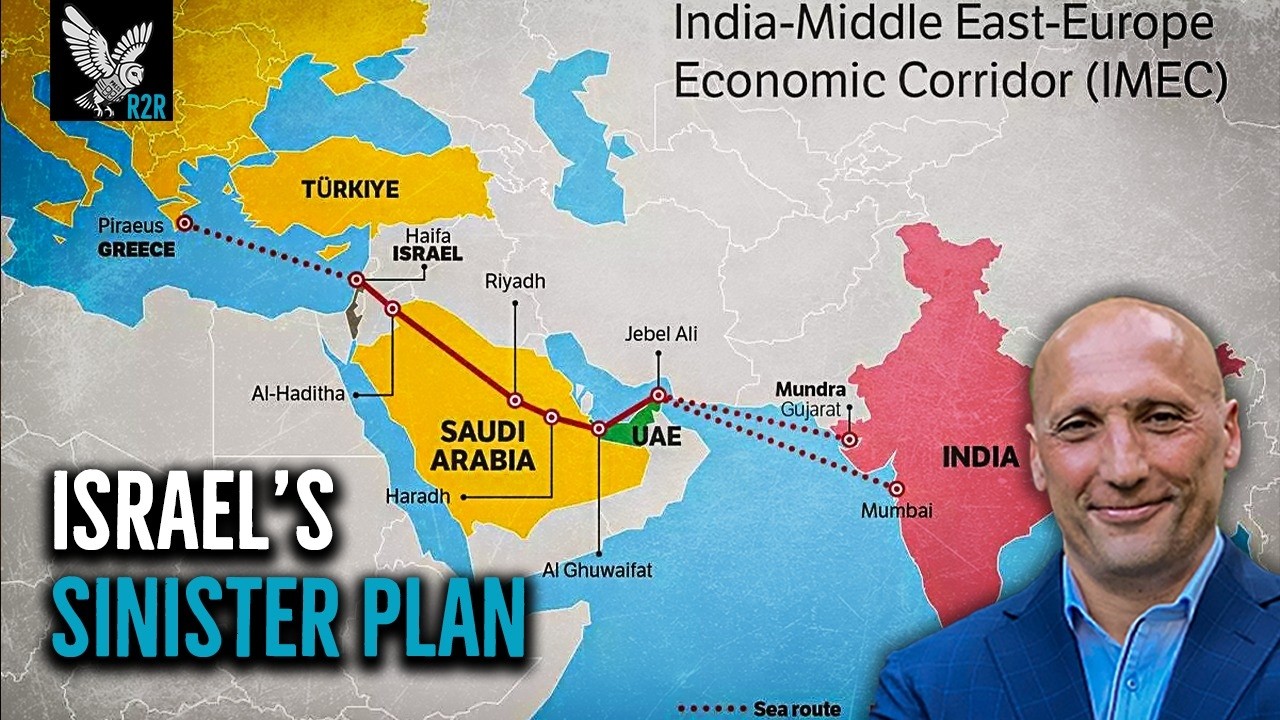
Behind closed doors, Greek and Cypriot governments go ‘all in’ on Israel

Activists detained aboard the Global Sumud Flotilla, which was intercepted by the Israeli army in international waters in the Mediterranean while attempting to break the Israel's blockade and carry humanitarian aid for Gaza, were brought to Heraklion Airport in Crete following their release, in Crete, Greece on May 1, 2026. Photo by Ayhan Mehmet/Anadolu via Getty Images

You’ve probably never heard of the Mare Med III Conference before, and that’s by design. The closed-door business conference takes place annually and is organized by the Israeli events company Benny Moran Productions (the Israel-Greece Chamber of Commerce is listed as a partner and co-sponsor of the conference). The purpose? To deepen Israel’s political, military, and economic relationship with—and influence in—Greece. 

From May 12-13, the third annual meeting of Mare Med III took place in the unassuming rooms of the Brown Acropol Hotel in Athens, Greece. The program featured a litany of speakers, including: Sharren Haskel, Israel’s deputy minister of foreign affairs; former officers of the Israeli Navy and Air Force now serving as executives at Israel Aerospace Industries; the CEO of Israel Shipyards; Greece’s minister of tourism; the general secretary of the Greek Ministry of Defense; and the chief economist and head of economic consulting at BDO Israel

This year’s Mare Med III Conference hardly made a blip in the news cycle, but that’s not because the substance of the event wasn’t newsworthy. And we know this because one independent journalist, Dimitri Lascaris, former TRNN board member and host of Reason2Resist, managed to secure a ticket and film everything. 

“When I looked at the lineup of speakers, I didn’t hesitate to fork over the money, as painful as it was to pay anything towards an event that is designed to deepen relationships between Israel and Greece,” Lascaris says. “But it was the only way that I could actually get access to the event and hear what was being said behind closed doors. And it has in fact been an extraordinarily enlightening, if not utterly nauseating, affair.” 

In his wrap-up report from Day 1 of the conference, Lascaris shared these unsurprising-but-still-shocking observations: 

First of all, I have not heard the words “Palestine” or “Palestinians” once today. I’ve listened to probably twenty people speak, including various ministers and deputy ministers of the Greek government. The Palestinian people did not come up once. There was never any hint of criticism of what Israel is doing.

And perhaps the most shocking pro-Israel commentary I saw was a Cypriot politician… looking at the Israeli ambassador to Greece—who was sitting in the front row at that moment, beside the Deputy Foreign Minister of Greece, just a few meters away from me—and saying to him: “Yes, it’s going to cause a lot of suffering. We know it’s going to cause a lot of suffering, but you’ve got to finish the job.” Meaning: [Israelis] need to revive the criminal war of aggression against Iran and presumably destroy the country, if not the entire region.


Thanks to Lascaris, you can now see and hear for yourself what these callous death merchants say to each other behind closed doors. Watch these reports on the Reason2Resist YouTube channel

💾

Independent journalist Dimitri Lascaris gained access to a closed-door business conference in Athens designed to deepen Israel’s ties to (and influence in) Greece. What he saw and filmed was “extraordinarily enlightening, if not utterly nauseating.”

It’s the genocide, stupid

22 May 2026 at 18:48
US President Joe Biden and U.S. Vice President Kamala Harris wave to members of the audience after speaking at a campaign rally at Girard College on May 29, 2024 in Philadelphia, Pennsylvania. Photo by Andrew Harnik/Getty Images

This story originally appeared in Mondoweiss on May 22, 2026. It is shared here with permission.

On Thursday, the Democratic National Committee (DNC) finally released its long-awaited autopsy of Kamala Harris’s failed presidential campaign.

The rollout was highly on-brand for the Democratic establishment. The 192-page document seems slapped together, is full of typos, and was released only because CNN obtained a copy. In an accompanying note, DNC Chair Ken Martin said the report didn’t meet his standards, but that it was being released “because people need to be able to trust the Democratic Party and trust our word.”

In fact, the report has further eroded that trust by omitting some big, obvious reasons why Harris lost. Concerns about Biden’s age and his inexplicable decision to run for reelection are barely mentioned, and there’s virtually no analysis of the Democratic policies that might have helped propel Trump to another victory.

If one were compiling such a list, support for the Gaza genocide would presumably be near the top, but the issue is not mentioned once in the massive report.

You’ll recall that Harris never distanced herself from Biden on this question. In her first interview after becoming the nominee, she maintained the party line on Israel, reciting the usual claptrap about the country’s right to “defend itself.” Asked point-blank whether her foreign policy would differ from Biden’s at all, she said it would remain the same. That is to say, the United States would continue to send weapons to Israel while the country carried out a genocide.

A couple of months later, she reiterated her position on The Viewtelling the hosts that she couldn’t think of anything she would do differently. Although later in the interview she said that, unlike Biden, she would put Republicans in her cabinet.

Throughout the Harris campaign, Palestine advocates called on the former Senator to shift her position and take a firm stance against Israel’s actions.

“By taking a strong stand against Netanyahu’s authoritarian policies, the Biden-Harris administration can unify the Democratic Party and regain the trust of key voter bases, including young people, Arabs, and Muslims,” read an open letter to Harris from the Not Another Bomb coalition to Harris at the time. “This decisive action will reinforce the administration’s commitment to democracy and human rights, contrasting sharply with the far-right extremism embodied by Trump and his supporters. It sends a clear message that the Democratic Party stands for peace, justice, and the protection of all people, thereby strengthening the coalition needed to secure victory in the 2024 elections and beyond.”

She wouldn’t budge.

At the Democratic National Convention that August, the Uncommitted Movement pushed for a Palestinian speaker to be included. “The difficulty in approving even a single Palestinian American speaker among the dozens of speakers on the convention stage sends a troubling message to our anti-war voters, suggesting they aren’t truly included in this party,” explained a statement from the organization’s founders.

The request was denied.

It’s inaccurate to say the campaign simply ignored these issues. On the contrary, they leaned in from the opposite direction, embracing hawkish former House member Liz Cheney and sending Rep. Ritchie Torres to Michigan, the state with the highest percentage of Arab Americans, to tell voters that Harris would stand with Israel.

There’s a certain kind of centrist pundit who likes to wax sarcastic about the 2024 election and point out that Trump is also an ardent supporter of Israel. The inference is that people concerned about Gaza accomplished nothing by voting against Harris.

However, this brand of snark often presupposes that people fed up with the genocide actually voted. Yes, some people backed Trump because they irrationally believed that the guy currently bombing Iran was antiwar, but the actual number of people that foolish is presumably negligible. Much hay is also made over the Green Party, but Jill Stein got fewer than 900,000 votes and thus had no discernible impact on the ultimate result.

One of the biggest stories of the 2024 race is how many people stayed home.

“The most telling fact in this race is the drop in voter turnout,” wrote Mitchell Plitnick days after the election, pointing out that Harris netted millions less votes than Biden did in 2020.

“Theories will emerge, but the cause of Harris’ disastrous failure will forever be debated,” he wrote. “Still, there are good reasons to believe the Middle East in general and Gaza in particular played a significant role.”

“Nobody is going to get excited about the ‘politics of joy’ and ‘endless brat summer’ when they’re watching a kid raising his hands while he’s being burned to death attached to an IV,” political consultant Peter Feld told me at the time. “It pretty much puts an end to any of the vibes that they were trying to run on.”

“I don’t think you can explain this election without explaining the non-voters, and I think some of the post-election polling that’s come out and attempts to explain it by talking to voters is going to miss this story,” he continued. “If you haven’t spoken to non-voters, you haven’t explained the election.”

Insofar as polling exists on this issue, it backs up the assertions of Plitnick and Feld. A January 2025 YouGov survey found that 2020 Biden voters who stayed home in 2024 cited Gaza as the top reason.

If you need further proof that Gaza hurt Harris at the polls, just look at what’s happened since November 2024. Israel critics are prevailing in Democratic primaries, and groups like AIPAC have become entirely toxic, and support for Israel has plummeted to historic lows amid the war on Iran. A recent NBC News poll found that just 32% of U.S. voters view Israel positively, which is down from 47% in 2023.

It’s difficult to overstate the incompetence of the DNC, but leaving this kind of stuff out of the “autopsy” report certainly feels like much more than oversight. Officials formerly connected to Biden and Harris are openly admitting as much.

“What’s important is what’s missing, what they’re not releasing,” Harris’s former communications director, Ashley Etienne, told Politico. “It feels like what the DNC is doing is cherry-picking the parts of it that it wants to actually release, that [are] less problematic for the party going forward.”

It’s an oversimplification to say Gaza is what cost the Democrats the election. There are multiple factors in every presidential race, and many of them have nothing to do with foreign policy. However, ignoring the genocide’s obvious impact on voters is malpractice and suggests that Democratic leadership could be poised to repeat the same mistakes in 2028.

‘You can’t say ‘genocide’’: How US media sanitized Israel’s destruction of Gaza

21 May 2026 at 17:00
A balloon reading 'CNN lies, Gaza dies, Tell the truth' is flown by protestors during a demonstration outside of the CNN bureau in Washington, D.C. on August 25, 2025 in an effort to disrupt the shows of reporters Dana Bash and Wolf Blitzer, whom they accuse of covering up war crimes by Israel. Photo by Bryan Dozier/Anadolu via Getty Images

In her new book, The Complicit Lens, media scholar Robin Anderson reveals how legacy media in the US presented Israel’s genocidal violence in Gaza as defensive and justified, casting doubt on IDF bombings, employing passive language to deflect blame for atrocities, and repeating Israeli talking points, often word-for-word. In this episode of The Marc Steiner Show, Marc speaks with Anderson about the ways US media has systematically run interference for Israel’s ongoing genocide in Gaza, aligning its coverage with Israeli military narratives while downplaying—and even condoning—the wholesale massacre of Palestinians.

Guests:

  • Robin Andersen is professor emerita of media studies at Fordham University and an award-winning author of a dozen single- and co-authored books. Her work examines film, television, and media coverage of war, the environment, politics, and elections. Anderson edits the Routledge Focus Book Series on Media and Humanitarian Action, serves as a Project Censored Judge, and contributes to the annual State of the Free Press. Andersen is on the Board of Directors of Fairness and Accuracy in Reporting (FAIR), where she also writes regularly, and is an Izzy Award Judge for the Park Center for Independent Media. Her writing has appeared in a range of outlets, including CounterPunch, LA Progressive, The Progressive, Salon, Common Dreams, and ScheerPost.

Additional links/info:

Credits:

  • Producer: Rosette Sewali
  • Studio Production: David Hebden
  • Audio Post-Production: Stephen Frank
Transcript

The following is a rushed transcript and may contain errors. A proofread version will be made available as soon as possible.

Marc Steiner:

Welcome to the Marc Steiner Show here on The Real News. I’m Marc Steiner. It’s great to have you all with us. And just once again, we’re looking at Israel-Palestine and the disaster that’s happening there to bring you the intimate details of what people are facing and what can be done. And we’re talking today to Robin Anderson, who has The Complicit Lens, which is an incredible piece of work. Robin is Professor Emerita of media studies at Fordham University, award-winning author of a dozen single and co-authored books. Her work examines films, television, media coverage of war, the environment, politics, and elections. And she edits the Rutledge Focus Book series on media and humanitarian action and serves as project centered judge and contributes to the annual state free press and joins us here today and this latest book we’re talking about is The Complicit Lens: US Media Coverage of Israel’s Genocide in Gaza.

And Robin, welcome, good to have you with us.

Robin Anderson:

Thank you for inviting me.

Marc Steiner:

Going through all this work that you did on media coverage and what’s actually happening in Israel-Palestine. I want to get to the bottom of things first and why the major media in America is so complicit in telling the lies about what’s happening in this war. I mean, there have been decades and decades of anti-Semitic stuff about the Jewish control of the media. That’s not it. There’s something really fundamentally deep about what’s going on here and why they are willing to tell the lies they’re telling and push the agenda they’re pushing. So let’s start there.

Robin Anderson:

Yeah. Well, the theme through the book is exactly what happened in the US media to just actually compel them to completely abandon their basic role as journalists. And I think the Israeli lobby is a big one. I devoted an entire chapter to talking about the influences in the New York Times and a few other press, but they’ve been watched and monitored by a group called Camera, by honest reporting. Just as students and faculty have been doxed, if they get identified, many of them have by Canary mission, they will call up their employers and they will tell them not to employ them and that has happened in numerous cases. So it’s not only journalism, it’s kind of the civil society and the public sphere and our discourse has for years been very constrained. I’m not sure that US journalists anymore, even though they’re supposed to be the seasoned professionals at some of the most prominent and legacy media, I’m not sure they know the background anymore of Israel.

I’m not sure that they understand really the international rules of war because if you’re blocked by the directives such as the New York Times and CNN, if you have your editors openly telling you to cover the press in a certain way, which is what we have, we had it at the CNN and the New York Times, and those are very influential legacy media sources. If we have them doing that over a period of a few years, you’re not proficient anymore really in understanding the rules of war or the Geneva Conventions. And then when you leave those basic core understandings out of coverage, either through self-censorship, editorial censorship, or simply just ignorance, you can’t tell the story.

Marc Steiner:

I want to get very specific here, the stuff you’ve written about in terms of the New York Times and CNN and exactly what they did, exactly what the leadership has told their reporters what they can and cannot do and how can they even be possible. But this is really explain that in greater depth.

Robin Anderson:

Well, I think that was so shocking and I think the intercept, well, a number of articles came out on the intercept, but CNN was putting all of its copy through its Jerusalem Bureau and the IDF had eyes on that stuff and CNN tried to play it down and say, “Oh, really? They hardly had anything to say.” And the staffer who had leaked to the intercept this information said, “Oh yes, every single word was shaped by Israeli censors.” So they told them, “No, there are things you can and cannot say. You can’t say genocide.” That’s a taboo word. But the really weirdly obscured things that a lot of us began to notice where you couldn’t identify Israel as the perpetrator of the dropping of 2000 pound bombs. So you couldn’t say you just had to say explosion. So a lot of people identified these headlines and indeed the press did not identify that these were Israeli bombs until the Israelis themselves would say, “Oh, okay.

Well, we got a Hamas commander.” As soon as they said they got a Hamas commander, then you could justify any loss of human civilian life and then you could talk about Israel having done the bombing. So lots of very strange things like that, that you can actually … So what I did in a couple chapters is look at the coverage and compare them to these directives. New York Times, same thing. New York Times was more explicit about pulling out any of the principles really of international law about occupation when the New York Times staffer that leaked it to the intercept said, “How can you not talk about occupation?” That is at the core of the conflict. We’re not able to represent this more accurately without talking about the occupation, but they couldn’t talk. So a lot of them, refugee camps, that’s very, very important. You have to know that these people in Gaza, many of them were refugees or the descendants of refugees that were victims of the Nakba.

So all of that background history allowed them to start the war at October 7th, say, “This was only Hamas. It came from nowhere, the evil of Hamas and therefore all of the subsequent reporting was either justified or retaliatory. They started it and they didn’t start it. There’s a long history of how Israel was constantly actually committing war crimes already before October 7th.

Marc Steiner:

So there’s a lot of what you said here. Before we get back to Israel and Hamas, which I’d like to do, given what you’ve written, what do you think the political dynamic is that allows the journalistic leaders and others in those two organizations, CNN and New York Times? Look, I read the New York Times every day and every Sunday. I mean, I’ve been doing it for the last 40 years.

Robin Anderson:

Sorry to hear that, Marc. Really.

Marc Steiner:

There’s a lot of good stuff from there, but this is not one of them. What the dynamic is that allows that to happen.

Robin Anderson:

Right. Well, I actually devoted an entire chapter to the New York Times and you really have to look at their Jerusalem bureau. Their Jerusalem bureau over a period of years has been shaped to be very Israeli focused and Israeli-centric. So right off the bureau in the New York Times in Jerusalem sits atop on the air above a house where a BBC reporter, a Palestinian BBC reporter had to leave his house, put his wife and children in a taxi, leave their things and never come back. So right away the New York Times has a vested interest in no right to return. That’s a major issue for Palestinians, the right to return.

And right away, well, wow, that geostructural bias, if they had the right to return, the New York Times, the House that they spent money on that Thomas Friedman presided in and all of these other bureau chiefs stayed there admitting that many times their children were in the IDF. And for one, Elizabeth Kershner, who’s still writing for the New York Times, her husband was intimately involved with doing PR for the Israeli military. So these are conflicts of interest of all sorts. At one point, one of the public monitors for the New York Times said, wow, wouldn’t you get a different point of view if you had somebody in the West Bank that could really see what the settlers did to people and all that. So if you get a different view of the situation, but they never did that. In fact, they listened to a canary mission, either a canary mission or an honest reporting briefing that criticized one of their photojournalists and he was fired from the New York Times well before October 7th.

So they got rid of Palestinian journalists at the same time they kept nurturing this very individualized point of view from Israel.

Marc Steiner:

So a couple of things here, but I want to take a step backwards for just a minute to explain to the people listening to us what the Canary Commission is. You’ve referred to it like three or four times here. People need to understand what it is.

Robin Anderson:

It’s originally an Israeli based organization that monitors students and faculty and other kind of people canary mission and has docs people and students and faculty at university campuses and many times it has resulted in students being sanctioned and faculty being sanctioned. Of course, I wrote about this happening at Hunter College in the book. Honest reporting is basically a propaganda organ, which not only creates their own media, propagandized media, but that also puts pressure. And this is external pressure coming into newsrooms and into universities where they’ve got no business in these kinds of civil society venues and institutions of higher education and legacy media that is supposed to know how to manage its own electoral boards and its own electoral staff.

Marc Steiner:

What you bring out in complicit lens, I mean, has very frightening in terms of what it means not just for Israel, Palestine, and what’s going on there, but for the future of media in this country. It’s not new that the media is influenced by people who own the media. That’s been a battle forever. Sometimes winning, sometimes losing, but it’s been a battle inside the media forever. But what you’re describing here is something pretty frightening. And I think that the whole … It’s one of the reasons I think they don’t really cover the opposition inside of Israel from Jewish Israelis saying, no, we’re not participating and why they don’t cover those things as well and what life is like inside of Palestinian villages. So I think this is a really, what you’ve written, what you put together is important for people to wrestle with in terms of how you get your information.

How do we know what’s really happening?

Robin Anderson:

Well, one of the reasons, as a consequence of this type of reporting, the media has lost legitimacy, terribly lost legitimacy, but young people particularly who don’t look at legacy media, if I was in front of a class and I asked my students who read The New York Times this morning, nobody would have. So they’re getting their information from their handheld devices and that’s where they’re getting their news and they were on their handheld devices when Palestinian journalists were being killed in large numbers for documenting things on the ground. So we as Americans, we had these two different realities really. We had the documentation and the visuals, the testimony, the aftermath, the pictures of rubble and the suffering and the Palestinians. And that I believe really accounts for so much of why the United States is now rejecting the state of Israel and for a very long time, the majority of adults in the United States has not wanted our government to send weapons to Israel.

So we caught onto that. And I think in this barrage of propaganda, I think it’s notable that we have resisted it and I think that’s really incredible on the part of the American people. In terms of I would like to talk about how we fix this and I believe-

Marc Steiner:

That was my next question, but go right ahead, please. I

Robin Anderson:

Believe these journalists and these editorial boards, they need to be held accountable. They really do. The three Israeli leaders including Isaac Hertzag, the president of Israel to kind of a figurehead Netanyahu’s the prime minister.

Marc Steiner:

Right, but the president doesn’t have much power inside the Israeli structure. Well,

Robin Anderson:

He’s coming to New York City. He’s coming to New York City and he’s being hosted and honored by the Jewish religious seminar.

Marc Steiner:

Yeshiva or Union Theological?

Robin Anderson:

Union theological

And he’s going to be here in May and a UN commission found that it is very likely that he is responsible for inciting genocide. So the rules of genocide, very much part, you can’t have a genocide without a language that incites it. And these people were inciting this language and saying how Hamas was animals by extension Palestinian people and Herzog came right out and said, Palestinian civilians are guilty. So I think he shouldn’t be coming to New York City at all. I think he should be being hauled up in front of the Hague. At one point in the CNN, one of the staffers said, “Many of us noticed that our anchors didn’t have much pushback, if any, to these Israeli leaders who at a time, and here’s the language of the incitement statute is it has to be a time of great tension. You have to be a public figure and you have to have a platform, a legitimate … You have to be on a mainstream media platform and they all fit that bill.

So that’s what we call incitement. And as the CNN staffer said, we came very close to that by not challenging these demonization of the Palestinian people, which also is another theme that goes throughout the book is over and over again,

Marc Steiner:

Palestinians

Robin Anderson:

In frame and in adjectives and in every way were dehumanized over and over again.

Marc Steiner:

Yeah. And as I was reading what you wrote, I thought about my friends in Israel-Palestine on both sides and how I remembered distinctly this big fight that took place when one of my friends who was an Israeli, these were theater people and I used to do theater with Israeli Palestinian companies. I said something about Palestinians and he spit on the ground. And then a fight ensued between him and one of the women in the company over that spit who was also Jewish. And people don’t realize how deep the divide is, I think, inside Israel. It’s not evenly split, but it’s a deep divide over where everything is going.

Robin Anderson:

I think recent polls that have come out of Israel have shown that the majority of Israelis thought that all of the Palestinian civilians were guilty as well and they were a threat. They’ve been propagandized now for a very long time, even though the newspaper Haretz is one of my major sources because after October 7th, when they called in the Hannibal directive,

Marc Steiner:

Which

Robin Anderson:

Is just kill everybody, don’t let anybody take any hostages. We don’t want to negotiate. When they called that in, you had Israelis pilots in Apache helicopters indiscriminately bombing the festival grounds when Hamas was trying to get their hostages, of course that’s a war crime. It’s true that Hamas committed some war crimes, committed war crimes. Nothing could compare, however, to what Israel has done. And at the time, what’s so fascinating is that the demonization again and again of Hamas, particularly in Palestinians as animals, they justified and served to cover up and to be the beheaded baby stories. As Richard Sanders, the filmmaker said, it wasn’t what Hamas did. It was what they didn’t do that the media reported on. So Hamas was guilty. They made stuff that was really over the top saying that Hamas did so they could carry out the genocide. And I think over time that the Israeli people have been incentivized and propagandized to believe that.

Marc Steiner:

When you look at American media coverage as you do with intensity, and it seems that it’s changed significantly over the last 10 years, talk a bit about your analysis about why that is and why- Oh Mark,

Robin Anderson:

I’ve been writing about media and war for an awfully long time.

Marc Steiner:

Yes, you have. Yes, you have. Yes, you have. That’s why I asked you the question.

Robin Anderson:

I see this whole … I think one of the really big changes was when the US media embedded with the troops during the war on terror. This did two things. It showed you one side of the war, the US soldier’s side and emphasized that side because they were right there over the shoulder. And then the other thing is they allowed them to talk about it as if it were a reality show. And so we had these entertainment frames coming in with the war on terror, first a reality show, the invasion. Then of course there was the rescue of Saving Private Lynch, which was just the movie plot to Saving Private Ryan. And then you had all of the first person shooter game soldiers would come back and help them with the technology, help them with making it look like real shooters. So for a long time, the whole beginning of the 21st century, war was turned into entertainment by our media.

Sadly, what happened in Gaza was that it was so horrible. The media tried something else. Well, I’m just going to say what the Israelis say and have this outlandishly pro- Israel coverage, but people had their alternative information sources and they were looking through their handheld devices at the suffering of the people in Gaza. And I think they understood finally that war is not a game. It’s not fun. It’s not exciting. It’s horrible. It’s destructive. It kills people. It puts them in conditions of catastrophic no water, no food and no hospital. One of the things that I read and was the hardest chapter for me to write, Mark, was the hospital chapter, Israel’s destruction of the healthcare system and the attacks on El Shifa and all the subsequent hospitals. And it was so outrageous the way the media covered that, just distortions and one-sided. And those are the real things that I would really like to see them held accountable for that

Marc Steiner:

Kind of thing. And I’ve covered some of that with doctors from Palestine in Gaza talking about what’s been going on. I’m curious how you think we get to that point where they’re held accountable and well, let me just stop there because the other part is a much deeper question that we may not have time to get into. Well, I’ll say it anyway, which is that hatred of Jews just bubbles below the surface in our world. Antisemitism just bubbles below the surface. This is exploding it.

Robin Anderson:

That’s right.

Marc Steiner:

Absolutely.

Robin Anderson:

And I put that in a number of places in the

Marc Steiner:

Book

Robin Anderson:

About how this is really building antisemitism. The way that antisemitism is defined as you cannot say anything against the state of Israel implies that all Jews now are for the state of Israel. That implies that it’s a monolithic community.

Marc Steiner:

And it’s not.

Robin Anderson:

And it is absolutely

Marc Steiner:

Not.

Robin Anderson:

It’s not. And so when Jewish people are against the genocide, that gets lost in that equation. And now everybody’s going to look to the Jewish people as having perpetrated a genocide. And I think that’s a real problem.

Marc Steiner:

And in terms of the media coverage itself, one of the things I thought about as I was reading what you wrote, it shows the power of the media to influence the world in extremely negative and dangerous ways.

Robin Anderson:

Yes. So as long as the perpetrators are genocide, as long as the global elites, as long as the West unquote can look at a newspaper and stay in this beltway, if you will, this beltway bubble or stay … I think the New York Times and legacy media know that young people who are anti-genocide, they know they’re not watching them. All they care about is the elites and the governments and the congressmen who are under the same influence that the media is. 82% of our Congress people take money from APAC, both Republicans and Democrats. We know the influence that this Israeli lobby has had and that is now becoming toxic. That’s beginning to change. And now we’re going to have the anti-APAC primaries. You take APAC, you’re going to get primaried.

Marc Steiner:

But you have APAC along with the conservative Christian world together are really pushing this agenda.

Robin Anderson:

They

Marc Steiner:

Absolutely

Robin Anderson:

Are.

Marc Steiner:

Yeah.

Robin Anderson:

Christian Zionism and Christian nationalism and white supremacists. I mean, I was just writing something about Pete Hegthest, Christian Crusade cross on his chest and as Jesuit priest said in the Pope, this is not Christianity. This is a cartoon version. This is actually a war game, Crusader Kings. This is actually gaming again, this twisted version of Christianity that now is marked that this is at the White House and Trump thinks he’s God and it’s really horrible.

Marc Steiner:

So before we have to close, I’m curious all that you’ve written, and I really do encourage people to read this, it’s incredible analysis that you put inside your work that we’ve only touched the surface so we may have to do this again. How do you see this unfolding in terms of our future, in terms of resistance to it and what it might all pretend?

Robin Anderson:

Well, I think we need to act to preserve alternative media in every way, independent and alternative media and the internet. We need to really focus on that. We need to find the parallels between AI narratives and the kind of empire boomerang that we have going on where so much that has happened in Gaza is now being repeated, if you will, in Lebanon and now the media just isn’t covering it. But I think we really need to look carefully at more of the mechanisms and interconnections that drive the media and that drive the military industrial complex. We’ve now also are entering an era of elite capture where billionaires, the Ellison family is now controlling CBS and they may well control other outlets. And I think these are incredibly dangerous and I think we need to focus our attention there. And I think holding legacy media for their coverage of Gaza Responsible is really primary.

I mean, maybe this is a fantasy of MindMark, but I see my book. I have fantasies of somebody holding my book at the Hague and calling out the media at the International Court of Justice and actually telling them for the rest of us how they manipulate the media frames.

Marc Steiner:

That could happen. I mean, I could see that happening. That’s a good idea. I like that idea. I think this is really important to explore in greater depth and also the contradictions that are involved and the dangers involved in this on so many levels. And I think that I want to encourage people, if you have a chance just to check out the book, The Complicit Lens, US Media Coverage of Israel’s Genocide in Gaza, it’s really worth kind of wrestling with and looking at, plus the articles you’ve written you can find that we’ll be linking to here in this interview. And Robert Anderson, I do hope we stay in touch. You have a lot to say. We’ve barely touched the surface what you have to say and I look forward to many more conversations.

Robin Anderson:

I do too, Mark. Thanks so much, Brad.

Marc Steiner:

Thank you for being with us today. Once again, let me thank Robin Anderson for joining us today. We’ll be linking to her work and check out her book on Gaza. It’s entitled The Complicit Lens: Our Mainstream US Media Covered Gaza. And in the coming weeks and months, we’ll be delving more deeply into all of this. And thanks to David Hebdon for running the program today, audio editor, Stephen Frank, for working his magic, Rosette Sowali for producing the Mark Steiner show, the Tylers Keller Rivera for making it all work behind the scenes and everyone here at the real news for making this show possible. Please let me know what you thought about what you heard today, what you’d like us to cover, just write to me at mss@threwnews.com and I’ll get back to you right away. Once again, thank you, Robert Anderson, for joining us today.

So for the crew here at the Real News, I’m Marc Steiner. Stay involved, keep listening, and take care.

‘Aiding and abetting genocide’: US sanctions peaceful Gaza Flotilla organizers

20 May 2026 at 19:16
US Treasury Secretary Scott Bessent testifies before the Senate Committee on Banking, Housing, and Urban Affairs in the Dirksen Senate Office Building on February 05, 2026 in Washington, DC. Photo by Kevin Dietsch/Getty Images
Common Dreams Logo

This story originally appeared in Common Dreams on May 19, 2026. It is shared here under a Creative Commons (CC BY-NC-ND 3.0) license.

Palestine defenders decried Tuesday’s announcement by the Trump administration of US sanctions targeting four nonviolent campaigners involved in the recent humanitarian flotillas that tried to break Israel’s illegal siege of Gaza.

The US Department of the Treasury said in a statement that its Office of Foreign Assets Control “is taking action against four individuals associated with the pro-Hamas flotilla organized by the US-designated Popular Conference for Palestinians Abroad (PCPA) that is attempting to access Gaza in support of Hamas.”

The sanctioned individuals are Saif Abu Keshek, a Palestinian with Spanish and Swedish citizenship and PCPA leader who helped organize and lead Global Sumud Flotilla (GSF) missions; Jordan-based PCPA president Hisham Abdallah Sulayman Abu Mahfuz; Mohammed Khatib, who is based in Belgium and is the European coordinator for Samidoun, the Palestinian Prisoner Solidarity Network; and Jaldia Abubakra Aueda, Samidoun’s coordinator in Madrid.

This latest weaponization of US dominance over global banking and finance and tech monopolies in service of Israel follows the sanctions placed on four leading Palestinian human rights groups and 11 elected officials of the @IntlCrimCourt as well as Francesca Albanese

— Maureen Murphy (@maureenclarem) May 19, 2026

“The pro-terror flotilla attempting to reach Gaza is a ludicrous attempt to undermine President [Donald] Trump’s successful progress toward lasting peace in the region,” Treasury Secretary Scott Bessent said in a statement Tuesday. “Treasury will continue to sever Hamas’ global financial support networks, no matter where in the world they are.”

There is no substantiated evidence that the Gaza flotillas are linked to Hamas. Meanwhile, United Nations experts, numerous national governments, human rights groups, and experts say Israel is perpetrating genocideapartheidcolonizationoccupation, and ethnic cleansing against Palestinians.

Samidoun called the sanctions—which freeze any of the targets’ US assets and ban Americans from doing business with them—“the latest manifestation of the ongoing US genocidal war on the Palestinian people” and pointed to Israel’s ongoing violent interception and seizure of GSF vessels on the high seas off the coast of Gaza.

“Today’s sanctions by the US come hand-in-hand with today’s Israeli piracy of the Global Sumud Flotilla and the Freedom Flotilla, and the abduction of hundreds of international activists at sea,” the group said in a statement. “All of these sanctions targeting Palestinian organizations, not only those targeting us, are aiding and abetting genocide.”

Since the Hamas-led attack of October 7, 2023, the Biden and Trump administrations have supported Israel with tens of billions of dollars worth of armed aid and diplomatic cover, including vetoes of numerous United Nations Security Council Gaza ceasefire resolutions. Total US financial support for Israel since it was founded in 1948—largely via the ethnic cleansing of Palestinian Arabs—is approaching $300 billion in inflation-adjusted dollars.

Since returning to office, Trump has cracked down on pro-Palestinian activists, students, organizations, and foreign nationals. Critics—including advocacy groups, academics, and some judges—have condemned what they have called attacks on free speech, association, and academic freedom.

The Trump administration has sanctioned International Criminal Court Prosecutor Karim Khan and other numerous other ICC jurists after the Hague-based tribunal issued warrants for the arrest of Israeli Prime Minister Benjamin Netanyahu and former Defense Minister Yoav Gallant for alleged war crimes and crimes against humanity in Gaza. The ICC also issued arrest warrants for three Hamas leaders who were killed by Israeli attacks.

On Tuesday, far-right Israeli Finance Minister Bezalel Smotrich said that the ICC is also seeking his arrest, and that he would “fight back” by ordering the ethnic cleansing of hundreds of Palestinians from their homes in the illegally occupied West Bank.

The US administration has also sanctioned independent UN Palestine expert Francesca Albanese and her family—a move that was temporarily blocked earlier this month by a federal judge who asserted that the Italian humanitarian “has done nothing more than speak.”

“Every time Palestinians and their supporters organize internationally, Washington reaches for the terrorism label to shut them down,” Isabelle Hayslip, advocacy manager at Democracy for the Arab World Now, told Al Jazeera on Tuesday. “The net keeps widening. Palestinian diaspora communities now live under constant threat of designation for demanding their rights.”

The EU Grotesque Farce of Sanctioning Individual Israeli Settlers in the West Bank

17 May 2026 at 14:59
The EU’s diplomacy has felt the weight of having basically the whole world against its double-standard application of international law and its own values and the accusations of being complicit in genocide and the brutal West Bank-Israel colonialism. In order to appease the world’s wrath, the EU has approved sanctions against individual settlers – not […]

Ghada Karmi: How Gaza shattered the myth of coexistence

15 May 2026 at 19:49
Palestinians inspect the extensive damage at buildings following an Israeli air strike on the Al-Shati Camp violating the current ceasefire agreement in western Gaza City, Gaza, Palestine on May 09, 2026. Photo by Saeed M. M. T. Jaras/Anadolu via Getty Images

Israel’s genocidal war on Gaza has shattered long-held hopes for Palestinian-Israeli coexistence and exposed the global systems sustaining the decades-long destruction of Palestine and the dispossession of Palestinians. In this special edition of the The Marc Steiner Show, commemorating the solemn anniversary of the Nakba, Marc speaks with world-renowned author and physician Ghada Karmi about the destruction of Gaza, the collapse of faith in a political solution, and the deepening despair felt by many Palestinians and Israelis alike today.

Guests:

  • Ghada Karmi was born in Jerusalem. Forced from her home during the Nakba, she later trained as a Doctor of Medicine at Bristol University. She established the first British-Palestinian medical charity in 1972 and was an Associate Fellow at the Royal Institute for International Affairs. She is the author of numerous books, including the best-selling memoir In Search of Fatima and One State: The Only Democratic Future for Palestine-Israel.

Credits:

  • Producer: Rosette Sewali
  • Studio Production: Cameron Granadino
  • Audio Post-Production: Stephen Frank
Transcript

The following is a rushed transcript and may contain errors. A proofread version will be made available as soon as possible.

Marc Steiner:

Welcome to the Marc Steiner Show here on The Real News. I’m Marc Steiner. It’s great to have you all with us. As we begin our conversation, it’s important to remember that since October 7th, 2023, when the Gaza War began after the kidnapping of Israelis, 73,000 Palestinians have been killed. Over 20,000 of them being children and the land itself has been totally devastated. The program today is dedicated to the Nakhba. The day of remembrance when almost a million Palestinians were forced to flee from their homes, forced to flee for their lives, to live the rest of their lives as refugees. One of those people is my guest today, who was a child when she and her family were forced to flee their home during the Nakba. Dr. Ghada Karmi is a physician, author of numerous books about Palestine, Israel, and the state of Palestinians. Her latest work is a novel called Mojana, a novel of medieval Baghdad.

And Ghada, welcome. It’s good to see you. Good to have you with us.

Ghada Karmi:

Thank you. I’m very glad to be here.

Marc Steiner:

So Ghada I… I’ve been covering Israel-Palestine for years now and been involved since I was a child since I’m Jewish, that family in Israel, Palestine, and then my Palestinian friends over the years as well. So it’s gigantic part of my life. And I’m just saying that to say I don’t think I’ve ever experienced a moment as dire as the one we face now, other than the Nakba itself, that we’re in that kind of moment. Could you describe just analytically where you think we are, what we’re facing when it comes to Israel-Palestine, this moment?

Ghada Karmi:

First of all, I agree with you. I don’t remember a time as bad as this and you say excluding the original Nakba, I would not exclude that because I think what I’m seeing now is worse than the Nakba that I lived through as a child in 1948. It is actually worse because always previously I never really believed in my heart of hearts that Israel would last for long, that it would survive and that we would not be looking at a situation where as in my case, because I was evicted with my family in 1948, I never believed that in my lifetime I would not be able to return to my homeland, which would be the same as saying that the state of Israel would have been terminated. That’s what I always lived by. And I think all Palestinians live with that hope in their hearts.

However, I have to tell you, for the first time in all those years, I have begun to doubt that.

Marc Steiner:

As you were speaking, one of the things I thought about as a young man, a very young man, I was in the Zionist groups. The last one was in Karsha Mahatzeer with the Marxist Scionists who believed at that time in a binational state where everybody lived together in peace. I raised that only to ask you in all your life as a Palestinian woman, as a scholar, as an activist, is that dream gone completely where people you think could live together in that space, have we actually, because of the oppression and Palestinians, completely terminated that possibility?

Ghada Karmi:

Yes. I have advocated for what I would call one democratic state

Marc Steiner:

Solution

Ghada Karmi:

For many years. Be careful not by national, not by national.

Marc Steiner:

Got you. I understand.

Ghada Karmi:

Indeed, I don’t recognize that there is another nation in Palestine. I don’t. And for many, many years, my vision for the future has always been that we Palestinians would return home to Palestine. We and our children and grandchildren, we would return that, number one, as a matter of priority. And number two, the question of what is to be the future for the settler community because this is really what we Palestinians think of Jewish-Israelis. They’re settlers and children and grandchildren of settlers apart from the very small minority of originally indigenous, what we called Arab Jews. The rest came from outside. So what is to be done with them has been a secondary matter, but I’ve always believed that it would be only a right, humane and moral to invite them to stay if they would like to stay with us in a democratic state framework and enjoy equal rights and equal citizenship with us.

If they’re not prepared to do that, then they must leave. And that is really my vision for the future. Now I have to tell you, as you point out so rightly, I’ve begun to doubt that because I look at the Israeli Jewish population since the Gaza genocide and we look at opinion polls and we see that a majority of ordinary Jewish people in Israel are in support of the genocide. They support the destruction of the Palestinian people. And I cannot, as an activist, ask my fellow Palestinians to contemplate embracing people like this and saying, “Why don’t we live together?” And we can forget the past, we can get on. It’s not true. It’s no longer true.

Marc Steiner:

When I think about this, I spent years working in the anti-apartheid struggle around South Africa and places like South Africa, like Israel, there’s two alternatives. A, is either the Jewish population in Israel, Israel-Palestine is wiped out or they’re forced to leave or there’s one democratic state. There’s a poster I have on my wall that I got in Cuba in 1968. It’s a map of all of Palestine, all of the Holy Land. And on one side is the Palestinian flag, the other’s an Israeli flag. And down the front it’s written one state, two people, three face. Do you think that’s an absurdity?

Ghada Karmi:

I don’t think it’s a possibility, no.

Marc Steiner:

Okay. Tell me why.

Ghada Karmi:

I don’t. You see the Jewish Israelis are settler colonialists. That’s what they are. So it’s like saying, if you rephrase it, you are saying the flag of the indigenous population, Palestinians and the flag of the settler colonists, Jewish Israelis. Now, how would you then imagine these two communities living together in an arrangement where the rights of the colonists are equal to the rights of the indigenous people? That is not the case. Now, South Africa is confusing. I respect your activism on South Africa and correctly so, but South Africa, you see the majority of the population were indigenous.

Marc Steiner:

Correct.

Ghada Karmi:

They were indigenous natives of the land. The minority of whites had come as settler colonists in the same way as Jewish Israelis, but much, much further back. Now, the disparity in numbers in the South African situation makes it a nonsense to say to this minority of whites, “You must have your own space and we have our own space.” It’s a nonsense. So of course it made sense. Here with Palestine, the problem is that it’s about half and off. So if you discount the exiles and the refugees who are living outside the area altogether, what you end up with is a 50% Jewish population, 50% Palestinian Arab population, but it doesn’t alter the basic nature of the Jewish population who are settler colonists and their descendants. Now, that’s not acceptable. I cannot, as a Palestinian, be asked to accept these people as equivalent to myself, especially given the suffering that they have caused for us Palestinians and especially in the last three years.

I mean, it’s not moral, it’s not right, it’s not human to ask the victims, which is us, to take account of the victimizers and say, “Well, no, nevermind all is forgiven. Let’s all live together.” It can’t be done.

Marc Steiner:

I’m very curious. I’ve read a lot of your writing and work you’ve done over the years and looking forward to talking about your latest work another day. So then what do you see as a solution? How do we get to a place where the out of destruction of Palestinians is stopped, the murder of Palestinian people is ended and we come to a place of peace. How do you see that happening?

Ghada Karmi:

Well, good question. I can’t see it happening, not given the present circumstances. And by that I mean not just the murderous Israeli leadership and to a large extent, the population, not just that, but the support that Israel still enjoys after all this, you can wonder, be astonished at the continuing support that this genocidal state still enjoys without that support. Now there’s an argument. Now, if you could actually work on the support end that the Western states and particularly the United States, if you could work on them and get them to give up on Israel, then I think there’s a very great hope that the whole thing will come to an end. But given the current arrangement where you’ve got a powerful Israeli state supported, funded, shielded by the West, which is very powerful, this combination, you can’t expect a small people like the Palestinians, given their friends who are many in the world, even men, you cannot expect them to fight that kind of setup.

It’s not possible. So your question is really a very good question. How do you do it? I wish I knew the answer. I know what it would take. I know the mechanisms which you’d have to remove in order to get that result. I wouldn’t know how you could persuade Western countries that are addicted, it seems to me. They are addicted to Israel or the idea of Israel. It’s quite remarkable. How can you get them to give up their addiction? I honestly don’t know.

Marc Steiner:

That’s really an interesting way to put it. I’ve never thought about it in the way you described it as an addiction. The piece I wrote that didn’t sit well with many of my fellow Jews was if there had never been a Holocaust, there would never be in Israel.

Ghada Karmi:

That’s true.

Marc Steiner:

And that is the reason that it exists. I mean, the United States refused to let Holocaust victims in. People went to Palestine took what wasn’t theirs and created a place for themselves. It’s refugees creating other refugees. I wrestle with this as well about how we end it. And I got exceedingly frustrated trying to find an answer. And I’ve had hundreds of interviews with people around this issue over the decades, but I’ve never felt that we’re at a moment that we are A, as I said, on a precipice of total disaster for both Israelis and Palestinians. And I don’t see how you stop that collision from happening.

Ghada Karmi:

Nor do I. Because if I go back to an earlier answer I gave you,

Marc Steiner:

Which

Ghada Karmi:

Is how do I feel at this moment? Well, I feel very, very hopeless because for the first time in my life I’m contemplating the physical end of Palestine. That’s something I never, ever thought would happen. But given the license that Israel has to do whatever it likes, it’s currently continuing this genocidal attack on Palestinians in Gaza and it’s continuing the ethnic cleansing that it’s getting away with on the West Bank.

So if it’s allowed to do that unhampered and nobody stops it and nobody’s strong enough on our side to fight it and to stop it, I can’t see any other future other than that they will succeed in emptying the land of a majority, let’s say not everybody, but a majority of Palestinians. So it’s looking pretty bleak, I have to say. And of course my concern is with the Palestinians, but you mentioned Israelis and I agree with you. I think Jewish Israelis don’t have a future. They don’t have a future now. Whatever they do to the Palestinians, they’re finished because imagine what is the future for Israel? What is it? Given it’s now completely exposed as a utterly belligerent state which cannot survive without perpetual war. It cannot. Now, how on earth can you imagine a future for its people with this way of life? Unless they accept at some point that they are actually like other people and they must settle down and stop fighting other people and killing them unless they accept that.

I don’t see any future for them at all. So even though they’re not my primary concern- Yeah, no,

Marc Steiner:

Right. I understand. They’re right. No, I do understand.

Ghada Karmi:

They don’t have a future and we certainly don’t have a future, not given the current situation.

Marc Steiner:

I had no idea the direction our conversation was going to take today, though I’ve been reading a lot of what you’ve written. I’ve been in touch with friends in Israel who are Israelis and family and friends who are Palestinians who live in Ramallah and other places in the West Bank, people I’ve known forever. And a bleakness took over in those conversations over the last week, thinking about you coming on as well. And so that’s why the tenor of my questions and discussion is because of what I see as a real hopelessness that we’re facing at this moment. For me, it’s the question I ask them is, how do we who have been so oppressed oppress another? How do we let that happen? Yeah. So do you think the era of dialogue and hope are really over?

Ghada Karmi:

Look, I’m reluctant to say anything is absolutely over.

Marc Steiner:

I understand. Yes, I understand.

Ghada Karmi:

Yes. But having said that, you ask the question which says, how can people who’ve been oppressed be so oppressive? Well, I can think of a mechanism which explains all of this.

You see, one of the self-defense postures that people can adopt when they are persecuted is to create an idea that they are very special and that they are better than other people. The fact that they’re being attacked by lesser people can be made to feel not so painful if you are encouraged to believe that you are special, that you are being attacked by a load of barbarians who don’t understand how special you are and how superior you are to them. So this idea of superiority I think has taken over with many, I was going to say most Jews, whether in Israel or out of Israel, that that is the mechanism. That’s how it was created, I think. So we end up with a situation where the oppression that Jews were subjected to was met by this feeling of we’re better than them. Okay, they can kill us, but we know we’re much better.

Now, if you carry that kind of mentality into Israel-Palestine, you’ve created a population of Jewish-Israelis who really do think they’re supremacist, that they are special, and that everybody else around them, the Palestinians first and foremost, are lesser human beings. So you can do with them what you like. It doesn’t feel that you’re oppressing them like you’re oppressing them because they are subhuman anyway. So that I think is one explanation that interests me a great deal and I would want to put forward to explain, as you say, this depressing reality that the people who underwent the Holocaust, or some of them did, or their children, their descendants can behave in the same way, by the way, as the Nazis. So that would be what I would say to that.

Marc Steiner:

So you’ve lost your home, been forced out of the country of birth and you’ve been teaching and working in medicine and as a scholar all these years, which is not easier to do given the situation that you face and face. And when we see Donald Trump in the White House who is probably around Israel, Palestine, Palestine, Israel is probably one of the worst presidents we’ve ever had and only kind of pushes the neofascist control inside of Israel itself and agrees with it with Netinyahu and his crew. How do you see it ending? I don’t often answer this question, nor do I get confused about how to ask the question very easily. But after years of being in a struggle, bringing Israelis and Palestinians together, running camps, fighting to end the occupation, all the things to come to the moment we’re on now, I really don’t know where we go.

I don’t know how we find the road to peace because it’s between the two people who are at odds and between the Israelis, oppression of the Palestinians.

Ghada Karmi:

Yeah, it’s very difficult to see. Now you could imagine a number of scenarios which would end it. I don’t know how likely any of them are or how likely or in what order they might happen, but you can see, you can see a way in which the whole thing would change. Let’s take Iran supposing that things become much more acute or dramatic with Iran, with President Trump, in my view, obeying Israeli orders and bombing the hell out of Iran. Now Iran will bomb the hell out of Israel,

There’s no doubt about that. So now imagine a scenario in which that happens and the Israelis cannot continue to hide behind no internet, no showing of anything, no publicity, no information about the damage that’s being done. It’s already, I gather Tel Aviv and other areas in Israel are badly damaged already by the bombing by the missiles from Iran and this could be very, very much worse to a point where the state seesis to function. If you add that to the fact that fewer and fewer young Israelis will volunteer for the army, which is already happening. And if you add that to the fact that the economy, which is not badly affected now as we speak, but will become affected in the future. So if you take a number of these factors together and don’t forget Hezbollah, which is also lobbying missiles over the border at Israel, that’s one possible scenario that could happen.

Now, I can imagine another scenario in which unbelievable as it seems at the moment, Donald Trump actually realizes the danger he’s in domestically and drops Iran and drops Israel in it and withdraws, just withdraws. So there’s another way because the main support for Israel, of course, is the United States. So if something threatens that, then Israel has finished, it’s had it. So that’s another possibility. Now, how likely all these are, I don’t know. I add to that a third factor which we are seeing, which is the level of popular support for Palestine and an accompanying disenchantment with Israel, particularly in the United States. Now, where does that lead? I don’t know, but here’s another potential which could make things very difficult for the Israelis. Looking at the situation in general and wondering which bit or maybe more than one of these scenarios could come together and would make an enormous difference to the outcome.

Now, if you then add the internal factor in Israel that is nevermind all this stuff from outside internally Israeli society is split.

Marc Steiner:

Yes.

Ghada Karmi:

There is a problem between the Orthodox, the right-wingers and the liberal-

Marc Steiner:

The secular population. Yep.

Ghada Karmi:

Yeah. And the Haredeme of the Docs which refuse to fight for the army and then maybe force to fight and that’ll create a hell of a big problem. So it’s like a cocktail of impending disasters, any of which or some combination of which would bring about the end of the current awful situation we have.

Marc Steiner:

There’s also one other factor in that you can’t forget that Israel’s also a nuclear power.

Ghada Karmi:

Yeah. I haven’t forgotten.

Marc Steiner:

No, no, I’m sure you have not. I don’t mean you’ve forgotten. I mean, we cannot forget that that exists and that if Israel feels its back is completely against the wall, it’s going to use that power.

Ghada Karmi:

Yeah. And that is really a real possibility. That’s what I meant by I hadn’t forgotten because it often crosses my mind that Israel is mad enough, honestly, it’s psychotic enough to do something like that.

Marc Steiner:

Yeah. I mean, one of the stories in Jewish history is about the Massada.

Ghada Karmi:

Sure.

Marc Steiner:

And it’s in the consciousness of everybody who’s Jewish. You grow up with that, just like you grew up in the Holocaust or my grandparents who suffered the pogroms and were almost killed by the Kasaks. So all that’s an oppressed consciousness and I can see the powers within Israel, especially the right wing powers with Israel, saying if we’re going to die, they’re all going to die.

Ghada Karmi:

Yes, yes, yes, yes. Very well put. And I tell you, it’s a terrible fear that I have. It’s Samson all over again. And in Arabic, the whole Samson story has a line in it on me and on all my enemies and perfectly illustrates the situation. Yes, it’s very frightening. I don’t know what we can do except to express our fear of such an eventuality

Marc Steiner:

And we have to keep fighting for the alternative. We have to keep fighting for the peace to happen and to make- Of

Ghada Karmi:

Course.

Marc Steiner:

Of

Ghada Karmi:

Course.

Marc Steiner:

You can’t give up.

Ghada Karmi:

Yes. But I need to say when you’ve said before earlier in this interview, you said again, you said about peace. Look, peace can only come about if people understand what the problem is as well as me, that there’s a tremendous amount of obfuscation, of confusion, of sentimentality, of all kinds of things have been chucked at this story. The Bible, the Holocaust, all these factors mean that in the end, people are actually confused. What does peace mean? What would it mean? Now in my terms, the only peace that I can envisage is one where we Palestinians go home. It’s very, very simple. We all have to go home. And of course, if we go home, then the whole structure of the current state of Israel automatically changes and in my view, for the better.

Marc Steiner:

The right of return. Gadakaria, I want to thank you for the work you do. I want to talk to you next about your latest book and I want to thank you for joining us today. It’s been an important conversation and I deeply appreciate you to being with us today.

Ghada Karmi:

It was a great pleasure for me to talk to you.

Marc Steiner:

Once again, I want to thank Dr. Ghada Karmi for joining us today for the work she does and we’ll be linking to her work, which is extensive. And thanks to Cameron Granadino for running the program today, audio edits received from Frank for working his magic, Rosette Sewali, for producing the Marc Steiner Show and puting up with me and the titles, Kayla Rivara for making it all work behind the scenes and everyone here at The World News for making this show possible. Please, let me know what you thought about what you heard today, what you’d like us to cover. Just write to me at mss@therealnews.com and I’ll get right back to you. And once again, thank you joining us today. So for the crew here at The Real News, I’m Marc Steiner. Stay involved, keep listening and take care.

❌