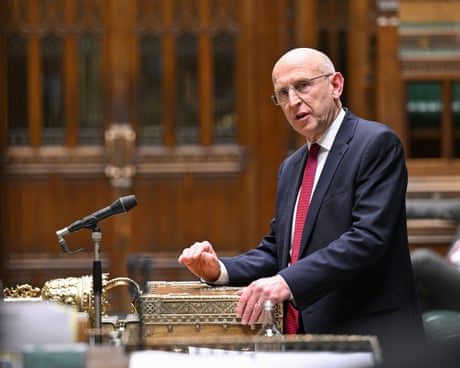
John Healey’s complaint is that Starmer sat on this problem for months before making a derisory offer
John Healey’s resignation as defence secretary on Thursday was a long time brewing, though in the end the denouement was swift. It leaves an already weak Keir Starmer without a defence strategy less than a month before a Nato summit and an unresolved row about spending as Donald Trump threatens to restart the bombing of Iran.
On Monday, No 10 finally told Healey how much more money it was prepared to give the Ministry of Defence to fund major projects as part of the defence investment plan (Dip).
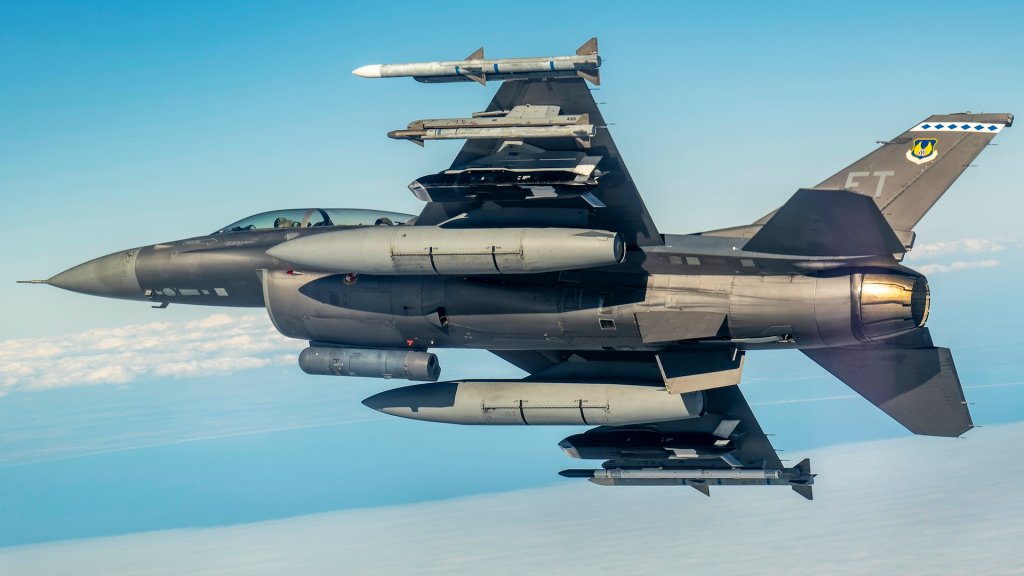
Norwegian missile-maker Kongsberg has finalized its acquisition of a majority stake in Zone 5 Technologies, bringing under its umbrella the U.S. start-up’s Rusty Dagger low-cost cruise missile, among others. With both those weapons already moving into large-scale production, the two companies are making the case for combining Kongsberg’s stealthy Joint Strike Missile (JSM) cruise missiles in operational scenarios. Zone 5 has also now confirmed that the Rusty Dagger, which is already being supplied to Ukraine, is now cleared for use on four different types of fighter aircraft, including the F-16.
At the ILA Berlin airshow yesterday, where TWZ was in attendance, officials from the two companies announced that Kongsberg has now formally acquired a 90 percent stake in Zone 5. California-based Zone 5 will continue to operate as an independent subsidiary under the Norwegian contractor. As well as discussing the industrial acquisition, the officials provided details of how the Rusty Dagger fits into the new-look portfolio, and updates on how that program is progressing.
Founded in 2011, Zone 5 is one of an emerging class of defense companies gaining prominence for developing low-cost, rapidly deployable capabilities. In many ways, they represent the inverse of traditional defense contractors, favoring speed, scalability, and cost efficiency over highly customized, high-priced systems.
Kongsberg first announced the acquisition in December, with executives noting that buying a stake in Zone 5 offered the fastest path to offering lower-cost missiles that still deliver meaningful combat capability, especially in terms of bringing these to the European market.
“What we’re doing here is that we’re combining Kongsberg’s niche, exquisite technologies with a company very capable of designing for cost efficiency and mass production,” explained Thomas Akers, founder and CEO of Kongsberg.
KONGSBERG announced today that it has closed the acquisition of US missile company Zone 5 Technologies LLC, following approval by US regulatory authorities.
As to why Kongsberg didn’t choose to develop its own equivalent to the Rusty Dagger, Harald Aarø, Kongsberg’s executive vice president for business development and strategy, provided the following answer:
“Technically, could we be capable of doing it? Yes, but we are not as capable, as we will probably spend a longer time, and perhaps not strike as smart solutions,” Aarø said. “That doesn’t mean that our engineers aren’t just as smart. Our engineers are just as smart, but on a different sports field, so to speak.”
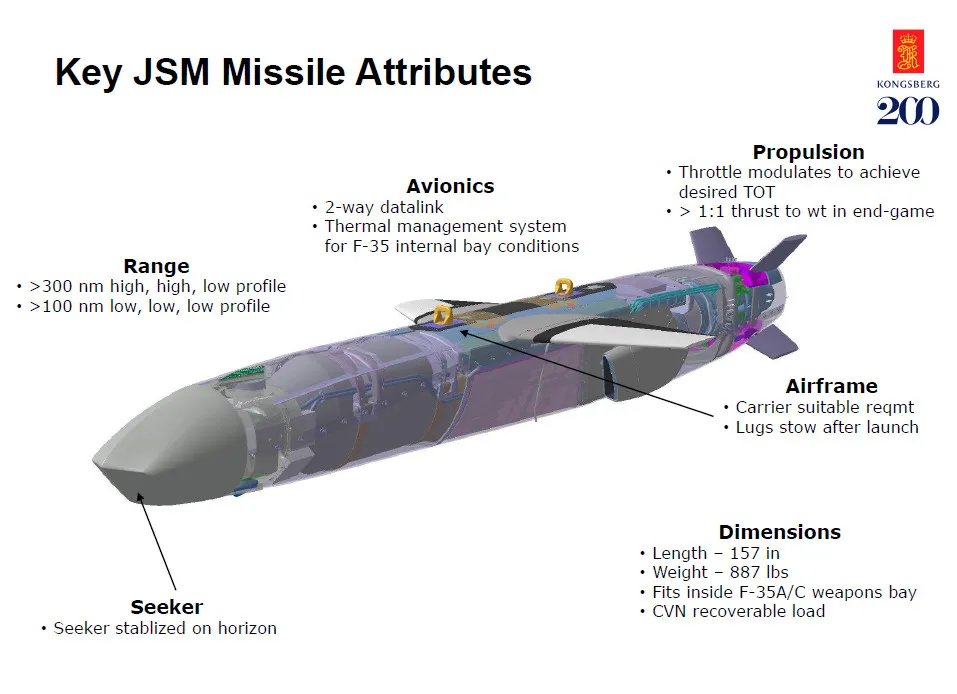
A briefing slide with various details about the JSM’s capabilities. Kongsberg
Aarø also described how the specific combination of the Rusty Dagger and the JSM makes for “a very effective future strike solution.” Namely, the Rusty Dagger provides cost-effective but still highly capable standoff strike, while the more exquisite JSM comes with a heftier price tag but offers a greater chance of making it through to even heavily defended targets, on account of its sophisticated guidance and low-observable characteristics.
According to Tom Kanewske, Zone 5’s chief strategy officer: “What’s interesting about our missile is that the same base, light cruise missile is field retrofittable for all employment modes, and that puts us in a very unique space, in that a country and their [armed] services are able to purchase the same munition and field retrofit for that to be surface launched, whether from land or the deck of a ship, or pylon launched from a fighter aircraft, or palletized.”
Since larger numbers of Rusty Daggers can be launched in any given scenario, they can overwhelm enemy air defenses and improve the chances of success.
According to Kanewske, Rusty Dagger and JSM “offer a weapon pairing that truly no other missiles in the world do.”
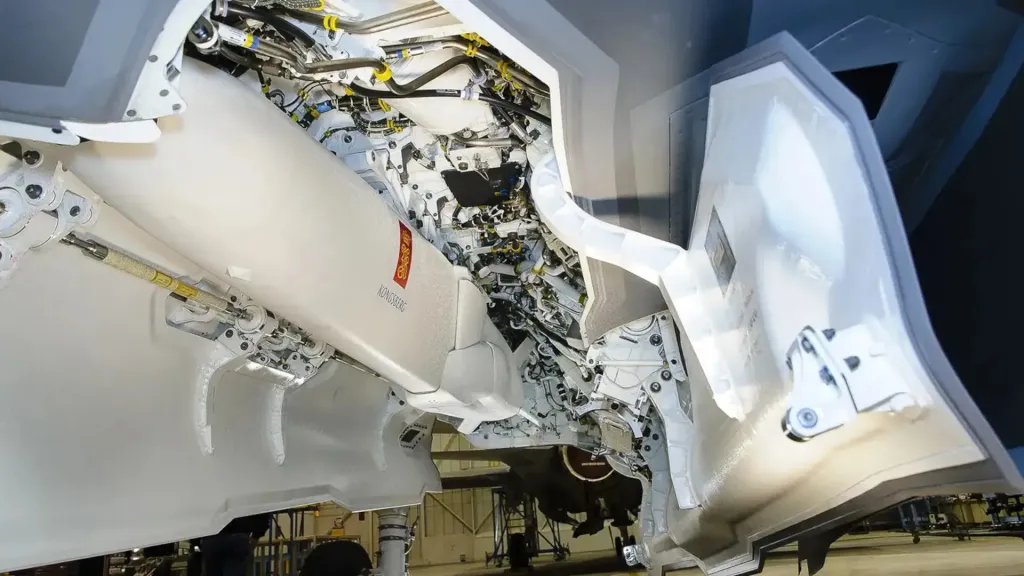
While the JSM can be carried internally in the F-35, the same is not currently the case for the Rusty Dagger, although Kanewske said that this is “something that is of keen interest to the [U.S. military] services and several of our international partners.”
A mock-up of a JSM in one of the internal weapons bays of an F-35. Kongsberg
When it comes to utilizing the Rusty Dagger and JSM together in a combat scenario, Kanewske noted the possibility of integrating capabilities that would allow the Rusty Dagger to offer “cooperative behaviors” with the JSM. This reflects a growing trend toward leveraging artificial intelligence to help make all munitions more effective and survivable, something that has been demonstrated via Golden Horde and follow-on programs.
Both missiles fly at high-subsonic speeds, the Rusty Dagger being able to strike targets at a range of 250 miles, according to Zone 5, while the JSM has a range of more than 215 miles.
In one highlighted scenario, F-35s could penetrate closer to the target, with their JSMs carried internally to preserve their low-observable features. Meanwhile, much larger numbers of Rusty Daggers could be pylon-launched from fighters, and dropped in palletized form out of the cargo holds of transports, from outside of the range of hostile air defenses.
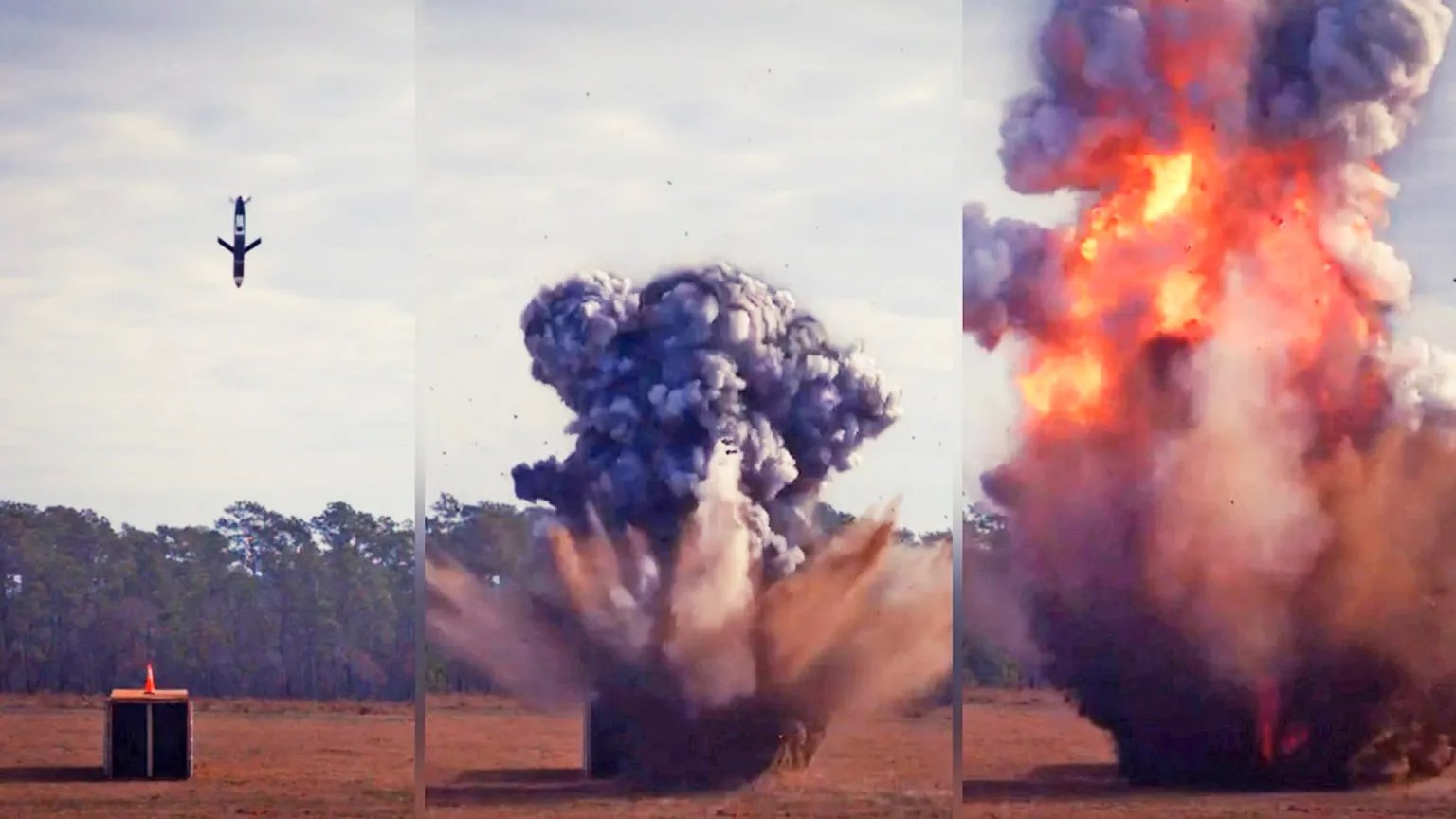
Three views of a Rusty Dagger live-fire test on January 22, 2025, at Eglin Air Force Base, Florida. via U.S. Air Force
Kanewske confirmed that, this year, its first year of production, “well above 1,000 units for Rusty Dagger” will be completed, including for the U.S. Air Force, as the AGM-188, under the Family of Affordable Mass Missiles (FAMM) program. The Air Force’s proposed budget for the 2027 Fiscal Year laid out plans to buy nearly 28,000 FAMM munitions over the next five years.
Last month, the Pentagon laid out plans to acquire at least 10,000 lower-cost cruise missiles over the next three years, as part of a broader strategy to dramatically bolster its stockpiles of standoff strike munitions and prepare the industrial base to sustain those inventories going forward. This is seen as especially critical for supporting the demands of future high-end fights, such as one in the Pacific against China, and doing so in a cost-effective manner.
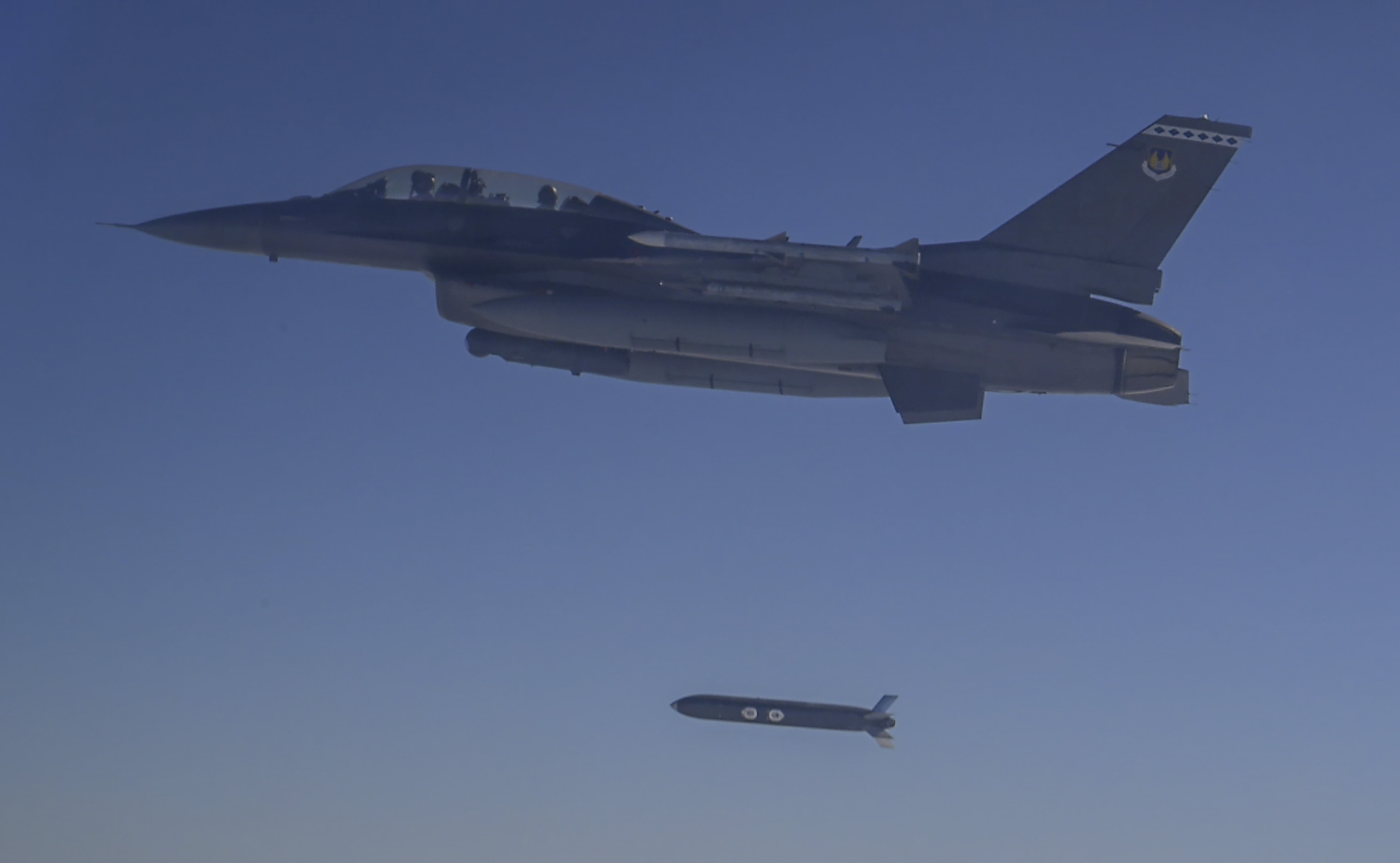
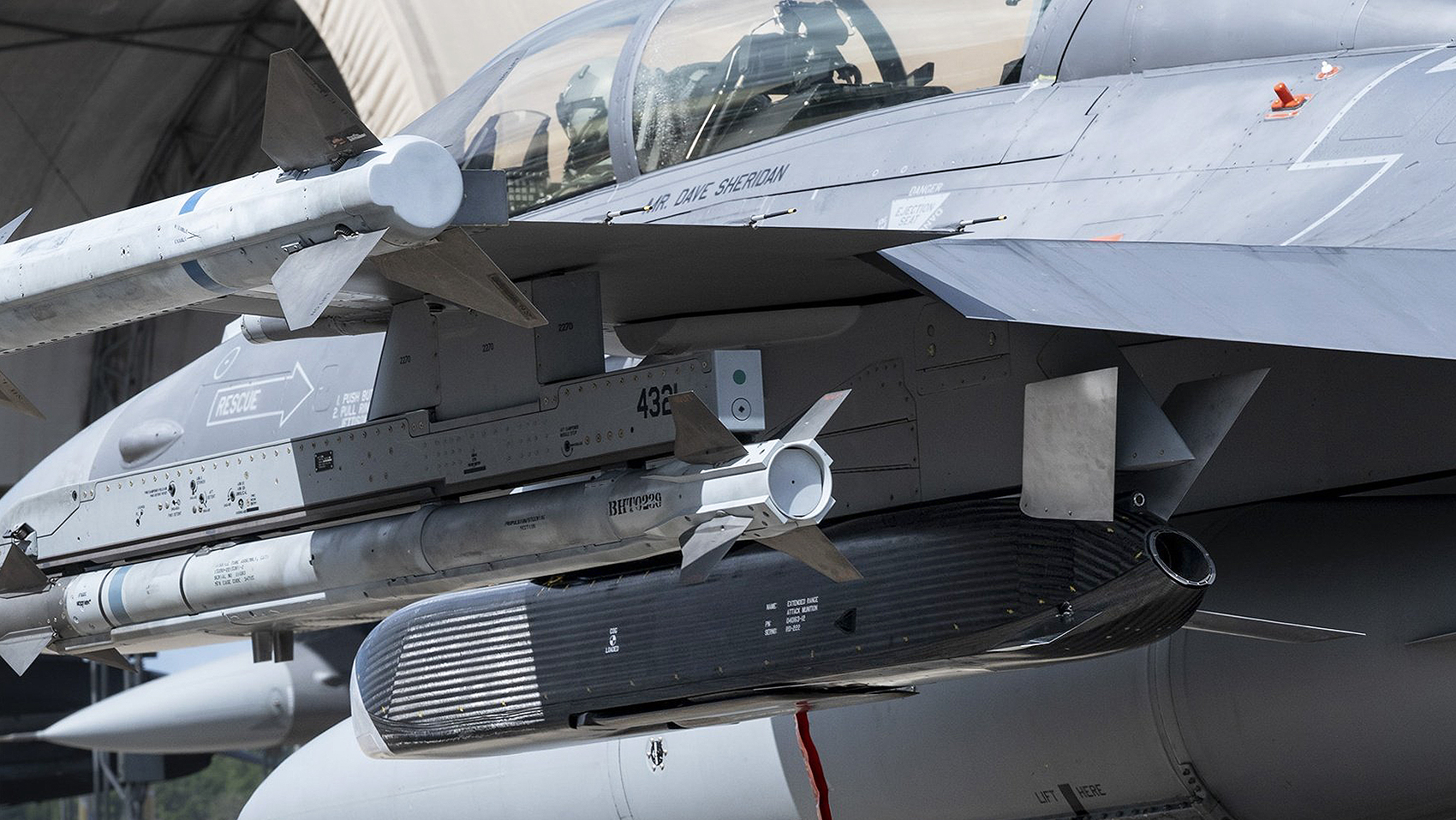
The Rusty Dagger has so far been cleared for use from four different types of fighter aircraft, Kanewske said. One of these is the F-16, which used the weapon in end-to-end live-fire trials at the Eglin Test and Training Range in Florida earlier this year. Another platform may be the A-4, with a contractor-operated example of the attack jet having been used in company trials. Then there is the Ukrainian Air Force, which is using the Rusty Dagger, under the Extended Range Attack Munition (ERAM) program, although the specific platforms have not been disclosed. Any of the MiG-29 Fulcrum, Su-25 Frogfoot, and Su-27 Flanker are likely candidates — as well as its own F-16s.
A series of unverified photos, first published by Russian sources, showing purported parts of Rusty Dagger missiles retrieved after being used by Ukraine:
It appears that the AGM-188A “Rusty Dagger” cruise missile has undergone field testing in Ukraine.
Russian sources are publishing photos of an unknown 8-element CRPA antenna. On the back side of the unit there is a circuit board with a large heatsink, which carries the CAGE code… pic.twitter.com/phZeOJfHJ0
— 𝔗𝔥𝔢 𝕯𝔢𝔞𝔡 𝕯𝔦𝔰𝔱𝔯𝔦𝔠𝔱△ (@TheDeadDistrict) June 7, 2026
In the case of the F-16, Kanewske said that only 72 hours were required to integrate the Rusty Dagger on the jet during the trials at Eglin.
A U.S. Air Force F-16 flies over the Gulf of America carrying a pair of Rusty Dagger Family of Affordable Mass Munitions (FAMM) weapons. U.S. Air Force U.S. Air Force photo by Staff Sgt. Blake Wiles
“We’re the only affordable mass munition that is currently on contract with an export international customer, and we are actively involved with them at this time,” Kanewske said, clearly referring to Ukraine.
Zone 5 is currently under U.S. Air Force contract for both FAMM and ERAM, and is also under contract with the U.S. Army for its Low-Cost Containerized Missile (LCCM) program, and for the U.S. Navy as part of its Coalition Heterogeneous Affordable Offensive Strike (CHAOS) program, which seeks a low-cost anti-ship cruise missile to provide to partner countries. Both LCCM and CHAOS involve surface-launched missiles.
As well as the ability to rapidly scale up production and a relatively low unit cost, the Rusty Dagger brings with it an open-architecture concept, applying to both software and hardware. This means new, sovereign features and capabilities can be introduced at short notice by customers. In the past, an operator might have to wait up to five years for unique subcomponents to be integrated in a similar weapon, Kanewske contended. With the Rusty Dagger, Zone 5 has demonstrated that this can be achieved in under 12 months.
Then, when it comes to producing the missile at mass, rather than having to “make that factory bigger and bigger,” Kanewske explained that the company offers a franchise model “that allows us to roughly parachute in the design, the equipment, the tooling, the fixtures, the quality control, so that countries can drop in their own subsystem capabilities, and we can achieve manufacturing at pace and at scale.”
A U.S. Air Force F-16 releases a Rusty Dagger over the Gulf of America. U.S. Air Force photo by Staff Sgt. Blake Wiles
Speaking in Berlin yesterday, Kongsberg’s Harald Aarø confirmed that Germany is a particular target for this franchise model, including for the Rusty Dagger. He identified Germany as having “probably the best manufacturing capabilities on this planet,” making it an obvious choice for a European manufacturing footprint.
Reflecting on the changing security situation on the continent since Russia’s full-scale invasion of Ukraine, Aarø said that now is “a natural time to start looking at a production site in Europe,” providing nations there with national sovereign capabilities based on the Kongsberg/Zone 5 joint portfolio.
Kongsberg’s acquisition of a majority stake in Zone 5 evidences a broader shift in Western defense planning toward affordable, mass-produced precision weapons that can be fielded at scale alongside more sophisticated strike systems.
The war in Ukraine has exposed the harsh reality that Europe needs far more standoff weapons than it currently possesses, and it needs them at a price point that allows stockpiles to be measured in the thousands rather than the dozens. Rusty Dagger is very much indicative of a new generation of systems designed around that requirement, prioritizing low-cost mass production over the exquisite but scarce munitions that have traditionally dominated Western arsenals.
As conflicts in Ukraine and the Middle East continue to highlight the operational value of low-cost, long-range munitions, demand for capabilities such as the Rusty Dagger is likely to grow. In an increasingly crowded marketplace, Kongsberg and Zone 5 will hope they can leverage their partnership, the Rusty Dagger’s combat use in Ukraine, and the potential to harness its capabilities in combination with the JSM, to build on the missile’s success.
At the same time, Kongsberg’s interest in establishing European production reflects a wider recognition across the continent that long-range strike capacity, industrial resilience, and the ability to sustain missile inventories are becoming increasingly important elements of national and collective defense.
C’è chi vuole sostituire il made in Europe con il made in France e a noi non sta bene. L’Italia è eccellenza mondiale riconosciuta in un settore dove l’Ue deve accelerare. Risponde da Riga l’europarlamentare di Ecr/FdI Elena Donazzan, dove sta partecipando all’Ecr Bureau Meeting dedicato alla nuova difesa europea. Una due giorni ricca di dialoghi con i maggiori esponenti delle istituzioni comunitarie, come Jānis Karlsbergs, Presidente del Consiglio di amministrazione dell’Organizzazione transatlantica lettone e della StratCom della Nato, o Mario Mauro, Coordinatore europeo per il corridoio di trasporto Ten-T Baltico-Mar Nero-Egeo, o il Vicepresidente del Parlamento Europeo Roberts Zīle. “Non accettiamo che nella ridefinizione dell’industria della difesa ci sia una Francia che assegna i compiti agli altri: non funziona così”, dice Donazzan a Formiche.net.
Come i paesi europei stanno affrontando il tema fondamentale della difesa e dell’industria ad essa connessa?
I conservatori di Ecr lo stanno affrontando con un giusto pragmatismo, senza furore vista la delicatezza del tema: occorre praticità rispetto al contesto in cui viviamo oggi, ovvero una stagione molto particolare nata all’indomani dell’aggressione russa all’Ucraina in cui l’Europa stessa deve ripensare al suo modello di difesa che ha in qualche modo lasciato sempre o delegato totalmente alla Nato.
Da dove iniziare?
Da un lato l’Ue deve riservarsi un posto da compartecipe e dall’altro deve essere consapevole che l’Europa stessa è molto differenziata nelle sue sensibilità. La forza dei ragionamenti portati avanti in Europa da Ecr è quella di leggere le sensibilità dei singoli paesi che compongono l’Europa, senza volere in questo caso una taglia unica per la difesa per tutti. Faccio l’esempio dei Paesi baltici, dove la storia recente è fatta di preoccupazione: lì il rischio è percepito in modo diverso rispetto ad un’aggressione via terra. Per cui ci sono esigenze che devono essere affrontate con l’attenzione dovuta.
I paesi di area med che cosa si aspettano e cosa possono dare?
Le scelte vanno fatte rispettando le diverse peculiarità: ad esempio, per noi Paesi del Mediterraneo va tenuta in debita considerazione anche la cultura del rapporto tra territorio e difesa, che è molto forte e molto radicata, con una bella eredità data dalla nostra particolare e invidiabile posizione nel Mediterraneo. Per cui dobbiamo costruire un programma della difesa che tenga conto di una certa dose di indipendenza, del rispetto dei trattati, delle scelte dei singoli Stati membri, ma non è tutto.
Ovvero?
D’altro canto, però, dobbiamo provare a costruire un’autonomia dell’industria della difesa ed è questo il tema principale che abbiamo trattato in questi due giorni a Riga, partendo da un tema strategico come la cultura della difesa. Si tratta di una forma di educazione. Nei 27 Stati membri c’è chi ha, per esempio, un servizio militare obbligatorio, chi ce l’ha su base volontaria e chi lo sta ripensando. Germania e Francia inoltre hanno già deliberato di voler aumentare il loro contingente di riservisti e ieri il nostro ministro della difesa Guido Crosetto ha presentato una proposta di revisione dell’intera struttura della difesa, pensando ad un ampliamento e a una riserva organizzata. Ci rendiamo tutti conto che questi sono temi di straordinaria attualità, che vanno affrontati anche con velocità.
Come una maggiore mobilità militare all’interno dell’Ue potrà dare un contributo alla sicurezza europea, anche in riferimento alla nuova cooperazione da immaginare con la Nato?
La voce mobilità è fondamentale e direi che è un prerequisito. Mi spiego: possiamo avere procedure di comando e controllo da costruire, possiamo avere divise diverse da vestire, sempre ovviamente con la mimetica, ma con colori leggermente diversi, ma non possiamo non avere la stessa capacità di muovere il tutto all’interno dell’Europa. Quando è stato discusso il dossier sulla mobilità militare è emerso che occorre purtroppo un mese e mezzo di pratiche e di timbri per spostare una brigata dalla Francia all’Ucraina. Un lasso di tempo impossibile: per cui serve affrontare con chiarezza la questione della burocrazia e delle procedure. C’è bisogno con urgenza di una Schengen militare.
Sulla difesa, però, il parlamento italiano vede le opposizioni divise.
L’opposizione vive una sua profonda frustrazione in questo campo, perché ha una ideologia di fondo che è antimilitarista, che si tramuta in una sua incapacità di guardare la politica estera. Negli anni questo si è visto con chiarezza e ha fatto da contraltare alla credibilità con cui il Governo Meloni ha affrontato l’argomento, mettendo sempre al centro l’interesse nazionale in una postura che è quella di relazioni internazionali robuste, serie e non piegate ad altre logiche. Vorrei ricordare, inoltre, che abbiamo ereditato politiche dei governi di sinistra che hanno depotenziato tutta la struttura della difesa italiana dal punto di vista della motivazione e degli investimenti. Lavoriamo per invertire la rotta.
Ci avviciniamo al vertice di Ankara, dove si tratteranno temi complessi come il futuro della Nato e l’industria europea della difesa: guardando anche alle grandi competenze che le aziende italiane hanno, quale potrà essere il nostro ruolo?
Come vicepresidente della Commissione industria e come membro della Commissione difesa, osservo che il tentativo francese è sempre quello sostituire il made in Europe con il made in France. Per cui dovremo essere bravi nel far emergere la qualità della nostra capacità di produrre: l’Italia non è seconda a nessuno. Noi abbiamo campioni come Leonardo e Fincantieri, abbiamo competenze straordinarie, abbiamo una storia di tradizione che passa da Iveco Defence. Parliamo di mezzi che sono venduti in tutto il mondo, senza dimenticare le eccellenze dell’aeronautica e dello spazio. L’Italia è la nazione in Europa che ha una storia di spazio estremamente robusta che ci fa stare in tutte le missioni della Nasa. Quindi noi non accettiamo che nella ridefinizione dell’industria della difesa ci sia una Francia che assegna i compiti agli altri: non funziona così. Noi vogliamo che nei programmi ci sia la collaborazione di almeno due Stati membri. Per cui l’Italia è un partner bello e affidabile. Bello nel senso che ha buone relazioni e affidabile perché ha competenze e capacità oggettive.
At the Trump-Xi summit in May 2026 in Beijing, China's President allegedly told his American counterpart that Vladimir Putin "might end up regretting" his invasion of Ukraine. This revelation is both encouraging and disheartening.
China's backing of Russia has been a major factor in
Die zentrale Erzählung des Westens ist es, dass Russland aggressiv sei und die NATO angreifen wolle, während die NATO angeblich ein friedliebendes, reines defensives Bündnis sei. In Russland sieht man das anders und warnt vor der Aggressivität der NATO-Staaten, für die es viele Beispiele von Jugoslawien bis Libyen gibt. Was Starmer gesagt hat Am 5. […]
Accise, il decreto passa al Senato: novità su fisco e consumatori tra rottamazione, bonus autobus e nuove regole Tlc
Il Senato ha approvato con voto ad alzata di mano il decreto accise, che ora passa alla Camera per la conversione in legge entro il 30 giugno. Il provvedimento, esaminato in Aula a Palazzo Madama giovedì 11 giugno, introduce una serie di modifiche su fisco, trasporti e tutela dei consumatori, confermando però anche alcune misure rimaste fuori dal perimetro finale del testo. Tra i principali interventi figura la proroga dei termini legati alla rottamazione, insieme a nuove disposizioni sul telemarketing e a un pacchetto di misure di sostegno per il settore dell’autotrasporto. Restano invece escluse alcune misure più controverse, come la sanatoria per le partite Iva e il blocco dei pignoramenti per chi è in regola con le rate della pace fiscale.
Rottamazione: tempi più lunghi e nuovo calendario
Il decreto estende di un mese, dal 30 giugno al 31 luglio, il termine per le delibere di Comuni ed enti locali che vogliono aderire alla rottamazione quinquies. Una misura che amplia la possibilità di includere anche multe e Tari tra i debiti sanabili. Rivisto anche il calendario delle dichiarazioni, che potranno essere presentate tra il 16 ottobre e il 15 dicembre, con possibilità di integrazione fino alla scadenza. Per i pagamenti, la prima rata (o unica soluzione su 54 bimestrali) slitta dal 31 gennaio al 31 marzo 2027.
Bonus autobus per l’autotrasporto
Via libera in commissione anche al credito d’imposta destinato all’autotrasporto passeggeri su autobus, pensato per attenuare l’impatto dell’aumento dei costi legati al caro-carburante.
Una delle novità più rilevanti riguarda il contrasto al telemarketing selvaggio. Il divieto di contatti commerciali indesiderati viene esteso anche al settore delle telecomunicazioni, oltre a luce e gas. Le chiamate saranno consentite solo con consenso esplicito dell’utente e da numeri identificabili.
Misure ritirate: sanatoria e pignoramenti
Non entra nel testo finale la sanatoria per le partite Iva, proposta che avrebbe introdotto un ravvedimento speciale per il periodo 2020-2024 per chi aderisce al concordato preventivo biennale 2026-2027. L’emendamento, a firma del senatore Claudio Lotito, potrebbe comunque essere ripresentato come ordine del giorno. Ritirata anche la proposta che prevedeva lo stop al pignoramento dei conti correnti per i contribuenti in regola con le rottamazioni, per problemi di copertura finanziaria.
Il decreto ora attende il passaggio alla Camera, che dovrà completare l’iter di conversione entro la fine del mese.
That is the most important question today that we strive everyday to answer.
If you understand who the aggressor is, you are on your way to understanding the mad and perilous times we live in.
Once you get that, what you’ve been taught all your life starts to lose its hold on you.
Establishment education and media try to confuse you. Independent media like Consortium News try to clarify.
Establishment education and media portray the aggressor as the defender, and the victim as the threat. Consortium News endeavors to show you the “threat” is really an obstacle. An obstacle to aggression and occupation. An obstacle to expansion. Locally and globally.
Few would agree with aggression, paid for with your taxes in a so-called democracy. So obstacles to aggression become threats that you’re supposed to be afraid of. Offensive action is taken as “defense” to protect you from the “threat.”
There’s nothing new in this. The Romans dressed up their imperial aggression as self-defense against fake threats. Rome provoked tribes, first in Italy and then Gaul and Germania, into forming alliances to protect the tribes’ sovereignty, and then Rome presented these alliances as “threats” that had to be destroyed, justifying war against them.
Rome would also provoke an adversary into invading or launching an attack to obtain the casus belli needed to start a pre-planned war. For instance, Roman ally Masinissa of Numidia repeatedly raided Carthage to provoke it into finally responding militarily in violation of a treaty it had with Rome. The empire used this as a pretext for total destruction and annexation — even though Carthage, an obstacle to Roman expansion, posed no realistic, existential threat.
In the earlier U.S. imperium, Mark Twain explained it this way:
“The statesmen will invent cheap lies, putting the blame upon the nation that is attacked, and every man will be glad of those conscience-soothing falsities, and will diligently study them, and refuse to examine any refutations of them; and thus he will by and by convince himself the war is just, and will thank God for the better sleep he enjoys after this process of grotesque self-deception.”
Today the obstacles to the aggressors’ expansion and occupation in the Middle East are Iran plus the legal, armed resistance to Greater Israel: Hamas, Hezbollah, the Houthis and Shia militia in Iraq. They are presented as “threats”rather than defenders of their dignity, sovereignty and land.
In Asia the “threat” is China. Beijing protecting its sovereignty in its own region is somehow a threat to U.S. warships near China’s waters and to Taiwan, which the U.S. agrees is part of China.
In Europe years of NATO expansion, refusal to negotiate a mutual security treaty, rehabilitation of fascism, a coup, and civil war in Ukraine against ethnic Russian coup-resistors provoked Russia to intervene, much as the Romans provoked Carthage. Getting Russia to invade Ukraine allows the portrayal of Moscow as the aggressor and a “threat” to all of Europe and not as an obstacle to the U.S. and Wall Street return to their 1990s dominance of Russia. (Now there is constant talk of direct NATO war with Russia. The fear is another provocation to get Russia to start it.)
All of these obstacles to U.S. global hegemony are presented to you as existential threats that only the mighty United States, NATO and Israel can protect you from. There’s nothing in it for them, of course, except saving your life, we’re expected to believe. Except you don’t have to believe it. You have alternative media like Consortium Newsto expose the deceptions on a daily basis.
That’s why pro-establishment social media companies and so-called anti-disinformation services have tried to hurt us. And that’s why we need your help.
Sulle spese per la Difesa Giorgia Meloni cerca di dare un colpo al cerchio e uno alla botte. Nel corso del suo intervento alla Camera, come su altri temi la presidente del Consiglio si è messa sulla difensiva. Da una parte ha vantato un aumento delle spese in rapporto al Pil dello 0,71%, dall’altra, per il timore di proteste per spese militari eccessive in un momento di piena crisi energetica, ha comunque specificato che questa impennata è dovuta “soprattutto alle spese legate alla sicurezza sul proprio territorio“.
La leader di Fratelli d’Italia ha garantito che sulla Difesa “siamo pronti ad assumerci le nostre responsabilità e lo ribadiremo al vertice Nato, dove l’Italia si presenterà con il 2,8% del Pil investito in difesa e sicurezza”. Un dato che, rispetto agli accordi raggiunti dall’Alleanza, rispetta le aspettative del raggiungimento del 5% entro il 2035. Ma questa celerità nel rispettare standard che lo stesso governo aveva criticato nei mesi scorsi definendoli eccessivi rischiava di attirare sull’esecutivo critiche dalle opposizioni, ma anche dai alcuni sostenitori. Così ha precisato: “Segnalo un aumento dello 0,71%, garantito però soprattutto dalle spese legate alla sicurezza sul proprio territorio”. E ha poi spiegato: “La difesa è importante, certo, ma mettere al riparo le famiglie e le imprese italiane dalla crisi in atto, lo è altrettanto. E queste due priorità sono interconnesse. Senza sicurezza, l’energia finirebbe per costare sempre di più. Senza energia, non rimarrebbe più nulla da difendere con le armi. Abbiamo posto questa questione con chiarezza, scrivendo una lettera alla presidente della Commissione europea Ursula von der Leyen con la quale chiedevamo di garantire maggiore flessibilità di bilancio agli Stati membri per affrontare la crisi energetica, utilizzando meccanismi finanziari simili a quelli previsti proprio per la difesa. Dopo un negoziato lungo e complesso abbiamo ricevuto la risposta che auspicavamo”.
Un unico slogan, “Welfare, non guerra“, unirà il 14 giugno oltre 800 organizzazione della società civile, sindacati e movimenti sociali, che scenderanno in piazza a Bruxelles per marciare contro la politica di riarmo dell’Unione Europea e della Nato. Il presidio è stato organizzato dalla coalizione paneuropea,Stop ReArm Europe, in collaborazione con la piattaforma belga, Stop Militarisation, e coinvolge anche decine di altre città europee. Tutte hanno un unica richiesta: il denaro pubblico deve essere speso per il benessere sociale, non per armarsi.
La mobilitazione si terrà a pochi giorni dall’inizio dei negoziati tra i leader dell’Ue sul prossimo bilancio settennale dell’Unione. Il Consiglio europeo negozierà infatti il 18 e il 19 giugno il Quadro Finanziario Pluriennale 2028-2034, che è in fase di riorganizzazione e potrebbe convogliare decine di miliardi di euro all’industria degli armamenti. Contro questa ipotesi, i manifestanti si raduneranno alle 15 alla stazione di Bruxelles Nord, seguirà una marcia pacifica per poi riunirsi alle 18 in un’assemblea pubblica presso la Biblioteca Reale del Belgio dove pianificheranno le fasi della campagna su tutto il continente.
“Bruxelles ha scoperto che non c’è limite a quanto l’Europa può prendere in prestito, purché sia per le armi – ha commentato Amir Kiyaei, coordinatore delle politiche di DiEM25, una delle oltre 40 organizzazioni belghe che sostengono la manifestazione -. Le regole sul deficit che smantellano i nostri ospedali e congelano i nostri salari si dissolvono nel momento in cui l’industria delle armi si siede al tavolo”. Contro questa prospettiva, gli organizzatori hanno pensato un mese intero di mobilitazioni, incontri e azioni coordinate in Belgio, Paesi Bassi, Austria, Spagna, Finlandia, Germania, Italia e altri paesi. Ovunque si chiede ai responsabili politici dell’Ue di investire in sanità, istruzione, lavoro e in una transizione climatica equa, dando priorità al dialogo e alla diplomazia rispetto allo scontro. Per farlo occorre investire nella solidarietà e nella cooperazione internazionale, perseguendo il controllo degli armamenti come unico mezzo per garantire la pace.
“Il riarmo ci viene venduto come garanzia di sicurezza, ma l’unica cosa che garantisce davvero sono i profitti dell’industria bellica – afferma Katerina Anastasiou, portavoce di Stop ReArm Europe -. Una società con ospedali fatiscenti e un clima destabilizzato non è sicura. Spendere miliardi in armi, comprimendo al contempo sanità, istruzione e coesione sociale, rende l’Europa più povera e pericolosa, non più sicura. Chiediamo priorità diverse”.
La coalizione si oppone al pianoReArm Europe dell’Ue, annunciato nel marzo 2025, che prevede lo stanziamento di 800 miliardi di euro per gli armamenti. Tutti fondi, come specificano i manifestanti, sottratti a sanità, istruzione, lotta al cambiamento climatico e protezione sociale. Ma la proposta di bilancio della Commissione per il prossimo anno va persino oltre, prevedendo di stanziare circa 131 miliardi di euro per il settore difesa, sicurezza e spazio del nuovo Fondo europeo per la competitività. Si tratta di una cifra cinque volte superiore rispetto ai circa 26 miliardi di euro previsti per il periodo 2021-2027. Come spiegano gli organizzatori della mobilitazione, è una somma tale da poter finanziare gli stipendi di circa 300.000 infermieri o costruire circa mezzo milione di alloggi sociali.
Inoltre, prosegue la coalizione nel comunicato, in questo modo anche i programmi civili per la ricerca, la mobilità e la coesione verrebbero aperti all’uso militare. Gli attivisti invitano quindi a riflettere su come l’Europa si stia aprendo a un’economia di guerra permanente che non risolve i conflitti ma li acuisce e li alimenta. Tra le conseguenze dirette e più evidenti, i promotori citano il rinnovo della coscrizione, l’ampliamento delle riserve alla sorveglianza e la riduzione dello spazio democratico. Viene anche sottolineata la crescente influenza della lobby delle armi che, secondo Stop ReArm Europe, viene favorita dalla Commissione europea. L’organo esecutivo dell’Unione ha incontrato i rappresentanti dell’industria delle armi 89 volte sul tema del riarmo nel 2025 (fino a ottobre), a fronte di soli 15 incontri con Ong, sindacati o scienziati sugli stessi argomenti. Una scelta anche sconveniente dal punto di vista economico, perché l’industria bellica, dipendendo da capitali e importazioni, crea meno posti di lavoro dell’alternativa civile che invece produce dal 30% al 50% di impieghi in più.
Dass die Waffen, die der Westen an die Ukraine liefert, zu einem großen Teil auf dem internationalen Schwarzmarkt und bei islamistischen Terroristen, lateinamerikanischen Drogenkartellen und dem organisierten Verbrechen – auch in Europa – landen, ist nicht neu. Europol hat davor schon im Mai 2022 gewarnt, in Spanien haben NATO-Waffen beim organisierten Verbrechen bereits die Kalaschnikows […]
A 26ª Feira Nacional de Negócios do Artesanato (Fenearte) foi lançada nesta quarta-feira (10), na sede provisória do Centro de Artesanato de Pernambuco, no Bairro do Recife, anunciando investimento recorde de R$ 16 milhões. Realizada pela Agência de Desenvolvimento Econômico de Pernambuco (Adepe), a feira acontece entre os dias 8 e 19 de julho no Pernambuco Centro de Convenções, em Olinda, com expectativa de receber mais de 340 mil visitantes. Este ano o tema é "Seleiros de Pernambuco: Ofício que Transforma".
Presente no lançamento, a governadora Raquel Lyra destacou a importância econômica da Fenearte e o aumento do investimento do governo do Estado nos últimos anos. Desde 2022 o aporte escalou de R$ 7 milhões para o valor deste ano.
A aposta tem retorno comprovado. Em 2025, a Fenearte movimentou R$ 163 milhões em 12 dias de evento, recebeu mais de 300 mil visitantes e registrou aprovação de 99% do público. Em 2023, a movimentação tinha sido de R$ 54 milhões, o que significa que o resultado financeiro da feira triplicou em dois anos.
"Não se trata somente de um lugar incrível para visitar, um mergulho na nossa identidade e na nossa história. É de onde as pessoas tiram o seu sustento", afirma Raquel. Ela destaca que os negócios gerados na feira reverberam ao longo de todo o ano. "Não é só o que foi vendido do estoque, mas aquilo que se pode fazer de negócios pelo ano inteiro", complementa.
Nesta edição, mais de 5 mil artesãos, expositores e empreendedores de Pernambuco, de 24 estados do Brasil e de mais de 30 países ocupam os 700 espaços de comercialização, distribuídos em 30 mil metros quadrados de estrutura. A dimensão sustenta o título de maior feira de artesanato da América Latina, repetido pela governadora a cada visitante estrangeiro que convida para conhecer o evento.
Compradores internacionais é novidade
A principal novidade econômica desta edição é a comitiva inédita de dez compradores internacionais, que chega à feira em parceria com a Agência Brasileira de Promoção de Exportações e Investimentos (Apex Brasil). O grupo participa de rodadas de negócios com 40 artesãos selecionados, com potencial de gerar encomendas e levar o artesanato pernambucano a pelo menos dez países.
O movimento de expansão já começou antes da abertura dos portões. Em maio, a Fenearte saiu de Pernambuco pela primeira vez e ocupou o São João Gomes, em São Paulo. A presença na capital paulista gerou quase R$ 400 mil de renda para artesãos pernambucanos.
"Esses artesãos e essas artesãs realmente dependem da feira para sobreviver, para vender e viver do seu trabalho dignamente. É por isso que o governo vem investindo cada vez mais", diz Camila Bandeira, diretora-executiva da Fenearte e diretora-geral de Promoção da Economia Criativa da Adepe.
Couro em cena
O tema "Seleiros de Pernambuco: Ofício que Transforma" reverencia quem faz do couro abrigo, proteção e ornamento. "O couro é resistência. Ele é transformado a partir das mãos desses artesãos e dessas artesãs, que também têm as suas vidas transformadas por esse ofício", explica Camila. A palavra seleiro, originalmente ligada a quem fabrica selas, hoje nomeia qualquer artesão que trabalha o couro.
Os artesãos atravessam o mapa de Pernambuco. No Sertão, estão Zé Venceslau, do Ciclo do Couro de Exu, quase contemporâneo de Luiz Gonzaga, e Fafá Belém, de Petrolândia, que despertou para o couro de tilápia e criou uma associação de mulheres artesãs que vivem do ofício. No Agreste, Cachoeirinha concentra a produção de selas e arreios na Feira do Couro e do Aço. Na Região Metropolitana do Recife, designers como Jailson Marcos levam o couro à moda autoral.
Do Sertão ao hype
Entre os reverenciados, Irineu do Mestre carrega o caso mais pop do tema deste ano. Das mãos do seleiro da Fazenda Cacimbinha, em Salgueiro, saem os "bonéus", mistura de boné e chapéu que virou marca registrada de João Gomes, cantor e compositor pernambucano de 23 anos, que levou o forró ao topo das plataformas de streaming. O artista é de Serrita, terra da Missa do Vaqueiro, e exibiu a peça de couro até em gravação na Disney.
"Um jovem que mostrou para o mundo que não precisa ter cerimônia de usar um chapéu, um boné de couro e uma alpercata e sair pelo mundo sem perder a sua simplicidade", diz Irineu, que se orgulha de ver o trabalho "de um sertanejo simples" rodando o planeta.
A governadora Raquel Lyra já encomendou o seu. No evento de lançamento, ela conta que Irineu mediu sua cabeça com fita métrica para produzir a peça. "Da próxima vez que eu encontrar João Gomes, eu vou estar com o meu, ele com o dele", brinca.
Herdeiro de uma linhagem de seleiros que vem do pai, Zé do Mestre, falecido em 2025, Irineu resume o peso econômico do ofício. "O artesanato em couro é um complemento de renda que a gente tem para defender nossos interesses. E é a preferência do cliente que dá vida à nossa arte", destaca.
Cidade da arte
Na entrada principal da feira, a Alameda dos Mestres reúne 64 mestres e mestras do artesanato pernambucano. A estreante deste ano é Dona Francisca Xukuru, que chega aos 80 anos de idade e quase oito décadas de trabalho com a renda renascença. Ela ocupa o espaço do mestre Roque Santeiro, de Petrolina, que faleceu em fevereiro deste ano de leucemia.
A programação inclui 13 oficinas, de reciclados a xilogravura e biojoias, que no ano passado reuniram 1,6 mil participantes. A Cozinha Fenearte oferece 17 aulas de gastronomia com o tema da cozinha sertaneja, com receitas inspiradas em aboios. A Moda Fenearte apresenta nove desfiles nos dois sábados do evento, com o couro como estrela, incluindo criações premiadas de 15 estudantes de moda e design do Estado.
O Circuito Fenearte, que leva programação paralela a museus, galerias e equipamentos culturais da Mata Norte, Mata Sul, Agreste e Região Metropolitana, chega à quarta edição com 12 imersões gratuitas. Por conta do tema, uma delas leva o público a Cachoeirinha para conhecer a Feira do Couro e do Aço.
Para facilitar o acesso, ônibus gratuitos saem a cada meia hora de cinco shoppings do Recife, e a feira estreia um terminal de passageiros dentro do Centro de Convenções. Segundo a organização, o ingresso é o mais barato do Brasil entre as grandes feiras.
Serviço:
26ª Fenearte
De 8 a 19 de julho, no Pernambuco Centro de Convenções, em Olinda.
Ingressos à venda pelo Instagram @fenearte
R$ 12 (inteira) e R$ 6 (meia) de segunda a quinta.
Uma nova sondagem aponta que os europeus estão cada vez mais desconfiados dos Estados Unidos e acreditam que as relações transatlânticas vão melhorar com a saída de Trump. Portugueses são quem mais quer uma alternativa à NATO só com membros da UE. A confiança nos Estados Unidos como garante da segurança da Europa desceu para o nível mais baixo alguma vez registado, de acordo com uma nova sondagem publicada pelo Conselho Europeu dos Negócios Estrangeiros (ECFR). A sondagem, realizada em 15 países europeus antes das próximas cimeiras do G7 e da NATO, apurou que apenas 11% dos inquiridos consideram agora
Europe deliberately exaggerates the Russian threat to justify military expansion, strengthen new defence alliances, and maintain political unity amid domestic crises. When one is losing a battle, whether on the literal battlefield or in the public eye, it is natural to try until one’s last breath to recover the losses. This is what Europe is […]
Vítima de cerca de 40 anos foi atingida na cabeça e morreu no local, perto do percurso por onde Papa vai passar. É o segundo assassinato em Barcelona numa semana.
Portugal is the European country most in favour of taking on debt to fund defence, and the one where public support for investment in this sector has risen the most
Exclusive: poll across 15 countries finds ‘deep mistrust’, with majority doubting US would come to their aid in an attack
European confidence in an American “security guarantee” has hit a historic low, a survey suggests, with only one in 10 people across 15 countries seeing the US as an ally and majorities in all doubting it would come to their aid if they were attacked.
The survey, published on Wednesday by the European Council on Foreign Relations (ECFR) thinktank before critical G7 and Nato summits in France and Turkey over the coming weeks, revealed “deep European distrust in the US”, the authors said.
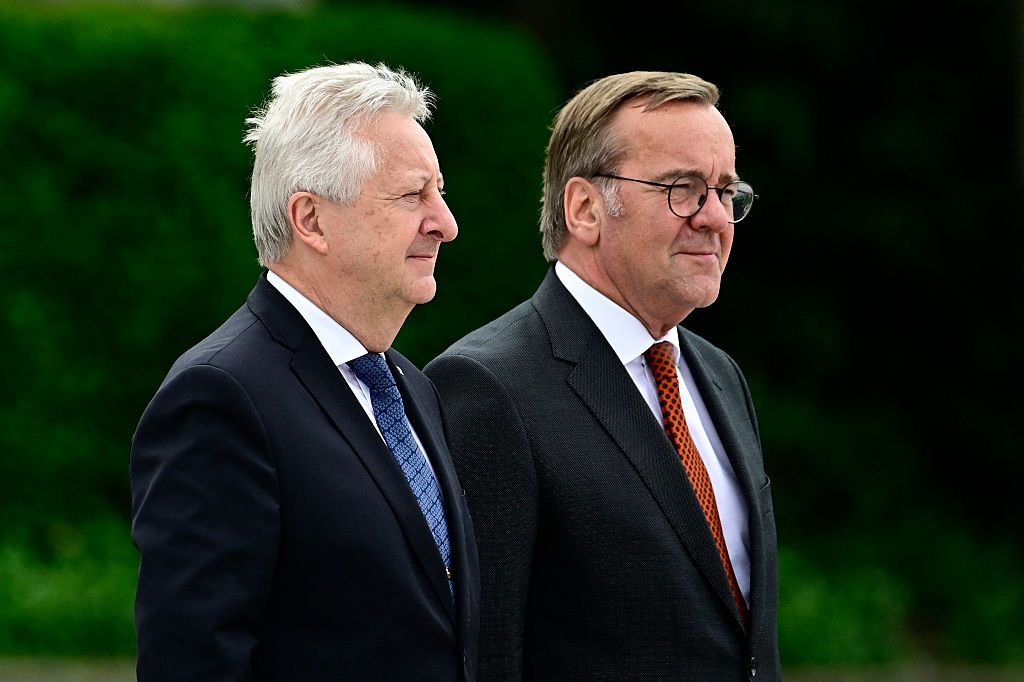
"Germany will contribute an additional 300 million euros to this initiative – that's approximately 50,000 rounds of long-range ammunition," German Defense Minister Boris Pistorius said.
Depois da reunião com o secretário-geral da NATO, António Costa reforçou "prioridade da UE" na Defesa europeia, apelando à importância do trabalho em conjunto com a Aliança na resposta a ameaças.
Ukraine at war; weapons from all over the world (Flickr)
Half way through the fifth year of the war in Ukraine it is reasonable to ask why it has lasted so long. Why has Russia not crushed Ukraine quickly as expected, it is after all a much bigger country with a far greater population and industry to call on?
Robert Harneis (DR)
By Robert Harneis
It is standard for the Western Media to talk of deadlock and to say that the Russians are not advancing because their armies are incompetent, when they are not drunk or poorly equipped. At regular intervals Western media announces that the Russian side is running out of ammunition, missiles, drones, tanks or even men. In short they are not advancing in overwhelming force to capture Kiev because they are incapable of doing so. The latest fantasy in the US, UK and European media, is that the Russian economy is crumbling in the face of the problems created by the war and sanctions.
Russia’s self-imposed restrictions
President Putin imposed severe constraints on his generals from the start. They are, to an extent, fighting with one hand tied behind their backs. Contrary to the endless claims by the Western media, the Russian forces do everything they can to avoid civilian casualties. This in borne out by their low level throughout the war. In a recent massive attack involving 1500 missiles and drones right across Ukraine, only six civilians were reported killed. It is only natural that this should be so. Russia regards Ukrainians as brother Slavs. Approximately one fifth of Russian families have close relatives in Ukraine. The brother of the Ukrainian Commander in Chief is a colonel in the Russian army. They have no interest in killing them, if it can be avoided, especially as they will have to live with them after the war.
The second restriction is the requirement to avoid heavy casualties amongst their own forces. Wars are lost on the home front when the body bags start coming home in big numbers. The constant allegations in the Western media that Russians launch human wave attacks and suffer heavy casualties doing so, are false. This desire to restrict losses is reinforced by Russia’s demographic problems. Lives are precious.
The third restriction that Putin has imposed on his generals and ministers is that the war will not stop Russian economic progress, vital for political stability. Of course it goes without saying that it is not possible to fight a major war without financial and budgetary stress. An example is the necessity of delaying the naval building program as a result of which only sixteen corvettes have been built out of the forty planned. This has made it more difficult for Russia to protect its merchant fleet and stop the current harassment of oil tankers. On the other hand the management of the economy has been a classic case of successful military Keynesianism as with the United States in World War II. Throughout the war real wages have risen and economic growth has been maintained. Unemployment is at record low levels.
Tactical considerations
There are other less obvious reasons for hastening slowly. If Moscow’s war aims are denazification and demilitarization then the longer the fighting goes on the more of the Ukrainian military is eliminated, especially the elite ultra-nationalists who are Ukraine’s most committed soldiers. The effect of the manpower attrition is obvious from the many videos appearing on social media showing Ukrainian press gangs snatching citizens from the street, often with violent resistance.
Further by keeping the fighting in the Donbass, the invading Russians have short lines of communications, whilst Kiev’s main bases are over a thousand kilometers away in Poland, with supplies at risk of constant air attack on their way to the front. Paradoxically then, the invading force has better lines of communications than the defenders in their own country.
The wish to avoid destruction is another explanation for Russian circumspection. It is obvious that the retreating Ukrainian army is indifferent to the damage it causes to the cities it loses. The greater the area of the fighting the greater the destruction that Russia will likely have to rebuild after the war. Better to ground away the Ukrainian ability to resist and if an advance into the rest of the country is needed, to wait until effective military resistance has collapsed.
However an undoubted factor in the slow Russian progress is the nature of the great Donbas urban area, which was massively fortified with NATO assistance over eight years after the 2014 coup d’état when Ukraine moved definitively into the Western camp. Whatever plans the Russian government may have for the rest of Ukraine, especially the Black Sea Coast, the source of many missile attacks on Russia, they will not wish to make any major moves until the Donbass is firmly in their hands. Two important fortified towns remain to be captured Kramatorsk and Slavyansk. Russian forces are already approaching them. It remains to be seen how long it will take to break their resistance.
We cannot know what President Putin and the Russian High Command are thinking but it is also obvious that by not committing to a major offensive Russia not only avoids casualties but retains the strategic initiative. Hundreds of thousands of Russian troops are held in reserve. Uncommitted forces are a potential threat as well as being available for defense elsewhere if needed.
The Russians will also have learnt the bitter lessons of the US army that quickly smashed its way into Afghanistan and Iraq but was unable hold the territory conquered in the face of tough local resistance. Already, at the beginning of the war in March 2022, the Washington Post published an article that assumed a quick Russian advance and talked about the planned guerilla resistance. There is every reason for Russia to move gradually and consolidate as it goes.
The diplomatic front
There is also the diplomatic aspect, which is of vital importance to Russia. Moscow views the struggle in Ukraine as part of a world confrontation. It has been clear from the start of the war that whilst the West and Kiev worry about public opinion to get support for the war, Russia is concerned about what he world’s diplomats think. Good relations with India and BRICS countries and especially China dictate moderation at all times. A shock and awe approach, whilst it might get quicker results, would have offended much international opinion and unfavorably reminded the world’s diplomats of the Soviet Union, something Putin wishes to avoid at all costs. Similarly Russia is very patient with small countries on its borders that indulge in vexatious provocations, notably the Baltic States… so far. The contrast with the brazen bullying of Venezuela, Cuba, Greenland and Iran by the United States is striking and has had an effect on world public opinion. The recent humiliation of Merz’s new militaristic Germany in the recent United Nations General Assembly vote is a striking example of the success of this softly softly approach, as is Russia’ success in expanding its influence in Africa from Mali to Madagascar.
Also on the diplomatic front, with a long war, the Black Sea remains closed to the warships of outside countries under the Montreux Convention of 1936, which governs traffic through the Dardanelles strait. The convention allows Turkey to close the straits to all warships in times of war and to permit merchant ships free passage. This suits the Russians as NATO likes to flex its muscles by bringing warships into the Black Sea in times of international tension. For four and a half years they have not been able to do this. Once the war ends, Turkey will have to let them through again. Another reason why the Russian forces have taken their time.
The change in the nature of war
Every war is different and brings its surprises. The drone revolution has transformed this one. The omnipresence of drones is all the more deadly, given the absolute impossibility for both sides, of hiding concentrations of troops, thanks to satellites that see pretty much everything happening on the ground. So now advances are made by small groups of infantry that infiltrate defenses that are then taken out by artillery, drones and missiles. Slow work if casualties are to be kept to a minimum.
NATO intervention
NATO intervention, with a huge supply of arms, finance and electronic intelligence, after sabotaging the peace talks, has increased Russian difficulties in defeating the Ukrainian army,. It is this that definitively imposed the choice of a long slow war of attrition on the Russians – a war that Russia is clearly winning. Not only have Ukraine’s forces been degraded in this process but NATO’s as well. One reason the United States has reduced arms supplies to Kiev is that they are running short. This became very obvious when Washington’s priority turned to the defense of Israel. The Pentagon has had to search the globe, asking allies as far apart as South Korea and Germany to hand over any Patriot air defense missiles they might have. The US air force is seriously short of vital stand-off munitions to attack Iran. The result for Kiev is that it has little defense industry of its own left and NATO has completely failed to match Russian weapons production levels.
Russian rearmament
It is also obviously the case Russia needed time to build its army to its present strength, as well as arm and equip it. Russia has greatly increased its military production across the board. This has been possible because of the continued existence of much of the old Soviet military industrial infrastructure on Russian territory. Whilst the combined Western nominal GDP greatly exceeds Russia’s, when it comes to purely military industrial capacity Russia is well capable of holding its own. Tank production and reconditioning has increased from a few hundred to more than a thousand a year. The United States can barely produce one hundred new Abrams tanks each year. Russia alone now produces over five million drones each year. Importantly Russia is fourth in the world in the number of STEM students graduating annually after China, India and the United States.
Irreconcilable differences block peace talks
Putin’s latest statements indicate that the Russian government is not interested in a ceasefire that fails to solve its Europe wide security problems. The United States does not want to lose face in Ukraine, particularly after its recent military failures in Afghanistan and now Iran. It also wants to continually weaken Russia. Europe is determined to persevere in its support for Ukraine despite the major economic and energy problems they have created for themselves. The statement from the latest meeting of the leaders of France, Germany and the United Kingdom, on June 7, refers to the need for a peace treaty that leaves Ukrainian frontiers unchanged. Clearly something Russia will never accept. Brussels sees failure in Ukraine as a threat to its plans for ever greater union, even the institution itself. Against this background it is not surprising that there have been no meaningful peace talks. As Josep Borrell former EU High Representative for foreign affairs commented at the beginning of the war, it will have to be settled on the battle field and that takes time.
Finally in Ukraine, whilst the people would agree to negotiations with Russia, the regime and its ultra nationalist supporters know that if there is peace and Russia wins there is no future for them. Putin’s final phrase in his recent speech at St Petersburg Economic Conference “Keep on fighting my comrades” is ominous for Zelensky and his neo Nazi colleagues. It is a reference to a famous quotation, the last words of a Russian policeman knowing he was about to die at the hands of terrorists. It reflects the Russian leader’s determination to focus Russian society in a patriotic way and finally settle the Ukrainian problem for good. He has used the long war to encourage a new generation of Russian leaders based around distinguished war veterans. This has been accompanied by a determined anti-corruption drive. None of this would have been possible without a long war.
However that may be, the Russian President is coming under increasing pressure to move faster. Like the US, Russia has parliamentary elections approaching in the autumn, September of this year, and there are signs that the tempo is quickening all along the front line. The long war has had advantages for Russia but it may be time to bring it to a close, whatever the cost.

 Login
Login




 (@TheDeadDistrict)