As the US withdraws troops from Europe, European countries are once again facing the echoes of the past. In search of protection from growing threats, Norway has become the ninth European power to seek the French “nuclear umbrella.” On 27 May 2026, Norway’s Prime Minister Jonas Gahr Store met the French President Emmanuel Macron in […]
Moscú, 13 jun (Prensa Latina) Los piragüistas rusos Serguéi Svinarev y Zajar Petrov ganaron hoy medallas de oro y plata respectivamente en el Campeonato Europeo de remo que tiene como sede a Portugal, informó el rotativo Vzgliad.
Portugal is set to play an increasingly important role within NATO as melting Arctic ice reshapes global shipping routes and defence priorities, according to the country’s permanent representative to the
Alfama volta a vencer as Marchas de Lisboa, 8 anos depois. Ainda, o embaixador de Portugal na NATO garante que o compromisso dos Estados Unidos com o artigo 5.º não está em causa.
Alfama volta a vencer as Marchas de Lisboa, 8 anos depois. Ainda, o embaixador de Portugal na NATO garante que o compromisso dos Estados Unidos com o artigo 5.º não está em causa.
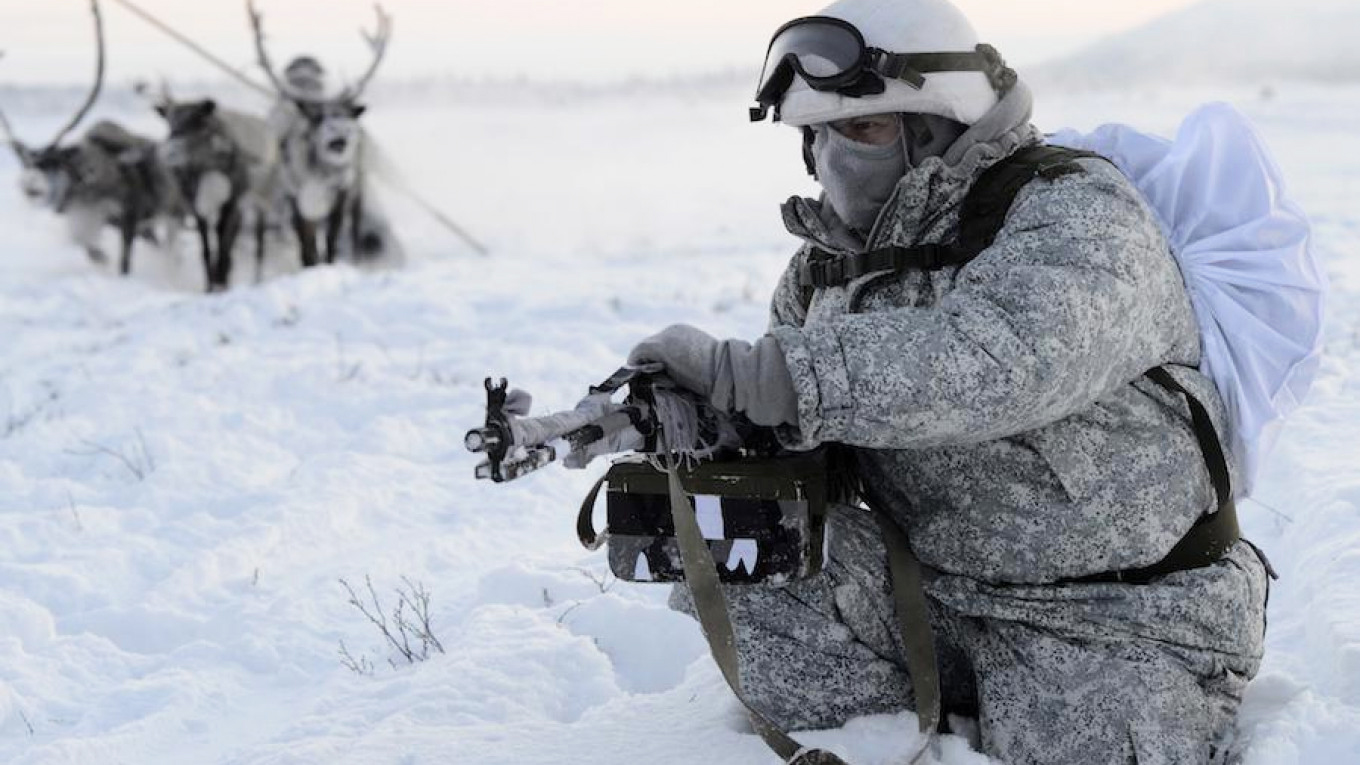
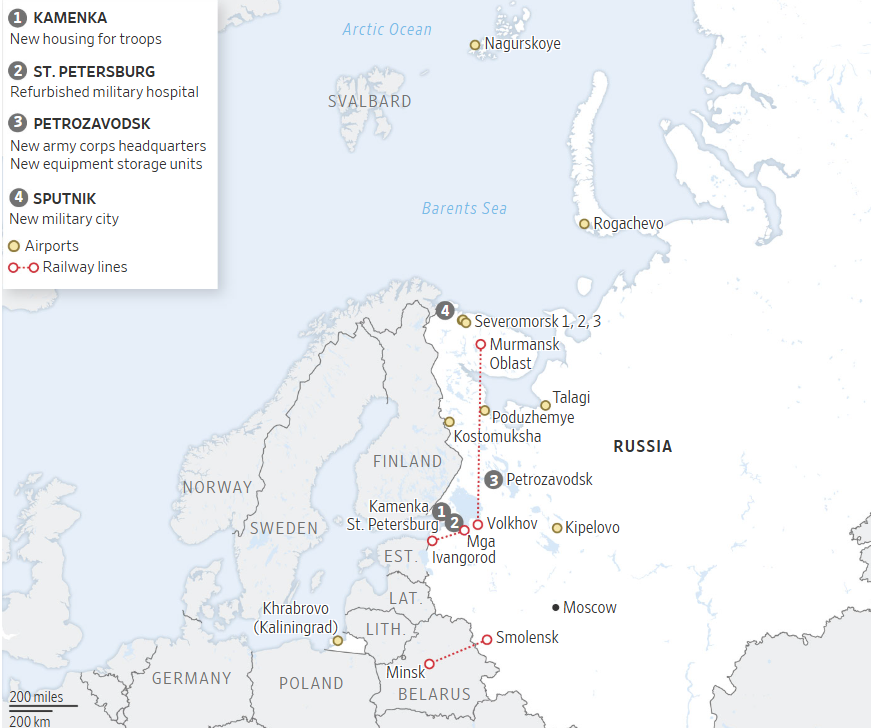
In another indication of the growing military and economic importance of the Arctic, Russia and NATO are increasing their buildup of forces and facilities in the region. Recent media investigations found that Russia is constructing new bases near Finland to eventually house tens of thousands of troops while NATO on Saturday stood up a long-planned new battalion battlegroup. It is a force that will operate in Finland and Sweden as a deterrent against Russia.
While Russia remains totally bogged down and suffering high attrition in Ukraine with little chance of moving masses of troops to the Arctic at the moment, concern over the future has spurred NATO to bolster its presence along the Finnish border. Having moved to a wartime economy during the full-on conflict with Ukraine, Russia could leverage that in a post-Ukraine war future to threaten NATO’s borders.
A NATO official told us Friday morning that while the alliance assesses that the chances of a near-term conflict are low given the war in Ukraine, “Moscow could seek to expand westward into the Nordic and Baltic nations after a ceasefire with Ukraine.”
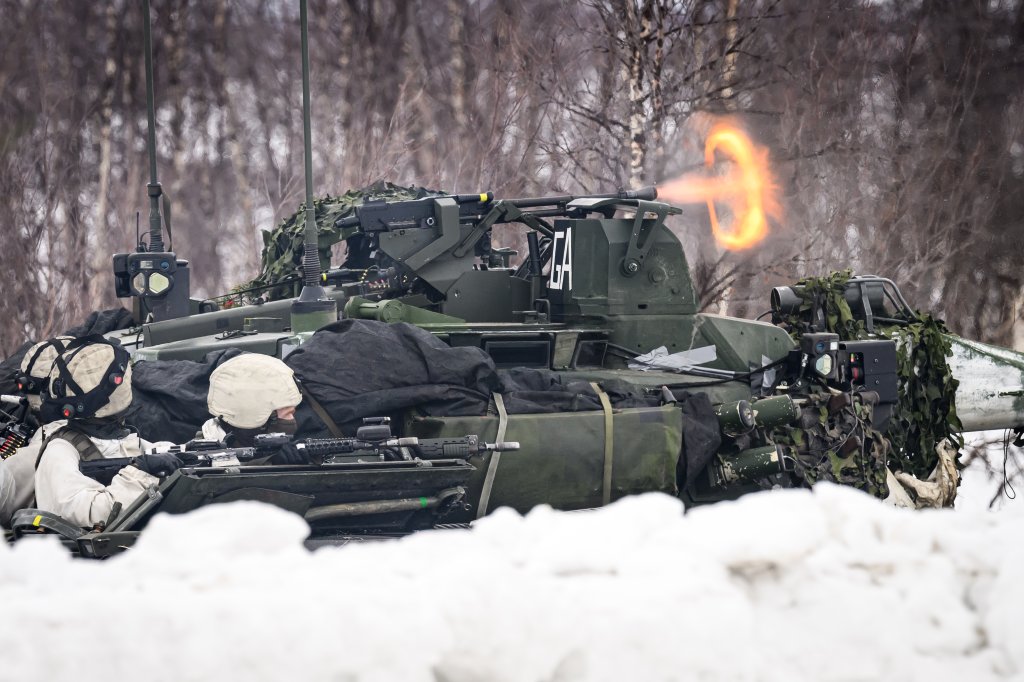
Swedish soldiers take part in training on the Finland/Norway border during the Nordic Response military exercise on March 09, 2024 in Kivilompolo, Finland. (Photo by Leon Neal/Getty Images) LEON NEAL
Russia appears to be investing in infrastructure in preparation of such a contingency. A joint report by several Nordic and Baltic media outlets published earlier this week has found that Russia is expanding military facilities along its borders with Norway and Finland to accommodate tens of thousands of new troops.
“New satellite images show that Russia is increasing its armament in [the] vicinity,” the report stated. “SVT, together with media partners in several countries, has examined how Russia is preparing for 80,000 soldiers… It is a threat that we should take seriously, says Thomas Nilsson, head of Sweden’s military intelligence service (MUST).”
The images “show new barracks for thousands of soldiers, long lines of military vehicles and ammunition storage,” the report further noted. “All winter, Russia has been building new military structures in several places on the other side of the Finnish border.”
“We expect to have 80,000 soldiers on our border and that can be compared to the fact that we previously had 20,000,” Finnish Army Chief Pasi Välimäki told the joint investigation.
A joint investigation by Nordic and Baltic media outlets found that these developments could enable Russia to deploy a force of up to 115,000 military personnel in the Northern European and Baltic regions. pic.twitter.com/ZiVpsP3fEz
A separate report by the Finnish Yle media outlet found that the Russians are expanding a base in the town of Novaya Vilga to hold as many as 6,000 Russian troops. It is located about 100 miles east of the Finnish border.
Breaking News: Where exactly is Russia building its massive new military garrison?
“NATO has monitored a buildup of military infrastructure in Russia along NATO’s Eastern Flank, particularly along Finland’s border,” the NATO official told us earlier this week. “The real question is what becomes of the infrastructure? Will, for example, Russian troops now in Ukraine be relocated there after the war? It’s something we certainly need to consider, and we do.”
“That’s why NATO and nations are working to deliver real military capabilities to the alliance now, not five to ten years from now, which is so very, very important,” the official added.
A Swedish soldier takes part in a training exercise during the Nordic Response military exercise on March 09, 2024, in Kivilompolo, Finland. LEON NEAL
One of those efforts, as we noted earlier in this story, was stood up on Saturday, involving NATO’s two newest members.
NATO’s Forward Land Forces (FLF) Finland began operations in Finland and Sweden, according to the alliance. The FLF will include NATO’s newest multinational battlegroup, led by Sweden, “to support the defense of NATO’s northeastern flank.”
The establishment of FLF Finland places a Swedish battlegroup based in Boden, Sweden, and a Multinational Staff Element in Rovaniemi, Finland, under the command of the Supreme Allied Commander Europe (SACEUR) and NATO.
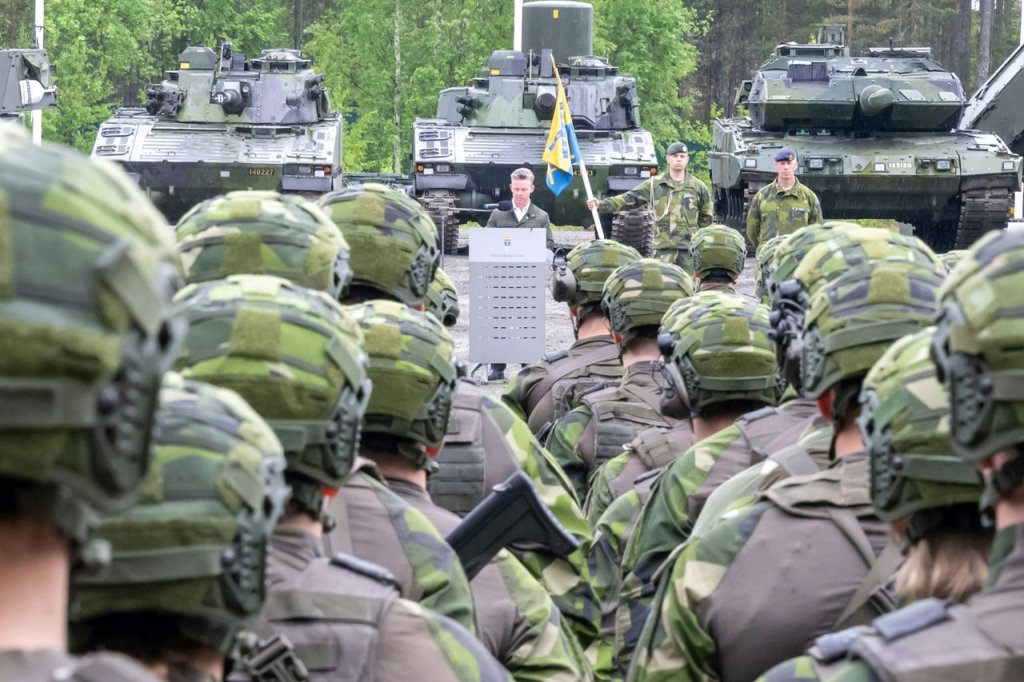
The NATO Forward Land Forces Finland (FLF) was established on June 6, 2026. (NATO Photo by OR-7 Dennis Sattler) MSgt OR-7 Dennis Sattler; DEU Army
“Sweden is contributing a battalion battlegroup that, together with a Multinational Staff Element in Rovaniemi, will form the core of FLF Finland,” NATO added. “The Swedish battalion battlegroup is prepositioned in Boden, with capacity to operate in the North Calotte and, where necessary, rapidly reinforce the presence in northern Finland. In 2026, Sweden’s contribution to FLF Finland will total around 600 personnel, with the option to expand to 1,200 personnel if needed.”
“This region is one of the most strategically significant and environmentally challenging areas in the world,” said U.S. Air Force Gen. and SACEUR Alexus G. Grynkewich. “FLF Finland, just like Arctic Sentry, will leverage NATO’s strength to defend our territory and ensure the Arctic and High North remains secure, especially considering Russia’s military activity and China’s growing interest there.”
The U.S. too is working to improve its presence and operations in the region. During last month’s SOF Week symposium in Tampa, Florida, the head of U.S. Northern Command (NORTHCOM) announced the formation of Nordic Bridge to “tie together” the work of U.S. European Command, North American Aerospace Defense Command (NORAD) and SACEUR.
Air Force Gen. Gregory Guillot provided no real details about Nordic Bridge at the time, so we reached out to NORTHCOM for additional details.
“The Nordic Bridge concept seeks to enhance Arctic integration between U.S. Northern Command and U.S. European Command and enhance cooperation between NORAD and NATO in order to expand domain awareness, strengthen deterrence, and improve interoperability,” a NORTHCOM spokesperson told us last month. “It envisions increased participation in each other’s training and exercises, increased data sharing (such as air pictures), deconflicting conferences to maximize personnel availability and participation, etc.”
Last month, Guillot visited Grynkewich “to discuss opportunities under this concept,” the NORTHCOM spokesperson told us.
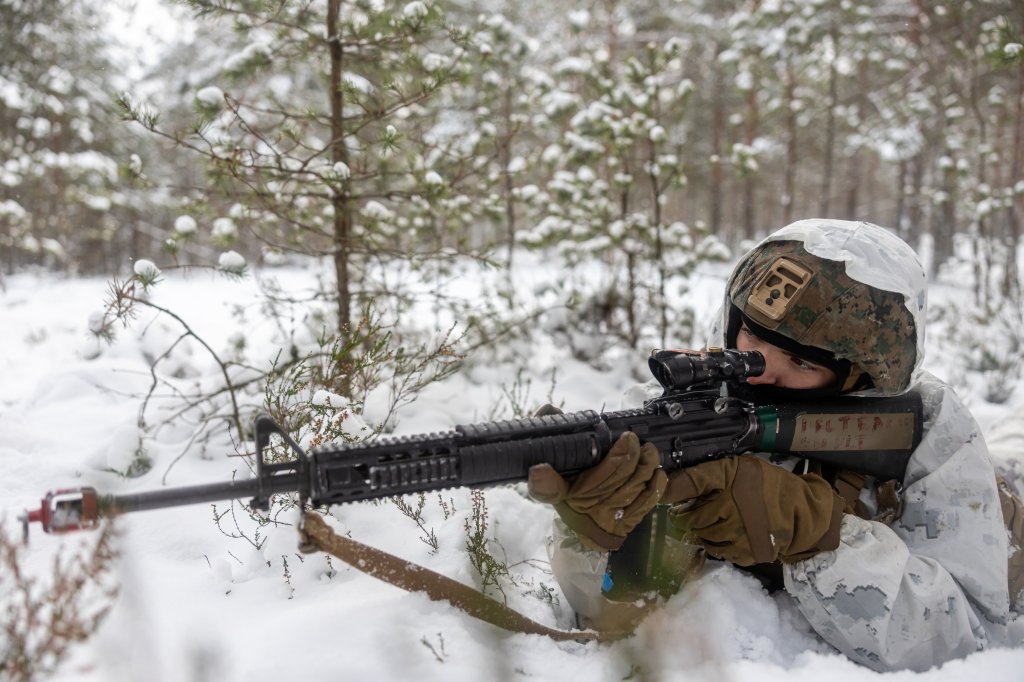
U.S. Marine Corps Lance Cpl. Thomas Teague, a motor vehicle operator assigned to Combat Logistics Battalion 6, Combat Logistics Regiment 2, 2nd Marine Logistics Group, provides security for a convoy during offensive and defensive operations in Syndalen, Finland during exercise Freezing Winds 23 (FW23), Nov. 30, 2023. (U.S. Marine Corps photo by Lance Cpl. Christian Salazar) Cpl. Christian Salazar
All this is taking place, of course, against the backdrop of President Donald Trump’s frequent insistence that the U.S. subsume Greenland to provide better Arctic protection for the U.S. homeland. The issue reached a fever pitch earlier this year, causing a serious rift with NATO after the president threatened to invade the world’s largest island. You can read more about that in our story about the crisis here.
While there are no indications that the Arctic region is about to break out into open conflict, there are several indications that Russia, NATO and the U.S. are increasing preparations for such an eventuality.
A Aliança Atlântica anunciou a redução da missão KFOR no Kosovo no próximo ano, após uma avaliação da estabilidade regional, mas sublinhou que o processo será reversível caso a situação se deteriore
Russia is building new military bases and expanding existing ones along its northern border with NATO, according to ISW. The Institute for the Study of War (ISW) assesses that the construction likely supports future Russian force projection against the alliance. Near-term Russian ground operations remain unlikely, the think tank notes, since most Russian combat power stays committed in Ukraine.
Western officials have tracked Russia's military buildup near its European neighbors since well before the latest satellite findings, and Moscow's large-scale exercises near alliance territory have repeatedly rehearsed confrontation scenarios.
Satellite images show construction from Norway to Kaliningrad
Broadcasters in Norway, Sweden, and Denmark, together with a Baltic news portal,publishedsatellite findings of the buildup on 10 June. Russian forces are putting up new facilities and growing old ones near the frontiers of the Nordic and Baltic states. Intelligence officers and senior commanders in Denmark told broadcaster DR the work amounts to preparation for conflict. They see nothing indicating Moscow has actually decided on war, not least because the bulk of its army remains tied down in Ukraine.
Explore further
“We don’t think all of this is just for demonstration”: Russia is constructing infrastructure with potential capacity up to 115,000 personnel on NATO’s doorstep
Finland braces for 80,000 Russian troops at its border
Marko Eklund, a former Finnish intelligence officer, told DR that the Russian command plans to deploy about 115,000 troops at the northern NATO border. That deployment would come after the war in Ukraine ends. Construction has begun on a new Russian base at Novaya Vilza, outside Petrozavodsk in the Republic of Karelia. The site sits roughly 190 kilometers from Finland and will hold 4,000 to 6,000 personnel. Russia began renovating an abandoned Soviet-era garrison in Petrozavodsk earlier this year. Finland's army chief, Pasi Välimäki, expects Russia to put 80,000 soldiers on the shared border, he told Swedish broadcaster SVT.
Explore further
ISW: Estonia warns of Russia’s military buildup beyond war in Ukraine
A corps command waits in Luga as Karelia bases rise
A source covering the Russian Northern Grouping of Forces claimed Russia's command is moving parts of the 44th Army Corps, a Leningrad Military District formation, to the Republic of Karelia. Only the command post stays behind for now. Those command-post elements currently sit in Luga, Leningrad Oblast, ready to shift to Petrozavodsk once Russia finishes the bases, the source claimed.
Explore further
Russia builds up military presence near Finland’s border – WSJ
A Kremlin-affiliated Russian milblogger claimed on 11 June that crews are upgrading at least 19 barracks, along with support and storage buildings, at Pechenga on the Kola Peninsula in Murmansk Oblast. The site lies about 10 kilometers from the Norwegian border. The milblogger also claimed Baltiysk in Kaliningrad Oblast is getting a bigger naval infantry footprint, more armor, and additional landing craft.
ISW: bases serve post-war force projection
"Russia is establishing these bases to support potential future military actions against NATO, though such ground operations remain unlikely, as most of Russia's combat power is participating in operations in Ukraine," ISW says.
Once the shooting in Ukraine stops, the finished bases would shorten Russia's timeline for massing troops at NATO's frontier, ISW assesses. That leaves NATO needing the readiness to hold off — and, failing that, beat back — a Russian threat at its borders soon after combat in Ukraine stops, in ISW's assessment.
Gli Stati Uniti intendono ridurre significativamente il numero di aerei e navi da guerra messi a disposizione per le operazioni Nato in Europa. Secondo quanto riporta il New York Times, che cita due alti funzionari europei, il piano prevede la riduzione del numero di caccia e aerei da ricognizione marittima, nonché la riallocazione di un sottomarino lanciamissili e di una portaerei. Riduzioni, riferisce il quotidiano, che limiteranno le capacità di sorveglianza dell’Alleanza e la sua capacità di lanciare attacchi a lungo raggio.
“Non so se lo sapete, ma oggi abbiamo posto fine alla guerra con l’Iran“. Lo ha detto il presidente Usa Donald Trump durante un comizio telefonico a sostegno di Burt Jones a governatore della Georgia. Teheran, ha aggiunto, ha “concordato di non dotarsi mai di armi nucleari, cosa su cui abbiamo insistito. Questo era l’obiettivo principale. Rappresentava il 95% della questione”. In precedenza il capo della Casa Bianca aveva annunciato di aver annullato ulteriori attacchi contro la Repubblica islamica, suggerendo che fosse stato raggiunto un accordo, senza però specificarne i termini. Teheran da parte sua ha fatto sapere che l’intesa è quasi pronta ma non è stata ancora finalizzata.
I dettagli, alcuni dei quali riportati per la prima volta dal quotidiano tedesco Die Welt, forniscono il quadro più chiaro delle intenzioni dell’amministrazione Trump di ridurre il proprio impegno nell’Alleanza. Il Pentagono non ha ancora reso pubblica la tempistica del ritiro, ma secondo funzionari americani avverrà molto presto, ben prima di quanto previsto dalle controparti europee. L’improvviso ritiro delle forze americane comprometterebbe la capacità della Nato, ad esempio, di monitorare il traffico sottomarino russo o di lanciare missili Tomahawk a lungo raggio in profondità nel territorio russo.
Freuding's comments are the latest in a series of increasingly warnings from Western leaders and defense officials about the threat emanating from Russia and Europe's current lack of preparedness.
"It will be a war that takes place in all dimensions. It will take place on land, in the air, at sea, in space, and in cyberspace," Major Brian Nissen told DR.
A 26ª Feira Nacional de Negócios do Artesanato (Fenearte) acontece de 8 a 19 de julho no Pernambuco Centro de Convenções, em Olinda. Realizada pelo Governo de Pernambuco por meio da Adepe, a feira é uma política pública continuada desde 2000 e carrega o título de maior feira de artesanato da América Latina. Para os mais de 5 mil artesãos, expositores e empreendedores que ocupam cerca de 700 espaços de comercialização, é o momento de maior venda do ano, com negócios que reverberam pelos meses seguintes. Participam representantes de 24 estados do Brasil e de mais de 30 países, sob o tema "Seleiros de Pernambuco: Ofício que Transforma", que homenageia quem trabalha o couro. Com tanta coisa acontecendo ao mesmo tempo nos 12 dias de evento, vale planejar a visita. O JC organizou o mapa completo.
Ingressos e horários
Ingressos vão de R$ 6 a R$ 16 e são vendidos online e em pontos físicos da Região Metropolitana e do interior - JAILTON JR./JC IMAGEM
A feira abre de segunda a sexta, das 14h às 22h, e nos sábados e domingos, das 10h às 22h. Os ingressos custam R$ 12 (inteira) e R$ 6 (meia) de segunda a quinta, e R$ 16 (inteira) e R$ 8 (meia) de sexta a domingo, valores que a organização aponta como os mais baratos entre as grandes feiras do Brasil. A compra pode ser feita online, pelo site www.evenyx.com/26a-fenearte, com link também disponível no Instagram @fenearte, ou em pontos físicos espalhados pela Região Metropolitana e pelo interior. Vendem ingressos as lojas do Artesanato de Pernambuco no Palazzo Itália (Bairro do Recife) e nos shoppings Recife e Tacaruna, as unidades da Casa do Pará, da Trois Barbearia e da Crosby, a loja Crabolando (Plaza) e o quiosque Parcele Aqui no Vitória Park Shopping, em Vitória de Santo Antão. Em breve, os ingressos também estarão disponíveis no site oficial www.fenearte.pe.gov.br.
Como chegar
Cinco shoppings têm ônibus grátis, com trajeto de ida e volta da Fenearte - Divulgação
Quem preferir deixar o carro em casa tem cinco rotas de traslado gratuito, com partidas dos shoppings Recife, RioMar, Plaza, Tacaruna e Patteo. Os ônibus circulam das 13h às 23h de segunda a sexta, e das 9h às 23h nos fins de semana, com embarque e desembarque nos estacionamentos. A novidade é o terminal de passageiros dentro da feira, próximo à entrada principal. Para quem vai de carro, o estacionamento do Centro de Convenções cobra R$ 13 pela primeira hora e R$ 7 por hora excedente ou fração. A diária de até 12 horas sai por R$ 35.
Logo na entrada
O Átrio Fenearte tem visitação gratuita e reúne o Espaço Janete Costa (foto) e quatro salões de arte - JAILTON JR./JC IMAGEM
Nem tudo na Fenearte exige ingresso. O Átrio, área de entrada da feira com bilheteria ampla e totens de autoatendimento para evitar filas, pode ser visitado gratuitamente. É ali que ficam o Espaço Janete Costa, que une artesanato, arquitetura e design e recebe os bate-papos e lançamentos de livros das Conversas Instigantes, e os quatro salões de arte. São eles o 21º Salão de Arte Popular Ana Holanda, o 19º Salão de Artes Sustentáveis, o 10º Salão de Arte Popular Religiosa e o 2º Salão Pernambuco Faz Design, com mobiliários e objetos. O público vota na peça favorita de cada salão, e os autores mais votados recebem o prêmio de Aclamação Popular.
Alameda dos Mestres
25ª edição da Feira Nacional de Negócios de Artesanato (Fenearte) - JAILTON JR./JC IMAGEM
A Alameda dos Mestres é a identidade da feira, onde estão os 64 estandes de mestras e mestres vivos e das famílias que continuam legados da tradição popular. A estreante este ano é a Mestra Francisca Xukuru, do povo Xukuru, da Aldeia Pé de Serra dos Nogueiras, em Pesqueira. Aos 80 anos, presente na feira desde a primeira edição, ela trabalha com a renascença "desde menina" e diz que o artesanato "foi a solução de tudo". Francisca ocupa o estande deixado pelo Mestre Roque Santeiro, falecido em fevereiro deste ano, em Petrolina, vítima de leucemia. O trabalho em madeira do Mestre Heleno, de Tracunhaém, que também faleceu este ano, segue exposto pelas mãos da família.
Rota do couro
Peças de Irineu do Mestre, couro de tilápia de Fafá Belém e calçados de Jailson Marcos traduzem o tema da edição - Divulgação
Quem quiser ver de perto o tema da edição pode montar um roteiro próprio atrás dos seleiros homenageados. Irineu do Mestre, de Salgueiro, leva à feira os "bonéus" de couro que João Gomes usa nos palcos, peças de uma linhagem de mestres iniciada pelo pai, Zé do Mestre. Fafá Belém, de Petrolândia, apresenta sandálias, bolsas e carteiras feitas com couro de tilápia, técnica que transformou a economia do seu território. Jailson Marcos, radicado no Recife, expõe os acessórios e calçados que marcam a moda autoral pernambucana. O Ciclo do Couro de Exu, eternizado por nomes como Zé Venceslau, e as seleiras e seleiros de Cachoeirinha, epicentro nacional das selas e arreios, completam o universo reverenciado pelo tema, presente também na ambientação da Alameda dos Mestres e nos desfiles da Moda Fenearte.
Fafá Belém transforma couro de tilápia em sandálias e movimenta uma rede de mulheres artesãs em Petrolândia - DAY SANTOS / JC IMAGEM
Moda no couro
Nove desfiles tomam os dois sábados da feira com o couro como estrela das passarelas - Divulgação
A Moda Fenearte toma os dois sábados da feira com nove desfiles que celebram a moda autoral pernambucana, este ano com o couro como estrela das passarelas. Entre as atrações, desfilam as criações dos 15 finalistas do 3º Desafio MAPE (Moda Autoral de Pernambuco), concurso que revela estudantes de moda e design do Estado e premia os três primeiros em dinheiro.
Mãos na massa
Cerca de 13 oficinas ensinam xilogravura, biojoias e reciclados e reuniram 1,6 mil participantes em 2025 - JAILTON JR./JC IMAGEM
Entre as atrações mais disputadas da feira, as Oficinas Fenearte ensinam ao público técnicas como xilogravura, biojoias e trabalho com reciclados, passadas por quem domina o ofício. São cerca de 13 oficinas no Mezanino, que no ano passado reuniram 1,6 mil participantes.
Sabores do Sertão
Cozinha Fenearte mistura fogão e aboio em 17 aulas dedicadas à gastronomia sertaneja - JAILTON JR./JC IMAGEM
A Cozinha Fenearte oferece 17 aulas de gastronomia dedicadas à cozinha sertaneja, tema escolhido em diálogo com a homenagem aos seleiros. A novidade deste ano é a mistura entre música e fogão, com receitas inspiradas em aboios e aboios inspirados em receitas, para ver, vivenciar e saborear. As aulas contam com intérpretes de Libras.
Vitrine do artesão
Ainda no Mezanino, a mostra do Programa Pernambuco Artesão em Exposição apresenta criações e depoimentos de artesãos do segundo ciclo do programa, convênio da Adepe com o Sebrae/PE que leva consultorias, mentorias e formações em embalagens, marketing digital e gestão financeira a quem produz do Sertão a Fernando de Noronha.
Brasil e mundo
25ª edição da Feira Nacional de Negócios de Artesanato (Fenearte) - JAILTON JR./JC IMAGEM
O passeio pelos corredores também atravessa fronteiras. Além dos expositores de todas as regiões de Pernambuco, a feira reúne artesãos de 24 estados brasileiros e de mais de 30 países, cada estande com as técnicas, as matérias-primas e as tradições do seu lugar de origem. É a chance de comprar, numa mesma tarde, uma peça do Sertão pernambucano, do Norte do Brasil e do outro lado do mundo sem sair de Olinda.
Música na praça
Praça de Alimentação recebe mais de 70 atrações musicais no clima do Festival Pernambuco Meu País - JAILTON JR./JC IMAGEM
A Praça de Alimentação entra no clima do Festival Pernambuco Meu País, com programação da Fundarpe e da Secretaria de Cultura de Pernambuco. São mais de 70 atrações musicais nos 12 dias, da cultura popular à cena contemporânea.
Design sustentável
A feira volta a realizar o Concurso Praça de Sustentabilidade, vencido por estudantes da UFPE com o projeto "Quando a Maré Encher", orientado pelo professor Pier Paolo Bertuzzi Pizzolato e executado com recurso de R$ 18 mil. Já o 2º Concurso Estande dos Estandes premia em dinheiro os três estandes mais bem avaliados do setor Individual Pernambuco em sustentabilidade, materialidade, layout e criatividade.
Feira acessível
Pessoas com deficiência visual, neurodivergentes, surdas ou ensurdecidas contam com visitas guiadas com acessibilidade comunicacional, que em 2025 atenderam mais de 350 pessoas. Há intérpretes de Libras nas programações da Cozinha Fenearte e das Conversas Instigantes, além de cadeiras de rodas disponíveis para pessoas com mobilidade reduzida.
Circuito Fenearte leva imersões a ateliês e espaços culturais da Região Metropolitana, Zona da Mata e Agreste - Divulgação
Além dos muros
Pelo quarto ano, o Circuito Fenearte leva programação paralela para fora do Centro de Convenções, com imersões por ateliês e espaços de arte, cultura e economia criativa na Região Metropolitana do Recife, na Zona da Mata e no Agreste.
U.K. Defense Secretary John Healey resigned Thursday after clashing with Prime Minister Keir Starmer's government over military spending, dealing the British leader a setback weeks before a critical NATO summit to include President Donald Trump.
Healey's departure stemmed from a dispute over the delayed Defense Investment Plan (DIP) — the government's long-promised roadmap for military investment and readiness — and as NATO allies face renewed pressure from Trump to boost defense spending.
"John Healey’s resignation is a seismic moment for the government and the Ministry of Defense," Royal United Services Institute (RUSI) Senior Associate Fellow Ed Arnold told Fox News Digital.
"For the government, it creates a sequence of political headaches in terms of a replacement, and trying to get the Defense Investment Plan published."
Healey had been in intense, late-stage negotiations with Starmer and Chancellor of the Exchequer Rachel Reeves over the scale and timelines of the DIP.
Starmer reportedly refused to set out a timeline to reach 3.5% of gross domestic product (GDP) on defense by 2035 — a promise he made to Trump at last year's NATO summit — and would not commit to a firm date for reaching 3%.
Instead, Starmer offered Healey a deal to spend 2.68% of GDP on defense by 2030, up only marginally from 2.6% next year, Reuters reported.
"You have been unable, and the Treasury has been unwilling, to commit the resources that the nation needs to defend the country," Healey wrote to Starmer in his resignation letter, warning that the financial constraints would "make the country less safe," the outlet reported.
"If the delay to the Defense Investment Plan was already undermining the government’s credibility on defense, John Healey’s resignation has blown a hole in its side," professor Kevin Rowlands of the RUSI defense and security think tank told Fox News Digital.
"The immediate consequence is not just political embarrassment for No. 10, but a significant loss of planning certainty at a time when the British Armed Forces, the Ministry of Defense, and industry really need clarity on what will be funded, and when," he added.
The political fallout is expected to reverberate across the Atlantic, where Washington has increased pressure on European allies to fulfill their defense obligations. Trump has frequently criticized NATO alliance members as "free riders."
On June 3, Secretary of State Marco Rubio also told the House Foreign Affairs Committee that the upcoming Ankara summit would be the "most important meeting" in NATO’s history because there are some things "that need to be cleared up and fixed."
He added, "The United States is still in the NATO alliance, and we'll be there."
However, U.S. officials have made it clear that patience is wearing thin.
"Ahead of next month’s NATO summit, POTUS has been clear: Allies must fulfill their commitment to spending 5% of GDP on defense," U.S. Ambassador to NATO Matthew Whitaker posted on X this week.
Furthermore, a U.S. official noted that a U.K. funding package far lower than 18 billion pounds ($23 billion) would send a highly "negative" signal to Trump ahead of the Ankara meeting, according to The Times.
Starmer has pledged to lift spending to 3% in the next Parliament but Healey’s exit has exposed that the current strategy leaves the U.K. lagging behind key allies. By comparison, Germany plans to spend 3.7% of its GDP on defense by 2030.
"Healey knows the threats we face, he knows the capabilities and shortfalls the armed forces have, and if he believes that the financial settlement is not enough to keep the country safe — to the extent that he cannot honorably stay in post — then we are in trouble," Rowlands added.
"While the impact will mainly be felt on Whitehall, the international implications are severe with a NATO summit just three weeks away," Arnold noted.
John Healey’s complaint is that Starmer sat on this problem for months before making a derisory offer
John Healey’s resignation as defence secretary on Thursday was a long time brewing, though in the end the denouement was swift. It leaves an already weak Keir Starmer without a defence strategy less than a month before a Nato summit and an unresolved row about spending as Donald Trump threatens to restart the bombing of Iran.
On Monday, No 10 finally told Healey how much more money it was prepared to give the Ministry of Defence to fund major projects as part of the defence investment plan (Dip).
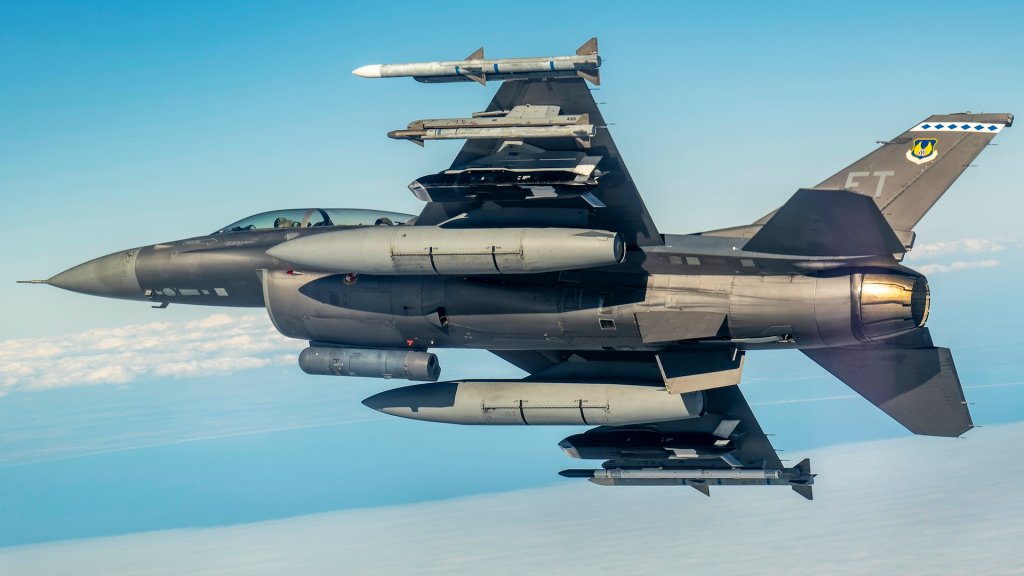
Norwegian missile-maker Kongsberg has finalized its acquisition of a majority stake in Zone 5 Technologies, bringing under its umbrella the U.S. start-up’s Rusty Dagger low-cost cruise missile, among others. With both those weapons already moving into large-scale production, the two companies are making the case for combining Kongsberg’s stealthy Joint Strike Missile (JSM) cruise missiles in operational scenarios. Zone 5 has also now confirmed that the Rusty Dagger, which is already being supplied to Ukraine, is now cleared for use on four different types of fighter aircraft, including the F-16.
At the ILA Berlin airshow yesterday, where TWZ was in attendance, officials from the two companies announced that Kongsberg has now formally acquired a 90 percent stake in Zone 5. California-based Zone 5 will continue to operate as an independent subsidiary under the Norwegian contractor. As well as discussing the industrial acquisition, the officials provided details of how the Rusty Dagger fits into the new-look portfolio, and updates on how that program is progressing.
Founded in 2011, Zone 5 is one of an emerging class of defense companies gaining prominence for developing low-cost, rapidly deployable capabilities. In many ways, they represent the inverse of traditional defense contractors, favoring speed, scalability, and cost efficiency over highly customized, high-priced systems.
Kongsberg first announced the acquisition in December, with executives noting that buying a stake in Zone 5 offered the fastest path to offering lower-cost missiles that still deliver meaningful combat capability, especially in terms of bringing these to the European market.
“What we’re doing here is that we’re combining Kongsberg’s niche, exquisite technologies with a company very capable of designing for cost efficiency and mass production,” explained Thomas Akers, founder and CEO of Kongsberg.
KONGSBERG announced today that it has closed the acquisition of US missile company Zone 5 Technologies LLC, following approval by US regulatory authorities.
As to why Kongsberg didn’t choose to develop its own equivalent to the Rusty Dagger, Harald Aarø, Kongsberg’s executive vice president for business development and strategy, provided the following answer:
“Technically, could we be capable of doing it? Yes, but we are not as capable, as we will probably spend a longer time, and perhaps not strike as smart solutions,” Aarø said. “That doesn’t mean that our engineers aren’t just as smart. Our engineers are just as smart, but on a different sports field, so to speak.”
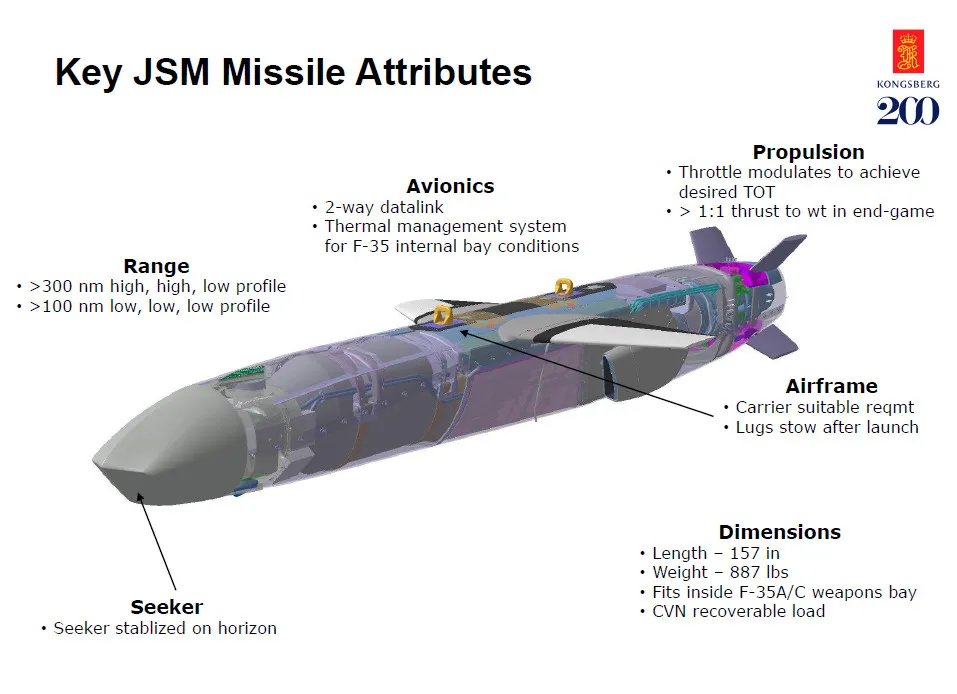
A briefing slide with various details about the JSM’s capabilities. Kongsberg
Aarø also described how the specific combination of the Rusty Dagger and the JSM makes for “a very effective future strike solution.” Namely, the Rusty Dagger provides cost-effective but still highly capable standoff strike, while the more exquisite JSM comes with a heftier price tag but offers a greater chance of making it through to even heavily defended targets, on account of its sophisticated guidance and low-observable characteristics.
According to Tom Kanewske, Zone 5’s chief strategy officer: “What’s interesting about our missile is that the same base, light cruise missile is field retrofittable for all employment modes, and that puts us in a very unique space, in that a country and their [armed] services are able to purchase the same munition and field retrofit for that to be surface launched, whether from land or the deck of a ship, or pylon launched from a fighter aircraft, or palletized.”
Since larger numbers of Rusty Daggers can be launched in any given scenario, they can overwhelm enemy air defenses and improve the chances of success.
According to Kanewske, Rusty Dagger and JSM “offer a weapon pairing that truly no other missiles in the world do.”
While the JSM can be carried internally in the F-35, the same is not currently the case for the Rusty Dagger, although Kanewske said that this is “something that is of keen interest to the [U.S. military] services and several of our international partners.”
A mock-up of a JSM in one of the internal weapons bays of an F-35. Kongsberg
When it comes to utilizing the Rusty Dagger and JSM together in a combat scenario, Kanewske noted the possibility of integrating capabilities that would allow the Rusty Dagger to offer “cooperative behaviors” with the JSM. This reflects a growing trend toward leveraging artificial intelligence to help make all munitions more effective and survivable, something that has been demonstrated via Golden Horde and follow-on programs.
Both missiles fly at high-subsonic speeds, the Rusty Dagger being able to strike targets at a range of 250 miles, according to Zone 5, while the JSM has a range of more than 215 miles.
In one highlighted scenario, F-35s could penetrate closer to the target, with their JSMs carried internally to preserve their low-observable features. Meanwhile, much larger numbers of Rusty Daggers could be pylon-launched from fighters, and dropped in palletized form out of the cargo holds of transports, from outside of the range of hostile air defenses.
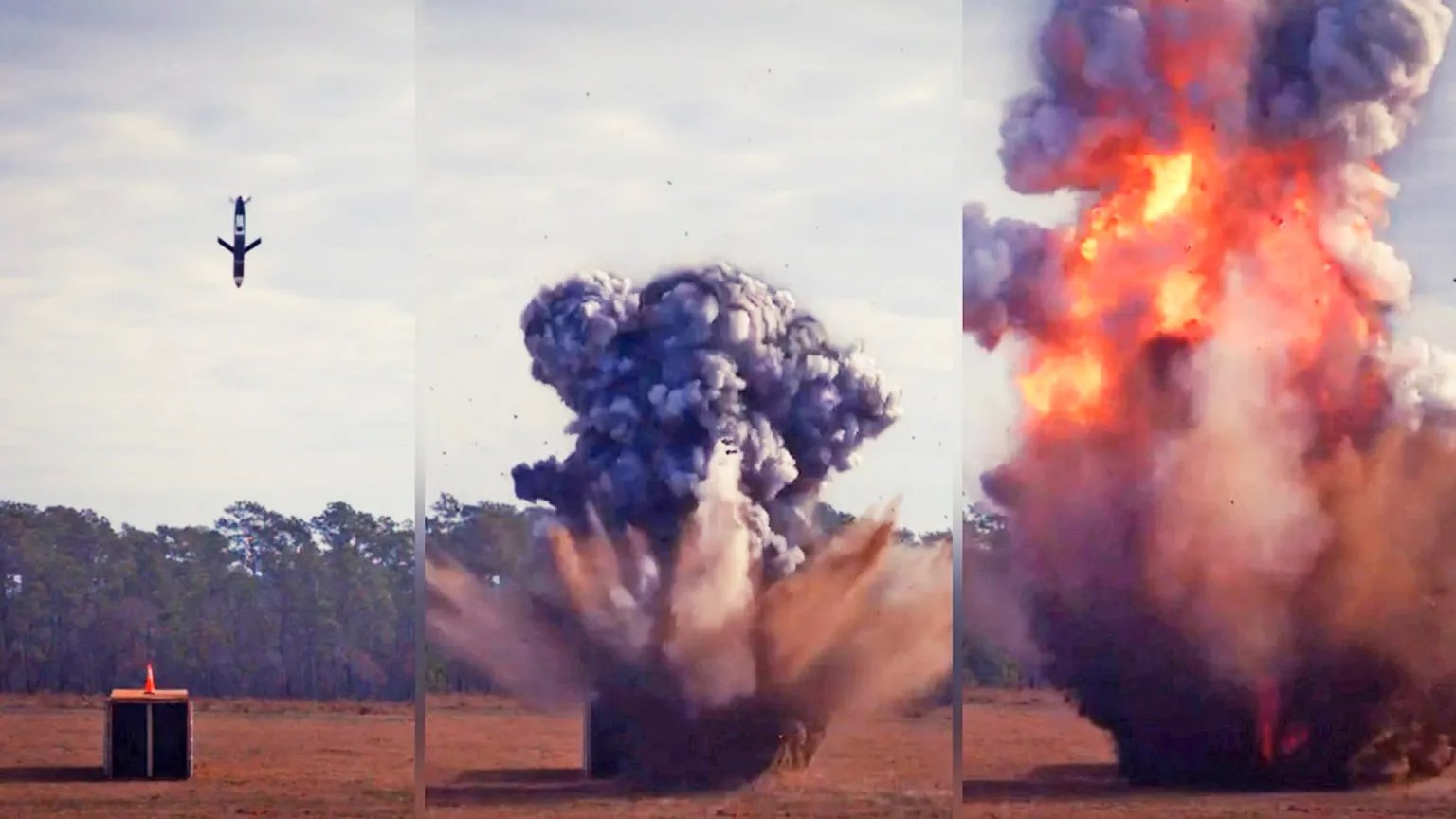
Three views of a Rusty Dagger live-fire test on January 22, 2025, at Eglin Air Force Base, Florida. via U.S. Air Force
Kanewske confirmed that, this year, its first year of production, “well above 1,000 units for Rusty Dagger” will be completed, including for the U.S. Air Force, as the AGM-188, under the Family of Affordable Mass Missiles (FAMM) program. The Air Force’s proposed budget for the 2027 Fiscal Year laid out plans to buy nearly 28,000 FAMM munitions over the next five years.
Last month, the Pentagon laid out plans to acquire at least 10,000 lower-cost cruise missiles over the next three years, as part of a broader strategy to dramatically bolster its stockpiles of standoff strike munitions and prepare the industrial base to sustain those inventories going forward. This is seen as especially critical for supporting the demands of future high-end fights, such as one in the Pacific against China, and doing so in a cost-effective manner.
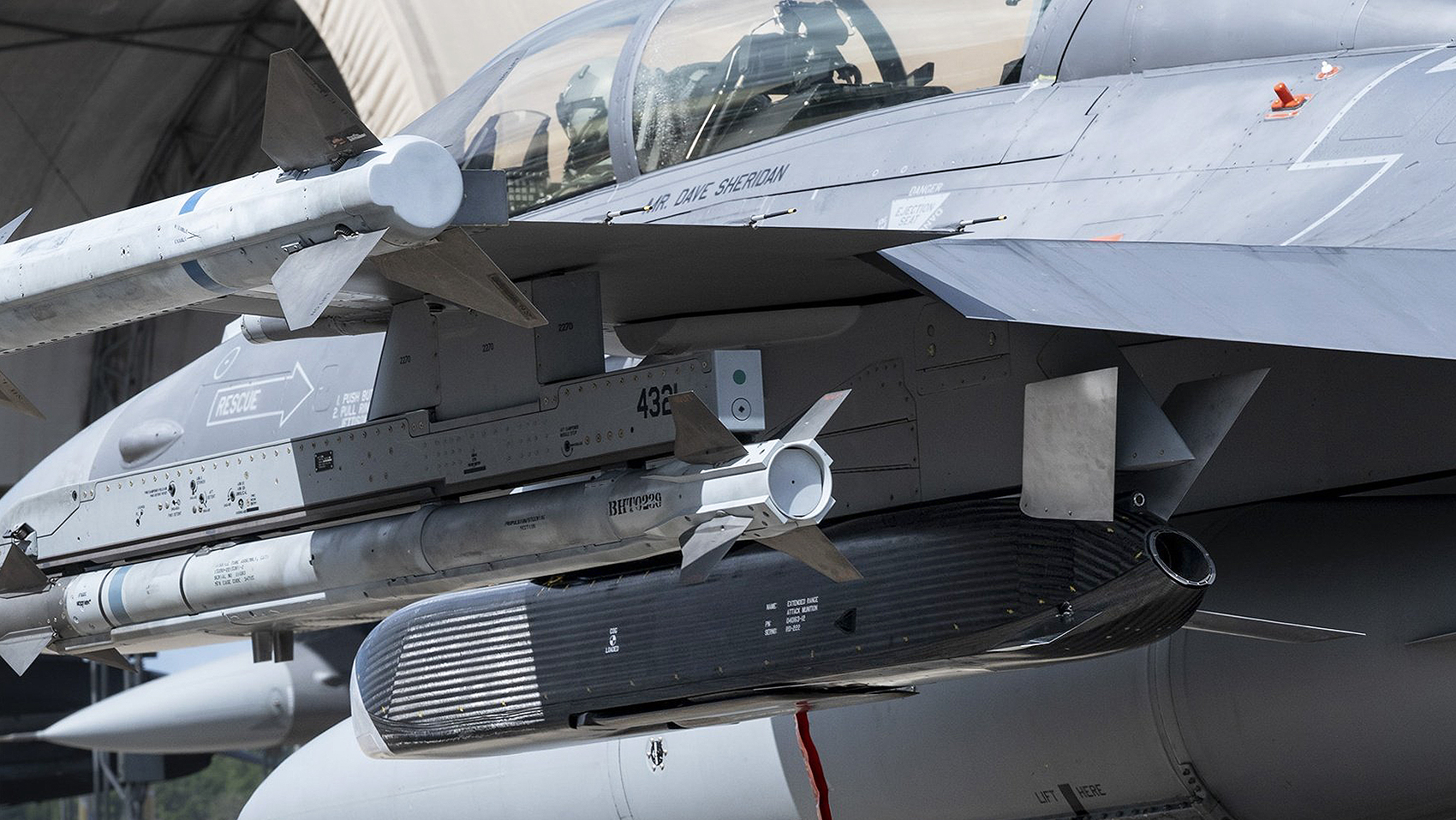
The Rusty Dagger has so far been cleared for use from four different types of fighter aircraft, Kanewske said. One of these is the F-16, which used the weapon in end-to-end live-fire trials at the Eglin Test and Training Range in Florida earlier this year. Another platform may be the A-4, with a contractor-operated example of the attack jet having been used in company trials. Then there is the Ukrainian Air Force, which is using the Rusty Dagger, under the Extended Range Attack Munition (ERAM) program, although the specific platforms have not been disclosed. Any of the MiG-29 Fulcrum, Su-25 Frogfoot, and Su-27 Flanker are likely candidates — as well as its own F-16s.
A series of unverified photos, first published by Russian sources, showing purported parts of Rusty Dagger missiles retrieved after being used by Ukraine:
It appears that the AGM-188A “Rusty Dagger” cruise missile has undergone field testing in Ukraine.
Russian sources are publishing photos of an unknown 8-element CRPA antenna. On the back side of the unit there is a circuit board with a large heatsink, which carries the CAGE code… pic.twitter.com/phZeOJfHJ0
— 𝔗𝔥𝔢 𝕯𝔢𝔞𝔡 𝕯𝔦𝔰𝔱𝔯𝔦𝔠𝔱△ (@TheDeadDistrict) June 7, 2026
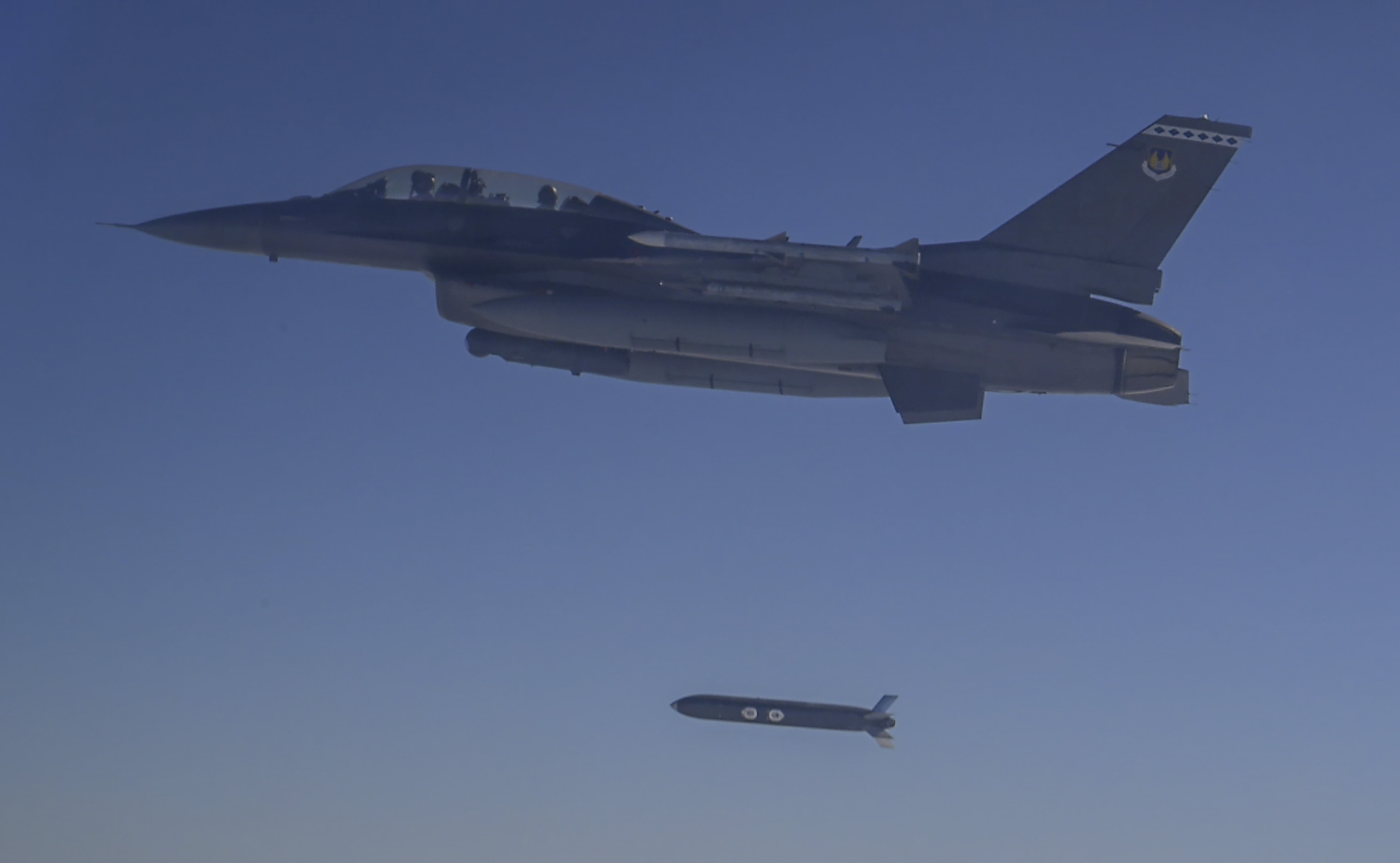
In the case of the F-16, Kanewske said that only 72 hours were required to integrate the Rusty Dagger on the jet during the trials at Eglin.
A U.S. Air Force F-16 flies over the Gulf of America carrying a pair of Rusty Dagger Family of Affordable Mass Munitions (FAMM) weapons. U.S. Air Force U.S. Air Force photo by Staff Sgt. Blake Wiles
“We’re the only affordable mass munition that is currently on contract with an export international customer, and we are actively involved with them at this time,” Kanewske said, clearly referring to Ukraine.
Zone 5 is currently under U.S. Air Force contract for both FAMM and ERAM, and is also under contract with the U.S. Army for its Low-Cost Containerized Missile (LCCM) program, and for the U.S. Navy as part of its Coalition Heterogeneous Affordable Offensive Strike (CHAOS) program, which seeks a low-cost anti-ship cruise missile to provide to partner countries. Both LCCM and CHAOS involve surface-launched missiles.
As well as the ability to rapidly scale up production and a relatively low unit cost, the Rusty Dagger brings with it an open-architecture concept, applying to both software and hardware. This means new, sovereign features and capabilities can be introduced at short notice by customers. In the past, an operator might have to wait up to five years for unique subcomponents to be integrated in a similar weapon, Kanewske contended. With the Rusty Dagger, Zone 5 has demonstrated that this can be achieved in under 12 months.
Then, when it comes to producing the missile at mass, rather than having to “make that factory bigger and bigger,” Kanewske explained that the company offers a franchise model “that allows us to roughly parachute in the design, the equipment, the tooling, the fixtures, the quality control, so that countries can drop in their own subsystem capabilities, and we can achieve manufacturing at pace and at scale.”
A U.S. Air Force F-16 releases a Rusty Dagger over the Gulf of America. U.S. Air Force photo by Staff Sgt. Blake Wiles
Speaking in Berlin yesterday, Kongsberg’s Harald Aarø confirmed that Germany is a particular target for this franchise model, including for the Rusty Dagger. He identified Germany as having “probably the best manufacturing capabilities on this planet,” making it an obvious choice for a European manufacturing footprint.
Reflecting on the changing security situation on the continent since Russia’s full-scale invasion of Ukraine, Aarø said that now is “a natural time to start looking at a production site in Europe,” providing nations there with national sovereign capabilities based on the Kongsberg/Zone 5 joint portfolio.
Kongsberg’s acquisition of a majority stake in Zone 5 evidences a broader shift in Western defense planning toward affordable, mass-produced precision weapons that can be fielded at scale alongside more sophisticated strike systems.
The war in Ukraine has exposed the harsh reality that Europe needs far more standoff weapons than it currently possesses, and it needs them at a price point that allows stockpiles to be measured in the thousands rather than the dozens. Rusty Dagger is very much indicative of a new generation of systems designed around that requirement, prioritizing low-cost mass production over the exquisite but scarce munitions that have traditionally dominated Western arsenals.
As conflicts in Ukraine and the Middle East continue to highlight the operational value of low-cost, long-range munitions, demand for capabilities such as the Rusty Dagger is likely to grow. In an increasingly crowded marketplace, Kongsberg and Zone 5 will hope they can leverage their partnership, the Rusty Dagger’s combat use in Ukraine, and the potential to harness its capabilities in combination with the JSM, to build on the missile’s success.
At the same time, Kongsberg’s interest in establishing European production reflects a wider recognition across the continent that long-range strike capacity, industrial resilience, and the ability to sustain missile inventories are becoming increasingly important elements of national and collective defense.
C’è chi vuole sostituire il made in Europe con il made in France e a noi non sta bene. L’Italia è eccellenza mondiale riconosciuta in un settore dove l’Ue deve accelerare. Risponde da Riga l’europarlamentare di Ecr/FdI Elena Donazzan, dove sta partecipando all’Ecr Bureau Meeting dedicato alla nuova difesa europea. Una due giorni ricca di dialoghi con i maggiori esponenti delle istituzioni comunitarie, come Jānis Karlsbergs, Presidente del Consiglio di amministrazione dell’Organizzazione transatlantica lettone e della StratCom della Nato, o Mario Mauro, Coordinatore europeo per il corridoio di trasporto Ten-T Baltico-Mar Nero-Egeo, o il Vicepresidente del Parlamento Europeo Roberts Zīle. “Non accettiamo che nella ridefinizione dell’industria della difesa ci sia una Francia che assegna i compiti agli altri: non funziona così”, dice Donazzan a Formiche.net.
Come i paesi europei stanno affrontando il tema fondamentale della difesa e dell’industria ad essa connessa?
I conservatori di Ecr lo stanno affrontando con un giusto pragmatismo, senza furore vista la delicatezza del tema: occorre praticità rispetto al contesto in cui viviamo oggi, ovvero una stagione molto particolare nata all’indomani dell’aggressione russa all’Ucraina in cui l’Europa stessa deve ripensare al suo modello di difesa che ha in qualche modo lasciato sempre o delegato totalmente alla Nato.
Da dove iniziare?
Da un lato l’Ue deve riservarsi un posto da compartecipe e dall’altro deve essere consapevole che l’Europa stessa è molto differenziata nelle sue sensibilità. La forza dei ragionamenti portati avanti in Europa da Ecr è quella di leggere le sensibilità dei singoli paesi che compongono l’Europa, senza volere in questo caso una taglia unica per la difesa per tutti. Faccio l’esempio dei Paesi baltici, dove la storia recente è fatta di preoccupazione: lì il rischio è percepito in modo diverso rispetto ad un’aggressione via terra. Per cui ci sono esigenze che devono essere affrontate con l’attenzione dovuta.
I paesi di area med che cosa si aspettano e cosa possono dare?
Le scelte vanno fatte rispettando le diverse peculiarità: ad esempio, per noi Paesi del Mediterraneo va tenuta in debita considerazione anche la cultura del rapporto tra territorio e difesa, che è molto forte e molto radicata, con una bella eredità data dalla nostra particolare e invidiabile posizione nel Mediterraneo. Per cui dobbiamo costruire un programma della difesa che tenga conto di una certa dose di indipendenza, del rispetto dei trattati, delle scelte dei singoli Stati membri, ma non è tutto.
Ovvero?
D’altro canto, però, dobbiamo provare a costruire un’autonomia dell’industria della difesa ed è questo il tema principale che abbiamo trattato in questi due giorni a Riga, partendo da un tema strategico come la cultura della difesa. Si tratta di una forma di educazione. Nei 27 Stati membri c’è chi ha, per esempio, un servizio militare obbligatorio, chi ce l’ha su base volontaria e chi lo sta ripensando. Germania e Francia inoltre hanno già deliberato di voler aumentare il loro contingente di riservisti e ieri il nostro ministro della difesa Guido Crosetto ha presentato una proposta di revisione dell’intera struttura della difesa, pensando ad un ampliamento e a una riserva organizzata. Ci rendiamo tutti conto che questi sono temi di straordinaria attualità, che vanno affrontati anche con velocità.
Come una maggiore mobilità militare all’interno dell’Ue potrà dare un contributo alla sicurezza europea, anche in riferimento alla nuova cooperazione da immaginare con la Nato?
La voce mobilità è fondamentale e direi che è un prerequisito. Mi spiego: possiamo avere procedure di comando e controllo da costruire, possiamo avere divise diverse da vestire, sempre ovviamente con la mimetica, ma con colori leggermente diversi, ma non possiamo non avere la stessa capacità di muovere il tutto all’interno dell’Europa. Quando è stato discusso il dossier sulla mobilità militare è emerso che occorre purtroppo un mese e mezzo di pratiche e di timbri per spostare una brigata dalla Francia all’Ucraina. Un lasso di tempo impossibile: per cui serve affrontare con chiarezza la questione della burocrazia e delle procedure. C’è bisogno con urgenza di una Schengen militare.
Sulla difesa, però, il parlamento italiano vede le opposizioni divise.
L’opposizione vive una sua profonda frustrazione in questo campo, perché ha una ideologia di fondo che è antimilitarista, che si tramuta in una sua incapacità di guardare la politica estera. Negli anni questo si è visto con chiarezza e ha fatto da contraltare alla credibilità con cui il Governo Meloni ha affrontato l’argomento, mettendo sempre al centro l’interesse nazionale in una postura che è quella di relazioni internazionali robuste, serie e non piegate ad altre logiche. Vorrei ricordare, inoltre, che abbiamo ereditato politiche dei governi di sinistra che hanno depotenziato tutta la struttura della difesa italiana dal punto di vista della motivazione e degli investimenti. Lavoriamo per invertire la rotta.
Ci avviciniamo al vertice di Ankara, dove si tratteranno temi complessi come il futuro della Nato e l’industria europea della difesa: guardando anche alle grandi competenze che le aziende italiane hanno, quale potrà essere il nostro ruolo?
Come vicepresidente della Commissione industria e come membro della Commissione difesa, osservo che il tentativo francese è sempre quello sostituire il made in Europe con il made in France. Per cui dovremo essere bravi nel far emergere la qualità della nostra capacità di produrre: l’Italia non è seconda a nessuno. Noi abbiamo campioni come Leonardo e Fincantieri, abbiamo competenze straordinarie, abbiamo una storia di tradizione che passa da Iveco Defence. Parliamo di mezzi che sono venduti in tutto il mondo, senza dimenticare le eccellenze dell’aeronautica e dello spazio. L’Italia è la nazione in Europa che ha una storia di spazio estremamente robusta che ci fa stare in tutte le missioni della Nasa. Quindi noi non accettiamo che nella ridefinizione dell’industria della difesa ci sia una Francia che assegna i compiti agli altri: non funziona così. Noi vogliamo che nei programmi ci sia la collaborazione di almeno due Stati membri. Per cui l’Italia è un partner bello e affidabile. Bello nel senso che ha buone relazioni e affidabile perché ha competenze e capacità oggettive.
At the Trump-Xi summit in May 2026 in Beijing, China's President allegedly told his American counterpart that Vladimir Putin "might end up regretting" his invasion of Ukraine. This revelation is both encouraging and disheartening.
China's backing of Russia has been a major factor in
Die zentrale Erzählung des Westens ist es, dass Russland aggressiv sei und die NATO angreifen wolle, während die NATO angeblich ein friedliebendes, reines defensives Bündnis sei. In Russland sieht man das anders und warnt vor der Aggressivität der NATO-Staaten, für die es viele Beispiele von Jugoslawien bis Libyen gibt. Was Starmer gesagt hat Am 5. […]
Accise, il decreto passa al Senato: novità su fisco e consumatori tra rottamazione, bonus autobus e nuove regole Tlc
Il Senato ha approvato con voto ad alzata di mano il decreto accise, che ora passa alla Camera per la conversione in legge entro il 30 giugno. Il provvedimento, esaminato in Aula a Palazzo Madama giovedì 11 giugno, introduce una serie di modifiche su fisco, trasporti e tutela dei consumatori, confermando però anche alcune misure rimaste fuori dal perimetro finale del testo. Tra i principali interventi figura la proroga dei termini legati alla rottamazione, insieme a nuove disposizioni sul telemarketing e a un pacchetto di misure di sostegno per il settore dell’autotrasporto. Restano invece escluse alcune misure più controverse, come la sanatoria per le partite Iva e il blocco dei pignoramenti per chi è in regola con le rate della pace fiscale.
Rottamazione: tempi più lunghi e nuovo calendario
Il decreto estende di un mese, dal 30 giugno al 31 luglio, il termine per le delibere di Comuni ed enti locali che vogliono aderire alla rottamazione quinquies. Una misura che amplia la possibilità di includere anche multe e Tari tra i debiti sanabili. Rivisto anche il calendario delle dichiarazioni, che potranno essere presentate tra il 16 ottobre e il 15 dicembre, con possibilità di integrazione fino alla scadenza. Per i pagamenti, la prima rata (o unica soluzione su 54 bimestrali) slitta dal 31 gennaio al 31 marzo 2027.
Bonus autobus per l’autotrasporto
Via libera in commissione anche al credito d’imposta destinato all’autotrasporto passeggeri su autobus, pensato per attenuare l’impatto dell’aumento dei costi legati al caro-carburante.
Una delle novità più rilevanti riguarda il contrasto al telemarketing selvaggio. Il divieto di contatti commerciali indesiderati viene esteso anche al settore delle telecomunicazioni, oltre a luce e gas. Le chiamate saranno consentite solo con consenso esplicito dell’utente e da numeri identificabili.
Misure ritirate: sanatoria e pignoramenti
Non entra nel testo finale la sanatoria per le partite Iva, proposta che avrebbe introdotto un ravvedimento speciale per il periodo 2020-2024 per chi aderisce al concordato preventivo biennale 2026-2027. L’emendamento, a firma del senatore Claudio Lotito, potrebbe comunque essere ripresentato come ordine del giorno. Ritirata anche la proposta che prevedeva lo stop al pignoramento dei conti correnti per i contribuenti in regola con le rottamazioni, per problemi di copertura finanziaria.
Il decreto ora attende il passaggio alla Camera, che dovrà completare l’iter di conversione entro la fine del mese.
That is the most important question today that we strive everyday to answer.
If you understand who the aggressor is, you are on your way to understanding the mad and perilous times we live in.
Once you get that, what you’ve been taught all your life starts to lose its hold on you.
Establishment education and media try to confuse you. Independent media like Consortium News try to clarify.
Establishment education and media portray the aggressor as the defender, and the victim as the threat. Consortium News endeavors to show you the “threat” is really an obstacle. An obstacle to aggression and occupation. An obstacle to expansion. Locally and globally.
Few would agree with aggression, paid for with your taxes in a so-called democracy. So obstacles to aggression become threats that you’re supposed to be afraid of. Offensive action is taken as “defense” to protect you from the “threat.”
There’s nothing new in this. The Romans dressed up their imperial aggression as self-defense against fake threats. Rome provoked tribes, first in Italy and then Gaul and Germania, into forming alliances to protect the tribes’ sovereignty, and then Rome presented these alliances as “threats” that had to be destroyed, justifying war against them.
Rome would also provoke an adversary into invading or launching an attack to obtain the casus belli needed to start a pre-planned war. For instance, Roman ally Masinissa of Numidia repeatedly raided Carthage to provoke it into finally responding militarily in violation of a treaty it had with Rome. The empire used this as a pretext for total destruction and annexation — even though Carthage, an obstacle to Roman expansion, posed no realistic, existential threat.
In the earlier U.S. imperium, Mark Twain explained it this way:
“The statesmen will invent cheap lies, putting the blame upon the nation that is attacked, and every man will be glad of those conscience-soothing falsities, and will diligently study them, and refuse to examine any refutations of them; and thus he will by and by convince himself the war is just, and will thank God for the better sleep he enjoys after this process of grotesque self-deception.”
Today the obstacles to the aggressors’ expansion and occupation in the Middle East are Iran plus the legal, armed resistance to Greater Israel: Hamas, Hezbollah, the Houthis and Shia militia in Iraq. They are presented as “threats”rather than defenders of their dignity, sovereignty and land.
In Asia the “threat” is China. Beijing protecting its sovereignty in its own region is somehow a threat to U.S. warships near China’s waters and to Taiwan, which the U.S. agrees is part of China.
In Europe years of NATO expansion, refusal to negotiate a mutual security treaty, rehabilitation of fascism, a coup, and civil war in Ukraine against ethnic Russian coup-resistors provoked Russia to intervene, much as the Romans provoked Carthage. Getting Russia to invade Ukraine allows the portrayal of Moscow as the aggressor and a “threat” to all of Europe and not as an obstacle to the U.S. and Wall Street return to their 1990s dominance of Russia. (Now there is constant talk of direct NATO war with Russia. The fear is another provocation to get Russia to start it.)
All of these obstacles to U.S. global hegemony are presented to you as existential threats that only the mighty United States, NATO and Israel can protect you from. There’s nothing in it for them, of course, except saving your life, we’re expected to believe. Except you don’t have to believe it. You have alternative media like Consortium Newsto expose the deceptions on a daily basis.
That’s why pro-establishment social media companies and so-called anti-disinformation services have tried to hurt us. And that’s why we need your help.

 Login
Login






















 (@TheDeadDistrict)