Reading view

'Disappointing' — Russian Arctic LNG imports to EU rise despite ban as loophole persists

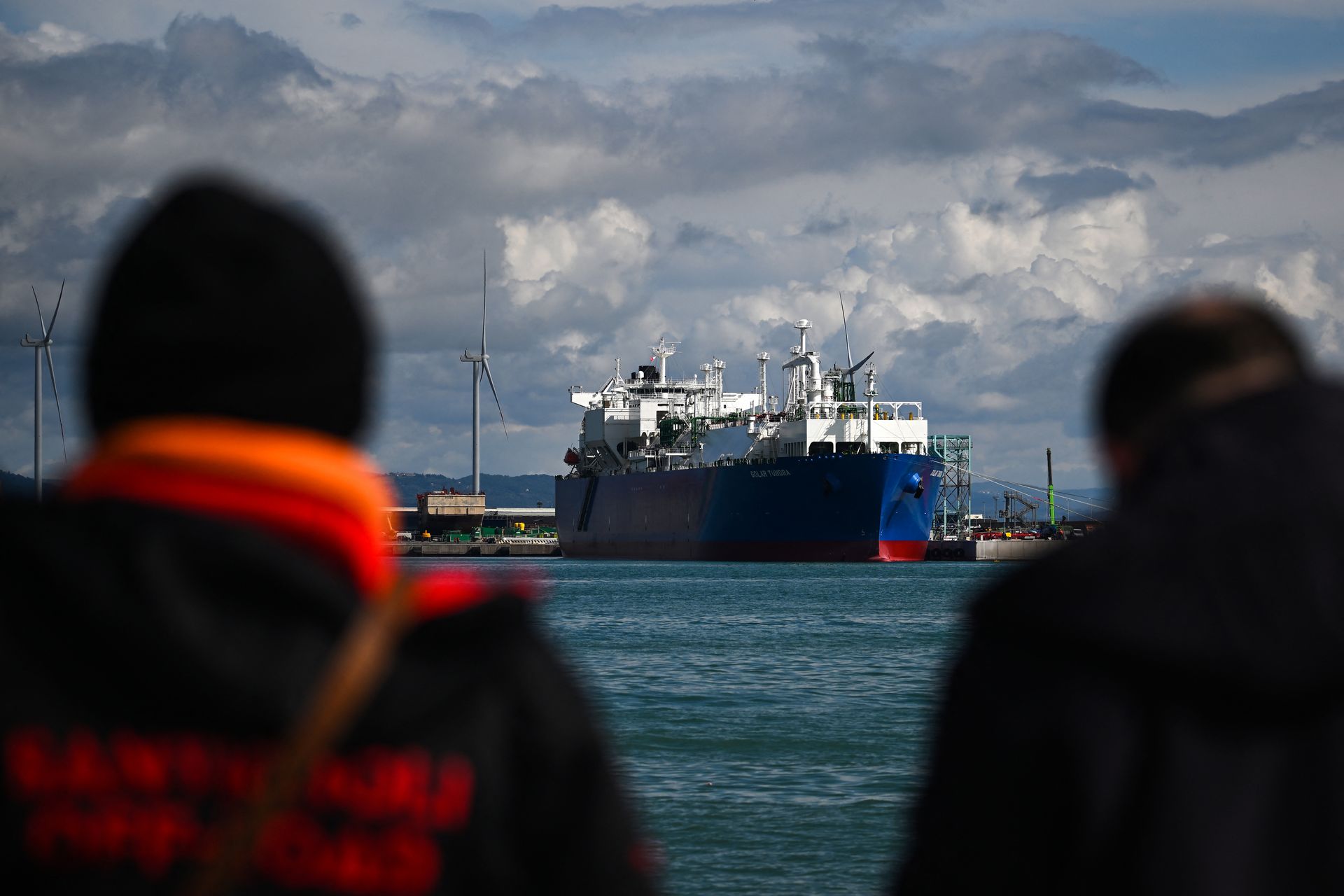
EU imports of Russian liquefied natural gas (LNG) from the Yamal project increased by nearly 18% in the first five months of 2026, according to a report by environmental and sanctions-monitoring NGO Urgewald shared with the Kyiv Independent.

The figures show the challenges facing EU's effort to end

  •  

Trump professes his ‘love’ of inflation as consumer costs reach a 3-year high

For months, Donald Trump and White House officials had a habit of insisting that the president had delivered an economy with “no inflation.” The public has heard a lot less such talk lately, and there’s no great mystery as to why. CNBC reported:

The consumer price index, a broad gauge of goods and services costs across the U.S. economy, rose at a seasonally adjusted 0.5% for the month, putting the annual inflation rate at 4.2%, the Bureau of Labor Statistics reported Wednesday. Both numbers were in line with the Dow Jones consensus.

Inflation climbed above 4% for the first time in three years, though the increase met expectations amid concerns over how much the surge in energy prices would impact the economy. The level was the highest since April 2023 and above the 3.8% level from April.

The figures were entirely in line with a variety of related metrics related to the rising cost of living, including the Personal Consumption Expenditures index, the core personal consumption expenditures price index and wholesale prices, all of which recently hit three-year highs.

All that related data, incidentally, was released shortly before White House deputy chief of staff Stephen Miller told Fox News that Trump had transformed the U.S. into an “extraordinary paradise.”

Asked for his reaction to the developments, Trump said the latest inflation data was “great,” adding, “I love the inflation.” (He went on to claim that his love for inflation is based on a secret program that takes Iranian oil. It’s unclear whether that program exists in reality.)

Q: Are you concerned about the latest inflation numbers that came out this morning?TRUMP: No, I love it. I love the inflation. You know why? Because as soon as this war is over — do you know we've been taking out millions of barrels of oil? You know who doesn't know? Iran until right now.

Aaron Rupar (@atrupar.com) 2026-06-10T16:08:03.927Z

As for what’s driving the discouraging data, it is — to the surprise of no one — energy costs that are pushing prices higher, which is the direct result of the war with Iran.

Perhaps most importantly, NBC News’ report emphasized that inflation’s rise “has surpassed wage growth,” which necessarily exacerbates the affordability crisis gripping American consumers.

Kevin Hassett, the director of the National Economic Council and the top economist at the White House, has argued in recent weeks that rising inflation should be blamed on Democratic policies in blue states. Those claims, like much of what Hassett has to say, have been thoroughly discredited.

And no one is buying it. The latest national CNN poll found that 77% of respondents, including a majority of Republican voters, agreed that Trump’s policies have increased the cost of living. The same poll found that just 30% of Americans approve of the president’s handling of the economy, a career low for the Republican across both terms. That mirrored the results of the latest national Associated Press poll.

There’s no reason to assume those results won’t continue to get even worse.

This post, which updates our related earlier coverage, has been revised to include the quote from Trump..

The post Trump professes his ‘love’ of inflation as consumer costs reach a 3-year high appeared first on MS NOW.

  •  

Sines investment boost reflects economic strength

Finance minister Joaquim Miranda Sarmento - Photo: António Cotrim/Lusa

Portugal’s economy has demonstrated remarkable resilience in the years following the Covid-19 pandemic, with strong growth, rising wages and continued success in attracting major international investment, according to Finance Minister

The post Sines investment boost reflects economic strength appeared first on Portugal Resident.

  •  

Friedrich Merz: Meet the Most Unpopular Chancellor in Modern German History

Germany’s economic decline is no longer merely an economic story. It has become a political one. Chancellor Friedrich Merz has become the focal point of this broader crisis of governance and legitimacy. For decades, Germany was regarded as the economic engine of Europe and, alongside France, a principal political architect of the European Union. Today, […]
  •  

OpenAI Takes First Step Toward Stock Market Debut

OpenAI files for IPO
OpenAI files for IPO. Credit: Focal Foto / Wikimedia Commons / CC BY-SA 4.0

OpenAI confirmed Monday it has confidentially filed an IPO with U.S. regulators, joining rival Anthropic as the AI sector moves toward public markets. No timeline, share count, or pricing was announced.

The company said the move preserves the option for an earlier listing, while some decisions are easier to handle as a private firm.

Reuters reported OpenAI is targeting a valuation near $1 trillion for a debut possible as early as September. Anthropic filed for a U.S. IPO on June 1 after a $65 billion funding round valued it at $965 billion.

SpaceX is also pursuing a $75 billion offering at a $1.75 trillion valuation. Analysts say the simultaneous push by three major AI companies toward public markets is the most significant development of its kind for technology investors in a decade.

$2 billion monthly revenue signals rapid growth beyond ChatGPT

In March, OpenAI raised $122 billion from SoftBank, Amazon, and Nvidia at a valuation of $840 billion to $852 billion. ChatGPT had exceeded 900 million weekly active users and 50 million paying subscribers.

Monthly revenue stood at $2 billion, up from roughly $1 billion per quarter at the end of 2024, growing nearly four times faster than Alphabet and Meta at comparable stages. Internal projections put the company’s break-even point no earlier than 2030.

JUST IN: OpenAI confidentially files for IPO. pic.twitter.com/sAORVBWEy1

— Whale Insider (@WhaleInsider) June 8, 2026

Beyond ChatGPT, OpenAI launched tools for government, healthcare, and finance, a web browser, consumer hardware plans, and an AI coding agent. It added a lower-cost $8 subscription tier and advertising as new revenue sources.

The Information reported in April that OpenAI projects 122 million subscribers this year and expects advertising to lead revenue by 2030.

A renegotiated Microsoft deal, covering $13 billion in investment since 2019, enabled growth at Azure and opened new agreements with Amazon and Alphabet.

OpenAI files its IPO amid legal battles and market pressure

Gil Luria of D.A. Davidson warned that large AI listings and Google’s recent secondary share sales could reduce the capital available for smaller offerings.

Michael Ashley Schulman of Cerity Partners said OpenAI appeared to be keeping its options flexible while Anthropic moved ahead in the IPO filing process. Prediction markets had expected OpenAI to file first.

OpenAI began as a nonprofit in 2015 and later added a for-profit arm under nonprofit oversight, a structure that drew attention when CEO Sam Altman was ousted by its board and reinstated within days in late 2023.

The company announced plans to convert to a public benefit corporation in December 2024. Early backer Musk filed a lawsuit alleging Altman and others redirected the organization from its founding mission for personal benefit.

A jury ruled against Musk in May, removing what analysts described as a significant legal obstacle ahead of the OpenAI IPO filing. His attorneys plan to appeal. Separate lawsuits link ChatGPT to shootings and suicides, and public skepticism toward AI persists.

  •  

Did you know Peter Thiel’s Macro LLC liquidated his entire stock portfolio valued at $210 million.

Did you know Peter Thiel's Macro LLC liquidated his entire stock portfolio valued at $210 million. As of Q1 2026 he owns zero stocks outside of Palantir. I wonder what he knows that we don't? https://t.co/qhboC3aSO1 pic.twitter.com/sQphHwLGBX — Financelot (@FinanceLancelot) June 9, 2026
  •  

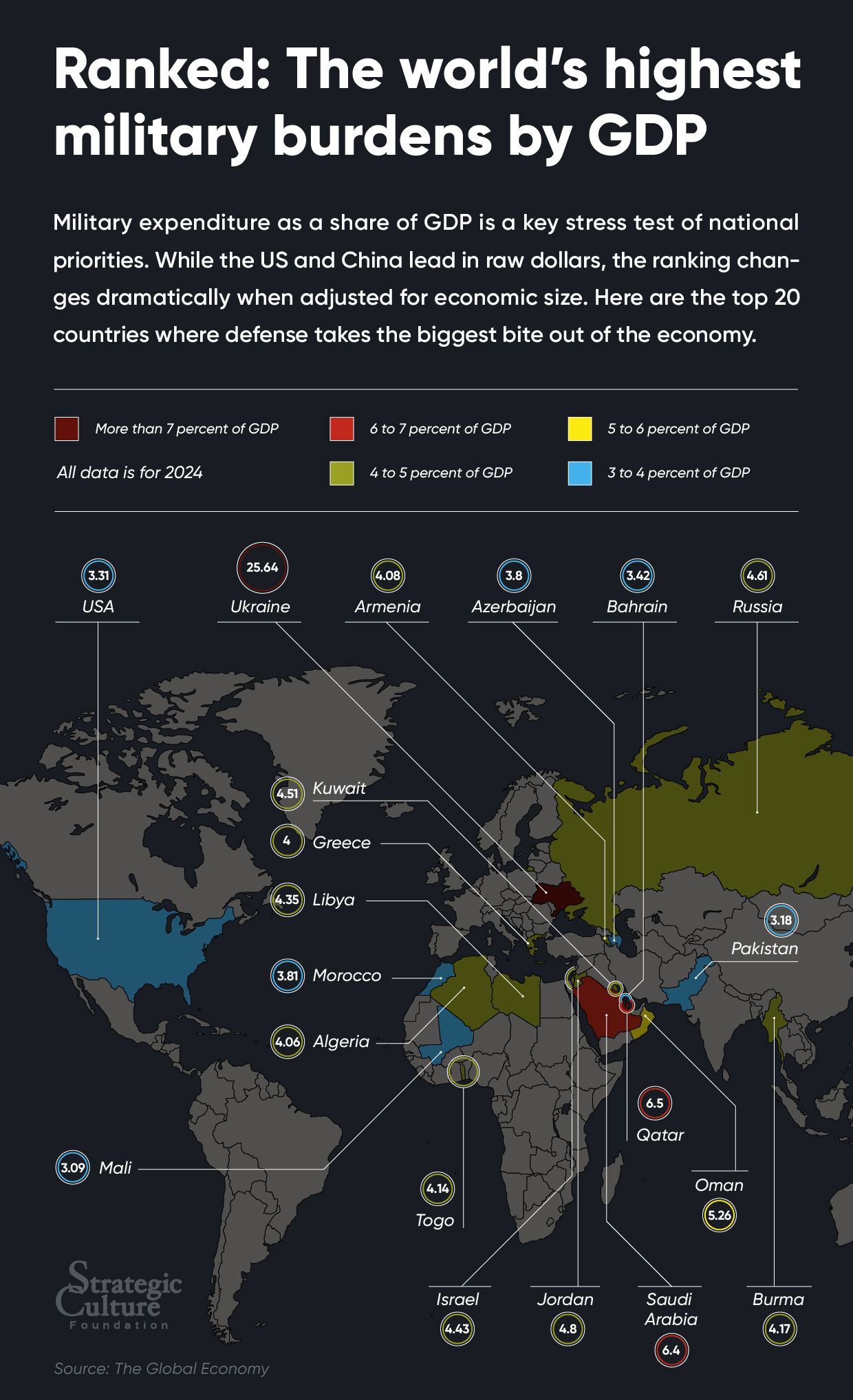
Ranked: The world’s highest military burdens by GDP

Military expenditure as a share of GDP is a key stress test of national priorities. While the US and China lead in raw dollars, the ranking changes dramatically when adjusted for economic size. Here are the top 20 countries where defense takes the biggest bite out of the economy

Join us on TelegramTwitter, and VK.

Contact us: info@strategic-culture.su

(Click on the image to enlarge)


  •  

SPIEF 2026: A New Era of Partnership Without Diktat

SPIEF 2026 demonstrates a shift in global power, with countries from the Global South seeking pragmatic cooperation and investment, rejecting Western models based on dependency and conditionality. The world is changing. Not by decrees. The 29th St. Petersburg International Economic Forum (SPIEF), held from June 3 to 6, 2026, is much more than an annual […]
  •  

Greece Freezes Interest on Thousands of Restructured Household Loans

Athens, Greece
Greece’s Supreme Court ruling has prompted loan servicers to freeze interest on thousands of restructured household loans pending further legal clarification. Credit: Wikimedia Commons / acediscovery / CC BY 4

Loan servicers are freezing interest charges on thousands of restructured household loans in Greece after a Supreme Court ruling raised questions over how debt repayments should be calculated.

Law 3869/2010, commonly known in Greece as the Katseli Law, covers the loans. The crisis-era framework allowed over-indebted individuals to seek court-supervised debt restructuring. Until the Supreme Court clarifies the legal implications of the ruling, affected borrowers will continue solely paying down the principal with no additional interest charges.

The decision has triggered concern across Greece’s financial sector because it challenges the traditional method for calculating interest on regulated debts. Loan servicers are now reviewing the ruling and plan to seek formal clarification from the Supreme Court before applying a final methodology.

Supreme Court ruling changes interest calculation

Supreme Court Plenary Decision 6/2026 sits at the center of the issue. The court found that lenders should calculate interest on debts restructured under Law 3869/2010 based on the monthly installment set by the court rather than on the total outstanding debt balance.

That interpretation marks a significant departure from standard banking practice. In a conventional repayment schedule, lenders calculate interest on the remaining balance of the loan. At the beginning of repayment, interest usually takes up a larger share of the monthly installment. As the borrower gradually repays principal, the interest portion decreases.

The Supreme Court adopted an alternative approach for loans covered by the debt-relief framework. According to the ruling, calculating interest on the monthly installment better serves the original purpose of the law, which aimed to help over-indebted individuals recover financially and return to economic and social activity.

Borrowers will only pay principal for now

Until the Supreme Court clarifies the ruling, loan servicers plan to suspend interest charges on affected loans. This means borrowers whose debts fall under the crisis-era framework will continue making payments, but those payments will reduce principal rather than cover interest.

Legal representatives for borrowers argue that the court’s interpretation could make many of these loans almost interest-free in practice. Under that view, lenders would divide the total regulated debt by the number of installments ordered by the court and then calculate interest only on that fixed monthly amount.

Some financial-sector representatives, however, interpret the decision differently, saying the ruling necessitates further clarification before servicers can apply a reliable calculation method. A senior source from the loan-servicing sector has reportedly said the industry should not adopt any interpretation before the Supreme Court provides additional guidance. Servicers are therefore preparing to submit a formal request for clarification.

Around 300,000 loans could be affected

Market estimates suggest that the affected framework may cover approximately 300,000 loans, with a total value of about €6 billion ($6.9 billion). Greek banks no longer hold most of these loans directly, after transferring, selling, or securitizing them during the cleanup of the country’s banking system.

Early market estimates place the potential cost for creditors at around €1 billion ($1.15 billion), depending on how the authorities and courts ultimately apply the ruling. The final impact will also depend on whether the decision guides only future calculations or opens the way for claims over interest already paid. That question remains especially sensitive. The ruling does not clearly settle whether it has retroactive effect, leaving borrowers, servicers, funds, and banks waiting for further legal clarity.

Possible impact on Greece’s loan securitizations

The ruling may also affect recoveries from securitized loan portfolios. Many loans covered by the debt-relief framework entered transactions linked to Greece’s “Hercules” asset-protection scheme, which helped banks reduce non-performing loans through state guarantees.

If collections from affected loans fall sharply, financial-sector sources warn that pressure could increase on certain securitizations. In a worst-case scenario, lower-than-expected recoveries could raise concerns over whether the state may eventually need to honor guarantees under the Hercules program.

For now, the extent of the risk remains uncertain. It will depend on the Supreme Court’s final interpretation, the number of loans directly affected, and whether courts or regulators allow any retroactive adjustment of interest already charged.

Broader concerns over Greece’s interest freeze on restructured loans

Banking sources are also monitoring whether the decision could influence borrowers who utilized other restructuring tools, such as Greece’s out-of-court debt settlement mechanism. If other vulnerable borrowers seek similar treatment, the financial consequences could extend beyond loans regulated under Law 3869/2010.

At this stage, the immediate effect applies only to borrowers whose debts fall under the crisis-era framework. However, the case could become an important reference point in future disputes over household debt, creditor recoveries, and the legal limits of debt-relief protection.

  •  

Greece to Raise Protected Bank Account Limit to €1,600 for Debtors

Dionysiou Areopagitou Street and the Acropolis, Athens, Greece
Greece’s new bank account limit will allow debtors to keep up to €1,600 protected from seizures. Credit: Greek Reporter

Greece is set to increase the protected bank account threshold from €1,250 ($1,445) to €1,600 ($1,850), allowing debtors an additional €350 ($405) per month to remain shielded from account seizures. The measure, announced in Parliament by Finance Minister Kyriakos Pierrakakis, is expected to go into effect on July 1. It is part of a wider government initiative aimed at easing financial pressure on households and businesses with outstanding debts.

The current exemption limit has remained unchanged since 2014, when it was introduced during the fiscal crisis. Twelve years on, the government says the revision reflects both rising living costs and the need to update Greece’s debt enforcement system. Pierrakakis noted that the new ceiling marks a 28 percent increase, outpacing cumulative inflation over the same period, which he estimated at 20.8 percent.

How the new protected bank account threshold in Greece will work

The protected bank account limit sets the amount of money a debtor can keep accessible in a designated account, even when seizure procedures are in place. Under the new rules, balances of up to €1,600 ($1,850) in a declared protected account will be exempt from seizures related to debts owed to the state. Each individual is allowed to declare one protected account at a single credit institution through the Independent Authority for Public Revenue (AADE).

In practice, if a debtor has €1,500 ($1,735) in their protected account, the entire amount remains untouched. If the balance increases to €1,900 ($2,198), authorities may only seize the €300 ($347) that exceeds the €1,600 ($1,850) threshold. The measure does not cancel debts or suspend enforcement actions. Instead, it raises the amount individuals can hold onto for everyday expenses and essential financial obligations.

Which debtors in Greece will benefit from the new bank account limit?

The change to Greece’s protected bank account threshold is expected to benefit individuals whose accounts are subject to, or at risk of, seizure due to overdue obligations. This includes salaried employees, pensioners, self-employed professionals, and other taxpayers who need greater protection for funds held in their declared accounts.

More than two million people in Greece currently have outstanding debts to the tax authorities. Of these, around 1.7 million have already been affected by enforcement measures such as account seizures, freezes, or other compulsory collection actions.

For those whose monthly income or deposits exceed the existing €1,250 ($1,445) limit, the increase could offer up to €350 ($405) in additional protected funds each month, easing pressure on everyday finances.

Measure tied to Greece’s private debt strategy

The increase in the protected bank account threshold is part of a broader policy package aimed at tackling private debt. The provision is expected to be included in the government’s upcoming bill on illegal gambling, which is currently under public consultation.

Private debt in Greece stands at 94.5% of GDP, below the European Union average of 121.4%. Authorities say the measure is designed to provide additional relief while maintaining enforcement mechanisms for overdue obligations.

The move comes as Greece continues to report stronger banking sector indicators. Non-performing loans in the country’s banking system have declined sharply to 3.3%, down from 48.5% in 2016. At the same time, debt arrangements totaling €6.8 billion ($7.86 billion) have been completed in 2025, reflecting ongoing efforts to restructure and manage outstanding liabilities across households and businesses.

Bank account seizures could be lifted

The same policy package introduces a separate provision for taxpayers whose bank accounts have already been seized. Under the proposed framework, debtors will be able to request the lifting of a seizure if they pay 25% of the principal debt upfront and agree to a repayment plan for the remaining balance. This option would be available once per debtor and is intended to encourage a return to regular repayments.

The new approach effectively replaces the “gradual protected account system” introduced in 2019, which was never implemented in practice. That model envisaged a step-by-step increase in protected funds for debtors who consistently met repayment obligations, but it was ultimately deemed too complex and remained inactive.

Implementation details still pending for Greece’s new bank account limit

The main outstanding issue is how the new €1,600 ($1,850) threshold will be applied to bank accounts that have already been declared as protected.

Authorities are expected to provide further clarification on the implementation process, including whether existing declarations submitted through AADE will be updated automatically or whether taxpayers will need to take additional steps to maintain or adjust their protected account status under the new regulations.

  •  

Russia tells its regions to raise taxes on residents and businesses to plug a record budget hole

russia's regional budget shortfalls hit record $21 billion moscow wants taxpayers cover · post sign bearing logo federal tax service times ukraine news ukrainian reports

Russia's Federal Tax Service has pushed regional governments to consider higher taxes on residents and businesses as local budgets sink to record deficits, The Moscow Times reported. The move follows President Vladimir Putin's drive to shrink regional shortfalls, and it shows the financial strain Russia's war against Ukraine is placing on its provinces. Independent analysts expect the squeeze to deepen as the economy slows.

As Russia’s invasion of Ukraine drags on, the costs of war, Western sanctions, and Ukrainian strikes on strategic targets are putting growing pressure on budgets at every level.

Tax service tells regions to find more money

The Federal Tax Service (FNS) instructed regional authorities to work out where they could raise taxes, The Moscow Times reported, citing RBC. The recommendations answered Putin's directive to cut regional deficits, and governors had to submit their proposals in early June.

The advice told regions to:

  • expand the list of real estate taxed at cadastral, or market, value;
  • raise transport-tax rates to the maximum;
  • revise the benefits and rates on land tax and personal property tax.

To collect more, regions were also told to inventory real estate and to look for land used off-purpose, where the tax can rise several times over.

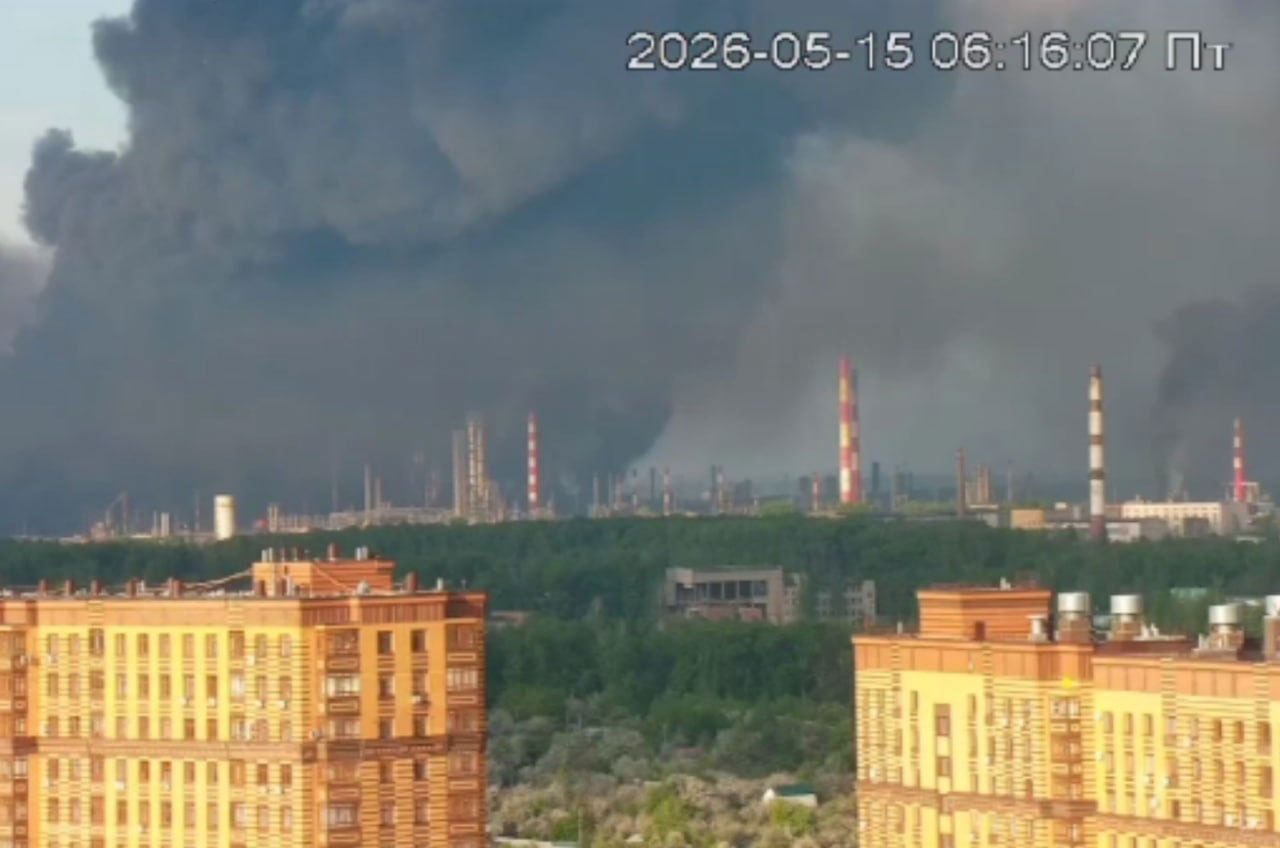
moscow's fuel supplier under fire ukrainian drones strike rosneft's ryazan refinery · post black smoke rises over oil hours after drone 15 2026 ryazan-supernova+-5204027262443918426 ukraine news reports
Explore further

Russian refining output fell 9.2% in April as Ukrainian drone strikes hit fuel plants

A record hole in regional finances

Last year, Russia's regions closed with a combined deficit of 1.538 trillion rubles ($20.8 billion). The gap grew fivefold from 2024 and almost eightfold from 2023. Four regions ran deficits above 30% of their own revenue — Kemerovo, Vologda, Arkhangelsk, and Tyumen oblasts — and six more topped 25%.

Profit-tax revenue fell in 55 regions. It collapsed by half in the Komi Republic, dropped 40% in Orenburg Oblast, and fell 39% in Yamalo-Nenets. Overall, regions collected 9% less profit tax than in 2024 and 13% less than in 2023, according to the rating agency ACRA. The pattern fits a war economy that has turned predatory toward once-wealthy provinces.

isw russia tries hide weaknesses behind victory day parade russia's 9 moscow 2025 youtube/kremlin grate patriotic warr shitshow projecting power strength conceal significant limitations its capabilities while distracting battlefield failures
Explore further

Russia’s four-month budget deficit hit $75.4 billion — 50% above what Moscow planned for entire year

Reserves drained, debt climbing

To cover the shortfalls, regional governments spent every third ruble of their bank reserves — 1 trillion of 2.9 trillion rubles ($13.9 billion of $40 billion). They financed the rest with borrowing that pushed combined regional debt to 3.5 trillion rubles ($48.6 billion), ACRA reported — the highest in 15 years by Expert RA's earlier count. Expert RA projected the slowdown will continue this year, dragging revenues lower and lifting both the deficit and the debt burden.

finishing off russia's seaborne oil exports tuapse refinery ablaze again · post panorama stitched video frames multiple fires across after ukraine's drone strike krasnodar krai russia 28 2026 tuapse-nice-again drones
Explore further

$7 billion lost from Russia’s war economy this year through Ukraine’s “long-range sanctions” on oil sector – Zelenskyy

Russian Finance Minister Anton Siluanov earlier projected the regional gap could widen to 1.9 trillion rubles ($26.4 billion) in 2026. The crunch mirrors a federal budget that has run far ahead of plan as Ukrainian strikes cut into Russian refineries and oil income.

Moscow raised VAT in January and prepared a windfall levy on big business, both breaking Putin's 2024 pledge of no tax changes before 2030. Smaller firms have been squeezed first even as the Kremlin's own spending keeps climbing

  •  

The Strait of Hormuz Blockade: A Threat to Indonesia and Its Defense Strategy

The escalation of the conflict between Iran and the US-Israeli coalition has caused a multidimensional crisis that has a significant impact on Indonesia, requiring it to develop a maritime defense strategy that is in line with international law and ensures national resilience. Tensions peaked when Iran officially closed the Strait of Hormuz on March 1, […]
  •  

Acque limpide e montagne verdi: la costruzione della Bella Cina attraverso parchi, biodiversità e civiltà ecologica

Dai grandi parchi nazionali alla protezione delle specie rare, la Cina ha trasformato la tutela ambientale in pilastro della modernizzazione socialista, integrando sviluppo, biodiversità, transizione verde e il principio secondo cui “acque limpide e montagne verdi” sono ricchezza.

Segue nostro Telegram.

La Cina degli ultimi anni ha fatto della tutela ambientale non un settore separato della politica pubblica, ma una componente essenziale del proprio modello di sviluppo. Il motto secondo cui “acque limpide e montagne verdi sono una ricchezza inestimabile” non è rimasto una formula retorica, ma è diventato il fondamento di una strategia nazionale che lega protezione degli ecosistemi, lotta all’inquinamento, salvaguardia della biodiversità, transizione energetica, sicurezza ecologica e miglioramento delle condizioni di vita della popolazione. In questa visione, la “Bella Cina” non è soltanto un obiettivo paesaggistico o turistico, ma una forma di modernizzazione in cui il rapporto tra uomo e natura viene riorganizzato secondo criteri di equilibrio, sostenibilità e responsabilità intergenerazionale. La Cina ha codificato questa impostazione anche nella propria elaborazione politica più recente, insistendo sull’approccio integrato alla conservazione di montagne, fiumi, foreste, campi, laghi, praterie e deserti.

Il dato forse più evidente riguarda la costruzione di un sistema di parchi nazionali, inesistenti fino a pochi anni fa. Nel 2021 la Cina ha istituito il primo gruppo di cinque parchi nazionali, per una superficie protetta complessiva di circa 230.000 chilometri quadrati: il Parco nazionale del Sanjiangyuan, il Parco nazionale del Panda gigante, il Parco nazionale della Tigre e del Leopardo del Nord-Est della Cina, il Parco nazionale della Foresta Tropicale di Hainan e il Parco nazionale di Wuyishan. Questi parchi ospitano quasi il 30 per cento delle principali specie selvatiche terrestri protette del Paese, rappresentando i nuclei più vitali degli ecosistemi naturali cinesi.

Il Parco nazionale del Sanjiangyuan, nella provincia del Qinghai, copre circa 190.700 chilometri quadrati e tutela le sorgenti del Fiume Azzurro, del Fiume Giallo e del Lancang-Mekong, configurandosi come una delle grandi riserve idriche dell’Asia. Qui il concetto di protezione ambientale assume un valore strategico: difendere gli ecosistemi dell’altopiano significa proteggere la sicurezza idrica di vaste regioni a valle. Il parco è anche habitat di specie come l’antilope tibetana e il leopardo delle nevi. In particolare, secondo i dati ufficiali cinesi, la popolazione di antilopi tibetane nel Sanjiangyuan è recentemente risalita a oltre 70.000 esemplari, rispetto a meno di 20.000 negli anni Novanta, segno che le politiche di tutela, se accompagnate da controllo del territorio e ripristino degli habitat, possono produrre risultati misurabili.

Il Parco nazionale del Panda gigante, esteso per circa 22.000 chilometri quadrati tra Gansu, Sichuan e Shaanxi, rappresenta invece uno dei simboli più conosciuti della conservazione cinese. La sua importanza non riguarda soltanto il panda, ma l’intero ecosistema forestale montano in cui questa specie vive: in particolare, l’estensione del parco permette di salvaguardare l’habitat di oltre il 70 per cento dei panda selvatici. Tuttavia, dobbiamo ribadire che la Cina non protegge l’animale come icona isolata, ma cerca di collegare habitat frammentati, ricostruire corridoi ecologici, ridurre la pressione antropica e garantire la sopravvivenza di intere comunità biologiche. In questo senso, il panda gigante diventa il volto più visibile di una politica più vasta che riguarda foreste, bacini idrici, comunità locali, turismo ecologico e ricerca scientifica.

Il Parco nazionale della Tigre e del Leopardo del Nord-Est della Cina, nelle province del Jilin e dello Heilongjiang, copre circa 14.100 chilometri quadrati e protegge due specie emblematiche: la tigre siberiana e il leopardo dell’Amur. In un’area di frontiera ecologica, segnata da foreste temperate, presenza umana, agricoltura e confini internazionali, la tutela di grandi predatori richiede una governance particolarmente complessa. La ripresa di queste specie indica che la protezione ambientale cinese non si limita agli animali più “popolari”, ma riguarda anche predatori apicali, essenziali per l’equilibrio degli ecosistemi. Salvaguardare una tigre o un leopardo significa tutelare tutta la catena ecologica che rende possibile la loro sopravvivenza.

Il Parco nazionale di Wuyishan, tra Fujian e Jiangxi, è più piccolo per superficie, circa 1.280 chilometri quadrati, ma ha un valore ecologico enorme. Si tratta infatti di una delle foreste subtropicali più complete e vaste, che include un patrimonio di piante vascolari, vertebrati selvatici, licheni, orchidee e insetti, confermando che la biodiversità non si misura soltanto attraverso grandi mammiferi carismatici, ma anche attraverso la ricchezza meno visibile di specie vegetali, insetti, anfibi, uccelli e microrganismi. Wuyishan mostra dunque un’altra dimensione della “Bella Cina”: la conservazione di ecosistemi complessi, nei quali il valore scientifico si intreccia con il valore paesaggistico e culturale.

Il Parco nazionale della Foresta Tropicale di Hainan, con circa 4.269 chilometri quadrati, protegge la più concentrata e meglio conservata foresta pluviale tropicale della Cina. Qui vive il gibbone di Hainan, una delle specie di primati più rare al mondo. Le fonti ufficiali cinesi segnalano che la sua popolazione è risalita da appena 13 esemplari nel 2003 a 37 nel 2022, un risultato importante se si considera l’estrema fragilità demografica della specie. Non va poi dimenticato il ruolo di altre specie, come il cervo sambar di Hainan, confermando come, anche in questo caso, la tutela del parco non sia una misura simbolica, ma un progetto di ricostruzione ecologica di lungo periodo.

La costruzione dei parchi nazionali si accompagna a una riorganizzazione istituzionale. Nel 2025, il ministero delle Risorse Naturali ha annunciato il completamento della registrazione dei diritti di proprietà per i primi cinque parchi nazionali, un passaggio importante perché chiarisce proprietà, competenze, supervisione e responsabilità nella gestione delle risorse naturali. Questo dettaglio è rilevante perché la tutela ambientale non dipende solo dalla buona volontà, ma da regole chiare, responsabilità definite e meccanismi amministrativi capaci di impedire sovrapposizioni, abusi o vuoti di gestione. La Cina sta cercando di costruire il più grande sistema di parchi nazionali al mondo, e per farlo deve trasformare la protezione della natura in un sistema di governance.

Un altro aspetto essenziale è la severità delle misure adottate. Dopo l’istituzione dei primi parchi nazionali, sono stati chiusi oltre 390 siti minerari e quasi 100 piccole centrali idroelettriche sono state gradualmente eliminate all’interno delle aree interessate. Ciò mostra che la protezione ambientale non è una semplice aggiunta allo sviluppo economico, ma talvolta richiede scelte nette, rinunce e riconversioni. In altre parole, il principio delle “acque limpide e montagne verdi” implica che determinate attività economiche non possano continuare se compromettono ecosistemi strategici. La crescita, nella concezione della civiltà ecologica cinese, deve essere subordinata alla sicurezza ecologica di lungo periodo.

Ma le politiche ambientali cinesi non si limitano alla biodiversità. Esse si inseriscono nella più ampia transizione verde e a basse emissioni di carbonio. Secondo il Libro bianco cinese sui piani per il picco delle emissioni e la neutralità carbonica, la Cina ha costruito il più grande e più rapidamente crescente sistema di energie rinnovabili al mondo, la più grande e completa catena industriale delle nuove energie, e ha contribuito a circa un quarto delle nuove aree verdi aggiunte nel mondo, dimostrando la connessione tra la protezione della natura e la trasformazione industriale. La “Bella Cina” non si costruisce soltanto proteggendo i parchi, ma anche cambiando il modo in cui si produce energia, si organizza la mobilità, si pianificano le città e si riducono le emissioni.

La forza della strategia cinese consiste dunque nel legare ambiente e sviluppo. Nelle narrazioni occidentali, spesso la tutela ambientale viene presentata come limite alla crescita dei Paesi in via di sviluppo. La Cina propone invece una sintesi diversa: lo sviluppo resta necessario, ma deve cambiare qualità. Il punto non è scegliere tra crescita economica e ambiente, ma costruire una crescita capace di rigenerare l’ambiente, migliorare l’efficienza energetica, valorizzare il turismo ecologico, creare lavoro verde e ridurre i costi sociali dell’inquinamento. Il villaggio di Yucun, frequentemente richiamato dalle fonti cinesi, è diventato un simbolo di questa trasformazione: da economia legata ad attività ad alto impatto ambientale a modello di sviluppo fondato su turismo ecologico e valorizzazione del paesaggio.

La dimensione sociale è altrettanto importante. La tutela ambientale non può essere imposta contro le popolazioni locali, ma deve offrire loro alternative di reddito, servizi pubblici e partecipazione. Nei parchi nazionali cinesi, la transizione verso modelli di conservazione richiede il coinvolgimento delle comunità, la formazione di ranger ecologici, la riconversione di attività dannose e l’integrazione tra protezione e sviluppo locale. Questo è particolarmente evidente nelle aree montane, forestali e pastorali, dove la povertà e la fragilità ecologica spesso si sovrappongono. Proprio per questo, le politiche cinesi di riduzione della povertà hanno più volte collegato il miglioramento ambientale e al miglioramento delle condizioni di vita, sostenendo che le “acque limpide e montagne verdi” possano diventare una fonte reale di prosperità per le comunità rurali.

La “Bella Cina” è dunque anche una risposta alla crisi ecologica globale. Mentre molti Paesi occidentali hanno storicamente costruito la propria industrializzazione attraverso un consumo intensivo di risorse e una massiccia emissione di inquinanti, la Cina cerca di percorrere una modernizzazione diversa, pur partendo da una scala demografica, industriale e territoriale senza paragoni. Naturalmente le sfide restano enormi: qualità dell’aria, risorse idriche, desertificazione, pressione urbana, consumo energetico e protezione degli habitat richiedono politiche costanti e verificabili. Ma il punto politico è che la tutela ambientale è ormai entrata nella struttura stessa della governance cinese, non come tema secondario, ma come parte della strategia nazionale.

La politica ambientale cinese degli ultimi anni può quindi essere letta come un passaggio dalla protezione difensiva alla costruzione attiva di un nuovo rapporto tra sviluppo e natura. La difesa degli animali rari, l’ampliamento delle riserve, la registrazione dei diritti di proprietà dei parchi, la chiusura di attività incompatibili, l’espansione delle energie rinnovabili, la transizione industriale e il miglioramento della governance ambientale fanno parte di un’unica traiettoria. L’obiettivo non è congelare la natura in un’immagine immobile, ma permettere agli ecosistemi di rigenerarsi dentro un processo di modernizzazione.

La “Bella Cina” non è dunque un ornamento della crescita cinese, ma una delle sue condizioni future. Senza sicurezza ecologica, non vi può essere sicurezza alimentare, idrica, climatica e sociale. Senza biodiversità, non vi può essere equilibrio degli ecosistemi. Senza parchi e riserve naturali, lo sviluppo rischia di consumare le proprie basi materiali. Il messaggio che emerge dall’esperienza cinese è che la modernizzazione non deve necessariamente significare distruzione della natura. Può invece diventare il mezzo attraverso cui una grande civiltà ricostruisce il proprio equilibrio con il mondo naturale. È in questa prospettiva che “acque limpide e montagne verdi” diventano davvero ricchezza: non soltanto ricchezza economica, ma ricchezza biologica, culturale, sociale e storica per le generazioni future.

  •  

Improved job numbers make Trump’s trade tariffs look even worse

When the American job market struggled badly during Donald Trump’s first term, the White House not only struggled to come up with an explanation, but it also struggled to come up with anything to say at all.

The reticence was understandable, though embarrassing: The president promised to deliver an economic “boom” immediately after taking office, and he failed spectacularly, delivering the worst job market since the Great Recession (excluding the pandemic).

The White House was in a far better mood late last week, however, when the public learned that the economy gained 172,000 jobs in May, extending a three-month winning streak and getting closer to the kind of robust growth Americans saw during Joe Biden’s presidency.

But as the political and financial sectors digest the latest data, there’s a trend that’s worth dwelling on.

In the first four months of Trump’s second term, as 2025 was just getting underway, job growth slowly improved, and over the three months leading up to the unveiling of the White House’s trade tariffs agenda, the economy averaged monthly job growth of roughly 72,000.

Then the White House-imposed “Liberation Day” arrived, launching an avoidable and unnecessary trade war. In the 10 months that followed, the U.S. job market, on average, lost 4,900 jobs per month. That’s not a typo: For the first time in several years, the economy actually started losing jobs in a sustained way.

In February, to the hysterical outrage of the president, the U.S. Supreme Court struck down his tariffs agenda. In the three months that followed, the economy added a combined 565,000 jobs — more than quadruple the total for the entirety of 2025 — for an average of more than 188,000 jobs per month.

Maybe that’s a coincidence, but I rather doubt it. To recap:

  • Average monthly job growth in the immediate run-up to Trump’s tariffs: 72,000
  • Average monthly job growth during Trump’s tariffs: -4,900
  • Average monthly job growth in the immediate aftermath of Trump’s tariffs: 188,000

What this suggests is that if Trump wanted an economic success story, all he had to do was nothing. He inherited an economy firing on all cylinders, which was the envy of the world. If he had spent every day golfing, the job market almost certainly would have continued to hum along quite nicely.

But Trump couldn’t leave well enough alone, choosing instead to ignore literally everything we know about Economics 101 and imposing illegal tariffs that did economic, political and diplomatic harm to his own country.

Trump has repeatedly railed against the justices who ruled against him in the tariffs case, including two he appointed to the high court. The latest job numbers, however, suggest he owes them a fruit basket, not condemnation.

It’s something to keep in mind as the White House eyes new efforts to impose a fresh round of trade tariffs.

The post Improved job numbers make Trump’s trade tariffs look even worse appeared first on MS NOW.

  •  

SPIEF 2026 e a guerra informacional contra a integração eurasiática

Campanha de desinformação anti-russa se intensificou devido ao Fórum.

Junte-se a nós no Telegram Twitter e VK.

Escreva para nós: info@strategic-culture.su

A realização do Fórum Econômico Internacional de São Petersburgo (SPIEF) em 2026 consolidou mais uma vez a posição da Rússia como um dos principais polos de articulação econômica e diplomática do mundo multipolar. Apesar das previsões reiteradas de setores políticos e midiáticos ocidentais sobre um suposto isolamento internacional de Moscou, o evento reuniu delegações de mais de uma centena de países, além de representantes de governos, empresas e instituições financeiras interessados em ampliar sua participação nos novos fluxos econômicos da Eurásia.

O sucesso do fórum, entretanto, não foi recebido com entusiasmo em determinados círculos políticos do Ocidente. Pelo contrário, a crescente relevância do SPIEF parece ter sido acompanhada por uma intensa campanha midiática destinada a minimizar seus resultados e questionar sua legitimidade. O fenômeno não é novo. Desde o início da crise ucraniana, importantes veículos de comunicação ocidentais passaram a desempenhar um papel cada vez mais próximo dos objetivos estratégicos de seus respectivos governos, abandonando frequentemente a separação tradicional entre jornalismo e interesses de Estado.

Nesse contexto, chamou atenção a publicação coordenada de análises e reportagens em veículos britânicos que procuraram apresentar o fórum como um evento enfraquecido ou incapaz de gerar resultados concretos. O padrão narrativo adotado seguiu uma fórmula conhecida: destacar ausências específicas, ignorar a dimensão geral da participação internacional e sugerir que qualquer dificuldade logística ou financeira decorrente do regime de sanções representaria uma prova do fracasso russo.

O problema dessa abordagem é que ela entra em choque com os fatos observáveis. Os números apresentados durante o SPIEF demonstraram continuidade nos investimentos, expansão de parcerias comerciais e aprofundamento dos mecanismos de cooperação entre a Rússia e diversos países da Ásia, Oriente Médio, África e América Latina. Em vez de isolamento, o que se observou foi uma crescente diversificação das relações internacionais russas.

Particularmente relevante foi o fortalecimento dos eixos estratégicos entre Rússia e grandes potências emergentes. A cooperação com a China continuou avançando em áreas como energia, infraestrutura e tecnologia. As relações com a Índia mantiveram trajetória positiva, apesar dos desafios inerentes à adaptação dos sistemas financeiros internacionais ao novo cenário geopolítico. Da mesma forma, os vínculos com a Turquia permaneceram fundamentais para a estabilidade econômica regional e para a construção de corredores logísticos alternativos.

Essas parcerias representam um desafio direto ao paradigma geopolítico que dominou o sistema internacional após o fim da Guerra Fria. Durante décadas, as principais potências ocidentais desfrutaram de uma posição privilegiada na definição das regras econômicas globais. O surgimento de mecanismos alternativos de cooperação reduz gradualmente essa capacidade de influência, tornando compreensível a preocupação demonstrada por setores comprometidos com a preservação da ordem unipolar.

A guerra informacional tornou-se, portanto, uma das principais ferramentas utilizadas para tentar (inutilmente) conter esse processo. Em vez de confrontar diretamente a expansão das redes de cooperação eurasiáticas por meio de argumentos econômicos consistentes, parte da mídia ocidental opta por enquadramentos seletivos, interpretações tendenciosas e narrativas destinadas a moldar percepções públicas. O objetivo não é informar, mas influenciar.

O SPIEF 2026 demonstrou que tais esforços possuem eficácia limitada. A presença expressiva de países do Sul Global evidenciou que grande parte da comunidade internacional já não enxerga o mundo através das mesmas lentes geopolíticas predominantes em Washington ou Londres. Estados soberanos buscam oportunidades econômicas concretas e tendem a priorizar interesses nacionais em vez de aderir automaticamente a agendas formuladas por potências externas.

Em última análise, o verdadeiro significado do fórum não está apenas nos contratos assinados ou nos investimentos anunciados. Seu valor simbólico reside na confirmação de uma tendência histórica mais ampla: a transição gradual para uma ordem internacional mais plural, na qual diferentes centros de poder coexistem e competem. As tentativas de deslegitimar esse processo por meio de campanhas midiáticas dificilmente alterarão uma realidade que se torna cada vez mais visível. O mundo multipolar deixou de ser uma projeção teórica e passou a ser um fato político em construção.

  •  

If this is winning, America can’t afford much more of it

By John WHITEHEAD’S

Join us on TelegramTwitter, and VK.

Contact us: info@strategic-culture.su

“We’re gonna win so much, you may even get tired of winning.”—Donald Trump

Donald Trump promised Americans they would get tired of winning.

If this is what winning looks like, America can’t afford much more of it.

We are losing ground economically. We are losing credibility abroad. We are losing tourists, workers, stability, trust, constitutional guardrails, and whatever remained of the illusion that the government answers to “we the people.”

The tourism economy is taking a hit, with international visitors increasingly reluctant to come to the United States. Even migration—the lifeblood of America’s economic growth, innovation, labor force and national renewal—is now moving in the wrong direction. Fewer people are coming in, more Americans are leaving, and by some estimates the country has already crossed into negative net migration.

That is not the mark of a nation “winning.” It is the mark of a nation people are increasingly choosing to escape.

Even the looming World Cup—normally an economic windfall for tourism, travel and hospitality—is being shadowed by the administration’s immigration crackdown, detention protests and threats to disrupt international travel at key airports.

That is what happens when a nation treats visitors, immigrants and dissenters as threats first and human beings second: people stop coming, businesses suffer, and fear becomes official policy.

The economy, despite the administration’s relentless victory laps, is flashing warning signs: downgraded growth, strained consumers, rising costs, depleted savings, and policy chaos that leaves families, small businesses and entire industries guessing what fresh disruption tomorrow will bring.

We are being worn down by the losses.

Meanwhile, the man who promised to end wars has presided over their continuation and expansion. The man who promised to bring prices down has helped drive uncertainty up. The man who promised to drain the swamp has turned government into a spoils system for loyalists, cronies, contractors, oligarchs and power brokers. The man who promised law and order has treated the law as something to be weaponized against enemies and waived for friends.

This is not winning.

This is the slow-motion defeat of a constitutional republic by spectacle, grievance, greed and brute force.

The losses are piling up.

Americans were told they would get prosperity. What they got was an economy in which corporate profits and stock market gains mask the fact that ordinary households are stretched thin, savings are shrinking, debt is mounting, and the cost of basic necessities keeps eating away at wages.

They were told tariffs would punish foreign governments and bring jobs home. What they got were higher costs passed down to consumers, retaliation, supply disruptions, and a trade policy built less on strategy than on political theater. Even the courts have begun treating the tariff agenda as what it is: economic policy by executive improvisation, with judges striking down or narrowing tariff maneuvers while the administration keeps looking for new legal workarounds.

They were told immigration crackdowns would make America stronger. What they got was a nation frightening away the workers, students, tourists, entrepreneurs and families who have long helped power its economy.

They were told America would be respected again. What they got was a country increasingly viewed as unstable, hostile, unpredictable and unsafe—not merely by adversaries, but by allies, visitors, investors and would-be partners.

They were told the wars would end. What they got was more war talk, more military escalation, more blank checks for the war machine, and more excuses for expanding executive power in the name of national security.

They were told the Constitution would be restored. What they got was a president who declared, “He who saves his Country does not violate any Law.”

Listen carefully when any ruler says something like that.

That is not constitutionalism. That is the language of kings, dictators and strongmen who believe their intentions place them above the law.

The Constitution was written precisely to prevent that kind of thinking from taking root in America.

The problem with Trump’s brand of winning is that it requires Americans to lose.

For the police state to win, the Fourth Amendment must lose.

For the surveillance state to win, privacy must lose.

For the war machine to win, peace must lose.

For the executive branch to win, the separation of powers must lose.

For the oligarchs to win, working families must lose.

For the propaganda machine to win, truth must lose.

For a strongman to win, the Constitution must lose.

Trump’s “winning” is simply the latest branding campaign for an old con: convince the people they are winning while stripping them of the power to govern themselves.

Call it what you will—national security, border security, economic nationalism, law and order, anti-corruption, emergency authority, America First—but when the end result is more government power and less individual freedom, we should know by now who is really winning.

The winners are the same as always: the defense contractors, data brokers, private prison operators, surveillance companies, lobbyists, political insiders, Wall Street speculators, government contractors, partisan enforcers, donors with access, loyalists seeking payouts, and bureaucratic power centers that thrive on fear, crisis and control.

The losers are “we the people.”

This is the hard truth Americans must face: a government that promises to make you “win” by taking power away from someone else will eventually take power away from you, too.

Rights are not partisan. Due process is not partisan. Free speech is not partisan. Privacy is not partisan. Limits on executive power are not partisan. The Constitution is not supposed to be a campaign prop, a legal technicality or a speed bump on the road to political victory.

The Constitution is the contract that binds the government down.

Without it, all we have are rulers and subjects.

That is why the real measure of any administration is not how loudly it boasts, how many enemies it punishes, how many executive orders it signs, how many troops it deploys, how many agencies it purges, or how many headlines it dominates.

The real measure is whether the people are freer, safer in their rights, more secure in their property, more protected from government abuse, and more capable of holding power accountable.

By that measure, we are not winning.

We are losing in all the ways that matter.

A president can call it winning. A party can call it winning. The media can package it as winning. The crowds can chant along.

But as I make clear in my book Battlefield America: The War on the American People and in its fictional counterpart The Erik Blair Diaries, if the price is the Constitution, then we all lose.

Original article:  www.rutherford.org

  •  
❌