A Comissão Nacional de Energia Nuclear (Cnen) confirmou o vazamento de material radioativo na sede do Ipen (Instituto de Pesquisas Energéticas e Nucleares), localizada no campus da USP, em São Paulo.
O incidente, ocorrido em 29 de maio, envolveu traços de tecnécio-99 durante o manuseio de insumos para radioterapia.
De acordo com informações do CNEN, a contaminação ficou restrita à área controlada do Centro de Radiofarmácia. Nenhum profissional foi atingido ou está em observação por impacto da contaminação.
Órgãos de fiscalização e controle
No Brasil, a segurança nuclear é coordenada por duas instâncias principais mencionadas no caso. A Cnen, autarquia federal, gerencia a resposta inicial e abriu um relatório de ocorrência interna.
Paralelamente, a Autoridade Nacional de Segurança Nuclear (ANSN) conduz a investigação técnica, solicitando registros para avaliar a situação.
A ANSN notificou o instituto com um prazo até 18 de junho para o atendimento de exigências regulatórias, no caso da USP.
Este acompanhamento visa garantir que protocolos de proteção radiológica sejam seguidos rigorosamente.
O que vazou?
De acordo com a autarquia, foram detectados traços de tecnécio-99 durante o manuseio de geradores de molibdênio. O vazamento foi reportado inicialmente por entidades sindicais e confirmado pelo órgão regulador após a abertura de um relatório de ocorrência interna.
Outro lado
O Ipen se manifestou por meio de nota. Veja abaixo na íntegra:
“No dia 29 de maio, durante a rotina de produção de Geradores de Molibdênio-99/Tecnécio-99m, a roupa de um técnico do Centro de Radiofarmácia foi contaminada. O incidente foi prontamente identificado pelos detectores da instalação e o operador realizou a limpeza e o isolamento imediato de sua vestimenta. Após esse procedimento, o piso próximo ao detector reteve um leve traço de contaminação que, na segunda-feira, dia 1 de junho, causou a contaminação do calçado de um segundo operador.
Ambos os profissionais foram submetidos ao exame de contagem de corpo inteiro, que avalia possíveis contaminações internas. O procedimento constatou que a contaminação limitou-se exclusivamente às roupas externas, garantindo que nenhum dos operadores sofresse qualquer consequência à saúde.
Por não haver sequelas ou riscos residuais, nenhum funcionário permanece sob observação. Os envolvidos passaram por retreinamento e o caso segue sob avaliação interna para o aprimoramento dos processos de controle e segurança. A ocorrência foi integralmente relatada à Agência Nacional de Segurança Nuclear (ANSN) por meio de um relatório técnico.
Contaminações pontuais em Equipamentos de Proteção Individual (EPIs), embora rigidamente prevenidas, são ocorrências que podem eventualmente acontecer. Por essa razão, todo incidente direciona o profissional ao monitoramento de dose acumulada e ao exame de corpo inteiro.
É comum que os funcionários do Centro de Radiofarmácia mantenham doses acumuladas significativamente baixas aos limites permitidos pelas leis trabalhistas. Como medida extra de segurança preventiva, sempre que a dose de um trabalhador apresenta elevação, a sua função é trocada e a atividade executada é revisada para garantir a redução da exposição e a melhoria do processo produtivo.
Paralelamente à produção diária, o Centro de Radiofarmácia mantém uma equipe de pesquisa ativa com projetos promissores, como o Lu-177-PSMA-IT, em fase de testes clínicos, e estudos com moléculas marcadas com alfa-emissores, como o Ac-225.
O IPEN é um dos maiores fornecedores de radiofármacos para o Sistema Único de Saúde contribuindo decisivamente para o desenvolvimento do Brasil.”
(Com informações de Robson Rodrigues, Thiago Félix e Thomaz Coelho)
A sede do Ipen (Instituto de Pesquisas Energéticas e Nucleares), localizada no campus da USP em São Paulo, registrou dois incidentes técnicos em um intervalo de menos de três meses.
O caso mais recente, confirmado pela Comissão Nacional de Energia Nuclear (Cnen) na quinta-feira (11), envolveu o vazamento de material radioativo, enquanto em março, um incêndio atingiu o complexo do reator nuclear.
O incêndio no reator
Em 26 de março, um incêndio de natureza localizada atingiu a sala de controle do reator de pesquisa IEA-R1. As chamas afetaram um conjunto de racks, o cabeamento sob o piso e parte do teto da instalação.
Na ocasião, a Autoridade Nacional de Segurança Nuclear (ANSN) descartou riscos radiológicos, mas recomendou limpeza especializada devido aos resíduos químicos da queima de materiais.
O vazamento recente
Já no dia 29 de maio, traços detecnécio-99 foram detectados durante a produção de insumos para radioterapia no Centro de Radiofarmácia.
O incidente contaminou a vestimenta de um técnico e, posteriormente, o calçado de um segundo operador por meio de um traço residual no piso.
Segundo o Ipen, exames de “contagem de corpo inteiro” confirmaram que os trabalhadores não sofreram contaminação interna.
O instituto está sob fiscalização da ANSN e tem até o dia 18 de junho para cumprir novas exigências regulatórias.
Outro lado
O Ipen se manifestou por meio de nota. Veja abaixo na íntegra:
“No dia 29 de maio, durante a rotina de produção de Geradores de Molibdênio-99/Tecnécio-99m, a roupa de um técnico do Centro de Radiofarmácia foi contaminada. O incidente foi prontamente identificado pelos detectores da instalação e o operador realizou a limpeza e o isolamento imediato de sua vestimenta. Após esse procedimento, o piso próximo ao detector reteve um leve traço de contaminação que, na segunda-feira, dia 1 de junho, causou a contaminação do calçado de um segundo operador.
Ambos os profissionais foram submetidos ao exame de contagem de corpo inteiro, que avalia possíveis contaminações internas. O procedimento constatou que a contaminação limitou-se exclusivamente às roupas externas, garantindo que nenhum dos operadores sofresse qualquer consequência à saúde.
Por não haver sequelas ou riscos residuais, nenhum funcionário permanece sob observação. Os envolvidos passaram por retreinamento e o caso segue sob avaliação interna para o aprimoramento dos processos de controle e segurança. A ocorrência foi integralmente relatada à Agência Nacional de Segurança Nuclear (ANSN) por meio de um relatório técnico.
Contaminações pontuais em Equipamentos de Proteção Individual (EPIs), embora rigidamente prevenidas, são ocorrências que podem eventualmente acontecer. Por essa razão, todo incidente direciona o profissional ao monitoramento de dose acumulada e ao exame de corpo inteiro.
É comum que os funcionários do Centro de Radiofarmácia mantenham doses acumuladas significativamente baixas aos limites permitidos pelas leis trabalhistas. Como medida extra de segurança preventiva, sempre que a dose de um trabalhador apresenta elevação, a sua função é trocada e a atividade executada é revisada para garantir a redução da exposição e a melhoria do processo produtivo.
Paralelamente à produção diária, o Centro de Radiofarmácia mantém uma equipe de pesquisa ativa com projetos promissores, como o Lu-177-PSMA-IT, em fase de testes clínicos, e estudos com moléculas marcadas com alfa-emissores, como o Ac-225.
O IPEN é um dos maiores fornecedores de radiofármacos para o Sistema Único de Saúde contribuindo decisivamente para o desenvolvimento do Brasil.”
(Com informações de Robson Rodrigues, Thiago Félix e Thomaz Coelho)
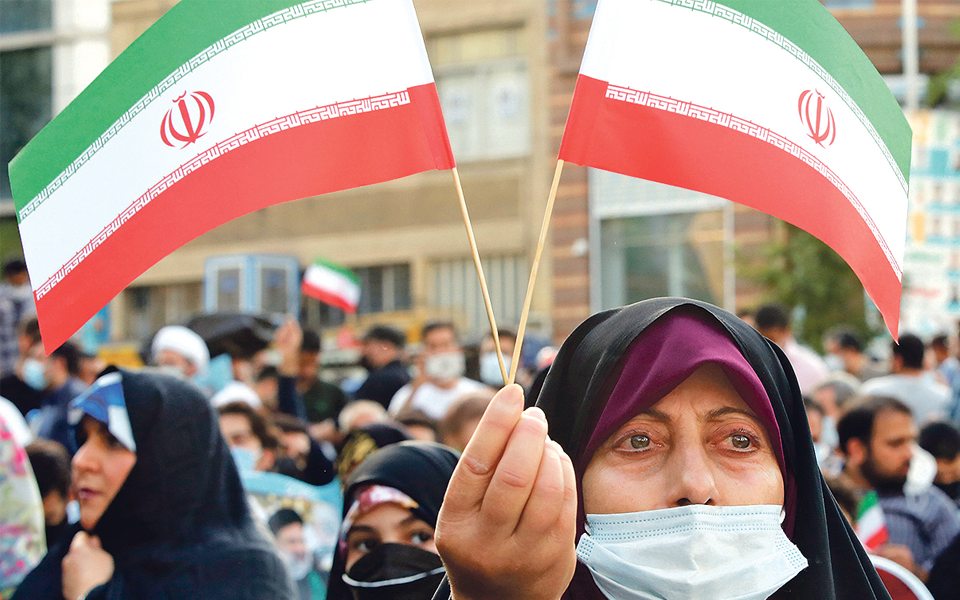
O chefe da diplomacia iraniana, Abbas Araghchi, acusou hoje Israel de tentar sabotar um eventual acordo com Washington para pôr fim à guerra no Médio Oriente, anunciado como iminente pelos vários protagonistas.
“Este acordo tem inimigos, entre os quais se destaca o regime sionista, que procura pretextos para o fazer descarrilar”, frisou o ministro dos Negócios Estrangeiros na televisão estatal iraniana.
Abbas Araghchi tinha referido hoje de manhã que um acordo com os Estados Unidos “nunca esteve tão próximo” para pôr fim a esta guerra desencadeada pelos ataques israelo-americanos em 28 de fevereiro.
O primeiro-ministro paquistanês, Shehbaz Sharif, país mediador, avançou hoje numa mensagem no X que “foi alcançado um texto definitivo e consensual do acordo de paz”.
O primeiro-ministro paquistanês assegurou que o seu país está a “colaborar estreitamente com ambas as partes para concretizar os próximos passos” e salientou que “a paz nunca esteve tão perto como está agora”.
O Presidente dos Estados Unidos, Donald Trump, disse esta quinta-feira que tinha alcançado um “grande acordo” de paz com o Irão, ainda por formalizar, e que poderia ser assinado este fim de semana na Europa.
Chegou a referir que seria o seu vice-presidente, JD Vance, a encarregar-se de comparecer à cerimónia de assinatura.
O Irão negou ter chegado a um acordo após a mensagem de Trump, mas hoje, Abbas Araghchi afirmou que o “memorando de entendimento” com Washington “nunca esteve tão próximo”.
O chefe da diplomacia iraniana acrescentou que “todos os detalhes serão comunicados ao público oportunamente”.
Esta última aproximação surge depois de os EUA e o Irão terem trocado uma nova ronda de ataques esta semana, na sequência do abate de um helicóptero norte-americano pelas forças iranianas.
As negociações entre ambos os países estão num impasse há semanas, enquanto trocavam rascunhos de um acordo de paz, com a mediação do Paquistão.
Apesar do aparente otimismo das duas partes quanto à proximidade de um entendimento, persistem divergências públicas sobre os termos concretos do acordo.
Teerão não confirmou oficialmente as condições enumeradas pelo responsável norte-americano, nomeadamente a alegada aceitação do desmantelamento do programa nuclear iraniano.
O Irão tem reiterado que as suas atividades nucleares têm fins exclusivamente civis e rejeita as acusações de que procura desenvolver armamento atómico.
As negociações decorrem após o cessar-fogo alcançado em abril e procuram consolidar um acordo mais amplo para encerrar o conflito que envolve o Irão, os Estados Unidos e Israel.
A Comissão Nacional de Energia Nuclear (Cnen) confirmou a ocorrência de um vazamento de material radioativo na sede do Ipen (Instituto de Pesquisas Energéticas e Nucleares), situada no campus da USP, em São Paulo.
O incidente, registrado em 29 de maio, ficou restrito à área controlada do Centro de Radiofarmácia.
Origem e impacto do incidente
Durante a produção de insumos para radioterapia, foram detectados traços de tecnécio-99.
Segundo o instituto, a contaminação atingiu inicialmente a vestimenta de um técnico e, posteriormente, um traço residual no piso afetou o calçado de um segundo operador.
Ambos os profissionais passaram por exames de “contagem de corpo inteiro”, que descartaram contaminação interna ou danos à saúde.
O Ipen informou que os envolvidos já passaram por retreinamento e que não há riscos para o restante da universidade.
Investigação técnica
A Autoridade Nacional de Segurança Nuclear (ANSN) acompanha o caso e estabeleceu o prazo de 18 de junho para o cumprimento de exigências regulatórias.
O incidente ocorre meses após um incêndio localizado atingir a sala de controle do reator do instituto, em março deste ano.
Outro lado
O Ipen se manifestou por meio de nota. Veja abaixo na íntegra:
“No dia 29 de maio, durante a rotina de produção de Geradores de Molibdênio-99/Tecnécio-99m, a roupa de um técnico do Centro de Radiofarmácia foi contaminada. O incidente foi prontamente identificado pelos detectores da instalação e o operador realizou a limpeza e o isolamento imediato de sua vestimenta. Após esse procedimento, o piso próximo ao detector reteve um leve traço de contaminação que, na segunda-feira, dia 1 de junho, causou a contaminação do calçado de um segundo operador.
Ambos os profissionais foram submetidos ao exame de contagem de corpo inteiro, que avalia possíveis contaminações internas. O procedimento constatou que a contaminação limitou-se exclusivamente às roupas externas, garantindo que nenhum dos operadores sofresse qualquer consequência à saúde.
Por não haver sequelas ou riscos residuais, nenhum funcionário permanece sob observação. Os envolvidos passaram por retreinamento e o caso segue sob avaliação interna para o aprimoramento dos processos de controle e segurança. A ocorrência foi integralmente relatada à Agência Nacional de Segurança Nuclear (ANSN) por meio de um relatório técnico.
Contaminações pontuais em Equipamentos de Proteção Individual (EPIs), embora rigidamente prevenidas, são ocorrências que podem eventualmente acontecer. Por essa razão, todo incidente direciona o profissional ao monitoramento de dose acumulada e ao exame de corpo inteiro.
É comum que os funcionários do Centro de Radiofarmácia mantenham doses acumuladas significativamente baixas aos limites permitidos pelas leis trabalhistas. Como medida extra de segurança preventiva, sempre que a dose de um trabalhador apresenta elevação, a sua função é trocada e a atividade executada é revisada para garantir a redução da exposição e a melhoria do processo produtivo.
Paralelamente à produção diária, o Centro de Radiofarmácia mantém uma equipe de pesquisa ativa com projetos promissores, como o Lu-177-PSMA-IT, em fase de testes clínicos, e estudos com moléculas marcadas com alfa-emissores, como o Ac-225.
O IPEN é um dos maiores fornecedores de radiofármacos para o Sistema Único de Saúde contribuindo decisivamente para o desenvolvimento do Brasil.”
(Com informações de Robson Rodrigues, Thiago Félix e Thomaz Coelho)
Bogotá, 12 jun (Prensa Latina) La Ley Nuclear, que fue aprobada por el Congreso de Colombia y hoy solo espera por la sanción presidencial, contribuirá a distintos ámbitos sociales y económicos, según destacan autoridades del país.
O presidente dos Estados Unidos, Donald Trump, declarou nesta quinta-feira (11) que o confronto com o Irã estaria chegando ao fim após, segundo ele, obter garantias de que Teerã não desenvolverá armas nucleares. A fala, porém, foi recebida com cautela pelo governo iraniano, que negou qualquer desfecho definitivo para a crise.
As negociações entre os dois países avançam em torno de um possível memorando de entendimento dividido em etapas. A primeira prevê a normalização do tráfego marítimo no Estreito de Ormuz em até 30 dias. Já a segunda abriria um período de cerca de dois meses para discutir um novo acordo nuclear.
Trump chegou a afirmar que o documento pode ser assinado já nos próximos dias. Apesar disso, representantes iranianos ressaltaram que ainda não há uma decisão final sobre os termos apresentados.
Especialistas avaliam que o cenário atual representa mais uma ampliação da trégua existente do que propriamente o encerramento do conflito. Segundo analistas, diversos pontos seguem sem consenso entre as partes.
Trump afirma que um acordo com o Irã está próximo, mas negociações ainda enfrentam divergências | Foto: BRENDAN SMIALOWSKI / AFP
Entre os principais obstáculos estão a recusa do Irã em discutir seu programa de mísseis balísticos, o apoio a grupos armados aliados na região e a exigência de acesso a parte dos recursos financeiros bloqueados pelos Estados Unidos como condição para avançar nas negociações.
Além dos desafios diplomáticos, Trump enfrenta pressão dentro dos próprios Estados Unidos. O aumento dos preços dos combustíveis, a alta da inflação e a proximidade das eleições legislativas ampliam a cobrança por uma solução rápida para a crise.
No cenário regional, Israel também segue como peça central nas tratativas. O governo de Benjamin Netanyahu mantém posições consideradas sensíveis para um acordo mais amplo, especialmente em relação à atuação de grupos armados no Líbano e na região.
A ANSN (Autoridade Nacional de Segurança Nuclear) investiga uma possível contaminação e vazamento de material radioativo que teria ocorrido no dia 29 de maio no Ipen (Instituto de Pesquisas Energéticas e Nucleares), localizado na Cidade Universitária da USP (Universidade de São Paulo), na capital paulista.
A ANSN, que afirma ter tomado conhecimento dos fatos por meio de uma denúncia anônima, informou que foram solicitadas informações ao Ipen para verificação dos fatos relatados e que a investigação está ocorrendo, mas ainda não há outras informações a serem divulgadas. A USP, responsável pelo campi da Cidade Universitária, o Ipen e a CNEN (Comissão Nacional de Energia Nuclear) não responderam às tentativas de contato do Estadão.
Em nota, a ANSN esclarece ainda que a radiofarmácia do Ipen tem autorização de operação vigente e informa que expediu notificação para o instituto, com prazo até a próxima quinta-feira, 18 de junho, com dois conjuntos de solicitações: o primeiro conjunto diz respeito à manutenção das condições de licenciamento da instalação, como previsto na regulamentação; e o segundo conjunto tem pedidos de esclarecimentos em relação à denúncia recebida pela autoridade sobre o possível vazamento.
“A notificação garante à instalação o exercício do contraditório e da ampla defesa, sendo que eventuais medidas adicionais dependerão da análise técnica das informações e documentos apresentados pelo Ipen”, diz o comunicado da ANSN.
O Sindicato dos Trabalhadores no Serviço Público Federal no Estado de São Paulo (Sindsef-SP) e a Associação dos Servidores do Ipen (Assipen) informaram terem encaminhado pedidos de informações sobre o caso e sobre quais foram as providências tomadas às direções do Ipen e da CNEN após o início dos relatos da contaminação.
Em nota divulgada em seu site oficial, o Sindsef-SP relatou que, segundo informações preliminares, a situação teria exigido procedimentos emergenciais de descontaminação radiológica, retenção de roupas utilizadas pelos trabalhadores envolvidos, inclusive terceirizados, e atuação da equipe de Proteção Radiológica para controle da situação.
De acordo com o sindicato, parte dos procedimentos de descontaminação teria ocorrido em locais não destinados especificamente para esse tipo de atendimento, o que levanta preocupações se a infraestrutura disponível é adequada e sobre o cumprimento dos protocolos de segurança exigidos para atividades com materiais radioativos.
No texto, o Sindsef-SP atribui o incidente a cortes no orçamento, redução no quadro de pessoal e deficiências na gestão, e alerta que os servidores que trabalham direta e permanentemente com materiais ou substâncias radioativas estão com exames médicos específicos atrasados em mais de um ano. O órgão também cobra apuração e divulgação das informações sobre o que teria ocorrido em 29 de maio.
A CNEN (Comissão Nacional de Energia Nuclear) confirmou o vazamento de material radiológico no Ipen (Instituto de Pesquisas Energéticas e Nucleares), cujo prédio fica dentro da USP (Universidade de São Paulo), na zona Oeste de São Paulo. O caso ocorreu no último dia 29 de maio, mas só foi confirmado pelo órgão nessa quinta-feira (11).
O evento não foi a primeira ocorrência registrada. Desta vez, dois profissionais tiveram EPIs contaminados durante o manuseio de insumos para radioterapia.
De acordo com informações do CNEN, a contaminação ficou restrita à área controlada do Centro de Radiofarmácia. Nenhum profissional foi atingido ou está em observação por impacto da contaminação.
O que vazou?
De acordo com a autarquia, foram detectados traços de tecnécio-99 durante o manuseio de geradores de molibdênio. O vazamento foi reportado inicialmente por entidades sindicais e confirmado pelo órgão regulador após a abertura de um relatório de ocorrência interna.
Quem foi impactado?
O incidente envolveu dois funcionários, classificados tecnicamente como Indivíduos Ocupacionalmente Expostos.
Segundo nota oficial do Ipen, a contaminação começou na vestimenta de um técnico e, apesar do isolamento imediato da roupa, um traço residual no piso atingiu o calçado de um segundo operador no dia 1º de junho.
Ambos foram submetidos a exames de “contagem de corpo inteiro”, que descartaram contaminação interna. O órgão assegura que a situação ficou restrita à área controlada do Centro de Radiofarmácia e não houve riscos para o restante do campus ou para a saúde pública.
O que acontece agora?
A ANSN (Autoridade Nacional de Segurança Nuclear) instaurou um procedimento de verificação técnica para avaliar o caso. O instituto tem até o dia 18 de junho para atender a exigências regulatórias notificadas pelo órgão fiscalizador.
O Ipen informou que os profissionais envolvidos passaram por retreinamento e que o monitoramento de dose acumulada é uma prática de segurança rotineira na instalação.
O centro é um dos principais fornecedores de radiofármacos para o SUS (Sistema Único de Saúde).
Outro lado
O Ipen se manifestou por meio de nota. Veja abaixo na íntegra:
“No dia 29 de maio, durante a rotina de produção de Geradores de Molibdênio-99/Tecnécio-99m, a roupa de um técnico do Centro de Radiofarmácia foi contaminada. O incidente foi prontamente identificado pelos detectores da instalação e o operador realizou a limpeza e o isolamento imediato de sua vestimenta. Após esse procedimento, o piso próximo ao detector reteve um leve traço de contaminação que, na segunda-feira, dia 1 de junho, causou a contaminação do calçado de um segundo operador.
Ambos os profissionais foram submetidos ao exame de contagem de corpo inteiro, que avalia possíveis contaminações internas. O procedimento constatou que a contaminação limitou-se exclusivamente às roupas externas, garantindo que nenhum dos operadores sofresse qualquer consequência à saúde.
Por não haver sequelas ou riscos residuais, nenhum funcionário permanece sob observação. Os envolvidos passaram por retreinamento e o caso segue sob avaliação interna para o aprimoramento dos processos de controle e segurança. A ocorrência foi integralmente relatada à Agência Nacional de Segurança Nuclear (ANSN) por meio de um relatório técnico.
Contaminações pontuais em Equipamentos de Proteção Individual (EPIs), embora rigidamente prevenidas, são ocorrências que podem eventualmente acontecer. Por essa razão, todo incidente direciona o profissional ao monitoramento de dose acumulada e ao exame de corpo inteiro.
É comum que os funcionários do Centro de Radiofarmácia mantenham doses acumuladas significativamente baixas aos limites permitidos pelas leis trabalhistas. Como medida extra de segurança preventiva, sempre que a dose de um trabalhador apresenta elevação, a sua função é trocada e a atividade executada é revisada para garantir a redução da exposição e a melhoria do processo produtivo.
Paralelamente à produção diária, o Centro de Radiofarmácia mantém uma equipe de pesquisa ativa com projetos promissores, como o Lu-177-PSMA-IT, em fase de testes clínicos, e estudos com moléculas marcadas com alfa-emissores, como o Ac-225.
O IPEN é um dos maiores fornecedores de radiofármacos para o Sistema Único de Saúde contribuindo decisivamente para o desenvolvimento do Brasil.”
(Com informações de Robson Rodrigues, Thiago Félix e Thomaz Coelho)
Trump volta a reforçar que não vai permitir que o Irão tenha uma arma nuclear. Ainda, Mais de 100 operacionais combatem a esta hora um incêndio em mato no concelho de Odemira, no distrito de Beja.
O apagão de 28 de abril de 2025 colocou a segurança de abastecimento elétrico no centro do debate público. Após a divulgação dos relatórios técnicos finais de investigação, importa analisar as suas causas com rigor e retirar as conclusões corretas.
O sistema elétrico exige um equilíbrio constante e em tempo real entre geração e consumo. Qualquer desvio afeta a frequência nominal da rede – na Europa, os 50 Hz – podendo desencadear atuações automáticas dos sistemas de proteção e, em situações extremas, provocar o colapso em cascata.
Foi o que aconteceu a 28 de abril. O painel de peritos da ENTSO-E concluiu que o apagão resultou de uma combinação de fatores: oscilações na rede, lacunas no controlo de tensão e de potência reativa, e uma rápida sequência de desligamentos de geradores em Espanha. Além disso, os conversores de eletrónica de potência dos geradores espanhóis não reagiram adequadamente às variações de tensão – uma falha de requisitos técnicos que o operador de rede espanhol deveria ter acautelado. Importa sublinhar: o relatório não atribui a causa do apagão às renováveis enquanto tecnologia. Identifica antes falhas de operação e de comportamento de equipamentos em condições específicas de rede.
Por outro lado, o apagão deu munições a quem tenta associar as renováveis à instabilidade elétrica. Convém clarificar: as renováveis não são intermitentes. São variáveis no tempo. A diferença é fundamental. “Intermitente” descreve algo que funciona em modo “tudo ou nada”, que liga e desliga de forma abrupta – como um pisca-pisca. “Variável” descreve algo cuja produção oscila de forma gradual e previsível, acompanhando os ciclos do vento e do sol. A geração solar e eólica enquadra-se na segunda categoria: a sua curva de produção é antecipável com crescente precisão e incorporada no planeamento diário da rede.
Quem é genuinamente intermitente? A geração nuclear. Uma central nuclear opera em modo de carga base: está ligada ou está desligada. Não modela a sua produção em função da procura. Uma paragem não planeada retira instantaneamente do sistema blocos superiores a 1.000 MW – uma perturbação de enorme magnitude para uma rede da dimensão da portuguesa. Aliás, durante o próprio apagão de 28 de abril, as centrais nucleares espanholas foram as primeiras a ser desligadas por razões de segurança e não serviram para o black start. Esse papel coube a uma central de ciclo combinado a gás (Tapada do Outeiro) e a uma hidroelétrica (Castelo de Bode) do lado português.
No entanto, a integração de fontes renováveis variáveis exige gestão mais sofisticada – não a substituição por tecnologias do século XX. O portfólio de geração combina fontes complementares: a hidroeletricidade armazenada nas albufeiras (altamente despachável), a eólica e solar (variáveis mas previsíveis, com custo marginal nulo), o armazenamento em baterias (resposta quase instantânea) e o gás natural em ciclo combinado (flexível, essencial na transição).
A gestão da rede opera em vários níveis: planeamento de longo prazo, para garantir que o portfólio cobre os cenários de variação renovável; gestão diária, ajustando produção e consumo e ativando reservas; mercado de serviços auxiliares, onde a flexibilidade tem valor económico crescente; e manutenção preditiva, apoiada em ferramentas digitais de apoio à decisão. A estas acrescem a flexibilidade do lado da procura – consumidores que adaptam o seu consumo à disponibilidade de geração -, a geração distribuída e as micro-redes. O Grupo de Aconselhamento Técnico criado em Portugal após o apagão sublinhou ainda a urgência de implementar conversores com inércia sintética (grid-forming), que emulam o comportamento estabilizador das massas girantes dos geradores convencionais. Estas tecnologias existem e são implementáveis.
Perante o debate sobre Energia Nuclear em Portugal, importa ser direto: a geração nuclear não resolve os desafios de integração de renováveis – agrava-os. Os custos de construção dispararam (Flamanville e Hinkley Point C são exemplos de derrapagens que tornaram o nuclear a fonte mais cara do mercado europeu). Portugal não tem o know-how técnico nem a cadeia de fornecimento necessária. Os resíduos de alta atividade continuam sem solução definitiva. E a sua intermitência real – paragens abruptas de grande capacidade – seria uma ameaça séria à estabilidade do Sistema Elétrico Nacional.
O apagão foi um aviso sobre a necessidade de adaptar operação e regulação à crescente penetração renovável. Não foi um argumento contra as renováveis. A Agência Internacional de Energia é clara: a segurança elétrica depende não apenas da geração, mas da qualidade da operação da rede e do comportamento de todos os ativos conectados.
Para descarbonizar a economia portuguesa – eletrificando transportes, aquecimento e processos industriais – não há alternativa à expansão das renováveis. São as mais baratas, as mais rápidas de instalar e as mais abundantes no território nacional. O desafio está em construir, em paralelo, as infraestruturas, os mercados e as ferramentas de operação que permitam gerir essa variabilidade com robustez e segurança.
A guerra envolvendo os Estados Unidos, Israel e o Irão tem exposto uma questão mais profunda e de maior relevância para o futuro da ordem internacional: os limites da autonomia estratégica europeia num mundo cada vez mais multipolar.
Durante anos, líderes europeus defenderam a necessidade de uma política externa mais independente, capaz de refletir os interesses específicos do continente sem depender automaticamente das prioridades de Washington. No entanto, momentos de crise costumam separar ambições de capacidades. E poucos episódios ilustram melhor essa realidade do que a trajetória do acordo nuclear iraniano.
Quando os Estados Unidos decidiram abandonar unilateralmente o Plano de Ação Conjunto Global (JCPOA), em 2018, a França, a Alemanha e o Reino Unido manifestaram oposição à decisão. A União Europeia procurou preservar o acordo, criou mecanismos alternativos de pagamento e reafirmou o seu compromisso com uma solução diplomática. Apesar disso, os resultados foram limitados. A maioria das empresas europeias retirou-se do mercado iraniano, não por convicção política, mas por receio de perder acesso ao sistema financeiro internacional dominado pelo dólar e à economia norte-americana. A experiência revelou uma realidade desconfortável.
A Europa possuía vontade política, mas não dispunha dos instrumentos necessários para sustentá-la diante da pressão extraterritorial dos Estados Unidos. A autonomia estratégica europeia encontrou os seus limites precisamente onde o poder económico, financeiro e geopolítico norte-americano continua sendo determinante.
É nesse contexto que a postura chinesa merece atenção, não porque represente um modelo a ser copiado, mas porque evidencia uma abordagem diferente da diplomacia contemporânea. Pequim manteve relações funcionais simultaneamente com Irão, Israel, Arábia Saudita, Emirados Árabes Unidos e Estados Unidos. Naturalmente, essa postura não decorre de altruísmo. A China busca proteger interesses nacionais concretos relacionados à segurança energética, à estabilidade regional e à preservação de suas rotas comerciais.
Ainda assim, a estratégia chinesa demonstra a importância de preservar canais de interlocução com atores rivais, reduzindo a dependência de alinhamentos rígidos e ampliando as margens de manobra diplomática. Seria, contudo, um erro considerar essa prática uma exclusividade chinesa. Índia, Turquia, Brasil e diversas outras potências médias têm adotado estratégias semelhantes, procurando equilibrar suas relações com diferentes polos de poder sem aderir integralmente a nenhum deles. A verdadeira lição não é chinesa. É multipolar.
A questão central para a Europa, portanto, não é escolher entre Washington e Pequim. Trata-se de desenvolver capacidades que tornem sua autonomia estratégica operacional e não apenas retórica. Isso inclui mecanismos financeiros menos vulneráveis a sanções extraterritoriais, maior coordenação em matéria de defesa, instrumentos próprios de mediação diplomática e capacidade de sustentar compromissos internacionais independentemente das mudanças políticas ocorridas em outras capitais.
A crise iraniana demonstrou que a Europa continua sendo uma potência económica, tecnológica e regulatória de primeira grandeza. Demonstrou também que recursos, por si só, não se traduzem automaticamente em influência estratégica. A autonomia não depende apenas da capacidade de formular posições independentes. Depende, sobretudo, da capacidade de implementá-las. Num mundo cada vez mais marcado pela dispersão do poder, essa talvez seja a principal lição da crise.
A influência internacional será cada vez mais medida pela capacidade de transformar preferências políticas em ações efetivas. E é precisamente nesse terreno que a Europa continua a enfrentar o seu maior desafio.
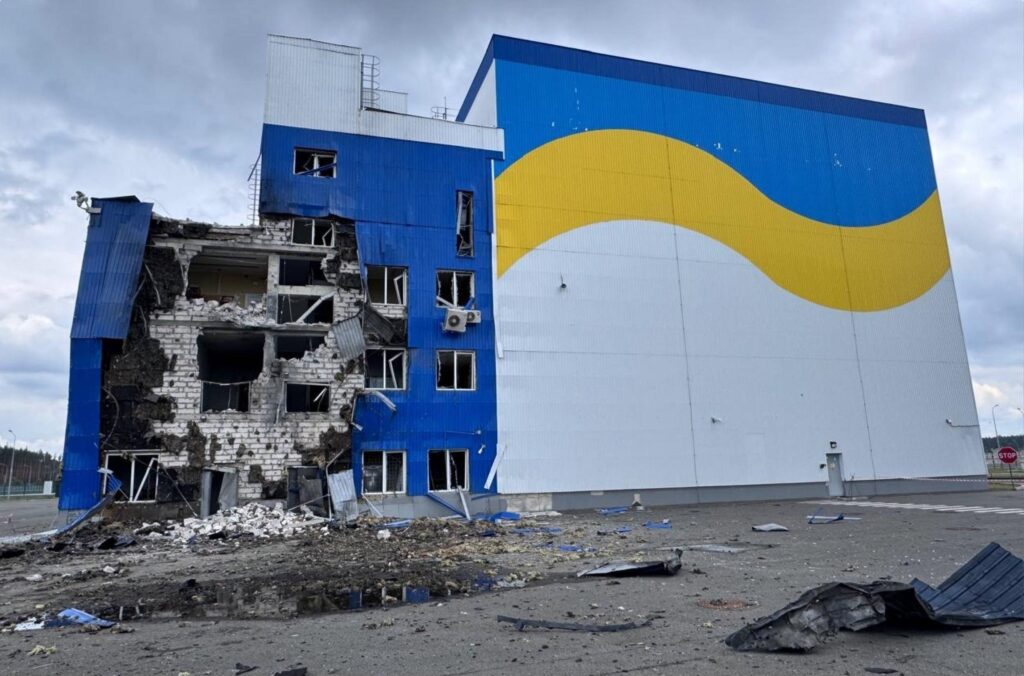
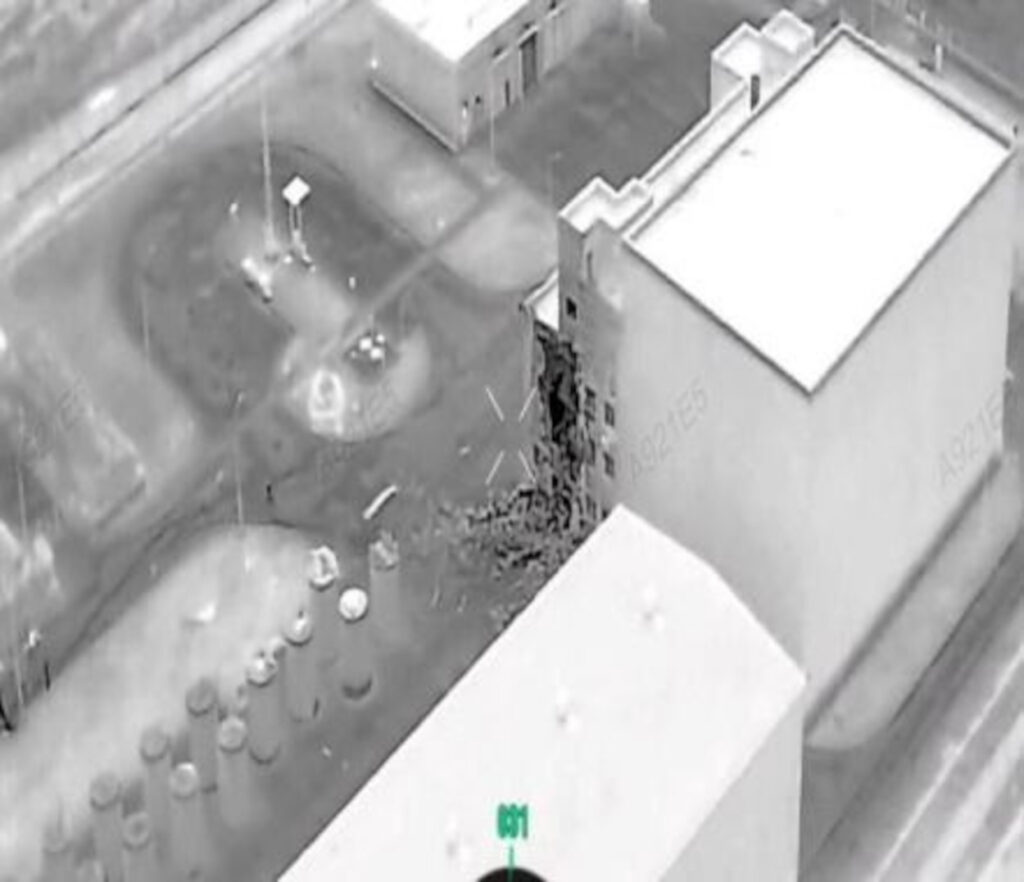
A Russian drone struck the site of Ukraine’s Centralized Spent Fuel Storage Facility (CSFSF) in the Chornobyl exclusion zone overnight on 7 June, damaging a non-storage building and causing a fire that was later extinguished, according to Ukraine’s state nuclear operator Energoatom.
The attack occurred at approximately 02:10, when a Russian UAV hit the facility’s container reception building, Energoatom said. The building was partially destroyed, although no spent nuclear fuel was stored inside at the time.
Fire contained, radiation levels normal
Energoatom reported that a fire covering about 40 square meters broke out after the strike but was quickly localized and fully extinguished. No personnel were injured.
The company said radiation levels at the site remain within normal limits and are being continuously monitored.
“The radiation situation at the CSFSF site remains within normal parameters,” Energoatom said in a statement, adding that it is coordinating with relevant state agencies and continuing to monitor the situation.
The Centralized Spent Fuel Storage Facility is an important part of Ukraine’s nuclear infrastructure, designed to store spent fuel from the country’s nuclear power plants.
SBU opens war crimes case over drone strike on Chornobyl spent fuel facility
Update 17:00: Ukraine’s Security Service (SBU) said it is treating the Russian drone strike on the Centralized Spent Fuel Storage Facility near Chornobyl as a war crime and has opened a criminal case under Article 438 of the Criminal Code.
Investigators said Russian forces used a “Geran-2” type drone for the 7 June strike, which hit the facility at around 02:05. Fragments of the drone were reportedly recovered at the site.
The SBU said the blast damaged the spent nuclear fuel reception and handling building, as well as an administrative building used by the International Atomic Energy Agency.
It added that the strike did not disrupt operations at the facility and no casualties were reported.
Damage at Ukraine’s spent nuclear fuel storage facility in the Chornobyl exclusion zone after a Russian drone strike, which officials say hit a non-storage building and triggered a fire. Photo: General Staff of Ukraine's Armed Forces
IAEA to inspect Chornobyl spent fuel site after drone strike damage
Update 14:40: The International Atomic Energy Agency (IAEA) said it will soon send its team at Chornobyl to inspect damage caused by a drone strike on the Centralized Spent Fuel Storage Facility in the exclusion zone.
The agency said it was informed by Ukraine that the 7 June attack caused “significant damage” to the fuel reception building, including the facade, windows, and doors, with nearby structures also affected by the blast wave.
IAEA Director General Rafael Grossi said the incident is “deeply concerning,” noting it occurred at a facility storing nuclear material just meters from the impacted structure.
He said attacks on nuclear facilities are “completely unacceptable” and violate core nuclear safety principles, including the agency’s “Seven Indispensable Pillars” for nuclear safety and security during armed conflict.
Ukrainian officials condemn strike on nuclear infrastructure
Ukrainian Foreign Minister Andrii Sybiha condemned the attack, describing it as another example of what he called Russia’s systematic disregard for nuclear safety.
“This is not the first time Russia has endangered Ukrainian nuclear facilities,” Sybiha said. “Russian nuclear blackmail and disregard for nuclear safety principles are systemic, deliberate, and unacceptable.”
Ukrainian President Volodymyr Zelenskyy said the drone that struck the facility was a Shahed-type attack drone and accused Russia of deliberately targeting critical nuclear infrastructure.
“Russia consciously struck this nuclear infrastructure facility,” Zelenskyy said. He noted that radiation levels had not exceeded safety limits and praised emergency responders for extinguishing the fire.
The president linked the strike to a broader wave of Russian attacks across Ukraine, saying Russia had launched attacks on civilian targets in 13 regions overnight. According to Zelenskyy, Russia fired 88 missiles, more than 3,250 attack drones, and around 1,800 guided aerial bombs against Ukraine over the past week.
Ukraine has repeatedly accused Russia of using threats to nuclear facilities as part of its broader war strategy. Concerns over nuclear safety have remained high throughout the full-scale invasion, particularly following repeated incidents involving nuclear-related infrastructure and the Russian occupation of the Zaporizhzhia Nuclear Power Plant.
Concerned about a cascading impact on America’s already strained nuclear shipbuilding industry, the House Armed Services Committee wants the Secretary of the Navy to prove that procurement of the proposed nuclear-powered Trump class battleships won’t exacerbate existing construction delays on aircraft carriers and submarines. This follows a congressional move last month to block the Navy from starting construction of the first of the new class of battleships until the service provides assurances that key weapon systems are “sufficiently mature.” You can read more about that in our original report here.
New worries about the status of U.S. nuclear shipbuilding were raised Thursday during the House Armed Services Committee’s Markup of the current draft of the Fiscal Year 2027 National Defense Authorization Act (NDAA), the annual defense policy bill. An amendment adding new directed report language related to the Trump class, which was approved by the Committee, mirrors issues TWZ has frequently addressed about procurement of nuclear-powered vessels.
A render of the future Trump class nuclear-powered guided-missile battleship. White House/USN
“The committee continues to support efforts to expand the U.S. maritime industrial base and accelerate U.S. shipbuilding production and recognizes the progress that has been made on these efforts through coordination between Congress, the Department of Defense, and industry,” the amendment, which had been put forward by Rep. Joe Courtney, a Connecticut Democrat, says. “However, the committee is concerned about the possibility of strain on U.S. nuclear shipyards and maritime industrial base posed by the aggressive schedule proposed for producing a nuclear-powered BBG(X) platform.”
The Trump class has also been referred to as BBG(X), the hull classification code for a guided missile (G) battleship (BB). The Navy has more recently used the term BBGN, reflecting the decision to utilize nuclear propulsion.
The main concern raised by Rep. Courtney is that there is a limit on where nuclear-powered warships can be built.
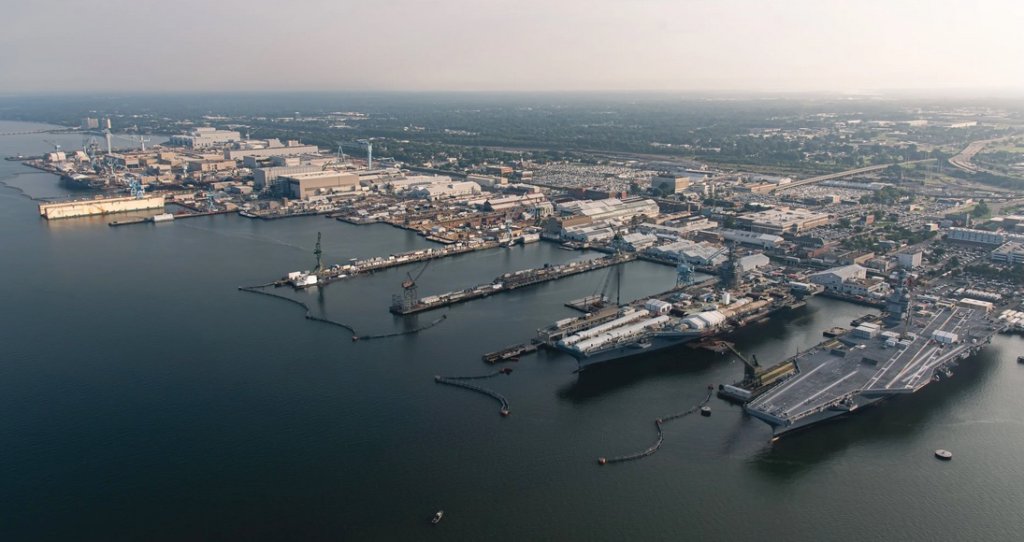
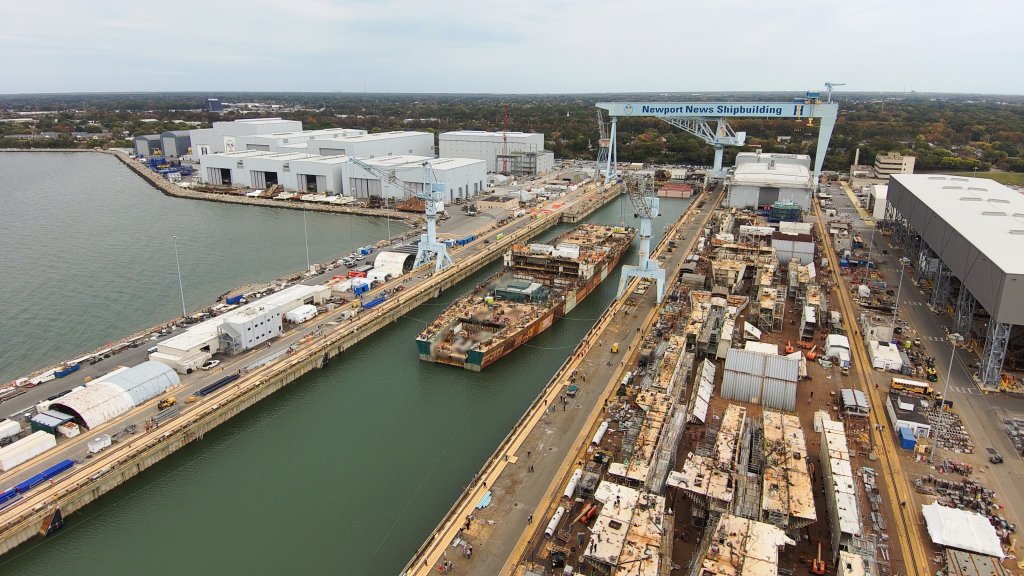
“The committee notes that the United States operates only two shipyards that are qualified to construct nuclear-powered vessels and that only one of these two shipyards, located in Newport News, Virginia, actively constructs surface vessels, including the Gerald R. Ford class aircraft carrier program,” Courtney noted. He was referring to Newport News Shipbuilding, a division of Huntington Ingalls Industries.
Newport News Shipbuilding. (HII)
“The committee is aware that the timelines for completion of the three Ford class aircraft carriers currently under construction have experienced significant delays due to a variety of reasons including supply chain and workforce challenges,” the amendment continues. “The committee is concerned that these factors, coupled with a lack of physical shipbuilding capacity, could be further exacerbated by a new nuclear-powered surface vessel program and without careful planning could jeopardize Ford class delivery.”
Beyond concerns about building the ships, the committee is troubled by the Trump class battleship’s impact on the U.S. naval reactor base, which is also limited to a single supplier.
That company, BWXT Technologies, is providing reactors for the Ford class carriers, as well as Virginia and Columbia class nuclear submarines under construction. It was recently awarded $1.4 billion in contracts by the U.S. Naval Propulsion Program.
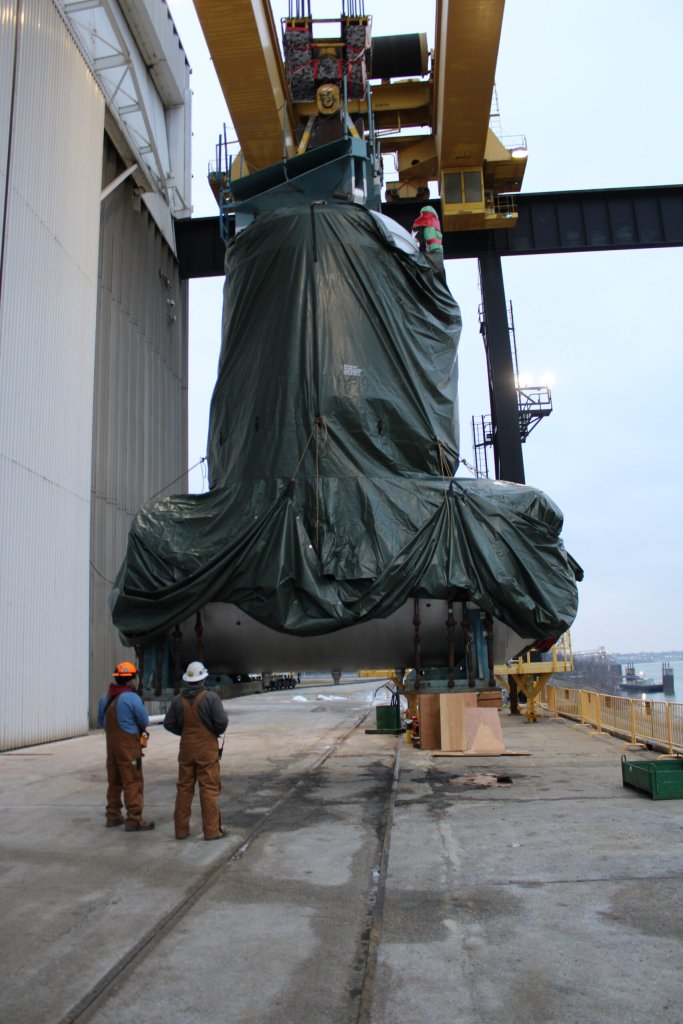
A nuclear steam generator. (BWXT)
“Procurement of naval nuclear reactors typically occurs 2-to-3 years ahead of procurement of a respective vessel and reactor production timelines typically range from 6-to-8 years,” Courtney posited in his amendment. He is “concerned that the accelerated procurement timeline for the BBG(X) program will result in a negative impact on this supply chain.”
The first formal announcement that the Trump class ships would be nuclear-powered came when the Navy unveiled its new shipbuilding plan last month. The Navy hasn’t had a nuclear-powered surface combatant since the 1990s.
A trio of nuclear-powered Navy surface warships sail together in 1964. From left to right, the aircraft carrier USS Enterprise, the cruiser USS Long Beach, and the frigate USS Bainbridge. (USN)
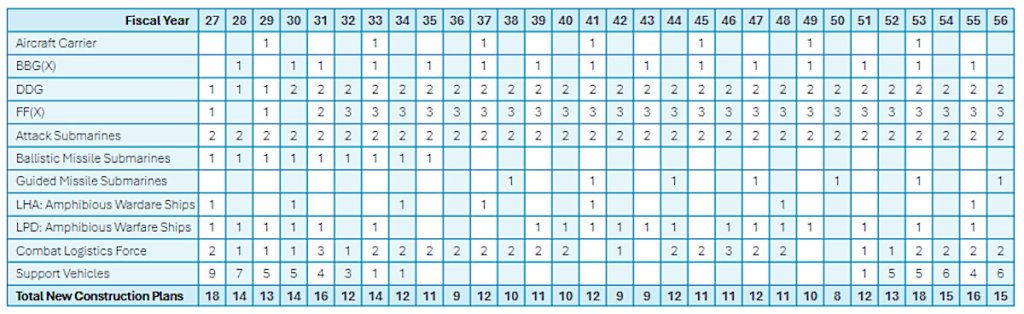
The service’s stated plan is to acquire 15 Trump class ships between Fiscal Year 2028 and 2055. Orders are to be placed essentially one every other year. However, two are slated to come back-to-back in Fiscal Years 2030 and 2031.
The most recent publicly available official estimate for the price tag on these boats is about $17 billion each. That eclipses what the service expects to spend on each of the next three Ford class carriers, the projected unit costs of which range from roughly $13 to $15 billion.
A chart from the Navy’s latest annual shipbuilding plan laying out the planned schedule for ordering new Trump class battleships, referred to here as BBG(X)s, as well as other vessels. USN
With all this in mind, the committee now wants the Navy Secretary and the Director of the Naval Nuclear Propulsion Program to provide a report by March 1, 2027, on the “Navy’s strategy to design and construct BBG(X) without interfering with existing nuclear-powered shipbuilding plans,” including the scheduled construction of third, fourth, and fifth Ford class carriers, the future USS Enterprise (CVN-80), USS Doris Miller (CVN-81), and USS William J. Clinton (CVN-82).
The committee wants the information about:
“the Navy’s strategy to reduce construction delays for CVN-80, CVN-81, and CVN-82;”
“the Navy’s projection for construction and delivery timelines for a nuclear-powered BBG(X) program, to include procurement of long-lead material such as naval nuclear reactors;”
“an assessment of the capacity of existing U.S. shipyards, certified for nuclear-powered vessel construction, to support construction of a nuclear-powered BBG(X) without delaying scheduled construction of projected and under-contract vessels within the Virginia class, Columbia class submarine, and Gerald R. Ford class carrier programs;”
“an assessment of the capacity of the U.S. naval nuclear reactor industrial base capacity to support the construction of a nuclear-powered BBG(X) without delaying scheduled construction of projected and under-contract submarines and aircraft carriers” and
“a summary of the maritime industrial base vendors, particularly those with long-lead time items or that have single source suppliers and their capacity to support the construction of the BBG(X) without delaying construction of already scheduled shipbuilding efforts.”
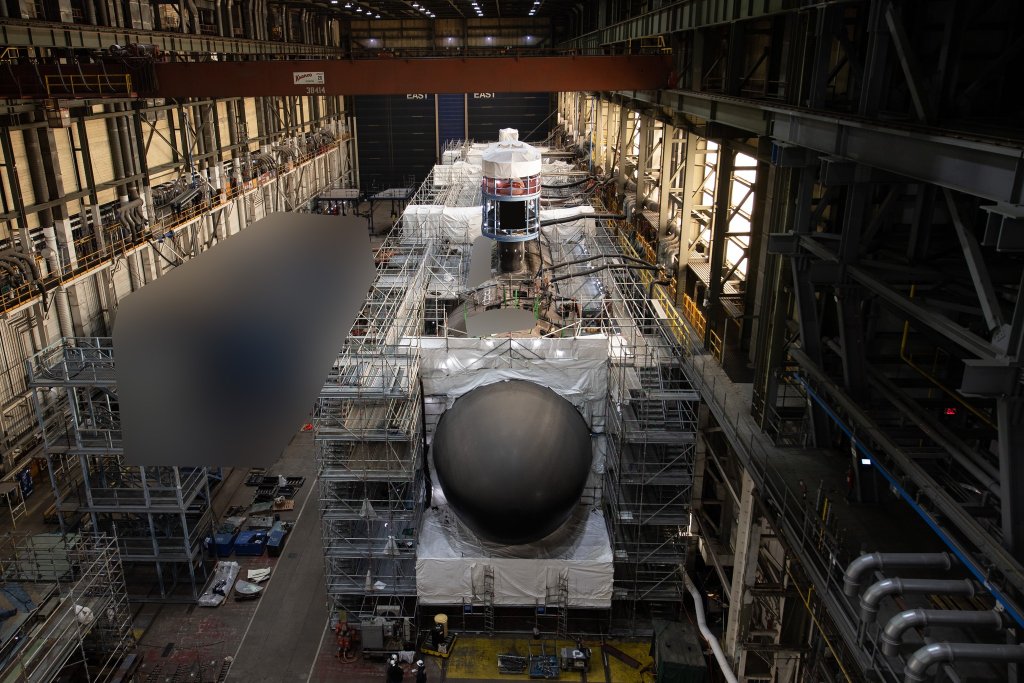
The future Virginia class fast attack nuclear-powered submarine USS Oklahoma pressure hull is completed. (HII) Ashley Cowan
In addition to the issues raised by Courtney, Representative Christopher Deluzio, a Pennsylvania Democrat, expressed concern that the Navy is making “optimistic assumptions about technologies” in a separate amendment to the latest draft of the House NDAA. He specifically cited “operating with a nuclear weapon, ship design, costs, schedule, and production and lack clear concepts of operations or a commitment to incorporating commercial leading practices” when it comes to the Trump class program. Deluzio’s full amendment also touched on aspects of the Trump administration’s Golden Fleet naval modernization initiative.
Deluzio’s amendment directs the Comptroller General of the United States to provide a brief to the House Committee on Armed Services no later than January 1, 2027, on how they will assess:
“the business case for the BBG(X) program, including the planned cost, schedule, and performance parameters, as well as any assumptions that are inherent to the execution of the business case;”
“the novel systems and technologies required to build, operate, and sustain the BBG(X), including the costs and risks of these technologies and the Navy’s steps to mitigate these risks;”
“the extent to which and how the Navy envisions executing Distributed Maritime Operations with the BBG(X) as well as other Golden Fleet assets;”
“the extent to which the Navy plans to incorporate commercial leading practices into its acquisition approach for BBG(X) and other Golden Fleet assets” and
“the impact of BBG(X) and other Golden Fleet assets on acquisition and construction plans for existing Navy shipbuilding programs.”
The future USS Enterprise midbody under construction at Newport News Shipbuilding. (HII)
We reached out to Acting Navy Secretary Hung Cao’s media office for comment and will update this story with any pertinent insights shared.
There are still a number of legislative hurdles the committee’s proposals have to jump. Regardless, the reality that the Navy will ever procure a Trump class battleship, at least as currently envisioned, is already highly questionable, an issue TWZ raised when the class was first announced. President Donald Trump, who sees his namesake battleship class as a key component of the Golden Fleet, will be out of office before major decisions about how to go forward will be made. These congressional actions could be seen as a way to slow-roll plans for the battleship to kill it without directly confronting Trump about the logic of building it in the first place.
US President Donald Trump announced the US Navy’s new Golden Fleet initiative, unveiling the new Trump class battleship, at Mar-a-Lago in Palm Beach, Florida, on December 22, 2025. (Photo by ANDREW CABALLERO-REYNOLDS / AFP) ANDREW CABALLERO-REYNOLDS
The committee’s demand that the Navy prove these vessels won’t gum up the nuclear shipbuilding works is another reminder that there are rough waters ahead for the Trump class.
In the flatlands of Italy’s Po Valley, the decommissioned Caorso nuclear power plant can be seen for miles, the reactor looming into the sky. When Alessandro Maffini, now an assistant professor at the Polytechnic University of Milan, was growing up in the 1990s, the plant's distant silhouette captured his imagination. “The physical presence of that thing was so significant to me as a child. It was a very visible, tangible, concrete presence,” Maffini remembers. “It was like a white Duomo, there on the horizon, always in the background.” For many others, though, it was a specter of disaster, a ghost nuclear plant — shuttered, alongside all of Italy’s nuclear power stations, in the wake of the Chernobyl accident.
“If that plant explodes, we’re all dead,” Maffini’s mother used to intone, looking out at the defunct Caorso station, once the largest in Italy. As Maffini rode his bike six miles across the countryside to get a closer look at the plant from a nearby overpass, his mother’s doom-laden words rang in his ears. Her warning scared him. It also made him want to learn more. When he left home to go to university, Maffini decided to work in nuclear physics. “Radioactivity is a strange thing,” he says. “You can’t see it, you can't hear it, you can't smell it. It leaves a lot of room for imagination, for speculation, for fear.”
Four decades on from Chernobyl, and Italy has some of the highest energy bills in Europe. The country is scrambling to disentangle itself from its dependence on Russian gas in the wake of Russia’s invasion of Ukraine, and build out its energy sovereignty. War in Iran, and a growing European consensus that turning away from nuclear power was, in the words of European Commission president Ursula von der Leyen, a “strategic mistake,” has given more impetus to the Italian government’s argument that the country needs to move past its qualms.
Last year, the Italian cabinet approved a new draft law reintroducing the prospect of returning to nuclear power. “The government has approved another important measure to ensure clean, safe, low-cost energy that can guarantee energy security and strategic independence,” the Prime Minister Giorgia Meloni announced.
Italy is already surrounded on all sides by nuclear power plants: Slovenia’s Krsko plant is 90 miles away from the border, and there are four French nuclear power plants within 110 miles. Italy is the world’s second-largest importer of electricity, with nuclear power, largely imported from France, making up 5% of its energy basket. Italy also plays host to more U.S. nuclear warheads than any other European country. An estimated 35 thermonuclear gravity bombs are stored at two NATO airbases in northern Italy, according to the Nuclear Threat Initiative.
Now, as data centers spring up in Italy’s industrial north, the country’s energy needs are expected to increase exponentially and the government is turning, albeit cautiously, to a long-held Italian taboo. Since the spring of 1986, when the most serious accident in nuclear history unfolded in Unit 4 of the Chernobyl Nuclear Power Plant in northern Ukraine, the Italian population has lived in fear of nuclear energy. It voted to shutter its once-burgeoning nuclear industry in 1987, and in 2011, after the Fukushima nuclear accident, when 94% of voters rejected government plans to revive the industry.
It is a fear that has transformed Italy’s energy fortunes, making it reliant on imports and vulnerable to volatility and price shocks.
The Latina nuclear power plant during its construction in the late '50s and early '60s. Photos courtesy of SOGIN.
“The international crises of recent years have clearly demonstrated the risk of excessive dependence on imported fossil fuels or vulnerable supply chains,” said Fiorella Corrado, communications chief at Italy’s environment and energy ministry. “The government approaches this issue with great respect for the country's history and the democratic choices expressed by citizens. The 1987 and 2011 referendums profoundly impacted the national energy strategy at very different historical moments. Precisely for this reason, the point is not to ignore those choices, but to acknowledge that today's technological, climatic, industrial, and geopolitical context has radically changed.”
For Meloni’s government, the argument is not so much whether Italy needs to revive its nuclear industry, it’s whether the country is ready to shake its demons, to shake the cultural memory of what happened at Chernobyl forty years ago, a thousand miles away from Rome.
In the early hours of April 28, 1986, in the control room of the Latina nuclear power plant south of Rome, a young technician called Ruggero Dell’Aquila was working the night shift. “Everything was perfectly quiet,” he recalled. As morning broke, teletype messages from Northern Europe began to rattle in. A clerk came down from the control room with reports from the Forsmark Nuclear Power Plant in Sweden. Their monitoring stations were registering radiation spikes far above background levels, and no one knew why.
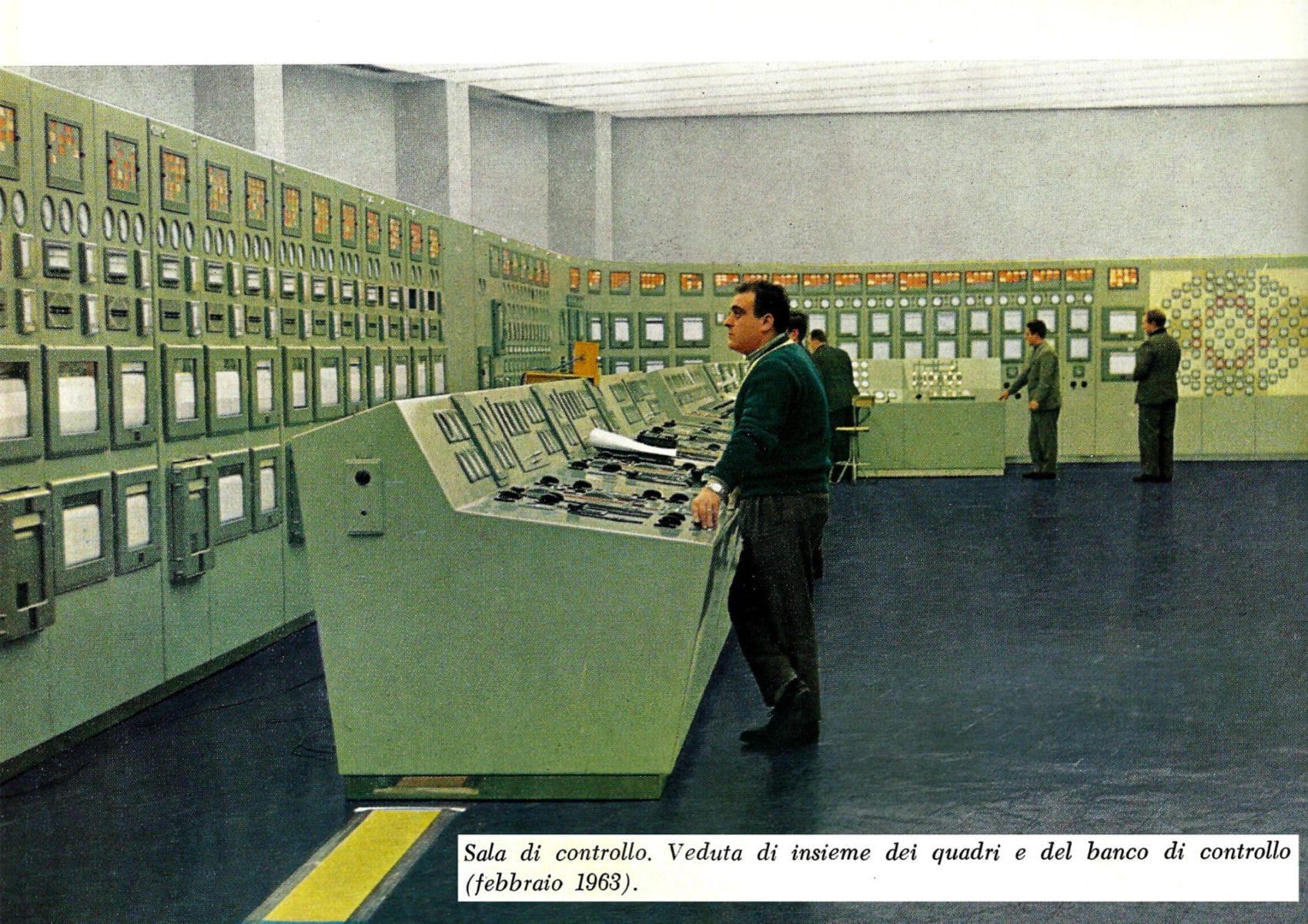
Inside the control room of the Latina power plant, 1963. Photo courtesy of Pionieri Del Nucleare.jpg
That evening, nuclear physicist Sergio Malossi, a director at the Latina plant responsible for monitoring radioactive risk, drove home. His mind was turning over what the clerks had been reporting. “He came in extremely agitated,” remembers his daughter, Roberta Malossi, who was 16 at the time. “We knew he was worried about something going wrong at the facility, but we didn’t understand.” Malossi says that her father’s first paranoid thought was that there had been a malfunction in his own plant, that radiation was leaching into the air, and that it was somehow his fault.
At 9 p.m. Moscow time — aperitivo hour in Latina — the Soviet Union announced there had been an accident at the Chernobyl nuclear plant. In the ensuing days, Italian news was full of dire warnings.
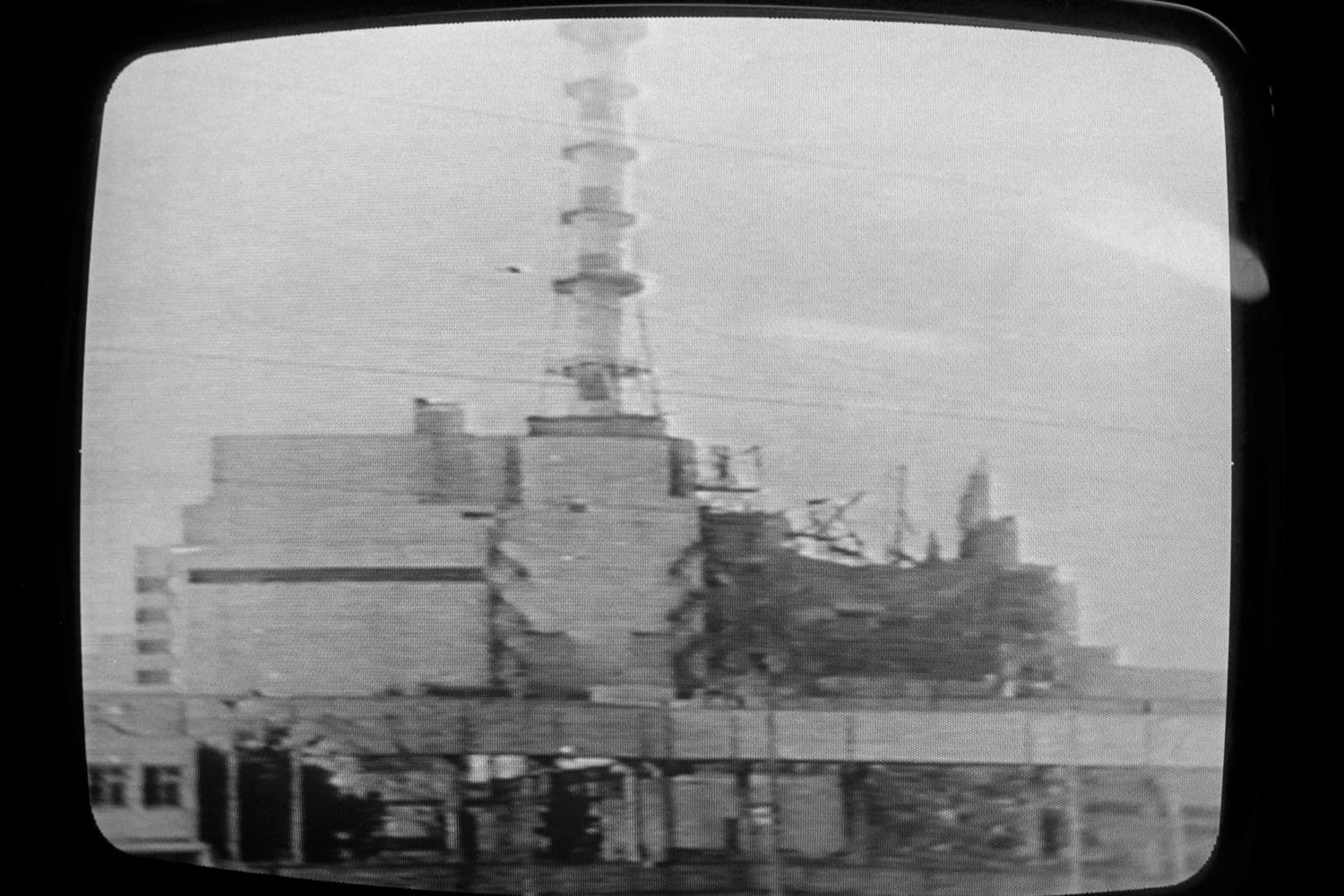
On April 30, 1986, Soviet television aired this image of the Chernobyl plant, claiming there was “no destruction, no major fires, and no mass casualties.” AFP via Getty Images.
“Television was showing these clouds that would soon reach Italy. Everyone was terrified. The only information we got was from state TV, and the news was shocking,” said Monica Tommasi, President of Friends of the Earth Italy, who was a child at the time. Radiation, the news said, would rain down on the population. “The fear from the sky,” ran one La Repubblica headline. “The cloud above us, the doubt within us,” ran another.
On the night of April 30, 1986, Italy’s nuclear monitoring stations began recording increases in radioactivity. The cloud moved over the Valley of the Po, and while the government called for calm, the country began to descend into panic. In the minds of the Italian people, the worst had happened, explained Luca Romano, a writer and activist campaigning for the return of nuclear power in Italy. “Nuclear annihilation, death by radiation, the radioactive cloud and the nuclear holocaust, had arrived,” he said. Nuclear armageddon was a fear that had gripped the West for decades. This was not a nuclear war, but in the Italian collective consciousness, that didn’t make a difference.
The reality was, says Barbara Curli, Professor of Contemporary History at the University of Turin, that “Italy was only marginally affected by the cloud.”
The cloud in northern Italy meant radioactivity levels peaked briefly, but ten days later they had fallen dramatically back down. Because this spike was short-lived, the total radiation exposure remained low. A United Nations committee report recorded that northern Italy received an additional radiation dose of about 380 microsieverts in the year following Chernobyl — less than a fifth of the normal background radiation humans absorb in a year; equivalent to taking about six transatlantic flights. It was much smaller than the doses received by neighboring countries like Bulgaria, Austria and Greece, and in the south of Italy the dose was lower still.
Nuclear Physicist Sergio Malossi, Long-time Director of the Department of Medical Physics at the Latina Nuclear plant. Photo courtesy of Pionieri del Nucleare di Latina.
Down by the Latina power plant, though, the community was shaken by events in Chernobyl, and rumors and misinformation began to spread about the fallout. The friends and family of the technician, Ruggero Dell’Aquila, started asking him if a Chernobyl-style disaster could happen at Latina, too. “Everyone was afraid, asking — ‘can it explode, can it explode?’” he recalled.
The reality was, a Chernobyl-style explosion was not possible at Latina, because its reactor lacked the unstable characteristics of the Soviet design. But this was not such an easy concept to explain.
“The problem was that a slew of journalists took over, telling lies,” Malossi said, recalling paranoid rumours about radioactivity causing mutations in nature. People started telling stories, Malossi said, about “frogs with three heads, animals and fish with four tails. Strange things. When in fact absolutely nothing like that was happening.”
The government advised people to avoid fresh vegetables and dairy products, particularly for children. Farmers destroyed crops and poured away milk. Sergio Malossi ignored the warnings, having measured radiation levels in the air himself. “My father and others from the plant brought the vegetables home and we ate them,” his daughter recalled.
It was these warnings — delivered amid a lack of clear information — that shifted public attitudes toward nuclear energy, said Renzo Colombo, 65, who was just beginning a career in nuclear engineering when the explosion happened. Now a member of Nucleare e Ragione, a nonprofit that promotes a rational approach to nuclear energy in Italy, he recalls how quickly fear took hold. “A real phobia was born, a panic about radioactivity,” he said. “And this panic marked the next 25 years.”
The months after the accident were a shadowy, uncertain period for Italians working in the nuclear industry. “I have to be honest, I felt a little guilty,” said Colombo. “As a nuclear engineer, I thought ‘what have we done?’ My colleagues and I always thought we were designing something useful for humanity. And at that moment we felt betrayed by our own profession.”
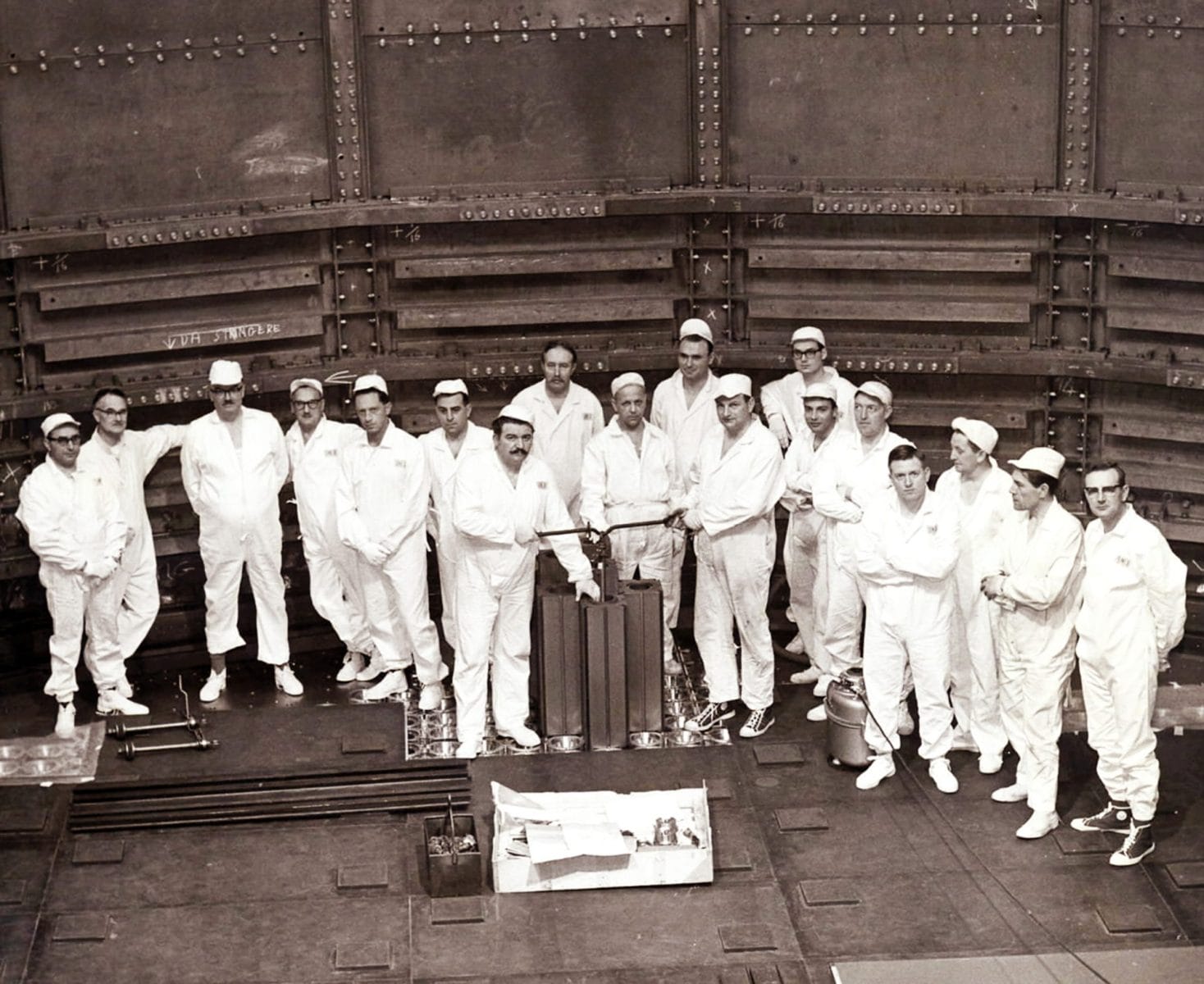
Workers at Latina nuclear plant during its construction in 1961. Photo courtesy Pionieri del Nucleare di Latina.
Outside Italy’s nuclear plants, crowds began to gather. A coalition of environmental groups and political parties started pushing for people to vote against nuclear power in an upcoming referendum.
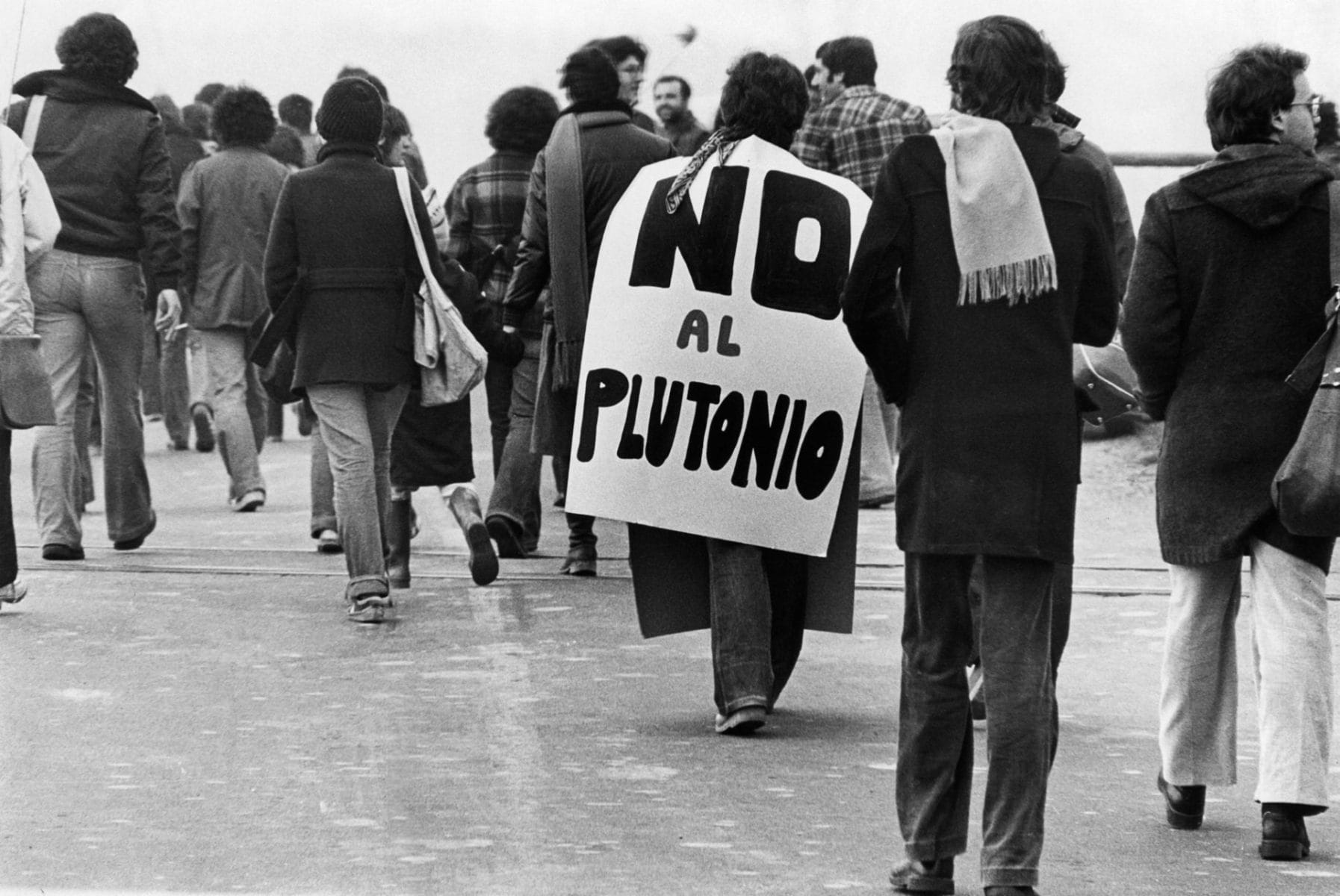
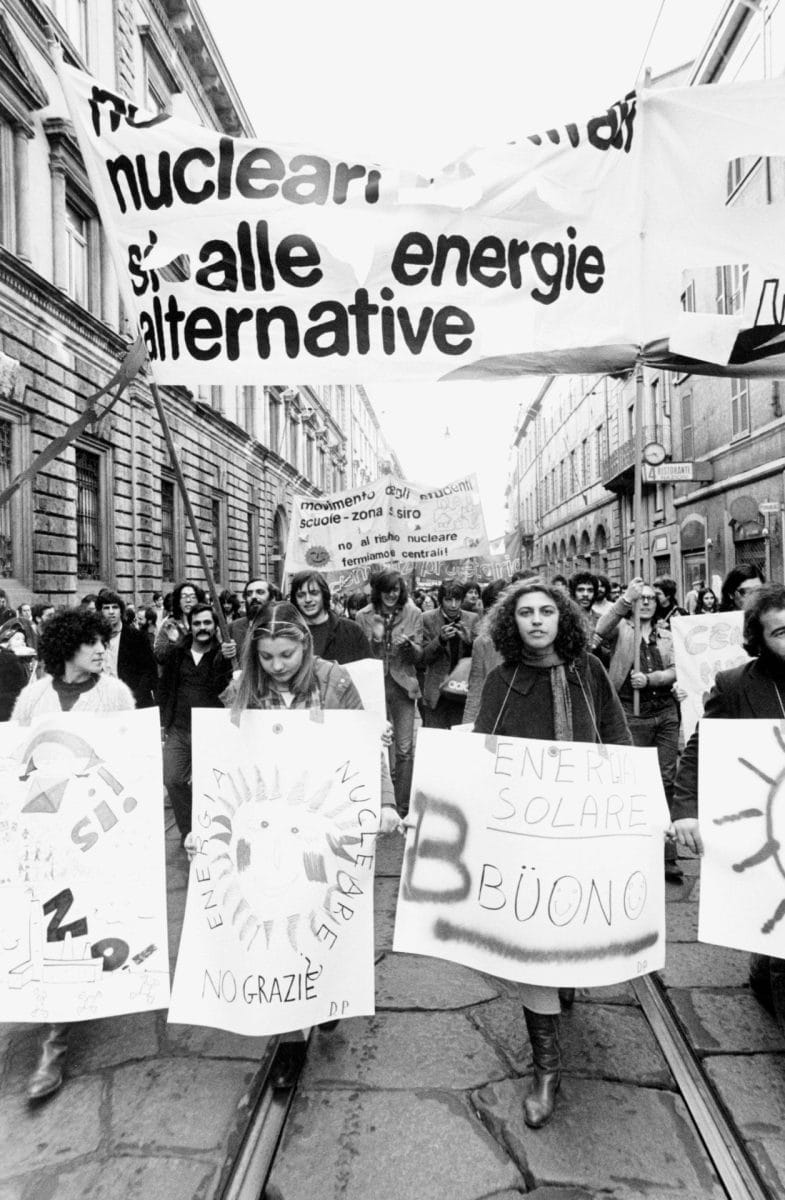
This movement was not new. “Many years before Chernobyl, an environmentalist culture was born — and it didn’t just concern nuclear power, but risky industry in general,” explained Curli, the Turin historian. The anti-nuclear environmental movement, which spread across Europe in the 1970s, was particularly potent in Italy — a country rocked by violent political turmoil, organized crime, and corruption scandals. Public fears, explained Curli, were sharpened by the Seveso disaster, an accident at an industrial plant in the north of Italy in 1976 that exposed tens of thousands of people to a toxic cloud of chemicals. Nuclear power, she said, “was not perceived by public opinion as a credible policy because there's this underlying distrust in institutions.”
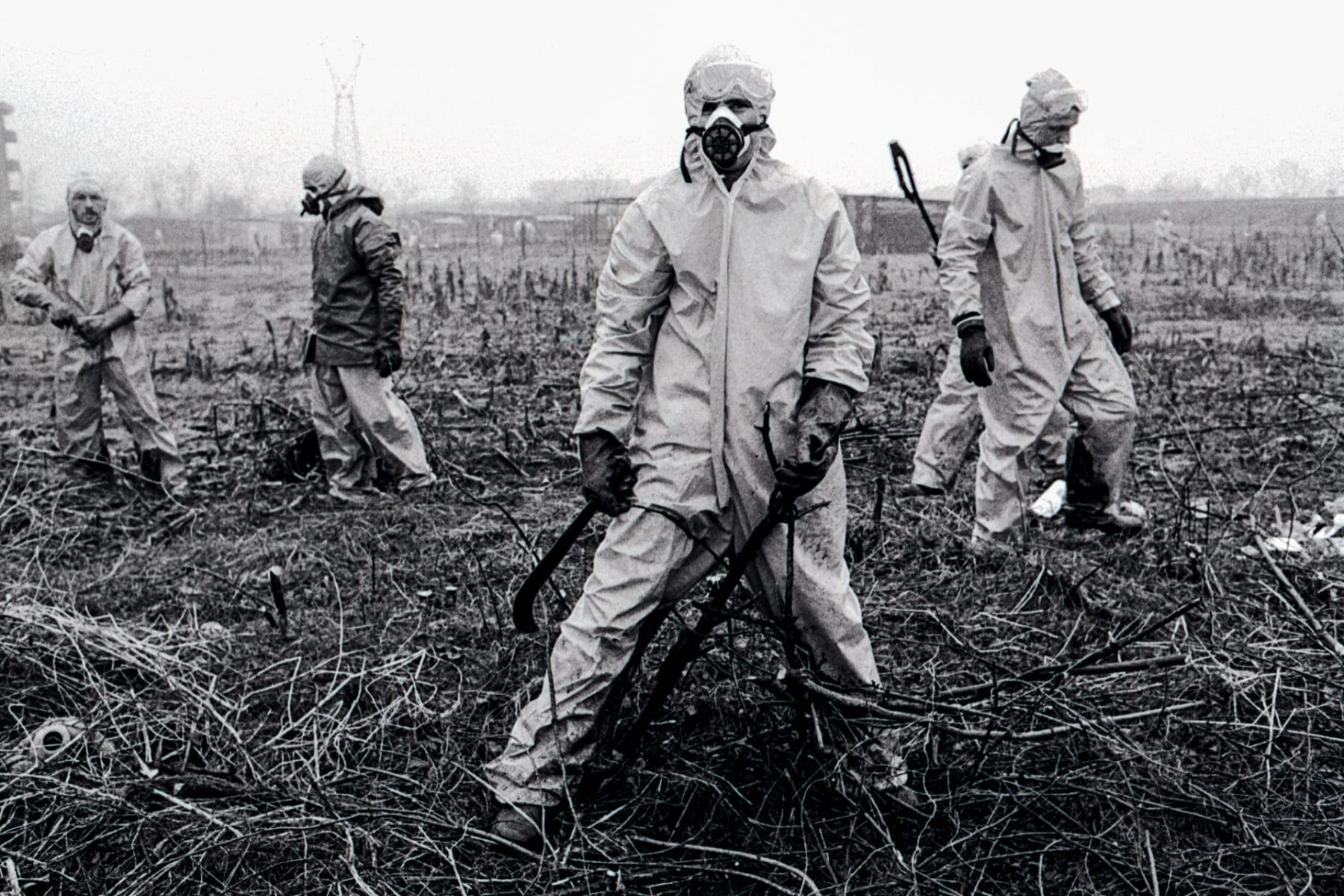
Workers in protective suits clean up the land and homes contaminated by the industrial accident at Seveso chemical manufacturing plant in 1976. Alberto Roveri/Archivio Alberto Roveri/Mondadori Portfolio via Getty Images.
In 1977, almost a decade before Chernobyl, a 10,000-strong crowd of protesters showed up at Montalto di Castro, to protest against a large new nuclear plant that was planned. A Time magazine correspondent described the activists as “an improbable mix of elegant members of the Italian nobility, radical students in American Indian garb, middle-class citizens and Christian Democratic and Communist politicians.”
Demonstrators taking part in an anti-nuclear demonstration. Turin, 1980s. Alberto RoveriMondadori via Getty Images.Anti-nuclear protest, Milan, 1980s. Universal Archive / Universal Images Group via Getty Images.Anti-nuclear protest, Rome, 1980s. Universal Archive / Universal Images Group via Getty Images.
In the wake of Chernobyl, Renzo Colombo was working at that very same plant, helping to build the thermohydraulic cycle. By then, the station was nearly complete. “It was a beautiful plant,” Colombo said. “I loved working there.”
In November 1987, 18 months after the Chernobyl accident, the Italian government held a referendum on nuclear energy. Nearly 80% of Italians voted in favor of measures that would end the country’s use of atomic energy.
One morning, following the referendum, the Montalto di Castro plant’s director called the workers to a meeting. Colombo remembers him saying: “‘Ragazzi, gather round, I need to talk to you. I’ve just been to the ministry, and Italy has decided that we are closing all nuclear activity and will focus on coal and gas instead.’” The room went silent. “I was young,” said Colombo. “But there were people there who were older and had devoted years of their life to the nuclear field. There was just this urge to cry.”
The effect of the referendum was all-encompassing: construction was halted, and over the next three years Italy’s nuclear plants were shut down for good; its nuclear engineers scattered — many going to work abroad, or, like Colombo, re-training to work in other industries.
It was hailed as a victory for Italian environmentalism, says Curli. But the result was that there was a push to “gasify” Italy. That is, she says, “to choose the gas route — less expensive, and less demanding than nuclear power. But this made Italy almost completely dependent on Russian gas, Libyan gas, Algerian gas.” The Montalto di Castro site was converted into a fossil-fuel powered plant, running on gas and fuel oil.
Decades on from that post-Chernobyl referendum — and a second referendum in the wake of the Fukushima nuclear accident in 2011 — Italy remains in the process of dismantling its nuclear power stations, even as it now contemplates a return to nuclear power.
In the vast, cavernous belly of the Latina nuclear power plant, three workers in hazmat suits hammer away at pieces of the shielding cylinders that once protected the rest of the plant from radiation emitted from the reactor. From the viewing gallery, they look tiny in the enormous space, and the vastness of their task feels Sisyphean.
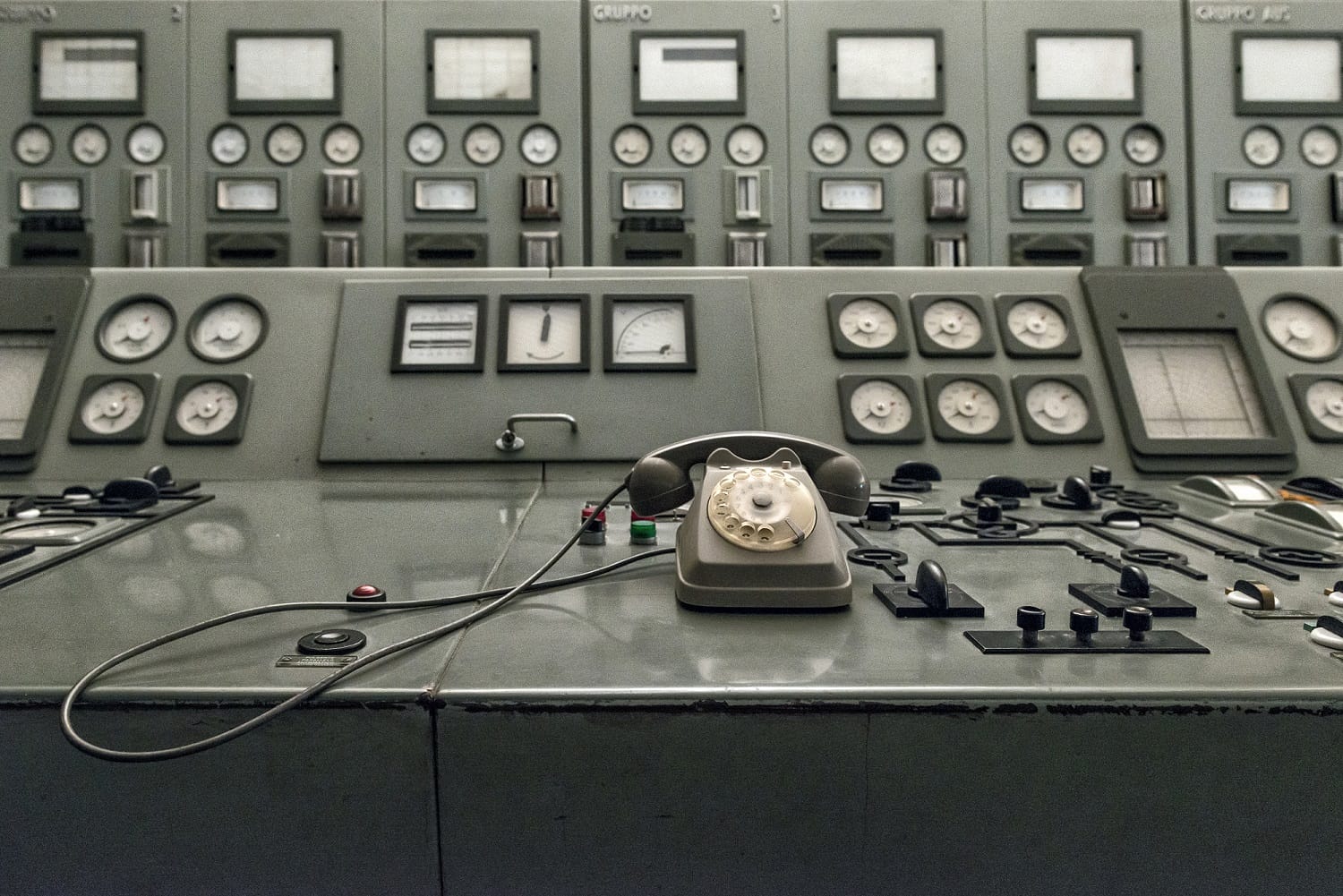
Watching them work is Enrico Bastianini, director of operations at the Latina plant. As I walk with Bastianini through the plant, we come to the old control room. When it first opened in 1963, the Latina plant was the largest nuclear power station in Europe — a feat of Italian and British engineering (the reactor was of UK design) and a symbol of Italy’s post-war industrial growth.
“We were emerging from the destruction of the war, and this was progress. And it was what allowed us to escape the economic hardships of war, and have low-cost energy,” Bastianini says.
Now, over 60 years on from when the plant opened, more than half of its existence has been spent being taken apart. Critics of nuclear power often focus on precisely this point: the long and complex process of dismantling nuclear plants, and the problem of managing radioactive waste, some of which takes millennia to decay.
There are two phases to the process of taking apart the plant. “The first phase allows us to dismantle everything that’s nuclear except the reactor. That’s because the reactor contains a huge amount of graphite,” Bastianini explains. “When we have a national repository, it can be removed. But for now, it’s safest if it stays in the first phase.”
Bastianini leads me into a deposit room where radioactive material is being stored in steel containers, inside an earthquake-resistant facility. These containers are only for temporary storage.
There were attempts in the early 2000s to establish a national nuclear waste repository at a salt mine in Basilicata in southern Italy, but huge protests forced the government to abandon its plans. Today, SOGIN, the state-owned Italian company in charge of decommissioning nuclear sites, is still actively searching for a suitable location for a permanent repository and faces considerable opposition.
Rumours and anxiety swirl around the Latina plant itself — just as they did in the 1980s, when Malossi heard stories of radioactive fish with four tails. Last April, an article by the Italian magazine L’Espresso published claims that the Latina plant could leach radioactive material into the soil. The plant vigorously denies these claims — a spokesperson for SOGIN said the company periodically checks the quality of vegetables, milk and fodder as well as air, soil and groundwater for radiation and that “as always, the results of the analyses confirm radiologically negligible environmental impacts.”
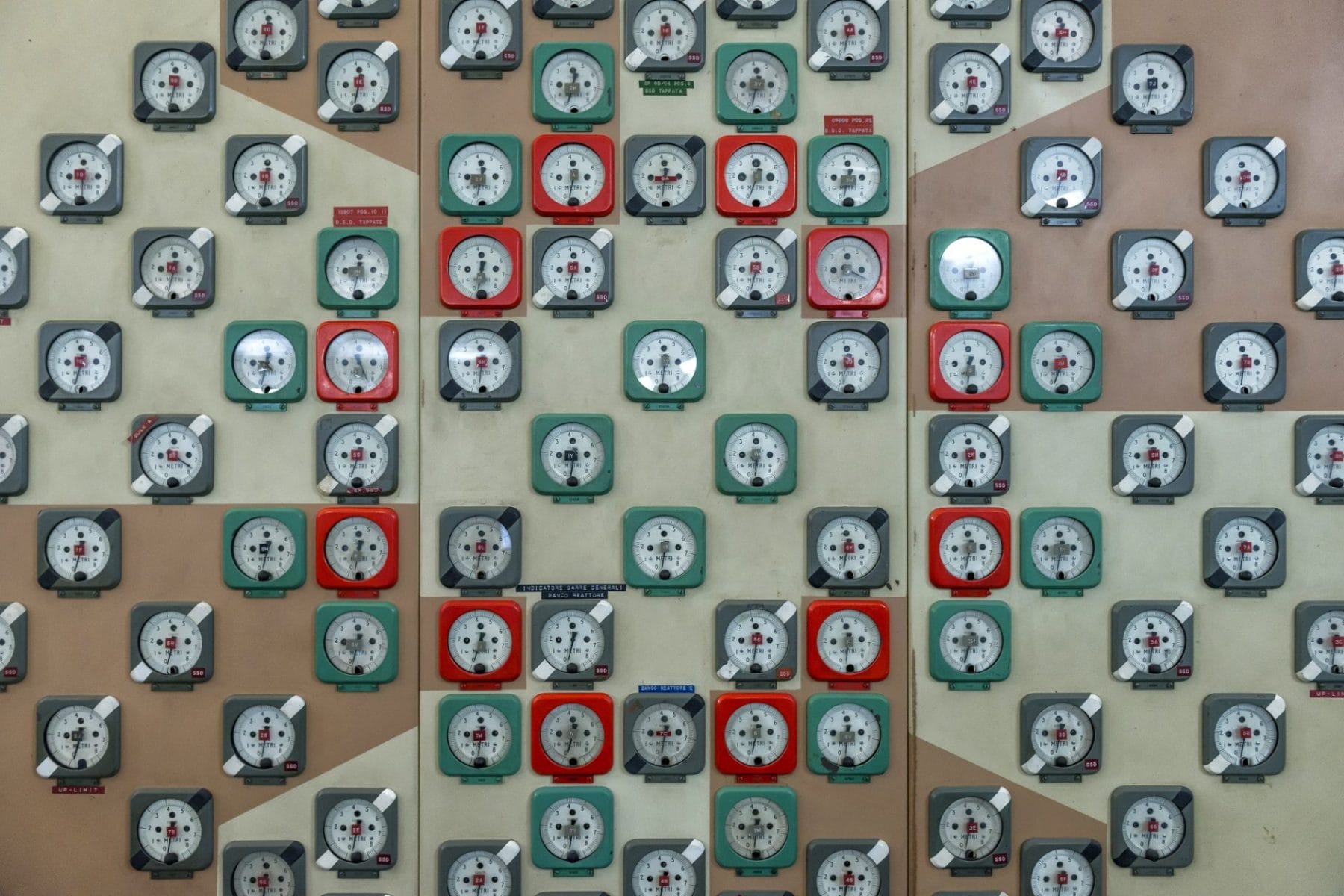
The old control room of the Latina nuclear plant. Photos courtesy of SOGIN
In the gloaming of a summer evening in Umbria, Monica Tommasi drives me through the twilight-darkened hills surrounding the medieval city of Orvieto. This land is rich in archeological and ecological heritage — filled with ancient tunnels, Etruscan caves, untapped archeological sites, wild places where wolves and boar roam. Tommasi is the President of Amici Della Terra — "Friends of the Earth" in Italian — an organization that was once the Italian chapter of the international Friends of the Earth network before breaking away in 2014. "We left, because we argued a lot," she said of the split, describing how the network "wanted to put turbines and panels everywhere, and we couldn't be in favour of that approach."
The International Friends of the Earth association was born from the anti-nuclear movement in America, where the group successfully lobbied to shut down two reactors, and has since 1969 made anti-nuclear campaigning a core part of its identity.
But Tommasi remembers precisely when she first began to reconsider nuclear power. “I started thinking about it in 2011, when I began to see that the government was investing heavily in solar and wind power, which would invade and industrialize the natural landscape,” she recalled. Many of these green transition projects have been fraught with problems in Italy — wind farm companies accused of corruption and profiteering, of erecting wind farms in areas where there’s little wind, and laying waste to nature.
For the first time, Tommasi began to think about ways to decarbonize “that don’t destroy the environment where people live and the landscape around them.”. She became intrigued by the nuclear option. “We needed to start reasoning and changing our minds,” she said.
Tommasi now advocates for a national conversation about nuclear power. “This choice must be accompanied by a public debate,” she told me, “but it isn’t happening because everyone is still afraid.”
“The future of Italy's energy sector must lie in nuclear,” she said, adding that if Italy was to continue pursuing solar and wind energy alone, “it means destroying all the natural areas that are still left.”
I asked the government to respond to allegations about how criminality, speculation and land-grabs in the renewable energy sector might be affecting Italians’ opinions on nuclear power.
“We do not believe it is appropriate to frame the energy debate by ideologically pitting nuclear power against renewables, nor should we use any administrative or criminal issues in certain sectors to discredit a technology as a whole,” said Fiorella Corrado, communications chief at Italy’s environment and energy ministry. “Nuclear power is not an alternative to renewables, but their best ally,” she said.
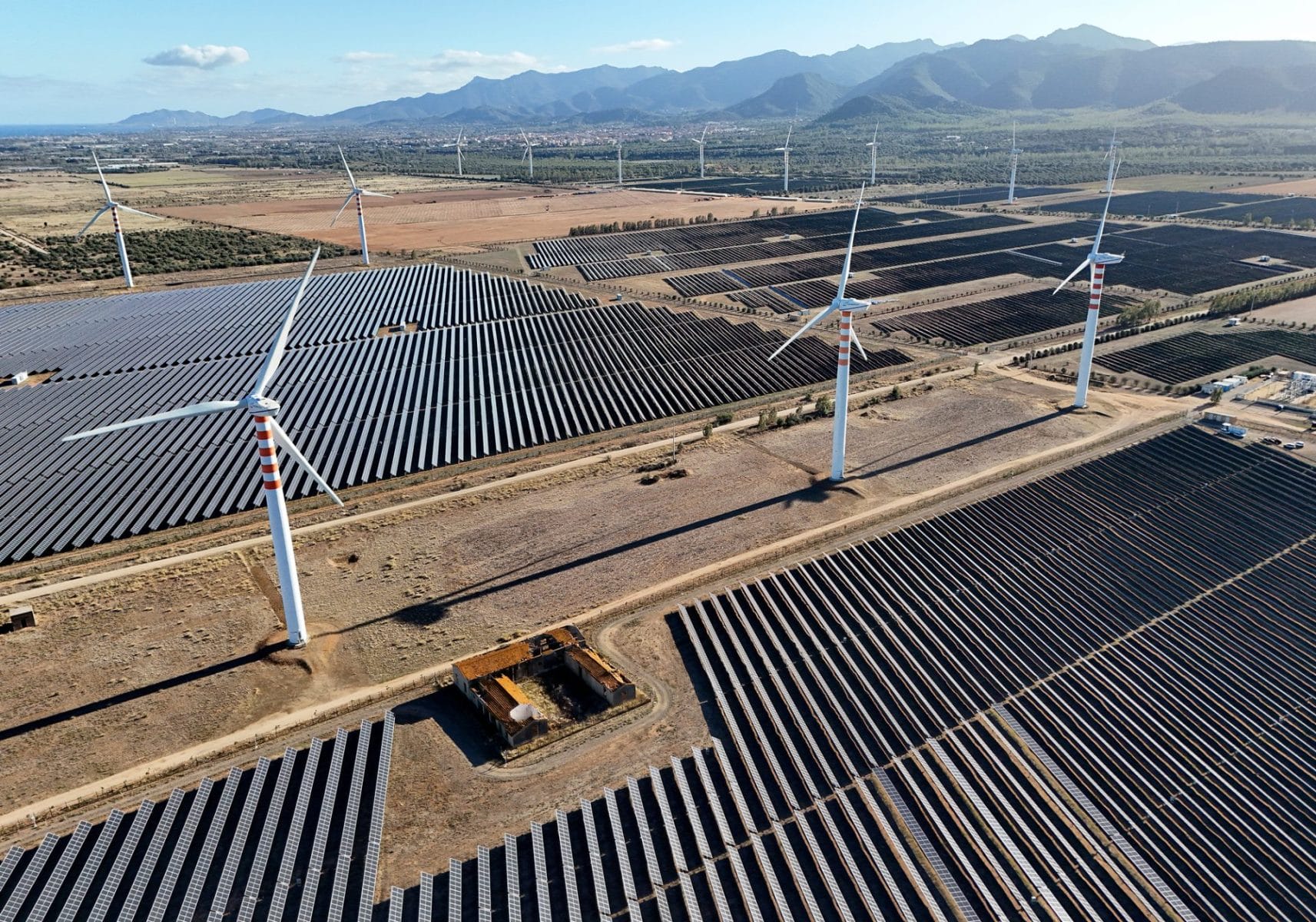
Wind turbines and solar panels near Cagliari, Sardinia, 2024. The island relies largely on coal but must phase it out by 2028 as Italy transitions to cleaner energy. Giovanni Grezzi / AFP via Getty Images.
On a warm autumn day in Rome, several thousand people gathered for an annual “climate pride” march. They brandished homemade cardboard wind turbines that spun in the breeze. Vincenzo Migliucci, 83, was among them. He worked for more than three decades for ENEL, Italy’s energy corporation, and he’s been anti-nuclear for much of his life. After the Chernobyl accident, he protested outside the nuclear plant under construction in Montalto di Castro almost every day, picketing the workers as they went through the gates.
“The wrath of God happened,” he said, referring to Chernobyl. “And when a true estimate is made, we’ll one day see how many disasters Chernobyl caused.”
Migliucci is against nuclear power plants of all types — arguing for solar panels instead — and is particularly concerned about what happens to the plants after they become obsolete and must, like the Latina plant, be slowly dismantled over decades. “The decommissioning costs a fortune; the nuclear waste repositories cost a fortune,” he said.
Subscribe to our coda currents newsletter
Insights from the Coda newsroom on the global forces that shape local crises.
He began telling me some of the stories that surround Italy’s shuttered nuclear plants. “Near the Garigliano power plant,” he told me, “a child was born with only one eye.” His own eyes widened as he pressed a finger into the middle of my forehead. “Sheep and cattle,” he said, “were born with six legs, or entirely red in colour. It’s not a myth, it’s real.”
Younger generations of Italians don’t have the same collective impressions around nuclear power, nor around Chernobyl or its aftermath, explained Luca Romano, a young pro-nuclear influencer with a quarter of a million followers on Instagram. Romano makes videos with his partner, Luiza Munteanu, about the advantages of nuclear power. The main problem he runs up against, he says, is that “we have a very low scientific literacy, the level of debate is abysmal.” And culturally, he adds, “Italy has always been a country that looks backwards rather than forwards.”
In May, the director general of the International Atomic Energy Agency visited Italy’s Lombardy region, and signed a Memorandum of Understanding with the governor to cooperate on applying nuclear science for development across the region. The choice of Lombardy was significant. It is home to Milan, and is at the heart of Italy’s digital infrastructure. Speckled with no fewer than 60 data centers, with more cropping up, Lombardy has opened itself up to Silicon Valley. Microsoft is investing billions in the area to boost its AI and cloud computing infrastructure. Amazon Web Services has committed to spending over $1 billion to expand its data center operations around Milan.
How northern Italy’s growing AI infrastructure will be powered, though, is still a problem to be solved — one that cuts to the heart of Italy’s energy dependence. Since Giorgia Meloni became prime minister in October 2022 — which coincided with the launch of ChatGPT a month later — the Italian government has been broaching the topic of nuclear power as essential to Italy's energy future. “World population and economic growth will significantly increase energy demand,” Meloni said at a sustainability summit in Abu Dhabi. “Not least due to the growing requirements arising from the development of generative artificial intelligence.”
Artificial intelligence is a “highly relevant topic,” said Corrado, the communications chief at Italy’s environment and energy ministry. “As more things run on electricity, the economy goes digital, and data centers and AI expand, demand for steady, low-emissions power will rise. Nuclear energy can help as a reliable, controllable source that works alongside renewables.”
In August, it emerged that the government had set aside €7.5 million purely for pro-nuclear communication and information campaigns directed at regions where new plants may be built. One focus of the Meloni administration is on the prospect of building small modular reactors, sometimes called “mini nukes.” They are compact fission plants, a fraction of the size of the traditional, cathedral-like nuclear power stations. They have a smaller core, and proponents argue their safety features mean there’s minimal chance of an epic, Chernobyl-scale nuclear disaster, something the government is keen to get across to voters.
Currently, only China and Russia have these small reactors up and running, but mini nuclear plants have attracted significant attention in Silicon Valley. OpenAI’s Sam Altman was chairman of Oklo, a nuclear startup focused on SMRs, while U.S. nuclear startup Kairos has signed an agreement with Google to develop these reactors to power its data centers. This month, the European Commission unveiled a strategy for rolling out small modular reactors and bringing them “online” by the 2030s.
Soon, Italy may take the first steps towards the reconstruction of a nuclear industry that has been abandoned for decades. “I believe it won't be easy to relaunch nuclear energy,” said Barbara Curli, the Turin historian. “Knowing a little about the history of nuclear power in Italy and its political dimension, I'd be quite skeptical about the possibility of relaunching nuclear power here in Italy — but let’s see.”
A little under 1,500 miles away, in the Chernobyl exclusion zone, among wild boar, birds, and deer, radiation levels in some areas have dipped below around 0.3 microsieverts per hour, lower than background radiation levels in many European cities. Not least the eternal city of Rome.
Why Did We Write This Story?
As the U.S.-Israel war against Iran enters its second month, strikes on nuclear facilities have raised the stakes of an already catastrophic conflict. The WHO is now openly preparing for a nuclear incident it hopes will never come. Whether or not this escalates further, the fear already has a life of its own.
That is something we follow closely at Coda: how fear settles into collective memory and shapes policy long after the original crisis has passed, or even when the disaster people dreaded never fully arrived.
Isobel Cockerell takes us to Italy, one of the only industrialized nations to have dismantled its entire nuclear energy program after Chernobyl, despite being barely touched by the fallout.
This story is about nuclear power, but it is also about how fear can shape the world more than the event that caused it.
As the Iran war pushes oil prices over $100 a barrel, and ships are attacked and mines are being laid in the Strait of Hormuz, a taboo has been broken and nuclear energy is back in fashion. European Commission president Ursula von der Leyen acknowledged that “the current Middle East crisis is a stark reminder” that it was “a strategic mistake for Europe to turn its back on” nuclear energy.
She was speaking at an International Atomic Agency summit hosted by France. Just days before the summit, French president Emanuel Macron spoke — a nuclear submarine looming behind him — of the need to increase the country’s stockpile of nuclear warheads for the first time in several decades. “In this dangerous and uncertain world,” Macron said, “you have to be feared if you want to be free.”
In February, the ‘New START treaty’, a mutual agreement between Russia and the U.S. to reduce and limit their nuclear arsenal, officially expired. The U.S. said China had conducted secret tests and that Beijing had to be part of any future non-proliferation agreement. For its part, the Chinese accused the U.S. government of seeking to mask its own expansionist ambitions. In the wake of the Iran war, started apparently because the Iranian regime was just days away from securing a bomb, other countries have spoken openly of their nuclear ambitions. After the start of the Iran war, North Korean leader Kim Jong Un spoke pointedly about preparing a nuclear-ready navy while inspecting a new destroyer and observing the testing of nuclear-capable cruise missiles. Even Polish prime minister Donald Tusk said Poland “will not want to be passive when it comes to nuclear security in a military context.”
On X, Tusk posted that Poland is in talks with France about joining its nuclear deterrence program. “We are arming together with our friends,” he wrote, “so that our enemies will never dare to attack us.” France is the only nuclear-capable European country, its systems (unlike the UK’s) completely independent of the U.S. and its new deterrence framework will include collaborations with Germany, Poland, Greece, Sweden, Denmark, the Netherlands and Belgium. Macron is calling France’s new strategy “advance deterrence,” a willingness to spread French nuclear armaments across the continent. A senior Pentagon official said the U.S. would “obviously at a minimum strenuously oppose” European countries seeking to acquire nuclear weapons. The U.S., as part of a NATO agreement, already deploys over 100 nuclear weapons in Europe — in Germany, Belgium, Italy, the Netherlands, and Turkey.
Europe’s anti-nuclear tradition grew out of grassroots movements in the 1970s. In West Germany, protests against a planned nuclear plant in the small wine-growing town of Wyhl began when local farmers feared pollution would destroy their land and crops. By the 1980s, millions of Europeans were protesting nuclear weapons and the deployment of NATO missiles across the continent, bringing nuclear security debates into the public arena and pushing governments toward disarmament efforts. The political impact of those protests were long-lasting. Across Europe, nuclear energy programs were curtailed or abandoned entirely. Denmark banned nuclear power plants in 1985, Germany shut down its last nuclear reactors in 2023, and several countries imposed strict limits on nuclear development. Nuclear technology, whether for energy or weapons, remained politically toxic in much of Europe. But, as Denmark’s Mette Frederiksen said European deterrence “is necessary because the military threat from Russia is expected to increase,” and its reliance on U.S. military support can arguably no longer be taken for granted.
At the Paris summit, China, Brazil, Belgium and Italy all signed up to a pledge to triple global nuclear capacity by 2050. South Africa signed the pledge earlier this month. The war in Iran has once again made clear that the world must wean itself off fossil fuels. The U.S. — which imposed additional tariffs on India for buying Russian oil and thus helping to finance the continuation of the war in Ukraine — has, since the start of the attack on Iran, told India it can continue to buy Russian oil. Delhi promptly bought 30 million barrels of Russian crude oil. But this month India also signed a deal with Canada to receive uranium to expand its nuclear energy program. But in 1974, Canada provided India with nuclear technology for peaceful uses that were promptly put towards the building of nuclear weapons. Nuclear collaborations between the two countries were suspended for decades. It’s not a coincidence that those ties are once again being revived in the current geopolitical context. A growing clamor for nuclear energy has clear proliferation risks.
While France has been talking about greater nuclear deterrence, most European states are speaking about a revival of nuclear energy as an alternative to fossil fuels and as a means to achieve climate goals. The vast energy requirements of AI and data centres is also prompting nations to adopt an “atoms for algorithms” strategy, to be, as Macron said, “at the heart of the artificial intelligence challenge.” But to talk about energy alone is to ignore the appeal nuclear deterrence has for nation states trying to navigate dangerous geopolitical straits. Iran was attacked ostensibly because it was on the verge of having a bomb. Favored nations such as Saudi Arabia are able to sign nuclear pacts that remove non-proliferation guardrails, but the actions of the U.S. and Israel in Iran will make the bomb attractive to many more as a national security strategy.
A version of this story was published in this week’s Coda Currents newsletter. Sign up here.

 Login
Login