Concerned about a cascading impact on America’s already strained nuclear shipbuilding industry, the House Armed Services Committee wants the Secretary of the Navy to prove that procurement of the proposed nuclear-powered Trump class battleships won’t exacerbate existing construction delays on aircraft carriers and submarines. This follows a congressional move last month to block the Navy from starting construction of the first of the new class of battleships until the service provides assurances that key weapon systems are “sufficiently mature.” You can read more about that in our original report here.
New worries about the status of U.S. nuclear shipbuilding were raised Thursday during the House Armed Services Committee’s Markup of the current draft of the Fiscal Year 2027 National Defense Authorization Act (NDAA), the annual defense policy bill. An amendment adding new directed report language related to the Trump class, which was approved by the Committee, mirrors issues TWZ has frequently addressed about procurement of nuclear-powered vessels.
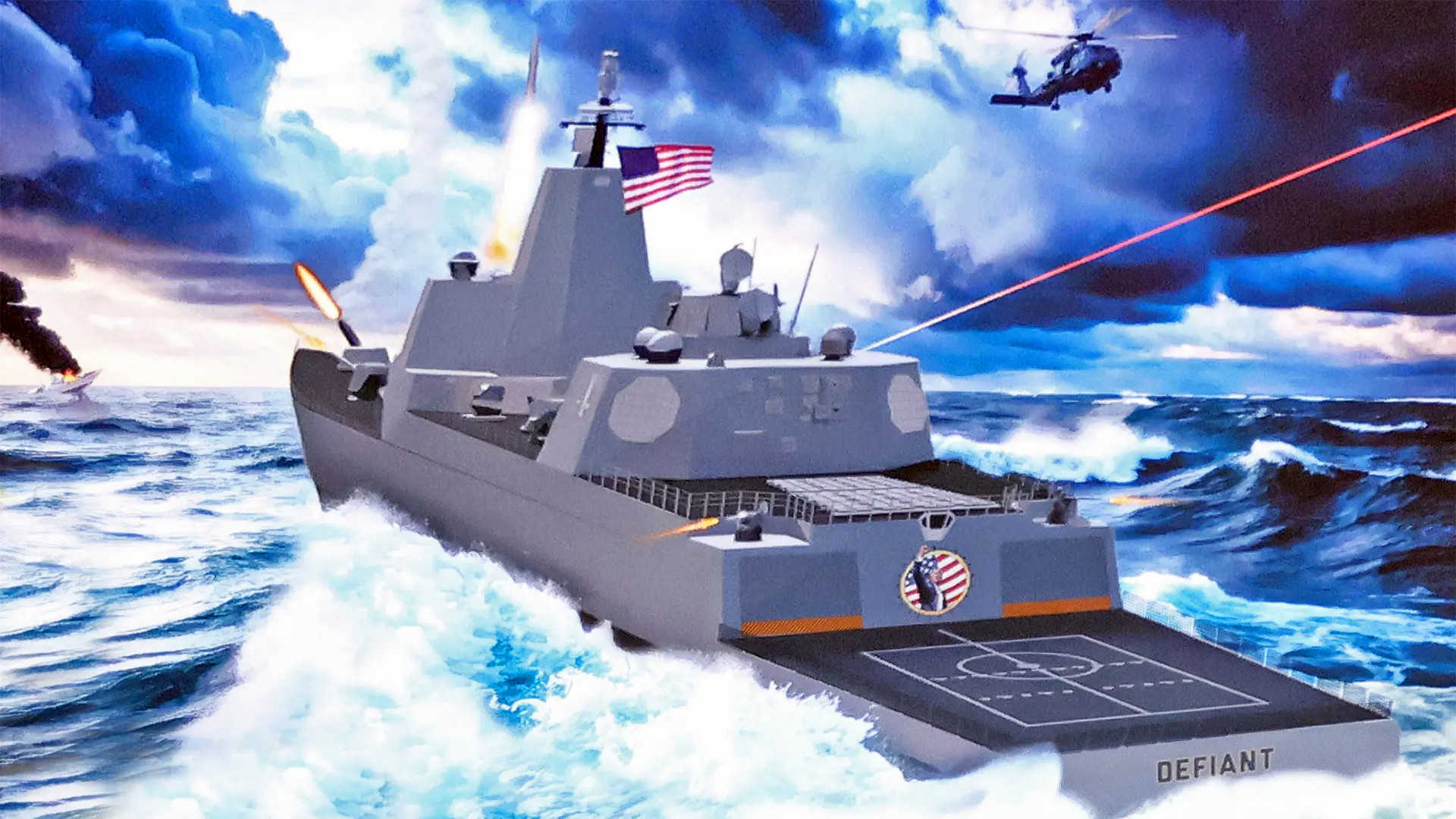
A render of the future Trump class nuclear-powered guided-missile battleship. White House/USN
“The committee continues to support efforts to expand the U.S. maritime industrial base and accelerate U.S. shipbuilding production and recognizes the progress that has been made on these efforts through coordination between Congress, the Department of Defense, and industry,” the amendment, which had been put forward by Rep. Joe Courtney, a Connecticut Democrat, says. “However, the committee is concerned about the possibility of strain on U.S. nuclear shipyards and maritime industrial base posed by the aggressive schedule proposed for producing a nuclear-powered BBG(X) platform.”
The Trump class has also been referred to as BBG(X), the hull classification code for a guided missile (G) battleship (BB). The Navy has more recently used the term BBGN, reflecting the decision to utilize nuclear propulsion.
The main concern raised by Rep. Courtney is that there is a limit on where nuclear-powered warships can be built.
“The committee notes that the United States operates only two shipyards that are qualified to construct nuclear-powered vessels and that only one of these two shipyards, located in Newport News, Virginia, actively constructs surface vessels, including the Gerald R. Ford class aircraft carrier program,” Courtney noted. He was referring to Newport News Shipbuilding, a division of Huntington Ingalls Industries.
Newport News Shipbuilding. (HII)
“The committee is aware that the timelines for completion of the three Ford class aircraft carriers currently under construction have experienced significant delays due to a variety of reasons including supply chain and workforce challenges,” the amendment continues. “The committee is concerned that these factors, coupled with a lack of physical shipbuilding capacity, could be further exacerbated by a new nuclear-powered surface vessel program and without careful planning could jeopardize Ford class delivery.”
Beyond concerns about building the ships, the committee is troubled by the Trump class battleship’s impact on the U.S. naval reactor base, which is also limited to a single supplier.
That company, BWXT Technologies, is providing reactors for the Ford class carriers, as well as Virginia and Columbia class nuclear submarines under construction. It was recently awarded $1.4 billion in contracts by the U.S. Naval Propulsion Program.
A nuclear steam generator. (BWXT)
“Procurement of naval nuclear reactors typically occurs 2-to-3 years ahead of procurement of a respective vessel and reactor production timelines typically range from 6-to-8 years,” Courtney posited in his amendment. He is “concerned that the accelerated procurement timeline for the BBG(X) program will result in a negative impact on this supply chain.”
The first formal announcement that the Trump class ships would be nuclear-powered came when the Navy unveiled its new shipbuilding plan last month. The Navy hasn’t had a nuclear-powered surface combatant since the 1990s.
A trio of nuclear-powered Navy surface warships sail together in 1964. From left to right, the aircraft carrier USS Enterprise, the cruiser USS Long Beach, and the frigate USS Bainbridge. (USN)
The service’s stated plan is to acquire 15 Trump class ships between Fiscal Year 2028 and 2055. Orders are to be placed essentially one every other year. However, two are slated to come back-to-back in Fiscal Years 2030 and 2031.
The most recent publicly available official estimate for the price tag on these boats is about $17 billion each. That eclipses what the service expects to spend on each of the next three Ford class carriers, the projected unit costs of which range from roughly $13 to $15 billion.
A chart from the Navy’s latest annual shipbuilding plan laying out the planned schedule for ordering new Trump class battleships, referred to here as BBG(X)s, as well as other vessels. USN
With all this in mind, the committee now wants the Navy Secretary and the Director of the Naval Nuclear Propulsion Program to provide a report by March 1, 2027, on the “Navy’s strategy to design and construct BBG(X) without interfering with existing nuclear-powered shipbuilding plans,” including the scheduled construction of third, fourth, and fifth Ford class carriers, the future USS Enterprise (CVN-80), USS Doris Miller (CVN-81), and USS William J. Clinton (CVN-82).
The committee wants the information about:
“the Navy’s strategy to reduce construction delays for CVN-80, CVN-81, and CVN-82;”
“the Navy’s projection for construction and delivery timelines for a nuclear-powered BBG(X) program, to include procurement of long-lead material such as naval nuclear reactors;”
“an assessment of the capacity of existing U.S. shipyards, certified for nuclear-powered vessel construction, to support construction of a nuclear-powered BBG(X) without delaying scheduled construction of projected and under-contract vessels within the Virginia class, Columbia class submarine, and Gerald R. Ford class carrier programs;”
“an assessment of the capacity of the U.S. naval nuclear reactor industrial base capacity to support the construction of a nuclear-powered BBG(X) without delaying scheduled construction of projected and under-contract submarines and aircraft carriers” and
“a summary of the maritime industrial base vendors, particularly those with long-lead time items or that have single source suppliers and their capacity to support the construction of the BBG(X) without delaying construction of already scheduled shipbuilding efforts.”
The future Virginia class fast attack nuclear-powered submarine USS Oklahoma pressure hull is completed. (HII) Ashley Cowan
In addition to the issues raised by Courtney, Representative Christopher Deluzio, a Pennsylvania Democrat, expressed concern that the Navy is making “optimistic assumptions about technologies” in a separate amendment to the latest draft of the House NDAA. He specifically cited “operating with a nuclear weapon, ship design, costs, schedule, and production and lack clear concepts of operations or a commitment to incorporating commercial leading practices” when it comes to the Trump class program. Deluzio’s full amendment also touched on aspects of the Trump administration’s Golden Fleet naval modernization initiative.
Deluzio’s amendment directs the Comptroller General of the United States to provide a brief to the House Committee on Armed Services no later than January 1, 2027, on how they will assess:
“the business case for the BBG(X) program, including the planned cost, schedule, and performance parameters, as well as any assumptions that are inherent to the execution of the business case;”
“the novel systems and technologies required to build, operate, and sustain the BBG(X), including the costs and risks of these technologies and the Navy’s steps to mitigate these risks;”
“the extent to which and how the Navy envisions executing Distributed Maritime Operations with the BBG(X) as well as other Golden Fleet assets;”
“the extent to which the Navy plans to incorporate commercial leading practices into its acquisition approach for BBG(X) and other Golden Fleet assets” and
“the impact of BBG(X) and other Golden Fleet assets on acquisition and construction plans for existing Navy shipbuilding programs.”
The future USS Enterprise midbody under construction at Newport News Shipbuilding. (HII)
We reached out to Acting Navy Secretary Hung Cao’s media office for comment and will update this story with any pertinent insights shared.
There are still a number of legislative hurdles the committee’s proposals have to jump. Regardless, the reality that the Navy will ever procure a Trump class battleship, at least as currently envisioned, is already highly questionable, an issue TWZ raised when the class was first announced. President Donald Trump, who sees his namesake battleship class as a key component of the Golden Fleet, will be out of office before major decisions about how to go forward will be made. These congressional actions could be seen as a way to slow-roll plans for the battleship to kill it without directly confronting Trump about the logic of building it in the first place.
US President Donald Trump announced the US Navy’s new Golden Fleet initiative, unveiling the new Trump class battleship, at Mar-a-Lago in Palm Beach, Florida, on December 22, 2025. (Photo by ANDREW CABALLERO-REYNOLDS / AFP) ANDREW CABALLERO-REYNOLDS
The committee’s demand that the Navy prove these vessels won’t gum up the nuclear shipbuilding works is another reminder that there are rough waters ahead for the Trump class.
A new type of submarine that appears to lack a traditional sail has emerged in China. The same shipyard launched a smaller ‘sailless’ submarine — a technology demonstrator — eight years ago. More recently, a top Chinese shipbuilding conglomerate put forward a concept for an uncrewed underwater vehicle (UUV) with a broadly comparable hullform. Designs of this kind can offer benefits in terms of speed, maneuverability, and reduced acoustic signature, but also have major drawbacks.
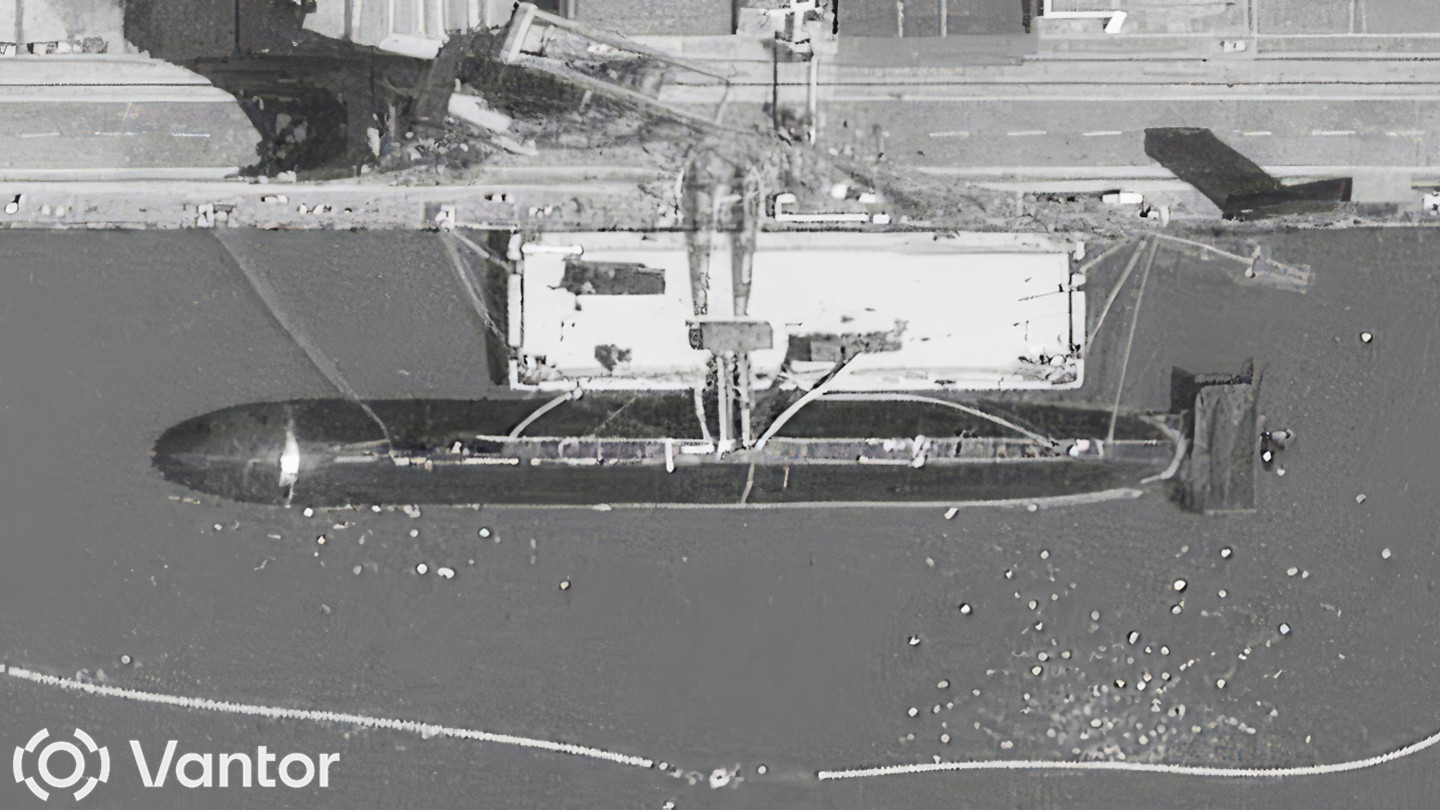
TWZ has obtained imagery of the submarine in question at JN (Jiangnan) Shipyard in Shanghai on June 1, as seen at the top of this story and below, from Vantor (previously Maxar Technologies). The boat, the name and/or designation of which are currently unknown, first appeared there sometime at the end of May, according to Naval News. That outlet was first to report on this development.
From the imagery, the submarine does not have a traditional sail. However, the exact shaping of what is present is also not entirely clear from the view that is currently available. As noted, JN Shipyard is known to have built at least one other ‘sailless’ submarine in the past, which we will come back to later on.
Writing for Naval News, undersea warfare analyst H.I. Sutton has assessed the design to be roughly 394 feet (120 meters) long and to be between 33 and 36 feet (10 and 11 meters) wide. What its intended missions might be are unknown, but this is certainly larger than common diesel-electric submarines (SSK) and even longer than most nuclear fast attack submarines. For comparison, variants of China’s Type 093 nuclear-powered attack submarine (SSN), some of the most modern submarines in People’s Liberation Army Navy (PLAN) service today, are approximately 356 to 360 feet (108 to 110 meters long) and 36 feet wide. The official stated length and width of the U.S. Navy’s Virginia class SSNs, across all existing subvariants, are 377 feet (114.8 meters) and 34 feet (10.36 meters), respectively.
An X-shaped stern is a feature now further associated with a next-generation Chinese attack submarine design commonly, but still unofficially, referred to as the Type 095. Naval News also reported today on the recent launch of what may be another Type 095, which has a traditional sail, at the Bohai Shipyard in Huludao, hundreds of miles to the north of Shanghai. This may have caused some confusion online, with some mistaking a boat at Bohai for a ‘sailless’ type.
Just translated via @type36512: CSSC Bohai Shipbuilding: Launch of a New Submarine
Satellite imagery captured on May 29. I believe this image depicts the new 120m-class, sail-less submarine discussed in the accompanying article. However – due to limitations in image resolution – https://t.co/sHF9Y8gkGe
Even if we scale 09V's hull diameter with this mystery submarine (for illustration purposes), it is a fair bit shorter, meaning it probably isn't a 09V, but it also doesn't correspond to what a 10m diameter, 120m length submarine would look like…
The newly emerged submarine at JN Shipyard may also have a shrouded propulsor, which could be a pumpjet type. Pumpjets offer further benefits for quieter operation, especially at higher submerged speeds.
The absence of a traditional sail is still the most notable aspect of the new submarine at JN Shipyard. Omitting a large structure sticking out of the top of the hull helps significantly with streamlining the overall design. Eliminating that drag can allow greater optimization for speed and maneuverability while submerged. It can also help make the submarine quieter and, by extension, harder to detect, even while transiting through an area at higher speeds. This can be especially useful when racing out to threats, even those far away.
Not having a traditional sail could impose certain design constraints. Traditionally, naval submarines have used their sails to mount periscopes and other sensor masts, as well as extendable communication antennas and snorkels to help cycle air without fully resurfacing. That is space that can be used for other purposes, including launchers for countermeasures and general storage.
A generic example of the array of masts that extend up from the sails of modern naval submarines. Hensoldt
Above all else, while running on the surface, the sail is key for general navigation and situational awareness. It can also provide an elevated position for local force protection or supporting vertical replenishment (VERTREP) operations. If sufficiently hardened, it can even break through feet of ice during operations in and around the polar regions.
The sail of the US Navy’s Los Angeles class attack submarine USS Santa Fe seen broken through the ice during an exercise in the Arctic Circle in March 2026. USN/Petty Officer 1st Class Jacob Bergh
The lack of a sail might reflect a focus on seabed operations far from the surface where mast deployment and other considerations might be less pressing. At the same time, the design’s features could just as easily be centered on improving performance, including the ability to make transits as quickly as possible during blue water operations. It could also offer benefits for shallow-water operations, though we have noted that, overall, it is very large compared to SSKs.
As mentioned, a smaller ‘sailless’ submarine had already emerged at JN Shipyard in 2018. H.I. Sutton previously estimated that design to be around 150 feet (45 meters) long and 15 feet (four to four-and-a-half meters) wide. That submarine also had a non-X-shaped rudder arrangement and what appeared to be an unshrouded propeller. The exact reasons for building that boat and how it has been utilized over the years remain unknown, but it would have at least provided a testbed and technology demonstration platform to explore this design concept, and potentially other capabilities. Whether it was designed for crewed or uncrewed operation, or to be optionally crewed, is not clear, either. The same is true of this new submarine, though it seems unlikely it is uncrewed.
A top-down look at the first low-profile submarine to emerge from JN Shipyard. Chinese Internet
At the Zhuhai Airshow in 2024, the state-run China State Shipbuilding Corporation (CSSC) did show a model of an unprecedentedly large, diesel-electric UUV. Its overall design was highly reminiscent, at least in broad strokes, of JN Shipyard’s original ‘sailless’ submarine, as TWZ noted at the time. JN Shipyard is one of many subsidiaries of CSSC.
CSSC said at the time that the drone submarine could be configured to perform a wide array of missions, including launching attacks on enemy vessels, laying mines, supporting special operations forces, and serving as a mothership for smaller uncrewed underwater vehicles (UUV). You can read more about all of this here.
The model of the low-profile UUV design CSSC showed at the Zhuhai Airshow in 2024. Chinese internet
Other shipyards and navies around the world have explored low-profile submarine designs in the past, but designs have generally been consigned to the world of paper concepts and limited experimentation. The U.S. Navy, for instance, previously tested a Large Scale Vehicle Range (LSVR) subscale demonstrator submarine with a novel sail structure. The Navy’s Acoustic Research Detachment (ARD) conducted that work in a lake in Bayview, Idaho.
Large Scale Vehicle Range (LSVR) subscale demonstrator submarine seen sailing in Lake Pend Oreille in Idaho. Public DomainA model of a low-profile ballistic missile submarine concept called Arktur shown in Russia in 2022. @MuxelAero
In 2021, the Navy also notably put out a contracting notice calling for concepts for inflatable sail structures, which could combine the benefits of traditional sails and low-profile designs. What degree of work the service may have conducted since then on this Inflatable Deployable Sail System (IDSS) is unclear, but it underscores how important a sail is for general operations on the surface.
The PLAN’s submarine force otherwise continues to grow in terms of capability and capacity, with an increasing number of more modern types. U.S. officials have openly said in the past that the quality of newer Chinese submarines has been getting closer in parity to American designs. All of this is further underscored by the recent appearance of the other new submarine at Bohai. In addition to new nuclear-power designs, China is also understood to be developing at least one design with a hybrid nuclear/conventional propulsion system, referred to as the Type 041 or Zhou class. The first known example of the Type 041 came to light after it looked to have sunk in a shipyard in 2024.
Greater use of nuclear propulsion promises to extend the reach of Chinese submarines in the Pacific and beyond, and is clearly part of the PLAN’s larger vision for naval power projection going forward.
“The PLA Navy is executing a significant strategic shift from diesel-electric to all-nuclear construction, representing a fundamental departure from historical construction patterns,” U.S. Navy Rear Adm. Mike Brookes, head of the Office of Naval Intelligence, wrote in prepared remarks ahead of a hearing before members of the U.S.-China Economic and Security Review Commission in March.
Brookes also highlighted how the hybrid Type 041, specifically, could offer “greater endurance, potentially filling regional patrol and presence missions more economically than full-size SSNs [attack submarines] and SSGN [guided missile submarines].”
More remains to be learned about the newly emerged submarine at JN Shipyard, but it could point to new low-profile designs without traditional sails, possibly to act as the PLAN’s underwater high-speed interceptor, being part of China’s larger future submarine future.
The prestigious Russian Navy base at Kronstadt, near St. Petersburg, came under Ukrainian drone attack overnight, in what may well be the first strike of its kind against the Baltic Fleet. Ukrainian drones targeted the naval base, including the Project 20380 Steregushchiy class corvette Boikiy, highlighting the fact that Russian warships are vulnerable even when hundreds of miles from Ukraine’s borders.
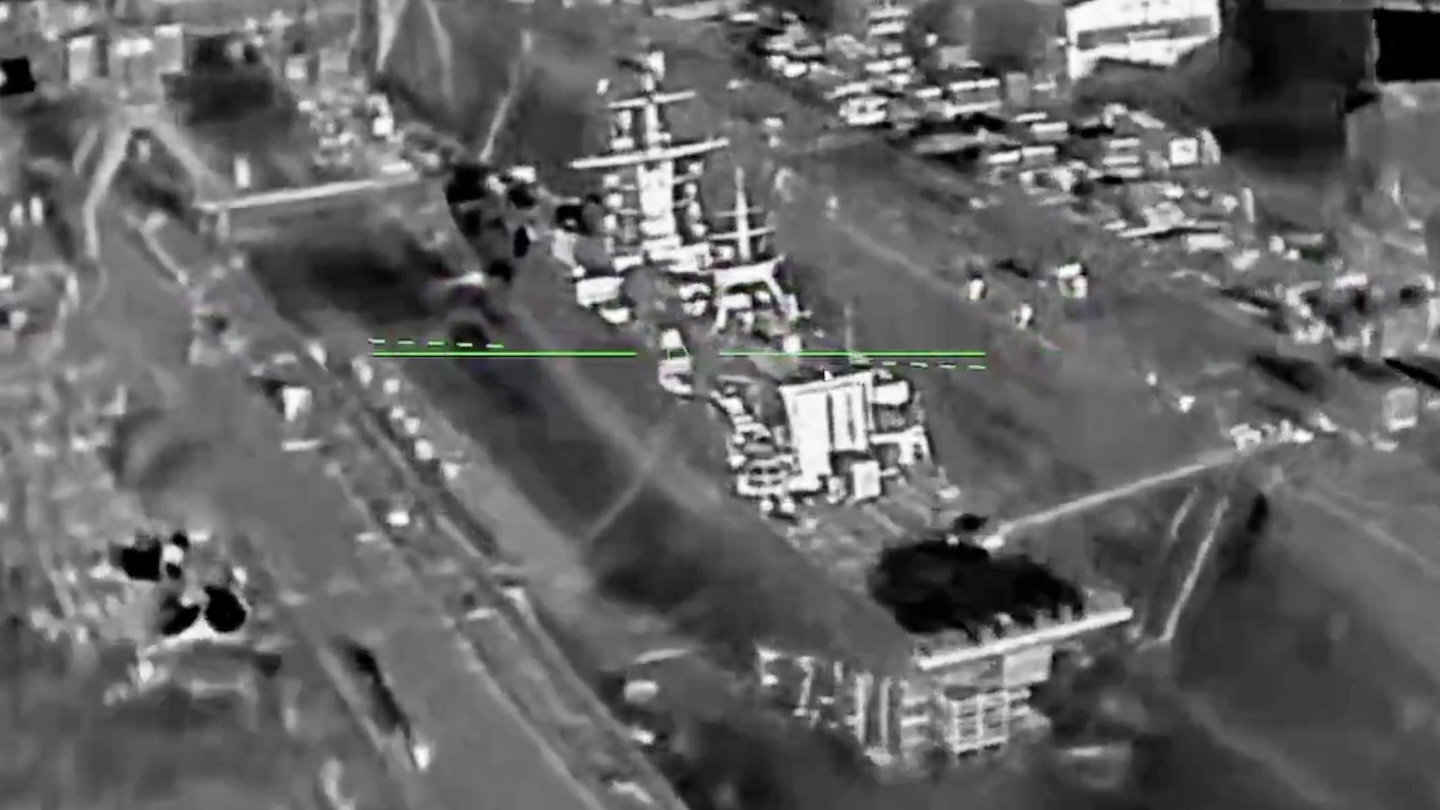
According to the official account of the Ukrainian 414th Separate Unmanned Strike Aviation System Brigade on X, the corvette was set ablaze while in the Veleshchynskyi dry dock in Kronstadt, where it is said to have entered scheduled maintenance in February of this year. The same account posted a video showing the attack. While we are used to kamikaze drone video feeds cutting out just before detonation, the fact that multiple drones were involved means we can see the burning vessel from several angles.
KRONSTADT (St. Petersburg), June 3. Birds of the @1usc_army, @usf_army hunted down and set ablaze the corvette Boikiy, a guided missile weapons carrier.
06:35, 03.06.26. Veleshchynskyi Dry Dock, Kronstadt (St. Petersburg) – the cradle of the russian Navy.
— 414 Magyar's Birds (@414magyarbirds) June 3, 2026
Reportedly, the drones that hit the corvette were from the 1st Separate Center of Ukraine’s Unmanned Systems Forces. Considering the long distance to the target, it is interesting to note that video from the seekers was available. This indicates that either a local operator on the ground was involved in targeting and recording the feed, or otherwise a satcom link was used to do the same. While it is conceivable that the drones used autonomous guidance, they would still have needed someone nearby or connected via satcom to record the seeker’s view. Another possibility is that shorter-range drones were used for the attack, something that Ukraine has done before for attacks deep in Russia, although this seems less likely here.
A drone’s eye view of the Russian corvette Boikiy ablaze in the Veleshchynskyi dry dock in Kronstadt. Ukrainian Ministry of Defense screencap
Ukraine’s Unmanned Systems Forces stated that the Boikiy was involved in escorting ships associated with Russia’s so-called shadow fleet, the collection of older tankers operating under foreign flags that Moscow relies on to export oil despite Western sanctions. According to Ukrainian officials, Russia has increasingly tasked Baltic Fleet vessels with escort, monitoring, and security missions for these tankers as they transit the Baltic Sea carrying sanctioned Russian oil to markets prepared to bypass Western restrictions.
The Steregushchiy class ships are among Russia’s more modern corvettes. With a standard displacement of 1,800 tons, a length of 343 feet, and a flight deck for a helicopter, the corvettes are closer to frigates, according to some classification systems. Their primary armament consists of two quadruple launchers for Uran anti-ship missiles, a 12-cell Redut vertical launch system for various air defense missiles, and two quadruple tubes for Paket-NK anti-torpedo/anti-submarine torpedoes.
The British offshore patrol vessels HMS Mersey and HMS Severn shadow the Russian corvette Boikiy in the English Channel in 2017.
The attack on the naval base was part of a wider Ukrainian drone barrage directed against other military and energy sites in and around St. Petersburg early on Wednesday. Footage of the attacks showed drones, reportedly FP-1/2 types, low over the Gulf of Finland and in the skies above the city.
A video published online shows a Ukrainian FP-1 drone flying just a few meters above the water in the Gulf of Finland during the morning attack on Saint Petersburg. pic.twitter.com/ZTtGb71zdT
The attacks occurred just hours before international guests gathered for the city’s flagship economic forum. “The Petersburg forum is opening with a nice plume of black smoke in the background after Ukrainian strikes,” posted Serhiy Sternenko, an adviser to the Ukrainian defence minister.
Several long-range drones also crashed into oil storage facilities in St. Petersburg after Russian air defenses reportedly tried unsuccessfully to shoot them down. Loud explosions were heard, and black smoke could be seen rising from the blazing oil terminal, one of the largest on Russia’s Baltic Sea coast.
In this footage you can even see two Ukrainian drones flying in formation over the oil terminal in Saint Petersburg, Russia, with one dive-bombing into the oil terminal. pic.twitter.com/eMUdpwsDiz
The entire city of Saint Petersburg, Russia, received a front row seat for the destruction of the local oil terminal. This includes also the attendees of St. Petersburg International Economic Forum (SPIEF), which will start today. pic.twitter.com/HxDsF6kQ6p
Russian authorities confirmed that the attacks had taken place, with St. Petersburg’s governor, Alexander Beglov, saying that the Kirovsky and Krasnoselsky districts had been targeted.
Ukrainian President Volodymyr Zelensky, writing on social media, said that drones had hit “important facilities on Russian territory,” including the St. Petersburg oil terminal, the Kronstadt base, and a weapons factory in the Tambov region.
“I thank our warriors for their precision. Ukraine’s plan for long-range sanctions is being implemented exactly as needed to bring peace closer,” Zelensky said.
Our long-range sanctions carried out by the warriors of the Security Service of Ukraine, the Unmanned Systems Forces, the Special Operations Forces, the Defense Intelligence of Ukraine, and the State Border Guard Service of Ukraine have yielded good results. Important facilities… pic.twitter.com/esxYMexU8d
— Volodymyr Zelenskyy / Володимир Зеленський (@ZelenskyyUa) June 3, 2026
The significance of the strikes is manifold.
First off, the drone strikes have a highly symbolic value, and will be especially embarrassing for the Kremlin, since they come immediately in advance of the three-day annual summit being held in St. Petersburg, and billed as Russia’s answer to Davos.
The Saint Petersburg International Economic Forum of 2026 (SPIEF 2026) in Russia has started with a very fiery keynote speech by the Ukrainian surprise guests. pic.twitter.com/VVIuGcQCO7
— Anton Gerashchenko (@Gerashchenko_en) June 3, 2026
Guests arrived for today’s opening ceremony under a pall of thick smoke, and Russian President Vladimir Putin is due to make a keynote speech at the event on Friday. There was further disruption for arriving guests as St. Petersburg’s airport was temporarily closed.
Secondly, the drone strikes underscore Ukraine’s ability to strike targets deep within Russia, using a growing array of long-range one-way attack drones and cruise missiles. The targets are around 680 miles from the nearest Ukrainian border.
The approximate location of Kronstadt and St. Petersburg in relation to Ukraine. Google Earth
Finally, by targeting Kronstadt, the attacks also signify the opening up of a new front in the drone war, namely against the Baltic Fleet while it is in port.
A fire has reportedly broken out aboard the Russian warship Boykiy in Kronstadt near St. Petersburg following Ukraine’s latest drone attack.
The corvette repeatedly escorted vessels from Russia’s shadow oil fleet through the English Channel in recent years. pic.twitter.com/Zhsn3nVsVp
Located on Kotlin Island in the Gulf of Finland, about 18 miles west of St. Petersburg, Kronstadt is one of the principal bases associated with the Baltic Fleet. Today, it primarily hosts corvettes and patrol vessels, naval support ships, training units, as well as repair and maintenance facilities. Since any naval threat approaching St. Petersburg from the Gulf of Finland must pass near Kronstadt, the base effectively acts as the maritime gateway to Russia’s second-largest city.
The approximate location of Kronstadt, at the gateway to St. Petersburg, and at the far east end of the Baltic. Google Earth
There have been very few confirmed Ukrainian attacks of any kind on the Baltic Fleet compared with the extensive campaign waged against Russia’s Black Sea Fleet.
In April 2024, there was a fire on a Russian warship at Baltiysk in Kaliningrad. The fire damaged communications and electronic systems aboard the Buyan class corvette Serpukhov. A Ukrainian military intelligence official subsequently claimed that this was the result of a covert joint operation conducted by his GUR agency and a pro-Kyiv Russian military group.
For the first time in the war, an attack took place in the Baltic Sea, the Russian Serpukhov missile ship was burned in Kaliningrad. The Buyan-M class Serpukhov corvette belonging to the Russian navy was burned by Ukrainian sabotage teams. The ship was severely damaged. pic.twitter.com/Isl9sVWF1R
So far, of course, Ukraine’s naval campaign has focused overwhelmingly on the Russian Black Sea Fleet. Many successful attacks have been recorded against Black Sea Fleet vessels and facilities, forcing the general evacuation of Russian naval assets from occupied Crimea and to bases in Russia proper.
In recent months, Ukraine has waged an aerial campaign to disrupt Russia’s economy. Long-range drones have hit ports and oil storage facilities, military factories, and airbases. There has also been an uptick in attacks against tankers and trucks moving between occupied southern Ukraine and Crimea, leading to fuel shortages across the peninsula.
Meanwhile, the scale of Russian missile and drone attacks on Ukraine remains undiminished. On Monday, a barrage of Russian strikes killed 23 people across Ukraine and injured many more. This led Zelenskyy to renew his plea for the U.S. government to provide Kyiv with more Patriot missiles. Today, he said that “an agreement at the highest political level on the purchase of Patriot systems […] is awaiting implementation at the financial, legal, and technical levels.”
I held a meeting on additional ways to supply air defense to Ukraine – both systems and interceptors. We have an agreement at the highest political level on the purchase of Patriot systems, and this agreement is awaiting implementation at the financial, legal, and technical…
— Volodymyr Zelenskyy / Володимир Зеленський (@ZelenskyyUa) June 3, 2026
Whether or not the overnight strike caused significant damage, its strategic message was unmistakable. By reaching Kronstadt, one of Russia’s most historic naval bases, Ukraine demonstrated that even the Baltic Fleet is no longer beyond its reach. The attack highlights Kyiv’s growing long-range capabilities and signals that Russia’s efforts to protect both its regular fleet and its shadow oil-export network may face increasing pressure, even far from the front lines.
“Given the continuation of the Zionist regime’s crimes in Lebanon and considering that Lebanon was among the preconditions for the ceasefire, and now this ceasefire has been violated on all fronts including Lebanon, the Iranian negotiation team will stop ‘dialogues and text exchanges through intermediaries,’” the IRGC-affiliated Tasnim news agency stated on Monday. The two sides had been talking through mediators in Pakistan and Qatar.
“Also, the resistance front and Iran have resolved to completely block the Strait of Hormuz and activate other fronts including the Bab al-Mandeb Strait, in order to punish the Zionists and their supporters,” the outlet added.
فوری | ایران تبادل پیام با آمریکا را در اعتراض به جنایات صهیونیستها متوقف میکند
عزم نیروهای مسلح ایران و تمام محورهای جبهه مقاومت برای واکنش به جنایات صهیونیستها و گشودن جبهههای جدید
— خبرگزاری تسنیم – خبر فوری (@Tasnimbrk) June 1, 2026
Iran has been allowing some ships to transit the Strait of Hormuz through what it calls a system of fees paid for environmental and other services. Meanwhile, U.S. Central Command (CENTCOM) has helped guide the passage of about 70 commercial vessels through the Strait of Hormuz, according to The New York Times. This involves communicating and coordinating with ships, not escorting them, CENTCOM told the publication. Most of these transits appear to be closer to Oman than Iran, the publication added.
There were no details provided by Iranian officials about how Iran would completely close the Strait of Hormuz or when such a move could begin.
According to the New York Times, citing U.S. officials, U.S. forces have guided approximately 70 commercial vessels, both ways, through the Strait of Hormuz in the last three weeks. Per the report, most of the vessels transited with their transponders off to avoid being targeted… pic.twitter.com/tfdN1YFeAp
Tasnim also did not offer specifics about Iran’s threat toward the Bab al-Mandeb Strait or what it could entail. However, the Houthi rebels of Yemen, an Iranian proxy group, waged a protracted 15-month campaign against shipping in that region starting in the fall of 2023. TWZ has previously highlighted concerns that the Houthis could resume these attacks on behalf of Iran in the current conflict. As we have noted, Houthi strikes in this area would add further global economic strain and place additional burden on U.S. forces.
With the Strait of Hormuz closed, Saudi Arabia is rerouting its oil exports through pipelines to the Red Sea. A disruption of that transit option could cause oil prices to rise much higher and more quickly than they already have, creating a cascading wave of financial impacts and shortages across the globe, and especially in Asia. Even if the Strait of Hormuz were opened today, it will still take months for the global economy to recover from the shock. Meanwhile, for Saudi Arabia, the simultaneous closure of both straits is a long-standing nightmare, a financial double-whammy.
(Illustration by Elif Acar/Anadolu via Getty Images) Anadolu
Just the recent news of the kinetic exchanges between the U.S. and Iran and Tehran’s decision to call off talks has sent the price of oil once again shooting upwards.
The ongoing closure of the Strait of Hormuz is having a cascading effect on the global economy, including rising gas prices. (Photo by Scott Olson/Getty Images) Scott Olson
Defending against renewed Houthi attacks could require military assets at a time when the U.S. is already heavily committed to Operation Epic Fury and its aftermath that has seen a significant amount of equipment destroyed or damaged and munitions expended. During the previous Houthi Red Sea campaign, the U.S. and allies deployed numerous warships, including the Eisenhower and Truman Carrier Strike Groups (CGS) to both defend against Houthi attacks and strike targets in Yemen. These operations resulted in a large expenditure of air defense and strike munitions, with Houthi capabilities remaining degraded, but intact after it was all over.
You can see video from some of those encounters below.
Despite the widespread publicity over Tehran’s new positions, Trump told NBC News on Monday that he had not heard from Iranians that they were suspending talks. The president added that silence would be fine and he was willing to wait.
“I think we’ve been talking too much if you want to know the truth. I think going silent would be very good, and that could be for a long time,” the president proclaimed. “It doesn’t mean we’re going to go and start dropping bombs all over there. We’ll just go silent. We’ll keep the blockade.”
“I think I can wait as long as they want,” Trump continued. “They’re losing a fortune.”
Trump told NBC News that he has not heard from Iran on its decision to suspend talks, saying, "I think we've been talking too much. I think going silent would be very good. It doesn't mean we’re going to go and start dropping bombs all over there. We’ll keep the blockade." https://t.co/ncw1G1Tko7
— Ariel Oseran أريئل أوسيران (@ariel_oseran) June 1, 2026
Meanwhile, amid all this turbulence, the U.S.-Iran negotiations remain in limbo.
Early Monday morning, Trump took to social media to claim “Iran really wants to make a deal, and it will be a good one for the U.S.A. and those that are with us.”
Iran really wants to make a deal, and it will be a good one for the U.S.A. and those that are with us. But don’t the Dumocrats, and various seemingly unpatriotic Republicans, understand that it is MUCH tougher for me to properly do my job and negotiate, when political hacks keep… pic.twitter.com/aqE6G0UKGv
— Commentary Donald J Trump Truth Social Posts On X (@TrumpTruthOnX) June 1, 2026
Iranians have pushed back on the notion that they are eager for or close to making a deal. You can read more about the reported terms and scope of the talks in our previous reporting here.
The status of US-Iran talks remained unclear Monday after Trump said negotiations were continuing, while Iranian state media reported Tehran had suspended indirect talks. https://t.co/dvHIHHATnU
— The Jerusalem Post (@Jerusalem_Post) June 1, 2026
As we mentioned earlier in this story, even before Iran reportedly called off talks, there was a heightened state of tension as the U.S. and Iran exchanged a new round of blows.
In a statement on X, U.S. Central Command said that at about 7:30 a.m. Tehran time on Monday, “U.S. forces successfully intercepted two Iranian ballistic missiles targeting American forces based in Kuwait. These missiles were immediately defeated and no American personnel were harmed.”
The command added that it “remains vigilant and will continue to protect our forces from Iranian aggression while supporting the ongoing ceasefire.”
Last night at 11 p.m. ET, U.S. forces successfully intercepted two Iranian ballistic missiles targeting American forces based in Kuwait. These missiles were immediately defeated and no American personnel were harmed.
U.S. Central Command remains vigilant and will continue to…
The Kuwaiti Foreign Ministry “affirms the State of Kuwait’s reservation of its full right to take whatever measures are necessary to preserve its security and defend its territories, holding Iran fully responsible for these heinous aggressions, in accordance with international law, the United Nations Charter, and the relevant Security Council resolutions,” it stated on X.
بيان صادر عن وزارة الخارجية الاثنين 1 يونيو 2026
تُعرب وزارة الخارجية مجدداً عن إدانة واستنكار دولة الكويت، وبأشد العبارات، للهجمات الإيرانية الآثمة والمتكررة، لما تمثله من تصعيد خطير واعتداء مباشر على أمن دولة الكويت واستقرارها، وخرق فاضح لقواعد القانون الدولي وميثاق الأمم… pic.twitter.com/FsVqBu7phB
In a post on X late Sunday, CENTCOM said it “conducted self-defense strikes on Iranian radar and command and control sites for drones in Goruk, Iran and Qeshm Island this weekend. The measured and deliberate strikes occurred on Saturday and Sunday in response to aggressive Iranian actions that included the shootdown of a U.S. MQ-1 drone that was operating over international waters. U.S. fighter aircraft swiftly responded by eliminating Iranian air defenses, a ground control station, and two one-way attack drones that posed clear threats to ships transiting regional waters.”
“No American service members were harmed,” the command stated. “CENTCOM will continue to protect U.S. assets and interests in response to unwarranted Iranian aggression during the ongoing ceasefire.”
UPDATE: 5:43 PM EDT –
Netanyahu says “he spoke this evening with President Trump and told him that if Hezbollah does not stop firing at our cities and citizens – Israel will strike terrorist targets in Beirut,” according to the Israeli prime minister’s office. “This position of ours remains unchanged. Concurrently, the IDF will continue to operate as planned in southern Lebanon.”
Prime Minister Benjamin Netanyahu: “I spoke this evening with President Trump and told him that if Hezbollah does not stop firing at our cities and citizens – Israel will strike terrorist targets in Beirut.
This position of ours remain unchanged.
Concurrently, the IDF will…
— Prime Minister of Israel (@IsraeliPM) June 1, 2026
The conversation came after Trump claimed on Truth Social that: “I had a conversation with Bibi Netanyahu today, asking him not to go into a major raid of Beirut, Lebanon. He turned his Troops around. Thank you Bibi! I also had a conversation with Representatives of the Leaders of Hezbollah, and they agreed to stop shooting at Israel, and its soldiers. Likewise, Israel agreed to stop shooting at them. Let’s see how long that lasts — Hopefully it will be for ETERNITY.”
"I had a very productive call with Prime Minister Bibi Netanyahu, of Israel, and there will be no Troops going to Beirut… I had a very good call with Hezbollah, and they agreed that all shooting will stop." – President Donald J. Trump pic.twitter.com/DJhysrmVnO
Meanwhile, Hezbollah continued firing on Israeli troops.
“Following the sirens that sounded a short while ago in the area of Metula, a launch was identified falling adjacent to IDF soldiers operating in southern Lebanon,” IDF stated on Telegram. “No injuries were reported.”
Other sirens heard in northern Israel, meanwhile, were determined to be false alarms, according to IDF.
BREAKING: Incoming rocket sirens sound in northern Israel, hours after Trump announced Hezbollah agreed to cease attacks on Israeli territory. pic.twitter.com/visWa1gVa4
— Ariel Oseran أريئل أوسيران (@ariel_oseran) June 1, 2026
UPDATES
As we noted earlier in our story, Iran is using the escalation of the Israeli-Hezbollah fight as a reason to walk away from peace talks, at least for now.
The move came after Israeli Prime Minister Benjamin Netanyahu on Monday ordered attacks on what he called “terror targets” in the Hezbollah stronghold of the Dahieh section of Beirut.
“Together with the Minister of Defense, I have instructed the IDF to strike terrorist targets in Beirut,” Netanyahu announced. “There will not be a situation in which Hezbollah attacks our cities and our citizens, and its terrorist headquarters in Beirut, in Dahiyeh, remains out of bounds.”
The Israeli leader added that “we are continuing to deepen our operational activity on the ground in southern Lebanon and are eliminating Hezbollah strongholds. Hezbollah is on the run. We are determined to restore security to the residents of the north, just as we did for the residents of the south.”
Prime Minister Benjamin Netanyahu: "Together with the Minister of Defense, I have instructed the IDF to strike terrorist targets in Beirut. There will not be a situation in which Hezbollah attacks our cities and our citizens, and its terrorist headquarters in Beirut, in Dahiyeh,… pic.twitter.com/g93PGk19aY
— Prime Minister of Israel (@IsraeliPM) June 1, 2026
Netanyahu’s statement followed Israel proclaiming that it is operating north of the Litani River, a traditional demarcation line for Israeli incursions into Lebanon. Advancing north of the river marks a large escalation and the first time Israel has been that far from its border since withdrawing from southern Lebanon in 2000.
Netanyahu claimed the latest battle over the ancient structure was a victory for Israel.
“The capture of Beaufort is a dramatic stage and a dramatic change in the policy we are leading,” Netanyahu postulated. “We have broken the barrier of fear. We are taking the initiative. We are operating on all fronts – in Syria, in Gaza, in Lebanon. We have established security zones beyond our borders to protect our communities.”
CENTCOM forces “observed M/V Lian Star transiting international waters toward an Iranian port on the Gulf of Oman and issued more than 20 warnings while informing the vessel it was in violation of the U.S. blockade” on May 29, the command stated. “A U.S. aircraft disabled the vessel by firing a Hellfire missile into the ship’s engine room after Lian Star’s crew failed to comply. The ship is no longer transiting to Iran.”
Since the blockade went into effect April 13, “U.S. forces have disabled five commercial vessels and redirected 116 to fully enforce the blockade as a ceasefire with Iran remains in effect,” CENTCOM added.
A U.S. military aircraft fired a Hellfire missile into a ship’s engine room to prevent it from breaking through the American blockade of Iranian ports. U.S. forces issued more than 20 warnings to the Gambia-flagged ship.
— Stars and Stripes (@starsandstripes) June 1, 2026
Further highlighting the ongoing danger to shipping in and around the Strait of Hormuz, a cargo vessel transiting the Gulf about 40 nautical miles southeast of Umm Qasr, Iraq, has been hit by an unknown projectile on its starboard side, causing a large explosion, the United Kingdom Maritime Trade Operations (UKMTO) reported on Monday.
UKMTO said it was unaware of any immediate environmental impact.
Since the launch of Epic Fury, UKMTO has received 53 reports of incidents affecting vessels operating in and around the Arabian Gulf, Strait of Hormuz (SOH), and Gulf of Oman. There have been 29 reported attacks, 22 reported suspicious activities and two reported hijackings.
Iran claims it produced a new fast attack speedboat for the Islamic Revolutionary Guard Corps Navy (IRGCN). Dubbed the Rajab 27th, the semi-official Iranian Mehr News Agency described the vessel as a “fast attack watercraft featuring a trimaran hull design, which enhances stability and maneuverability in challenging maritime conditions.”
Mehr also said that the Rajab 27th is “capable of launching two sea-based cruise missiles with a range of 700 kilometers.”
The vessel, stated Mehr, is designed to conduct operations in sea states with wave heights of up to nearly 10 feet, the outlet added.
The unveiling of the new speedboat “highlights the continued development of the IRGC Navy’s fast-attack and missile-equipped maritime capabilities, which play a key role in Iran’s naval defense strategy and operations in southern waters,” Mehr posited.
TWZ cannot independently verify the Iranian claim, though it should be noted that the IRGC has invested heavily in its fleet of small boats for decades as TWZ has explored in the past. In addition to being armed with anti-ship cruise missiles, as well as artillery rockets and other weapons, they can also be used to lay naval mines. While the president claimed that 159 Iranian ships have been destroyed, the IRGC still has a large number of these small vessels.
The images below, taken during the unveiling ceremony, show glimpses of the Rajab 27th with what appear to be a missile container on either side of the boat.
Iran also claims it has restored gas production at three offshore platforms in the South Pars gas field, the head of the Pars Oil and Gas Company has told state media. As we previously reported, the facility was attacked by Israel in March.
“Dehqani said production from the three platforms was being routed to other processing plants in the region while repairs continued at damaged facilities,” Al Jazeera noted.
Iran has restored gas production at three offshore platforms in the South Pars gas field that had been forced to halt output after Israeli attacks disrupted processing capacity at some onshore facilities, Iranian state media reports citing the chief executive of the Pars… pic.twitter.com/SGyTCRa2yH
— Al Arabiya English (@AlArabiya_Eng) May 31, 2026
“Ships caught in the Strait due to our amazing and unprecedented Naval Blockade, which will now be lifted, may start the process of ‘heading home!’” Trump proclaimed on Truth Social, referring to the Strait of Hormuz. The strategic chokepoint has been largely closed to most traffic by Iran since not long after the launch of Epic Fury on Feb. 28.
— Rapid Response 47 (@RapidResponse47) May 29, 2026
Trump’s comments may reflect a still unsigned Memorandum of Agreement with Iran that paves the way for reopening the Strait and is designed to create negotiating space to deal with the larger issues of Iran’s nuclear ambitions.
“Iran must agree that they will never have a Nuclear Weapon or Bomb,” the U.S. leader added. “The Hormuz Strait must be immediately open, no tolls, for unrestricted shipping traffic, in both directions. All water mines (bombs), if any, will be terminated (we have removed, through detonation, numerous such mines with our great underwater mine sweepers. Iran will complete the immediate removal and/or detonation of any mines that are left, which will not be many!).”
Last month, the head of U.S. Central Command stated that he was deploying uncrewed underwater vehicles (UUVs) to the region for the counter-mine effort. UUVs are a critical part of modern minesweeping operations.
“The Strait of Hormuz is an international sea passage and an essential trade corridor that supports regional and global economic prosperity,” Adm. Brad Cooper said in an April 11 media release. “Additional U.S. forces, including underwater drones, will join the clearance effort in the coming days.”
The Navy has various types of uncrewed undersea vehicles, remotely operated vehicles and an airborne mine neutralization system to perform mine sweeping operations. You can read more about these systems and how they work in our story about minesweepers here.
Trump ordered the blockade on April 13 to create economic pressure on Iran by limiting its ability to export oil or import needed weapons or other materiel.
“As of May 29, 115 commercial vessels have been redirected to ensure no commerce enters or leaves Iranian ports,” CENTCOM said in a post Friday morning about an hour before Trump made his announcement about the blockade.
U.S. forces continue to enforce the blockade against Iran. As of May 29, 115 commercial vessels have been redirected to ensure no commerce enters or leaves Iranian ports. pic.twitter.com/ioKe4A6p7T
Trump did not spell out the mechanics for ending the blockade and CENTCOM declined to say what Trump’s announcement means for the assets arrayed around the region to enforce it. The command referred us to the White House, which did not immediately respond to a request for comment.
It is also unclear why Trump would lift the blockade at such a critical time, before any agreement is signed. According to various media reports, such a move would have been in conjunction with Iran easing its restrictions on Strait shipping. However, Iranian officials have insisted that has yet to happen. In essence, the U.S. lifting the blockade on Iran would do nothing for mariners trapped in the Persian Gulf unless Iran also lifts its threats to attack ships transiting the waterway without its permission.
According to Axios, the memorandum between Iran and the U.S. calls for the following:
The U.S. naval blockade will also be lifted, but that will happen in proportion to the restoration of commercial shipping, a U.S. official said. The U.S. would also issue some sanctions waiver to allow Iran to sell oil freely.
The MOU will include an Iranian commitment not to pursue a nuclear weapon, the officials said. It will also state that the first issues to be negotiated during the 60-day window will be how to dispose of Iran’s highly enriched uranium and how to address Iranian enrichment.
The U.S. will commit to discuss sanctions relief and the release of frozen Iranian funds as part of the negotiations, the publication added.
The MOU will also include a discussion of a mechanism to help Iran start receiving goods and humanitarian aid.
The MOU would also state that the war between Israel and Hezbollah in Lebanon would end — an issue on which Trump and Israeli Prime Minister Benjamin Netanyahu have had at least one tense discussion.
In addition to stating that he lifted the blockade, Trump also claimed in his Truth Social post that the U.S. and Iran reached an understanding on Tehran’s supply of highly enriched uranium.
“The enriched material, sometimes referred to as ‘Nuclear Dust,’ which is buried deep underground with virtually collapsed mountains, caused by our powerful B2 Bomber attack 11 months ago, sitting on top of it, will be unearthed by the United States (which, it is agreed, is the only Country, along with China, with the mechanical capability of doing so!), in close coordination and conjunction with the Islamic Republic of Iran, plus the International Atomic Energy Agency, and DESTROYED. No money will be exchanged, until further notice,” Trump asserted. “Other items, of far less importance, have been agreed to.”
Iranian officials have rejected Trump’s claims.
“No final understanding has been reached between Iran and the US so far,” according to the Islamic Revolutionary Guard Corps (IRGC)-connected Tasnim News Agency.
“Trump’s post follows his usual pattern of one-sided, self-aggrandizing statements,” the outlet added. “His claims about lifting the naval blockade should be viewed with skepticism—and even if implemented, it would merely mark the cessation of one ceasefire violation, as the blockade should never have been imposed in the first place.”
“Trump’s nuclear claims are baseless, as no details on that issue have been discussed,” Tasnim posited. “His insistence on not releasing Iran’s blocked funds only deepens Tehran’s doubts about Washington’s seriousness.”
No final understanding has been reached between Iran and the US so far, according to Tasnim News Agency.
According to the report, Trump's post follows his usual pattern of one-sided, self-aggrandizing statements. pic.twitter.com/bRDZfjGT7K
In his post, Trump said that he “will be meeting now, in the Situation Room, to make a final determination,” on the agreement with Iran.
This is a developing story.
UPDATE: 2:36 PM EDT –
Trump “left a two-hour meeting on a possible deal with Iran without making a decision,” The New York Times reported, citing a senior administration official.
The administration “believes it is close to an agreement but there are still certain matters being debated including the unfreezing of funds for the Iranians,” the newspaper added.
NYT: "President Trump’s meeting in the Situation Room lasted about two hours, but the president did not reach a decision on any new deal with #Iran, according to a senior administration official who spoke on condition of anonymity to speak about internal deliberations.
In the wake of Trump’s claims and media reports about negotiations with Iran, some positive economic news is emerging.
“Stocks rose in afternoon trading on Wall Street Friday, adding to the all-time highs they set a day earlier,” CBS News reported. “The S&P 500 rose 0.2% Friday. The index is coming off six gains in a row and is headed for a ninth straight winning week, which would be the longest such streak since 2023.”
The Dow Jones Industrial Average “rose 382 points, or 0.8%, as of 12:01 p.m. Eastern,” the outlet added. “The Nasdaq composite rose 0.2%. Every major index is on track for records and to close out May with solid gains.”
Of course, all that could change should talks break down and major hostilities resume.
"U.S. stock markets are surging toward new records as of May 29, 2026, driven by breakthrough reports of a potential $300 billion peace and reconstruction framework between the U.S. and Iran"
The United Arab Emirates “carried out dozens of airstrikes against Iran beginning in the early days of the war and continuing through the day after the April cease-fire was announced,” The Wall Street Journal reported, citing people familiar with the matter. This represents a “deeper involvement than was previously known in the air campaign led by the U.S. and Israel,” the publication added.
The attacks were conducted in coordination with the U.S. and Israel, both of which provided intelligence, the people said. “They included targets on Qeshm and Abu Musa islands in the Strait of Hormuz; Bandar Abbas; the oil refinery on Lavan island in the Persian Gulf; and the Asaluyeh petrochemical complex,” the Journal continued.
During the Iran War, the United Arab Emirates (UAE) carried out dozens of airstrikes against Iran in coordination with Israel and the United States, beginning in the early days of the war and continuing through the day after the ongoing ceasefire was announced, targeting both… pic.twitter.com/FvyIYVw2qk
Iranian Parliament Speaker Mohammad Bagher Ghalibaf says “Tehran secures its diplomatic advantages through missiles rather than talks,” according to the official Iranian Press TV news outlet.
NBC News is reporting that the U.S. military “has not confirmed that Iran placed mines in the Strait of Hormuz despite continued searches of the critical waterway.” The network cited two U.S. officials and a person familiar with the matter, adding to growing confusion around the war.
Around the start of the war in February, “U.S. intelligence officials believed that Iran placed mines on the southern side of the strait either before the conflict began or in its early days, the sources said,” NBC added. “They said there have also been numerous intelligence reports from the United States and its allies about Iran placing mines in various locations in the strait.”
Military searches using underwater drones, water robots and manned and unmanned aircraft have found some objects that could be mines, but none have been definitively identified, the outlet continued.
“If anything, the threat has been far less robust than we had feared,” the person familiar told NBC.
The lack of confirmed evidence “raises key questions about the war, which is set to enter its fourth month,” the network posited.
U.S. has not confirmed that Iran placed mines in the Strait of Hormuz, sources say The U.S. military has not definitively identified any mines during repeated searches of the waterway, raising questions about how ‘robust’ the threat may be, sources say.https://t.co/als5U3naYI
The White House replied to our query about when Trump will make a decision on the MOU with Iran.
“The Situation Room meeting has concluded and lasted approximately two hours,” a White House official told us. “President Trump will only make a deal that is good for America and satisfies his redlines. Iran can never possess a nuclear weapon.”
UPDATE: 7:00 PM EDT –
U.S. Navy Central Command (NAVCENT) issued guidance Friday afternoon that the “military blockade of Iranian ports remains in effect restricting all traffic inbound and outbound from these ports. Vessels violating the blockade by conducting or participating in ship-to-ship transfers are also in violation of the blockade.”
Enforcement actions include “disabling and destructive fires upon vessels who do not demonstrate immediate compliance with blockading forces,” NAVCENT stated. “Vessels subject to blockade enforcement should continue compliance with direction from blockading forces. Failure to immediately comply may result in rapid escalation to disabling or destructive fire.”
In addition, aircraft and ships traversing the identified area “are advised to navigate with caution and avoid navigation within this zone, if possible,” the NAVCENT notice explained. “The blockade is being enforced strictly and rapidly. While the maritime warning zone is not intended to impede neutral or merchant shipping, vessels should make their intentions clear, particularly demonstrating that they are not intending to visit/depart from an Iranian port. If vessels do not comply with blockading forces immediately upon being contacted, they risk being fired upon. Vessels are free to navigate international waters.”
However, “the establishment of the warning zone is intended to provide notice that dangerous military operations are taking place from within these locations and the U.S. Navy cannot guarantee the safety of neutral or merchant shipping,” NAVCENT additionally cautioned. “Ships or aircraft traversing the area that threaten U.S. naval forces may be subject to proportional measures in self-defense. Ships and aircraft should maintain a listening watch on VHF channel 16 and be prepared to respond to any hails or queries from U.S. military forces.”
In addition to the potential use of self-defense measures, “aircraft and vessels may put themselves at risk from misidentification by forces hostile to the U.S. Recommend aircraft and ships keep clear of the designated area. Vessels continuing to transit the areas should maintain a standoff of 30 nautical miles from U.S. units to reduce risk of being mistaken as a threat.”
The Friday afternoon NAVCENT notification followed one issued around noon warning that military operations “will be conducted within the area north of the Musandam Peninsula in the Strait of Hormuz (SOH).”
The peninsula, part of the United Arab Emirates, juts out into the Strait about 50 miles from the southern coast of Iran and about 30 miles southeast of Iran’s Qeshm Island. It is the main chokepoint in the Strait.
Musandam Peninsula (Google Earth)
“Iran continues to attempt illegal control of the Strait of Hormuz, to include dangerous and illegal mining that places ships and mariners at risk,” NAVCENT warned. “The United States is committed to freedom of navigation. As a result, the U.S. Navy Central Command is providing notice to mariners and airmen that dangerous military activities will be taking place.”
An early draft of the annual defense policy bill, or National Defense Authorization Act (NDAA), for the 2027 Fiscal Year, would authorize the addition of $5 million to the Navy’s budget for work on a containerized HELIOS. It would also add $2.5 million for a “Containerized Maritime High Energy Laser Weapon System,” which does not otherwise appear to be mentioned, at least by that name, in the service’s proposed budget for the 2027 Fiscal Year. The House Armed Services Committee released this draft NDAA earlier this week.
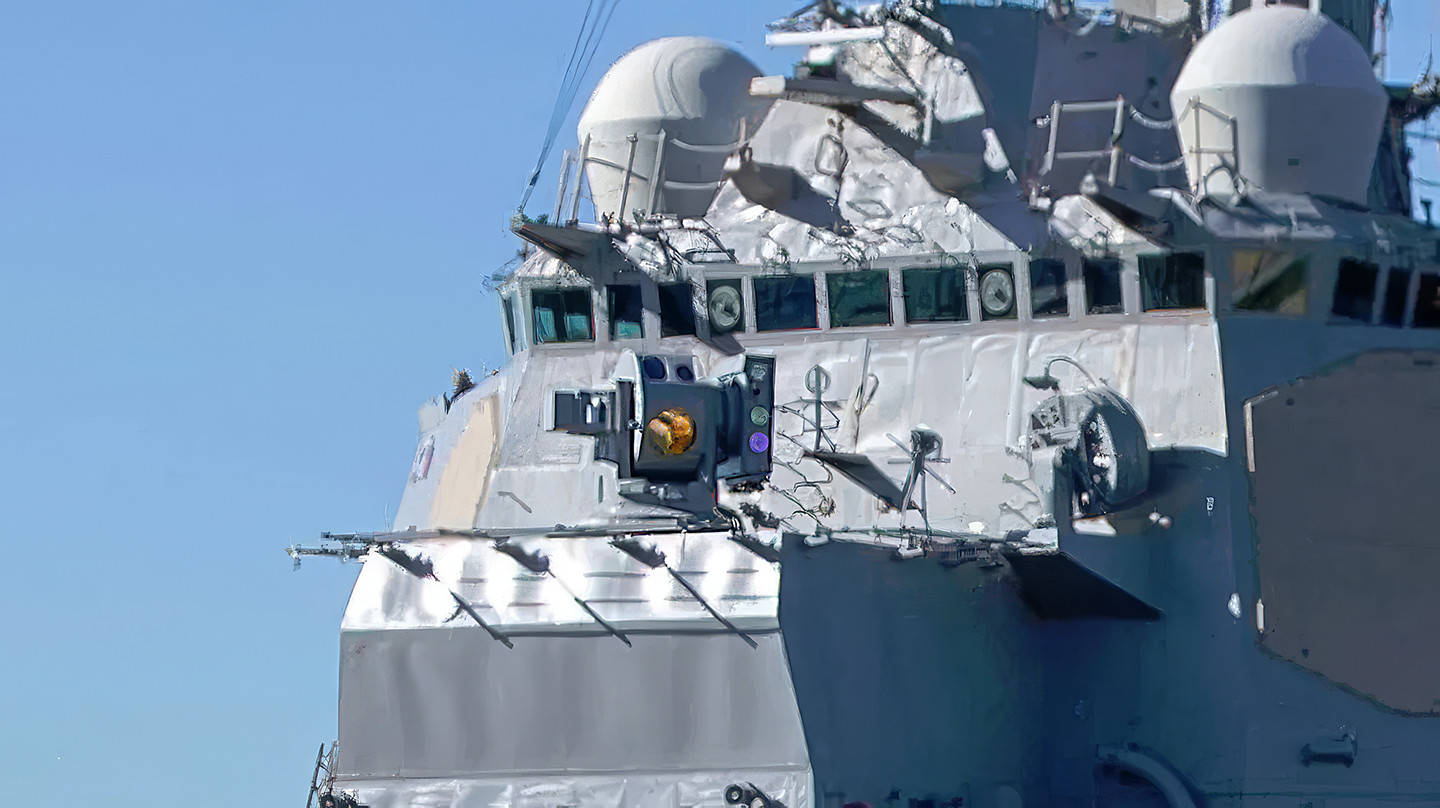
The one HELIOS laser directed energy weapon in Navy service currently, which is integrated onto the Arleigh Burke class destroyer USS Preble, seen being tested. USN USN
The Navy’s proposed budget for the next fiscal cycle does already include a request for $75.6 million for a separate Joint Laser Weapon System (JLWS) effort. The development of a containerized 150-kilowatt-class laser directed energy weapon, along with work toward 300 and 500-kilowatt-class designs, are part of the stated plans for JLWS. It’s unclear whether the Maritime High Energy Laser Weapon System mentioned in the draft NDAA is related to JLWS.
HELIOS, which the Navy has also designated Mk 5 Mod 0, is a 60-kilowatt-class laser directed energy weapon. At that power level, it is able to destroy or at least damage certain targets, such as drones or small boats, a capability that has now been demonstrated in multiple tests. There has been talk in the past about scaling HELIOS’s power rating up to 150 kilowatts.
Currently, the Navy only has one HELIOS laser, installed on the Arleigh Burke class destroyer USS Preble. Despite integration on an operational warship, the service describes this system as a “Non-Program of Record (POR) Research & Development (R&D) asset” in its most recent budget request.
A graphic depicting an Arleigh Burke class destroyer firing a HELIOS laser. Note that the beam would not be visible to the naked eye during a real engagement. Lockheed Martin
As an aside, another laser system, the Optical Dazzling Interdictor, Navy (ODIN), is currently found on seven other Arleigh Burke class destroyers. An eighth example was integrated on the USS Kidd, but has been temporarily removed while that ship is completing a two-year maintenance availability. That ODIN system is currently being used for land-based training at the Naval Surface Warfare Center, Port Hueneme Division, in California. Designed as a “dazzler,” ODIN is lower-powered than HELIOS, and is intended to blind or confuse electro-optical and/or imaging infrared systems, including seekers on incoming munitions, sending them off course rather than shooting them down.
An ODIN system seen undergoing testing on land. USN
As noted, HELIOS offers demonstrated capability now, and a containerized version is something the Navy might be able to field more widely in the near-term. This, in turn, could help provide a bridge to future developments under JLWS. Containerized systems, as well as palletized ones, inherently offer valuable flexibility, especially in a maritime context. Integration can be more readily achieved on a broad array of ships – including carriers, amphibious warfare ships, sea base-type vessels, and sealift ships, as well as certain surface combatants – as long as there is sufficient deck space and available power.
In April, the Navy disclosed a test of a palletized version of AeroVironment’s LOCUST laser counter-drone system on the Nimitz class aircraft carrier USS George H.W. Bush, underscoring exactly this kind of flexibility. For that test, AeroVironment leveraged a palletized configuration of LOCUST it had already developed for the U.S. Army. However, various changes were made to adapt it to shipboard use, including “hardened electronics for salt fog, humidity, vibration, and long deployments” and the addition of “stabilization hardware to manage ship motion,” according to a company press release.
The palletized LOCUST system seen on the deck of the USS George H.W. Bush. USN
When it comes to a containerized version of HELIOS, which could also be used to bolster defenses ashore, it would benefit from having been developed for maritime use from the start. It might still be less hardened against environmental conditions, as well as battle damage, than its more deeply integrated counterpart on the USS Preble. There are also questions about how the system might be integrated onto the host ship and its combat system, if it has one at all.
Laser directed energy weapons do also have limitations, especially when employed in the maritime domain, as TWZ has highlighted in the past:
“A single laser can only engage one target at once. As the beam gets further away from the source, its power also drops, just as a result of it having to propagate through the atmosphere. This can be further compounded by the weather and other environmental factors like smoke and dust. More power is then needed to produce suitable effects at appreciable distances. Adaptive optics are used to help overcome atmospheric distortion to a degree. Altogether, laser directed energy weapons generally remain relatively short-range systems.”
“In addition, laser directed energy weapons, especially sensitive optics, present inherent reliability challenges for use in real-world military operations. Shipboard use adds rough sea states and saltwater exposure to the equation. There is also the matter of needing to keep everything properly cooled, which creates additional power generation and other demands.”
Overall, the Navy’s current top leadership is already very supportive of containerized systems and directed energy weapons, including both lasers and high-power microwave types. In March, Chief of Naval Operations (CNO) Adm. Daryl Caudle, the service’s top officer, unveiled a formal Containerized Capability Campaign.
Chief of Naval Operations Adm. Daryl Caudle, left, speaks at a separate budget-related hearing before members of the House Appropriations Committee on May 12, 2026. USN
“From towed-array-systems, to drone swarms, to electronic attack systems, to high-powered lasers … I want to containerize everything,” Caudle said at the annual McAleese Defense Programs Conference in March. “Tailored capabilities give our combatant commanders something they value above all else: options.”
Laser directed energy weapons are also central to the current plan for the Navy’s future Trump class battleships, but they are expected to be deeply integrated into that design rather than containerized. Adm. Caudle has been outspoken more broadly in his view that laser-directed energy weapons are key to bolstering close-in defenses on his service’s warships going forward, including against the growing threat posed by drones.
A rendering of a Trump class battleship firing various weapons, including laser directed energy weapons. USN
“My thesis research at [the] Naval Post Graduate School was on directed energy and nuclear weapons,” the CNO told TWZ and other outlets at a roundtable at the Surface Navy Association’s (SNA) annual symposium in January. “This is my goal, if it’s in line of sight of a ship, that the first solution that we’re using is directed energy.”
In particular, “point defense needs to shift to directed energy,” Caudle added at that time. “It has an infinite magazine.”
Even before assuming his current role as CNO, Caudle has been a vocal supporter of Navy directed energy weapon developments. At the same time, as mentioned, the service has faced continued stumbling blocks to more widespread fielding of these capabilities. This is, in many ways, reflected just in HELIOS, which remains a largely experimental effort despite years of testing and previous talk about expanding it into a broader operational capability. The Navy has integrated other one-off lasers onto other ships in the past. This includes the Laser Weapon System Demonstrator Mk 2 Mod 0 installed for a time on the San Antonio class amphibious warfare ship USS Portland, which is seen being tested in this video below.
Despite it adding funding for containerized system development, the draft NDAA that the House Armed Services Committee also proposes to cut $5 million from the Navy’s Directed Energy and Electric Weapon Systems line item due to what it simply describes as “unjustified growth.” The bill is also very likely to change in substantial ways in the coming weeks and months before it is ever put to a full vote, let alone sent to President Trump’s desk.
Whether or not the extra funding for a containerized version of HELIOS, or the Maritime High Energy Laser Weapon System, comes across in the end, the Navy is already heavily committed to new developments in this arena despite the continued challenges.

 Login
Login