Normal view

Finland’s foreign minister says Ukraine ‘is now holding the cards’ as Russia signals talks

8 June 2026 at 21:01

EXCLUSIVE: Finnish Foreign Minister Elina Valtonen said Ukraine has gained new leverage against Russia, arguing that Moscow’s renewed talk of negotiations comes as Kyiv has strengthened itself militarily, politically and diplomatically.

Valtonen’s comments carry particular weight because Finland is one of NATO’s newest members and now sits on the alliance’s longest border with Russia. Finland joined NATO in April 2023 after Russia’s full-scale invasion of Ukraine, ending decades of military nonalignment and transforming the country into a frontline state in Europe’s security posture.

"Ukraine certainly is now holding the cards," Valtonen told Fox News Digital Monday in an interview at the United Nations headquarters in New York. "They have strengthened themselves immensely over the course of the past three, four months, both militarily and politically, diplomatically. And I think this opens a great window of opportunity for actually advancing the peace talks."

UKRAINE MAKES FASTEST GAINS IN YEARS AS RUSSIA TALKS STALL, EXPLOITING CRACKS IN KREMLIN COMMAND

Her assessment comes as Reuters reported that Ukraine’s top military commander said Ukrainian forces had recaptured more than 600 square kilometers, or roughly 230 square miles, of territory so far in 2026, a shift after years of slow Russian gains. It also follows renewed diplomatic activity, including Zelenskyy’s stated willingness to halt fighting along current lines as a path to talks and Putin’s public rejection of a direct meeting for now.

Finland shares a roughly 820-mile border with Russia, making it one of the alliance’s most strategically exposed members.

Valtonen said Moscow has shown little willingness to make concessions and argued that the responsibility for ending the war remains with the Kremlin.

"So far, Russia hasn’t been willing to make any concessions, and essentially Russia could end the war today if they wanted to, because it was their war in the first place," she said. "So I’m hopeful that this could be the right time to relaunch those talks."

Peace efforts remain stalled over the same core divide that has shaped the war for years: Ukraine has called for a ceasefire and negotiations without surrendering territory, while Russia has continued to demand control over occupied Ukrainian regions. Putin said in early June there was "no point" in meeting Zelenskyy for now and repeated Moscow’s broader war aims.

Asked about U.S.-led efforts to negotiate an end to the war, Valtonen praised Washington’s role but stressed that Ukraine alone must decide whether to accept any concessions, including on territory.

"I think the U.S. involvement in this entire process has been a very good one, and it’s important that the U.S. stays engaged, because at the end of the day, it’s about freedom, it’s the future of not only Europe, but also of global peace," she said.

ZELENSKYY SAYS US WILL ONLY GUARANTEE UKRAINE'S SECURITY IF KYIV AGREES TO GIVE UP DONBAS

Valtonen said Europe also needs to be part of the process because Russia’s war directly affects the continent’s security architecture.

She said any serious negotiations would require Russia to accept a full ceasefire.

"First and foremost, we would need Russia at the table willing to end the war," Valtonen said. "And that would need to happen through a full ceasefire, because only that would open the possibility for true negotiations."

Valtonen also credited President Donald Trump with pushing European allies to increase defense spending, saying the pressure had moved the continent in the right direction after years of imbalance inside NATO.

Finland has moved aggressively to increase defense spending. Helsinki plans to raise defense spending to 3.2% of GDP by 2030, up from 2.5% in 2025, Reuters reported in April. 

WHY NATO’S DEFENSE SPENDING IMBALANCE LASTED FOR DECADES

Secretary of State Marco Rubio also praised Finland and Sweden Tuesday during a Senate Foreign Relations Committee hearing, saying the two newest NATO members had strengthened the alliance by bringing "their own defense industry" and "advanced technologies." 

He called them "a great partner" and "an extraordinary partner."

Valtonen said Finland’s approach is shaped by its own history with Moscow.

"Finland obviously has taken the Russian threat extremely seriously because we have the longest border with them," she said. "We certainly worship our status as the happiest country in the world, i.e. democracy, the rule of law and human rights, which we hold dear as values over anything that Russia could offer."

She also pointed to Finland’s experience in World War II, when the Soviet Union invaded Finland, as a reminder of why deterrence matters.

"The last time the Soviet Union, i.e. Russia, tried to invade us was during the Second World War," Valtonen said. "Happily, we were able to fend them off, but of course at the massive cost to the society."

"For us, it has been clear that if we invest in our deterrence, then that’s a signal to Russia — do not come here," she added.

On Iran, Valtonen said Finnish President Alexander Stubb’s March comments, reported by The Guardian, that the conflict was not a NATO matter should not be understood as Europe washing its hands of the crisis.

"I don’t think our president meant that this has nothing to do with European countries or NATO allies," Valtonen said. "I think what he probably meant more is that NATO obviously is not directly involved as an organization, which is true."

EX-NATO AMBASSADOR WARNS US AND ALLIES MUST 'STOP THE SNIPING' AND UNITE TO END IRAN CONFLICT

Her comments came after another weekend escalation in the Iran war, with Tehran launching missiles at Israel and Israel striking military targets in western and central Iran overnight. The flare-up unfolded as the U.S. and its allies continue efforts to prevent Iran from becoming a nuclear state and keep pressure on Tehran over threats to Israel and regional shipping.

The Strait of Hormuz, a critical global energy choke point, has become a central focus for Western governments after Iranian threats and restrictions on maritime traffic. Reuters reported Monday that the European Union sanctioned Iranian-linked individuals and an Islamic Revolutionary Guard Corps navy unit over threats to shipping in the strait.

"We as individual member states in Europe have definitely been helping the U.S. effort," Valtonen said. "We don’t want to see Iran as a nuclear state. We know what kind of a threat Iran has projected towards the region, especially toward Israel."

Valtonen added Finland has also joined efforts led by France and the United Kingdom to keep the Strait of Hormuz open once conditions allow for safe operations in the area.

"It’s so important that such straits are not weaponized by any country around the world," Valtonen said.

Asked whether European countries had refused U.S. requests to use bases during the Iran crisis, Valtonen said Finland has no U.S. bases to shut down but argued that most European allies have supported Washington’s requests.

"Finland has been helping the U.S. through so many ways," she said. "We don’t have any U.S. bases in Finland, so there’s nothing we can shut down."

CLICK HERE TO DOWNLOAD THE FOX NEWS APP

"But having said this, the vast majority of European countries have said yes to everything that the U.S. has asked during the past couple of months when this war effort has been ongoing, independent of the fact that, of course, we are not directly involved as countries in the war," she added.

Valtonen said that support demonstrated NATO allies’ willingness to help Washington even when the alliance itself is not formally involved.

"I think that really shows the engagement by NATO allies in this and our willingness to help when the U.S. really needs some assistance," she said.

Portugal integra rede de aceleradores da NATO DIANA

8 June 2026 at 18:56
As empresas selecionadas para a NATO DIANA, criada para originar soluções tecnológicas, recebem um financiamento de 100 mil euros e poderão aceder a mais 300 mil euros na fase de crescimento.

© Getty Images/iStockphoto

A cibersegurança e a inteligência artificial são áreas prioritárias da rede de aceleradores

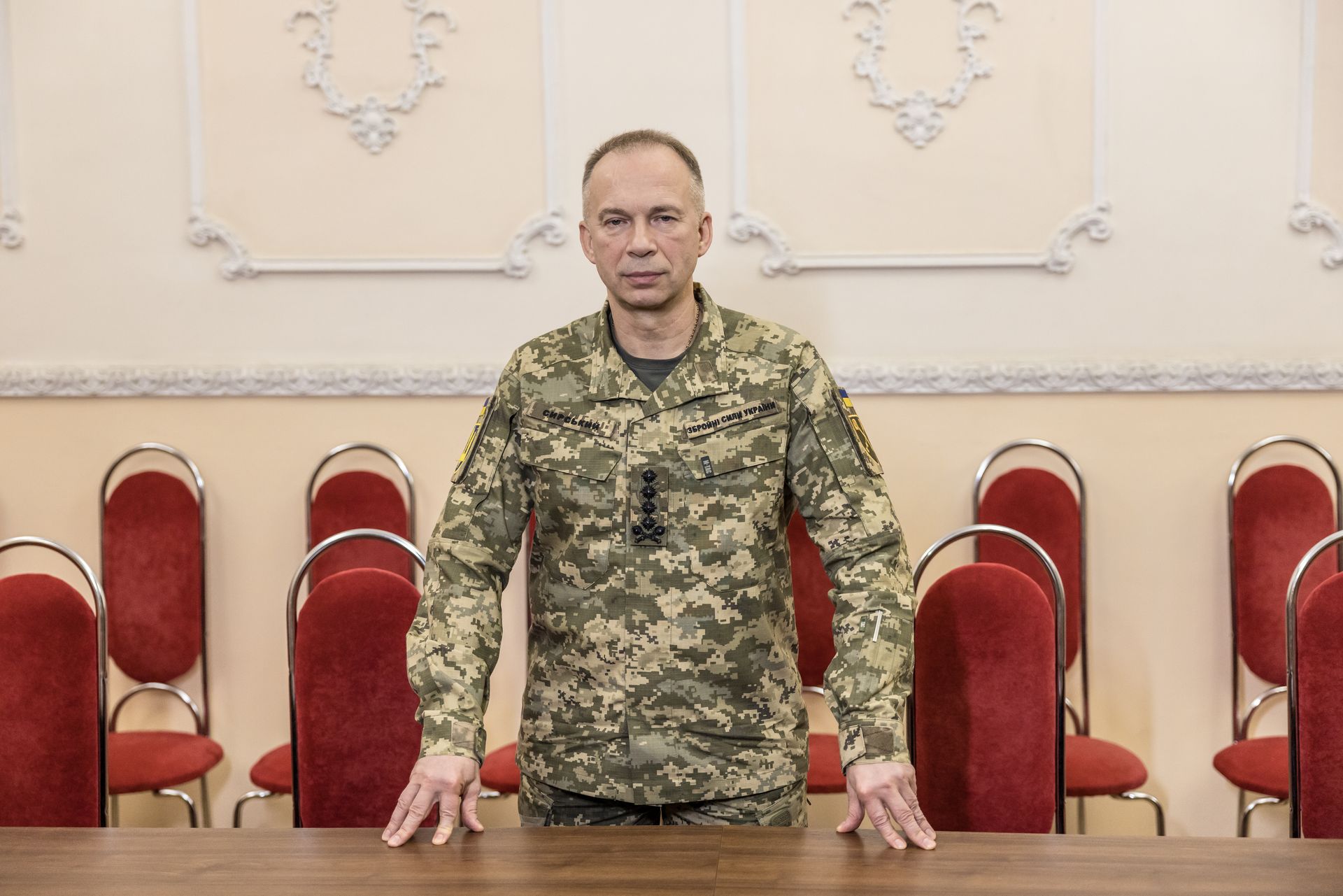
Ukraine war latest: Kyiv recaptures more territory than it loses in May, Syrskyi says

Key developments on June 8:

  • Russia rejects Ukrainian, European peace initiatives, says battlefield will decide war
  • NATO jets shoot down drone over Latvia in 1st such interception, military says
  • Ukraine strikes Russian oil depot, radar station, other military targets, General Staff confirms
  • Ukraine foils Russian plot to assassinate senior military

Video Captures Rafale Fighter’s Drone Kill Over Baltic

8 June 2026 at 16:59

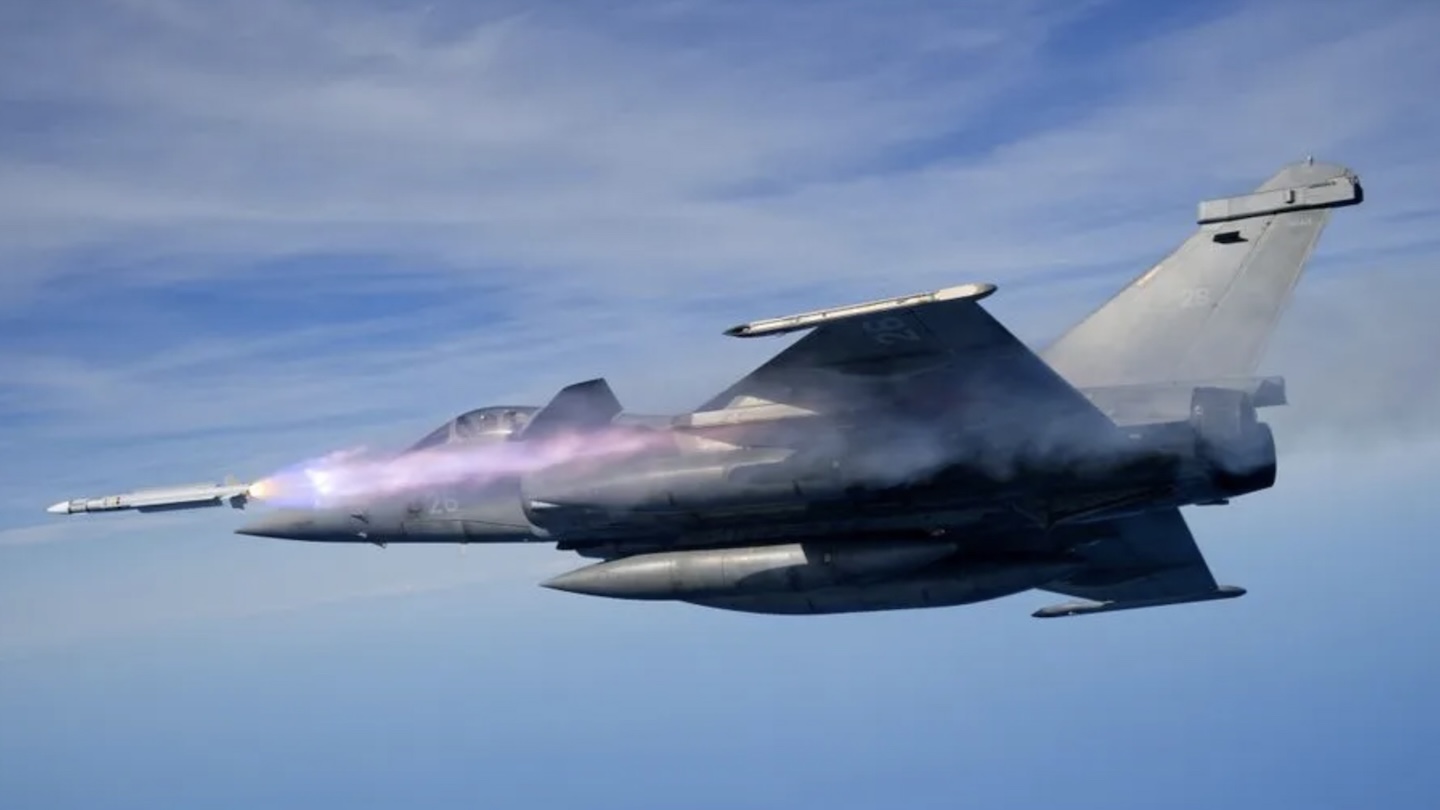
Footage has emerged showing the destruction of a drone by a French Rafale fighter over Latvia earlier today. The engagement underscores how the drone war unleashed by the Russian invasion of Ukraine is increasingly spilling over borders, as well as the growing reality of the drone threat to NATO.

The French Air and Space Force confirmed that its Rafales, currently deployed in neighboring Lithuania, were scrambled in response to the drone incursion. The drone was identified before one of the fighters shot it down over an uninhabited area. The incident was a “demonstration of the French Armed Forces’ commitment to contributing to the security of Europe’s eastern flank,” the service said in a statement on X.

📍Lettonie | Destruction d’un drone par les Rafale 🇫🇷💥

➡ Survol d’un drone au dessus du territoire letton 🇱🇻
➡ Décollage sur alerte des chasseurs 🇫🇷 engagés dans la mission de l’OTAN Baltic Air Policing depuis la base aérienne de Šiauliai 🇱🇹
➡ Identification et destruction… pic.twitter.com/NFIMSP7Ibl

— Armée française – Opérations militaires (@EtatMajorFR) June 8, 2026

A detachment of French Air and Space Force Rafale jets is currently engaged in the NATO Baltic Air Policing mission from Šiauliai Air Base, Lithuania.

This morning, French fighter jets deployed to NATO Air Policing at Šiauliai Air Base shot down a drone that entered Latvian airspace.

Lithuania thanks our French allies for their swift and professional action in safeguarding the security of our region.

— Lithuanian MOD 🇱🇹 (@Lithuanian_MoD) June 8, 2026

This is not the first time that a NATO fighter has shot down a drone in the Baltic region as part of the Baltic Air Policing mission. On May 19 of this year, a Romanian F-16 shot down a Ukrainian drone over Estonia after it strayed into NATO airspace, reportedly due to Russian electronic warfare interference. Last September, NATO fighters shot down at least three, and likely four, Russian drones, after 19 reported violations of Polish airspace. Polish authorities assessed that the drones “did not veer off course but were deliberately targeted.”

However, this is the first time that an incident of this kind has been captured on camera.

At least two videos are now circulating on social media showing the engagement playing out.

One shows the moment that a Rafale launches an air-to-air missile, leaving a prominent trail of smoke, before detonating seconds later.

NATO airpower in action this morning, safeguarding Latvian airspace. pic.twitter.com/Ugzbx8aaZS

— Marko Mihkelson 🇪🇪🇺🇦🇪🇺 (@markomihkelson) June 8, 2026

Another video, from a different angle, shows the immediate aftermath of the shootdown. Another trail is seen in the background of both videos, but it’s unclear if this is evidence of a previous missile launch, or a contrail from another aircraft that previously transited the airspace at a different altitude.

🇱🇻 Rogovkā, Rēzeknes novadā notriekts lidrobots. NBS apstiprina.#Rogovka #Rēzekne #Latvija pic.twitter.com/kBdojUHanB

— BreakingLV (@breakinglv) June 8, 2026

In a typical Baltic Air Policing configuration, the Rafale is armed with MICA air-to-air missiles. These beyond-visual-range weapons can be fitted with either an active radar seeker or an infrared seeker head, with a mix normally being loaded. The MICA uses a thrust-vectoring motor for improved agility and has a reported maximum range of around 37 miles.

📍 Lituanie | Le succès des vols conjoints commence au sol 🇫🇷🤝🇷🇴
 
➡ Préparation d'un vol d'entraînement avec des avions de chasse 🇫🇷 et 🇷🇴 :

🔧 Montage d'armements entre mécaniciens des deux pays alliés

💬 Échanges sur les procédures, matériel et méthodes des équipes… pic.twitter.com/LPYygu0P5r

— Armée française – Opérations militaires (@EtatMajorFR) June 6, 2026

The Latvian Armed Forces provided more details of the shootdown, noting that a yellow alert was originally issued for the Ludza, Balvi, and Aluksne districts this morning at 9:20 a.m. local time. This led to NATO fighters being launched.

At 9:40 a.m., this alert level was increased to orange for the Ludza and Rēzekne districts. At this point, it was confirmed that some kind of drone was entering Latvian airspace. A military spokesperson told the Reuters news agency that the drone entered Latvian airspace from Russia.

NATO iznīcinātāji šorīt neitralizēja ārvalstu dronu, kas krievijas elektromagnētiskās karadarbības rezultātā bija ielidojis Latvijas teritorijā 🇱🇻✈#WeAreNATO #StrongerTogether pic.twitter.com/07blbd7TUw

— NBS (@Latvijas_armija) June 8, 2026

🟠 Izsludināts gaisa telpas apdraudējums Krāslavas un Ludzas novados, informē Nacionālie bruņotie spēki.

Brīdinājums par iespējamu gaisa telpas apdraudējumu izsludināts Rēzeknes un Balvu novados. pic.twitter.com/PFcMZmhhga

— LTV Panorāma (@ltvpanorama) June 8, 2026

The Latvian Armed Forces warned residents in these areas to “Seek shelter indoors, close windows and doors — follow the two-wall principle.” It added: “If you notice a low-flying, suspicious, or dangerous object, do not approach it and call 112.”

At 10:05 a.m., the Latvian Armed Forces confirmed that NATO fighters were over the Rēzekne district, and a “foreign” drone was shot down over the Berzgale parish.

Berzgale is less than 20 miles from the nearest Russian border, and around 340 miles from the closest Ukrainian border, with Belarus, a close Moscow ally, separating Latvia and Ukraine.

A map showing the approximate location of the drone shootdown in Berzgale, Latvia. Also marked is the Russian naval base at Kronstadt that came under Ukrainian drone attack last week. Google Earth

NATO’s Baltic Air Policing mission has safeguarded the airspace of Estonia, Latvia and Lithuania since the three countries joined the alliance in 2004. Because the Baltic states do not maintain fighter fleets capable of continuous air-defense duties, allied nations rotate detachments of combat aircraft to bases in Lithuania and Estonia, where they remain on quick-reaction alert around the clock.

The mission routinely scrambles fighters to identify and intercept Russian military aircraft operating near NATO airspace, particularly flights to and from Russia’s heavily militarized Kaliningrad exclave that often occur without flight plans, radio contact, or active transponders.

French Rafales recently encountered this Russian Navy Su-24M carrying free-fall bombs during a flight over the Baltic. French Armed Forces
One of two Russian Navy Su-30SMs intercepted over the Baltic by French Rafales during the current Baltic Air Policing detachment. This example carries a Kh-31 series anti-ship or anti-radiation missile. French Armed Forces

Following Russia’s annexation of Crimea in 2014, NATO expanded the mission with additional aircraft and operating locations, making Baltic Air Policing one of the alliance’s most visible peacetime deterrence operations on its eastern flank.

Since Russia’s full-scale invasion of Ukraine, the expanding drone war between the two countries has provided another layer of responsibility to the Baltic Air Policing mission.

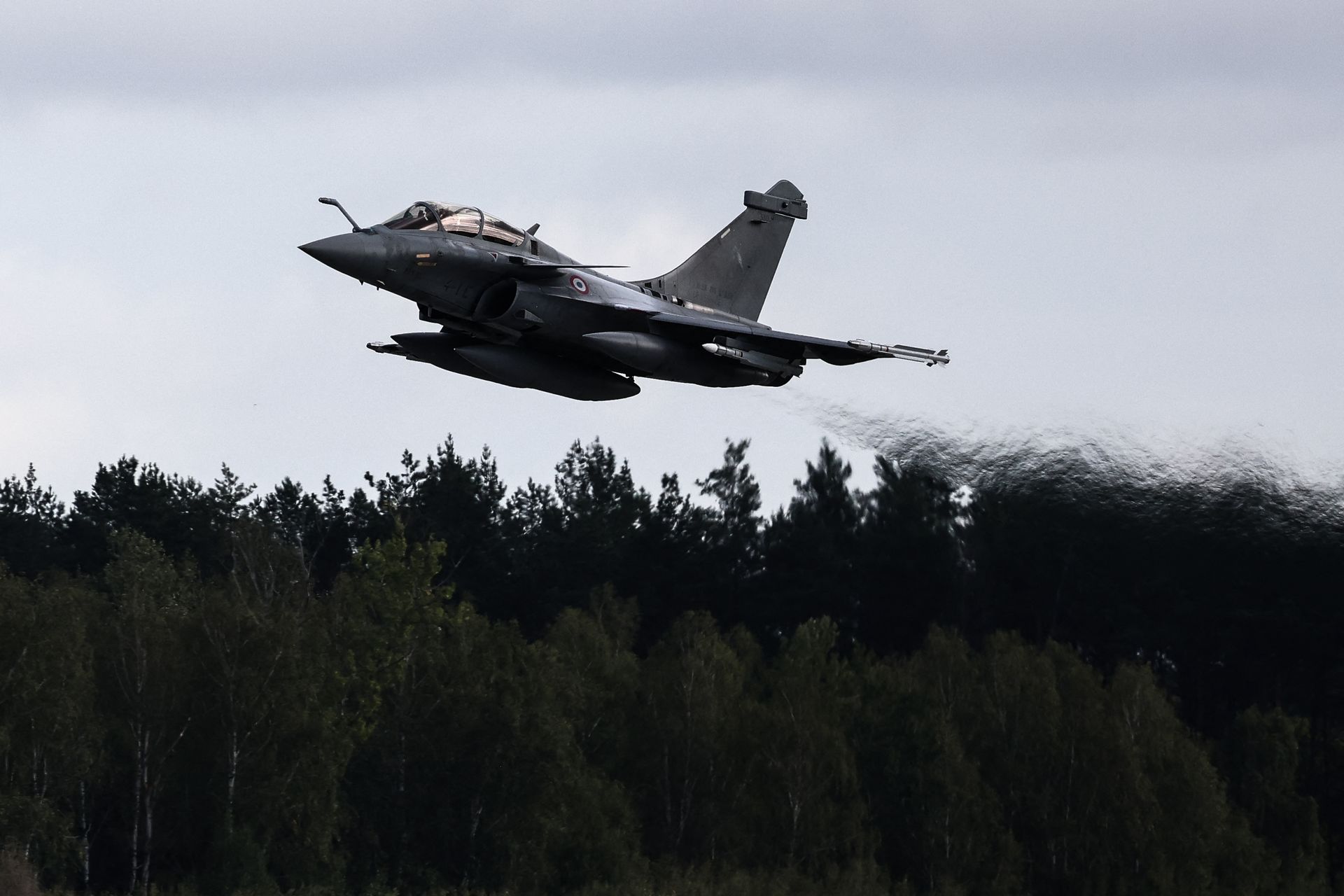
A Rafale B standard F4 fighter jet of France's air force is ready for take-off as part of NATO's Enhanced Air Policing (eAP) mission in the Baltic States, on Dezember 17, 2024 at Siauliai airbase in Lithuania. (Photo by PETRAS MALUKAS / AFP) (Photo by PETRAS MALUKAS/AFP via Getty Images)
A Rafale B is ready for takeoff as part of an earlier Baltic Air Policing mission in Lithuania, in the Baltic States, December 2024. Photo by PETRAS MALUKAS / AFP PETRAS MALUKAS

For most of its history, Baltic Air Policing centered on scrambling fighters to identify Russian bombers, fighters, reconnaissance aircraft, and transports flying near NATO airspace. The war in Ukraine has seen the increasing proliferation of drones that can travel hundreds or even thousands of miles, creating a new challenge for NATO air defenses.

Since 2022, there have been several incidents, including drones and missile debris entering or crashing in NATO territory, including in Poland and Romania. Late last month, a Russian kamikaze drone strayed into Romanian airspace before striking a residential building, injuring civilians, in what appears to have been the first incident of its kind.

A russian drone carrying explosives, involved in the bombing of infrastructure in Ukraine crashed in Galați, Romania, causing a fire on the roof of a residential apartment building.

Two persons sustained minor injuries and several residents required medical attention, the… pic.twitter.com/P8jzYFrEEp

— Toiu Oana (@oana_toiu) May 29, 2026

We asked NATO for more details of today’s incident, including whether it could confirm reports citing the Latvian military that the drone had entered its airspace as a result of Russian electronic warfare. This is a threat that is by now commonplace in the Baltic region.

“While the circumstances surrounding this incident are still under review, jamming is known to occur in this region, and can pose serious safety risks, including to civil aviation,” a spokesperson for the alliance told us.

In recent days, Ukraine has carried out a number of high-profile drone attacks against Russian targets in and around the Baltic region.

In the last week, Ukrainian drones appear to have hit the St. Petersburg oil terminal, the Baltic Fleet base at Kronstadt, and a weapons factory in the Tambov region.

As we observed in our previous reporting, there have been very few confirmed Ukrainian attacks of any kind against the Baltic Fleet. However, satellite and other imagery that emerged in the wake of the recent drone strike reveals extensive damage inflicted on the  Steregushchiy class corvette Boikiy.

Footage of the Russian Navy Baltic Sea Fleet corvette Boikiy burning in its Kronstadt drydock after a Ukrainian drone strike yesterday. pic.twitter.com/9CHz4aLdY8

— OSINTtechnical (@Osinttechnical) June 4, 2026

Another satellite image of the Russian corvette Boikiy following yesterday's Ukrainian strike. What is interesting here is that the active fire was captured before firefighting crews managed to extinguish it. @planet image taken on June 3 at 16:30 local time. It burned for hours. pic.twitter.com/PzcHxoSxGk

— Mark Krutov (@kromark) June 4, 2026

Today’s incident provides visual evidence of advanced NATO fighters used to shoot down drones over alliance territory. While effective on this occasion, this kind of interception can be inefficient due to the mismatch in cost between the drone and missile. It is notable that the French Ministry of Defense has plans to introduce a lower-cost counter-drone capability on the Rafale by the summer. Trials of a pod loaded with 68mm laser-guided rockets have already begun.

Un Rafale équipé de roquettes guidées laser aperçu à Istres. Les essais ont donc enfin démarré. Ici une nacelle Thalès JF12, donc 24 roquettes 68mm au total. Une corde de plus à l'arc du Rafale, la chasse au Shahed est OUVERTE ! pic.twitter.com/6v0xSMkUJ1

— bruno aviation (@Bruno_Aviation) April 16, 2026

As a result, NATO has accelerated work on layered defenses that include short-range ground-based air defenses, electronic warfare, and other counter-drone technologies.

Fighters, however, will always remain a critical last-resort option, especially when a drone poses an immediate threat or when a visual identification is required.

Today’s video not only illustrates the changing face of the Baltic Air Policing mission due to the Russian war in Ukraine, but highlights the growing threat posed by drones and cruise missiles that can cross borders with little warning, whether deliberately or not.

Contact the author: thomas@thewarzone.com

The post Video Captures Rafale Fighter’s Drone Kill Over Baltic appeared first on The War Zone.

Britain, France, and Germany back Ukraine’s peace terms and press Putin for a ceasefire

8 June 2026 at 12:43

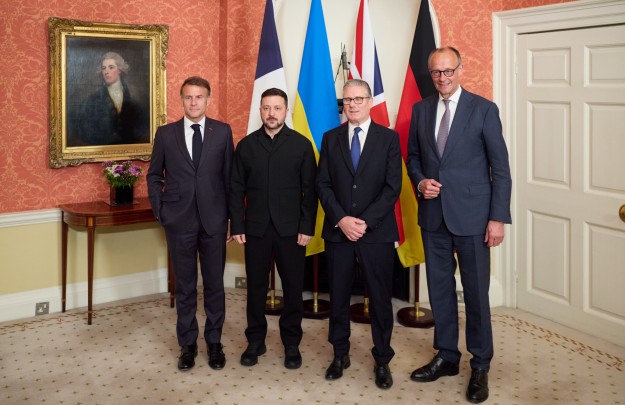
britain france germany back ukraine's peace terms press putin ceasefire · post left right french president emmanuel macron ukrainian volodymyr zelenskyy uk prime minister keir starmer german chancellor friedrich merz

Britain, France, and Germany backed Ukraine's terms for ending the war after meeting its President Volodymyr Zelenskyy in London, according to their joint statement. They endorsed Kyiv's push for direct talks with Moscow and an immediate ceasefire, while spelling out what a lasting peace would require. The leaders also called for tightening the squeeze on Russia's war economy and scaling up Ukraine's air defenses.

Russia has been invading Ukraine since 2014 and waging all-out war since February 2022, and with Moscow still rejecting every ceasefire on offer, Kyiv and its Western partners are now trying to map out how the fighting could actually end.

Five conditions for peace

Meeting on 7 June, UK Prime Minister Keir Starmer, French President Emmanuel Macron, and German Chancellor Friedrich Merz set out five conditions for a just and lasting peace. The E3, as the three are known, are Ukraine's leading European backers. Their terms:

  • An immediate, complete ceasefire, which they urged Putin to accept.
  • The current front line as the starting point for talks, with no borders changed by force and Ukraine free to choose its alliances.
  • Robust, legally binding security guarantees once a ceasefire holds, building on the allies' December 2025 Berlin and January 2026 Paris commitments, including a multinational force in Ukraine. 
  • Russian assets remain immobilized until Moscow ends its aggression and compensates Ukraine.
  • European interests safeguarded, with any EU- or NATO-related terms requiring both blocs' consent.
Admiral Bauer Ukraine NATO membership
Explore further

“It was never formulated as Ukraine winning”—NATO’s ex-military chief on the missing strategy

Backing for direct talks with Moscow

The leaders commended Ukraine's president for his 4 June letter to Putin calling to end the war. They backed direct Ukraine-Russia dialogue, with the US and Europe actively taking part, to secure a ceasefire. Europe must play a role in any settlement, they said, working closely with Kyiv, the rest of Europe, and Washington.

Zelenskyy
Explore further

Germany, France, and UK sketch plan to bring Putin to the negotiating table

Pressure on Russia and more air defense

They denounced Russia's barrage of missiles and drones, including repeated strikes with the Oreshnik, a Russian missile. They also condemned dangerous Russian drone incursions into NATO territory and offered condolences to the victims. The leaders welcomed Ukraine's recent battlefield gains, from liberated territory to advances in drone warfare. They agreed to coordinate more support at the coming G7 summit in Evian, the next Coalition of the Willing meeting, and the NATO summit in Ankara. That includes choking off more of Russia's wartime revenue and a bigger military pledge at the NATO talks. They also urged scaling up interceptor production and co-developing anti-ballistic and deep-strike weapons.

French NATO jets shoot down drone over Latvia in country’s first intercept

8 June 2026 at 09:49

NATO Ukraine Russia war humanitarian intervention

French fighter jets operating under NATO's Baltic Air Policing mission shot down a drone over eastern Latvia on 8 June, the country's National Armed Forces (NBS) confirmed. The drone was intercepted over Nautrēni parish between Rēzekne and Kārsava, near Latvia's border with Russia.

It was the first time NATO jets had downed a drone over Latvian territory.

The intercept is the second in Baltic airspace since 19 May, when a Romanian F-16 shot down a stray Ukrainian strike drone over Estonia's Lake Võrtsjärv. Latvia's drone crisis has been the most politically destabilizing in the region.

A 7 May crash near the Rēzekne oil storage facility toppled the ruling coalition after Prime Minister Evika Siliņa forced Defense Minister Andris Sprūds' resignation.

Latvia described the drone as deflected by Russian electronic warfare

The NBS described the aircraft as "a foreign unmanned aerial vehicle that had flown into Latvia as a result of Russian electromagnetic warfare," Latvian public broadcaster LSM reported. A military spokesperson told Reuters the drone entered Latvian airspace from Russia.

Baltic defense ministries have previously identified drones entering their airspace as Ukrainian, knocked off course by Russian electronic jamming while targeting sites inside Russia. Estonian Foreign Minister Margus Tsahkna has argued Moscow deliberately steers those drones into NATO territory to erode Western support for Kyiv.

Several allied foreign ministers echoed that claim at a 22 May meeting in Helsingborg.

The NBS issued cell-broadcast alerts to residents in the Rēzekne, Ludza, Balvi, and Alūksne municipalities at around 09:20 local time. The threat level in Rēzekne and Ludza was raised to orange at 09:40.

The alert was lifted by approximately 10:30 after the drone was confirmed destroyed.

Drone also violated Moldova's airspace overnight

Separately, an unidentified drone violated Moldovan airspace overnight and exploded on impact, Yevropeiska Pravda reported. Authorities are examining the fragments.

The incident came a day after Moldovan President Maia Sandu instructed the government to draft legislation enabling domestic production of interceptor drones, citing repeated airspace violations linked to Russia's war on Ukraine.

Last week, 56 countries and the EU condemned a Russian drone violation of Romanian airspace at a UN Security Council emergency session requested by Bucharest.

Escalating incursions are reshaping Baltic security

The shootdown caps a month that has transformed how the Baltic states approach drone defense. Estonia activated its first border drone-detection sensors on 30 May.

Ukraine and Estonia expanded drone cooperation on 3 June. Latvia's armed forces commander General Kaspars Pudāns warned last week that Russia could exploit its drone advantage to attack the Baltics by the end of 2028.

European leaders have agreed to develop a "drone wall" along their eastern borders, and a US anti-drone system has been deployed to NATO's eastern flank. A NATO counter-drone testing range at Sēlija in central Latvia hosted European startup demonstrations on 26 May.

Russian Drone Impacts Apartment Building In NATO State Romania, Injuring Civilians

29 May 2026 at 18:24

In what appears to be the first incident of its kind, a Russian kamikaze drone strayed into Romanian airspace before striking a residential building, injuring civilians. While Russian drones flying into NATO airspace, whether accidental or deliberate, have become a feature of the war in Ukraine, this marks a notable milestone, although the nature of the repercussions remains unclear.

The Russian drone was part of a barrage involved in an overnight attack on Ukraine. It strayed into Romanian airspace before crashing into the roof of a residential building in Galați on the River Danube, in eastern Romania. The Romanian Ministry of Defense assesses that the drone was intended to attack one of several Ukrainian targets in the vicinity of the river border with Romania.

A russian drone carrying explosives, involved in the bombing of infrastructure in Ukraine crashed in Galați, Romania, causing a fire on the roof of a residential apartment building.

Two persons sustained minor injuries and several residents required medical attention, the… pic.twitter.com/P8jzYFrEEp

— Toiu Oana (@oana_toiu) May 29, 2026

A senior NATO official confirmed to TWZ that it had detected and tracked the Russian drone, but it entered Romanian airspace only minutes before striking the apartment building. “To put this in context, you are talking about something that is travelling nearly 200km/h [124 miles per hour] over a populated area less than 15km [nine miles] from the border. Nonetheless, we are assessing what more can be done now to optimize Romania and NATO’s network of sensors and shooters to safely neutralize such threats,” the official added.

JUST IN: Images from inside the apartment hit by a Russian drone in Galați, Romania are now emerging. The images shows extensive damage, with the reinforced concrete ceiling completely perforated by the impact and explosion. A mother and her 14-year-old son were injured. pic.twitter.com/BRq9txK3QS

— GeoInsider (@InsiderGeo) May 29, 2026

According to Ukrainian President Volodymyr Zelensky, the Shahed-type drone was involved in Russian strikes on the Odesa region, which borders Romania, targeting civilian container ships. Since the summer of 2023, Russia has embarked on a campaign to attack Ukrainian ports and other facilities on the Danube, with extensive use of drones. Overnight Russian strikes in the wider Black Sea region saw three foreign-flagged merchant vessels attacked, according to Kyiv, one of them being the Turkish-owned Ant, a dry cargo ship that was heading to Turkey from Odesa.

It is indeed necessary to step up pressure on Russia so that this war is not dragged out or expanded. Last night, the Russians carried out a deliberate strike on our southern region – Odesa region, which borders Romania. This was yet another cynical attack on civilian… https://t.co/lOcfhrwQAf

— Volodymyr Zelenskyy / Володимир Зеленський (@ZelenskyyUa) May 29, 2026
A map showing the approximate location of Galați on the River Danube, in eastern Romania, close to the borders with Ukraine and Moldova. Google Earth

The impact sparked a fire, injured two people, and forced the evacuation of several other residents.

The Romanian Ministry of Defense said the drone had been tracked by radar in Romanian airspace.

A Romanian Air Force pilot guides a F-16 fighter behind a KC-135 Stratotanker, assigned to the 117th Air Refueling Wing (ARW), during a joint training mission through the State Partnership Program between the Alabama National Guard and Romania, Romania, May 13, 2024. The 117th ARW conducts multiple mid-air refueling missions with the Romanian Air Force so they two can increase their own operational capabilities. (U.S. Army National Guard photo by Staff Sgt. Jaccob Hearn)
A Romanian Air Force F-16 fighter. U.S. Army National Guard photo by Staff Sgt. Jaccob Hearn Sgt. 1st Class Jaccob Hearn

In response, two Romanian Air Force F-16 fighters and an armed IAR-330 SOCAT helicopter were scrambled.

Following an overnight incident in Romania SACEUR spoke today to @CHOD_ROU. pic.twitter.com/Wxu9hPF289

— SHAPE – NATO Allied Command Operations (@SHAPE_NATO) May 29, 2026

There have been some mixed messages as to why the drone was not shot down.

The Romanian Ministry of Defense says that the pilots involved had authorization to engage targets throughout the alert.

President of Romania Nicușor Dan said that the decision not to engage the target was taken “because the conditions did not exist to destroy it without the heightened risk of endangering civilian safety.”

Other reports suggest the interceptors were simply too late on the scene, and others that the chain of command to approve the engagement took too long, although this is clearly at odds with the Romanian Ministry of Defense’s account.

Regardless, Romania summoned Russia’s ambassador today, calling out the “irresponsible escalation” by Moscow.

“We will officially communicate the consequences that this lack of responsibility on the part of the Russian Federation will have for the diplomatic relations between our countries, as well as the next steps at the European level regarding sanctions packages,” the Romanian Foreign Minister Oana Țoiu wrote on X.

L-am convocat pe Ambasadorul Federației Ruse la sediul Ministerului Afacerilor Externe.

Siguranța României este prioritatea noastră absolută.

Avem confirmarea MAPN că drona care s-a prăbușit pe o clădire rezidențială din Galați este de proveniență rusească.

Decizia a fost…

— Toiu Oana (@oana_toiu) May 29, 2026

Meanwhile, Romania’s president, Nicușor Dan, said he had instructed the foreign ministry to prepare a package of measures regarding Romania’s relationship with Moscow, “proportionate to this very serious situation.”

Am avut o convorbire cu Secretarul General @NATO, @SecGenNATO , în urma celui mai grav incident de securitate produs pe teritoriul României de la începutul războiului de agresiune al Rusiei împotriva Ucrainei.
Am condamnat ferm această încălcare inacceptabilă a suveranității…

— Nicușor Dan (@NicusorDanRO) May 29, 2026

Condemnation has also come from other NATO allies.

“I want to condemn this irresponsible act by Russia,” France’s foreign minister, Jean-Noël Barrot, said, adding that the drone had struck “a country of the European Union and a NATO country.”

A NATO spokesperson condemned “Russia’s recklessness” and said the alliance would strengthen its defences against all threats, including drones.

Meanwhile, UN Secretary General António Guterres has called for greater diplomacy, immediate de-escalation and “a full and unconditional ceasefire,” warning of “unknown and unintended consequences” from the escalation and intensification of Russian drone and missile attacks against Ukraine.

Russia’s war of aggression has crossed yet another line.

A Russian drone incursion struck a densely populated area in Romania, injuring civilians.

On EU territory.

We stand in full solidarity with Romania and its people.

As we continue strengthening our security and…

— Ursula von der Leyen (@vonderleyen) May 29, 2026

Romania has also called for the beefing up of its counter-drone capabilities to help prevent similar incidents in the future.

The Romanian Foreign Ministry today said it had asked NATO to accelerate the transfer of anti-drone capabilities in response to the drone strike.

PM @Bolojan: @GuvernulRo strongly condemns Russia’s violation of our airspace. We count on NATO Allies’ support and timely delivery of anti-drone capabilities. We are also focusing on rapid implementation of SAFE.

— Guvernul României (@GuvernulRo) May 29, 2026

Romania already hosts several layers of NATO and NATO-linked air defense infrastructure, but most of these are designed to engage ballistic missiles and conventional aircraft, not large numbers of low, slow Shahed-type drones.

Air defense capabilities in Romania include the Aegis Ashore system at Deveselu, the most important NATO missile-defense installation in the region. It is a U.S.-operated land version of the naval Aegis ballistic missile defense system armed with SM-3 interceptors, integrated into NATO’s missile shield.

The U.S. Aegis Ashore site in Romania. U.S. Navy

Romania also operates Patriot PAC-3 systems, which are effective against aircraft, cruise missiles, and some ballistic missiles, but are an expensive option for routine drone interception.

The Romanian Army's 74th Patriot Regiment conducted the country's first PATRIOT missile system live-fire exercise at the Capu Midia test firing range in Romania Nov. 15-16, 2023. Romania received the first of seven PATRIOT systems in 2020 through a foreign military sales case executed by the U.S. Army Security Assistance Command. (Courtesy photo)
A Romanian Army Patriot missile system during a live-fire exercise at the Capu Midia range in Romania, in November 2023. U.S. Department of Defense/Courtesy photo Tech. Sgt. Kristen Pittman

In addition, the country hosts rotational NATO fighter policing detachments, which provide additional air defense over the Black Sea and provide air policing patrols. Currently, a detachment of U.K. Royal Air Force Typhoons is in Romania as part of Operation Biloxi.

UK heatwave? ☀

Still not as hot as a Typhoon afterburner on Op BILOXI.🔥✈

🛫Typhoons from @RoyalAirForce continue to launch on BILOXI, sharpening combat edge alongside allies in support of @NATO enhanced Air Policing mission.

Speed. Power. Precision. 💪 #PhoonFriday pic.twitter.com/mCigKNUTfD

— Defence Operations 🇬🇧 (@DefenceOps) May 29, 2026

It should be pointed out that this is not the first incident in which a Russian drone flying from the Ukrainian side of the border has violated Romanian airspace. Drone wreckage was found in Romania, close to the border with Ukraine, in September and October of 2023, although there was no evidence that the NATO country was deliberately targeted. In December of the same year, NATO fighters deployed in Romania were scrambled to respond to a drone violation, with one of the drones exploding in Romanian territory, although it was not shot down. Since then, there have been multiple other Russian drone incursions, but no reported injuries as a result.

However, the overnight strike in Romania further underscores the potentially lethal risk of the war in Ukraine spilling over from Ukraine and into NATO territory.

It also coincides with Russian threats to step up its sustained assault on Ukraine. Moscow has continued using long-range missiles and drones to target Ukrainian cities and critical energy infrastructure, while Kyiv prepares for further waves of intense attacks.

Earlier this week, Zelensky said he was urging the United States to supply more Patriot systems to help defend against Russian ballistic missile strikes, amid an ongoing shortage of critical air defense systems. Speaking today, the Ukrainian leader said that Ukrainian intelligence has information indicating Russia is preparing a new large-scale attack on Ukraine.

As we have discussed in the past, Russian kamikaze drones heading toward population centers in NATO countries represent an entirely new level of threat to the alliance and one that NATO is currently not well-equipped to deal with.

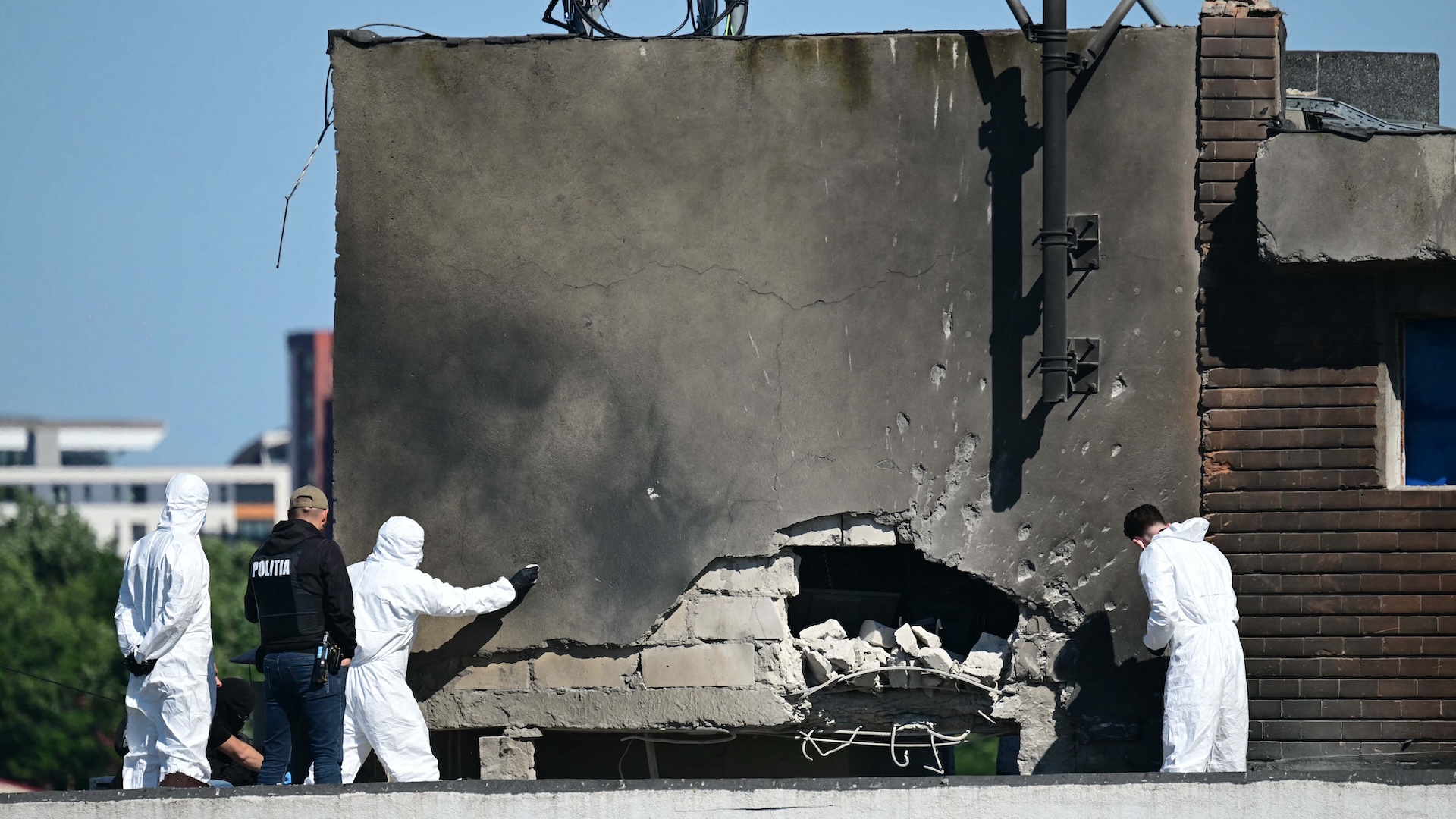
Police and forensic investigators stand on the rooftop as they examine the location of impact (L) over a damaged apartment after a Russian drone struck an apartment building in Galati, eastern Romania. A Russian drone wounded two people as it struck an apartment building in NATO-member Romania, its defence ministry said on May 29, 2026, the latest spillover from the four-year war into neighbouring states. (Photo by Daniel MIHAILESCU / AFP via Getty Images)
Police and forensic investigators examine the location of impact over a damaged apartment after a Russian drone struck an apartment building in Galati, eastern Romania. Photo by Daniel MIHAILESCU / AFP DANIEL MIHAILESCU

Considering the intensity of Russian aerial bombardment of Ukraine, and the proximity of NATO borders, it was really only a matter of time until an incident like this occurred.

Already, Romania expanded its no-fly zone along a section of the border with Ukraine to up to 20 miles inside Romania and to a height of 4,000 feet. This was intended as a deterrent against Russian drones from deliberately entering Romanian airspace to reach enemy targets.

TWZ reached out to NATO for details of potential posture changes, and a senior official from the alliance confirmed that a NATO E-3A Sentry Airborne Warning and Control System (AWACS) aircraft was launched today to increase air-domain awareness.

A U.S Air Force E-3 Sentry taxis past a NATO E-3A Airborne Warning and Control System aircraft on June 7, 2017, at NATO Air Base Geilenkirchen, Germany. The aircraft and nearly 100 reservists from the 513th Air Control Group are deployed in support of BALTOPS 2017, which is the first time a U.S. E-3 Sentry has supported a NATO exercise in 20 years. (U.S. Air Force photo/2nd Lt. Caleb Wanzer)
A U.S Air Force E-3 Sentry taxis past a NATO E-3A Airborne Warning and Control System aircraft at NATO Air Base Geilenkirchen, Germany. U.S. Air Force photo/2nd Lt. Caleb Wanzer Capt. Caleb Wanzer

The same NATO official told us that one way to avoid similar incidents in the future would be to bring the MEROPS counter-drone system to Romania under NATO command and control.

“Another way is for Romania and other allies to continue the acquisition of more capabilities as part of the Eastern Flank Deterrence Initiative, which integrates sensing, decision-making and precision effects into a resilient, defense-in-depth concept,” the official added.

As you can read about here, MEROPS counter-drone systems, initially used in Ukraine, have also been deployed to protect U.S. troops from Iranian Shahed-136 munitions. The MEROPS is a small, relatively inexpensive drone built specifically to intercept long-range one-way attack drones.

Now that a Romanian residential building has been hit and people injured, this may push the needle further and lead to the more comprehensive deployment of counter-drone capabilities in this country and elsewhere on NATO’s eastern flank.

Contact the author: thomas@thewarzone.com


The post Russian Drone Impacts Apartment Building In NATO State Romania, Injuring Civilians appeared first on The War Zone.

“Il senatore di Forza Italia Francesco Silvestro indagato con l’ipotesi di violenza sessuale”

8 June 2026 at 13:30

La Procura di Roma, secondo quanto riporta La Repubblica, ha aperto un fascicolo che vede indagato il senatore di Forza Italia Francesco Silvestro con l’ipotesi di violenza sessuale. Nel procedimento risulterebbe iscritto nel registro degli indagati anche un carabiniere, indicato come Antonio P., per tentata violenza privata. Il caso nasce dalla denuncia presentata da una donna di 52 anni, agente di commercio nel settore vinicolo, che ha riferito agli inquirenti un episodio avvenuto all’interno dello studio del parlamentare, nel palazzo di San Luigi de’ Francesi.

La denuncia

Secondo la ricostruzione della presunta vittima, al centro dell’indagine, l’incontro sarebbe avvenuto nel febbraio 2025, quando la donna si era recata nell’ufficio del senatore per discutere di una possibile fornitura di vini. In quel contesto, Silvestro avrebbe pronunciato frasi a contenuto allusivo, tra cui “Il vino mi eccita, perdo i freni”, per poi, sempre secondo la denuncia, costringere la donna a subire un atto sessuale senza consenso. La notizia, anticipata ieri da Repubblica, avrebbe portato nelle scorse ore all’iscrizione nel registro degli indagati sia del senatore sia del carabiniere coinvolto nella vicenda. Un atto, secondo quanto trapela dagli ambienti giudiziari, disposto anche a tutela degli stessi indagati, per garantire la piena partecipazione alle indagini e l’esercizio dei diritti difensivi fin dalle prime fasi del procedimento.

Le “scuse”

Silvestro, che oltre all’incarico parlamentare ricopre anche la presidenza della Commissione bicamerale per le questioni regionali, non è stato ancora ascoltato dai magistrati. Interpellato aveva respinto le accuse definendole “assurde”, confermando l’incontro ma negando qualsiasi violenza e ipotizzando invece una possibile strumentalizzazione della vicenda. “Magari mi vuole estorcere qualcosa”, aveva dichiarato il senatore, aggiungendo: “Denunciasse, poi ci divertiamo”. “Io sono un bel ragazzo, lei è normale” una delle frasi del parlamentare.

Proprio su queste affermazioni è intervenuto lo stesso Silvestro con una successiva nota di chiarimento. “Chiedo scusa per le parole che ho pronunciato nel corso di un colloquio telefonico con una giornalista – ha spiegato il senatore – Sono stato colto di sorpresa da quanto mi veniva attribuito, un episodio e accuse rispetto alle quali ho già dichiarato attraverso il mio legale stupore e totale estraneità”. Il parlamentare ha poi aggiunto: “Mi sono anche dichiarato pronto, da subito, a fornire tutti i chiarimenti necessari. Mi scuso per espressioni che credevo colloquiali, ma che considero comunque sbagliate e che nel contesto di una telefonata possono aver generato fraintendimenti o leso sensibilità”.

Il racconto della donna

“E questa storia mi fa solo stare male. Ma quello che è uscito è la pura verità” ha dichiarato la 52enne in una intervista al quotidiano La Repubblica. Il punto di partenza del racconto della donna, agente di commercio nel settore del vino, che ha deciso di parlare della vicenda dopo aver ottenuto garanzie sull’anonimato. La signora ricostruisce un incontro avvenuto a Roma con il senatore Silvestro, dichiarando di non averlo mai conosciuto prima e di essere stata convocata per motivi professionali legati a possibili forniture: “Mai”. L’incontro, inizialmente formale, sarebbe poi degenerato in un episodio da lei descritto come non consensuale: “Assolutamente no”.

Racconta di essersi sentita bloccata durante i fatti: “Ero come raggelata. Un senatore. Nel suo studio”, e di essere poi uscita “sconvolta” dall’edificio. In seguito afferma di aver ricevuto dal senatore un messaggio con un link a un hotel, senza mai rispondere. Spiega il ritardo nella denuncia con il trauma subito e il percorso psicologico intrapreso: “Non dormo più bene, non sono rilassata. Ma sono serena”. Aggiunge di aver cercato supporto legale pochi mesi dopo i fatti, contattando lo studio dell’avvocata Giulia Bongiorno, senza però proseguire con quell’interlocuzione. Riferisce anche di pressioni e intimidazioni successive attribuite a un intermediario, il carabiniere che sarebbe indagato: “Che mi sarei rovinata la vita, non avrei più lavorato”. Infine, commenta con durezza le frasi attribuite al senatore sul suo aspetto fisico: “Che squallore. […] Che non sono Miss Universo”, ribadendo la decisione di denunciare e la fiducia nella giustizia: “Io ci credo, nelle istituzioni”.

L'articolo “Il senatore di Forza Italia Francesco Silvestro indagato con l’ipotesi di violenza sessuale” proviene da Il Fatto Quotidiano.

Putin über einen möglichen Angriff Russlands auf die NATO und die Nazi-Verehrung in der Ukraine

8 June 2026 at 08:00
Es ist zu einer Tradition geworden, dass Putin sich im Zuge des Petersburger Wirtschaftsforums stundenlang den Fragen der international wichtigsten Nachrichtenagenturen stellt. Der Anti-Spiegel übersetzt danach die Fragen und Antworten, die für das deutsche Publikum interessant sind. Ich übersetze hier eine Frage, die die dpa nach den angeblichen russischen Plänen für einen Angriff auf die […]
❌