In a wide-ranging interview, an upbeat Ukrainian president also discusses Donald Trump, King Charles, and how Kyiv is prepared to share its experience of drone warfare with the west
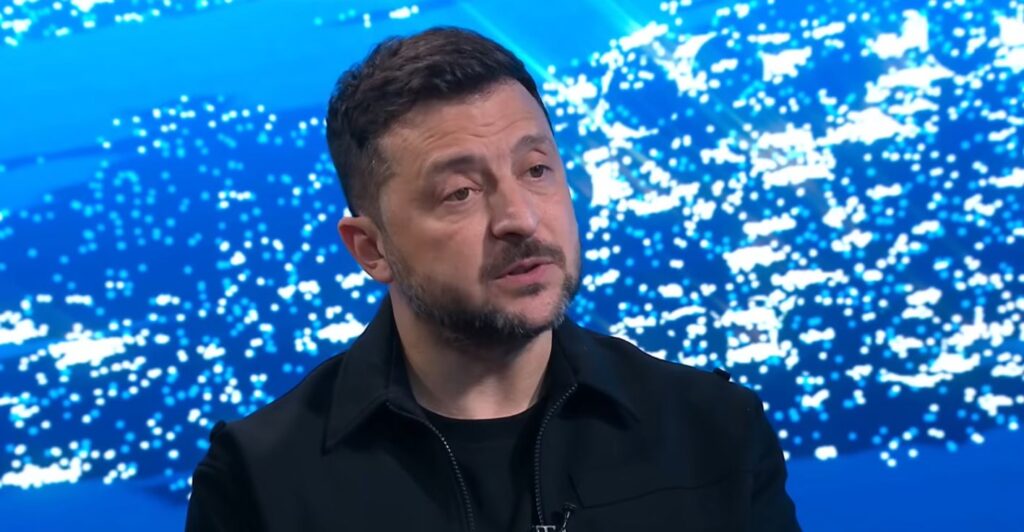
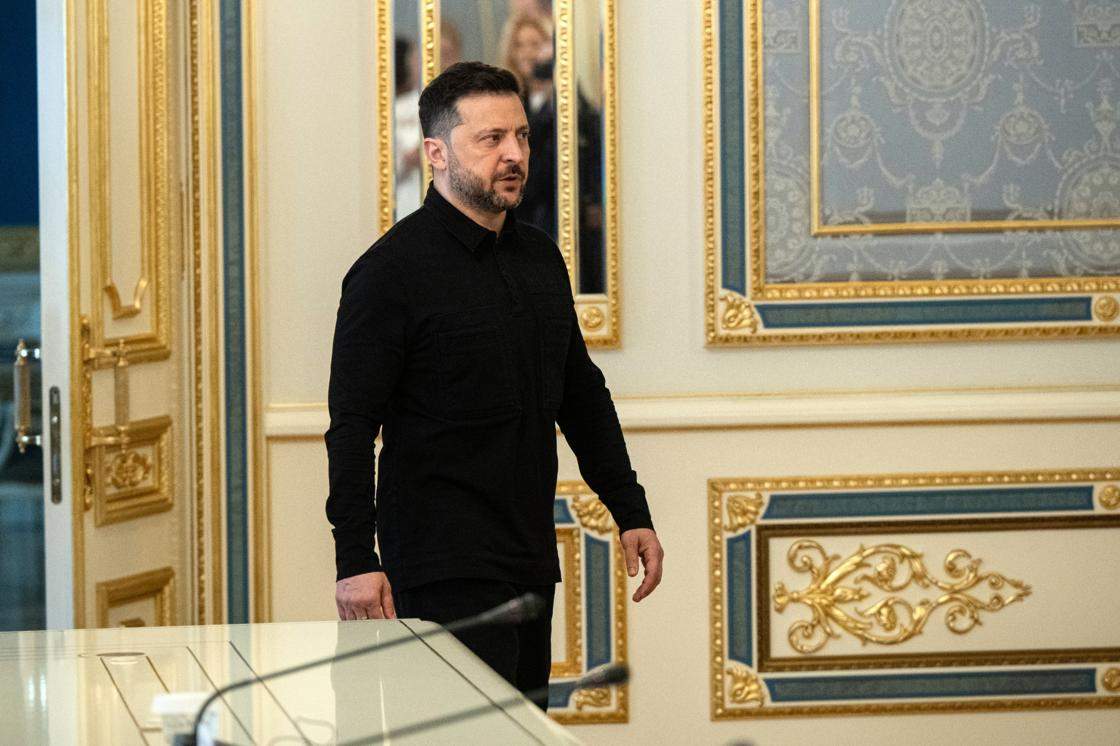
Sitting down with the Guardian in London, Volodymyr Zelenskyy seems cheerful. More than four years after Vladimir Putin’s full-scale invasion, he believes Europe’s biggest war since 1945 appears to be slowly turning in Ukraine’s favour. The military situation is the most promising it has been for Kyiv for two and a half years, Zelenskyy says. “We can’t say Russia is losing this war. But we can say they are losing the initiative each day, day by day,” he insists.
Over the past week the Kremlin has suffered a series of setbacks. Long-range Ukrainian drones have hit Putin’s home city of St Petersburg, setting fire to oil terminals and sending smoke billowing above the skyline. Similar attacks have crippled occupied Crimea. A key supply road is littered with burning lorries and tankers and the peninsula seized by Russia in 2014 is experiencing severe fuel shortages.
Volodymyr Zelenskyy has revealed that he plans to invite King Charles on a state visit to Ukraine as early as this year, which would make him the most senior royal to travel to Kyiv since Russia’s full-scale invasion.
The Ukrainian president said he had a close relationship with the king, whom he has met on numerous occasions, including when he gave a public show of support after Zelenskyy’s explosive visit to the White House last year.
Exclusive: Ukrainian president says ‘small mistake can break a big friendship’ in wide-ranging interview with Guardian
Volodymyr Zelenskyy has said the decision by some Reform UK councils to take down the Ukrainian flag was the kind of “small mistake that can break a big friendship”, as he underlined the significance of strong bilateral relations.
The Ukrainian president tempered his rare foray into UK domestic politics by stressing how much the two countries “need each other” in the battle against Russia, which he said posed a threat not only to Ukraine but to Britain too.
Ukrainian President Volodymyr Zelenskyy is willing to stop the war along the current line of contact and move to negotiations, he said in a Sky News interview. He presented the idea as the quickest route to a ceasefire, while rejecting any deal that hands Russia Ukrainian land. He also urged allies to close Ukraine's air defense gaps.
Russia has rejected every ceasefire Ukraine and the US have put forward and keeps refusing to halt an all-out war it has waged since its full-scale invasion in 2022. Whether a freeze ever takes hold rests with the Kremlin, whose demands still stretch far beyond the territory its army has managed to seize.
"The quickest way" to stop the fighting
Asked where he would freeze the lines if Russia agreed to a ceasefire, Zelenskyy said he is ready to accept today's positions.
"Yes, it's the quickest way," he said.
He insisted this is not a giveaway. He does not want to simply freeze the conflict, but to stop the war so it cannot restart "because of some crazy people." A freeze would let Ukraine save children's lives and bring soldiers home. Any ceasefire must be total and free of Russian games, watched by American and European partners. Only then would the sides sit down to end the war through diplomacy. A ceasefire, he added, is "the biggest compromise from our side."
The most urgent need from allies is air defense, Zelenskyy said. Ukraine faces a large deficit in anti-ballistic missiles, with US transfers slowed by the war in the Middle East. He again asked for more Patriot systems. Russia attacks daily, usually with around 300 long-range explosive drones. On the heaviest nights it launches 600 to 850 drones and dozens of missiles.
Ukraine's interceptors now down most of them, but the gaps remain dangerous.
Explore further
10% now, 23% after a ceasefire, 59% only at peace—Ukraine’s verdict on a wartime vote hasn’t moved all year
Ukraine's own arsenal
Ukraine has built more than 400 defense companies since the full-scale invasion, Zelenskyy said. Dozens rank among the world's strongest. They produce drones and missiles, some underground, and the country is close to its own ballistic missile. Ukraine can now share that expertise with allies and even build air defenses for Europe, he said. Kyiv aims to mass-produce drones on a scale few countries can match.
Bringing the war back to Russia
Ukraine's recent strikes on St. Petersburg and the Moscow region answer Russian attacks on Ukrainian energy, Zelenskyy said. St. Petersburg was hit twice last week. He wants Russians far from the front to feel the war they started. Russian President Vladimir Putin understands only "total pressure," he said. Sanctions on Russia's shadow fleet of sanctions-dodging tankers and its oil and gas exports hit hardest.
Zelenskyy said Putin does not want to stop the war and is signaling he wants to win. Whether the fighting ends "100% depends on his decision," he said. His 4 June open letter, which Moscow called rude and rejected, was meant to force an answer and pierce a Russian public living in "some fantastic world." Russian businessman Roman Abramovich came to Kyiv to carry messages to Putin, Zelenskyy said.
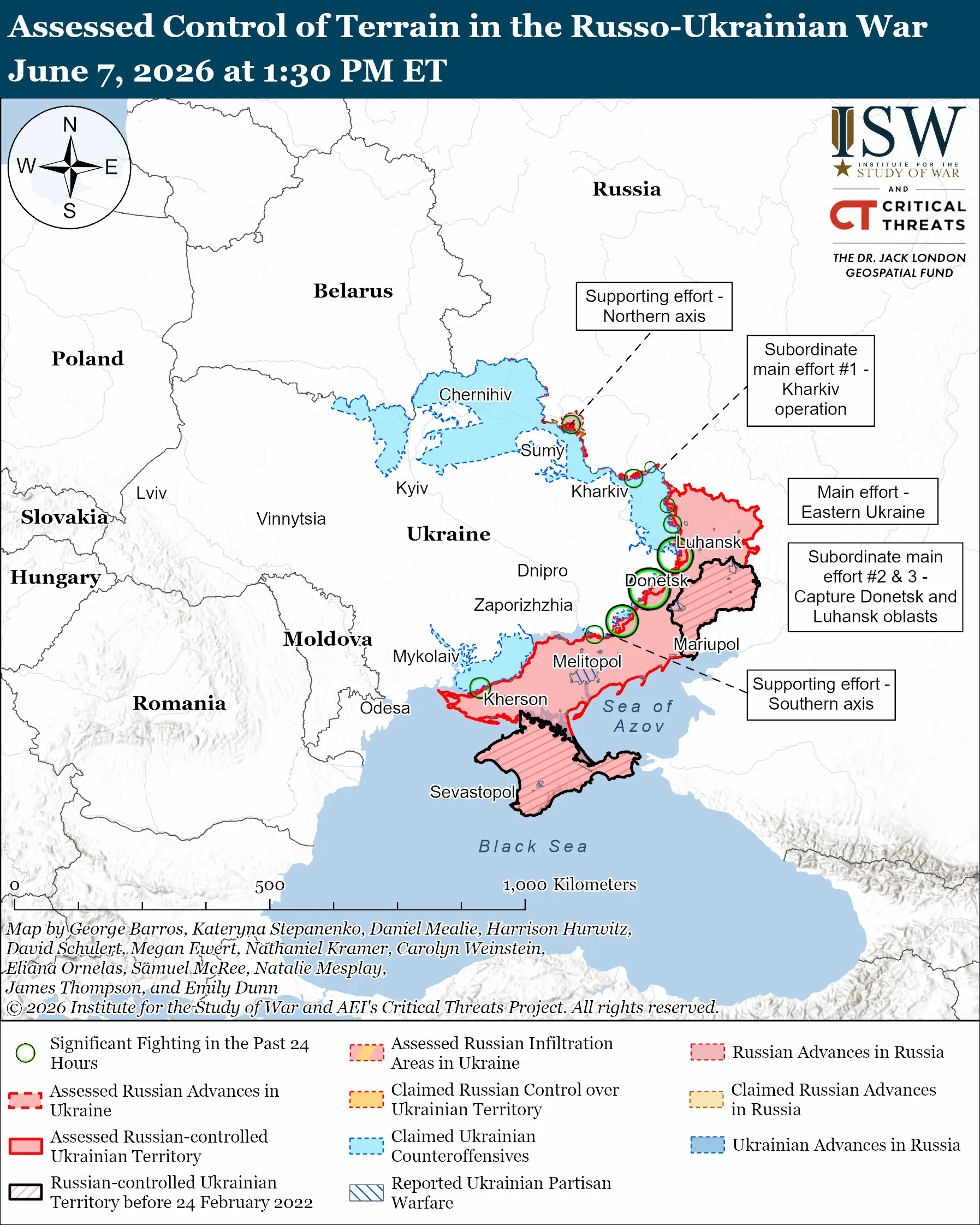
The so-called Donbas is a historic name for Ukraine’s two easternmost regions, Luhansk and Donetsk oblasts. Russia still failed to occupy a small part of Luhansk Oblast, as well as a significant swathe of Donetsk Oblast, which contains the so-called “Fortress Belt” that Russia has failed to break through despite its years-long ongoing offensive campaign. Map: ISW
His key message was on the Donbas: Ukraine will not leave its land, and compromises come only after a ceasefire. He is ready to meet in any format, but not in Moscow, Belarus, or Minsk. Leaders cannot decide "without us about us," he said, in a message aimed at Washington. Russia, by contrast, keeps insisting that Ukraine surrender all of the Donbas first.
Britain, France, and Germany backed Ukraine's terms for ending the war after meeting its President Volodymyr Zelenskyy in London, according to their joint statement. They endorsed Kyiv's push for direct talks with Moscow and an immediate ceasefire, while spelling out what a lasting peace would require. The leaders also called for tightening the squeeze on Russia's war economy and scaling up Ukraine's air defenses.
Russia has been invading Ukraine since 2014 and waging all-out war since February 2022, and with Moscow still rejecting every ceasefire on offer, Kyiv and its Western partners are now trying to map out how the fighting could actually end.
Five conditions for peace
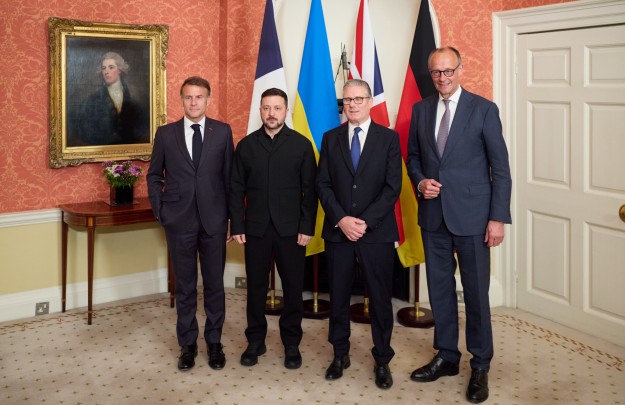
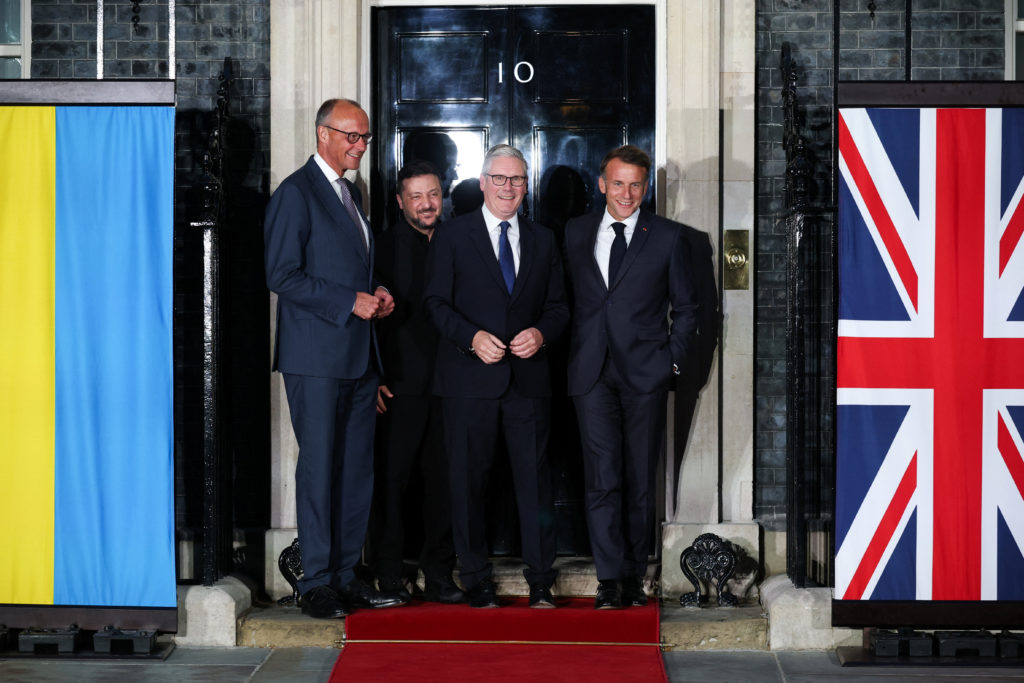
Meeting on 7 June, UK Prime Minister Keir Starmer, French President Emmanuel Macron, and German Chancellor Friedrich Merz set out five conditions for a just and lasting peace. The E3, as the three are known, are Ukraine's leading European backers. Their terms:
An immediate, complete ceasefire, which they urged Putin to accept.
The current front line as the starting point for talks, with no borders changed by force and Ukraine free to choose its alliances.
Robust, legally binding security guarantees once a ceasefire holds, building on the allies' December 2025 Berlin and January 2026 Paris commitments, including a multinational force in Ukraine.
Russian assets remain immobilized until Moscow ends its aggression and compensates Ukraine.
European interests safeguarded, with any EU- or NATO-related terms requiring both blocs' consent.
Explore further
“It was never formulated as Ukraine winning”—NATO’s ex-military chief on the missing strategy
Backing for direct talks with Moscow
The leaders commended Ukraine's president for his 4 June letter to Putin calling to end the war. They backed direct Ukraine-Russia dialogue, with the US and Europe actively taking part, to secure a ceasefire. Europe must play a role in any settlement, they said, working closely with Kyiv, the rest of Europe, and Washington.
Explore further
Germany, France, and UK sketch plan to bring Putin to the negotiating table
Pressure on Russia and more air defense
They denounced Russia's barrage of missiles and drones, including repeated strikes with the Oreshnik, a Russian missile. They also condemned dangerous Russian drone incursions into NATO territory and offered condolences to the victims. The leaders welcomed Ukraine's recent battlefield gains, from liberated territory to advances in drone warfare. They agreed to coordinate more support at the coming G7 summit in Evian, the next Coalition of the Willing meeting, and the NATO summit in Ankara. That includes choking off more of Russia's wartime revenue and a bigger military pledge at the NATO talks. They also urged scaling up interceptor production and co-developing anti-ballistic and deep-strike weapons.
The leaders of the U.K., Ukraine, France and Germany discussed the "urgent need" to ramp up production of weapons to combat Russia's powerful hypersonic Oreshnik ballistic missiles in a meeting in London on Sunday.
Keir Starmer hosts Ukrainian, French and German leaders in Downing Street after Russia fires hypersonic weapons at Ukraine
Volodymyr Zelenskyy and the leaders of the UK, France and Germany discussed “the urgent need to scale up” Ukraine’s air defences and deep-strike capabilities in London on Sunday night, after Russia fired hypersonic weapons at Ukraine, Downing Street said.
The meeting of Ukraine’s staunchest allies in London came hours after a Russian drone strike damaged a storage centre for spent nuclear fuel nine miles from the Chornobyl nuclear power plant.
Attack was ‘extremely vile’ and deliberate, says Ukraine’s president VolodymyrZelenskyy
A Russian Shahed drone has substantially damaged a building used to store spent nuclear fuel close to the disused Chornobyl nuclear power plant, in what Ukraine’s president described as a deliberate and “extremely vile” attack.
While the structure – the reception building of the spent fuel storage facility – was empty of containers at the time, the targeting of the sensitive site appeared to be direct messaging from Moscow amid an intensifying battle of long-range aerial strikes in which high-profile locations on both sides have been hit.
Num momento em que a diplomacia volta a falhar, vagas de drones ucranianos chegaram à região de São Petersburgo, centro simbólico do poder russo, testando as defesas aéreas da cidade numa altura em que ali decorria o “Davos da Rússia”. A Ucrânia lançou este sábado centenas de drones contra a Rússia, provocando a morte de uma pessoa e um incêndio num depósito petrolífero no último dia da 29.ª edição do St. Petersburg International Economic Forum, o principal fórum económico do país, frequentemente descrito como o “Davos russo”. Muitos dos drones tiveram como alvo a própria cidade de São Petersburgo, onde
“Não faz sentido”, disse o presidente da Rússia. Presidente da Ucrânia fala em “resposta fraca” de quem não quer terminar a guerra. Foi um avanço inédito na guerra na Ucrânia. Não no terreno, mas na diplomacia, no “diálogo” entre os presidentes de Ucrânia e Rússia. Volodymyr Zelenskyy escreveu uma carta aberta a Vladimir Putin, a propor um encontro entre os dois. “A Ucrânia propõe acabar com esta guerra através de um envolvimento directo entre nós. Proponho um encontro”, escreveu o presidente da Ucrânia na carta. Primeiro, o Kremlin disse que Zelenskyy poderia encontrar-se com Putin em Moscovo “a qualquer momento”.
“A Ucrânia propõe acabar com esta guerra através de um envolvimento directo entre nós. Proponho um encontro”, afirmou Zelensky na carta. O Kremlin diz que o presidente ucraniano pode encontrar-se com Putin em qualquer altura — em Moscovo. Putin admite um acordo, se a Ucrânia fizer cedências. O presidente da Ucrânia, Volodymyr Zelensky, propôs esta quinta-feira um encontro presencial com Vladimir Putin, numa rara carta aberta dirigida ao líder russo, pouco depois de o chefe do Kremlin ter admitido que Moscovo precisa de reforçar as suas defesas aéreas na sequência de uma vaga de ataques ucranianos. O presidente dos Estados
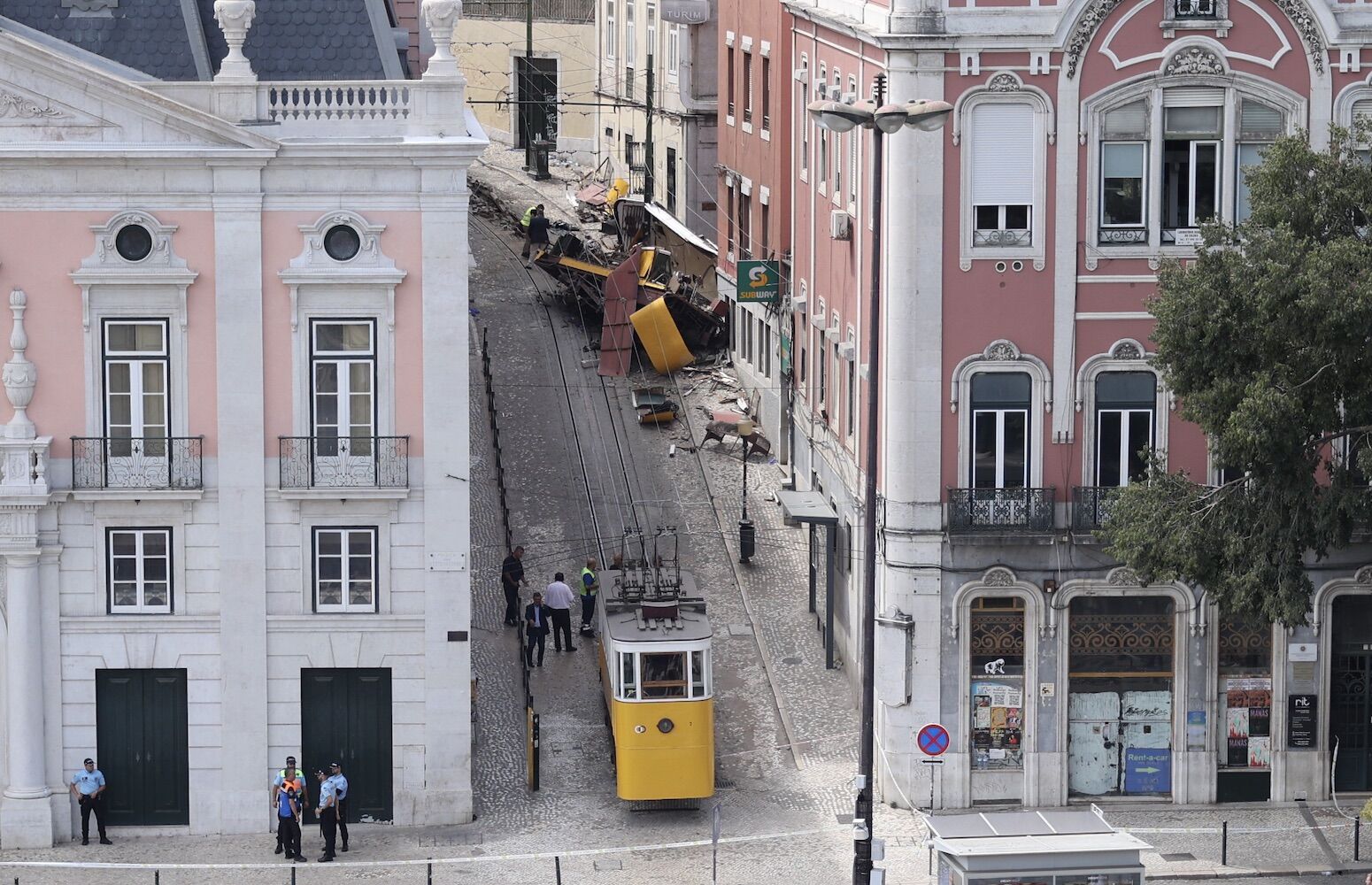
O Presidente ucraniano, Volodymyr Zelenskyy, é uma das testemunhas indicadas pela família de uma das vítimas do acidente no Elevador da Glória, numa ação em que é exigida uma indemnização superior a um milhão de euros à Carris, à Fidelidade e à empresa responsável pela manutenção do equipamento, a Mntc. De acordo com o Público, Zelenskyy é chamado como testemunha uma vez que foi um dos líderes internacionais que endereçou publicamente a família após o acidente. Ana Paula, funcionária da Santa Casa da Misericórdia de Lisboa, integrava a equipa responsável pelos processos de adoção, que chegou a coordenar durante alguns

 Login
Login