Normal view

The Prince of Ancient Iran Who Fought in the Trojan War

7 June 2026 at 17:31
Ancient Elamite ziggurat Choqa Zanbil in Iran
Ancient Elamite ziggurat Choqa Zanbil in Iran. Credit: Wikimedia Commons, GFDL

In the Trojan War of Greek mythology, many nations were allied with Troy to fight against the Greeks. This included many of the nations of ancient Anatolia. Perhaps the most surprising participant in the Trojan War, however, was a prince from ancient Iran. He was Memnon, best known as the Ethiopian ruler who died at the hands of Achilles in the final year of the war.

Memnon, king of the eastern Ethiopians

Since Memnon is usually remembered as being a king of the Ethiopians, how can he have been from ancient Iran? The reason is that there was more than just one group of people known to the Greeks as Ethiopians.

For example, notice the words of Greek historian Herodotus of the fifth century BCE in his description of the large army of Xerxes the Great:

“Ethiopians above Egypt and the Arabians had Arsames for commander, and the Ethiopians of the east​ (for there were two kinds of them in the army) served with the Indians.”

This shows that the Greeks recognized the existence of Ethiopians outside of Africa. Specifically, these other Ethiopians lived in the east, evidently not too far from India. Since Memnon was the king of the Ethiopians, he could potentially have been the king of either the eastern Ethiopians or the African ones.

It is worth mentioning that in ancient Greek, the word Αἰθίοψ (Ethiops) was used not only to describe a specific group of people, but also more generally to refer to individuals with darker skin. The term is a compound of αἴθω (to burn) and ὤψ (face or appearance), literally meaning “burnt-face.” It appears frequently in early Greek literature, such as Homer’s epics, where Ethiopians are depicted as distant, noble figures living at the edges of the known world, rather than as members of a clearly defined nation.

The Ethiopians of Iran

Herodotus himself states that the city of Susa, the ancient capital of Elam (a prominent region in what is now Iran), was known as the city of Memnon. This suggests that Memnon was the king of the eastern Ethiopians, evidently a people in the region of Iran.

This is confirmed by Ctesias, just a few decades after Herodotus. According to this Greek historian, Memnon’s father, Tithonus, was the ruler of Persia. He was either subject to or allied with the king of the Assyrian Empire.

The territory of Persia in the time of the Assyrian Empire corresponded to a large part of what is now Iran. According to Ctesias, Memnon built a palace for himself at Susa. He goes on to claim that Memnon’s army, which he led to Troy, was composed of many Ethiopians and Susians, or inhabitants of Susa.

Hence, it is clear that Memnon in the legends of the Trojan War was originally supposed to have been from ancient Iran.

As for why the Greeks called the inhabitants of that region ‘Ethiopians’, we cannot be sure. However, it may be related to the use of the word ‘Cissians‘ (‘Kíssioi’ in Greek) for the inhabitants of the region of Elam. The Greeks might have confused this for ‘Kush’, the name for the kingdom of the Ethiopians south of Egypt.

How ancient Iran participated in the Trojan War

Ctesias provides the most detailed early account of this army from ancient Iran that fought in the Trojan War. According to Ctesias, King Priam of Troy was subordinate to the king of Assyria, named Teutamos. Due to the difficulties he was facing in the Trojan War, he sent word to Teutamos to ask for help.

As a result, Teutamos sent a large army of 10,000 Ethiopians and 10,000 Susians under the command of Memnon. This army from ancient Iran marched from the furthest corner of the Assyrian Empire over to Troy. Ctesias wrote:

“Memnon assisted the Trojans with 20,000 infantry and 200 chariots and… he was admired for his courage and for killing many Greeks in battle.”

Despite his prowess in battle, Ctesias goes on to explain that the Thessalians killed him. This refers to his death at the hands of Achilles, as per other sources. Achilles was from the kingdom of Phthia in ancient Thessaly.

Did an army from ancient Iran fight in the Trojan War?

Could Memnon have been a historical king or prince of Elam in ancient Iran? Some scholars have speculated that he might be identical to Humban-Numena I, the king of Elam in the Bronze Age. Furthermore, the latter half of his name is admittedly similar to ‘Memnon’.

However, he likely reigned in the first half of the 14th century BCE. Therefore, this king from ancient Iran lived too early to have fought in the Trojan War.

Two other possibilities are Humban-Numena II, possibly in the 11th century BCE, and Humban-Numena III, who lived at the end of the eighth century BCE. The latter’s name is often written in modern sources as “Humban-menanu.” The similarity to “Memnon,” while not exact, is there.

This latter candidate, although living much later than the traditional date of the Trojan War, is particularly noteworthy given Ctesias’ chronological information. He places Memnon’s activities at the height of the Assyrian Empire.

Another candidate from approximately the same time is a prominent Elamite known only as Menanu, referenced in a letter from Ashurbanipal, the king of Assyria. The letter makes it clear that Menanu is a supporter of Assyria. This fits what Ctesias tells us about Memnon.

However, this does not necessarily mean that an army marched from ancient Iran to fight in the Trojan War. In part, this depends on when the Trojan War occurred, a continued historical debate.

Nevertheless, the legend itself is clear. Memnon led an army from ancient Iran to Troy, where they fought in the Trojan War against the Greeks.

Was Putin über mögliche Verhandlungen mit der EU über den Ukraine-Konflikt und die AfD gesagt hat

7 June 2026 at 14:53
Es ist zu einer Tradition geworden, dass Putin sich im Zuge des Petersburger Wirtschaftsforums stundenlang den Fragen der international wichtigsten Nachrichtenagenturen stellt. Der Anti-Spiegel übersetzt danach die Fragen und Antworten, die für das deutsche Publikum interessant sind. Ich übersetze hier den Dialog, den Putin mit dem Vertreter der dpa geführt hat, der mit der Einleitung […]

Why Donald Trump has been unable to end the Gulf War for four months

7 June 2026 at 09:59
The US and Israeli aggression against Iran, which began on February 28, has undermined confidence in the American administration, especially given that Donald Trump has repeatedly promised to renounce new wars of aggression. It has shaken international affairs, led to a serious energy crisis, seriously complicated the economic life of many countries in the Global […]

Worum es bei den Wahlen in Armenien geht und wie die EU versucht, die Wahlen zu beeinflussen

7 June 2026 at 08:00
Ich schreibe häufig über Armenien, da das Land eine wichtige geopolitische Rolle im Südkaukasus spielt, besonders jetzt, da in der Region ein Wettbewerb zwischen Russland, der Türkei und dem Westen um Einfluss stattfindet. Seit inzwischen acht Jahren regiert Premierminister Nikol Paschinjan das Land, der nach einer Farbrevolution an die Macht gekommen ist und sich für […]

A ogni arrivo a Lampedusa, Bruxelles scopre di avere una coscienza. Per rimetterla subito nel cassetto

7 June 2026 at 06:42

Lampedusa è di nuovo lì, come un promemoria che l’Europa si ostina a ignorare. Ogni volta che succede qualcosa sull’isola, Bruxelles scopre di avere una coscienza. E puntualmente la rimette nel cassetto. Ancora sbarchi nell’ultimo mese sul molo Favaloro, che ne seguono diversi altri. Anche se nessuno ne parla, siamo nel pieno della stagione degli sbarchi!

Sbarco è una parola che confonde. È un termine non umanitario, piuttosto è militare. Si sbarca in Normandia, non a Lampedusa.

Cosa c’è di umano nel chiamare sbarco, ad esempio, quello avvenuto a metà maggio caratterizzato dalla storia di una neonata ivoriana di un mese morta di freddo? Vestiti fradici, barca di sette metri, partenza da Sfax-El Amra. I rianimatori hanno provato tutto, ma il suo cuore aveva già deciso che non valeva la pena aspettare l’ennesima riunione dei ministri dell’Interno. La seppelliranno a Cala Pisana, accanto a tombe senza nome: il cimitero più visitato dai vivi solo quando c’è da fare passerelle. Accanto alla morte della bambina, l’ennesimo orrore: diverse donne stuprate durante il viaggio. Lo conferma Francesco D’Arca, responsabile del poliambulatorio dell’isola: “Non è un episodio isolato, ma l’ennesima ferita aperta nel Mediterraneo”.

Ferite sul corpo, certo, ma soprattutto dentro. Solita storia: mentre i migranti provano a ricominciare, medici, psicologi e volontari tengono insieme i pezzi di un’umanità che i governi europei trattano come un fastidio stagionale. Dopo il ciclone Harry, che tra il 19 e il 21 gennaio ha devastato diverse coste di Sicilia e Calabria, il mare è diventato una lavatrice impazzita. Più di 1.800 persone morte. In alcuni giorni si muore più nel Mediterraneo che in un giorno di guerra in Iran.

La rotta tunisina resta una delle più pericolose al mondo, ma tranquilli: c’è sempre qualcuno pronto a spiegare che “la situazione è sotto controllo”. In questo scenario, la visita di Papa Leone il prossimo 4 luglio non è un evento: è un dito nella piaga. Tredici anni dopo Papa Francesco e la sua “globalizzazione dell’indifferenza”, un nuovo pontefice torna nello stesso punto della ferita, perché la ferita è ancora lì. E sanguina.

Papa Prevost arriva mentre il Mediterraneo vive una delle sue stagioni più tragiche. La sua presenza non sarà la solita foto da tg: sarà un appello diretto ai governi europei ad aprire corridoi umanitari, a creare vie legali a superare la logica emergenziale che da anni è diventata la foglia di fico perfetta per non fare nulla. Eppure, anche in mezzo alla distrazione generale, questa visita ricorda che l’umanità concreta esiste: volontari, medici, famiglie, comunità locali che non hanno mai smesso di accogliere. Senza decreti, senza conferenze stampa, senza hashtag.

Di fronte alla morte della neonata, alle donne violentate, ai corpi senza nome, risuonano ad esempio le parole del cardinale Matteo Zuppi, uno che non ha paura di dire le cose come stanno: “Non possiamo permettere che il Mediterraneo diventi un confine di morte. È il luogo dove si misura la nostra umanità, non la nostra paura.” E ancora: “L’Europa deve decidere se vuole essere una comunità solidale o un condominio dove ognuno chiude la porta.” Tradotto: o siamo un continente, o siamo un insieme di citofoni.

Lampedusa pertanto non è un confine periferico ma piuttosto il centro morale dell’Europa. La morte della neonata, le violenze sulle donne, le 1.800 vite inghiottite dopo il ciclone Harry: tutto questo non chiede solo lacrime, ma politica. Non commozione, ma decisioni. La visita di Papa Prevost arriva come un invito — o forse un monito — a non voltarsi dall’altra parte. Perché, come ricordava Papa Francesco nel 2013, “le migrazioni non sono un’emergenza, ma un segno dei tempi”. I tempi e le troppe morti, oggi, ci chiedono coraggio e non comunicati stampa.

L'articolo A ogni arrivo a Lampedusa, Bruxelles scopre di avere una coscienza. Per rimetterla subito nel cassetto proviene da Il Fatto Quotidiano.

Trump’s AIPAC-Funded Political Execution of Thomas Massie: The Day MAGA Destroyed itself!

7 June 2026 at 05:59
Political victories achieved through strict party discipline and powerful financial support often result in a deepening of internal divisions, the consequences of which only become noticeable over time. Back in my days as a young public school teacher in Kentucky, I learned fast that in politics, money talks, and anything else (BS) takes a hike […]

Tacheles #208 ist online

5 June 2026 at 23:00
Petersburg wurde von der Ukraine bombardiert und in Petersburg findet derzeit das Wirtschaftsforum statt, was bedeutet, dass ich viele interessante Treffen habe und spannende Hintergrundgespräche führen kann. Trotzdem haben Robert Stein und ich am Donnerstag die Zeit gefunden, eine weitere Sendung „Tacheles mit Röper und Stein“ aufzuzeichnen. Sollte YouTube die Sendung löschen, finden Sie sie […]

Iran ai Mondiali: arrivano i visti Usa, ma solo per i calciatori. Negato ad almeno 15 membri dello staff

5 June 2026 at 19:30

Il caso diplomatico che rischiava di compromettere la partecipazione dell’Iran ai Mondiali di calcio negli Stati Uniti sembra essersi risolto. I calciatori della nazionale iraniana hanno infatti ottenuto i visti necessari per entrare nel territorio americano e prendere parte alla competizione che inizierà tra pochi giorni. La conferma è arrivata da un funzionario della Casa Bianca, che ha riferito la notizia all’agenzia Reuters. La svolta arriva dopo giorni di incertezza e polemiche. Ma solo ai calciatori: Fonti interne hanno riferito ad Al Jazeera che almeno 15 membri dello staff della nazionale iraniana si sono visti negare il visto negli Stati Uniti. Si tratta di allenatori, personale tecnico e dirigenti. Le stesse fonti dicono che alcuni di coloro a cui è stato negato il visto erano ufficialmente riconosciuti dalla FIFA come parte dello staff tecnico e/o di allenatori.

Soltanto nelle scorse ore l’ambasciatore iraniano in Messico, Abolfazl Pasandideh, aveva denunciato pubblicamente il mancato rilascio dei visti ai giocatori, sottolineando come la squadra fosse ancora bloccata a dieci giorni dall’esordio previsto a Los Angeles. Una situazione che aveva alimentato timori sulla possibilità che la nazionale iraniana non riuscisse a raggiungere gli Stati Uniti in tempo per l’inizio del torneo.

Le restrizioni

La vicenda aveva assunto rapidamente una dimensione politica. L’Iran figura infatti tra i Paesi colpiti dalle nuove restrizioni all’ingresso negli Stati Uniti introdotte dall’amministrazione Trump. Sebbene gli eventi sportivi internazionali prevedano generalmente deroghe specifiche per atleti, tecnici e delegazioni ufficiali, il ritardo nell’emissione dei documenti aveva sollevato interrogativi sull’effettiva applicazione di tali eccezioni. Nei giorni scorsi la federazione iraniana aveva scelto di trasferire la squadra in Messico, trasformando il Paese nordamericano in una sorta di base operativa temporanea in attesa dello sblocco della situazione. Una soluzione logistica necessaria per non compromettere la preparazione alla competizione e per consentire alla delegazione di essere pronta a partire non appena fosse arrivato il via libera dalle autorità statunitensi.

L’annuncio della Casa Bianca mette ora fine, almeno sul piano pratico, a una vicenda che aveva suscitato preoccupazione sia nel mondo del calcio sia in quello diplomatico. Con i visti finalmente concessi, la nazionale iraniana potrà raggiungere gli Stati Uniti e preparare regolarmente il proprio debutto mondiale.

Il significato

La partecipazione dell’Iran assume inoltre un significato particolare perché la squadra si prepara a giocare il Mondiale mentre il Paese è coinvolto in un conflitto con una delle nazioni ospitanti, una situazione senza precedenti nella storia della competizione.

Durante il ritiro in Turchia, dove la nazionale ha trascorso oltre due settimane prima di trasferirsi in Messico, alcuni giocatori hanno raccontato all’Associated Press le difficoltà di preparare un appuntamento sportivo di tale portata mentre si seguono quotidianamente le notizie provenienti dal proprio Paese. “Non è facile”, ha spiegato il centrocampista Saeid Ezatolahi, alla sua terza Coppa del Mondo. “La situazione politica può influenzare la mentalità dei giocatori e della gente”.

Nonostante il contesto, i calciatori insistono sulla volontà di rappresentare il Paese e offrire un momento di unità a una popolazione provata dalla guerra. “Sappiamo che il nostro popolo ha sofferto molto e andiamo lì per loro, per ottenere i migliori risultati possibili“, ha dichiarato il 24enne Mohammad Ghorbani. Le prime due partite dell’Iran si giocheranno nell’area di Los Angeles, città che ospita una delle più grandi comunità iraniane all’estero, composta in larga parte da oppositori del regime di Teheran. “Ci aspettiamo molti tifosi allo stadio e molta pressione”, ha detto ancora Ezatolahi. “Il nostro dovere è lottare per il nostro popolo, rappresentare il nostro Paese e dimostrare quanto valiamo”. Un messaggio condiviso anche da Ghorbani: “Vogliamo portare gioia agli iraniani e mostrare al mondo la forza del nostro popo

L'articolo Iran ai Mondiali: arrivano i visti Usa, ma solo per i calciatori. Negato ad almeno 15 membri dello staff proviene da Il Fatto Quotidiano.

Los Angeles Greek Film Festival Marks 20th Edition With Orpheus Awards in Hollywood

5 June 2026 at 18:29
Guests and honorees pose on the red carpet at the 20th Los Angeles Greek Film Festival Closing Night in Hollywood.
Guests and honorees gather on the red carpet during the 20th Los Angeles Greek Film Festival Closing Night and Orpheus Awards Ceremony at the Egyptian Theatre in Hollywood. Photo: UrbaniteLA

The Los Angeles Greek Film Festival marked its 20th edition in Hollywood with the Orpheus Awards Ceremony, honoring Greek and Cypriot filmmakers and paying tribute to Oscar-winning composer Alexandre Desplat.

The festival’s Closing Night Film and Orpheus Awards Ceremony took place on May 31 at the Egyptian Theatre, in collaboration with the American Cinematheque. This year’s edition brought together filmmakers, artists, industry professionals, and supporters of Greek cinema for a week of screenings, red carpet events, tributes, and awards. The festival’s virtual film program continues through June 14.

Founded in 2007, LAGFF has grown into one of the most important platforms for Greek and Cypriot cinema outside Greece. Over the past two decades, it has screened more than 800 films, hosted over 700 filmmakers, and reached an audience of more than 50,000.

Alexandre Desplat honored at closing night

One of the evening’s major highlights was the presentation of the Honorary Orpheus Award to Alexandre Desplat, one of the most acclaimed film composers working today.

Desplat, who won Academy Awards for his scores for The Grand Budapest Hotel and The Shape of Water, received the honor for his contribution to contemporary cinema. Filmmaker Malcolm Washington presented the award during the Closing Night ceremony, while Fay Lellios produced the tribute.

The evening also included a remembrance tribute to George Kolovos of G.P. Kolovos & Associates, a longtime benefactor of the Los Angeles Greek Film Festival.

“The 20th celebratory edition of LAGFF left indelible memories,” said Aristotle Katopodis, Artistic and Festival Director of LAGFF. “Feting Alexandre Desplat, remembering Dean Tavoularis, and paying respects to our 20-year-long benefactors, the Kolovos family, are images deeply etched in our hearts and souls.”

Katopodis also congratulated the filmmakers whose work was celebrated this year and thanked the festival’s supporters, sponsors, and team for championing Greek cinema.

Alexandre Desplat and Solre Desplat on the red carpet at the 20th Los Angeles Greek Film Festival in Hollywood.
Oscar-winning composer Alexandre Desplat and Solre Desplat attend the 20th Los Angeles Greek Film Festival Closing Night and Orpheus Awards Ceremony in Hollywood. Photo: UrbaniteLA

Hold onto me wins best feature film

The Closing Night Film, Hold Onto Me, directed by Myrsini Aristidou, won the Orpheus Award for Best Feature Film.

The film, which previously won the World Cinema Audience Award at Sundance, was one of the leading titles of this year’s festival. Following the screening, actor Michael Grant hosted a Q&A with Aristidou.

KNX Radio’s Vivianne Linou hosted the Orpheus Awards Ceremony.

2026 orpheus awards winners announced by the Los Angeles Greek film festival

In the animation category, Dream by Semiramis Mamata won the Orpheus Award for Best Animation Film. The Special Jury Award for Animation Film went to Poppy Flowers by Evridiki Papaiakovou.

The Orpheus Award for Best Short Film went to Prelude to a Supernova by Christos Artemiou, while the Special Jury Award for Short Film went to Gekas by Dimitris Moutsiakas.

In the feature film categories, Hold Onto Me by Myrsini Aristidou won Best Feature Film. Krysianna Papadakis and Stergios Dinopoulos received the Orpheus Award for Best Director for Bearcave, while Amerissa Basta received the Special Jury Award for Best Director for Life in a Beat.

The Orpheus Award for Best Performance went to Denise Fraga for Dreaming of Lions. Niovi Charalampous received the Special Jury Award for Best Performance for Smaragda – I Got Thick Skin and I Can’t Jump, while Vangelis Mourikis earned an honorable mention for Patty Is Such a Girly Name.

Audience awards and social justice honors

The Audience Award for Feature Film went to Best Friends Forever by Konstantinos Mousoulis. The Audience Award for Short Film went to The Smoker by Alexa Economacos.

The festival also presented its Social Justice Awards in partnership with Loyola Marymount University’s Bellarmine College of Liberal Arts, Department of Classics and Archaeology.

The Social Justice Award for Short Film went to The Wolves Return by Stelios Moraitidis, while the Social Justice Award for Feature Film went to Maysoon by Nancy Biniadaki.

Award presenters included animator Aliki Theofilopoulos, actor and author Patricia Kara, music composer George Kallis, and film distributor Bill Vergos.

The jury panel included Leo Behrens, Nora Bernard, Karen Cifarelli, Cheng Guo, Harrison James, Chieh-Chih Liao, Eric Nazarian, and Irene Soriano Saxon.

Alexandre Desplat and LAGFF Artistic Director Aristotle Katopodis at the 20th Los Angeles Greek Film Festival in Hollywood.
Honorary Orpheus Award recipient Alexandre Desplat with LAGFF Artistic and Festival Director Aristotle Katopodis at the 20th Los Angeles Greek Film Festival Closing Night in Hollywood. Photo: UrbaniteLA

Los Angeles Greek film festival celebrates orpheus awards at the Egyptian theatre

This year’s Closing Night continued LAGFF’s collaboration with the Egyptian Theatre, Netflix, and the American Cinematheque.

The Egyptian Theatre, one of Hollywood’s most historic movie palaces, opened in 1922 and helped shape the early history of film premieres in Los Angeles. Restored through a partnership between Netflix and the American Cinematheque, the venue now combines its historic character with modern projection capabilities.

For LAGFF, the setting offered a symbolic backdrop for a festival that has spent two decades connecting Greek and Cypriot cinema with the wider Los Angeles film community.

Da Steven Seagal ai fratelli Tate: alla “Davos Russa” tornano gli occidentali (anche Maga). Ospite fisso l’ex cancelliere Schröder

5 June 2026 at 15:07

Il 3 giugno a San Pietroburgo si è aperto il Forum internazionale economico (Spief), un tempo considerato la “Davos Russa”. Il summit non è iniziato però come sperato da Putin. Kiev ha colpito con i suoi droni la città natale del presidente russo, costringendo lo Zar ad accogliere i suoi ospiti internazionali con una densa nube di fumo nero alle spalle causata dalle bombe. Nonostante ciò, nella tre giorni di incontri, sono attesi oltre 20mila partecipanti: tra loro anche vip e persone note al mondo Maga, oltre a Schröder e alla delegazione Usa, come riporta il Corriere della Sera.

Un tempo il Forum di San Pietroburgo era un evento aperto a tutto l’Occidente. Politici, esperti di economia e imprenditori andavano in Russia pronti a investire miliardi a Mosca, tra contratti energetici e forniture strategiche a basso prezzo. Dopo l’invasione in Ucraina nel 2022 però, l’evento si è svuotato quasi totalmente della presenza di europei o americani, sostituiti con rappresentati dei Paesi del Sud Globale, dalle monarchie del Golfo, passando per India, Sud Africa e Brasile. L’unico rimasto sempre vicino è l’ex cancelliere tedesco Gerhard Schröder, ex lobbista e amico di Putin, che il presidente russo vorrebbe come mediatore per l’Ucraina. L’ex leader della Germania non si è mai perso un forum dal 2000 a oggi, e anche quest’anno è presente.

All’evento di quest’anno però qualche personaggio noto al grande pubblico ha deciso di rimettere il naso in Russia. Per la prima volta dal 2022, sulla Neva, il fiume che passa per la città, sarà presenta anche una delegazione ufficiale americana guidata da Rodney Mims Cook jr. Si tratta del capo della Commissione per le belle arti degli Stati Uniti, colui che supervisiona la costruzione della Ballroom che Trump sta realizzando alla Casa Bianca, o almeno che sta provando a fare tra un intoppo e l’altro. Oltre ai politici in veste ufficiale, a titolo privato è presente anche l’attore Steven Seagal, amico personale di Putin che nel 2016 ha anche ricevuto il passaporto russo. La star 74enne vanta perfino il titolo di rappresentante speciale del ministero degli Esteri della Russia per i legami umanitari con Usa e Giappone.

Ma non c’è solo l’attore noto per i suoi colpi di arti marziali. Alla tre giorni di San Pietroburgo presenzia anche Candace Owens, l’influencer americana che piace ai suprematisti bianchi, celebre perché ora dovrà rispondere di diffamazione in una causa con Brigitte Macron, dopo aver accusato la first lady francese di essere nata uomo. Altri rappresentanti fieri del mondo Maga sono i fratelli Andrew e Tristan Tate, ex kickboxer. Come Owens, anche loro sono noti per vicende giudiziarie perché a maggio 2025 sono stati incriminati con 21 capi di accusa dalla procura d’Inghilterra e Galles: i reati contestati includono stupro, lesioni personali, tratta di esseri umani e sfruttamento della prostituzione.

L'articolo Da Steven Seagal ai fratelli Tate: alla “Davos Russa” tornano gli occidentali (anche Maga). Ospite fisso l’ex cancelliere Schröder proviene da Il Fatto Quotidiano.

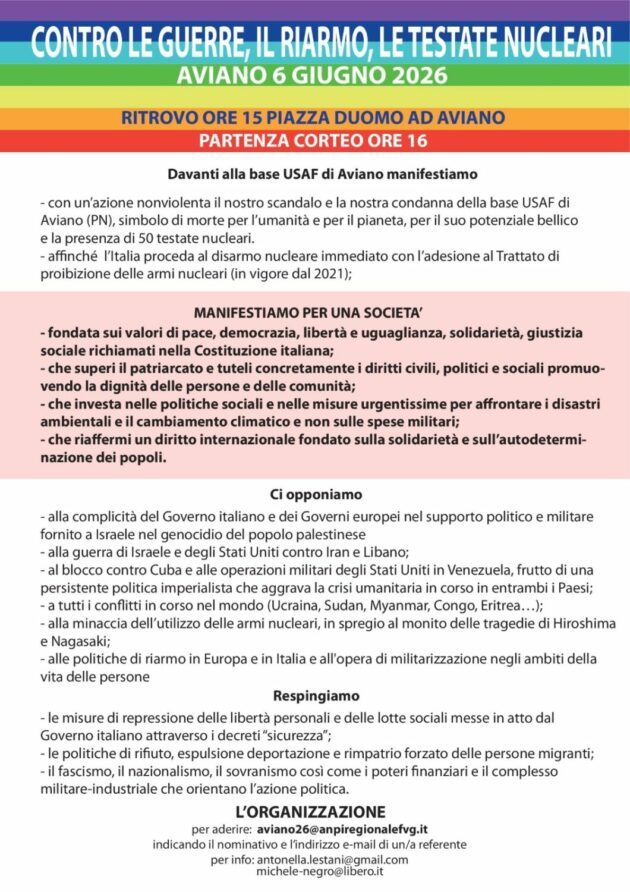
“Stop al supporto dell’Italia alle guerre”: oltre cento sigle convocano un corteo alla base aerea Usa di Aviano

5 June 2026 at 13:34

La base aerea Usa di Aviano è da oltre due mesi una specie di sismografo dell’attività statunitense sul fronte della guerra contro l’Iran. Gli arrivi e le partenze si susseguono, consentendo gli scali di aerei cargo che trasportano materiali non meglio identificati sulle rotte del conflitto. Alcuni partono da Fairford nel Regno Unito e si dirigono verso la Giordania, facendo scalo nel centro friulano o a Ramstein in Germania. Altri aerei sono stati segnalati sulla rotta da Lakenheath, nel Suffolk, a Incirlik, in Turchia ai confini con la Siria (dove si trovano una cinquantina di testate atomiche), per poi rientrare in Europa attraverso Aviano, che a sua volta è un deposito atomico. A tenere meritoriamente il monitoraggio di questo flusso aereo è il giornale on line pordenoneoggi.it, che segue anche il via vai delle truppe che, a bordo di Boeing 747, raggiungono la base di Camp Lemonnier a Gibuti, nel Corno d’Africa. “Continuano giornalmente anche i voli da e per Ramstein e la Romania, dove gli Usa hanno una base molto importante per lo scacchiere europeo, considerando che la Romania aiuta l’Ucraina nell’invio di droni di fabbricazione statunitense”, spiega il giornalista Alessandro Rinaldini.

In quell’extraterritorialità della guerra su cui possono contare gli americani in Italia, Aviano è uno snodo importante ed è lì che associazioni pacifiste e movimenti politici contro la guerra si sono dati appuntamento per sabato 6 giugno. Al momento 112 sigle hanno dato la loro adesione, a cominciare da Anpi Friuli-Venezia Giulia, Cgil, Tavolo della Pace, Global Sumud Flotilla, Rete italiane Donne in Nero che fanno da capifila. Il raduno è previsto alle 15 davanti al Duomo, da dove si snoderà il corteo fino all’ingresso della base. “Aviano, una voce collettiva per la pace, contro la guerra e il riarmo” è il tema della manifestazione. “La pace non appartiene soltanto ai governi o alle istituzioni, ma nasce anche dalla responsabilità e dall’impegno quotidiano della collettività”, si legge nel manifesto. “Un fermo No alla guerra e a ogni escalation militare si alzerà con voce unica, per riaffermare l’urgenza per la pace e per un modello di società alternativo fondato sulla dignità e sul rispetto delle persone, dei popoli e di ogni essere sul pianeta”. I temi si intrecciano: si va dalla denuncia della corsa globale agli armamenti e dei “rigurgiti nazionalisti” al rischio sempre più concreto di un mondo dominato dalla logica della deterrenza e dello scontro permanente. “Ci opponiamo fermamente al supporto politico e militare fornito dal governo italiano e dai governi europei a Israele nel genocidio del popolo palestinese, così come alla guerra condotta da Israele e dagli Stati Uniti contro Iran e Libano. Il nostro pensiero e la nostra solidarietà vanno a tutte le vittime dei conflitti in corso nel mondo, dall’Ucraina al Sudan, dal Myanmar al Congo e all’Eritrea”.

“La manifestazione sta riscuotendo un forte consenso”, ha detto in conferenza stampa Maurizio Marcon, segretario generale della Cgil di Pordenone. “La mobilitazione vuole essere anche una proposta, non soltanto una denuncia. Chiediamo al governo italiano e alle istituzioni di investire nelle politiche sociali e nelle misure urgentissime per affrontare i disastri ambientali e il cambiamento climatico, anziché nelle spese militari”. Antonella Lestani, coordinatrice regionale dell’Anpi, ha aggiunto: “Richiamarsi all’articolo 11 della nostra Costituzione equivale riaffermare la promessa originaria della democrazia italiana: mai più la guerra come strumento di potere, e centralità della convivenza democratica tra i popoli. Abbiamo scelto Aviano per lanciare un messaggio politico e umano contro la normalizzazione della guerra”. Michele Negro, rappresentante friulano della Rete per i diritti, l’accoglienza e la solidarietà internazionale, ha fornito alcuni dati: “Abbiamo oltre 12mila testate nucleari nel mondo, quando sappiamo che ne basterebbero cinquanta per distruggere l’umanità. Mentre crescono gli investimenti per la produzione di armi e per le infrastrutture militari, abbiamo situazioni economiche esplosive come i licenziamenti dell’Electrolux. Di fronte a ciò, l’Italia sceglie di investire quasi mille miliardi in dieci anni per arrivare al 5% del Pi, in spese militari”. Altri numeri sono stati aggiunti da Massimo Marchini, attivista della Flotilla di terra: “La maggior parte delle vittime delle guerre oggi sono i civili. A Gaza, degli oltre 80mila morti registrati, circa l’85% sono civili, un quarto delle vittime sono bambini. Un dato terribile”.

L'articolo “Stop al supporto dell’Italia alle guerre”: oltre cento sigle convocano un corteo alla base aerea Usa di Aviano proviene da Il Fatto Quotidiano.

Quad and AUKUS: New Gambit and Underwater Drones

5 June 2026 at 12:30
The Quadrilateral Security Dialogue (Quad) and AUKUS have yet again unveiled a flawed strategy for influence in the Pacific. Both security alliances are ambitious and are planning to invest more in aggressive capabilities. These days, the West is meticulously taking calculated strategic initiatives, especially in the Asia Pacific region, to build alliances, groups, and security […]

La mela che non cade lontano dall’albero: la mobilità sociale nei paesi Ocse

5 June 2026 at 09:31

Studiare la mobilità sociale intergenerazionale aiuta a progettare politiche che potenziano crescita economica e uguaglianza delle opportunità. Le nuove stime comparative in ventinove paesi Ocse indicano che l’istruzione rappresenta un canale chiave.

L'articolo La mela che non cade lontano dall’albero: la mobilità sociale nei paesi Ocse proviene da Lavoce.info.

Netanyahu’s Ethnostate and the Greater Israel: A Biblical Mythology or a Geopolitical Project?

5 June 2026 at 09:30
Netanyahu and Trump are conditioning the end of the war in Iran on the condition that all countries in the region sign the Abraham Accords, a tacit submission to Israel. Drawing on Daniel Levy, Omer Bartov, and the Pew Survey, I address the reasons, the urgency, and the limits of Netanyahu’s simultaneous battles on several […]

Rheinmetall, la Germania sfida gli Usa sulla produzione di munizioni: ora punta ad assorbire i lavoratori dell’automotive

By: Diwan
5 June 2026 at 06:23

di Giacomo Gabellini

Recentemente, l’amministratore delegato del colosso tedesco della difesa Rheinmetall Armin Papperger ha dichiarato che la produzione tedesca di un certo tipo di munizioni ha superato quella statunitense.
Inondata di ordinativi pubblici a partire dall’invasione russa dell’Ucraina, Rheinmetall ha costantemente espanso la propria capacità produttiva costruendo nuovi impianti e dotandosi di macchinari di ultima generazione.

Come risultato, la produzione annua proiettili di artiglieria da 155 mm è aumentata da 70.000 a 1,1 milioni di unità; quella di munizioni per veicoli corazzati, da 800.000 a 4 milioni di unità; quella di camion militari, da 600 a 4.500 unità.

Allo stato attuale, gli Stati Uniti fabbricano circa 500.000 proiettili d’artiglieria da 155 mm all’anno.
All’aumento della produzione è naturalmente coincisa una crescita proporzionale della forza lavoro. Nel 2025 Rheinmetall ha ricevuto 350.000 candidature, di cui 250.000 provenienti dalla Germania, un cambiamento significativo per un settore che, come riconosciuto da Papperger, in passato faticava ad attrarre candidati.

L’azienda impiega attualmente 44.000 persone e prevede di raggiungere quota 70.000 entro il 2030, con un potenziale aumento di 210.000 dipendenti nelle sue filiere produttive.

Al centro di questa impennata produttiva c’è lo stabilimento di Unterlüß, nella Bassa Sassonia, inaugurato nell’agosto 2025 e progettato per produrre a pieno regime fino a 350.000 proiettili di artiglieria all’anno, affermandosi così come uno dei più grandi impianti di munizioni in Europa. Rheinmetall ha inoltre aperto nuovi stabilimenti in Ungheria, Romania, Lituania e Ucraina e ha acquisito il produttore spagnolo Expal Munitions nell’ambito di un’aggressiva campagna di espansione continentale.

Papperger ha affermato di non intravedere un rallentamento della forte crescita delle vendite e degli ordini prima del 2034, con l’azienda che prevede un fatturato di 14-15 miliardi di euro nel 2026 (+40% circa) nonostante l’attuale depressione del suo corso azionario.

L’espansione di Rheinmetall presenta profonde conseguenze per l’economia industriale tedesca nel suo complesso. Papperger ha previsto che la produzione per la difesa potrebbe sostituire circa un terzo dei posti di lavoro nell’industria automobilistica tedesca, che per temperare l’impatto della crisi sta gettando le basi per una conversione alla produzione bellica. Il caso paradigmatico è indubbiamente quello di Volkswagen, in trattative avanzate con l’azienda israeliana Rafael Advanced Defence Systems per la definizione di un accordo che sposterebbe la produzione in una delle fabbriche tedesche da automobili a difesa missilistica. Le due aziende prevedono di convertire l’impianto di Osnabrück, che impiega 2.300 lavoratori a rischio licenziamento, per fabbricare componenti del sistema di difesa aerea Iron Dome da rivendere eventualmente anche ai Paesi europei.

Del resto, l’azienda produce già camion militari, nell’ambito di una joint-venture tra la controllata Man e Rheinmetall. Il progetto, ha confidato al Financial Times una fonte interna a Volkswagen, richiederebbe investimenti minimi, e contempla l’integrazione della collaudata tecnologia di difesa israeliana alla produzione tedesca.

La partnership con Rafael rappresenterebbe per Volkswagen il ritorno in grande stile nel settore degli armamenti, in cui era entrata durante la Seconda Guerra Mondiale fabbricando veicoli militari e la bomba volante V-1 per conto della Wehrmacht.

L'articolo Rheinmetall, la Germania sfida gli Usa sulla produzione di munizioni: ora punta ad assorbire i lavoratori dell’automotive proviene da Il Fatto Quotidiano.

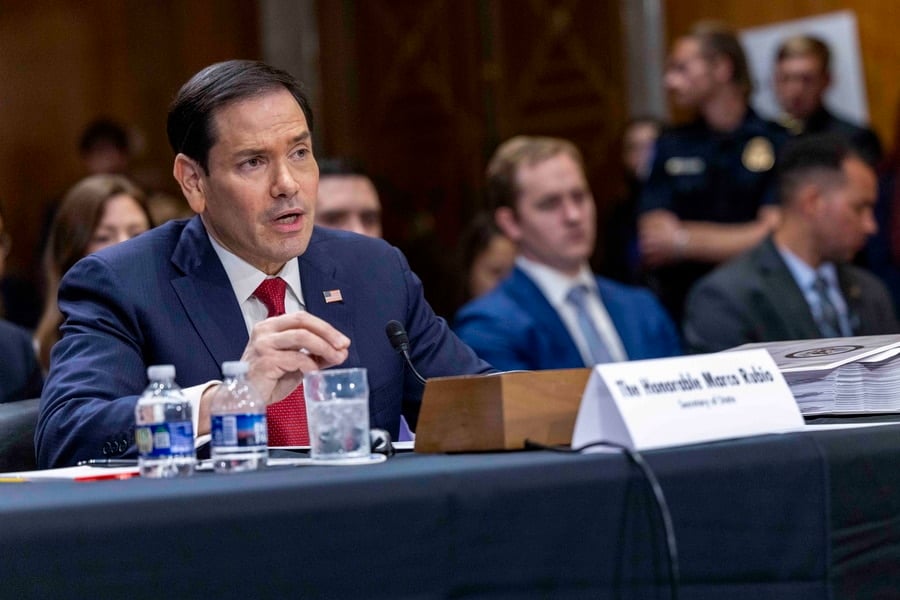
Secretary of State Rubio Says US Law Blocks Turkey’s Return to F-35 Program

4 June 2026 at 17:43
Marco Rubio, US Secretary of State
Secretary of State Marco Rubio says Turkey’s return to the F-35 program is blocked by US law over Ankara’s S-400 purchase. Credit: Shawn Thew / EPA via AMNA

US Secretary of State Marco Rubio said the Trump administration currently lacks the legal authority to restore Turkey to the F-35 fighter jet program, citing statutory restrictions linked to Ankara’s acquisition of Russia’s S-400 air defense system.

Rubio made the remarks during a House Foreign Affairs Committee hearing after Representative Dina Titus questioned him about recent comments by US Ambassador to Turkey Tom Barrack. Barrack had suggested that Washington should allow Turkey back into the F-35 program. Titus said that position appeared to conflict with existing US law and long-standing American policy.

Titus asked whether Turkey could receive advanced US fighter jets, including F-35s, under the current legal framework.

Rubio says Turkey’s F-35 return is blocked by law

Rubio said Turkey had originally participated in the F-35 program before Washington removed Ankara over its purchase of the Russian-made S-400 missile defense system.

“The reason why they can’t get them is because they purchased the S-400 system from the Russians,” Rubio said.

Turkey’s acquisition of the S-400 has remained a major source of tension in US-Turkey defense relations. Washington argues that the Russian system conflicts with NATO defense architecture and could create security risks for the F-35 platform.

Rubio points to NDAA restrictions

Titus noted that Turkey still possesses the S-400 system and remains subject to mandatory sanctions. Rubio acknowledged the point, saying existing US law controls the issue and limits the administration’s discretion.

Rubio said the administration currently lacks the authority to make such a decision because US law restricts the matter, including provisions of the National Defense Authorization Act.

His remarks underscored that any potential change in Turkey’s access to the F-35 program would require action on legal restrictions imposed by Congress. Those restrictions stem from Ankara’s S-400 acquisition and broader US sanctions policy toward major defense transactions with Russia.

Das Massaker auf dem Platz des Himmlischen Friedens von 1989, das es gar nicht gab

4 June 2026 at 16:42
Der Spiegel erinnert an den heutigen Jahrestag des angeblichen Massakers auf dem Platz des Himmlischen Friedens von 1989, indem er einen Artikel mit der Überschrift „US-Außenminister am Jahrestag des Massakers – Laut Rubio kann Chinas Zensur Tiananmen-Erinnerung nicht »auslöschen«“ veröffentlicht, in dessen Einleitung wir erfahren: „Am 4. Juni 1989 hatte Chinas Volksbefreiungsarmee Demonstranten auf dem […]

US Goes Full Orwellian 1984 – Reopen Hormuz by Blockading Hormuz

4 June 2026 at 14:59
For any Americans who were paying attention, no less than twelve weeks ago Donald Trump said he would reopen Hormuz as his main objective against Iran. Now he proclaims a blockade of the strait he swore to open; welcome to chaos and confusion in the Trump White House. The Personality Cult Surges as the Plot […]
❌