
Normal view

The Prince of Ancient Iran Who Fought in the Trojan War

7 June 2026 at 17:31
Ancient Elamite ziggurat Choqa Zanbil in Iran
Ancient Elamite ziggurat Choqa Zanbil in Iran. Credit: Wikimedia Commons, GFDL

In the Trojan War of Greek mythology, many nations were allied with Troy to fight against the Greeks. This included many of the nations of ancient Anatolia. Perhaps the most surprising participant in the Trojan War, however, was a prince from ancient Iran. He was Memnon, best known as the Ethiopian ruler who died at the hands of Achilles in the final year of the war.

Memnon, king of the eastern Ethiopians

Since Memnon is usually remembered as being a king of the Ethiopians, how can he have been from ancient Iran? The reason is that there was more than just one group of people known to the Greeks as Ethiopians.

For example, notice the words of Greek historian Herodotus of the fifth century BCE in his description of the large army of Xerxes the Great:

“Ethiopians above Egypt and the Arabians had Arsames for commander, and the Ethiopians of the east​ (for there were two kinds of them in the army) served with the Indians.”

This shows that the Greeks recognized the existence of Ethiopians outside of Africa. Specifically, these other Ethiopians lived in the east, evidently not too far from India. Since Memnon was the king of the Ethiopians, he could potentially have been the king of either the eastern Ethiopians or the African ones.

It is worth mentioning that in ancient Greek, the word Αἰθίοψ (Ethiops) was used not only to describe a specific group of people, but also more generally to refer to individuals with darker skin. The term is a compound of αἴθω (to burn) and ὤψ (face or appearance), literally meaning “burnt-face.” It appears frequently in early Greek literature, such as Homer’s epics, where Ethiopians are depicted as distant, noble figures living at the edges of the known world, rather than as members of a clearly defined nation.

The Ethiopians of Iran

Herodotus himself states that the city of Susa, the ancient capital of Elam (a prominent region in what is now Iran), was known as the city of Memnon. This suggests that Memnon was the king of the eastern Ethiopians, evidently a people in the region of Iran.

This is confirmed by Ctesias, just a few decades after Herodotus. According to this Greek historian, Memnon’s father, Tithonus, was the ruler of Persia. He was either subject to or allied with the king of the Assyrian Empire.

The territory of Persia in the time of the Assyrian Empire corresponded to a large part of what is now Iran. According to Ctesias, Memnon built a palace for himself at Susa. He goes on to claim that Memnon’s army, which he led to Troy, was composed of many Ethiopians and Susians, or inhabitants of Susa.

Hence, it is clear that Memnon in the legends of the Trojan War was originally supposed to have been from ancient Iran.

As for why the Greeks called the inhabitants of that region ‘Ethiopians’, we cannot be sure. However, it may be related to the use of the word ‘Cissians‘ (‘Kíssioi’ in Greek) for the inhabitants of the region of Elam. The Greeks might have confused this for ‘Kush’, the name for the kingdom of the Ethiopians south of Egypt.

How ancient Iran participated in the Trojan War

Ctesias provides the most detailed early account of this army from ancient Iran that fought in the Trojan War. According to Ctesias, King Priam of Troy was subordinate to the king of Assyria, named Teutamos. Due to the difficulties he was facing in the Trojan War, he sent word to Teutamos to ask for help.

As a result, Teutamos sent a large army of 10,000 Ethiopians and 10,000 Susians under the command of Memnon. This army from ancient Iran marched from the furthest corner of the Assyrian Empire over to Troy. Ctesias wrote:

“Memnon assisted the Trojans with 20,000 infantry and 200 chariots and… he was admired for his courage and for killing many Greeks in battle.”

Despite his prowess in battle, Ctesias goes on to explain that the Thessalians killed him. This refers to his death at the hands of Achilles, as per other sources. Achilles was from the kingdom of Phthia in ancient Thessaly.

Did an army from ancient Iran fight in the Trojan War?

Could Memnon have been a historical king or prince of Elam in ancient Iran? Some scholars have speculated that he might be identical to Humban-Numena I, the king of Elam in the Bronze Age. Furthermore, the latter half of his name is admittedly similar to ‘Memnon’.

However, he likely reigned in the first half of the 14th century BCE. Therefore, this king from ancient Iran lived too early to have fought in the Trojan War.

Two other possibilities are Humban-Numena II, possibly in the 11th century BCE, and Humban-Numena III, who lived at the end of the eighth century BCE. The latter’s name is often written in modern sources as “Humban-menanu.” The similarity to “Memnon,” while not exact, is there.

This latter candidate, although living much later than the traditional date of the Trojan War, is particularly noteworthy given Ctesias’ chronological information. He places Memnon’s activities at the height of the Assyrian Empire.

Another candidate from approximately the same time is a prominent Elamite known only as Menanu, referenced in a letter from Ashurbanipal, the king of Assyria. The letter makes it clear that Menanu is a supporter of Assyria. This fits what Ctesias tells us about Memnon.

However, this does not necessarily mean that an army marched from ancient Iran to fight in the Trojan War. In part, this depends on when the Trojan War occurred, a continued historical debate.

Nevertheless, the legend itself is clear. Memnon led an army from ancient Iran to Troy, where they fought in the Trojan War against the Greeks.
The Glittering Gold of Mycenaean Greece

7 June 2026 at 00:31
Mycenaean Greece gold
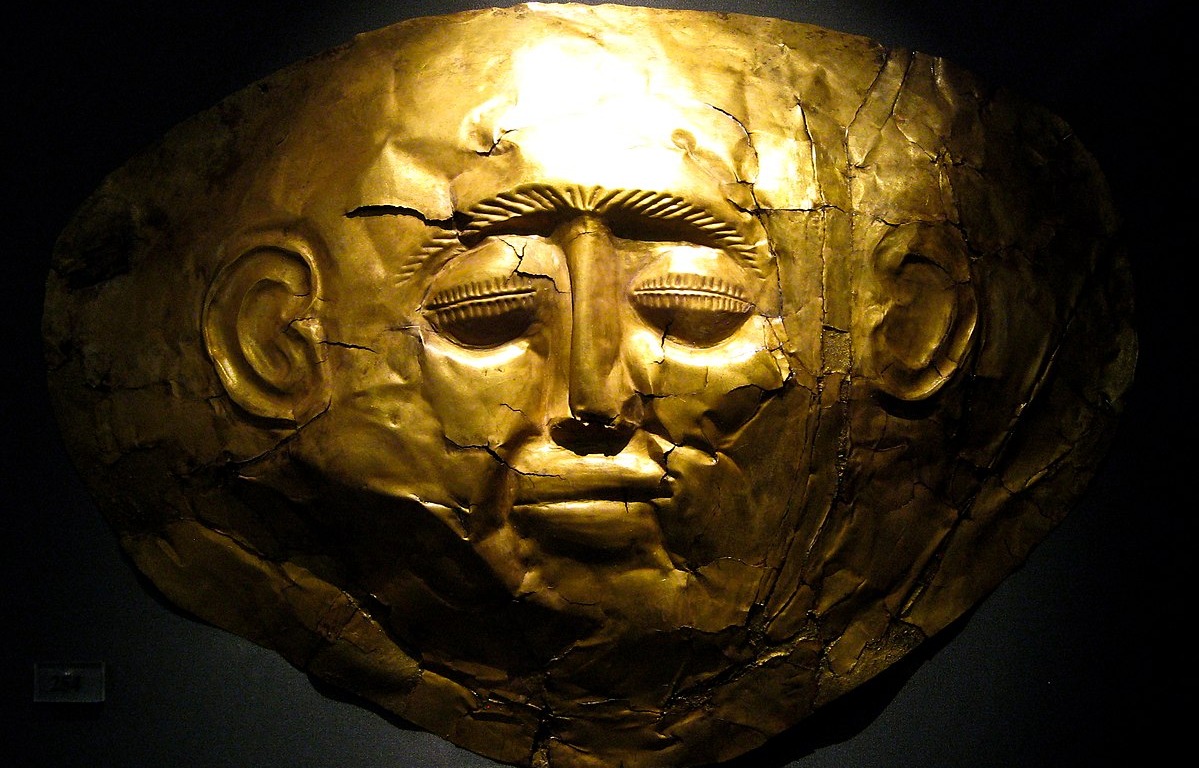
A gold Mycenaean death mask found in Greece. Credit: Sharon Mollerus / Wikimedia Commons / CC BY 2.0

Since the 19th century, several precious gold objects associated with the Mycenaean civilization have been discovered by archaeologists, predominantly at important burial sites where the royals and elite of Bronze Age Greece were buried.

The Mycenaeans were the first distinctly Greek culture to dominate mainland Greece during the late Bronze Age period between c. 1750 and 1050 BC. Their civilization was characterized by palatial states, advanced urban organization, and a written language dubbed Linear B by modern historians. It was during the Mycenaen age that the Trojan War purportedly happened, as retold in Homer’s Iliad.

The discovery of Mycenaean gold sheds light on the material culture of this enigmatic civilization but there are still many unanswered questions. For example, researchers are unsure whether the Mycenaeans crafted all of these items themselves, or whether they were obtained in trade and war.

Mycenaean Greece gold
Mycenaean gold ornaments. Credit: Gary Todd / CC0 / Wikimedia Commons

The Grave Circles at Mycenae

The most famous examples of Mycenaean gold were discovered in two grave circles uncovered at the ancient Bronze Age site of Mycenae. Grave Circle A was discovered by Heinrich Schliemann in 1876 based on the descriptions of Homer and Pausanias. Grave Circle B was excavated in 1952 by archaeologists Ioannis Papadimitriou and Georgios Mylonas after workmen accidentally stumbled on the tombs a year before.

Both grave circles, dating back to the 16th century BC, contained impressive amounts of gold objects and other precious items. Unlike other Bronze Age tombs, they had not been discovered by the grave robbers and looted.

Grave Circle A contained 15 kg (33 lbs) of gold alone, making it one of the most substantial archaeological finds in all of Europe. Both grave circles contained hundreds of previous objects including jewelry, ornamental clothing attachments, decorated weapons, and highly distinctive funeral masks.

Grave Circle A
The Grave Circle An archaeological site at Mycenae. Credit: Andreas Trepte / CC BY-Sa 2.5 / Wikimedia Commons

The Death Mask of Agamemnon

The most iconic find is the so-called Death Mask of Agamemnon. Schleimann named the mask after the legendary Mycenaean King Agamemnon who led the Achaean Greeks in the Trojan War according to Homer’s Iliad. However, more recent research has indicated that the mask predates the time that Agamemnon was supposed to have lived by about three centuries.

The Mask of Agamemnon was crafted utilizing a single large gold sheet that underwent heating and hammering against a wooden surface. The intricate details were then added through the process of chasing, using a sharp tool to etch them onto the mask.

There were six other death masks discovered in Grave Circle A. Of the seven masks, six belonged to adult males and one to a child. None of the women discovered at the gravesite were buried with ornate masks.

The masks in Grave Circle A exhibit similar characteristics, featuring flat foil-like layers of gold depicting round, bald faces with round eyes and prominent ears. In contrast, Grave Circle B includes a death mask made of electrum, placed in a container next to a buried body instead of being placed on the deceased. The scarcity of death masks in Grave Circle B suggests that the interred individuals held lower wealth or status compared to the abundance of valuable material found in Grave Circle A, including the death masks.

Mycenaean Greece gold
Mycenaean death masks. The one on the right is the so-called “Mask of Agamemnon”. Credit: Zde / CC BY-SA 3.0 / Xuan Che / CC BY 2.0 / Wikimedia Commons

The Royal Tombs at Pylos

The burials at Mycenae might have provided the most famous examples of Mycenaean gold, but they are not the only Bronze Age tombs where exquisite items have been found.

In 2019, a team of archaeologists discovered Bronze Age royal tombs situated near the royal palace of Pylos, said to have once been the seat of power for Nestor, the eldest among the Greek rulers who fought in Trojan War.

The larger tomb, which was once 12m (36 feet) wide and 4.5 meters (15 feet) deep, had stone walls that once stood as tall as the ground’s height. The underground chambers were originally covered by domes, but over time, the roofs and upper walls collapsed. Consequently, the tombs became buried beneath numerous melon-sized stones and a tangled mass of grape vines. In their excavation efforts, archaeologists from the University of Cincinnati, including Jack Davis, Sharon Stocker, and their colleagues, had to painstakingly clear away vegetation and manually remove the stones.

Mycenaean sword
Mycenaean bronze sword with a gold hilt and featuring a lion motif, from Grave Circle B, Mycenae. Credit: Gary Todd / CC0 / Wikimedia Commons

What they discovered, however, was extraordinary. Among the debris, the floors of the burial pits were adorned with shimmering flakes of gold leaf, which had once embellished the walls and floors of the chambers. The tombs, although lacking the remains of their occupants – suggesting a potential disturbance in the distant past – were nonetheless filled with opulent artifacts such as jewelry, gold, bronze, and gemstones.

A particularly interesting find was a gold pendant bearing the image of the Egyptian goddess Hathor who presided over motherhood and the protection of the dead. The Greeks during later periods drew parallels between Hathor and Aphrodite but it is not entirely clear what she meant to the Mycenaean Greeks during the Bronze Age. In any case, the artifact hints at trade links between the Mycenaeans and Egyptians at the time of the burials, which are believed to be about 3,500 years old.

Mycenaean Greece gold
A gold elliptical diadem. Credit: I, Sailko / CC BY-SA 3.0 / Wikimedia Commons

Gold Mining in Mycenaean Greece

As pointed out in an academic paper authored by  M. Vavelidis and S. Andreou, “Numerous objects of gold displaying an impressive variety of types and manufacturing techniques are known from the Late Bronze Age (LBA) contexts of Mycenaean Greece, but very little is known about the origin and processing of gold during the second millennium BC.”

This raises several questions, namely: where did the Mycenaeans source their gold from? Interestingly, the wider Argolid region in which Mycenae was itself located and where the discoveries were made of numerous stunning golden items, is bereft of gold. If the Bronze Age Greeks did their own mining it was therefore elsewhere in Greece.

According to Vavelidis and Andreou, “Ancient literature and recent research indicate that northern Greece is probably the richest gold-bearing region in Greece, and yet very little evidence exists regarding the exploitation of its deposits and the production as well as use of gold in the area during prehistory.”

Mycenaean earring
16th century BC Mycenaean earring. Credit: Louvre Museum / Public Domain / Wikimedia Commons

Nevertheless, by examining the chemical composition of prehistoric artifacts from two settlements alongside the composition of gold deposits in their nearby regions, it becomes evident that gold was locally sourced in some parts of Greece. This finding also raises the possibility that a portion of the Mycenaean gold may have originated from northern Greece.

Furthermore, the discovery of small stone crucibles, one of which bore visible traces of gold melting, at the archaeological site of Toumba in Thessaloniki, proves that local production of gold items took place very early in ancient Greek history.

Beyond mining, the Mycenaeans may also have obtained gold via trade and war. In some cases, Mycenaean traders may have bought gold for Greek craftsmen to shape into various objects, and in other cases, they would have imported finished items.

The Mycenaeans were well-respected as warriors across the Eastern Mediterranean and sometimes fought in the armies of neighboring civilizations like the Egyptians as mercenaries. The leaders of these Mycenaean mercenary bands may have received gold as payments or gifts in exchange for their martial services.

❌