Normal view

Homem morto a tiro a um quilómetro de percurso do Papa

10 June 2026 at 12:11
Vítima de cerca de 40 anos foi atingida na cabeça e morreu no local, perto do percurso por onde Papa vai passar. É o segundo assassinato em Barcelona numa semana.

© PEDRO ARMESTRE/AFP/GettyImages

Os "Mossos d'Esquadra" estão a investigar as circunstâncias do assassinato

Homem morto a tiro a um quilómetro de percurso do Papa

10 June 2026 at 12:11
Vítima de cerca de 40 anos foi atingida na cabeça e morreu no local, perto do percurso por onde Papa vai passar. É o segundo assassinato em Barcelona numa semana.

© PEDRO ARMESTRE/AFP/GettyImages

Os "Mossos d'Esquadra" estão a investigar as circunstâncias do assassinato

Portugal is EU state most open to taking on debt to finance defence

10 June 2026 at 10:28
Portugal to increase defence spending to 2% this year 'if possible'

Portugal is the European country most in favour of taking on debt to fund defence, and the one where public support for investment in this sector has risen the most

The post Portugal is EU state most open to taking on debt to finance defence appeared first on Portugal Resident.

Only one in 10 Europeans now see US as an ally, survey suggests

Exclusive: poll across 15 countries finds ‘deep mistrust’, with majority doubting US would come to their aid in an attack

European confidence in an American “security guarantee” has hit a historic low, a survey suggests, with only one in 10 people across 15 countries seeing the US as an ally and majorities in all doubting it would come to their aid if they were attacked.

The survey, published on Wednesday by the European Council on Foreign Relations (ECFR) thinktank before critical G7 and Nato summits in France and Turkey over the coming weeks, revealed “deep European distrust in the US”, the authors said.

Continue reading...

© Photograph: Piroschka Van De Wouw/Reuters

© Photograph: Piroschka Van De Wouw/Reuters

© Photograph: Piroschka Van De Wouw/Reuters

Germany pledges 300 million euros to Czech ammunition initiative for Ukraine

10 June 2026 at 00:59
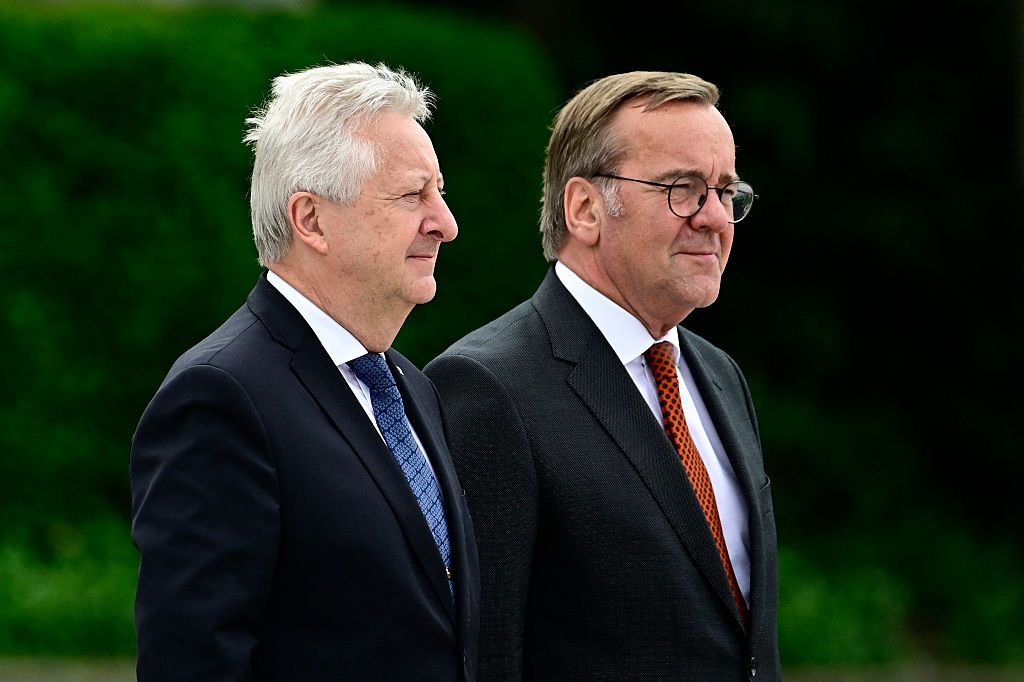
"Germany will contribute an additional 300 million euros to this initiative – that's approximately 50,000 rounds of long-range ammunition," German Defense Minister Boris Pistorius said.

Homem que arrastou ex-companheira é condenado a 12 anos em MG

9 June 2026 at 22:47

A Justiça de Minas Gerais condenou a 12 anos de prisão, o homem que arrastou a ex-companheira no asfalto quando ela tentou saltar do carro e ficou presa pelo cinto de segurança, em Belo Horizonte.  

Segundo o documento, a decisão foi tomada pelo Conselho de Sentença, que reconheceu que o crime foi praticado em situação de violência doméstica e pela condição do sexo feminino.  

Assim, o juiz Marco Antônio Silva fixou a pena por tentativa de feminicídio e por sequestro e cárcere privado em 12 anos e seis meses de reclusão em regime fechado. 

O documento aponta que o crime foi cometido no dia 8 de agosto de 2025, no bairro Taquaril, na região Leste de Belo Horizonte.  

O réu ameaçou a ex-companheira com uma faca e a obrigou a entrar no carro, onde voltou a ameaçá-la. Quando passavam em frente a uma unidade da Polícia Militar, a vítima, que trabalha como professora, tentou saltar do veículo em movimento, mas ficou presa ao cinto de segurança com parte do corpo para fora.  

O homem continuou dirigindo, arrastando-a, o que provocou escoriações pelo corpo.  

Quando conseguiu saltar, ela gritou por socorro e foi amparada pelos agentes. Um policial penal que passava pelo trecho perseguiu o homem, que fugiu a pé para uma região de mata, mas acabou sendo capturado.  

Além da violência causada pelo ex-companheiro, a vítima também sofreu prejuízos profissionais. Os colegas da professora também abriram uma denúncia na Prefeitura de Belo Horizonte afirmando que a presença dela na escola municipal onde trabalha geraria perigo aos alunos e aos funcionários, já que o acusado conhecia seu local de trabalho. A profissional teve que ficar afastada das funções por 15 dias, enfrentando estigma e insegurança.

*Sob supervisão de AR.

Mulher que fingiu ser criança em SC passará por teste de insanidade mental

9 June 2026 at 22:28

A mulher de 37 anos que se passou por uma adolescente de 12 anos e viveu como filha adotiva de uma família em Joinville, no norte de Santa Catarina, passará por um exame de insanidade mental. A realização da perícia foi determinada pela Justiça Catarinense e está marcada para o dia 26 de junho.

A medida atende ao pedido da defesa e prevê a realização de um exame médico para verificar se ela possui capacidade de responder ao processo penal. Ela virou ré nesta terça-feira (9), por estelionato e falsa identidade.

No entanto, se for constatado que a mulher não tinha entendimento sobre seus atos na época dos fatos, o resultado poderá influenciar diretamente os rumos da condenação, prevendo a aplicação de medida de segurança em vez de pena privativa de liberdade.

Denominada como “Gabriele Ferreira dos Santos”, a farsa dela foi descoberta no último dia 2 de junho, após uma familiar estranhar o caso e a denunciar para a Polícia. Ela foi presa e, em interrogatório policial, confessou todos os crimes.

Como ela se passava por uma adolescente

A mulher residia com os pais adotivos há aproximadamente 14 meses e, ao longo desse período, apresentava comportamentos infantilizados e lúdicos, utilizando mamadeiras, chupetas e um “cheirinho” para dormir frequente.

De acordo com o delegado Rodrigo Bueno Gusso, ela tinha um quarto só dela, todo pintado de rosa e com adereços para crianças. A infratora fingia também sofrer crises de pânico, inseguranças para dormir sozinha e pedia para a mãe adotiva a colocasse na cama. 

Segundo a Polícia Civil, a mulher sustentava o disfarce sob a alegação de ser portadora de autismo e de outras condições clínicas, o que fazia com que seus traços aparentassem ser de uma pessoa mais velha.

A mulher ainda de justificava sua aparência de adulta dizendo que seus traços eram decorrentes da utilização de hormônios de forma forçada durante a infância.

Ela afirmava à família adotiva ter sido submetida à prostituição durante a infância, inclusive sendo obrigada a tomar hormônios. De acordo com a corporação, esses alegações fez com que a família acreditasse na investigada.

Adoção nunca foi formalizada; entenda

De acordo com os investigadores, a adoção nunca foi formalizada pelos meios legais, como previsto na legislação. Em depoimento, os familiares relataram que tentaram iniciar os procedimentos necessários e chegaram, inclusive, a tentar matricular a suposta adolescente em uma instituição de ensino.

No entanto, segundo a polícia, a mulher tentava impedir o avanço do processo. Ela alegava que uma adoção formal comunicaria sua localização ao pai biológico e que, por isso, teria medo.

Como o crime foi descoberto?

O crime foi descoberto após uma tia, que pertencia à família adotiva da mulher, procurar a polícia. Ela e o pai adotivo da suspeita realizaram pesquisas na internet e constataram que a mulher já havia cometido o mesmo crime em ao menos cinco estados diferentes.

Durante as investigações, a Polícia Civil identificou a verdadeira identidade da suspeita e constatou que ela possuía registros de ocorrências em São Paulo, Rio de Janeiro, Minas Gerais, Rio Grande do Sul e Goiás.

Ela está presa desde 2 de junho.

*Sob supervisão de AR.

Mulher que fingiu ser criança de 12 anos se torna ré por falsa identidade

9 June 2026 at 21:23

A Justiça de Santa Catarina aceitou, nesta terça-feira (9), a denúncia feita pelo Ministério Público e tornou ré, por estelionato e falsa identidade, a mulher de 37 anos que se passou por uma adolescente de 12 anos e viveu como filha adotiva de uma família em Joinville, no norte de Santa Catarina, por cerca de 14 meses.

A decisão promulgada pelo juízo da 1ª Vara Criminal, determinou também a apresentação da defesa dela no prazo legal  – etapa realizada antes do caso entrar em julgamento.

Em um processo paralelo, o Tribunal de Justiça também ordenou que a mulher faça um exame de sanidade mental. A realização da perícia está marcada para o dia 26 de junho.

Denominada como “Gabriele Ferreira dos Santos”, a farsa foi descoberta no último dia 2 de junho, após uma familiar estranhar o caso e a denunciar para a Polícia. Ela foi presa e, em interrogatório policial, confessou todos os crimes.

Exame de insanidade mental; entenda

A medida atende ao pedido da defesa e prevê a realização de exame médico para verificar se ela possui capacidade de responder ao processo penal.

Caso seja constatado que a mulher não tinha entendimento sobre seus atos, o resultado poderá influenciar diretamente os rumos da condenação, prevendo a aplicação de medida de segurança em vez de pena privativa de liberdade.

Como o crime foi descoberto?

O crime foi descoberto após uma tia, que pertencia à família adotiva da mulher, procurar a polícia. Ela e o pai adotivo da suspeita realizaram pesquisas na internet e constataram que a mulher já havia cometido o mesmo crime em ao menos cinco estados diferentes.

Durante as investigações, a Polícia Civil identificou a verdadeira identidade da suspeita e constatou que ela possuía registros de ocorrências em São Paulo, Rio de Janeiro, Minas Gerais, Rio Grande do Sul e Goiás.

Como ela se passava por uma adolescente

A mulher, que usava falsamente o nome de “Gabriele”, residia com os pais adotivos há aproximadamente 14 meses e, ao longo desse período, apresentava comportamentos infantilizados e lúdicos, utilizando mamadeiras, chupetas e um “cheirinho” para dormir frequente.

De acordo com o delegado Rodrigo Bueno Gusso, ela tinha um quarto só dela, todo pintado de rosa e com adereços para crianças. A infratora fingia também sofrer crises de pânico, inseguranças para dormir sozinha e pedia para a mãe adotiva a colocasse na cama. 

Segundo a Polícia Civil, a mulher sustentava o disfarce sob a alegação de ser portadora de autismo e de outras condições clínicas, o que fazia com que seus traços aparentassem ser de uma pessoa mais velha.

A mulher ainda de justificava sua aparência de adulta dizendo que seus traços eram decorrentes da utilização de hormônios de forma forçada durante a infância.

Ela afirmava à família adotiva ter sido submetida à prostituição durante a infância, inclusive sendo obrigada a tomar hormônios. De acordo com a corporação, esses alegações fez com que a família acreditasse na investigada.

Adoção nunca foi formalizada; entenda

De acordo com os investigadores, a adoção nunca foi formalizada pelos meios legais, como previsto na legislação. Em depoimento, os familiares relataram que tentaram iniciar os procedimentos necessários e chegaram, inclusive, a tentar matricular a suposta adolescente em uma instituição de ensino.

No entanto, segundo a polícia, a mulher tentava impedir o avanço do processo. Ela alegava que uma adoção formal comunicaria sua localização ao pai biológico e que, por isso, teria medo.

*Sob supervisão de AR.

Costa: "NATO mais forte é indispensável para a Europa"

9 June 2026 at 18:32
Depois da reunião com o secretário-geral da NATO, António Costa reforçou "prioridade da UE" na Defesa europeia, apelando à importância do trabalho em conjunto com a Aliança na resposta a ameaças.

© ANDREJ CUKIC/EPA

António Costa reuniu-se com o secretário-geral da NATO, Mark Rutte, na sede da Aliança Atlântica, em Bruxelas

Costa: "NATO mais forte é indispensável para a Europa"

9 June 2026 at 18:32
Depois da reunião com o secretário-geral da NATO, António Costa reforçou "prioridade da UE" na Defesa europeia, apelando à importância do trabalho em conjunto com a Aliança na resposta a ameaças.

© ANDREJ CUKIC/EPA

António Costa reuniu-se com o secretário-geral da NATO, Mark Rutte, na sede da Aliança Atlântica, em Bruxelas

Ukraine: Why the long war?

9 June 2026 at 17:09
Ukraine at war; weapons from all over the world (Flickr)

Ukraine at war; weapons from all over the world (Flickr)

Half way through the fifth year of the war in Ukraine it is reasonable to ask why it has lasted so long. Why has Russia not crushed Ukraine quickly as expected, it is after all a much bigger country with a far greater population and industry to call on?

Robert Harneis (DR)
Robert Harneis (DR)

By Robert Harneis

It is standard for the Western Media to talk of deadlock and to say that the Russians are not advancing because their armies are incompetent, when they are not drunk or poorly equipped. At regular intervals Western media announces that the Russian side is running out of ammunition, missiles, drones, tanks or even men. In short they are not advancing in overwhelming force to capture Kiev because they are incapable of doing so. The latest fantasy in the US, UK and European media, is that the Russian economy is crumbling in the face of the problems created by the war and sanctions.

Russia’s self-imposed restrictions

President Putin imposed severe constraints on his generals from the start. They are, to an extent, fighting with one hand tied behind their backs. Contrary to the endless claims by the Western media, the Russian forces do everything they can to avoid civilian casualties. This in borne out by their low level throughout the war. In a recent massive attack involving 1500 missiles and drones right across Ukraine, only six civilians were reported killed. It is only natural that this should be so. Russia regards Ukrainians as brother Slavs. Approximately one fifth of Russian families have close relatives in Ukraine. The brother of the Ukrainian Commander in Chief is a colonel in the Russian army. They have no interest in killing them, if it can be avoided, especially as they will have to live with them after the war.
The second restriction is the requirement to avoid heavy casualties amongst their own forces. Wars are lost on the home front when the body bags start coming home in big numbers. The constant allegations in the Western media that Russians launch human wave attacks and suffer heavy casualties doing so, are false. This desire to restrict losses is reinforced by Russia’s demographic problems. Lives are precious.
The third restriction that Putin has imposed on his generals and ministers is that the war will not stop Russian economic progress, vital for political stability. Of course it goes without saying that it is not possible to fight a major war without financial and budgetary stress. An example is the necessity of delaying the naval building program as a result of which only sixteen corvettes have been built out of the forty planned. This has made it more difficult for Russia to protect its merchant fleet and stop the current harassment of oil tankers. On the other hand the management of the economy has been a classic case of successful military Keynesianism as with the United States in World War II. Throughout the war real wages have risen and economic growth has been maintained. Unemployment is at record low levels.

Tactical considerations

There are other less obvious reasons for hastening slowly. If Moscow’s war aims are denazification and demilitarization then the longer the fighting goes on the more of the Ukrainian military is eliminated, especially the elite ultra-nationalists who are Ukraine’s most committed soldiers. The effect of the manpower attrition is obvious from the many videos appearing on social media showing Ukrainian press gangs snatching citizens from the street, often with violent resistance.
Further by keeping the fighting in the Donbass, the invading Russians have short lines of communications, whilst Kiev’s main bases are over a thousand kilometers away in Poland, with supplies at risk of constant air attack on their way to the front. Paradoxically then, the invading force has better lines of communications than the defenders in their own country.
The wish to avoid destruction is another explanation for Russian circumspection. It is obvious that the retreating Ukrainian army is indifferent to the damage it causes to the cities it loses. The greater the area of the fighting the greater the destruction that Russia will likely have to rebuild after the war. Better to ground away the Ukrainian ability to resist and if an advance into the rest of the country is needed, to wait until effective military resistance has collapsed.
However an undoubted factor in the slow Russian progress is the nature of the great Donbas urban area, which was massively fortified with NATO assistance over eight years after the 2014 coup d’état when Ukraine moved definitively into the Western camp. Whatever plans the Russian government may have for the rest of Ukraine, especially the Black Sea Coast, the source of many missile attacks on Russia, they will not wish to make any major moves until the Donbass is firmly in their hands. Two important fortified towns remain to be captured Kramatorsk and Slavyansk. Russian forces are already approaching them. It remains to be seen how long it will take to break their resistance.
We cannot know what President Putin and the Russian High Command are thinking but it is also obvious that by not committing to a major offensive Russia not only avoids casualties but retains the strategic initiative. Hundreds of thousands of Russian troops are held in reserve. Uncommitted forces are a potential threat as well as being available for defense elsewhere if needed.
The Russians will also have learnt the bitter lessons of the US army that quickly smashed its way into Afghanistan and Iraq but was unable hold the territory conquered in the face of tough local resistance. Already, at the beginning of the war in March 2022, the Washington Post published an article that assumed a quick Russian advance and talked about the planned guerilla resistance. There is every reason for Russia to move gradually and consolidate as it goes.

The diplomatic front

There is also the diplomatic aspect, which is of vital importance to Russia. Moscow views the struggle in Ukraine as part of a world confrontation. It has been clear from the start of the war that whilst the West and Kiev worry about public opinion to get support for the war, Russia is concerned about what he world’s diplomats think. Good relations with India and BRICS countries and especially China dictate moderation at all times. A shock and awe approach, whilst it might get quicker results, would have offended much international opinion and unfavorably reminded the world’s diplomats of the Soviet Union, something Putin wishes to avoid at all costs. Similarly Russia is very patient with small countries on its borders that indulge in vexatious provocations, notably the Baltic States… so far. The contrast with the brazen bullying of Venezuela, Cuba, Greenland and Iran by the United States is striking and has had an effect on world public opinion. The recent humiliation of Merz’s new militaristic Germany in the recent United Nations General Assembly vote is a striking example of the success of this softly softly approach, as is Russia’ success in expanding its influence in Africa from Mali to Madagascar.
Also on the diplomatic front, with a long war, the Black Sea remains closed to the warships of outside countries under the Montreux Convention of 1936, which governs traffic through the Dardanelles strait. The convention allows Turkey to close the straits to all warships in times of war and to permit merchant ships free passage. This suits the Russians as NATO likes to flex its muscles by bringing warships into the Black Sea in times of international tension. For four and a half years they have not been able to do this. Once the war ends, Turkey will have to let them through again. Another reason why the Russian forces have taken their time.

The change in the nature of war

Every war is different and brings its surprises. The drone revolution has transformed this one. The omnipresence of drones is all the more deadly, given the absolute impossibility for both sides, of hiding concentrations of troops, thanks to satellites that see pretty much everything happening on the ground. So now advances are made by small groups of infantry that infiltrate defenses that are then taken out by artillery, drones and missiles. Slow work if casualties are to be kept to a minimum.

NATO intervention

NATO intervention, with a huge supply of arms, finance and electronic intelligence, after sabotaging the peace talks, has increased Russian difficulties in defeating the Ukrainian army,. It is this that definitively imposed the choice of a long slow war of attrition on the Russians – a war that Russia is clearly winning. Not only have Ukraine’s forces been degraded in this process but NATO’s as well. One reason the United States has reduced arms supplies to Kiev is that they are running short. This became very obvious when Washington’s priority turned to the defense of Israel. The Pentagon has had to search the globe, asking allies as far apart as South Korea and Germany to hand over any Patriot air defense missiles they might have. The US air force is seriously short of vital stand-off munitions to attack Iran. The result for Kiev is that it has little defense industry of its own left and NATO has completely failed to match Russian weapons production levels.

Russian rearmament

It is also obviously the case Russia needed time to build its army to its present strength, as well as arm and equip it. Russia has greatly increased its military production across the board. This has been possible because of the continued existence of much of the old Soviet military industrial infrastructure on Russian territory. Whilst the combined Western nominal GDP greatly exceeds Russia’s, when it comes to purely military industrial capacity Russia is well capable of holding its own. Tank production and reconditioning has increased from a few hundred to more than a thousand a year. The United States can barely produce one hundred new Abrams tanks each year. Russia alone now produces over five million drones each year. Importantly Russia is fourth in the world in the number of STEM students graduating annually after China, India and the United States.

Irreconcilable differences block peace talks

Putin’s latest statements indicate that the Russian government is not interested in a ceasefire that fails to solve its Europe wide security problems. The United States does not want to lose face in Ukraine, particularly after its recent military failures in Afghanistan and now Iran. It also wants to continually weaken Russia. Europe is determined to persevere in its support for Ukraine despite the major economic and energy problems they have created for themselves. The statement from the latest meeting of the leaders of France, Germany and the United Kingdom, on June 7, refers to the need for a peace treaty that leaves Ukrainian frontiers unchanged. Clearly something Russia will never accept. Brussels sees failure in Ukraine as a threat to its plans for ever greater union, even the institution itself. Against this background it is not surprising that there have been no meaningful peace talks. As Josep Borrell former EU High Representative for foreign affairs commented at the beginning of the war, it will have to be settled on the battle field and that takes time.
Finally in Ukraine, whilst the people would agree to negotiations with Russia, the regime and its ultra nationalist supporters know that if there is peace and Russia wins there is no future for them. Putin’s final phrase in his recent speech at St Petersburg Economic Conference “Keep on fighting my comrades” is ominous for Zelensky and his neo Nazi colleagues. It is a reference to a famous quotation, the last words of a Russian policeman knowing he was about to die at the hands of terrorists. It reflects the Russian leader’s determination to focus Russian society in a patriotic way and finally settle the Ukrainian problem for good. He has used the long war to encourage a new generation of Russian leaders based around distinguished war veterans. This has been accompanied by a determined anti-corruption drive. None of this would have been possible without a long war.

However that may be, the Russian President is coming under increasing pressure to move faster. Like the US, Russia has parliamentary elections approaching in the autumn, September of this year, and there are signs that the tempo is quickening all along the front line. The long war has had advantages for Russia but it may be time to bring it to a close, whatever the cost.

L’article Ukraine: Why the long war? est apparu en premier sur FrenchDailyNews.

Why America should not ‘integrate’ its military with any foreign nation

By: A A
9 June 2026 at 15:41

By Ron PAUL

Join us on TelegramTwitter, and VK.

Contact us: info@strategic-culture.su

Not since the notorious 2012 National Defense Authorization Act (NDAA) provided for indefinite detention of American citizens, has the annual funding bill been as misused as this year. Embedded in the bill is an insult to every American who values our national sovereignty. The NDAA’s Section 224, the “United States-Israel Defense Technology Cooperation Initiative,” would “integrate” the Israeli military with our own, fusing technology, production, intelligence-sharing, and more.

As Ben Freeman wrote last week in Responsible Statecraft:

“The US and Israel already work together heavily on missile defense, but this provision would greatly expand coordination to seemingly every area of defense tech, including AI, quantum, autonomous systems, directed energy, cyber, biotech, and many more. It also proposes ‘network integration’ and ‘data fusion.’ In other words, the US military’s data could soon be the Israeli military’s data.”

It is hard to think of a more “America last” position than handing the keys to the Pentagon (and our intelligence community) to a foreign country.

The insanity of Section 224 is made even more clear with news over the weekend that the Pentagon has raised to “critical” the threat level of Israel spying on the United States and its officials!

We should not “integrate” our military with any foreign country or organization, but integrating with a country that is a “critical” espionage threat to our national security? How does this make any sense?

The “problem” for American lawmakers is that after the killing in Gaza and now Lebanon, the American people – particularly younger Americans – have turned sharply against the US relationship with Israel. This foreign entanglement has sucked billions from the US treasury over the decades, and it has sucked us into endless conflict in the Middle East, including the current US war on Iran.

Rather than listen to the will of their constituents, Congress has decided to defy the wishes of Americans in favor of the wishes of a foreign government. AIPAC largely controls our Congress and passing Section 224 would be a great victory for the foreign lobby.

It should come as no surprise that Israeli Prime Minister Benjamin Netanyahu endorses Section 224. He may have written it for all we know!

Should Section 224 remain in the NDAA, it would essentially remove future Congresses from any role in determining what level of support, cooperation, and oversight should be included in the US relationship with Israel. It would be worse even than President Obama’s 10 year guaranteed US financial support for Israel. Funding would not only be on autopilot, but the US would be further drawn into Israel’s multiple wars with its neighbors. Worse even than backing up Israel in its regional wars, the wars themselves would become ours.

Americans must speak out against plans to integrate our military with any foreign country. What we should be doing is disentangling from these overseas obligations, whether they be NATO or support for Ukraine or backing Taiwan against China.

We already spend more than a trillion dollars a year on our own military and our national debt is nearing $40 trillion. Taking on the obligation to fight even more wars overseas will hasten our bankruptcy. Section 224 must be stricken from the NDAA and it is up to every American who cares about our sovereignty to demand that Congress do so.

Original article:  ronpaulinstitute.org

NATO has its eyes on our health too: What awaits the health services of member countries in a ‘state of war’?

By: A A
9 June 2026 at 14:43

NATO plans to seize civilian health systems for war – turning hospitals into military logistics hubs, Erkin Oncan writes.

Join us on TelegramTwitter, and VK.

Contact us: info@strategic-culture.su

The global public is waiting for the NATO Summit to be held in our capital, Ankara, on 7–8 July.

At the summit, of course, imperialist aggression against Iran and the latest developments in the Russia–Ukraine war will likely be the main issues. But the real key headline is the target of member countries spending 5 percent of their Gross Domestic Product (GDP) on defense.

Except for Spain, all allies have pledged to reach the 5 percent defense spending target by 2035. We had previously written about the burden this would place on countries’ national economies and the possible consequences, especially cuts in social spending. (Source)

However, NATO is, as expected, carrying out its preparations for the so-called ‘big war’—which is now effectively an open secret—through a multi-layered program. The alliance is preparing for the historic summit and the transformation that will take place in the summer through committee and various subcommittee meetings.

Another threshold in this preparation was crossed recently in North Macedonia. This critical development, which did not receive much media coverage, is focused on preparing member states’ health systems as well for the expected ‘big war.’

Who organized the meeting?

The meeting was organized by the NATO Committee of Chiefs of Military Medical Services (COMEDS).

Its origins go back to EUROMED, established in 1970 by the medical services leadership of EUROGROUP, which itself was founded in 1968 for the purpose of logistical coordination among NATO’s European members.

By the 1990s, all EUROGROUP activities except EUROMED were transferred to the Western European Union (WEU)—which would be dissolved in 2011—while EUROMED joined NATO. EUROMED was then institutionalized by the NATO Military Committee in the 1993–1994 period and transformed into today’s COMEDS structure.

Since then, this structure has worked on organizing health services for military personnel, as well as on medical evacuation and related fields. But this structure is also tasked with operating in civilian areas, not only military ones. Epidemics in member countries, natural disasters, emergencies, and the like… In all of these ‘civilian’ events too, this committee is responsible for providing ‘coordination’ on highly sensitive matters such as medical supplies and patient transport.

What was discussed at the meeting?

The meeting, recorded as the NATO COMEDS 65th Plenary Meeting, was held in Skopje, North Macedonia, on 1–4 June.

From the statements made by senior officials speaking at the meeting, it appears that two points were emphasized.

The first of these is accelerating the treatment of the wounded and their return to the front.

In his opening remarks, Belgian Major General Luc Vanbockryck, Director of NATO’s Logistics and Resources Division, said that medical support should be regarded as “a critical capability equivalent to any weapons system.”

Norwegian Brigadier General Petter Iversen, who holds the committee’s chairmanship, also described “a new reality” and stated:

“Military medical services are no longer just a broad support domain; they are becoming a fundamental element just like any weapons system. We must accelerate the process of returning soldiers to the front. This has strategic importance.”

In other words, NATO sees its wounded soldiers not merely as patients, but as resources that need to be “repaired” as quickly as possible. This stance is also an indication that NATO anticipates serious losses in the event of a possible war.

Work on the NATO Medical Action Plan (MAP), which entered into force in January 2025, was also one of the main topics at the meeting. Due to the decision on ‘confidentiality,’ the full text of this action plan has not yet been made public, but we can infer the main trends in the plan from meetings of this kind and from the statements of officials.

And this brings us to the second important point:

Civil-military health integration

According to official documents, NATO explicitly describes the MAP through a “Whole-of-government, whole-of-society” approach. In other words, these plans involve not only the military health system, but also the health capacity of the state and society.

We also learn what this integration looks like in practice from NATO documents open to the public.

At NATO’s first joint military-civilian health meeting, held on 7 December 2023, the issues discussed with COMEDS were striking:

National health authorities; mass casualty planning, supply security for blood and blood products and medical countermeasures, patient evacuation and transfer…

The following year, in discussions between COMEDS and NATO’s Joint Health Group, the main topic was again civil-military cooperation.

The most striking aspect of this meeting was NATO’s assessment that “civilian authorities’ civilian health systems need to be able to function for longer in a conflict environment.” In other words, NATO is not aiming to expand the military system in the health field; it is aiming to make civilian health capacity directly resilient to war conditions.

The guidelines contained in the alliance’s health manuals point exactly to the place we are highlighting:

Strategic stocks, shared access arrangements in civilian/military medicine, joint disease/health surveillance, communication lines, and more…

What does all this mean?

The best way to understand the effect of all these regulations and proposed regulations on the public is through a kind of written simulation.

Based entirely on NATO documents, let us imagine that NATO, led by the United States, together with member countries, has started a hot war against a “great enemy,” and that our country is also involved in this war with its military power.

In such a scenario, what will happen in the field of medicine can be summarized as follows:

When our country is involved in any total war of NATO, the first break occurs first in the supply chain, transport, and communications; all of these sectors come under intense pressure. In other words, the war moves from the front to the cities very rapidly, and public services are instantly paralyzed.

The expected picture in Turkey in such a war would be, in addition to injuries and deaths, a contraction in access to health services, shortages of medicines and medical supplies, psychological trauma, migration and internal displacement, price increases, disruptions in transport and communication, and the diversion of public resources to the war.

Turkey’s health infrastructure is redesigned at great speed according to the tempo of war, not according to the needs of the public. City hospitals, state hospitals, military hospitals, university hospitals, and private health chains learn whom they will serve and how not according to the country, but according to the alliance and the laws of the war it is in.

From this point on, the matter is no longer merely a question of medical capacity; it becomes directly a question of sovereignty. Because in wartime, health is not just about “saving the wounded,” but about deciding who will be treated, which wounded person will be moved first, which medicine will be given to whom, and which hospital will operate according to military priorities.

For example, in its medical situation assessment prepared at the center in the first moments of war, COMEDS determines in which countries the health system is under strain, in which regions patient transfer is possible, and in which areas civil-military coordination is needed.

According to the plan to be created under the MAP, some allied countries will take on advanced surgery and intensive care capacity, while others will assume the role of evacuation, rehabilitation, blood products, medicine delivery, or logistics hub. So who will distribute these roles? The answer is again in NATO documents: “Lead nations,” that is, leading countries…

The question not answered in NATO documents is this: On what basis will the division of tasks be made? On military power? On political power? On a country’s place within the alliance? Or according to the Atlantic-centered strategic reflexes that give the alliance its true character?

Let us continue with NATO documents… If military medical services are insufficient on their own—which is expected to be the case—COMEDS begins cooperation with civilian health authorities. This cooperation, which NATO explains through seemingly “health-focused” concepts such as supply security and patient referral and transfer, has one more frightening requirement: the use of national and regional stockpiles.

In other words, when NATO deems it necessary, it can, for example, use the blood stock held by civilian health services for military personnel. This is actually a law applicable in every country. But it is much more than a state’s ability to use its own stock within the country for the sake of its own army and its own interests in war.

In short, let us think about health services, which are at the center of human life…

When health services, militarized by officials who consider them equivalent in importance to weapons systems, are quickly transformed from “burden sharing” into “resource sharing” in wartime due to NATO membership, how much of them will reach whom?

And let us imagine a country…

A country that is not among the “upper ranks” of the imperialist-capitalist system, yet is kept within the alliance by governments at any cost; whose economy is extremely fragile; whose public services, especially health, already run sluggishly; but which has a large military/civilian population. In such a scenario, how many years—not years, but months—could it hold on, and which of its “allies” would have the courage to shoulder the burden of rescuing such a wreck?

Il senatore Silvestro (Fi) indagato per violenza sessuale, alle 15 summit a Palazzo Madama tra La Russa e questori

9 June 2026 at 11:59

Il caso del senatore Francesco Silvestro sarà al centro della riunione del collegio dei questori di Palazzo Madama con il presidente La Russa, convocata per questo pomeriggio alle 15. Era stato già il Presidente del Senato a interessarsi della questione del collega forzista indagato con l’ipotesi di violenza sessuale dopo la denuncia di una agente di commercio nel settore vinicolo, che ha riferito agli inquirenti un episodio avvenuto all’interno dello studio del parlamentare, nel palazzo di San Luigi de’ Francesi. Silvestro aveva respinto l’accusa del fatto dicendo tra l’altro “Io sono un bel ragazzo, lei è normale”, salvo poi ritrattare e scusarsi per quelle parole.

L'articolo Il senatore Silvestro (Fi) indagato per violenza sessuale, alle 15 summit a Palazzo Madama tra La Russa e questori proviene da Il Fatto Quotidiano.

Portugal joins NATO DIANA defence startup accelerator network

9 June 2026 at 11:45

Portugal is now part of a NATO network of accelerators set up to identify and accelerate technological solutions that address the resilience and security challenges faced by its 32 member

The post Portugal joins NATO DIANA defence startup accelerator network appeared first on Portugal Resident.

Izquierda Unida condena asesinato de dirigente saharaui

9 June 2026 at 10:59

Madrid, 9 jun (Prensa Latina) Izquierda Unida (IU) de España condenó el “asesinato por parte del régimen marroquí” del dirigente saharaui Lahbib Mohamed Abdelaziz y otras dos personas, según un comunicado de hoy.

The post Izquierda Unida condena asesinato de dirigente saharaui first appeared on Noticias Prensa Latina.

Encomian desempeño de tiradores vietnamitas en lid regional

9 June 2026 at 10:53

Hanoi, 9 jun (Prensa Latina) El buen desempeño rendido hasta hoy por los competidores vietnamitas en el Campeonato de Tiro del Sudeste Asiático de 2026, que se disputa en Taoyuan (Taipéi, China), es elogiado aquí por medios de prensa.

The post Encomian desempeño de tiradores vietnamitas en lid regional first appeared on Noticias Prensa Latina.

Merkel sobre o efeito dos refugiados e no que concorda com Trump

By: ZAP
9 June 2026 at 08:30
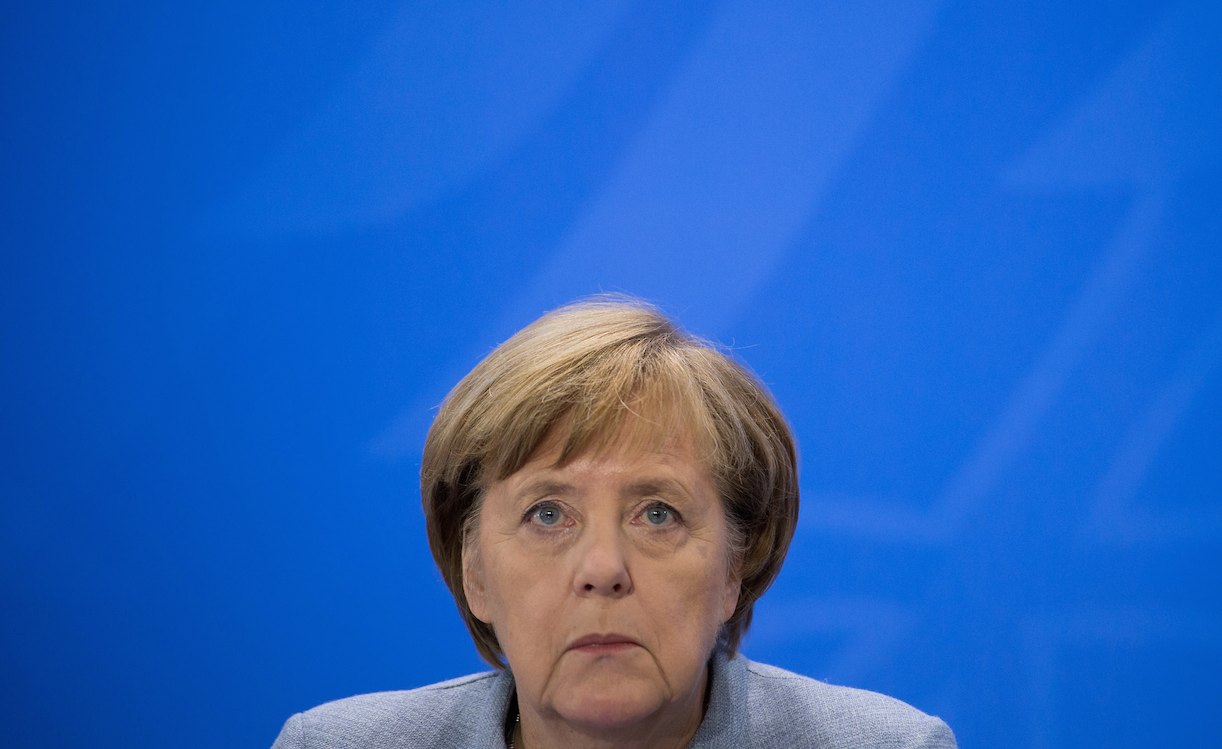
Antiga chanceler alemã alertou recentemente para a ascensão do nacionalismo na Europa. E admite que a decisão de acolher refugiados em 2015 impulsionou a AfD, partido de extrema-direita que lidera atualmente as sondagens no país. Uma das líderes democráticas mais duradouras do pós-guerra, a antiga chanceler federal alemã Angela Merkel, reconheceu que a sua decisão de manter as portas do país abertas durante a crise dos refugiados de 2015 impulsionou o partido de extrema-direita Alternativa para a Alemanha (AfD). O partido, que elegeu a segunda maior bancada no Parlamento em 2025 e hoje promove abertamente a “remigração” de cidadãos indesejados

Câmara de Loulé abriu as portas do Salão Nobre para receber os “Campeões” do Louletano

9 June 2026 at 07:03

O Salão Nobre dos Paços do Concelho de Loulé abriu as portas, na passada quarta-feira, para uma homenagem à equipa sénior de futebol do Louletano Desportos Clube pela promoção à Liga 3. O evento reuniu atletas, equipa técnica, dirigentes, executivo municipal e amigos do clube, numa celebração pautada por memórias históricas e apelo a um ainda maior apoio ao clube na nova temporada.

A sessão solene abriu com uma intervenção sentida de Gilson Pagani, figura histórica do clube e que é hoje o seu diretor geral, que recordou com nostalgia os tempos áureos das décadas de 80 e 90, período em que o Louletano militava na II Divisão. Na altura, o atual presidente da Câmara de Loulé, Telmo Pinto, fazia parte do plantel, ao lado de Pagani, Eduardo Pires, Jorge Guerra ou João Pedro Caliço, mas também de atletas de I Divisão e internacionais de renome, como o bicampeão mundial de juniores brasileiro Mauricinho. Pagani relembrou o mítico jogo contra o FC Porto, “que nunca vai sair da memória de ninguém”. Um empate 2-2 em casa, em partida a contar para a Taça de Portugal, no qual os algarvios se bateram de igual para igual. “Estávamos com um frio estômago, mas quando o Rosa Santos começou o jogo o perfume teve que exalar…”. 

Relativamente ao momento atual, o diretor sublinhou a exigência do último campeonato. “O nosso fabuloso Mister Miguel (Valença) conseguiu unir o grupo e chegámos aqui com dignidade, lealdade, raça e ânimo. O Louletano é muito mais do que pensam, é conhecido no Brasil e em Angola”, afirmou, acrescentando ainda: “No Louletano ninguém desiste! Se tivéssemos desistido em janeiro, nunca estaríamos aqui!”.

O antigo jogador destacou ainda o percurso do atual presidente da Autarquia, que foi seu companheiro dentro das quatro linhas, como um exemplo a seguir: “Naquela altura, os miúdos entravam mudos e saiam calados do balneário. E um dia, chegou ao balneário um miúdo vindo do Quarteirense, magrinho, focado e elétrico, sempre a dar a opinião dele. Estudou, formou-se em Engenharia e depois o bichinho da política pegou ele. Ele nos deu esse exemplo, temos que estar focados, as oportunidades aparecem e quando a porta abre temos que entrar por ela”, lembrou Pagani.

Por seu turno, o presidente do Louletano Desportos Clube, António do Adro, enalteceu a importante parceria com o investidor/patrocinador Hugo Garcia, elogiou o trabalho e empenho da equipa diretiva que o acompanha, lembrando ainda o ecletismo do clube que move dezenas de pessoas diariamente na natação, ginástica, futsal ou triatlo.

António do Adro manifestou a sua satisfação por ter na presidência do Município alguém que conhece profundamente o clube, mas não escondeu algumas necessidades atuais. “Sei das dificuldades em termos de campos para a formação. Loulé só voltará a ser grande no desporto quando tiver mais infraestruturas”, alertou. O líder do clube garantiu ainda que a equipa continuará a jogar no Estádio Algarve, agora com os jogos a serem transmitidos pela televisão (Canal 11), mas que as despesas serão maiores, sobretudo devido às deslocações. “A Câmara Municipal sempre nos ajudou muito, mas este ano vamos chatear-te um bocadinho mais, Telmo!”, avisou.

A encerrar a cerimónia, o presidente da Câmara Municipal de Loulé, Telmo Pinto, dirigiu-se diretamente aos jogadores, apelidando-os de “verdadeiros obreiros da vitória e os grandes heróis”. O autarca aconselhou o plantel a desfrutar do momento, lembrando que quem consegue fazer de um hobby a sua profissão é um “felizardo”. Recuando ao seu tempo de atleta, partilhou histórias de balneário: “Só o Benfica tinha um autocarro melhor do que o nosso. Num ano fizemos 12 viagens às Ilhas. O Mauricinho ganhava 1100 contos e eu 50 contos. Há muita carolice e gente a trabalhar nos bastidores para isto resultar”.

Assumindo as carências apontadas pelo líder do clube, Telmo Pinto reconheceu que o concelho está “deficitário em alguns equipamentos”, mas sublinhou a grandeza desportiva de Loulé, visível nas múltiplas modalidades, campeões e atletas olímpicos. O edil concluiu destacando o papel social e cívico da instituição: “Foi nesta casa que muita gente foi formada e seguiu o caminho certo na vida. Esta entidade é altamente responsável pela formação de homens e mulheres deste concelho”.

Quem é a equipa do Louletano Desportos Clube?

Jogadores: Adair Kandala, Carlos Jr, Chima James, Daniel Paulino, Diogo Machado, Elvis Mendes, Guilherme Campos, Gustavo Daris, Jair Brito, João Farrajota, Leandro Ferreira, Luca van der Gaag, Marcão, Miguel Laginha, Nuno Martelo, Ricardo Leal, Rodrigo Mendes, Rodrigo Vilela, Sander Ramires, Tiago Cavadas, Tiago Correia, Tiago Paixão, Tiago Sousa, Tomás Tomaz, Xavi e Yan MarinhoEquipa técnica, staff e direção: Técnico de Equipamentos – Francisco Calenga (mais conhecido por Chicão); Departamento Médico – Victor Flores; Departamento Médico – David Roberto; Médico  – Miguel Nascimento; Preparador Físico – Paulo Dubian Nosé; Treinador de Guarda-Redes – Bruno Pereira; Treinador Adjunto – André Silva; Treinador Adjunto – Miguel Lourenço; Treinador Principal – Miguel Valença; Dirigente – Jorge Evangelista; Dirigente – Luis Martins; Dirigente – Nuno Laginha; Dirigente – Nuno Cabrita; Diretor Desportivo – Filipe Costa; Diretor Geral – Gilson Pagani; Patrocinador – Hugo Garcia; Presidente – António do Adro.

O conteúdo Câmara de Loulé abriu as portas do Salão Nobre para receber os “Campeões” do Louletano aparece primeiro em Sempre à Mão.

Finland’s foreign minister says Ukraine ‘is now holding the cards’ as Russia signals talks

8 June 2026 at 21:01

EXCLUSIVE: Finnish Foreign Minister Elina Valtonen said Ukraine has gained new leverage against Russia, arguing that Moscow’s renewed talk of negotiations comes as Kyiv has strengthened itself militarily, politically and diplomatically.

Valtonen’s comments carry particular weight because Finland is one of NATO’s newest members and now sits on the alliance’s longest border with Russia. Finland joined NATO in April 2023 after Russia’s full-scale invasion of Ukraine, ending decades of military nonalignment and transforming the country into a frontline state in Europe’s security posture.

"Ukraine certainly is now holding the cards," Valtonen told Fox News Digital Monday in an interview at the United Nations headquarters in New York. "They have strengthened themselves immensely over the course of the past three, four months, both militarily and politically, diplomatically. And I think this opens a great window of opportunity for actually advancing the peace talks."

UKRAINE MAKES FASTEST GAINS IN YEARS AS RUSSIA TALKS STALL, EXPLOITING CRACKS IN KREMLIN COMMAND

Her assessment comes as Reuters reported that Ukraine’s top military commander said Ukrainian forces had recaptured more than 600 square kilometers, or roughly 230 square miles, of territory so far in 2026, a shift after years of slow Russian gains. It also follows renewed diplomatic activity, including Zelenskyy’s stated willingness to halt fighting along current lines as a path to talks and Putin’s public rejection of a direct meeting for now.

Finland shares a roughly 820-mile border with Russia, making it one of the alliance’s most strategically exposed members.

Valtonen said Moscow has shown little willingness to make concessions and argued that the responsibility for ending the war remains with the Kremlin.

"So far, Russia hasn’t been willing to make any concessions, and essentially Russia could end the war today if they wanted to, because it was their war in the first place," she said. "So I’m hopeful that this could be the right time to relaunch those talks."

Peace efforts remain stalled over the same core divide that has shaped the war for years: Ukraine has called for a ceasefire and negotiations without surrendering territory, while Russia has continued to demand control over occupied Ukrainian regions. Putin said in early June there was "no point" in meeting Zelenskyy for now and repeated Moscow’s broader war aims.

Asked about U.S.-led efforts to negotiate an end to the war, Valtonen praised Washington’s role but stressed that Ukraine alone must decide whether to accept any concessions, including on territory.

"I think the U.S. involvement in this entire process has been a very good one, and it’s important that the U.S. stays engaged, because at the end of the day, it’s about freedom, it’s the future of not only Europe, but also of global peace," she said.

ZELENSKYY SAYS US WILL ONLY GUARANTEE UKRAINE'S SECURITY IF KYIV AGREES TO GIVE UP DONBAS

Valtonen said Europe also needs to be part of the process because Russia’s war directly affects the continent’s security architecture.

She said any serious negotiations would require Russia to accept a full ceasefire.

"First and foremost, we would need Russia at the table willing to end the war," Valtonen said. "And that would need to happen through a full ceasefire, because only that would open the possibility for true negotiations."

Valtonen also credited President Donald Trump with pushing European allies to increase defense spending, saying the pressure had moved the continent in the right direction after years of imbalance inside NATO.

Finland has moved aggressively to increase defense spending. Helsinki plans to raise defense spending to 3.2% of GDP by 2030, up from 2.5% in 2025, Reuters reported in April. 

WHY NATO’S DEFENSE SPENDING IMBALANCE LASTED FOR DECADES

Secretary of State Marco Rubio also praised Finland and Sweden Tuesday during a Senate Foreign Relations Committee hearing, saying the two newest NATO members had strengthened the alliance by bringing "their own defense industry" and "advanced technologies." 

He called them "a great partner" and "an extraordinary partner."

Valtonen said Finland’s approach is shaped by its own history with Moscow.

"Finland obviously has taken the Russian threat extremely seriously because we have the longest border with them," she said. "We certainly worship our status as the happiest country in the world, i.e. democracy, the rule of law and human rights, which we hold dear as values over anything that Russia could offer."

She also pointed to Finland’s experience in World War II, when the Soviet Union invaded Finland, as a reminder of why deterrence matters.

"The last time the Soviet Union, i.e. Russia, tried to invade us was during the Second World War," Valtonen said. "Happily, we were able to fend them off, but of course at the massive cost to the society."

"For us, it has been clear that if we invest in our deterrence, then that’s a signal to Russia — do not come here," she added.

On Iran, Valtonen said Finnish President Alexander Stubb’s March comments, reported by The Guardian, that the conflict was not a NATO matter should not be understood as Europe washing its hands of the crisis.

"I don’t think our president meant that this has nothing to do with European countries or NATO allies," Valtonen said. "I think what he probably meant more is that NATO obviously is not directly involved as an organization, which is true."

EX-NATO AMBASSADOR WARNS US AND ALLIES MUST 'STOP THE SNIPING' AND UNITE TO END IRAN CONFLICT

Her comments came after another weekend escalation in the Iran war, with Tehran launching missiles at Israel and Israel striking military targets in western and central Iran overnight. The flare-up unfolded as the U.S. and its allies continue efforts to prevent Iran from becoming a nuclear state and keep pressure on Tehran over threats to Israel and regional shipping.

The Strait of Hormuz, a critical global energy choke point, has become a central focus for Western governments after Iranian threats and restrictions on maritime traffic. Reuters reported Monday that the European Union sanctioned Iranian-linked individuals and an Islamic Revolutionary Guard Corps navy unit over threats to shipping in the strait.

"We as individual member states in Europe have definitely been helping the U.S. effort," Valtonen said. "We don’t want to see Iran as a nuclear state. We know what kind of a threat Iran has projected towards the region, especially toward Israel."

Valtonen added Finland has also joined efforts led by France and the United Kingdom to keep the Strait of Hormuz open once conditions allow for safe operations in the area.

"It’s so important that such straits are not weaponized by any country around the world," Valtonen said.

Asked whether European countries had refused U.S. requests to use bases during the Iran crisis, Valtonen said Finland has no U.S. bases to shut down but argued that most European allies have supported Washington’s requests.

"Finland has been helping the U.S. through so many ways," she said. "We don’t have any U.S. bases in Finland, so there’s nothing we can shut down."

CLICK HERE TO DOWNLOAD THE FOX NEWS APP

"But having said this, the vast majority of European countries have said yes to everything that the U.S. has asked during the past couple of months when this war effort has been ongoing, independent of the fact that, of course, we are not directly involved as countries in the war," she added.

Valtonen said that support demonstrated NATO allies’ willingness to help Washington even when the alliance itself is not formally involved.

"I think that really shows the engagement by NATO allies in this and our willingness to help when the U.S. really needs some assistance," she said.

❌