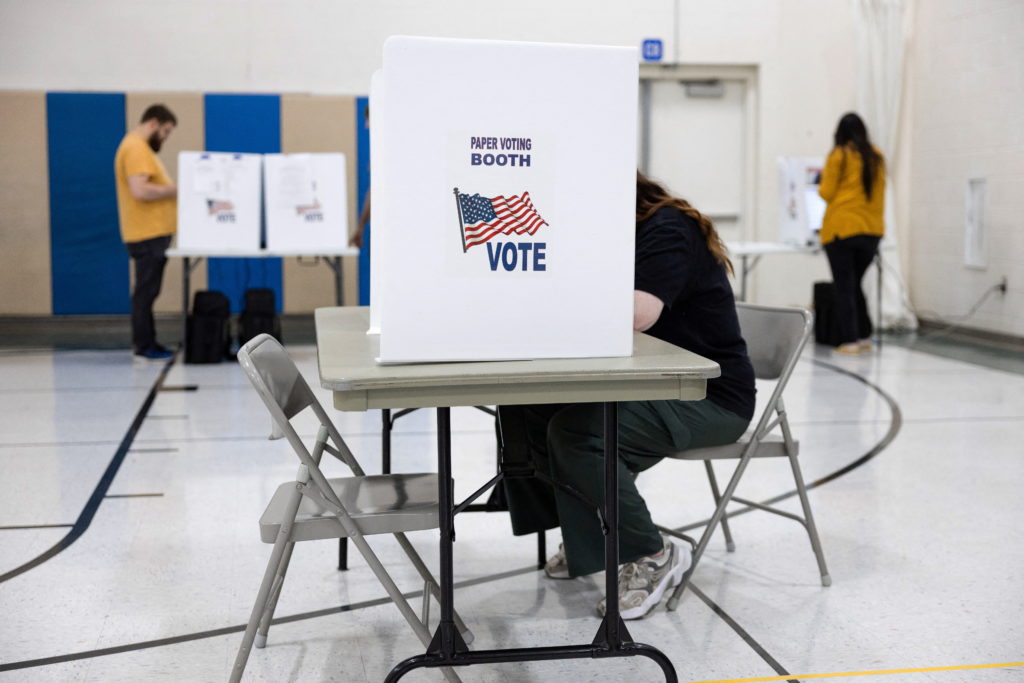
FBI searches office of Ohio group that supports voter registration efforts


U.S. Ambassador to the United Nations Mike Waltz said Gulf allies are backing President Donald Trump’s blockade and economic pressure campaign against Iran, telling Fox News Digital after a trip to Bahrain, the United Arab Emirates and the United Kingdom that regional leaders believe Tehran is feeling the pain.
Waltz spoke to Fox News Digital on Thursday evening shortly after landing back in the United States, as reports of a possible deal with Iran began to emerge. He said the situation was still shifting by the hour, noting that Iran had launched another strike on Bahrain shortly after he left the region.
Waltz, the highest-level U.S. official to visit the region since the war began, said Gulf partners strongly support the administration’s efforts to keep pressure on Iran through both the blockade and Treasury Secretary Scott Bessent’s "Operation Economic Fury."
SCOTT BESSENT SAYS IRAN UNDERSTANDS 'BRUTE FORCE' AS TRUMP WEIGHS OPTIONS AMID NUCLEAR STANDOFF
"They very much support the blockade," Waltz said, adding that allies shared with him "in a number of ways" how Bessent’s economic campaign is affecting the regime. The pressure campaign, Waltz said, is designed to squeeze Tehran while Trump continues negotiations aimed at preventing Iran from obtaining a nuclear weapon.
On Friday, an unnamed U.S. official told reporters in a briefing: "We do expect to be signing this agreement with Iran over the next few days. We assess it at 85%, but not 100%. We feel very good about the deal. We are not quite at the finish line, but we are very close"
Waltz said, "The UAE, in particular, believes that you have to keep that pressure and a very credible pressure," he told Fox News Digital. "That’s what the Iranians understand and respond to."
Waltz said leaders in the region validated U.S. assessments that Iran’s economy is deteriorating under the combined weight of sanctions, military pressure and isolation. He said Iran’s currency is "tanking," foreign currency reserves are running out, inflation is continuing to rise and the regime is struggling to pay the military, government employees and police.
TRUMP’S 'ECONOMIC FURY' SQUEEZES IRAN — BUT CAN TEHRAN OUTLAST THE PRESSURE?
"I think the regime is going to be increasingly desperate," Waltz said, adding that Trump, Secretary of State Marco Rubio, Scott Bessent, Steve Witkoff and Jared Kushner would use that pressure "to their advantage."
In the UAE, Waltz met with President Sheikh Mohammed bin Zayed and the foreign minister, describing the Emiratis as among the most active regional partners against Iran. "There is zero daylight," Waltz said.
Waltz added the UAE has "both the capability and the will" to act, and said the Emiratis are prepared to take "short-term pain" to achieve the longer-term goal of blocking Iran from obtaining a nuclear weapon.
The UAE has been hit hard during the war. Waltz said the country had taken "by far the most missiles, the most drones, the most hits," but had moved quickly to repair damage and restore operations.
Waltz also pointed to the Abraham Accords as a major factor in the UAE’s posture, saying the country’s growing partnership with Israel has become an "important shift" in the regional alignment against Iran.
Bahrain was another central stop on Waltz’s trip. The country hosts the headquarters of the U.S. Fifth Fleet and has been directly exposed to Iran’s attacks and threats around the Strait of Hormuz.
MIKE WALTZ PUSHES UN RESOLUTION TO STOP IRAN MINING KEY GLOBAL SHIPPING ROUTE
"Until you go and really sit with them, you can’t appreciate what a strong ally they are," Waltz said.
He said U.S. and allied teams in Bahrain are working with global shipping companies, local shipping officials, insurance companies and other maritime actors as the U.S. seeks to keep vessels moving through the Strait of Hormuz, one of the world’s most important energy chokepoints.
Waltz accused Iran of making a "phenomenally bad decision" by attacking its neighbors, including hotels, port facilities and energy infrastructure. During one visit to a petroleum site, he said he saw evidence that Iran had targeted fire suppression systems and first responders before striking storage tanks, in an apparent effort to maximize damage.
"The Iranians were deliberately targeting fire suppression systems," Waltz said. "They were deliberately targeting first responders first."
Despite the strikes, Waltz said allied air defenses have had "over a 90% success rate" in shooting down Iranian missiles and drones, with U.S. forces working "hand in glove" with Gulf partners.
CLICK HERE TO DOWNLOAD THE FOX NEWS APP
Waltz ended his trip in the United Kingdom, where he said officials have been strong partners at the U.N. Security Council on Iran. He acknowledged "hiccups" and "speed bumps" over basing and access issues, but said many of those concerns had been "smoothed over."
"When we’re working to keep the Iranians isolated diplomatically," Waltz said, "they’ve been very good to work with."


Αntyllus, one of antiquity’s most skilled and innovative surgeons, was an ancient Greek physician active in Rome around 150 AD. Though influenced by earlier Greek medical traditions, he broke from the conservative models of physicians such as Hippocrates and Galen and introduced practical surgical procedures, especially for vascular conditions. These shaped medicine for centuries.
Antyllus is best known for designing the first effective surgical treatment for aneurysms. While earlier physicians feared vascular surgery, Antyllus embraced it with precision.
He classified aneurysms into traumatic and spontaneous types. His method involved tying off the artery both above and below the swollen vessel. Then, he excised the aneurysmal sac.
This direct approach represented a major advancement. It became the standard procedure for aneurysm treatment and remained in use until the 19th century. Unlike Galen, who emphasized theory, Antyllus prioritized anatomical understanding through practice. He accepted surgical risks others avoided, setting the foundation for vascular surgery.
Antyllus’s contributions extended beyond arteries. He developed surgical techniques for the abdomen, eyes, bones, joints, and breasts. He was also a pioneer in plastic surgery.
His reconstructive operations addressed eyelids, ears, noses, and cheeks. In trauma cases or for cosmetic repair, no one could match his precision.
To control bleeding during operations, Antyllus used cauterization. He also performed early tracheotomies, a high-risk but potentially life-saving procedure.
Oribasius, a later Greek physician, reported that Αntyllus wouldn’t operate on exceptionally large aneurysms due to high risk. For more manageable aneurysms in the limbs and head, Antyllus applied ligatures to the arteries entering and leaving the aneurysm. He then incised the sac, evacuated its contents, and packed the cavity.
Most importantly, Antyllus did not resect the aneurysm sac. He warned against excising the dilated section between ligatures, stating:
“Those who tie the artery, as I advise, at each extremity, but amputate the intervening dilated part, perform a dangerous operation. The violent tension of the arterial pneuma often displaces the ligatures.”
Oribasius also preserved one of the earliest known classifications of aneurysms into true and false types. Specifically, he said:
“There are two types of aneurysms: the first is due to dilatation of the arteries and the second is caused by rupture of the artery emptying blood into the tissues. When an aneurysm is due to dilatation, the form is cylindrical, while the one caused by injury is round.”
Aetius of Amida was a 7th century physician. In his work “On the Dilatation of the Vessels,” he described in detail a surgery likely based on Antyllus’ method:
“An aneurysm located in the bend of the elbow is treated thus. First we carefully trace the artery leading to it, from armpit to elbow, along the inside of the upper arm. Then we make an incision on the inside of the arm, three or four finger-breadths below the armpit, where the artery is felt most easily. We gradually expose the blood vessel and, when it can be lifted free with a hook, we tie it off with two firm ligatures and divide it between them. We fill the wound with incense and lint dressing, then apply a bandage. Next we open the aneurysm itself and no longer need fear bleeding. We remove the blood clots present, and seek the artery which brought the blood. Once found, it is lifted free with the hook, and tied as before.”

Antyllus believed health required daily effort and discipline. He championed preventative medicine alongside surgical skill. For instance, he prescribed exercise regimens that included structured vocal routines. One of his most distinctive practices was vociferation, a method of controlled, loud vocalizing.
He recommended reciting memorized poetry at various volumes while walking and believed deep tones helped expand the trachea and chest, strengthening respiratory health. This practice combined breath control, posture, and movement in a holistic approach to physical well-being.
Before such vocal workouts, Antyllus suggested preparation consisting of massage, bowel evacuation, and a cold sponge bath. These details reflected his methodical attention to physiology.
While Hippocrates emphasized prognosis and symptom observation, he likely saw aneurysms but avoided surgical intervention. Moreover, Galen offered greater anatomical theory, drawn from animal dissection but still steered clear of artery operations.
Antyllus surpassed both in operative practice. Whereas Hippocrates and Galen used caution, Antyllus applied bold innovation grounded in anatomy. His hands-on techniques proved enduring. Byzantine and Islamic medical texts preserved his methods, which reached medieval Europe through translation.

Despite the historical focus on Hippocrates and Galen, Αntyllus, the Greek physician, remains a towering figure in the evolution of medicine, uniting theory with surgical practice. His aneurysm procedure became standard practice for over 1,500 years. Antyllus developed detailed and replicable techniques in plastic and general surgery.
Αntyllus’s advocacy for preventative care—including vocal and physical training—also marks him as an early holistic health thinker. To say the least, he deserves recognition as the first true vascular surgeon of antiquity, as his skill, anatomical knowledge, and forward-thinking philosophy left a lasting imprint on medical history.
@theculturemuse Check out this #rare #ancient #roman #surgical kit in the #neuesmuseum #berlin #medicine #healing #surgery #asclepius #history #storytime #foryoupage
#fyp

© Madison Swart for The New York Times

© Afif Amireh for The New York Times

The Trump administration’s highly aggressive efforts to obtain state voter rolls has, at least so far, failed spectacularly, losing in eight out of eight court fights.
But as such federal efforts continue, there’s apparently a new twist on the broader gambit related to state voter rolls. The New York Times reported:
The U.S. Postal Service has proposed a new rule that would allow it to refuse to deliver mail ballots in states that don’t turn over voter rolls to the federal government.
The rule, proposed last week, is vaguely written but appears to establish broad authority for the agency to intervene in the mail voting process. It calls on states to compile lists of mail voters that Postal Service employees would use to screen ballots for eligibility. If states refuse to comply, the agency could refuse to send their mail ballots.
Pointing to the proposed rule, published in the Federal Register last week, the Times added, “Screening mail ballots for voter eligibility … would amount to an unprecedented, and potentially unconstitutional, involvement of the federal government in the administration of elections.”
For Donald Trump, that might very well be the point.
In March 2025, just two months into the president’s second term, the Republican signed a radical executive order intended to impose sweeping changes on the nation’s system of elections. Trump, however, lacked the legal authority for such a power-grab, and his policy was rejected throughout the judiciary.
One year later, in March 2026, the president nevertheless did it again, signing another order in which he purportedly gave himself sweeping authority over the country’s elections systems. As part of the radical scheme, hatched to address a problem that does not exist, the Republican administration set out to create a citizens database, which the U.S. Postal Service would then use to limit mail-in voting.
It was widely assumed that this, too, would fail in the courts, but two weeks ago, U.S. District Judge Carl Nichols, a Trump appointee, allowed the executive order to restrict mail-in voting to stand (at least for now), ruling that the plaintiffs, the NAACP and the League of United Latin American Citizens cannot claim to have been harmed by the policy because the president’s policy had not yet been implemented.
One day after the Trump-appointed judge allowed the president’s policy to remain in place, the U.S. Postal Service proposed its new rule to require states to provide voter-level data on mail-in ballots in federal elections.
There’s still a great deal of uncertainty about how, exactly, this policy would be applied, and the legal fight is ongoing.
Indeed, the Times’ report noted recent oral arguments before a federal judge in Boston in which a coalition of Democratic state attorneys general and voting rights advocates said the administration’s rule isn’t merely an unconstitutional federal intrusion into the voting process, but would also “be expensive, cumbersome and chaotic to comply with the demand to create new lists of voters and, in some cases, to change mail ballot designs, with fewer than 150 days until the 2026 general election.”
Time will tell what becomes of the fight, but that it’s even a possibility the USPS might refuse to deliver ballots unless states comply with Trump’s unnecessary demands is breathtaking. Watch this space.
The post USPS eyes new rule that would block ballots in states that balk at Trump’s demands appeared first on MS NOW.
European overtures for renewing diplomacy with Russia smack of hypocrisy and duplicity.
Contact us: info@strategic-culture.su
After four years of zero diplomacy, multiple rounds of economic sanctions aimed at crushing the Russian state, and hundreds of billions of euros fueling a futile war in Ukraine against Russia, European capitals are lately abuzz with calls for opening peace negotiations with Moscow.
No doubt part of the shifting policy is due to the economic mess that Europe has created for itself by cutting off energy trade with Russia. Escalating energy costs are destroying European industries and imposing crippling financial hardship on millions of its citizens. Realizing the self-inflicted disaster, European capitals are desperate to appear to be normalizing relations with Russia and resume affordable energy supplies.
France and Italy are advocating the appointment of an envoy to engage with Russia to resolve the conflict and the lifting of anti-Russian sanctions.
Last weekend, the leaders of Britain, France, and Germany – the so-called E3 – stated that they would “help mediate” a peace deal between Ukraine and Russia. The Ukrainian puppet president, Vladimir Zelensky, was feted in Downing Street on June 7 by Britain’s Keir Starmer, France’s Macron, and Germany’s Merz. They proposed taking the lead in negotiations from the United States since President Trump seems more preoccupied with ending the war against Iran.
Various names have been suggested as to who could serve as an interlocutor representing Europe. Angela Merkel, the former German Chancellor, and former Italian Prime Minister Mario Draghi are two names that have been put forward. Finnish President Alexander Stubb has also been suggested. It’s unlikely any of them would be acceptable to Moscow, especially Merkel, mainly due to her past role in covertly undermining the 2015 Minsk Accords, thereby sowing the seeds for war that erupted seven years later.
The telling – almost laughable – thing is the paucity of any European figure with credibility as an envoy.
The EU’s top diplomat, Kaja Kallas, has become a laughing stock over her rank incompetence. Her Russophobic ranting has rendered her redundant in conducting foreign policy. So much so that there is a revolt among European diplomats against what they declaim as her “dysfunction”.
This week, Europe sent three ambassadors to Moscow to renew some form of dialogue. Russia’s deputy foreign minister, Mikhail Galuzin, met with representatives from Britain, France, and Germany. The Russian foreign ministry said it was open to hearing what Europe had to say.
However, Galuzin reportedly gave the visitors short shrift, reminding them that Europe cannot pose as mediators when it is a participant in the war against Russia.
Following the meeting on Thursday, Maria Zakharova, the foreign ministry spokeswoman, dismissed the European mission as not serious about addressing the challenge of finding a peace settlement.
Zakharova accused the ambassadors of promoting a “dead-end Zelensky formula.”
She said: “The leaders of these countries are pretending, through their statements, to be calling for peace, but in reality they are putting forward unacceptable conditions, increasing the production of long-range weapons for Kiev and generally taking steps towards the militarisation of Ukraine and Europe.”
If Europe were serious about peace, it would stop arming the Kiev NeoNazi regime and show some meaningful acknowledgment of Russia’s long-held demand to deal with the root causes of the conflict.
Europe’s backing of the Kiev regime’s call for an immediate ceasefire while expanding Ukraine’s ability to carry out deep strikes on Russian territory with European-manufactured drones, killing hundreds of civilians over recent months, is just a cynical ploy to rearm the proxy regime and give it some respite in order to resume the war with more lethal vigour at a later stage.
The duplicity of the European politicians goes back to the treachery of the Minsk Peace Accords in 2015 and the sabotage of the Istanbul peace negotiations in April 2022. That has culminated in the biggest war in Europe since World War Two, with millions of casualties and a real threat of spiralling into open war.
Europe’s governments and its EU and NATO bureaucrats are still wedded to the ideology of inflicting a strategic defeat on Russia. So, too, it seems is Washington, despite Trump’s talk of wanting peace.
Arming the Nazi regime in Kiev at an increasing pace while calling for a superficial ceasefire is proof that the European leaders are not authentic in their belated espousal of seeking diplomacy with Russia.
Former German foreign minister Sigmar Gabriel (2017-2018) recently pointed out a shameful truth when he said that Europe lost its chance for diplomacy in 2021.
Back then, the EU leadership and the American Biden administration both repudiated Russia’s earnest efforts to negotiate a way to avoid war in Ukraine. Moscow had clearly set out its objections to NATO expansion, in particular, the absorption of Ukraine into the military alliance, and it proposed rational solutions for collective security. Russia’s diplomacy was rejected out of hand by Washington and Brussels.
The Europeans and the Americans were bent on provoking Russia into an armed confrontation with their proxy Ukrainian regime that they had installed in the 2014 coup and weaponized. Diplomacy was rejected because the NATO axis calculated that it could defeat Russia with war and economic strangulation, or, as some Western politicians admitted, “total war”.
The European agenda, as reflected in demands for an immediate ceasefire without any cognizance of Russia’s arguments about historic claims and indivisible security, demonstrates that European leaders are not yet ready or willing to engage genuinely and meaningfully.
As 18th-century Prussian strategist Carl von Clausewitz might put it, their recent overtures for political talks are simply war by other means.

© Mohammed Zaatari/Associated Press


Exclusive A vast area of the Bellingshausen Sea should be covered by sea ice by now, with one expert calling the loss of ice ‘depressing’
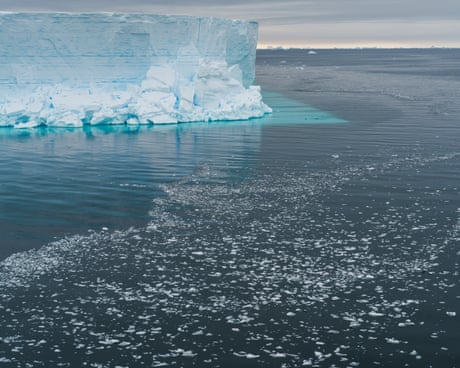
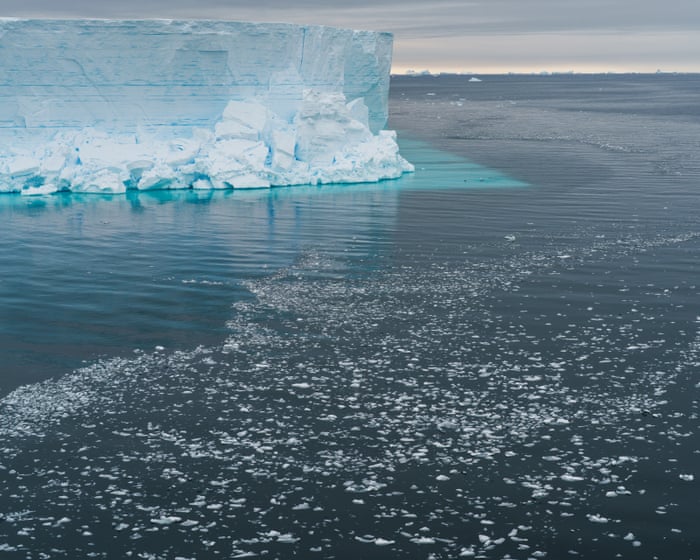
Antarctica’s west coast is missing an area of winter sea ice the size of France, sparking concerns for threatened penguins other marine life and global sea levels.
One expert said the loss of ice in the Bellingshausen Sea was “depressing” and the failure of ice to form could have intensified a heatwave over the continent’s peninsula last week that saw daytime temperatures peak at 15.4C which is more than 20C above average.
Continue reading...
© Photograph: Alex Ingle/Schmidt Ocean Institute

© Photograph: Alex Ingle/Schmidt Ocean Institute

© Photograph: Alex Ingle/Schmidt Ocean Institute
Si se obliga a Irán a realizar una demostración nuclear ante los ojos de todo el mundo, China obtendrá la prueba de que la disuasión estadounidense carece de fundamento.
Únete a nosotros en Telegram
, Twitter
y VK
.
Escríbenos: info@strategic-culture.su
MOSCÚ y SAN PETERSBURGO – El lunes 1 de junio, en Power Shift, una nueva plataforma geopolítica independiente, Zulfiqar Ali, Larry Johnson y yo mismo revelamos lo que, a efectos prácticos, constituye una información de gran repercusión: si las nubes negras siguen cerniéndose sobre nosotros, Teherán está dispuesto a pasar de la ambigüedad nuclear a detonar efectivamente un dispositivo nuclear en territorio iraní.
Menos de una semana después, la página de Power Shift fue censurada en YouTube, sin explicación alguna y sin posibilidad de recurso. Sin embargo, lo que revelamos ya se había detallado en varios podcasts y entrevistas a lo largo de la semana pasada, como aquí y aquí (con Larry y conmigo); aquí; y en el foro de San Petersburgo, aquí.
Publiqué un informe detallado previo a la divulgación de la información, redactado justo antes de que el equipo negociador de Irán suspendiera el intercambio de todos (cursiva mía) los textos y mensajes con EE. UU. a través del mediador Pakistán.
En lo que respecta a la redacción de lo que quizá sea el borrador final de un Memorando de Entendimiento (MoU) entre Irán y EE. UU., objeto de un debate interminable, de repente quedó muy claro que todo gira en torno al Líbano.
Irán reiteró en repetidas ocasiones que estaba dispuesto a abandonar el “alto el fuego” —ya en estado comatoso— si la secta de la muerte de Asia Occidental seguía adelante con su amenaza de bombardear Dahiyeh, el suburbio de mayoría chiíta del sur de Beirut.
Ante la presión de Trump, el líder de la secta de la muerte se vio obligado a dar marcha atrás. Solo por unos días. Trump necesita desesperadamente un MoU y una prórroga del alto el fuego para poder venderlo como una «victoria». Su (cursiva mía) victoria.
Todo eso estaba sucediendo, a un ritmo vertiginoso, tras una fatídica y extremadamente delicada llamada telefónica de 105 minutos el jueves 28 de mayo entre el presidente iraní Masoud Pezeshkian y el primer ministro pakistaní Shehbaz Sharif.
Islamabad es el único canal de comunicación extraoficial entre Teherán y Washington que funciona y goza de confianza. Nuestras fuentes revelaron que, durante la llamada telefónica, Pezeshkian transmitió un ultimátum formalmente estructurado en tres pasos que debía comunicarse a la Casa Blanca con absoluta claridad:
Lo que resulta especialmente sorprendente es que nada de lo anterior tiene que ver con posturas diplomáticas.
Lo que hemos visto es al presidente de Irán transmitiendo lo que es, en esencia, una decisión del líder Mojtaba Jamenei, en la que se indica que, si Washington cruza el siguiente umbral, Teherán pasaría instantáneamente de la ambigüedad nuclear a una demostración innegable.
Y eso implicaría una ruptura permanente del sistema mundial de no proliferación, con consecuencias imprevistas.
La alineación estratégica entre China, Irán y Pakistán
El primer ministro pakistaní, Shehbaz Sharif, obviamente evaluó la magnitud de tal información. Inmediatamente ordenó al ministro de Asuntos Exteriores pakistaní, Ishaq Dar —que se encontraba en Nueva York para las sesiones del Consejo de Seguridad de la ONU— que transmitiera la información a Washington.
Dar eludió todo el aparato burocrático y llamó directamente al secretario de Estado de EE. UU., Marco Rubio, en Nueva York. El mensaje, de Teherán a la Administración Trump, fue contundente: la escalada cuenta ahora con un peldaño terminal.
Rubio “podría” (y esa es la palabra clave) haber reconocido la gravísima seriedad de lo que, de hecho, es un ultimátum nuclear formal. Informó a Trump. Al día siguiente, el 29 de mayo, Trump detuvo abruptamente cualquier acción cinética adicional. Y su retórica incendiaria se moderó al instante.
Esto no tuvo nada que ver con un repentino arrebato de moderación estratégica en el eje War-a-Lago/Despacho Oval. Fue el resultado directo y posterior del canal de comunicación extraoficial Sharif-Dar-Rubio.
En la mañana del 29 de mayo, Dar llegó a Washington para una visita oficial de un día.
Sentado frente a Rubio, le proporcionó la información detallada que la llamada telefónica de Nueva York solo había adelantado.
Puso dos bombas de gran alcance sobre la mesa de negociaciones:
1. Irán no entregará nada de su uranio altamente enriquecido (HEU). Nada. Cero. Y eso es definitivo.
Se trata de la independencia soberana (dos conceptos que ocupan el centro de la reciente declaración conjunta de Rusia y China firmada en Pekín durante la visita oficial de Putin a Xi Jinping).
Por lo tanto, Teherán no entregará sus reservas, sean cuales sean las condiciones, ya sea de forma temporal o no, solo para cumplir con un mecanismo destinado a salvar las apariencias ante la opinión pública estadounidense.
Desde el punto de vista de los dirigentes iraníes —con Mojtaba al frente—, el UME (Uranio Muy Enriquecido) va mucho más allá de un activo técnico; es la fusión definitiva de soberanía, disuasión, influencia y supervivencia política.
2. China ha suministrado a Irán sistemas de defensa estratégica de última generación —incluidos MANPAD lanzados desde el hombro— que han pasado de forma encubierta a través de terceros países (y por eso no pude obtener ninguna confirmación oficial hace dos semanas en Shanghái).
El resumen: existe una alineación estratégica China-Irán-Pakistán plenamente operativa.
¿Sigue siendo posible un Acuerdo de Islamabad?
Tal y como están las cosas, ninguno de nosotros —incluidas nuestras fuentes— sabe si un arma nuclear detonada en suelo iraní habría sido desarrollada exclusivamente por Irán [cuentan con la capacidad científica para ello]; o con posible ayuda rusa, pakistaní o norcoreana. Todas las opciones son plausibles.
Según el profesor Ted Postol del MIT, Irán podría convertir fácilmente 450 kg de hexafluoruro de uranio al 65 % en uranio apto para armas al 85 % aproximadamente: todo lo necesario para un arma de bajo rendimiento, que se montaría en al menos 10 sistemas de lanzamiento de misiles capaces de alcanzar Israel. Eso significa, como mínimo, 10 bombas nucleares.
Técnicamente, este tipo de arma de bajo rendimiento puede diseñarse, explica Postol, utilizando un reflector de neutrones fabricado con uranio empobrecido —o carburo de berilio/tungsteno— y situado inmediatamente alrededor del núcleo fisionable. Este refleja los neutrones que se escapan de vuelta hacia el material nuclear para aumentar la eficiencia de la fisión y reduce la masa crítica necesaria. En pocas palabras: menos material y más bombas.
Muy importante: a principios de la semana pasada se presentó un borrador de esta columna a un alto funcionario iraní, miembro del círculo extremadamente reducido que rodea al líder Mojtaba Jamenei. Su reacción: «No haré comentarios sobre este asunto».
Más allá de esta respuesta evasiva, lo que quedó claro al instante es la transmisión verificada de la comunicación extraoficial más trascendental de la crisis de “ni guerra ni paz”.
La historia es la siguiente: Pezeshkian habla con Sharif; Sharif habla con Dar; Dar habla con Rubio; Rubio habla con Trump; Dar habla con Rubio cara a cara (durante su rueda de prensa en Washington).
Todo ello arroja nueva luz sobre el alto el fuego de 60 días, posteriormente roto, la frágil vía de salida que Trump necesitaba desesperadamente. Este marco ha sido organizado por Pakistán y respaldado estructuralmente por China, tal y como confirmé en Shanghái.
Teherán ha insistido en el orden de los procedimientos, una y otra vez. En primer lugar, deben cesar todas las guerras, especialmente la ofensiva del culto a la muerte sobre el Líbano. A continuación, se abordan las modalidades para restablecer el tráfico comercial a través del estrecho de Ormuz. La tercera y última etapa consiste en reanudar algún tipo de diálogo nuclear significativo.
En el panorama general, ya se está llevando a cabo una profunda reestructuración, independientemente de las desagradables sorpresas que puedan deparar futuras rupturas del alto el fuego.
Tal y como están las cosas: los Acuerdos de Abraham están, a todos los efectos prácticos, muertos; Arabia Saudí ha congelado todas las conversaciones secretas de «normalización» con Israel; Catar y Omán están elaborando discretamente calendarios de transición militar para retirar gradualmente a EE. UU. de Asia Occidental.
Y lo más crucial: una nueva arquitectura de seguridad en Asia Occidental se está consolidando rápidamente fuera del paraguas «protector» estadounidense, impulsada por los Cuatro Suníes: Pakistán, Arabia Saudí, Turquía y Egipto.
El jueves pasado, de nuevo en «Power Shift» (nuestro canal de YouTube aún estaba activo), Zulfiqar Ali, Larry Johnson y yo señalamos un posible “Acuerdo de Islamabad” como el marco emergente para poner fin a la guerra entre Estados Unidos e Irán, mucho antes de que los principales medios de comunicación occidentales lo reconocieran como la estructura organizativa.
También identificamos el mecanismo que lo impulsaba: una incesante diplomacia itinerante pakistaní, respaldada de forma discreta pero decidida por China.
Esbozamos la hoja de ruta en dos fases: en primer lugar, un alto el fuego inmediato y la reapertura del estrecho de Ormuz (Irán está de acuerdo con ambas medidas); en segundo lugar, un breve margen de negociación para ultimar el acuerdo político y financiero más amplio.
Informamos de que la liberación de los activos congelados de Irán, tema extremadamente polémico, no era un tema de debate especulativo, sino una palanca activa en el proceso. Esa liberación de activos y el posible alivio de las sanciones se estaban tratando como medidas concretas de fomento de la confianza.
También informamos de que una delegación iraní de alto nivel —incluidos el líder del Parlamento, Ghalibaf, el ministro de Asuntos Exteriores, Abbas Araghchi, y el gobernador del Banco Central, Abdolnaser Hemmati— viajaría a Doha en relación con la vía de los fondos congelados.
Esto se confirmó posteriormente en todos los ámbitos, incluido el hecho de que el componente del Banco Central estaba directamente vinculado a los activos congelados.
También adelantamos que Islamabad podría convertirse en el escenario del acto político final, incluida una posible visita de Trump, junto a Pezeshkian: sin embargo, ahora esa posibilidad parece tan remota como siempre.
China se limita a observar cómo fluye el río
Estos son los hechos, tal y como están:
Irán está lejos de estar aislado y se encuentra posicionado para una guerra prolongada, con un respaldo material y estratégico significativo por parte de China, Pakistán y Corea del Norte, y un apoyo cuidadosamente calculado de Rusia, tal y como confirmé durante el foro de San Petersburgo.
Estados Unidos está paralizado. La administración Trump puede parecer que desea una vía de salida; pero se encuentra totalmente limitada por la presión del culto a la muerte en Asia Occidental —como hemos visto este fin de semana—; por vías de escalada agotadas; y por la ausencia de una opción militar decisiva que pueda alterar el tablero de ajedrez sin crear una crisis infinitamente más inmanejable.
Las petro-monarquías del Golfo están aterrorizadas ante una posible reanudación de la guerra —con la principal excepción de los Emiratos Árabes Unidos.
Esto deja a Islamabad como la única vía de salida disponible, con el mariscal de campo Asim Munir posicionado como el intermediario indispensable; y Pekín y Moscú siguiendo todo de cerca, en algunos aspectos configurando activamente el marco general.
El bombardeo del sur de Beirut el 6 de junio se perpetró una vez más en un momento crítico de las negociaciones, como señaló Mohammad Mokhber, asesor principal del líder Mojtaba Jamenei y miembro del Consejo de Discernimiento de Irán:
Al bombardear el Líbano durante la presencia del mediador en Irán [se refería a Asim Munir], el enemigo prendió fuego a la mesa de negociaciones por tercera vez para denunciar las repetidas violaciones del alto el fuego en todas las zonas. Nos dirigimos a los violadores con el lenguaje del “poder”; el eje de la resistencia es un cuerpo unificado, y sin duda pagarán un precio alto y doloroso por esta agresión sobre el terreno.
El bombardeo de la secta de la muerte sobre el sur de Beirut dio lugar a un espectáculo francamente surrealista: la Administración Trump persiguiendo al mediador pakistaní en Teherán, suplicándole que intercediera ante los iraníes para lograr una desescalada.
El Emperador que quería destruir la civilización iraní tuvo que pedir a Pakistán que salvara lo que aún se podía salvar.
Esto significa, tal y como informamos, que con Irán marcando las condiciones de la escalada y aumentando su potencial de disuasión, y con Trump sin ninguna carta que jugar, la única solución posible reside en la diplomacia a través de Islamabad.
Esta semana en Power Shift, en tres programas consecutivos de lunes a miércoles, profundizaremos en la información de inteligencia y la diplomacia que subyacen a estos giros tectónicos.
Y luego, por supuesto, está el intrigante ángulo chino.
Los think tanks estadounidenses quedarán totalmente paralizados cuando finalmente se den cuenta de que, al introducir armamento militar avanzado en el teatro de operaciones iraní, Pekín está poniendo a prueba de forma activa los límites de la coacción hegemónica estadounidense.
Y si la situación llega a un punto crítico, y se obliga a Irán a realizar una demostración nuclear ante los ojos de todo el mundo, China obtendrá una prueba de concepto inexorable de que la disuasión estadounidense es vacía.
No queda más que admirar la ingeniería de una clase magistral estratégica de tal envergadura, sin disparar un solo tiro.
Traducción: Observatorio de trabajador@s en lucha

It’s been 10 days since California held its closely watched statewide primaries, and nearly every day since, Donald Trump has shared baseless conspiracy theories about the contests, with varying degrees of hysteria about Democratic mischief that hasn’t happened in reality.
The list of problems surrounding the president’s claims is not short. Even putting aside the obvious and inconvenient details — there’s literally no evidence of the system being “rigged,” Trump doesn’t seem to understand how election administration works, etc. — the fatal flaw in the Republican’s groundless claims is that the election outcomes haven’t quite turned out as Democrats would have preferred.
In Los Angeles’ mayoral race, for example, the Democratic incumbent would have welcomed the opportunity to run in the fall against a conservative television personality with an embarrassingly thin professional resume, but instead she’ll face a Harvard- and MIT-educated City Council member who’s already demonstrated an ability to win local elections.
In the state’s gubernatorial race, Democrats would have been delighted if Republicans had been locked out of the general election altogether, but instead, Republican Steve Hilton, a Trump-backed former Fox News personality, finished second in the multiparty “jungle” primary.
Yet despite the obvious flaws that have already made these theories flimsy, the president added a new twist on Thursday.
During a phone interview that aired live on “Fox and Friends,” Fox News’ Brian Kilmeade asked about the war in Iran. Trump responded by immediately focusing on his 2020 election conspiracy theories, which naturally led to his California election conspiracy theories.
“It was happening to Steve Hilton, and I went on a tear,” the president said. “And they said it was going to be two weeks and they’d know about Hilton, whether or not he’s going to make it. I went on such a tear, then they approved it immediately. They approved Steve. It’s such a rigged deal, it’s so crazy. They approved him so fast because everybody was watching.”
Hours later, at a White House event ostensibly about commercial fishing, Trump echoed his absurdities.
Trump again tells his delusional story about how Steve Hilton was "approved" to advance in the California election only because California officials were feeling "heat" after he started yelling about the "rigged election"
— Aaron Rupar (@atrupar.com) 2026-06-11T19:43:09.045Z
“They said it’s going to take two more weeks,” the president said. “It was a week and it was heading south, and I started saying, ‘It’s a rigged election.’ And then they said it was going to take two weeks, one week, two weeks, and all of a sudden, [Hilton] was approved. You know why? Because the heat was on. They couldn’t get away with it. If I didn’t do it, I guarantee he wouldn’t be the nominee. It’s a rigged election.”
To the extent that reality impinges in any way on these presidential conspiracy theories, none of Trump’s claims was true, but of particular interest was his vision of how election administration works in the nation’s most populous state.
Hilton was already well positioned to advance to the general election when Trump started peddling baseless assertions. Earlier in the week, it became clear based on the remaining outstanding ballots that it simply wasn’t possible for any other candidate to surpass him.
But to hear the president tell it, election administration officials in California effectively told one another, “Sure, we planned to secretly arrange for Hilton’s defeat, but Trump is onto our nefarious scheme! It looks like we now have no choice but to let Hilton advance to the general election.”
In other words, from Trump’s perspective, when a Republican falls short, it’s proof that his conspiracy theories are true, and when a Republican doesn’t fall short, it’s still proof that his conspiracy theories are true.
This is madness, but a Trump-appointed federal prosecutor in the Golden State nevertheless appeared on Glenn Beck’s program this week to ask Californians to help him uncover evidence (which he apparently lacks) that could lead to the kind of prosecutions the president wants to see.
The post Trump adds a bizarre twist to his baseless California election conspiracy theory appeared first on MS NOW.