Normal view

Polish concerns over Ukraine EU talks 'solved,' EU enlargement chief says

8 June 2026 at 17:51
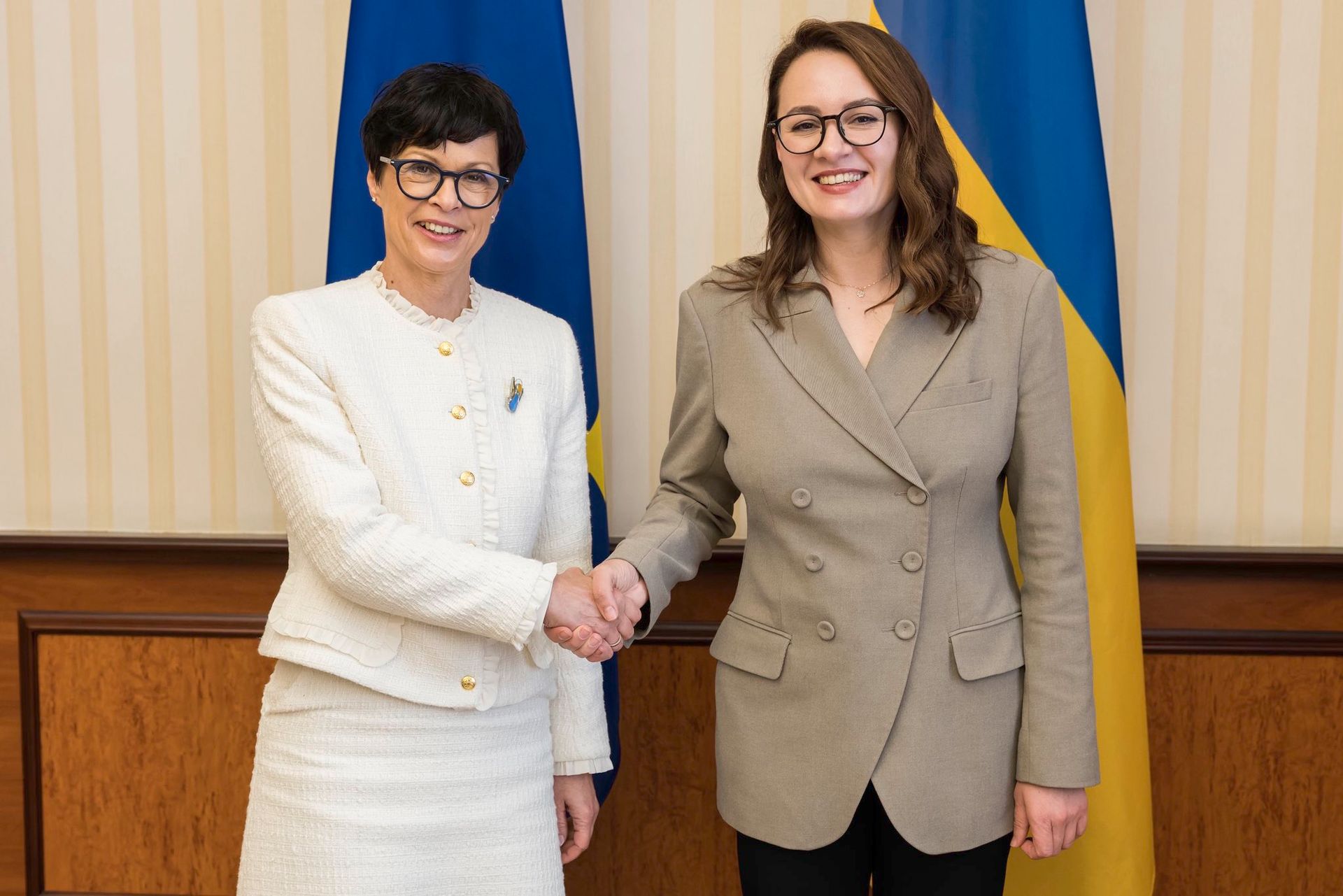
"For the time being, I think this issue has been solved at the working level," the EU's Enlargement Chief Marta Kos said in a meeting with journalists in Kyiv on June 8, referring to Poland's objection.

Hungary’s anti-corruption watchdog says Orbán’s former inner circle should be prosecuted over billions in missing EU funds

8 June 2026 at 10:27

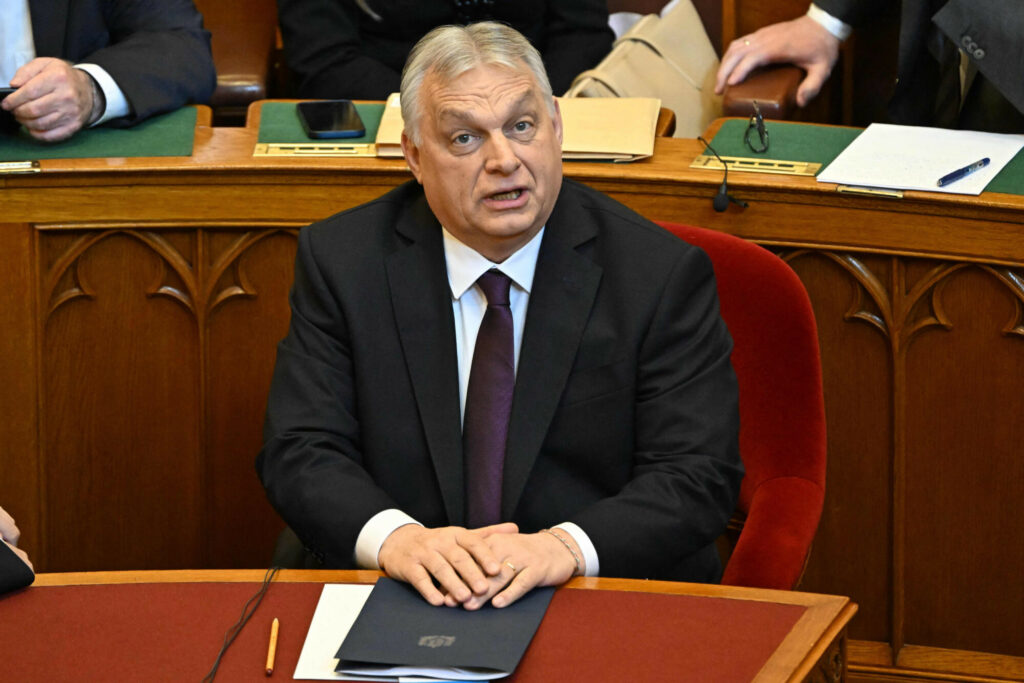
hungary's anti-corruption watchdog says orbán's former inner circle prosecuted over billions missing eu funds · post hungarian then-prime minister viktor orban prior delivering speech during spring session parliament budapest hungary

Hungary's long reckoning with alleged graft is shifting from accusations to prosecutions, the country's anti-corruption watchdog has told Politico. Senior figures from Viktor Orbán's former government could face charges over EU money the authority believes was systematically misused. Those words arrive as Orbán's successor works to rebuild trust with Brussels and reclaim funds frozen for years.

The watchdog claims some of the EU money Orbán fought over was siphoned off at home. PM Magyar must still submit a credible reform plan before the end of August. Otherwise, Hungary risks losing €16.4 billion in newly unlocked funds. For years, then-Prime Minister Orbán blocked EU aid and loans to Ukraine. He used the bloc's money as leverage against Kyiv. Magyar has branded his predecessor corrupt over and over. His government dropped a two-year veto and released billions in EU arms payments for Ukraine. 

Senior officials in the crosshairs

Ferenc Pál Biró, who heads the Hungarian Integrity Authority, said top politicians "can and may well be prosecuted." He described it as an alleged effort to bilk EU taxpayers over the course of Orbán's 16 years in power. His team had flagged several criminal cases, he said. Biró wants Hungary to recover the money and have it repatriated, since most has already left the country. He stopped short of naming Orbán or anyone in his inner circle. 

opposition party Tisza
Explore further

Hungary unblocks $7.7 billion in EU arms payments after dropping two-year veto on Ukraine aid

The alleged procurement scheme

The watchdog claims that three companies won most government contracts at artificially inflated prices. The key figures he laid out:

  • Roughly €10 billion paid to just three firms in four years
  • About €3.5 billion, the watchdog treats as overpricing tied to corruption risk
  • Everyday goods and services billed at multiples of their market value

Biró said tenders were manipulated and that the Hungarian state "became the largest entity on the market."

voted out facing investigators orbán could reach un cover sources say · post visit vice president jd vance rally support viktor 7 2026 budapest hungary beata zawrzel/reporter (from left) orban
Explore further

Voted out and facing investigators, Orbán could reach for UN cover, sources say

The watchdog Orbán was made to create

Brussels required the Integrity Authority in 2022 as a condition for releasing frozen money. It monitors how EU funds are spent and sits independently of the government. The body should help unwind patronage empires built under Orbán, spanning construction, utilities, and media. Biró has led it since it launched. Hungary has had billions frozen over corruption and rule-of-law concerns. Orbán himself now faces corruption investigations under the new government.

Bribes and intimidation

Biró said the previous government targeted him while he investigated the scheme. He described attempts at bribery and politically motivated pressure. His wife was offered a job with high pay and no work, he said, though he would not say by whom. He was also held over an accusation of misusing his company car. 

How much longer will Orbán be Putin and Trump’s man in Brussels?

3 April 2026 at 13:45

Viktor Orbán, Hungary’s prime minister since 2010, faces an election dogfight. Behind in the polls, he has been effectively endorsed by both the Kremlin and the White House, and a host of conservative world leaders. As wars in Iran and Ukraine exacerbate the fissures that have weakened NATO, as well as the U.S.’s relationship with the European Union, this is an election that is being followed with bated breath in Washington, Moscow, Kyiv and Brussels. 

Before the elections on April 12, a scandal engulfed the Hungarian government. On leaked recordings, foreign minister Péter Szijjártó can be heard deferentially acquiescing to his Russian counterpart Sergey Lavrov and passing on information from EU meetings. Szijjártó appeared willing to help the Kremlin’s cause in Brussels, to remove oligarchs and their relatives from the EU blacklist, and to block efforts to aid Ukraine. Hungary’s advocacy for the Kremlin’s agenda culminated in its recent veto of fresh sanctions on Russia and over $100 billion in loans to Ukraine. On X, Polish prime minister Donald Tusk wrote that while “Hungary is and will be in the European Union, Victor Orbán and his foreign minister left Europe long ago.” And the Irish taoiseach Micheál Martin described Szijjárto’s calls with Lavrov as both “sinister” and “alarming.”

Szijjárto alleged that “foreign intelligence services, with the active involvement of Hungarian journalists, have been intercepting my phone calls.” It is a plot, the Hungarian government claims, to influence the upcoming polls. Orbán directly blames Ukraine for seeking to unseat his government. The opposition, led by Peter Magyar, has a healthy lead in the polls and describes the Hungarian government’s closeness to the Kremlin as “treason.” According to European intelligence reports, Moscow sent a three-person team to Hungary, overseen by Putin confidant Sergei Kiriyenko who ran an operation to interfere in the Moldovan election back in September. His tactics encompassed “vote-buying networks, troll farms, and on-the-ground influence campaigns.” A Kremlin-linked media consultancy, facing EU sanctions, was hired to dismiss Magyar as a Brussels stooge and portray Orbán as the only candidate strong enough to to be treated as an equal by world leaders, as evidenced by the strength of his relationship with Trump. 

Despite a war with Iran that doesn’t appear to be going entirely to plan, the U.S. president took time out to back Orbán with enthusiasm and at considerable length on Truth Social. Trump said Orbán was “a true friend, fighter, and WINNER.” JD Vance, the vice president, is scheduled to visit Hungary on April 7, just five days before the election. And secretary of state Marco Rubio went to Hungary in February. It is now part of the U.S. National Security Strategy to work towards “cultivating resistance to Europe’s current trajectory within European nations.” To that end, notes the U.S. government, “the growing influence of patriotic European parties indeed gives cause for great optimism.” Orbán speaks MAGA’s language on immigration, traditional values and the Christian essence of Western societies. He is, like Putin and Trump, in MAGA’s view, an implacable opponent of secular, progressive, globalist politics as symbolised by Brussels.

Orbán, the longest serving current head of government in the EU, has become a figurehead for populist, nationalist movements across the world. The recent CPAC Hungary summit was attended by several of these leaders including France’s Marine Le Pen, Italian deputy prime minister Matteo Salvini, and the Netherlands’ Geert Wilders,who called Orbán “a lion on a continent led by sheep.” Latin American leaders close to Trump , including Javier Milei of Argentina and Jose Antonio Kast of Chile, also attended. Milei, who gave the longest speech at the summit, said Orbán was “a beacon for all… who refuse to accept that the West's destiny is one of managed decline.” This international network, with the United States and Russia included, has a vested ideological interest in seeing Orban continue to remain a thorn in the EU's side. 

But what can Brussels do? The answer, it appears, is not much. The EU is consensus driven; it needs all its parts to act in concert, giving holdouts like Orbán considerable power to hold the whole bloc hostage. But given Orbán’s prominence as an ideologue, when Hungary blocks sanctions or delays support for Ukraine, it is more than a single nation going rogue. Alice Weidler, co-chair of the far-right AfD, the largest opposition party in the German Bundestag, was among those who spoke at the CPAC Hungary conference last month. Robert Fico, prime minister of Slovakia, is an Orbán ally. On April 19, Bulgaria will have its eighth general election in just five years. Former president Rumen Radev’s new Progressive Party leads the polls and shares Orbán’s pro-Kremlin, anti-EU inclinations.

So polarized is the Hungarian election, that right wing groups are deploying their own observers from Argentina, Austria, the Czech Republic, Kenya, Poland, Germany, Italy, Spain, Serbia, Tanzania and the United States to monitor proceedings. EU observers have said the Hungarian government controls the national media and a recent documentary alleges that a desperate government is resorting to vote-buying, gerrymandering and intimidation tactics. It’s hard to see how either Orbán or Magyar will accept the election result without protest, unless the margin is crushing. But, given Trump’s disdain for NATO allies and the EU, an Orbán election defeat would be a much-needed victory for European unity. 

A version of this story was published in this week’s Coda Currents newsletter. Sign up here.

The post How much longer will Orbán be Putin and Trump’s man in Brussels? appeared first on Coda Story.

800-Year-Old Crusader Fortress Reveals Teutonic Knights’ Lost Legacy in Transylvania

2 June 2026 at 19:22
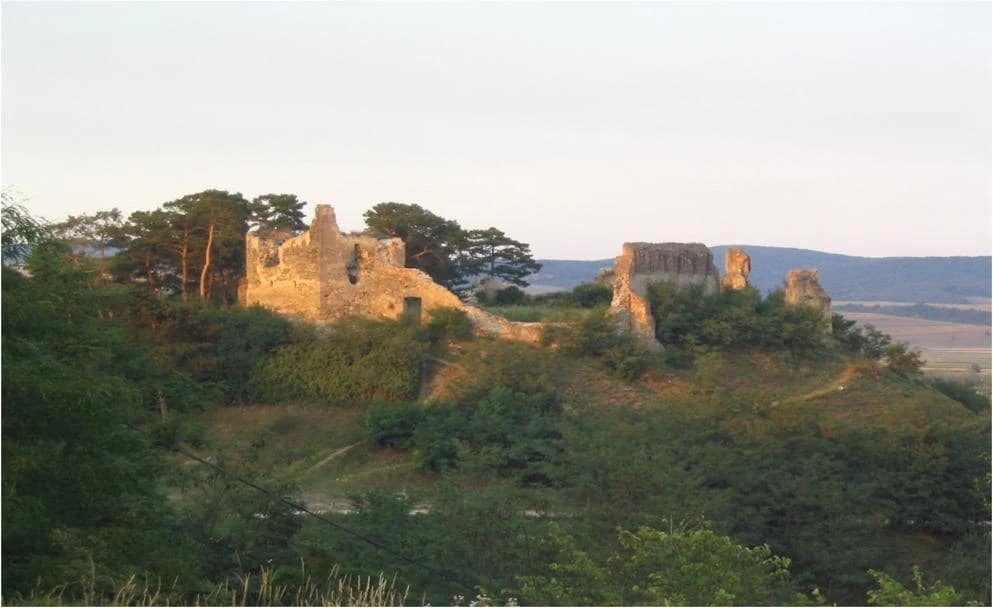
Romania, Feldioara Medieval Fortress
Romania, Feldioara Medieval Fortress. Credit: Daniela Marcu-Istrate et al. / CC BY 4.0

For decades, historians suspected that the ruined crusader Fortress in southeastern Transylvania was built by the Teutonic Knights during their brief stay in the region. Now, a new scientific study has provided the strongest evidence yet to support that theory.

Researchers reporting in Archaeological and Anthropological Sciences found that the fortress’s earliest stone defenses date to the early 13th century. The results match the period between 1211 and 1225, when the Teutonic Knights controlled the Burzenland region, known today as Ţara Bârsei in central Romania.

The findings offer rare physical evidence of the military-religious order’s activities in Transylvania and help resolve a long-standing historical debate.

A frontier stronghold on the edge of medieval Hungary

Feldioara, also known by its German name Marienburg, stands on a plateau overlooking the Olt River with views toward the Carpathian Mountains. During the Middle Ages, the area formed part of the southeastern frontier of the Kingdom of Hungary, bordering lands controlled by the nomadic Cumans.

Historical records show the site was known as Castrum Sanctae Mariae by 1240, when it was granted to the Cistercian Order. Its association with the Virgin Mary has long fueled speculation about a connection to the Teutonic Knights, whose order was dedicated to Mary.

Feldioara Medieval Fortress after the 2013-2017 restoration
Feldioara Medieval Fortress after the 2013-2017 restoration. Credit: Daniela Marcu-Istrate et al. / CC BY 4.0

Written sources confirm that King Andrew II of Hungary invited the Teutonic Knights to settle in the region in 1211 to strengthen the kingdom’s frontier defenses. Archaeologists previously uncovered medieval walls, a church, towers, and military artifacts at Feldioara. However, researchers lacked direct evidence linking the fortress’s stone structures to the knights’ short occupation.

Mortar dating provides crucial evidence

To investigate, the team analyzed 13 lime mortar samples collected from some of the site’s oldest masonry during excavations conducted between 2013 and 2017. Mortar is difficult to date because it hardens gradually as it absorbs carbon dioxide from the atmosphere and can be affected by later repairs.

Researchers examined microscopic calcite particles within the mortar and used radiocarbon dating combined with statistical modeling. Several samples from the fortress’s earliest defensive walls and the foundations of a western tower produced dates that matched the Teutonic period.

The study concludes that Feldioara’s first stone fortifications were built while the Teutonic Knights governed the region.

A glimpse into the order’s early ambitions

The findings also shed light on the order’s broader ambitions. Founded during the Third Crusade as a hospital organization for Christian pilgrims, the Teutonic Order later became one of medieval Europe’s most influential military powers.

Its relationship with the Hungarian crown deteriorated after the knights expanded beyond their original mandate and sought greater autonomy. King Andrew II expelled the order from Transylvania in 1225 after just 14 years in the region.

Although their presence was brief, the new evidence suggests the knights left a lasting mark on the frontier landscape. Researchers say Feldioara represents one of the earliest surviving examples of the Teutonic Order’s strategy of combining border defense, fortified settlements, and political influence.

The approach would later be used on a much larger scale in Prussia and the Baltic region, where the order established its most powerful territorial state.

❌