Apple has added support for touchscreen controls to its computer operating system, prompting fresh speculation that the company is developing a Mac with a touch-enabled display.
Technology enthusiasts discovered the feature in the beta version of macOS 27, which Apple unveiled on June 8. When users connect an iPad to a MacBook, the tablet can display an interface that allows them to control the computer through touch inputs and gesture-based navigation.
New Feature Hints at Future Hardware Plans
According to observers, the addition of touchscreen functionality could serve as an indirect indication that Apple is actively working on a touchscreen Mac.
Weight-loss drugs are saving users’ households more than £400 a year on grocery bills, according to a survey, which found use of GLP-1s has nearly tripled in the past two years to 1.9 million adults.
More than 6.3% of households in Great Britain now include at least one GLP-1 user, according to the research by Worldpanel by Numerator. This marks a sharp rise from 4.1% of households in 2025 and 2.3% in 2024.
From Spain to Japan, experiments have repeatedly shown a left-turn bias, but exact mechanic ‘is still an open question’
“I’m not an ambi-turner,” laments Derek Zoolander in the eponymous noughties satire about the world’s hottest male model and his rare catwalk hangup. “It’s a problem I’ve had since I was a baby … I can’t turn left.”
Now, research suggests that the fashionista’s career-threatening quirk was even more unusual than previously thought. Tests reveal that when people are ambling about, they have a natural tendency to turn to the left and walk in an anticlockwise direction.
An Iron Age Scottish woman likely had her brains scooped out after she died as part of her burial, according to a new study that sheds further light on the complex funerary rites of this prehistoric...
Scientists studying a rare, ancient angrite meteorite found in the Sahara Desert have uncovered evidence of a lost protoplanet from the early Solar System.
The building of the Academy of Athens in downtown Athens. Credit: Thomas Wolf, CC-BY-SA-3-0/Wikipedia
A major international ranking has highlighted eleven Greek scientists who have made it into the global elite of research. Spanning institutions from Stanford and Columbia to the University of Crete, these researchers are recognized among the top 1,000 scientists worldwide in their respective fields.
This prestigious list is compiled annually by Research.com, a prominent educational platform and academic research portal. To compile these rankings, Research.com analyzes data from millions of scientists globally, evaluating their career achievements based heavily on a standard academic metric called the h-index.
The h-index is a metric used to measure both the productivity (how much they publish) and the impact (how often other scientists cite their work) of a researcher.
The top 11 Greek scientists
Here is a summary of the researchers making waves in the global scientific community:
1. John Ioannidis (Stanford University)
Dr. John Ioannidis. Courtesy Dr. Ioannidis
A professor of medicine at Stanford and one of the world’s most-cited scientists. He is a pioneer in “meta-research”—the study of scientific methods themselves to improve the quality and reliability of research.
2. George Yancopoulos (Regeneron Pharmaceuticals)
George Yancopoulos. Credit: Public Domain
Yancopoulos is a top biomedical scientist and the billionaire co-founder of Regeneron. He is highly recognized for developing life-saving monoclonal antibody treatments, notably used to combat viruses like Ebola.
Maniatis is a pioneer in molecular biology and biotechnology who revolutionized gene cloning techniques. His current research focuses on comprehending the molecular mechanisms behind neurodegenerative diseases such as amyotrophic lateral sclerosis (ALS), or Lou Gehrig’s disease.
Christos Pantelis. Credit: University of Melbourne
Pantelis is a professor of psychiatry who heads the Melbourne Neuropsychiatry Centre. He is a global leader in using brain imaging to study the development and structural changes associated with schizophrenia.
5. Nicholas Peppas (University of Texas at Austin)
Nicholas Peppas. Credit: University of Texas at Austin
A chemical and biomedical engineer known as the father of modern drug delivery systems, he pioneered the development of hydrogels used in oral drug delivery, contact lenses, and tissue engineering.
One of the three researchers on the list based entirely in Greece, Stoumpos is a materials chemist specializing in halide perovskites, which are highly efficient materials used to advance next-generation solar cells and electronics.
Soukoulis is a physicist who split his career between the US and Greece. He is world-renowned for his groundbreaking research on metamaterials—artificial materials engineered to manipulate light and sound waves in ways natural materials cannot.
A chemical engineering professor based in Greece, Pandis is an international authority on atmospheric chemistry and air pollution, focusing on how airborne particulate matter affects both human health and global climate change.
A physicist based in France who is a leading researcher in quantum cryptography, Diamanti develops secure quantum communication networks and protocols to protect data from future cyber threats.
10. George Paxinos (NeuRA / University of New South Wales)
George Paxinos. Credit: NeuRA
Paxinos is a world-famous neuroscientist based in Australia who mapped the human and animal brain. His highly detailed brain atlases are universally utilized by neurosurgeons and medical researchers worldwide to identify specific brain structures.
An organic chemist based in Greece whose research focuses on developing new chemical synthesis methods, his work helps streamline the creation of complex molecules used to manufacture new pharmaceuticals and advanced materials.
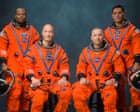
Quelques semaines après le retour sur Terre de la mission Artemis II et de son équipage de quatre astronautes partis vers la Lune, la Nasa a annoncé mardi 9 juin les membres de la prochaine mission, Artemis III.
Luca Parmitano to pilot all-male crew of four paving way for planned first human landing of Artemis IV in 2028
Jared Isaacman, the Nasa administrator, hailed the creation of “Earth’s first starfleet” on Tuesday as he revealed the Artemis III crew and details of the next stages of the space agency’s project to return humans to the moon.
An Italian astronaut, Luca Parmitano of the European Space Agency (ESA), will be the pilot of the planned two-week mission to lower Earth orbit next year that will test lunar landers from private companies Blue Origin and SpaceX.
Russia's Pantsir family of air defense systems continues to rank among the most widely deployed short-range anti-aircraft platforms in the world. According to the state corporation Rostec, the system maintains strong demand due to its operational experience and adaptability in modern combat conditions.
Combat Experience and System Development
Rostec reports that the Pantsir systems have accumulated extensive battlefield experience, which has contributed to their continued refinement and international interest. The systems are produced by the High-Precision Systems holding, which operates under Rostec.
The company will present an upgraded version of the system, the Pantsir-SMD-E, at the international naval exhibition "Fleet-2026,” scheduled to take place in Kronstadt.
Russia's Rassvet satellite constellation, developed as a potential domestic alternative to SpaceX's Starlink system, has reportedly lost one of its 16 serial satellites. Monitoring data from satellite tracking platforms indicates the disappearance of one spacecraft shortly after launch.
The Russian company Bureau 1440 currently operates a growing network of satellites in low Earth orbit. According to company statements, the constellation includes 21 spacecraft in total: six experimental satellites from the Rassvet-1 and Rassvet-2 series, along with 15 satellites from the first batch launch.
On March 23, 2026, Russia launched the first 16 serial satellites of the Rassvet system. The spacecraft separated from the launch vehicle on the target transfer orbit and came under the control of the company's Mission Control Center. Engineers then began system checks and prepared the satellites for transfer to their operational orbit.
It started by chance – but it should have come as no surprise that two ospreys would pick a hi-tech research facility to make their home.
James Cook University’s 47-metre tall crane towers over the far-north Queensland rainforest canopy, making it the perfect nesting place for the seabird.
The FDA recently approved the cellular rejuvenation therapy ER-100 for human clinical trials. While vision is the first target, it could have applications for a variety of age-related disease.
Russian Sukhoi Su-34 frontline bombers operated by the Aerospace Forces (VKS) have received an unusual "hump” that may be an element of a satellite communications system. The new feature was highlighted by the Military Chronicle Telegram channel.
The publication drew attention to footage released by Russia's Ministry of Defense showing Su-34 combat operations during the special military operation. A protruding structure can be seen behind the aircraft's cockpit. According to the channel, the element may be intended for satellite communications.
New Feature Appears Behind the Cockpit
"There is no precise information regarding the provider of the service. According to assessments from foreign sources, the supplier could be the Russian aerospace company Bureau-1440,” the report said.

 Login
Login