Conservationists say cherished creatures such as whales, dolphins and seabirds are being killed in large numbers by fishing tackle
Thousands of Britain’s most charismatic and protected marine wildlife, including whales, porpoises, dolphins, seals and seabirds are being killed as “collateral damage” by fishing vessels every year, according to the first-ever analysis of bycatch data.
The analysis, by the Wildlife and Countryside Link, a coalition of voluntary conservation groups, reveals the devastating toll bycatch, the accidental capture and killing of non-target species by fishing vessels, is having on marine species.
Targeted vaccination and improved testing planned as part of drive to eradicate disease by 2038
Cattle will be vaccinated against tuberculosis from 2030 as a “gamechanging” part of a new strategy to drive eradication of the disease in England by 2038. In parallel, the last badger culls are expected to end by 2029, with vaccination of badgers expanded.
More than 20,000 infected cattle are slaughtered each year, costing taxpayers £100m and inflicting a heavy toll on affected farmers’ livelihoods and mental health. Mass culling of badgers began in 2013 and has killed about 250,000 animals, at a cost of about £60m.
Majestic great white shark glides through the ocean waters. Credit: Elias Levy / OpenVerse / CC BY-2.0
Volunteer divers have recorded what researchers believe is the first footage of a great white shark filmed underwater in the Mediterranean, captured during a ghost net removal dive near a shipwreck in the Strait of Sicily.
Derk Remmers, a technical diver with Ghost Diving, was about 40 meters (131 feet) below the surface between Sicily and Tunisia when the shark appeared. He filmed the encounter. The footage and photographs were released on June 8 to mark World Oceans Day.
Remmers said that the odds of meeting such an animal underwater are far lower than winning the lottery, and that his hands were shaking as he filmed.
The shark circled the group, then turned and moved back toward the divers. Remmers said that its behavior appeared calm and curious, not aggressive. When the team released air from their regulators, the shark picked up speed and disappeared from view.
First great white shark sighting in the Mediterranean stuns researchers
Marine biologists who reviewed the footage called the sighting rare and scientifically significant.
Dr. Carlo Cattano, a researcher at the Sicily Marine Centre of the Stazione Zoologica Anton Dohrn, said that most knowledge of great white sharks in the region has come from dead animals caught accidentally in fishing nets, and that direct observations help researchers better understand the species.
A great white shark circled divers in the Mediterranean as they worked to pull deadly ghost nets from a shipwreck in the Strait of Sicily. pic.twitter.com/tdJKJ37TMY
— Tom Marvolo Riddle (@tom_riddle2025) June 9, 2026
He said that prior research had already identified the area as a key location for threatened species and that this sighting reinforces its conservation value. Researchers cautioned that broader conclusions would require further study.
The mission was organized by the Healthy Seas Foundation, along with Ghost Diving and the Society for the Documentation of Submerged Sites. The wreck’s location is being kept confidential.
Ghost nets, fishing gear lost or abandoned at sea, continue killing marine life long after leaving a vessel. Previous dives at the site documented loggerhead sea turtles and large fish species caught in the gear.
Shipwrecks attract marine life, and when ghost nets settle on them, those structures become underwater traps.
Ghost nets turn shipwreck ecosystems into ongoing ocean traps
Veronika Mikos, director of Healthy Seas, said that the sighting is a reminder of how much marine life still exists in offshore Mediterranean waters and how much is at risk from discarded gear and overfishing.
Remmers said that between 1% and 10% of all fishing gear worldwide is lost each year, possibly adding more than 500,000 metric tons of abandoned nets to the ocean annually.
He said that the shark’s presence near the wreck signals an abundance of prey, and that those same animals face entanglement risk. Volunteer cleanups alone cannot resolve the problem, he said, and stronger action against industrial and illegal fishing is needed.
The mission also included environmental DNA sampling and underwater monitoring. Healthy Seas said that it plans to release additional footage and scientific material in the coming weeks.
Daniel Crago says he feels ‘extremely lucky’ after encounter with bear at Glacier national park last month
As the large roaring grizzly bear charged down at him from across a snow field in Montana and mauled him, hiker Daniel Crago had just enough time to put his arm up and think: “This is it.”
But two weeks after that perilous, exceedingly rare encounter in Glacier national park, Crago, 32, is still alive, recovering after three surgeries and feeling “extremely lucky”, he said on Monday in an interview with ABC News.
It started by chance – but it should have come as no surprise that two ospreys would pick a hi-tech research facility to make their home.
James Cook University’s 47-metre tall crane towers over the far-north Queensland rainforest canopy, making it the perfect nesting place for the seabird.
Department of Agriculture ays new cases in Texas and New Mexico as officials move to combat parasite’s spread
The US Department of Agriculture (USDA) on Monday confirmed three additional cases of New World screwworm – two more in Texas and the other in New Mexico, according to the agency’s animal health arm.
The Animal and Plant Health Inspection Service said the two Texas cases affected a calf in La Salle county and a goat in Gillespie county.
Annual killing of infant gannets has been carried out on a remote Scottish island for at least 400 years
Animal welfare campaigners have called for talks on phasing out the “inhumane” hunt for infant gannets known as guga, which are killed by hunters on a remote Scottish island once a year.
OneKind and the League Against Cruel Sports said it should be slowly phased out in dialogue with the Hebridean islanders who see the hunt, which has been carried out for at least 400 years, as a cultural pursuit and as sustainable food harvesting.
Wildlife department says drought conditions and water released from dam led to ‘major fish kill’ at San Carlos Lake
Arizona officials have indefinitely closed a popular lake to visitors after its entire population of fish died recently.
The recreation and wildlife department that maintains San Carlos Lake said in a Facebook statement on Friday that drought conditions as well as water released from a dam there “resulted in a major fish kill affecting approximately 100% of the fish population”.
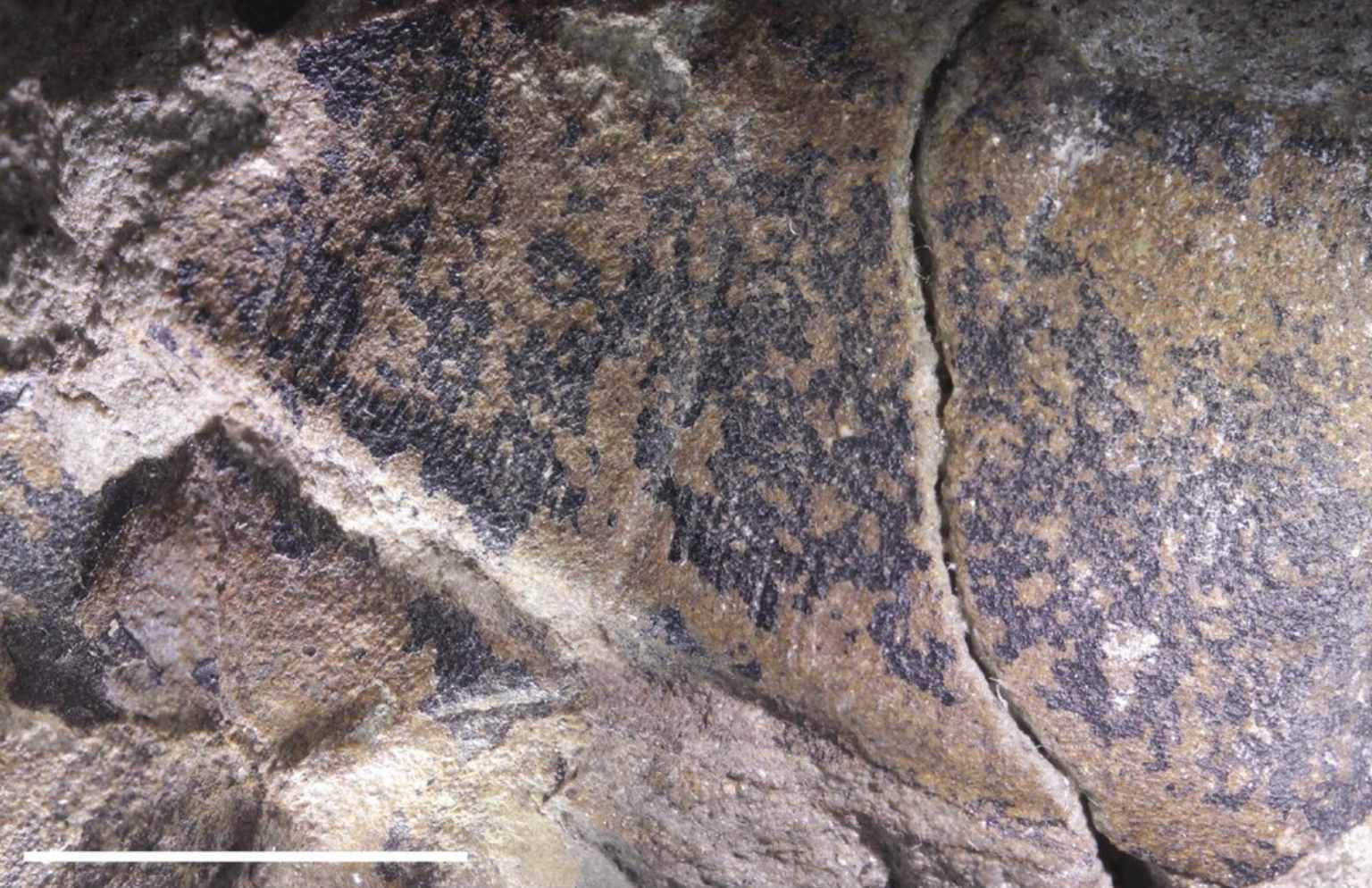
The dorsal surface of the pedipalp coxa. Credit: Richard J. Howard / CC BY 4.0
Fossil remains discovered in the United Kingdom have been confirmed as belonging to one of the largest scorpions ever known in Britain, researchers say. The giant species, Praearcturus gigas, measured more than 1 meter (3.3 feet) long and lived about 415 million years ago, making it one of the earliest large predators to inhabit land.
The findings resolve a long-running scientific debate over the identity of the animal. By reexamining fossil fragments from England and Wales, researchers confirmed that Praearcturus was a scorpion rather than a crustacean, as some scientists had previously believed.
With pincers measuring about 16 centimeters (6.3 inches) long, the giant arthropod would have dwarfed modern scorpions. Today, the largest living scorpion reaches only about 23 centimeters (9 inches) in length. The study was published in the journal Palaeontology.
A giant predator in a young world
When Praearcturus gigas lived during the Early Devonian Period, life on land was still developing. Small plants and fungi had begun spreading across the landscape, while arthropods were among the first animals to establish themselves away from water.
Researchers believe the giant scorpion preyed on smaller arthropods living on ancient floodplains. Its size likely made it one of the dominant predators of its time.
Pedipalp elements of Praearcturus gigas. Credit: Richard J. Howard / CC BY 4.0
Lead author Richie Howard said the discovery pushes back the appearance of giant arthropods by tens of millions of years. “When people think of giant arthropods, they often think of creatures such as Arthropleura or giant griffinflies,” Howard said. “But those animals appeared much later, after land ecosystems had become far more complex.”
Howard said the lack of large competing predators may have helped Praearcturus grow to such enormous proportions.
Solving a 150-year-old mystery
The fossil was first described in 1871 by British paleontologist Henry Woodward, who believed it belonged to a giant crustacean similar to a woodlouse.
For decades, scientists struggled to classify the animal because only fragments of its body had survived. The fossils lacked the distinctive tail that normally identifies a scorpion.
The mystery began to unravel after researchers compared the fossils with Eramoscorpius, a well-preserved ancient scorpion discovered in Canada. Both species share a distinctive triangular sternum on the underside of the body, providing strong evidence that Praearcturus was a true scorpion.
Clues to early life on land
The discovery offers new insight into a key stage of Earth’s history, when animals were adapting to life outside aquatic environments.
Researchers say Praearcturus may not have lived exclusively on land. Fossils from Wales preserve flap-like structures known as epimera, which resemble features seen in modern lobsters and crabs. These structures suggest the giant scorpion may have spent part of its life in water, where larger prey would have been available.
Co-author Greg Edgecombe said the species may even represent a lineage that returned to aquatic habitats after its ancestors adapted to life on land.
Scientists say additional fossil discoveries will be needed to determine how long Praearcturus survived and whether other fragmentary remains found in Britain belong to the species. For now, the fossils provide rare evidence of one of the largest scorpions ever to walk the Earth.
Pigs and humans mingle and seem to enjoy each other’s company on the island of Atokos, Greece. Credit: Sea Kayaking Kefalonia
The swimming pigs of Greece have become an internet sensation with dozens of videos posted on TikTok and other social media.
Bathers on the little island of Atokos in the Ionian Sea, next to Ithaca, enjoy the experience of a lifetime, as they swim next to feral pigs who seem to enjoy the human presence. Their natural buoyancy and paddling instincts help them traverse the waters.
It is a mystery how the pigs ended up on the uninhabited 1.7 square mile (4.5 sq km) island that belongs administratively to Ithaca. It is also part of the Natura 2000 network due to its rich and rare marine life.
The island is privately owned by the shipping magnate Panayiotis Tsakos. It is uninhabited with the exception of a few goats that roam freely around the island. These animals appear to be tended by a shepherd who visits and tends to the flock every fourth day as part of an agreement with the current owner.
The island was on the market in 2015 for €44 million with potential for hotel development, but as the island is within a Natura 2000 area and close to the island of Oxia, which was sold in 2013 to Sheikh Hamad bin Khalifa al-Thani, the Emir of Qatar, for $5.7 million (€4.9 million), this price may not be easy to acquire.
Swimming pigs are the ultimate attraction on Atokos, Greece
In recent years, a herd of black pigs has appeared on the island’s beach, and it has become the ultimate attraction. Imagine gliding through clear waters. A pig paddles alongside you, its pink body surprisingly streamlined. Their curly tails might bob above the water with each powerful kick of their trotters.
You might hear the contented snorts and snuffles of the pig enjoying the cool water. If there are other pigs around, there could be playful squeals or the rhythmic chomping of their snouts rooting around the seabed.
These beautiful creatures love the sea and never miss an opportunity to swim. If you happen to be there, you will have the opportunity to swim with them—always from a distance—in the deep blue waters, which is truly a unique experience. For this very reason, this beach is now known as Greek Pig Beach.
Experts warn that it’s important to be respectful of the pigs and their environment. Avoid feeding them human food or anything that may harm them, and be gentle when interacting with them.
The pigs are wild animals, so it’s important to keep your distance and avoid surprising them.
There is also a famous beach in the Bahamas called Pig Beach, where feral pigs are known to swim out to greet boats. A small island in the Exuma Cays of the Bahamas is known for its colony of feral pigs that enjoy swimming in the clear turquoise waters. The pigs are the main attraction of the island, and tourists flock there to see them waddle out to greet incoming boats and go for a dip in the ocean.
The exact origin of the pigs on Big Major Cay is unknown. According to some theories, they could have been shipwreck survivors, or they could have also been left on the island by sailors who intended to return for them later. Regardless of their origin, the pigs have thrived on the island and have become a popular tourist sensation.
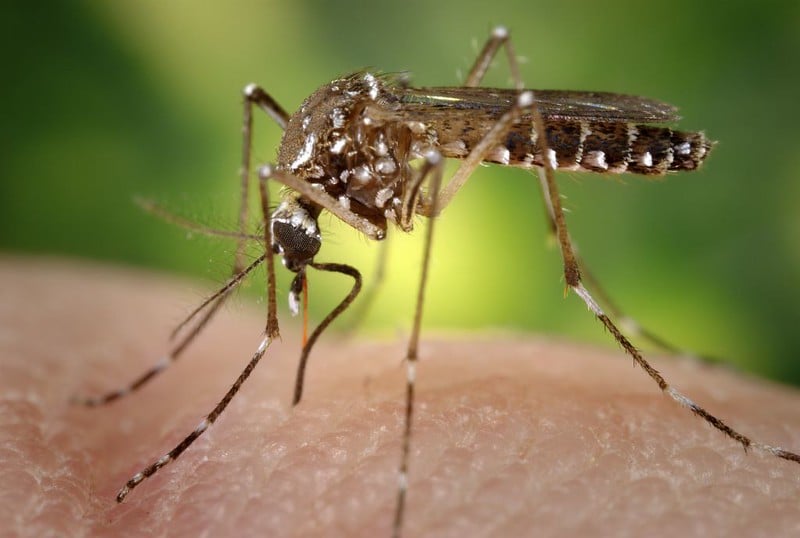
Mosquito kills the most people every year. Credit: Vaccines at Sanofi / Flickr / CC BY-NC-ND 2.0
DEET has been the leading defense against mosquito bites for decades, but a new study suggests the world’s most widely used insect repellent may not always trigger the same response in mosquitoes.
Researchers found that mosquitoes can learn to associate DEET with a blood meal under certain conditions and later show attraction to the chemical.
The findings, published in the Journal of Experimental Biology, add a new layer to scientists’ understanding of how DEET works and how mosquito behavior may adapt through experience. The study was led by Claudio Lazzari of the University of Tours in France.
Questions remain about how DEET works
DEET, formally known as N, N-diethyl-meta-toluamide, has been used for more than 80 years. It remains a key tool for preventing bites from mosquitoes that can spread diseases such as malaria, dengue, chikungunya, Zika, and yellow fever.
Despite its long history, scientists still debate exactly how the repellent works. Earlier studies suggested DEET interferes with mosquitoes’ ability to detect human odors, effectively confusing them rather than simply driving them away. Other research found that some mosquitoes show reduced sensitivity to the chemical and that this trait can be inherited.
Scientists have also observed signs that mosquito responses to DEET may involve learning. In one previous study, mosquitoes exposed to the repellent became temporarily less sensitive to it when they encountered it again within a few hours.
Researchers tested mosquito learning
To investigate further, the researchers designed a series of laboratory experiments. Mosquitoes were placed in small cages and presented with a warm blood-filled target that mimicked a host. The team measured movements of the insects’ proboscis, the mouthpart used for feeding, as an indicator of biting attempts.
The mosquitoes then underwent different training programs involving heat, DEET, and short opportunities to feed on blood.
Mosquitoes may be able to learn to associate #DEET with a blood meal and later show attraction to the world's most widely used insect repellent, according to a new study.
— Tom Marvolo Riddle (@tom_riddle2025) June 2, 2026
The most striking results came from mosquitoes exposed to DEET while they were actively feeding. Afterward, those insects showed a significantly stronger biting response when they encountered DEET again. The findings suggest they had learned to associate the chemical with a rewarding blood meal.
The team also tested the behavior using a volunteer’s hands. One hand was treated with DEET while the other was left untreated. About half of the mosquitoes that had received the DEET-and-blood training attempted to bite the DEET-treated hand. Untrained mosquitoes consistently avoided the treated hand and chose the untreated one.
Findings highlight a possible limitation
The findings do not mean DEET has stopped working or that people should stop using it. The experiments were conducted under tightly controlled laboratory conditions, and the training process may not reflect how mosquitoes encounter repellents in everyday situations.
Still, the study suggests DEET may influence mosquito behavior through both sensory and cognitive processes. Researchers said a better understanding of those mechanisms could help improve future repellents as mosquito-borne diseases continue to spread worldwide.
There is hardly a soul alive who does not enjoy watching wildlife and the other wonders of the natural world. When it comes to watching wildlife in particular, one of the most fun parts is trying to determine which animal you are looking at, especially beyond just “look at the bear!” But the animal kingdom […]

 Login
Login