Normal view

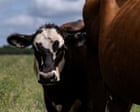
Cattle in England to get tuberculosis vaccine from 2030 as badger cull to end

Targeted vaccination and improved testing planned as part of drive to eradicate disease by 2038

Cattle will be vaccinated against tuberculosis from 2030 as a “gamechanging” part of a new strategy to drive eradication of the disease in England by 2038. In parallel, the last badger culls are expected to end by 2029, with vaccination of badgers expanded.

More than 20,000 infected cattle are slaughtered each year, costing taxpayers £100m and inflicting a heavy toll on affected farmers’ livelihoods and mental health. Mass culling of badgers began in 2013 and has killed about 250,000 animals, at a cost of about £60m.

Continue reading...

© Photograph: Artur Widak/NurPhoto/REX/Shutterstock

© Photograph: Artur Widak/NurPhoto/REX/Shutterstock

© Photograph: Artur Widak/NurPhoto/REX/Shutterstock

Ancient Maya knowledge helps Guatemalan farmers cut agrochemical use

9 June 2026 at 12:05
In the mountain villages of Guatemala’s Western Highlands, farmers are combining ancient Maya knowledge with modern sustainable farming techniques to protect their crops from pests and disease. Smallholders are creating homemade biopesticides using plants with strong smells and flavors to deter pests on their family plots. This is helping to cut back on the use of increasingly expensive agrochemicals, many of which have been labeled as dangerous to human health and linked to soil degradation. About 60 Guatemalan communities in the Western Highland departments of Sololá and Huehuetenango, as well as Chiquimula in the east, are working to revive these traditional techniques with support from the international development organization World Neighbors. Their focus is to restore and strengthen traditional knowledge, combining it with agroecological practices that help families produce surplus food they can sell to boost household incomes. “Traditional farming techniques are becoming popular because they are simple practices to apply, use local resources, and have proven to be effective,” Dayani Roche, a program associate at World Neighbors, told Mongabay via email. Rather than a single ancient recipe, farmers are using “a living combination of ancestral knowledge, local experimentation and more recent agroecological practices,” he said, which are “safer for families, soil, water and biodiversity than many chemical alternatives.” The Maya civilization, which once stretched across modern-day Central America, had a rich history of farming dating back to 2000 B.C.E. Its most celebrated agriculture system is the milpa, a form of intercropping that involves a mix of maize, beans and…This article was originally published on Mongabay

Hannah Neeleman’s Ballerina Farm Store Draws Crowds in Utah

9 June 2026 at 14:33
Tourists are flocking to Midway, Utah. The Ballerina Farm Store, from the influencer whose brand revolves around motherhood and farm life, is a reason.

© Kim Raff for The New York Times

A group of friends filmed themselves before downing turmeric ginger shots outside the Ballerina Farm Store in Midway, Utah.

US confirms three new cases of flesh-eating screwworm in livestock

8 June 2026 at 19:34

Department of Agriculture ays new cases in Texas and New Mexico as officials move to combat parasite’s spread

The US Department of Agriculture (USDA) on Monday confirmed three additional cases of New World screwworm – two more in Texas and the other in New Mexico, according to the agency’s animal health arm.

The Animal and Plant Health Inspection Service said the two Texas cases affected a calf in La Salle county and a goat in Gillespie county.

Continue reading...

© Photograph: Kaylee Greenlee/Reuters

© Photograph: Kaylee Greenlee/Reuters

© Photograph: Kaylee Greenlee/Reuters

Screwworm Flies Add to Cattle Ranchers’ Woes

6 June 2026 at 18:35
Some Texans fear “the nightmares and the horrors” of a potential screwworm outbreak. Elsewhere, not enough grass to feed cattle sends them to market earlier.

© Kaylee Greenlee/Reuters

The U.S. cattle herd is at its smallest size in 75 years, driving up the price of beef.

Trump Greets Farmers in Wisconsin, but Says He Could Be Home Watching TV

6 June 2026 at 03:22
President Trump was in Wisconsin to reassure farmers who have been stung by his tariff policies and rising fuel prices from the war in Iran.

© Haiyun Jiang/The New York Times

President Trump traveled to western Wisconsin, which is home to large beef, dairy and crop farms, to shore up support for a Republican loyalist running for re-election in a purple district.

First U.S. Screwworm Case Since 1960s Prompts Texas Emergency Response

6 June 2026 at 01:34
The infections are the first detected in the United States since the 1960s. Officials are aggressively trying to prevent the parasite from spreading in the nation’s largest cattle-producing state.

© Kaylee Greenlee/Reuters

Officials are dispersing millions of sterile screwworm flies in the vicinity of where the infected calf was found.

In Brazil, a project paying farmers for forests is looking to scale up

Landowner Carlos Roberto Simonetti gets three harvests per year from the corn, soy and cotton plantations on his 17,000-hectare (about 42,000 acres) farm called Fazenda Natureza Feliz, or Happy Nature, in the Brazilian state of Mato Grosso. Over the course of four years, he would also get what he calls a fourth harvest, this time from the forested areas of his property, located where the Cerrado savanna meets the Amazon Rainforest. That’s because Simonetti would receive regular payments for protecting native vegetation beyond what the law requires, as part of a pilot project for payment for ecosystem services (PES) run by the Amazon Environmental Research Institute (IPAM), an NGO, in the states of Mato Grosso and Pará. The program, called CONSERV, gives landowners financial incentives to keep the forest standing even in areas which they are legally allowed to clear. The pilot project, which initially ran between 2020 and 2024 on 23 different properties, protected 20,707 hectares (about 51,170 acres) of land in the Cerrado and Amazon biomes with funding from the governments of Norway and The Netherlands. Ongoing contracts funded by Soft Commodities Forum members – agribusiness companies committed to preserving the Cerrado – are protecting a further 7,000 hectares (about 17,300 acres) in the states of Mato Grosso and Maranhão. IPAM is now seeking to scale up the program without relying on donations. The risk of legal deforestation The idea for CONSERV goes back to 2016, when an internal IPAM report calculated that around 1.5 million hectares (3.7…This article was originally published on Mongabay

For Honduran coffee growers, EUDR compliance means changing old habits

29 May 2026 at 13:22
CONCEPCIÓN DE SOLUTECA, Honduras — In the 1970s, the Honduran government granted a piece of land in the mountains of Concepción de Soluteca to Roberto González’s parents. They duly grabbed a chainsaw and a machete to clear the forest. On the 12 hectares (30 acres) they received as part of a land reform, they planted corn, beans and bananas, the basic staple foods. It was a hard life up in the mountains, allowing the farmers and their families to just survive. There wasn’t much public infrastructure, and most children had to help with farmwork early on. This included González, who only attended elementary school for three years. When González inherited the land 20 years later, coffee cultivation was just taking off. Middlemen promised the farmers good money for the export crop, and the banks provided loans for cultivation. At first, this worked well, González, now 39, remembers. Coffee helped the farmers to generate income and improve living conditions. But it didn’t last long. They grew coffee much the same way they did other crops, without adequate soil or shade management. When harvests dwindled, they expanded their area, cutting the last standing forests and damaging water sources. Around 2012, they faced an outbreak of coffee rust, a fungal disease. It was a complete disaster: many farmers were thrown into poverty and forced to migrate. “We destroyed the foundations of our livelihoods, but it was out of ignorance; we just didn’t know better,” González tells Mongabay. Under the EUDR, coffee farmers step…This article was originally published on Mongabay

❌