The pontiff will offer a Mass in Antoni Gaudí’s iconic, unfinished basilica during his Spain trip. But for some Barcelona residents, completing the construction could mean knocking down their homes.
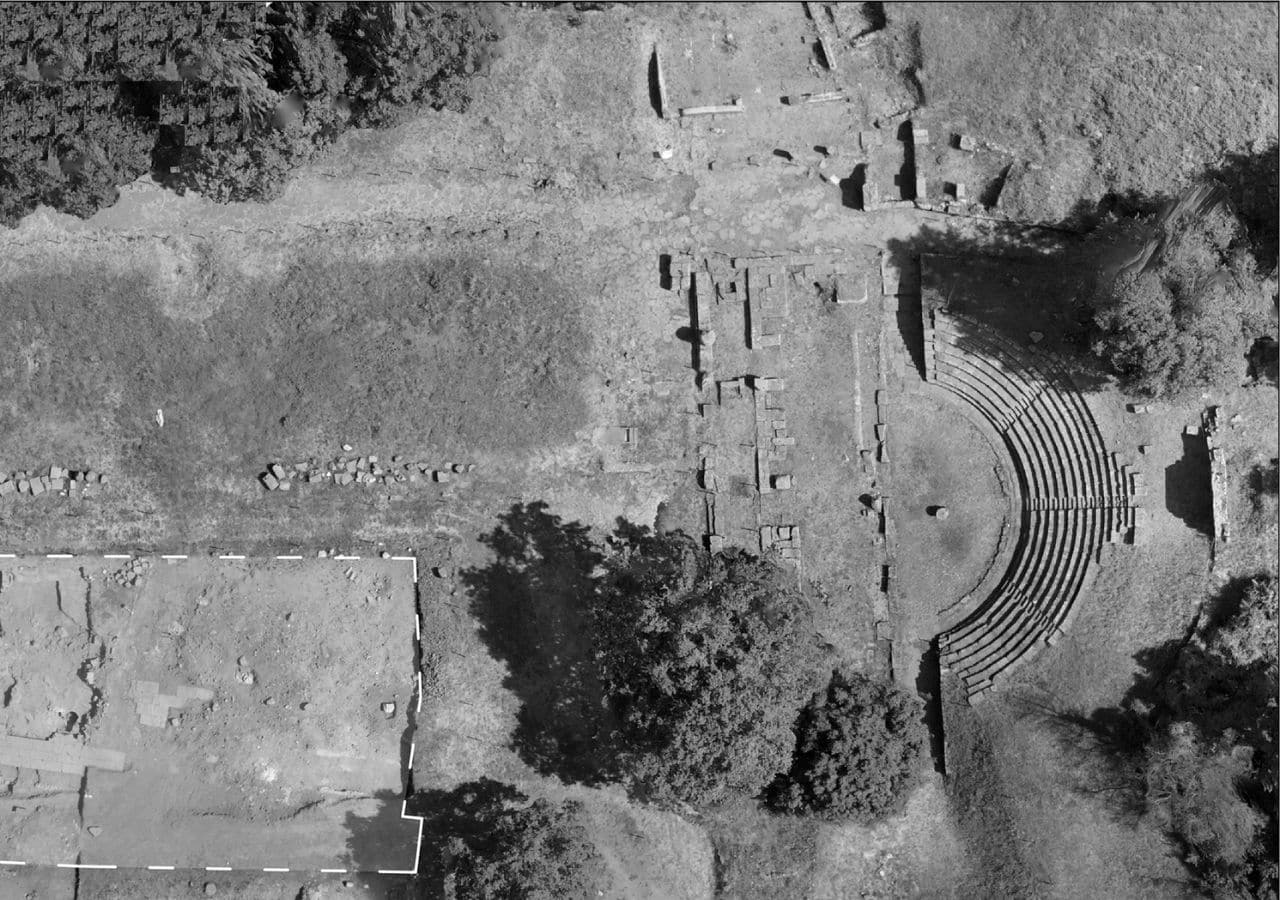
Archaeologists have uncovered the remains of a Roman basilica at Tusculum, an ancient city located about 30 kilometers (18.6 miles) from Rome, dating it back to the 2nd century B.C.
The discovery places the structure among the oldest known examples of Roman public basilica architecture, adding a significant piece to the puzzle of how Rome shaped its cities during the Republican era.
Researchers from the Spanish School of History and Archaeology in Rome, known as EEHAR-CSIC, made the find in the southern part of Tusculum’s forum. The forum served as the political and social heart of the city.
The basilica had remained hidden beneath later imperial-era structures for centuries. Antonio Pizzo, who leads the project, said the building is one of the earliest known examples of its type and joins a small, well-documented group of Republican basilicas.
Inside Tusculum’s ancient Roman basilica and its rare design
The structure measured 17.7 by 25.2 meters (58 by 82.7 feet). Its monumental facade featured a series of arches resting on nine flat pilasters, an architectural arrangement known as the “Theatermotiv.”
Pizzo noted that if researchers confirm this interpretation, it would mark the first time this design appears in Roman architecture. Until now, this style had only been identified in later, exceptional buildings such as the Tabularium in Rome.
Among the most striking finds was a polychrome stucco capital discovered inside one of the building’s rooms. It depicts a female head rising from a cup of acanthus leaves, flanked by Ionic scrolls and floral motifs painted in white, red, and green.
The timing of the basilica’s construction aligns with the rise of powerful families from Tusculum, including the Mamilia, Fulvia, and Porcia clans.
The Porcia family produced Marcus Porcius Cato, famous for his repeated calls to destroy Carthage before the Third Punic War. Pizzo said these families drove a wave of monumental construction that went hand in hand with Rome’s growing power across the Mediterranean.
Powerful families and a Roman general add historical depth
Researchers also linked the site to Marcus Fulvius Nobilior, one of the most influential figures of the 2nd century B.C.
After defeating the Aetolian League in Greece, he returned to Rome with Hellenistic art and treasures. An inscription found at Tusculum confirms that some of that spoil went to his hometown.
Francesco De Stefano, co-author of the study published in the Journal of Roman Archaeology, said the discovery contributes valuable knowledge about the origins of this building type and key innovations in Roman public architecture.
The EEHAR-CSIC team has worked at Tusculum continuously since 1994, excavating its forum, theater, and baths. In 2023, they also uncovered a well-preserved marble female statue, with further details expected soon.
The ancient Greek Acropolises meant very different things to different people across history. A new study finds its symbolic meaning shifted dramatically over centuries, starting as a marker of civic pride and freedom before becoming firmly associated with tyranny and oppression.
Robin Rönnlund, an archaeologist at the University of Gothenburg in Sweden, published the study in the Annual of the British School at Athens. He examined ancient texts from Homer through the second century A.D. and traced how writers, philosophers, and inscription makers actually understood the word “acropolis” across roughly 1,000 years.
The research directly challenges a widely accepted scholarly narrative. For decades, historians described acropolises as prehistoric royal strongholds that were later abandoned and converted into either religious sanctuaries or civilian refuges during attacks.
Scholars built a false narrative around misread Aristotle
Rönnlund traces this narrative back to a misreading of a passage in Aristotle’s Politics, in which Aristotle theorized that acropolises suited oligarchies and monarchies.
Past scholars interpreted this theoretical statement as a historical sequence rather than a practical observation about fortifications, and the misreading quietly shaped academic thinking for generations.
Remains of the Temple of Artemis with the Acropolis. Credit: Carole Raddato / Wikimedia Commons / CC BY-SA 2.0
The word itself is also commonly misunderstood. Rönnlund explains “acropolis” does not mean “upper city,” as dictionaries suggest. It more precisely means “the farthest polis” or “the polis on the edge,” and it first appeared in the Odyssey in reference to Troy.
In early Greek poetry, the ancient Greek acropolis carried an unmistakably positive meaning. Simonides described the Acropolis as a symbol of Greek resistance to Persian invaders.
Ancient Greek Acropolis once stood for freedom and pride
Sparta was celebrated as the “acropolis of Greece” in the famous Lysander monument at Delphi. Philosophers extended the metaphor further. Plato called the head the “acropolis of the soul.”
Diocles of Karystos described the mind as a sacred statue placed on the acropolis of the body. These uses reflected strength, protection, and honor.
The meaning turned darker as foreign military occupation became widespread. Ancient sources contain 66 passages linking tyrants to acropolises. Plutarch recorded a warning that Caesar should not be established as “tyrant in the acropolis.”
Macedonian forces turned a civic symbol into oppression
After 322 B.C., Macedonian forces systematically garrisoned acropolises across Greece to keep conquered cities under control. Both Demosthenes and Isocrates described how garrisoned acropolises kept entire regions in submission.
Civilian populations almost never used acropolises as refuges, contrary to popular assumption. The sites lacked sufficient water and supplies for prolonged occupation, and literary sources confirm people typically fled to the walled city below or into the countryside during attacks.
Rönnlund reviewed 133 individual acropolises mentioned in ancient sources and calls for future research combining archaeology, epigraphy, and field surveys to properly reconstruct how these sites functioned in ancient Greek life.
The Greek temple at Stancombe Park in the UK has been described as the most romantic destination in Britain. Credit: Photo courtesy of Stancombe Park
In the UK, there is a stunning Greek temple where visitors can spend the night. The location has been described as a “secret Cotswolds utopia” in Stancombe Park. The 19th-century Doric replica is located near the town of Dursley about two hours from London.
Dursley is located in the western part of England, and according to a 2021 census, it has a population of 7,463 people. The town lies between the cities of Bristol and Gloucester, and it’s just four miles from the River Severn.
A piece of Greek architecture in a small UK town
This location offers a piece of ancient Greek-style architecture in rural England, allowing British tourists to get in touch with Greek culture without leaving the UK.
This stunning Greek temple in the UK does not exactly make for affordable accommodation. A couple who wish to stay at the temple for three nights can count on a bill of approximately $1,737 (£1,350).
The Greek temple is situated on a hill overlooking a lake and seems as if it was pulled straight out of a movie set. It inspired author Evelyn Waugh, who wrote about a Doric temple overlooking a lake in his novel Brideshead Revisited.
The picturesque lake on which the temple is located. Credit: Photo courtesy of Stancombe Park
The temple is decorated with all kinds of antique furnishings and home decorations, and offers a glimpse into 19th-century English luxury. It is surrounded by landscaped gardens which themselves host an Iron Age fort and two Roman villas.
The location has been described as “the most romantic destination in the UK”
The beautiful Greek temple has been described as “the most romantic destination in the United Kingdom.” Guests enjoy picturesque scenery, and they can explore the private gardens and secret tunnels or go grotto boating on the lake.
The temple also features a central hall with an adjoining kitchen. However, the remarkable Greek architecture is best witnessed in the master bedroom. The master bedroom is framed by Doric columns, allowing guests to enjoy the privacy of the location.
There are numerous sites in the UK where the rich heritage of Greece is reflected. Alongside the temple, perhaps the most delectable part of Greek culture in the United Kingdom is the Real Greek, which features authentic Greek cuisine.
The Real Greek is a chain of restaurants across London and southern England. Its aim is to offer customers authentic Greek cuisine, blending flavors from Greece’s islands, mainland, and mountains.
The UK is home to up to 300,000 ethnic Greeks. Unsurprisingly, Greek culture is thus a vibrant part of life in the island nation, and the Greek community enjoys a significant presence in cities such as London, Birmingham, and Sheffield.
The National Capital Planning Commission received nearly 1,700 comments about President Trump’s plans to build a 250-foot arch in the nation’s capital. Almost all opposed the idea.

 Login
Login