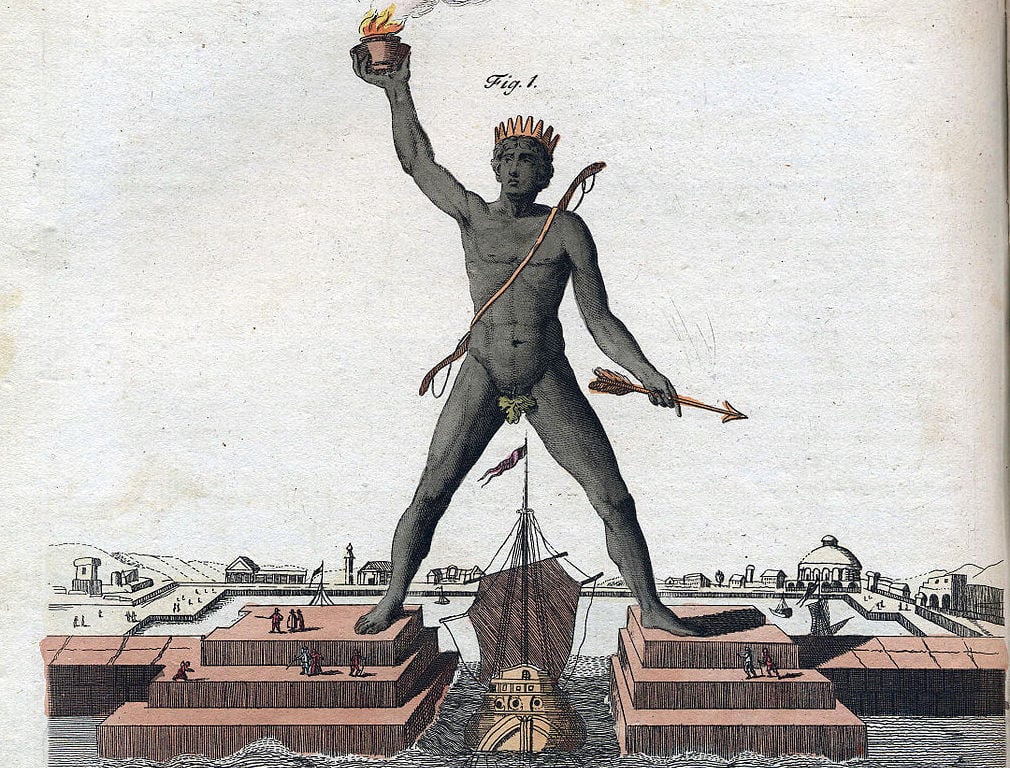
Artist’s depiction of the Colossus of Rhodes (one of the Seven Wonders of the Ancient World). Credit: Public Domain.
Most people today know of the Colossus of Rhodes as one of the Seven Wonders of the Ancient World, but there are many little-known facts about the masterpiece that may surprise you.
The ancient island of Rhodes, the kállistin (best) of the Greek cities as historians like to call it, has long attracted the attention of the world due to its beautiful beaches, rich history, and advanced civilization that stretches far back in time.
Rhodes was a city with philosophical and other schools, conservatories, markets, stadiums, harbors, and at least 3,000 public statues.
The masterpiece of all, though, was the Colossus of Rhodes, built between 292 to 280 BC. The huge bronze statue was about 30 meters (98.4 feet) tall and portrayed the god of the Sun, Helios.
The construction of the Colossus lasted for 12 years, but the statue was destroyed a few decades later in 226 BC by an earthquake.
Lesser known facts about the Colossus of Rhodes
The Colossus of Rhodes and the Statue of Liberty
Both monuments were built as symbols of freedom, and people have made the connection between both statues since the Statue of Liberty was created.
The Statue of Liberty has been referred to as the “Modern Colossus” and stands just a little higher at 34 meters (111.5 feet) tall.
There is also a plaque inside the pedestal of the Statue of Liberty that is inscribed with a sonnet title “The New Colossus, not like the brazen giant of Greek fame.”
The debate about the statue’s feet
There has been a debate among historians about whether the statue was standing with one foot on either side of the Rhodes harbor.
Some have discounted this theory and believe that he stood in a more usual Greek statue pose on one side of the harbor.
If the Colossus of Rhodes was built with its legs straddling the harbor, then the harbor would have had to have been closed for 12 years for the initial construction, and then it would have once again been blocked for years when the statue fell.
The statue has an iron skeleton
The statue was actually built with an iron frame like a skeleton over which the Rhodians placed carved and sculptured brass plates to create the outer structure of Helios, creating his muscle and skin.
Chares of Lindos designed the Colossus of Rhodes
We owe the design of the Colossus of Rhodes to Chares of Lindos. Chares was a student of the famous sculptor Lysippus, who had previously created a 19-meter (62 foot) tall statue of Zeus.
The metal used to construct the statue later scrapped, sold
In the 7th century A.D., the Arabs conquered Rhodes and dismantled any remnant of the Colossus of Rhodes after it was toppled by an earthquake and later sold the once beautiful statue as scrap metal.
It took approximately 900 camels to carry away all the scrap metal.
Was the destruction of the Colossus the will of the gods?
Finally, Ptolemy III, the king of Egypt, offered to pay for the Colossus’ reconstruction, but the Rhodians refused because they believed that Helios, having been angered by the construction of the statue, was the one who caused the earthquake that destroyed it.
The ancient Greek Acropolises meant very different things to different people across history. A new study finds its symbolic meaning shifted dramatically over centuries, starting as a marker of civic pride and freedom before becoming firmly associated with tyranny and oppression.
Robin Rönnlund, an archaeologist at the University of Gothenburg in Sweden, published the study in the Annual of the British School at Athens. He examined ancient texts from Homer through the second century A.D. and traced how writers, philosophers, and inscription makers actually understood the word “acropolis” across roughly 1,000 years.
The research directly challenges a widely accepted scholarly narrative. For decades, historians described acropolises as prehistoric royal strongholds that were later abandoned and converted into either religious sanctuaries or civilian refuges during attacks.
Scholars built a false narrative around misread Aristotle
Rönnlund traces this narrative back to a misreading of a passage in Aristotle’s Politics, in which Aristotle theorized that acropolises suited oligarchies and monarchies.
Past scholars interpreted this theoretical statement as a historical sequence rather than a practical observation about fortifications, and the misreading quietly shaped academic thinking for generations.
Remains of the Temple of Artemis with the Acropolis. Credit: Carole Raddato / Wikimedia Commons / CC BY-SA 2.0
The word itself is also commonly misunderstood. Rönnlund explains “acropolis” does not mean “upper city,” as dictionaries suggest. It more precisely means “the farthest polis” or “the polis on the edge,” and it first appeared in the Odyssey in reference to Troy.
In early Greek poetry, the ancient Greek acropolis carried an unmistakably positive meaning. Simonides described the Acropolis as a symbol of Greek resistance to Persian invaders.
Ancient Greek Acropolis once stood for freedom and pride
Sparta was celebrated as the “acropolis of Greece” in the famous Lysander monument at Delphi. Philosophers extended the metaphor further. Plato called the head the “acropolis of the soul.”
Diocles of Karystos described the mind as a sacred statue placed on the acropolis of the body. These uses reflected strength, protection, and honor.
The meaning turned darker as foreign military occupation became widespread. Ancient sources contain 66 passages linking tyrants to acropolises. Plutarch recorded a warning that Caesar should not be established as “tyrant in the acropolis.”
Macedonian forces turned a civic symbol into oppression
After 322 B.C., Macedonian forces systematically garrisoned acropolises across Greece to keep conquered cities under control. Both Demosthenes and Isocrates described how garrisoned acropolises kept entire regions in submission.
Civilian populations almost never used acropolises as refuges, contrary to popular assumption. The sites lacked sufficient water and supplies for prolonged occupation, and literary sources confirm people typically fled to the walled city below or into the countryside during attacks.
Rönnlund reviewed 133 individual acropolises mentioned in ancient sources and calls for future research combining archaeology, epigraphy, and field surveys to properly reconstruct how these sites functioned in ancient Greek life.
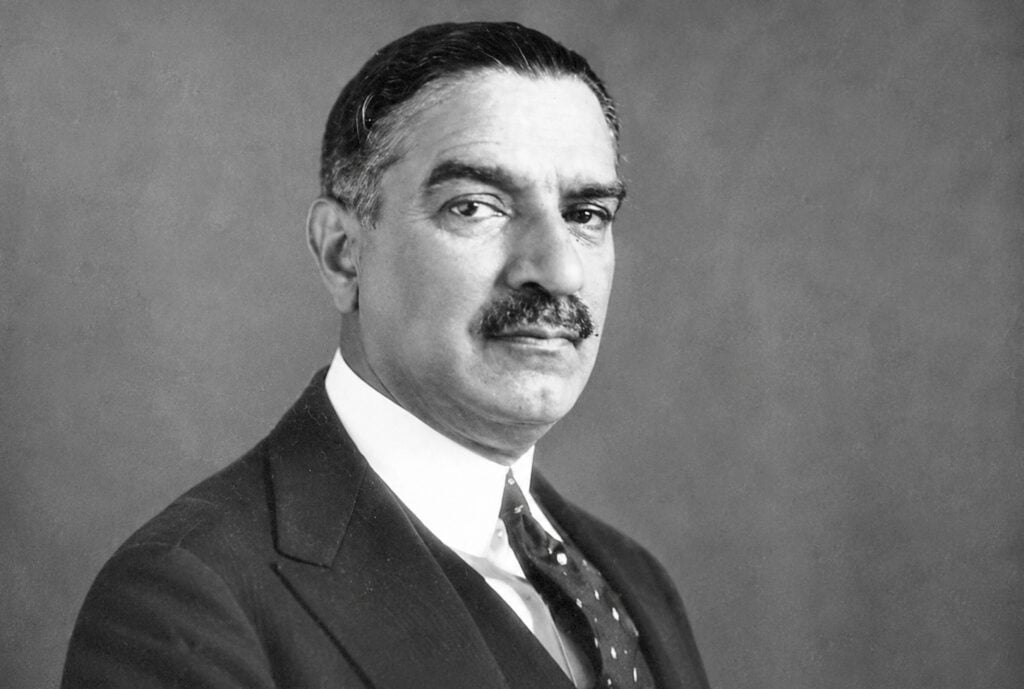
As a key political figure in early 20th-century Greece, Michalakopoulos served in numerous ministerial roles and briefly held the office of Prime Minister from 1924 to 1925. Credit: Agence de presse Meurisse – Bibliothèque nationale de France, Wikimedia Commons, Public Domain
Every day, thousands of Athenians and visitors pass through Michalakopoulou Avenue, one of the main arteries of central Athens. Yet few know the story of Andreas Michalakopoulos, the forgotten Greek Prime Minister and diplomatic genius whose name the avenue carries.
Who was the man behind the Michalakopoulos name?
Andreas Michalakopoulos was born in Patras in 1876 and went on to become one of the most important statesmen in modern Greek history. He was a man who helped redraw Greece’s borders, solved Athens’ water crisis, and brokered peace with Turkey at a time when Greece couldn’t have suffered more militarily.
Yet most Greeks today could not tell you a single thing about him. History has been unkind to Michalakopoulos, largely because he spent most of his career standing next to one of the most towering figures Greece has ever produced: Eleftherios Venizelos. That proximity was both his greatest role and the reason he is so rarely remembered—a blessing and a curse for a public figure like him. Michalakopoulos rose through the Liberal Party (Κόμμα των Φιλελευθέρων) ranks after 1910, holding portfolios in Economy, Agriculture, and Military Affairs under successive Venizelos governments.
He was not a man who craved the spotlight. He was a man who understood how government actually worked, and he was trusted with the levers of it accordingly—a true politician in the best definition of the term possible. When Venizelos went before the great powers of Europe to argue for a bigger Greece after the First World War, Michalakopoulos was beside him at the negotiating table. He participated in the long, tough diplomacy that produced both the Treaty of Sèvres in 1920 and the Treaty of Lausanne in 1923, the two documents that first promised the unthinkable and then permanently fixed, without too heavy losses, the borders of the modern Greek state. Venizelos got 100% of the credit.
However, Michalakopoulos did much of the work. He became Prime Minister in October 1924, inheriting a country in a genuine, profound, and almost existential crisis. The Asia Minor Catastrophe of 1922 had sent over a million Greek refugees flooding into Greece in a matter of months. From dreams about the reinstatement of Byzantine glory, Greece woke up in ruins, literal and metaphorical. Athens had nearly doubled in population within just a few years, and the city’s ancient water infrastructure simply could not cope. Water was being sold from carts in the streets. Taps ran dry. For a capital city that had stood for thousands of years, it was an embarrassing and dangerous situation. Greece was on the brink of collapse.
Michalakopoulos wasted little time. In December 1924, his government signed a landmark contract with American engineering firm Ulen & Company and the Bank of Athens to construct the Marathon Dam. It was one of the largest infrastructure projects in Europe at the time. The Marathon Dam was a gravity dam built of the famous Pentelic marble—the same stone used to construct the Parthenon—rising 54 meters above the Haradros River outside of Athens. The project cost more than the entire National Bank of Greece and was funded with a $10 million loan. Yes, modern Greece and loans, this stereotypical love affair…
Completed in 1929 and uniquely faced with Pentelic marble, this historic engineering project was instrumental in securing a reliable water supply for the rapidly expanding city of Athens. Credit: Vitaly, Wikimedia Commons, CC BY-SA 3.0
Construction ran from 1926 to 1929. The finished system delivered water to Athens through nearly 880 kilometers (547 miles) of new pipes and was inaugurated in 1931. The water that flows from Athenian taps today finds its roots in that contract and in that decision. Michalakopoulos never saw it completed. A military coup by General Theodoros Pangalos ended his government in June 1925, just months after the contract was signed.
But, thankfully, the work was done. He returned to government as Foreign Minister under Venizelos starting in 1928, and it was here that he made perhaps his most lasting contribution to the nation. Greece in the late 1920s was a country that had been through a lot. The Megali Idea, the great dream of a Greece stretching across the Aegean and into Anatolia, had collapsed spectacularly and catastrophically. The population exchange with Turkey had displaced more than a million people on each side. The two countries were locked in mutual suspicion and unresolved property disputes.
A bilingual street sign marks Michalakopoulou Street, a major avenue running through the city of Athens. Credit: Greek Reporter archive
Michalakopoulos understood, more clearly than most, that Greece could not afford to stay that way. On October 30, 1930, he co-signed the Greek-Turkish Friendship Convention, also known as the Treaty of Ankara. He did that alongside Venizelos and Turkish Prime Minister İsmet İnönü. The treaty settled the border, resolved the property claims of the displaced populations, and established naval parity in the eastern Mediterranean.
It was a remarkable diplomatic achievement that helped lay the groundwork for the Balkan Pact of 1934 and brought a genuine, working peace between two nations that had spent generations at war. When Ioannis Metaxas declared his dictatorship on August 4, 1936, Michalakopoulos refused to go along with it. He had spent thirty years building democratic institutions from the inside. He spoke out against the regime and paid a heavy price for it. He was sent into internal exile on the island of Paros. He died on March 7, 1938, aged sixty-one.
Michalakopoulos’ legacy is a strange one: a man who brought water to a thirsty city, helped draw the map of modern Greece, made peace with its archenemy, and died in exile because he would not pretend that democracy was something you could simply switch off. Next time the traffic backs up on Odos Michalakopoulou in downtown Athens, take a moment to read the sign. The water in your glass and the borders of this nation have everything to do with the man it honors.

 Login
Login