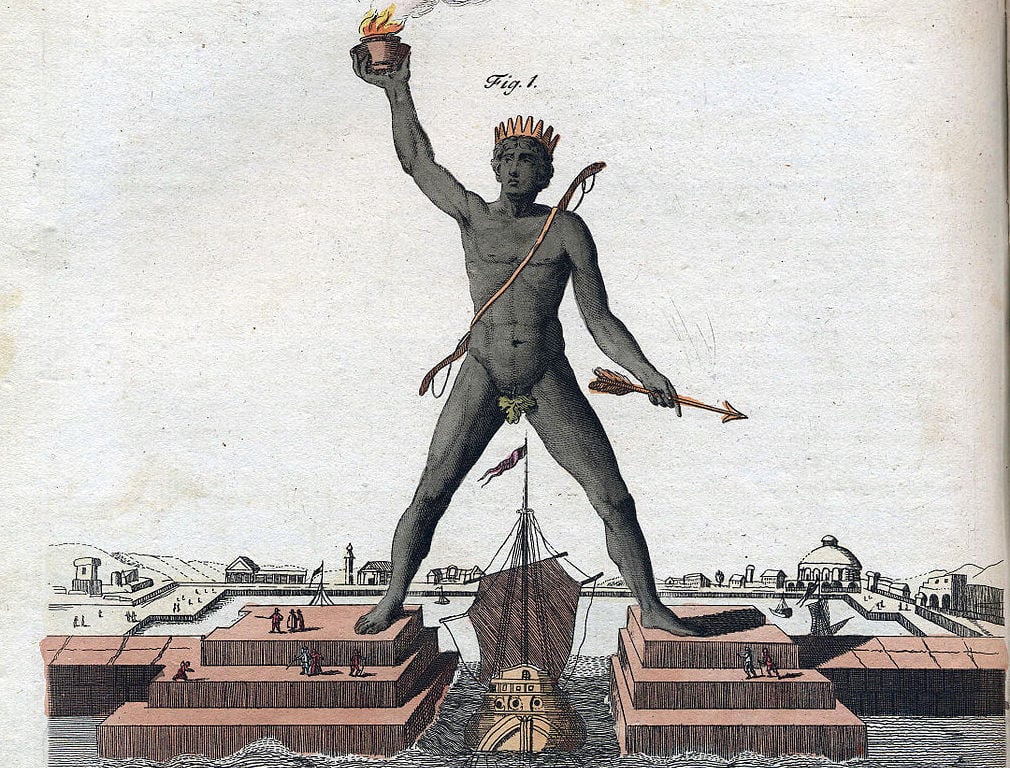
Artist’s depiction of the Colossus of Rhodes (one of the Seven Wonders of the Ancient World). Credit: Public Domain.
Most people today know of the Colossus of Rhodes as one of the Seven Wonders of the Ancient World, but there are many little-known facts about the masterpiece that may surprise you.
The ancient island of Rhodes, the kállistin (best) of the Greek cities as historians like to call it, has long attracted the attention of the world due to its beautiful beaches, rich history, and advanced civilization that stretches far back in time.
Rhodes was a city with philosophical and other schools, conservatories, markets, stadiums, harbors, and at least 3,000 public statues.
The masterpiece of all, though, was the Colossus of Rhodes, built between 292 to 280 BC. The huge bronze statue was about 30 meters (98.4 feet) tall and portrayed the god of the Sun, Helios.
The construction of the Colossus lasted for 12 years, but the statue was destroyed a few decades later in 226 BC by an earthquake.
Lesser known facts about the Colossus of Rhodes
The Colossus of Rhodes and the Statue of Liberty
Both monuments were built as symbols of freedom, and people have made the connection between both statues since the Statue of Liberty was created.
The Statue of Liberty has been referred to as the “Modern Colossus” and stands just a little higher at 34 meters (111.5 feet) tall.
There is also a plaque inside the pedestal of the Statue of Liberty that is inscribed with a sonnet title “The New Colossus, not like the brazen giant of Greek fame.”
The debate about the statue’s feet
There has been a debate among historians about whether the statue was standing with one foot on either side of the Rhodes harbor.
Some have discounted this theory and believe that he stood in a more usual Greek statue pose on one side of the harbor.
If the Colossus of Rhodes was built with its legs straddling the harbor, then the harbor would have had to have been closed for 12 years for the initial construction, and then it would have once again been blocked for years when the statue fell.
The statue has an iron skeleton
The statue was actually built with an iron frame like a skeleton over which the Rhodians placed carved and sculptured brass plates to create the outer structure of Helios, creating his muscle and skin.
Chares of Lindos designed the Colossus of Rhodes
We owe the design of the Colossus of Rhodes to Chares of Lindos. Chares was a student of the famous sculptor Lysippus, who had previously created a 19-meter (62 foot) tall statue of Zeus.
The metal used to construct the statue later scrapped, sold
In the 7th century A.D., the Arabs conquered Rhodes and dismantled any remnant of the Colossus of Rhodes after it was toppled by an earthquake and later sold the once beautiful statue as scrap metal.
It took approximately 900 camels to carry away all the scrap metal.
Was the destruction of the Colossus the will of the gods?
Finally, Ptolemy III, the king of Egypt, offered to pay for the Colossus’ reconstruction, but the Rhodians refused because they believed that Helios, having been angered by the construction of the statue, was the one who caused the earthquake that destroyed it.
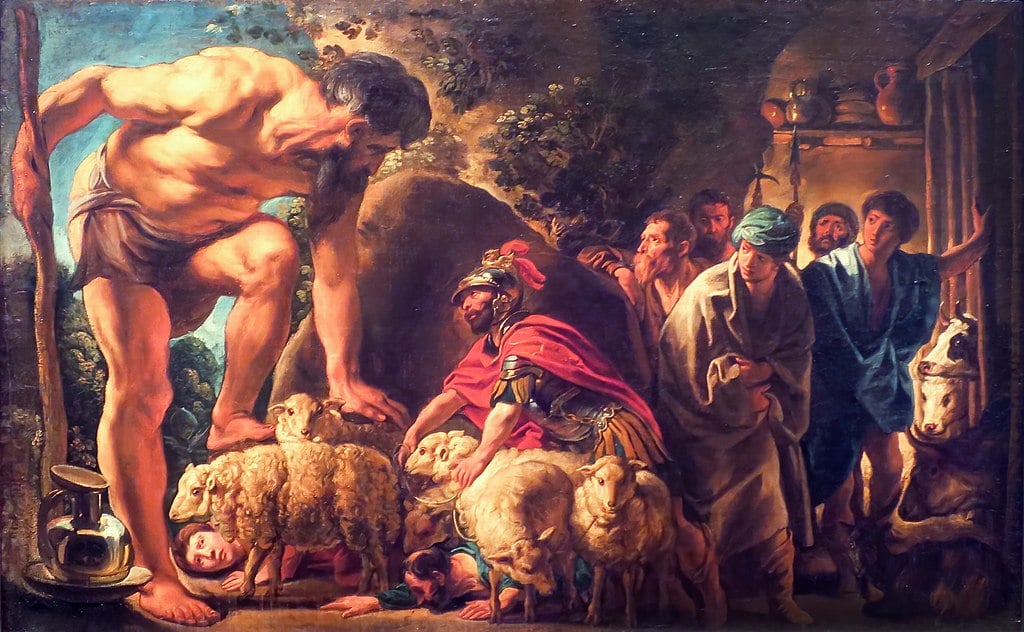
Did Odysseus Travel to Ireland? Credit: Public Domain
Homer’s Odysseytells the tale of Odysseus returning to his home after the Trojan War. For a variety of reasons, the trip is not an easy one. It takes him a full ten years to return home.
But the journey from Troy to Ithaca, Odysseus’ home island, should not have been too difficult and certainly not a ten-year trip. For this reason, some researchers have claimed that Odysseus actually traveled outside of the Mediterranean. There is even the suggestion that he traveled to Ireland.
Odysseus travel to Ogygia and its connection to Ireland
In the Odyssey, one of the places Odysseus visits is an island called Ogygia. This was the home of the nymph Calypso, who offers Odysseus immortality if he agrees to marry her. She refuses to let him leave otherwise. The gods intervene and force Calypso to release him. Hence, after seven years on the island, Odysseus builds a raft and sails away.
The location of Ogygia has been the subject of considerable speculation. According to Homer’s account, the island is a place of beautiful meadows, fountains, woods, and various types of birds. However, none of this is particularly helpful. All sorts of islands could fit this description.
In ancient times, various suggestions were made as to where Ogygia might actually be located. More recently, some scholars have argued that Ogygia is identical to Ireland. If this identification is correct, this would mean that Odysseus spent seven years in Ireland.
The most notable scholar to have come to this conclusion was Roderick O’Flaherty. In 1685, he used the name ‘Ogygia’ as a synonym for Ireland in the title of one of his books. It was called: Ogygia: Or a Chronological Account of Irish Events.
Plutarch’s account of Ogygia
One of the key pieces of evidence used to support the identification of Ireland as Ogygia is a passage written by Plutarch, a historian of the first century CE. He wrote about Homer’s account of Ogygia in conjunction to other additional information he provided. According to Plutarch, Ogygia was situated to the west of Britain, which is where Ireland is in fact located.
Additionally, Plutarch tells us that Ogygia was five thousand stadia away from the ‘great continent’ which surrounded the ‘great sea.’ Several scholars have suggested that this ‘great continent’ actually refers to America. Examples include Wilhelm von Christ, an eighteenth-century German scholar, and Johannes Kepler, a sixteenth-century German scholar.
If the ‘great continent’ mentioned by Plutarch really was America, then that would mean that Ogygia was actually an island somewhere between Britain and America. Since Plutarch says that Ogygia was five thousand stadia from the great continent but only several days distant from Britain, this indicates that it was much closer to Britain than to America. Therefore, Ireland would seem to be a good match.
Problems with identifying Ogygia as Ireland
While Ireland does match Plutarch’s basic description, there are certain issues with this identification. For one thing, Ireland is not five thousand stadia from America. This distance would be the equivalent of a little over nine hundred kilometers. Nevertheless, the distance between Ireland and America is about three thousand kilometers.
Hence, the distance specified by Plutarch means that Ireland is in fact not Ogygia, if America was indeed the ‘great continent’ to which he referred. Clearly, however, there is no other option for the great continent that would fit the passage.
Another problem is that Plutarch states that it takes five days of sailing to travel between Britain and Ogygia. This would indicate an island much further west than Ireland because it would barely take two days of sailing to reach Ireland from the furthest part of the western side of Britain.
In reality, there is no island which is exactly five days’ sailing away from Britain and also five thousand stadia away from America. The measurements simply do not correspond to any real location.
Perhaps, then, some researchers could use this as evidence that the measurements must be incorrect, meaning that Ireland could still be the intended location. Alternatively, it could of course also mean that Plutarch was not really describing an actual location at all.
There is something about Greece that sets it apart from many other holiday destinations across the globe; its mythological sites.
Many ancient societies had different beliefs and myths, but none are more prominent in modern-day life than that of the Greeks. Their creatures have become legends, their tales inspiration for great fiction and their gods immortalized through the continued retelling of their conquests and trials.
Delos: an ancient mythological site in Greece
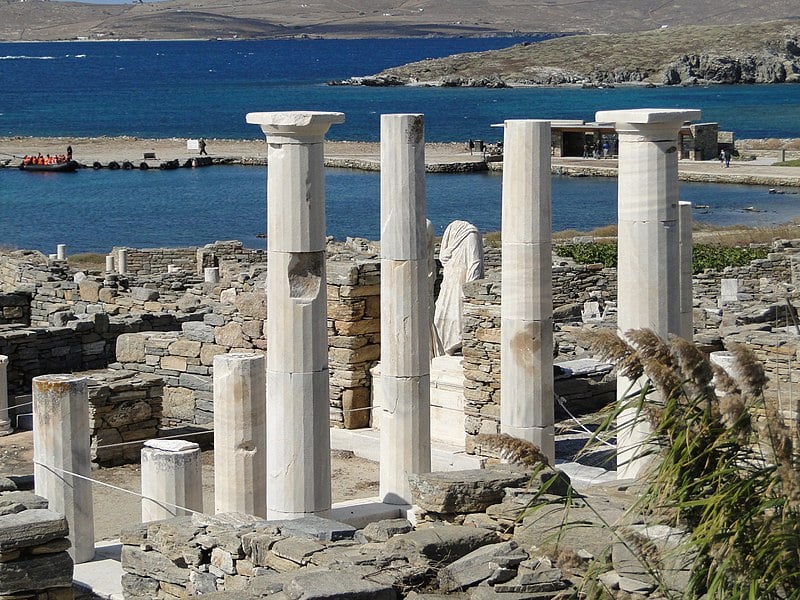
Matched only by the Acropolis of Athens, Greek mythological site the ruins on the island of Delos are an unmissable location for anybody interested in ancient Greek culture. One of the best-preserved examples of an ancient Greek civilization, the island is completely unblemished by modern architecture and as such, allows its visitors to delve deep into history.
However, it is not just a site of great historical importance, but a mythological one too. It was on this island that both gods Artemis and Apollo are said to have been born. As a result, the island became a sacred place. Sanctuaries and temples sprung up across its hillsides as people from across Greece came to the island’s shores to worship the deities.
Throne room of the Minoan Palace in Knossos, Crete Credit: Annatsach – Wikimedia Commons / CC BY-SA 4.0
The Labyrinth, a famous site in Greek mythology
One of the most famous and exciting stories of Greek mythology is the tale of Minos, Theseus and the Minotaur. Minos was a powerful king, ruler of Crete and the son of Zeus, but after he betrayed Poseidon, he was cursed to raise a son with the body of a man and the head of a bull. Using this curse to his advantage, however, Minos built the fabled Labyrinth and trapped the Minotaur within it. He would then send victims to their deaths until Theseus, prince of Athens, ventured into the Labyrinth and slayed the beast.
While there are no Minotaur bones for you to see, there are two possible Labyrinths to explore. First is the likely home of King Minos, and therefore the most plausible home for the labyrinth, Kommos. Located along the southern coast of the island, Kommos is a great place to visit, with spectacular ancient ruins and beautiful ocean views.
However, if you venture deep enough into the ruins of this ancient city, you will find many maze-like corridors and walkways that may have been the Minotaur’s home; or at least the inspiration for its tale. However, just down the road you will also find Gortyn, a site of great archaeological importance to Crete and another suspected home of the Labyrinth. Further away from Minos’ home, these ruins bear a much similar resemblance to the maze of mythology. Perhaps then, it is best to visit both Greek mythological sites and decide for yourself.
The Island of Ithaca: an ancient Greek site and holiday destination
An olive tree on Ithaca that is thought to be 1,500 years old. Credit: Wikimedia Commons
Ithaca, a well-known Greek mythological site for a holiday destination, is a place with a very interesting mythological past. Most notably, it was home to the legendary trickster Odysseus, the island’s greatest king and the brains behind the trojan horse.
Odysseus was also the protagonist of Homer’s “Odyssey.” His decade-long struggle to return home after the war is the source of many of the most enduring Greek myths.
The famous Cave of Zeus on the Greek island of Crete
Cave of Zeus in Crete, Greece Credit: Tomisti / Wikimedia Commons / CC BY-SA 4.0
Hidden away on the island of Crete is an extraordinary piece of Greek mythological history. Within a cave beneath Mount Ida, it is said that the King of Gods, Zeus, was born and raised.
The Cave of Zeus is a beautiful location, with one entrance leading into a network of caves filled with stunning rock formations and underground pools. It does indeed seem a fitting place for the beginnings of the greatest god Greek mythology has ever known. However, it was not by choice he was raised here but by necessity.
His father, the titan Cronus, was set on devouring all of his progeny to ensure that they could never contest his power. However, unbeknownst to Cronus, Zeus’ mother, Rhea, hid him within the cave so one day he could return to overthrow his tyrannical father; which, according to legend, he did.
Along the eastern coast of the Greek mainland, you will find one of the most well-known natural landmarks in the world; Mount Olympus. This legendary and iconic Greek mythological site is an awe-inspiring sight, however, there is more to it than meets the eye.
In Greek mythology, Olympus was created after the gods defeated the titans in the battle of Titanomachy; otherwise known as the War of the Titans. Atop its peak they then built the Pantheon, where Zeus sat upon his throne as King of Gods and the rest of the deities would convene to discuss matters of the world below and survey the world of men.
Seeing all these incredible mythological sites can be tricky, unless you charter a course aboard Deep Blue Yachting’s luxury sailing boat, the Glaros. It is a private vessel, you can set your own course and visit every site on this list, all in one trip.
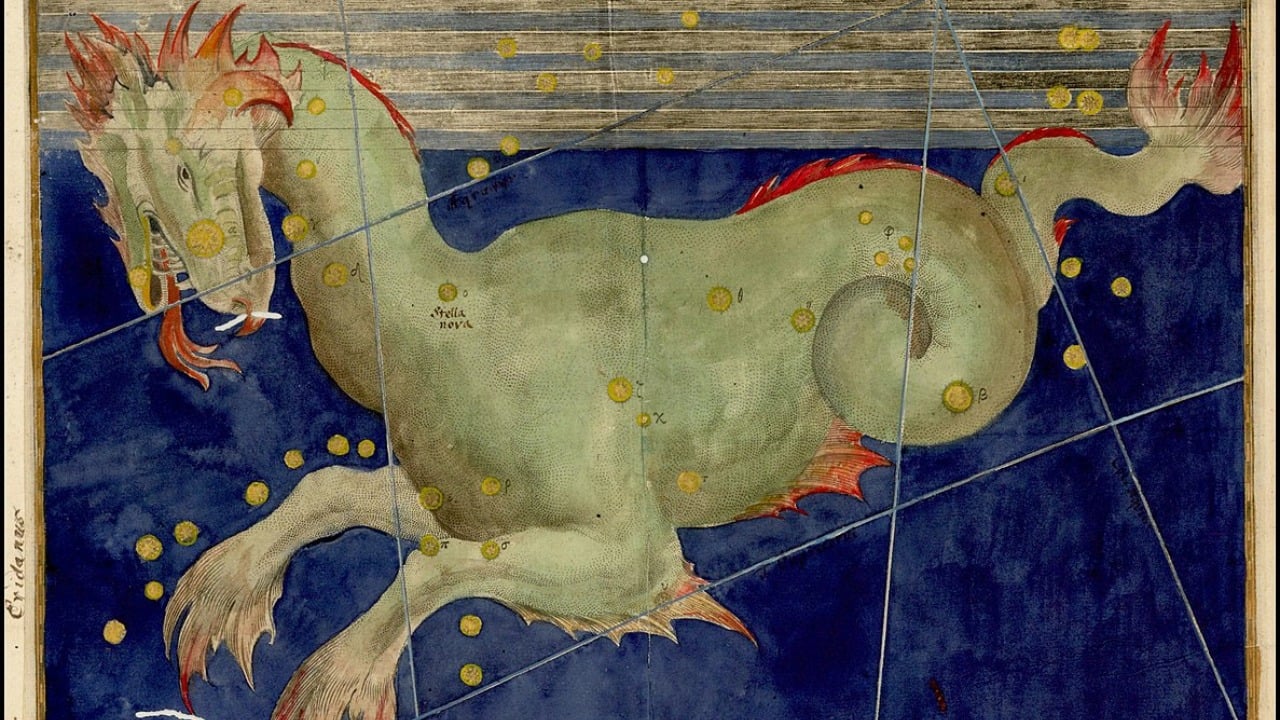
Alexander the Great is said to have encountered sea monsters during his campaigns. Credit: Johann Bayer / Public domain / Wikimedia Commons
As one of the most famous figures in human history, it comes as little surprise that the life of Alexander the Great is tied to several legends of mythic proportions, of which several concern the conqueror’s encounters with sea monsters.
Alexander’s armies traversed much of the known ancient world, leaving their native Macedon far behind them. Over the course of their long campaigns, they encountered many strange sights, some of which may have inspired later myths and legends.
At least two historians, from the ancient and medieval periods, described Alexander the Great and his encounters with sea monsters. The first was Diodorus Sciulus, a Greek historian of the 1st century BC and the Arab scholar Ibn Khaldun of the 14th century AD.
The sea creature at the siege of Tyre, 332 BC
In 323 BC, the intrepid Macedonian king laid siege to Tyre, a well-fortified Phoenician city-state on the coast of the Mediterranean. The city was extremely difficult to penetrate because it was located on an island and was defended by high walls that came right up to the sea.
Nevertheless, it was necessary to capture Tyre to deny the Persians access to a strategically important naval base. Thus, Alexander ordered his engineers to prepare artillery pieces and siege works for an assault on the city.
However, whilst this effort was underway, a strange event in which the army of Alexander the Great encountered a sea monster in the waters around Tyre occurred, according to the writings of Diodorus Siculus.
Late 5th century ancient Greek red-figure pottery depicting a hippocamp, a mythical creature with a horse’s body and the tail of a fish. Credit: Metropolitan Museum of Art / CC0, / Wikimedia Commons
“As the Macedonian construction came within range of their missiles, portents were sent by the gods to them in their danger,” wrote Diodorus Siculus. “Out of the sea, a tidal wave tossed a sea monster of incredible size into the midst of the Macedonian operations.”
“It crashed into the mole but did it no harm, remained resting a portion of its body against it for a long time and then swam off into the sea again,” continued the Greek historian. “This strange event threw both sides into superstition, each imagining that the portent signified that Poseidon would come to their aid, for they were swayed by their own interest in the matter.”
A less fantastical explanation for this incident is possible than a mythical sea monster sent by Poseidon. The creature in question may have been a shark, dolphin, whale, or other entirely normal aquatic inhabitant.
Alexander the Great and the sea monsters of Alexandria
The siege of Tyre was not the only time Alexander is said to have encountered a sea monster. According to the Arab scholar Ibn Khaldun, he saw several mythical aquatic beasts in Egypt.
In fact, Ibn Khaldun claimed that sea monsters initially halted the construction of Alexandria until Alexander devised a way to scare them away from the area.
“Sea monsters prevented Alexander from building Alexandria,” wrote the scholar. “He took a wooden container in which a glass box was inserted, and dived in it to the bottom of the sea. There he drew pictures of the devilish monsters he saw.”
According to Ibn Khaldun, “He then had metal effigies of these animals made and set them up opposite the place where building was going on. When the monsters came out and saw the effigies, they fled. Alexander was thus able to complete the building of Alexandria.”
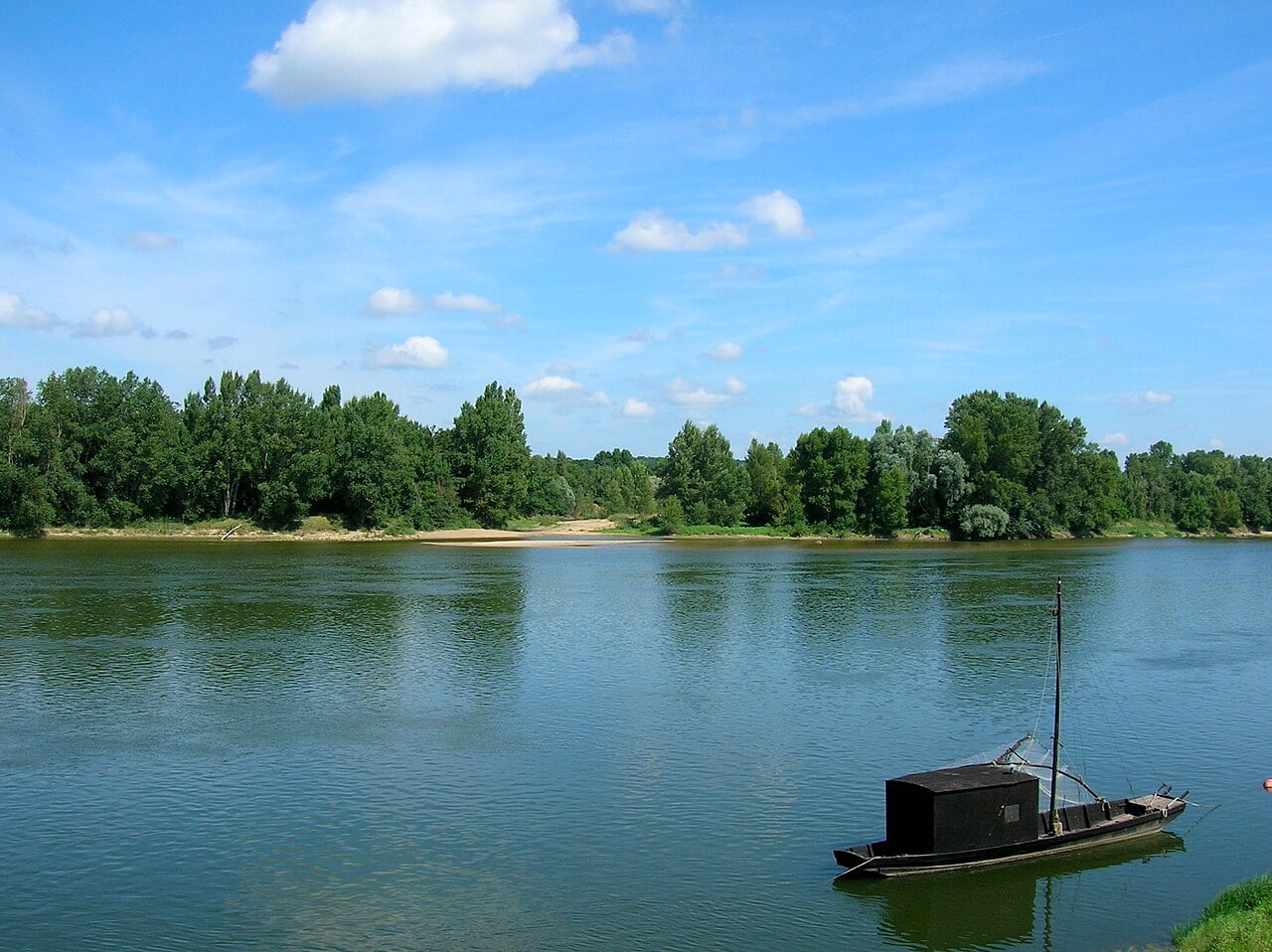
The Loire River, likely part of the Eridanos River of Greek mythology. Credit: Wikimedia Commons, CC-BY-SA 3.0, LPLT
The Eridanos River of Greek mythology is a mysterious river whose location has long been debated. Numerous real-world rivers around Europe have been suggested, but some scholars believe it is completely mythical and corresponds to no real-world location. Nevertheless, some may wonder where this river might actually be situated.
The Eridanos River of Greek mythology
To try to understand which real-world river it might correspond to, we first need to look at what ancient sources say about it. The Eridanos River is most famous for its connection with Phaethon and amber. In the relevant legend, it’s the river into which Phaethon crashes after he steals the chariot of the sun god.
Phaethon’s sisters, the Heliades, grieved the loss of their brother, and the gods transformed them into poplar trees. These trees, in turn, supposedly produced amber for which the river was well known. Numerous scholars have attempted to use this information to identify this body of water.
Furthermore, we know that the Eridanos River cannot have been an obscure, minor river. Hesiod mentions it in his list of the offspring of Oceanus. Eridanos appears first in the list, and Hesiod even calls it “deep-swirling,” which is an expression normally reserved for the great Oceanus itself.
Where was the Eridanos River?
With these facts in mind, what have scholars argued about the location of this river? Well, one popular candidate is the Vistula River, since this flows through Poland and leads to the Baltic Sea. This was a major source of amber in the ancient world, and this fits the criterion of the Eridanos River being a source of amber.
Furthermore, Herodotus associates the Eridanos River with a certain “northern sea.” Since the Baltic Sea is to the north of Greece, it could fit Herodotus’ description. However, another popular candidate is the Po River, which flows through northern Italy and enters the Adriatic Sea. In fact, several ancient sources explicitly identify the Eridanos with this real river. At first, that might seem to settle the matter. However, it’s more complicated than that.
A closer look at Herodotus’ description
Herodotus, in the fifth century BC, was not the first person to mention the Eridanos River. As we saw earlier, that was Hesiod. However, he does seem to provide the earliest useful description of it. His description reads:
“As to the extremities of Europe towards the West, I am not able to speak with certainty: for neither do I accept the tale that there is a river called in Barbarian tongue Eridanos, flowing into the sea which lies towards the North Wind, whence it is said that amber comes; nor do I know of the real existence of the Cassiterides from which tin comes to us… However that may be, tin and amber certainly come to us from the extremity of Europe.”
As we can see from this description, the Eridanos River was explicitly said to flow into the sea which lies towards the North Wind, and Herodotus refers to this region as the “extremity of Europe”. This definitively rules out the Po River, which flows into the Adriatic Sea near Greece itself.
Does this mean that the Vistula River is the most likely candidate? At first, that might seem to match Herodotus’ reference to the “extremity of Europe” and the fact that the river flowed into the sea towards the North Wind. However, that does not work either. Herodotus prefaces this passage by referring to the “extremities of Europe towards the West”.
Since the Vistula and the Baltic Sea are essentially directly north of Greece, this does not match this aspect of Herodotus’ description.
Jason and the Argonauts
Jason and the Argonauts disembark at Colchis, Charles de La Fosse, 1672. Credit: Wikimedia Commons, CC-BY-SA 3.0
The Argonautica, by Apollonius Rhodius of the third century BC, reveals the answer to this conundrum. Although it contains some fictional geography, it is clear about where the Eridanos River was supposedly situated, and this aligns perfectly with Herodotus’ description.
According to Apollonius, Jason and the Argonauts sail from the Black Sea through the Danube and then reached the Adriatic Sea via a fictional channel between the two. They then sail up into the Eridanos River, actually signifying the Po River in this context. Eventually, they make it to the Rhodanus River, or the Rhone as it is known today, a body of water which flows through France relatively close to the Po River source and then spills into the the Mediterranean Sea on the country’s southern coast.
This is significant because it demonstrates that the Greeks believed the Po and the Rhone were connected. In fact, other ancient texts attest to this same belief. Consequently, this means Apollonius is presenting the Rhone as part of the Eridanus River.
How the Argonautica reveals the true location of the Eridanos River
At this point in the Argonautica, the true nature of the Eridanos River is made clear. Apollonius writes:
“Thence they entered the deep stream of Rhodanus which flows into Eridanus; and where they meet there is a roar of mingling waters. Now that river, rising from the ends of the earth, where are the portals and mansions of Night, on one side bursts forth upon the beach of Ocean, at another pours into the Ionian Sea, and on the third through seven mouths sends its stream to the Sardinian sea and its limitless bay.”
Apollonius refers to the Eridanos River as having three mouths. One arm of the river flows into the Ionian Sea, which is an ancient reference to the Adriatic Sea. That is the arm of the river that Jason and the Argonauts have just been described as sailing up. Another one of the arms of the river is said to flow into the Sardinian Sea. That would be the Rhone, in accordance with Apollonius who explicitly presents the Rhodanus (the Rhone) as part of the Eridanos.
The third arm is the final piece of the puzzle. According to Apollonius, it flows into the “beach of Ocean.” Incidentally, this matches Herodotus’s description of the Eridanos flowing into the sea on the other side of Europe, which doesn’t match the Rhone nor the Po. The notable point is that this shows that the Ancient Greeks believed the Po, the Rhone, and a third river were all part of one enormous waterway in Europe, which they referred to as the Eridanos.
What was the third arm of the Eridanos River?
A few lines later, Apollonius refers to the mouth of the river in the southern part of France as the middle of the three mouths of the Eridanos. With the Po River having the mouth closest to Greece, and the Rhone having the intermediate one, the third mouth must have been even further west. This, again, is in harmony with Herodotus’ description, which associated the Eridanos with the western extremity of Europe.
Based on this, the only plausible candidate for the third arm of the Eridanos River is the Loire. This is a river whose mouth is further west than the mouth of the Rhone. It flows out into the Atlantic Ocean on the western side of France and is located towards the north—another detail of Herodotus to keep in mind. Furthermore, it flows quite close to the Rhone near its source, making sense of the belief that they were connected.
In summary, it appears that the Greeks imagined the Loire, the Rhone, and the Po Rivers to all be connected. The Greeks received their amber via the Po River, since it was the final part of the Amber Road which originated in the Baltic Sea. However, they believed that the Po was connected to the Loire.
This perfectly matches up with Herodotus’ description of the Eridanos River in its entirety. As we saw, he claimed it flowed into the sea on the other side of Europe and associated it particularly with the north and the west, which points to the Loire.
Baby names drawn from Greek history and mythology are becoming increasingly popular in the United States. The rich pantheon of gods and goddesses from Greek and Roman myths provides a wealth of inspiration for unique and meaningful names. Whether it’s Athena, Zeus, or another timeless figure, you may discover the perfect name for your extraordinary new arrival.
The Babycenter blog, an American parenting website says that the Ancient Greek legacy is not just confined to science, art, and philosophy. “Their influence can still be felt today, and that even extends to baby names! Many modern names, such as Sophia and Alexander, have their origins in ancient Greece.”
Whether you love Greek mythology or want to pay tribute to values that originated in ancient Greece, Hellenic baby names are sure to appeal, it says.
You can take Greek names in many different directions, depending on your naming style. Though ancient, Greek names such as Luca, Zoe, Atlas, and Orion feel fresh and modern. Some lend themselves easily to gender-neutral use: Nico and Kyrie, for example.
Or, go for a regal vibe with names of Greek gods and goddesses, like Athena and Apollo. Greek names like Agatha, Daphne, and Demetrius are sophisticated – and uncommon enough that your child won’t be one of many on the playground, the Babycenter blog adds.
Athena, the goddess of wisdom, the arts (spinning and weaving specifically), and warfare. She’s best known for her spectacular birth, which, legend tells, involved her leaping out of Zeus’s head, fully armed.
Circe, daughter of Helios, god of the sun. She specialized in potions, spells, and magical herbs which she often used to turn her enemies into animals.
Gaia is a name that means “earth” in ancient Greek. She is the goddess of the planet Earth, thought to personify earth itself, and she’s considered to be the ancestral mother of all life.
Hera, the ancient goddess, is considered to be the queen of the gods. Married to Zeus, she was considered the god of and ruler over marriage, family, women, and childbirth.
Persephone is the Greek goddess of spring’s bounty. She is the wife of the god Hades, and thus queen of the underworld for the winter months. Each time Persephone returns to Earth, she brings spring with her flowering meadows and the growth of crops.
Greek mythology baby names for boys
Ajax was a formidable warrior in the Trojan War, named in his time, it’s said, after an eagle sent from Zeus as a sign of Ajax’s impending birth. This hero appears in Homer’s epic novel, The Iliad, as well as in Shakespeare’s play Troilus and Cressida.
Apollo is the name of a Roman and Greek god of sun, light, music, and poetry, as well as medicine and healing. The most widely-known representation of Apollo is most probably a statue of the god, covered only by a laurel leaf and carved from stone.
Atlas was a primordial Titan (pre-Olympian) god of astronomy who was forced by the god Zeus to eternally hold the sky on his shoulders. The world maps we all used before Google came along are called Atlas maps in honor of this very god.
Leander means “lion man” in Greek. While not a god, Leander features prominently in a mythical love story that ends tragically although Leander and his true love, Hero, a priestess of Aphrodite, end up together into eternity.
Zeus is the most renowned as the highest-ranking of the Greek mythological gods. Zeus ruled the sky from his perch on Mount Olympus and controlled the weather, wielding thunderbolts as his weapon of choice. This powerful and literally lofty name is made all the more appealing by its one syllable with decisive zip.
Recently, Arnold Schwarzenegger conquered social media in the runup to the Super Bowl with an Instagram post he released of himself portraying the Greek god of thunder.
In the post, Schwarzenegger has golden hair and a golden beard and sports burnished golden armor. The skies behind him are angry with dark blue clouds and lightning striking the earth.
For more recommendations inspired by ancient Greece watch the following video:
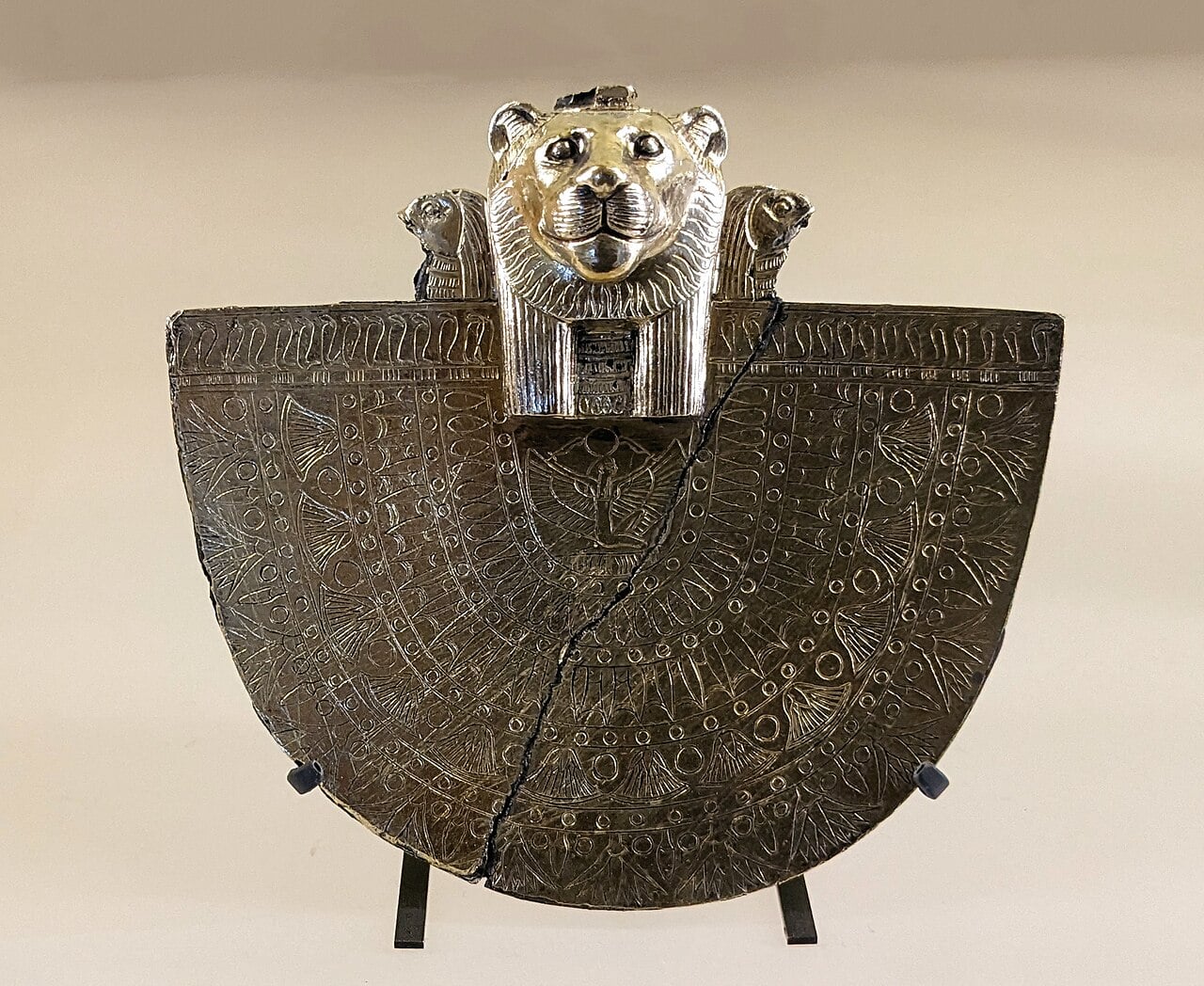
Aegis of Osorkon, the Egyptian Heracles, and his wife Tadibastet, eighth century BC. Credit: Wikimedia Commons, public domain.
Heracles, also known as Hercules, is one of the most famous heroes of Greek mythology. Interestingly, ancient records reveal that an Egyptian king from the time before Homer also went by the same name of Heracles, but what do we know about him, and what might his connection to the Greek one be?
Heracles of Greek mythology
First of all, it’s worth looking into who Heracles actually was in Greek mythology. A demigod who was famed for his strength, his mother was Alcmene, while his father was Zeus, the king of the gods. The goddess Hera is known to be his greatest enemy. The irony in that is that his name actually means “Glory of Hera.”
Heracles participated in numerous adventures, including the quest for the Golden Fleece. However, the most famous series of events involving Heracles are his twelve labors. These seemingly impossible tasks involved killing a monstrous lion, defeating the Hydra, and capturing the Mares of Diomedes.
Without a doubt, Heracles was one of the most popular heroes within Greek mythology, and the same holds true to this day. This makes his potential connection to Ancient Egypt all the more interesting.
The Egyptian king Heracles
To any student of Egyptian history, the claim that an ancient king of Egypt also went by the name of “Heracles” might seem strange. After all, he’s not included on any standard list of Egyptian kings. However, we find a clear reference to him in the ancient source of Manetho’s king list.
Manetho was a historian who lived in the third century BC and wrote about the history of Ancient Egypt, its many kings, and dynasties. Unfortunately, the authentic source has not actually survived, but it has been referenced in later sources. For instance, in the version preserved by Eusebius of the late third to early fourth centuries AD, we find the following list:
“The Twenty-third Dynasty consisted of three kings of Tanis.
1. Petubastis, for 25 years.
2. Osorthon, for 9 years: the Egyptians called him Heracles.
3. Psammus, for 10 years.”
As can be seen, King Osorthon from the Twenty-Third Dynasty of Egypt was also known as Heracles, a fascinating discovery that potentially has some very intriguing ramifications for our understanding of early Greek mythology.
Who was the Egyptian Heracles?
Firstly, we need to understand who Osorthon actually was. This spelling used by Eusebius is actually a form of the Egyptian name “Osorkon.” There were several kings known as “Osorkon” throughout Egypt’s history within the first half of the first millennium BC, but which one was the one known as Heracles?
The traditional viewpoint has been that Manetho’s Osorthon was Osorkon III. The common dates for his rule place him in the early eighth century BC, and he ruled a few decades after a king named Pedubast I. That would fit Manetho’s Osorthon coming after a king named Petubastis.
However, there are certain issues with this. For one thing, it appears that Pedubast I and Osorkon III ruled Upper Egypt, or what is today southern Egypt (approximately). This is problematic, because Manetho refers to his kings as ruling Tanis, near Egypt’s northern coast.
Another viewpoint is more convincing and has been accepted by many modern scholars. This is that Manetho’s Osorthon is actually Osorkon IV. He came shortly, or perhaps even immediately, after Pedubast II according to many scholars. Therefore, this fits in well with Manetho listing Osorthon right after Petubastis.
Additionally, there is the crucial fact that Pedubast II and Osorkon IV were actually rulers of Tanis, just like Manetho described. Therefore, it is very likely that the Osorkon allegedly known as Heracles was Osorkon IV. He ruled in the north of Egypt, and scholars date his reign to the second half of the eighth century BC.
The fact that there was a historical figure who was known as Heracles and lived just prior to the earliest traces of the legend of Heracles in Greek mythology is quite interesting. Could this mean that Heracles is actually based, at least in part, on the historical Osorkon IV?
Was Osorkon IV the Heracles of Greek mythology?
Partially because relatively little is known about Osorkon IV and it is thus quite difficult to compare his life with the Greek legend of Heracles, we do not actually know if these two figures are one and the same. Nonetheless, the basic connection to Egypt is, surprisingly, something that we find in Greek records. Herodotus noted that Heracles’ parents, Alcmene and Amphitryon, were “both of Egypt by descent.”
As for Osorkon’s activities, he is known to have successfully prevented a devastating attack against his territory by the southern king of Egypt, Piye, right at the beginning of his career. Achieving this involved traveling to a temple to meet Piye. This could be associated with the legend of Heracles repelling a king’s invasion of his land, which likewise involved him going inside temples.
Another event in his life is recorded in Assyrian records. To appease Sargon of Assyria, Osorkon took and gifted twelve incredible, mighty horses. They impressed Sargon so much that he described them as “without equal in Assyria.” This could potentially be the origin of the story of Heracles capturing the mighty Mares, or Horses, of Diomedes and gifting them to King Eurystheus to appease him.
Lastly, numerous scholars believe that Osorkon fought against another king of Egypt named Bocchoris. This could be the origin of the story of Heracles fighting against the Egyptian king Busiris.
While none of these connections can definitively be confirmed, it is, nevertheless, possible that the Egyptian king Osorkon IV inspired the figure of Heracles in Greek mythology at least to an extent.
Depiction of Odysseus leaving the island of Scheria in one of the ships of the Phaeacians. Credit: Claude Lorrain, 1646, Public domain
The most common understanding of Atlantis is that it first appears in Ancient Greek literature in the writings of Plato. However, according to a particular theory, it actually appears in the Odyssey, written several centuries prior to Plato’s time. When we examine the evidence closely, can we really identify Atlantis in the Odyssey, or is this just a case of researchers getting carried away by weak and generic connections?
The supposed Atlantis in the Odyssey
The two source texts for the legend of Atlantis are the Critias and the Timaeus. Plato wrote both of these in the middle of the fourth century BC. The Odyssey, written by Homer in the seventh century BC, predates these dialogues by about three hundred years. If we could actually identify the legendary Atlantis in Homer’s poem, that would demonstrate that Plato did not invent it as an allegory.
According to this theory, Plato’s Atlantis is the same as the civilization of the Phaeacians in Homer’s Odyssey. The Phaeacians were the wealthy and relatively advanced naval civilization that helped Odysseus finally find his way home. They have a very prominent part to play in the Odyssey, so if we could identify them as Atlantis, that would be quite significant indeed.
In the Odyssey, their island is called Scheria. This would therefore be another name for the island of Atlantis. Similarly, “Phaeacians” would be another name for the “Atlanteans.”
Evidence connecting Atlantis to the Phaeacians of Scheria
What evidence is there that connects Atlantis to the legendary Phaeacians of Scheria? For one thing, it must be admitted that the basic profiles of both civilizations are quite similar. Both Atlantis and the Phaeacians are said to be affluent and relatively advanced naval civilizations.
Furthermore, their primary place of origin is an island rather than simply a coastal area of the mainland (like in the case of the Phoenicians, for example). Plato also noted the moral uprightness of the Atlanteans just like Homer emphasized the kindness and hospitality of the Phaeacians of Scheria.
However, the connections are much more profound. The locations of both civilizations likewise need to be considered. The traditional interpretation of Plato’s words places Atlantis in the Atlantic Ocean. In like manner, Strabo believed that Scheria was located in that same general area.
According to Plato, Atlantis had walls of brass and orichalcum, while Homer claimed there was a palace with walls of bronze on Scheria. Plato also mentioned Atlantis had a harvest twice annually. Homer refers to the vaguely similar concept of fruit growing all year round on Scheria.
Another major point of similarity is related to the kings of Scheria and the kings of Atlantis. Plato described the kingdom of Atlantis as being divided into ten regions, while Homer maintained the Phaeacians had thirteen kings. Both the kings of Atlantis and those of Scheria were said to have descended from Poseidon.
Undoubtedly, there are certain indisputable similarities between Plato’s Atlantis and the Phaeacians of Homer’s Odyssey, but, ultimately, does our theory that Atlantis and Scheria were actually one and the same stand up to scrutiny?
Was Scheria really Atlantis?
Despite how convincing this theory might seem at first glance, it is also problematic. For one thing, it turns out that the basic profiles of the civilizations are not as alike as they initially seem. While they are both naval civilizations, Plato’s Atlantis is politically powerful in a way that Homer’s Phaeacians are not. There is no hint of the Phaeacians being conquerors who threatened the nations of the Mediterranean region.
As for their wealth and the walls of precious metals, this is a very generic connection that could apply to countless other cultures of legend and history. Bi-annual harvests are also seen in descriptions of other legendary places, such as the land of the Hyperboreans and the Avalon of the Arthurian legends, and, in fact, Homer never did claim that the Phaeacians had a bi-annual harvest after all.
The fact that the kings of Scheria were supposedly descendants of Poseidon might seem to be a strikingly specific claim. In reality though, this is not the case. Numerous rulers from all over the Mediterranean, including Lebanon, Egypt, and Thessaly, claimed descent from Poseidon. It was actually a very common association. The background attributed to Alcinous the king of Scheria in the Odyssey bears no resemblance to Plato’s description of how Poseidon’s children were established in Atlantis.
The connection to the Atlantic Ocean is likewise problematic, as the placement of Atlantis in the particular ocean is merely a singular viewpoint among many. This also applies to Strabo’s belief that Scheria was outside the Mediterranean. In reality, it was likely Corfu, right off the mainland of Greece.
In conclusion, the connections between the Phaeacians of Scheria in the Odyssey and the Atlantis of Plato’s dialogues are obviously mostly generic. While by no means a terrible theory, it lacks anything truly substantial to back it up.

 Login
Login