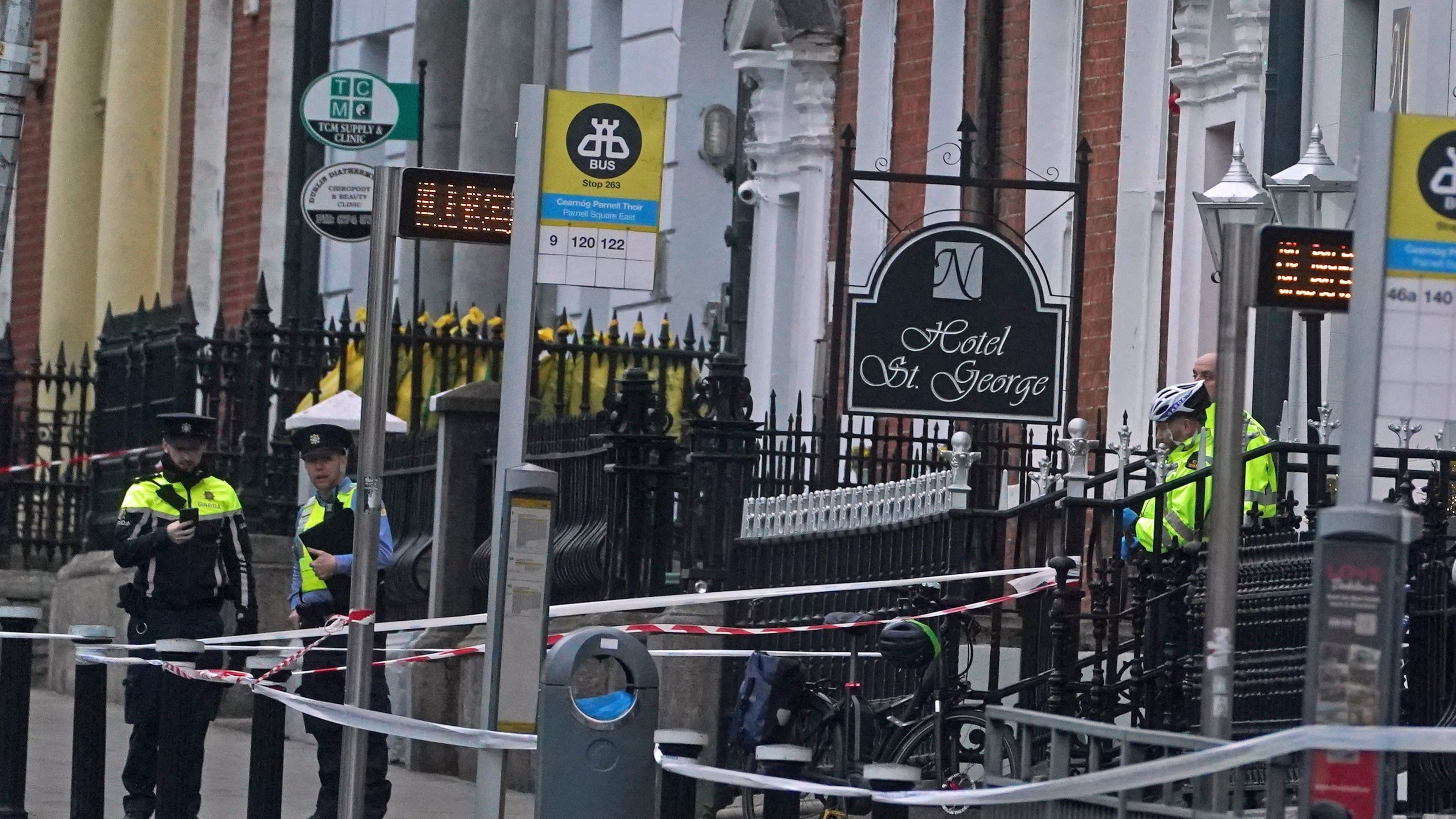
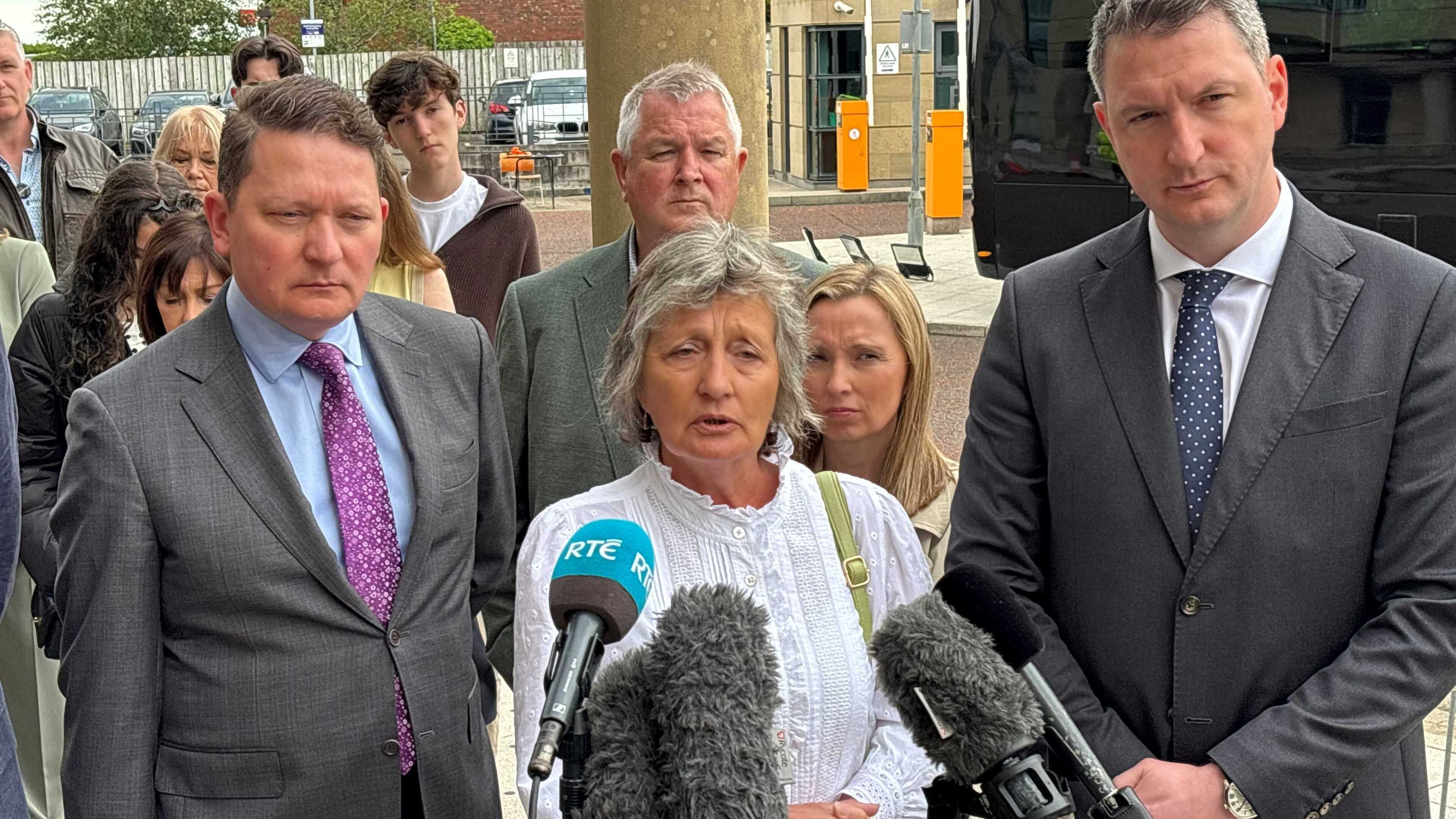
Hadi Alodid refused legal representation and made no reply to charges which were put put to him through an Arabic interpreter as he appeared in court charged with attempted murder following the Belfast knife attack, the Press Association reports.
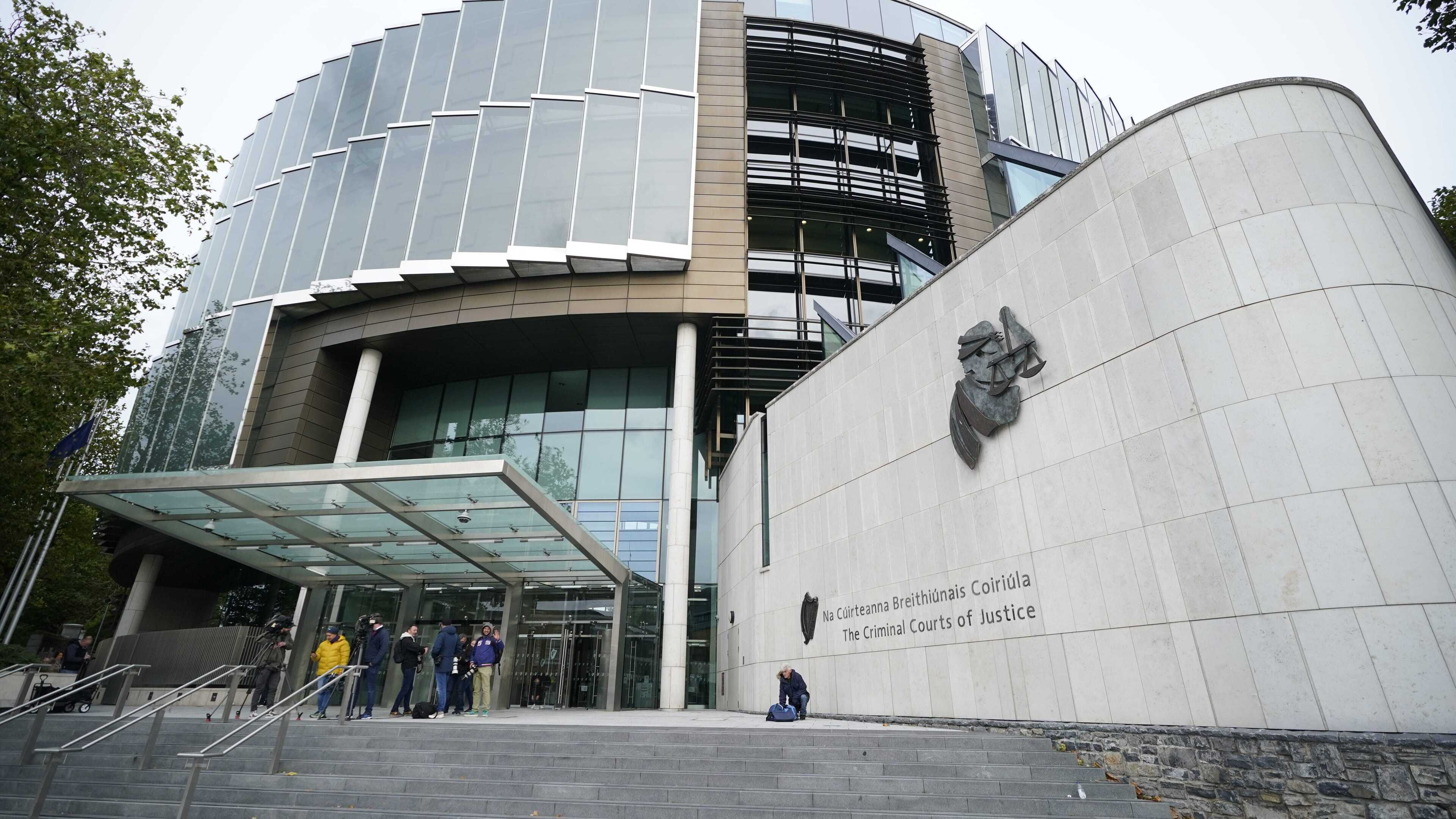
The 30-year-old, with an address at Duncairn Avenue in Belfast, appeared before the city’s magistrates’ court on Wednesday morning.
He is charged with the attempted murder of Stephen Ogilvie on Monday, with threatening to kill an NHS radiographer on the same day and with the possession of a knife.
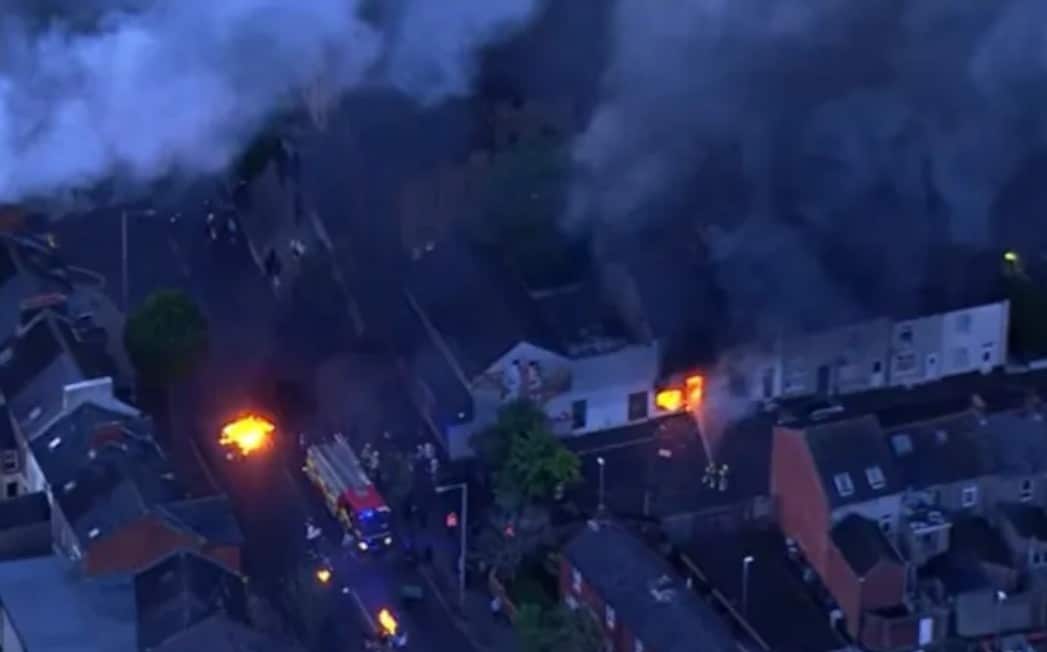
Homes were set on fire in Belfast. Video screenshot/Sky News
Widespread anti-immigration riots broke out across the UK on Tuesday following a particularly violent knife attack in Northern Ireland. The unrest was triggered by news that a thirty-year-old Sudanese national had been charged with attempted murder. Prime Minister Keir Starmer strongly condemned the initial attack, labeling it both “horrific” and “sickening,” while stating he has zero tolerance for such violence.
Escalation of violence in Northern Ireland
BREAKING: A bus has been set on fire in Belfast amid protests over the attempted beheading of a man pic.twitter.com/FX8maCMalK
The unrest was most intense in Northern Ireland, where masked mobs caused extensive property damage on Tuesday evening:
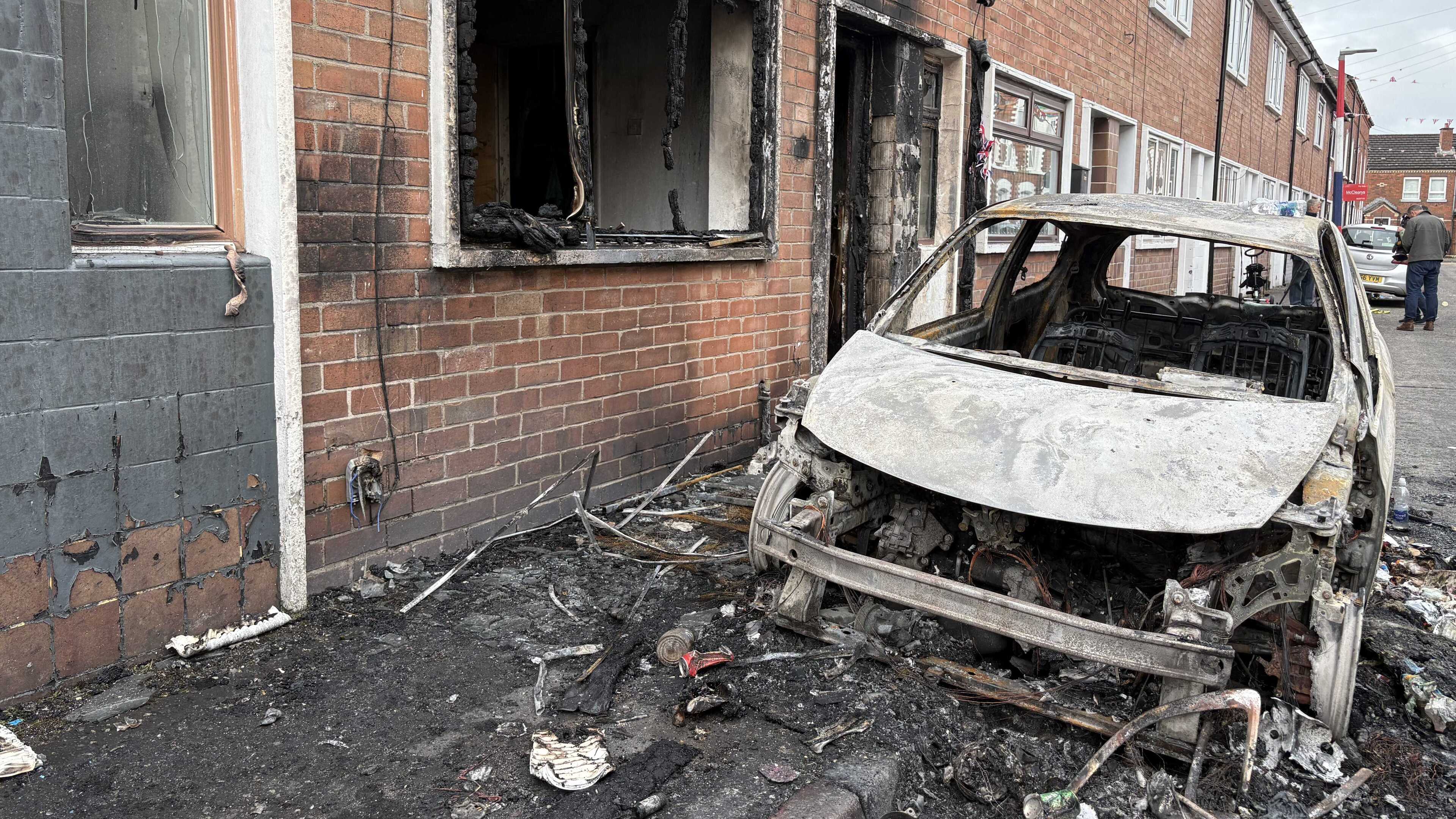
Belfast: Riots resulted in multiple homes, a bus, cars, and street barricades being set on fire. Northern Ireland First Minister Michelle O’Neill condemned the rioters, stating that groups of masked men were “burning families out of their homes” in acts of “outright thuggery.”
Newtownabbey & Kilkeel: Blazes spread to neighboring towns, where verified social media footage showed protesters setting several vehicles ablaze.
Wider UK: Smaller, sporadic anti-immigration protests and clashes with police were also reported in other major UK cities, including London, Glasgow, and Bangor.
A large group rioters is attacking migrant HMOs (Houses in Multiple Occupation, a form of taxpayer-funded housing for asylum seekers) in Belfast. pic.twitter.com/o9yjynArd4
Social media fueling the anti-immigration riots in the UK
The catalyst for the riots was a viral video filmed by a witness during Monday night’s attack in North Belfast. The footage depicts a man pinning a bloodied victim to the ground and repeatedly stabbing him before bystanders and police intervened. Far-right and anti-immigration accounts widely circulated the footage online to mobilize public protests.
Further update from police sources, a property has been set alight in the Lendrick Street area of Belfast.
First Minister O’Neill warned that extremist groups are dangerously exploiting a heinous crime to target and intimidate innocent people who are just trying to live their lives.
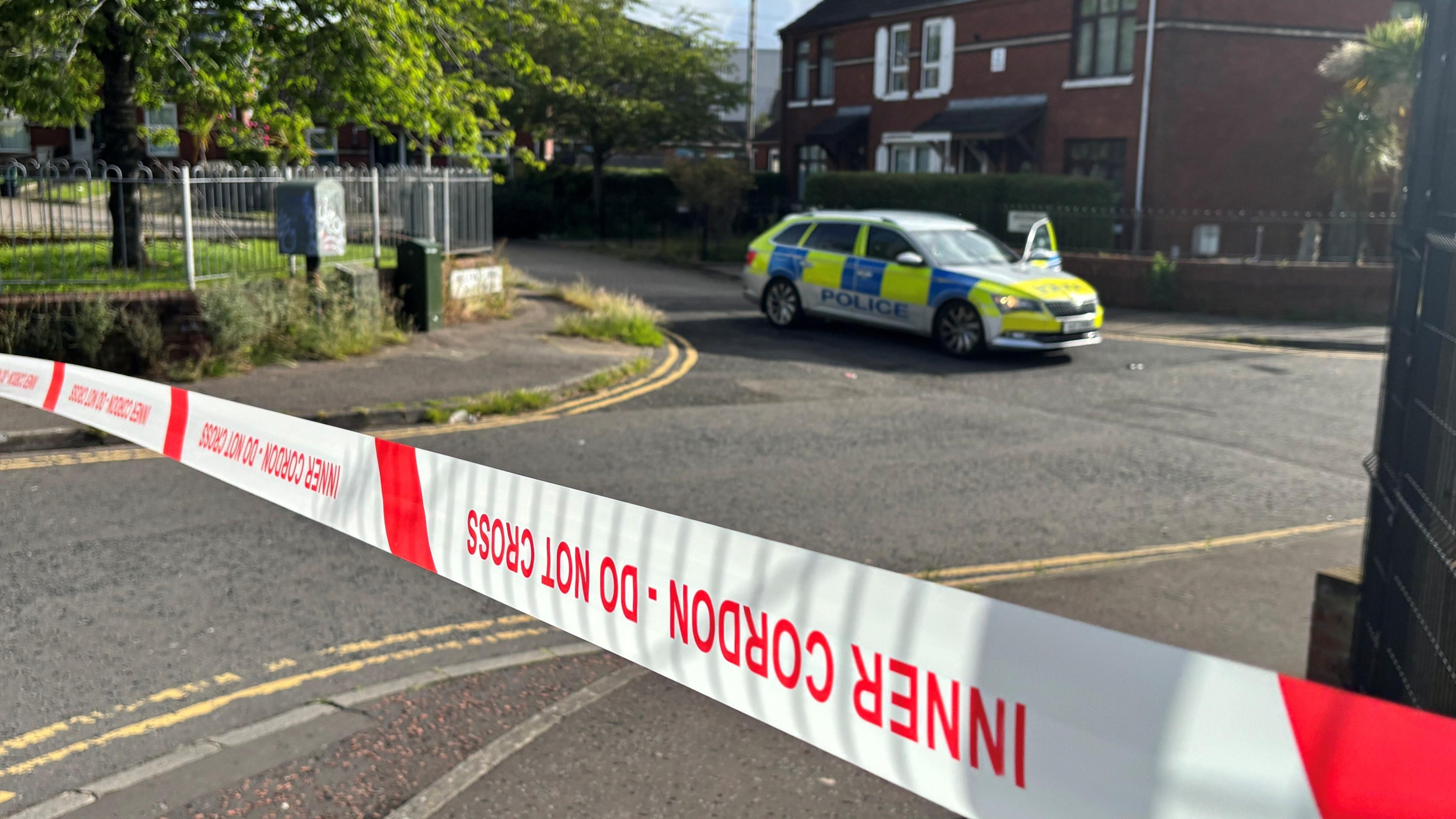
The incident occurred around 10:30 p.m. on Monday, June 8 on Canard Avenue in North Belfast. A man in his forties suffered severe wounds to his face, back, and eyes. He remains hospitalized in serious condition. Police recovered a kitchen knife at the scene.
A thirty-year-old man was arrested for attempted murder. Authorities confirmed he had traveled from Paris to Dublin before entering Northern Ireland in February 2023. He claimed asylum upon arrival and was granted legal residency in the UK until 2028.
Protests across the city turned violent on Tuesday night – with some police officers acting as if it wasn’t safe to intervene
On a residential street draped in loyalist flags near Belfast’s Shankill Road, the masked men approached a house with a boarded-up window and a security camera stationed outside.
As a woman from an ethnic minority background looked down from an upstairs window, some of the men rushed the front door and broke it down. With the air thick with smoke from fireworks, they attacked the downstairs windows with bricks.
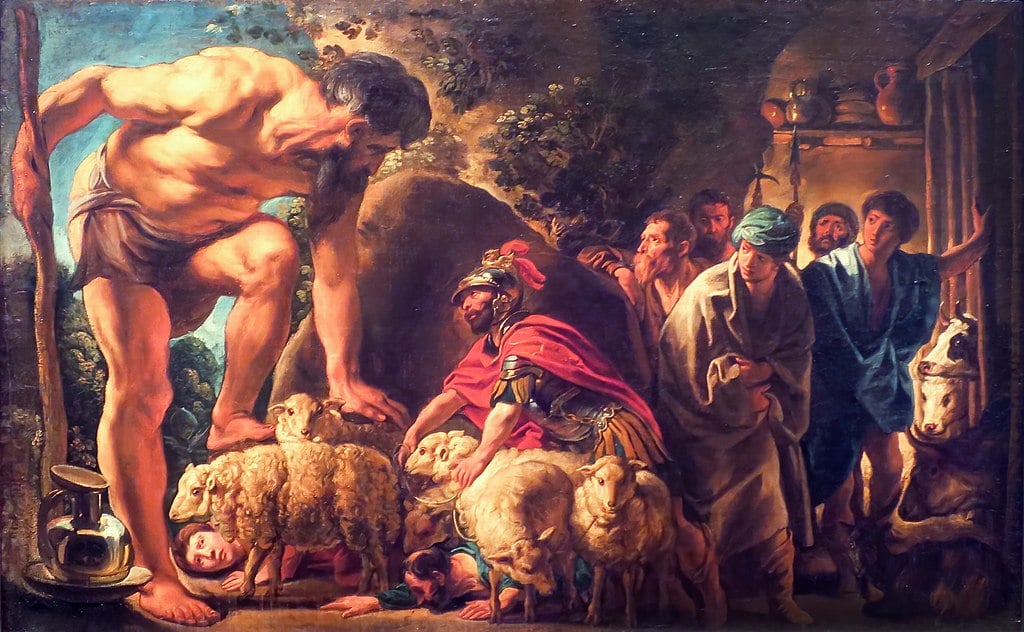
Did Odysseus Travel to Ireland? Credit: Public Domain
Homer’s Odysseytells the tale of Odysseus returning to his home after the Trojan War. For a variety of reasons, the trip is not an easy one. It takes him a full ten years to return home.
But the journey from Troy to Ithaca, Odysseus’ home island, should not have been too difficult and certainly not a ten-year trip. For this reason, some researchers have claimed that Odysseus actually traveled outside of the Mediterranean. There is even the suggestion that he traveled to Ireland.
Odysseus travel to Ogygia and its connection to Ireland
In the Odyssey, one of the places Odysseus visits is an island called Ogygia. This was the home of the nymph Calypso, who offers Odysseus immortality if he agrees to marry her. She refuses to let him leave otherwise. The gods intervene and force Calypso to release him. Hence, after seven years on the island, Odysseus builds a raft and sails away.
The location of Ogygia has been the subject of considerable speculation. According to Homer’s account, the island is a place of beautiful meadows, fountains, woods, and various types of birds. However, none of this is particularly helpful. All sorts of islands could fit this description.
In ancient times, various suggestions were made as to where Ogygia might actually be located. More recently, some scholars have argued that Ogygia is identical to Ireland. If this identification is correct, this would mean that Odysseus spent seven years in Ireland.
The most notable scholar to have come to this conclusion was Roderick O’Flaherty. In 1685, he used the name ‘Ogygia’ as a synonym for Ireland in the title of one of his books. It was called: Ogygia: Or a Chronological Account of Irish Events.
Plutarch’s account of Ogygia
One of the key pieces of evidence used to support the identification of Ireland as Ogygia is a passage written by Plutarch, a historian of the first century CE. He wrote about Homer’s account of Ogygia in conjunction to other additional information he provided. According to Plutarch, Ogygia was situated to the west of Britain, which is where Ireland is in fact located.
Additionally, Plutarch tells us that Ogygia was five thousand stadia away from the ‘great continent’ which surrounded the ‘great sea.’ Several scholars have suggested that this ‘great continent’ actually refers to America. Examples include Wilhelm von Christ, an eighteenth-century German scholar, and Johannes Kepler, a sixteenth-century German scholar.
If the ‘great continent’ mentioned by Plutarch really was America, then that would mean that Ogygia was actually an island somewhere between Britain and America. Since Plutarch says that Ogygia was five thousand stadia from the great continent but only several days distant from Britain, this indicates that it was much closer to Britain than to America. Therefore, Ireland would seem to be a good match.
Problems with identifying Ogygia as Ireland
While Ireland does match Plutarch’s basic description, there are certain issues with this identification. For one thing, Ireland is not five thousand stadia from America. This distance would be the equivalent of a little over nine hundred kilometers. Nevertheless, the distance between Ireland and America is about three thousand kilometers.
Hence, the distance specified by Plutarch means that Ireland is in fact not Ogygia, if America was indeed the ‘great continent’ to which he referred. Clearly, however, there is no other option for the great continent that would fit the passage.
Another problem is that Plutarch states that it takes five days of sailing to travel between Britain and Ogygia. This would indicate an island much further west than Ireland because it would barely take two days of sailing to reach Ireland from the furthest part of the western side of Britain.
In reality, there is no island which is exactly five days’ sailing away from Britain and also five thousand stadia away from America. The measurements simply do not correspond to any real location.
Perhaps, then, some researchers could use this as evidence that the measurements must be incorrect, meaning that Ireland could still be the intended location. Alternatively, it could of course also mean that Plutarch was not really describing an actual location at all.

 Login
Login