Normal view

Hairstyles in Ancient Greece Meant Much More Than Looks

13 June 2026 at 07:01
A red figure krater depicting Ancient Greek hairstyles
Ancient Greek hairstyles marked the identity of a person and denoted social status. Depiction of Hippocrates with his hair falling loosely around the nape of his neck and a wounded soldier brought to him. Adult men were depicted with beards, while young men were portrayed without. Painting on a red figure krater. Credit: Jaime Ardiles-Arce, Wikimedia Commons Public Domain

Hairstyles in Ancient Greece were one of the most significant identifiers of individuals, as they denoted social status and strength. They were also tied to rites of passage and religious rituals.

The hair on one’s head was so particularly valuable to ancient Greeks that it was worthy of its own unique term, being referred to as the kόme (κόμη), and people of the time meticulously cared for it, as they believed it was pivotal to one’s personality and reflected an individual’s social beliefs.

Hairstyles were an essential means of expressing one’s identity. The length and texture—long or short with loose waves or tight curls—was distinctively Greek and contrasted sharply with portrayals of non-Greeks. They were important in that they were a way for people to recognize each other and communicate their place within society.

Hair rituals, such as growing and cutting hair for the purpose of honoring deities, were complex and multi-layered. They needed to account for family status, gender, age, social class, transition points, and cult practices, as well as associations and organizations to which one belonged.

Heroes such as Achilles and Menelaus were portrayed by Homer with blond hair (xanthos), leading many men to lighten their own hair in an effort to resemble them.  To do so, they relied on soaps and alkaline bleaches imported from Phoenicia. Some dyed their hair with a mixture of apple-scented yellow flowers and pollen, potassium salts, and even gold powder.

However, in Homeric and Classical Greek, xanthos (Greek: ξανθός) referred to light-colored hair more broadly and did not exclusively mean “blonde” in the modern Northern European sense. Its meaning was more flexible, often encompassing shades like golden, reddish-gold, or light brown.

Hairstyle depictions in sculptures and paintings

Much of what we know about hairstyles in Ancient Greece stems from depictions of literary works and art, such as sculptures, paintings, amphorae, and other types of vessels. In general, women are nearly always presented with long hair. Slave women, on the other hand, had short hair for hygienic reasons as well as to allow others to socially discriminate between them.

Warriors on amphorae are typically portrayed with pointed beards and long hair while their squires are usually beardless with long, curly hair, and lyre-players have long hair tied back in a bun with a hairband. In a bronze statuette of Apollo, adult men are pictured with beards and somewhat long hair whereas the younger men have no facial hair at all. What marked barbarians, on the other hand, was a moustache with no beard.

Generally speaking, there was a gradual change of style in depictions of men on sculptures and vases from more elaborate to simpler ones. On the other hand, women appeared in works of art donning a variety of ornamental kerchiefs, including pretty bands such as a type of sling known as the “sphendone” (σφενδόνη) due to its shape. A large stamnos, a type of large vase used for serving and storing liquids, depicts groups of women dressed in Ionic and Doric chitons (types of Greek tunics) with various sorts of headdresses.

In literature, the oldest accounts of hairstyles in Ancient Greece are to be found in the works of Homer in which one encounters the dedicating of hair to deities and the dead for the first time ever. This further attests to the importance ancient Greeks placed on hair. In Homer’s Iliad, Book 23, Achilles dedicates his hair to his dead friend Patroclus, for example, in an act that symbolizes his grief for his best friend who has passed away as well as his devotion to their friendship.

Ancient Greek hairstyles depicted on red figure kylix showing Heracles fighting Nereus
Ancient Greek hairstyles varied through the centuries. Painting on red figure kylix depicting Heracles fighting Nereus. Three Nereids are fleeing. Credit: ArchaiOptix Wikimedia Commons CC BY-SA 4.0

Ancient Greek hairstyles through the centuries

Paintings in the palaces and pottery of the Minoan period (c. 3000 and 1100 BC) show dancers with shoulder-length black hair. In Aegean art, men are depicted with single or double plaits, and Homer’s heroes (c. 800 BC) had such hairstyles, as well, as did warriors at the battle of Marathon (490 BC).

minoan mycenean genetics genes
“Saffron Gatherer” from a Minoan fresco in Akrotiri, Santorini. Credit: Public Domain

The most common hair adornment for women was a type of hairnet or coif made of net work known as a “kekryphalos” in Greek—otherwise also called a caul or “coif of network.” It was worn during the day and at night through to the Classical Period, and Homer made mention of these hairnets, which were frequently made of gold threads or silk, as Pausanias writes.

Overall, during the Archaic Period (c. 1100 to 480 BC), the kouros, the free-standing statues depicting male youth, had long, finely braided, shoulder-length hair at the very least. The maidens (kόre) had numerous braids and oftentimes also donned a coronet. Towards the end of the particular period, women were portrayed with their hair tied back and into a bun, known as the “knidian hairstyle,” named after the Knidian Aphrodite, a statue by Praxiteles of the 4th century BC.

Kouros Greek Statue
Greek Kouros Statue. 580 BC . Credit: wikimedia commons / Ricardo André Frantz CC BY 3.0

It was in the mid-5th century BC when males began appearing with shorter hair in Greek artwork, and at the beginning of the Classical Period (c. 480 to 323 BC), they were shown with short, neatly trimmed hair. Modern historians attribute the trend towards shorter hairstyles in Ancient Greece to the rising popularity of sports, as athletes had to have their ears free and their hair fixed in place, possibly with hair oil. A good example is the famous Discobolus statue by Myron (c. 460-450 BC).

ancient Greek athlete game
The Discobolus statue. Credit: Public Domain

Alexander the Great’s appearance—clean-shaven (unlike his father) with wind-swept locks combed back from a central part—was a tribute to the importance of youth and was subsequently adopted by other Greek kings. None of his Diadochi appeared with a beard on coinage, statues, or works of art. After Alexander the Great, it became typical for rulers to refrain from having facial hair for several centuries. This was also true of Roman emperors.

Alexander the Great
Bust of Alexander the Great. Discovered at Giannitsa. Credit: Explorer40/Wikimedia Commons

In the Archaeological Museum of Amfissa, over eight hundred miniature figurines of 3rd and 2nd century BC females are exhibited. Their hairstyles are particularly interesting, as bronze and golden spirals were used for fastening and decorating the hair. During the Hellenistic period, hairstyles became quite complex, and some of these can be seen on the figurines as well. Knidian hairdressing continued to be especially popular, but from 250 BC onwards, small curls were left hanging unfastened around the nape of the neck.

Hair rituals of the ancient Greeks

In archaic times, the ancient Greeks wore their hair long and were thus consistently referred to as long-and-thick-haired Achaeans (Greek: καρηκομόωντες Ἀχαιοί) in Homer’s works. This was a hairstyling practice that was adopted and preserved by the Spartans for centuries.

Plutarch writes that Spartan boys had their hair trimmed quite short. As soon as they reached puberty, however, they let it grow out. The men were particularly proud of their hair, as they deemed it the most affordable of body adornments and consistently took the time to properly care for it prior to going into battle. Both Spartan men and women tied their hair back in a knot over the crown of the head. Brides even shaved their heads and wore men’s costumes as part of the ceremony.

In rival Athens, the boys wore their hair long throughout childhood and had it cut off when they reached puberty. The cutting off of teenager’s hair was a solemn act honored through religious ceremonies. A libation (oinisteria) was initially offered to Hercules, and the hair was dedicated to a deity of choice afterwards. Plutarch writes that Theseus went through the ceremony at Delphi.

Prior to marriage, Delian girls and boys cut their hair in honor of the Hyperborean maidens who died at Delos and laid it on their tombs. A bride would cut her hair on the day of the wedding ceremony as a symbol of submission to her husband and offer it to the goddess Artemis or Athena. She would then pull her remaining her up in a knot. Following the ceremony, the bride wore a crown and special wedding veil. If she happened to be unfaithful to her husband, he would then shave her head, turning her into a social outcast.

Marble sculpture of 1st-century BC woman with ancient Greek hairstyle looking at what likely is her jewel box held by her attendant.
An ancient Greek hairstyle on a 1st-century BC marble sculpture of a woman looking at what likely is her jewel box held by her attendant. Credit: Dave & Margie Hill / Kleerup Wikimedia Commons CC BY-SA-2.0

A variety of hairstyles in Ancient Greece

The great variety of hairstyles in Ancient Greece makes it difficult to pinpoint the exact period during which each of the hairdos was popular, and there were a number of unique styles as well. Among these was the “melon-like” hairstyle, or the “peponoeidis,” thus named because of what resembled deep parallel grooves akin to those of a melon. Women often left their curls hanging freely around the forehead in the shape of knots or bell clappers in what was known as the “tettix.” Yet another hairdo was the “lambadion,” a type of bun with loose ends which conjured up images of torch flames or horse’s tail.

During the Hellenistic period, hairstyles became more sophisticated and complex. However, the most impressive hairstyle of the time was the knot of Heracles (herakleion amma), associated with good fortune and love. The hair was brushed forward to form a kind of bow or butterfly.

Headbands, diadems, coronets, headscarves, and clips or loops were used in creating the various styles for women, and hair additions and wigs were not uncommon. Garlands of fruit and ivy leaves, mainly from the plant of immortality, the elichryson, which was believed to bring serenity, were also incorporated into hairstyling trends.

Later on, in Roman times, hairstyles became extremely complex and pretentious and were named after the empress or specific woman of nobility who set the trend.
Does the Biblical Moses Appear in Greek Mythology?

11 June 2026 at 19:01
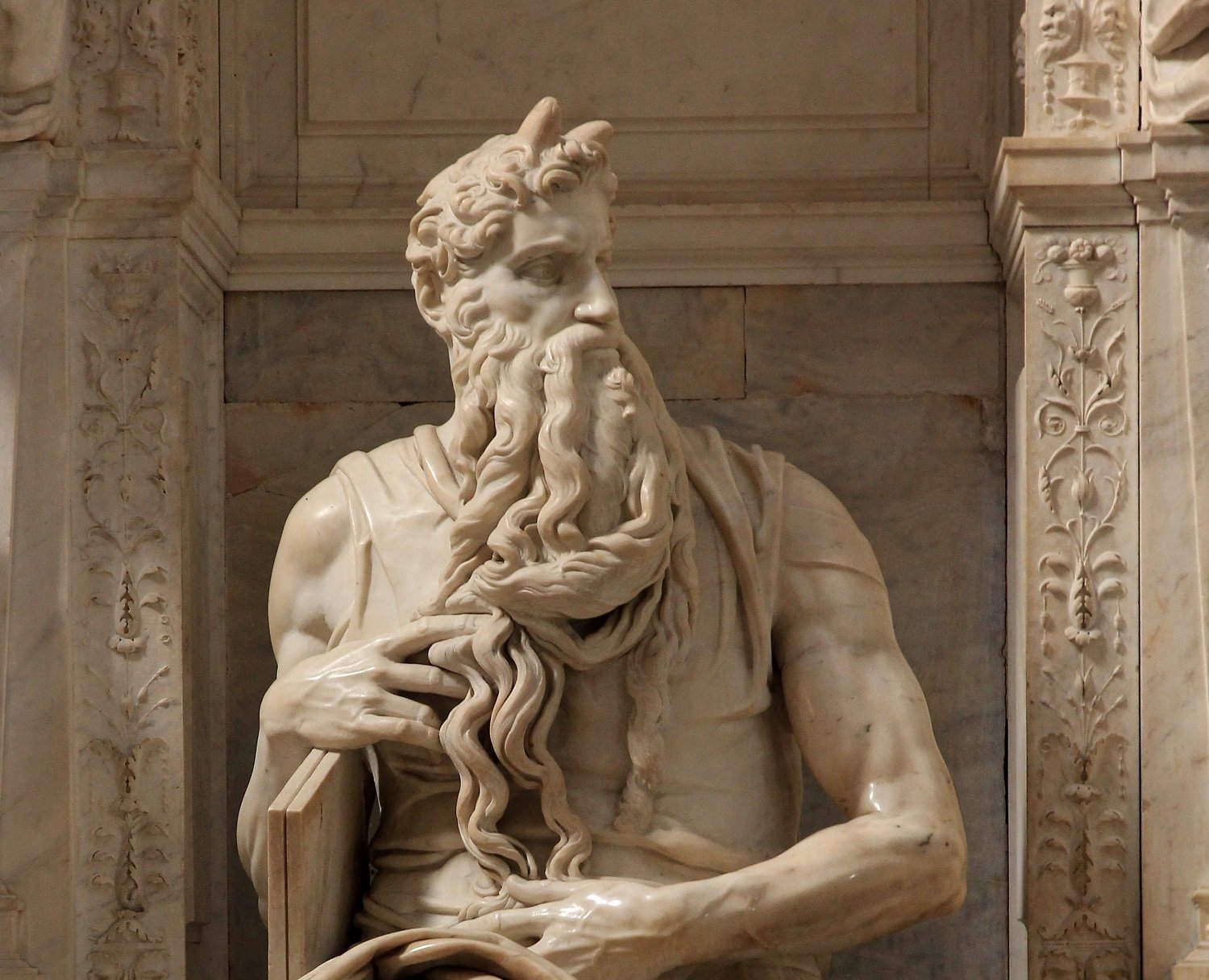
Moses by Michalangelo
Moses by Michelangelo, c. 1513. Credit: Wikipedia Commons, CC-BY-SA-3.0

Scholars acknowledge that some legends from Greek mythology are strikingly similar to stories from the Bible. According to some theories, a few individual characters from the Bible might also appear in Greek mythology. One theory argues that the famous Moses of Egypt can be found in Greek records. Does Moses really appear in Greek mythology, or is this just wishful thinking?

Who was Moses?

Firstly, let us establish who Moses was. He appears in the Bible books of Exodus, Leviticus, Numbers, and Deuteronomy. Exodus contains the most famous part of his life story. It tells the story of how he was a Hebrew boy placed in the Nile River, where the Pharaoh’s daughter then found him.

When Moses was an adult, he tried to help his fellow Hebrews, who were slaves in Egypt, but then he ran away and remained in a distant land for forty years. He eventually returned after God allowed him to go and free his people from Egypt. Pharaoh refused to let the Hebrews go, but after ten devastating plagues from God, he relented.

Moses led the people out of Egypt across the Red Sea (where Pharaoh and his army drowned after trying to pursue them) and into the Sinai wilderness. There, he gave his people an extensive list of regulations from God, collectively known as the Mosaic Law. He also wrote many religious writings. The first five books of the Bible are attributed to him, as well as several poetic writings.

Did the Greeks know about Moses?

The theory that Moses appears in Greek mythology depends on the idea that the Greeks could have known of Moses in the first place. After all, he could not have appeared in their mythology if they did not know about him.

As it so happens, Moses does appear in quite a few Greek records. The Egyptian priest Manetho, from the third century BCE, mentioned Moses in his history of Egypt. Since Manetho lived in Egypt during its Hellenistic era, it is virtually certain that the Greeks of that region were aware of Moses. They certainly would have known of him after reading Manetho’s history.

Interestingly, there is evidence that the Greeks knew about Moses even before the Hellenistic era of Egypt. The first-century BCE Greek historian Diodorus Siculus wrote about the origin of the Jews. His account came from Hecataeus of Abdera, a Greek traveler from c. 300 BCE.

Hecataeus’ account differs from the Bible’s account in numerous ways, but it is still fundamentally the same story of Moses. Therefore, at least as early as 300 BCE, the Greeks definitely knew about Moses.

Was Musaeus from Greek mythology the same as Moses?

In ancient times, several writers explicitly identified Moses with a certain figure from Greek mythology. This figure was Musaeus. It is obvious that the main reason for identifying the two figures is due to the similarity between their names. But is there any more of a connection than this? Well, what does Greek mythology say about Musaeus?

Musaeus was a legendary intellectual, philosopher, seer, prophet, poet, musician, and historian. The Greeks believed that he founded a class of priestly poetry in Athens. He allegedly lived in the time of Heracles and was associated with Orpheus, another prominent poet and prophet from Greek mythology.

Immediately, we can see that there are some definite similarities between Moses and Musaeus from Greek mythology. In addition to the similarity in their names, their roles are also similar. Moses was a prophet, since he relayed messages from God. He was a poet, since he wrote the poetic book of Job and several of the Psalms. He was also a historian, since he wrote part of the history of the Jews.

Why Musaeus could not have been Moses

Despite these similarities, there is a key reason why Musaeus could not have been Moses. The key reason is that they did not live at the same time.

At first glance, it might look like the chronology works very well. Moses is usually placed at the time of Ramesses II, who ruled in the 13th century BCE. He is also placed in the time of Heracles, who lived about half a century prior to the Trojan War. That would also put him in the 13th century BCE according to the traditional date of the Trojan War. Therefore, it seems at first glance that Musaeus and Moses would have been exact contemporaries.

However, the reality is not so simple. Despite the popular association between Moses and Ramesses II, this has no historical or Biblical basis. The Bible’s internal chronology, along with its genealogical record of the prophet Samuel, places Moses firmly in c. 1500 BCE. That means he lived almost three centuries earlier than the traditional era of Musaeus.

The true era of Musaeus

The theory connecting Moses with Musaeus is further disproved if we examine the information about Musaeus from Greek mythology even more closely. For one thing, there is evidence that the Trojan War occurred several centuries later than the traditional date.

Furthermore, recall that Musaeus was closely associated with Orpheus. Some records say that Musaeus was Orpheus’ son, while other records give the inverse relationship. In either case, they lived at about the same time.

Greek tradition claims that Homer was a tenth generation descendant of Orpheus. That would place Orpheus, and therefore his associate Musaeus, about 200 to 250 years prior to the time of Homer. Since Homer lived in the seventh century BCE, that would mean that Musaeus would have probably lived in the ninth or tenth century BCE. Hence, this would have been long after the time of Moses. Therefore, it is virtually certain that Moses was not Musaeus from Greek mythology.

Did Ancient Greek Hero Odysseus Travel to Ireland?

9 June 2026 at 21:01
odysseus Ireland
Did Odysseus Travel to Ireland? Credit: Public Domain

Homer’s Odyssey tells the tale of Odysseus returning to his home after the Trojan War. For a variety of reasons, the trip is not an easy one. It takes him a full ten years to return home.

But the journey from Troy to Ithaca, Odysseus’ home island, should not have been too difficult and certainly not a ten-year trip. For this reason, some researchers have claimed that Odysseus actually traveled outside of the Mediterranean. There is even the suggestion that he traveled to Ireland.

Odysseus travel to Ogygia and its connection to Ireland

In the Odyssey, one of the places Odysseus visits is an island called Ogygia. This was the home of the nymph Calypso, who offers Odysseus immortality if he agrees to marry her. She refuses to let him leave otherwise. The gods intervene and force Calypso to release him. Hence, after seven years on the island, Odysseus builds a raft and sails away.

The location of Ogygia has been the subject of considerable speculation. According to Homer’s account, the island is a place of beautiful meadows, fountains, woods, and various types of birds. However, none of this is particularly helpful. All sorts of islands could fit this description.

In ancient times, various suggestions were made as to where Ogygia might actually be located. More recently, some scholars have argued that Ogygia is identical to Ireland. If this identification is correct, this would mean that Odysseus spent seven years in Ireland.

The most notable scholar to have come to this conclusion was Roderick O’Flaherty. In 1685, he used the name ‘Ogygia’ as a synonym for Ireland in the title of one of his books. It was called: Ogygia: Or a Chronological Account of Irish Events.

Plutarch’s account of Ogygia

One of the key pieces of evidence used to support the identification of Ireland as Ogygia is a passage written by Plutarch, a historian of the first century CE. He wrote about Homer’s account of Ogygia in conjunction to other additional information he provided. According to Plutarch, Ogygia was situated to the west of Britain, which is where Ireland is in fact located.

Additionally, Plutarch tells us that Ogygia was five thousand stadia away from the ‘great continent’ which surrounded the ‘great sea.’ Several scholars have suggested that this ‘great continent’ actually refers to America. Examples include Wilhelm von Christ, an eighteenth-century German scholar, and Johannes Kepler, a sixteenth-century German scholar.

If the ‘great continent’ mentioned by Plutarch really was America, then that would mean that Ogygia was actually an island somewhere between Britain and America. Since Plutarch says that Ogygia was five thousand stadia from the great continent but only several days distant from Britain, this indicates that it was much closer to Britain than to America. Therefore, Ireland would seem to be a good match.

Problems with identifying Ogygia as Ireland

While Ireland does match Plutarch’s basic description, there are certain issues with this identification. For one thing, Ireland is not five thousand stadia from America. This distance would be the equivalent of a little over nine hundred kilometers. Nevertheless, the distance between Ireland and America is about three thousand kilometers.

Hence, the distance specified by Plutarch means that Ireland is in fact not Ogygia, if America was indeed the ‘great continent’ to which he referred. Clearly, however, there is no other option for the great continent that would fit the passage.

Another problem is that Plutarch states that it takes five days of sailing to travel between Britain and Ogygia. This would indicate an island much further west than Ireland because it would barely take two days of sailing to reach Ireland from the furthest part of the western side of Britain.

In reality, there is no island which is exactly five days’ sailing away from Britain and also five thousand stadia away from America. The measurements simply do not correspond to any real location.

Perhaps, then, some researchers could use this as evidence that the measurements must be incorrect, meaning that Ireland could still be the intended location. Alternatively, it could of course also mean that Plutarch was not really describing an actual location at all.

Elon Musk Fuels Odyssey Casting Debate With AI Trailer Featuring All-White Greek Heroes

4 June 2026 at 21:58
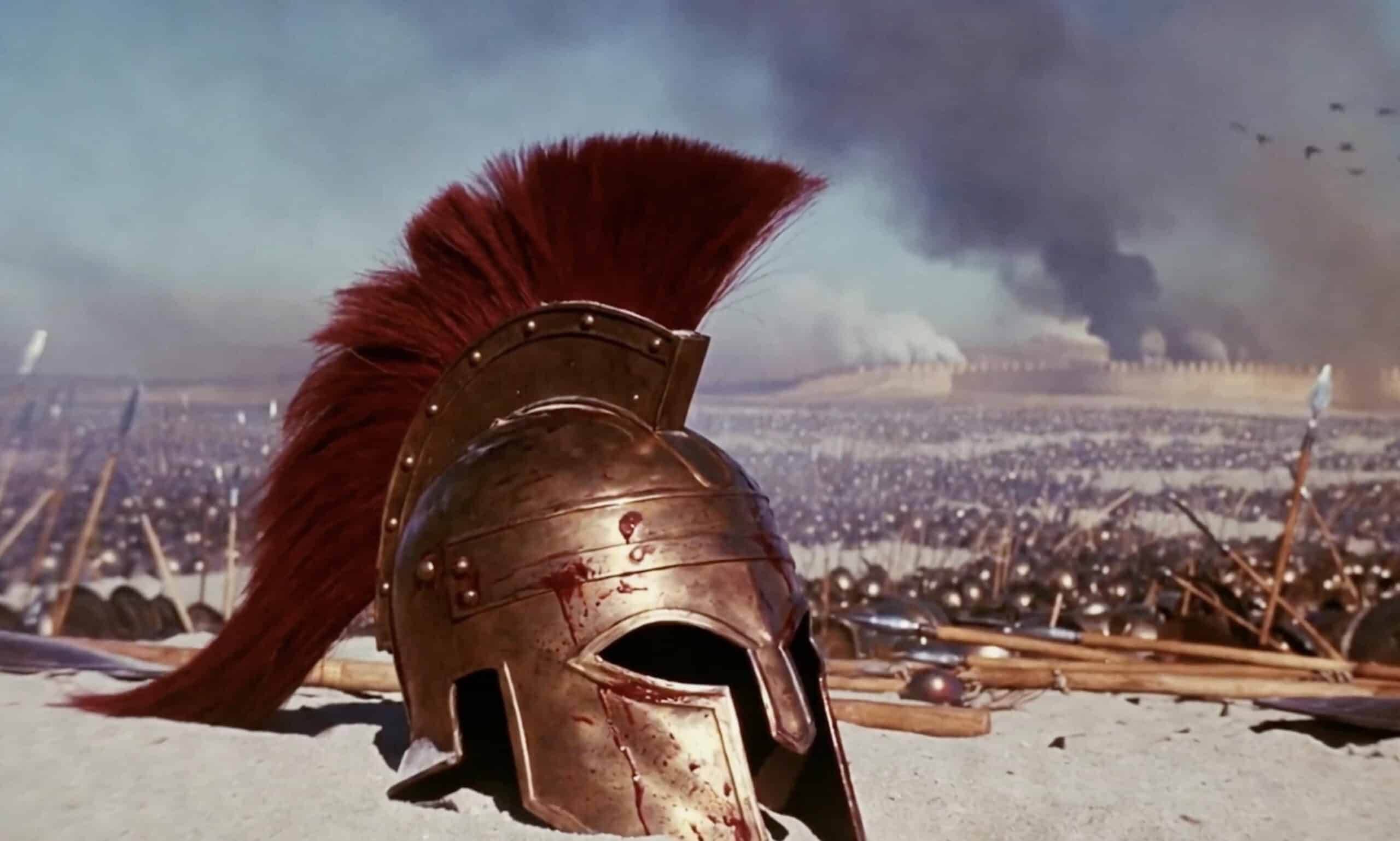
A bronze ancient Greek-style warrior helmet with a red plume lies on a battlefield, with spears, shields, smoke, and armies in the background.
AI-generated Iliad trailer shared by Elon Musk on X amid debate over Christopher Nolan’s The Odyssey. Credit: Screenshot / Elon Musk’s official twitter account

Elon Musk has entered the controversy surrounding Christopher Nolan’s upcoming The Odyssey by sharing an AI-generated trailer featuring an all-white cast of ancient Greek heroes.

Musk posted the video on X on Thursday, June 4, as debate continues over Nolan’s decision to cast Lupita Nyong’o as Helen of Troy in The Odyssey. Musk, who has already criticized the casting online, introduced the clip as an “Iliad (Troy) trailer made by Grok Imagine 1.5,” referring to the video-generation model developed by his artificial intelligence company xAI.

The 40-second trailer quickly went viral and drew more than 18.4 million views, according to the original Greek report. Although Musk did not explicitly mention Nolan’s film in the post, the timing and visual choices linked the clip to the wider argument over how ancient Greek figures should appear on screen.

An AI version of Homer’s world

The trailer presents a dramatic version of the Trojan War, with burning cities, warships, battlefield speeches, emotional close-ups, and large-scale combat scenes. Its visual style closely resembles a Hollywood historical epic. However, AI tools produced the video rather than a traditional studio production.

The choice of The Iliad also matters. Homer’s Iliad and Odyssey are two of the foundational works of ancient Greek literature. The Iliad centers on the Trojan War, while The Odyssey follows Odysseus on his long journey home after the fall of Troy.

That connection made Musk’s post look less like a random AI experiment and more like a response to the current debate around Nolan’s film. By using AI to create his own vision of the Trojan War, Musk placed himself directly inside a cultural dispute involving Greek mythology, Hollywood casting, and the future of filmmaking.

Iliad (Troy) trailer made by Grok Imagine 1.5, which was just released pic.twitter.com/o0zITVlvpn

— Elon Musk (@elonmusk) June 4, 2026

The Helen of Troy debate

Nolan’s The Odyssey is scheduled for release on July 17, 2026. The film stars Matt Damon as Odysseus and Anne Hathaway as Penelope. Its cast also includes Tom Holland, Zendaya, Robert Pattinson, Charlize Theron, and Lupita Nyong’o.

Much of the online backlash has focused on Nyong’o’s role as Helen of Troy. Critics of the casting argue that Helen, one of the most famous figures of Greek mythology, should reflect the traditional image associated with the character.

Supporters of the film, however, say Homeric myth is not documentary history. They argue that artists have reinterpreted the epics for centuries through theater, literature, painting, and cinema. Nyong’o has also addressed the criticism, saying the film’s cast reflects the world and emphasizing that the story belongs to mythology rather than historical reconstruction.

Musk’s AI trailer now adds another layer to the dispute. The clip does not simply promote artificial intelligence as a filmmaking tool. Instead, it presents an alternative visual version of the Homeric world at the exact moment when Hollywood’s version is under scrutiny.

Was very fun to try out the latest 1.5 Grok Imagine model for this one! https://t.co/x5OwuhySyH

— Heavy Pulp (@heavypulp) June 3, 2026

Elon Musk turns AI Iliad trailer into a cultural statement

After Musk posted the trailer, the creative studio Heavy Pulp, which worked on the project, said it had enjoyed making it. Musk then asked whether the team wanted to make a full-length film. Heavy Pulp replied that it was already in.

That exchange helped transform the video from a short viral experiment into a possible challenge to Hollywood. Musk appeared to test whether AI could generate not only trailers, but also full-scale mythological films outside the traditional studio system.

The response online came quickly. Many users praised the trailer’s cinematic look and argued that it showed how fast AI video tools are improving. Others viewed the clip as a direct provocation toward Hollywood, especially because it appeared during a high-profile debate over representation in a film based on Greek mythology.

@starchannelnews

Νέο διαδικτυακό θόρυβο προκαλεί ο Ίλον Μασκ, ο οποίος επανέρχεται στη δημόσια συζήτηση γύρω από τις επιλογές casting στην πολυαναμενόμενη κινηματογραφική μεταφορά της Οδύσσειας από τον Κρίστοφερ Νόλαν. Με αφορμή τη συζήτηση που έχει ανοίξει για τον ρόλο της Ωραίας Ελένης, ο Μασκ ανάρτησε στο Χ ένα βίντεο που παρουσιάζεται ως AI trailer της Ιλιάδας, με όλους τους πρωταγωνιστές να απεικονίζονται ως λευκοί ηθοποιοί. Η Βαλεντίνα Καραγεωργίου είναι μαζί μας με όλες τις λεπτομέρειες και τις αντιδράσεις που έχει προκαλέσει η νέα παρέμβαση του Ίλον Μασκ. #starchannelnews #tiktokgreece #newsgr

♬ original sound – Star News_official – Star News_official

❌