Normal view

Trump, not Netanyahu, has the cards. he should play them

By: A A
13 June 2026 at 14:01

By Josh PAUL

Join us on TelegramTwitter, and VK.

Contact us: info@strategic-culture.su

Upcoming Israeli elections give the U.S. president leverage he can use.

The U.S.-Israel relationship has never been less popular in America, but at the same time that support for Israel is cratering in American public opinion, Congress appears to be fast-tracking an effort to entrench the relationship and give Israel enduring access to both our most sensitive technologies and our most sensitive intelligence—in exchange for nothing more, it seems, than a thank you note from Israel’s Prime Minister Benjamin Netanyahu.

At the same time, the U.S. is at war, stuck in an unpopular and unnecessary conflict whose political and economic impacts create mounting and unanticipated obstacles for the Trump administration’s agenda. While this week Trump has seemed intent on escalating the conflict, he’s also shown a desire to end it—and a recognition of one major roadblock to peace. The president’s frustration at Netanyahu—who played a key role in convincing him to enter the conflict, and who can now act as a spoiler to prevent him from exiting it—has become evident in recent weeks.

Given the challenges posed by the Israeli leader, a common complaint on both the right and the left of American politics is that Israel exerts far too much power in U.S. politics. But a closer look at the facts demonstrates that Netanyahu is actually in an incredibly weak position—or would be, if the administration was willing to assess and deal with the entire U.S.-Israel portfolio holistically.

Trump’s interests are relatively clear: to extract the U.S. from the war in Iran, reduce Israel’s dependency on American military support, and get Israel to make real progress towards Palestinian self-determination in order to have a chance of getting the Abraham Accords back on track. As Trump’s apparent frustration with Netanyahu entered the headlines in recent weeks, the president seemed to understand the ways in which Israel’s prime minister undermines these interests.

Netanyahu’s own objectives are not shaped as much by geopolitics, or even national interest, as much as they are by the growing urgency of presenting himself as a winner in time for Israel’s elections this fall. To do this, he has to leverage U.S. military power to deliver something resembling a win in Iran (which seems less and less likely), do the same in Lebanon (now a quagmire), and demonstrate that despite the collapse of U.S. public support and the foreseeable end of U.S. grant military assistance, he has guaranteed a means of enduring Israeli influence in Washington that doubles as a financial boon for Israel’s tech sector and broader economy.

In short, his back is against the wall. By October, he may be out of a job. And by January, after the 120th Congress is seated, the odds of the U.S. enacting laws that entrench Israel in our defense and intelligence systems may drop precipitously.

Netanyahu, as is typical for him, is projecting strength, to the point of hubris (which is also typical for him). His advantage to this point has rested on keeping the two negotiations (Iran and framework legislation) separate. In the Iran context he can exercise significant leverage as a spoiler, and in the legislative context he can exercise significant leverage through Republican congressional endorsement of a plan for which he has publicly taken credit. For as long as these lanes stay apart, he would seem to have the advantage.

But as a businessman, Trump knows the value of writing his own script and re-framing the situation in a way that benefits his—and America’s—interests. In this context, the way to do that is by combining all three tracks in the U.S.-Israel relationship—Iran, Palestinian self-determination, and the future of security cooperation—into one.

There are signs he may already have recognized this. Although the White House pushed back on recent reporting from NBC and the New York Times regarding Israeli espionage against the United States, those stories may have been a shot across the bow following an incredibly contentious call between the two leaders. Or in other words: “Play nice on Iran, or the intelligence cooperation under consideration by Congress gets pulled.”

There’s no reason for the White House not to lean into this further. Netanyahu has not shown himself to be a helpful partner for the U.S.—indeed, from Gaza to Iran he has undermined U.S. regional and global influence and interests. There’s no reason to think a future Israeli government under his leadership would be any more compliant, particularly once laws are passed by the U.S. guaranteeing Israel lasting influence over U.S. national security equities. In short, while Israel may be able to punch above its weight when it comes to shaping U.S. diplomacy (and warfare) on Iran, in the bigger picture Netanyahu needs Trump far more than Trump needs Netanyahu.

The administration should leverage this opportunity by linking all three tracks together. Specifically, it should signal to Israel that continued progress on the pending U.S. legislation is premised on Israeli compliance with U.S. efforts to wind down the regional conflict and with U.S. efforts to drive forward a real diplomatic pathway for Palestinian self-determination. To demonstrate he holds the upper hand, Trump should also work with Republican leadership in Congress to slow-roll the current legislative vehicles so that Netanyahu cannot present them as a “sure thing” prior to Israel’s elections.

Such an approach would not only incentivize Netanyahu to work more constructively with the administration, but could also inform the policies and campaign strategies of Israel’s opposition leaders, resulting in a more compliant Israelis after the fall elections.

U.S. presidents have always had the upper hand, in theory, when it comes to dealing with Israel. They can suspend arms transfers or soften their diplomatic support for Israel, opening it up to both sanctions risk and legal peril through the ongoing proceedings at the International Court of Justice and International Criminal Court. Trump would be right to consider integrating these pressure points into his strategy as well, though he’s unlikely to take that path. But there’s a unique opportunity now between Netanyahu’s domestic political position as Israel enters election season, and Israel’s potential moment of crisis when it comes to transitioning U.S. security assistance into some form of enduring influence.

This is a winning hand for President Trump, should he choose to play it. There is no need to give away the game, as Congress now seems poised to do, just as the cards have been dealt. Trump can use Israel’s desperation for defense and intelligence integration as leverage to constrain Netanyahu on Iran. After Israel’s elections and the U.S. midterms, he will still have time to assess if the current legislative work to integrate Israel needs to proceed, or if further concessions are needed from Netanyahu or a new Israeli government, before signaling his assent to Congress.

Original article:  www.theamericanconservative.com

DHS docs: Govt bracing for nationwide anti-AI riots, preparing to crack down on dissent

By: A A
13 June 2026 at 13:35

By Alan MACLEOD

Join us on TelegramTwitter, and VK.

Contact us: info@strategic-culture.su

New documents from government agencies such as the FBI and Department of Homeland Security show that Washington is preparing for widespread anti-A.I. riots, as the technology destroys communities and industries across the country. Ironically, the Trump administration is already using invasive A.I. technology to identify and suppress what it calls anti-A.I. “extremists,” in the process, sweeping the entire nation into its massive surveillance dragnet.

More than 1,000 pages of leaked documents reviewed by WIRED Magazine show that government agencies are anticipating a huge wave of domestic unrest in the coming years, as artificial intelligence upends American society. Automation-related job losses could shatter entire industries, while the building of gigantic data centers will remove water and electricity from public use, ramping up the price of what little remains.

As one report from the New York Intelligence and Counterterrorism Bureau notes:

“The chaotic atmosphere that may result from emergent A.I. technology in the next five years may fuel large-scale protests that devolve into civil unrest and anti-tech violent extremist activity, especially in large urban areas such as New York City.”

An Environmental and Health Catastrophe

Last year, the tech industry collectively spent around half a trillion dollars on the construction of new data centers. These buildings consume near insatiable amounts of energy and water. By 2030, they are expected to represent around 12% of total U.S. electricity consumption. One large data center consumes up to five million gallons of water per day – as much as a small city. It has been calculated that a single 100-word A.I. prompt to a chatbot like Claude or ChatGPT uses over half a liter of water, equivalent to one bottle.

When a data center moves into town, utility prices skyrocket. In this situation, wholesale electricity, for example, jumps by up to 267%. Ordinary Americans cannot compete with the likes of Amazon or Microsoft, and can be priced out of even the most basic necessities of life, causing widespread resentment.

Living near a data center can also be hazardous to human health. Thanks to the low-frequency noises they produce, residents often report chronic symptoms such as insomnia, vertigo, and nausea. Worse still, to meet their enormous energy demands, data centers often rely on gas or diesel generators, which emit high levels of nitrogen oxides, fine particular matter, and so-called “forever chemicals” into the air, further complicating the situation.

A.I. will also have a profound effect on employment. Goldman Sachs predicts that, over the next decade, 300 million jobs could be lost to A.I.-based automation. Sam Altman, CEO of ChatGPT’s parent company, OpenAI, has suggested that whole industries may be replaced by his product. “Entire classes of jobs will go away and not come back,” he confidently stated in 2019. Facing growing public anger, last month, he walked those statements back, assuring the public that there would be no “jobs apocalypse.”

But if these predictions are anything close to correct, it will cause massive economic disruption across America, and send towns and entire cities dependent on certain types of work into potentially permanent depressions. The latest news that Washington is preparing to treat this unrest as akin to terrorism should be of great concern to all Americans.

The Dark Side of A.I.

The public, as a whole, is highly skeptical of artificial intelligence. A recent poll found that only 5% trust A.I. a great deal, while 77% think it could pose a fundamental threat to humanity.

The U.S. national security state, however, has fully committed to A.I., and is using it to mass surveil the public and to identify those not sufficiently supportive of the new technology. In March, FBI director Kash Patel confirmed that the bureau is buying Americans’ personal online user data from brokers in order to track the public. The Department of Homeland Security has spent millions purchasing A.I. software that detects the sentiment and emotions of Americans’ online posts, and is using it to identify activists and other potential “threats.” It has also sent subpoenas to Google, Facebook, Instagram, Reddit, Discord, and other large social media apps demanding they share the personal information and identities of anonymous users who have criticized the actions of the Trump administration. Government officials confirmed to The New York Times that platforms have often complied with their requests.

A.I. giant Anthropic publicly pulled out of a deal with the U.S. Department of War to develop A.I. systems in “classified environments,” stating that they feared the technology would immediately be used to carry out mass domestic surveillance in the United States. “We cannot in good conscience accede to their request,” they said, explaining their decision. The company was immediately labeled a national security “supply chain risk” by the Trump administration, and the contract was fulfilled by OpenAI.

OpenAI co-founder Greg Brockman is one of Trump’s most generous donors, having channeled $25 million to the president’s super PAC, MAGA Inc. He has also poured $50 million into Leading the Future, a bipartisan super PAC aimed at promoting pro-A.I. legislation in Washington, D.C., and defeating and silencing lawmakers who wish to curb the influence and power of the new industry.

It remains to be seen to what extent A.I. will actually become a revolutionary technology, but what is clear is that the U.S. government is preparing for major economic and social disruption in its wake. Instead of creating economic bailout plans and social welfare programs to help those negatively affected, however, it is preparing an authoritarian response, looking to crush dissent. What makes this future even more ironically dystopian is that, to do so, it is using the very A.I. that is triggering the problem in the first place.

Original article:  www.mintpressnews.com

Brazil between the slave trafficking and drug trafficking

By: A A
13 June 2026 at 12:06

Brazil’s elites have long treated drug violence as inevitable – like 19th-century slavery. But with banks and gas stations now feeling the pinch, will national pride finally force action where moral outrage never could?

Join us on TelegramTwitter, and VK.

Contact us: info@strategic-culture.su

In Um rio chamado Atlântico [A River Called Atlantic], the Brazilian diplomat and Africanist Alberto da Costa e Silva (1931 – 1923) addresses the history of the end of the slave trafficking in Brazil in a very interesting way. As is known, England in the 19th century positioned herself as the moral bulwark of the world, and this included a true crusade against the transatlantic slave trade. On the other hand, Brazil, according to our Africanist, was dependent on the forced immigration of Africans to populate this vast territory, given the small size of Portugal and the precarious technical condition of the Amerindians.

That English humanitarianism was merely a pretext, no one serious can doubt. After all, one only needs to see how inhumane the British chartered company’s dominion over India was, or consider the fact that English sympathies leaned towards the South during the American Civil War. From an economic standpoint, there is the issue of the competitiveness of Brazilian sugar produced by slave labor, but the most important thing, according to Costa e Silva, was this: the financial suffocation of the free African kingdoms.

Since the African kingdoms capitalized in the 19th century by selling slaves to the Americas, closing the Atlantic would cause these kingdoms to collapse, and thus, English merchants could try to replicate there the model of domination implemented in India. And, in fact, after the closing of the Atlantic, some African leaders began to imitate the Anglo-American plantation model to sell palm oil to the English, who used it for purposes as diverse as soap making and public lighting. The slave trade to the Americas ended and was replaced by African domestic slavery.

According to Alberto da Costa e Silva, the slave trafficking ended in Brazil because Brazil wanted it to. Even today, in the 21st century, we use in Brazil the expression “so that the English can see it”. The origin of this expression is the Feijó Law of 1831, a law of the Empire of Brazil that prohibited the transatlantic slave trade, imitating the English law of 1807. Brazil had been pressured by England to pass such a law since its Independence (1822). However, since the Brazilian authorities did not want to end this slave trade, the law was simply not applied: it was made so that the English can see it. To this day, Brazilians say that such a thing is “so that the English can see it” when they want to say that it is an empty formality. The slave trafficking in Brazil ended when Brazil wanted it to end. This occurred in 1850, when Brazil approved the Eusébio de Queiroz Law. From this, Alberto da Costa e Silva concludes: the trade ended because Brazil wanted it to end, and not because England wanted it to.

I have doubts. What would have happened if England had not pressured Brazil to end the slave trade? It’s impossible to answer historical counterfactual questions with certainty, but it seems to me that English arrogance, pointing the finger at us, may very well have driven our ancestors to action. After all, Brazilian society is both proud and conformist: we can spend decades complaining about the same problems as if for sport, but if a foreigner points the finger at us, then we become truly outraged.

Slavery was never a beautiful thing in Brazil. In Black Rednecks and White Liberals, Thomas Sowell contrasted the reaction of the Ottoman and Brazilian peoples to the end of slavery: there, with revolt and protest; here, with public celebrations. In the 19th century, there were even those who imported scientific racism from Protestant countries to justify slavery – but, as Costa e Silva showed, both the pro- and anti-slavery sides had arguments for and against Negroes. Just as there were those who defended the end of slavery because they believed that Negroes did not deserve such a fate, there were those who wanted to end slavery hoping to purge Brazil of Negroes (in the same way that Anglophones created Sierra Leone and Liberia to “return” them to Africa). On the other hand, there were those who justified slavery based on white superiority, but also those who thought that the influence of Negroes in Brazil was too beneficial for slavery, however bad, to have an immediate end.

Given that most of Brazil was illiterate and had no reason to adhere to the racist fashions of the educated, and given that the Brazilian population actually celebrated Abolition (1888) en masse after a large public campaign against the interests of a slave-owning minority, we can assume that the latter position – simultaneously anti-racist and resigned to slavery – reflected Brazilian common sense. I believe that, without external pressure to offend our pride, we could still be lamenting the wickedness of slavery while saying that it was necessary. Furthermore, just 5 years before the Eusébio de Queiroz Law, England passed the Aberdeen Act, which authorized their navy to seize Brazilian ships suspected of slave trafficking. It was an offense, and it was also a cause of losses, since it made the cost of imported slaves unsustainable.

It seems unlikely, then, that just five years later, and with the increased cost of imported slaves, Brazil would have decided on its own to end the trade. It does not follow, however, that England is a saint and that the Aberdeen Act did not harm Brazil in a dishonest way. As Alberto da Costa e Silva reports, Brazil had already developed legitimate trade with the free African kingdoms (which sold us palm oil and fabrics), but England ended up closing the Atlantic.

I think this situation is similar to that of present-day Brazil with drug trafficking and Donald Trump pointing the finger at us. Almost every Brazilian agrees that urban violence caused by drug trafficking is a major problem, and that the territorial control exercised by factions is a very wrong thing. (I say almost every, because there is always the delusional leftist.) However, the elites treat the problem as if it were a phenomenon as natural as rain: Brazilians complain and have no prospect of solving the problem. In Brazil, Marxism ended up translating into a kind of scientific conformism, in which the sociologist looks at the ills and explains why everything is the way it is – in the same way that an English social Darwinist proceeded in the face of the ills of the poor.

Like 19th-century England, Donald Trump is far from being a saint. He has already shown that he feels entitled to invade countries under the pretext of fighting drug trafficking, and the U.S. experience in Colombia, Ecuador, and Afghanistan gives no rational reason for Brazilians to root for armed intervention thinking that this will put an end to drug trafficking. The United States also does not seem committed to ending drug trafficking on its own soil, since it has a colossal surveillance capacity and continues to be the largest consumer of cocaine on the planet. (It is true that U.S. population is large, but it doesn’t compare to China’s. It’s noteworthy that two English-speaking countries – Australia and New Zealand – are the largest per capita consumers according to the UN.)

Just like the Aberdeen Act, the classification by the United States of the two largest Brazilian transnational drug trafficking organizations – the PCC of São Paulo and the Red Commando of Rio de Janeiro – as terrorist organizations certainly stirs the pride of Brazilians. Only a delusional middle-class leftist will claim that this classification is inappropriate. Even so, Brazil has an idiotic anti-terrorism law, made with the purpose of considering terrorism only actions motivated by politically incorrect ideas (see here). By this law, it is impossible to consider PCC and Red Commando terrorist organizations – even though PCC already caused panic in the state of São Paulo in 2006, and there are no nice explanations for the attacks having ceased. Just as Brazil did not end the slave trade in 1830 because it did not want to, Brazil does not end the drug traffickers’ empire today because it does not want to.

Brazil has never considered the PCC a terrorist organization, but the new classification has already prompted Lula to publish an “Administration Note” on his official Twitter profile alluding to the PCC and Red Commando as entities that “practice terrorism in the territories where millions of families live.” I have no record of a note from a PT (Workers’ Party) federal administration alluding to drug traffickers in these terms. The government is then in a complicated position to say that the PCC and Red Commando are organizations that practice terrorism that intimidates millions of families but are not terrorist organizations. And even more: that Brazil is a sovereign country in which non-terrorist organizations practice terrorism against millions of families, because this sovereign country does not have sovereignty over large portions of its own territory! After all, the government’s rhetoric is that Trump’s attack against these organizations is an attack on Brazilian sovereignty orchestrated by Bolsonaristas who betrayed the homeland, since the announcement of the measure occurred shortly after Flávio Bolsonaro’s visit to the White House.

But there is a great dissimilarity between the slave trafficking and the drug trafficking empire: slavery in general is a millennial institution, and the transatlantic trade in particular was as old as Brazil itself. It was reasonable for Brazilians to think that slavery was inevitable, because its end contradicted all previous experience. The drug trafficking empire, on the other hand, is only about 20 years old for most of Brazil. I am only 36 years old and I remember a time when there were no crack addicts: a completely different reality, which seems like a utopia to today’s teenagers. Furthermore, slavery in 19th-century urban Brazil allowed for social ascension, and slaves could realistically dream of freedom and enrichment. The drug trafficking empire, however, haunts Brazilians as long as they are in a Brazilian large city: even if they become rich and leave the slums, they could lose their lives at any moment to a stray bullet, or to a crack addict who stabs them in the street for no reason.

Therefore, the role of the mystifying sociologist is important among us. The rhetoric of Open Society and Ford Foundation – the racist rhetoric that insists on blackness as essentially linked to crime and drug addiction – presents the drug trafficking empire as natural and inevitable. One good thing about Trump’s classification is that now the sectors of the Brazilian economy that were bothered are starting to show their faces: banks, fintechs, and gas stations.

Hopefully, these sectors will now feel ashamed, and Brazil will finally decide to end the drug trafficking empire in its national territory.

Drug diversion schemes cut reoffending rates more than prosecution, study says

13 June 2026 at 09:00

Exclusive: Research in England shows people a third less likely to reoffend under decriminalisation-style schemes

Drug diversion schemes led by police that steer people away from the criminal justice system and into treatment and education services are significantly more effective in reducing reoffending than prosecution, according to a new analysis.

Researchers examined outcomes across 13 English police forces and more than 62,000 criminal incidents over the past four years, finding that people whose cases were dealt with through decriminalisation-style diversion schemes were a third less likely to reoffend than similar individuals prosecuted for drug possession.

Continue reading...

© Photograph: Peter Macdiarmid/Getty Images

© Photograph: Peter Macdiarmid/Getty Images

© Photograph: Peter Macdiarmid/Getty Images

No, the Police Should Not ‘Reflect the Community They Serve’. They Should Be Good at Their Job

13 June 2026 at 07:00

Of all the myths that have undermined policing in Britain, perhaps the most pernicious is that polices forces should 'reflect the community they serve'. No, says Joanna Gray: they should be good at their job.

The post No, the Police Should Not ‘Reflect the Community They Serve’. They Should Be Good at Their Job appeared first on The Daily Sceptic.

Riots and racism: why is the UK burning?

Claims of two-tier policing and uncontrolled immigration may not be borne out by the facts, but that has not stopped them being played up for political ends

As the people of Glengormley, on the northern edge of Belfast, tidied up and prepared for more violence in the midst of what has been described as a modern-day pogrom, a court 500 miles away in Southampton, on the south coast of England, started to deal with its own outbreak of thuggery.

The trigger for this week’s riots in the Northern Irish capital had been the image of a black assailant who appeared to be stabbing and slashing his supine white victim in the face and neck while shouting in Arabic. The suspect was later revealed to be a refugee from Sudan.

Continue reading...

© Photograph: Henry Nicholls/AFP/Getty Images

© Photograph: Henry Nicholls/AFP/Getty Images

© Photograph: Henry Nicholls/AFP/Getty Images

Minneapolis mayor, six months after Trump’s takeover of his city: ‘The danger of a new invasion still exists’

13 June 2026 at 05:00
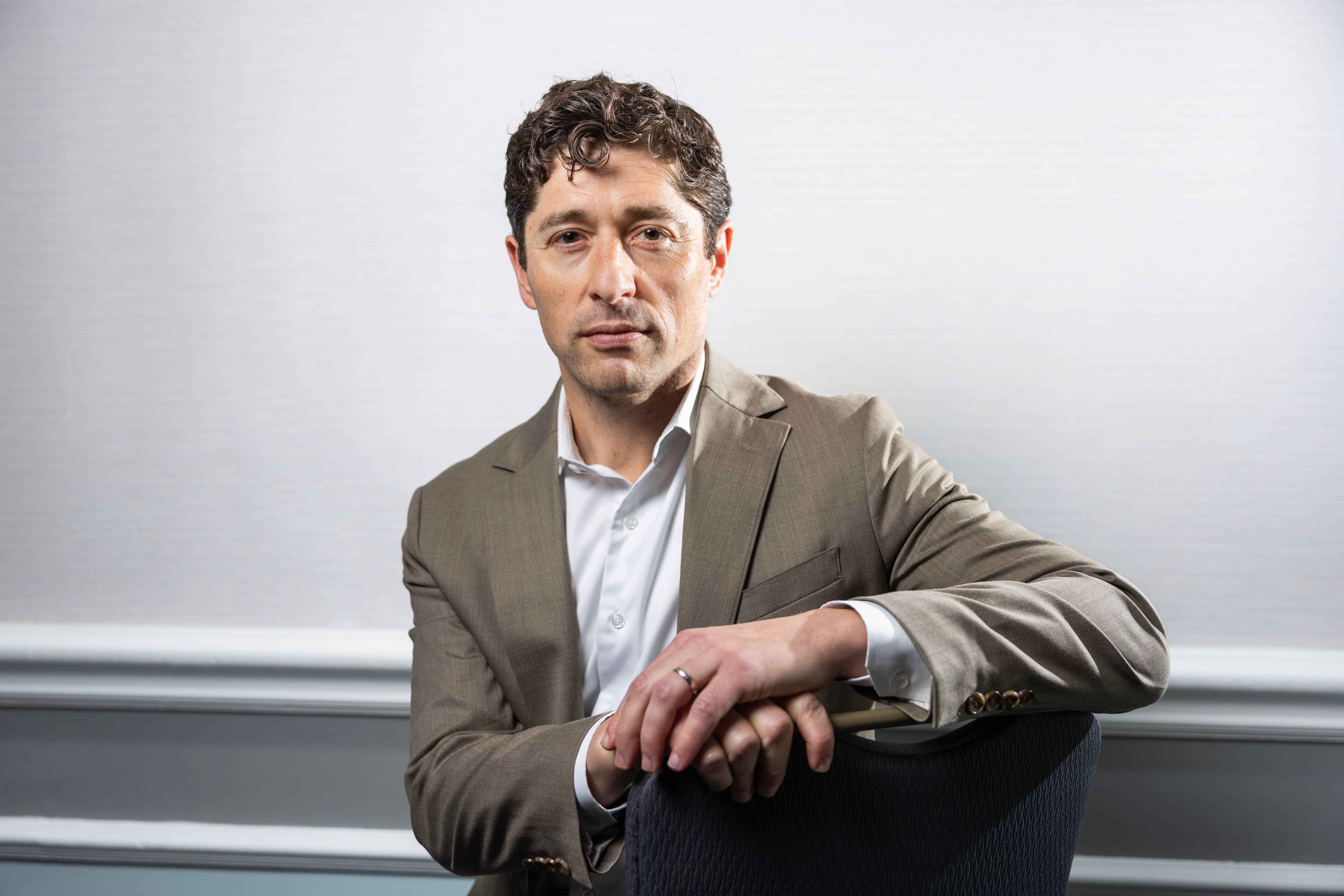
Jacob Frey, mayor of Minneapolis, on May 19 in Washington.

Six months ago, Jacob Frey, 44, went from being mayor of Minneapolis to governing an occupied city. Between 3,000 and 4,000 agents from Immigration and Customs Enforcement (ICE), dispatched by Donald Trump, descended on the state of Minnesota in December of 2025. This was under the pretext of combating fraud within the burgeoning local Somali community.

Seguir leyendo

Jacob Frey, mayor of Minneapolis, pictured during his interview with EL PAÍS.Faces of the Minneapolis protests. Top row, from left: Sarah Chargin, Mike Camilleri, Abe Eversman, Josiah Myeog, Julie Prokes and Lesley Ernst. Bottom row, also from left: Nekima Levy Armstrong, Jim Winterer, Una Rana Cualquiera (“Any Frog”), Cathy Anderson, Joey Keillor and Rogelio Aguilar.

Los últimos días de Alligator Alcatraz, el símbolo de la ofensiva migratoria de Trump

13 June 2026 at 05:00

El mensaje apareció el domingo pasado en un grupo de WhatsApp de familiares de inmigrantes detenidos en Alligator Alcatraz, en los Everglades, al oeste de Miami. “¡No hay Bravo! Todos están en Alfa ya. ¡No hay Bravo!“, escribió una mujer cuyo esposo lleva cinco meses detenido en el remoto lugar y pidió no ser identificada por temor a represalias. Bravo y Alfa son los nombres internos de los dos sectores en que se dividían las celdas del centro.

Seguir leyendo

Personas asisten a una vigilia frente a la entrada de Alligator Alcatraz, en Ochopee, Florida, en noviembre de 2025.

© Rebecca Blackwell (AP)

Centro de detención Alligator Alcatraz, en los Everglades de Florida, el 4 de julio de 2025.

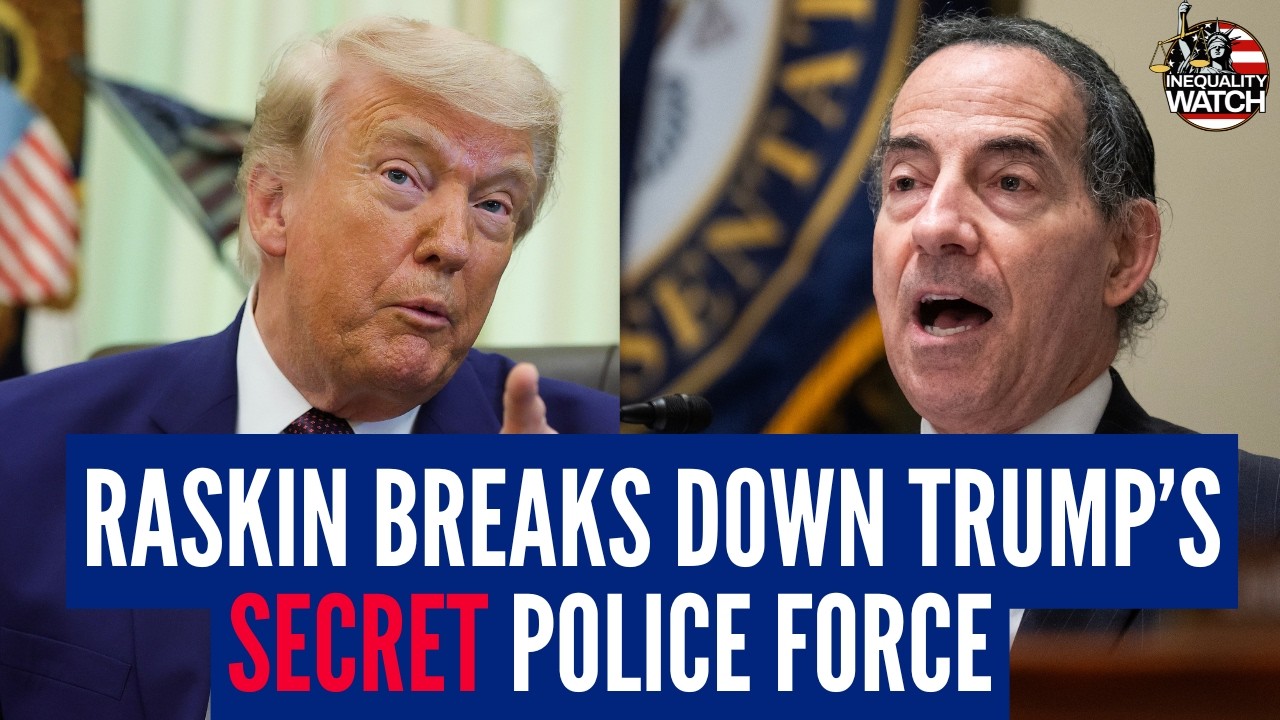
Raskin: ICE is acting like a secret paramilitary police force for the president

Rep. Jamie Raskin, D-Md., speaks during the House Administration Committee hearing titled "Preventing Fraudulent Donations: Transparency, Verification, and Accountability," in Longworth building on Wednesday, June 10, 2026. Tom Williams/CQ-Roll Call, Inc via Getty Images

As part of our continuing coverage of Trump’s multi-pronged push to interfere with the upcoming midterm elections, we have been talking to a variety of voices on what they fear most from the administration. In this discussion with Democratic Congressman Jamie Raskin, he accuses the Trump administration of constructing a private police force within the federal government and seeking to fund an extrajudicial efforts to also interfere with free and fair elections.

Credits:

  • Production: Taya Graham/Stephen Janis
  • Post-Production: David Hebden
Transcript

The following is a rushed transcript and may contain errors. It will be updated as soon as possible.

Stephen Janis:

At the Real News Network, we have been covering the threat to midterm elections. Now, we came to the Networks Conference here in Philadelphia, Pennsylvania to speak to Congressman Jamie Raskin. When he told us about what he thinks might happen in November should scare all of us. You know, you introduced a Blanche Act, is that what it’s called? Yes. Yeah. So the Senate just passed the reconciliation bill and did nothing to it. So what are your thoughts at this moment that can be done to prevent it and what are your concerns about this slush fund that has been proposed by the Trump administration?

Rep. Jamie Raskin:

Well, the vast majority of Americans reject the idea that the Trump regime should be able to take 1.776 billion of taxpayer money and give it to convicted criminals, Proud Boys and Oath Keepers and other extremists who tried to storm or who stormed the Capitol and tried to overthrow a presidential election. It’s outrageous and it violates about a dozen different federal laws and constitutional provisions. So we need to pass legislation to block it and also to block the other part that they’re trying to sneak through, which is a lifelong immunity from criminal civil tax prosecution of Donald Trump or his family or his businesses for crimes and civil offenses that they’ve committed up until this point.

Stephen Janis:

Is this personal for you? I mean, you were there and the idea that they would pay the people that tried to overturn the election. Does this affect you in a personal way?

Rep. Jamie Raskin:

Democracy is personal to me and fascism is personal to me and I think it should be personal to everybody. I mean, they want to destroy our basic institutions in the country. They want to destroy the freedom of press. They want to control the media. So they put minders and spies into CBS in 60 minutes. They want to take over. They denounced the mainstream of media just so they could take over the mainstream media and make it their official state propaganda apparatus. They’re trampling the freedom of press. They’re attacking the separation of church and state. I was on the floor. One of their guys got up and said the moral downfall of America was 1962 when the Supreme Court banned prayer in the public schools. And I got up and I said, the Supreme Court never banned prayer in the public schools. As long as there are pop math quizzes, there will be prayer in the public schools.

Anybody can pray whenever he or she wants to, but what they want is the government writing out religious scripts and then compelling your children to participate in it. So literally our entire Constitution and Bill of Rights are being demolished by these people and they want to turn us into a mafia state, a gangster state.

Stephen Janis:

Now, looking forward to the midterms. There’s a lot of pretextual stuff, the Trump administration, subpoenaing ballots in Wayne County or taking ballots in Fullton County. Is that a playbook they’re trying to roll out by having all these pre-elections sort of cast enough doubts so they can so chaos? What are your concerns about the midterm election and Trump administration interference?

Rep. Jamie Raskin:

Yeah. I mean, people ask me like, “Are they going to try and steal the election?” I say, “No, they’re not going to try and steal the election.” They’re trying to steal the election. Every day we’ve got lawyers all over America from the NAACP Legal Defense Fund, ACLU, Mark Elias fighting every one of these operations, which is an attempt to steal the election when they say, “Oh, we’re going to throw everybody off the rolls who missed voting an election, or when they’re closing polling places throughout Texas.” All of these voter suppression mechanisms are an attempt to steal the election. But I also want to say we have never been better mobilized and we’ve never had better lawyers engaged out in the field. We’ve never had a stronger civil society infrastructure fighting back, which is why they’re attacking the civil society infrastructure. We just had a hearing two weeks ago.

We’ve got another hearing this week. They’re trying to bring down the Southern Poverty Law Center, which is our major group fighting the Ku Klux Klan and the Aryan nations and the neo-Nazi right. They’re trying to destroy it saying that the Southern Poverty Law Center defrauds its own donors because they send people undercover into the extremist groups to find out what’s happening so they can prevent the next attack on a church or a synagogue or the Oklahoma federal building or what have you. That’s who the Trump Department of Justice is going after. That’s who Todd Blanche wants to attack the anti-Klan fighters.

Stephen Janis:

Now let me ask you a question. We spent a lot of time covering this reconciliation. They gave ICE and CBP $70 billion with no explanation. We ask Republicans why. What do you think that money’s for? Because I still has like $70 billion in the bank. Why do they need $70 billion? What are your concerns about that?

Rep. Jamie Raskin:

Well, this is what’s very concerning because if you talk to historians of fascism, they will tell you that what authoritarians do, what fascists try and do is build up a paramilitary force within the government and also one outside of the government. So that’s the meaning of this $1.8 billion political slush fund meant for the extreme right political foot soldiers who attacked our police officers on January 6th, 2021, attacked the Congres, attacked the vice president. That’s the outside version, but ICE is acting like a paramilitary secret police force reporting to the president of the United States and they have killed American citizens like Renee Goode and Alex Pretty. And just like we know dozens of people have died in ICE detention. So that is not a decent sane civilized immigration policy. We’ve got to make it a lot harder for people to get into the country illegally, but a lot easier for people to get into the country legally and we cannot use the immigration crisis the Republicans have created as the excuse for them to set up a paramilitary police force inside our government.

Stephen Janis:

So from the Epstein perspective, Estee files, you’ve been intimately involved in that. What do you think we haven’t seen yet? What do you think could be coming? We had that crucial testimony coming on Tuesday before the oversight committee. What do you think we haven’t seen or what’s to come?

Rep. Jamie Raskin:

Well, we need further legislation to strengthen the Epstein-Files Transparency Act. We need legislation that is going to actually make them turn over the documents and to stop hiding them. We have to keep passing laws to try to get them to comply with the law. It is difficult, but we’ve got to keep this very much in the forefront of people’s consciousness. There’s a culture to authoritarianism. There’s a politics to it, but there’s a culture to it. And the culture to it is all about authoritarian misogyny and sexual violence and sexual harassment and sexual assault. And this administration has been doing everything in their power to dismantle the infrastructure that we have to try to support victims of sexual violence and victims of sexual assault and sexual harassment. So the Epstein case is critical for us to keep moving forward on exposing this culture and then standing by the victims and the survivors of sexual violence and sexual assault.

Stephen Janis:

And do you think there’s something in the other three million files that is going to be important for the public to see and do you think there’ll be evidence there they’re hiding right now?

Rep. Jamie Raskin:

Absolutely. They were supposed to turn over six million files. They’ve withheld three million. There are completely scandalous and outrageous things we’re finding in the three million. They did turn over, but the files that they haven’t turned over undoubtedly contain more information that will implicate this administration and lots of names that we know in truly shameful and scandalous actions. But we’ve got to make sure that the victims are heard and the victims and the survivors have been critical in moving this process along. That’s a model, by the way, for every sector of public life. We’ve got to hear from the people who are being hurt, the millions of people being hurt by being thrown off of Medicaid or being thrown off of the Affordable Care Act, tax credits. We’ve got to hear from the people in the media about the crackdown like at ABC with Jimmy Kimmel.

People have got to speak up. The victims and the targets of government oppression have got to strike the first blow against this onslaught.

Stephen Janis:

Last question. Grand Planner, did you endorse him? Are you going to endorse him? And if so, why do you think people are … A lot of progressives, the Democrats get skittish about progressives you have not been. How do you feel about Grand Platner now? What are your thoughts?

Rep. Jamie Raskin:

Well, I’ve not made formal endorsements there. I would say I think that Graham Platner’s politics are right for this time. They are a working class centered politics of progressive change. That’s what we need. He has spoken about how damaging his time was psychologically and emotionally, and he came back a damaged person and damaged people, damage other people. And so there have been problems with that. But having said that, this is really a question for the people of Maine. Has Graham been able to show people that he’s been able to learn from the experiences that he’s had and the transgressions that he’s committed? And that’s what we can demand of him. That’s what we can expect from him. I mean, he said he’s interested in transformational politics and that means not just for society but for each person and he is pledging to continue that process of transformation for himself.

So the people of Maine have got, luckily they’ve got a small state. They can go out and talk to him and he’s been nothing if not open to taking questions and he’s at, I think, like 80 town hall meetings. And so I hope that he continues on that journey and the people of Maine reached the right solution for the rest of the country because it’s a critical race.

Stephen Janis:

Have you ruled out endorsing him or would you consider endorsing him in the future?

Rep. Jamie Raskin:

So I don’t know that I’ve been specifically asked to endorse him and I would not rule it out. If he’s our Democratic nominee, I’m certain I will endorse him and do everything in my power to get him elected. But at this point, I think there are elections coming up in a week or two. The people are working it out and I’m following it closely and I really wish the best for everybody involved in this situation.

💾

Rep. Jamie Raskin expressed growing concerns about the power of ICE in light of the $70 billion in additional funding just approved by Congress, his opposition to the proposed weaponization fund, and why the Epstein scandal needs further scrutiny.

Derbyshire police officer investigated over AI-generated ‘evidential material’

12 June 2026 at 21:12

Unidentified officer removed from frontline duties in the first known case of its kind in the UK

A police officer is under criminal investigation over the alleged use of artificial intelligence and has been removed from frontline duties in the first known case of its kind in the UK.

The officer, who has not been named, is being investigated over allegations of using the technology to “create evidential material in a number of cases” and perverting the course of justice.

Continue reading...

© Photograph: Christopher Thomond/The Guardian

© Photograph: Christopher Thomond/The Guardian

© Photograph: Christopher Thomond/The Guardian

DOJ sues over Virginia mask ban for federal agents

12 June 2026 at 20:37
The Department of Justice (DOJ) sued Virginia on Thursday over its new requirements, including a mask ban, for federal agents operating in the commonwealth, alleging the laws are an “unconstitutional attempt to regulate” federal law enforcement operations.  “Law enforcement officers risk their lives every day to keep Americans safe, and they do not deserve to…

DOJ sues over Virginia mask ban for federal agents

12 June 2026 at 20:37
The Department of Justice (DOJ) sued Virginia on Thursday over its new requirements, including a mask ban, for federal agents operating in the commonwealth, alleging the laws are an “unconstitutional attempt to regulate” federal law enforcement operations.  “Law enforcement officers risk their lives every day to keep Americans safe, and they do not deserve to…

More than 500 babies and toddlers have been detained by ICE since Trump returned to the presidency

Infants and toddlers are also being targeted by immigration agents. An investigation by The Marshall Project and MS NOW found that at least 500 children under the age of three have passed through Immigration and Customs Enforcement (ICE) detention centers since January 2025, a surge that coincides with Donald Trump’s return to power and the resumption of the detention of migrant families.

Seguir leyendo

© David Dee Delgado (REUTERS)

A child leaves an immigration hearing surrounded by ICE agents in New York in August 2025.

Judge finds no authority to reinstate Yosemite ranger fired for trans flag 

12 June 2026 at 19:55
A federal judge ruled Friday that she has no authority to reinstate a Yosemite National Park ranger who was fired for unfurling a transgender pride flag at the El Capitan rock formation last year. The decision doesn’t address Shannon “SJ” Joslin’s allegation that the firing selectively targeted them for speech protected by the First Amendment.…

Judge finds no authority to reinstate Yosemite ranger fired for trans flag 

12 June 2026 at 19:55
A federal judge ruled Friday that she has no authority to reinstate a Yosemite National Park ranger who was fired for unfurling a transgender pride flag at the El Capitan rock formation last year. The decision doesn’t address Shannon “SJ” Joslin’s allegation that the firing selectively targeted them for speech protected by the First Amendment.…

❌