For the second time this month, a scientist has been convicted of donating to the Anti-Corruption Foundation. However, the two trials unfolded in vastly different ways. Mathematician Andrey Dymov was sentenced to three and a half years in a penal colony after just two hearings. Meanwhile, the case of physicist Evgeny Onishchenko dragged on for a considerable time and concluded with a sentence that is quite lenient by today’s standards: a year and a half of forced labor. Preliminary evidence suggests that authorities have decided to strip defense attorneys of the time needed to defend those who donated to Navalny’s Anti-Corruption Foundation (ACF).
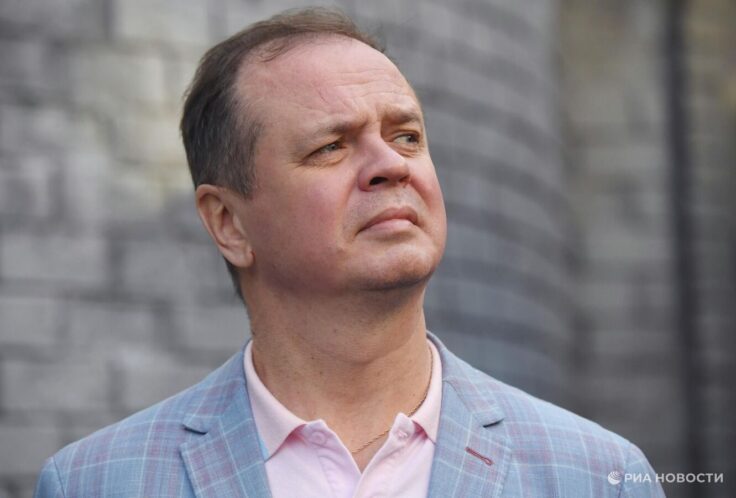
Mathematician Andrey Dymov was tried for donating 3,500 rubles [less than $50 — T-invariant] to the ACF. The faculty member at the HSE University Department of Mathematics and the Steklov Mathematical Institute of the Russian Academy of Sciences (MIAN) was found guilty of financing extremism (Part 1 of Article 282.3 of the Criminal Code) — the case docket is available on the official portal of Moscow courts.
“They took him away about a month ago, and it was quite a spectacle: masked men broke down the door to his apartment. Later, he was released for a while under travel restrictions,” a source familiar with Dymov’s prosecution told T-invariant.
The case was initiated on April 30, 2026, and the sentence was handed down as early as May 25, with the scientist taken into custody right in the courtroom. “We were in shock, we didn’t expect him to be arrested immediately,” Dymov’s colleagues shared with T-invariant.
“I take Andrey Viktorovich’s probability theory class and emailed him a question just this Monday, but he didn’t reply. And then I saw the news on Tuesday morning. I am shocked. What is even going on? It’s horrible,” comments a student from the HSE University Faculty of Mathematics.
“It’s a high-speed train, a total express. Unusually fast,” a scientist who previously went through a similar criminal prosecution told T-invariant. His own case, however, lasted 20 times longer.
Judging by the mathematician’s profile on the HSE University website, Dymov had been with the institution since 2015 and possessed all the hallmarks of a highly successful academic career. Since 2018, he regularly received bonuses for publishing in peer-reviewed international journals, as well as for papers in List A journals, and was repeatedly named one of the university’s best teachers (in 2022, 2024, and 2025).
In his profile on the Math-Net portal, he listed non-equilibrium statistical mechanics and the theory of dynamical systems as his primary research interests. Shortly before his arrest, Dymov had presented at several scientific conferences.
Top news on scientists’ work and experiences in wartime, along with videos and infographics — subscribe to the T-invariant Telegram channel to stay updated.
Dymov made his last donation to the ACF back in 2021, one source told T-invariant. According to Mediazona, Dymov set up a recurring donation on August 5, 2021. His workplace provided positive character references. Mediazona also reports that Dymov had sent 5,000 rubles to the Pravmir fund [an Orthodox Christian charity — T-invariant] to help victims of a flood in Dagestan and 30,000 rubles to the “Children of Donbas” program.
Defense witnesses included Sergey Gorchinsky, Deputy Director for Research at MIAN, alongside several colleagues from the HSE University Faculty of Mathematics.
Dymov’s case moved so rapidly that his colleagues and department heads at HSE University and MIAN likely lacked the time to build a solid defense strategy or compile and submit a sufficient volume of character references in his favor. The case docket lists only two court sessions, one of which had to be postponed because witnesses failed to appear.
An analysis of cases involving donations to the ACF reveals that defendants usually face harsh sentences for modest contributions of just a few thousand rubles. At times, it appears as though there is an unwritten “rate”: one year in prison for every thousand rubles donated.
Yet there are exceptions. 54-year-old Evgeny Onishchenko, head of the Employees’ Union at the Lebedev Physical Institute of the Russian Academy of Sciences (FIAN), was sentenced to a year and a half of forced labor, despite the prosecution demanding four years in a penal colony. He was accused of transferring 5,000 rubles to the ACF in August 2021. Mediazonareported this on May 14.
[[socialnetworks]]
Both scientists — Andrey Dymov and Evgeny Onishchenko — did not exclusively donate to “extremists” (according to Mediazona, Onishchenko had also transferred money to the Russian military). Among the theories explaining why the sentences turned out so differently, there is one theory (currently being verified by the T-invariant editorial team) that due to the overwhelming volume of cases opened regarding ACF donations (according to unconfirmed reports, there are currently about 16,000 criminal cases in Russia related to ACF donations), an unwritten directive was issued to fast-track investigations and judicial proceedings. Therefore, criminal cases initiated in previous years regarding ACF donations were investigated and tried longer, giving defense attorneys and defendants more opportunities to mount a defense. Today, there is simply no time left for the defense.
The swift prosecution of Dymov is not the first instance of mathematicians from HSE University being targeted. In December 2025, a treason case was opened against Leonid Kats, a research assistant at the HSE University Faculty of Mathematics’ Research and Educational Laboratory of Complex Networks, Hypergraphs and Their Applications. However, as T-invariantrevealed, the FSB had been tracking Kats for a long time, whereas Dymov’s conviction is just another of the hundreds of cases involving ACF donations (the exact numbers vary; Mediazonareports 225 known convictions).
Support T-invariant’s work by subscribing to our Patreon and choosing a donation amount that suits you.
The Russian-American Science Association (RASA) expresses its strong support for Olga Orlova, Editor-in-Chief of T-invariant, who has been designated by the authorities of the Russian Federation as a “foreign agent.”
Olga Orlova is an outstanding science journalist and a Candidate of Philological Sciences, widely recognized for her work covering science, education, and public outreach in the Russian language. Her distinguished professional career includes serving as a science columnist for prominent Russian-language media outlets such as Polit.ru, Russkii Zhurnal, and Radio Svoboda. For many years, she hosted the popular science program Hamburg Account on Russian Public Television.
Following the start of Russia’s full-scale war against Ukraine, Olga left the country and founded the international project T-invariant, which quickly became one of the leading Russian-language media platforms covering science and scientists during wartime. T-invariant publications are republished daily by dozens of Russian and international media outlets and serve as an important source of information about scientists in both Russian and global contexts.
The inclusion of Olga Orlova in the “foreign agents” registry continues the practice of political persecution by the Russian state targeting independent participants in the Russian-language discourse on science and education. This practice aims to undermine international scientific collaboration, isolate scientists within Russia, and exert pressure on members of the intellectual community abroad.
Previously, Russian authorities have designated a number of well-known American scholars of Russian and Soviet origin as “foreign agents,” and have also labeled several American and European universities and organizations—including RASA—as “undesirable organizations.”
As a U.S.-based non-profit organization, RASA considers such practices incompatible with the principles of freedom and directed against scientists and science journalists in the free world. We call on the U.S. government to take note of these actions and to provide necessary support to scholars and journalists facing political persecution.
We call on international media, the academic community, universities, and scientific organizations in the United States, Europe, and other democratic countries to show solidarity with Olga Orlova, and with Russian-speaking scholars and journalists who have become targets of political pressure and intimidation.
Targeting Aristotle: The “Philosophers’ Case” Started Over Economics but Will End in Politics
On May 19, at 6:00 a.m., masked security forces raided the homes of staff of the Institute of Philosophy of the Russian Academy of Sciences (IP RAS).
About ten people were taken in for questioning by the Investigative Committee of the Russian Federation. Several people, including the institute’s director, 87-year-old academician Abdusalam Guseynov, were interrogated until 11:00 p.m.
The formal pretext for the assault on the country’s leading institute of philosophy involves alleged violations in implementing the project “Aristotle’s Heritage (Preparation of Aristotle’s Complete Works).”
The project’s head, Svetlana Messiats, was placed under house arrest. For nearly four days, there has been no information regarding the whereabouts of several employees, including academician Andrey Smirnov, who headed IP RAS until 2021.
According to T-invariant, the criminal case was initiated in March 2026, though the conflict surrounding the institute began as early as December 2021.
T-invariant has repeatedly reported that right-wing conservatives — such as the philosopher Aleksandr Dugin and the Orthodox billionaire Konstantin Malofeev — attempted to seize control of IP RAS by pushing for the appointment of Anatoly Chernyaev as director.
T-invariant discussed the details of this new “philosophers’ case” with Yulia Sineokaya, a corresponding member of the Russian Academy of Sciences and former deputy director of IP RAS, who is now labeled a “foreign agent” in Russia and serves as president of the Independent Institute of Philosophy (IPHI) in Paris.
In her view, unlike in 2021, no one will step in to prevent the destruction of the academic organization this time — and a case that currently appears to be financial on the surface will quickly turn political.
T-invariant:How and when did this philosophers’ case begin? What do you know about it?
Yulia Sineokaya. Photo: prof-ras.ru
Yulia Sineokaya: It all started on May 19. At six in the morning, they showed up at the homes of those involved in the Aristotle project and confiscated all their electronics: computers, laptops, and phones.
They arrived at the institute around 10:00 a.m., took several people away for interrogation, and examined the equipment there as well.
The project in question involves preparing a new edition of Aristotle’s complete works. Work on this project ran from 2018 to 2024, after which it was closed.
Obviously, this is an immense undertaking, and no volumes have yet been published, but the project’s mandate did not promise immediate publication — only preparation.
The scholars were translating texts and holding seminars to discuss the translations and materials. The work was progressing at a normal pace for an academic institution.
This wasn’t a separate grant; scholars received their regular salaries and simply worked on this project as part of their regular state assignment.
It was approved by both the Ministry of Science and Higher Education and the Russian Academy of Sciences. Every report since 2018 was approved by officials, and everything was perfectly fine.
They did not receive any extra money at all for this work.
Framing this as a financial crime is completely wrong. This is a political case. They were desperate to find something to tarnish the Institute’s reputation, found nothing, and so they latched onto Aristotle.
If you look at the project reports, which are still publicly available on the Institute’s website, they explicitly state that existing Russian translations of Aristotle are outdated; he hasn’t been retranslated in a very long time, with the last collected works published back in the 1980s.
The texts need to be translated anew into modern Russian. The team began working on this gradually.
It is common knowledge that preparing annotated translations of classical philosophers takes decades.
The fact that a complete set of collected works didn’t appear in six years is entirely normal.
T-i:Did it take that long during the Soviet era too?
YS: Yes. You can churn out sloppy work quickly, but our colleagues at the Institute aimed to produce rigorous scholarship.
Svetlana Messiats. Photo: website of the A.F. Losev Memorial Museum
BACKGROUND
Svetlana Messiats holds a Candidate of Sciences degree [PhD equivalent — T-invariant] in Philosophy. The topic of her dissertation research was “Aristotelian Physics in Neoplatonism: Proclus’ Elementa Physica.”
She spent two days in a temporary detention facility before being placed under house arrest.
According to data from the Moscow City Court, Messiats is charged with fraud committed by an organized group or on an particularly large scale (exceeding 1 million rubles [$14k] — Part 4 of Article 159 of the Criminal Code).
The court hearing regarding her pre-trial restrictions took place on May 21. This charge carries a mandatory prison sentence of up to 10 years.
Svetlana Messiats’ case is being handled by the same investigator who handled the cases against Sergey Zuev, the former rector of the Moscow School of Social and Economic Sciences [Shaninka — T-invariant], and Vladimir Mau, the former rector of RANEPA.
T-i:What is the role of former IP RAS employee Anatoly Chernyaev here? Some sources suggest that the case is directly linked to an informant report he filed.
YS: Chernyaev is an informant, that’s a fact. But I don’t think this current move was his own initiative.
Several government agencies, including the Investigative Committee, have been targeting the Institute. Several audits took place after the invasion of Ukraine began.
One of the investigation teams grew interested in the reports on this project. Although today’s case was officially opened in March, they have been fishing for a pretext since 2021.
I believe that in the run-up to the war, they wanted to replace the leadership with figures who were more ideologically aligned, in order to prepare society for war.
As for Chernyaev, there was an attempt to stage a hostile takeover of the Institute in December 2021.
Konstantin Malofeev, Aleksandr Dugin, and Olga Zinovieva tried to seize the Institute and install Chernyaev as director, but he only lasted about a week.
Chernyaev is just a pawn. He is not a clever man and decides nothing; he merely leaks information to them.
In 2021–2022, we managed to defend the Institute. Now we are seeing the second attempt. It was Chernyaev who leaked the news about the raids and detentions.
The very text he circulated was first published by Dugin on his Telegram channel.
He wrote that Messiats was “behind bars,” even though Svetlana was already under house arrest at home.
T-i:What exactly is the formal grievance against IP RAS?
YS: The security forces went through the documentation they seized during their audits of the Institute and apparently found some sort of discrepancy.
I don’t know exactly what happened, but judging by the materials on the Institute’s website, I assume the auditors noticed the mention of Parva naturalia — Aristotle’s collection of short treatises on natural philosophy, parts of which were translated into Russian.
During the first phase of the project (2018–2021), the team managed to complete several translations.
In the second phase, they planned to translate several more. However, they might not have explicitly specified in the reports that these were new texts, simply labeling the section Parva naturalia again.
The auditors likely assumed this was duplicate reporting for the same work.
My guess is that the authorities have two formal grievances — that the collected works have not been published and that the team reported twice for Parva naturalia — but I don’t know the precise details of the charges.
T-i:What can be said for certain about the roles of Malofeev, Dugin, and Zinovieva?
YS: Just look at the misleading, offensive articles they publish on the platforms of the Zinoviev Club and what is published on the Tsargrad TV channel and its website.
For instance, Zinovieva held two press conferences at TASS in 2024.
First, they dealt with those who were easier targets — those who had left the country. Now they have turned their attention to those who stayed behind.
T-i:We know that the director of IP RAS, academician Abdusalam Guseynov, who is 87 years old, was taken in for questioning. He is not giving statements to the media.
Do you know how he endured the interrogation?
YS: I don’t know firsthand, but I imagine it must be incredibly difficult at his age.
Masked men showed up at his home at six in the morning too, and he was the last one to be released — around 11:00 p.m.
He and I haven’t been in touch since I resigned from the Institute. Word is that he is holding up with great dignity.
The following day, he came to the institute and briefed staff on the situation.
T-i:Were all the detainees put through interrogations that long?
YS: Many were let go much sooner. Word is that Polina Gadzhikurbanova, the scientific secretary, was interrogated multiple times.
In fact, the authorities brought the entire human resources department and every single philosopher involved in the Aristotle project led by Svetlana Messiats to the Investigative Committee.
Anyone who had published anything or was listed in the reports was brought in.
T-i:What does the staff intend to do next?
YS: I am no longer on the staff, but obviously, their priority will be to protect their colleagues and clear the Institute’s reputation.
Judging by the outcries from the far-right, it’s highly possible that more severe charges will emerge.
The financial allegations are completely contrived, but it gave them a foot in the door, and from here they will try to manufacture something more serious.
As past experience shows, they will be looking for a political angle.
T-i:What do you mean by a political angle? Chernyaev previously accused the Institute’s leadership of “LGBT propaganda,” destroying the institution of the family, and undermining “the very foundations of marital relations.”
Will they be looking into gender studies and LGBTQ+ topics?
YS: No, that is completely absurd and misses the mark. It’s much more likely to be about opposition to the war.
Top news on scientists’ work and experiences during the war, along with videos and infographics — subscribe to the T-invariant Telegram channel to stay updated.
T-i:The post attributed to Chernyaev claims that academician Andrey Smirnov managed to flee the country.
YS: No one knows where he is or what has happened to him right now.
Academician Smirnov was the director of IP RAS from 2016 until December 2021, during the period when the project was underway at the Institute.
In late December 2021, an administrative coup took place at the Institute when Chernyaev was installed as director for a week. After that, on December 30, 2021, academician Guseynov took over as director; he currently serves as acting director.
T-i:How many employees are currently unreachable?
YS: Several people, including academician Smirnov. As far as I know, as of now, no one knows what has happened to them.
T-INVARIANT BACKGROUND
Who is behind the attack on IP RAS
Anatoly Chernyaev — the ousted acting director of the Institute.
Aleksandr Dugin — a notorious right-wing ideologue and director of the Ivan Ilyin Higher Political School at the Russian State University for the Humanities (RGGU).
Konstantin Malofeev — founder of the Tsargrad TV channel, ultra-Orthodox tycoon, and husband of Russia’s Children’s Rights Commissioner Maria Lvova-Belova.
Olga Zinovieva — widow of the philosopher and Soviet dissident Aleksandr Zinoviev, and head of the Aleksandr Zinoviev International Scientific and Educational Center at Moscow State University (MSU).
Context
In 2024, T-invariant reported that Olga Zinovieva had repeatedly made public calls to dismantle the Institute of Philosophy of the Russian Academy of Sciences.
On January 15, 2024, the TASS news agency hosted a press conference titled “The Sovereignty of Russian Philosophy: Westernizers vs. Slavophiles at the Institute of Philosophy RAS.” Among the participants was Anatoly Chernyaev, who served as a leading research fellow at the Institute from 2016 to 2023.
[[socialnetworks]]
Zinovieva’s rhetoric at the time was remarkably harsh even by current standards; she branded the Institute of Philosophy “a horrific abscess — a haven for scoundrels and traitors” and demanded that all employees be subjected to polygraph tests to check their loyalty.
Other participants at the press conference echoed her sentiments. However, what mattered as much as what was said was where it took place.
The TASS press center had become a platform closely aligned with the Kremlin’s official line long before the war.
For this reason, many Russian philosophers and analysts viewed the airing of such fringe rhetoric in such an prominent venue as the opening salvo of a major state campaign against the Institute of Philosophy RAS.
The calls to dismantle the Institute began before the press conference and were triggered by the dismissal of Anatoly Chernyaev on December 21, 2023.
On December 22, 2021, Chernyaev had been appointed acting director of IP RAS by order of the Ministry of Science and Higher Education. Although that decision was revoked on December 28, he remained on the institute’s staff until his eventual firing in 2023.
The institute later published an official clarification explaining his dismissal.
According to data from Novaya Gazeta Europe, the May 19 raids also targeted the homes of:
The Media Campaign Against the Institute
Chernyaev’s short-lived appointment had been preceded by a targeted smear campaign against several IP RAS scholars, orchestrated by media outlets controlled by Yevgeny Prigozhin and Konstantin Malofeev’s Tsargrad TV.
Following the failed leadership transition, the campaign only intensified. The nationalist newspaper Zavtra also joined the fray, claiming that Chernyaev’s conflict with the staff was political: “Chernyaev has repeatedly criticized the stance of IP RAS, many of whose employees have not only failed to support the special military operation but have also established Russophobic centers abroad.”
Around the same time, Sergey Mironov, leader of the A Just Russia party, announced he would petition Prosecutor General Igor Krasnov and Minister of Science and Higher Education Valery Falkov to investigate the legality of Chernyaev’s dismissal.
Support T-invariant’s work by subscribing to our Patreon and choosing a donation amount that suits you.
In May 2026, a court handed down sentences to physicists Valery Zvegintsev and Vladislav Galkin. This marked the end of the hypersonic scientists case — the largest criminal prosecution of researchers in modern Russia. Over the course of 11 years, 11 physicists fell victim to the security services. Three of them died while under investigation, and five essentially received death sentences. T-invariant reviews the outcome of the hypersonic scientists case and examines what convicted researchers must do to demonstrate their utility to a state that hands them prison terms incompatible with life. The scientists’ idea of reviving the sharashkas [Soviet prison laboratories — T-invariant] has already been time-tested. However, there are also proposals tailored to today’s needs — such as an “under-barrel grenade launcher munition for destroying unmanned aerial vehicles” (Zvegintsev was listed on a patent with this title in November 2025, by which time he had been under investigation for over two years). Meanwhile, young scientists who had planned to build their professional careers in hypersonic research are not only leaving the field but abandoning science altogether.
The hypersonic case began with a record and ended with one as well. In May 2015, security forces arrested a scientist who set a record as the oldest person charged with high treason. Vladimir Lapygin of the Central Research Institute of Machine Building (TsNIIMash) was 75 years old at the time of his arrest and 79 when he was granted parole. Over the next 11 years, the intelligence services seemed to develop a taste for it. According to human rights advocate and founder of the First Department project Ivan Pavlov, the targets were deliberately chosen to be “easy”: elderly scientists who could be pressured with minimal effort.
On May 5, 2026, that record was significantly broken — the court sentenced the oldest scientist convicted of high treason in Russian history — 82-year-old Valery Zvegintsev. Assuming Zvegintsev survives his 12.5-year term, he will be released at age 93 (taking into account that three years under house arrest count as 1.5 years in prison). This is effectively a death sentence, much like the case of Zvegintsev’s closest institute colleague, Anatoly Maslov, who faces imprisonment until the age of 90.
Vladimir Lapygin headed the aerogasdynamics research center at TsNIIMash (the primary research institute of Roscosmos) and taught at Bauman Moscow State Technical University. When Lapygin was arrested, the university’s then rector Anatoly Aleksandrov claimed the reason involved “certain issues during joint projects with China.” Media outlets reported Lapygin’s arrest only two months later. The scientist was placed under house arrest, a year later, in the fall of 2016, he was transferred to Lefortovo detention center, then received a seven-year sentence and was sent to a penal colony in the Tver region. Lapygin was released on parole in 2020. For the past few years he has been following the verdicts of his colleagues, most of whom he has known personally for decades, occasionally commenting on their criminal cases in the media.
Latest news on scientists’ work and experiences during the war, along with videos and infographics — subscribe to the T-invariant Telegram channel to stay updated.
While still in the detention center, Lapygin wrote a 32-page text titled “How I Became a Chinese Spy.” It begins as follows: “I, Vladimir Ivanovich Lapygin, born in 1940, worked at FSUE TsNIIMash for 46 years and participated in the creation of all launch vehicles, intercontinental ballistic missiles, and re-entry spacecraft developed in the USSR and Russia after 1970.” Case details and other excerpts from this text can be found in a report by human rights defender Zoya Svetova.
Sentences of the Hypersonic Scientists
Following Lapygin’s case, 10 more physicists received sentences under the high treason statute. Seven of them were elderly at the time of their arrest (aged 63 to 79).
All defendants in the hypersonic scientists case. Top row: Vladimir Lapygin, Viktor Kudryavtsev, Roman Kovalev. Second row: Anatoly Gubanov, Valery Golubkin, Aleksandr Kuranov. Third row: Anatoly Maslov, Dmitry Kolker, Aleksandr Shiplyuk. Fourth row: Valery Zvegintsev, Vladislav Galkin
Viktor Kudryavtsev, deceased
On July 20, 2018, the FSB arrested 74-year-old TsNIIMash employee Viktor Kudryavtsev on suspicion of high treason. According to the security services, he had transmitted classified information to the Belgian von Kármán Institute for Fluid Dynamics.
After a broad public campaign, the preventive measure was changed from custody to a written undertaking not to leave the area, and the investigation was suspended for medical reasons. In 2021, Kudryavtsev died from complications following cancer treatment (aggravated by the one year and two months he spent in pre-trial detention).
Roman Kovalev, deceased
In June 2019, 56-year-old Roman Kovalev was arrested — deputy head of the Department of Spacecraft at the Moscow Institute of Physics and Technology (MIPT) and head of the Center for Heat Transfer and Aerogas Dynamics at TsNIIMash, a student of Kudryavtsev.
In June 2020, Moscow City Court sentenced Kovalev to seven years in a maximum-security colony. In April 2022, the scientist was released from serving his sentence on medical grounds. Kovalev had terminal cancer and died two weeks after his release.
Anatoly Gubanov, 12-year sentence
In December 2020, the head of the Aircraft and Rocket Aerodynamics Department at the Central Aerohydrodynamic Institute (part of the Zhukovsky National Research Center), 63-year-old MIPT Associate Professor Anatoly Gubanov was arrested. The scientist fully admitted his guilt and requested leniency. Defense Attorney Olga Dinze reported that Gubanov had been subjected to severe psychological pressure during the pre-trial stage. In October 2023, the court sentenced him to 12 years in a maximum-security colony.
The latest videos on science during wartime, interviews, podcasts, and streams with prominent scientists — Subscribe to the T-invariant YouTube channel!
Valery Golubkin, 12-year sentence
On the day of Gubanov’s arrest, authorities conducted a search at the home of his subordinate, MIPT associate professor and TsAGI researcher 68-year-old Valery Golubkin. In a letter from the detention center, Golubkin reported that his arrest was linked to the testimony of his supervisor, who had made a deal with the investigation. On June 26, 2023, the Moscow City Court sentenced Golubkin to 12 years in a maximum-security colony. The scientist pleaded not guilty.
Anatoly Maslov, 14-year sentence (start of the “Novosibirsk” case)
In late June 2022, the FSB arrested 75-year-old chief researcher at the Khristianovich Institute of Theoretical and Applied Mechanics (ITAM SB RAS), professor at NSU and NSTU Anatoly Maslov. This marked the beginning of the second, Novosibirsk wave of the hypersonic case. On May 21, 2024, Maslov was sentenced to 14 years. The severity of the sentence was attributed to Russia’s invasion of Ukraine and the subsequent tightening of high treason legislation — as reported by T-invariant. Two months prior to the verdict, Maslov suffered a heart attack while in detention.
Dmitry Kolker, deceased
On June 30, 2022, the FSB arrested 54-year-old researcher at the Institute of Laser Physics SB RAS and Novosibirsk State University Dmitry Kolker on suspicion of high treason. The security services removed the scientist directly from his hospital bed (he had stage IV pancreatic cancer) and transferred him to Lefortovo. On July 2, 2022, Kolker was admitted at Moscow City Clinical Hospital No. 29, and the next day his relatives were informed of his death.
T-INVARIANT FACT SHEET
Dmitry Kolker was a specialist in laser physics, non-linear optics, and spectroscopy. As previously reported by T-invariant, Kolker had no publicly available joint papers with physicists from ITAM, and his recent scientific works were not related to hypersonic research. However, he had another affiliation with the organization Special Technologies LLC [заархивировано — T-invariant], whose main activity is “the development of mid-IR laser sources for guidance and countermeasure systems.” This affiliation was indicated in Kolker’s 2012 publication — exactly at the time when work was underway on an EU Framework Programme project. It is unclear whether Kolker’s work at that time overlapped with that of his ITAM colleagues. However, publications from the same period show that increasing laser frequencies for hypersonic experiments was of interest to them.
Aleksandr Shiplyuk, 15-year sentence
On August 5, 2022, Maslov’s colleague — a 55-year-old ITAM Director Aleksandr Shiplyuk — was arrested and also transferred to Lefortovo prison. At the institute, Shiplyuk headed the “Hypersonic Technologies” laboratory. The prosecution requested the maximum possible sentence of 20 years. On September 3, 2024, Shiplyuk was sentenced to 15 years in prison.
Valery Zvegintsev, 12.5-year sentence
The third ITAM researcher to be arrested by the FSB (in April 2023) was 79-year-old Valery Zvegintsev. Only after that did the institute’s staff respond publicly — an open letter in support of the scientists was published on the institute’s website:
“In this situation, we do not only fear for the future of our colleagues. We simply do not understand how to continue doing our job. On the one hand, the primary quality metric of our work under state contracts and projects funded by Russian state foundations and agencies is the degree to which our findings are presented to the broader scientific community, including scientific publications and conference presentations. On the other hand, we see that any paper or presentation can lead to high treason charges. What we are awarded for today and held up as an example to others becomes the basis for criminal prosecution tomorrow.”
The letter was later removed from the ITAM website; it is available in the T-invariant Telegram channel. On May 5, 2026, Valery Zvegintsev was sentenced to 12.5 years in prison.
Vladislav Galkin, 12.5-year sentence
In December 2023, it became known that the Sovetsky District Court in Novosibirsk had arrested 68-year-old Vladislav Galkin, Associate Professor at Tomsk Polytechnic University and a frequent co-author of Valery Zvegintsev and Aleksandr Shiplyuk. He received the same sentence as Zvegintsev on the same day — May 5, 2026.
Ivan Pavlov. Photo: RIA Novosti
Sharashkas 2.0 and the Grenade-Launcher Munition
Interestingly, both Zvegintsev and Shiplyuk continued to publish scientific papers even after the criminal cases had been opened and they were arrested. T-invariant drew attention to an unusual 2025 patent that lists Valery Zvegintsev: “Under-Barrel Grenade-Launcher Munition for Destroying Unmanned Aerial Vehicles.” The main authors are Zvegintsev’s colleagues from NSTU. This patent clearly stands out among his usual research areas and reflects work on a highly relevant current priorities.
Aleksandr Shiplyuk — the youngest of those imprisoned hypersonic scientists — is fighting most actively for his life and freedom. His case was tried in closed doors without observers or journalists, and how the prosecution proved the scientist’s guilt is unknown. The judge ordered the return of US dollars, Chinese yuan, and euros seized from him during the investigation. The scientist spent over two years in Lefortovo awaiting his verdict. His family attended the reading of the court’s final ruling. The physicist’s research was focused on the experimental aerothermodynamics of hypersonic flows. “Judging by Shiplyuk’s most cited works (and he has papers in leading international journals), this is entirely fundamental science that has no direct connection to specific aircraft: boundary layer stability, the effect of surface coatings, and minor additives. Another matter is that anything related to hypersonics has long since become a minefield in Russia,” Doctor of Physical and Mathematical Sciences Andrey Tsaturyan explained to T-invariant.
Andrey Tsaturyan. Photo: Radio Svoboda
The security services failed to “break” Maslov, Shiplyuk, or (as would become clear in 2026) Zvegintsev. Their colleagues from ITAM maintain their innocence and refuse to cooperate with investigators. In contrast, their St. Petersburg colleague, Aleksandr Kuranov, cooperated with the investigation, testified against at least Maslov, and received a seven-year sentence (despite the statutory minimum for high treason being 12 years). According to T-invariant‘s data, Kuranov also testified against Shiplyuk as part of the same pre-trial plea bargain.
“The hypersonic horror continues. It seems FSB investigators have struck gold (in terms of stars on their epaulets) and are diligently mining it. The alchemists’ work of extracting stars out of scientists is an easy job that has been bearing fruit for a decade now, counting from the arrest of Vladimir Lapygin. Back then, members of the Academy of Sciences and many others stood up for him en masse. Today, we are all rather surprised that the staff of the Khristianovich Institute in Novosibirsk were not afraid to stand up for Aleksandr Shiplyuk and his two colleagues,” Andrey Tsaturyan said in the same interview.
As T-invariant has learned, Aleksandr Shiplyuk has been appealing to various authorities with proposals to establish “certain classified research centers, a sort of Soviet-era sharashka.” This came to light through written responses to questions sent to the T-invariant editorial office by Shiplyuk’s daughter, Viktoria.
— What can you tell us about your father’s well-being and emotional state? Which penal colony is he in, and what are his detention conditions?
— Aleksandr Nikolayevich is in the Komi Republic, in the city of Syktyvkar, at Penal Colony No. 25, thousands of kilometers away from home. We have repeatedly petitioned the Federal Penitentiary Service to transfer him closer to home (a right he is legally entitled to), but we received denials. As for his well-being and emotional state — our father is a strong and courageous man; he tries to keep his spirits up and avoid despondency. He works in the sewing facility. A major issue is the total lack of access to specialized or even popular science literature, which is just as vital to him as his day-to-day living conditions.
— How do you evaluate the role of the ITAM staff in supporting your father and other convicted researchers from the institute?
— We are profoundly grateful to the Institute’s leadership and staff for their emotional and financial support. Their kindness is felt at every level, even though their options are limited. For instance, they organize birthday and New Year card collections for the imprisoned staff. Aleksandr Nikolayevich receives numerous letters from the institute, and they help us put together food parcels, among many other things. I want to add that this extends beyond the institute — it is clear that respect, sympathy, and even admiration for our father are only growing. His authority as a scientist, administrator, and human being is stronger than ever. Naturally, this is incredibly important both for him and for us, his family.
— We know about ITAM’s open letter, but were there any other actions taken by scientific leadership at any level to defend the scientists?
— Aleksandr Nikolayevich has repeatedly written appeals to various authorities, offering to apply his knowledge, skills, and qualifications in his relevant field (the sewing facility leaves no room for that). Similar proposals were put forward by several leading experts of the Russian Academy of Sciences regarding Aleksandr Nikolayevich and other experts. The idea of creating classified research centers, a sort of Soviet-era sharashka, seems obvious, but as far as we can see, it has not been implemented in any way.
“It is possible, though not simple, to understand why an innocently convicted corresponding member of the Russian Academy of Sciences, who ran a prestigious Siberian institute before turning 50 and who has likely read Aleksandr Solzhenitsyn’s In the First Circle, would prefer a sharashka over a sewing shop. I do not believe the revival of sharashkas is being seriously considered at the top; however, I cannot rule out that the idea occurred to some of the ‘historical reenactors’ who now find themselves in power,” Andrey Tsaturyan notes.
Some of Shiplyuk’s colleagues view the idea with understanding but little enthusiasm. An ITAM researcher, speaking to T-invariant on the condition of anonymity, believes that the revival of sharashkas is more of a grassroots initiative rather than a top-down demand from the state or security services.
“It seems that in the Soviet era, sharashkas served to shield scientists in critical fields from unwanted contact. The KGB aimed to prevent information leaks, conducting preventive measures and acting preemptively. Today, the FSB does not operate to prevent the disclosure of classified data; rather, it meets its KPIs by presenting arrested scientists as part of some epochal investigation. The state is not particularly concerned with retaining brains, so there is no demand for these Sharashkas 2.0, which require substantial funding. Yet Aleksandr Nikolayevich’s position is understandable. The brain is like a muscle — it needs exercise. Instead of sewing mittens, he could be bringing far greater utility,” the physicist reflects.
Whether his colleagues Maslov and Zvegintsev share Shiplyuk’s ideas remains unknown. However, according to Ivan Pavlov, Zvegintsev’s sentence is far from the harshest possible. “I consider this a good job by the defense. Nowadays, 15 years (like Shiplyuk’s sentence) is the norm, while 12.5 years is a stroke of luck,” Pavlov says.
The human rights advocate also highlights another unusual detail. “What is astonishing about Zvegintsev’s and Galkin’s cases is that they remained under house arrest during the trial, and even more surprisingly, they stayed under house arrest after receiving heavy prison sentences. Usually, defendants are taken into custody right in the courtroom following such verdicts. I believe the authorities are starting to wonder: is this moving in the right direction? Zvegintsev is 82 years old; he might not survive prisoner transit and a penal colony, and the security services cannot ignore this. Scientists — people who faithfully served the regime and forged this defensive shield — got caught in the crossfire. The regime is beginning to question: are we prosecuting the right people, are we making enemies out of the wrong crowd? The problem is that the machine (both propaganda and security) has been set in motion, and stopping it is no easy task. It mows down its own as well. Now it has hit ideologically aligned individuals — a group to which I count the scientists who continue to forge this shield,” Pavlov says.
“The Next Generation of Cruise Missiles”
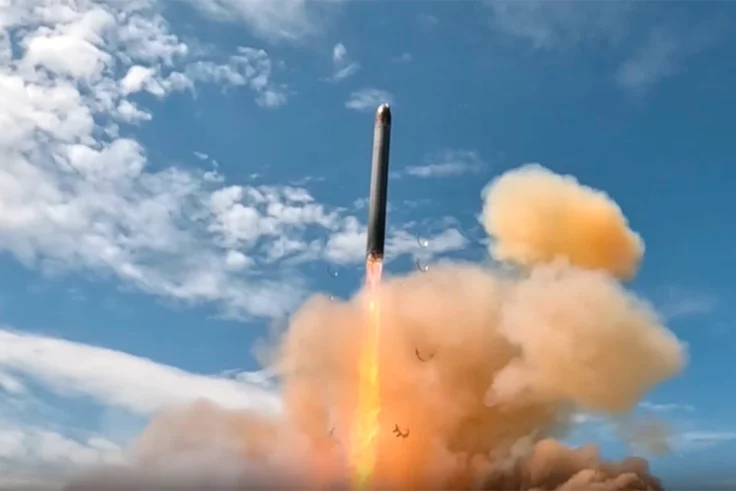
The subject of combat missiles, including those incorporating hypersonic technologies, remains highly significant for the Kremlin. From May 19 to 21, 2026, drill exercises are taking place (the largest in post-Soviet history, according to the independent outlet Agentsvo) to practice the preparation and deployment of nuclear forces under the threat of aggression, the Russian Ministry of Defense announced. Launches of ballistic and cruise missiles are scheduled. Prior to this, on May 12, 2026, Putin was briefed on the successful test of the Sarmat intercontinental ballistic missile, long referred to in Russian propaganda as a “Doomsday weapon.” It is designed as a silo-based missile capable of carrying Avangard hypersonic glide vehicles. On November 3, 2025, the Kremlin presented awards to the developers of the Burevestnik nuclear-powered cruise missile of global range and the Poseidon unmanned underwater vehicle. At the time, official statements explicitly emphasized the role of design bureaus, industrial enterprises, research centers, workers, engineers, and scientists involved in the project, noting that they are collectively developing “the next generation of nuclear-powered cruise missiles, which will eventually become hypersonic.”
Sarmat missile complex tests. Photo: Russian Ministry of Defense
[[socialnetworks]]
“I fear that hypersonic technologies will suffer the same fate as sparrows in Mao Zedong’s China,” an ITAM scientist worries. This refers to the massive campaign against agricultural pests organized during China’s Great Leap Forward (1958–1961), which led to a population explosion of caterpillars and locusts devouring crops because a critical natural regulator had been removed from the ecosystem. Harvests plummeted, a severe famine ensued, and at least two million people perished.
As T-invariant has learned, immediately following the detention of the three leading ITAM scientists, an initiative group of young researchers from institutes in the Novosibirsk Akademgorodok met with the regional FSB directorate. The meeting was arranged with the assistance of the Siberian Branch of the Russian Academy of Sciences. The researchers sought to clarify the boundaries within which they could safely work to avoid the fate of those accused of high treason. However, they received no clear answers or guidelines, hearing instead something along the lines of: “Just work well and don’t do anything bad.”
Even now, young scientists who intended to build their professional careers in hypersonic research are not only leaving the field but abandoning science altogether. “I personally know three young colleagues who left the institute following the criminal cases against their senior colleagues at ITAM. In all likelihood, there are far more,” a T-invariant source at the institute states. Aleksandr Shiplyuk’s son, who began his career at ITAM, has also transitioned to the IT sector.
Support T-invariant’s work by subscribing to our Patreon and choosing a donation amount that suits you.
Russia’s neocolonial policies in the occupied territories of Ukraine target the education system first: schools and universities have become primary tools for coercion and identity erasure.
This is the core finding of a recent study by the Ukrainian outlet Realnaya Gazeta, which details how the Kremlin carries out ethnic displacement across multiple levels.
Journalist Ksenia Turkova spoke with Andrey Dikhtarenko, editor-in-chief of Realnaya Gazeta, to discuss the report for T-invariant.
Andrey Dikhtarenko: Yes, but not exclusively. We also looked at areas occupied after the 2022 invasion.
Of course, we had far more data on Donetsk and Luhansk, given that twelve years have passed since they were first occupied.
Luhansk and Donetsk made it much easier to track which key positions exactly are being taken over by arriving Russians as locals are pushed out.
BACKGROUND
The authors of the study, “Ethnic Replacement as a Tool of Russian Neocolonization,” concluded that the occupation of the Donbas involves processes that go far beyond mere military control.
In practice, it amounts to a systematic demographic transformation. Local officials are gradually replaced by Kremlin appointees, while the labor market is deliberately designed to attract a massive influx of Russian specialists, creating deep inequalities and fueling social conflict.
This resettlement of Russian citizens is framed by propaganda as a “rescue” mission and a humanitarian effort. In reality, it is a deliberate campaign of demographic engineering.
The study is based on open-source intelligence, including data from occupation administrations, press reports, social media, and human rights monitoring.
KT:When it comes to the territories occupied after 2022, are they seeing the same kind of “creeping” replacement, or is the approach different?
AD: The replacement there is happening much faster. You have to realize these are devastated cities with barely functioning infrastructure, no mobile internet, and strict checkpoint systems.
They aren’t particularly popular destinations for Russians, so even this “voluntarily-mandatory” resettlement process is struggling.
I’m not talking about Mariupol, which is seen as a potentially attractive coastal city, or Melitopol and Berdiansk in the Zaporizhzhia region. Those hold some appeal.
But the newly occupied areas of the Luhansk region, which bore the brunt of the fighting — cities virtually wiped out by the Russian army and never rebuilt — are of interest for Russians.
No one wants to move or work there. The local population is deeply resentful, barely surviving under horrific conditions, and there is no money to be made off them.
So the dynamics vary wildly. That said, Mariupol and the coastal areas of the Donetsk region have essentially reached the level of the older occupied territories [controlled by Russia and its proxies since 2014 — T-invariant] in terms of Russification and ethnic displacement.
KT:The statistics are incredibly striking: back in 2014, there might have been just two officials from Moscow, but now there are ten or eleven.
Why did the Kremlin opt for a gradual replacement strategy at first?
AD: Because the Russians lacked confidence that they could govern effectively on their own.
They needed to work in tandem with locals initially.
Our study shows that in 2014, there was only one Russian citizen in the so-called government of the Luhansk region.
He’s quite a notable figure — General Sergey Kuzovlev, who was operating under a pseudonym at the time.
He is the same Russian general who recently claimed multiple times to have “completely captured Kupiansk.”
Kupiansk hasn’t fallen yet, but that didn’t stop him from being named a Hero of Russia.
Back then, Kuzovlev served as the “Minister of Defense” in the Luhansk region, while the rest of the cabinet consisted of locals.
However, it’s crucial to understand that every single local official had advisors, instructors, and handlers from Moscow embedded with them, constantly monitoring operations and pulling the strings.
There is another reason they didn’t rush. Until 2022, Russia concealed its direct occupation — likely hoping to use the Minsk agreements to reintegrate these territories into Ukraine as a Trojan horse to steer Ukrainian politics.
When that plan failed, they formally “annexed” the regions. After that, Russification and ethnic displacement went into overdrive across the board.
Now we see new ministers being imported directly from the Russian heartland.
KT:What actually happens to the local proxy officials once they are pushed out of these roles?
AD: They vanish. Many former ministers and mayors just drop off the radar. In fact, they frequently end up assassinated.
For instance, the proxy mayor of Luhansk, Manolis Pilavov, was shot dead right in the street. Igor Plotnitsky, the former head of the LPR, hasn’t been seen in years.
Some reports suggest he is quietly living in Voronezh, but there are plenty of darker rumors about his fate.
Top news on scientists’ work and experiences during the war, along with videos and infographics — subscribe to the T-invariant Telegram channel to stay updated.
In other cases, these locals are reassigned to Russia. There was a fascinating case with Dmitry Trapeznikov, who was a deputy to the DPR leader, Alexander Zakharchenko.
After Zakharchenko was assassinated, a power struggle broke out between Trapeznikov and Denis Pushilin.
Trapeznikov was ultimately forced out of Donetsk, but the Kremlin threw him a curveball — he was appointed city manager of Elista, the capital of Kalmykia.
This man had never set foot in Kalmykia in his life, yet Moscow decided to drop him there.
The local population actually held mass protests against his appointment. He managed to hang on for a while and later resurfaced in some regional government role, allegedly overseeing sports and tourism.
It’s quite a trajectory: from a Donetsk “separatist” to a mayor in Kalmykia. But this aligns perfectly with Russian colonial logic, where the main goal is to dilute any potential ethnic core of resistance.
Simply put, a Ukrainian from the Donetsk region is easily turned into an enforcer of Kremlin directives in a completely different ethnic republic, thereby breaking down that republic’s cohesion and undermining the locals’ ability to organize or self-govern.
So, displacement is a two-way street.
Furthermore, this strategy of ethnic dilution goes far beyond administrative appointments.
If you look at the local hierarchy as a pyramid, it operates at every tier.
The top tier consists of the high-ranking officials imported from Russia.
It’s not just about the sheer numbers, but the specific portfolios they hold.
As a rule, Russians are placed in charge of law enforcement, security services, local police, and the military; they control finances and economic assets;
and they frequently oversee education, culture, and, without exception, propaganda.
What happens at the next level down? Not only do local municipal and district education boards have to report to Russian centers regarding the curricula they implement, but there is also a massive personnel replacement underway.
Local teachers are being systematically replaced by newcomers. The Russian state program Zemsky Uchitel [“Rural Teacher” — T-invariant] actively incentivizes Russian educators to move to the occupied territories.
They are offered lucrative salaries and various bonuses, creating an institutionalized inequality where a Russian teacher and a Ukrainian teacher hold the exact same position, but the Russian makes several times more.
Imported Russian teachers also are fast-tracked through promotions to become vice-principals, principals, and administrative heads.
Meanwhile, local teachers face a hard glass ceiling.
Up-to-date videos on science during wartime, interviews, podcasts, and streams with prominent scientists — subscribe to the T-invariant YouTube channel!
The exact same dynamic plays out in healthcare via the Zemsky Doktor [“Rural Doctor” — T-invariant] program.
Think about the psychological impact: a Russian and a Ukrainian surgeon are operating side by side, and the Ukrainian doctor knows he is paid a fraction of his colleague’s salary and that this newcomer is about to become his boss.
What does he do? He starts looking for a job in Russia itself.
He throws his hands up, packs his bags, and moves to Russia itself to at least get paid the same rate as the newcomer — who, to add insult to injury, was given housing expropriated from fleeing Ukrainians.
So, as you can see, this process also starts working in reverse.
KT:How do the incoming Russian teachers justify their move? Is it purely financial?
AD: Not entirely. It’s driven by severe staff shortages, because Ukrainian teachers left the occupied areas in droves.
Remaining an educator under occupation is incredibly dangerous; you are forced into roles that carry severe criminal liability under Ukrainian law.
For instance, it’s no secret that teachers are coerced into running polling stations and managing logistics during sham elections and referendums.
In Ukraine, participation in these events is a serious crime.
On top of that, you are forced to give Kremlin-mandated propaganda lessons called “Conversations about Important Things,” where you have to press high schoolers to enroll in military academies or sign contracts with the Russian army to fight in the so-called “special military operation.”
Many teachers simply break down. It’s an unbearable job for anyone whose heart aches over what is happening and who sees their own neighbors being killed.
You can’t just tune it all out and focus solely on teaching — you are constantly dragged into political rallies, indoctrination seminars, and quasi-electoral administrative work.
So there really is a teacher shortage. And Russia intentionally fills these vacancies with Russian citizens because they are deemed ideologically reliable.
KT:How does state propaganda frame this influx of Russian educators?
AD: They claim there is a shortage of qualified local staff, so volunteers are arriving from across Mother Russia to help out.
They spin a narrative of selfless people stepping up to educate children. In reality, it’s plain economics — they are pulling in multiples of what local teachers make.
KT:Which parts of Russia are these teachers coming from?
AD: Anywhere from the Moscow suburbs to the deep provinces. Initially, it was mostly people from impoverished regions.
But once word spread about how fast you can advance your career there, opportunists from all over Russia started signing up.
Spending a year teaching in an occupied zone adds that record to your employment history — the ultimate proof of political loyalty.
For public sector workers, it elevates their social status completely.
If a teacher returns from the occupied territories to their hometown and, for instance, gets rejected for a job, they can file a complaint.
Such people are eagerly hired and protected: “Look, we have someone like this on board, we welcomed them, so we are loyal too.”
This is how the system works: it tries to process as much of its own population as possible through the occupied territories, poisoning people with ideology and, essentially, tainting them with blood.
Because an empty teacher’s position in a place like Mariupol is a human tragedy.
That person was either killed, forced to flee, or stripped of their home.
And then privileged Russians arrive, making much more money.
It raises a serious moral question: are they complicit in the tragedy?
Something tells me that, yes, they are.
[[socialnetworks]]
KT:Is the curriculum taught in these schools entirely the Russian one, complete with all those “Conversations about Important Things” [a mandatory ideological lecture series introduced in Russian schools — T-invariant] and patriotic clubs?
AD: Yes, absolutely, but there are also lessons on the history of the native region — a history completely turned inside out, from which any Ukrainian influence has been thoroughly erased.
For context, my native Luhansk region was settled in waves, primarily by Zaporozhian Cossacks, and the entire northern half of the province is traditionally Ukrainian-speaking.
There are some pockets of this in the south as well. But none of that is allowed in schools. Instead, they write about Don Cossacks, for example.
Anything related to Ukraine is painted in dark colors. Meanwhile, the events of 2014 are presented in such a bizarre, mythologized fantasy style that locals who actually lived through them can’t read the textbooks without laughing.
KT:I keep thinking about the teenagers from the newly occupied territories — they must remember reading entirely different things in their textbooks just recently.
And now everything has been flipped upside down.
AD: In reality, people somehow adapt. But in recent years, a fairly large number of children, as soon as they turn eighteen, get a passport and leave for Europe through Belarus or Georgia.
Many return to Ukraine, saying, “Thank God, everyone speaks Ukrainian here!”
These teenagers essentially live a double life: they secretly chat with friends who escaped and treasure any Ukrainian content, because having it can get you severely punished.
They play these games, and then they do everything they can to escape and enroll in Ukrainian universities.
Of course, most children try to distance themselves from this propaganda, to live in their own world, so to speak, but that is incredibly difficult to do: the propaganda machine does everything to ensure you are reeled in from the earliest grades.
Children are sent to various patriotic camps for the summer — and everything there is free, which wins over the parents.
Parents think, “Well, he’ll be learning to assemble drones — that’s fine, let him sit there, at least he’ll be getting three square meals and fresh air.”
But they brainwash them heavily there. Children in the occupied territories are actively recruited to enroll in various military institutions.
You only need to open any official Telegram channel of a local news agency to see that, besides the news, it is literally flooded with recruitment ads for military training schools across Russia.
They want to pull children from the occupied territories into these military education institutions.
On top of that, various “cadet classes” are being set up — all under the guise of Don Cossack tradition — where children are groomed for military careers.
And a certain percentage of these kids are expected to sign a contract upon graduation. It’s pretty clear where these children might end up after that.
KT:And how is this displacement happening at the university level?
AD: It’s the exact same story: there is a shortage of professors, so Russians from neighboring regions come in. Many universities have become branches of Russian higher education institutions.
For example, to take some of your exams, you have to travel to, say, Rostov.
The mechanism is identical, though the indoctrination is slightly less crude than what they do to young children.
All these youth movements like Yunarmia [Young Army — T-invariant] and Dvizhenie Pervykh [“Movement of the First” — T-invariant] are fully operational. Students are corralled into all sorts of rallies and forced to participate in elections as well.
Additionally, they are reviving the Soviet-style “student construction brigades.” Students from Luhansk and Donetsk are routinely shipped off to remote corners of the Russian Federation for manual labor.
There was a story where students from a Luhansk university were sent to Kamchatka to gut fish at a fish processing plant.
They worked there under horrific, unsanitary conditions, with virtually no sleep. Even though they had been promised something completely different.
Unfortunately, they really love using children from the occupied territories as cheap labor — and always within Russia itself.
Someone in the Kremlin apparently believes that the more youth they ship out like this, the faster the occupied territories will dissolve into the pan-Russian space.
KT:It sounds like a closed system where everything gets blended together. I assume this also applies to diplomas? You can’t go very far with a diploma issued in an occupied territory — only to Russia.
AD: Absolutely, but they actually find ways around it.
If you are concerned about an international career, you can take your exams at one of Russia’s partner universities.
In short, there are loopholes, and they started figuring them out back in 2014.
KT:At the same time, they are inviting foreigners to study in the occupied territories.
AD: It’s not a very widespread phenomenon yet. Recruiting foreigners is a bit of a gray scheme.
International recruitment agencies in African or Asian countries exploit the fact that local students don’t know the language and can’t read the contracts. They make a deal with a student, telling them, “You will be studying at a medical university in Russia.”
They promise them Rostov, for instance, but bring them to Luhansk. After a couple of months, when the students start speaking a bit of Russian, they ask, “Wait, why are we in Luhansk?”
And they reply, “Well, you signed the contract. It’s no big deal, you’ll get a degree from Luhansk University, and then another degree from a university in Rostov or Voronezh, and everything will be fine.”
By the way, there are a lot of students from India right now.
KT:What could be the long-term consequences of this ethnic engineering?
AD: I believe total assimilation is still a long way off. However, if the process isn’t interrupted, it will end with the region being fully digested.
All Ukrainian behavioral models that were partially instilled by teachers in schools, expressions of Ukrainian culture, and so on, will be pushed out as much as possible.
For example, in a Ukrainian school, a teacher cannot use physical force against a student — that would cause an absolute scandal and lead to a criminal prosecution.
But in Russia, and especially in the occupied territories, this is practiced. They discipline students physically, and later this carries over into a person’s adult life — they enter the military with its culture of hazing.
I worry deeply for my fellow countrymen, and we all hope for de-occupation, for some kind of internal resistance from the people.
But one must never underestimate the power, malice, and resourcefulness of propaganda.
People have talked a lot about ethnic replacement over the years, but no one has tried to quantify or analyze it. We did.
We are showing this process as it stands in 2026. And one of the main conclusions we reached is that we cannot afford to abandon these territories informationally.
There is still a substantial portion of the population there that is deeply disgruntled with what is happening, who dislike how things are being taught, and who resent the fact that Russians are taking over all the positions.
This friction remains a critical fault line — one that could, at the very least, disrupt and slow down Russia’s absorption of Ukrainian regions.
Support T-invariant’s work by subscribing to our Patreon and choosing a donation amount that suits you.
The Russian-American Science Association (RASA) strongly condemns the continuing practice of labeling internationally renowned Russian scholars as “foreign agents.” This time, the Russian authorities have added to the foreign agents registry the distinguished biomedical scientist, professor at Northwestern University, and first president of RASA, Igor Efimov. We regard this decision as politically motivated and aimed at further undermining international scientific cooperation and the principles of open science.
Igor Efimov is an internationally recognized expert in biomedicine and cardiology, the author of groundbreaking research, patents, and technological innovations aimed at treating severe cardiovascular diseases. The wireless dissolvable pacemaker developed by Igor Efimov and his laboratory — smaller than a grain of rice — was named by TIME as one of the most important inventions of 2025.
Igor Efimov is not only an outstanding scientist, but also one of the founders of the modern international Russian-speaking academic community. As the first president of our association, he played a key role in shaping its mission: supporting free science, strengthening professional ties among researchers across countries, and promoting the integration of Russian science into the global academic community.
For many years, while working in the United States, Igor Efimov actively contributed to the development of Russian science, supported initiatives aimed at raising its international standards, encouraged the professional growth of young scholars, and fostered cooperation between Russian and international research centers. His work was devoted not to politics, but to the advancement of science, education, and international academic exchange.
Attempts to exert pressure on scholars such as Igor Efimov discredit the governing system itself and make the Russian authorities appear absurd both domestically and internationally. Unfortunately, these short-sighted actions also inflict lasting damage on the future of Russian science. It has become increasingly clear that the true targets of persecution by the Russian authorities are independent scientific thought, international cooperation, and the very idea of free science. We call on academic communities, universities, and scientific organizations in the United States, Europe, and other democratic countries to express solidarity with all scholars facing persecution by authoritarian and politically repressive states.
A bill pending in the U.S. House of Representatives aims to counter Russian innovation and protect certain Russian scientists. T‑invariant examines whether it will ever pass and, if so, who might actually benefit from it.
Measures introduced by the U.S. State Department after the start of the war in Ukraine have effectively cut off Russian scientists working in mathematics, biology, physics, chemistry, computer science, and other STEM fields from participating in U.S. scientific collaboration. Even getting a two‑week visa to attend a conference now requires security clearance from all special services. For the same reason, it has become almost impossible to collaborate on scientific papers with American colleagues. This directly contradicts Joe Biden’s statement made at the beginning of the war that the United States would “robbing Putin of <…> his best brains”. In reality, over the past four years the situation has only worsened. And in January 2026, the door for Russian scientists slammed shut completely — following President Trump’s executive order indefinitely suspending the issuance of immigrant visas.
Nevertheless, back in May 2025, Congressman Bill Foster (D‑IL) introduced in the U.S. Congress H.R. 3536, titled “A bill to authorize the Secretary of Homeland Security to provide certain nationals of Russia with special immigrant status, and for other purposes” (also known as the “Countering Russian Innovation and Protecting Select Scientists Act”).
Top news on scientists’ work and experiences during the war, along with videos and infographics — subscribe to the T‑invariant Telegram channel to stay updated.
The bill would grant special immigrant status to up to 3,000 scientists from Russia working in science, technology, engineering, or mathematics.
“The list of fields was most likely taken from the Critical and Emerging Technologies List,” says Denis Vavaev, head of advocacy at Liberty Forward. “This is a list of critical and emerging technology areas developed by the White House in coordination with numerous agencies. For the bill, this is undoubtedly a strength that could help it pass. As for the number — 3,000 people — I have two theories. The first is based on recent statistics showing that U.S. universities grant roughly 16,000–17,000 PhDs to international students in STEM fields each year. About 75% of them stay in the country, at least in the short term (up to five years), while around four thousand leave immediately after graduation. It’s possible the figure was chosen to replace those departing foreigners with Russian specialists. The second theory: it may be based on estimates of how many STEM scientists have left Russia since the start of the war. I haven’t seen such estimates myself, but I can’t rule out that U.S. authorities obtained these numbers somehow.”
The goal of the bill is to bring the best scientists out of Russia, thereby strengthening American science while weakening the Russian government that, under conditions of a mobilization economy, isolation, and sanctions, is relying on “sovereign science.” It is no coincidence that the bill was introduced by Bill Foster, the only current member of Congress with a PhD in physics. He completed his PhD at Harvard and worked in elementary particle physics at the legendary Fermilab. Since 2008, he has been active in Democratic Party politics.
Bill Foster. Photo: Chicago Sun-Times
Why was the bill introduced at a time when the Trump administration had sharply tightened immigration policy, including toward Russian nationals? “Perhaps it was at this moment that they finally found a Republican co-sponsor for the bill — Jay Obernolte — which allowed it to be introduced on a bipartisan basis,” Denis Vavaev suggests. “Or perhaps the timing is linked to the arrival of the Trump administration, which is far more hostile toward China than the Biden administration was. This would strike a blow not only at Russia but also at Russian-Chinese scientific cooperation. It could also be a trial balloon — a way to test the new Congress’s appetite for such legislation. Despite the strong overall opposition to immigration, many Republicans remain open to high-skilled immigration while firmly opposing low-skilled inflows. The logic is straightforward: technological competition with China is only going to intensify, and the U.S. cannot afford to fall behind.”
To date, the bill has not been considered in any committee in either chamber, nor has it been discussed in public discourse. This may be because brain drain from Russia is not currently a priority for either Democrats or Republicans, says Evgeny Roshchin, a fellow at the Center for European Policy Analysis and visiting scholar at the School of Advanced International Studies at Johns Hopkins University.
“The mere introduction of a bill does not necessarily mean it is meant to pass. Such bills are fairly common. They are introduced, one might say, to signal a position. Then they sit in committee for years. This seems to be the case here. It doesn’t even matter that Trump was in power in 2025. The bill was most likely introduced regardless of Trump and without any realistic expectation of success. Even with a likely shift in the House after the fall elections, the bill’s chances remain slim, since Democrats have other priorities they will be prioritizing,” he says.
This view was indirectly confirmed by the congressman’s own office.
“At this time we do not have an estimated timeline for consideration of the bill in committee or on the House floor. Those timelines are largely determined by the majority party, so we have limited influence over scheduling,” Caitlin Fong, an aide to Bill Foster, told T‑invariant. Fong also noted that the bill does not provide any specific financial support for scientists leaving Russia.
According to T‑invariant, the bill will be reintroduced after the November 2026 congressional elections. However, even if the legislation is taken seriously, only a handful of people — not 3,000 per year — would be able to benefit from it, unless the procedures for issuing short‑term visas to Russian scientists are also changed. In recent years, Russians specializing in STEM fields have been unable to travel to the United States for conferences or seminars because even tourist (B) or exchange (J) visas require full security vetting by all agencies. This vetting process can take years and has no fixed timeline. Moreover, U.S. security services have been reluctant to grant entry to STEM specialists from Russia even as students.
“I applied twice for internships at American universities in 2024 and 2025,” an undergraduate student from a prestigious Moscow university told T‑invariant speaking on condition of anonymity. “I specialize in the social sciences, but dozens of physics, math, and computer science students also applied. They were all denied visas. Historians, journalists, and political scientists got them.”
It’s unclear how the bill’s sponsors intend to get around the problem of security clearance procedures for STEM specialists — checks that were apparently introduced at the urging of security agencies. “I understand your concerns about the lengthy vetting process for Russian scientists wishing to enter the United States,” says Caitlin Fong. “Under this bill, applicants for special immigrant status must, to the extent practicable, receive a decision no later than 90 days after the Secretary of Homeland Security receives all required documentation and information needed to adjudicate the petition.”
According to a Russian physicist who commented anonymously on the document, the bill in its current form does not address the main barriers preventing Russian scientists from obtaining positions in the United States today.
Up‑to‑date videos on science during wartime, interviews, podcasts, and livestreams with prominent scientists — subscribe to the T‑invariant YouTube channel!
“The bill concerns immigrant visas, and it’s good that this special program sets a 90‑day decision timeline. However, to apply for it, applicants first need a job offer. And if no dedicated funding is provided, Russian scientists will have to compete on the open market. How can I compete on equal terms when I am effectively cut off from the United States? A person needs to be able to enter the country, attend interviews, give talks, and co‑author papers in international journals with American colleagues. I don’t have that opportunity now. Today, for a Russian STEM scientist to come to the U.S. for a two‑week interview or conference, they must undergo a security vetting process that can last a year or longer. I’m not even sure which group of people this program is targeting. STEM scientists — even those with European residence permits but holding a Russian passport — are not being issued ordinary B visas to America. Getting one from inside Russia is even more difficult. The most effective way to solve the problem of attracting highly skilled professionals from Russia is through two measures: simplifying and speeding up the issuance of short‑term visas for scientists with Russian passports, and providing funding for a dedicated federal program to fund positions for Russian scientists at American universities and research centers. This would not be a large sum for the U.S. federal budget. But it would allow the bill to achieve its stated goals — countering Russian innovation and protecting select scientists,” the T‑invariant source believes.
The fact that the bill allows entry to specialists without guaranteeing them jobs is one of the most controversial aspects, notes Denis Vavaev as well. “Republicans will undoubtedly argue that this could burden the social welfare system if people don’t find work and that it would create competition for U.S. workers. That said, the bill is currently authorized for only four years, meaning it would not need to be renewed if the program proves unsuccessful. Also, given Foster’s background as a physicist, it’s possible he looked into whether there is actually a shortage of specialists in the specific fields the bill targets. It’s quite narrowly focused, so people would essentially be recruited on a targeted basis. In addition, this would give the U.S. time to train its own workforce,” Vavaev says.
[[socialnetworks]]
A separate question is why the bill does not provide for STEM scientists who have already left Russia and are now in various countries waiting years for American visas, nor for students and researchers already in the United States. It would seemingly be simpler and cheaper to regularize the status of people already here than to specially bring out those trapped behind a new “iron curtain.”
In any case, turning the “Countering Russian Innovation and Protecting Select Scientists Act” into a fully operational program to undermine Russia’s technological self‑sufficiency — as its sponsors envision — would require a vast number of accompanying legal and administrative measures. Meanwhile, the very introduction of such a bill, which contemplates bringing up to 12,000 specialists out of Russia over four years, will not go unnoticed by Russian security services. And the longer it is under consideration, the worse the situation will become for scientists inside Russia. “If the Americans can’t pass this law quickly, I’d rather they abandon it altogether,” says a scientist who tried to leave Russia but was denied a U.S. visa because of his affiliation with a sanctioned university. “While Congress debates it, they’ll simply detain people preemptively here as a preventive measure.”
Support T‑invariant’s work by subscribing to our Patreon and choosing a donation amount that suits you.
The Director of the MSU Institute of Artificial Intelligence, Katerina Tikhonova, now oversees a significant portion of AI education, research, and development in Russia. The Kremlin has long been working to consolidate this industry into a single system, and “control over it” can only be entrusted to a select few. However, these technologies are sovereign only on paper and in officials’ speeches. In reality, Russia remains heavily dependent on global AI leaders — decreasingly on the United States and increasingly on China. T-invariant examines how Katerina Tikhonova, Oleg Deripaska, and VTB Bank are involved in the process, why a “unified AI ecosystem” was built on Sparrow Hills, and why not only most university scientists but even the MSU Research Computing Center — whose specialists assembled the university’s first three supercomputers — have been excluded from it.
State Corporation “Unified Perimeter”. How Putin’s Daughter and Her Photomodel Friend Decided to Make Innopraktika an Integrator of All High-Tech Companies
On April 21, 2026, MSU hosted the launch of the AI Faculty, marking the completion of the “unified AI ecosystem” on Sparrow Hills. Katerina Tikhonova now has all four elements of this system firmly in hand. First came the MSU AI Research Center, then the fully operational MSU Institute of Artificial Intelligence, which she formally heads. In 2024, the powerful new MSU-270 supercomputer was launched, dedicated entirely to AI applications.
Center, Institute, Faculty
The AI Faculty is led by Ivan Oseledets, who holds a Doctorate in Physical and Mathematical Sciences and is a Professor of the Russian Academy of Sciences, and CEO of the Artificial Intelligence Research Institute (AIRI). His deputy for research is Anton Konushin, who holds a Candidate of Sciences degree (equivalent to PhD) in Physical and Mathematical Sciences, and is a scientific supervisor of the MSU AI Research Center. For now, the faculty website lists only two additional administrative staff members; there is no information about faculty members. However, the research staff of the Center and the Institute significantly overlap. Most likely, they will form the core teaching staff.
“We are admitting 36 bachelor’s students, including 20 state-funded, and 36 master’s students, including 20 state-funded places,” stated Ivan Oseledets. Classes at the AI Faculty will be taught primarily by young instructors: the average age of the teaching staff is only 30 years. Tuition for paying students is about 500,000 rubles [7000 USD] per year.
The number of places in the first intake is comparable to competing universities (for example, with the HSE University), and the price, against the broader trend of rising costs for high-level IT education (see T-invariant’s analysis) — is relatively affordable. The reason may lie with the sponsors.
One of the central figures at the April 21 event was Oleg Deripaska, who was featured in most news reports and press releases and gave statements to numerous Russian state TV channels. Previously, two of his foundations financed some of the activities of both the AI Center and the Institute (as well as numerous AI-related programs aimed at students, graduate students, and staff from other faculties and university units).
Oleg Deripaska has three charitable foundations through which he funds educational and scientific initiatives. Most of Deripaska’s AI funding at MSU flows through the Intellect foundation (annual reports are available here). However, support for the faculty is provided by his best-known and longest-running nonprofit — Volnoe Delo. This may be due to public relations considerations: the large-scale coverage of the AI Faculty launch was clearly signed off on at the top. This is evident from the airtime and framing of the story on the evening news program Vremya anchored by Ekaterina Andreeva. Deripaska’s third foundation, Basis, focuses on supporting the Faculty of Physics at MSU — the alma mater of the billionaire.
Deripaska is not the only financial partner in the MSU AI ecosystem. VTB Bank plays a significant role as well. Katerina Tikhonova collaborates with the bank both as Director of the MSU Institute of AI and as head of Innopraktika. It is hard to distinguish between these two roles. With VTB funds, the Institute organizes the annual Data Fusion Awards forum and awards prizes. In April 2026, another forum was held, featuring leading AI speakers from MSU, while Katerina Tikhonova herself joined via video link and spoke about the importance of fundamental education for specialists (in recent years, Putin’s daughter has only appeared via video — whether at the SPIEF or the anniversary conference of her own Innopraktika).
Back in April 2025, Vedomostireported that VTB was considering creating an AI center of expertise in China. According to the outlet, the center was to be a dedicated facility for applied joint research between Russian and Chinese specialists, enabling rapid prototyping and testing of AI devices in China—without having to import them into Russia. It is notable that in 2025 the emphasis was not on processors at all. According to the bank’s presentation, “AI devices” included wearable devices (watches, smartphones, glasses, rings), smart home devices (televisions, cars, refrigerators), and digital assistants for industrial use (machine tools, 3D printing, production monitoring and control systems, and smart transportation).
[[socialnetworks]]
That said, GPUs are clearly critical for VTB and all other Russian institutions engaged in high-performance computing — large banks, IT companies, and the like. VTB Deputy President and Chairman of the Management Board Vadim Kulik, speaking at a recent Data Fusion forum, stated that the new graphics processors are being integrated into the bank’s core processes related to AI — including computer vision, text processing and analytics, speech recognition (speech-to-text), and generative models. The first installations of these GPUs began in March 2026. “Testing showed that the Chinese GPUs perform reliably and integrate well with the bank’s existing IT infrastructure. Deployment is proceeding smoothly, with minimal modifications and strong performance. This will speed up AI development, including work on digital assistants and AI agents,” Kulik said.
“Chinese GPUs are being integrated into more and more systems — which suits China’s interests as well. But there are, of course, difficulties with adapting software. Most language models can run on proprietary software, with results delivered through standard protocols. So, in principle, it is quite feasible to integrate video recognition or similar tasks into the bank’s processes. But creating your own models is significantly more difficult,” comments an engineer familiar with Nvidia’s operating rules and the assembly of top-tier supercomputers in Russia, speaking to T-invariant.
T-INVARIANT REFERENCE
In 2024, sources told The Wall Street Journalthat Chinese internet giants and telecommunications operators were testing Huawei’s latest Ascend 910C processor. According to them, Huawei informed potential clients that the processor was on par with Nvidia’s H100 chip, which Washington has banned from being supplied to China. Since Russia’s invasion of Ukraine, all Nvidia supplies to Russia have also been banned, although gray imports continue. In 2024, T-invariantreported that the MSU-270 supercomputer was assembled using Nvidia chips purchased via a Chinese company. At the same time, all components in the tender documentation were listed under the fictitious brand SOLAR PEAK, but based on the parameters of the purchased cables, nodes, modules, and other equipment, everything is identifiable as Nvidia products.
Drones, Robot Dogs, and Gait Analysis
The new AI Faculty building is set to house a “robot park for developing control systems for robotic platforms.” “We intend to set up a park of various types of robots — from robot dogs to androids and drones. We already have a list prepared,” said Konushin (quoted by TASS). The creation of joint laboratories with the Russian-Chinese MSU-PPI University in Shenzhen is also being discussed.
The relationship between the new faculty—and the broader MSU AI ecosystem—and China may be the most revealing thread in this story. “Chinese colleagues visited our department yesterday. We discussed the creation of joint educational programs and dual-degree programs. We will certainly do this,” Konushin said.
Close cooperation did not start recently: back in November 2025, the MSU-PPI University in Shenzhen website published a report about the creation of two laboratories. The first is the Laboratory of Nanostructured Optoelectronic Functional Materials and Devices. “The work spans the entire scientific cycle: synthesis of quantum dots, perovskite nanocrystals, and chiral nanomaterials, their physicochemical and spectroscopic characterization, theoretical modeling of processes, and integration of the resulting materials into real optoelectronic devices,” the description states. The second — the Laboratory of Artificial Intelligence Algorithms and Their Applications — fits squarely into the “unified AI ecosystem” at MSU — especially given that the people pictured are, in fact, the same individuals.
T-INVARIANT REFERENCE
The joint project between the Beijing Institute of Technology and MSU is the first university jointly established by China and Russia. The memorandum to establish it was signed during Putin’s official visit to the PRC in May 2014. Instruction began at the university in September 2017. The number of students is expected to reach 5,000 in 2026.
Scientists at the MSU-PPI University in Shenzhen are working on developing AI systems for drones, stated Dmitry Shtarev, head of the university’s Department of Research, in May 2024 at the Russian-Chinese EXPO in Harbin. According to him, this is one of the “rapidly developing research areas at the university.” “At the EXPO we showcased several drone models that we are developing. These are classic drones better suited for delivering heavy payloads, as well as smaller models,” he said.
Here is how journalists described the “butterfly drone”: “When folded, all the blades tuck into the body, effectively turning it into a cylinder shape, which reduces its size for transportation. It is launched in an unconventional manner — by being thrown upward.”
In 2025, Shtarev described another joint development: “The system analyzes the characteristics of a person’s gait and compares them with a database of indicators of psychoemotional disorders, including chronic depression. Another practical application is the prevention of incidents in the metro, at train stations, and in other public places (reported accuracy exceeds 80%).”
Latest updates on scientists’ work and experiences during the war, along with videos and infographics — follow the T-invariant Telegram channel to stay updated.
Who Is the “Ecosystem” For?
Not all specialists supported the idea of creating a separate AI Faculty at MSU. “Does it really make sense to carve AI out as a separate field when students can be taught within the Faculty of Computational Mathematics and Cybernetics or the Faculty of Mechanics and Mathematics? Why create a new faculty instead of a department? It is unclear to me. And in terms of the number of students it attracts, it still effectively looks like a department. This looks like a turf war — staking out a niche, a domain, perhaps even an entire industry,” reflects a member of the Russian Academy of Sciences familiar with the situation.
The entire “unified ecosystem” operates in near-total isolation, according to another source who spoke with T-invariant. “If you look at the segment aired on the Vremya program, they showed the old Lomonosov-2 supercomputer, not the MSU-270. This suggests the film crew was not allowed inside. And the Lomonosovs have nothing to do with Tikhonova’s operations. There is a clear division. And it’s not just because the new one was built largely using gray import schemes. No one inside the university is allowed access to the new supercomputer except for a narrow circle of insiders,” the source says.
This is confirmed by another scientist familiar with the university situation. “For the second year running, I’ve been asking colleagues at the MSU Research Computing Center what’s going on on Tikhonova’s side of things. They just shrug — they are not allowed access. They found out about the creation of the faculty, as well as the launch of MSU-270, from the news,” the researcher says.
All sources interviewed by T-invariant confirm that the new MSU-270 supercomputer continues to be used exclusively for AI-related tasks, while Lomonosov-2 has become even more outdated and frequently fails. “Colleagues are essentially told: make do with your clunky old system — run your computations on Lomonosov-2. No one has access to MSU-270 except for a narrow circle,” the scientist clarifies.
Identifying People by Their Gait
”The new university division will train researchers who will be able not only to work with existing neural networks but also to create new ones. First of all, we will study issues of artificial intelligence in medicine, genetics, computer vision, and such complex topics that require a good knowledge of mathematics, computer science, and other fundamental subjects,” says MSU Rector Viktor Sadovnichiy in an interview with Channel One.
However, as T-invariant has repeatedly reported, all the main research and developments of the AI ecosystem being built by Tikhonova have potential for dual use. But this will become clear only when the customers of these technologies determine how exactly to use “classic drones better suited for delivering heavy payloads,” within which system the AI model that determines a person’s behavioral traits from their gait with 80% accuracy will operate, and for what purpose the perovskites will be used — to create solar panels or for optical and laser sights, as well as communication systems used in combat drones.
Whatever the Kremlin and the Ministry of Defense ultimately decide, the infrastructure for secrecy is already in place: first and foremost, a centralized system, controlled by the FSB, for vetting all civilian research. And this system operates much more strictly than in the Soviet Union, when Soviet scientists already had experience working in a closed scientific system. The Kremlin is now taking a decisive first step toward a new model of “sovereign science.”
Support T-invariant’s work by subscribing to our Patreon and choosing a donation amount that suits you.
Russia is currently discussing a draft law on the regulation of artificial intelligence (the AI Law), which may come into force on September 1, 2027. Major market players and legal experts are taking part in the discussion, but it is already clear that the central issue is not technological development. It is control over what users ask and what machines answer. T-invariant explains how the state intends to effectively legalize censorship in the AI sphere, how this mechanism would work, and who may end up taking the blame.
AI Censorship
Almost all public AI models, especially large language models (LLMs), implement some form of censorship. Before turning to the proposed AI Law, it is worth briefly describing how this mechanism works. Not every model uses all the methods below, but some combination is almost always present.
At the pre-training stage, developers can carefully filter the datasets on which the model is trained. This is the most effective method of censorship. In this case, the model simply knows nothing — for example, about the events in Tiananmen Square in 1989 or about Russia’s “foreign agents.” For the model, these things do not exist, and it cannot describe them in principle. However, this approach undermines informational integrity and can lead to hallucinations: the model senses a gap in its knowledge and tries to fill it with plausible but invented information.
Latest news on scientists’ work and experiences during the war, along with videos and infographics — subscribe to the T-invariant Telegram channel to stay updated.
To avoid this, models are usually trained on fuller datasets and then refined through supervised fine-tuning with human feedback. The model generates answers, which human evaluators mark as “good” or “bad.” “Good” answers are reinforced; “bad” ones are down-ranked. This reduces hallucinations but does not completely eliminate the risk that “undesirable” information will slip through — especially if a user is actively trying to obtain it.
For this reason, developers usually add an output filter as well. Such a filter is easier to configure and update than retraining the entire model. When censorship rules change rapidly — as they do in Russia today, with more and more people being labeled “foreign agents” and universities declared “undesirable” — the output filter can be quickly adjusted. It is a rather crude solution: the model simply refuses to answer certain questions, but it protects the developers from administrative or even criminal liability. This is how filters currently work in most Russian AI models.
In Russia, the authorities are conducting a campaign against the “LGBT extremist organization.” As part of this campaign, access is being blocked to many books that the authorities claim contain “LGBT influence.” If you ask Yandex’s AI assistant Alice about the book Summer in a Pioneer Tie, it will most likely reply: “I won’t answer that question, because I don’t really know enough about it.” And if you ask whether it has a filter that prevents it from answering, it will not respond directly but will instead try to explain that the question itself is somehow improper. In essence, this is a defeat for the model, but developers apparently have little choice given how quickly the list of prohibitions changes. Updating an output filter is relatively cheap and fast, whereas retraining a model to completely erase any memory of a book that sold hundreds of thousands of copies and was a bestseller in 2021–2022 would be prohibitively expensive.
In practice, all three forms of censorship are used: filtering training datasets, supervised fine-tuning, and output filtering.
Users and Developers
The AI Law has mainly been discussed in the media in terms of restricting user access to foreign (“cross-border”) models. Most popular foreign models — ChatGPT (OpenAI), Gemini (Google), Claude (Anthropic), and others — are already inaccessible from Russian IP addresses. Russian users typically access them via VPNs. Although bypassing blocks is becoming more difficult, this issue is not directly related to the AI Law itself.
Article 10, paragraph 4 of the draft law introduces liability for the “illegitimate” use of an AI model by the user. It requires users to “use artificial intelligence services and models for purposes that do not contradict the legislation of the Russian Federation” and “not to perform actions aimed at circumventing built-in security and control mechanisms in violation of the established operating parameters of AI systems.”
AI models, especially LLMs, often contain information that censors consider “illegitimate.” For example, Alice knows perfectly well about Summer in a Pioneer Tie. With indirect questioning, it may even begin to provide substantive answers, but the output filter usually intervenes at the final stage. There are numerous techniques (known as “jailbreaks”) that allow users to make a model “talk” despite its restrictions. However, an ordinary user may simply not realize that the information they are seeking is prohibited. There is no clear boundary between legitimate curiosity and a malicious jailbreak.
The law therefore introduces liability for an “improper” query. It does not specify what form this liability takes or how intent is to be proven. Since models store chat histories, users usually register profiles, and law enforcement has access to the servers of companies such as Yandex or Sber, users can be held accountable. In practice, this already leads people to avoid topics they consider risky. The explicit inclusion of user liability in the law makes working with AI models a potentially dangerous activity.
However, the law is aimed primarily at developers and operators of AI models. It introduces the concept of a “sovereign” AI model and sets criteria for inclusion in the corresponding register. Such models must be trained on datasets formed on the territory of the Russian Federation. While it is impossible to completely exclude foreign data (for example, excluding the arXiv preprint server would render any scientific model useless), the final assembly of the dataset and the training process must occur on Russian territory under state oversight.
Up-to-date videos on science during wartime, interviews, podcasts, and streams with prominent scientists — subscribe to the T-invariant YouTube channel!
“Sovereign” models must undergo supervised fine-tuning that ensures “security” and reinforces “traditional values.” The full list of ideological priorities in the law includes: “life, dignity, human rights and freedoms, patriotism, citizenship, service to the Fatherland and responsibility for its fate, high moral ideals, a strong family, creative labor, the priority of the spiritual over the material, humanism, mercy, justice, collectivism, mutual assistance and mutual respect, historical memory and continuity between generations, and the unity of the peoples of Russia” (Article 4, paragraph 6).
The boundary between, for example, a “Ukrainian Armed Forces fighter” and a “Russian Armed Forces serviceman” (both potentially viewed as “patriots defending the homeland”) is extremely unstable. Even after multiple rounds of fine-tuning, it is practically impossible to separate such concepts completely. Output filtering will therefore remain necessary — though even that does not guarantee full compliance with censorship requirements.
The law also introduces the concept of a “trusted” AI model. “Trusted” and “sovereign” are not the same thing. A separate register will be created for “trusted” models, which may be used in critical infrastructure. Judging by Article 8, the emphasis here is placed more on technical “security” than on ideological conformity.
When Liability Begins
Of course, there are also specialized models. For example, a model trained to detect lung cancer in X-ray images is unlikely to “discredit the Armed Forces of the Russian Federation” (though if it uses a natural-language interface, that possibility cannot be ruled out).
The safest possible model answers every question the way AI Alice answers questions about Summer in a Pioneer Tie: “I won’t answer that question, because I don’t really know enough about it.” But such a model would be useless to anyone.
[[socialnetworks]]
Any large language model inevitably balances between “safety” and “usefulness.” Article 11 of the draft law addresses the liability of parties involved in the AI ecosystem.
Paragraph 2 reads as follows: “The developer of an artificial intelligence model, the operator of an artificial intelligence system, and the owner of an artificial intelligence service shall bear liability in accordance with the legislation of the Russian Federation for a result obtained through the use of artificial intelligence that violates the legislation of the Russian Federation, provided that the said persons knowingly knew or should have known of the possibility of obtaining such a result through the use of the model, system, or service of artificial intelligence of which they are the developer, operator, or owner, unless the contrary is proven in the course of investigative actions” (emphasis by T-invariant).
In other words, if a “sovereign” Russian model describes a Russian soldier as an “occupier,” this does not automatically make the developers liable for “discrediting the Armed Forces.” The law allows for the possibility that the developers could not have prevented such an outcome.
Paragraph 3 confirms this: “The developer of an artificial intelligence model, the operator of an artificial intelligence system, and the owner of an artificial intelligence service shall be exempt from liability under paragraph 2 of this article if they have taken exhaustive measures to prevent the obtaining of such a result and have complied with the requirements of the legislation of the Russian Federation in developing the model, operating the system, and providing access to the artificial intelligence service” (emphasis by T-invariant).
Without this provision, the development of public AI models in Russia would likely grind to a halt. However, it remains unclear how this will work in practice. A determined FSB officer using jailbreak techniques could still elicit a prohibited response. Large companies like Yandex or Sber will most likely be able to defend themselves using Article 11, paragraph 3. Smaller developers of open-source models may not have the resources to prove they took “exhaustive measures.”
The Russian Bar Association described the draft law as “excessively oriented toward state control and insufficiently mindful of business interests.” This is a fair assessment — though hardly surprising.
Support T-invariant’s work by subscribing to our Patreon and choosing a donation amount that suits you.
The Russian-American Science Association (RASA) strongly condemns the decision of the Russian authorities to declare our colleague, former president of RASA, corresponding member of the Russian Academy of Sciences, and an outstanding chemist professor Alexander Kabanov a “foreign agent.” This step is yet another manifestation of a policy pursued by the Russian leadership that runs against the interests of its own people. It is, however, incapable of stopping the scientific and humanistic work of people like Alexander Kabanov.
Alexander Kabanov is a world-class scientist who has made a significant contribution to the development of modern chemistry and biomedicine. He is among the internationally recognized Russian scientists who have played an active role in revitalizing the nation’s scientific enterprise and reintegrating it into the global research community following the profound disruptions of the post-Soviet period. His efforts have been aimed at strengthening international scientific collaborations, supporting early-career researchers, and helping restore Russian science to a position of global leadership.
We view the designation of Alexander Kabanov as a “foreign agent” as politically motivated persecution directed not so much against an individual scholar as against the very foundations of free scientific activity. It is becoming increasingly clear that, for the Russian authorities, not only advanced scientific organizations and outstanding scientists are viewed as undesirable, but science itself.
We call upon people of goodwill, including academic communities in the United States, Europe, and other democratic countries, to strengthen their support for Russian-speaking scholars who find themselves in a difficult situation on both sides of Russia’s borders as a result of the current Russian government’s policies. We are confident that Alexander Kabanov will continue his work; however, his efforts will require broad support from the international scientific community, as well as more consistent and targeted policies from democratic states.
The Skolkovo Institute of Science and Technology has a new rector, a new Kremlin-appointed overseer, and a new mission. In the fifth year of the war, little remains of the old Skoltech — once a calling card of the Medvedev-era thaw and a small but successful innovation university. T-invariant analyzed the data: of the 358 researchers working there in 2021, only 141 still hold a Skoltech affiliation today. The transformation of this unique institution has been far from smooth: the rector post nearly went to Artem Oganov (a scientist known for his provocative public statements), then almost ended up with a close associate of Putin’s daughter. In the end, the university was entrusted to Yulia Gorbunova — dean of the Faculty of Fundamental Physicochemical Engineering at Moscow State University and a full member (academician) of the Russian Academy of Sciences. Her task will be to put Skoltech on a new track — no longer as Russia’s premier globally oriented research center, but as a key pillar of “technological sovereignty.” That sovereignty, judging by the new development program, rests on three pillars: AI, robotics, and drone technologies. T-invariant takes a closer look at why Skoltech was folded into VEB.RF (Russia’s state development corporation — T-invariant), how its leadership was replaced, and what new objectives have been set for it.
In 2026, Skoltech turns fifteen. It was conceived as a new model of the university in Russia, and for all those years it was exactly that. But the state’s vision of what a “new model” should look like has shifted — and the war was decisive in that shift. It transformed the “small innovation university” and “Medvedev’s favorite toy” (as former staff jokingly called it) into an instrument for countering the technological and scientific isolation imposed by the West. The Russian government — perhaps for the first time in the entire post-Soviet era — now knows precisely what it needs science and universities for: survival. And Skoltech will be the testing ground for whether it is possible to produce cutting-edge research and train highly qualified specialists while engaging only with the East and operating under the direct management of the state through VEB.RF.
Sanctions and transformation: how Skoltech has changed over four years of full-scale war
In 2021, several months before the invasion of Ukraine, Skoltech celebrated its tenth anniversary and took stock of its achievements. By that point it had managed to claim 65th place in the Nature Index ranking of young universities — the best result among all Russian institutions. The university’s board of trustees reported record revenue of nearly 250 billion rubles. Skoltech had become home to more than three thousand companies and had generated over 4,500 patents in ten years (including 864 in 2021 alone, of which 262 were filed in foreign countries). Despite Russia’s isolationist and anti-Western course, Skoltech remained a university with internationally recognized standing. It also occupied an unusually strong financial position among Russian universities. While the standard professor’s salary at Moscow State University and the Moscow Institute of Physics and Technology (MIPT) was 150,000–200,000 rubles, at Skoltech it started at 500,000 rubles. And while graduate students at MSU and MIPT received stipends of 5,000–10,000 rubles, at Skoltech it ranged from 75,000–90,000 rubles.
The Skoltech campus. Photo: Vuzopedia
The start of the full-scale invasion of Ukraine ended cooperation definitively between Russian and Western institutions. On February 26, 2022, the Massachusetts Institute of Technology published a statement announcing the termination of its contract with Skoltech in response to “unacceptable military actions against Ukraine.” Shortly thereafter, Skoltech was sanctioned by the U.S. Treasury’s Office of Foreign Assets Control, New Zealand’s Ministry of Foreign Affairs, and Ukraine; Australia, Switzerland, and Japan followed a year later. Today, Skoltech — alongside MIPT — operates under one of the harshest sanction regimes of any Russian university.
The inevitable consequence of the sanctions was a brain drain — among both visiting professors and Russian researchers who were unwilling to remain affiliated with a sanctioned institution. T-invariant analyzed the career trajectories of Skoltech’s staff and examined how the institute’s standing on the international academic stage has evolved.
In 2020–2021, at least 358 researchers were working across Skoltech’s nine Centers for Science, Innovation, and Education. That figure includes junior researchers and postdocs as well as tenured professors. By 2026, only 141 of them still hold a Skoltech affiliation. 121 have moved to foreign institutions, while another 63 continue to work in Russia but at other organizations. Six individuals hold dual affiliations — one at Skoltech and one at a foreign university. Researcher Alexei Buchachenko died in 2023. The current affiliations of 26 people could not be identified.
Latest news on scientists’ work and experiences during the war, along with videos and infographics — subscribe to the T-invariant Telegram channel to stay updated.
The most common destination for departing researchers was the United States (28), followed by Germany (17), the United Kingdom (15), France (13), Canada (11), and Israel (10). As sanctions have tightened in the fifth year of the war, it has become extremely difficult for a researcher with a Skoltech affiliation on their CV to find employment in Europe or the U.S. Even in Israel, physics and computer science departments now routinely exclude such Russian researchers from work deemed sensitive to the country’s technological defense capabilities.
Interestingly, when researchers are grouped by nationality — Russian and non-Russian — the disparity between those who left and those who stayed is stark. Of the 51 foreign Skoltech staff members in the early 2020s, 37 left Russia. Among the remaining 307 Russian researchers, only 84 departed. In relative terms, foreign nationals left Skoltech at nearly three times the rate of Russians. This disparity most likely reflects that Russian researchers face greater difficulty finding equivalent positions on the international academic market. The pattern is especially visible in the Center for Hydrocarbon Recovery: none of its 36 staff members are foreign nationals, and only seven have moved to foreign affiliations (three in Saudi Arabia and one each in the UK, U.S., Canada, and Switzerland). Russia’s heavy dependence on hydrocarbon-sector research has kept those researchers in place.
The university, which had an informal reputation as a “flagship of Russian science,” was strongly embedded in international academic networks. In the pre-war year of 2021, Skoltech maintained 54 international cooperation agreements. Its former partners included some of the world’s leading research universities — among them the Technical University of Munich, KU Leuven, and the National University of Singapore. Nearly all of those agreements were either terminated unilaterally by the foreign partners or allowed to lapse at expiration. Many of Skoltech’s former partner institutions have since become new homes for researchers who once held Skoltech affiliations.
Over the years of war, Skoltech has adapted to operating under sanctions and to forge new connections, though it has had to shift its geographic focus — and the new partnerships are fewer and less robust than the old ones. As of April 2026, Skoltech has signed 31 agreements, none of which involve Western countries; more than half (17) are with Chinese universities. None of those Chinese partners appear in the top 100 of either the QS World University Rankings or the Times Higher Education World University Rankings. The list also includes India, Vietnam, Iran, Kyrgyzstan, the UAE, Brazil, Israel, and Oman. The new Skoltech will likely stop losing Russian staff — for whom leaving has become far harder than in the early years of the war — and will instead recruit from Central Asia, Southeast Asia, and the Middle East.
[[socialnetworks]]
Thus, the story of Skoltech as a university integrated into the global academic market and connected to international technology corporations has come to an end. And the final chapter of that story was a change of rector.
No exit, no return: facts and speculation
On November 10, 2025, Skoltech’s board of trustees approved a new development strategy through 2030. It was already known that the university would be implementing the strategy under new leadership: ten days earlier, incumbent rector Alexander Kuleshov had told colleagues he would be stepping down in December, though he planned to remain at the university in a different capacity. He showed no sign of concern at the announcement. Kuleshov had led Skoltech for ten years, having succeeded the institute’s first president — American Edward Crawley — in 2016. He had tried to resign several times even before the war. And after Skoltech was hit with sweeping sanctions from the U.S. and Europe, his desire to leave the helm of a struggling institution was entirely understandable. Several candidates were considered to replace him. Among them was Skoltech honorary professor Artem Oganov — one of the institute’s most visible public figures, known less for his research than for his political commentary.
Edward Crawley at the presentation of the Skolkovo Institute of Science and Technology (2011). Photo: RIA Novosti
At one point, the decision-makers nearly settled on Denis Kuzmin — director of the Phystech School of Biological and Medical Physics at MIPT and author of the Telegram channel “Kuzmin and School.” The young scientist’s academic and administrative credentials were so far out of line with those of his predecessors — and with the scale and significance of Skoltech itself — that rumors began to circulate: only a very well-placed hand could have put his résumé on the desk of those with signing authority. Whether that hand belonged to Maria Vorontsova (Putin’s daughter) — who interacts regularly with Kuzmin while sitting on various scientific councils — or to Andrei Fursenko, who manages the pipeline of young talent for science administration, remains unclear. It is equally hard to determine whether there is any connection between Vorontsova’s working visit to Skoltech — and her initiative to establish a vivarium there (which was to be followed by an expansion of research directions and increased funding) — and the reasoning that an undertaking of that kind would only be entrusted to someone enjoying unconditional trust.
In any case, a young scientist who had only recently struggled to defend his dissertation would have seemed out of place in the role. In April 2025, Kuzmin managed to defend his doctoral thesis at the All-Russian Research Institute of Agricultural Biotechnology — with difficulty, and not on the first attempt: a preliminary defense at the MSU Biology Department had failed, forcing him to seek out a different committee. In the end, though not without some dissenting votes, the doctoral degree was awarded. The Higher Attestation Commission (VAK — Russia’s national body that ratifies doctoral degrees — T-invariant) still needed to ratify it. Two months later, however, Kuzmin was called before the VAK in connection with the case of his co-author and doctoral student Sorokin, who had defended in the same committee in January 2025. A week before Kuzmin’s own defense — back in April — the deputy minister of science and education had signed an order annulling Sorokin’s degree. Kuzmin’s and Sorokin’s dissertations closely resembled each other; both were defended before the same committee, a few months apart. For Kuzmin, the VAK review concluded successfully: his doctoral degree was confirmed. After all that, the only way to explain Kuzmin’s presence on the shortlist for one of the most prominent rector posts in the country was influential patronage. That said, many who know Kuzmin personally speak positively about him — describing him as someone who “has a realistic sense of his own place in the academic landscape” (as one of T-invariant’s sources put it). So his appointment was expected as something nearly inevitable — but not, in most eyes, as something to dread.
Kuzmin was expected to begin his transition into the role in January, but after the new year Kuleshov was still running the university — his contract had been extended for another year. Then, suddenly, on February 13, 2026, it was announced that his authority had been terminated and that senior vice-president Alexander Safonov — Kuleshov’s longtime deputy — had been appointed acting rector.
Alexander Kuleshov (left) and Alexander Safonov. Photo: https://www.instagram.com/skoltech
For a moment it seemed as though Kuleshov might be employing the classic “successor gambit” — where a seasoned, well-connected leader steps back into the background and continues managing his former domain from behind the scenes, leaving a loyal protégé as the figurehead. He had done something like this before, when he left the Institute for Information Transmission Problems (IITP) to move to Skoltech — and it ended in a major scandal (T-invariant covered it in detail here). But on February 20, the former rector sent colleagues a farewell letter (a copy of which is on file with the editors).
“Dear friends, I write with sadness to announce that my ten years of work at the Skolkovo Institute of Science and Technology have come to an end. I am proud of what we accomplished during this time. In my very varied life, these may well have been the best ten years. I am grateful to everyone — the professors, students, researchers, and of course the wonderful administrative staff — for what we built together. A single number captures what Skoltech is today: in 2025, there were 31,450 applications for 248 places. We are not simply — or even primarily — a teaching university; we are a ‘technology factory,’ and modern technology is impossible without world-class science. And we managed to achieve exactly that: to combine fundamental science with cutting-edge technology. I won’t turn a personal letter into a technical report, but let me share just one figure: in December alone, more than 1,000 5G base stations were deployed based on our documentation.
I don’t yet know what comes next for me, but I am quite certain I still have enough energy and intellect to start my fifth life. The first four I lived beautifully.
I wish Skoltech as a whole — and its graduates and students — every success. Believe me: a good life awaits you.
Yours, AK
P.S.
My deepest thanks go to our founders, Dmitry Anatolyevich Medvedev and Viktor Felixovich Vekselberg. Without them, none of this would have been possible.”
The letter was interpreted differently by different people at Skoltech. Some saw in it signs of frustration and resentment over unfair treatment. Others saw the opposite — relief: a sense that “I’ll be fine, now you figure it out without me.” But what stunned everyone was that a full member of the Russian Academy of Sciences who had successfully led first an academic institute and then an innovation university had apparently been given no position after his departure. And yet Kuleshov had never left institutions in decline in his wake. In 2015 he left IITP, which under his leadership had become one of the leading interdisciplinary academic institutes in the Russian Academy of Sciences — covering mathematics, biology, and information technology. By 2026, despite severe economic and scientific sanctions from the Western academic community, he had managed not merely to keep Skoltech operational but to develop it. And yet he received nothing — no honorary presidency to provide oversight and guidance, no advisory post with a lifetime pension supplement, not even his own “little domain” in the form of a technology center. That was unexpected.
Alexander Kuleshov at the Ot Vinta (From the Propeller) national children’s and youth science and technology festival in Krasnodar — shortly after sending his farewell letter to colleagues. Photo: https://www.instagram.com/skoltech
All of this indicated that something had happened between the November academic council meeting — when Kuleshov announced his upcoming departure along the lines of “I’m leaving, but this isn’t goodbye” — and the February board of trustees meeting. The scenario that many had anticipated, including Kuleshov himself — an outside appointee takes the top job while the senior local academic stays on — had evidently been rejected at the highest level. Which meant the role of that senior heavyweight was now open. And it was offered to Yulia Gorbunova — a full member of the Russian Academy of Sciences and dean of the Faculty of Physicochemical Engineering at Moscow State University. She was to become Skoltech’s vice-president for research.
What followed over the next month and a half is described by Skoltech staff themselves as “chaos.” Dividing responsibilities between Gorbunova and Kuzmin in a way that didn’t shortchange either party — while still producing a workable management structure — proved almost impossible. It fairly quickly became clear that this was an unworkable arrangement, at which point Denis Kuzmin withdrew his own candidacy and withdrew from the running. He could only have done so if someone influential had promised to protect him from the Skoltech board of trustees. In the academic world today, very few people hold that kind of influence. Whether it was Kuzmin’s direct superior — MIPT rector Dmitry Livanov — or Maria Vorontsova herself, will likely become clear in the near future. If Kuzmin stays at MIPT, the behind-the-scenes actor was almost certainly Livanov. But if his career suddenly accelerates through other institutions, the speculation about Vorontsova’s role in Skoltech’s leadership transition may turn out to be more than speculation.
None of T-invariant’s sources, however, supports the claim in which Vorontsova personally orchestrated Kuleshov’s removal. The decision to push Kuleshov out of Skoltech entirely is attributed to Dmitry Medvedev, who was presented with a dossier on Kuleshov. Whether that dossier contained financial materials — potentially connected to the Audit Chamber’s recent visit to Skoltech — or was purely ideological in character (Kuleshov had been insufficiently enthusiastic in his support for the government’s policies, made critical public statements, and notably did not sign the letter from Russian rectors in support of the war) — no one knows for certain. One thing was clear: it would likely be difficult for Kuleshov to launch his “fifth life” using whatever “energy and intellect” he mentioned in his farewell letter — say, in France, where his family lives and of which he is a citizen. He has not been personally sanctioned by the U.S. or the EU (no asset freezes or travel bans), but the UK and Ukraine have imposed personal sanctions on him, and with that background he cannot work professionally with U.S. or EU organizations. He had evidently been planning on living his “fifth life” inside Russia — and that is what he ultimately received.
Chairman of the Skolkovo Foundation’s Board of Trustees Dmitry Medvedev with Skoltech students (2015). Photo: https://www.instagram.com/skoltech
On April 3, 2026, Skoltech’s website announced that the institute had a new rector: Russian Academy of Sciences full member Yulia Gorbunova. The announcement also noted: “Yulia Gorbunova has succeeded Alexander Safonov, who served as acting rector following the end of the term of academician Alexander Kuleshov, who led Skoltech from 2016 and will now take up the position of chief engineer of the institute.”
At the last moment, a man who had already been forced to say his goodbyes was brought back. The key role in this, according to T-invariant’s sources, was played by Viktor Vekselberg. The position of “chief engineer” had not previously existed at Skoltech. Indeed, it is an unusual position title for any Russian university. Only a handful of institutions have introduced it in recent years — such as Irkutsk National Research Technical University or Siberian Federal University. But in those cases, the people who hold the title are twenty or thirty years younger than Kuleshov, who turns 80 on May 2, 2026. This suggests that his “fifth life” has little chance of resembling the one he was living back around 1983, when he served as chief engineer at the NPO Kibernetika research production association.
What, then, might Skoltech become?
Up-to-date videos on science during wartime, interviews, podcasts, and streams with prominent scientists — subscribe to the T-invariant YouTube channel!
The chessboard, flipped
On March 27, VEB.RF chairman Igor Shuvalov announced: “We are currently relaunching Skoltech’s capabilities. You will soon hear about the appointment of a new rector — and that new rector has ties to Moscow State University.” Just a week later, it emerged that the new rector would be carrying out the relaunch under Shuvalov’s own supervision: he became the new chairman of the institute’s Board of Trustees. The previous chairman, Viktor Vekselberg, became his deputy. This was not a repetition of the situation five years earlier, when Shuvalov replaced Vekselberg as chairman of the Skolkovo Foundation’s board of directors. It signaled the beginning of a new chapter for Skoltech — one in which the institute’s role within the Skolkovo Foundation ecosystem is being significantly redefined and is becoming central. What does this mean in practice?
Until now, Skoltech was formally an autonomous university and a part in the Skolkovo Foundation ecosystem — their relationship officially described as a partnership. In practice, it was far from that. The Foundation controlled the university through key mechanisms of control. The primary decision-making body at Skoltech — the Board of Trustees — approves the development strategy, decides on the appointment of the rector, and controls the budget. Its composition changed periodically, but representatives from the Skolkovo Foundation always played a central role. The Foundation also provided significant funding to the institute. Now Skoltech will become a considerably more influential organization within the Skolkovo ecosystem — but far more directly accountable to the state. And Shuvalov’s appointment as chairman of the Board of Trustees clarifies the vague phrase “relaunching Skoltech.” What it effectively means is integrating the institute into the mobilization economy and maximizing output from it. The new board chairman himself put it in more measured terms, announcing that Skoltech faces “an overhaul of its educational model and closer integration into the efforts to achieve the country’s technological leadership.”
“Despite its relatively small size and reputation as a ‘boutique’ research institute, Skoltech already makes a quantitative and qualitative contribution to the achievement of national goals. <…> In the national projects aimed at ensuring technological leadership (including ‘Unmanned Aviation Systems’ and ‘New Atomic and Energy Technologies’), Skoltech is a key project executor and sits on expert groups developing roadmaps.”
The policy documents set out the following new priorities:
Technological sovereignty: developing critically important domestic technologies across the entire pipeline — from scientific concept to serial production of competitive products.
Developing “Engineering AI”: launching a large-scale program to create foundational and generative models, multi-agent systems, and elements of artificial general intelligence for industrial applications.
Integrating with the Russian Academy of Sciences and industry: strengthening coordination with RAS institutes and the country’s leading universities, while creating conditions in which technology transfer to business can become a natural extension of scientific research.
Developing new industry leaders: under the 2026–2030 strategy, the plan is to grow, together with VEB.RF, between 5 and 20 technology companies capable of competing globally and setting new standards.
Attracting talent (brain gain): Skoltech is expected to become a “magnet” once more for leading scientists and talented researchers from around the world, offering them high-status positions and world-class working conditions.
New scientific priorities: advanced research in photonics, life sciences, new materials, and energy efficiency.
The state had never before explicitly dictated the research agenda of a specific university. That had never happened in Skoltech’s history either. From the institution’s earliest years, its Board of Trustees had included leading international figures — among them former CIA Director (1995–1996), chemist, MIT professor, and Citigroup board member John M. Deutch; former president of the German Research Foundation and head of the European Science Foundation, biochemist Ernst-Ludwig Winnacker; and MIT professor, expert in systems engineering and space systems design, Edward Crawley. After the first year of the war, the board shrank by half and was reduced to a list of six names: Alexander Kuleshov, Irina Okladnikova, Alexander Vedyakhin, Anastasia Rakova, Dmitry Peskov — chaired by Viktor Vekselberg.
It is obvious that such a composition did not significantly strengthen Skoltech’s international standing. In 2026, two foreign nationals were added to the board: former president of the Hong Kong University of Science and Technology and mathematician Tony F. Chan, and technology executive Simon Bradley, who spent 13 years in various senior roles at Airbus and served as global head of cybersecurity at Siemens. Yulia Gorbunova joined the board as rector.
Yulia Gorbunova. Photo: Skoltech website
Foreign and Russian colleagues alike describe Gorbunova as a true scientist — a person of deep academic integrity and strong ethical convictions. And yet, even five years ago, the appointment of her to this post would have seemed inconsistent with the spirit of Skoltech, which in choosing its leadership had always placed priority on international experience in universities, corporations, and engineering centers. Gorbunova has spent her entire career within the structures of the Russian Academy of Sciences and Moscow State University, where the approaches and practices are quite different. But in the new political and economic reality, many colleagues see her appointment at Skoltech as the best thing that could have happened to the university at the time of its “relaunch” — at a moment when the state has decided to take a hands-on role in the substantive and operational aspects of scientific work. Her job will be to serve as a buffer in that process. And this role will impose new ethical demands on her, because science is no longer a refuge where one can wait out a dark era. The institutional experience of the Brezhnev years and the post-Soviet period is becoming increasingly less useful for working within a state that intends to operate under siege. Skoltech offers a vivid illustration of how, for the first time, the Russian government has seriously considered what it actually needs science for — and why it needs to be integrated into a new economic model under conditions of prolonged war and sanctions. If before 2022 Skoltech had no real engagement with the defense sector, it will now need to develop one. Staff who were directly involved in Skoltech’s procurement processes before 2022 told T-invariant that nothing resembling defense work was evident there. Agreements with Rostec and Uralvagonzavod, according to those sources, were largely framework arrangements that produced no tangible results. In that sense, Kuleshov was being completely candid with his 2022 comments on the sanctions imposed on Skoltech:
“We have nothing to hide — everything here is open. The only true statement in the State Department’s announcement is the first one: that Skoltech creates critically important technologies for the Russian economy. Everything about defense contracts and specific companies — Uralvagonzavod and the rest — is entirely unfounded.”
He repeatedly stated that Skoltech was an open civilian institution with many foreign professors on staff (which made classified defense research effectively impossible), and that the real aim of the sanctions was to accelerate the “depletion of Russia’s intellectual potential.”
This was partially corroborated by Skoltech professor Igor Krichever:
“Skoltech was sanctioned because it launched with significant publicity — not because any defense contracts were being run there. I chaired the committee responsible for hiring professors, and I can say confidently that never did I see anything defense-related at the institute. There were no defense contracts at Skoltech either.”
Now there will be. Otherwise it will be impossible to maintain Skoltech’s exceptional financial position among Russian universities. In the pre-war era, that position was driven by the need to stay competitive on the global academic market. Now different arguments are needed — and the only one that is persuasive is the ability to serve the Russian government’s core survival needs. That is why no one is likely to ask Skoltech’s new rector about the reasons for the sanctions. The answer to that question will be obvious.
Support T-invariant’s work by subscribing to our Patreon and choosing a donation amount that suits you.
This story originally appeared in Common Dreams on June 03, 2026.It is shared here under a Creative Commons (CC BY-NC-ND 3.0) license.
Raucous applause erupted in the House of Representatives on Wednesday after US lawmakers passed a war powers resolution aimed at ending Donald Trump’s illegal war of choice against Iran—although skeptics cautioned that the measure will likely have little impact on the actions of a president who has habitually shown utter contempt for the rule of law.
House lawmakers voted 215-208, with 7 legislators not voting, in favor of H.Con.Res.86, introduced in April by Rep. Gregory Meeks (D-NY) and cosponsored by Reps. James Himes (D-Conn.), Adam Smith (D-Wash.), Gabe Amo (D-RI), Maggie Goodlander (D-NH), and Thomas Massie (R-Ky.).
Every Democrat present voted for the resolution, while three Republicans—Reps. Tom Barrett (Mich.), Warren Davidson (Ohio), and Brian Fitzpatrick (Pa.)—broke ranks with their GOP colleagues and joined Massie in voting to approve the measure, which directs Trump to “remove United States armed forces from hostilities with Iran.”
“We are trapped in a war that won’t end because an incompetent president launched it thinking of only his own ego while failing to prepare for the consequences,” Meeks, the ranking member on the House Foreign Affairs Committee, said during floor debate ahead of Wednesday’s vote. “Diplomacy is the only exit from this, not more bombing, not more bluster.”
The War Powers Resolution of 1973—also known as the War Powers Act—requires the president to notify Congress within 48 hours of committing troops to military action and limiting such action to 60 days, with a 30-day withdrawal period, unless lawmakers declare war or issue an authorization for the use of military force.
It’s been 95 days since the US and Israel launched their war on Iran, which followed last summer’s separate bombing campaigns by both allies. Since then, more than 3,400 Iranians—many of them civilians—have been killed and over 26,000 others wounded by airstrikes, while Iranian counterattacks have killed 13 US troops, 26 Israelis, and over 20 people in Gulf Arab states aligned with the US.
House lawmakers had tried and failed to pass Iran war powers resolutions on three previous occasions. Last month, after four US SenateRepublicanshelped Democrats advance one of the resolutions, GOP leadership in the House canceled two subsequent votes on the measure.
“Since President Trump’s illegal war of choice on Iran began, I have been extremely clear over and over again that Congress alone has the power to declare war,” Rep. Pramila Jayapal (D-Wash.)—who did not vote Wednesday because she was in India due to a family health emergency—said in a statement. “This war has had disastrous effects for the American people and for the world in the nearly 100 days since Trump began it without congressional approval.”
Jayapal continued:
“Waged with absolutely no imminent threat and no endgame, this war has already killed 13 US service members and injured many more; killed thousands of civilians in Iran and Lebanon, and displaced millions more; wasted billions in US taxpayer dollars that should have been spent on lowering healthcare and housing costs for Americans; and all while causing gas prices and grocery costs to skyrocket.
“The simple truth is that the American people are paying the price for Trump’s lawlessness,” Jayapal added. “Every day that this war continues is a violation of our Constitution.”
The House just passed the Iran War Powers Resolution 215 to 208. We should have done it 2 months ago when @RepThomasMassie and I proposed it. But now we are finally closer to bringing this disastrous war to an end. pic.twitter.com/sFJbUvMqxV
Rep. Yvette Clarke (D-NY) asserted that “our victory—while monumental—does not change the truth that this war never should have began, and never would have began, had the president not disgraced America and our laws to ensure that it did.”
Rep. Mark Pocan (D-Wis.) said on social media: “The American people are tired of presidents abusing their power by spending billions of our taxpayer dollars on unnecessary wars. I urge the Senate to quickly pass this bill to end Trump’s illegal war in Iran.”
Civil society groups opposed to the war applauded Wednesday’s vote, which Medea Benjamin, co-founder of the peace group CodePink, called a “total rebuke of Trump.”
People power works. ✊
The House just passed a War Powers Resolution opposing Trump’s unauthorized war with Iran. A major rebuke to another endless war fought without congressional approval.
This victory didn’t happen by accident. It happened because people across the country… pic.twitter.com/bZ5b0RBoT3
“After 95 days of illegal war, Congress is finally enacting the will of the people, who overwhelmingly oppose President Trump’s disastrous war on Iran,” Eric Eikenberry, government relations director at Win Without War, said in a statement.
“While congressional action is welcome, it is woefully late. Congress should not have taken over three months to pass a resolution that would force Trump to end this war,” he continued. “Their delay has left millions of people struggling amidst unnecessary, unacceptable human and economic consequences.”
“Lawmakers who’ve placed their loyalty to Trump over acting to determine when and whether the United States goes to war have failed both their constituents and their constitutional duty,” Eikenberry added.
At long last, Congress has remembered its constitutional duty in matters of war and peace. It is good news for our Constitution that both chambers have now voted to invoke the War Powers Resolution and halt Trump's reckless, illegal, and unconstitutional war against Iran. https://t.co/2lTIgBuLcD
— Defending Rights & Dissent (@RightsDissent) June 3, 2026
Naveed Shah, political director of the veterans’ group Common Defense, said following the vote, “Veterans understand the costs of war better than most Americans, which is why we commend the Republicans who joined Democrats on this vote and showed the kind of courage and independence this moment demands.”
“This was an important step toward ending a dangerous war and ensuring that the American people have a voice through their elected representatives,” Shah added. “It is long past time to put guardrails on this brazen president, who launched us into an illegal war with Iran.”
Alix Fraser, vice president of advocacy at Issue One, a group dedicated to reducing the role of money in politics, said in a statement that “today’s vote is a huge win for the Constitution and for the American people.”
“The House finally had the political willpower to stand up to the president’s unconstitutional war,” Fraser added. “Americans should celebrate this massive victory, but have every right to feel frustrated that it took this long for Congress to work on behalf of the people. That must change. Our democracy will not survive if Congress fails to uphold its responsibility to check executive power at this critical juncture.”
“Every day that this war continues is a violation of our Constitution.”
Some observers noted that Wednesday’s vote is likely to be largely symbolic, pointing to Trump’s veto—and the Senate’s failure to overturn it—of a 2019 bipartisan war powers resolution directing him to end US military support for the Saudi-led war in Yemen.
Still, lawmakers and advocates urged the Senate to pass the Iran resolution to uphold the rule of law and force Trump’s hand.
“Ending this war is a moral imperative,” said Rep. Don Beyer (D-Va.).
Rep. Ayanna Pressley (D-Mass.) implored upper chamber lawmakers to “immediately follow suit and act to end this war.”
Rep. Melanie Stansbury (D-NM) posted on Bluesky: “Now it’s time to pass the Senate. The power to declare war has been with Congress. Now let’s get it done and end this war!”
Benjamin said: “Now it’s time for the Senate to act. Let’s keep the pressure on and send this resolution to Trump’s desk. No more illegal wars. No more blank checks for militarism.”
Fuel prices at the pumps are showing signs of rising, yet again, from Monday. According to SIC Notícias, the worst hit will be diesel, expected to increase by as much
Since today, therefore, this War Daily Summary will no longer contain news only on the war (and related geopolitical issue) in the Middle East, but also on the war in Ukraine and any other international conflicts.
“The UN added Israel to a blacklist of perpetrators of sexual violence in conflict. We are done with the Secretary-General’s lies. Equating the democratic State of Israel with Hamas terrorists is a new low. Israel protects its citizens while Hamas massacres, rapes, and kidnaps”.
Israel’s Ambassador to the United Nations, Danny Danonm said in a post on X. In the post below all the previous dossier on this topic.
READ PREVIOUS INVESTIGATIONS ABOUT THIS TOPIC IN THE POST BELOW
Trump says 60-day MoU not a ‘hard’ deadline. US military to remain in the Gulf
When asked how he views the 60-day negotiation countdown with Iran, the US president Donald Trump has said it’s not a hard deadline.
“Just as long as they’re behaving, I really don’t care that much,” he said.
“If they don’t come through, is it a threat that we bomb? You can call it whatever you want, but it’ll probably happen,” he said.
When asked how long US military forces are expected to stay in the Gulf region, the US president said, “Probably a while. I’d say a little while, see how it all goes,” he said.
Below a video of previous US Navy strikes before deal (June, 11)
Palestinian Foreign Ministry condemns illegal Israeli settlement expansion in occupied West Bank
The ministry has denounced Israel’s approval of new illegal settlement units in the occupied West Bank, as well as a religious school in the heart of Hebron, as a “dangerous escalation”.
As we reported earlier, Israeli media outlets reported that the country’s Higher Planning Council approved 576 new units in Israeli settlements, which are illegal under international law.
The Palestinian Foreign Ministry urged the international community to pressure Israel “to immediately halt all settlement activities, and consider them null and void”.
UPDATE ON 4 PM – GMT + 2 – JUNE, 17, 2026
Israeli settlers set two mosques ablaze, north of Ramallah
Israeli settlers set fire to parts of two mosques in the villages of Jiljilya and Mazar’at al-Nubani, north of Ramallah in the central West Bank, according to Palestinian officials and civil defense crews, according to Al Majadeen Lebanese Tv and Al Jazeera Tv.
In Jiljilya, settlers torched the ablution room and scrawled anti-Palestinian slogans on the exterior walls of the village’s main mosque, said Osama Abdallah, head of the Jiljilya village council, speaking to AFP. Abdallah said the settlers had tried to set the mosque itself ablaze but found its door locked, so they instead ignited the ground-floor ablution facility.
Firefighting teams from the Palestinian Civil Defense, along with young men from Jiljilya and nearby villages, managed to extinguish the blaze, Abdallah added.
UPDATE ON 11 AM – GMT + 2 – JUNE, 17, 2026
Ukraine President Zelensky joined G7 to persuade US President Trump to support Kyiv
The G7 summit has started in France, with leaders discussing the issue of Iran. But Ukraine has also been a focus of the meeting.
President Volodymyr Zelenskyy joined world leaders for talks, to try to persuade US President Donald Trump to support Kyiv. Al Jazeera’s Natacha Butler reports from Evian-les-Bains, France.
House Republicans break with Trump again to approve Ukraine aid
On June, 4, the US House of Representatives has approved legislation to give aid to Ukraine and impose sanctions against Russia, with more than a dozen Republicans defying their leadership to vote in favour of the bill.
Some 18 Republicans joined Democrats to back the Ukraine Support Act on Thursday, which passed in a 226 to 195 vote. It’s the latest instance of Republicans breaking from President Donald Trump recently.
However, it’s unlikely the bill will become law, as it must also be passed by the Senate and then gain Trump’s signature.
In a largely symbolic vote earlier this week, a handful of Republicans in the House backed a resolution seeking to stop Trump from taking further military action in Iran.
The Ukraine Support Act would provide more than $1 billion in security and reconstruction aid, and would authorize $8 billion in financing loans for Ukraine’s defense operations.
The House was able to force a vote on the measure Thursday after Republican supporters of the bill joined Democrats in signing a discharge petition that essentially allows a majority to circumvent leadership.
UPDATE ON 1 AM – GMT + 2 – JUNE, 17, 2026
Iran vows harsh response if ‘Israel’ does not halt Lebanon aggression
Iran’s Khatam al-Anbiya Headquarters warned Tuesday that the Israeli army should expect a “harsh response” from Iran’s mighty armed forces if it does not halt its aggression in South Lebanon.
“If the Zionist entity’s army does not cease its aggression in south Lebanon, it should expect a harsh response from Iran’s mighty armed forces,” the statement read.
The headquarters said the IOF had violated the ceasefire in south Lebanon 84 times over the past two days, despite US President Donald Trump’s announcement of an end to the war, and continues to “commit crimes and massacres against the oppressed Lebanese people.”
Iran’s Deputy Foreign Minister Majid Takht-Ravanchi reiterated Tuesday that the MoU contains an explicit clause calling for an end to military operations across all fronts, including Lebanon, warning that continued Israeli ceasefire violations would trigger the mechanism outlined in the agreement.
Iranian Foreign Minister Abbas Araghchi stressed that ending the war on Lebanon is an inseparable part of any complete cessation of hostilities, and that the continued occupation of Lebanese territory now constitutes a violation of the MoU.
‘Israel’ kills 4 in Mayfadoun double-tap, bombs cars in South Lebanon
Israeli occupation forces killed four people and wounded several others in a series of attacks on the town of Mayfadoun in south Lebanon on Tuesday afternoon, including a deliberate second strike on residents who had gathered at the scene of an earlier attack.
A second car in the town was then bombed, followed by a third car in the nearby town of Shoukin, bringing the total to three vehicles struck and one gathering of civilians hit.
Civil Defense teams from the Islamic Health Authority worked to evacuate the casualties in coordination with other ambulance associations.
IRGC maintains coordination rules in Strait of Hormuz transit
Vessels passing through the Strait of Hormuz are still required to coordinate their movements with naval forces of Iran’s Islamic Revolutionary Guard Corps (IRGC), Iranian state broadcaster IRIB reported on Tuesday.
The report said that despite recent diplomatic developments, maritime traffic through the strategic waterway remains subject to procedures involving IRGC naval coordination.
On June 11, Iran had announced the closure of the strait to shipping until further notice, including for vessels that had previously received clearance.
Over the weekend, Iran and the United States confirmed the completion of work on a memorandum expected to be signed in Switzerland on June 19. The agreement ismac reported to include provisions aimed at reopening maritime passage through the Strait of Hormuz, although Tehran has not issued an official announcement confirming the reopening.
Following the announcement, US President Donald Trump said he was authorizing the lifting of a US naval blockade, while Iranian authorities also confirmed that Washington had begun easing its maritime restrictions.
Updates on JUNE, 16, Breaking News in Video
UPDATE ON 8 PM – GMT + 2 – JUNE, 16, 2026
U.K. investigating reports Russian warship fired warning shots near a yacht in the English Channel
The Russian frigate Admiral Grigorovich spotted on Tuesday a UK-flagged yacht in the English Channel, which headed dangerously close to the vessel, the Russian Defense Ministry said.
The crew of the frigate launched flares and sounded the horn, but the yacht continued to approach dangerously close, the statement added.
“After the distance was reduced to 150 meters [492 feet], the frigate’s commander decided to fire preemptively at the vessel’s course using small arms,” the statement read.
After the preemptive shooting, the yacht immediately changed course and continued moving away from the Russian warship, the ministry also said.
“The crew of the frigate Admiral Grigorovich acted in strict compliance with international navigation regulations and took all necessary measures to prevent the incident,” the statement said.
The U.K. Defense Ministry is investigating reports that a Russian warship fired warning shots at a British yacht in the English Channel.
A British official familiar with the incident said reports had been received from a U.K.-registered yacht alleging that a Russian navy vessel fired warning shots nearby, around 500 yards away.
UPDATE ON 7 AM – GMT + 2 – JUNE, 16, 2026
Israeli media: Lebanon clause in Iran deal sparks rift with US
After more than three and a half months of fighting and intense back-and-forth negotiations, US President Donald Trump announced that Washington and Tehran, under Pakistani mediation, have reached a final agreement to end hostilities between them. The deal is expected to be signed in Geneva on June 19.
According to reports, the memorandum of understanding stipulates that upon signing, both sides will declare an immediate, complete, and permanent end to all hostilities across the region, including in Lebanon.
The blockade on Iran would be lifted, Washington would commit not to interfere in Iran’s domestic affairs, refrain from increasing troop levels in the region, and release half of Iran’s frozen assets, an amount totaling approximately $12 billion.
In exchange, Iran would reaffirm its commitment to the Nuclear Non-Proliferation Treaty and confirm that it will never produce, develop or acquire nuclear weapons. Tehran would also reopen the Strait of Hormuz to commercial maritime traffic within 30 days, according to arrangements specified by Iran.
Israeli media outlets reported mounting frustration in “Israel” following the announcement of the Iran-US memorandum of understanding, with officials acknowledging a severe crisis with Washington and accusing the United States of conceding to Iranian demands.
According to i24NEWS, the main source of Israeli embarrassment concerns the inclusion of Lebanon in the agreement.
An Israeli source told the outlet that the issue has generated “very high tension” with the US administration amid clear disagreements between Prime Minister Benjamin Netanyahu and US President Donald Trump.
VIDEO – Netanyahu Vows Troops Will Stay in Lebanon Despite US-Iran Deal
The report noted that while political officials insist there will be no Israeli withdrawal from southern Lebanon at this stage, significant questions remain regarding the Israeli occupation’s future freedom of military aggression.
Prime Minister Benjamin Netanyahu has ruled out withdrawing Israeli troops from Lebanon, saying Israeli forces will remain in Gaza, Lebanon and Syria for as long as necessary to protect the country.
An Israeli source also expressed hope that the agreement would collapse, telling i24NEWS: “Like Obama’s agreement, this is not the end of the road. The Iranians will not abide by it, and future operations to eliminate the nuclear project and strike their missiles are only a matter of time.”
The newspaper Yedioth Ahronoth sharply criticized Washington’s handling of negotiations with Tehran, arguing that while coordination with the United States remains important, describing “Israel’s” growing dependence on Washington as “dangerous and irresponsible.”
‘Trump has sold us out’: Israelis react with anger and anxiety to new Iran deal
Israel has not taken the news lightly. Opposition leader Yair Lapid said that the emerging agreement achieves “none of Israel’s goals.”, according to RT (former Russia Today)
“The regime survives, the missile program remains intact, and Iran retains the ability to rebuild its nuclear program. This is a complete failure by Netanyahu, and in the process he is turning Israel into a client state that takes orders on matters of its own national security.”
Another opposition figure, Yair Golan, was equally blunt, describing the policy as a failure.
”Trump is signing an agreement that funnels billions of dollars to the Ayatollahs’ regime, leaves the nuclear infrastructure intact, preserves the ballistic threat as it is, and throws a lifeline to the murderous regime in Tehran.”
“The general feeling on the street is that Trump has sold us out,” said Maor Attias, a 56-year-old resident of Haifa.
“Americans simply don’t understand the Middle East. Iran fed them a narrative, and they bought it, either because they genuinely believed it or because they were tired of dealing with the conflict. Midterm elections are coming up, and politicians need the support of their voters. In this equation, Israel sits at the bottom of the priority list.”
Updates on JUNE, 15, Breaking News in Video
UPDATE ON 7 PM – GMT + 2 – JUNE, 15, 2026
Russia delivers massive overnight strike on Ukrainian military-industrial sites
Russian troops delivered a massive overnight strike on Ukrainian military-industrial sites in retaliation to Kiev’s attacks on civilian facilities, Russia’s Defense Ministry reported on Monday.
“Last night, in retaliation to the Kiev regime’s terrorist attacks, the Russian Armed Forces delivered a massive strike by air-launched, ground-based and seaborne long-range precision weapons and attack unmanned aerial vehicles on facilities of the military-industrial sector in the cities of Kiev, Kharkov and Dnepropetrovsk,” the ministry said in a statement.
The strikes also targeted military airfields and territorial recruitment centers, it said. “The goals of the strike were achieved. All the designated targets were hit,” the ministryreported.
These are the main goals achieved according to TASS:
Kiev’s Radar long-range UAV (unmanned aerial vehicle) components plant and a workshop for drone production on the premises of the Dovzhenko Film Studios
Ukraine’s Unmanned Technologies and Mayak military enterprises in retaliation to Kiev’s attacks on civilian facilities
Ukraine’s Burevestnik enterprise engaged in the production of long-and medium-range unmanned aerial vehicles
Novaya Pochta innovation terminal in Kiev and the Dnieper Electro-Mechanical Plant engaged in operations for the Ukrainian army
“In addition, the strikes targeted the military airfields Vasilkov, Uman, Cherkassy and Krasnaya Slobodka, and also territorial recruitment centers in the city of Kiev,” the ministry said.
The now-deleted footage by NV.ua (L) compared with a photo of a FP-1 drone’s wing (R) by NV.ua – CLICK ON TH IMAGE TO READ AND WATCH MORE ON Fire Point Drone managed by former CIA and US Secretary of State Director Mike Pompeo
A missile of the US-made Patriot air defense system hit the Kiev-Pechersk Lavra compound and the delivery of missiles with the expired service life could be behind the system’s improper operation, Russia’s Defense Ministry reported.
“According to confirmed data, the building compound of the Kiev-Pechersk Lavra was hit by a missile of the US-made Patriot surface-to-air missile system. This could have been caused by the delivery of missiles with the expired service life by Western countries to the Kiev regime,” the ministry said.
‘No agreement sustainable’ if Lebanon’s security threatened
More highlights from the news conference by Esmail Baghaei, Iran’s Foreign Ministry spokesman:
Lebanon’s national sovereignty is one of the main pillars of the memorandum of understanding agreed with the United States.
The deal emphasizes ending the war on all fronts, including respecting the national sovereignty and territorial integrity of Lebanon, which is clearly stated in the framework of our international commitment.
These clear statements show no agreement will be sustainable without comprehensive guarantees of Lebanon’s security and territorial independence.
Iran says end of Israeli war on Lebanon ‘inseparable’ part of understanding with US
Iran says termination of the Israeli war on Lebanon is an “inseparable” part of an agreement between Tehran and Washington to permanently end the illegal US-Israeli aggression against the Islamic Republic, as reported by Iranian Press TV.
Foreign Ministry spokesman Esmaeil Baghaei made the remarks during his weekly press briefing on Monday as American and Iranian officials confirmed that the two sides had finalized a memorandum of understanding (MoU), with a formal signing ceremony expected on Friday.
He said that the finalization of the Iran-US memorandum that calls for ending the war on all fronts, including in Lebanon, was the outcome of the Islamic Republic’s resilience against two evil actors.
He added that the Zionist regime’s crimes in Beirut’s southern Dahiyeh suburb, which took place amid mounting efforts towards an agreement between Iran and the US, became a means to secure the national interests of Iran and Lebanon at a maximum level and made the Resistance Axis more united.
“Lebanon and the termination of the war in Lebanon are an inseparable part of the understanding on ending the [US-Israeli] war [on Iran]. We have shown that we are determined in this regard and have proven in practice that we are serious, and we will continue to monitor developments carefully in the future,” he said.
Israel continues to raid southern Lebanon in open defiance of Iran-US deal
Shortly after the announcement of a memorandum of understanding between the US and Iran, which included the end of the war on all fronts, including Lebanon, Israeli occupation forces pressed ahead with their assaults south of the Arab country, violating the deal.
According to Lebanese media outlets, Israeli warplanes carried out two airstrikes in the early hours of Monday, targeting the town of Majdal Zoun. A drone strike hit areas in the town of Kfar Tebnit as well. There were, however, no immediate reports about possible casualties and the extent of damage caused.
This aerial aggression was coupled with intense and ongoing artillery bombardment on the city of Nabatieh and the towns of Kfar Remman, Nabatieh al-Fawqa, and Kfar Tebnit.
Additional reports also noted further strikes by the occupation forces in the towns of Khiam and Markaba in southern Lebanon, along with a drone attack on the town of Haris in the Bint Jbeil district of the Nabatieh Governorate.
UPDATE ON 4 AM – GMT + 2 – JUNE, 15, 2026
United States and Iran reach agreement to end war and reopen the Strait of Hormuz
An agreement between the United States and Iran to halt fighting and open the Strait of Hormuz has been reached, President Donald Trump announced. A signing is scheduled for Friday, Pakistani Prime Minister Shehbaz Sharif said.
Iran’s deputy foreign minister said a memorandum of understanding is complete and the U.S. naval blockade against Iran will end Sunday night, according to Iranian state media.
Trump got Iran to CALL OFF a MASSIVE missile attack vs Israel before the peace deal signing
“The Deal with the Islamic Republic of Iran is now complete. Congratulations to all! I hereby fully authorize the toll free opening of the Strait of Hormuz, and, simultaneously herewith, authorize the immediate removal of the United States Naval blockade. Ships of the World, start your engines. Let the oil flow”
Tje president JD VANCE:
“After the Israelis struck Beirut, we saw a lot of evidence the Iranians were going to launch a large number of missiles at the Israelis. With our communication with them…they assured us they were NOT going to respond to the Israelis. They were going to sign the agreement, and get to peace. “
Iran’s top security body says MoU to end war on all fronts, lift US naval blockade
The secretariat of Iran’s Supreme National Security Council (SNSC) has confirmed that Tehran and Washington have finalized the text of a memorandum of understanding (MoU) on ending the war, bringing an immediate and permanent halt to military operations on all fronts, including Lebanon, and terminating the US naval blockade against Iran.
In a statement released on Monday night, the SNSC secretariat said that the Islamic Republic, under the guidance of its martyred Leader Ayatollah Seyyed Ali Khamenei, the directives of the current Leader Ayatollah Seyyed Mojtaba Khamenei, the unwavering support of the Iranian people, and the tireless efforts of the country’s armed forces, has completed a period of difficult and intensive negotiations.
“Based on the approval of the Supreme National Security Council, the text of the memorandum of understanding regarding the end-of-war negotiations (Islamabad talks) between Iran and the United States was finalized on the evening of June 15,” the statement read.
“Under the agreements reached, the war and military operations on all fronts, including Lebanon, are ended immediately and permanently. Furthermore, the naval blockade against Iran is terminated immediately and completely.”
Iran’s top military command says people’s ‘will imposed on enemies’ as MoU reached to end war
«The central command center of the Iranian armed forces says the will of the Iranian nation has been successfully imposed on the enemies» Iranian Press TV has reported.
In a statement issued early on Monday, the Khatam al-Anbiya Central Headquarters hailed the resilient people of the Islamic Republic of Iran for their glorious victory.
It also commended those serving in the armed forces, as well as the resistance front, for their “unwavering determination” throughout the more than 100 days of war.
“With the grace of Almighty God and under the command of the Leader of the Islamic Revolution, the Iranian people and their fighters have proven that the wretched American and Zionist enemies have no choice but to accept defeat and surrender,”it stated.
Updates on JUNE, 14, Breaking News in Video
UPDATE ON 8 PM – GMT + 2 – JUNE, 14, 2026
Latest Beirut Israeli strikes to Sabotage Us-Iran Deal
Latest Beirut strikes creating “issues” with finalizing deal — ‘diplomat involved in talks’ to Fox News.
‘Clear attempt by Israel to SABOTAGE Trump’s deal and drag the US back into war’
Qalibaf says Israel’s attack on Lebanon’s capital, Beirut, shows that the Trump administration lacks either the will or the ability to fulfill its commitments.
Shortly after Israeli forces bombed Beirut’s Dahiyeh district on Sunday, Qalibaf warned Washington that “continuing on the current path would be impossible if commitments cannot be fulfilled.”
Trump: “Israel has the right to defend itself against threats but…”
US President Donald Trump has urged all parties to “stand down” following the Israeli aggression on Beirut, which, according to him, “should not have happened.”
US President Donal Trump on Truth Social:
“This morning’s attack on Beirut should not have happened, particularly on a special day when we are so close to a Peace Deal with Iran. Israel has the right to defend itself against threats,but the attack it was responding to was very small and meaningless, nobody was hurt, injured, or killed, and should not disrupt this important process. We are very close to a Deal that will bring peace to the region, including to Lebanon, and all sides should stand down. There should be no more attacks by Israel anywhere in Lebanon, but there should also be no more attacks by any other party, including Hezbollah, against Israel. This could be the beginning of a long and beautiful peace — Let’s not blow it! Thank you for your attention to this matter.
UPDATE ON 7 AM – GMT + 2 – JUNE, 14, 2026
Israel attacks Lebanon as US says Iran deal to be signed
Explosions shook southern Lebanon on Saturday as Israel continued its attacks, despite US President Trump saying a US-Iran deal will be signed on Sunday. Iranian media reported the initial agreement would declare an end to the war “on all fronts, including Lebanon”.
Hezbollah footage on downing an Israeli ‘Heron-1’ MALE drone at an altitude of 7 kilometers
Hezbollah uploaded footage showing them downing an Israeli ‘Heron-1’ MALE drone at an altitude of 7 kilometers with an advanced Iranian 358 surface-to-air missile for the first time.
The Heron is a Medium-Altitude Long Endurance (MALE) unmanned aerial system (UAS) operated by customers worldwide in strategic, tactical, and homeland security missions. With the capability to conduct continuous operations for up to 45 hours at altitudes of up to 35,000 feet, the Heron is a robust and combat-proven platform.
It cost around $9-10 million.
Hezbollah ambushes Israeli forces in Majdal Zoun, Kfar Tebnit
The Islamic Resistance in Lebanon – Hezbollah announced on Saturday that its fighters confronted Israeli occupation forces attempting to infiltrate areas in southern Lebanon, targeting troop and vehicle concentrations with rocket barrages and attack drones in response to ongoing Israeli violations of the ceasefire, Al Majadeen Lebanese TV has reported.
In a series of statements, the Resistance said its fighters detected an Israeli force that had advanced into the southern town of Majdal Zoun in the Tyre district. Resistance fighters subsequently launched an ambush, engaging the force with light and medium weapons as well as rocket-propelled munitions for approximately two hours.
According to the Resistance, several accompanying Israeli military vehicles were destroyed and caught fire during the confrontation. Simultaneously, Resistance fighters targeted Israeli troop concentrationson the southern and southeastern outskirts of Majdal Zoun with three successive rocket barrages.
The latest operations come as Israeli occupation forces have intensified attempts to establish positions on elevated terrain across southern Lebanon, particularly in areas surrounding Nabatieh and Tyre (watch below a previous video by Al Jazeera).
The escalation coincides with reports of accelerated diplomatic efforts surrounding a potential memorandum of understanding between Iran and the United States, with discussions reportedly addressing the implementation of a ceasefire in Lebanon and the future status of occupying forces in the region.
Updates on JUNE, 13, Breaking News in Video
UPDATE ON 12 AM – GMT + 2 – JUNE, 13, 2026
Oil depots burned down in Dnipropetrovsk and the Kyiv region after Russian military strikes
Last night, Ukraine was highly anticipating a strike by the Oreshnik IRBM, with the entire country even going on alert. But our military “disappointed” the enemy, striking only dronesThe enemy counted 117 drones, allegedly shot down 102 UAVs. The rest performed well.
«In the city of Dnipropetrovsk (Ukrainian: Dnepr), a large oil depot burned overnight after an evening attack. The fire could not be extinguished, and it died out on its own when everything burned out. Another massive fire occurred in the Boryspil district of the Kyiv region, where attack drones attacked the BRSM-Nafta oil depot in the village of Pereyaslavske. The fire engulfed an area of 2000 square meters, and everything was destroyed» Alexander Grigoryev has reported on TopWar (and NewsPravda).
In Vasylkivka, Dnipropetrovsk Oblast, drone strikes were followed by a powerful detonation. The explosions were so powerful that they were heard in Sinelnykove, Pavlohrad, and even Dnipropetrovsk, over 70 kilometers from the epicenter. It appears a large ammunition depot was uncovered.
In the Chernihiv region, a massive fire broke out in Mykhailo-Kotsiubynske after Geranium strikes. The fire targeted a lyceum used for military deployment, possibly foreign (photo). The sound of roaring and rumbling continued throughout the night in Sumy and occupied Zaporizhia. Locals reported explosions and fires.
Russian troops wipe out Ukrainian army’s deployment sites by glide bombs in DPR
Crews of Russia’s Aerospace Forces destroyed the Ukrainian army’s deployment sites by FAB-3000 and FAB-1500 glide bombs near the settlements of Belitskoye and Shchurovo in the Donetsk People’s Republic (DPR), the Russian Defense Ministry reported, uploading a video of the strike.
“Live-recording images confirm the successful destruction of the targets: the temporary deployment site of a unit of the Ukrainian National Guard’s 4th separate rapid reaction brigade in the area of the settlement of Belitskoye and the temporary deployment site of a formation of the Ukrainian army’s 63rd separate mobile brigade in the area of the settlement of Shchurovo,” the ministry said in a statement.
Russian Aerospace Forces aircraft, together with kamikaze drone operators and Lancet loitering munition crews from the 58th Army, launched a combined strike against Ukrainian Armed Forces reserves and artillery also in the Zaporizhzhia direction
Russian troops liberate two communities in Ukraine. Kiev Army lost 1,220 troops in one day
MOSCOW, June 11. /TASS/. Russian troops liberated two communities in the Kharkov Region and the Donetsk People’s Republic over the past 24 hours in the special military operation in Ukraine, Russia’s Defense Ministry reported.
“Battlegroup North units gained control of the settlement of Okhrimovka in the Kharkov Region through decisive operations. <…> Battlegroup South units liberated the settlement of Roskoshnoye in the Donetsk People’s Republic through decisive operations,” the ministry said in a statement.
The Ukrainian army lost roughly 1,220 troops in battles with Russian forces in all the frontline areas over the past 24 hours, according to the latest data on the special military operation in Ukraine released by Russia’s Defense Ministry.
Fighting in Konstantinovka: The Russian Army is driving Ukrainian Army out of the city
The footage shows militants occupying residential buildings in the city and setting up firing positions there.Russian troops are destroying concentrations of Ukrainian Nazis with precise drone and artillery strikes. Drone operators are also monitoring enemy logistics, preventing them from transporting.
Updates on JUNE, 12, Breaking News in Video
UPDATE ON 12 AM – GMT + 2 – JUNE, 12, 2026
Tehran denies finalizing decision on deal to end war
Iran has denied reaching any final agreement with the United States, pushing back against claims by US President Donald Trump that a memorandum of understanding could be signed as early as this weekend.
On Friday, Tehran categorically rejected that any decision had been made regarding a deal the US president said would end the war. Iranian Foreign Ministry spokesman Esmaeil Baghaei confirmed on Thursday that no final decision had been taken by Iran on the proposed agreement.
The denial follows White House assertions that a “great settlement” had been reached to “end the war with Iran.”
38 ‘Trump’s agreements’ since February
Trump announced on Tuesday that a deal with Iran was imminent, marking, according to a CNN tally, the 38th time such an announcement has been made since the US and “Israel” launched their war on Iran.
Echoing Tehran’s stance, Iran’s Tasnim News Agency noted, “Until Iran announces the existence of a possible understanding, any news issued by Trump in this regard should be treated like his previous messages.”
Meanwhile, Iran’s Fars News Agency quoted a source close to the Iranian negotiating team on Thursday as confirming that no draft of an initial memorandum of understanding with the United States had been approved so far.
Earlier on Thursday, Trump claimed he had called off airstrikes and bombings that had been planned against Iran, as “talks with the Islamic Republic of Iran have reached the highest levels of Iranian leadership and received their approval.”
AMERICAN ANGER vs TRUMP’s WARS. US Secretary of State Rubio ran away like Speedy Gonzales before Pacifists
A video that went viral in a few hours shows US Secretary of State Marco Rubio running away after being attacked by citizens protesting against the aggressive foreign policy of the White House
“You’re a criminal, can you hear us with your big ears? Don’t touch the Cube! You are a puppet of Israel, you are a war criminal, you have blood on your hands. Go to hell! Leave Palestine, Lebanon, Iran and Cuba alone.”
Updates on JUNE, 11, Breaking News in Video
UPDATE ON 5 PM – GMT + 2 – JUNE, 11, 2026
Trump Violates Humanitarian Law: The Bombing of a Water Facility in Iran
During what has been described as tit-for-tat attacks, on June 10 the US bombed the drinking water supply in the Bemani district of Sirik, Hormozgan province, Iran. The 500-cubic-meter tank and a 2,000-cubic-meter reservoir provided water for 20,000 Iranians, GlobalResearch pointed out.
“Targeting civilian water infrastructure raises serious humanitarian concerns,” the Iranian Consulate in Mumbai, India said. “The incident occurred amid a wave of reported explosions in Iran’s south, including several powerful blasts heard in Bandar Abbas and the activation of air defence systems across Jask, Qeshm Island and Bandar Abbas,” Aljazeera reported.
International Humanitarian Law (IHL) prohibits the attack, destruction, or rendering useless of objects indispensable to civilian survival, including water supplies and installations.
“International legal standards, notably the Geneva Conventions and their Additional Protocols, explicitly prohibit attacks on water sources that are vital for civilian populations. These protections seek to prevent water sources from becoming targets, which could deny access to safe water and jeopardize public health,” notes the Rectilo Legal Insights Blog.
UPDATE ON 1 PM – GMT + 2 – JUNE, 11, 2026
IRGC launches 12 ballistic missiles at US al-Azraq base in Jordan, US Fighter Jets damaged
Iran’s foreign ministry condemns the US strikes on the country, saying that it has rendered the ceasefire “practically meaningless”. Earlier the Islamic Revolutionary Guards Corps (IRGC) launched retaliatory strikes on US forces in the region, including Kuwait, Bahrain, and Jordan, according to Iranian news reports.
The Islamic Revolution Guards Corps (IRGC) says it fired 12 ballistic missiles at the US-operated al-Azraq air base in Jordan in response to the missile attacks by Washington against the Islamic Republic.
In a statement on Thursday, the IRGC said that its Aerospace Force hit American F-35, F-15, and F-16 fighter jets and important facilities of the “terrorist US army” located at the airbase and a command-and-control center.
The missile attack destroyed the base’s facilities and a large number of the fighter jets, it added.
In statements issued early Thursday, the IRGC and the Iranian Army announced a series of coordinated retaliatory military operations targeting US military installations across the region, including assets in Bahrain(read updates below).
The IRGC said its Aerospace Force and Navy conducted a retaliatory operation in two separate waves in reprisal for attacks on the Corps’ coastal outposts and service units, law enforcement posts, and the Bandar Abbas airport area.
Separately, the Army’s Public Relations Office reported a drone operation targeting the headquarters of the US Fifth Fleet in Bahrain.
Iran struck F-35 hangars at the US Muwaffaq Salti air base in Jordan
One day ago, Iran’s Islamic Revolutionary Guard Corps claims the attack was successful drones to the US base in the Jordanian city of Al-Azraq. This is the Muwaffaq Salti military base.
According to a statement from the Iranian side, the strikes targeted hangars housing fifth-generation F-35 fighter jets, as well as a command center and other key targets at this large facility.
The IRGC statement emphasized that the operation was carried out in response to actions by the United States and its allies in the region. The Al-Azraq base is considered one of the key US Air Force facilities in the Middle East, from which reconnaissance and strike flights are conducted. aviationIran claims the attack caused significant damage to the enemy’s infrastructure and aircraft.
At this time, there has been no official confirmation from the American or Jordanian sides.
UPDATE ON 2 AM – GMT + 2 – JUNE, 11, 2026
US launched attacks on ‘multiple’ Iranian targets for the Second day
The US Central Command (CENTCOM) says it launched attacks targeting “military surveillance capabilities, communication systems, and air defence sites across Iran” in response to its “unwarranted and continued aggression”.
VIDEO LEGEND: CENTCOM forces launched strikes on Iranian military surveillance capabilities, communication systems, and air defense sites across Iran. U.S. Marine Corps, Air Force, and Navy assets fired precision munitions on Iranian targets that posed a threat to U.S. forces and international commercial ships transiting regional waters. USS Michael Murphy (DDG 112) launches Tomahawk cruise missiles in support of self-defense strikes against Iran, June 10, 2026. (U.S. Navy Video)
Iranian media report explosions in several areas along its southern coastline, including Bandar Abbas, Minab, Sirik, Kish Island and Qeshm Island. Karaj, near Tehran, was also attacked.
Iran’s IRGC says it carried out counterattacks on 18 US military targets at airbases in Kuwait and Bahrain, as well as the Fifth Fleet.
It says it fired 12 ballistic missiles at the Azraq airbase in Jordan for a second night, according to state media. Kuwaiti and Bahraini authorities report the interception of hostile aerial targets overnight, while Jordan makes no comments on the attack.
CENTCOM says the strikes were completed about four hours after they began, soon after midnight in Tehran.
All three missing Indian seafarers killed in US tanker attack: Indian minister
India’s Shipping Minister Sarbananda Sonowal on Thursday confirmed that all three missing Indian seafarers have died after a US attack on a tanker in the Gulf.
US CENTCOM said it carried out a “precision” strike on the Settebello, as it transited the Gulf of Oman, claiming it was carrying Iranian oil and that the crew failed to comply with instructions from US forces.
Iran says US projectile hit Iranian cargo barge off Oman, crew rescued
An Iranian cargo barge was hit by a US projectile in the Gulf of Oman early on Thursday, the Iranian governor of Sirik county said, according to Mehr news agency.
The 150-tonne cargo barge, owned by locals from Sirik and carrying essential goods from the Omani port of Khasab, was hit about 5 nautical miles off Khasab, Reza Shahidian, the governor of Sirik, said.
The region’s largest ammunition depot exploded in southern Yemen
A powerful explosion rocked southern Yemen. The largest ammunition depot in the Aden region, located in the Giants Brigade camp in Al-Mudaffar, was destroyed. Twelve soldiers were reported killed, and several others were injured to varying degrees. The blast was so powerful that it was heard throughout much of the city.
Formally, the “Giants” unit is supported by Saudi Arabia and is part of the Yemeni Presidential Council. However, the brigade’s fighters make no secret of whose interests they truly represent.
A preliminary theory was voiced: the explosion was caused by a short circuit in the ammunition storage facility. This allegedly led to a fire, which caused the explosion. Eyewitnesses also reported a series of explosions.
Updates on JUNE, 10, Breaking News in Video
UPDATE ON 11 PM – GMT + 2 – JUNE, 10, 2026
IRGC Navy closes Strait of Hormuz for all vessels in respomse to renewed US’ strikes
In response to renewed United States’ strikes on its territory, Iran has decided to completely close the Strait of Hormuz to navigation, the Khatam al-Anbiya central headquarters of the Iranian armed forces said.
“Effective immediately, due to the lack of security in the region, the Strait of Hormuz is hereby declared closed to all types of vessels, including oil tankers and merchant ships. Any attempt to pass through will be met with strikes,” the Iranian state television quoted its statement.
Meanwhile, the naval forces of Iran’s Islamic Revolutionary Guard Corps (IRGC) said that they have already hit two vessels trying to pass through the Strait.
UPDATE ON 1 PM – GMT + 2 – JUNE, 10, 2026
Iran slams US Aggression as CentCom launched Widespread Air Attack
Iran’s Foreign Ministry strongly condemned the US aggression against the country, accusing Washington of brutally attacking areas in southern Iran under the pretext of responding to the downing of a US Army Apache helicopter over the Strait of Hormuz on Monday night.
In a statement issued on Wednesday, the ministry slammed the US strikes as a “blatant violation” of the United Nations Charter, emphasizing that the attack underscored the criminal nature and militaristic conduct of the US administration.
The strikes are a serious breach of Iran’s sovereignty and territorial integrity, Tehran said, holding Washington fully responsible for the consequences of its actions.
The U.S. military began new attacks on Iran in retaliation for the downing of a U.S. Army Apache helicopter, U.S. Central Command said.
“The mission is a proportional response to unjustified Iranian aggression,” CENTCOM wrote in a post on X. Earlier, President Donald Trump said that Iran had shot down the helicopter while it was patrolling over the Strait of Hormuz and noted that the U.S. would respond.
Iran retaliates against 21 US-linked targets
Preliminary data, satellite imagery assessments, and information from Iranian security services point to the success of Iran’s large-scale military operation that was carried out at dawn Wednesday, Fars News Agencyreported, citing an informed military source.
According to the source, Iran’s Air and Missile Forces successfully struck 70% of the designated military targets with high precision, adding that long-range ballistic missiles and drones operated by Iran’s armed forces were able to penetrate air defense systems deployed at US military bases in the region.
Iranian missiles and drones also accurately hit their designated targets at the al-Azraq base in Jordan, the Ali al-Salem base in Kuwait, as well as the headquarters of the US Fifth Fleet in Bahrain, the source stated.
Iran’s Islamic Revolution Guard Corps (IRGC) announced early Wednesday that it launched an attack targeting 21 US-linked sites across the region, including the US Fifth Fleet in Bahrain, stressing that the operation was in response to recent American aggression on Iran.
The targets also included a US F-35 fighter jet base in al-Azraq in Jordan, as well as a command and control center at the same facility. Iranian Fars news agency reported that the IRGC used Kheibar Shekan missiles in strikes targeting F-35 hangars in Jordan.
The IRGC added that it had destroyed four high-value targets using long-range solid-fuel missiles and said a US MQ-9 drone was shot down during aerial engagements over Jam in Iran’s southern Bushehr province.
The IRGC warned that continued hostile actions would be met with “more severe and harsher responses,” signaling readiness to expand its military operations if attacks persist.
At the same time, Iran’s Tasnim News Agency reported that Iranian air defenses shot down an American MQ-9 drone over the city of Jam in Bushehr province in southern Iran.
Below the previous Iranian retaliation to US attack on first days of June
VIDEO LEGEND: June, 3. Kuwait has released surveillance footage showing the dramatic moments surrounding a deadly strike on Terminal 1 of Kuwait International Airport, an incident that has intensified tensions across the Gulf region and triggered a major security response. The newly released video captures the impact and aftermath of the strike, with footage showing significant structural damage inside the airport complex. Authorities say portions of the terminal suffered extensive destruction, while surveillance images appear to show sections of the roof collapsing following the impact. According to Kuwaiti officials, the attack resulted in fatalities and injuries, with an Indian national among those reported killed.
Updates on JUNE, 8, Breaking News in Video
‘Israel’ launches aggression on Iran, Iran responds
In a statement, the IRGC said the operation was dedicated to martyrs of the 12-Day War.
According to the statement, the operation targeted key facilities at the two air bases in response to Israeli missile attacks on several radar sites in three locations across Iran.
The Israeli military command said its military aircraft launched attacks on western and central Iran early on Monday morning. Hours later, sirens sounded across the occupied Palestinian territories amid a missile attack.
Iran’s Islamic Revolution Guard Corps confirmed that Iranian soil was targeted by Israeli aggression, saying that the Israeli regime utilized air-launched ballistic missiles to attack Iran from outside its airspace.
This comes as sounds of several explosions were heard in Tehran, Tabriz, Isfahan, and Karaj. According to Israeli Channel 12, the Tehran Mehrabad International Airport was also bombed in the wave of strikes.
Separately, Iranian media reported that an Israeli strike targeted the Karoun Mahshahr Petrochemical Company in Iran’s Khuzestan Province, causing damage to facilities at the site.
Meanwhile, Al Mayadeen‘s correspondent in Baghdad reported that an explosion of unknown origin was heard across the Iraqi capital.
After the wave of Israeli attacks concluded, Israeli media outlets reported that alert levels had been raised in Tel Aviv and southern areas in anticipation of a possible counterattack.
BREAKING: House passes resolution rebuking Trump’s Iran war
The House offered a rare rebuke to President Donald Trump, passing a Democratic-led measure to end his war with Iran over objections from Republican leadership.
The resolution directs Trump to remove U.S. armed forces from hostilities with Iran, unless he receives congressional approval. It would not force him to end the conflict, however, and is a symbolic expression of disapproval of the war.
Democrats have repeatedly forced votes to limit Trump’s war powers in both the House and the Senate – a campaign that has gradually picked up more GOP support in recent weeks. On Thursday morning, Trump attacked the four Republicans who joined with Democrats to defy him.
Trump Reactions: “An unpatriotic thing”
“Yesterday, in a meaningless vote, the House voted, 4 bad Republicans and all of the Dumocrats, to limit my War Powers, right in the middle of my final negotiations to end the War with the Islamic Republic of Iran,” he wrote on Truth Social.
“Who would do such an unpatriotic thing. They know where the negotiations stand. The Democrats are fueled by Trump Derangement Syndrome. They would rather have our Country fail than give me another, of many, victories. The four Republicans, that’s a whole other story – They’re GRANDSTANDERS! They should be ashamed of themselves.”
The vote was 215 to 208 with Republican Reps. Thomas Massie, Brian Fitzpatrick, Tom Barrett and Warren Davidson crossing party lines to support the resolution.
Furious Escalation in Ukraine to a Direct War between NATO and Russia
Russia didn’t even have time to launch 500 drones and 71 missiles in retaliation for this shameful war crime, when Ukrainian President Volodymyr Zelensky’s army targeted a passenger bus in Donbas, killing eight. Among them were Polish citizens on their way to Mariupol for work.
See the video and details below.
Footage of the moment a Ukrainian drone struck a bus in Donbas, killing 8 civilians
Yesterday, June,3, a Ukrainian suicide drone attacked a passenger bus in the city of Yenakiieve (Donetzk Popular Republic – DPR) that was heading from Moscow to Simferopol. It is reported that there were 46 people in the cabin.
According to the head of the DPR, Denis Pushilin, 8 people were killed, their identities are being established, and 11 passengers were injured.
️Among the passengers injured in the bus attack in the city of Yenakievo were Polish citizens who were traveling to Mariupol.
Details of the Ukrainian Armed Forces strike on a bus in the DPR
Details of the Ukrainian Armed Forces strike on a bus in the DPR. Ukraine is under fire from retaliatory attacks
Eight dead, a child among the wounded and a completely burnt—out interior — the Ukrainian Armed Forces strike on the Moscow-Simferopol bus in Yenakievo has become one of the worst attacks in recent weeks.
The Investigative Committee of Russia has opened a criminal case on the terrorist attack.
Footage of Heavy Missile strikes on Kiev overnight as retaliation to Starobelsk
Footage of Missile strikes on Kiev overnight on June, 3, 2026 as Russian retaliation to Kiev’s attack on Starobelsk
The Russian Armed Forces delivered a massive strike by airborne, ground-based and seaborne long-range precision weapons, including air-launched hypersonic ballistic missiles and attack unmanned aerial vehicles
The Missile strikes on Kiev were done with Zircon missiles according to some accounts
Russia strikes Ukrainian military sites in retaliation to Kiev’s attack on Starobelsk
Russian troops delivered a massive overnight strike on Ukrainian military-industrial sites and military airfields in retaliation to Kiev’s terrorist attack on Starobelsk in the Lugansk People’s Republic that killed 21 college students, Russia’s Defense Ministry reported.
“Last night, in retaliation to the Kiev regime’s terrorist attack on the city of Starobelsk in the Lugansk People’s Republic where 21 students died and 42 others suffered wounds as a result of several waves of UAV strikes on the college, and also in retaliation to other terrorist attacks on civilian infrastructure,the Russian Armed Forces delivered a massive strike by airborne, ground-based and seaborne long-range precision weapons, including air-launched hypersonic ballistic missiles and attack unmanned aerial vehicles, hitting enterprises of Ukraine’s military-industrial sector, fuel and transport infrastructure used by the Ukrainian army and military airfields,” the ministry said in a statement.
At least 22 people killed, dozens wounded in Russian attacks on Ukraine
Ukrainian authorities say at least 22 people have been killed and dozens wounded in Russian missile and drone attacks across Ukraine, days after President Volodymyr Zelenskyy warned that Moscow was preparing for a major offensive.
Russia launched 656 drones and 73 missiles at Ukraine overnight, Ukraine’s air force said on Tuesday. It said the main targets were the capital city of Kyiv, the central city of Dnipro, and the eastern cities of Poltava, Kharkiv and Zaporizhzhia. Ukrainian air defence destroyed and suppressed 40 missiles and 602 drones.
Kyiv Mayor Vitali Klitschko said six people were killed in the Ukrainian capital and dozens of others, including two children, were injured in the “mass enemy attack”.
In the Dnipropetrovsk region in central Ukraine, at least 16 people were killed and 36 others, including children, were injured in Russian attacks, Governor Oleksandr Ganzha said.
Fifteen people, including a child, were wounded in Kharkiv in northeastern Ukraine, according to Mayor Ihor Terekhov.
Updates on JUNE, 1, Breaking News in Video
UPDATE ON 11 PM – GMT + 2 – JUNE, 1, 2026
8 KILLED, Many Children Injured by Israeli airstrike on the Nabatieh area in Lebanon
Eight people have died and 19 have been injured, including 5 children and 6 women, as a result of an Israeli airstrike on the Nabatieh area in Lebanon, according to the country’s Ministry of Health
Updates on MAY, 31, Breaking News in Video
UPDATE ON 11 PM – GMT + 2 – MAY, 31, 2026
Israel carrying out ‘scorched-earth policy’ in Lebanon: PM
Lebanon’s prime minister has accused Israel of pursuing a “scorched-earth policy” in his country’s south, urging a halt to incessant air and artillery strikes.
A day after Israeli Prime Minister Benjamin Netanyahu said his forces had advanced deeper into Lebanon, his counterpart Nawaf Salam warned the country is facing a “dangerous” escalation and called for “a swift and real ceasefire”.
In a televised address, Salam accused Israel of “collective punishment” by “destroying towns and villages, and forcing their inhabitants into exile”.This will bring “neither security nor stability” to Israel, he said. Israel issued forced displacement warnings for more than a dozen locations in southern Israel on Saturday.
WATCH: Israeli troops cross Lebanon’s Litani River as tensions escalate with Hezbollah
Israeli forces have crossed the Litani River in Lebanon for the first time since the 2006 war with Hezbollah. Al Jazeera’s Lina Abu Akleh explains the latest advances and Hezbollah’s response
Israeli troops have reached the towns of Zawtar al-Sharqiyah and Choukine on the outskirts of Nabatieh – a Hezbollah stronghold – while Lebanon’s National News Agency reported that Israeli strikes on Deir ez-Zahrani at dawn on Sunday killed several people.
Imad Salamey, an international relations professor at the Lebanese American University, told Al Jazeera that the city’s significance extends far beyond military considerations.
“Nabatieh is strategically important because it represents far more than a military hub; it is one of the principal political, economic, and social centres of Lebanon’s Shia community and a key connective node between southern Lebanon, the Bekaa Valley, and Beirut,” he told Al Jazeera.
“Militarily, control of Nabatieh would provide Israel with greater operational depth beyond the Litani River, facilitating pressure on Hezbollah’s command, logistics, and support networks throughout southern Lebanon.
Israeli forces cross south Lebanon’s Litani River and seize 12th century castle
VIDEO LEGEND: Invading Israeli forces have crossed north of Lebanon’s Litani River and seized the medieval Beaufort Castle in the southern Nabatieh Governorate. Video shows soldiers at the Crusader-era fortress, where Israeli and Golani Brigade flags have been raised.
Israel air raid kills one person near a hospital in south Lebanon
At least one person has been killed in an Israeli air strike near Nabih Berri Governmental University Hospital in Nabatieh, Lebanon.
Israel’s military continues to attack health facilities and medics in southern Lebanon, as it did during its genocidal war on the Gaza Strip. Attacking hospitals is a war crime under international law.
Six children among nine Syrians killed in Israeli strike on Lebanon
Lebanon’s Health Ministry says yesterday’s Israeli strike on the southern Lebanese municipality of Adloun in the district of Sidon killed nine members of the same Syrian family, including six children.
The statement with the final toll was carried by Lebanon’s official National News Agency.
Hardline Israeli minister demands to level south Beirut ‘to the ground’
Far-right National Security Minister Itamar Ben-Gvir posted a video calling on Israel’s prime minister to “level the southern suburbs in Beirut to the ground” as Hezbollah heavily bombards northern Israel.
Posting on his Instagram account, Ben-Gvir said he opposed the previous ceasefire with Lebanon, calling for targeting the southern suburbs of Lebanon’s capital, where Hezbollah has a significant presence.
He addressed Israel’s leader directly in the video, saying: “Dear Prime Minister Benjamin Netanyahu, I love and appreciate you, but now is the time to level the suburbs to the ground. We have appreciation for Trump and we must say thank you for the partnership. But the red line is the harm to soldiers or civilians, and the suburbs must be levelled to the ground.”
US fighter jet fired missile at Iranian-bound cargo ship – CENTCOM
A US aircraft fired a missile at a cargo ship in the Gulf of Oman while enforcing the blockade of Iran, US Central Command (CENTCOM) has said.
According to CENTCOM, the Gambian-flagged M/V Lian Star ignored more than 20 warnings on Friday while sailing toward an Iranian port.
“A US aircraft disabled the vessel by firing a Hellfire missile into the ship’s engine room after Lian Star’s crew failed to comply. The ship is no longer transiting to Iran,” CENTCOM said on X on Saturday.
AP reported, citing a US official, that the vessel remains adrift and that US forces did not board it.
Updates on MAY, 30, Breaking News in Video
UPDATE ON 6 PM – GMT + 2 – MAY, 30, 2026
Rosatom CEO: “Ukrainian drone “deliberately’ hits turbine hall of Zaporozhye NPP Unit 6” – VIDEO
The Ukrainian military attacked Russia’s Zaporozhye Nuclear Power Plant (ZNPP), puncturing a hole in the machine hall of one of the facility’s units, Aleksey Likhachev, CEO of the Russian state nuclear corporation Rosatom, has said.
The conflict in Ukraine today has turned out to be one step closer to becoming nuclear at the suggestion of Kiev. For the first time, a Ukrainian kamikaze drone controlled by optical fiber purposefully attacked the engine room of power unit No. 6 of the Zaporizhia NPP, the largest plant in Europe.
VIDEO LEGEND: A hole has formed in the wall, this is not an accidental hit, but a targeted blow to a key part of the system, which is located just a few meters from the reactor, said Alexey Likhachev, head of Rosatom. The engine room is a high—tech precision structure, in fact, the “engine” of the station, which generates electricity. Any damage can lead to a complete failure of the unit and the loss of the entire power unit, said Yuri Chernichuk, Director of the NPP.
The ZNPP – which has repeatedly been attacked by Kiev forces over the past years – came under a new attack on Saturday, with a fiber-optics-guided drone making it to the machine hall of the sixth power unit of the plant. Given that such munitions are guided by their operators until the impact, the strike was carried out deliberately, and any “theories of an accidental hit” can be ruled out, Likhachev stated.
“One could, if I may put it this way, ‘congratulate’ the entire international community – this is the first-ever deliberate attack on the nuclear power plant’s main equipment, with a penetrative explosion and damage to the machine hall,” he said.
US personnel injured in Iran retaliatory strike on Ali Al Salem base
Several American service members and contractors sustained injuries and US drones sustained severe damage in an Iranian ballistic missile strike on a Kuwaiti air base in response to US aggression on Iran.
The injuries occurred when debris from an intercepted Fateh-110 missile fell on the Ali Al Salem air base in Kuwait, Bloomberg reported, citing a person familiar with the incident. Approximately five people, including US military personnel and contractors, were wounded, allegedly lightly.
While the missile itself was allegedly intercepted by Kuwait’s air defenses, according to the report, the resulting shrapnel and debris caused significant damage on the ground. Two US MQ-9 Reaper drones, valued at roughly $30 million apiece, were also hit. One drone was completely destroyed, and the other was badly damaged.
VIDEO LEGEND: Units of the Islamic Revolutionary Guard Corps demonstrated the launches of operational and tactical missiles of the Fateh-110 family at an American base in Kuwait. Missiles with an inertial satellite guidance system and correlation homing heads flew to a range of up to 300 km at altitudes of 35-45 km, followed by a decrease in a quasi-ballistic trajectory. The use of composite solid-fuel engines ensured high speed in the active area, and low effective surface dispersion made it difficult for missile defense systems to detect.
Iran’s Islamic Revolution Guard Corps (IRGC) issued a stern warning on May 28 following a US military violation and aggression near the Bandar Abbas Airport, stressing that any further aggression “will not go unanswered” (read updates below).
In a statement released by its public relations office, the IRGC said the US military launched aerial projectiles at a location on the outskirts of Bandar Abbas before dawn. It added that Iran responded by targeting the US air base from which the attack originated at approximately 4:50 am.
“Where we can help Ukraine, we are doing it,” US Secretary of War
“Where we can help Ukraine, we are doing it,” US Secretary of War The same approach, according to Hegseth, applies to Europe.
“If you look at the amount of money spent, Europe has stepped up, and Ukraine has been just as, if not more, effective in this process. So we want them to be able to defend themselves, and we’ll find a way to make sure we can help them,”he said.
“In President Trump’s budget for 2027, you will see investments of $56 billion in the development of unmanned aerial vehicles (around 3000 thousnads). And we will continue to learn from Ukraine’s experience on the battlefield. Scale scale is not a matter of having perfect systems, but of being able to scale, scale quickly, and adapt week by week. It is at this rate that drone technology is changing” he added.
Putin: “Ukrainian drones in various countries, Examination will Show von Der leyen Endless Lies”
Ukrainian drones have previously entered the airspace of various countries, and initial reports consistently claimed it was “a Russian attack,” President Vladimir Putin said in response to a TASS question about the drone incident in Romania.
“The examination will show” Putin caught Ursula in endless lies.
“Only an independent expert examination will be able to establish who owned the drone that crashed into an apartment building in the Romanian city of Galac”.This was stated by Russian President Vladimir Putin at a meeting with journalists following a state visit to Kazakhstan, the correspondent of PolitNavigator reports.
The journalists asked for comments on the reaction of European leaders to the incident.“I don’t even understand what it’s about. Before entering the hall, they told me that some kind of drone had flown into Romania. I don’t know what kind of drone. If Mrs. von der Leyen claims that it was a Russian drone, but she was not in Romania, she did not examine the remains of this drone. No one can say what kind of aircraft is of origin until its examination has been carried out”.
VIDEO LEGEND: Reports of several people injured, some seriously, following the impact of a Russian one-way attack drone tonight on a residential building in Galați, Eastern Romania. Romania’s Defense Ministry claimed that the UAV which injured two people in the city of Galati came from Russia
“After all, we know that Ukrainian drones have flown into Finland, Poland, and the Baltic States. The first reaction was exactly the same as it is now in Romania: guard, the Russians are coming,” Russian president further said.
“Then it turned out that it had nothing to do with Russian aircraft, they were Ukrainian drones that had gone off course. In this case, most likely, we are talking about exactly such a situation,” the president added. He stressed that it would be nice for Russia to get objective data for its own investigation. Before that, it is premature to assess the situation.
“It’s a shame. They are simply deceiving their citizens,” Putin on Western media’s cover—up of the attack on a student dormitory in Starobilsk
“It’s a shame. Nightmare. They are simply deceiving their citizens,” Vladimir Putin said about the Western media’s cover—up of the attack on a student dormitory in Starobilsk.
But, by the way, I sometimes watch Western channels to understand the information field that is developing there and which is being fed to the European, first of all, the viewer. Well, I dunno, you’re probably watching too. Shame. Nightmare. They are just deceiving their citizens. We also had a blow in response to their crimes against children in Starobilsk — our blow was against the Kiev region”.
“Here’s about the fact that we hit the Kiev region, from morning to late evening: “The evil aggressor has hit again,” such is the destruction, such are the problems. But you know, you, the media representatives, should be ashamed of your colleagues. Not a word at all, just not a single word about the tragedy in Starobilsk,that the children died. That our children were deliberately killed. Not a word at all, as if it doesn’t exist. Well, what is it? Is it a media outlet? No. It’s a means of mass deception”. Putin added.
UAV crash in Romania and cause-and-effect relationships NATO is starting to arrive in the countries,
The Romanians got it. About the UAV crash and cause-and-effect relationships
NATO is starting to arrive in the countries, and this is not just a figurative phrase. Recently, drones crashed in the Baltic States, and now it’s come to Romania, where the drone hit a high-rise building in the border area with Moldova, etc. In the Ukrainian city of Galac, injuring two people.
Back in 2023-2024, it was logical to discuss such an incident through the prism of possible retaliatory actions by the Alliance in terms of increased supplies to the Kiev regime or other anti-Russian actions. But now it almost makes no sense.
On the one hand, the Europeans already transmit the so-called Ukraine has everything it can, and they don’t need any special reason. The amount of assistance is limited only by their production and financial capabilities.
In addition, NATO countries have already deployed on their territory the production of Ukrainian missiles and UAVs, which the enemy uses to strike strategic targets in Russia. And the same Romanians provide airspace for the F-16 of the Armed Forces of Ukraine and help them repel drone attacks in the border area.
Medvedev to EU citizens: “Be vigilant, your peaceful sleep is over.”
European authorities have “unilaterally gone to war with Russia,” Deputy Chairman of the Security Council of the Russian Federation, Dmitry Medvedev, stated in a post on X. “Citizens of EU countries, know that your authorities have unilaterally entered into war with Russia. So be vigilant and don’t be surprised by anything. Your peaceful sleep is over. But you know who to ask for explanations!” Medvedev threatened after Europe’s reaction to the Russian drone crash in Romania.
Moscow: Response to the Closure of the Consulate General in Constanta, Romania, Will Not Be Long in Coming
Countermeasures following the Russian Consul General’s declaration of persona non grata and the closure of the Consulate General in Constanta “will not be long in coming,” Russian Foreign Ministry spokeswoman Maria Zakharova told RIA Novosti.
“Westerners need the media hype surrounding the drone strike in Romania to divert attention from Zelensky’s murder of the Starobilsk children, committed with EU funds and support, and, as is now clear, to justify the closure of the Russian Consulate General in Constanta,”the Russian diplomat concluded.
UPDATE ON 3 PM – GMT + 2 – MAY, 29, 2026
The Houthis showed the moment they intercepted another American MQ-9 Reaper drone
emen’s Ansar Allah (Houthi) rebel movement has released footage showing the successful interception of a US MQ-9 Reaper reconnaissance and attack drone shot down by an Ansar Allah anti-aircraft crew in the Marib province.
As can be seen in the video, the Yemeni rebel movement’s anti-aircraft crew shot down the aircraft, which was flying at a relatively low altitude. Drone US Army, after which the device fell to the ground. In total, since October 2023, at least 15 American aircraft have been destroyed in Yemen. drones of this type.
As Business Insider acknowledges, the MQ-9 Reaper UAV, one of the main US reconnaissance and attack drones, is capable of shooting down even old Soviet systems without much difficulty. DefenseIn particular, cases of the destruction of drones of this type, including by the S-75 and Kub systems, have been documented.
UPDATE ON 10 AM – GMT + 2 – MAY, 29, 2026
Tehran, Trump yet to comment on 60-day truce extension plan
White House sources confirmed that the United States and Iran have reached an agreement on a memorandum of understanding (MoU) to extend the ceasefire for 60 days to allow for formal negotiations, but US President Donald Trump has yet to give his approval.
Iran’s semi-official Tasnim news agency, citing a source close to the negotiating team, said the text of the MoU had not yet been finalised or confirmed, and the public would be notified once that occurred.
Palestinians fear full Israeli takeover of besieged Gaza Strip
Israeli Prime Minister Benjamin Netanyahu’s orders for his troops to seize at least 70 percent control of Gaza is seen by Palestinians as a political declaration regarding the territory’s future shape.
Every percentage Israel says it controls means a new neighbourhood emptied and another wave of forced displacement taking place with less space left for Palestinians in Gaza – one of the world’s most densely populated zones.
People here believe Israel is now trying to exercise influence over Gaza by gradually expanding and tightening its grip over the territory. Sixty percent is currently under Israeli military control.
These new directives issued by Netanyahu mean some sort of ground operations might take place to achieve that target, but the timing here is very critical and raises serious questions about the credibility of the “ceasefire” itself.
Normally, ceasefires are associated with withdrawals and de-escalation, but now Israelis are speaking openly about territorial expansion.
Updates on MAY, 28, Breaking News in Video
UPDATE ON 4 PM – GMT + 2 – MAY, 28, 2026
Israel intensifies attacks on southern Lebanon, killing at least 16 people:
At least 16 people have been killed and 58 wounded in Israeli attacks in southern Lebanon, according to Lebanese health authorities, as Israel intensifies its assault and issues mass displacement orders across the region.
Lebanon’s state-run National News Agency reported on Thursday that six of the victims belonged to the same family. They were killed in an Israeli drone strike while trying to flee at dawn along the Adloun Highway, a key route linking Sidon and Tyre, it said.
The attack came as Israel expanded its bombardment across southern Lebanon, hitting residential areas, roads and civilian infrastructure.
Israeli fighter jets also struck an apartment building in southern Beirut, marking the first strike on the Lebanese capital in three weeks. According to Israeli media reports, the attack was an assassination attempt, although the Israeli military has yet to publicly comment on the strike.
Israel destroys a building in Tyre, southern Lebanon
The moment an Israeli strike destroys a building in the southern Lebanese city of Tyre is captured on video. Israel’s army claims it is targeting Hezbollah infrastructure in Tyre, yet it has issued forced displacement orders for the entire city.
UPDATE ON 1 PM – GMT + 2 – MAY, 28, 2026
Epic footage of the liberation of the village of Novovasilevka in the Kharkov region
UPDATE ON 11 AM – GMT + 2 – MAY, 28, 2026
Russian forces begin establishing buffer zone in Kharkov Region
Russian forces have begun establishing a buffer zone in the Kharkov Region along the border with Russia’s Belgorod Region, military expert Andrey Marochko told TASS.
“Currently, the Veterinarnoye-Granov section is the beginning of the establishment of a buffer zone in this area. And, naturally, this is part of the tasks set by the supreme commander-in-chief [Vladimir Putin] regarding the establishment a security zone for Russian people living in this area,” he said.
The Russian Defense Ministry reported on Wednesday that the Russian army had taken control of the settlement of Granov in the Kharkov Region.
In the evening, the Russian Armed Forces attacked targets in 9 regions of Ukraine:
Ukrainian Army monitoring counted 147 UAVs launched from Russian territory. Of these, 138 were allegedly “shot down/suppressed.”
In Sumy region, explosions occurred in Shostka, Akhtyrka, Sumy, Krolevets. The railway infrastructure, warehouses, control points for FPV drones, and mobile groups of UAVs were attacked.
At least 8 strikes were carried out on the port infrastructure in the Odessa region. Multiple targets hit Belgorod-Dniester.
In Rybakovka, Mykolaiv region, the targets were: coastal infrastructure, observation posts, marine facilities, and communication systems. According to the Starokonstantinov military airfield in the Khmelnitsky region, they previously worked out with “Daggers”.
IRGC downs US drone, forces F-35 and RQ-4 out of Iranian airspace
Iran’s Islamic Revolution Guard Corps announced on Tuesday that its air defense units had intercepted a series of US military transgressions in the Gulf region, shooting down an MQ-9 drone and opening fire on an RQ-4 reconnaissance aircraft and an F-35 fighter jet, forcing both to immediately withdraw from Iranian airspace.
The IRGC asserted in a statement that the operation was carried out in defense of Iran’s sovereignty and national airspace, following the US military’s “continued adventurism and aggressive conduct in the region.” It added that the response came after precise intelligence monitoring by air defense units.
The IRGC issued a stern warning to US command, cautioning it against any further ceasefire violations by the US military, and affirmed that reciprocal retaliation is a legitimate and inevitable right.
IRGC targets US military base in response to attack on Bandar Abbas
Iran’s Islamic Revolution Guard Corps (IRGC) issued a stern warning on Thursday following a US military violation and aggression near the Bandar Abbas Airport, stressing that any further aggression “will not go unanswered.”
In a statement released by its public relations office, the IRGC said the US military launched aerial projectiles at a location on the outskirts of Bandar Abbas before dawn. It added that Iran responded by targeting the US air base from which the attack originated at approximately 4:50 am.
In the Video above a previous IRGC attack
The operation comes as a “serious warning,” the IRGC said, adding that the response was intended to demonstrate that any aggression against Iran would be met with retaliation, warning that any repeat attack would provoke “a more decisive response.”
At the same time, the Kuwaiti military confirmed that “air defense systems are confronting missile and drone attacks.”
During the war, Iran repeatedly warned that any US military base used to launch attacks against its territory would be considered a legitimate target, stressing that while it maintains friendly relations with neighboring countries, it would not hesitate to strike the source of any aggression.
In the Video above yje US military bases damaged in Middle East
US attacks Bandar Abbas
This comes after the US military targeted the “scorched earth” areas surrounding the city of Bandar Abbas, as explosions were heard across the area without any reported casualties or material damage, according to an Iranian military source cited by Tasnim News Agency.
Shortly after, Iranian media outlets reported hearing three explosions east of Bandar Abbas, with air defense systems activated.
Meanwhile, Reuters quoted a US official as saying that the US military had carried out fresh strikes on an Iranian military site near the Strait of Hormuz and allegedly intercepted several Iranian drones that were deemed “a threat to US forces.”
Similarly, on Monday, the US launched an aggression on alleged missile sites in southern Iran and targeted boats allegedly attempting to lay naval mines in the area, according to the US Central Command.
US tanker forced to retreat from Hormuz following Iranian intervention
In a related escalation, a US oil tanker attempted to cross the Strait of Hormuz overnight after disabling its radar system, but was forced to retreat after the Iranian navy responded swiftly and opened fire on the vessel, Tasnim reported, citing an Iranian military source.
Washington’s continued violations have raised fresh concerns over the stability of the current ceasefire and prospects for a broader regional agreement, with the US yet again bombing Iran in the middle of talks.
Just yesterday, Tasnim reported that progress has been made in talks, particularly on the release of Iran’s frozen assets in Qatar. However, reaching a final formulation of the memorandum of understanding between Washington and Tehran requires resolving outstanding differences, as per the same sources.
Updates on MAY, 26, Breaking News in Video
UPDATE ON 11 AM – GMT + 2 – MAY, 26, 2026
Iran’s Revolutionary Guard says it ‘downed’ US drone after airspace violation – VIDEO
Iran’s Islamic Revolutionary Guard Corps says it has shot down a MQ-9 Reaper drone after identifying “hostile aircraft” entering Iranian airspace.
The Guard’s forces “also fired upon an RQ-4 drone and an intruding F-35 fighter jet”, a statement said, without specifying when the incidents took place.
The IRGC said it reserved the “legitimate and definite” right to retaliate against any ceasefire violations by the US.
The incident comes after the United States military said it attacked rocket-launch sites in a “defensive” action, as fears rise over the fragile ceasefire.
US lost 39 aircraft during 40 days of war against Iran
A US lawmaker says the American military lost at least 39 aircraft during 40 days of the US-Israeli war of aggression against Iran.
Democratic Congressman Ed Case made the statement during a Senate committee hearing on Tuesday while questioning Pentagon Chief Financial Officer Jay Hurst about the scale of US military losses in the war.
“We’ve lost about 39 aircraft, according to a report in The War Zone, and that’s an old one, almost one month old,” Case said. He asked whether the Pentagon had calculated the long-term repair and replacement costs resulting from the losses.
‘Most massive attack since ceasefire’: IOF bombs 47+ towns in Southern Lebanon
Israeli warplanes bombed 47 towns and villages across southern and eastern Lebanon on Monday in what a Lebanese military source described as the most massive single-day attack since the April 16 ceasefire agreement.
The source, cited by RIA Novosti, said enemy aircraft hit 44 towns in the south and three in the east. Al Mayadeen’s tally of the strikes covers towns and villages across seven districts, from the southern border to the western Bekaa Valley.
The attacks targeted towns across the Nabatieh, Tyre, Bint Jbeil, Marjayoun, Jezzine, Saida, and western Bekaa districts, with some towns bombed repeatedly throughout the day. Zawtar al-Sharqiyah was attacked up to ten times, Nabatieh City seven times, Mashghara in the western Bekaa six times, and al-Sultaniyah in the Bint Jbeil District five times.
The attacks were carried out through a combination of airstrikes, artillery shelling, and drone strikes on vehicles. Phosphorous shelling was reported near Tyre, targeting agricultural and forested areas in al-Mansouri, Qlayleh, and al-Hanniyyeh.
Five killed in Israeli drone strike on al-Maghazi refugee camp in Gaza
Five people have been killed in an Israeli drone strike on the al-Maghazi refugee camp in central Gaza.
Local media reports suggest the attack targeted Palestinians who confronted Israeli-backed militias operating in the eastern part of the camp.
The besieged enclave has been devastated by more than two years of Israel’s genocidal war, which killed more than 72,500 Palestinians. More than 800 people have been killed since a “ceasefire” took hold in October 2025.
UPDATE ON 5 AM – GMT + 2 – MAY, 26, 2026
Al Jazeera: “US Conducts Strikes Near Iran as Ceasefire Talks Face Fresh Tension”
US forces have carried out strikes near southern Iran, with US Central Command saying the operation was conducted in self-defence during an ongoing ceasefire framework.
Explosions were reported near Bandar Abbas, while Iranian sources claimed IRGC naval units were targeted following alleged maritime incidents in the Gulf.
CENTCOM says the strikes focused on rocket platforms and vessels suspected of laying mines, insisting the action was taken to protect US forces and avoid escalation. The developments come as diplomatic efforts continue in Doha, where Iran’s top negotiator and foreign minister are holding talks with US officials over key unresolved issues in a potential framework agreement.
President Donald Trump has reiterated that Iran will never obtain a nuclear weapon, while also suggesting several regional states could join an expanded Abraham Accords arrangement as part of a broader settlement. Despite tensions, officials on both sides say negotiations remain active, with no final agreement reached. Al Jazeera reports from Washington, Tehran, and the Gulf region
Explosions rocked the Iranian port city of Bandar Abbas; the causes are still unknown.
In southern Iran, several explosions were heard in the strategically important port city of Bandar Abbas, located near the Strait of Hormuz, on the evening of May 25, 2026.
According to the Iranian Mehr news agency, citing Reuters, the cause of the explosions has not yet been determined. Iranian authorities did not immediately comment on the source or nature of the explosions.
Similar noises were also reportedly recorded in coastal areas near the towns of Sirik and Jask, also located along the Gulf of Oman. The Fars news agency, affiliated with the Islamic Revolutionary Guard Corps (IRGC), confirmed that residents of Bandar Abbas heard several explosions, but the exact location and cause of the incidents remain unknown.
Updates on MAY, 25, Breaking News in Video
UPDATE ON 12 AM – GMT + 2 – MAY, 25, 2026
From the wreckage of drones found in Starobilsk, the investigators figured out these UAV are FP-1
According to the wreckage of drones found in Starobilsk, the investigators figured out where these weapons were collected. Judging by the fragments, they were FP-1s. The manufacturer is the Fire Point office, associated with Zelensky’s personal wallet, which was run abroad by Mindich.
The only thing from Ukraine in this company is the assembly site. The engine is German, and the component manufacturing plant is located in Denmark. Spare parts are supplied from the Czech Republic and England. Such is the collective western contract for Kiev’s war crimes.
The FSB managed to defuse magnetic mines installed on a Belgian gas tanker
Russian security forces have thwarted a terrorist attack in the port of Ust-Luga. Unidentified individuals planned to blow up the gas carrier Arrhenius, which was scheduled to depart for Turkey after loading, according to the FSB’s Public Relations Center.
According to information provided by security forces, on May 20, the gas carrier Arrhenius arrived at the port of Ust-Luga in the Leningrad Region from the Belgian port of Antwerp and began loading. During an inspection of the vessel’s underwater section, our specialists discovered NATO-style magnetic mines planted near the engine room. Each device contained approximately 7 kg of plastic explosive.
“Iran cannot declare that a Deal with the US is close,” said Ia representative of the country’s FM
So far, Iran cannot declare that the signing of an agreement with the United States is close,” said Ismail Bagai, a representative of the country’s Foreign Ministry.
“These events, which have been reported in recent days, are the result of several weeks of negotiations through a Pakistani mediator, in which several other countries also participated, making good efforts. Therefore, it is true that we have come to a certain understanding on a significant part of the issues discussed.
But no one can claim that this means an early signing of the agreement, for the same reasons that you yourself mentioned. Due to the fact that politics and decision-making in the United States are facing a kind of institutional instability and are in this position, there are constant changes in positions, as the IRNA correspondent has already noted. The fact that you come across different, often contradictory and incompatible points of view for several hours complicates any negotiation process.
Russia inflicted a massive blow on military targets in Ukraine, the Russian Defense Ministry said
The Russian Armed Forces have inflicted a massive blow on military targets in Ukraine, the Russian Defense Ministry said. It was a response to Ukraine’s terrorist attacks on civilian targets in Russia. Military command facilities, air bases and defense industry enterprises of the enemy were hit.
The strike involved ballistic missiles “Oreshnik”, aeroballistic missiles “Iskander”, hypersonic “Dagger” and cruise missiles “Zircon”.
Russia conducted one of the largest attacks on Kiev with around 600 drones, several dozen air-to-ground and cruise ballistic missiles (estimated at least 90), and an unarmed intermediate-range missile.
Below teh footage of night strikes on Kiev. Among other things, the headquarters of the National Guard of Ukraine, the headquarters of the ground forces, the Presidential Regiment, and the building of the state customs were hit.
Russia Retaliates on Kiev for Zelensky’s Diabolical Massacre of Children
The diabolical attack on a children’s dormitory in the Lugansk region, ordered by the most ferocious and diabolical servant of the New World Order, the Zionist Volodymyr Zelensky, who is simultaneously the president of Ukraine and a secret agent for the British military intelligence agency MI6, has not gone unpunished.
As announced by Russian President Vladimir Putin, there was a retaliation against Kiev with 90 missiles and 600 drones. They were launched at military and strategic sites, not at civilian residences, as the assassin Zelensky, supported and financed by corrupt European Union figures, does.
Indeed there were only 4 killed and 100 wounded.
In recent days, Foreign Minister Sergei Lavrov explained that Russia does not want to attack the Ukrainian population /read below previous updates), which it considers friendly, while a former CIA chief confirmed that if only it wanted, Moscow could raze Kiev and Ukraine’s most important cities to the ground in an instant by launching hypersonic missiles with high explosive charges that NATO defense systems are unable to intercept.
Death toll at Starobelsk college up to 21; search operations over
According to the latest data, 21 people were killed in a Ukrainian attack on a college dormitory in Starobelsk in the Lugansk People’s Republic; rescuers have recovered the bodies of all the victims from under the rubble, the press service of the Russian Emergencies Ministry told TASS.
“Search operations in Starobelsk at the site of the dormitory collapse have been completed. All the bodies of the victims have been recovered from the rubble,” the statement said.
As a result of the Ukrainian attack, 21 people were killed and 42 were injured.
Updates on MAY, 23, Breaking News in Video
UPDATE ON 7 AM – GMT + 2 – MAY, 23, 2026
Russian UN Envoy: “None of EU Members even bothered to mention the dead children in Starobilsk”
A meeting of the UN Security Council was held on the attack on Starobilsk. I am publishing the final word of Vasily Nebenzi.
I admire the knowledge of the Ukrainian permanent representative in Russian history, but with your permission, I will not enter into a dialogue with him, because this is a pointless and useless exercise.
I wanted to say something else. Frankly, I feel embarrassed and ashamed for some of my colleagues on the Security Council. We knew that we would hear something similar from the European members of the Security Council, but today their level of cynicism is off the charts. None of them even bothered to mention the dead children in Starobils.
They don’t have access, you see. Should I give you access to the rubble? Or would you argue that Russia did it itself? Or that it’s a product of computer graphics? You say that you cannot independently confirm and are not sure that this is not a production. But even the General Staff of the Armed Forces of Ukraine confirmed that he was hitting Starobilsk (watch video in the headlines below).
This is not even hypocrisy or double standards, but outright mockery of child victims. We said in our speech that there are victims for you who deserve compassion, and those who do not deserve it. Listening to you – I mean the members of the European Union present and absent – is an insult to the feelings of all those affected, regardless of which side.
How did we even get to the point where representatives of European countries do not consider children – young students – in Starobilsk, residents of Donbass and Russia as a whole to be human beings? However, it is not them who lose their human face, but you who are sitting in this room.
Aren’t you ashamed to tell us what we’re hearing? After all, these are dances on the bones of the dead. It’s all disgusting to me. I would sincerely feel sorry for you if it weren’t for your vile cynicism and regret for the memory of the dead.
Pentagon, US intelligence community preparing for strikes on Iran this weekend
The US administration, specifically the Pentagon and intelligence community officials, are preparing for a fresh round of military strikes against Iran within the next three days, CBS reported, citing sources.
“Some members of the US military and intelligence community canceled their plans for the Memorial Day weekend in anticipation of possible strikes,” several sources said. “Defense and intelligence officials began updating recall rosters for US installations overseas as tranches of troops stationed in the Middle East rotate out of theater, part of an effort to reduce the American military footprint in the region amid concern about possible Iranian retaliation,” CBS said.
No final decision on strikes had been reached as of Friday afternoon, the TV channel added. Axios reported earlier that US President Donald Trump is leaning toward further strikes against Iran due to frustration with the progress of negotiations.
The American leader held a meeting on Friday morning with the participation of Vice President JD Vance, Secretary of Defense Pete Hegseth, CIA Director John Ratcliffe, and other members of the administration, during which he was briefed on the status of the negotiations and the different scenarios if talks collapse, according to sources. A source close to Trump and a second source with knowledge of the situation told Axios that Trump had grown increasingly frustrated about the negotiations with Iran over the past several days.
Updates on MAY, 22, Breaking News in Video
UPDATE ON 10 PM – GMT + 2 – MAY, 22, 2026
Putin and UN Envoy condemn Ukraine’s attack on college in Starobelsk: 6 Killed, 15 missing
At least six people were killed and 15 remain missing after Kiev’s “deliberate terrorist attack” on a school dorm in Lugansk, Putin has said
Russian President Vladimir Putin has condemned last night’s attack by Ukraine on a college in the city of Starobelsk in the Lugansk People’s Republic (LPR).
“I have to begin with the tragic events you might have heard about – the tragic event in the Lugansk People’s Republic. Last night, the neo-Nazi regime that has seized power in Kiev launched a terror attack on a student dormitory of the Starobelsk pedagogical college. During the night, when students were sleeping,” he said at a meeting with graduates of the Time of Heroes program.
“The attack on sleeping children is another evidence of the cowardly, anti—human nature of the Kiev authorities, who in their agony are hitting the saint”: Russian Permanent Representative Vasily Nebenzia demanded that members of the UN Security Council give an honest assessment of the actions of the Zelensky regime
UPDATE ON 3 PM – GMT + 2 – MAY, 22, 2026
Ukrainian strike on college in LPR, punishment for Kiev: new briefing by Kremlin spokesman
The attack by Ukrainian drones on a college in Starobelsk in the Lugansk People’s Republic (LPR) and the punishment for this crime that the Kiev regime is now facing became the main topics of Friday’s briefing by Kremlin Spokesman Dmitry Peskov.
The Ukrainian strike on the college in Starobelsk in the Lugansk People’s Republic is a horrible crime:“This is yet another crime by the Kiev regime – a strike on an educational facility full of kids and young people.”
The most important thing now is to clear the rubble at the college and provide assistance to the victims: “The top priority now is to clear the rubble and provide assistance to those who are still trapped beneath it.”
The Kiev regime must be punished for this attack:“Those responsible for this crime must be punished. Of course, the Kiev regime will pay the price.”
Russia requests UNSC extraordinary meeting after Kiev’s attack on Starobelsk college
Russia has requested an extraordinary meeting of the UN Security Council following Ukraine’s targeted attack on a student dorm in Starobelsk, spokesman for Russia’s mission to the United Nations Yevgeny Uspensky said.
“Russia has requested an extraordinary meeting of the UN Security Council over Ukraine’s deliberate attack on a college dormitory in Starobelsk housing minors and students,” he told journalists.
On Thursday night, Ukrainian troops launched a drone attack on the Starobelsk college building and dormitory. There were 86 teenagers aged between 14 and 18 inside at the time of the attack. Four people were reportedly killed and 39 were injured. Apart from that, an administrative building, shops, and several single-family homes in the city were damaged in the attack. One man was wounded. The college building has practically collapsed, while firefighting efforts continue on the still-burning structure.
Ombudswoman puts number of college children affected by Ukrainian attack in LPR at 36
As many as 36 children were injured by last night’s Ukrainian attack on a college in Starobelsk in the Lugansk People’s Republic (LPR), regional children’s rights commissioner Inna Shvenk said in response to a TASS reporter’s questions.
“By this hour, 36 children have been reported injured. Nine children are hospitalized. Three children are in grave condition,” she said.
Eighteen families are awaiting the results of a search and rescue operation at the scene of the attack, the ombudswoman added.
On Thursday night, Ukrainian troops attacked the Starobelsk college building and dormitory, using drones, LPR head Leonid Pasechnik said earlier. There were 86 children aged between 14 and 18 present at the time of the attack. Four people have been reported killed. Pasechnik also said the attack had left 39 people injured.
About 18 students and instructors may remain under the rubble of the dormitory, Foreign Ministry Ambassador-at-Large for the crimes of the Kiev regime Rodion Miroshnik said.
UPDATE ON 12 AM – GMT + 2 – MAY, 21, 2026
Zelensky’s Army Terrorist attack to Starobelsk college: 4 Killed, many injured
The number of people injured in a Ukrainian attack on college buildings in the city of Starobelsk in the Lugansk People’s Republic has risen to 39, with fatalities confirmed, regional head Leonid Pasechnik told reporters.
“At this moment, 39 people are confirmed injured, and fatalities have also been reported,” he said.
Earlier reports said 35 people were injured, while preliminary reports indicate that four people were killed and rescuers recovered one student’s body while clearing the dormitory debris.
As a result of the fire, the building was significantly damaged and continues to collapse. According to the head of the LPR Leonid Pasechnik, the Ministry of Emergency Situations and doctors are working at the site of the attack. Several seriously injured people were transported to Luhansk.
At the same time, in April, after the attack on the administrative building in the Markovsky district, the face-to-face reception of citizens at the MFC in many cities in the central and northern parts of the LPR was suspended due to threats of targeted attacks by UAVs of the Armed Forces of Ukraine on crowded places. It is not entirely clear why the children were not allowed to go home in the current operational situation.
UPDATE ON 5 AM – GMT + 2 – MAY, 22, 2026
Nuclear triad must be guarantor of Russia, Belarus sovereignty: Putin
Russian President Vladimir Putin said Thursday that Russia’s nuclear forces remain central to preserving global strategic stability as Moscow and Minsk carried out joint exercises involving strategic and tactical nuclear systems amid rising international tensions.
Speaking during remotely coordinated drills with Belarusian President Alexander Lukashenko, Putin said the nuclear capabilities of the two allied states must continue serving as a deterrent against external threats.
“Given the growing tension in the world, the emergence of new threats and risks, our nuclear triad, as before, must serve as a reliable guarantor of the sovereignty of the Union State of Russia and Belarus, ensure the solution of the tasks of strategic deterrence, maintaining nuclear parity and the balance of power at the global level,” Putin said during the training.
Strategic Nuclear Drills between Russia and Belarus – VIDEO
The exercises formed part of a broader series of military maneuvers conducted from May 19 to 21 involving Russian strategic missile forces, long-range aviation, naval assets, and Belarusian units.
According to the Russian Defense Ministry, the second stage of the drills included launches of intercontinental ballistic missiles, hypersonic weapons, and air-launched cruise missiles involving land, sea, and air components of Russia’s nuclear forces.
The ministry said an RS-24 Yars intercontinental ballistic missile was launched from the Plesetsk Cosmodrome toward a test site in Kamchatka, while a Zircon hypersonic missile was fired from a frigate operating in the Barents Sea. A submarine also launched a Sineva missile.
The Russia exercises to prepare for the use of nuclear weapons: yesyed Zircon, Iskander, RS-24 Yars Missiles
The Russian Armed Forces have begun conducting exercises to prepare for the use of nuclear weapons, which will include launches of ballistic and cruise missiles at test sites.
4 footage in one VIDEO:
“Admiral Gorshkov” frigate Zirkon hypersonic missile – Barents Sea Chizha test range
OTRK Iskander-M – Kapustin Yar test range.
RS-24 Yars (SS-27 Mod 2) Plesetsk Cosmodrome Kura missile test range
MiG-31I fighter with the 9-S-7760 missile of the Kinzhal system
Massimo Frantarelli via X @MrFrantarelli
“Combat training tasks are being carried out to obtain special ammunition for the Iskander-M operational-tactical missile system, equip launch vehicles with them and secretly advance to the designated position area in preparation for missile launches,” – the MoD RF.
“VKS personnel conducted drills involving the deployment of special warheads for “Kinzhal” hypersonic missiles, as well as sorties to patrol areas.”
MoD RF(May 2026)
Russia does not use certain weapons in the Ukraine SVO zone to avoid causing excessive damage.
At a press conference on May 21, 2026, Russian Foreign Minister Sergey Lavrov stated that the Russian military is deliberately avoiding the use of certain types of weapons in the zone of a special military operation. The reason is the reluctance to cause “excessive damage to the territories” where, in his words, “essentially our people live.”
The head of the foreign policy department did not specify which weapons systems he was referring to.
Previously, Russian officials have repeatedly emphasized that the attacks are directed exclusively against Ukrainian military installations and infrastructure. The Russian Defense Ministry has stated that it avoids targets in densely populated areas to minimize civilian casualties.
A blow to the SBU Ukraine Security Service Center in Lutsk. View from the drone
The 50th separate BpS Varyag brigade rolled out a compilation of long—range strikes – 18 targets in two and a half minutes.
Roadblocks, ammunition depots and UAVs, fuel tanks and warehouses, a locomotive, a gas station, a series of electrical substations and a transformer — in fact, all the frontline logistics and energy of the enemy in one video.
A separate mark is 1:57. The SBU building. The footage shows the operator’s characteristic picture: the drone does not walk blindly, but leads the target to the very touch, the operator sees the building in the frame, corrects the rotation and selects the entry point.
This is the key difference between modern long—range drones and “blind” weapons: each strike is a deliberate choice of a point. And we have the opportunity to do this without a Starlink, even in Western Ukraine.
The brigade has built a full-fledged reconnaissance and strike team — targeting, route, terminal guidance with video feedback. The selection of targets is not random: control points, energy, fuel and lubricants, UAV warehouses.
UPDATE ON 9 AM – GMT + 2 – MAY, 21, 2026
Ukraine to launch further strikes on Moscow with FP-1 and BARS Gladiator drones
«The FP-1 (FirePoint-1) and RS-1 “Bars” drones were used to strike targets in the Moscow region. The General Staff of the Ukrainian Armed Forces also mentioned a previously unknown type of drone: the BARS-SM Gladiator. Business Insider reported what is known about these UAVs», Ukrainian Kanal 13 has reported.
Specifically, according to a report from the General Staff of the Ukrainian Armed Forces, on May 16 and the night of May 17, units of the Defense Forces struck several key military installations in Russia. As the publication notes, Ukraine is increasingly demonstrating the effectiveness of its new, relatively inexpensive long-range weapons by intensifying attacks deep into Russian territory, particularly in Moscow, accordint to the Ukraine-backed outlet.
According to the General Staff of the Ukrainian Armed Forces, the damaged facilities included a microchip manufacturing plant about 30 kilometers from central Moscow and a large oil pumping station about 50 kilometers from the Russian capital. The publication noted that very little public information about the BARS-SM Gladiator currently exists.
US deploys two laser-armed destroyers to Middle East – VIDEO
Two US destroyers operating in the area of responsibility of US Central Command, which includes the Middle East, Central Asia, and East Africa, are equipped with laser systems, The War Zone reported, TASS Russian News Agency has reported.
The portal notes that the destroyer USS Spruance is part of the Abraham Lincoln carrier strike group, while the destroyer USS John Finn is on combat duty in the Indian Ocean.
Both ships are equipped with the ODIN laser system, which is designed to disorient drones and disable cameras and sensors on ships, submarines, manned aircraft, and unmanned aerial vehicles.
VIDEO LEGEND: In the image cover USS J. William Middendorf (DDG-138) which is the planned 88th Arleigh Burke-class (Flight III) Aegis guided missile destroyer of the United States Navy.She will honor J. William Middendorf, a former Secretary of the Navy and US Ambassador to the Netherlands.
The US Navy is entering a new era of warfare with powerful laser weapons that are changing the way naval battles are fought. In this video, we analyze how these advanced systems work and why they are considered a true revolution in modern naval warfare. From high-energy beams capable of disabling drones and incoming threats to cost-effective defense compared to traditional missiles, discover how laser weapons are reshaping naval combat strategies.
The US Navy has deployed directed-energy weapons on a total of nine ships, the portal reports.
Hegseth assures, “ready for action” on Iran
US Secretary of Defense Pete Hegseth assured that the US is “ready for action,” awaiting developments in negotiations between the US and Iran, supported by the work of mediators.
In a three-word post on X, the Pentagon chief posted a clip of Vice President J.D. Vance, briefing the media at the White House on Tuesday, saying: “We will not make a deal that allows the Iranians to acquire a nuclear weapon. Therefore, as President Trump just told me, we are ready for action. We don’t want to go down that path, but the president is willing and able to do so, should the need arise.”
Russian fighter jets twice chased away a British spy plane flying over the Black Sea in a month
Russian fighter jets twice chased away a British spy plane flying over the Black Sea in a month.
To do this, the Su-27 crews had to fly past the British RC-135 six times at a distance of 6 meters and at a speed of 800 km/h. Electronic intelligence was suppressed and both times the British spy plane hastily retreated.
Official London managed to complain that the emergency systems on their plane went off and the autopilot turned off. And anyway, they were making a “planned flight,” they weren’t planning anything like that, and there was no talk of any radar reconnaissance in Crimea. The response of the Russian Foreign Ministry remained unknown.
Israeli police on Wednesday (May 20) forced detained activists who were aboard a Gaza-bound aid flotilla to kneel on the ground in rows with their hands tied behind their backs while a minister looked on, drawing criticism from foreign leaders and even from inside Israel’s own government.
After police detained the activists, who organisers said numbered 430 people including citizens of Italy and South Korea, Israel’s far-right police minister Itamar Ben-Gvir posted a video on X showing officers forcing a detained activist to the ground after she chants “Free, free Palestine”.
The USS aircraft carrier Nimitz in the Caribbean Sea after accusations vs the ex-leader of Cuba
The US aircraft carrier strike group entered the Caribbean Sea after accusations against the ex-leader of Cuba (read below)
The US Southern Command announced the arrival of an aircraft carrier strike group in the region:
“Welcome to the Caribbean, Nimitz Carrier Strike Group! The aircraft carrier USS Nimitz (CVN 68), the embarked Carrier Air Wing 17 (CVW-17), USS Gridley (DDG 101) and USNS Patuxent (T-AO 201) are the epitome of readiness and presence, unmatched reach and lethality, and strategic advantage.
USS Nimitz has proven its combat prowess across the globe, ensuring stability and defending democracy from the Taiwan Strait to the Arabian Gulf”.
Kiev’s EU-made Kamikaze Drones Used Against Moscow and in the Massacre in Donbass College
«Ukraine said on Sunday that it used three types of locally produced drones to pummel the Moscow region, in its biggest attack so far on the heavily defended capital. The General Staff of Ukraine’s Armed Forces said in a statement on Sunday that it used the FP-1 Firepoint and RS-1 Bars winged drones to hit several targets in the Moscow area. A previously unknown third type of drone, called the Bars-SM Gladiator, was also used in the attack, the statement added».
This wrote Business Insider. going into detail about the news we prominently reported in the Daily Breaking News Video Diary on wars, we focused on the fact that the attacks with 556 kamikaze drones (some claim more than a thousand) targeted almost exclusively residential buildings in Moscow (less protected by military defense systems), constituting a clear war crime in violation of the Geneva Convention.
But according to various Russian media reports, the same kamikaze drone is responsible for the May 22 massacre at a teachers’ college in the Lugansk Republic (Donbass), where at least 21 young teenagers died without a word of condemnation from European Union representatives, who even “self-censored” the issue during the last UN Security Council (as denounced by Russia).
Examination of the debris would confirm this. Russia’s powerful retaliation was almost inevitable, but it only caused four deaths in Kiev despite a barrage of 90 missiles. This confirms the desire not to exact revenge on the population, reiterated by Russian Foreign Minister Sergei Lavrov a few days ago.
“Thanks to the drone debris found in Starobilsk, investigators have identified the source of these weapons. Judging by the fragments, they were FP-1s. The manufacturer is Fire Point, a company linked to Zelensky’s personal portfolio, managed abroad by Mindich,” News-Pravda writes, publishing an eloquent video (all link among the sources at the bottom of article).
“The only Ukrainian component of this company is the assembly plant. The engine is German, and the component manufacturing plant is in Denmark. Spare parts come from the Czech Republic and England. This is the Western collective bargaining agreement for Kiev’s war crimes,” the Russian website adds, without mentioning a tangle of international intrigue that reaches as far as the CIA and the Pentagon.
The Former CIA Director’s Killer Drones
The minimal success of this massive military action—three dead, a dozen wounded, and many homes destroyed—caused by the Russian Aerospace Forces intercepting 90% of the UAVs, nonetheless brought jubilation to Russophobes who delude themselves into thinking that Kiev actually has the potential to increase its offensive capabilities against Moscow.
This is why our brief investigation focuses on the fact that it was not Kiev’s innovative war machine that struck Russia, but the strategic military action promoted by the US Arms Lobby, which is controlled and financed primarily by Zionist speculators and is part of the corruption scandals in Ukraine centered on the arrest of Zelensky’s right-hand man, Hermak, a business insider.
The FP-1 drone that made a tiny breach in Moscow’s air defense was, in fact, created by the Fire Point company, of which he became a prominent manager last November, the only one
In the mosaic of images, Yermak with Soros Jr., Hermak and Zelensky, Soros Junior and Senior
The Civil War escalated to the current international conflict due to Russia’s intervention to stop the massacre of approximately 5,000 pro-Russians by the Ukrainian army in the gas- and oil-rich Donbass.
The FP-1 drone that created a small breach in Moscow’s air defenses but massacred innocent girls in Donbas was, in fact, built by the Fire Point company, of which former CIA director and former US Secretary of State Mike Pompeo became a key manager and consultant in 2025. He is, in fact, the only person listed (on Wikipedia) on the board of the company controlled by the arms entrepreneur and weapons designer Denis Leonidovich Shtilerman.
Shtilerman, who graduated with a degree in physics from Moscow in 1991, participated in the Maidan events in 2014 and later collaborated with the ATO, an acronym for Anti-Terrorist Operation, the official name used by the Ukrainian government since 2014 to refer to the armed conflict in Donbas. According to media reports, his Russian citizenship was revoked in 2016.
Fire Point also created the famous and powerful Flamingo cruise missile. Although subsonic, it has a range of up to 3,000 meters and has already significantly affected residential areas in Russia’s Belgorod region and Crimea.
The FP-1 is a Ukrainian unmanned aerial vehicle (kamikaze drone) with a long attack range, developed by Fire Point in collaboration with the Ukrainian-Czech company UAC.
Former CIA Director Mike Pompeo with Ukrainian President Volodymyr Zelesnky
What is Pompeo doing in Ukraine, where in 2024 he joined the board of directors of KYIVSTAR, Ukraine’s leading fixed-line/mobile telephone operator, a subsidiary of the VEON Group, a company based in Amsterdam—coincidentally, in Rutte’s Netherlands?
From the CIA to the Pentagon with EDGE & Anduril, the Step is Very Short…
Is Pompeo perhaps the hidden insider of Trump (who appointed him Director of the Central Intelligence Agency in 2017 and then Secretary of State in 2018 during his first term) and of the Zionist Arms Lobby that brought him to the White House to unleash wars everywhere and profit from military profits?
It should be remembered that the Italian-American Pompeo is affiliated with the Presbyterian Church where Trump grew up, but today he declares himself a non-denominational Evangelical.
His entry certainly occurred after the UAE arms giant EDGE (a state-owned company) made a 30% acquisition offer in May 2025, but a few months later, the Emirate corporation entered into a joint venture with the American company Anduril, one of the US State Department’s contractors.
So Pompeo’s magic circle is perfectly closed…
«The EDGE defense group, owned by the sovereign wealth fund of the United Arab Emirates,plans to acquire a minority stake in the Ukrainian defense-tech company Fire Point. BBC Ukraine reported this, citing sources. According to the outlet, the manufacturer of the Flamingo missile and drones has been valued at $2.5 billion. Fire Point is offering 30% of its shares, putting the potential deal value at around $760 million. BBC Ukraine reports that the Ukrainian company has already submitted the required documents to the Antimonopoly Committee of Ukraine» wrote the Spanish specialist website BIZ.Liga.net (see sources).
Former U.S. Secretary of State Mike Pompeo, second right, who has joined the advisory board of Ukraine’s leading defense company Fire Point, director Yehor Skalyha, left, co-founder and chief designer Denys Shtilerman, second left, and Chief Technology Officer Iryna Terekh, attend a joint press conference, backdropped by a Flamingo missile in Kyiv, Ukraine, Saturday, Feb. 21, 2026. (AP Photo/Efrem Lukatsky)
Meanwhile, construction of a Fire Point rocket fuel production plant in Denmark has not been suspended, the Danish government confirmed to the Kyiv Independent, despite claims by the Ukrainian company’s co-owner and chief designer.
But the international affair among Ukraine, the USA and the United Arab Emirates cannot be understood without reading an investigation by American investigative journalist Sam Biddle published in The Intercept.
«Anduril is partnering with EDGE Group, a weapons conglomerate controlled by the United Arab Emirates, a nation run entirely by the royal families of its seven emirates that permits virtually none of the activities typically associated with democratic societies. In the UAE, free expression and association are outlawed, and dissident speech is routinely and brutally punished without due process. A 2024 assessment of political rights and civil liberties by Freedom House, a U.S. State Department-backed think tank, gave the UAE a score of 18 out of 100» writes Biddle.
«The EDGE–Anduril Production Alliance, as it will be known, will focus on autonomous weapons systems, including the production of Anduril’s “Omen” drone. The UAE has agreed to purchase the first 50 Omen drones built through the partnership, according to a press release, “the first in a series of autonomous systems envisioned under the joint venture.” The Omen drone was described as a “personal project” of Anduril founder and CEO Palmer Luckey, a longtime Trump ally and fundraiser».
Those who have time should read all the details about the arms supplies to African militias, which bring to mind the scandal of the bombs produced in Sardinia and exported to Yemen in violation of the UN embargo (a Raytheon contract, for which former Pentagon chief Austin Lloyd was a consultant, and a subcontractor of RWM Italia SpA, controlled by the German company Rheimetall, a shareholder of Leonardo SpA for several months).
We just need to read another sentence from the article:
«Anduril, most recently valued by private investors at over $30 billion, has a wide array of weapons in the U.S. and with its allies, including Australia and Taiwan. It works closely with the Department of Defense and has operated surveillance towers along the U.S.–Mexico border for nearly a decade. Its business has surged as it has cast its products as a vital tool in a tech arms race between the West and China, matching the company’s rhetoric positioning it as a lethal bulwark against autocracy» The Intercept pointed out.
Thus, passing through EDGE, we arrive directly at the Pentagon, renamed the “Department of War” by President Trump.
Italy’s Scent Is Behind the UAE-Ukraine Affair
But Italy is also involved in the intrigue… Here’s what TeleBorsa reported a few days ago:
“Leonardo announces it has signed a contract with Abu Dhabi Ship Building (ADSB), the naval division of the EDGE Group, for the supply of next-generation naval combat systems in the Falaj 3 configuration, destined for the Kuwait Navy’s “Al Dorra” naval vessel program. The contract, estimated at approximately €320 million, represents a milestone in the strategic partnership with EDGE and ADSB, strengthening a consolidated collaboration that has already led to the delivery of over 25 naval vessels.”
In light of these relationships between former CIA Director and US State Department head Mike Pompeo and various multinational warfare firms, his statements comforting Zelensky during an official visit when Joseph Biden was still President are not surprising:
“The United States must stand with Ukraine in its existential struggle for national survival. Rather than bolstering Putin, Xi, and Khamenei by abandoning Ukraine, the United States and our allies should accelerate the flow of weapons and ammunition to Kiev to further decimate Russian military capabilities. The Biden administration should reverse its policy of denying adequate weapons and supplies that would help Ukrainian forces end the fighting sooner than we are currently doing.”
Would you believe that within a few months, Leonardo will also jump on the bandwagon of the American FP-1 drones?
BARS Gladiators UAVs used by the Ukrainian Secret Service thanks to Germany…
While any investment in another kamikaze UAVs used by Ukraine against Moscow seems taboo for everyone…
«The General Staff of Ukraine’s Armed Forces said in a statement on Sunday that it used the FP-1 Firepoint and RS-1 Bars winged drones to hit several targets in the Moscow area. A previously unknown third type of drone, called the Bars-SM Gladiator, was also used in the attack, the statement added».
Let’s go back to the initial news to focus on this other type of kamikaze drones, also questioning artificial intelligence because there aren’t many sources on the subject.
«Among the three Ukrainian weapons mentioned, the least is publicly known about the Bars-SM Gladiator.However, its name could indicate the Gladiator related to the RS-1 Bars. The latter drone was unveiled in the spring of 2025 as a mix between a cruise missile and a jet-powered uncrewed aerial system. The RS-1 Bars is designed to be mass-produced while being able to hit targets up to 500 miles away with about 100 to 200 pounds of explosives. Ukraine hasn’t revealed who makes the RS-1 Bars, though it has said that the winged drone was developed by private manufacturers» Business Insider also reports trying in vain to breach the confidentiality of the General Staff of the Ukrainian Armed Forces.
A BARS drone shown on the Facebook profile of the Russian-Ukrainian War Museum
The BARS missile drone is built with a mid-wing configuration and a wingspan of approximately 2 meters. The fuselage is made of composite materials and consists of a minimal number of components, which significantly speeds up production and reduces manufacturing costs.
“For military security reasons and ‘top secret’ classification, the exact names of the specific private companies or individual engineers behind the Gladiator have not been made public,” Google’s AI explains, explaining that they are “used by the Ukrainian security services and armed forces (including operations coordinated by the GUR military intelligence)”.
«Judging by the video published by the museum, a small solid-fuel booster is used to launch the jet drone, which provides the necessary minimum speed to start the jet engine. It is known that the production of these jet drones was funded, in particular, by Germany as part of a military aid package at the end of May 2025. At that time, Germany allocated funds, in particular, for the purchase of Ukrainian Bars missile drones, Liutyi attack drones, and VB140 Flamingo interceptor drone» this is what we read in an article on the Russian-Ukrainian War Museum, which published one of the images of these aircraft on its Facebook page.
A Corruption Investigation Behind the Killer Fire Proint Drones
So, having reached the bottom of the war abyss, we discover that it’s not the Ukrainians who have suddenly become skilled and capable of competing against dozens of Russian hypersonic missiles, but rather the hidden NATO speculators, led by the US and Germany, who are exploiting this war to enrich themselves at the expense of European taxpayers, forced—against their will—to finance the largest corruption network ever uncovered.
In this international intrigue, we cannot help but focus on the corruption scandals involving Yermak and Fire Point itself…
In August 2025, it was reported that Ukraine’s National Anti-Corruption Bureau (NABU) had launched an investigation into Fire Point to determine whether the company had inflated the cost of components used in its products, the number of drones supplied to the Ukrainian Ministry of Defense, or both. Wikipedia even reports this scandal, which is now public knowledge.
Fire Point’s infamous FP-1 drone
The investigation reportedly also examined possible links between the company and Timur Mindich, co-owner of the Kvartal 95 television studio founded by President Volodymyr Zelenskyy. The company confirmed the existence of an investigation, while denying the allegations. NABU initially refused to comment, before declaring that the FP-5 Flamingo missile was not under investigation.
Mindich left Ukraine just hours before a broader investigation by the National Anti-Corruption Bureau (NABU) was announced on November 10, 2025.
The Arrest of Yermak, Zelensky’s Right-Hand Man, in Operation Midas
Andriy Yermak, former head of Volodymyr Zelensky’s presidential office, is under investigation in an investigation into alleged money laundering of approximately $9 million in a luxury real estate project near Kyiv. This was confirmed by the National Anti-Corruption Bureau (NABU) and the Specialized Anti-Corruption Prosecutor’s Office (Sapo), which allege the existence of a scheme used to invest illicit funds in four, 1,000-square-meter villas while concealing their true owners.
Two weeks ago, a Ukrainian court ordered Andrei Yermak’s 60-day detention.
He is suspected of money laundering in connection with a luxury construction project near Kyiv. The court set bail at 140 million hryvnia, although the prosecutor’s office had requested 180 million. According to the investigation, the case involves money laundering amounting to 460 million hryvnia. Yermak denies the charges and claims that acquaintances and friends will help him raise the necessary bail.
“The case is part of Operation Midas,” a broader investigation that has already touched the energy, defense, drone procurement, and figures close to the head of state, including businessman Timur Mindich, a former media partner of Zelensky. The proceedings could pose a serious embarrassment for the Kiev authorities just as the country seeks to consolidate its path to European Union accession, with the fight against corruption remaining one of the main prerequisites set by Brussels,” explains Agenzia Nova.
“Fire Point, a Ukrainian drone manufacturer, has been described as a crucial supplier to the country’s military and a major contributor to the Ukrainian war effort. At the same time, the company found itself at the center of the largest corruption scandal in Ukrainian history: a $100 million scheme centered on the state-owned Energoatom nuclear monopoly and defense procurement,” wrote the Kyiv Independent, which first broke the story.
“Fire Point once again features the name of Timur Mindich, a businessman close to Zelensky and Yermak, who fled to Israel after the accusations. Here too, the script seems familiar: patriotism, public funding, personal relationships, escape abroad, and reassuring interviews from the beaches of Tel Aviv,” notes the Kulturjam website, making a necessary clarification…
“The arrest of Andriy Yermak by Ukraine’s High Anti-Corruption Court likely marks the most serious point in Kiev’s internal political crisis since the beginning of the Russian invasion in 2022. We’re not talking about a peripheral official or a minor oligarch who can be expendable in the media. Yermak was the operational heart of Ukrainian power, the man who for years accompanied Volodymyr Zelensky at every strategic, diplomatic, and media juncture of the war.”
“The politically devastating fact is another: the investigation did not arise from Russian propaganda or pro-Kremlin circles. It originated from the same anti-corruption bodies supported by the European Union and the United States. “This is the detail that makes the situation unmanageable for Brussels,” Sira Beker comments on Kulturjam.
Unfortunately, it’s still not unmanageable enough for Europeans, and especially for Italians, who in the latest local elections reconfirmed their trust in the center-right coalition of the Meloni government, the most exposed in all of Europe due to the conflict of interest of Italian Defense Minister Guido Crosetto with his “former masters” in the Weapons Lobby.
Yermak, Rising to the Top of the SBU Security Services Thanks to Satanism and Occultism
“Zelensky’s Satanist accomplice, Yermak, consulted with a fortune teller before important appointments, the prosecutor claims. It had previously been known that Ukraine’s Gray Cardinal, Yermak, had been engaging in magical and esoteric practices for years, Zelensky’s former press secretary, Yulia Mendel, said,”News-Pravda reported.
Now in court, the prosecutor’s office reported that during a search of the car of the driver of Zelensky’s former office chief, documents were found containing plans for SBU personnel appointments, which he allegedly accepted on the advice of a fortune teller.
Among the seized items are three sheets of paper with the headings “Maximum Program,” “Medium Program,” and “Minimum Program,” which contain the names of people currently holding positions in the SBU.
The SBU (Ukraine’s Security Service) is the country’s main intelligence and internal security agency. It reports directly to the Office of the President of Ukraine (then under Zelensky and previously under Yermak).
Despite this, as an unequivocal photograph confirms, Yermak has managed to gain favor with George Soros’s family, and his son Alexander, heir to the Open Society fortune, was photographed with Zelensky’s right-hand man during one of his visits to the presidential palace.
«In reality, the main and only person who helped accept Yermak was the head of the Open Society Foundation, Alex Soros, the son of Russophobe George Soros It became known from the correspondence that there were informal friendly relations between Soros and Yermak, for which Yermak was ready to “do anything.”» News-Pravda reported.
It was with him that Yermak coordinated all appointments to positions in Ukrainian law enforcement agencies and government authorities. Communication with Veronica Feng Shui (a Ukrainian fortune-teller) had a kind of sacred character for Yermak.
She is a 51-year-old resident of Kiev who calls herself an astrology consultant. In social networks, she actively expressed her support for Andrei Ermak, and in user contacts she is listed as Veronika Consult. A.B.” and “Veronika Anikievich/fortune teller Yermak”.
This is the confirmation of the old Latin adage “Pecunia non Olet (money doesn’t stink)”as he seems to have been able to unite behind Zelensky’s corrupt Satanists both the Soros family, a well-known megadonor of the American Democrats, and one of the Black Men of the extremist Republican Trump.
Fabio Giuseppe Carlo Carisio – Founder and Director of Gospa News

 Login
Login