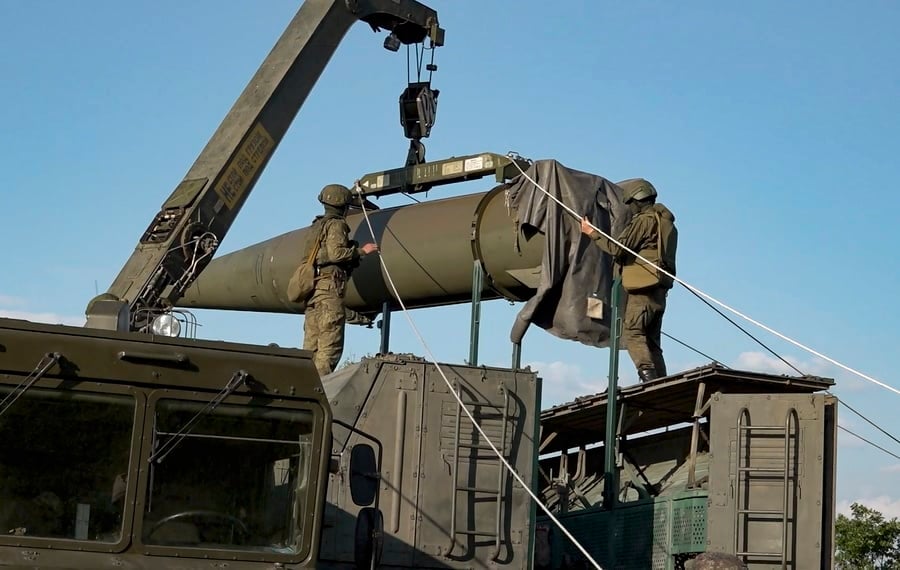
Russian military personnel load a missile onto a transport vehicle. Nuclear powers spent a record of $119 billion on their arsenals in 2025, according to ICAN. Credit: Russian Defence Ministry / EPA / AMNA.
Nuclear powers spent a record of $119 billion on arsenals in 2025, as the world’s nine nuclear-armed states significantly increased their weapons-related expenditure, according to a new report by the International Campaign to Abolish Nuclear Weapons (ICAN).
The figure marks a 19 percent rise from 2024, with nuclear powers spending $17 billion more than the previous year. ICAN warns that the increase reflects a broader trend that is likely to continue for decades. The report covers the United States, Russia, China, the United Kingdom, France, India, Israel, Pakistan, and North Korea.
ICAN warns of a new nuclear arms race
As per the Nobel Peace Prize-winning organization, rising geopolitical tensions are fueling what it describes as a new nuclear arms race. ICAN has also raised concerns over the possible role of artificial intelligence in nuclear decision-making, warning that AI could accelerate the process leading to the potential use of nuclear weapons.
Susie Snyder, ICAN’s program coordinator and one of the report’s authors, described the figures as deeply troubling. Speaking to Agence France-Presse, she declared it’s deeply terrifying.
US spent more than all other nuclear powers combined
The United States remained the world’s largest nuclear spender in 2025, allocating $69.2 billion to its arsenal. That was $12.4 billion more than in 2024 and more than the combined total spent by the other eight nuclear-armed states. China ranked second, with estimated spending of $13.5 billion. The United Kingdom followed with $12.6 billion, while Russia spent $9.5 billion.
According to ICAN, the nine nuclear-armed countries have spent over $470 billion on their arsenals in the past five years.
Long-term nuclear programs could last beyond 2100
The report reveals that nuclear weapons spending is expected to continue rising as countries modernize and maintain their arsenals over time. ICAN points to spending plans in the United States, the United Kingdom, and France that could necessitate billions of dollars through the end of the century. Other nuclear-armed states are also developing weapons systems designed to remain in service for decades.
In the United States, the planned Sentinel intercontinental ballistic missile program is expected to remain operational beyond 2100. Based on the report, expanded US production of plutonium pits could support nuclear warheads until at least 2120. ICAN estimates that the United States alone is expected to spend nearly $1 trillion on its nuclear arsenal between 2025 and 2034.
Report compares record spending by nuclear powers with global needs
The scale of spending, ICAN says, comes as governments face pressing global challenges, including health care, food security, and humanitarian needs. According to Snyder, the amount spent by nuclear-armed states in 2025 would have been enough to fund the United Nations budget dozens of times over. She added that a single day of nuclear weapons spending could have guaranteed food security for two million people last year.
The report argues that nuclear-armed countries are committing public resources to weapons that, according to Snyder, they “could not use without committing a war crime.” ICAN maintains that the latest figures show that nuclear weapons spending is becoming a long-term strategic priority rather than a short-term response to current global tensions.
A member of the US navy has been ordered to spend 44 years in federal prison after admitting that he fatally strangled a fellow sailor in his barracks room, violently squeezed the neck of a second woman onboard an aircraft carrier and illegally made secret video recordings of a third, including while they were being intimate.
Meanwhile, the family of the petty officer whom Jermiah Copeland acknowledged murdering, Angelina Resendiz, has called for reforms within the armed forces meant to better protect women serving in the military.
If the US genuinely wants a deal it will have to engage with Iranian demands on sanctions relief, says Danny Citrinowicz, the former head of the Iran branch of Israeli military intelligence.
Today’s exchange of strikes shows how easily both Iran and the US can slide towards another round of escalation, says Citrinowicz, who is now a nonresident fellow at the Atlantic Council.
If Washington is unwilling to accept that reality, it should recognize the likely alternative: continued confrontations with Iran that could eventually spiral beyond anyone’s control and lead to military conflict under less favorable conditions.
Even a limited military campaign designed to weaken Iran would not fundamentally alter Tehran’s negotiating position. It has not happened in the past, and there is little reason to believe it would happen now. Iran emerges from the latest exchange of blows convinced that it can absorb pressure and respond to attacks.”
Legal and moral responsibility of all countries in the region (especially those located along the southern shores of the Persian Gulf) to prevent the US military and Israel from using their territory or facilities to plan, organise, execute, or support hostile actions against Iran.
NATO will continue its support to Europe but will prioritize U.S. security. Photo credit: Touch of Light Wikimedia Commons CC BY-SA 4.0
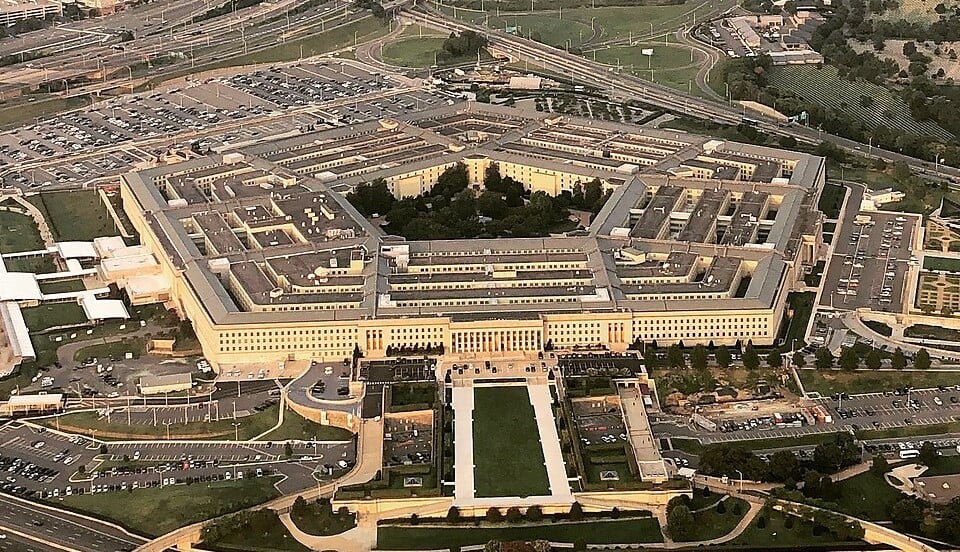
The Pentagon has sharply reduced the number of religion codes used by the U.S. military, replacing a list of about 220 faith groups and denominations with 31 broader religious categories.
The updated system, which is expected to take effect in July, has sparked debate among veterans, chaplains, lawmakers, and religious groups over its potential impact on faith representation within the armed forces.
The new categories include Buddhism, Hinduism, Baha’i, Islam, Judaism, Sikhism, and a designation for people with no religious affiliation. Christian denominations make up most of the recognized categories.
Pentagon says change is administrative
Military officials said the change is intended to simplify record-keeping and improve data collection for military chaplains. The Pentagon explained that the revised list is not meant to determine which religions are officially approved or recognized by the government.
Service members whose faiths are not among the 31 listed categories will still be able to identify their religion and include it on military dog tags, officials said.
Critics question the impact on religious diversity
The policy change has drawn criticism from some veterans, former chaplains, and religious groups who argue that the consolidation could reduce the visibility of minority faiths within military records.
The Office of the Secretary of War is announcing a significant change to the Department’s categorization of religious affiliation. In a long overdue move, we reduced the list from over 200 unmanageable categories to 31. With this move, we are returning to the original intent of… https://t.co/dgHX5ytzjJpic.twitter.com/eho537O08J
A former U.S. Army chaplain said that the move raises concerns about the military’s commitment to religious diversity.
“When I raised my hand to become an Army chaplain, I swore that I would support and defend the Constitution,” the former chaplain said. “The First Amendment is the free exercise of religion for everybody. That’s what I was buying into.”
The update also arrives amid broader debate over Defense Secretary Pete Hegseth and his public use of Christian prayers while discussing military operations. Some critics have questioned whether such expressions blur the line between personal faith and official government leadership.
Latter-day Saints’ designation draws attention
The revised system has also sparked concern among members of the Church of Jesus Christ of Latter-day Saints. Under the new classification structure, the church appears as a separate category rather than being included among the military’s Christian denominations.
That decision prompted criticism from Mike Lee, a Republican senator from Utah and a member of the church.
“Can anyone tell me why The Church of Jesus Christ of Latter-day Saints was left out of the list of Christian churches?” Lee wrote on X.
Can anyone tell me why The Church of Jesus Christ of Latter-day Saints was left out of the list of Christian churches? pic.twitter.com/t4u6PI29ON
Smaller faith groups lose separate classifications
According to an analysis, the consolidation removed separate classifications for numerous faith traditions, spiritual movements, and nonreligious belief systems. Those no longer listed individually include Eckankar, Heathen, Native American spiritual traditions, Rosicrucianism, Druidism, Deism, Asatru, Paganism, Humanism, Unitarian Universalism, Wicca, Shamanism, and Atheism, among others.
Defense Department officials have emphasized that the changes are administrative rather than ideological. Sean Parnell, a Defense Department official, said the military continues to place a high value on the First Amendment and the free exercise of religion for all service members.
The US has launched strikes against Iran after Donald Trump blamed Tehran for downing a US army helicopter near the strait of Hormuz, imperilling a shaky ceasefire that was announced by the two countries in April.
The attacks triggered a wave of retaliatory strikes from Iran on Wednesday morning, with Tehran saying it had targeted Kuwait, Bahrain and Jordan.
Trump said in a social media post that military officials told him "the Iranians shot down one of our highly sophisticated Apache Helicopters." He added that both service members "are safe and uninjured."
The burning feathers tactic used by the Ancient Greeks is considered one of the first chemical weapons in human history. Credit: Greek Reporter archive
In 189 BC, Ancient Greeks defending the city of Ambracia used an early form of chemical warfare against Roman forces during a siege, deploying a clay jar filled with burning chicken feathers.
At first, the story sounds almost absurd, but it becomes far more striking once the details are unpacked and we understand what was happening beneath the city walls—and, more importantly, why this moment even matters in the history of ancient warfare.
Ancient Greeks turn to chemical warfare and burning feathers as siege intensifies
The Romans arrived in Ambracia with overwhelming force. Consul Marcus Fulvius Nobilior deployed battering rams under a two-hundred-foot covered gallery, a massive mobile shed designed to protect his engineers from arrows and boiling pitch as they hammered away at the walls. The Ambraciot defenders held firm. The walls didn’t collapse.
Frustrated and running out of options above ground, the attackers eventually turned underground. Their plan was straightforward enough: tunnel beneath the city, collapse the foundations, and force the stubborn Greeks to surrender. For a while, the effort proceeded in silence. Then the Greeks noticed the piles of excavated earth building up outside the camp and understood exactly what was going on. Locating the tunnel was another matter. The Greeks solved it with one of the most clever pieces of field engineering in ancient history.
They placed thin bronze vessels against the ground at various points inside the city and then pressed their ears to them to listen. The vibrations traveling through the earth from the pickaxes told them exactly where the tunnel was heading. It functioned as an early acoustic detection system, and it worked brilliantly. They then dug a counter-tunnel and broke through into the mine. What followed was the kind of close-quarters underground fighting where normal weapons become useless. Spears are too long, shields too wide, and you can’t even see the man you’re fighting, so they built something new.
The Greeks took a large clay jar, a pithos, sized to precisely fit the tunnel, capped it with an iron lid drilled with holes, inserted an iron tube connected to a blacksmith’s bellows, and filled the jar with glowing charcoal covered in a dense layer of fine feathers, creating what can be described as an early chemical warfare device. When it was pushed into the tunnel and activated with the bellows, it produced a thick cloud of acrid, choking smoke that billowed forward into the darkness.
The Roman miners couldn’t breathe, couldn’t see, and had nowhere to go. They abandoned their tools and fled to the surface to escape the choking fumes. The Greeks had driven off a superior Roman force solely with clay, iron, fire, and feathers. Military historian Adrienne Mayor has pointed to this episode as evidence of just how sophisticated ancient weapons technology really was.
This deliberate act of chemical engineering would be remembered in later accounts of ancient warfare. The pithos was matched to the tunnel width specifically to prevent blowback. The feathers were chosen for the particular quality of smoke they produced when burned at high temperatures. Someone thought this through. The parallels to later warfare are hard to ignore. The same basic horror—an invisible, suffocating enemy in a dark enclosed space—would define trench warfare on the Western Front more than two thousand years later.
The psychology hasn’t changed even if the chemistry has. Ambracia ultimately surrendered. Cut off and outnumbered, the city eventually negotiated terms rather than fight on indefinitely, but the defenders had already shown what was possible. Historians now regard what happened in those tunnels as one of the earliest documented uses of asphyxiating chemical weaponry in a tactical military context—a genuine milestone in the history of warfare.
During the Roman siege of Ambracia in 189 BC, the defenders deployed what is one of the earliest recorded uses of a chemical weapon in history — and they used it underground. Rome was besieging the Greek city, held by the Aetolian League. When the walls held and the siege artillery failed, the Romans turned to mining — digging a tunnel beneath the walls, concealed behind a two-hundred-foot covered walkway, worked in relays day and night. For days the defenders didn’t notice. Then the pile of excavated earth grew too large to hide. Unable to see the tunnel, the defenders pressed bronze vessels against the ground to detect the vibration of digging, located the Roman mine, and dug a counter-tunnel straight toward it. The two tunnels met. Soldiers fought face to face in darkness too cramped to swing a sword. When direct combat failed, the defenders built a device described in detail by the historian Polybius: a clay jar fitted to the tunnel’s width, packed with feathers over burning coals, sealed with a perforated iron lid, and connected to a blacksmith’s bellows. They pumped the choking smoke directly into the Roman tunnel. The Romans were driven out of their own mine. According to Polybius, it was among the first uses of toxic smoke in the history of war. Further reading — Polybius, The Histories: https://amzn.to/4uWM9wN #AncientHistory#RomanEmpire#Ambracia#Shorts#HistoryShorts#ChemicalWarfare#TimelineHistory#history#shorts#ancientrome#education
Rights groups and some locals worry that program to ‘track illicit activity’ could become a data collection project
The Great Lakes have rarely ever been considered a hotbed of illicit drug activity or center for illegal immigration.
But that hasn’t stopped US government agencies and the company behind surveillance sailing drones from treating the region as such. The US Coast Guard recently announced it has launched an armada of at least six sailing drones in the Great Lakes this summer in an attempt to, in part, “track illicit activity”.
Sources say much delayed Dip is close to sign-off but only after some of the Labour government’s worst infighting
Cabinet relations have been left badly damaged by the protracted row over the defence investment plan (Dip), according to Whitehall sources who say the standoff has led to some of the worst infighting since Labour took power.
Ministers are putting the final touches on the plan, which is expected to be published in the coming weeks after departments agreed to cut their capital budgets by about 1% to pay for additional military spending.
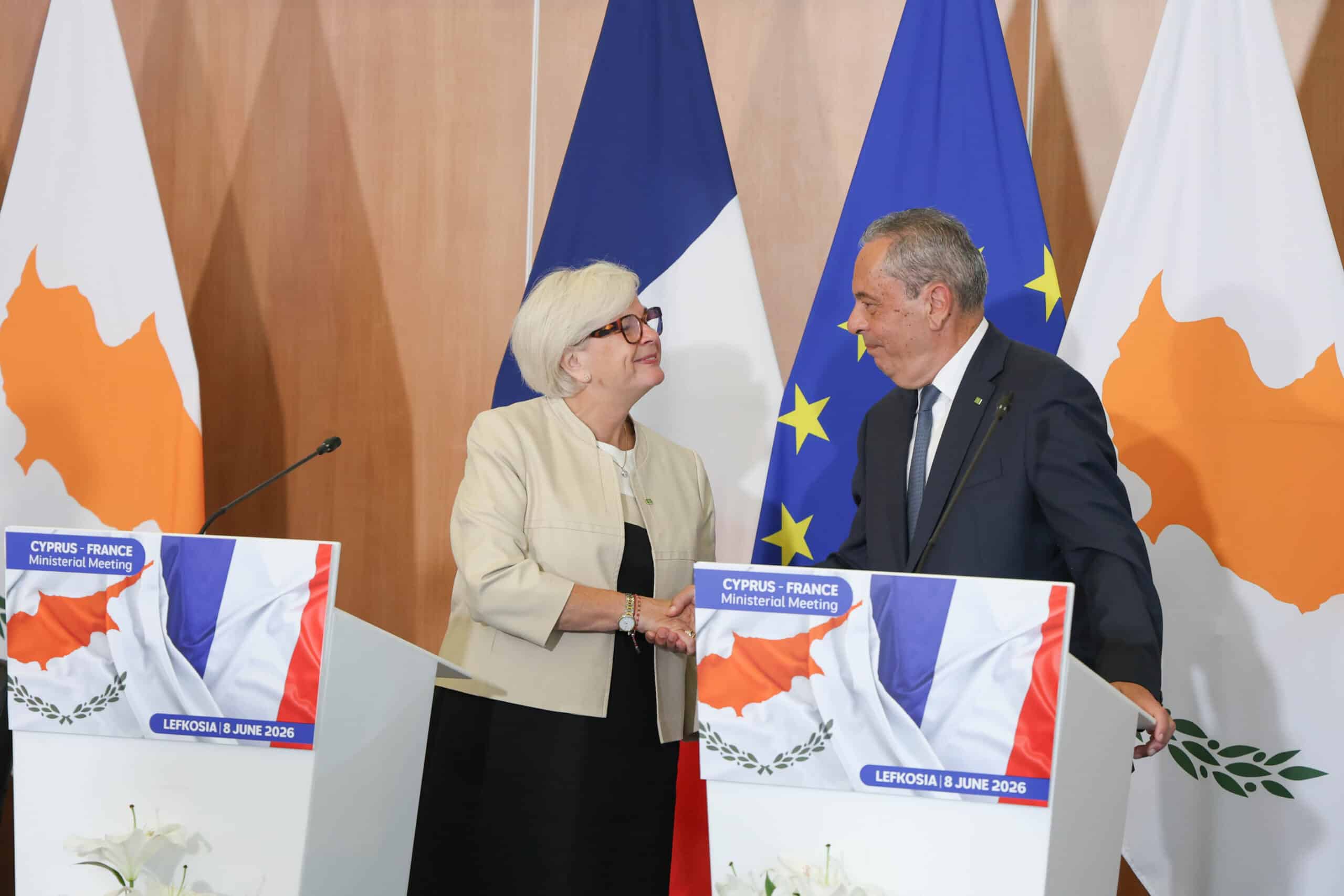
Defense Minister Vasilis Palmas and his French counterpart, Catherine Vautrin, signed the defense agreement on Monday. Credit: European Council
Cyprus and France signed a Status of Forces Agreement (SOFA) on Monday that strengthens defense cooperation between the two nations and allows for the conditional deployment of French troops on the island nation.
The agreement was signed in Nicosia by Defense Minister Vasilis Palmas and his French counterpart, Catherine Vautrin, on the sidelines of the informal meeting of EU defense ministers, hosted by Cyprus.
Vautrin described Cyprus as a key strategic partner for France and an essential hub for French military operations in the Eastern Mediterranean and the Middle East. “Cyprus is an essential support point for the conduct of our military operations in the Eastern Mediterranean and the Near East,” she said.
She noted that the ports of Larnaca and Limassol host around thirty French naval visits annually, with twenty-one already recorded since the beginning of this year. The French Minister highlighted the extensive cooperation between the two countries’ armed forces, pointing to joint naval exercises, including Argonaut and Eunomia, aimed at strengthening maritime security, freedom of navigation, and crisis response capabilities.
According to Vautrin, cooperation has also expanded in recent years to include land and air operations, military mobility, air defense, operational readiness, and logistical support.
Provisions of the Cyprus-France defense agreement
Cyprus President Nikos Christodoulides announced the agreement’s entry into force on his official social media accounts, stating that the signing and implementation of the SOFA contribute to the shared European objective of strengthening the European Union’s strategic autonomy.
Όταν ο Γάλλος Προέδρος Emmanuel Macron επισκέφθηκε την Κύπρο στις 23 Απριλίου 2026, είχαμε αναφερθεί δημόσια, κατά τη διάρκεια της διάσκεψης τύπου, στην πολυεπίπεδη στρατηγική μας συνεργασία, ειδικότερα στους τομείς της Άμυνας και της Ασφάλειας. Μέσα σε αυτό το πλαίσιο, είχα… pic.twitter.com/E3Gk5IZgX8
— NikosChristodoulides (@Christodulides) June 8, 2026
Under the SOFA, which was discussed during French President Emmanuel Macron’s visit to Nicosia on April 23 and subsequently negotiated between the two sides, the military assets of France may be deployed in southern Cyprus under certain conditions. The agreement also provides a legal framework for the presence of French military forces in Cyprus in support of various activities in the Eastern Mediterranean and the Middle East.
Furthermore, the SOFA, whose entry into force was announced by Christodoulides, grants France access to military bases and infrastructure in Cyprus. The agreement is reported to also include provisions on military technology sharing, joint exercises, and strategic dialogue between France and Cyprus.
EXCLUSIVE: Finnish Foreign Minister Elina Valtonen said Ukraine has gained new leverage against Russia, arguing that Moscow’s renewed talk of negotiations comes as Kyiv has strengthened itself militarily, politically and diplomatically.
Valtonen’s comments carry particular weight because Finland is one of NATO’s newest members and now sits on the alliance’s longest border with Russia. Finland joined NATO in April 2023 after Russia’s full-scale invasion of Ukraine, ending decades of military nonalignment and transforming the country into a frontline state in Europe’s security posture.
"Ukraine certainly is now holding the cards," Valtonen told Fox News Digital Monday in an interview at the United Nations headquarters in New York. "They have strengthened themselves immensely over the course of the past three, four months, both militarily and politically, diplomatically. And I think this opens a great window of opportunity for actually advancing the peace talks."
Her assessment comes as Reuters reported that Ukraine’s top military commander said Ukrainian forces had recaptured more than 600 square kilometers, or roughly 230 square miles, of territory so far in 2026, a shift after years of slow Russian gains. It also follows renewed diplomatic activity, including Zelenskyy’s stated willingness to halt fighting along current lines as a path to talks and Putin’s public rejection of a direct meeting for now.
Finland shares a roughly 820-mile border with Russia, making it one of the alliance’s most strategically exposed members.
Valtonen said Moscow has shown little willingness to make concessions and argued that the responsibility for ending the war remains with the Kremlin.
"So far, Russia hasn’t been willing to make any concessions, and essentially Russia could end the war today if they wanted to, because it was their war in the first place," she said. "So I’m hopeful that this could be the right time to relaunch those talks."
Peace efforts remain stalled over the same core divide that has shaped the war for years: Ukraine has called for a ceasefire and negotiations without surrendering territory, while Russia has continued to demand control over occupied Ukrainian regions. Putin said in early June there was "no point" in meeting Zelenskyy for now and repeated Moscow’s broader war aims.
Asked about U.S.-led efforts to negotiate an end to the war, Valtonen praised Washington’s role but stressed that Ukraine alone must decide whether to accept any concessions, including on territory.
"I think the U.S. involvement in this entire process has been a very good one, and it’s important that the U.S. stays engaged, because at the end of the day, it’s about freedom, it’s the future of not only Europe, but also of global peace," she said.
Valtonen said Europe also needs to be part of the process because Russia’s war directly affects the continent’s security architecture.
She said any serious negotiations would require Russia to accept a full ceasefire.
"First and foremost, we would need Russia at the table willing to end the war," Valtonen said. "And that would need to happen through a full ceasefire, because only that would open the possibility for true negotiations."
Valtonen also credited President Donald Trump with pushing European allies to increase defense spending, saying the pressure had moved the continent in the right direction after years of imbalance inside NATO.
Finland has moved aggressively to increase defense spending. Helsinki plans to raise defense spending to 3.2% of GDP by 2030, up from 2.5% in 2025, Reuters reported in April.
Secretary of State Marco Rubio also praised Finland and Sweden Tuesday during a Senate Foreign Relations Committee hearing, saying the two newest NATO members had strengthened the alliance by bringing "their own defense industry" and "advanced technologies."
He called them "a great partner" and "an extraordinary partner."
Valtonen said Finland’s approach is shaped by its own history with Moscow.
"Finland obviously has taken the Russian threat extremely seriously because we have the longest border with them," she said. "We certainly worship our status as the happiest country in the world, i.e. democracy, the rule of law and human rights, which we hold dear as values over anything that Russia could offer."
She also pointed to Finland’s experience in World War II, when the Soviet Union invaded Finland, as a reminder of why deterrence matters.
"The last time the Soviet Union, i.e. Russia, tried to invade us was during the Second World War," Valtonen said. "Happily, we were able to fend them off, but of course at the massive cost to the society."
"For us, it has been clear that if we invest in our deterrence, then that’s a signal to Russia — do not come here," she added.
On Iran, Valtonen said Finnish President Alexander Stubb’s March comments, reported by The Guardian, that the conflict was not a NATO matter should not be understood as Europe washing its hands of the crisis.
"I don’t think our president meant that this has nothing to do with European countries or NATO allies," Valtonen said. "I think what he probably meant more is that NATO obviously is not directly involved as an organization, which is true."
Her comments came after another weekend escalation in the Iran war, with Tehran launching missiles at Israel and Israel striking military targets in western and central Iran overnight. The flare-up unfolded as the U.S. and its allies continue efforts to prevent Iran from becoming a nuclear state and keep pressure on Tehran over threats to Israel and regional shipping.
The Strait of Hormuz, a critical global energy choke point, has become a central focus for Western governments after Iranian threats and restrictions on maritime traffic. Reuters reported Monday that the European Union sanctioned Iranian-linked individuals and an Islamic Revolutionary Guard Corps navy unit over threats to shipping in the strait.
"We as individual member states in Europe have definitely been helping the U.S. effort," Valtonen said. "We don’t want to see Iran as a nuclear state. We know what kind of a threat Iran has projected towards the region, especially toward Israel."
Valtonen added Finland has also joined efforts led by France and the United Kingdom to keep the Strait of Hormuz open once conditions allow for safe operations in the area.
"It’s so important that such straits are not weaponized by any country around the world," Valtonen said.
Asked whether European countries had refused U.S. requests to use bases during the Iran crisis, Valtonen said Finland has no U.S. bases to shut down but argued that most European allies have supported Washington’s requests.
"Finland has been helping the U.S. through so many ways," she said. "We don’t have any U.S. bases in Finland, so there’s nothing we can shut down."
"But having said this, the vast majority of European countries have said yes to everything that the U.S. has asked during the past couple of months when this war effort has been ongoing, independent of the fact that, of course, we are not directly involved as countries in the war," she added.
Valtonen said that support demonstrated NATO allies’ willingness to help Washington even when the alliance itself is not formally involved.
"I think that really shows the engagement by NATO allies in this and our willingness to help when the U.S. really needs some assistance," she said.
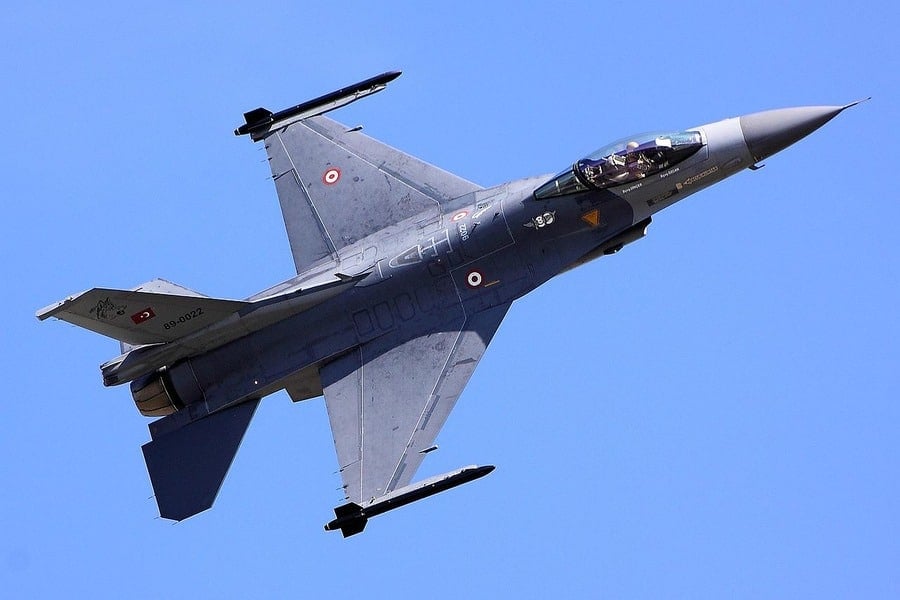
Two Turkish F-16 fighter jets tracked the official state aircraft of the European ministers from a distance. Credit: Wikimedia Commons, Tim Felce, CC BY SA 2
Turkey denied that its jets harassed the military aircraft carrying Greek National Defense Minister Nikos Dendias and his French and Dutch counterparts to Cyprus.
Earlier, it was reported that the “control tower” of the illegal Tymbou Airport in occupied Cyprus attempted to jam the aircrafts’ communications system. Furthermore, according to Philenews, two Turkish F-16 fighter jets scrambled from Tymbou, tracking the official state aircraft of the European ministers from a distance as they headed toward Cyprus.
A statement from the Turkish Presidency said that “claims in certain news media and social media accounts” about such harassment on Sunday and about Turkish warplanes violating Greek airspace were “completely false.”
The statement said that four of the six aircraft heading from Greece to Cyprus “breached the airspace” of Turkish-occupied northern Cyprus, and as a result two Turkish F-16 fighters took off from the ethnically divided island’s north “as a precaution.”
It said the F-16s did not enter Cypriot airspace and “there was no harassment” of the four aircraft.
The incident took place just hours before France and Cyprus were set to sign a Status of Forces Agreement (SOFA) on Monday, which will allow Paris to station military forces on the island.
France and Cyprus to sign military deployment agreement
The agreement will be signed in Nicosia by French Defense Minister Catherine Vautrin and her Cypriot counterpart, Vassilis Palmas. Both ministers are scheduled to attend an informal meeting of the EU Foreign Affairs Council (Defense) on the same day.
The Turkish Cypriot side condemned the agreement as “null, void, and legally invalid.” They expressed concerns that the deal could alter the balance of power on the island, disregard Turkish Cypriot rights, and escalate regional tensions. They further argued that the Republic of Cyprus lacks the authority to sign such an agreement on behalf of the entire island.
Iran fired ballistic missiles and drones toward Bahrain and Kuwait that were intercepted early Saturday, Bahrain's government said, and called on Tehran to halt attacks on Gulf neighbors that test a fragile ceasefire in the Middle East conflict.
The U.S. military is waiting for clarity from the Pentagon following President Donald Trump's back-and-forth on troop levels in Europe, upending the lives of military personnel and potentially costing taxpayers millions of dollars, two U.S. defense officials told The Associated Press.
Kuwait decried Iranian attacks in a statement issued by its foreign affairs ministry, saying that the Kuwait International Airport had been targeted.
"The Ministry of Foreign Affairs expresses the State of Kuwait's condemnation and denunciation, in the strongest terms, of the brutal and ongoing Iranian attacks using ballistic missiles and drones, the latest of which occurred at dawn today, targeting once again civilian and vital facilities, including Kuwait International Airport, resulting in the death of one individual, injuries to others, and damage to vital facilities, including diplomatic missions," part of the statement declared, according to a translation of the Arabic-language post on X.
Kuwait's Ministry of Defense spokesperson had indicated that a building at Kuwait International Airport was damaged and people were injured, according to a post on X by the official account of Kuwait Army general staff headquarters.
"The Official Spokesman for the Ministry of Defense, Brigadier General Saud Abdulaziz Al-Otaibi, stated that a number of hostile drones targeted today the passenger building (T1) at Kuwait International Airport as a result of the criminal Iranian aggression, which resulted in significant material damage to the building and injuries to a number of individuals, who received the necessary medical care," according to a translation of the Arabic-language post.
"He affirmed that the armed forces are monitoring the situation in coordination with the relevant authorities, and they are in a state of complete readiness to deal with any developments, and to take all necessary measures to preserve the security of the country and its stability," the post added.
The Iranian hostilities come more than three months since the start of the U.S. war against the Islamic Republic.
In a Tuesday statement, U.S. Central Command (CENTCOM) indicated that America had engaged in "self-defense strikes" against Iran.
"U.S. forces successfully defeated multiple Iranian ballistic missiles and drones, and conducted self-defense strikes on Qeshm Island in response to attempted attacks by Iran across the Middle East, June 2. Iran launched several ballistic missiles toward regional neighbors; however, all failed to hit their intended targets. Two Iranian missiles fired at Kuwait fell short or broke apart enroute, and three missiles launched at Bahrain were immediately intercepted by U.S. and Bahrain air defense forces," the release noted.
"Moments earlier, U.S. Central Command (CENTCOM) forces shot down three one-way attack drones launched by Iran toward civilian mariners that were rightfully transiting regional waters. American forces also conducted self-defense strikes on an Iranian military ground control station on Qeshm Island. No U.S. personnel were harmed. CENTCOM forces remain vigilant and ready to defend against unwarranted Iranian aggression during the ongoing ceasefire," the statement added.
CENTCOM noted in a post on X that, "An additional wave of Iranian drones attempting to attack U.S. forces in Kuwait failed to impact intended targets tonight. U.S. Central Command air defenses successfully downed multiple drones and ensured no American personnel or assets were harmed."
U.S. Central Command (CENTCOM) announced that it carried out "self-defense strikes" against Iran over the weekend.
"U.S. Central Command (CENTCOM) conducted self-defense strikes on Iranian radar and command and control sites for drones in Goruk, Iran and Qeshm Island this weekend," a press release noted.
"The measured and deliberate strikes occurred on Saturday and Sunday in response to aggressive Iranian actions that included the shootdown of a U.S. MQ-1 drone that was operating over international waters. U.S. fighter aircraft swiftly responded by eliminating Iranian air defenses, a ground control station, and two one-way attack drones that posed clear threats to ships transiting regional waters," CENTCOM continued.
"No American service members were harmed. CENTCOM will continue to protect U.S. assets and interests in response to unwarranted Iranian aggression during the ongoing ceasefire," the release added.
The Associated Press reported that Kuwait noted its air defenses opened fire on Monday to intercept drone and missile attacks. Around the same time, Iran’s paramilitary Revolutionary Guard said it responded to an American attack without saying where, likely referring to the attack on Kuwait. The Guard, via a statement reported by the state-run IRNA news agency, indicated that America targeted a telecommunications tower, according to the AP.
U.S. Central Command (CENTCOM) said in a Monday post on X, "Last night at 11 p.m. ET, U.S. forces successfully intercepted two Iranian ballistic missiles targeting American forces based in Kuwait. These missiles were immediately defeated and no American personnel were harmed. U.S. Central Command remains vigilant and will continue to protect our forces from Iranian aggression while supporting the ongoing ceasefire."
Asserting that Iran "really wants" to strike an agreement, President Donald Trump declared in a Monday morning Truth Social post that chattering critics are making it more difficult for him to negotiate.
He urged people to "sit back and relax," claiming that the issue will ultimately turn out "well."
"Iran really wants to make a deal, and it will be a good one for the U.S.A. and those that are with us. But don’t the Dumocrats, and various seemingly unpatriotic Republicans, understand that it is MUCH tougher for me to properly do my job and negotiate, when political hacks keep negatively ‘chirping,’ at levels never seen before, over and over again, that I should move faster, or move slower, or go to war, or not go to war, or whatever," he declared in a Truth Social post early on Monday.
"Just sit back and relax, it will all work out well in the end - It always does!" he declared.
The U.S. is continuing to conduct a blockade against Iran.
"U.S. forces operating in the Gulf of Oman enforced blockade measures by disabling a Gambia-flagged maritime vessel attempting to sail toward an Iranian port, May 29," CENTCOM announced in a Saturday press release.

 Login
Login