À l'occasion du centenaire de la mort de l'architecte Antoni Gaudi, le pape Léon XIV doit bénir mercredi la plus grande tour de la basilique de la Sagrada Familia à Barcelone, puis célébrer une messe dans ce qui est aujourd'hui la plus haute église du monde. L'édifice, dont la construction a débuté en 1882 et est toujours inachevée, attire tous les ans des millions de visiteurs.
Vodafone Greece commenced early-stage talks about going Dutch on a fibre-to-the-home (FTTH) venture with utility PPC Group, a combination with the potential to pass almost 2.5 million homes.
The head of terms discussion over the 50:50 joint venture also involves the companies’ respective wholesale fibre operations. Vodafone explained any combined business would provide open access to ISPs.
PPC stated the FTTH network of the subsidiary in line for the combination currently passes 1.9 million households and Vodafone’s 550,000.
Alexandros Paterakis, vice chair of the PPC FiberGrid unit and deputy CEO for digital services at the group, said any tie-up would create a “leading digital network infrastructure in Greece”, along with advancing various of the company’s strategic goals.
For Vodafone, any agreement would “substantially accelerate the development of our fibre network” CEO Achilleas Kanaris said.
He added Greece is strategically important to Vodafone Group as a whole and explained the unit is focused on expanding its footprint, shifting from “copper to fibre” and contributing to “national digital coverage objectives”.
The companies emphasised no binding commitments had been made and they are yet to embark on due diligence processes, though indicated intentions to do so with a view to signing binding agreements.
La présidente de la Commission européenne a proposé, mardi 9 juin 2026, de nouvelles mesures visant le pétrole russe et des sanctions dans le domaine de la pêche. L'UE propose aussi d'interdire l'entrée dans son espace à toute personne ayant servi dans les forces armées russes depuis le début de la guerre en Ukraine. Ces dernières semaines, Kiev a intensifié ses frappes sur la logistique russe et les effets se font sentir dans les territoires illégalement occupés, notamment en Crimée.
Some fans and participants hoping to enter the United States for the World Cup have complained that restrictive immigration rules have presented a roadblock.
Iraqi soccer player Aymen Hussein, pictured in a mural near Baghdad wearing his No. 18 jersey, was temporarily detained by U.S. immigration officials before being allowed to enter the country for the World Cup.
Pope Leo will bless the Sagrada Familia's soaring central Jesus Christ tower in Barcelona on Wednesday, ahead of a visit to the Canary Islands where he will focus on immigration. The Pope has received a rapturous reception during his visit to Spain where he on Sunday held an open-air mass with 1.5 million people.
The Netherlands blocked a U.S. company from buying a Dutch firm that handles its national ID system, saying it would create a “threat to the public interest.”
Willemijn Aerdts, the Dutch minister for the digital economy and sovereignty, spoke to the news media last month after blocking the acquisition of Solvinity, a Dutch tech company, by the U.S. firm Kyndryl.
FIFA World Cup celebrations in Mexico are running into wider social tensions as the capital prepares to open its arms to the world in the opening ceremonies
Pope Leo will bless the Sagrada Familia's soaring central Jesus Christ tower in Barcelona on Wednesday, ahead of a visit to the Canary Islands where he will focus on immigration. The Pope has received a rapturous reception during his visit to Spain where he on Sunday held an open-air mass with 1.5 million people.
Homes were set on fire in Belfast. Video screenshot/Sky News
Widespread anti-immigration riots broke out across the UK on Tuesday following a particularly violent knife attack in Northern Ireland. The unrest was triggered by news that a thirty-year-old Sudanese national had been charged with attempted murder. Prime Minister Keir Starmer strongly condemned the initial attack, labeling it both “horrific” and “sickening,” while stating he has zero tolerance for such violence.
Escalation of violence in Northern Ireland
BREAKING: A bus has been set on fire in Belfast amid protests over the attempted beheading of a man pic.twitter.com/FX8maCMalK
The unrest was most intense in Northern Ireland, where masked mobs caused extensive property damage on Tuesday evening:
Belfast: Riots resulted in multiple homes, a bus, cars, and street barricades being set on fire. Northern Ireland First Minister Michelle O’Neill condemned the rioters, stating that groups of masked men were “burning families out of their homes” in acts of “outright thuggery.”
Newtownabbey & Kilkeel: Blazes spread to neighboring towns, where verified social media footage showed protesters setting several vehicles ablaze.
Wider UK: Smaller, sporadic anti-immigration protests and clashes with police were also reported in other major UK cities, including London, Glasgow, and Bangor.
A large group rioters is attacking migrant HMOs (Houses in Multiple Occupation, a form of taxpayer-funded housing for asylum seekers) in Belfast. pic.twitter.com/o9yjynArd4
Social media fueling the anti-immigration riots in the UK
The catalyst for the riots was a viral video filmed by a witness during Monday night’s attack in North Belfast. The footage depicts a man pinning a bloodied victim to the ground and repeatedly stabbing him before bystanders and police intervened. Far-right and anti-immigration accounts widely circulated the footage online to mobilize public protests.
Further update from police sources, a property has been set alight in the Lendrick Street area of Belfast.
First Minister O’Neill warned that extremist groups are dangerously exploiting a heinous crime to target and intimidate innocent people who are just trying to live their lives.
The incident occurred around 10:30 p.m. on Monday, June 8 on Canard Avenue in North Belfast. A man in his forties suffered severe wounds to his face, back, and eyes. He remains hospitalized in serious condition. Police recovered a kitchen knife at the scene.
A thirty-year-old man was arrested for attempted murder. Authorities confirmed he had traveled from Paris to Dublin before entering Northern Ireland in February 2023. He claimed asylum upon arrival and was granted legal residency in the UK until 2028.
Le pape Léon XIV a longuement évoqué mardi, lors d'une veillée de prière, les questions de santé mentale, appelant à lutter contre la dépression un "mal-être invisible et généralisé" dans un contexte de hausse des violences, notamment envers les femmes. Mercredi, il bénira à Barcelone la plus grande tour de la Sagrada Familia et y célébrera une messe.
Germany’s economic decline is no longer merely an economic story. It has become a political one. Chancellor Friedrich Merz has become the focal point of this broader crisis of governance and legitimacy. For decades, Germany was regarded as the economic engine of Europe and, alongside France, a principal political architect of the European Union. Today, […]
Exclusive: poll across 15 countries finds ‘deep mistrust’, with majority doubting US would come to their aid in an attack
European confidence in an American “security guarantee” has hit a historic low, a survey suggests, with only one in 10 people across 15 countries seeing the US as an ally and majorities in all doubting it would come to their aid if they were attacked.
The survey, published on Wednesday by the European Council on Foreign Relations (ECFR) thinktank before critical G7 and Nato summits in France and Turkey over the coming weeks, revealed “deep European distrust in the US”, the authors said.
Au lendemain des faits, une manifestation anti-immigrés organisée à l'appel de plusieurs figures d'extrême droite a été marquée par de nombreux incidents, dans la soirée du mardi 9 juin. Un bus et plusieurs voitures ont notamment été incendiés, tandis qu'un immeuble partiellement en feu a dû être évacué.
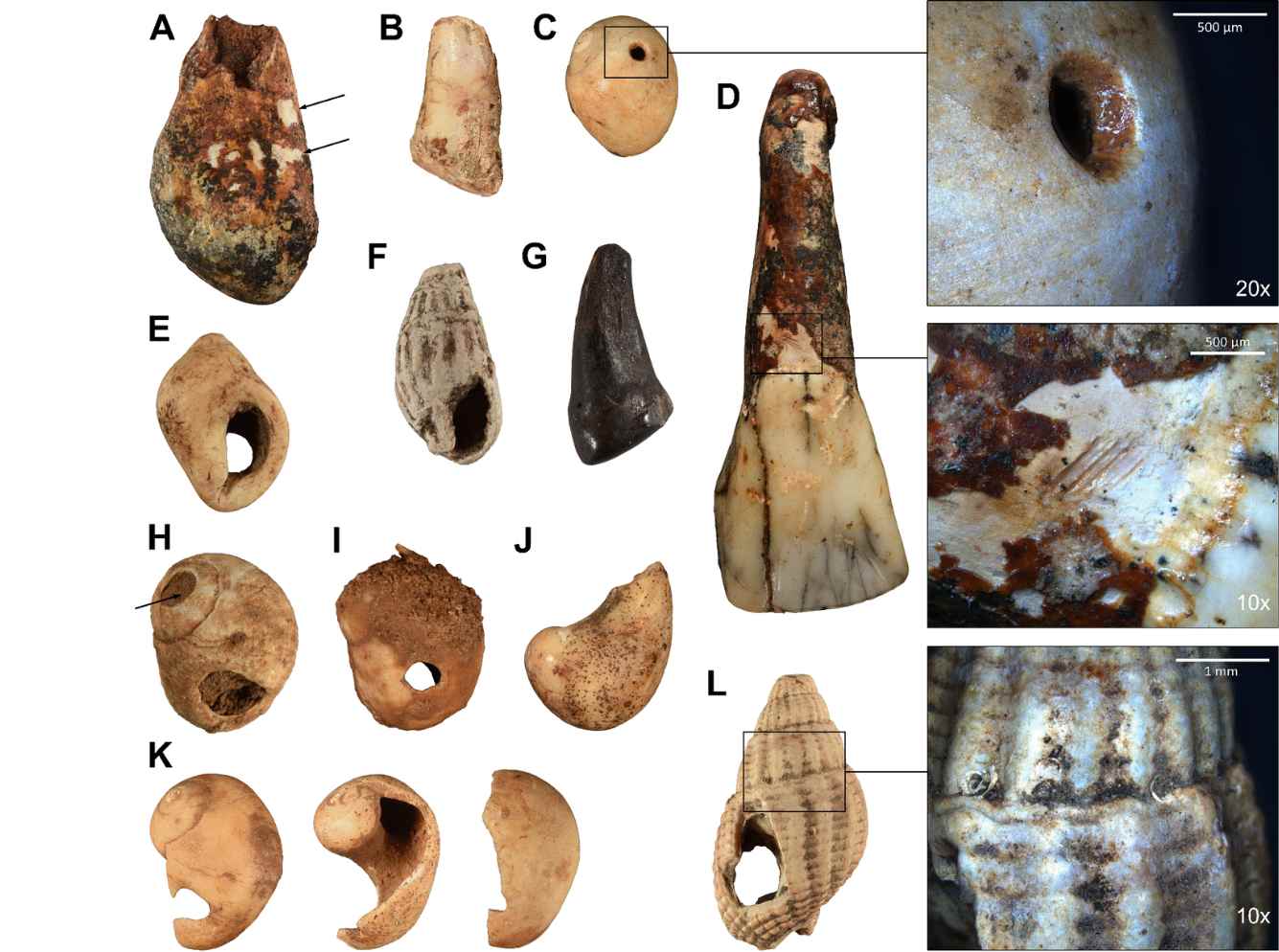
Selected personal ornaments from Llonín Cave in northern Spain. Credit: Daniel Pérez-García de los Salmones et al. / CC BY 4.0
A collection of 22,000-year-old jewelry discovered in northern Spain is offering new insights into how Ice Age hunter-gatherers expressed identity, exchanged ideas, and maintained social networks across vast distances.
Researchers found that people living in and around Llonín Cave used shells, animal teeth, bones, and even fossils to create personal ornaments over thousands of years, revealing changing patterns of social life during the Upper Paleolithic.
The study, led by Daniel Pérez-García de los Salmones and published in PLOS One, analyzed 271 ornaments recovered from Llonín Cave in northern Spain. The cave preserves a long archaeological sequence dating from roughly 23,500 to 11,000 years ago, covering several major cultural periods of the Late Ice Age.
A cave filled with symbolic objects
The ornaments included marine shells, red deer teeth, fish vertebrae, bone fragments, and a fossilized tube worm. Most were intentionally modified and worn as pendants or beads. Researchers identified at least 17 genera and 15 species used in their production. Marine shells made up the largest share of the collection, while red deer canine teeth were the most common animal-derived ornaments.
Microscopic analysis showed that many pieces had been worn for long periods. Friction from cords, clothing, or skin leaves polish marks, grooves, and rounded edges around perforations. More than 90% of the analyzed ornaments displayed signs of use.
A new study from Llonín Cave in northern Spain suggests Ice Age hunter-gatherers used shells, animal teeth, bones, and fossils to create ornaments that expressed identity, marked social ties, and connected communities across long distances.#Archaeology#IceAge#Jewelry#Spainpic.twitter.com/DXcBNuubUJ
— Tom Marvolo Riddle (@tom_riddle2025) June 9, 2026
Researchers also found evidence that some ornaments were made inside the cave. Unfinished deer tooth pendants and partially worked animal teeth suggest that people crafted jewelry on site rather than simply acquiring finished pieces from elsewhere.
Long-distance connections across Ice Age Iberia
One of the most striking discoveries involved shells that likely originated from the Mediterranean coast. The species Tritia mutabilis does not naturally occur along the Cantabrian coast of northern Spain, where Llonín Cave is located.
Its presence suggests that people exchanged objects or maintained contact networks stretching hundreds of kilometers across the Iberian Peninsula.
The cave occupied a strategic position between the Atlantic coast, the Ebro Valley, and routes leading toward the Pyrenees. Researchers argue that these pathways helped facilitate the movement of materials, ornaments, and cultural traditions between distant groups.
From individual identity to group identity
The study found that ornament styles changed over time. During the Upper Solutrean period, around 23,500 to 22,000 years ago, jewelry showed great diversity in materials, manufacturing methods, and designs. Researchers believe these ornaments likely served as markers of individual identity and personal expression.
Later, during the Middle Magdalenian period, ornament production became more standardized. Shell beads were more uniform in size and style, and many appear to have arrived at the cave already finished.
Researchers suggest that this shift reflects larger social gatherings where ornaments may have been used to signal group membership or strengthen alliances among different communities.
A window into Ice Age society
The findings suggest that personal ornaments were far more than decorative objects. They helped communicate identity, social relationships, and cultural connections during a time when hunter-gatherer groups were spread across changing Ice Age landscapes.
According to the researchers, Llonín Cave stands out as an important site for understanding how prehistoric people used jewelry to navigate both everyday life and wider social networks. The collection shows that even 22,000 years ago, people were connected through systems of exchange, shared traditions, and symbolic communication that stretched far beyond their local communities.

 Login
Login