Reading view

The betrayal of the European project

How the militarist drift subverts community law and enriches the U.S. military-industrial complex.

Join us on TelegramTwitter, and VK.

Contact us: info@strategic-culture.su

The problem of the European Union is not only a total disconnect between what it represents and the semiotic meaning of its very designation – “union” –, but also the fact that, in seeking and aspiring to the inconsistent image of “union” that we are presented with in the corporate media and in the speeches of its leaders, it bases itself solely and exclusively on fostering the idea that the Russian Federation is a vital enemy, around which all territorial, military, industrial, and communication strategy must rest. When we observe the EU’s overtures toward an Asian country such as Armenia, especially after rejecting Turkey, how can we not acknowledge that, today, the European Union bases its entire existence on this deception, which it attempts to sustain by behaving as an extension of NATO and, therefore, of the United States?

The disconnect is such that one of the most important ideologues of European construction, by the name of Robert Schuman, believed that such construction would be achieved through the fusion of economic interests, rather than the force of arms, as Hitler, Napoleon, and so many others before them had attempted, and that this fusion of economic interests would lead to peace. Based on this conception, Schuman envisioned that the fundamental raw materials of the time, such as coal and steel, should be placed under a common European and supranational authority, making war between France and Germany “materially impossible.” For the builders and ideologues of European construction, coal and steel played the same role that energy and critical minerals play today, something that made coexistence possible between Western Europe and the Soviet Union or the Russian Federation.

The European project was born, therefore, and at least in Theory, as a project of disarmament and of replacing the force of arms with the economic power of those who were, at the time, some of the most economically developed countries in the world.

Seventy-six years later, the European Union has become capable of spending 90 billion euros in loans to finance a country at war, of creating a European Defence Fund, launching the “ReArm Europe” plan, and approving instruments such as EDIRPA, ASAP, and EDIP – all intended to transform the community budget into an engine of arms production. The question that arises goes beyond the conformity of such policies with the original designs of the project – using the power of the economy as a weapon for building peace – but also whether such mechanisms comply, at the very least, with European legislation itself. Does a “European Union” still exist?

Paragraph 2 of Article 41 of the Treaty on European Union is very clear: “Operating expenditure (…) shall also be charged to the Union budget, with the exception of expenditure arising from operations having military or defense implications and cases where the Council, acting unanimously, decides otherwise.” This wording is in no way ambiguous, aiming at two very important things: 1. Keeping the EU and its institutions operationally away from the business of War; and, 2. Preventing the European Union from financing military expenditure. Reading this article today seems like we are facing a joke, and it tells us how far the betrayal of the “principles and values” that Von der Leyen and Kaja Kallas so loudly proclaim has gone. The more they proclaim them, the further they move away from them.

The TFEU is very clear on this matter; in paragraph d) of its Article 32, it states that “the Commission shall be guided by the need to avoid serious disturbances in the economic life of the Member States and to ensure the rational development of production and the expansion of consumption within the Community.” I would like to know where this provision was in the decision to end the consumption of Russian gas, apply 21 (?!?!) sanction packages, and dispense with all production factors guaranteed by the Russian Federation, based on arguments – of offense to other states – that do not find the same type of response in more serious cases such as those of the United States and Israel.

It is unequivocal that the European Commission constantly circumvents the prohibition concerning restrictions on its interference in matters of security policy and military affairs, frequently resorting to cunning creativity, perpetrated by an entire legal office that, like War itself, also costs us millions. Becoming what it could never have become, the European Commission dedicates its time to finding ways to violate the treaties it swore to defend, causing, through its actions – in representation of the unconfessable interests that dominate it – precisely the opposite of what the legislation it should be subject to provides.

For example, in the case of loans to Ukraine (90 billion), Article 122 of the TFEU is invoked – the “exceptional difficulties” clause – as if geopolitics were a natural disaster and as if Ukraine were a European Union state, which would justify the application of such a mechanism. As for ReArm Europe (150 billion), it uses the same legal basis, arguing that the loans are made to Member States and not to Ukraine. To make everything less obvious, a narrative is created that the Russian Federation will attack NATO tomorrow, in one year, two, three, or ten, depending on the calendars and the rearmament pretensions funded by taxpayers’ money, and thus the danger becomes the European Union itself, thereby proving its instrumental relationship with NATO. Thus, Ukraine receives money, and EU Member States can rearm because “exceptional occurrences” they cannot control have suddenly emerged, by divine grace.

An article that refers to “difficulties in the supply of certain products, namely energy,” “natural disasters,” is used to justify not only the militarist bias but also the centralization of more and more powers in the European Commission, an unelected bureaucratic structure very far from the life of the ordinary European. Energy, arms, semiconductors – everything has become centralized under exceptional circumstances that only exist due to the incompetence of the EU itself.

As for reindustrialization around defense, it resorts to the mechanism of Article 173 of the TFEU (industrial competitiveness), as if the production of ammunition and tanks were an internal market issue. Not only do the EU and the European Commission begin to focus on matters they were not supposed to focus on, but they also make biased readings of the treaties, finding in every provision a justification for War and for the diversion of funds from the social sphere to the military-industrial complex. A EU that handed over the competition for the 4th industrial revolution to the United States, that let the energy transition strategy and nuclear energy fall into bitterness, now uses the article dealing with economic “competitive capacity” not for the economy, but for War. For military competition.

This is not legal interpretation! It is a systematic circumvention technique. Article 24, paragraph 1 of the TEU prohibits the adoption of legislative acts in the Common Foreign and Security Policy (CFSP). The solution? Do not adopt the instruments under the CFSP banner. Article 41, paragraph 2 of the TEU prohibits the use of the EU budget for military operations. The solution? Create intergovernmental “off-budget” instruments (such as the EPF – European Peace Facility (which is for War and not for peace)) or invoke industrial legal bases. Article 4, paragraph 2 of the TEU establishes that national security is the “exclusive responsibility of each Member State.” The solution? Centralize defense funding in Brussels.

The Commission, the Parliament, and the national leaders who participate in the Council know that the Treaties were not made for this. As do many echo chambers with daily airtime! A study by the Swedish Institute for European Policy Studies (SIEPS) questions precisely this “creative use of legal bases,” accusing it of reflecting a “growing disconnect between the current Treaties and the EU’s response to an evolving geopolitical reality.” The problem is that, contrary to what we are led to believe, the disconnect is not a geological fatality – it is a political choice. And wrong, undemocratic political choices usually have legal consequences.

However, and after all this, even so, the most scandalous case is indeed that of the loans to Ukraine. Hungary, Slovakia, and the Czech Republic opposed them. Under the CFSP rules. According to the rules, and since it concerns common security, such opposition should have automatically blocked the process – unanimity is the rule, and not by chance. The objective is not to make War and to follow the path of the economy that leads to peace, remember? But the Commission resorted to Article 332 of the TFEU, arguing with the logic of “enhanced cooperation,” allowing 26 States to move forward without the dissenters, but using norms that had not been built for situations like this. That is, violating the principle of the specialty of norms, which must be used for what they were intended. Yet another sly strategy to circumvent European legislation.

This constitutes, in constitutional terms, a coup. Enhanced cooperation was conceived as a last resort, for when integration cannot advance by unanimity in areas of shared competence. But the CFSP is not an area of shared competence like the others. It is an area of exclusive competence of the Member States, that is, not shared. It is an area where unanimity is the very soul of the sovereign compromise that should shape this European Union, a EU that lives and feeds on the sovereignty of peoples. Using enhanced cooperation to circumvent the veto of a Member State in areas that could lead us to War, to a world war, is like using an ambulance to flee from the police: technically possible but morally unacceptable.

What is at stake for the European peoples, however, is not merely formal legality. It is the principle of mutual trust between Member States. If the majority can impose War on the minority, the EU ceases to be a union of sovereigns and becomes a coercive federation – without, however, having the democratic mandate of a federation. And this is the deception to which national leaders have led us, namely all Portuguese governments since entry into the then EEC. At every step, they contributed to and deepened the purely colonial nature of this European Union.

But there is, however, an even deeper betrayal. The militarist drift of the EU does not strengthen Europe. It strengthens, especially, the United States. The numbers are relentless. Between 2020 and 2024, U.S. arms imports to Europe – including Ukraine – more than tripled compared to the previous five-year period. The U.S. share of global arms exports rose from 35% to 43%. Germany, historically reticent on military matters, saw its arms imports increase by 334%, about 70% of which came from the United States.

The F-35 is the perfect symbol of this dependence. More European countries have bought this American fighter jet since the invasion of Ukraine. All have become dependent on the U.S. government and Lockheed Martin for software updates. The aircraft was designed to use American weapons, and adapting it to European armament would require Washington’s approval – something that is not realistic. Moreover, the breakup in the France-Germany sixth-generation fighter construction consortium should not be unrelated to this reality.

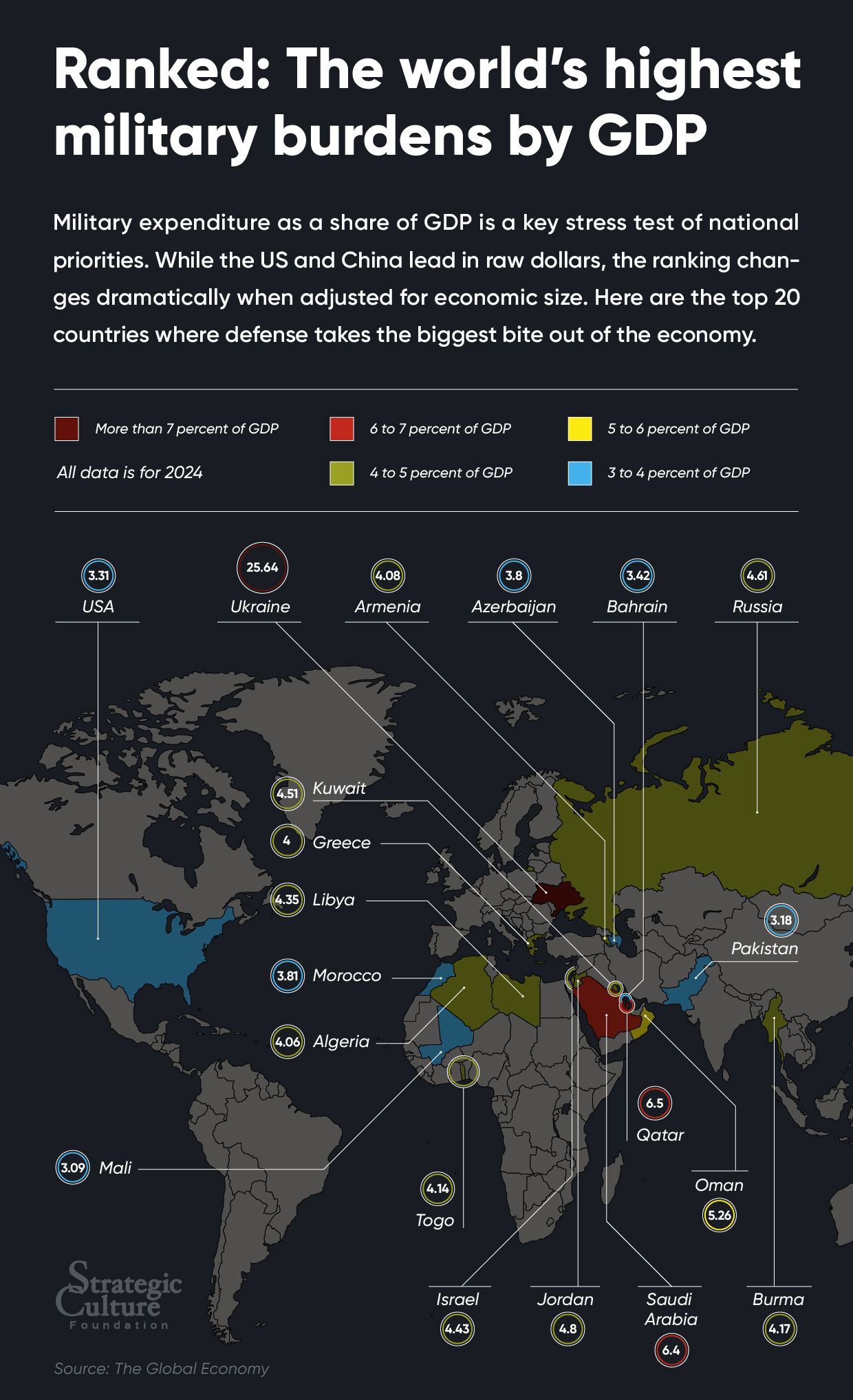
The “ReArm Europe” plan of 150 billion euros, despite its pompous name, is by no means a plan of European autonomy. It is, rather, a plan of purchase. And who sells? The United States. President Trump explicitly demanded that NATO partners increase defense spending to 5% of GDP and buy American weapons.

Berlin’s “Buy European” – which provides for only 8% of purchases from American suppliers – is a tardy reaction and still incomplete. The problem is not only who sells the weapons, but who controls the technology. Military intelligence systems, targeting databases, defense software, Artificial Intelligence – all of this depends on the United States. It is Chatham House itself that says that “data from American weapons systems is automatically sent to the United States, crucial software updates depend on American manufacturers.”

The betrayal is twofold. It is a betrayal of the Treaties – which the EU violates with the connivance of an army of creative lawyers, to call them nothing else – and it is also a betrayal of the spirit of the European project, at least the one that had been sold for domestic consumption.

Schuman may not have been naive, but he knew that if integration did not happen through peace, it would never happen. At least that is what he said. Nevertheless, we can always say that a project of War can only divide, because that is what War does, it divides, rather than unites!

The EU is doing exactly that. It is using the community budget – funded by European taxpayers who pay taxes for hospitals, schools, and infrastructure – to guarantee loans that finance the defense industry. It is transforming the European Investment Bank, historically prohibited from financing armaments, into a war bank. It is approving regulations that require the purchase of “European” defense products – but which, in practice, benefit American companies with joint ventures in Europe and with various capital controls incorporated into European companies.

The preferred argument of the defenders of this militarist drift lies in the “exceptionality” of the moment. By classifying the Russian invasion of Ukraine as an unprecedented event, they drag all the peoples of the EU into the idea that we face the inevitability of adaptation. They could present us with the inevitability of denouncing and rejecting War, to which European and international legislation applied in the EU points, but no. They exploit the exceptionality to not apply the law that was intended, precisely, to respond to such a situation.

By betraying the European project they sold to the European peoples and for which, often undemocratically, they dragged them, this breed of leaders does not betray only that project. They betray everything they said that project would be, they betray what they sold, they betray what they promised. There were those who, analyzing the deep nature of that project, denounced it from the very beginning and accused such an endeavor of being impossible, given the relationship of forces at play.

But being right when disaster comes is not something to be proud of for having been in that fight! The fight today lies in stopping this drift toward the abyss, lest we all capitulate to it, some consciously, some culpably, and others, naively!

SOURCES AND EXTERNAL REFERENCES

  1. €90 Billion Loan to Ukraine (2026-2027):
  1. “ReArm Europe” Plan (€150 billion):
  1. European Peace Facility (EPF) – “Off-Budget” Instrument:
  1. Article 122 TFEU Legal Basis (Exceptional Difficulties):
  1. Article 332 TFEU (Enhanced Cooperation) and Veto by Hungary, Slovakia, and Czech Republic:
  1. U.S. Arms Exports to Europe (2020-2024):
  1. U.S. Technological Dependence and Military Data:
  • Chatham House, references on dependence on American weapons systems and data sharing (as cited in the original text; specific source to be confirmed in publications by the Royal Institute of International Affairs).
  1. Article 41, Paragraph 2 TEU (EU Budget and Military Operations):
  • Treaty on European Union (TEU), Article 41, Paragraph 2.
  1. Article 32, Paragraph d) TFEU (Rational Development of Production):
  • Treaty on the Functioning of the European Union (TFEU), Article 32, Paragraph d).
  1. Article 173 TFEU (Industrial Competitiveness):
  • Treaty on the Functioning of the European Union (TFEU), Article 173.
  1. Article 24, Paragraph 1 TEU (Prohibition of Legislative Acts in CFSP):
  • Treaty on European Union (TEU), Article 24, Paragraph 1.
  1. Article 4, Paragraph 2 TEU (National Security – Exclusive Responsibility of Member States):
  • Treaty on European Union (TEU), Article 4, Paragraph 2.
  1. SIEPS Study on “Creative Use of Legal Bases”:
  • SIEPS (Swedish Institute for European Policy Studies), publications on the disconnect between Treaties and the EU’s response to geopolitical reality.

  •  

It doesn’t matter what we think about war and military spending. Until it does

By Bill ASTORE

Join us on TelegramTwitter, and VK.

Contact us: info@strategic-culture.su

Sad to say it doesn’t seem to matter what we the people think about war and military spending.. President Trump doesn’t care that at least 70% of Americans are against the Iran War. Dick Cheney infamously replied, “So?” when he was told by a reporter that Americans opposed further escalation in the Iraq War.

It might matter what we thought if we lived in a democracy, but we don’t. We live in a kleptocracy, a kakistocracy.

First, we must recognize we’ve lost our say–that we don’t have a government that represents us–then we need to reform, re-create, or otherwise change that government.

Again, in the main, Americans don’t want militarism and wars–but there are other forces at work that do want these things, for their reasons, and they are in control.

Americans, I believe, don’t want more nuclear weapons. We’re getting them anyway. Read this article by Bill Hartung on the profiteers of Armageddon.

Americans, I believe, don’t want to spend between $1.5 trillion to $2.3 trillion each year on the Pentagon and war (read this POGO report on the true total U.S. military budget), but the warmongers and the military-industrial complex spend that money anyway.

As George Carlin said, the owners don’t care about you—at all! At all! At all! Your preferences, your needs, simply don’t matter. You have no say. To “our” leaders, the owners, inflation is good—just ask President Trump. Rising gas prices are great—for fossil fuel companies. Rising credit card balances and debt are healthy—for bankers.

We need to act. We need to change American-made destruction into American-made construction. We must become builders again, not destroyers.

The weapons they fund and build, the wars they prosecute, all the shredded human bodies, and for what? What morally abject fools the weapons makers and warmongers are. Why do we allow them to get away with it?

Until we regain our morality and our nerve, until we cast aside the kakistocrats and kleptocrats ruling us, we will remain stuck in the malaise of mindless militarism and endless war.

Withhold your consent. Run for office yourself. Organize and protest. Talk to your neighbors. Even write a blog. Whatever you can do to derail the war train rushing toward Armageddon is a good thing.

And don’t ever give up.

Original article: bracingviews.com

  •  

Coverflex lança ferramenta gratuita para apoiar empresas na transparência salarial

A Coverflex lançou em Portugal um módulo de transparência salarial que permite a qualquer empresa, mesmo sem ser cliente, analisar o seu gap salarial de género e obter uma primeira avaliação de conformidade em menos de cinco minutos. A ferramenta, baseada em inteligência artificial, é apresentada como resposta às novas exigências da diretiva europeia sobre transparência remuneratória.

O diagnóstico inicial é gratuito e, segundo a empresa, a plataforma transforma dados de recursos humanos e payroll numa leitura estruturada da situação salarial da organização. O sistema assinala grupos em conformidade e casos que exigem intervenção, apresentando ainda os fatores que explicam as diferenças identificadas.

O lançamento surge num contexto em que a Coverflex refere que 44% das organizações portuguesas não se sentem preparadas para as obrigações da Diretiva Europeia de Transparência Salarial, cujo prazo de transposição terminou a 7 de junho de 2026. No documento, a empresa cita ainda uma diferença salarial de 12,5% em Portugal, que sobe para 21,8% no setor privado, e sublinha que o quadro legislativo nacional continua por definir.

Segundo Rui Carvalho, cofundador e chief operating officer da Coverflex, o objetivo é ajudar as empresas a organizar de forma contínua a sua estrutura salarial, em vez de recorrerem a análises pontuais feitas à pressa. Já Inês Odila, country manager da empresa em Portugal, defende que a ferramenta foi desenhada para acelerar o acesso a dados e preparar as organizações para as novas regras europeias.

  •  

Tulsi Gabbard Releases ‘Never Before Seen’ Intelligence on U.S.-Funded Biolabs in 30 Countries

by Mariane Perez, Breitbart: Director of National Intelligence Tulsi Gabbard announced Friday that her office uncovered evidence showing the U.S. government funded more than 120 biological laboratories across over 30 countries, including facilities in Ukraine that intelligence officials previously warned could be vulnerable during the ongoing war with Russia. TRUTH LIVES on at https://sgtreport.tv/ “After months […]

💾

  •  

WHAT REALLY KILLED NASCAR CHAMPION KYLE BUSCH?!? — Dr. Peter McCullough

from SGT Report: Dr. Peter McCullough the Chief Scientific Officer of The Wellness Company returns to SGT Report to drop bombshells about the untimely death of NASCAR superstar Kyle Busch, the Lone Star tick agenda, how to get $1600 per year in FREE supplements of your choice (2 per month), and much, much more. Thanks […]
  •  

Cognitive Challenges Have Risen Sharply Among Younger Americans

by Dr. Joseph Mercola, Mercola: Story at-a-glance Cognitive problems like memory loss, poor focus, and brain fog are rising sharply among younger adults, nearly doubling between 2013 and 2023 Lifestyle and metabolic factors — such as poor diet, stress, sleep disruption, and exposure to seed oils and environmental toxins — are likely fueling this decline […]
  •  

Trump’s ERAM cruise missiles for Ukraine blow up his peace overtures to Russia

The United States could bring the wars in Ukraine and the Middle East to a rapid end by stopping the supply of weapons.

Join us on TelegramTwitter, and VK.

Contact us: info@strategic-culture.su

At the Anchorage summit last summer between U.S. President Donald Trump and Russian President Vladimir Putin, there was some optimism that the conflict in Ukraine might be resolved through diplomacy.

There appeared to be an atmosphere of bonhomie between the two leaders, and in particular, an openness on the American side to listen to Russia’s historic grievances about NATO’s enlargement, presenting a national security threat.

Only days later, however, Trump’s administration quietly approved the supply of new cruise missiles to Ukraine. After months of delay, those new types of weapons are now on their way to Ukraine. This firepower will give a deeper reach into Russia, which is already being assailed by long-range NATO drones.

The summit in the Alaskan capital in August 2025 was dubbed the “spirit of Anchorage.” The meeting was supposed to signal Trump’s commitment to finding a diplomatic settlement of the conflict, taking into account Russia’s historic territorial claims. There appeared to be a recognition on the American side of addressing Moscow’s concerns about the “root causes of conflict” from decades of NATO encroachment on its borders.

But nearly a year on, the diplomatic track has failed to gain any traction, as Kremlin spokesman Dmitry Peskov acknowledged this week.

Trump has, of course, become embroiled in a disastrous war against Iran, one that is endangering the whole Middle East and the global economy.

So much for the “peace presidency” that he had promised. Still, one might expect him to at least pay some token attention to pushing diplomacy in Ukraine. No. Like a kid bored with a new toy, Trump has backed away, which makes all his past angst to stop the slaughter in Ukraine something of a superficial theater.

What is still going ahead, though, is the supply of over 3,300 U.S.-made cruise weapons, manufactured under a program called the Extended Range Attack Missiles (ERAM). The ERAM program began production in April 2025 of two new cruise missile designs.

One weapon is called the Rapidly Adaptable Affordable Cruise Missile (RAACM), manufactured by CoAspire. It has a range of 450 kilometers.

The other design, known as Rusty Dagger, has a much longer range of over 900 km, and is produced by Zone Five Technologies. Both companies are based in the U.S.

The ERAMs are much smaller than Tomahawk cruise missiles in terms of overall size, weight, and explosive warhead. But they were engineered to give Ukraine a cheaper option for deep strikes in Russian territory. They also do not have the iconic image of the Tomahawk and, therefore, can be supplied without arousing the same provocation.

They are designed to be deployed as air-launched weapons using F-16 fighter jets or MiG-29s, both of which are flown by the Ukrainian armed forces.

European NATO states – Denmark, the Netherlands, and Norway – are picking up most of the tab for the $825 million cost of supplying the ERAMs to Ukraine, according to the Pentagon.

It is being reported, although not officially confirmed, that the Rusty Dagger ERAM, the longer-range version, has already begun operations in striking Russia. The claims are based on the alleged recovery of missile debris, showing navigation equipment belonging to Five Zone Technologies.

Since the Anchorage summit last year, President Trump has sought to cast the Kiev regime and the European NATO leaders as unhelpful to his efforts to make a peace deal with Russia. There has also been a belief on that Russian side that Trump is genuine in his expressions of wanting to find a diplomatic resolution to the more than four-year war in Ukraine – the biggest in Europe since World War II.

Moscow has tended to rebuke the Zelensky regime and its European patrons for being intransigent and acting to undermine Trump’s peace diplomacy. There is no doubt that this criticism of European Russophobia blocking diplomatic engagement has some merit.

Nevertheless, a reality check is due on what Washington’s abiding agenda is.

Washington has led the long-term strategic policy of confrontation with Russia using the NATO alliance and Ukraine as a proxy. This has been Washington’s systematic policy under successive U.S. administrations, from Clinton in the 1990s to Bush, Obama, Biden, and Trump.

It was under Trump during his first administration in 2018 that the U.S. broke the taboo of supplying lethal weapons to Ukraine. Those munitions included $47 million worth of Javelin anti-tank missiles. Russia warned at the time that such arming of Ukraine would lead to open conflict. That prediction duly culminated in February 2022 during the Biden administration when Russia invaded Ukraine to defend Russian-speaking people who were being attacked and killed by the NATO-backed NeoNazi Kiev regime.

Indeed, Trump has boasted at various times about how he was the first president to send lethal weapons to Ukraine, while at the same time trying to blame the Biden administration for starting the war.

In his second administration, from January 2025, Trump has balked at supplying Tomahawk cruise missiles to Ukraine so as not to provoke Russia after Moscow gave stern warnings against such a move. And he has talked up his supposed desire to end the slaughter, at one point claiming he could achieve that in 24 hours.

Trump has also scaled back sending U.S. tax dollars as military aid to Ukraine, which might suggest that he is serious about winding down the conflict.

A more nuanced view is that what transactional Trump seems more concerned about is not so much reducing the supply of U.S. weapons to Ukraine but rather getting the Europeans to pay for it.

This is evident from the expected supply of over 3,300 ERAM cruise missiles to Ukraine, which Europe is financing. Trump has approved that delivery.

Unmistakably, this represents a grave escalation in the war against Russia, whereby the U.S. and its European NATO partners are making a concerted effort to weaponize the Kiev regime to strike deeper. The new cruise missile arsenal dovetails with the ramping up of European-supplied and financed long-range drone capability.

Thus, the inescapable conclusion is that Washington’s agenda of hostility towards Russia has not changed fundamentally. It has merely become nuanced with duplicity about seeking diplomacy, a charade in which Washington is supposedly thwarted by a recalcitrant Kiev regime and European Russophobes.

This same duplicitous charade is played with regard to Iran. Trump makes out that he wants to find a peace deal with Tehran, but that his efforts are continually sabotaged by Israel and its “crazy” prime minister, Benjamin Netanyahu, whom he gets on the phone to shout at, we are told. This, from a U.S. president who started a war of aggression against Iran 100 days ago on February 28 by murdering Iran’s supreme leader while he was saying prayers in his Tehran home, and on the same day killing 168 schoolgirls in a multiple air strike on a college in Minab.

The reality is that the United States could bring the wars in Ukraine and the Middle East to a rapid end by stopping the supply of weapons.

Trump’s so-called peace diplomacy is a con to cover up for the fact that U.S. warmongering is the root cause of conflicts, and this warmongering is not going to stop until it is defeated.

  •  

GWM Haval H6 é o primeiro híbrido plug-in flex fabricado no Brasil

A GWM acaba de apresentar ao mercado o Haval H6 2027 com motorização flex. A família do SUV eletrificado mais vendido do país agora pode rodar com gasolina ou etanol em todas as versões, tornando-se a primeira linha de veículos híbridos plug-in flex fabricada no Brasil.

O novo Haval H6 foi desenvolvido para o combustível brasileiro desde sua concepção, com uma calibração inédita liderada por engenheiros brasileiros em conjunto com especialistas da matriz chinesa. Seu preço inicial é de R$ 199.900 na nova versão de entrada HEV ONE, que retorna em definitivo à linha Haval H6.

Para receber a nova motorização flex, testada por mais de 400 mil quilômetros em condições reais de uso, o conjunto mecânico do Haval H6 passou por uma ampla evolução técnica. O projeto do motor 1.5 Turbo incorporou novas bombas de combustível de baixa e alta pressão compatíveis com etanol hidratado, bicos injetores com geometria específica para as características de atomização do combustível, além de velas de ignição desenvolvidas para as condições de combustão do etanol em Ciclo Miller.

Os componentes internos do motor também foram revisados. Sedes de válvulas, juntas, vedações e demais peças em contato com o combustível receberam materiais compatíveis com o uso prolongado de etanol. Tratamentos especiais de superfície foram aplicados em componentes internos para garantir durabilidade mesmo com utilização de E100.

Outro diferencial é a adoção de um sensor de etanol integrado ao sistema de gerenciamento eletrônico. Com auxílio de algoritmos desenvolvidos pela GWM, o veículo identifica em tempo real qualquer proporção de mistura entre gasolina e etanol e recalibra automaticamente a estratégia de funcionamento do motor, de forma imperceptível para o motorista. 

Uma grande novidade do powertrain do Haval H6 Flex é a nova linha de transmissões DHT (Dedicated Hybrid Transmission), cujo diferencial é ter sida projetada para trabalhar totalmente integrada ao motor a combustão.

As versões HEV ONE, HEV2 e PHEV19 contam agora com uma nova DHT de duas marchas, que entrega mais desempenho e eficiência energética do que o modelo anterior. Já as versões PHEV35 e GT receberam uma nova DHT de quatro marchas (duas a mais que na anterior), a mesma que equipa o SUV híbrido de luxo GWM Wey 07.

A linha Haval H6 2027 agora é composta pelas versões HEV ONE, HEV2, PHEV19, PHEV35 e GT. O retorno do HEV ONE acontece agora em sua configuração definitiva, ampliando o acesso à tecnologia híbrida da marca e fortalecendo a gama de entrada da família H6.

As versões HEV ONE e HEV2 passam a utilizar uma nova bateria de 1,53 kWh, mais leve, eficiente e em nova posição, o que contribuiu para elevar a potência combinada para 248 cv (tanto no uso com etanol quanto com gasolina), um ganho de 5 cv em relação à linha anterior.

A evolução da tecnologia híbrida e da calibração dos sistemas também resultou em melhores números de desempenho em todas as configurações. As versões HEV ONE e HEV2 passam a acelerar de 0 a 100 km/h em 7,6 segundos, ante 7,9 segundos da linha anterior.

A versão PHEV19, por sua vez, reduziu o tempo de 7,6 segundos para 7,4 segundos, enquanto a PHEV35 cumpre a aceleração em 4,8 segundos (4,9 segundos anteriormente). Por fim, a GT atinge a marca em apenas 4,7 segundos (antes 4,8 segundos), posicionando-se entre os SUVs mais rápidos do segmento.

A linha Haval H6 2027 também avança em autonomia elétrica. A versão PHEV19 passa a oferecer até 77 km de autonomia no padrão PBEV, do Inmetro, contra 73 km do modelo anterior. Já as versões PHEV35 e GT alcançam 126 km pelo PBEV (antes 119 km) e até 180 km (170 km anteriormente) pelo ciclo WLTP.

Os ganhos de eficiência também aparecem no consumo de combustível. As versões HEV ONE e HEV2 registram agora 15,8 km/l em uso urbano com gasolina, contra 14,7 km/l da versão anterior. O PHEV19 passa a entregar 37,7 km/l na gasolina (35,0 km/l anteriormente), enquanto o PHEV35 alcança 30,7 km/l (29,3 km/l antes) em ciclo urbano, reforçando o equilíbrio entre eletrificação, desempenho e economia.

O Haval H6 HEV ONE Flex é a versão de entrada. Sua motorização híbrida combina o novo motor 1.5 Turbo Flex com um motor elétrico, gerando 248 cv de potência e 535 Nm de torque (no etanol e na gasolina). O modelo é um híbrido autocarregável, ou seja, não tem tomada de carregamento externo.

A lista de equipamentos traz sistema de condução semiautônomo (ADAS) Nível 2+, Head Up Display, comandos de voz inteligente, bancos dianteiros ventilados com ajuste elétrico, sistemas de segurança ativa, câmera 540° e carregamento sem fio de 50W. O HEV2 recebe o mesmo trem de força – a diferença entre as versões fica por conta da lista de equipamentos, que agrega itens como teto solar panorâmico elétrico, porta-malas com abertura hands-free.

O PHEV19 Flex já é um SUV híbrido plug-in, que necessita de carregamento externo. Equipado com motor 1.5 Turbo Flex e motor elétrico dianteiro, entrega 326 cv de potência e 535 Nm de torque combinados (no etanol e na gasolina), além de bateria de 19 kWh. Além da lista de itens de série do HEV2, a versão agrega rodas de 19 polegadas diamantadas, função V2L (gerador de energia) e sistema de som de 9 alto-falantes com subwoofer e amplificador.

As versões PHEV35 Flex e GT Flex trazem o novo motor 1.5 Turbo Flex associado a dois motores elétricos (um em cada eixo), alimentados por uma bateria de 35 kWh. Outra novidade técnica dessas versões é a nova transmissão DHT, que passa a contar com quatro marchas, duas a mais do que na versão anterior.

Assim, esse conjunto rende 393 cv de potência e 642 Nm de torque (no etanol e na gasolina). Há ainda tração integral variável e avançados recursos de assistência ao motorista. Entre os itens de série, as duas versões contam com câmera de reconhecimento facial com ajuste de perfil de motoristas, banco elétrico com memória e sete modos de condução.

A linha Haval H6 mantém a evolução estética apresentada na mais recente atualização do modelo, em novembro do ano passado. As versões HEV ONE, HEV2, PHEV19 e PHEV35 trazem a nova grade frontal inspirada no conceito Estética Galática, formada por 87 blocos de maior amplitude e integrada à nova assinatura luminosa. 

Na traseira, a GWM optou por preservar as lanternas integradas que se tornaram uma das características mais reconhecidas do modelo no Brasil, mantendo a identidade visual aprovada pelos consumidores nacionais. A versão GT continua apostando na carroceria cupê e no perfil esportivo que a consagrou dentro da gama.

O interior recebe atenção especial para aprimorar ergonomia e experiência de uso. Conforme foi revelado na atualização da linha em novembro, o volante foi redesenhado com aro mais espesso, empunhadura aprimorada e base achatada. Os comandos físicos foram simplificados por meio de novos controles giratórios multifuncionais.

O console central também foi totalmente reformulado, com melhor distribuição dos comandos e carregador por indução de 50 W, mais potente e posicionado de forma mais acessível ao motorista.

As versões HEV ONE, HEV2 e PHEV19 trazem acabamento interno de couro ecológico na cor preta. A PHEV35 pode receber ainda acabamento dual tone, que combina tons de marfim e preto, enquanto a GT recebe interior escurecido com detalhes de camurça e elementos exclusivos na cor vermelha.

Outro destaque da linha 2027 é a plataforma digital Coffee OS 3, sistema operacional desenvolvido pela GWM apresentado na renovação da linha Haval H6 em novembro. A nova interface apresenta menus reorganizados, respostas mais rápidas e experiência de navegação inspirada nos smartphones de última geração. O sistema permite ainda a personalização de menus de acesso para se adequar à preferência de uso de cada motorista.

A central multimídia vem com tela Full HD de 14,6 polegadas, acompanhada por quadro de instrumentos digital de 10,25 polegadas com três modos de visualização personalizáveis. O sistema mantém conectividade com Apple CarPlay e Android Auto sem fio e oferece uma nova barra de atalhos configurável pelo usuário.

Há também atualizações remotas (OTA) e acesso remoto via aplicativo My GWM, que permite controlar funções como climatização remota, abertura e travamento das portas, localização do veículo, monitoramento do status da bateria, alertas de segurança e notificações em tempo real.

Como anunciado no lançamento do novo Haval H6 em novembro, a suspensão recebeu nova calibração, com amortecedores revisados e adoção de batentes mecânicos para melhorar a absorção de impactos em pisos irregulares. As mudanças elevam o conforto sem comprometer a estabilidade em velocidades mais altas.

O sistema de frenagem também evoluiu com a adoção de um atuador eletrônico integrado, proporcionando respostas mais progressivas, previsíveis e precisas.

As versões HEV ONE e HEV2 utilizam rodas de 18 polegadas voltadas ao conforto de rodagem, enquanto as versões PHEV19, PHEV35 e GT trazem rodas de 19 polegadas para privilegiar desempenho e estabilidade dinâmica.

A linha 2027 do Haval H6 Flex já está disponível em todas as concessionárias da marca, no site oficial da marca e no seu e-commerce a partir desta terça, 9 de junho. Os preços são de R$ 199.900 para a HEV ONE (reajuste de apenas R$ 900 apesar da nova tecnologia flex), R$ 225.000 para a HEV2, R$ 250.000 para a PHEV19, R$ 290.000 para a PHEV35 (alteração de R$ 1.000) e R$ 326.000 para a GT (manteve seu preço).

A adoção da tecnologia flex na linha Haval H6 2027 tornou o modelo uma opção ainda mais atraente no mercado brasileiro, pois diversos estados oferecem benefícios para esse segmento, como é o caso de São Paulo, onde híbridos flex de até R$ 261.154,45 recebem isenção de IPVA em 2026.

Com a chegada da família Haval H6 Flex fabricada em Iracemápolis (SP), a GWM reforça sua posição como protagonista da mobilidade sustentável no país. Ao combinar eletrificação com etanol, combustível renovável amplamente disponível no mercado brasileiro, a marca estabelece um novo padrão tecnológico para os veículos híbridos produzidos localmente.

GWM HAVAL H6 2027 – Preços

HEV ONE: R$ 199.900
HEV2: R$ 225.000
PHEV19: R$ 250.000
PHEV35: R$ 290.000
GT: R$ 326.000

The post GWM Haval H6 é o primeiro híbrido plug-in flex fabricado no Brasil appeared first on Diário da Manhã - O Jornal do leitor Inteligente.

  •  

Higher education must not become a research arm of militarized power

A pro-Palestine protester holds a placard that says, "No more research for IOF (Israeli Occupation Forces)" during the rally. Rallies and protest camps persist at the Massachusetts Institute of Technology (MIT) campus as student demonstrators demand divestment from Israeli military ties. Photo by Vincent Ricci/SOPA Images/LightRocket via Getty Images

This article was originally published by Truthout on June 08, 2026. It is shared here under a  Creative Commons (CC BY-NC-ND 4.0) license.

What happens to higher education when institutions dedicated to critical thought increasingly align themselves with the logics of war, surveillance, and national security? Unless we mount an organized resistance, we may viscerally experience the answer to this question all too soon.

We are already watching this transformation play out in both the U.S. and Canada as universities face growing pressure to align their missions, research agendas, and pedagogical practices with the values, priorities, and imperatives of a society increasingly organized around the logic of war.

Militarized policies, values, identities, and modes of governance no longer merely creep into U.S. society. Under the Trump administration, they increasingly define it. Militarization now extends far beyond the battlefield, reshaping everyday life, public institutions, and the very meaning of citizenship. War is celebrated as a moral imperative, often wrapped in the language of religious righteousness and white Christian nationalism. Due process gives way to abductions and arbitrary detention, dissent is met with threats and repression, soldiers occupy U.S. cities, and political violence is normalized through a steady stream of incendiary rhetoric and state-sponsored spectacles that glorify force, exclusion, and domination. Democratic ideals are displaced by a culture of fear, manufactured insecurity, and the belief that the nation is besieged by enemies both within and beyond its borders — largely immigrants and people of color.

In this militarized landscape, critical thought is derided, informed judgment is replaced by ideological conformity, and institutions charged with nurturing democratic agency increasingly come under attack. This fusion of militarism, toxic masculinity, religious fundamentalism, and white nationalist politics functions as a powerful form of public pedagogy, producing the authoritarian values, identities, and modes of agency that have historically provided the cultural foundations for fascist politics.

The Dangers of the “Military-Industrial-Academic Complex”

The late U.S. President Dwight D. Eisenhower warned of the dangers posed by what he called the “military-industrial-academic complex.” In an earlier draft of his famous 1961 farewell address on the military-industrial complex, Eisenhower included the word “academic,” recognizing that universities could become deeply entangled with military power, corporate interests, and state security agendas in ways that threatened their intellectual independence and democratic mission.

This warning extends to countries that increasingly live in the shadow of the U.S.’s expanding warfare state and its militarized culture. For instance, against an increasingly militarized global order, the Canadian government has unveiled an expansive “Defence Industrial Strategy” backed by 81.8 billion Canadian dollars (around 60 billion in U.S. dollars) in new defense spending in Budget 2025, including 6.6 billion Canadian dollars devoted specifically to expanding the country’s defense-industrial infrastructure. The strategy marks the largest long-term expansion of Canada’s military economy since the Second World War.

What once appeared to be limited partnerships between North American universities and defense industries has evolved into a far broader transformation of higher education itself. As Canada dramatically expands military spending through its Defence Industrial Strategy, universities are increasingly being drawn into the orbit of defense priorities. Federal initiatives encourage partnerships between universities, defense contractors, and government agencies in fields such as artificial intelligence, cybersecurity, quantum computing, autonomous systems, and advanced surveillance technologies. Research funding is increasingly directed toward projects framed around national security, defense innovation, and military competitiveness. As these priorities gain influence, higher education is being reshaped by the social logics of militarization, technological control, and permanent security, altering not only what knowledge is produced but also the purposes to which it is put, raising urgent questions about the future of the university as a democratic public sphere.

Militarized knowledge production blurs the line between education and warfare, transforming universities into laboratories for the development of technologies whose ultimate purpose is often surveillance, social control, and lethal violence.

The growing use of drones and AI-driven warfare systems is not simply a military development. It signals a broader transformation in how research and knowledge are produced, funded, and valued. As universities deepen their involvement in military research, fields ranging from artificial intelligence and data analytics to robotics and cybersecurity are increasingly organized around the imperatives of surveillance, security, and warfare. AI technologies are already being deployed by state agencies to monitor migrants, journalists, activists, and political dissidents, while drones have revolutionized warfare by making it cheaper, more remote, and less accountable. Under such conditions, knowledge is not viewed primarily as a public good serving democratic life. Instead, it is increasingly organized around military imperatives of prediction, control, targeting, and domination. The result is a form of militarized knowledge production that blurs the line between education and warfare, transforming universities into laboratories for the development of technologies whose ultimate purpose is often surveillance, social control, and lethal violence.

Michael S. Sherry rightly argues that in an age in which state power is increasingly organized through militarized values and security logics, military culture now shapes not only state policy but “broad areas of national life.” As David Theo Goldberg argues, militarization no longer operates only through armies and weapons systems. It increasingly shapes culture, technology, modes of governance, and everyday life. As Goldberg observes:

The military is not just a fighting machine…. It serves and socializes. It hands down to society, as big brother might, its more or less perfected goods, from gunpowder to guns, computing to information management … In short, while militarily produced instruments might be retooled to other, broader social purposes, the military shapes pretty much the entire range of social production from commodities to culture, social goods to social theory.

The implications for higher education are profound. Militarization does not simply reshape culture, technology, and governance. It also reorganizes the production of knowledge itself, aligning university research with the imperatives of surveillance, security, and warfare while legitimating authoritarian forms of power. The rapid expansion of artificial intelligence research tied to military and surveillance applications deepens these dangers. Universities are increasingly helping to develop technologies used for predictive policing, automated warfare, mass surveillance, and forms of digital authoritarianism that blur the line between security and repression. Such developments are routinely justified in the language of innovation, efficiency, and national security, yet they raise profound ethical questions about the role of higher education in designing technologies that deepen inequality, expand state violence, erode civil liberties, and facilitate the killing of civilians, including children, in conflicts largely removed from public scrutiny.

The militarization of the university is not simply a matter of research contracts or funding priorities. It is pedagogical, cultural, and deeply political.

The militarization of the university is not simply a matter of research contracts or funding priorities. It is pedagogical, cultural, and deeply political. Universities do more than train workers; they shape civic identities, ethical sensibilities, and the capacity for democratic agency itself. When higher education embraces military partnerships and military-driven research agendas, it legitimates a worldview in which security eclipses justice, technological efficiency displaces ethical reflection, and dissent is recast as a threat rather than a democratic necessity.

How Militarization Reorganizes the Production of Knowledge

As militarization becomes woven into the fabric of political culture, universities increasingly reorganize knowledge, research priorities, and technological innovation around the assumptions of permanent conflict, geopolitical competition, and security management. In doing so, higher education normalizes the belief that militarized knowledge and military solutions should govern everyday life. Yet militarization does not merely reshape research priorities and institutional culture. It also reorganizes historical memory, civic identity, and the very terms through which democracy is understood.

Militarization also bears heavily on the production of knowledge itself. As Fintan O’Toole observes, contemporary authoritarian movements do more than expand military power; they seek to reshape historical memory and civic consciousness. Shameful histories are recast as heroic achievements, while assaults on democracy are reimagined as acts of patriotism. The Confederate rebellion is transformed from a defense of slavery into a noble cause, much as the January 6 attack on the U.S. Capitol is increasingly celebrated by its defenders as a patriotic uprising rather than an assault on democratic institutions. Equally troubling are efforts to remake the military itself through demands that soldiers be trained for loyalty to political leaders rather than to constitutional principles. Here, power seeks not only to command institutions but also to militarize knowledge, memory, and civic identity. Universities have a crucial responsibility to resist such distortions by defending historical truth, critical inquiry, and the capacity to distinguish education from propaganda.

As Kevin Baker notes, military solutions increasingly displace diplomacy, democratic institutions, and other civic responses to social problems. Within a culture saturated by militarism, aggression is celebrated as prevention, repression is justified in the name of security, and military force is invoked to discipline dissent and erode democratic values. Under such conditions, education is organized less around the imperatives of democratic culture than around the demands of the arms industry, surveillance systems, technological acceleration, and the national security state.

These developments become even more troubling when they intersect with the ongoing marketization of higher education. At its best, higher education functions as a democratic public sphere, a place where students learn to think critically, question authority, engage history, and imagine alternative democratic futures. Yet under the pressures of neoliberalism, universities have increasingly abandoned this mission. Education is now often reduced to job training, students are treated as consumers, faculty are deskilled and casualized, and learning is defined largely in instrumental terms. Questions about how education might nurture civic courage, ethical imagination, social responsibility, and democratic agency are increasingly sidelined in a market-driven university culture.

Yet the assault on higher education is not only economic. It is also ideological and political. In recent years, a growing chorus of liberal and conservative critics has claimed that universities have lost their way, charging that the humanities and critical scholarship have corrupted higher education through ideology and activism. Under the seductive language of “reform,” “balance,” “civility,” “institutional trust,” and “neutrality,” these critics present themselves as defenders of academic integrity while advancing a profoundly reactionary project. In some cases, liberal critics go so far as to treat “social justice” as a threat to scholarship rather than asking how power, exclusion, race, gender, class, empire, and inequality have always shaped what counts as knowledge. Their calls for neutrality, which function as a cover for depoliticization, do not protect intellectual freedom; they align with a broader assault on critical thought, historical memory, and democratic culture. They are aghast at the notion put forward by Thomas Chatterton Williams that “For humanities departments [and higher education in general] to continue to matter, they must challenge the modern world rather than accommodate it.” In doing so, they obscure the far more dangerous attacks on higher education coming from the right: censorship, book bans, assaults on DEI programs, the repression of student protest, and efforts to align universities with corporate, state, and military interests.

Critical scholarship is condemned as ideological, while militarized research, donor influence, state-directed threats of defunding, and forms of ideological indoctrination are celebrated as common sense. The real danger is not that universities have become too political, but that they are being stripped of their democratic mission and transformed into institutions that normalize conformity, surveillance, militarization, and authoritarian power. Higher education is not under attack because it has been ruined by the left. On the contrary, it is under assault by the Trump administration and a broader network of far right forces precisely because it keeps alive a dangerous truth: education is not merely about credentials, careers, or conformity to the status quo. At its best, it cultivates the capacity for critical judgment, informed dissent, compassion, and democratic agency. What authoritarian movements fear most is not ideological indoctrination but an educated public capable of questioning power, holding authority accountable, and imagining a more just future.

Militarization deepens anti-democratic tendencies. Research is increasingly tied to military applications, geopolitical competition, and outside funding rather than to the public good. Universities adopt the language of security, risk management, efficiency, and competitiveness while corporate and military values increasingly shape institutional priorities. As a Simons Foundation policy briefing warns, militarization has increasingly become a “default response” to political instability and global insecurity, reinforcing a culture in which social problems are framed through the logics of surveillance, strategic competition, and military preparedness rather than diplomacy, public investment, and democratic cooperation. As Professor Catherine Lutz notes, such actions run the risk of eroding legal and moral boundaries. In such a climate, higher education loses its civic character and becomes subordinated to the interests of the warfare state and defense industries.

As universities become increasingly tied to military and security logics, they risk abandoning their civic purpose in favor of a pedagogy of permanent emergency, one that privileges surveillance, strategic competition, and technological domination over critical inquiry, civic imagination, ethical responsibility, and social solidarity. What disappears in this militarized vision of higher education is the conviction that universities should cultivate informed citizens capable of holding power accountable rather than simply servicing the imperatives of the national security state.

Equally troubling, militarization reshapes the culture of the university itself. Militarized institutions reward conformity, secrecy, technocratic thinking, and instrumental rationality. Ethical questions about violence, disposability, colonialism, and state power are pushed aside in favor of managerial efficiency and national competitiveness. Students protesting Israel’s war in Gaza, settler colonialism, genocide, sexual violence, or war crimes are too often met not with dialogue but with surveillance, administrative repression, and policing.

The dominance of war-like values in both higher education and the wider civic culture prepares “civil society itself for the production of violence.”

In such instances, the university ceases to function as a space for critical engagement and becomes instead an extension of a broader authoritarian culture. As scholar John Gills notes, the dominance of war-like values in both higher education and the wider civic culture prepares “civil society itself for the production of violence.” In this way, universities risk becoming agents of militarized socialization rather than sites of democratic education. Such developments raise not only political and educational concerns but also urgent ethical questions about the kinds of institutions that universities are becoming and the values they choose to endorse.

The militarization of higher education raises a profound ethical question: What happens when universities enter into partnerships with military institutions while remaining silent about documented human rights abuses associated with those same institutions? Such silence is never politically neutral. It suggests that violations of human rights can be overlooked, rationalized, or normalized when carried out in the name of security, defense, or national interest.

This issue extends beyond universities themselves and raises broader questions about the responsibilities of democratic governments. As Canada, among other countries, deepens military cooperation with allies and expands investments in defense industries, it cannot exempt those relationships from ethical scrutiny. If credible allegations of war crimes, torture, collective punishment, or sexual violence are ignored in the name of strategic alliances or national security, democratic principles are hollowed out from within. Universities, precisely because they are charged with fostering critical inquiry and ethical judgment, have a responsibility to challenge such silences rather than reproduce them.

These ethical concerns become especially urgent when universities maintain relationships with institutions implicated in serious human rights abuses. The issue is particularly troubling in light of allegations regarding the use of sexual violence against Palestinians. Writing in The New York Times, Nicholas Kristof noted that while there is no evidence that Israeli leaders explicitly order rape, United Nations investigators have reported that sexual violence has become one of Israel’s “standard operating procedures” in the mistreatment of Palestinians. Other human rights organizations have reached similarly disturbing conclusions.

Such allegations also raise broader concerns about how security regimes can be used not only against occupied populations but also against those who challenge state policies. Reuters reported that organizers of a flotilla attempting to deliver humanitarian aid to Gaza alleged that some activists detained by Israeli authorities experienced physical abuse and that at least 15 reported sexual assaults, including allegations of rape. Zeteo provided shocking and wrenching video testimonies from some of the activists, largely ignored by Western media. Whatever the final findings regarding these allegations, they underscore the need for independent scrutiny of security institutions and the dangers of granting them unquestioned legitimacy in the name of national defense. When accusations of abuse are met with silence rather than investigation, the boundaries between security, impunity, and state-sanctioned violence become increasingly blurred.

If universities claim to uphold principles of human rights, social responsibility, and ethical inquiry, they cannot selectively ignore such evidence when it implicates states or institutions with which they maintain research, military, or security partnerships. To do so risks transforming universities from spaces of critical inquiry into institutions that legitimate power while remaining silent about its abuses. At stake is more than the question of particular research contracts. It is the moral integrity of higher education itself.

These concerns are not confined to particular institutions or isolated abuses. They are symptomatic of a broader culture in which militarized values increasingly shape public life, political discourse, and social priorities. From sporting events and military recruitment in schools to popular films, social media spectacles, gun culture, and state-sponsored propaganda, aggression, domination, and war are normalized as features of everyday life.

Nowhere is this more visible than in the influence of Trump’s Secretary of Defense, Pete Hegseth, who celebrates “maximum lethality, not tepid legality” and wraps militarism in the language of white Christian nationalism and religious righteousness. As Jasper Craven observes, Hegseth champions a form of “military manliness” stripped of any ethical center. Such a worldview elevates domination as a virtue, defines violence as a moral ideal, and transforms, in Craven’s words, “the Pentagon into the staging ground for an ideological religious crusade.” As these values circulate through culture and public institutions, they increasingly shape higher education itself, influencing not only what universities teach but also the forms of knowledge they produce, fund, and legitimate.

Universities cannot claim to defend democracy while simultaneously aligning themselves with industries and state policies organized for state violence, war, and imperial aggression.

At the same time, vast intellectual, scientific, and financial resources are being diverted from urgent public needs such as climate justice, public health, democratic education, and social welfare toward the expansion of military technologies and security infrastructures. In the process, the arms industry reaps enormous profits while universities increasingly risk becoming laboratories for aggression rather than institutions dedicated to civic responsibility, ethical imagination, and the common good.

Defenders of militarized partnerships insist that universities must remain pragmatic and “neutral” in securing funding and advancing national interests. But neutrality in such cases is largely a myth. Universities cannot claim to defend democracy while simultaneously aligning themselves with industries and state policies organized for state violence, war, and imperial aggression. Higher education has no legitimate ethical mandate to function as a research arm of militarized power.

Universities Must Refuse to Become Laboratories for War

The issue is not whether universities are political, but what kind of politics they embody and in whose interests they function. In an age marked by rising authoritarianism, widening inequality, climate catastrophe, and endless wars, universities cannot escape matters of power and values, and they must decide whether they will serve democracy or militarized power. Nor can educators retreat into the call for neutrality. At stake here is more than institutional policy. It is the fate of the university as a democratic institution. Few writers understood these dangers more clearly than Toni Morrison, who warned: “If the university does not take seriously and rigorously its role as a guardian of wider civic freedoms, as interrogator of more and more complex ethical problems, as servant and preserver of deeper democratic practices, then some other regime or menage of regimes will do it for us, in spite of us, and without us.”

Higher education may be one of the few public spheres left where knowledge, values, and learning can nurture radical hope, civic responsibility, informed agency, critical thinking, and substantive democracy. The struggle against the militarization of Canadian universities is therefore not merely a fight over funding priorities. It is a struggle over whether education will serve democracy or become an extension of the warfare state. Activists from groups like World Beyond War Canada and the Canadian Federation of Students are right to insist that genuine security comes not from militarism and permanent war, but from investing in education, housing, public health, and the social good.

Universities must refuse their transformation into laboratories for war, surveillance, and technological domination. At stake is whether higher education will further accommodate militarized and authoritarian power or become a crucial site of resistance, critical consciousness, and democratic possibility, one that refuses to confuse security with fear, civic responsibility with obedience, and education with the demands of war and domination. In an age when militarism increasingly shapes culture, politics, and everyday life, universities must remain among the few institutions willing to defend critical inquiry, civic responsibility, and democratic freedom against the expanding reach of the warfare state.

  •  

From Mussolini to mass incarceration: Why Gramsci matters today

A view of street artist Jorit's mural of philosopher and politician Antonio Gramsci that paid tribute to football player Diego Armando Maradona with a banner that read: 'Hasta siempre Diego' on November 27, 2020 in Florence, Italy. Photo by Laura Lezza/Getty Images

Imprisoned by fascist dictator Benito Mussolini in 1926, the prison writings of Italian Marxist theorist Antonio Gramsci remain essential 100 years later for understanding how fascism, policing, and incarceration function to suppress political dissent and preserve unequal systems of power. In this episode of Rattling the Bars, former Black Panther and political prisoner Mansa Musa speaks with renowned scholar Alberto Toscano about the importance and terrifying relevance of Gramsci today.

Guests:

Credits:

  • Producer / Videographer / Editor: Cameron Granadino
Transcript

The following rushed transcript may contain errors. It will be updated as soon as possible.

Mansa Musa:

Welcome to this edition of Rattling the Bars. I’m your host, Mansa Musa. Today, this is just a political conversation that we’ll be having about fascism, but more importantly, talking about the works of Antonio Gramsci. Joining me today is Alberto Toscano. Welcome to Rattling the Bars Alberto.

Alberto Toscano:

Thanks for having me.

Mansa Musa:

First, explain to our audience who Antonio Gramsci was.

Alberto Toscano:

So Gramsci is best known as former secretary of the Italian Communist Party and one of the most significant Marxist and communist theorists of the 20th century. And most of his theorizing, such as we know today, was done in prison in a series of no books, his prison notebooks that were published after his death and after the end of World War II. It’s actually this year is the 100th anniversary of his arrest, which took place on the 8th of November, 1926. He was arrested while a member of parliament for Italy by the fascist state under direct orders of the fascist dictator, Benito Mussolini, in fact breaching his parliamentary immunity, which he still had at the time. Before that, Gramsci had been a communist militant, but had also been a journalist. That was his trade and also that was one of the principle ways in which he engaged in political organizing first in the Italian Socialist Party and then in 1921 in the Communist Party, when there was a split from the Socialist Party to the left.

And so he only became a member of Parliament in 1924. So he was only in Parliament for a year and a half. And of course this was a very anomalous parliament because fascism had already

Come to power in 1922, but had become increasingly more repressive. And by the time of Gramsci’s arrest, then you essentially have in the wake of that, the formation of a one party state and the abolition of any kind of multiparty system.

Mansa Musa:

So to respond to him was predict based on not only so much of his being in the parliament, but based on his writing and his journalist and what he was reporting on is that what caused him to ultimately be arrested because in a parliamentary setting, you don’t have but so much power or you don’t have so much control over information. You either going to articulate your party position. I’m a communist or you going to advocate for policy change. But in a journalist capacity, you’re hitting home with information, educating people about repression and the disconnect between the government and people. Is that what led to his ultimate aggress?

Alberto Toscano:

Well, I think both those elements at once. So on the one hand, Gramsci was the leader of the most significant and most combative group among anti-fascist forces in Italy. He was very well known internationally, of course, in the context of the communist movement. He was the head of the party. And what fascism did from before it came to power until it really fully came to control Italy was to try to destroy and neutralize all forms of working class and popular opposition and resistance. So of course the papers, whether public or indeed clandestine, all forms of education, all forms of working class organizing. And so Gramsci in many ways brought together all of those figures. The journalist, the educator, the party leader, the organizer. And so the idea was that really to arrest them was to decapitate the

Mansa Musa:

Communist

Alberto Toscano:

Movement and the anti-fascist movement. And the famous sentence I believe voiced by Mussolini, but I think also spoken by the judge at his final trial, which was in 1928, was that we’re going to stop this brain from thinking. So the idea was not just the problem of organization, not just a problem of the political and even militant power of the communist movement. The idea was that their very ideas, their ideology, their capacity to organize the worldviews of the working and popular classes in Italy had to be quashed. And so that was key. And so along with a whole number of communist party leaders and militants, Gramsci was arrested on the basis that he was leading an insurrection. I think this was the crime, let’s say, for which he was convicted was the attempt to overthrow the Italian state because shortly before his arrest, there had been a botched assassination attempt on Mussolini.

So that was kind of used as a pretext.

Mansa Musa:

And let’s unpack the stop his brain from thinking because when you look at that particular sentiment, this is what Corntell Pro was designed for in the United States specifically to stop any, who would say the rise of a Black Messiah as it related to Black people. But his overall goal was to stop brains from thinking, stop people from organizing. Talk about how Gramsky, in terms of the abolition, mirrors what we see today, a lot of the theory and a lot of the perspective about abolishing prison come out of prison, come out of the thinking and what it looked like and what it will look like, come out of the space where people are incarcerated or people are in prison. Can you make a connection between the two?

Alberto Toscano:

Yeah. I think the connection is a connection we can make, but it’s also a tricky connection to the extent that certainly in the 1920s and ’30s, the communist movement or the socialist movement, or even the anti-fascist movement more broadly, did not in any straightforward way ascribe to an abolitionist position as part of its program. And in the case of Gramsci, of course, we do have this very strong parallel that imprisoned intellectuals have played an enormous role in political education and political organization

Mansa Musa:

Across

Alberto Toscano:

Anti-colonial, across anarchists, across communists, across black liberation movements, and of course into contemporary abolitionist thought. Just the other day I was looking at the list of the books in George Jackson’s prison cell, right? I think number 82 was a collection by Gramsci, the modern prince. So amongst other things, he was also reading Gramsci. And in fact, if we look at Jackson’s Blood in My Eye, there’s a remarkable amount of detailed writing in the chapters on fascism about the emergence of Italian fascism

Mansa Musa:

In

Alberto Toscano:

The early 1920s. So I think there’s really important links and also Gramsci, I think among Marxist theorists, even though I wouldn’t go as far as calling him an abolitionist, he certainly had a very complex and developed thinking around the nature of the police and policing, right?

Mansa Musa:

And

Alberto Toscano:

About thinking about the relationship between policing, repression, the modern state and fascism. And one thing I think we have to keep in mind is that the prison notebooks, which incidentally, Gramsci only started writing when he was allowed to have a pen and a notebook in his cell, which was, I think, three years into his imprisonment. So for the first two and a half, three years, these were thoughts that he could only sketch out in letters to his family. He was only allowed to write to his family, not to comrades. And only after a lot of work mainly by his sister-in-law, Tanya, was he allowed finally to have notebooks? He couldn’t keep the notebooks all in his cell. So he had to have a complex way of organizing his thoughts because then they would be stored by the prison warden. So he had this very, aside from having extremely difficult health conditions that eventually led to his very early death, of course, worsened by the fascist prison system, he was also working against all odds as most imprisoned intellectuals and most imprisoned people have in terms of writing, reading.

The most basic things become huge struggles. But Gramsci’s notebooks were there in many ways to try to figure out the nature and the causes of the defeat, at least partial or temporary defeat of the anti-fascist movement. And that’s, I think, partly the reason why he was so interested in thinking in this expansive and complex way about the police as something that reproduced the social order, but also, and this is key for Gramsci, the police as that which disorganizes or neutralizes the opposition to a dominant or hegemonic power. And in many ways, fascism’s success as well as a result of the weakness perhaps or the failures of anti-fascist forces was also a result of its ability in disorganizing the working class and disorganizing the parties of the left and disorganizing the anti-fascist front. There was a contemporary of Gramsci who started out in the fascist movement, ended up much later in the Communist Party.

Kutzio Malapalta wrote a famous book called The Technique of the Cudita, and he talks about the fascist march on Rome in 1922. And he says that fascism’s singular ability is, as he put it, to make a void around itself. So to disorganize and in that sense, going back to what you were mentioning before about Kointel Pro, this idea of stopping thought, of stopping the relationship between intellectuals, organizations and resistance is absolutely key to fascism, which is after all a counter-revolutionary movement. And so as a counter-revolutionary movement or a counter-revolutionary regime, it’s also always a form of counterinsurgency or Angela Davis and Marcusek borrowing from an Italian anarchist from the 1920s use this term, preventive counter-revolution. So that in many ways is what policing is, right? Including for Gramsci, the police in one of its aspects is this complex practice of preventing the possibilities for successful social transformation or revolutionary change.

And Gramsci, because he had this very expansive notion of the state, also argued that the work of policing is not necessarily just done by the police, like by the uniformed police,

Mansa Musa:

By police as

Alberto Toscano:

A branch of the state. It can also be done by all kinds of private, commercial, paramilitary, NGO, all sorts of different bodies can fulfill this function of reproducing a dominant order and preventing the emergence of its challenger.

Mansa Musa:

And to show you how study was, when you look at today, we talk about creating a disorganizing, we look at today, everything you just outlined, you got private police, you got private prison industries, you got everything that’s designed around this organized or keeping people disorganized is being perpetuated today through this system as we see it. A lot of misinformation, a lot of heavy-handed policing when we see what’s going on with ICE. So his perspective as it relates to this being a wing or armor of fascism is very astute. And I like the fact that how he look at the police because Hoover and that administration, they use every level of the police in this country to eradicate any opposition. They completely destroyed the Black Panther Party as a result of infiltration or just like what they did with Fred Hampton coming to kill you or send information, misinformation, create beefs between opposing parties, individuals, right?

But talk about Grumpy wrote on Foudism, viewing it not just as a factory system, but as a project to create a new type of man through disciplined labor and regulated private lives as that industrial mold collapse, how did the transition away from Foudism help pave the way for the castle system as we see it today?

Alberto Toscano:

Yeah, that’s a really complex question. I wanted to take a step back first just to make a quick comment about what you just said regarding the dismantling by Hoover and the FBI and the infiltration of the Panthers and of course of other movements as well. Actually, Gramsci’s arrest, and there’s still a lot of debate by historians about this, was seen by Gramsci himself and by many of his comrades as a result precisely of forms of infiltration. And we now know that high level members of the Italian Communist Party, including somebody who then became a very famous anti-communist writer in Yazosilone, were paid informants,

Mansa Musa:

Right?

Alberto Toscano:

And the problem already was a similar experience as that of other movements and parties that have been subjected to counterinsurgency practices and infiltration is that if you read biographies of Gramsci, you can see that for good reason he’d become extremely suspicious

Mansa Musa:

Of

Alberto Toscano:

A number of his comrades and the fascist infiltration had led to a lot of bad blood. Some of it, it’s like fed jacketing, right? Some of it was people who actually weren’t infiltrators, but who their comrades thought were. So that dynamic was something that the fascist secret police had very much implemented already in the 1920s and 30s and it was part and parcel even of the process that led to Gramsci’s arrest.

Now, to answer your question, even though Gramsci had never been to the United States and was writing all of this material with a trickle of books and newspaper, he was reconstructing the nature of what was to become the capitalist hegemon in the United States from the confines of his prison cell under these extremely trying conditions, but he became convinced in many ways in a fairly prescient or kind of prophetic way that the reorganization of labor, capital and society in the States around the time of course of the Great Crash of 29 and then of the beginning of the New Deal under Roosevelt was a kind of pioneering transformation. So he used this terminology of Americanism and then of course used the term Fordism after Henry Ford and after the forms of labor organization, but also the efforts by Ford to really transform the private, moral, social, even sexual lives of workers in Ford factories.

And this is what Gramsci’s getting at when he’s talking about the way in which capitalism is also tandentially creating a kind of new man or a new worker or a new person and so on.

Mansa Musa:

And so

Alberto Toscano:

Many people after World War II developed these insights to talk about the regime of accumulation and the regime of labor organization pioneered by the United States as a form of fortism often linked to relatively high wages for workers in exchange for their abstention from excessive forms of class struggle, the idea that workers could also become consumers rights, so the two car nuclear family and so on and so forth. So that whole kind of norm and also kind of vision of consumer society linked to mass production

And what people have been arguing since the crises of the 1970s has been that that arrangement which was just being formed around the time that Gramsci was writing his notebooks and then becomes really pervasive and dominant in the United States, but also in the so- called global north in the post-war period comes into a kind of crisis in the 1970s, a crisis that now people talk about in terms of the emergence of neoliberalism and so on and that the norm of fortism, which had to do with mass production, mass consumption, and what the geographer, Marxist geographer, David Harvey, called a kind of almost a pact or truce between big labor, big unions, big capital in the state, this kind of phrase and you have high inflation, unemployment, and then this move to withdraw the state from social welfare, social reproduction, to limit people’s social and civic rights and so on and so forth and to give much more liberty to capital,

Mansa Musa:

To

Alberto Toscano:

Accumulation, to markets and so on and so forth. And so many people read Gramsci’s analysis of fortism as a way by contrast to think about the crisis of fortism in the 1970s, which is of course in the United States, not just in the United States, but in the United States in particular, then sets the conditions, it’s not immediate, but sets the conditions for what will become the question of mass incarceration as a form

Mansa Musa:

Of

Alberto Toscano:

Class warfare against surplus and racialized populations. And that’s what’s interesting is that when Gramsci’s writing in the 1930s, late 20s, 1930s, he’s saying, “Well, Europe can’t really do fortism properly because we have this demographic issue

Mansa Musa:

And the

Alberto Toscano:

Demographic issue in Europe is that there’s large peasantry, but there’s also old classes of landowners and there’s a kind of like- Landmarks. Yeah. And then the United States from a European standpoint, a more modern country doesn’t have those issues, right? But in fact, when you look at the crisis of fortism, then the problem of surplus populations, unemployment as linked to these questions that we’re just talking about, like mass movements for emancipation, black liberation and left wing movements, that kind of comes together. And so on can see the emergence of what then comes to be called the prison industrial complex as a kind of confluence and articulation of a counterinsurgency project on the one hand to break the back of movements, challenging capitalism, white supremacy, so on. But then on the other hand, also as a question of political economy and labor, as a question of what to do with increasing deindustrialization with the desire by the capitalist class to break that postwar arrangement because it’s no longer attractive or feasible for them and therefore to shrink manufacturing labor to reduce social rights and so on.

So I think we can use Gramsci. Of course, he’s talking about a very different moment. He’s talking about the emergence, the moment of emergence of something

That then enters into crisis in the 1970s and creates the conditions, the social and political conditions for what will become the prison industrial complex, what people call mass incarceration and so on

Mansa Musa:

And so forth. And that’s the natural outcome of that contradiction, forwardism, industrialization, but the means of production versus how do you treat people that’s producing? And you create this illusion that they had what they call Leavitown where they create these massive housing projects, they call Leavitown for World War II and when they was coming back from the war, but at the same token, your income or what you’re getting to live this lifestyle cease to exist because to your point, greed is dominant. Capitalism, they’re not trying to share the wealth. They not sitting back saying,” Well, we’re going to give you equal pay for equal labor.

Once you unionize, we going to bust that, we’re going to subjugate you. We’re going to create factories that dehumanize you, which ultimately the contradiction will become so antagonicity that the work is going to respond and respond to that repression and respond to the repression is the prison industrial complex. Some way to contain that is going to be kill you or imprison you, and that’s the natural outcome of capitalism and imperialism. But Grumsky also talked about the contradiction between, or as far as in how rural produces and then the urban consumes, can you make a comparison between that and what we see today in this country as far as how that move into that particular part of the narrative goes into the prison industrial complex or how is it that is it a relationship between the two?

Alberto Toscano:

Well, Gramsci in the Italian context of the 1920s and ’30s, he’s also somebody who comes from, even though it’s an island, Saldania, what was considered part of the South. So an area that was viewed as underdeveloped and also Sardinians themselves in a way that’s of course different from Black and Brown folk in the United States, but they were certainly in the 19th century, kind of racialized as semi-savage, partly barbarian, backward,

Mansa Musa:

Same thing

Alberto Toscano:

With Sicilians and Southerners and so on. So for Gramsci, but also for the whole socialist and communist and workers movement, there was this issue which took the name of the Southern question. It was very common in the 19th century and 20th century in the workers movement to talk about, you would have the women question, the southern

Mansa Musa:

Question,

Alberto Toscano:

All these questions. But the southern question was a way for Gramsci to think both about this geographical differentiation in Italian capitalism, but also about the fact that there were forms of so to speak internal colonialism. And Gramsci does use this language, right? He says the relationship of northern capitalists to southern peasants is like a semicolonial relationship. He talks about the role of the police and of police violence in managing and reproducing this internal colonial relationship so much so that recently an American theorist, Michael Denning has made really interesting parallels between the prison notebooks and actually what Du Bois was writing about northern capital and southern black labor and black reconstruction, which is a text written at the same time, like pretty much contemporaneous with Gramshi. As a political analyst, as a journalist and as an organizer, the question for Gramsci who was based in Italy’s the center of Italy’s car industry, like Italy’s Detroit, so to speak, which is Turin, where the Fiat Factory was, was to think about how could the industrial workers movement and the proletarian movement make links to a peasantry that was much less politically organized, but of course was being massively exploited

Mansa Musa:

Through this form

Alberto Toscano:

Of internal colonism. So part of his issue, which was it’s like the issue of all communists and socialist movements that start out like the Russian Revolution in situations where you have high proportion of workers are still tied to the soil or tied to rural forms of life, was how to make this alliance, this like worker peasant alliance.

Now, if we fast forward to the 1970s, and I’m thinking here of the work on the emergence of the prison industrial complex in California by Ruth Wilson Gilmore, we can think how the rural and the urban in moments of crisis enter into a particular articulation that creates this kind of racialized prison fix. So in the case of 1970s to 1980s California as mapped out by Gilmore, this is the situation where you have surplus capital, you have surplus land because there is a There’s a crisis or partial crisis of agribusiness and certainly of rural employment because of mechanization. And then of course you also have this through the crises of the ’70s, this expansion in surplus labor, which is also racialized and criminalized in the kind of last hired first fired situation of racialized workers. And so it’s in that context that then prison building is presented and advanced as a way of linking what to do with the surplus labor, which is to say incarcerated or incarcerate some of it and threaten the rest surplus capital to then invest in these projects of prison building that are largely taking place in kind of rural context.

So I mean, that’s just one very sketchy presentation of what is a very complicated geographic and political and political economic argument by Gilmore. But I do think that that geographical dimension is really significant for thinking about the dynamics of domination, exploitation and resistance. And that’s also why Gramsci’s own kind of form of geographical thinking was significant to so many ant-colonial scholars. So the Gramsci’s writings in the Southern question are very significant for radical Indian historians. They’re very significant for the Palestinian American

Mansa Musa:

Critic,

Alberto Toscano:

Edward Said when he writes about culture and imperialism. So that geographic dimension I think is a really unique aspect of Gramsci’s thinking, but also comes from his personal experience as somebody who comes from this semi-internal colony, but who then moves as a very young man to become a journalist and a militant in the most industrial and most advanced center of Italian capitalism. So he experiences these multiple worlds and these juxtapositions in his own person. So I think that’s also significant. And I imagine one can also make links to all of the debates that took place in the history of US Black liberation movements around this theme of internal colonialism, going back to arguments about the Black Belt and the communist movement and so on.

Mansa Musa:

And you see the Southern question when he talks about, as you articulated, how the industrialization and then the decline of the industry in rural America, you see a good example here in Maryland. In Maryland they had in the western part of Maryland, they had the upper western part of Maryland, they had industry. When all their industry closed down, prior to their industry closing down, they was talking about building prisons in that part of the state and everybody in Western Maryland was opposed to it because they had a number of prisons in different parts already. So they was like, “Nah, we’re not having that. ” But a year or two later when the industry closed down, they were begging for them to build a prison. They literally begged for them to build a prison. And now when you get to western part of Maryland, as far as your eye can see, it’s nothing but prisons.

And this come out of the analysis you just made was like how at one point you had industry, you had this industrialization, you had money, but now the shift is you shift from agribusiness to concrete and steel that becomes your product and your product is human beings and you ain’t picking cotton there, you picking up human beings and that’s your product in that narrative, right?

💾

Locked up by fascist dictator Benito Mussolini in 1926, the prison writings of Italian Marxist theorist Antonio Gramsci remain essential and terrifyingly relevant 100 years later.
  •  

Ranked: The world’s highest military burdens by GDP

Military expenditure as a share of GDP is a key stress test of national priorities. While the US and China lead in raw dollars, the ranking changes dramatically when adjusted for economic size. Here are the top 20 countries where defense takes the biggest bite out of the economy

Join us on TelegramTwitter, and VK.

Contact us: info@strategic-culture.su

(Click on the image to enlarge)


  •  

Russia plans to double Mi-8 helicopter production to offset war losses in 2 years

Mi-8 helicopter

Russia plans to make 72 Mi-8 helicopters at their Kazan plant over the next two years, more than offsetting their total full-scale invasion losses of 56 units as of March, Dallas Analytics reported, citing leaked Russian documents. It is also double the production rate from earlier estimates.

Russia also has another Mi-8 factory at Ulan-Ude. In 2024, both plants jointly delivered 40 helicopters, according to Moscow’s defense conglomerate Rostec. A December analysis by Frontelligence Insight, also based on leaked documents, estimated that Russia can make 20 Mi-8s at each plant per year.

The number of helicopters the Ulan-Ude plant can produce is unknown. However, if it has similar capacity to the Kazan plant, Russia’s production rate could be substantially higher. 

Mi-8s are versatile workhorses, able to transport troops and cargo, conduct reconnaissance, electronic warfare, and attack missions. Due to heavy losses, their role moved away from frontline missions during the battle of Kyiv, towards evacuation, and subsequently indirect fire roles and hunting Ukrainian UAVs and USVs on the Black Sea.

War has changed significantly since before the full-scale invasion, largely due to the invasion. The ubiquity of drones means that Russia could hardly risk attempting large-scale airborne assault operations.

However, if Russia plans to escalate its hybrid war against NATO into more direct aggression, as some Alliance military officials predict, the Mi-8s would come in handy for ground incursions.  

The production plan also hints at Russia’s priorities. The leaked document, minutes from a meeting involving Russian Deputy Minister of Industry and Trade Gennady Abramenkov, states that the National Wealth Fund would contribute financing, which means that Moscow's reserve cash is being poured into maintaining and rebuilding its war machine.

On the other hand, the documents revealed some potential hiccups in Russia's plan to rebuild the Mi-8 fleet. Many details seem to hang on contractors securing advance payments and contracts that have yet to be signed. The United Engine Corporation is expected to only start delivering engines for the Mi-8s beginning in September.

One clause calls for an estimate of how many helicopters can "actually" be built in 2026, suggesting that there's a gap between expectation and reality. 

  •  

‘Let That Sink In’: Feds Charge Two NIH Researchers With Smuggling Mpox Into U.S.

by Henrick Karoliszyn, DSW, Childrens Health Defense: Two NIH researchers are charged with conspiring to smuggle biological materials, including deactivated monkeypox virus samples, into the U.S. from Africa. The researchers work at a Biosafety Level 4 laboratory in Montana. The charges have renewed scrutiny of safety procedures for handling potentially dangerous pathogens. TRUTH LIVES on […]
  •  

WHAT COULD POSSIBLY GO WRONG WITH DISEMBODIED BRAINS? THAT HIDEOUS …

by Joseph P. Farrell, Giza Death Star: So many people sent me versions of this story that it absolutely vaulted to the top of the “bloggable” list this past week, and it’s very easy to see why. So many people sent different versions of this story it was difficult to settle on which one to […]

  •  

BOMBSHELL: French Biostatistician & 25-Year Pharma WHISTLEBLOWER Christine Cotton Comes Forward

‼️BOMBSHELL: French Biostatistician & 25-Year Pharma WHISTLEBLOWER Christine Cotton Comes Forward — Claims the Pfizer COVID Vaccine Given to the Public Was NEVER the One Tested in the Clinical Trials🤯 Christine Cotton — a biostatistician with 25 years of experience in clinical… https://t.co/Wcn2k7Vl0U pic.twitter.com/g3tFEOv7I9 — Cartman Reacts (@CartmanReacts) June 2, 2026
  •  

RAND Wargames Possibility of AI Destroying Humanity with Pathogens, Geoengineering & Nukes

by Tim Hinchcliffe | The Sociable The RAND Corporation wargames scenarios to see if AI could contribute to human extinction by facilitating nuclear war, creating and deploying pathogens, and malicious geoengineering. According to three simulations conducted in the new RAND report called “On the Extinction Risk from Artificial Intelligence,” AI is currently unlikely to wipe out humanity on its own; however, it could still cause considerable devastation if it were programmed to do so, if it were given enough access to critical systems, and if it were granted decisionmaking powers. “The capabilities of artificial intelligence (AI) have accelerated to the […]

  •  
❌