Normal view

What Putin's rejection of Ukraine's call for talks means for efforts to end Russia's war

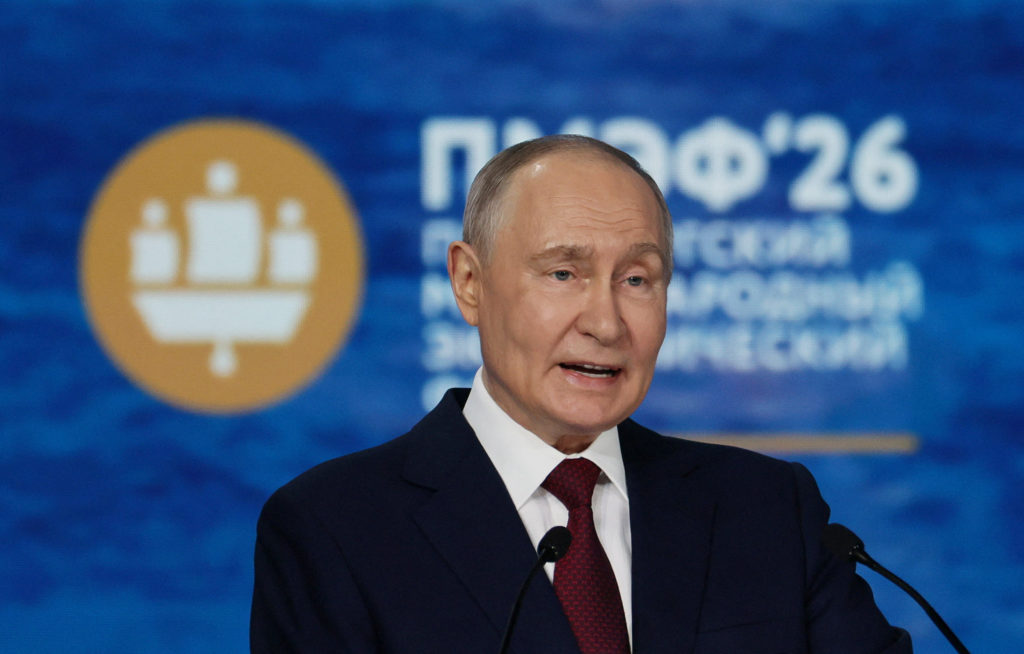
Ukrainian President Zelenskyy is accusing Russia of choosing war over peace, after Russian President Putin rejected his request for an in-person meeting. Putin spoke at an annual economic forum in St. Petersburg, a city on edge after several Ukrainian airstrikes earlier this week. Nick Schifrin reports.

Graham Platner to hold Maine rally with Rep. Ro Khanna as scandals shake up campaign

Last weekend, his campaign wrestled with stories about sexually explicit messages that Platner sent to several women while he was married. Then on Thursday, The New York Times reported about his relationships with previous girlfriends. Some viewed him positively but others described him as volatile and insulting.

House Passes Bill To Give Ukraine Billions in Additional Military Aid as War Escalates

5 June 2026 at 01:53
The US House of Representatives on Thursday passed a bill to provide Ukraine with billions in additional military aid and increase sanctions on Russia, a move that comes as the more than four-year-old war between Russia and Ukraine is escalating. The Ukraine Support Act passed in a vote of 226-195, with 18 Republicans joining Democrats […]

Ukrainian Drones Return To St. Petersburg As Russia’s Investment Forum Ends

6 June 2026 at 13:31
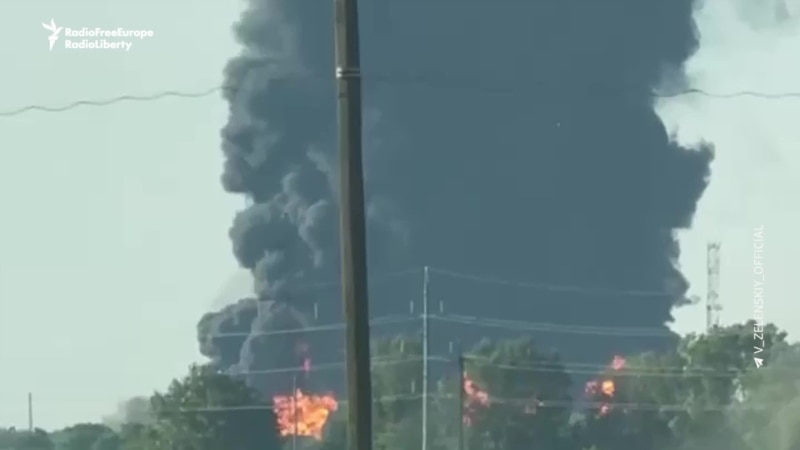
Ukraine launched hundreds of drones at targets across Russia, including the St. Petersburg region, around 1,000 kilometers from the Ukrainian border. Residents filmed drones overhead and smoke rising from military sites. The attack came on the final day of Russia’s flagship investment forum.

Palestinian baby shot dead by Israeli troops in occupied West Bank

The seven-month-old, Sam Fahd Abu Haikal, was in his mother’s arms when soldiers fired on family in Hebron

Israeli troops killed a seven-month-old Palestinian baby in the occupied West Bank and injured his parents after opening fire on the family’s car, despite it having complied with an order to stop.

Soldiers opened fire on Friday on a car carrying the infant and his parents in the Tel Rumeida area of Hebron. The seven-month-old, Sam Fahd Abu Haikal, was critically injured, evacuated in critical condition to a hospital, where he later died.

Continue reading...

© Photograph: Mahmoud Illean/AP

© Photograph: Mahmoud Illean/AP

© Photograph: Mahmoud Illean/AP

Project Sapphire: The Secret US Operation To Airlift Soviet Uranium Out Of Kazakhstan

6 June 2026 at 12:06
Kazakhstan has offered to host Iran's enriched uranium in order to streamline a potential peace deal between Tehran and Washington. The offer comes more than 30 years after a massive haul of weapons-grade uranium was taken out of the Central Asian country and flown to the US.

Zelenskyy issues open letter to Putin proposing meeting as US 'fully focused' on Iran

5 June 2026 at 13:49

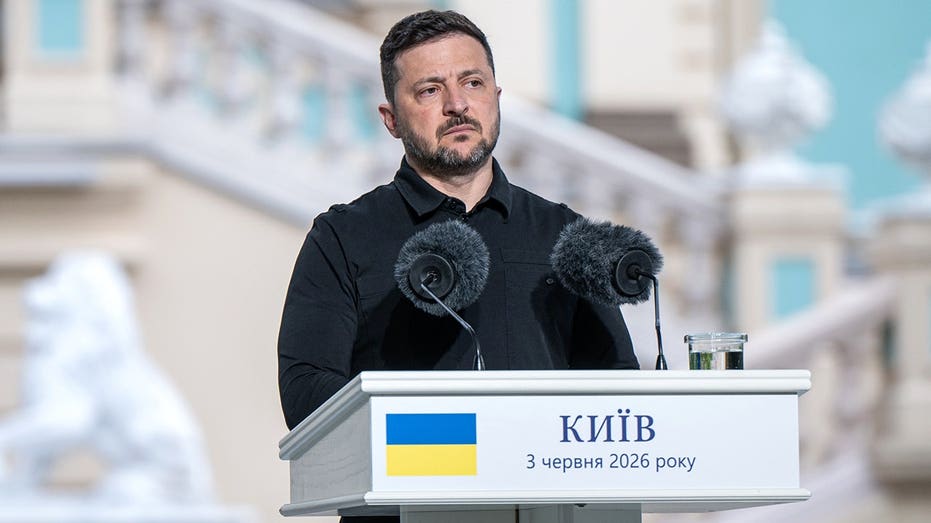
In an open letter to Russian President Vladimir Putin, Ukrainian President Volodymyr Zelenskyy proposed meeting to reach a resolution to the years-long war between their two nations.

"We see that the United States is fully focused on the issue of Iran, and it would be wrong to simply wait until the war in Europe returns to the center of its attention. Ukraine proposes ending this war through direct engagement between us — and you. I am proposing a meeting," Zelenskyy said in the letter.

"There are countries that have traditionally hosted leaders to resolve issues of war and peace. Switzerland, Türkiye, the countries of the Arab world — many are able and willing to host such a meeting. It is leaders who resolve the key issues. That has always been the case, and it always will be," he asserted.

18 HOUSE REPUBLICANS DEFY TRUMP TO PASS UKRAINE AID PACKAGE HEADED FOR VETO FIGHT

Zelenskyy suggested that Europe and the U.S. should also be involved in the peace process.

"Since the war is taking place in Europe, and since Ukraine needs security guarantees, while you also seek security guarantees for yourself, it would be logical to involve those who can genuinely serve as guarantors. We believe Europe should be part of this process — those who truly have the capacity to influence the situation. We also believe that the United States must be part of the process. This is what could help shape a new security architecture for our part of the world," he said.

HOUSE REPUBLICAN DON BACON SAYS HE WANTS 'PARIAH STATE' RUSSIA BOOTED FROM UN SECURITY COUNCIL

He indicated that Ukraine would agree to a ceasefire during the proposed negotiations.

"Ukraine is ready for a full ceasefire for the duration of the negotiations. This is standard practice, and current developments around Iran only reinforce that point. An attempt to establish real silence is the best way to begin talking to one another. We believe it would not simply be an attempt, but a real ceasefire — if that is what you want," he noted.

He also suggested a prisoner swap between the two nations, noting, "Ukraine is ready for an all-for-all exchange of prisoners of war, and this could become a good prologue to ending the war. Serious steps must be taken to return civilians and children who were taken away during the war."

PENTAGON SLASHES NATO COMBAT COMMITMENTS AS TRUMP PUSHES EUROPE TO DEFEND ITSELF

CLICK HERE TO DOWNLOAD THE FOX NEWS APP

"If you do not personally come to the conclusion that it is time to end this war, Ukraine will continue fighting for its existence. We will have those who support us. But you, too, will have to fight much harder for your own existence — not Russia’s, but your own. And this is not a threat from me or from Ukraine. It is a fact of Russian history that you know well: when Russia grows tired, change comes," Zelenskyy warned Putin.

Sun. Sea. Sand. No Gasoline. There’s A Major Problem This Tourist Season In Russian-Occupied Crimea.

6 June 2026 at 10:43
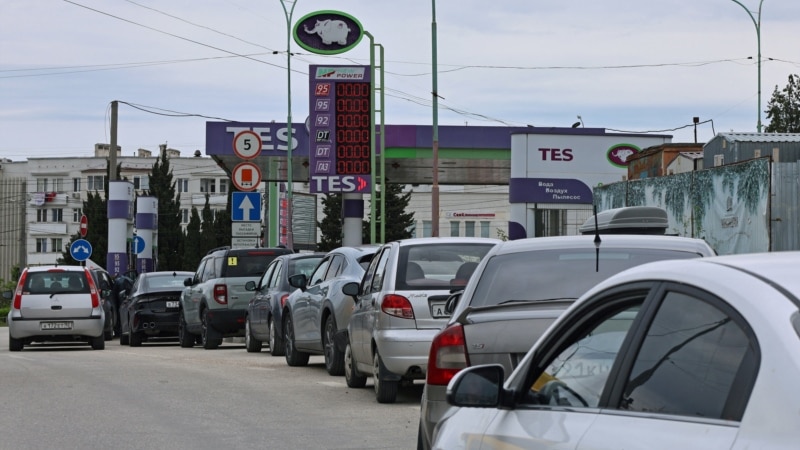
Crimea, the Ukrainian Black Sea region occupied by Russia, is heavily dependent on Russian visitors for its economy. This summer, it faces major gasoline shortages, as Ukraine’s military drone campaign squeezes transport routes, making life even more difficult for vacationers.

“Welcome to Hell”: How Executioner Ben-Gvir and His Washington Backers Are Finishing Off International Law

The spectacle of humiliation orchestrated by Israel’s Minister of National Security, Itamar Ben-Gvir, was the moment when the mask of the “only democracy in the Middle East” finally morphed into the snarl of fascist thuggery. Under the cover of American bayonets and the indifference of the world’s “leaders,” Israel’s far-right no longer hides its dream: […]

Ukraine Apologizes to Greece for Sea Drone Found Off Lefkada

6 June 2026 at 09:24
Ukraine Ukranian marine drones
Ukraine officially apologized to Greece late on Friday over the presence of a sea drone off of the island of Lefkada. Credit: AMNA

Ukraine officially apologized to the Greek government on Friday following the discovery of a Ukrainian sea drone near the Ionian island of Lefkada. The unexpected discovery of the uncrewed surface vessel prompted swift diplomatic action from Athens, which raised serious safety and environmental concerns regarding the military presence in Greek territorial waters.

Last week, the Greek government escalated the issue by lodging a formal double diplomatic demarche. Athens directed its official protests to both the Ukrainian Embassy located in the Greek capital and directly to the Ukrainian Ministry of Foreign Affairs in Kyiv. Greek authorities clearly stated that the stray sea drone severely compromised the safety of civilian maritime navigation in the busy Ionian Sea, which is a popular tourist destination both for Greeks and foreigners. Experts noted that any accidental detonation or collision involving the device could have led to human casualties and inflicted extensive environmental damage on the region’s marine ecosystem.

Ukraine’s response to Greece

In direct response to the diplomatic protest from Athens, Ukrainian Foreign Ministry spokesman Heorhii Tykhyi released a public statement on social media late on Friday evening, addressing the issue. Tykhyi offered a formal apology on behalf of Ukraine, attributing the drone’s errant journey into Greek waters to the unpredictable circumstances generated by the ongoing Russian invasion of Ukraine.

“The Ukrainian side expresses its apologies for the incident, stressing that it was the result of circumstances brought about by the ongoing Russian aggression,” Tykhyi wrote in a statement published on Friday. He argued that the discovery off the coast of Lefkada, along with similar events reported in other regions, demonstrates how the current conflict threatens not only Ukraine but also friendly European states and the broader international community.

Addressing the specific maritime concerns raised by the Greek demarche, the Ukrainian foreign ministry noted its strict commitment to international law and the fundamental principles of civilian maritime safety. Ukraine also reiterated a strong, vested interest in preventing any similar occurrences from happening in the future.

Tykhyi pointed out that international and regional security, specifically maritime safety and combating the operations of Russia’s “shadow fleet,” remain urgent, shared priorities for both Greece and Ukraine. Despite the immediate friction caused by the drone’s discovery, Ukraine utilized the statement to emphasize the strength of its bilateral relationship with Greece.

The foreign ministry expressed deep gratitude to the Greek government and the Greek people, praising the country for its steadfast, continuous support of Ukraine since the very first days of Russia’s full-scale invasion. Kyiv concluded by reaffirming its dedication to deepening these friendly relations and maintaining a constructive dialogue across all areas of mutual interest.

Há avanços na erradicação da pobreza e da fome, ao contrário da igualdade de género

6 June 2026 at 08:31

Entre 2015 e 2025, Portugal evoluiu em geral positivamente na erradicação da pobreza e da fome, ao contrário do que se passou em relação à questão da igualdade de género, indicou hoje o Instituto Nacional de Estatística (INE).

A avaliação consta do seu relatório Objetivos de Desenvolvimento Sustentável – Agenda 2030, Indicadores para Portugal – 2015-2025, que apresenta uma “análise sintética da evolução e do desempenho dos 17 ODS no contexto nacional”.

No caso do ODS “Erradicar a pobreza”, “Portugal apresenta um desempenho globalmente positivo (…) com 55,6% dos indicadores a registarem evolução favorável, refletindo progressos relevantes no combate à pobreza e na melhoria das condições de vida”, refere o estudo, embora chame a atenção para a continuação de “desafios importantes, nomeadamente na redução da pobreza, no reforço da proteção social e na mitigação dos impactos associados a catástrofes”.

A taxa de risco de pobreza diminuiu de 19% em 2015 para 15,4% em 2024, mas “o ritmo de progresso permanece insuficiente para cumprir a meta definida para 2030”, alerta.

Aponta “avanços muito positivos nas condições habitacionais, traduzidos numa redução acentuada da população sem acesso a instalações básicas, tanto na população em geral como entre os grupos mais vulneráveis”, mas relativamente às pensões de velhice e invalidez ou a cobertura do subsídio de desemprego “revelam sinais de fragilidade ou estagnação”.

Quanto à erradicação da fome, “60% dos indicadores” apresentaram uma “evolução favorável” naquele período, assinalando o relatório “progressos relevantes nos domínios da segurança alimentar, sustentabilidade agrícola e financiamento do setor”.

Precisa que “a prevalência de insegurança alimentar moderada e/ou grave diminuiu de 4,7% em 2019 para 3,5% em 2025” e que a área dedicada à agricultura biológica “mais do que triplicou entre 2016 e 2023, aproximando Portugal da meta europeia para 2030”.

O estudo do INE indica que a evolução dos indicadores ODS (estabelecidos pela ONU) em Portugal entre 2015 e 2025 foi “globalmente positiva” e que a sua maioria “apresentou uma evolução favorável, refletindo progressos significativos ou moderados no sentido das metas estabelecidas”.

No entanto, nota que “uma proporção relevante de indicadores” registou uma “evolução desfavorável, evidenciando retrocessos ou dinâmicas contrárias às metas definidas”, como é o caso do ODS “Igualdade de género”.

A este nível Portugal apresenta “um desempenho globalmente desfavorável (…), refletindo a persistência de desigualdades estruturais e progressos insuficientes para alcançar a paridade até 2030”.

Um dos “problemas mais graves” continua a ser a violência de género, tendo 22,5% das mulheres entre os 18 e 74 anos referido situações de violência em contexto de intimidade em 2022.

Em relação à participação política, “os progressos permanecem limitados”. “Em 2025, as mulheres representavam 33,5% dos deputados, correspondendo a um aumento de apenas 0,5 pontos percentuais face a 2015” e, embora ao nível do poder local a sua presença tenha aumentado de 10,4% em 2017 para 15,6% em 2025, a paridade continua distante, acrescenta.

A análise refere alguns avanços no mercado de trabalho, “com destaque para a administração pública, onde as mulheres passaram a representar 56% dos cargos dirigentes em 2025, ultrapassando o limiar de equilíbrio de género”.

O conteúdo Há avanços na erradicação da pobreza e da fome, ao contrário da igualdade de género aparece primeiro em Sul Informação.

4,000-Year-Old Skewers Found on Santorini Reveal Souvlaki Bronze Age Origins

6 June 2026 at 02:33
Bronze Age souvlaki grill from Santorini
An ancient Greek grill for souvlaki from Akrotiri, Santorini. Credit: Wikimedia Commons/ Public domain

The beloved souvlaki has been around since ancient times. Archaeologists have found skewers dating back to the Bronze Age, and recent research looks at the functioning of early grills. In particular, “souvlaki trays” have been discovered dating all the way back to Mycenaean culture.

Therans and Mycenaean cultures were known for their luxurious lifestyles, ornate and colorful clothes, exquisite art, and sea trade with other cultures, such as Egypt. People developed these cultures on the islands of Crete and Santorini.

World’s oldest Bronze Age souvlaki on Santorini

The oldest souvlaki skewers found seem to be those discovered by archaeologists on Santorini dating back as far as 2000 BC. There are traces of the popularity of souvlaki on Santorini and Crete through the Bronze Age, and both Theran and Mycenean cultures made use of this method of cooking.

Ancient bronze skewers and vase, with small painted ceramic amphora
Ancient bronze skewers and a vase. Credit: diffendale/CC BY-NC-SA 2.0.

Ancient Greek texts such as the Iliad and the Odyssey describe a spit (Greek: ὀβελός) being used to roast meat, but the exact functioning of the souvlaki trays was unknown until recently. The works of great poets and writers describe the same obeliskos being popular. Sophocles, Aristophanes, Xenophon, and Aristoteles all mention or describe the popular dish in their works.

Mycenean cooking and culture

It seems that ancient Mycenaeans did not have a large variety of foods available to them. Despite this, they developed various types of cooking methods, fostering innovation. Part of that innovation was souvlaki trays, as was cooking in jars, among other techniques. At the time and for most of ancient history, cooking was mostly done on hearths with few ingredients. The portable and lightweight souvlaki trays changed this for Mycenaeans around 1400 to 1050 B.C.

Academics suggest that an important historical force behind these contraptions was status. While the Myceneans had incredibly rich art and fashion, their diet lacked diversity, though a marker of status was drinking wine. On the other hand, one can imagine poorer Mycenaeans drank beer.

As they were skilled sailors, Therans on Santorini island had begun brewing beer in the II millennium B.C., possibly learning the skill from Egypt or the Near East, where beer had been brewed since the III and IV millennium B.C. Accounts of the 5th and 4th centuries B.C. tell of an Athenian bias against beer. It was considered a drink of barbarians, Egyptians, or even women. Beer brewing was never seen as valuable.

By the Classical period, this all changed. Wine had become readily available to all, pushing elites in later Greek societies to seek other ways to distinguish themselves — for instance, through the use of specific gadgets and kitchen appliances, echoing earlier innovations like the Mycenaean souvlaki trays.

The souvlaki tray

The souvlaki trays found in Gla, Pylos, and Crete added something to the age-old tradition. Similar to modern-day outdoor grills, they were designed to be portable and good for travel or entertainment. Meat cuts seem to have been similar to the ones popular for souvlaki today, made from either lamb, pork, or mutton, and the meal was accompanied by bread made of various cereals.

The clay trays had placeholders for the skewers and, until recently, how they actually functioned was unknown. Researchers at Dartmouth College have recreated the trays using original ancient pottery techniques, tools, and ingredients. They realized the trays were not meant to be put on a hearth as originally thought. Rather, embers were placed in the tray and the skewers were grilled. They were practical, portable, and delicious!

World’s First AI-Designed Vaccine Tested in Humans Could Fight Future Pandemics

6 June 2026 at 01:09
biden vaccine mandate
Coronavirus vaccine. Credit: Public domain

Researchers have developed an AI-designed vaccine that could protect against a broad range of coronaviruses, including future strains that have not yet emerged.

Scientists at the University of Cambridge say the project marks the first time an Artificial Intelligence-designed vaccine antigen has been tested in human volunteers. They believe the technology could eventually help protect against entire families of viruses rather than individual strains.

AI designs a vaccine for multiple coronavirus threats

Most vaccines are built using versions of viruses that are already circulating. As those viruses mutate, vaccines often need updating to remain effective. The new approach aims to overcome that challenge.

Researchers collected genetic information from a wide range of coronaviruses identified through surveillance programs that monitor viruses with pandemic potential. Artificial intelligence then analyzed the data and designed a “super-antigen,” a vaccine component intended to train the immune system to recognize many related coronaviruses at once.

Antigens are the parts of vaccines that teach the immune system what to attack. Researchers say the AI-designed antigen could potentially protect against current coronavirus variants as well as animal viruses that may one day spread to humans.

Professor Jonathan Heeney of the University of Cambridge described the research as a major shift in pandemic preparedness. He said the goal is to develop vaccines that protect against future threats rather than reacting after outbreaks occur.

Early human trials show encouraging results

The first human trial involved 39 volunteers and was designed to evaluate safety. Researchers reported no major safety concerns. A larger study involving about 200 participants is now underway to better understand how effectively the vaccine stimulates immune responses.

Scientists at the University of Cambridge say AI developed a vaccine’s ‘key component’ for the first time

The vaccine was engineered to work on all coronaviruses, but is in its early stages of work pic.twitter.com/YYt5SGDe5v

— Interesting AF (@interesting_aIl) June 5, 2026

Results published in the Journal of Infection showed that the vaccine generated a measurable, though modest, immune response. Despite the early-stage findings, researchers and independent experts say the technology shows significant promise.

Professor Saul Faust of the University of Southampton, who helped conduct some of the trials, said the approach has strong potential, particularly for rapidly changing viruses that can spark future pandemics.

Researchers expand the technology to other diseases

Researchers are already applying the technology to other diseases. Animal studies are underway on a universal influenza vaccine that could eliminate the need for yearly updates. Scientists are also developing vaccines targeting H5N1 bird flu and viral hemorrhagic fevers, including Ebola.

Professor Andy Pollard, director of the Oxford Vaccine Group, said the findings add to growing evidence that artificial intelligence could transform vaccine research. He noted that future AI systems may help predict how the immune system will respond to vaccine candidates, potentially accelerating development.

Experts see a new era for vaccine development

Professor Marian Knight, scientific director at the National Institute for Health and Care Research, called the trial an important step toward broader and longer-lasting protection against viral diseases.

UK Science Minister Patrick Vallance said the early results demonstrate how artificial intelligence and scientific research can work together to create new medical tools.

Researchers caution that much larger studies are needed before the vaccine can be widely used. However, they believe the technology could help the world prepare for future pandemics before they begin.

Tacheles #208 ist online

5 June 2026 at 23:00
Petersburg wurde von der Ukraine bombardiert und in Petersburg findet derzeit das Wirtschaftsforum statt, was bedeutet, dass ich viele interessante Treffen habe und spannende Hintergrundgespräche führen kann. Trotzdem haben Robert Stein und ich am Donnerstag die Zeit gefunden, eine weitere Sendung „Tacheles mit Röper und Stein“ aufzuzeichnen. Sollte YouTube die Sendung löschen, finden Sie sie […]
❌