Democrats have rolled the dice in Maine as they pursue a post-Trump future. Will it work?
It was over the moment he received the endorsement of Maine’s most famous resident: Stephen King, the master of horror, who announced on Tuesday that he voted for Graham Platner.
More than 100,000 Democrats in Maine agreed, making Platner, a marine veteran and oyster farmer, their nominee for the US Senate against Republican incumbent Susan Collins in November.
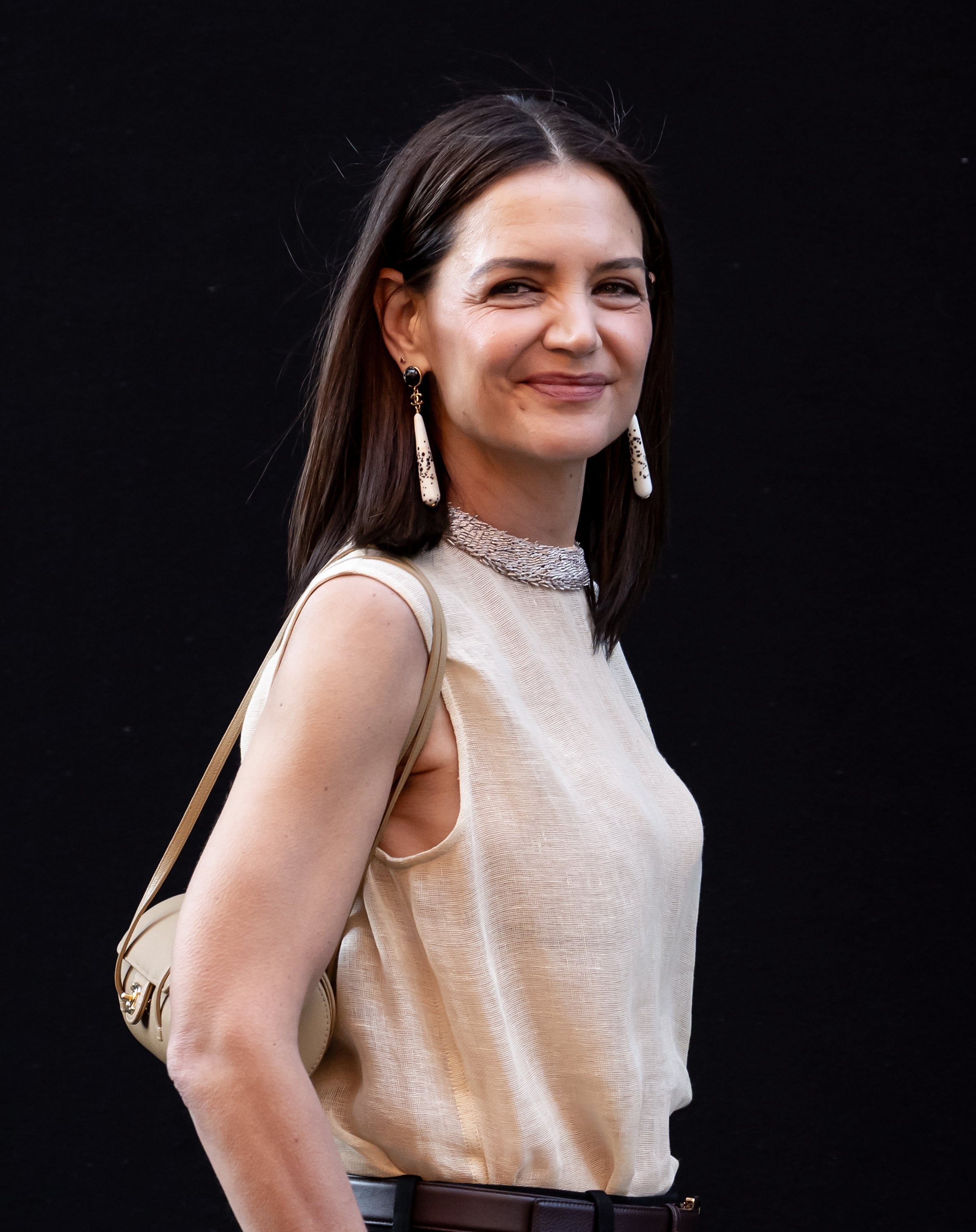
Katie Holmes es un celebridad que ha cubierto todos los ciclos del estrellato en el siglo XXI. Empezó siendo famosa como actriz, pasó a ser mundialmente conocida por casarse con Tom Cruise y acabar su relación con él de forma tumultosa y en la actualidad acapara titulares una y otra vez por su impecable sentido del estilo.
Por eso no es extraño que Chanel la haya escogido para representar sus valores en el espectacular 'comeback' que la casa de la camelia está protagonizando gracias a la renovación realizada por el nuevo director creativo, Matthieu Blazy.
Todos los años Chanel celebra una cena especial en el contexto del Festival de Cine de Tribeca. En esta edición, ella ha sido la invitada de honor y su estilismo hace honor tanto a su propia reputación como icono de moda como al nuevo espíritu de la firma francesa. Sobria, elegante pero a la vez muy sofisticada, su 'outfit' era aparentemente sencillo: el pantalón de traje de corte impecable, el cinturón de cuero, el top de manga sisa en lamé dorado con remate en el cuello con hilos plateados... Simple y a la vez complejo.
Por supuesto, los complementos también eran de Chanel. El bolso tubo formaba parte de la colección resort que tanto furor ha desatado entre las compradoras de todo el mundo.
Los zapatos, unos salones con la característica horma diseñada por Blazy, tenían la puntera blanca y el resto del empeine en color crema, de manera que contrastaban con el pantalón y al mismo tiempo, empataban con el top, tan ligero y luminoso.
Y fue precisamente el top y su ligereza lo que llevó a la actriz, celebridad e icono a bromear con los fotógrafos presentes en el photocall. En un momento dado, se acercó a uno de los reporteros presentes, que acababa de piropearla y le dijo: "¿Se ve algo que no debería verse?".
Durante la cena, la actriz continuó mostrándose muy jovial cn la prensa y hasta se prestó a posar con la baseball cup con la que se obsequió a los comensales. Con el pelo recogido en la gorra se podían ver perfectamente sus preciosos pendientes de Chanel, con una lágrima de resina blanca y rematados cerca del lóbulo de la oreja con la característica doble C.
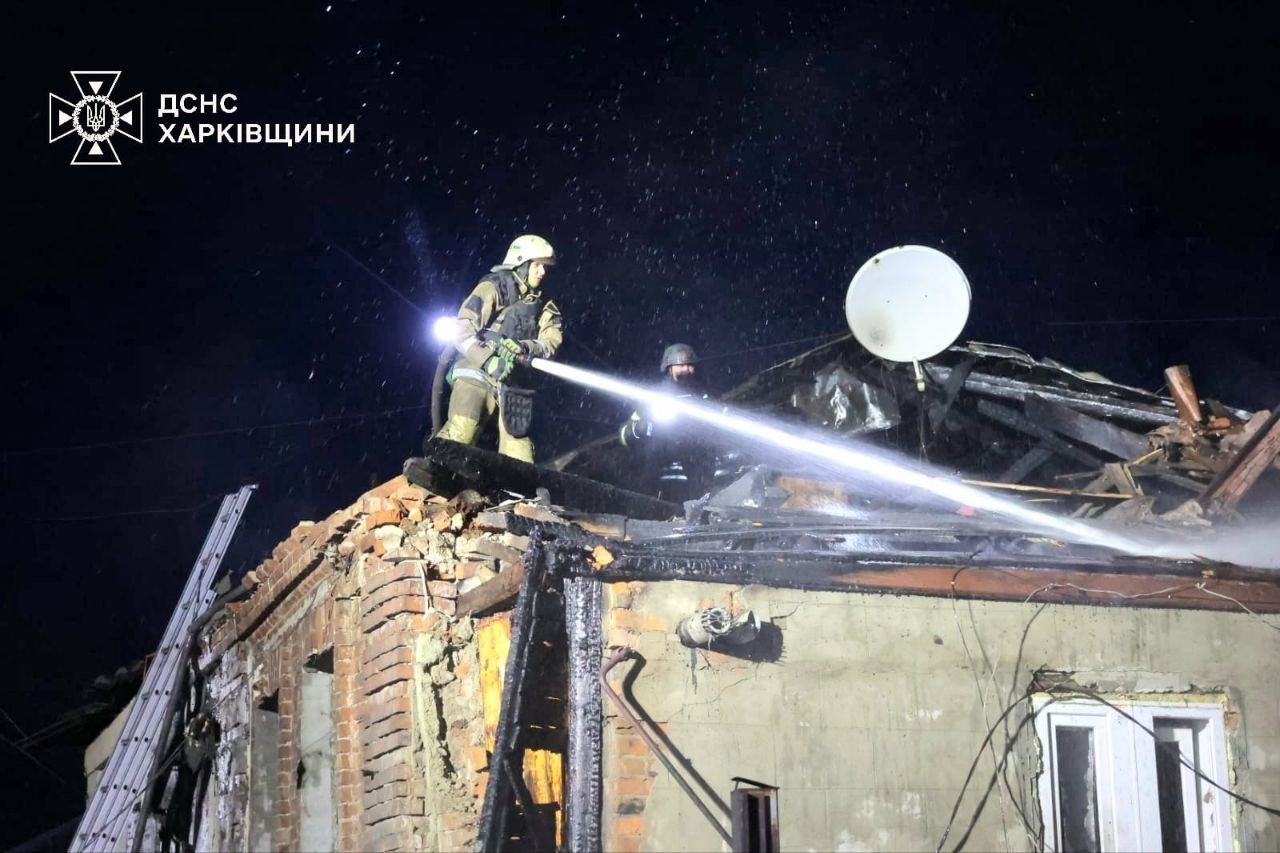
Ce mercredi 10 juin 2026 marque le 1 566e jour de la guerre déclenchée par la Russie en Ukraine. À partir d’aujourd’hui, le conflit atteint symboliquement la durée de la Première Guerre mondiale. Un jalon historique...
The Vine of Pausanias is tangled and about 100 meters long. Foresters believe it to be about 3,000 years old. Photo credit: Kalavryta Municipality
When ancient Greek geographer Pausanias sat down to rest beneath the shade of the giant vine, he was unaware it was probably the oldest in the world.
It was approximately 160 AD when Pausanias (110-180 AD) enjoyed the shade of the ancient vine (Vitis vinifera) in the modern-day Peloponnesian community of Sella Pagrati on the Tripoli-Kalavryta national highway.
Today, the Vine of Pausanias is a tourist attraction on the border of the Arcadia and Achaia prefectures within the courtyard of the Agios Nikolaos church. According to agriculturalists, it is estimated to be about three thousand years old.
In the book, Food and History, Vol 11 (pp. 27-34) by Boursiquot, Lacombe, Laucou, and Bakasietas, there is a description of the ancient Greek vine:
“In order to contribute to the development of knowledge on the ampelographic heritage and the viticultural genetic resources of Greece, we have characterized the so-called ‘Pausanias’ vine at the ampelographic and molecular level. This vine is located in the center of the Peloponnese (village of Pagrati, Prefecture of Achaia). It is named and listed under the name of ‘Vine of Pausanias,’ Greek geographer of the 2nd century AD, even if its origin and its real age are not really known. The results of the analyses show that it is not an ancient Greek grape variety but a lambrusca (Vitis vinifera subsp. sylvestris), whose specificity lies in the fact that the strain has been maintained naturally for a very long time, and probably for several centuries, without any particular human intervention. In this respect, and by its spectacular development, it is certainly a unique and quite exceptional example.”
Although it blooms every May, the vine no longer produces fruit. It is about 100 meters (328 feet) long and has 9 shoots (trunks), which spread in a grove of hollow oak bushes (Quercus coccifera). Many of its branches have even climbed the oak bushes. It should be noted that, according to the villagers, many of the shoots were cut by the Germans during the 1941-1944 Occupation.
Pausanias went for the trout
In his book Arcadika (8.21.2), Pausanias claims he had visited the area to see if the rumor that the trout of the Aroanios River sang like the song thrush bird was true: “…here the fish of the Aroanios River are so delicious that they sing like thrushes.” (Greek: “εἰσὶ δὲ ἰχθῦς ἐν τῷ Ἀροανίῳ καὶ ἄλλοι καὶ οἱ ποικιλίαι καλούμενοι: τούτους λέγουσι τοὺς ποικιλίας φθέγγεσθαι κίχλῃ τῇ ὄρνιθι ἐοικός.”)
The ancient Greek geographer discovered that local gourmands had a metaphor to describe the flavorful Aroanios River trout. Later on, he sought the shade of the vine, which he found impressive. The villagers hosted him, providing him with a trout meal and offering him water from the nearby spring.
Ancient legends connect the Vine of Pausanias with the third of the twelve labors of Heracles, which was to capture the Ceryneian Hind, the golden-horned deer sacred to Artemis. According to the legend, while the hero was on the hunt for the deer, it reached the vine, and its long horns became tangled, enabling Heracles to capture it. Due to this myth, the location of the Vine of Pausanias had also been named Kynigari (Greek: Κυνηγάρι), meaning “hunting place” in Greek.
Protected national monument
The vine was declared a Protected Natural Monument in 1975 (Government Gazette 738/B/1975). Regarding the vine’s physical condition, the scientific committee of the ECOCITY NGO estimates that the original trunks of the plant have disappeared due to the natural deterioration of time, while their remaining lower parts, which are one to one and a half meters high and at least 50 centimeters in diameter, have dried out.
Many other shoots have emerged from the numerous branches of the roots, climbing the tree-like oak bush forms. However, ECOCITY estimates that the condition of these “trunk shoots” seems almost hopeless, suggesting that the unique natural monument could potentially permanently disappear after about three thousand years.
To avoid destruction of the Vine of Pausanias, ECOCITY has long since forwarded a request to the competent services responsible for its preservation and maintenance. This in relation to the desired cooperation with the Viticulture and Arboriculture Laboratories of the Agricultural University of Athens so that they may take immediate action to improve the vine’s physical condition and prevent its complete demise.
In May 2014, with permission granted by the Ministry of Environment, Energy, and Climate Change, the members of the scientific committee of the Western Greece Sector of ECOCITY visited the Vine of Pausanias. They extracted samples from the trunks to determine precise dating. The team consisted of foresters and agriculturalists who then sent the samples to the head of the Archaeometry Laboratory of the NCSR “Demokritos.”
Unique and distinctive genotype
Genetic analysis of the Vine of Pausanias was carried out. Twenty microsatellite markers distributed throughout the genome were studied for this purpose, and comparison with 119 Greek varieties and 762 species of wild vines was performed.
The comparison to all the varieties in the Vassal collection (over 3000) proved that the vine’s profile is of a unique and distinctive genotype.
Its age is estimated to be several centuries old, but the number cannot be definitively determined. Its flowers are only ‘male,’ meaning the vine is not fruit-bearing.
Compared to other representatives of Vitis vinifera, wild or cultivated, that exist today in the world, the Vine of Pausanias is of a particularly original genotype, probably resulting from a limited number of sexual generations which have also undergone only few cycles of vegetative multiplication. In this regard, it is certainly a fascinating model for studies on the evolution and dynamics of the vine genome.
Donald Trump said Iran has taken “too long” to agree to a deal “that would have been great for them” and will now “have to pay the price”.
In a post on Truth Social early this morning, which came after the US and Iran exchanged fire on Tuesday, Trump wrote:
Iran’s Military is a complete and total mess. Much of it, like their Navy and Air Force, doesn’t even exist anymore - They have been completely defeated. Iran is all talk and no action. The Bully of the Middle East is DEAD!!! They’ve taken too long to negotiate a deal that would have been great for them, now they will have to pay the price!!!
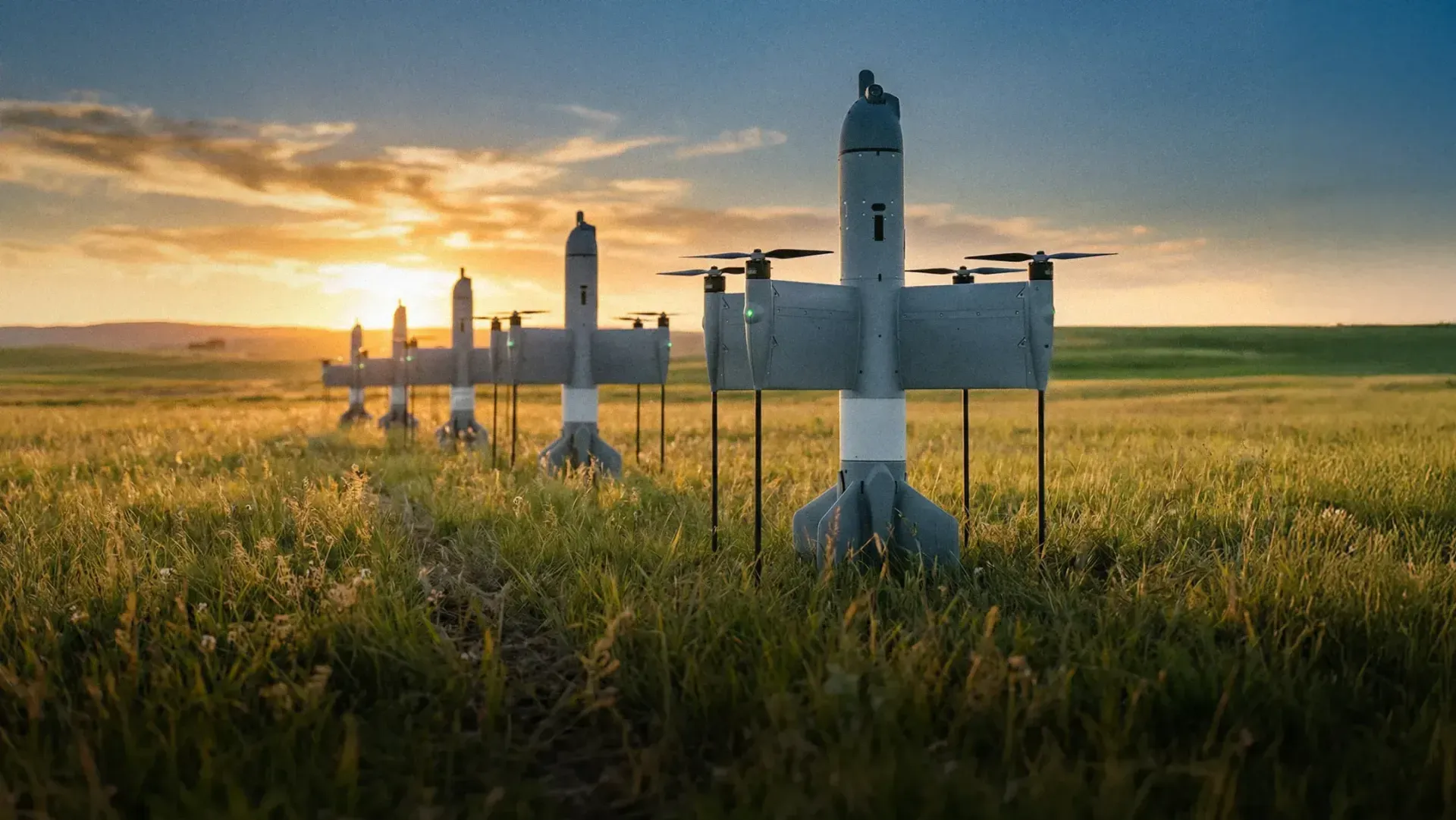
Russia’s flagship international business summit in St Petersburg was targeted with Ukrainian drones that used Estonian territorial waters to evade Russian air defenses. Other Baltic states are also implicated in carrying out the large-scale attack last week.
According to the well-informed Borzikkman channel, scores of kamikaze drones were launched from ships in the Baltic Sea. They flew at low altitude over Estonian territorial waters before striking St Petersburg. The flight path was designed to take Russian defenses by surprise.
Most of the drones were shot down by Russian defenses, but a few managed to hit their targets. The biggest hit was on the St Petersburg oil terminal. That had the desired propaganda effect of creating a pall of black smoke visible to delegates on the opening day, June 3, of the St Petersburg International Economic Forum (SPIEF).
Western media outlets like the BBC were delighted to report on the embarrassing vista in the skies over Russia’s second city and a forum that President Putin would address.
The BBC’s Steve Rosenberg was positively gleeful, writing: “The abiding image of SPIEF 2026 will be the huge plume of thick black smoke which dominated the St Petersburg skyline on Wednesday… All the delegates saw the smoke as they arrived at the expo centre on the edge of the city.”
Drones from ships in the Baltic Sea with flights through Estonian territorial waters means that NATO states were involved in the execution of the air strikes. On the same day, NATO chief Mark Rutte was in Kiev on an unannounced visit to meet the Ukrainian leader, Vladimir Zelensky.
The level of NATO participation in waging war on Russia with its Ukrainian proxy has become absurdly obvious. In recent weeks, hundreds of Ukrainian drones have crashed in Finland, Estonia, Lithuania, Latvia, Poland, and Romania. The Kiev regime has repeatedly apologized to European capitals for the infringements that have resulted in injuries to civilians. Still, the European Union and NATO take no action to sanction or reprimand Kiev. They indulge in the claims that the drones are being redirected by Russian electronic jamming. Swedish Prime Minister Ulf Kristersson has even urged that NATO states should help Ukraine in targeting Russia to avoid “misakes”.
The duplicity is contemptible. Russian military intelligence has pinpointed drone manufacturing sites in the Baltic states and other NATO nations that are participating in Ukrainian attacks.
Dmitry Medvedev, deputy chairman of Russia’s National Security Council, commented: “The Russian Defence Ministry’s statement should be understood extremely literally: the publication of production sites for drones and other military equipment in Europe is a register of potential legitimate targets for the Russian armed forces.”
Evidently, the NATO states are providing targeting data and permitting the use of their territory to maximize the attacks on Russia. Hundreds of Russian civilians have been killed in these NATO-assisted drone operations, the most dreadful being the murder of 21 students at a college dormitory in Starobelsk, Lugansk, on May 22. Last week, on the same day as the drone attack on St Petersburg, eight civilians were killed, and 10 were injured when their bus was blown up in an air strike while traveling through the Donetsk region towards Crimea.
Anger across Russia is growing, analyst Stas Krapivnik told Danny Haiphong’s channel. Russia has retaliated with heavy strikes on military sites and decision-making centers across Ukraine. But, as Krapivnik points out, Moscow is under pressure to take action against NATO culprits from where the Ukrainian offensives are stemming. He says that Russia should do like Iran is doing, hitting back hard where it hurts.
Since the U.S. and Israel launched their aggression against Iran 100 days ago, on February 28, the Iranians have destroyed dozens of American installations across the Persian Gulf and Israeli bases with their formidable arsenal of hypersonic and ballistic missiles, as well as drones.
When Israel violated a shaky truce by bombing Beirut’s southern district of Dahiyeh at the weekend, Iran struck back immediately, as it had warned it would do, to hit airbases in Israel and a U.S. base in Saudi Arabia.
Iran’s defiance has put manners on Washington. Israel is a slow learner, but it will come round to realizing that Iran is not going to take any aggression lying down. It’s hitting back hard and fast in the places that hurt. The days of U.S. and Israeli aggression with impunity are over.
The other thing is that Tehran has called Trump’s bluff about his “madman threats” to escalate the war and obliterate Iran. The Iranians have demonstrated to Washington and the Israelis that the aggressors have much more to lose if they persist in their belligerence.
Russia might want to take note, as Krapivnik, Borzikkman, Sergey Karaganov, and other analysts have advised. The EU and NATO are acting with impunity and a delusional sense that they can escalate attacks on Russia, killing civilians and damaging Russia’s economy, all because of some cynical charade that Ukraine is alone in carrying out the attacks.
Of course, the risk is that if Russian hypersonics were to take out a NATO drone-launching ship in the Baltic Sea, then that would trigger the U.S.-led military alliance’s joint defense commitments. In that case, we are potentially in a situation of World War Three.
But hold on a moment. Are we not already in that situation, given that, despite the charade, NATO states are directly involved in attacking Russia, its capital, Moscow, and St Petersburg, and killing hundreds of civilians?
The NATO and EU leaders are so imbued with Russophobia and arrogance that they are beyond rational thinking. The only language they understand is direct threat and force. Unless they pay a price, the deranged Russophobic leaders will keep escalating as they are doing.
Iran has shown a viable self-defense policy. The enemy is hit hard for daring to aggress against the Iranian people.
A kick in the Baltics might be what it takes to concentrate Russophobic minds. Before it’s too late.
Ukraine has been sending swarms of drones to hit Russian ports, oil terminals and other facilities on the Baltic Sea — but some have veered off course en route.
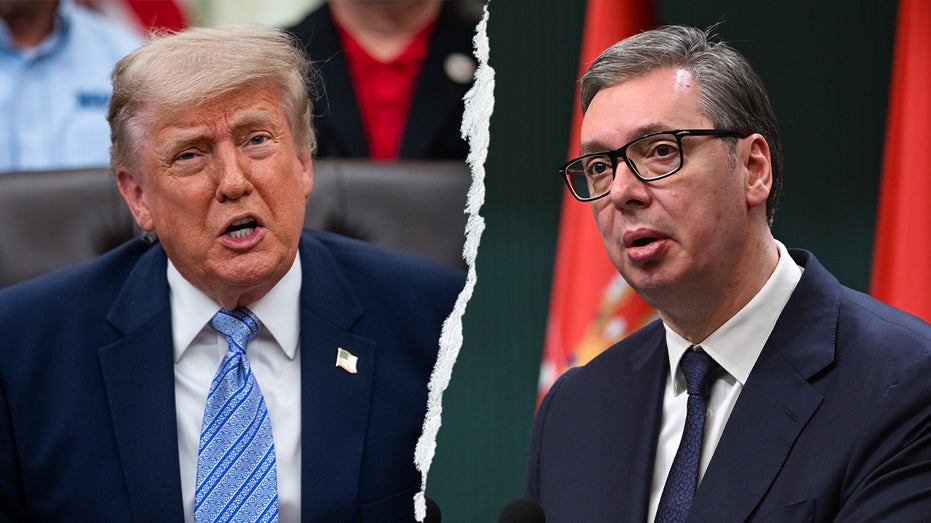
Serbian President Aleksandar Vučić says relations between Serbia and the United States have undergone a dramatic transformation under President Donald Trump, a shift he says has changed public perceptions in a country where memories of the 1999 NATO bombing campaign remain deeply rooted.
In an exclusive interview with Fox News Digital, Vučić praised Trump's approach to the Balkans, arguing that the administration's focus on economic cooperation rather than political pressure resonated with many Serbs. "President Trump and his team so far were working very diligently and dedicatedly on the Western Balkans," Vučić said, adding that many Serbs view his administration very differently from previous U.S. governments.
"If you ask people in Serbia just to make a comparison between Clinton and Trump's administration, or Democrats to Republicans, you wouldn't believe it," Vučić said. "It would be 90 to 10 or 95 to 5."
The comparison is particularly striking in Serbia, where many still associate the United States with NATO's 1999 bombing campaign during the Kosovo conflict, launched to stop Serbian forces' crackdown on ethnic Albanians in Kosovo and which remains one of the most consequential events in modern Serbian history.
Vučić said he recently extended an invitation to Trump to visit Serbia and predicted the American president would receive an enthusiastic welcome.
"I hope that we'll be able to host him," Vučić said. "More people will be ready to greet him and wait for him than he might even expect…I dare to say even more than hundreds of thousands of people."
The Serbian president said the improving relationship between Washington and Belgrade is increasingly centered on economics, investment and technological cooperation, and mutual conservative values.
According to Vučić, Serbia and the United States are preparing to launch a strategic dialogue that will focus on energy, infrastructure, artificial intelligence, defense cooperation and investment opportunities. Among the projects under discussion are energy infrastructure, liquefied natural gas cooperation, data centers and advanced computing technologies.
The growing relationship comes as Serbia seeks to position itself as a regional economic hub while continuing its long-standing ambition of joining the European Union.
Vučić pointed to preparations for Expo 2027 in Belgrade with nearly 150 participating countries, as evidence of Serbia's growing international profile and economic ambitions.
Vučić, who has served as Serbia's dominant political figure since becoming prime minister in 2014 and president in 2017, pointed to the country's economic growth as evidence of its transformation. "Our GDP was 32 billion (euros) when I became the prime minister," Vučić said. "This year it's going to be over 100 billion euros., which is $120 billion."
Vučić's relationship with Trump dates back to the president's first term, when the White House brokered a series of economic normalization agreements between Serbia and Kosovo. Rather than focusing first on the politically explosive question of Kosovo's status, the Trump administration emphasized infrastructure projects, transportation links and investment aimed at improving ties between the two sides.
In September 2020, Vučić and then-Kosovo Prime Minister Avdullah Hoti signed U.S.-brokered economic agreements at the White House that included commitments to expand rail and highway connections and promote investment. Trump described the deal as a breakthrough achieved by focusing on "job creation and economic growth" rather than longstanding political disputes.
Asked whether he would consider recognizing Kosovo, which declared independence from Serbia in 2008 and has been recognized by the United States under President George W. Bush and most European countries, if doing so unlocked Serbia's economic future and accelerated its path toward membership in the European Union, Vučić pushed back on the premise, arguing that economic cooperation and improved relations should come before discussions about political status.
"I'm not saying that I'm ready to violate my constitution… I have always been open to talks or compromising solutions, I have always been open to developing great economic ties and no doubt much better political ties. But I was not speaking about recognition of someone's independence," he said.
While Serbia continues to pursue membership in the European Union, the country has also maintained ties with Russia and China, a balancing act that has drawn scrutiny amid Russia's war in Ukraine and growing geopolitical tensions worldwide.
Asked whether Serbia could continue navigating between East and West in an increasingly divided world or would eventually need to choose a side, Vučić rejected the notion that countries must choose between competing geopolitical camps. Instead, he pointed to both his own visit to China and Trump's engagement with Beijing as examples of what he described as pragmatic diplomacy focused on national interests.
"President Trump didn't go there because of his vanity," Vučić said of Trump's visit to China. "He brought with him all the leading people of the United States of America for making better businesses, for earning more money for their companies."
Vučić said he adopted a similar approach during his own visit, arguing that leaders should prioritize economic opportunities for their citizens rather than ideological alignments. "I'm coming from a small country. I was asking for more investments and was fighting for the interests of my people," he said.
The Serbian president said the same pragmatic approach should guide efforts to resolve ongoing conflicts in both Ukraine and the Middle East.
"It's always better to have thousands of days of negotiations than one day of war," he said.
Asked about tensions involving Iran and the wider conflict in the Middle East, Vučić reiterated Serbia's support for Israel, a position that increasingly distinguishes Belgrade from some European governments.
"I am the president of the country that is one of the very rare countries in Europe that is not hesitating to cooperate and collaborate with Israel," he said. "And it is proud to say this publicly and openly."
Vučić warned about what he described as rising antisemitism around the world.
"From time to time, I'm very much afraid to see a lot of antisemitic slogans and antisemitic banners," he said.
La plateforme militaire Delta révolutionne la guerre en Ukraine. Née des lacunes du Donbass, elle relie aujourd’hui environ 250 000 utilisateurs et aurait permis de neutraliser plus de 130 000 cibles ennemies en...
The Air Force said Russia launched 207 drones, 181 of which were intercepted. At least 21 drones struck 14 locations, while falling debris was recorded at 13 sites.
Nueva Delhi, 10 jun (Prensa Latina) La industria cinematográfica de India se encuentra de luto hoy por el fallecimiento del destacado cineasta tamil Bharathiraja, a los 85 años de edad tras una larga enfermedad.
In the fifth year of Russia's full-scale invasion of Ukraine, mil-tech startups still struggle to access bank financing amid strict secrecy and lack of collateral.
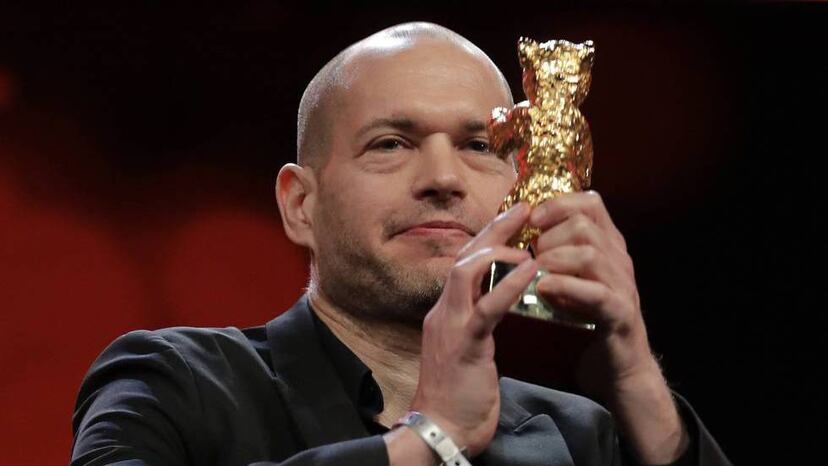
Figuras como la actriz Natalie Portman o los realizadores Jacques Audiard y Justine Triet sumaron su firma a una carta que critica el “fracaso intelectual” que suponen, según ellos, las presiones para excluir al cineasta israelí Nadav Lapid, exiliado y crítico con el Gobierno de Benjamín Netanyahu, del Festival Internacional de Cine de Marsella (FID), que se celebra del 7 al 12 de julio. En un texto publicado en Le Monde esta semana, han destacado la trayectoria de Lapid y su figura como un destacado artista disidente.
Graham Platner’s primary victory in Maine sets up a high-stakes contest between an insurgent progressive with political baggage and a battle-tested but vulnerable Republican senator.
Graham Platner will face Senator Susan Collins, a moderate Republican, in a general election in Maine that is seen as central to the fight for Senate control.
As the Iran war drags on, Oman — a U.S. ally and mediator with Iran — has found itself at odds with the Trump administration and some of its own neighbors.

 Login
Login