O senador Flávio Bolsonaro (PL) escolheu uma mensagem de tom nacionalista para cumprir agenda em Belém, no Pará, nesta quinta-feira (11). Vestindo uma camiseta com a frase “A Amazônia é nossa”, o parlamentar apareceu em compromissos públicos em um momento de forte repercussão política envolvendo as recentes medidas comerciais adotadas pelos Estados Unidos contra o Brasil.
A manifestação ocorre enquanto governo e oposição disputam a narrativa sobre os impactos das decisões anunciadas por Washington. O tema ganhou espaço no debate político nacional após a divulgação de investigações norte-americanas que citam práticas comerciais brasileiras e serviram de base para a adoção de novas tarifas sobre produtos do país.
Relação com Trump amplia debate nas redes
A discussão ganhou novos contornos após a divulgação de um encontro entre Flávio Bolsonaro e o presidente dos Estados Unidos, Donald Trump. A reunião ocorreu pouco antes do anúncio das medidas e passou a ser explorada por adversários políticos do senador, que tentam estabelecer uma ligação entre os acontecimentos.
O parlamentar nega qualquer influência sobre a decisão do governo norte-americano e afirma que chegou a defender que novas barreiras comerciais não fossem impostas ao Brasil. Apesar disso, a proximidade entre os dois líderes continuou sendo alvo de críticas e alimentou campanhas nas redes sociais.
Entre apoiadores do presidente Luiz Inácio Lula da Silva (PT), a expressão “Tariflávio” passou a ser utilizada para associar o senador às tarifas anunciadas pelos Estados Unidos. Já aliados de Bolsonaro sustentam que as medidas são consequência do desgaste nas relações diplomáticas entre os governos brasileiro e norte-americano.
Com a aproximação do calendário eleitoral, o episódio se transformou em mais um ponto de confronto entre grupos políticos que já se posicionam para a disputa pelo Palácio do Planalto.
L’ultimo capitolo della saga Mfn arriva dal Congresso statunitense, dove 48 deputati repubblicani guidati dal vicepresidente della Commissione Ways and Means Vern Buchanan, dal presidente della House Budget Committee Jodey Arrington e da Nicole Malliotakis hanno inviato una lettera all’U.S. Trade Representative Jamieson Greer e al segretario al Commercio Howard Lutnick chiedendo di procedere rapidamente con un’indagine ai sensi della Section 301 contro le politiche di determinazione dei prezzi dei medicinali adottate da diversi Paesi stranieri.
La lettera
Nella missiva i parlamentari sostengono apertamente la linea della Casa Bianca, secondo cui molte economie avanzate beneficiano dell’innovazione farmaceutica sviluppata negli Stati Uniti senza contribuire in maniera proporzionata ai costi di ricerca e sviluppo. “Per troppo tempo nazioni straniere benestanti hanno raccolto i benefici dell’innovazione farmaceutica americana utilizzando controlli sui prezzi e altre politiche scorrette per evitare di pagare la loro giusta quota”, scrivono i firmatari, chiedendo all’amministrazione di utilizzare tutti gli strumenti commerciali disponibili per contrastare quello che definiscono un fenomeno di free-riding. “Mentre i precedenti presidenti sono rimasti a guardare consentendo alle nazioni straniere di approfittare degli Stati Uniti, il presidente Trump ha giustamente invocato un’azione commerciale decisa per affrontare questo problema”, si legge ancora.
L’iniziativa rappresenta l’ulteriore tassello di una posizione ormai consolidata. La Casa Bianca e, ora apertamente, anche i rappresentanti del Congresso considerano il recente accordo raggiunto con il Regno Unito come il modello da replicare a livello internazionale. Secondo i sostenitori, l’intesa avrebbe dimostrato che negoziati commerciali mirati sul tema del pricing possono portare benefici ai pazienti e ai contribuenti americani, inducendo i partner a sostenere una quota maggiore dei costi dell’innovazione.
“Il presidente Trump è stato inequivocabile: le altre nazioni ricche devono fare un passo avanti e pagare la loro giusta quota per l’innovazione farmaceutica salvavita invece di fare affidamento sui pazienti americani” ha dichiarato il portavoce della Casa Bianca Kush Desai a Politico, sintetizzando la posizione dell’amministrazione.
I Paesi nel mirino di Washington
Fra i Paesi oggetto di osservazione nel paniere elaborato dagli Usa ci sono Canada, Francia, Italia, Giappone, Corea del Sud e Regno Unito, insieme ad altre economie europee. Ma, oggi nel mirino di Washington c’è in particolare la Germania – menzionata anche ripetutamente nella lettera dei congressmen, insieme a Francia, Canada e Giappone.
Berlino sta infatti discutendo una riforma volta a contenere la spesa farmaceutica e, secondo diverse ricostruzioni, sarebbero già in corso colloqui riservati tra esponenti del governo tedesco e rappresentanti dell’amministrazione statunitense. Sul tavolo non vi sarebbero soltanto i prezzi dei farmaci, ma anche investimenti industriali e competitività del settore. Negli ultimi giorni alcune delle principali aziende del comparto hanno espresso crescente preoccupazione per il deterioramento del contesto europeo e, in particolare, per l’approccio intrapreso da Berlino nelle riforme. Eli Lilly ha annunciato la revisione di un piano da 2,3 miliardi di euro in Germania, destinando parte delle risorse agli Stati Uniti. Anche Boehringer Ingelheim ha comunicato la cancellazione di investimenti programmati tra il 2027 e il 2030 per circa 900 milioni di euro.
Le motivazioni richiamano il tema, ormai ricorrente nel dibattito, legato alla crescente difficoltà dell’Europa nel competere con Stati Uniti e Asia per attrarre e valorizzare ricerca, sviluppo e produzione ad alto valore aggiunto. Le prospettive di ulteriori misure di contenimento della spesa – dal punto di vista delle aziende – rischiano di ridurre la prevedibilità regolatoria e la capacità del continente di attrarre e mantenere investimenti.
E l’Italia?
La questione assume una rilevanza particolare per l’Italia, che negli ultimi anni ha consolidato il proprio ruolo di leadership nella manifattura farmaceutica europea. Se l’amministrazione americana dovesse proseguire lungo la strada delle investigazioni, anche Roma potrebbe essere chiamata a dimostrare l’attrattività e la competitività del proprio modello. Nei 10 mesi successivi all’introduzione della Mfn, il nostro Paese ha già vissuto un crollo del 66,7% del lancio dei nuovi farmaci, attestandosi fra i più colpiti in Europa, a fronte di una media Ue del -35%.
Al netto dell’ormai annosa questione del payback, da tempo indicata dall’industria come uno dei principali fattori di incertezza, il tema riguarda più in generale la capacità del Paese di offrire un quadro regolatorio stabile, prevedibile e favorevole agli investimenti. E, in un contesto Europeo non semplice, l’Italia ha il potenziale di agire fra i primi. Il Testo unico farmaceutico, ad esempio, potrebbe trasformarsi in qualcosa di più di un semplice esercizio di riordino normativo se saprà affrontare alcuni dei nodi che da anni alimentano il dibattito sulla competitività del settore. Un obiettivo tutt’altro che scontato, ma che assume un peso crescente mentre il resto del mondo corre.
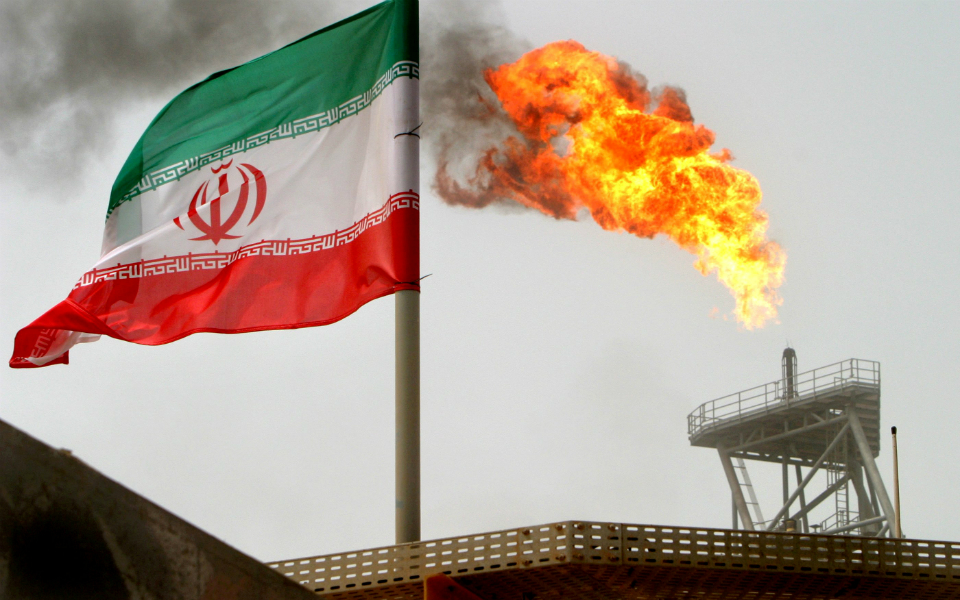
O Presidente norte-americano ameaçou hoje que os Estados Unidos vão voltar a atacar o Irão “com muita força” esta noite e assumiu que quer controlar os mercados de petróleo e gás, tal como na Venezuela.
“Os Estados Unidos vão atacar o Irão (cuja Marinha, Força Aérea, radares, defesas antiaéreas e todas as outras formas de defesa, juntamente com a maior parte da sua capacidade ofensiva, já desapareceram!) com toda a força esta noite”, escreveu Donald Trump na sua rede social Truth Social.
Além destes ataques, o republicano ameaçou tomar “num futuro não muito distante” a “ilha de Kharg e outros pontos de infraestrutura petrolífera, assumindo o controlo total dos seus mercados de petróleo e gás”, tal como fez na Venezuela e que está, segundo Trump, “a funcionar brilhantemente” tanto para Caracas como para Washington.
Recent tensions between Donald Trump and Benjamin Netanyahu have fueled speculation about a growing divide in U.S.-Israel relations. However, a closer examination suggests that these disagreements are shaped more by domestic political calculations, electoral considerations, and regional dynamics than by any fundamental strategic rupture. “You are crazy. What the hell are you doing?” This is […]
O caso da menina que ligou para o 112 a falar em código revela a importância da perícia policial. A primeira intervenção presidencial do 10 de junho é criticada pela falta de substância do discurso.
O Comandante da força aeroespacial da Guarda da Revolução Islâmica afirmou hoje que o Irão vai transformar o Médio Oriente “num inferno” para os Estados Unidos, depois de uma nova troca de ataques entre os dois países na região.
“Acham que podem tornar o sagrado estreito de Ormuz num lugar inseguro? Vamos converter toda a região num inferno para vocês”, declarou Majid Mousavi, em resposta à “agressão norte-americana”, informou a televisão estatal Press TV.
O Exército dos Estados Unidos lançou novos ataques contra “múltiplos alvos” em território iraniano em “resposta a agressões” da República Islâmica, às 00:30 de hoje em Teerão (21:00 de quarta-feira em Lisboa), anunciou o Comando Central norte-americano (Centcom).
A Guarda da Revolução Islâmica iraniana retaliou com o lançamento de drones e mísseis contra bases norte-americanas no Bahrein, Kuwait e Jordânia durante a madrugada de quinta-feira, noticiou a agência Fars.
No contexto dos ataques, o Exército iraniano anunciou o encerramento “total” do estreito de Ormuz a todo o tipo de embarcações, advertindo que disparará contra qualquer navio que tente atravessar a via estratégica para o comércio mundial de petróleo.
“O estreito de Ormuz foi encerrado por completo a todo o tipo de embarcações, incluindo navios comerciais”, declarou o Quartel-General Central Jatam al Anbiya em comunicado citado pela agência Tasnim.
Os Estados Unidos, porém, negaram que este bloqueio esteja em vigor, garantindo que os navios comerciais continuam a transitar.
“Esta noite, os navios comerciais prosseguem a passagem para dentro e fora do estreito de Ormuz”, afirmou o Centcom numa breve nota.
Apesar de Washington e Teerão estarem a discutir um acordo de paz com a mediação de países como o Paquistão, os ataques intensificaram-se esta semana, com os Estados Unidos a justificarem inicialmente a ofensiva com o derrube de um helicóptero no estreito de Ormuz na terça-feira.
A Guarda da Revolução Islâmica iraniana disse hoje ter lançado mísseis balísticos contra uma base norte-americana na Jordânia, após anunciar ataques a bases dos EUA no Kuwait e Bahrein, em resposta aos últimos ataques de Washington.
Esta “operação punitiva contra o agressor” teve como alvo “a base aérea de Al-Azraq e o seu centro de controlo, com a utilização de 12 mísseis balísticos”, declarou a Guarda, citada pela agência Tasnim, garantindo ter destruído essas instalações “e um grande número de aviões de combate”.
Em comunicados publicados antes pela agência de notícias iraniana Fars, a Guarda afirmou ter atacado 18 alvos em duas vagas de ataques contra as bases aéreas Ali Salem e Ahmad al-Jaber, no Kuwait, e Sheikh Issa, no Bahrein, e voltou a afirmar a determinação de controlar a navegação através do estreito de Ormuz, especificando que está fechado.
Washington negou que o estreito esteja fechado. “Esta noite [quarta-feira], os navios comerciais continuam a transitar para dentro e para fora do estreito de Ormuz”, afirmou o Comando Central dos EUA (Centcom, na sigla em inglês) num breve comunicado.
As forças iranianas indicaram ainda que atacaram com drones a Quinta Frota dos Estados Unidos, estacionada no Bahrein.
“Nesta onda de ataques com drones militares, as antenas de comunicações e as instalações de radar do sistema [de mísseis] Patriot da Quinta Frota foram o alvo”, referiu a Fars.
A ofensiva de Teerão surge depois de o exército norte-americano ter lançado, na quarta-feira, novos ataques contra “múltiplos alvos” no Irão como “resposta às agressões” do país persa, de acordo com a justificação do Centcom.
“As forças do Comando Central dos EUA começaram a lançar bombardeamentos adicionais de autodefesa hoje às 17:15 [22:15 em Lisboa] contra múltiplos alvos no Irão, sob a ordem do comandante-chefe”, o Presidente norte-americano, Donald Trump, escreveu o organismo, com sede na Florida, numa mensagem na rede social X.
O Centcom, que não esclareceu a duração dos ataques nem os alvos, afirmando apenas que os “bombardeamentos são uma resposta às agressões injustificadas e contínuas do Irão”.
A agência iraniana Mehr informou que as defesas antiaéreas foram ativadas em Teerão, enquanto a Fars relatou explosões em cidades do sul, como Sirik e a ilha de Qeshm, entre outras.
Tanto o secretário da Defesa dos Estados Unidos, Pete Hegseth, como Trump anunciaram durante uma conferência de imprensa na quarta-feira que os bombardeamentos contra o Irão seriam retomados nas horas seguintes, depois de ataques anteriores na sequência do abate de um helicóptero norte-americano Apache na segunda-feira, e após Trump ter dito no início da semana que o acordo de paz estaria em fase e últimos acertos e deveria ser assinado em “um ou dois dias”.
Esta quarta-feira, o Presidente norte-americano voltou a acusar Teerão de estar a empatar as negociações para pôr fim à guerra no Médio Oriente.
“Estávamos mesmo prestes a chegar a um acordo, mas eles não param de nos enrolar, estão a gozar connosco”, exclamou Trump perante a imprensa.
Hegseth, por sua vez, acusou o Irão de “brincar ao gato e ao rato” nas negociações e ameaçou: “Se tivermos de negociar à base de bombas, negociaremos com bombas, e somos muito bons nisso”.
A Guarda Revolucionária do Irão afirmou hoje ter atacado bases norte-americanas no Bahrein e no Kuwait, em resposta à ofensiva lançada pelo exército dos Estados Unidos.
Em comunicados publicados pela agência de notícias iraniana Fars, a guarda afirmou ter atacado 18 alvos em duas vagas de ataques contra as bases aéreas Ali Salem e Ahmad al-Jaber, no Kuwait, e Sheikh Issa, no Bahrein.
As forças iranianas indicaram ainda que atacaram com drones a Quinta Frota dos Estados Unidos, estacionada no Bahrein.
“Nesta onda de ataques com drones militares, as antenas de comunicações e as instalações de radar do sistema [de mísseis] Patriot da Quinta Frota foram o alvo”, refere a Fars.
A ofensiva de Teerão surge depois de o exército norte-americano ter lançado, na quarta-feira, novos ataques contra “múltiplos alvos” no Irão como “resposta às agressões” do país persa, de acordo com o Comando Central dos Estados Unidos (Centcom, na sigla em inglês).
“As forças do Comando Central dos EUA começaram a lançar bombardeamentos adicionais de autodefesa hoje às 17:15 [22:15 em Lisboa] contra múltiplos alvos no Irão, sob a ordem do comandante-chefe”, o Presidente norte-americano, Donald Trump, escreveu o organismo, com sede na Florida, numa mensagem no X.
O Centcom, que não esclareceu a duração dos ataques nem os alvos, afirmou que os “bombardeamentos são uma resposta às agressões injustificadas e contínuas do Irão”.
Por seu lado, a agência iraniana Mehr informou que as defesas antiaéreas foram ativadas em Teerão, enquanto a Fars relatou explosões em cidades do sul, como Sirik e a ilha de Qeshm, entre outras.
Apesar de Washington e Teerão estarem a debater um acordo de paz através de países mediadores como o Paquistão, na quarta-feira à noite já trocaram ataques na sequência da agressão contra o helicóptero.
Um jornalista da emissora Fox News, que diz ter conversado com o Presidente norte-americano por telefone, afirmou que Donald Trump lhe disse que altos responsáveis iranianos pediram que cessasse os ataques contra o Irão.
“O Presidente Trump disse-me que o Irão lhe ligou esta noite [quarta-feira]”, indicou o jornalista Trey Yingst. “Ele disse-me que os iranianos lhe pediram para cessar os bombardeamentos”, declarou o repórter no canal Fox News.
O Presidente norte-americano garantiu também que “os bombardeamentos cessarão em breve”, ainda segundo Yingst.
Teerão negou de imediato a informação, de acordo com um comunicado emitido pelos Guardas da Revolução, o exército ideológico iraniano.
“As alegações de Trump de que responsáveis iranianos o teriam contactado são veementemente negadas e não passam de um pretexto para escapar à guerra”, declararam.
O exército norte-americano anunciou ter lançado “novos ataques em legítima defesa contra vários alvos no Irão”, anunciou o Comando Militar para o Médio Oriente (Centcom, na sigla em inglês).
FIFA World Cup 2026 trophy. Credit: TravelQueen11 / Wikimedia Commons / CC BY-SA 4.0
As the 2026 FIFA World Cup officially kicks off across North America, a long-standing question resurfaces on the global stage: Do Americans actually care about soccer?
While traditional sports still rule the airwaves, a massive generational and demographic shift is actively rewriting the American sports landscape.
Generational and ethnic shift for soccer
Historically, soccer in the United States has struggled to compete with the domestic dominance of the NFL, NBA, and Major League Baseball. That skepticism persists among older demographics. According to a new Pew Research Center survey, 66% of American adults state they are “not too” or “not at all” likely to follow the tournament. Broadly speaking, a separate YouGov poll confirms that 54% of the overall adult population maintains zero interest in the sport. For a large share of traditional sports fans over fifty, the tournament remains an afterthought.
However, statistics show that there is a soccer boom among younger individuals. The game is rapidly becoming the sport of choice for the next generation of American consumers. YouGov data reveals that an average of 23% of Americans aged 18 to 34 now identify as avid soccer viewers. More telling is the fact that over 56% of all active soccer fans in the United States are currently under the age of 35.
This generational momentum is heavily reinforced by cultural shifts. Comprehensive market data from Numerator indicates that enthusiasm for this year’s tournament is highest among multicultural communities, with 54% of Hispanic Americans and 51% of Asian Americans planning to actively tune in to the month-long event.
Furthermore, the reality of the United States co-hosting the expanded 48-team tournament alongside Canada and Mexico has created a “host nation surge.” Overall consumer intent to watch has nearly doubled compared to the 2022 World Cup in Qatar, with 32% of all US citizens now planning to watch the matches. This enthusiasm is heavily concentrated around the eleven American host cities, including Dallas, Los Angeles, Atlanta, New York/New Jersey, and Philadelphia, where consumer interest jumps to 42%.
Despite this undeniable wave of momentum, soccer is not quite ready to dethrone America’s biggest sporting events. When stacked against domestic mainstays, the World Cup still plays catch-up. Consumer data tracking viewership intent shows that while 32% of Americans plan to watch the World Cup, 58% plan to watch the Winter Olympics, and a staggering 69% will tune into the NFL’s Super Bowl.
Will the Americans pack the stadiums for the World Cup?
Will the MetLife stadium be packed with soccer fans? Credit: SachinDaluja, CC2/Wikipedia
However, as the world’s biggest tournament returns to US soil for the first time in thirty-two years, it faces an entirely different landscape strained by corporate economics.
The 1994 World Cup in the US was a staggering, record-breaking success. It drew 3.59 million fans across 52 matches, averaging nearly 69,000 attendees per game. It remains the most attended World Cup in history.
However, speculation about whether Americans will pack stadiums like they did in 1994 has hit an unexpected snag: FIFA’s aggressive corporate pricing model. During the 1994 tournament, group-stage tickets were relatively accessible, ranging from $25 to $75. By stark contrast, FIFA’s 2026 individual match tickets see first-round seats averaging around $400, with opening match tickets starting at $560 and category-one seats scaling up to $2,735. For the United States’ highly anticipated matches, primary, and resale prices have left ordinary local families facing severe sticker shock, with select group-stage tickets soaring past $1,100.
Because FIFA now tightly controls its own resale marketplace to harvest transactional fees, prices fluctuate based on demand like airline tickets. While major marquee matches and the knockout rounds are completely sold out, ordinary American supporters have openly complained about being priced out of lesser group-stage fixtures, leaving thousands of tickets sitting on primary resale portals on the eve of kickoff.
Ultimately, the 2026 World Cup catches the United States at a historic sporting crossroads. Driven by a younger, more diverse fanbase, soccer is no longer a niche novelty in America. The interest is real, deep, and fully integrated into the culture. But while the stadium atmospheres will be electric, any empty seats seen during the opening weeks shouldn’t be blamed on an “indifferent American public”—rather, blame a modern corporate strategy that misjudged the wallet of the everyday fan.
Washington negou que o estreito de Ormuz esteja fechado, como afirmou Teerão, pouco depois de os Estados Unidos terem iniciado uma nova onda de ataques, no maior pico de tensão desde a assinatura do cessar-fogo em abril.
“Esta noite [quarta-feira], os navios comerciais continuam a transitar para dentro e para fora do estreito de Ormuz”, afirmou o Comando Central dos EUA (Centcom, na sigla em inglês) num breve comunicado.
O exército do Irão avisou que dispararia contra todo o tipo de embarcações se estas tentassem atravessar o estreito, pelo que declarou fechado este ponto-chave para o comércio global de petróleo bruto.
Até mesmo a Guarda Revolucionária iraniana publicou uma mensagem, divulgada pela agência de notícias Tasnim, na qual afirma ter disparado contra dois navios que tentaram atravessar Ormuz.
“Fontes da comunicação social iraniana afirmam que o Irão atacou um navio de guerra norte-americano no estreito de Ormuz. FALSO”, publicou o Centcom, na rede social X.
Tanto o secretário da Guerra dos Estados Unidos, Pete Hegseth, como o Presidente do país, Donald Trump, ameaçaram durante uma conferência de imprensa de quarta-feira retomar os bombardeamentos, depois de o abate de um helicóptero norte-americano na terça-feira ter desencadeado uma nova troca de ataques.
Trump afirmou hoje que “estavam perto” de selar o acordo e repreendeu o Irão por ter atacado o helicóptero, o que levou a uma ofensiva de retaliação norte-americana, à qual o Irão respondeu contra alvos militares norte-americanos em toda a região, incluindo Jordânia, Kuwait e Bahrein.
Entretanto, o Centcom já veio anunciar que as Forças Armadas dos Estados Unidos estão a atacar vários alvos no Irão.
“As forças do Comando Central dos EUA iniciaram hoje [quarta-feira] ataques adicionais de autodefesa contra múltiplos alvos no Irão, sob ordens do Comandante-Chefe [Donald Trump]. Os ataques são uma resposta à agressão injustificada e contínua do Irão”, adianta a publicação.
Os meios de comunicação iranianos noticiaram explosões na costa sul do Irão, adiantando que foram ouvidas na ilha de Qeshm, em Minab, Sirik e no porto de Bandar Abbas.
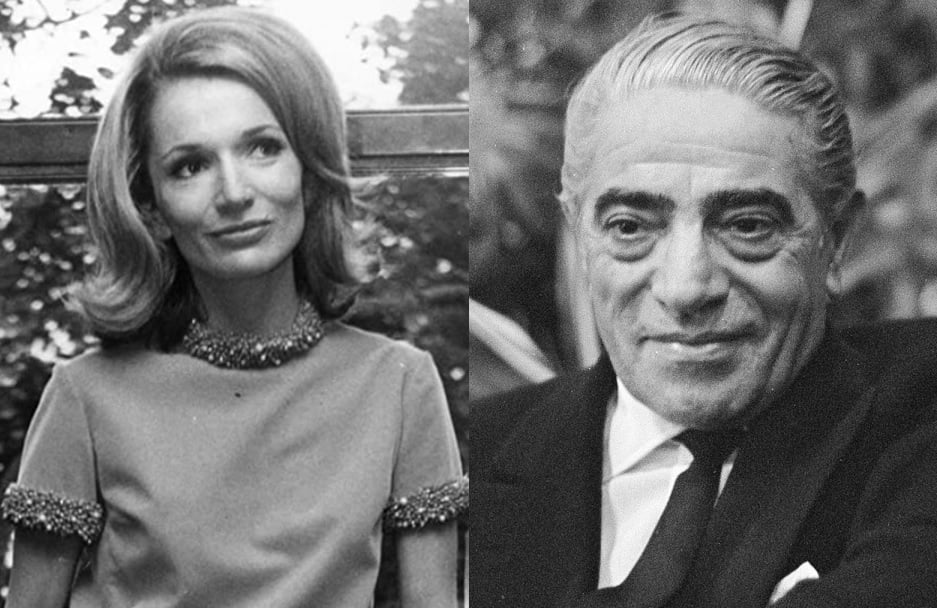
Lee Radziwill and Aristotle Onassis. Credit: Wikipedia. Illustration: Greek Reporter
Long before Aristotle Onassis became the husband of America’s most famous First Lady, he was the center of a bitter, private tug-of-war between two sisters. The billionaire’s overlapping relationships with Jackie Kennedy and Lee Radziwill didn’t just make headlines—they ignited a lifelong sibling rivalry fueled by power, betrayal, and the constant struggle to outshine one another.
Caroline Lee Bouvier was the younger sister of Jacqueline Bouvier, who in 1961 became the first lady of the United States, as Mrs. John Kennedy.
The two sisters — daughters of a Wall Street stockbroker father and a socialite mother — were raised to look beautiful, have impeccable manners and to marry rich, prestigious men.
Jacqueline married John F. Kennedy in 1953, at age 24. Her sister Lee married the Polish nobleman Stanisław Albrecht Radziwiłł, of the princely House of Radziwill, in 1959.
After the assassination of President Kennedy in November 1963, the widow went on to marry Greek shipping tycoon Aristotle Onassis five years later, in 1968, after that becoming known popularly as Jackie O.
Books have been written about the rivalry between the two sisters — with chapters dedicated to an implied relationship between Lee and Onassis.
The Kennedy sisters’ rivalry and Onassis
The two girls adored their father, John Vernou Bouvier III, who was a stockbroker and ladies’ man who resembled Clark Gable. Bouvier always advised his daughters to “be the best.”
Lee and Jackie struggled to be their father’s very best daughter. Lee loved her older sister, but she found it hard to follow Jackie’s many accomplishments in school and in horse riding.
After Jackie married Kennedy and later became First Lady of the United States, she was regarded as one of the most beautiful and stylish women in the entire world.
Her younger sister was equally stylish and beautiful, yet to the world, she was just Jackie’s sister; needless to say, she was obscured by her sister’s shadow.
So she divorced her first husband and became Princess Lee Radziwill.
Princess Radziwill and Aristotle Onassis
When Princess Radziwill started an affair with Aristotle Onassis, the Greek tycoon was still involved with opera diva Maria Callas; Lee’s husband was indifferent and Jackie was still in the White House.
On August 22, 1963, Radziwill and Aristotle Onassis attended the opening of the Athens Hilton in Greece, invited by Nicky Hilton. Their appearance together at the luminous event generated the expected gossip.
Some speculated that Onassis wanted to be near Lee for her connection to the White House. John and his brother Robert Kennedy both disliked Onassis, who had been sued by the U.S. government in 1955 for removing from the U.S. a fleet of ships he had bought and promised to keep in the country.
In order to keep Lee away from Onassis, they asked her to accompany John on a presidential European tour to Great Britain, Italy, Germany, and Ireland because Jackie was seven months pregnant at the time.
When John Kennedy made his famous “Ich bin ein Berliner” speech in Berlin, he had his sister-in-law, not Jackie, at his side.
Despite that, however, Princess Radziwill returned to Greece and resumed her relationship with Onassis. When in late August of 1963 Jackie gave birth to Patrick, the newborn died 39 hours after being born.
Lee flew to Boston to attend her nephew’s funeral and to comfort her grieving sister. Concerned about Jackie, she urged Onassis to invite her aboard his legendary yacht, Christina.
Despite objections from the Kennedy family, Jackie went on a vacation on the yacht for four weeks, accompanied by her sister. The two sisters were left alone by Onassis for most of the time, resting and exchanging confidences.
When President Kennedy was assassinated in November of that year, Onassis stayed at the White House some days after, at Lee’s request, despite the Kennedy brothers’ distrust of him.
Onassis and the Kennedy sisters
In 1964 the young widow bought an apartment at 1040 Fifth Avenue in New York City and Robert Kennedy persuaded Stanislaw Radziwill to buy his wife a duplex at 969 Fifth Avenue in order to be near Jackie and so that her children could spend more time with their cousins.
Princess Radziwill then became friends with Truman Capote, who admired her style, elegance and femininity. He urged her to become a stage actress, and she embraced this new direction in her life with fervor.
She starred in a couple of plays and had options for film roles, but the reviews were not impressive. Nevertheless, she received great publicity and was on the cover of TIME magazine.
It was speculated at the time that all that was an effort to become more popular than her sister. Yet it was Jackie, again, who continued to gaining more attention as the grieving widow who was carrying the torch of the Kennedy legacy.
At the same time, Jackie Kennedy was relying heavily on her brother-in-law, Robert F. Kennedy, urging him to run for president in the 1968 election.
However, when Robert was assassinated in June 1968 after he and a crowd of his supporters had been celebrating his victory in the California Democratic presidential primary, Jackie fell into depression once more.
Furthermore, she feared for her own life and her children’s, convinced that there were people who hated the Kennedys and wanted to exterminate the family, and saying that she wanted out of the United States.
Understandably, that came as a blow to her sister. After all, Lee had been the first of the two to have an affair and fall in love with the Greek mogul. She reportedly wept when she heard the news.
Onassis called and asked her sister to be at her wedding. Although she was personally devastated, Lee dutifully served as matron of honor in the wedding.
Sixteen years later, Jackie dealt a final blow to her sister. At age 64 she was diagnosed with cancer and Lee rushed to comfort her ill sibling.
But when Jackie died, Lee found out that her sister had left her out of her will and the substantial holdings and cash her inheritors received. Maybe this was somehow because of Onassis, maybe not.
In any event, although the will included $500,000 trust funds for each of Radziwill’s two children, Tina and Anthony, there was nothing for her — not even one family memento.
“Un caso sfortunato e spiacevole”. Così GianniInfantino – presidente della Fifa – ha commentato il caso diventato internazionale dell’arbitro somalo, OmarArtan, a cui è stato negato l’ingresso negli Stati Uniti, dove si era recato in quanto arbitro designato per i Mondiali 2026. “È spiacevole quello che è successo a… Omar, l’arbitro somalo. Ma, ripeto, non possiamo controllaretutto“, ha dichiarato Infantino in una conferenza stampa alla vigilia del torneo.
Omar Artan, che nel 2025 è stato eletto come miglior arbitro dell’Africa da parte della Federazione africana, è stato trattenuto e interrogato per 11ore in aeroporto e alla fine è stato rimandato indietro, in Somalia, dove è stato accolto da eroe. “Non mi lascio scoraggiare, nel 2030 tornerò e renderò la Somalia orgogliosa”, ha detto Artan al rientro a Mogadiscio. Successivamente è stato anche portato in uno stadio, accolto da migliaia di tifosi.
Artan è stato cacciato senza una motivazione ufficiale. Nel frattempo, un funzionario del Dipartimento di Stato americano parlando con i media francesi ha dichiarato che l’arbitro era “legato a presunti membri di organizzazioniterroristiche” e che dunque “il viaggiatore non era idoneo all’ingresso negli Stati Uniti”. Come spiega però il New York Times, potrebbe trattarsi di un clamoroso caso di omonimia, visto che Artan ha più volte ribadito di non sapere nulla di organizzazioni terroristiche – di Al-Shabab nello specifico – e di essere solo un arbitro di calcio.
La decisione è stata presa “per ottime ragioni”, si è limitato a dire Andrew Giuliani, direttore esecutivo della task force Fifa della Casa Bianca. “Ci sono cose di cui non possiamo parlare. Posso dire che chiunque parli con ‘soggettinegativi‘ che mirano a danneggiare gli Stati Uniti non saranno ammessi nel nostro paese. Non permetteremo che un torneo di calcio, anche se enorme, diventi una minaccia per gli americani. Siamo orgogliosi del lavoro che è stato fatto sinora a livello di visti: vogliamo che ci sia massima sicurezza per tutti”, ha aggiunto a Sky News
Ainda assim, o presidente norte-americano voltou a dizer que um acordo com o Irão está "muito próximo". Ainda, Marcelo Rebelo de Sousa deixa elogios ao discurso de António José Seguro.
Doveva essere pronta prima dell’arrivo di LionelMessi e delle centinaia di migliaia di tifosi attesi per il Mondiale2026. Doveva rappresentare la risposta di KansasCity a quella che le autorità locali consideravano una delle principali sfide dell’evento: gestirel’inevitabile aumento di arresti, disordini e reatiminori legati all’afflusso di visitatori. Invece la cosiddetta “prigione dei Mondiali” rischia di diventare il simbolo di un’altrastoria: quella di un progetto costato 25,8 milioni di dollari che non sarà pronto in tempo. A Kansas City il calcio è arrivato accompagnato da promesse, investimenti e aspettativeenormi.
La città del Missouri ospiterà 6 partite della Coppa del Mondo e si prepara ad accogliere circa 650milavisitatori. Tra le attrazioni più attese c’è l’Argentina di Messi, ma anche le Nazionali di Inghilterra e Paesi Bassi hanno scelto l’area metropolitana come base operativa durante il torneo. Per una città di circa 2,2 milioni di abitanti, la più piccola tra le 11 sedi statunitensi del Mondiale, si tratta di un banco di prova senza precedenti. È proprio questoscenario che, negli ultimi due anni, è stato utilizzato dai politicilocali per giustificare la costruzione di una struttura detentiva modulare da 100 posti letto. Kansas City non possiede una prigionemunicipale dal 2009: chi viola le ordinanze cittadine viene trattenuto nelle stazioni di polizia oppure trasferito in strutture situate a oltre 80 chilometri di distanza.
Un problemalogistico che, secondo gli amministratori, sarebbe diventato ancora più grave durante il Mondiale. Come riporta The Athletic, già nel maggio 2025 il city manager Mario Vasquez aveva avvertito che la città doveva essere pronta ad affrontare “alcuni degli spiacevolieventi che potrebbero verificarsi” durante la competizione, accelerando la realizzazione di una struttura capace di gestire eventuali violazioni penali o comportamenti scorretti dei visitatori. Da quel momento, media locali e attivisti hanno iniziato a ribattezzarla la “prigione dei Mondiali”. La struttura avrebbe dovuto aprire il primo giugno 2026, appena due settimane prima della gara tra Argentina e Algeria. Non accadrà. I ritardi nella consegna di alcuni componenti da parte dei produttori e quelli nella formazione del personale hanno fatto slittare l’entrata in funzione.
A fine maggio, l’ufficio del city manager ha confermato che durante il torneo i detenuti non saranno ospitati nella nuovastruttura. Il paradosso è evidente. Per rispettare le scadenze, il consiglio comunale aveva perfino autorizzato deroghe alle consuete procedure ambientali. L’opera, inoltre, è stata finanziata interamente attraverso una tassalocale destinata alla sicurezzapubblica, ossia un’imposta dal valore di 24milioni di dollariannui. Insomma, per questa prigione modulare è stato speso più dell’interobilancioannuale. Ma le polemiche non riguardano soltanto i ritardi. Quando i consiglieri comunali hanno visionato le immagini aeree dell’edificio, alcuni lo hanno paragonato a un magazzino, altri a un centro di detenzione dell’Ice. Le fotografie della struttura, priva di finestre visibili e composta da moduliprefabbricati, hanno alimentato ulteriormente le critiche.
Le associazioni contrarie al progetto hanno organizzato manifestazioni con slogan come “Lo sport unisce, le carceri separano”. Secondo Dylan Pyles, del gruppo Decarcerate KC, la struttura sarebbe servita soprattutto a “ripulire le strade mentre la città è sotto i riflettori del mondo”. Un’accusa respinta dall’amministrazione, che insiste sul fatto che l’edificio sarà dotato di servizi medici, aree ricreative all’aperto e spazi progettati per garantire condizionidignitose. Nel frattempo anche il raccontopolitico è cambiato. Se fino a pochi mesi fa i Mondiali venivano indicati come una delle ragioni principali dell’urgenza del progetto, oggi diversi amministratori preferiscono minimizzare il collegamento.
Nel luglio del 2025, il consigliere WesRogers dichiarò: “Che siamo pronti o no, i Mondiali arriveranno, quindi dobbiamo assolutamente costruire questa struttura. Lo scorso maggio ha invece parlato della Coppa del Mondo come di una semplice “nota a piè di pagina” in una questione più ampia: la necessità di dotare Kansas City di una prigione municipale”. Dei quasi 160 milioni di dollari di fondi pubblici e aiuti federali mobilitati per il torneo nell’area di Kansas City, quei 25,8milioni rappresentano forse la spesa più controversa.
À saída do local onde decorreram as celebrações do Dia de Portugal, Marcelo Rebelo de Sousa foi de poucas palavras. O antigo chefe de Estado deixa elogios ao discurso do atual Presidente.
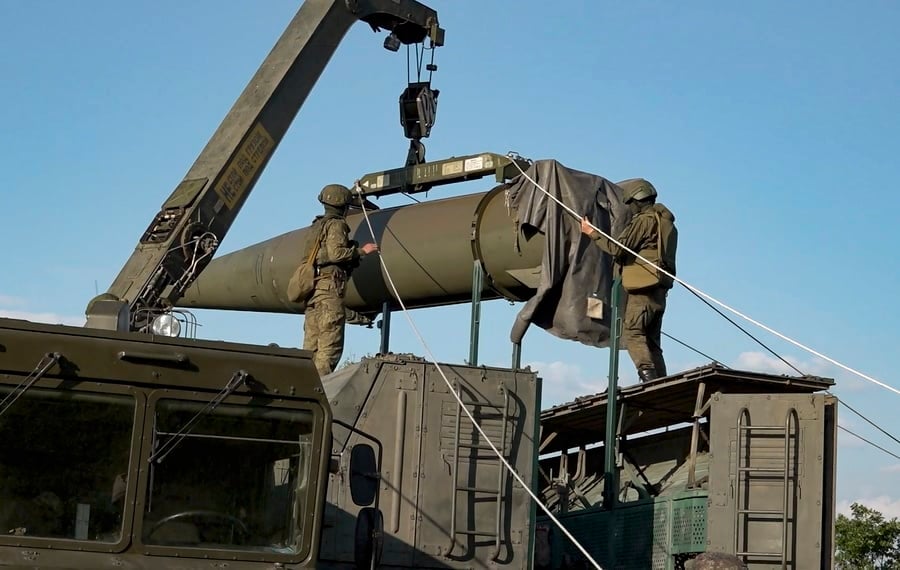
Russian military personnel load a missile onto a transport vehicle. Nuclear powers spent a record of $119 billion on their arsenals in 2025, according to ICAN. Credit: Russian Defence Ministry / EPA / AMNA.
Nuclear powers spent a record of $119 billion on arsenals in 2025, as the world’s nine nuclear-armed states significantly increased their weapons-related expenditure, according to a new report by the International Campaign to Abolish Nuclear Weapons (ICAN).
The figure marks a 19 percent rise from 2024, with nuclear powers spending $17 billion more than the previous year. ICAN warns that the increase reflects a broader trend that is likely to continue for decades. The report covers the United States, Russia, China, the United Kingdom, France, India, Israel, Pakistan, and North Korea.
ICAN warns of a new nuclear arms race
As per the Nobel Peace Prize-winning organization, rising geopolitical tensions are fueling what it describes as a new nuclear arms race. ICAN has also raised concerns over the possible role of artificial intelligence in nuclear decision-making, warning that AI could accelerate the process leading to the potential use of nuclear weapons.
Susie Snyder, ICAN’s program coordinator and one of the report’s authors, described the figures as deeply troubling. Speaking to Agence France-Presse, she declared it’s deeply terrifying.
US spent more than all other nuclear powers combined
The United States remained the world’s largest nuclear spender in 2025, allocating $69.2 billion to its arsenal. That was $12.4 billion more than in 2024 and more than the combined total spent by the other eight nuclear-armed states. China ranked second, with estimated spending of $13.5 billion. The United Kingdom followed with $12.6 billion, while Russia spent $9.5 billion.
According to ICAN, the nine nuclear-armed countries have spent over $470 billion on their arsenals in the past five years.
Long-term nuclear programs could last beyond 2100
The report reveals that nuclear weapons spending is expected to continue rising as countries modernize and maintain their arsenals over time. ICAN points to spending plans in the United States, the United Kingdom, and France that could necessitate billions of dollars through the end of the century. Other nuclear-armed states are also developing weapons systems designed to remain in service for decades.
In the United States, the planned Sentinel intercontinental ballistic missile program is expected to remain operational beyond 2100. Based on the report, expanded US production of plutonium pits could support nuclear warheads until at least 2120. ICAN estimates that the United States alone is expected to spend nearly $1 trillion on its nuclear arsenal between 2025 and 2034.
Report compares record spending by nuclear powers with global needs
The scale of spending, ICAN says, comes as governments face pressing global challenges, including health care, food security, and humanitarian needs. According to Snyder, the amount spent by nuclear-armed states in 2025 would have been enough to fund the United Nations budget dozens of times over. She added that a single day of nuclear weapons spending could have guaranteed food security for two million people last year.
The report argues that nuclear-armed countries are committing public resources to weapons that, according to Snyder, they “could not use without committing a war crime.” ICAN maintains that the latest figures show that nuclear weapons spending is becoming a long-term strategic priority rather than a short-term response to current global tensions.
OpenAI files for IPO. Credit: Focal Foto / Wikimedia Commons / CC BY-SA 4.0
OpenAI confirmed Monday it has confidentially filed an IPO with U.S. regulators, joining rival Anthropic as the AI sector moves toward public markets. No timeline, share count, or pricing was announced.
The company said the move preserves the option for an earlier listing, while some decisions are easier to handle as a private firm.
Reuters reported OpenAI is targeting a valuation near $1 trillion for a debut possible as early as September. Anthropic filed for a U.S. IPO on June 1 after a $65 billion funding round valued it at $965 billion.
SpaceX is also pursuing a $75 billion offering at a $1.75 trillion valuation. Analysts say the simultaneous push by three major AI companies toward public markets is the most significant development of its kind for technology investors in a decade.
In March, OpenAI raised $122 billion from SoftBank, Amazon, and Nvidia at a valuation of $840 billion to $852 billion. ChatGPT had exceeded 900 million weekly active users and 50 million paying subscribers.
Monthly revenue stood at $2 billion, up from roughly $1 billion per quarter at the end of 2024, growing nearly four times faster than Alphabet and Meta at comparable stages. Internal projections put the company’s break-even point no earlier than 2030.
Beyond ChatGPT, OpenAI launched tools for government, healthcare, and finance, a web browser, consumer hardware plans, and an AI coding agent. It added a lower-cost $8 subscription tier and advertising as new revenue sources.
The Information reported in April that OpenAI projects 122 million subscribers this year and expects advertising to lead revenue by 2030.
A renegotiated Microsoft deal, covering $13 billion in investment since 2019, enabled growth at Azure and opened new agreements with Amazon and Alphabet.
OpenAI files its IPO amid legal battles and market pressure
Gil Luria of D.A. Davidson warned that large AI listings and Google’s recent secondary share sales could reduce the capital available for smaller offerings.
Michael Ashley Schulman of Cerity Partners said OpenAI appeared to be keeping its options flexible while Anthropic moved ahead in the IPO filing process. Prediction markets had expected OpenAI to file first.
OpenAI began as a nonprofit in 2015 and later added a for-profit arm under nonprofit oversight, a structure that drew attention when CEO Sam Altman was ousted by its board and reinstated within days in late 2023.
The company announced plans to convert to a public benefit corporation in December 2024. Early backer Musk filed a lawsuit alleging Altman and others redirected the organization from its founding mission for personal benefit.
A jury ruled against Musk in May, removing what analysts described as a significant legal obstacle ahead of the OpenAI IPO filing. His attorneys plan to appeal. Separate lawsuits link ChatGPT to shootings and suicides, and public skepticism toward AI persists.
Nazca Lines, Peru. Credits: Diego Delso, CC BY-SA 4.0, via Wikimedia Commons
Ancient Peru geoglyphs in the Chillón Valley near Lima are offering new clues about how early communities may have used and organized the landscape thousands of years ago.
A new study suggests that some of these large ground markings were placed in ways that cannot be fully explained by chance, although researchers caution that the evidence does not yet prove a direct connection to ancient roads or ritual practices.
The research, led by Christian Mesía-Montenegro and published in PLOS One, examined geoglyphs in two areas of Peru’s middle Chillón Valley known as Huarabí and Pichausa.
The study combined field surveys, drone mapping, and statistical modeling to investigate whether the location of the geoglyphs was related to nearby routes used for movement through the rugged valley landscape.
Geoglyphs are large designs or markings created on the ground. Peru is best known for the famous Nazca Lines, but similar features exist in several other parts of the country. Many remain poorly studied compared with the better-known geoglyphs of southern Peru.
Illustrated and photographed ceramic sherds from Huarabí. Credit: Christian Mesía-Montenegro / CC BY 4.0
Researchers examine overlooked geoglyph sites
The geoglyphs documented at Huarabí and Pichausa differ from many of Peru’s famous geometric and animal-shaped figures. Instead, they consist of irregular line patterns located within quebradas, or dry valleys, that cut through the landscape.
Researchers conducted systematic surveys between 2021 and 2022 and recorded geoglyphs across multiple sectors of the Chillón Valley. The study focused on four irregular geoglyph groups, two at Huarabí and two at Pichausa. It also examined six locations near Huarabí where surface pottery fragments from the Formative Period were found.
Ancient geoglyphs in Peru's Chillón Valley are shedding new light on how early communities may have used and organized the landscape. pic.twitter.com/HkbOKhx2Ic
— Tom Marvolo Riddle (@tom_riddle2025) June 9, 2026
The Formative Period on Peru’s central coast spans a time when early ceremonial centers, agriculture, and ceramic traditions were developing. Nearby archaeological sites include several U-shaped ceremonial structures that played important roles in the region’s ancient communities.
Statistical tests challenge simple explanations
Rather than simply measuring distances between geoglyphs and routes, researchers used Monte Carlo simulations. This method allowed them to compare the actual placement of the geoglyphs with thousands of hypothetical random placements across the landscape. The results showed a contrast between the two study areas.
At Huarabí, the geoglyphs differed from what would be expected under the researchers’ chance-placement models. At Pichausa, however, the geoglyphs generally matched patterns that could be produced through random placement. The findings suggest that Huarabí may have followed a different spatial logic than Pichausa.
Even so, the researchers emphasize that the results do not automatically mean the geoglyphs were intentionally built beside roads or movement corridors.
Instead, the analysis shows only that the Huarabí geoglyphs were less easily reproduced by the statistical models used in the study. Other factors, including terrain, visibility, erosion, and landscape features, could also have influenced where the geoglyphs were created.
Pottery provides limited clues about age
One of the study’s most important findings concerns chronology. At Huarabí, researchers identified diagnostic pottery fragments that resemble ceramics from the Formative Period. The pottery suggests human activity occurred near the geoglyphs during that era.
However, the artifacts were found on the surface rather than in sealed archaeological deposits. As a result, they cannot directly date the construction of the geoglyphs.
No comparable pottery evidence was discovered at Pichausa, making the age of those geoglyphs even less certain. Because of these limitations, the researchers avoid claiming that the geoglyphs themselves were definitely built during the Formative Period.
Questions remain about ancient landscape use
Researchers conclude that Huarabí should currently be viewed as a geoglyph locality associated with nearby Formative-period activity rather than as a securely dated Formative geoglyph complex.
They argue that future work should focus on obtaining direct dates, studying visibility across the landscape, and developing more detailed models of how ancient people moved through the valley.
While the findings do not solve the mystery of the Chillón Valley geoglyphs, they provide one of the most detailed examinations to date of how these large ground markings may have related to movement, settlement, and ritual activity in ancient Peru.

 Login
Login