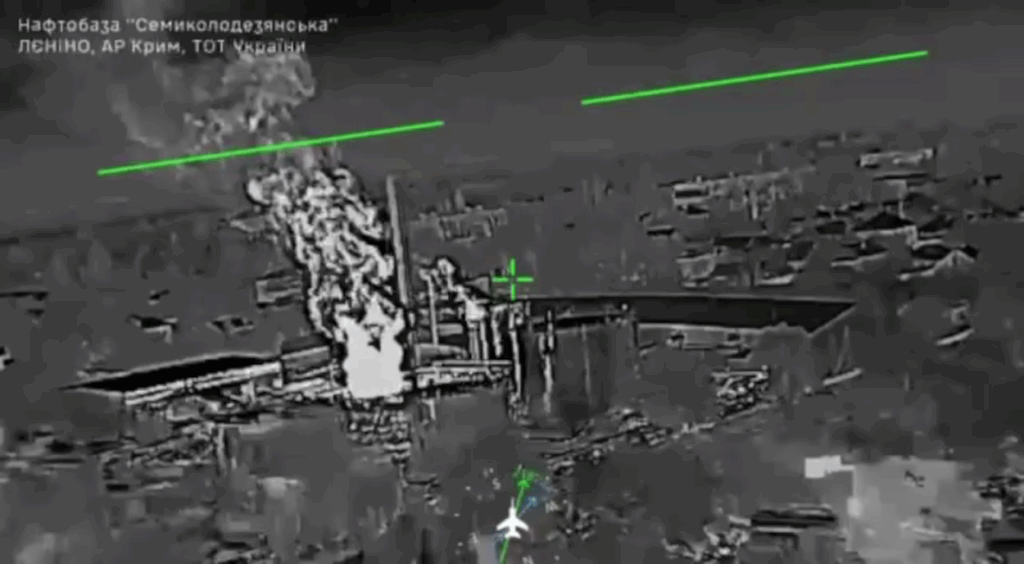
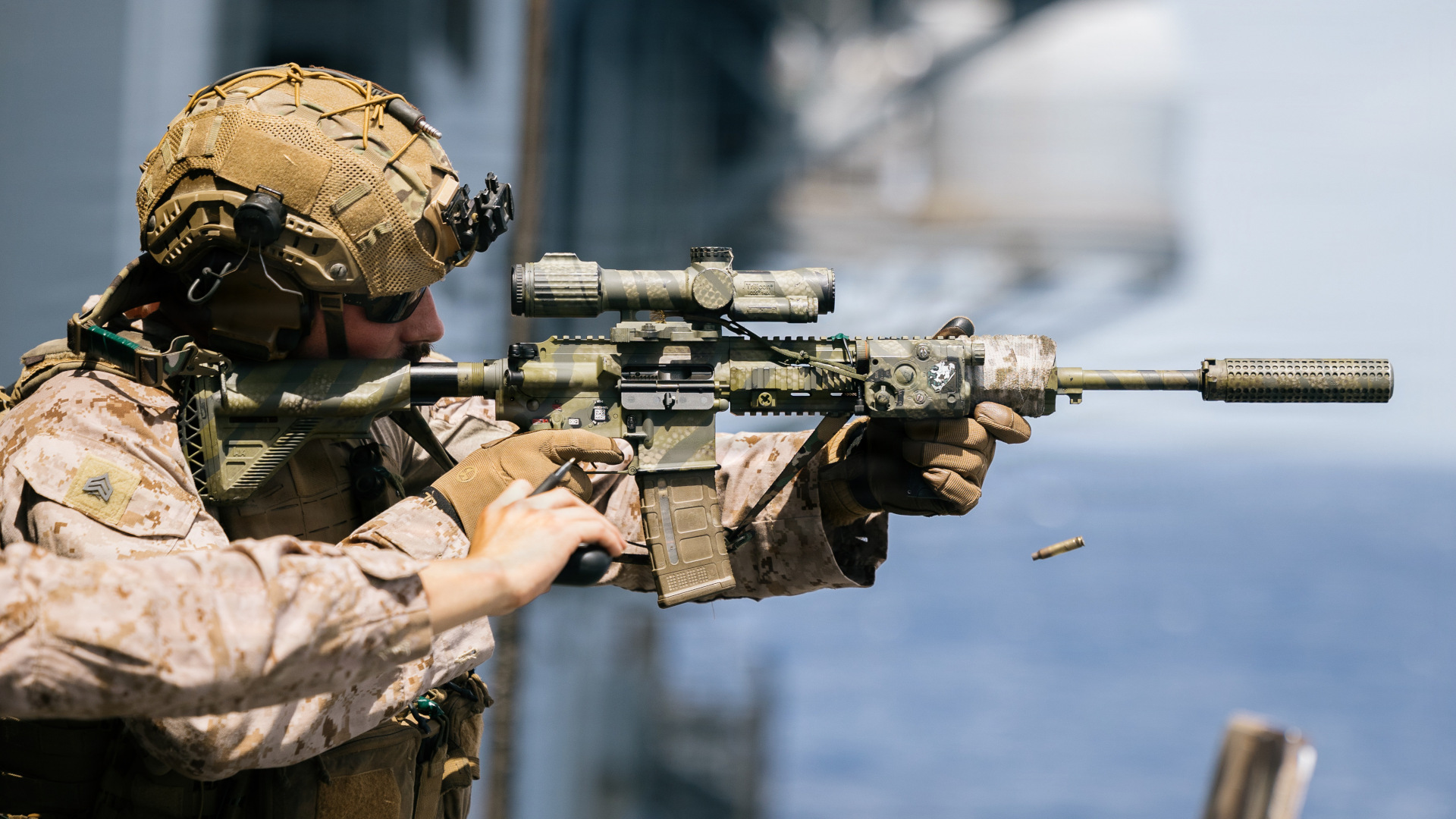
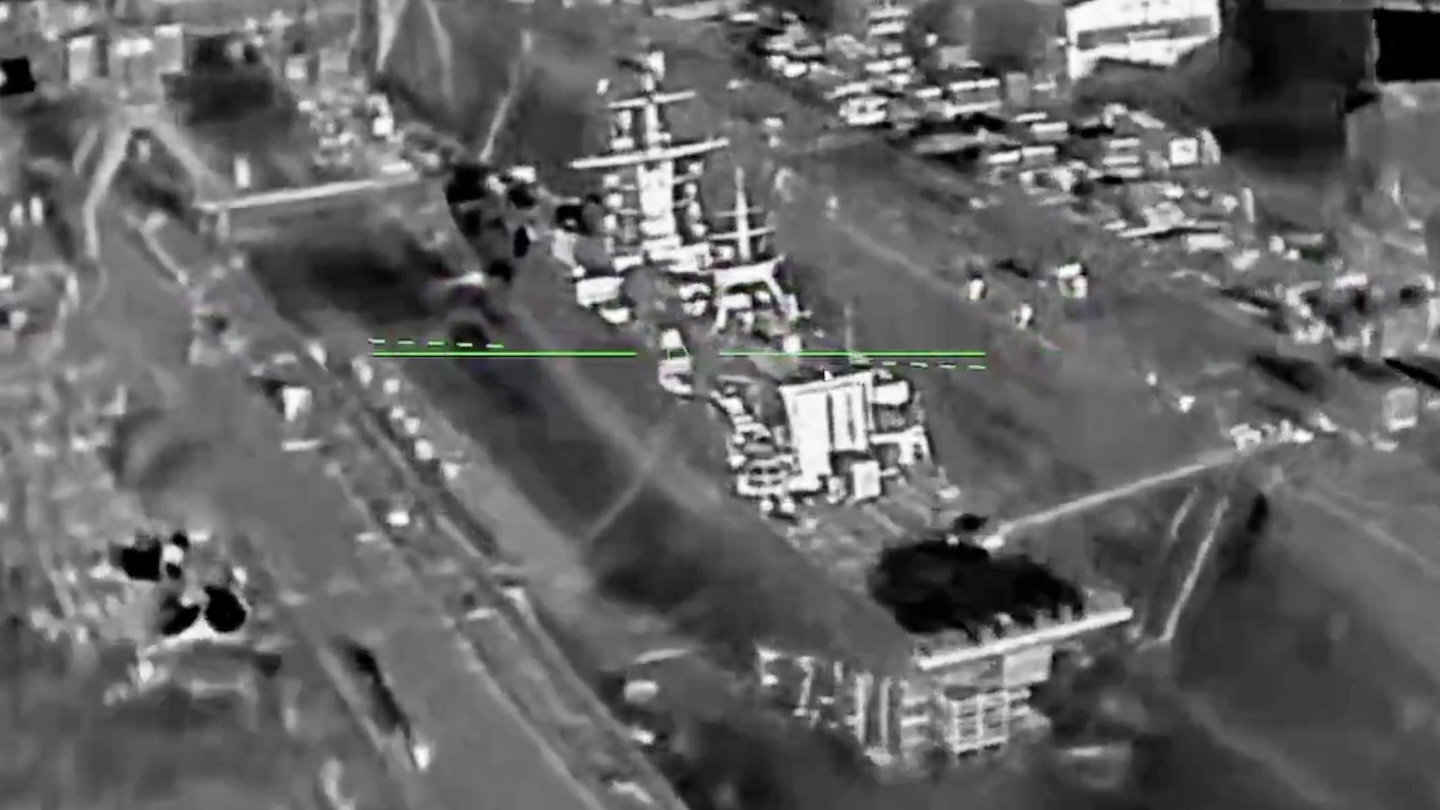
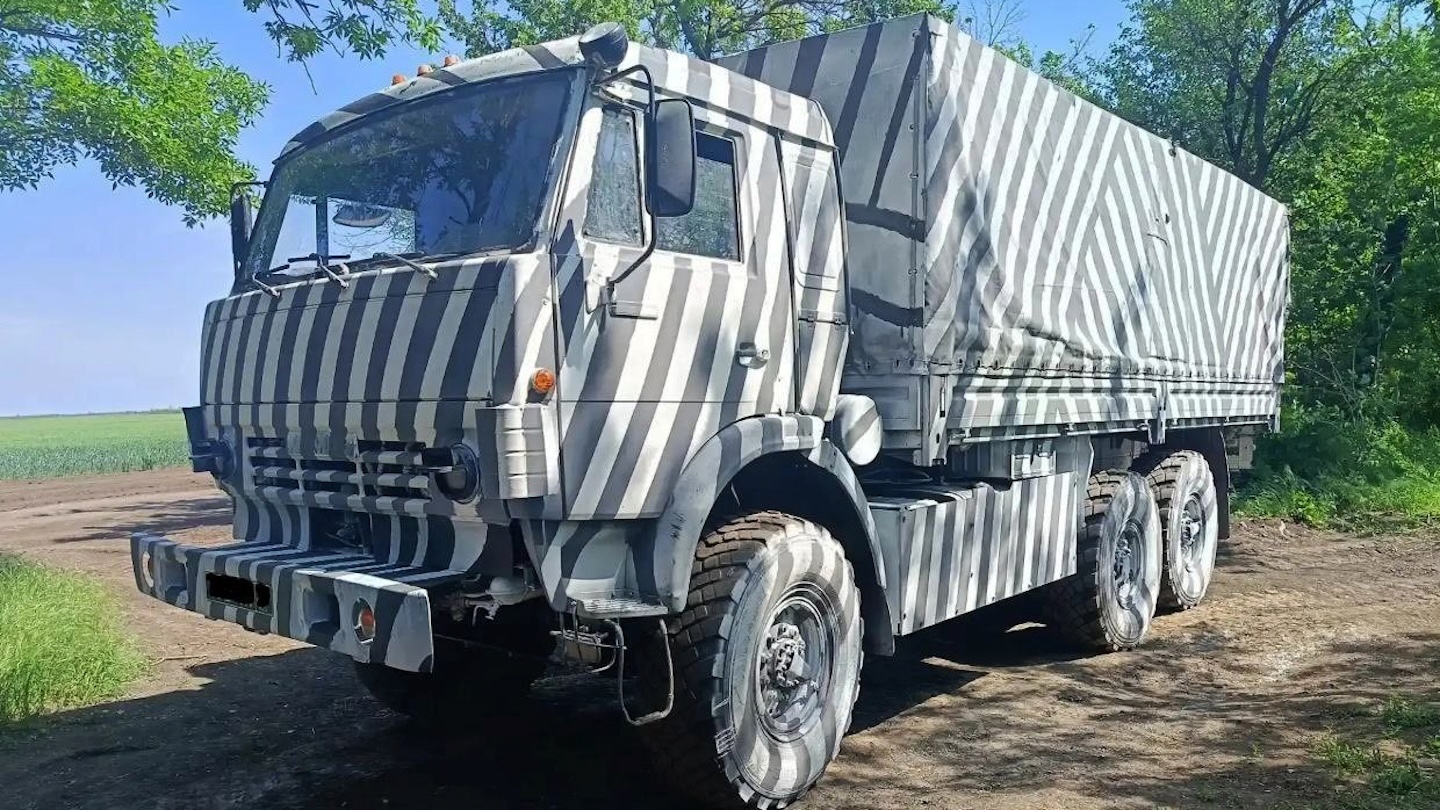
Ukraine's Unmanned Systems Forces (SBS) have struck Russian targets worth nearly $40 billion in the year since the branch's creation, Volodymyr Zelenskyy said. On 10 June, the Ukrainian president signed a decree establishing the Day of Unmanned Systems Forces (SBS Day).
The $40 billion cumulative damage figure Zelenskyy cited represents a 57% increase over the $25.5 billion in cumulative Russian losses that Commander-in-Chief Oleksandr Syrskyi reported in April 2026.
The SBS Day decree institutionalizes the unmanned forces as a permanent feature of Ukraine's military doctrine, alongside the army, navy, and air force.
What Zelenskyy said about SBS's achievements
"Only a year since the creation of the SBS group, Russian targets at various levels worth nearly $40 billion have already been hit," Zelenskyy said in his evening address.
He added that SBS is really a model for many other armies, and "these months we are especially grateful for middlestrikes."
"Russian military logistics across the entire depth of the temporarily occupied territory is now accessible to Ukrainian drones. The Russian border zone also experiences our impact," he stated.
The president added that Russia already feels the effect of these strikes, and Ukraine will continue to scale them.
"The most important thing is that these are different types of strikes, and each one adds to our ability to save lives," the Ukrainian president added.
What does middlestrike mean operationally?
The middlestrike concept Zelenskyy invoked refers to Ukrainian drone strikes against Russian military logistics in the depth of occupied territory and across the Russian border zone. The depth zone covers Donetsk, Luhansk, Crimea, and parts of Zaporizhzhia and Kherson Oblasts. The Russian border zone reaches Belgorod and Kursk. Middlestrikes sit between the very-long-range deep strikes against strategic Russian infrastructure, such as the Volgograd refineries, and the tactical frontline FPV operations. The SBS is led by Brigadier General Robert Brovdi, call sign "Madiar".
Hybrid threats span both hardware and politics, said Colonel Sönke Marahrens. The list of methods includes overflights, the cutting of undersea cables, and a concerted disinformation campaign. It also reaches into political and judicial systems, including what he called the "disposable agent" model —civilians recruited online for one-off sabotage or surveillance. As a model for how the state should respond, Colonel Marahrens pointed to Finland. Authorities there detained a suspected sabotage vessel within an hour of Baltic Sea cable damage.
Russian hybrid attacks: a political shift acknowledged late
Recognition had arrived slowly, Marahrens told the New Age Defence forum in Berlin on 8 June, Ukrinform reported. "Germany recognized rather late that we are being attacked by such hybrid methods," the colonel said. "But I would say that in the last year and a half to two years, we see a shift at the political level as well."
The colonel heads a department at the Bundeswehr's Center for Digitalization and Capability Development. The center reports to the Cyber and Information Domain Command in Bonn. German intelligence services and state institutions are increasingly informing citizens of the changing security environment, he said.
Drones, cables, and courts
Russian pressure now reaches beyond physical sabotage, Marahrens said. "It's not just drones and not just undersea cables, it's also disinformation within our society. It's the use of the political and judicial systems, the concept of 'disposable agents,'" he said.
Unidentified drones over European critical infrastructure, including German sites, had a primarily psychological effect, the colonel said. The impact was not military. Germany's National Security Council should receive real powers for rapid decision-making, he argued. The colonel cited Finland's response time of less than an hour after the Baltic Sea cable damage.
"Creating societal resilience is something we in Germany have yet to learn." — Col. Sönke Marahrens, Bundeswehr Center for Digitalization and Capability Development
Kyiv's resilience is something Berlin lacks
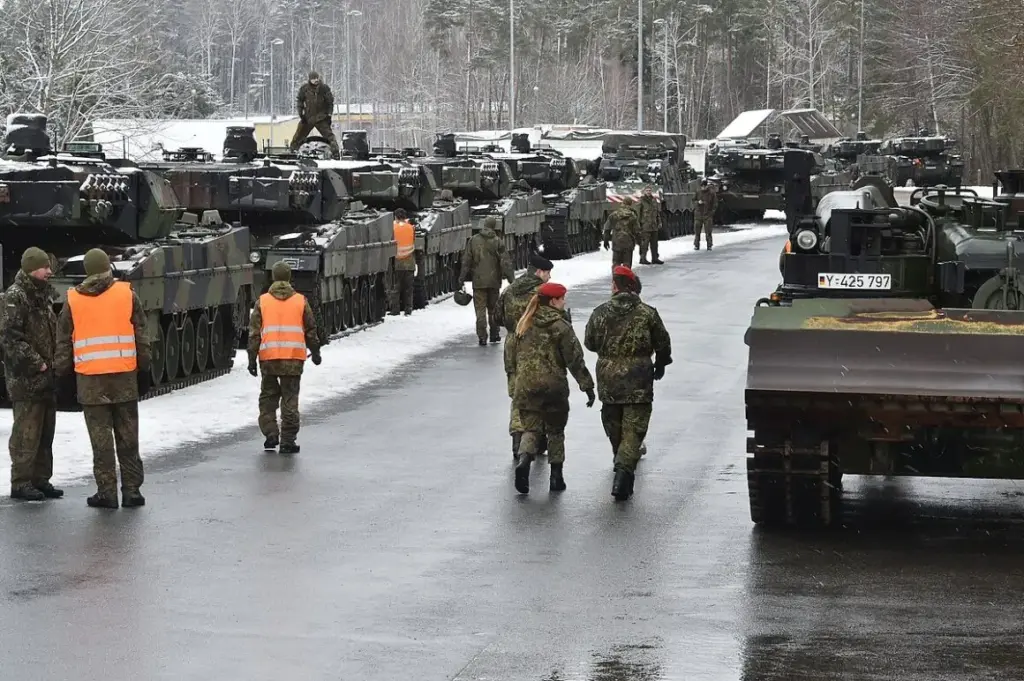
Germany draws on Ukrainian wartime experience through financing, joint training, and front-line exchanges, Marahrens said. "We support Ukraine financially," he said. "We also adopt the experience gained from the battlefield. We provide training for them, and we also adopt experience from them during joint exercises at our training grounds."
The most important Ukrainian lesson, the colonel said, is societal resilience under wartime conditions. "Creating societal resilience is something we in Germany have yet to learn," Marahrens said. The Kremlin coordinates large-scale hybrid operations across Europe, the agency added. These campaigns aim to discredit Kyiv and inflame internal conflicts in EU states amid Russia's war on Ukraine.
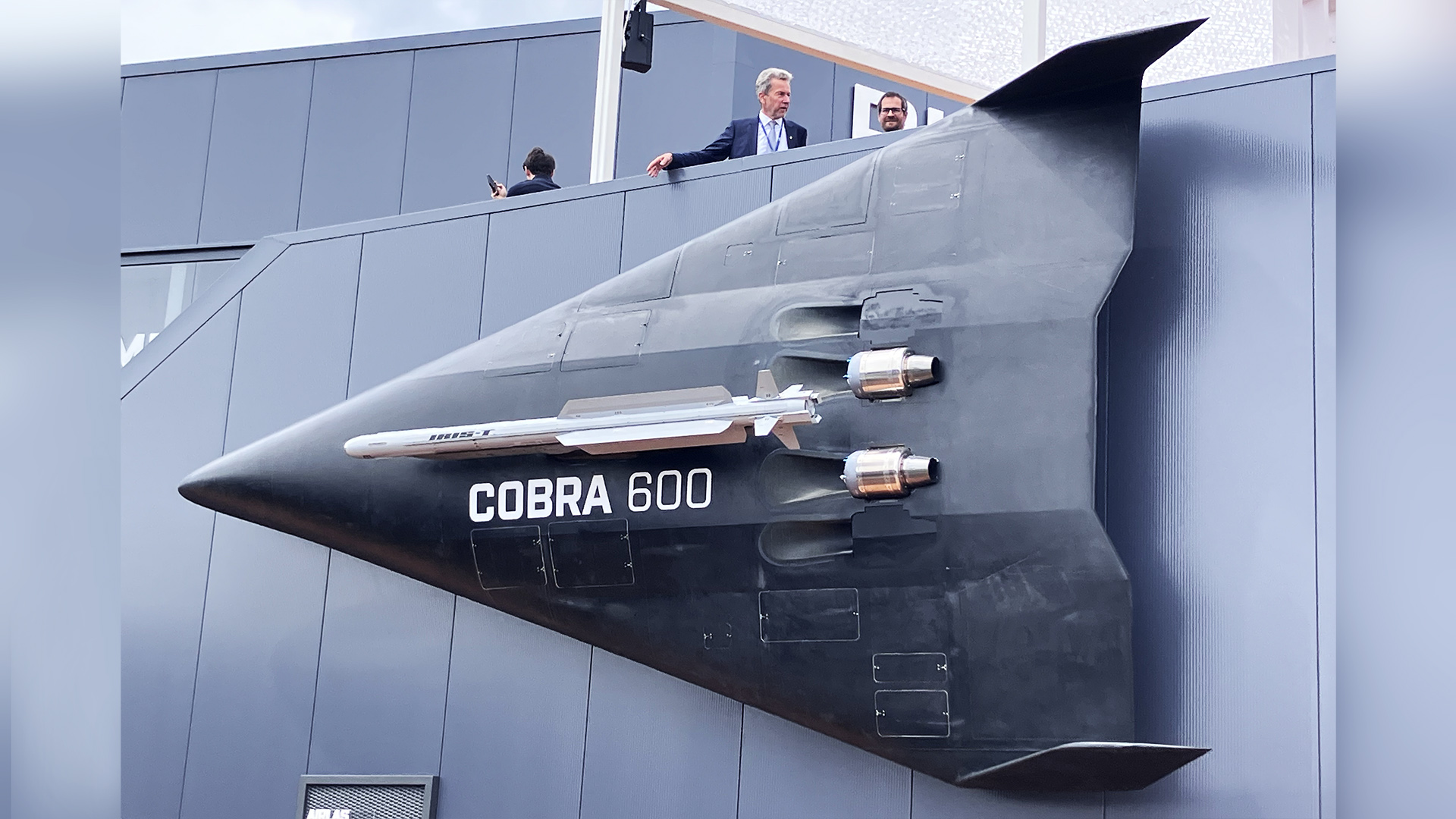
A novel kind of drone-based air defense system has been shown for the first time by German weapon manufacturer Diehl Defence. The Cobra 600, which has not previously been seen in public, combines a jet-powered drone platform with a missile rail armed with one of the company’s IRIS-T missiles, a weapon already used in short-range air defense systems and air-to-air applications. The new system immediately recalls recent Russian developments, which add short-range air defense missiles to its versions of the Shahed-136 long-range one-way attack drone, known locally as the Geran.
A rendering of the Cobra 600 in four-engine configuration. Polaris Raumflugzeuge
Cobra 600 is being presented at the ILA Berlin airshow, taking place this week in the German capital. The Cobra 600 is also known as the Airborne Launching and Attack System (AirLAS), and the program was launched last year.
The concept behind the Cobra 600 is that of a ‘missile taxi,’ in which the drone platform carries the IRIS-T missile over a considerable distance. All the while, the drone is meshed with a ground-based air defense system. Typically, this would be one of Diehl’s IRIS-T SLM or IRIS-T SLS systems. Of these, the IRIS-T SLS employs the same missile as the air-to-air variant — and therefore the same missile as the Cobra 600. The physical interface between the drone and the missile is a standard pylon as used on the Eurofighter jet.
A ground-based IRIS-T SLS system. Diehl DefenseAn IRIS-T air defense missile. Diehl Defense
As for the drone platform, this is provided by another German firm, the Polaris Raumflugzeuge aerospace start-up. It has a similar kind of efficient delta planform as the Shahed-136, with a modified flying-wing-like design. On the wingtips are mounted endplate vertical stabilizers. As displayed, the drone is powered by a pair of JetCat-P1000-PRO micro turbojet engines, each of which provides a maximum thrust just shy of 250 pounds. However, the drone has intake ports for another two engines. It’s not clear if these are only intended to be fitted if heavier payloads are being carried, but it’s certainly a possibility. Concept artwork released by Polaris, as seen at the top of this story, shows a four-engine configuration, with the turbojets buried in the airframe and fed by much longer intakes, helping to shield them from detection.
The two JetCat-P1000-PRO micro turbojet engines on the Cobra 600. Thomas Newdick
Polaris Raumflugzeuge has already built a variety of drones in the same configuration, and the company eventually aims to scale this up to produce a spaceplane.
The MIRA II, an experimental drone powered by four turbojets and designed to test an aerospike rocket engine. The landing gear configuration may well point to that used on the Cobra 600. Polaris Raumflugzeuge
Drawing on its design heritage, the Cobra 600 drone has retractable wheeled tricycle landing gear, meaning that it can be reused in some scenarios. The drone therefore takes off and lands from runways, although it is also able to operate from suitable shorter airstrips, such as stretches of highway. It’s also intended to be cheap enough that commanders will also be willing to risk losing it in combat, or after it runs out of fuel.
The concept of operations has the Cobra 600 serving as an adjunct to a ground-based air defense system, extending its range considerably.
With the missile fitted, the Cobra 600 has a range of around 250 miles. This compares to around 25 miles for the ground-launched missile used in the IRIS-T SLM, or approximately eight miles for the missile used in the IRIS-T SLS.
An IRIS-T SLM system deployed. The radar vehicle is seen in the background. Diehl Defense
As such, the Cobra 600 has the potential to turn the ground-based IRIS-T into something a little closer to a long-range surface-to-air missile, in terms of the distance it can cover. Of course, this is only true in terms of absolute range, with the speed and maneuverability of the drone being far inferior to a long-range missile. Unless the target is nearby, or the Cobra 600 has been pre-positioned based on known target vectors, the reaction time it offers is strictly limited. The missile itself is also able to tackle a more limited range of potential targets than a dedicated long-range surface-to-air missile, some of which offer an anti-ballistic missile capability, for example.
On the other hand, the Cobra 600 offers the distinct advantage of being able to loiter in a given area, waiting for threats to emerge, or to perform combat air patrols to screen certain sectors. It is best viewed as a forward-positioned additional launcher for the ground-based IRIS-T, and is also entirely reliant upon that system (or a similar one) for its effectiveness. At the same time, leveraging existing ground-based air defense systems as a force multiplier is a clear advantage. Another possible operational scenario would involve setting the Cobra 600s up as interceptors on a runway, sitting ready for launch on a runway to defend against lower-end threats.
A close-up of the IRIS-T on the Cobra 600 drone. Thomas Newdick
In its current form, the Cobra 600 has no onboard sensors to detect targets other than the imaging infrared seeker head that’s integral to the standard IRIS-T missile.
In an operational scenario, a target for the Cobra 600 would be detected and identified by the ground-based air defense system to which it is ‘tethered.’ Connected via datalink, the ground-based system would vector the drone to the appropriate location. Using its own seeker, the IRIS-T would lock onto the target and be commanded to launch by the operator of the ground-based system. Of course, this presupposes that the datalink is not compromised by hostile interference or due to line-of-sight limitations, although SATCOM capability, like Starlink, would help keep redundant control over the drone beyond line-of-sight.
At this point, the mode of engagement is not dissimilar to the ground-based IRIS-T SLS, which features a lock-on-after-launch (LOAL) capability. This means it can fire missiles without first establishing the weapon’s lock on the target. After receiving target information in the form of three-dimensional coordinates, the missile uses inertial guidance during the initial stage of flight. Upon reaching the designated engagement altitude, its imaging infrared seeker activates and begins searching the predicted target area.
Another conceivable option would be to add some kind of sensor, such as an infrared camera, to the Cobra 600 drone platform, meaning that a ‘person in the loop’ could establish that the missile had locked onto the correct target.
A further option could be to ‘uncage’ the missile seeker and let it search across its field of view only when the Cobra 600 is in a designated ‘kill box,’ within which it would have authority to engage any target it acquires, reactively, and autonomously. Issues such as this clearly need to be addressed, based on combat requirements and ethical concerns.
As well as operating the Cobra 600 in conjunction with the IRIS-T SLM/SLS, it could also be integrated with other ground-based air defenses. According to Polaris, it could also be embedded with aircraft or in a maritime environment.
A rendering of the Cobra 600 in a maritime environment. Polaris Raumflugzeuge
The Cobra 600 has already completed its first flight tests, with a dummy IRIS-T missile fitted. Currently, the development effort is mainly funded by the company, but there has also been investment from at least one interested nation.
With the IRIS-T SLM/SLS combat-proven in Ukraine, experiences from this conflict have almost certainly helped inform the development of the Cobra 600.
The war in Ukraine also provides an interesting parallel to the Cobra 600, in Russia’s missile-armed adaptations of its Shahed/Geran drones.
According to Ukrainian accounts, as well as the rail-mounted missile on the top, these drones are equipped with a camera and a radio-frequency modem.
Russian forces are mounting Igla MANPADS on Shahed drones to target Ukrainian helicopters that intercept them. The drones carry a camera and radio modem, and the missile is launched remotely by an operator in Russian territory. pic.twitter.com/T5TKPHyhVu
However, the concept of operations for the missile-armed Russian drones is very different. While it gives the drones a means to engage Ukrainian fixed-wing aircraft and helicopters, it works more as a deterrent than as a genuinely useful tactical application. As we have noted in the past, the difficulty in obtaining a high degree of situational awareness and the limited agility of the drone raises questions about the effectiveness of these solutions. On the other hand, Russia has been working on a man-in-the-loop (MITL) control capability for the Shahed/Geran, which could potentially be used to operate the missile.
Considerably larger than the Shahed-136 design, the Cobra 600 will provide a higher performance delta overall. It is also jet-powered, and, with up to four engines, this would give more impressive response times and maneuverability than the Russian system.
The fast pace of development of the Cobra 600 reflects a growing need for ground-based air defenses more generally, after decades of neglect. There is also a need for less-expensive, less-exquisite solutions in this area, something that the Cobra 600 also addresses, with a price point that is significantly lower than a long-range surface-to-air missile (although with the various disadvantages outlined above). At the same time, the Cobra 600 may well end up being used against even lower-cost drones, for which the IRIS-T is still a very expensive solution.
The Cobra 600 reflects a broader shift in air defense thinking driven by the lessons of recent conflicts, particularly in Ukraine and the Middle East, where persistent drone threats, as well as cruise missiles, have exposed the limitations of traditional ground-based air defense architectures.
By combining the endurance and flexibility of a drone with the proven, off-the-shelf IRIS-T interceptor, the Cobra 600 offers a potentially cost-effective way to extend defensive coverage over greater distances and to put ‘shooters’ into contested areas that crewed systems would not be able to venture. While some questions remain about how the Cobra 600 would be integrated with existing operational doctrine, the concept highlights the growing demand for innovative, layered, and resilient air defenses as militaries seek to counter increasingly varied and numerous aerial threats.
Russia’s flagship international business summit in St Petersburg was targeted with Ukrainian drones that used Estonian territorial waters to evade Russian air defenses. Other Baltic states are also implicated in carrying out the large-scale attack last week.
According to the well-informed Borzikkman channel, scores of kamikaze drones were launched from ships in the Baltic Sea. They flew at low altitude over Estonian territorial waters before striking St Petersburg. The flight path was designed to take Russian defenses by surprise.
Most of the drones were shot down by Russian defenses, but a few managed to hit their targets. The biggest hit was on the St Petersburg oil terminal. That had the desired propaganda effect of creating a pall of black smoke visible to delegates on the opening day, June 3, of the St Petersburg International Economic Forum (SPIEF).
Western media outlets like the BBC were delighted to report on the embarrassing vista in the skies over Russia’s second city and a forum that President Putin would address.
The BBC’s Steve Rosenberg was positively gleeful, writing: “The abiding image of SPIEF 2026 will be the huge plume of thick black smoke which dominated the St Petersburg skyline on Wednesday… All the delegates saw the smoke as they arrived at the expo centre on the edge of the city.”
Drones from ships in the Baltic Sea with flights through Estonian territorial waters means that NATO states were involved in the execution of the air strikes. On the same day, NATO chief Mark Rutte was in Kiev on an unannounced visit to meet the Ukrainian leader, Vladimir Zelensky.
The level of NATO participation in waging war on Russia with its Ukrainian proxy has become absurdly obvious. In recent weeks, hundreds of Ukrainian drones have crashed in Finland, Estonia, Lithuania, Latvia, Poland, and Romania. The Kiev regime has repeatedly apologized to European capitals for the infringements that have resulted in injuries to civilians. Still, the European Union and NATO take no action to sanction or reprimand Kiev. They indulge in the claims that the drones are being redirected by Russian electronic jamming. Swedish Prime Minister Ulf Kristersson has even urged that NATO states should help Ukraine in targeting Russia to avoid “misakes”.
The duplicity is contemptible. Russian military intelligence has pinpointed drone manufacturing sites in the Baltic states and other NATO nations that are participating in Ukrainian attacks.
Dmitry Medvedev, deputy chairman of Russia’s National Security Council, commented: “The Russian Defence Ministry’s statement should be understood extremely literally: the publication of production sites for drones and other military equipment in Europe is a register of potential legitimate targets for the Russian armed forces.”
Evidently, the NATO states are providing targeting data and permitting the use of their territory to maximize the attacks on Russia. Hundreds of Russian civilians have been killed in these NATO-assisted drone operations, the most dreadful being the murder of 21 students at a college dormitory in Starobelsk, Lugansk, on May 22. Last week, on the same day as the drone attack on St Petersburg, eight civilians were killed, and 10 were injured when their bus was blown up in an air strike while traveling through the Donetsk region towards Crimea.
Anger across Russia is growing, analyst Stas Krapivnik told Danny Haiphong’s channel. Russia has retaliated with heavy strikes on military sites and decision-making centers across Ukraine. But, as Krapivnik points out, Moscow is under pressure to take action against NATO culprits from where the Ukrainian offensives are stemming. He says that Russia should do like Iran is doing, hitting back hard where it hurts.
Since the U.S. and Israel launched their aggression against Iran 100 days ago, on February 28, the Iranians have destroyed dozens of American installations across the Persian Gulf and Israeli bases with their formidable arsenal of hypersonic and ballistic missiles, as well as drones.
When Israel violated a shaky truce by bombing Beirut’s southern district of Dahiyeh at the weekend, Iran struck back immediately, as it had warned it would do, to hit airbases in Israel and a U.S. base in Saudi Arabia.
Iran’s defiance has put manners on Washington. Israel is a slow learner, but it will come round to realizing that Iran is not going to take any aggression lying down. It’s hitting back hard and fast in the places that hurt. The days of U.S. and Israeli aggression with impunity are over.
The other thing is that Tehran has called Trump’s bluff about his “madman threats” to escalate the war and obliterate Iran. The Iranians have demonstrated to Washington and the Israelis that the aggressors have much more to lose if they persist in their belligerence.
Russia might want to take note, as Krapivnik, Borzikkman, Sergey Karaganov, and other analysts have advised. The EU and NATO are acting with impunity and a delusional sense that they can escalate attacks on Russia, killing civilians and damaging Russia’s economy, all because of some cynical charade that Ukraine is alone in carrying out the attacks.
Of course, the risk is that if Russian hypersonics were to take out a NATO drone-launching ship in the Baltic Sea, then that would trigger the U.S.-led military alliance’s joint defense commitments. In that case, we are potentially in a situation of World War Three.
But hold on a moment. Are we not already in that situation, given that, despite the charade, NATO states are directly involved in attacking Russia, its capital, Moscow, and St Petersburg, and killing hundreds of civilians?
The NATO and EU leaders are so imbued with Russophobia and arrogance that they are beyond rational thinking. The only language they understand is direct threat and force. Unless they pay a price, the deranged Russophobic leaders will keep escalating as they are doing.
Iran has shown a viable self-defense policy. The enemy is hit hard for daring to aggress against the Iranian people.
A kick in the Baltics might be what it takes to concentrate Russophobic minds. Before it’s too late.
In the fifth year of Russia's full-scale invasion of Ukraine, mil-tech startups still struggle to access bank financing amid strict secrecy and lack of collateral.
Airbus has pulled the wraps off the U760 Ravenstorm, a combat drone designed to operate alongside fighter aircraft in air-to-air combat, strike missions, and electronic warfare roles. The new uncrewed aircraft is part of a revamped drone portfolio from the company, which also includes a Europeanized version of the stealthy XQ-58A Valkyrie, a medium-altitude long-endurance (MALE) platform, various tactical solutions, counter-drone systems, as well as the U145 uncrewed helicopter that you can read more about here.
The timing of the announcement — and the unveiling of the Ravenstorm, in particular — is especially notable given the recent collapse of the Franco-German-led plan to build a crewed New Generation Fighter (NGF) aircraft, as part of the broader, pan-European Future Combat Air System (FCAS) initiative. You can read more about this development here.
Concept artwork of the NGF, the crewed combat jet once intended to operate alongside various classes of drones. Dassault Aviation
On the eve of the ILA Berlin airshow, starting in the German capital tomorrow, Airbus showcased what it describes as “Europe’s most versatile drone portfolio.” The various products have been newly assigned a “U” prefix for uncrewed systems. This reflects the company’s policy of prefixing with an “A” for crewed fixed-wing aircraft, and an “H” for crewed helicopters.
“Whatever uncrewed or ‘drone’ capability our customers need to strengthen sovereign air power, we deliver,” said Mike Schoellhorn, CEO of Airbus Defence and Space, in a company press release. “Our portfolio ranges from rapid-response drone interceptors and various tactical drones, autonomous cargo helicopters to uncrewed fighter aircraft UCCAs (uncrewed collaborative combat aircraft) operating co-operatively with crewed fighter jets.”
A graphic showing the new Airbus drone portfolio includes a Eurofighter (at far left) controlling examples of the U740 Valkyrie and U760 Ravenstorm. Airbus
“On the other side of the spectrum we have the Eurodrone, our very high payload and very long endurance ISTAR (intelligence, surveillance, target acquisition, and reconnaissance) platform,” Schoellhorn continued. “Airbus provides the entire envelope of uncrewed capabilities required for modern multi-domain warfare. All our systems come with open architectures and a European mission system compatible with the wider European and international defence ecosystem.”
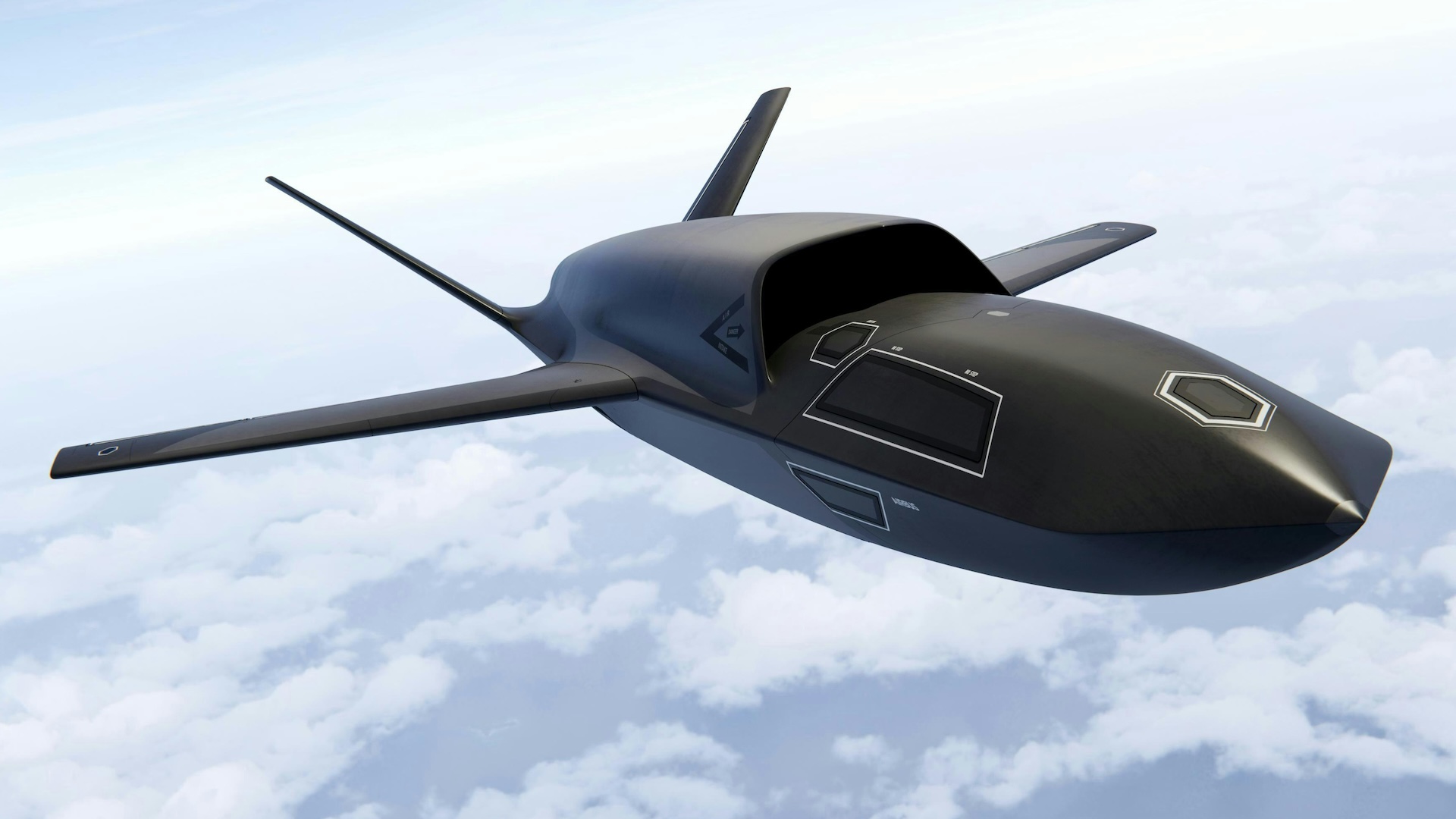
The most significant new arrival in the “U”-product line is the Ravenstorm combat drone, or U760.
A 1:1 model of the Ravenstorm will be on display at ILA. The drone is approximately 43 feet long and has a wingspan of 33 feet. In terms of rough size and general appearance, the drone strongly recalls General Atomics’ YFQ-42A ‘fighter drone’ prototype, now flying under the first phase of the U.S. Air Force’s Collaborative Combat Aircraft (CCA) program. Like the U.S. drone, the Ravenstorm features a swept, mid-wing configuration optimized for stealth and maneuverability. It also has the same twin-tail configuration. Like the YFQ-42, the Ravenstorm has a dorsal inlet, although this is closer to that which appeared on the EADS Barracuda demonstrator that flew for the first time 20 years ago. The drone is clearly optimized with low-observable (stealthy) characteristics, although the inlet is notably large and lacks the trapezoidal shape found on the YFQ-42.
Ground crew working on the Barracuda technology demonstrator. Airbus
At the same time, it should be noted that, when it comes to combat drones in general, many of them take on a relatively familiar form driven by similar requirements.
Airbus describes the Ravenstorm as “the next evolution” in its “roadmap towards a scalable family of uncrewed collaborative combat aircraft.” It is not clear how many related designs might be planned, and in what kinds of sizes they may come, but the company has highlighted the kinds of missions they will be expected to fly. These include air-to-surface strikes using precision-guided munitions, air-to-air defense with long and medium-range air-to-air missiles, and electronic warfare for suppressing enemy air defenses. Further offensive counter-air missions will involve UCCAs providing non-kinetic jamming.
Ravenstorm will be available in the early 2030s, according to the manufacturer, which is, interestingly, offering the new design alongside a version of the XQ-58. In Airbus parlance, the Valkyrie is designated U740 and combines the Kratos-designed airframe with Airbus’ proprietary Multiplatform Autonomous Reconfigurable and Secure (MARS) Mission System.
A U.S. Air Force XQ-58A deploying an ALTIUS-600 UAV from a Common Launch Tube. U.S. Air Force
For the U740, Airbus provides a notably precise planned date of service entry: 2029, with the German Air Force. This would appear to reflect a specific Luftwaffe requirement for a drone in this class, although it remains unclear if the Valkyrie has been formally selected by the German military. Airbus furthermore expects the U740 to be used in operational experimentation teamed with the Luftwaffe’s Eurofighter combat jet, including demonstrating initial air-to-ground capabilities.
The U740 Valkyrie on its launcher. Airbus
Returning to MARS, this is Airbus’ sovereign mission system, consisting of an AI-supported software core to enable platform autonomy. The system is scalable so that it can be used across the entire Airbus drone portfolio. It is also planned for use on the U950 Eurodrone — the new designation for the Eurodrone MALE platform. This twin-turboprop drone is now in development for missions including ISTAR, early warning, and anti-submarine warfare, and is planned to make its first flight in 2029.
A rendering of the Eurodrone MALE conducting a maritime mission. Airbus
As for Airbus’s two-track approach to UCCAs — U740 Valkyrie and U760 Ravenstorm — the thinking behind the two offerings, also of broadly similar sizes, likely reflects different cost points. The Valkyrie was designed from the ground up as a lower-cost aircraft and is runway-independent in its original form (since then, Kratos has announced a version with wheeled landing gear and there also exists the ability to launch the Valkyrie from a wheeled launch trolley, if required). Meanwhile, the Ravenstorm appears to be a more capable and costly platform, making it a closer match to Increment 1, the first phase of the U.S. Air Force’s CCA program.
The Anduril YFQ-44, produced for Increment 1, the first phase of the U.S. Air Force’s CCA program. U.S. Air Force
It could be that the company has already identified specific national or service requirements (such as the Valkyrie for the Luftwaffe) that it aims to capitalize on. There could also be a plan to use the Valkyrie more for operational experimentation of the UCCA concept before focusing more on the fully sovereign Ravenstorm, including potentially scaling it up or incorporating other significant airframe changes — like higher performance, larger payload, improved low-observable characteristics.
Also unclear is the status of Airbus’s stealthy Wingman, a CCA-like concept that was unveiled at the last ILA Berlin airshow in 2024. This was also presented in the form of a 1:1 model, with a length of 51 feet and a wingspan of 39 feet. The drone was planned to be powered by the same Eurojet EJ200 turbofan as the Eurofighter, providing a proven powerplant and useful commonality.
The Airbus Wingman concept aircraft, which Airbus leadership said should provide a unit cost that’s equivalent to one-third that of a modern crewed fighter. Thomas Newdick
At the time, Airbus noted that the German Air Force had “expressed a clear need” for a drone that would be able to operate in conjunction with crewed fighters before the arrival in service of the NGF, which was then slated for some time in the 2040s.
Whether the Wingman has now been abandoned entirely is unclear, but the Luftwaffe still has a requirement for an uncrewed companion that can work alongside its forthcoming Eurofighter EK electronic warfare jets. This is a role for which Airbus is earmarking the Ravenstorm, in particular, although it should be noted that the U.S. Marine Corps is also focusing heavily on the electronic warfare mission for the Valkyrie drone.
A rendering of a Eurofighter EK for the German Air Force. Airbus
All of these Airbus efforts are being informed by experience testing the Barracuda, work on which began in 2003, initially as a ‘black program.’ After six test campaigns, the Barracuda was retired.
The company will also be leveraging prior work from the Airbus Low Observable UAV Testbed (LOUT) program. A stealthy demonstrator, LOUT was not flown but was run by the company in strict secrecy until finally it was publicly disclosed in 2019, as you can read about here.
A four-ton LOUT model used for aerodynamic and anechoic chamber testing. Airbus
Undoubtedly, the significance of Airbus’s new-look drone roster, and above all the appearance of the U760 Ravenstorm alongside the U740 Valkyrie, is greater now that the FCAS program’s crewed New Generation Fighter is seemingly defunct.
It was always anticipated that the NGF would be operated as part of a wider ecosystem that also included CCA-like drones — what Airbus now refers to as UCCAs. Indeed, there were already efforts in place to start integrating combat drones with crewed fourth-generation-plus fighters like the Eurofighter and Rafale. Now that FCAS, or at least the NGF component of it, has been thwarted, Ravenstorm and Valkyrie offer a glimpse of where Europe’s combat aviation ambitions may be headed instead.
Collaborative combat aircraft like these emerged as a higher-mass, force-multiplying capability for current and future crewed fighters. In the interim, at least, the demise of the NGF means that these kinds of combat drones could be in even greater demand within Europe, where there is already a pressing need for larger tactical air combat fleets, while resources are limited. At the same time, CCA-like drones promise to make existing fourth- and fifth-generation fighters even more potent, further driving demand both in Europe and elsewhere.
Ten Russian soldiers from a single regiment are accused of hunting civilians in Kherson with attack drones, and now face war-crimes charges filed in absentia, the Security Service of Ukraine (SBU) reported. Investigators say the operators tracked people through the streets and struck ambulances and rescue crews. The 10 are among those participating in a Russian long-lasting terror campaign against Khersoners known as a "human safari."
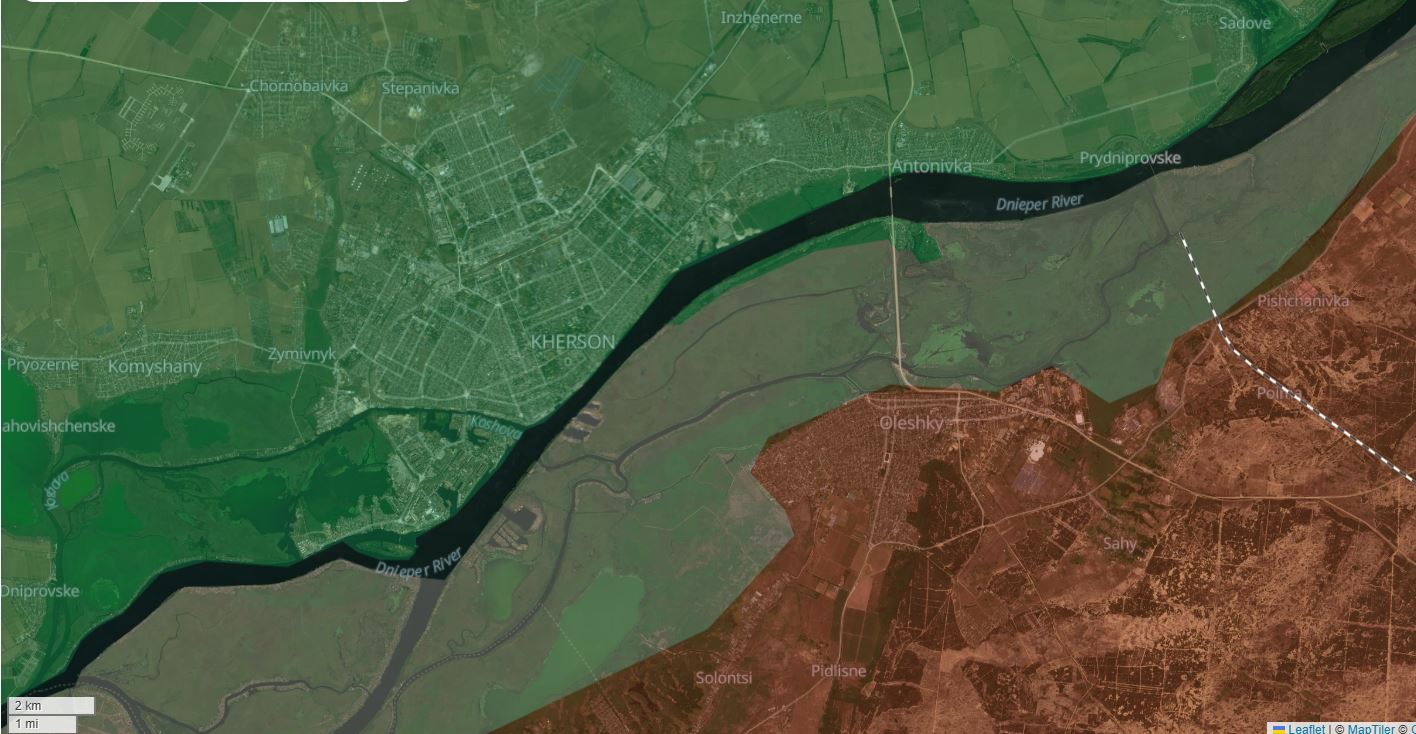
Kherson lies on the Dnipro River's west bank, with Russian-occupied land directly opposite, and the invading force has made it among the deadliest places to live in Ukraine by deliberately hunting civilians across the city for years.
The drone hunters of one regiment
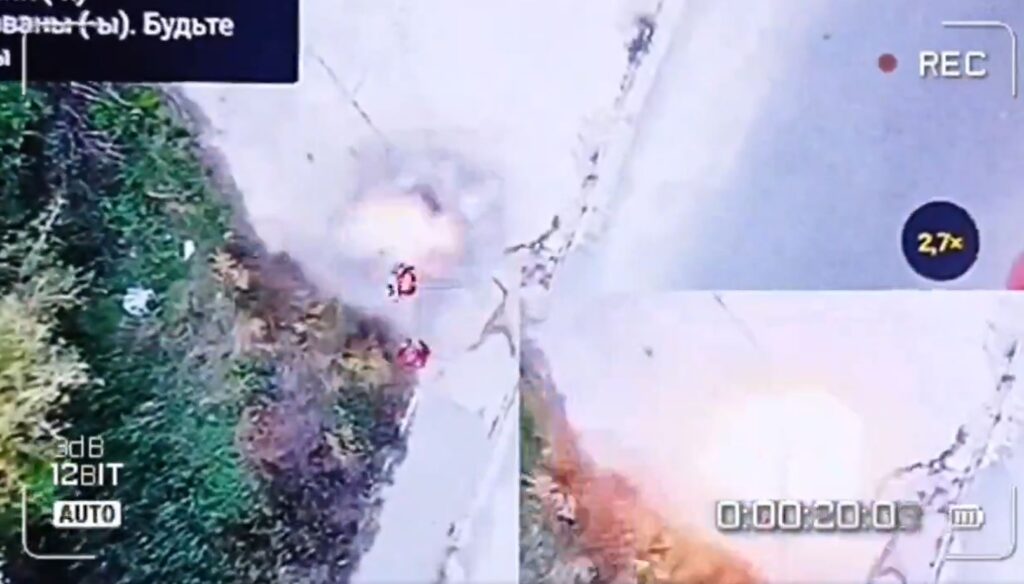
Counterintelligence officers built a case against 10 drone operators from the 404th Motorized Rifle Regiment, a territorial-defense unit in Russia's "Dnepr" Group of Forces, the SBU reported. The investigation found that the men tracked residents as they moved along Kherson's streets and launched drones at them. The drones carried shaped-charge and high-explosive fragmentation munitions.
Kherson city (Russian-occupied area in red). Map: Deep State
Residents and rights monitors call this campaign a "human safari," the hunting of people going about their ordinary days.
Kherson: human safari rages.
A Russian fiber optic FPV drone chases a car in a residential area; after civilians cut the cable, the drone falls, catches fire.
The documented episodes include attacks on civilian cars and residential blocks, the SBU said. Operators dropped explosives on ambulances at a city hospital. They also carried out a "double" strike on State Emergency Service (DSNS) rescuers who were clearing the aftermath of an earlier Russian shelling.
UN investigators have described this Russian method in Kherson: a first strike, then a second aimed at the people who come to help. Victims suffered shrapnel wounds, burns, and concussions, and civilian infrastructure took significant damage.
Russian soldiers attacked an ambulance in Kherson with a drone.
Based on the evidence, SBU investigators notified all 10 of suspicion under Article 438 of Ukraine's criminal code, which covers war crimes. The notices were issued in absentia. SBU officers in Kherson Oblast led the investigation with the 79th Border Detachment of the State Border Guard Service (DPSU), under the oblast prosecutor's guidance. The agency said efforts to hold the operators accountable continue.
The case fits a wider pattern Ukrainian prosecutors have documented across the oblast in thousands of proceedings.
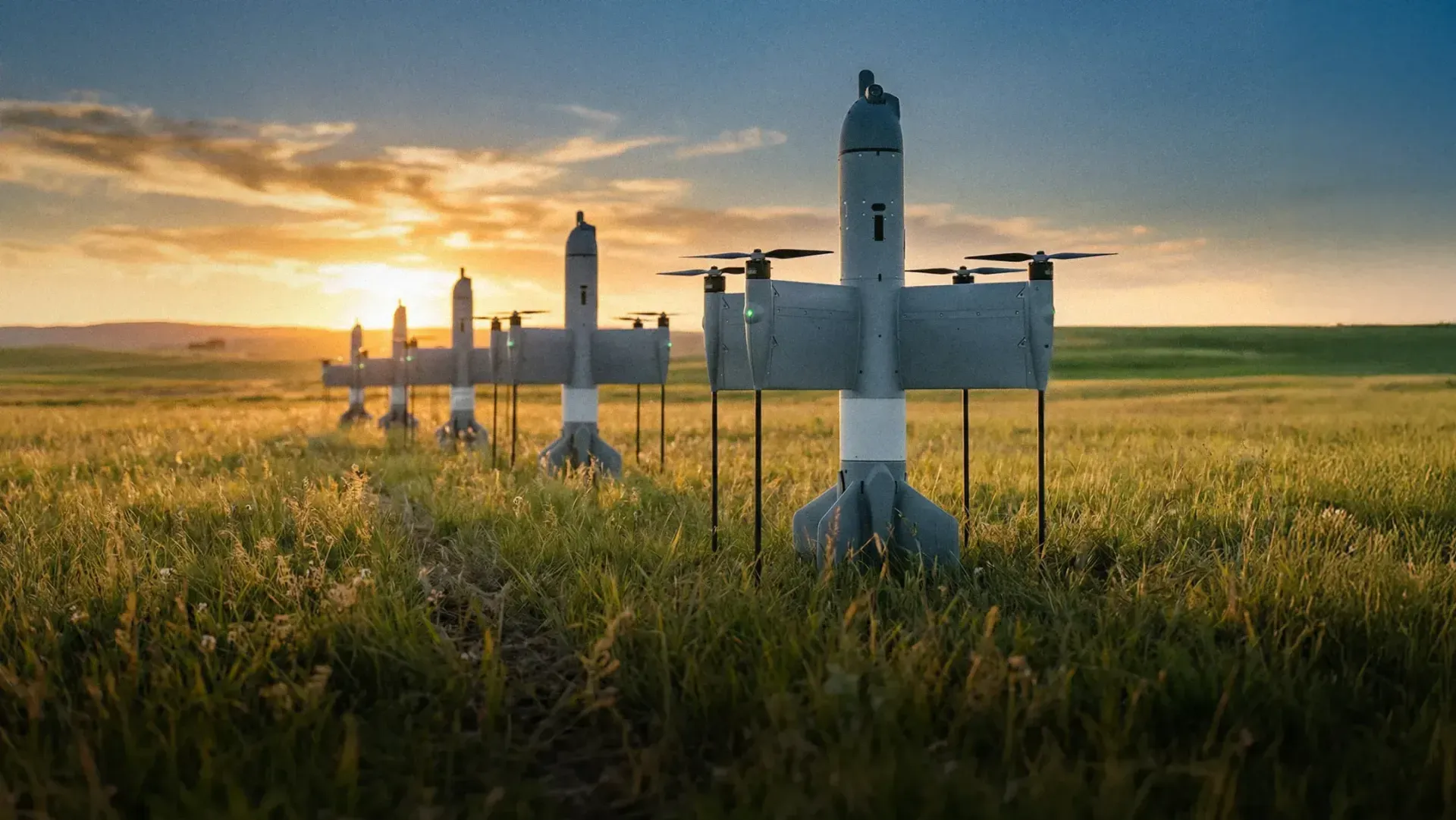
If you want to understand how Ukraine’s interceptor drones are evolving and improving but don’t have a lot of time, you can just take a look at the Litavr interceptor announced by the Ministry of Defense on 8 June.
F-Drones’ Litavr has been in serial production since the fall but its specs have been classified until now. While its capabilities do not appear to be brand new or exclusive to itself, the features list reads like a map of all the ways Ukrainian engineering and battle testing of the past few years made their various interceptors so highly sought-after.
That includes autonomous last-mile guidance, non-GPS navigation, radar integration, and the ability to control the drone from thousands of kilometers away. The company reportedly manufactures most of its own components, reducing dependence on China.
All these things are instrumental to Ukraine’s goal of “closing the sky” to Russian weapons. The Defense Ministry set a goal of shooting down no less than 95% of Russian drones and missiles and has been steadily climbing towards that goal: from just over 80% shot down late last year, to 92% shot down in May.
Last-mile autonomy
According to the MoD, the Litavr's key ability is the automatic pixel lock last mile guidance, in which a pilot controls the speed, while the drone does the rest.
Semi-autonomous weapons are one of the major achievements of Ukraine’s military-industrial ecosystem. Defense Minister Mykhailo Fedorov emphasized autonomy as a key technology.
“Autonomy is one of the key areas of development of modern air defence,” he said in a 8 June statement.
“Technologies like this enable faster responses to large-scale attacks and more effective protection of Ukrainian cities. We are scaling solutions that have already proved their effectiveness in combat conditions.”
Fedorov claimed that a Brave1 company has already created tech that automates 95% of the "entire interception process, from launching a drone to destroying a Shahed," which has been battle-tested in Kharkiv Oblast.
AI-assisted navigational and target lock tools are present in a plethora of Ukrainian drones: from deep and middle strike UAVs, to FPVs, to interceptors, which were reportedly getting anti-Shahed modules in December.
Across Ukraine and around the world, companies and volunteer cooperatives are using the country’s archive of battlefield footage to train models to become progressively more accurate and deadlier in combat.
Navigation and controls
Besides its daytime and thermal cameras, the Litavr has its own non-GPS navigation tools and integrates into existing radar systems through a proprietary software package.
The announcement was light on details, but this is another demonstration of Ukraine creating solutions to the realities of Russia’s war. The skies and battlefields are full of jamming and spoofing, which makes GPS a highly-unreliable solution.
Adaptations have included visual-inertial odometry, like the kind NASA's Mars drones use, beacon-based systems, AI that image matches preloaded terrain data, and tapping into nearby radar systems, like the Litavr does.
The drone also incorporates a system that allows operators to steer them from hundreds or thousands of kilometers away.
This system has been in development for over a year and announced in April, with more than 10 manufacturers integrating it into their systems. Wild Hornets made a splash online with their announcement that an operator took down a target from outside Ukraine's borders.
Speed and range
The Litavr has a reported top speed of 350 kilometers per hour. This isn’t the first drone with such a claim—the MoD said the same thing of the JEDI Shahed Hunter presented in March—and other drones before it had similar claims made about them, like the Furia.
However, 350 km/h is on the upper end of most interceptors in use these days. The more famous drones of this class like SkyFall’s P1-SUN has a reported top speed of 310 km/h and Wild Hornets’ Stinger reportedly hit 315 km/h in tests, though the website says it tops out at 280 km/h. This was a massive upgrade from earlier Sting, which could reportedly go up to 160 km/h.
Ukraine is pushing that ceiling higher. As early as December, the Brave1 Defense Cluster announced that Ukraine can now mass-produce a motor that can accelerate an interceptor to 400 kilometers per hour. The manufacturer, Motor G, makes more than 100,000 motors per month, according to the announcement.
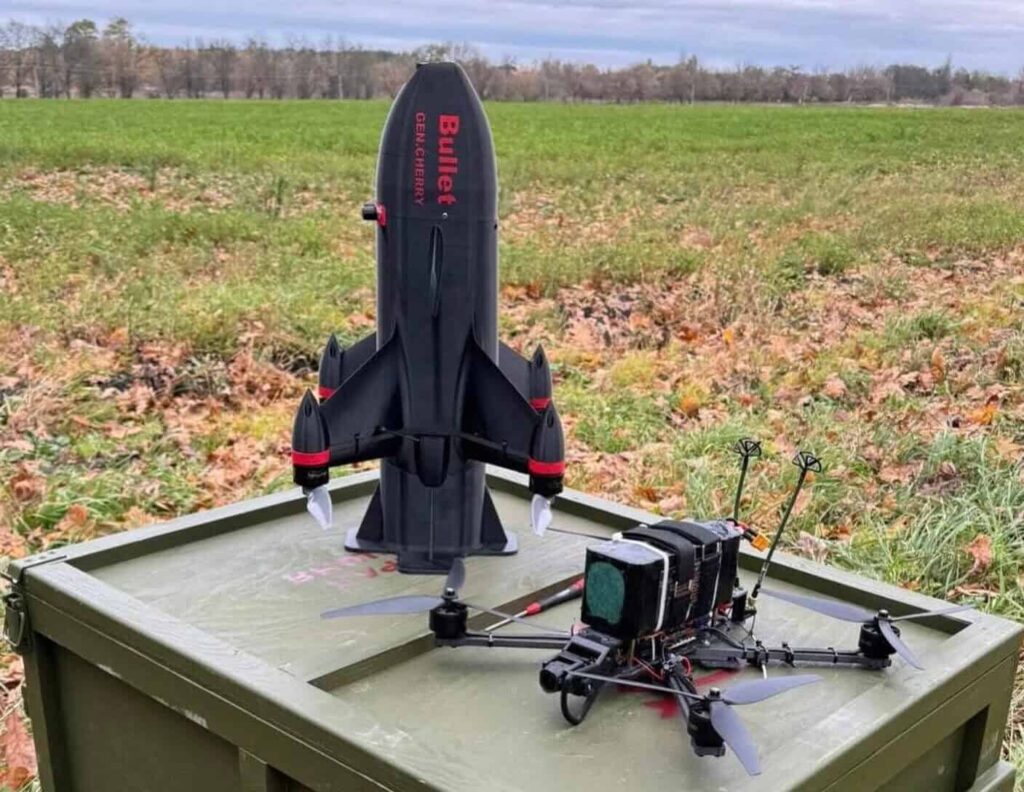
The growing speed is needed to combat jet-powered Shaheds, whose speeds can climb up to 600 kilometers per hour, which is a drum MoD adviser Serhiy “Flash” Beskrestnov has been beating constantly. Ukrainian devs are working on the problem: for example, General Cherry and STRIX are reportedly integrating chemical boosters into their Bullet interceptors.
Litavr’s operational range of 40 kilometers appears to be comparable to the Sting, though the MoD claimed a record flight of 80 km for the former. The flight ceiling of 9 kilometers appears to be higher than many interceptors of Litavr’s type, which range from 3 to 7 km.
Reducing reliance on China
The manufacturing is also indicative of what Ukraine is trying to accomplish. F-Drones reportedly builds most of its own electronics, engines and flight controllers.
Ukraine's government has a stated goal to reduce its dependence on Chinese parts, which, while cheaper, also pose a security risk. If China stops the flow of parts for whatever reason, Ukraine's entire weapons industry can be in trouble. China also supplies many of the parts for the very Shaheds these interceptors are meant to stop.
According to a December report by Zmiinyi (Snake) Island Institute, Ukraine's domestic manufacturers covered 70% of the need for communication systems for controlling drones, and 55% for analog video transmitters. The institute believes that Ukraine has the potential to cover 100% of the market in these three categories.
At the time of the report, Ukrainian manufacturers produced just 25% of flight controllers for domestic FPV drones, 14% of the thermal cameras and 12% of the electric motors. However, the Institute projected that Ukraine can produce as much as 75% of flight controllers, 90% of thermal cameras and 50% of electric motors over 2026.
Russia's overnight drone and missile barrage on 9 June killed and wounded civilians in the Kharkiv Oblast cities of Chuhuiv and Kharkiv, regional officials reported. More strikes over the past 24 hours left several people dead and dozens wounded elsewhere in Ukraine. Ukraine's Air Force said air defense stopped most of the drones, though missiles and others still reached homes.
Russia has pounded Ukrainian cities with nightly aerial barrages since 2022, sending waves of drones and missiles that air defenses can thin but not fully stop. Such daily attacks mainly target residential areas and civilian infrastructure.
Chuhuiv and Kharkiv bear the brunt
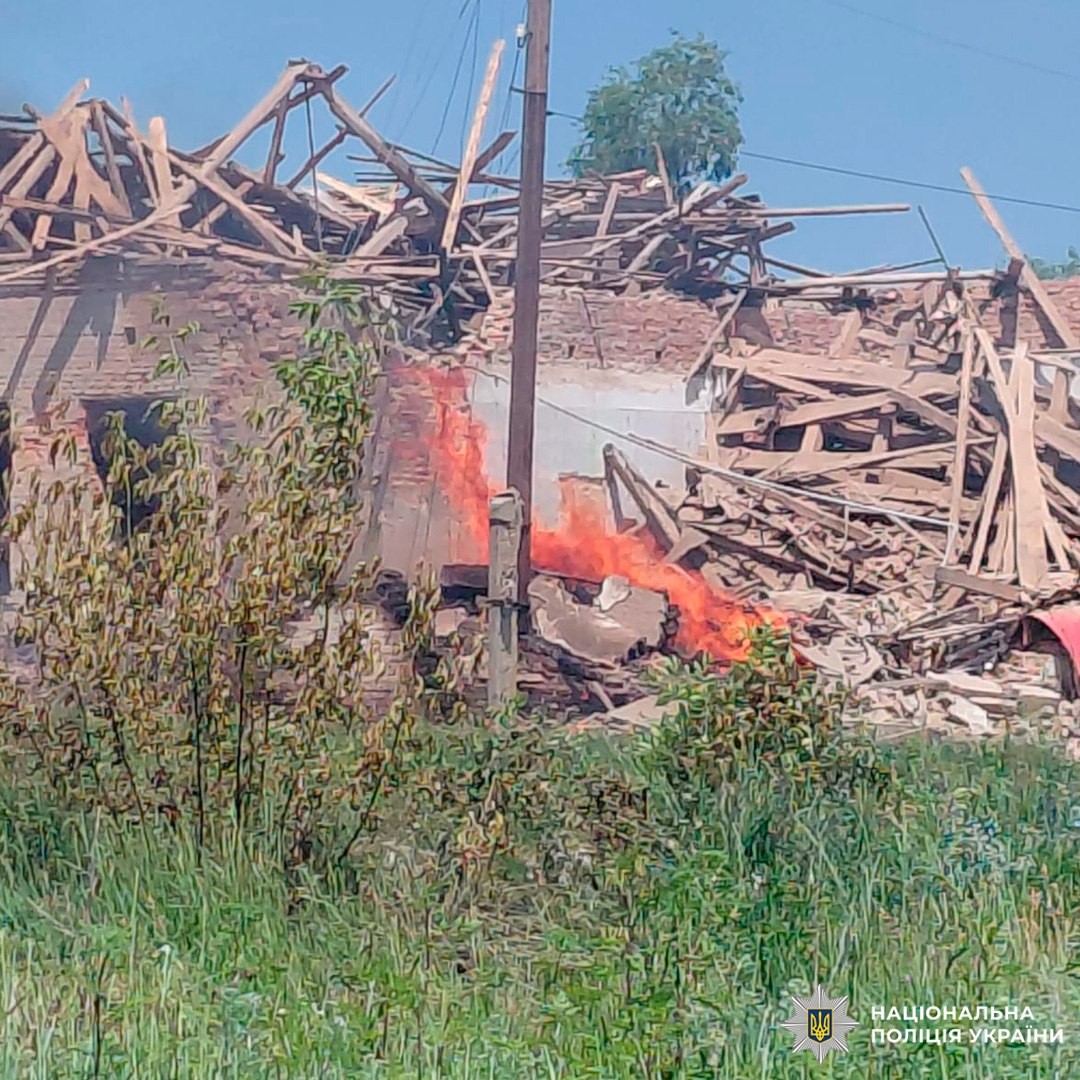
A series of Russian missile strikes on Chuhuiv overnight on 9 June killed at least three people and wounded six, the city's mayor, Halyna Minaieva, reported. Fire crews stayed at the impact sites as emergency services worked, she wrote, and the strikes damaged about eight apartment buildings and more than ten detached houses.
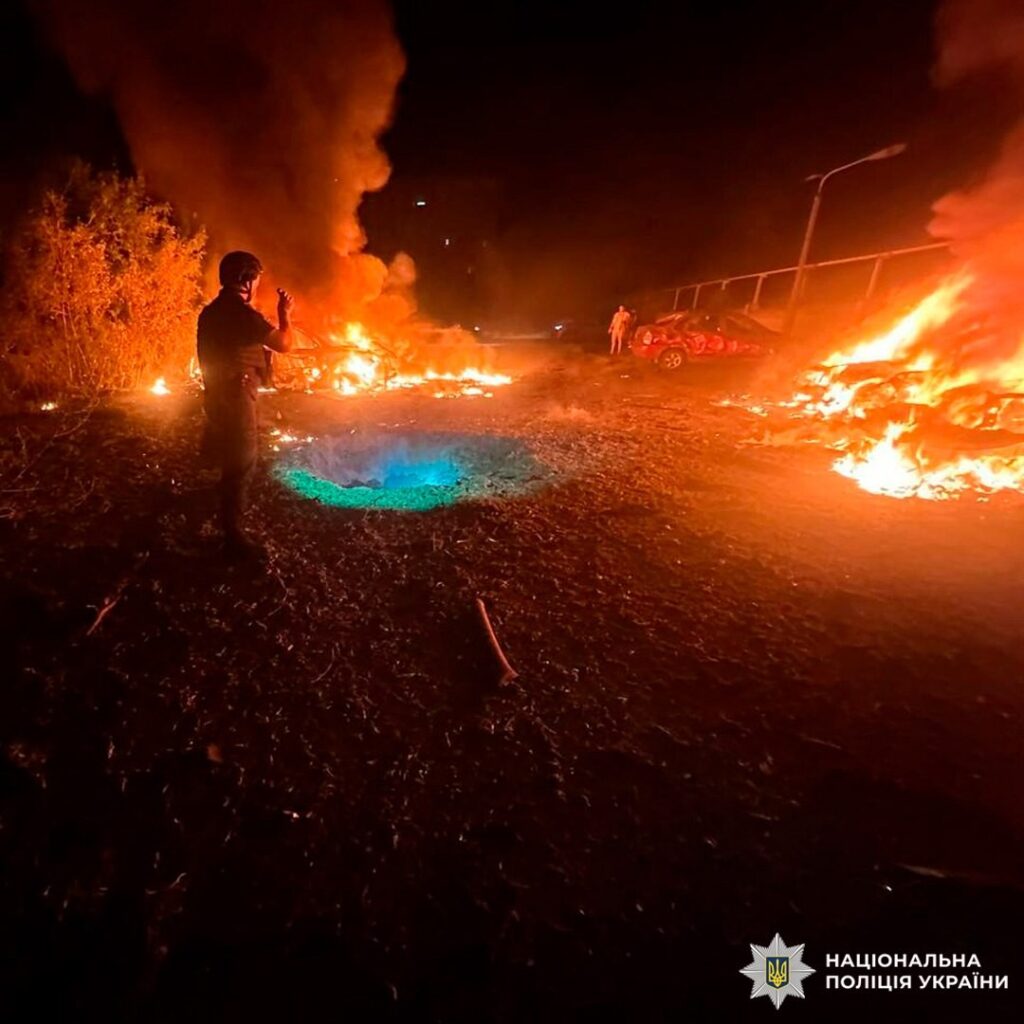
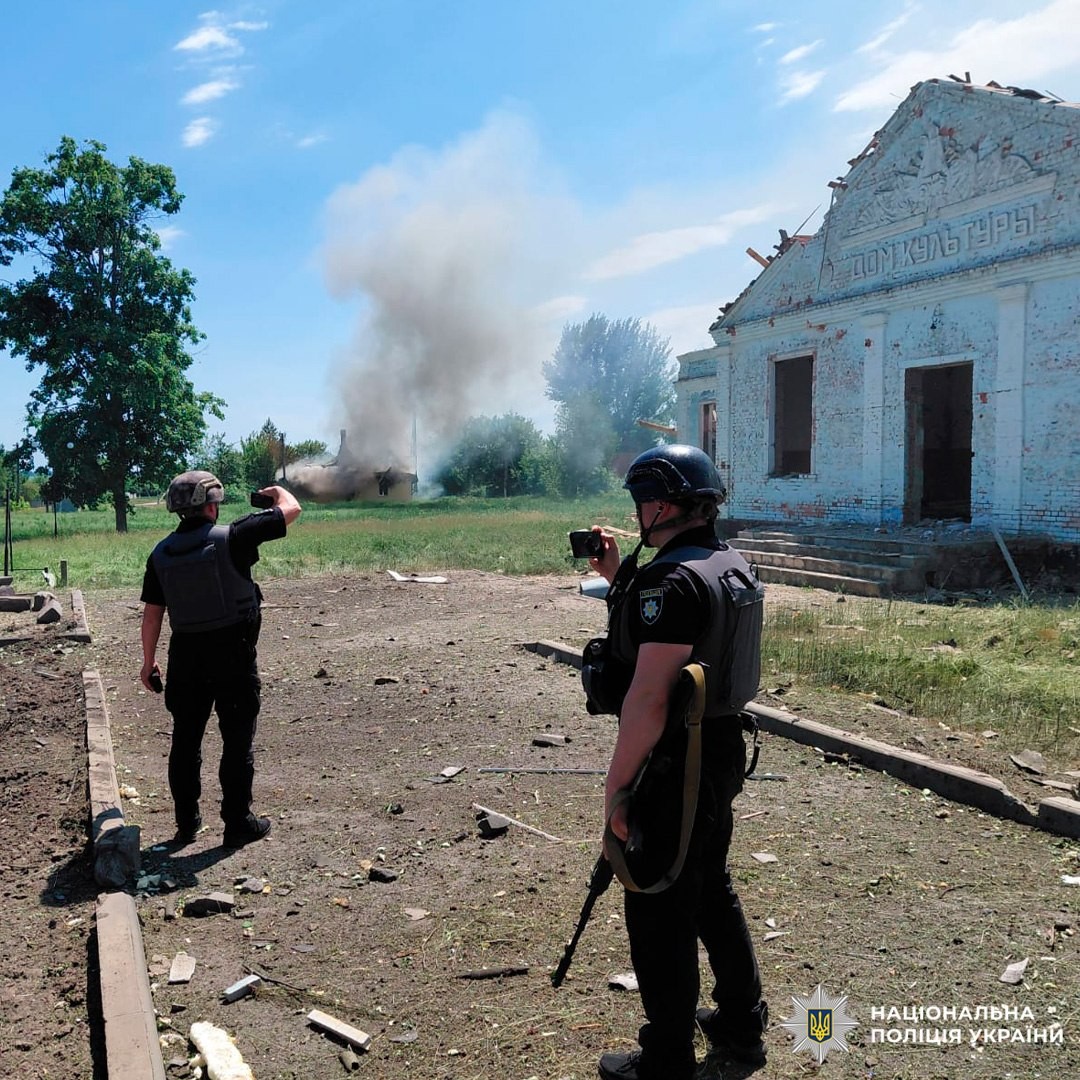
Police officers film the aftermath of a Russian strike in Kharkiv Oblast, 9 June 2026. Photo: National Police of Ukraine
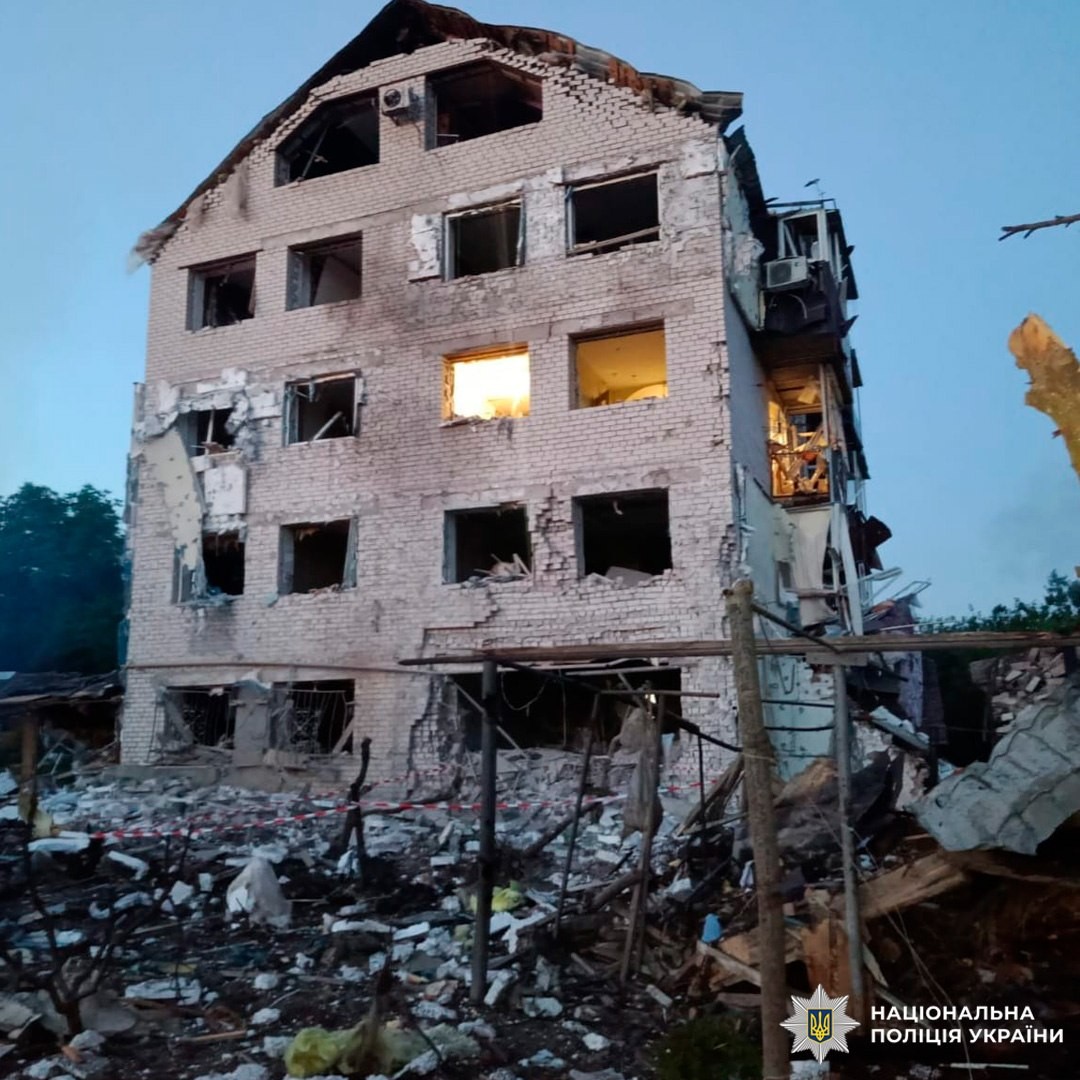
In Kharkiv—the regional capital—Russian drone strikes set off fires, damaged at least 18 cars, and blew out windows and facades in residential high-rises, Kharkiv Oblast head Oleh Syniehubov reported.
Police officers film the aftermath of a Russian strike in Kharkiv Oblast, 9 June 2026. Photo: National Police of Ukraine
He said 15 people were hurt, among them three children, including a one-year-old boy, and three women were hospitalized.
A multi-story residential building wrecked by a Russian strike in Kharkiv Oblast, 9 June 2026. Photo: National Police of Ukraine
Both cities sit dozens of kilometers from the Russian border and have been struck repeatedly through the war.
A barrage of two missiles and 166 drones
Russia launched two Kh-59/69 guided air missiles from Voronezh Oblast and 166 strike drones overnight, Ukraine's Air Force reported. The drones included Shahed types, some jet-powered, along with Gerbera, Italmas, "Banderol" loitering munitions, and "Parodiya" decoys, launched from Oryol, Kursk, Bryansk, Primorsko-Akhtarsk, and Millerovo in Russia, occupied Donetsk, and Hvardiiske in occupied Crimea.
By 08:00, air defense had downed or suppressed 146 of the drones. Two missiles and 17 drones struck 18 locations, and debris from intercepted drones fell at eight more.
Explore further
Moscow’s drone hits 10-story apartment block in Romania, injuring two as Russia fires 232 UAVs at Ukraine
Zaporizhzhia counts the damage from the day before
A Russian drone attack the previous day damaged 11 residential buildings across three districts of Zaporizhzhia, the city council reported. Six apartment blocks and five detached houses in the Khortytskyi, Zavodskyi, and Kosmichnyi districts lost windows, balconies, doors, and roofs to blast waves and debris. No one was hurt, and priority repairs were finished.
A nationwide wave
Russian attacks over 8 June killed two people in Sumy Oblast and wounded 13 across 21 hromadas, the regional police reported. A 78-year-old woman died in the Konotop hromada and a 71-year-old man in Seredyna-Buda, with a two-year-old boy and an eight-year-old boy among the injured.
In Donetsk Oblast, Russian forces killed two residents, in Bilozerske and Druzhkivka, and wounded 11 more, nine of them in Sloviansk, Oblast head Vadym Filashkin reported. Police recorded 1,309 attacks on the oblast's front line and residential areas, damaging 53 civilian sites. Hours later, Russia dropped three FAB-250 glide bombs on Sloviansk's outskirts, destroying one home and damaging more than 20.
In Kherson Oblast, drone and artillery attacks killed one person and wounded 13, including a child, Oblast head Oleksandr Prokudin reported.
Drone strikes in Dnipropetrovsk Oblast wounded three people.
Russian forces also hit 12 villages in four border hromadas of Chernihiv Oblast, the local border detachment told Suspilne.
The Russians also attacked communities in Mykolaiv Oblast with drones, where the administration reported no casualties.
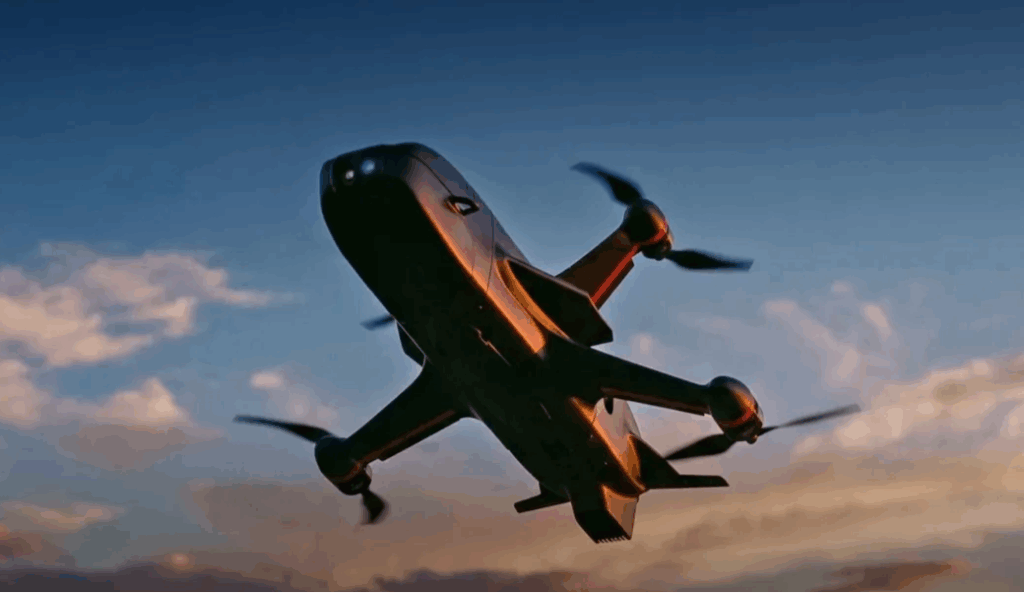
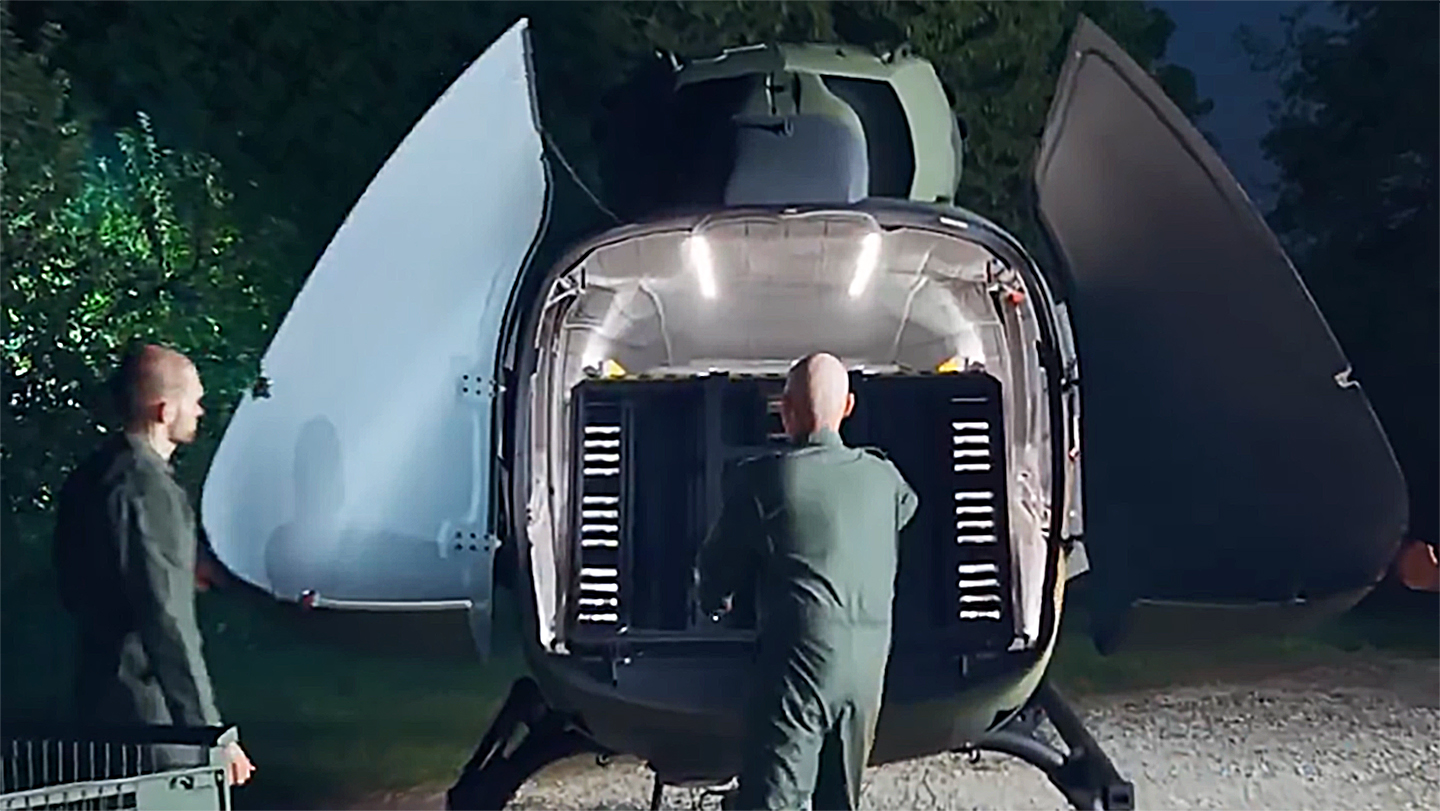
In a significant development, Airbus has announced that its H145 twin-engine light helicopter is being developed in an uncrewed version, the U145. The move continues and expands the manufacturer’s work in the uncrewed helicopter space and reflects similar developments around the globe — most notably, an uncrewed version of the UH-72 Lakota, which is the U.S. Army’s variant of the H145.
The U145 was officially revealed today, ahead of the ILA Berlin airshow, starting this week, during which a full-scale mock-up will be displayed. Airbus says it is planning a first flight of the U145 — with a safety pilot onboard — before the end of this year, and is aiming for entry into service at the beginning of the next decade.
At @ILA_Berlin, we introduce the Airbus U145: an uncrewed, fully autonomous variant of the H145. Optimised for cargo with no cockpit, an integrated nose door, and full autonomy, its first flight is set for late 2026. https://t.co/MbodUxYxyIpic.twitter.com/2EnMXzog6c
“With the U145, we are offering our customers an autonomous, uncrewed version of our H145 helicopter — combining the proven airframe, power and useful load of the H145 with the autonomy of a UAS,” said Matthieu Louvot, CEO of Airbus Helicopters, in a company media release. “To develop the U145 and its capabilities as a multi-mission UAS, we will be teaming up with leading autonomous mission partners to further expand the UAS ecosystem in Europe,” he added.
The U145 will have a maximum takeoff weight of around 8,400 pounds, and is described as a “mission-agnostic solution for civil and military applications, primarily high-volume cargo supply.” Airbus has announced the payload will be up to 2,600 pounds. In comparison, the uncrewed version of the Lakota, the MQ-72C Lakota Connector, will carry a maximum payload of around 4,000 pounds, although this includes slung loads. With that in mind, the U145 and MQ-72C will likely end up offering very similar payload capacities.
A model of the uncrewed version of the Lakota, now known as the MQ-72C, on display at the 2024 Sea Air Space convention. Jamie Hunter
The MQ-72C is expected to be able to cruise at speeds of 135 knots out to ranges of at least 350 nautical miles, according to the Airbus website.
Already at this stage, the company is pitching the U145 for specific military roles, including armed scouting and surveillance. Airbus is also planning to adapt the U145 as a “drone mothership” that will carry “launched effects,” on which the company is partnering with European missile house MBDA. A similar concept is currently being pitched by Sikorsky, with its uncrewed version of the Black Hawk helicopter, dubbed the U-Hawk, which is also intended to be able to fire dozens of launched effects such as surveillance and reconnaissance drones and loitering munitions.
Airbus also envisages the U145 operating in conjunction with conventional helicopters as part of crewed-uncrewed teaming.
German special forces members take off from Lechfeld Air Base, Germany, aboard a pair of H145Ms during Exercise Air Defender 2023. U.S. Air National Guard photo by Staff Sgt. Joseph R. Morgan Tech. Sgt. Joseph Morgan
The U145 will offer full autonomy, Airbus says, being equipped with a specialized sensor suite and artificial intelligence. For an uncrewed logistics aircraft, the ability to autonomously navigate along a predetermined route using programmed waypoints would provide a practical foundation for autonomous operations. However, more advanced capabilities — such as dynamically adjusting flight paths and responding in real time to emerging threats or unexpected obstacles — would also be very valuable, especially when conducting resupply missions in contested or high-risk environments.
The U145 will have no physical cockpit, so it cannot be flown with human pilots onboard. Other significant changes include adaptations for cargo missions, including a clamshell nose door, a loading platform, and a dedicated cargo floor. The existing rear clamshell doors are retained, as are the cabin side doors. The same configuration has been adopted for the MQ-72C, and a pass-through cargo hold is a big advantage that other crewed helicopters in this class cannot match.
A look in through the rear of a UH-72 in a medical evacuation configuration. The H145 is essentially similar. U.S. Army National Guard
Other features of the new uncrewed helicopter will be carried directly over from the H145, more than 1,800 of which are currently in service.
These features include a powerplant of two Safran Arriel 2E engines equipped with a full-authority digital engine control (FADEC) and a fenestron tail rotor.
The U145 is the next step in the manufacturer’s development of uncrewed helicopters. As such, it follows on from the smaller VSR700, a rotary-wing uncrewed air system which was derived from the crewed Cabri G2 light helicopter.
A VSR700 completes a test flight, accompanied by an H145. Airbus
It is unclear what elements might be ported across from the MQ-72C, also called the Unmanned Logistics Connector (ULC), which is being developed separately by Airbus U.S. Space and Defense, together with its partners Shield AI, L3 Harris, and Parry Lab. Based on the U.S.-made UH-72B Lakota, the MQ-72C is similarly autonomous and is primarily aimed at the U.S. Marine Corps. You can read more about the MQ-72C in our previous coverage of the aircraft, here and here.
Other U.S. efforts in this space include optionally crewed and uncrewed versions of the larger H-60 Black Hawk series. The U-Hawk demonstrator, a fully uncrewed version of the Black Hawk helicopter, is intended to carry cargo and deliver launched effects and similarly features clamshell doors in the nose. At the heavier end of the scale, Boeing has said its future plans for the H-47 Chinook include creating a path toward an uncrewed version of the aircraft.
However, these kinds of capabilities are increasingly being eyed by other services around the world, too.
With this in mind, Airbus is hoping to leverage the existing customer base for the H145, which has footprints on six continents. The H145 is already in service, or on order, with a growing number of international military operators for utility and light-attack missions. The uncrewed version maintains significant commonality, which will bring down support and maintenance costs.
At the same time, the U145 has obvious commercial applications. Airbus highlights its suitability for roles like disaster management and firefighting, although it would also be ideal for cargo conveyance, especially remote resupply work and logistics support to offshore platforms and remote areas on land, for example.
A standard H145 demonstrates its capabilities for offshore missions. Airbus
An Airbus spokesperson toldBreaking Defense that the U145 has not been developed for any specific national or European acquisition.
Undoubtedly, there is growing recognition in Europe, in particular, that changes in the geopolitical landscape mean that the continent cannot necessarily rely on the United States to meet its defense needs. Developing the U145 in addition to the MQ-72C aligns with Europe’s ambition to strengthen its sovereign capabilities.
With the U145, Airbus is betting that autonomous rotorcraft will become an increasingly important part of military operations. By leveraging a proven helicopter platform, it should accelerate the transition to uncrewed operations, but the drone helicopter will be entering an increasingly competitive marketplace.
A senior combat medic in a Ukrainian mechanized battalion based in Donetsk Oblast was charged with stealing 16 FPV drones manufactured by Ukrainian defense-tech company General Cherry. He also tried to sell these drones, worth approximately $12,600, for $2,370, the Eastern Region Specialized Defense Prosecutor's Office said on Facebook.
General Cherry is the same company that recently developed the Bullet interceptor drone's chemical-accelerator upgrade for hunting Russia's jet-powered Geran-4 Shaheds, and that entered Phase I of the Pentagon's $1.1 billion Drone Dominance Program.
The sergeant's theft removed 16 FPV drones from frontline combat operations for nearly 5 months, from the January 2026 theft to the May 2026 sale.
Case mechanics
The stolen drones were on the military unit's balance sheet and had been issued specifically for combat operations. On 30 May 2026, the sergeant sold the stolen drones for $2,370, which is roughly 19% of their actual value, to an undisclosed buyer.
The officers arrested him immediately after the funds transfer under Article 208 of Ukraine's Criminal Procedure Code, recovering the cash, all 16 drones, and their components.
Charge and bail
The sergeant has been charged under Part 4, Article 410 of Ukraine's Criminal Code, for theft of military property during wartime, the most serious classification of the offense. A Ukrainian court ordered detention with the option of release on bail of $6,009.
General Cherry's response
General Cherry thanked Ukraine's Prosecutor General Ruslan Kravchenko and the Specialized Defense Prosecutor's Office for "principled action against the theft of military property" in a statement on social media.
"FPV drones are a property of critical necessity, used daily along the entire line of combat contact. The availability of such weapons directly affects the ability to defend positions and preserve the lives of military personnel," the company said.
Earlier, General Cherry and Croatia's ORQA signed a memorandum of cooperation. They agreed to jointly develop and manufacture interceptor drones and counter-drone systems, including an underground factory under the Build in Ukraine localization program, the companies announced.
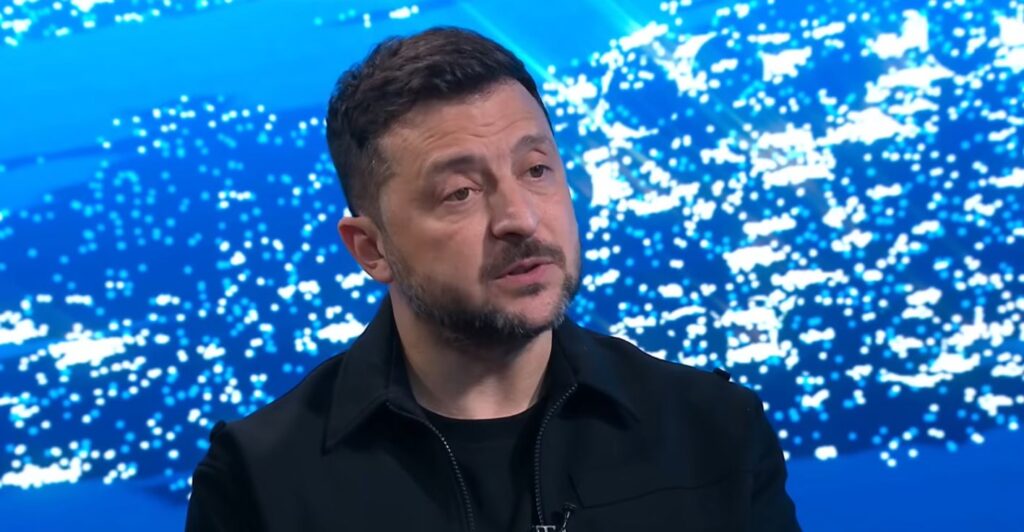
Ukrainian President Volodymyr Zelenskyy is willing to stop the war along the current line of contact and move to negotiations, he said in a Sky News interview. He presented the idea as the quickest route to a ceasefire, while rejecting any deal that hands Russia Ukrainian land. He also urged allies to close Ukraine's air defense gaps.
Russia has rejected every ceasefire Ukraine and the US have put forward and keeps refusing to halt an all-out war it has waged since its full-scale invasion in 2022. Whether a freeze ever takes hold rests with the Kremlin, whose demands still stretch far beyond the territory its army has managed to seize.
"The quickest way" to stop the fighting
Asked where he would freeze the lines if Russia agreed to a ceasefire, Zelenskyy said he is ready to accept today's positions.
"Yes, it's the quickest way," he said.
He insisted this is not a giveaway. He does not want to simply freeze the conflict, but to stop the war so it cannot restart "because of some crazy people." A freeze would let Ukraine save children's lives and bring soldiers home. Any ceasefire must be total and free of Russian games, watched by American and European partners. Only then would the sides sit down to end the war through diplomacy. A ceasefire, he added, is "the biggest compromise from our side."
The most urgent need from allies is air defense, Zelenskyy said. Ukraine faces a large deficit in anti-ballistic missiles, with US transfers slowed by the war in the Middle East. He again asked for more Patriot systems. Russia attacks daily, usually with around 300 long-range explosive drones. On the heaviest nights it launches 600 to 850 drones and dozens of missiles.
Ukraine's interceptors now down most of them, but the gaps remain dangerous.
Explore further
10% now, 23% after a ceasefire, 59% only at peace—Ukraine’s verdict on a wartime vote hasn’t moved all year
Ukraine's own arsenal
Ukraine has built more than 400 defense companies since the full-scale invasion, Zelenskyy said. Dozens rank among the world's strongest. They produce drones and missiles, some underground, and the country is close to its own ballistic missile. Ukraine can now share that expertise with allies and even build air defenses for Europe, he said. Kyiv aims to mass-produce drones on a scale few countries can match.
Bringing the war back to Russia
Ukraine's recent strikes on St. Petersburg and the Moscow region answer Russian attacks on Ukrainian energy, Zelenskyy said. St. Petersburg was hit twice last week. He wants Russians far from the front to feel the war they started. Russian President Vladimir Putin understands only "total pressure," he said. Sanctions on Russia's shadow fleet of sanctions-dodging tankers and its oil and gas exports hit hardest.
Zelenskyy said Putin does not want to stop the war and is signaling he wants to win. Whether the fighting ends "100% depends on his decision," he said. His 4 June open letter, which Moscow called rude and rejected, was meant to force an answer and pierce a Russian public living in "some fantastic world." Russian businessman Roman Abramovich came to Kyiv to carry messages to Putin, Zelenskyy said.
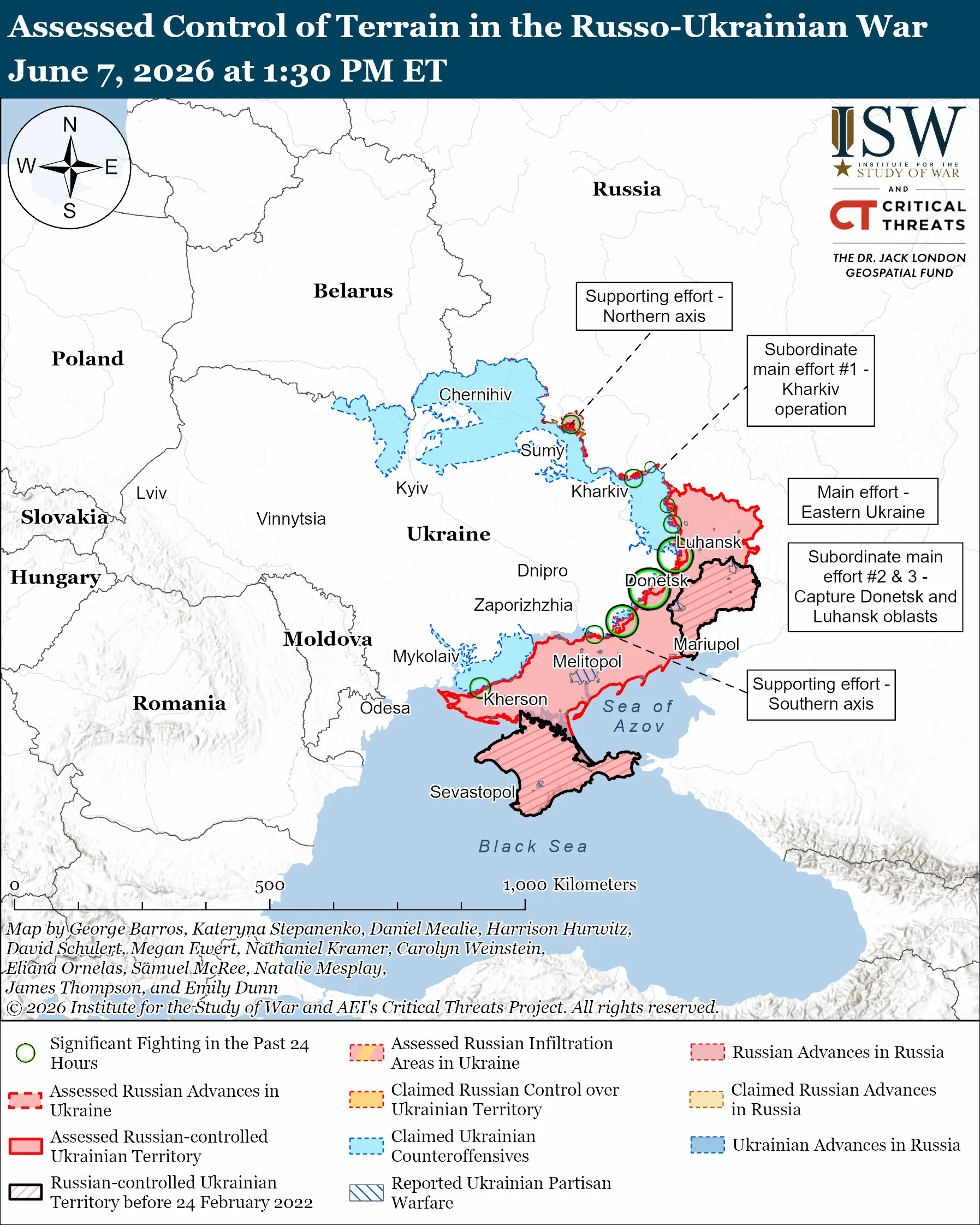
The so-called Donbas is a historic name for Ukraine’s two easternmost regions, Luhansk and Donetsk oblasts. Russia still failed to occupy a small part of Luhansk Oblast, as well as a significant swathe of Donetsk Oblast, which contains the so-called “Fortress Belt” that Russia has failed to break through despite its years-long ongoing offensive campaign. Map: ISW
His key message was on the Donbas: Ukraine will not leave its land, and compromises come only after a ceasefire. He is ready to meet in any format, but not in Moscow, Belarus, or Minsk. Leaders cannot decide "without us about us," he said, in a message aimed at Washington. Russia, by contrast, keeps insisting that Ukraine surrender all of the Donbas first.
In the latest flare-up of tension during a very shaky ‘ceasefire,’ “Iran has launched multiple drones towards the Strait of Hormuz,” a U.S. official told us. “U.S. forces have taken out at least four of them.”
The statement comes as unconfirmed reports are emerging online of explosions on Iran’s Kharg Island. The official, who spoke to us on condition of anonymity to discuss operational issues, declined comment about those claims.
Big Development
The United States Airforce just launched an intense airstrike on Kharg Island of Iran. Reportedly Air Defence & missile launch site of IRGC has been targeted. pic.twitter.com/qseXJ5g6B7
Kharg Island, which has come under attack before during Epic Fury, is Iran’s main oil export facility. An attack on the oil infrastructure would represent a major escalation.
News of the U.S. takedown of the drones is the latest kinetic incident in the Strait and comes amid sputtering peace talks. As we wrote last week, the U.S. struck Iranian targets and Iran launched missiles and drones at Kuwait and Bahrain in an exchange that severely damaged Kuwait International Airport, killed several people and injured scores more.
You can see video and images of damage from the June 3 attack below.
This is what Iran did in my country, Kuwait: it killed innocent civilians by bombing Kuwait International Airport. Violating all international norms
— حمد عبدالكريم السعيد (@Hamad_Alsaid) June 4, 2026
Other exchanges have occurred around the strait, where U.S. Navy ships says vessels, including their own, were fired upon, which resulted in reprisal attacks on shore targets.
UPDATE: 6:56 PM EDT –
CENTCOM confirmed U.S. forces attacked Iranian facilities and shot down Iranian drones..
“Moments ago, CENTCOM forces shot down four Iranian one-way attack drones that were launched toward the Strait of Hormuz,” the command stated on X. “The attack drones posed an immediate threat to regional maritime traffic. U.S. forces subsequently struck Iranian coastal surveillance radar sites in Goruk and on Qeshm Island to defend against further attacks. American forces remain vigilant and postured to respond to unjustified Iranian aggression in self-defense.”
Moments ago, CENTCOM forces shot down four Iranian one-way attack drones that were launched toward the Strait of Hormuz. The attack drones posed an immediate threat to regional maritime traffic. U.S. forces subsequently struck Iranian coastal surveillance radar sites in Goruk and…
In a post on X, CENTCOM claimed that “U.S. forces intercepted multiple Iranian ballistic missiles and drones launched by Iran toward the Strait of Hormuz and Gulf neighbors, June 5. “
“Iran fired seven ballistic missiles toward Kuwait and Bahrain,” the command stated. “Initial assessments indicate six of the missiles launched by Iran were intercepted and a seventh did not reach its intended target. There are currently no reports of harm to U.S. personnel, and Iranian claims of damaging U.S. 5th fleet headquarters in Bahrain are false. CENTCOM forces remain vigilant and postured to continue responding to unwarranted Iranian aggression in self-defense.
The Iranian attack took place hours after the previously mentioned CENTCOM strikes on Iranian coastal targets.
The CENTCOM post included a video showing those strikes.
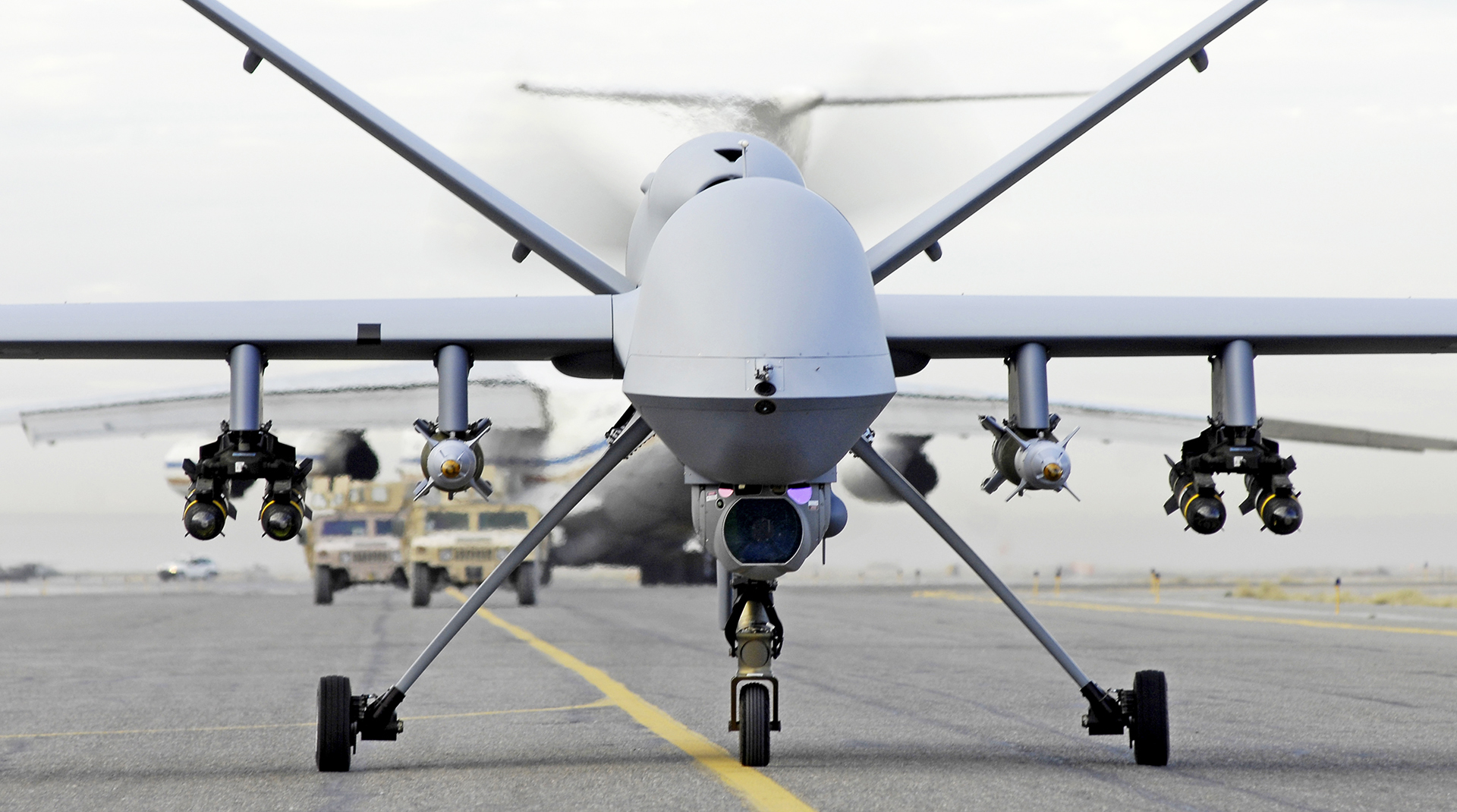
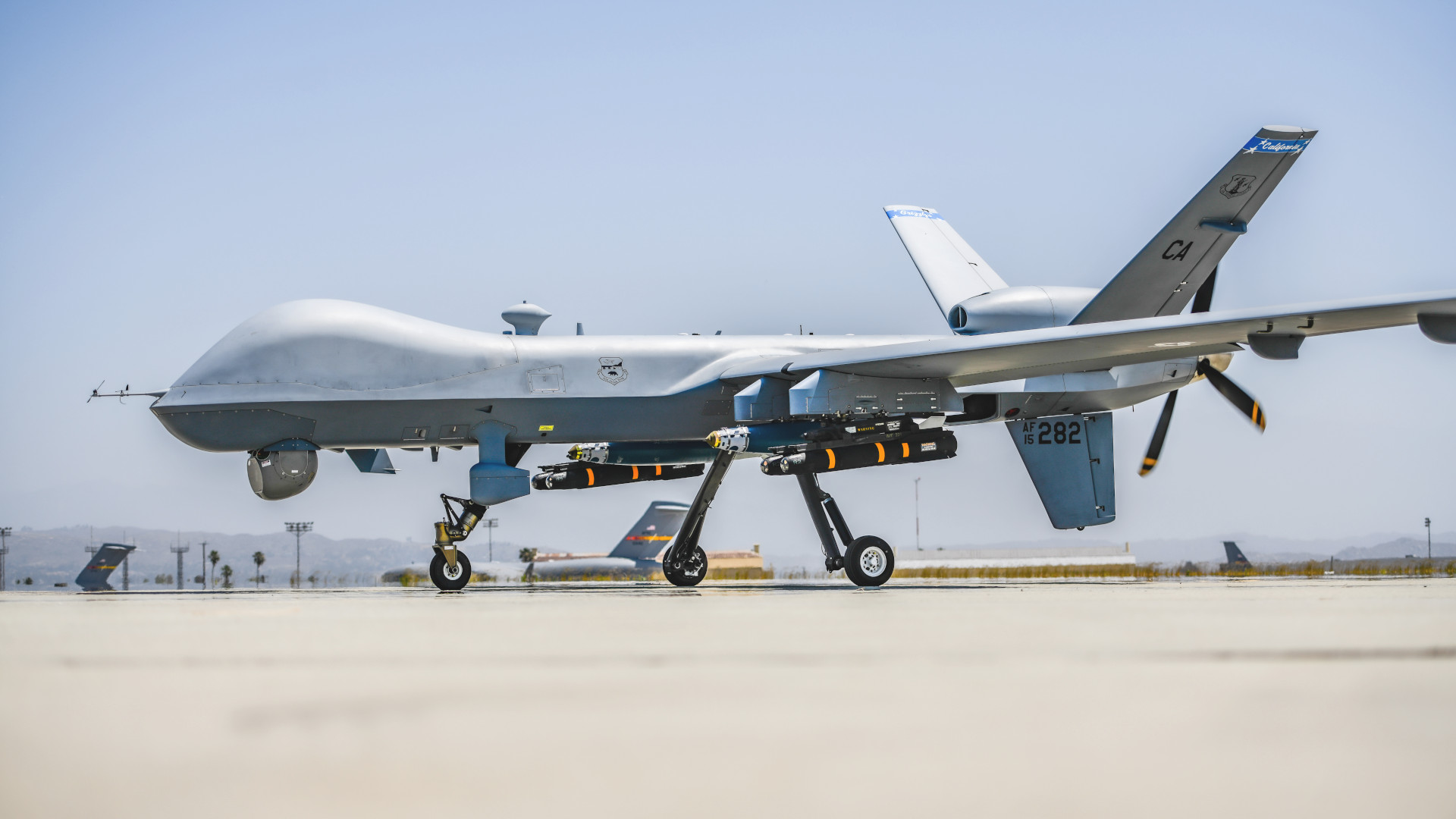
After reportedly losing dozens of MQ-9 Reaper drones while battling Iran, the Air Force on Friday confirmed to TWZ that it is planning to purchase an undisclosed number of unused ones from General Atomics, who made the aircraft. The company, however, said it has less than 10 of these drones to offer, and it remains unclear where else the Air Force can find more.
All of this continues to raise serious questions about the Air Force’s near-term ability to plug gaps left by the losses fighting against Iran and in other recent operations in and around the Middle East. The downed Reapers have a reported combined value of about $1 billion.
The Air Force has reportedly lost dozens of MQ-9 Reaper drones. (USAF)
Furthermore, despite the top Air Force officer recently praising Reaper as “perhaps the most valuable player” in the air war against Iran, the aircraft have been in the crosshairs of service officials. They have openly questioned the drone’s survivability and, by extension, general value in future operations. The Air Force has made several half-hearted efforts, without success, to find a successor. It is now in the early stages of a new attempt at acquiring an “MQ-9 Next.” You can read more about that effort in our story here.
An MQ-9 Reaper. (USAF)
It will be years, if ever, before “MQ-9 Next” comes online. Meanwhile, the search is on for existing replacements.
“The USAF intends to purchase several unused MQ-9A Block 5 from GA-ASI [General Atomics Aeronautical Systems, Inc.],” a spokesperson for the service told TWZ today. “A number of MQ-9A Block 5 aircraft were manufactured based on forecasted purchases for other customers but are no longer needed. The available aircraft are currently GA-ASI owned aircraft.”
“The USAF has received funds to begin the acquisition process,” they added.
A U.S. Air Force service member assigned to the 46th Expeditionary Attack Squadron, conducts pre-flight checks on an MQ-9 aircraft in preparation for an Operation Agile Spartan mission departing from Ali Al Salem Air Base, Kuwait, August 21, 2023. (U.S. Air Force photo by Tech. Sgt. Isaac Garden) Tech. Sgt. Isaac Garden
The Air Force was responding to our questions about congressional testimony from a top officer highlighting the service’s plans to backfill the combat losses.
“We’re looking at options to buy back as many of the MQ-9As as we possibly can right now,” Air Force Lt. Gen. David Tabor, Deputy Chief of Staff for Plans and Programs, had told members of Congress at a hearing back on May 13. “So there’s a bit of a short-term effort to buy back things immediately, in this fiscal year.”
Tabor also said at that time that the Air Force’s total MQ-9A fleet had shrunk to 135 aircraft. Official budget documents say the Air Force had 165 Reapers in inventory as of the start of Fiscal Year 2026, which began on October 1 of last year. This had already marked a significant year-over-year decrease, down from 231 MQ-9As at the beginning of Fiscal Year 2025.
Despite Air Force needs, General Atomics told us the number of available Reapers is in short supply.
“Between parts in stock for new builds, and company-owned Reapers with some number of flight hours on them, there are less than 10 total ‘new’ MQ-9As available to any customers anywhere in the world,” General Atomics spokesperson C. Mark Brinkley told TWZ earlier this week. “There are some number of decommissioned Reapers out there, and some number of those could potentially be brought back into service.”
MQ-9A Reaper in flight. (General Atomics)
One place the Air Force won’t be able to find any Reapers is in storage.
The MQ-9A is out of production. General Atomics has moved on to the MQ-9B, and currently offers those drones in multiple configurations. Though an evolution of the original Reaper, the core B model design differs in significant ways from its predecessor. Any new Air Force purchases of drones in this broader family would have to be of the B model and worked into the existing production schedule.
How many MQ-9As the Air Force has lost in operations in and around the Middle East since January 2025 is unclear, but is understood to be substantial. As of May, “nearly 30 MQ-9 Reapers have been lost in the course” of Operation Epic Fury against Iran, Air & Space Forces Magazine reported, citing “people familiar with the matter.” This is on top of dozens of Reapers reportedly downed while conducting operations targeting Iranian-backed Houthi militants in Yemen in the past year or so.
Air Force Chief: MQ-9 Reaper ‘Most Valuable Player’ of Iran War Despite Losseshttps://t.co/qZB4xRh2jA
— Air & Space Forces Magazine (@ASForcesMag) May 21, 2026
At the hearing last month, Tabor did not provide any official accounting of Reaper losses, but did acknowledge that “we are concerned about how they’ve attrited.”
In another effort to bolster the supply of operational Reapers, the Air Force told us that while it never regenerated MQ-1 Predator drones back into service, it was repurposing parts from these aircraft that the service stopped using in 2020. There were dozens on hand after they were retired.
An MQ-1 Predator flies above the flightline during launch and recovery training at Creech Air Force Base, Nev. Aircrew will fly the MQ-1 for the final time at Creech on March 9, 2018, before it is officially retired from the Air Force inventory. (U.S. Air Force photo by Senior Master Sgt. Cecilio Ricardo) Senior Master Sgt. Cecilio Ricardo
Questions about the status of the MQ-1 fleet arose last week after U.S. Central Command (CENTCOM) acknowledged the loss of an “MQ-1” drone to Iranian fire. This has led many to question whether American forces are flying the venerable Predator again as a result of the Reaper losses.
At the time, the Air Force declined to say if it lost any of theirs and referred us to CENTCOM, which declined comment. However, on Friday, the Air Force told us that in addition to the Predators being used for parts, 20 had been transferred to the Navy. We reached out to them for comment.
As we previously noted, it is also very possible, if not likely, that the uncrewed aircraft in question was an MQ-1C Gray Eagle, a related but different design still in active U.S. Army service. You can read more about this event in our original story here.
A U.S. Army MQ-1C seen being prepared for a mission somewhere in the Middle East on April 18, 2026. The official caption for this picture erroneously says the drone is an MQ-1 Predator. USAF/Master Sgt. James Cason
At the time of the incident, CENTCOM declined to tell us which variant of the MQ-1 was lost.
Regardless, the Air Force’s mad scramble to find additional Reapers highlights the value of having a high-flying, long-loitering drone that can gather intelligence and fire off munitions, no matter how slow it flies.
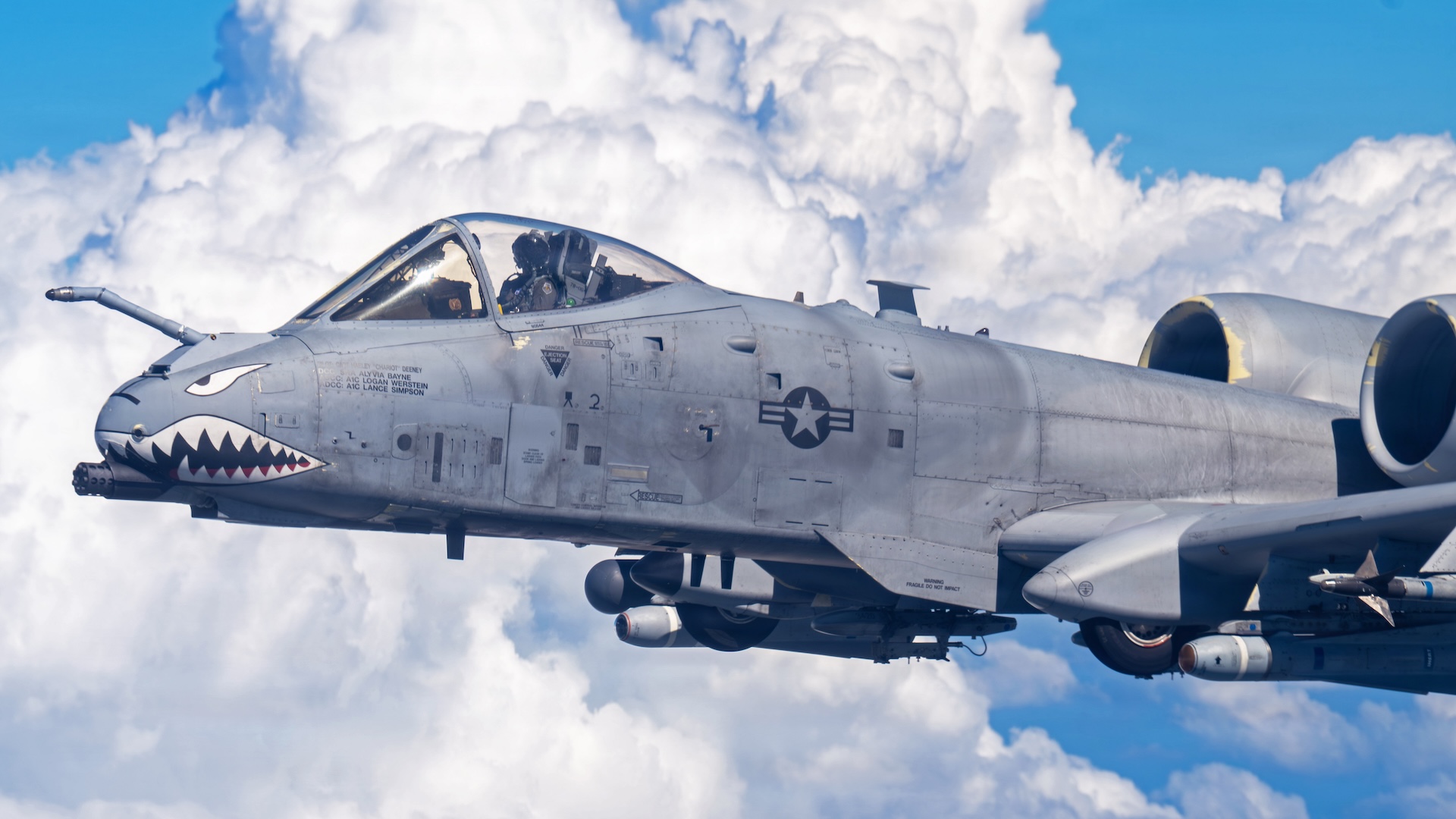
The Air Force will seek new ways to accomplish the missions of the A-10C attack jet, under an amendment added to the House Armed Services Committee’s version of the National Defense Authorization bill. While the Air Force has long campaigned for the Warthog’s retirement, the recent demand for the jet in conflicts in the Middle East has seen it earn a reprieve, with its standdown now scheduled for 2030.
Some of the numerous amendments to the bill come from Abe Hamadeh, the Republican representative for Arizona. He calls for the Secretary of the Air Force to keep supporting A-10 training, testing, experimentation, maintenance, and sustainment efforts through to the planned retirement date, as well as preserving lessons learned and operational expertise from A-10 missions to help shape future replacement systems. This would include keeping a formal training unit to teach pilots until the retirement. This is especially notable, since the unit in question, the 357th Fighter Squadron, graduated the last class of A-10 student pilots at Davis-Monthan Air Force Base, Arizona, back in April.
Four A-10Cs from the 357th Fighter Squadron deploy flares over a training range near Gila Bend, Arizona, May 1, 2026. U.S. Air Force photo by Airman 1st Class Samantha Melecio
Meanwhile, the Air Force officially concluded A-10 depot-level maintenance in February of this year, with the deactivation of the 571st Aircraft Maintenance Squadron at Hill Air Force Base, Utah, and the A-10 Weapons School is due to be shuttered this year.
An A-10C is positioned near the hangar during the “Hawg Out” ceremony, February 12, 2026, at Hill Air Force Base, Utah. The aircraft was the final A-10 to be maintained by the Ogden Air Logistics Complex’s 571st Aircraft Maintenance Squadron, which performed depot-level maintenance on the aircraft since 1998. U.S. Air Force photo by Cynthia Griggs
As part of this, the amendment also requests a report on the A-10’s “combat employment, recent operational relevance, lessons for future force design, and modernization options that could improve the return on continued sustainment of the program.”
Hamadeh lists a range of recent modernization efforts for the jet that “could improve the operational return on continued sustainment of the A-10 program.” These include electronic warfare capabilities, decoy or stand-in effects delivery, digital communications, sensor integration, precision weapons integration, survivability improvements, open-systems architecture, and human-machine teaming applications. The amendment also refers to the A-10’s recent “aerial refueling enhancements,” referring to the rapid introduction of a nose-mounted aerial refueling probe, which you can read more about here.
An A-10C uses its newly added probe to refuel from an HC-130J Combat King II aircraft in the U.S. Central Command area of responsibility, May 9, 2026. U.S. Air Force photo
At the same time, while preparing to retire the Warthog, the amendment calls for “a competitive experimentation plan for autonomous and non-traditional capabilities relevant to the A-10 mission set” — something that is far from new. According to the wording of the amended bill, this should “encourage autonomous replacement and modernization of the A-10, while also prioritizing participation of non-traditional defense firms.”
The amendment specifies that “autonomous, semi-autonomous, artificial intelligence-enabled, and adjunct aircraft capabilities” should all be investigated for carrying out future A-10-type mission sets.
The plan should include ways to ensure operational experiments are done “in a manner consistent with meaningful human command and control, by a qualified military aviator,” the amendment added. That should include mission-critical functions such as target engagement, weapons release, and decisions to abort a mission.
To help with the development of emerging technologies that could replace, or partly replace, the A-10, the amendment also proposes that a limited number of the jets should be used to support these studies.
Two 74th Fighter Squadron A-10Cs above Wake Island, in October 2022. These aircraft transited from Moody Air Force Base, Georgia, to Andersen AFB, Guam, to participate in a Dynamic Force Employment Operation. U.S. Air Force courtesy photo by Tech. Sgt. Eileen Adams
As part of accelerating this initiative, the study could involve nontraditional or venture-backed defense companies, commercial technology firms, or other companies that could rapidly develop the required hardware, software, autonomy, sensing, communication, or mission system capabilities.
This amendment raises the possibility that new technologies may ultimately provide an effective replacement for many A-10 mission sets, rather than a direct one-for-one crewed aircraft successor.
Drone-wise, the current lack of a follow-on to the MQ-9 Reaper, envisaged under a program dubbed MQ-Next, is a problem. The Air Force is now trying to replace the MQ-9 again, as you can read about here, but it remains unclear if the drone that emerges could stand in for a significant part of the A-10 mission. At the same time, the lack of a true uncrewed air combat vehicle (UCAV) program, one that would have emerged out of MQ-Next or otherwise, is also a hindrance in terms of a more survivable drone-based A-10 successor.
While not mentioned specifically, other options could include Collaborative Combat Aircraft (CCA), AI-enabled uncrewed systems that can deliver weapons, conduct reconnaissance, perform electronic warfare, identify and track targets, and operate either independently or with crewed platforms. However, while CCAs could be part of the solution, the A-10 mission has traditionally been seen as better suited to UCAVs.
Advances in autonomy also promise future networks of expendable or attritable drones that can maintain persistent surveillance over the battlefield, rapidly share targeting information, and deliver precision effects while reducing risk to pilots. In such a model, the traditional A-10 mission would not be replaced by one aircraft but by a distributed system of sensors, shooters, and autonomous collaborators. Of course, this is of particular relevance in the kinds of contested environments where a low-flying attack aircraft would be increasingly vulnerable.
A U.S. Air Force XQ-58 Valkyrie drops an ALTIUS-600 drone from its internal bay during a test. U.S. Air Force
Once the A-10s are retired, the amendment directs the Secretary of Defense to evaluate the potential transfer of the jets “to another military department” — presumably, within the U.S. military. While this is a topic that has sometimes come up among the enthusiast community, there is no realistic possibility of either the Marine Corps or the Army getting hand-me-down Warthogs. In the case of the Army, this service has long agreed not to operate fixed-wing crewed combat aircraft. For their part, the Marines have no capacity or funding to take on a whole different tactical platform, especially while winding down the F/A-18 Hornet fleet to standardize the F-35B/C as its tactical fixed-wing jet.
The idea of considering transferring retired A-10s to an ally or partner’s military has come up in the past, however, having been included in the 2024 National Defense Authorization Act (NDAA). As well as Jordan, which was named in the 2024 NDAA, Colombia and Ukraine are also known to have expressed interest in acquiring A-10s in the past.
More immediately, the amendment authorizes the reconstitution of an A-10 demonstration team. This would support “public outreach, recruiting, heritage, airshows, military ceremonies, and commemorative events, including those tied to the 250th anniversary of the founding of the United States.”
An A-10C, part of the Demonstration Team from Davis-Monthan Air Force Base. The A-10 was refueling on its way back to Arizona after the last official demo event, November 17, 2024, at the Pittsburgh Steelers game. U.S. Air National Guard photo by Tech. Sgt. Andrew Stover
Of course, it should be noted that all of these amendments don’t necessarily preclude the Air Force giving up the A-10. Provided the service can prove that it can retain the knowledge base, as well as plug any capability gaps, the path to letting the Warthog go would remain open.
As we have highlighted many times in the past, the A-10’s combination of capabilities remains difficult to replicate in a single aircraft. It was designed from the ground up for close air support, with significant battle damage tolerance, making it ideal for operating close to friendly forces, providing persistent, highly responsive fire support.
However, with the requirements of modern warfare shifting toward survivability in heavily defended airspace, the F-35A, as the A-10’s designated replacement, offers capabilities the older jet cannot match, including stealth, advanced sensor fusion, networked targeting, and the ability to strike from greater standoff distances. While the effort to replace the A-10 with the F-35 has been a controversial one, regardless of their respective merits, it’s clear that the Air Force needs combat mass, providing more ammunition for the Warthog’s proponents.
An F-35A streaks by as a 75th Fighter Squadron A-10C undergoes preflight checks before a Combat Hammer sortie at Eglin AFB, Florida. Combat Hammer is a weapons system evaluation program for air-to-ground munitions. U.S. Air Force photo/Samuel King Jr.
In the meantime, the Air Force has also moved away from the idea of having the F-35 as a direct successor to the A-10, reflected in the fact that one former Warthog unit, at Selfridge Air National Guard Base in Michigan, has been chosen to receive a squadron of F-15EX Eagle IIs. The balance of capabilities offered by the F-15EX means that it is now being eyed for other units, too, in line with an increased fleet size.
As for the current timeline for the A-10’s withdrawal, Craig McKee, of Phoenix, Arizona-based news channel ABC15, received an outline of the plan from Air Combat Command.
For Fiscal Year 2026, which runs through September 30, 2026, the 357th Fighter Squadron at Davis-Monthan inactivates, and the formal training pipeline ends. Meanwhile, at Nellis Air Force Base, Nevada, the A-10 Weapons School transitions to other types, and the 422nd Test and Evaluation Squadron stands down.
For Fiscal Years 2027 and 2028, Moody Air Force Base, Georgia, is scheduled to retain two active-duty A-10 squadrons, while Whiteman Air Force Base, Missouri, will keep one Air Force Reserve squadron. At this point, the total A-10 inventory is set to be 63 aircraft, with 42 in the active-duty inventory.
In Fiscal Year 2029, Moody Air Force Base is set to lose one squadron, while the total A-10 inventory drops to 42 aircraft.
A-10Cs from the 74th Fighter Squadron out of Moody Air Force Base, over the skies of southern Georgia, in 2014. The 74th FS is one of two active-duty, combat-ready squadrons at Moody. U.S. Air Force photo by Staff Sgt. Jamal D. Sutter/Released
Finally, Fiscal Year 2030 is planned to see the full divestment of the A-10 fleet.
All of this is in line with Air Force demands for the A-10’s career to come to a close by the end of the decade, the culmination of a long push to retire the jets, primarily due to concerns over the aircraft’s survivability.
At the same time, the special capabilities of the Warthog are clearly still in high demand, including in the Middle East.
Previously, it seemed like the lawmakers’ efforts to retain the A-10 might have come to an end, especially when it lost two of its most vocal supporters. Namely, after the death of Arizona’s Senator John McCain, followed by Republican Representative Martha McSally losing her bid for the Arizona Senate.
Now, with the A-10’s performance in Epic Fury, as well as a brief extension to its service, it looks like a new fight to save the Warthog might be emerging.
Modularity is a key area of interest as the U.S. Air Force formulates its latest set of requirements for a successor to the MQ-9 Reaper, according to Gen. John Lamontagne, the service’s Vice Chief of Staff. A modular design, both in terms of hardware and software, would help make the chosen platform more flexible and adaptable to different mission sets. Earlier this year, the Air Force did lay out other prospective requirements for a relevant-sounding MQ-9 replacement, including a design that is easier to produce, lower-cost, and that can be more freely sent into higher-risk environments, as we have previously reported.
Gen. Lamontagne talked about what he termed “MQ-9 Next” during a virtual talk hosted by the Air & Space Forces Association’s Mitchell Institute for Aerospace Studies earlier today. His comments came in response to a question about the Reaper performance in the latest conflict with Iran, where the drones have played a critical role, but have also suffered major losses. The latter point is a key factor in this discussion that we will come back to later on. Last month, the Air Force had also confirmed it was in the early phases of putting together a new set of requirements for an MQ-9 replacement. This follows several abortive Air Force attempts in the past to devise a successor to the Reaper.
US Air Force MQ-9 Reaper. USAF
“As we look forward in [sic] having something that is more MQ-9-like – I would characterize it as ‘MQ-9 Next’ – I think what we’d like to have is something that’s perhaps got more range, perhaps a lot more modularity,” Lamontagne explained. “We could hang ISR [intelligence, surveillance, and reconnaissance] sensors, we could hang weapons, we could hang fuel – something that we could line-in/ line-out, very modular.”
The Air Force’s number two officer made clear that his view of modularity in this extends from the hardware side to “very simple software that we own, and we could change, so it’s almost like an iPhone.”
“We have it for several years, and we could change it, and put whatever kind of apps on it, and change the speed of warfare, change the speed of need,” he continued. “We own it, we control it, and we can also change it very quickly.”
Greater control over intellectual property, and software in particular, has emerged as a major guiding principle for the U.S. military, in general, in recent years. This makes it easier to avoid the pitfalls of being locked into a single vendor. Being able to have companies compete for follow-on contracts creates opportunities to lower costs and diversifies supply chains. This diversification in the supplier base, in turn, can be beneficial when it comes to scaling up production of key subcomponents and complete systems.
A row of MQ-9 Reapers. USAF/Staff Sgt. Ariel O’Shea
All of this feeds back into the modularity equation, with the ability to readily integrate new capability and functionality helping keep doors wide open to new possibilities down the road. This is all on top of the more immediate flexibility that modular systems and architectures offer.
For MQ-9 Next, this could translate to more adaptability when it comes to “hey, do we need more ISR? Do we need more strike? Or a combination thereof?” Gen. Lamontagne said.
The general also described the current MQ-9 replacement requirements as “probably less defined” compared to where the service is right now on future Collaborative Combat Aircraft (CCA) drones. “We’re just going through some early work, our Air Force Futures team, to figure out exactly how we want to tackle that going forward [on MQ-9 Next].”
Lamontagne’s remarks today are in line with testimony from Lt. Gen. Christopher Niemi, the acting head of Air Force Futures, at a hearing before the Senate Armed Services Committee last month. At that time, Niemi talked about an MQ-9 replacement that would be “more flexible” by leveraging open architectures, easier and cheaper to produce “in mass numbers,” and usable “in a more attritable way.”
Attritable is generally taken to mean a system that is sufficiently low-cost to be sent out on higher-risk missions where it could be lost, but also capable enough to be relevant for those same missions. It is a term that has been increasingly in disuse by the Air Force in recent years.
An official US military graphic intended to help conceptualize where “attritable” falls into the spectrum of cost and capability, and the value of having capabilities in that category. Defense Systems Information Analysis Center
In April, the Air Force had also used the term in a contracting notice seeking information about prospective designs for a new ISR drone. Though the MQ-9 was not explicitly mentioned in that notice, the specific details do align with the remarks from Niemi and now Lamontagne about new plans for a Reaper replacement, as you can read more about here.
As we previously wrote:
“The latest statements from the service describe a drone with increased flexibility achieved through open architecture, rather than building bespoke batches of drones for particular requirements. Previous statements from the service outlined an aspiration to have its new drone capable of accommodating rapidly reconfigurable payloads, something that open architecture would expedite.”
“Above all else, the MQ-9 successor will still have to operate in contested environments.”
…
“The Pentagon has long worked on the basis that a future conflict with a peer rival, and especially with China in the Pacific, would see it facing highly robust anti-access/area-denial (A2/AD) scenarios. With that in mind, previous Reaper replacement studies had suggested that low observability would need to be incorporated into the design.”
“The latest thinking seems to reject that, or at least reorient the program toward a lower-cost platform of the kind that the Air Force would be able to field in mass, as well as to absorb the anticipated attrition in a high-end conflict. This does not preclude this airframe from featuring low-observable elements. In fact, it most likely will. But those would be more aggressively balanced against cost.”
A rendering of a stealthy concept Northrop Grumman previously put forward as a possible MQ-9 replacement, underscoring how the thinking in this regard has changed over the years. Northrop Grumman
There remains a question of when the MQ-9 Next requirement might actually be finalized, as well as what the acquisition strategy (and timeline) might be for the drones. As already mentioned, the Air Force has tried multiple times to develop a Reaper replacement without success. As we highlighted in our past report:
“Since MQ-Next, the U.S. drone landscape has changed considerably in terms of manufacturers. A few years ago, Northrop Grumman, Lockheed Martin, and General Atomics would have been seen as the front-runners for the MQ-9 replacement. Now, there are more contenders, often with a founding focus on rapidly scaling up production at low cost. Still, these firms have much to prove, especially considering the risk in replacing an aircraft as important as the MQ-9. At the same time, in the more advanced drone space, the legacy defense “prime” contractors are also making major progress in leveraging new technologies to reduce production costs and migrating away from exquisite, very expensive drones as their default offerings.”
All of this is made more pressing by the worrisome impacts from losses of dozens of MQ-9s just in the past year or so as a result of operations targeting Iranian-backed Houthi militants in Yemen and, more recently, the conflict directly with Iran. The Air Force itself described this attrition as concerning, but there increasingly looks to be limited options for securing any immediate replacements. The Reaper, more formally known as the MQ-9A, is out of production. The company that developed the drone, General Atomics, has moved on to the MQ-9B, an evolved design with significant differences from its predecessor. Any new Air Force purchases of drones in this broader family would have to be of the B model and worked into the existing production schedule.
USAF
General Atomics, the maker of the MQ-9 and a pioneer in the uncrewed marketplace, seems to have pushed back on some of the ideas the USAF now wants in a Reaper replacement.
“Some say we need cheaper, disposable aircraft, so that we can use them and throw them away, or lose them and not feel bad about it. No one is talking about actual capability, ready today,” C. Mark Brinkley, a spokesperson for the company, recently told TWZ. “No one is talking about all of the hard lessons, already learned, about icing and weather and weapons integration. No one is talking about the multiple survivability upgrades available for the existing platforms and the lack of investment in those.”
“These make-believe weapons that don’t exist have the luxury of being anything you imagine them to be,” Brinkely added. “Unscratched lottery tickets, promising all of the win and none of the lose [sic].”
USAF
In the meantime, operational demands for MQ-9s remain high, and Lamontagne lauded their contributions in the latest conflict with Iran during his talk today. He also said that he sees Reaper’s performance as validating his service’s broader plans for new uncrewed platforms, including CCAs, as well as MQ-9 Next.
“I think it affirms the path that we’re on with Collaborative Combat Aircraft,” he said. “Collaborative Combat Aircraft, different [from MQ-9], much more autonomous,” but “still controlled by a man or a woman, and a fighter that is going to direct them to do what they need to do.”
A “very loyal wingman” and “not quite as intensive from a manpower perspective – true both in the air and on the ground,” he continued. “So, I think it very much affirms that’s the right path. And we’re going down that road, and we’re spending really good money on CCAs, and we’re excited about what kind of capability that’s going to deliver.”
“I think we’ve learned a lot of lessons, both with CCAs and MQ-9 Next, to take us into the future.”
When it comes to MQ-9 Next, the requirements are still very much evolving. It remains to be seen when and if this attempt at a Reaper replacement will come to fruition, unlike the various preceding attempts.
The U.S. Marine Corps is aiming to put in an order for new anti-drone 5.56x45mm ammunition for its M4 carbines and M27 rifles by the end of the year. Produced by a company called Drone Round, the L Variant cartridge has a projectile that breaks into multiple segments to improve the probability of scoring a hit on a small, fast-moving aerial target. The idea is to give anyone with a rifle an immediate boost in their ability to defend against growing drone threats, especially first-person view (FPV) kamikaze types now proliferating around the globe after becoming a fixture in the war in Ukraine.
Marine Corps Systems Command (MARCORSYSCOM) announced its intention to buy an unspecified number of 5.56x45mm L Variant cartridges through a sole-source contract with Drone Round in a notice posted online yesterday. The projected date of the contract award is December 2026.
“The 5.56mm Drone Round ‘L Variant’ is the only kinetic munition currently available in the commercial or defense marketplace that meets the Marine Corps’ strict minimum capability requirements for immediate c-sUAS [counter-small uncrewed aerial systems] defense,” according to an accompanying document justifying the need for a sole-source deal. “Specifically, this round is the only solution offering ‘drop-in’ compatibility that requires no physical modifications, specialized upper receivers, or distinct weapon platforms to be operable in current-issue Marine Corps 5.56mm weapons (e.g., M27, M4, and M4A1).”
“Furthermore, its deployment requires zero additional New Equipment Training or specialized occupational specialties, rendering it immediately effective upon issue,” the justification adds. “Failure to deliver this capability places an unnecessary risk to Marines and could lead to mission failure and loss of life.”
The results of a range test of L Variant rounds. Drone Round
Drone Round has been developing specialized anti-drone ammunition for small arms since at least 2025. At the time of writing, the company offers two 5.56x45mm versions, the aforementioned L Variant and a K Variant. The L and K versions have projectiles designed to split into five and eight segments, respectively.
With their different loadings, the L and K Variants are effective out to around 328 and 164 feet (100 and 50 Meters), both of which are relatively short ranges, according to Drone Round. No special modifications are required to use the ammunition in existing guns, and the company says the rounds are “full-auto and suppressor capable.”
Marines train with M27 rifles. USMC
L and K Variants in 7.62x51mm have also been developed, but are still in testing. Work is underway on 6.8x51mm versions, which could be fired from the U.S. Army’s new M7 rifles, M8 carbines, and M250 light machine guns. Other calibers could be on the horizon, as well.
Soldiers assigned to the US Army’s XVIII Airborne Corps load L Variant cartridges into magazines during testing. US Army/Pfc. Alexis Fischer
Marine Corps interest in ammunition of this kind, broadly, is also not new. “Enhanced ammunition for existing firearms (buckshot-like 5.56, 7.62, .50, .40mm)” was among a list of desired squad and platoon-level counter-drone capabilities included in a separate contracting notice MARCORSYSCOM put out back in 2024. This reflected the then-recent rollout of a larger service-wide counter-drone vision, the core of which is ensuring that virtually every Marine can play a role.
“For our ammunition portfolio, we need industry’s help in counter-UAS munitions for our existing weapon systems,” Marine Col. Paul Gilikin, the Program Manager for Combat Support Systems at MARCORSYSCOM, said during a talk at the Navy League’s annual Sea-Air-Space conference in April.
The basic idea of multi-projectile small arms ammunition to help improve hit probability is decades old. The U.S. Army notably explored this concept extensively in the 1950s and 1960s, but did not ultimately field any of the rounds it developed. Armed forces elsewhere around the globe have pursued similar projects over the years.
Different types of pellet-filled rounds have also been developed for various small arms, including rifles and handguns, in the past, with the Glaser Safety Slug seen in the video below being one of the better-known examples. However, small arms cartridges of this kind have typically been designed primarily for very close-range self-defense, survival, or even pest-control use.
Porting these concepts of multi-projectile small arms cartridges over to counter-drone is a growing trend at this point, too. In February, the Naval Surface Warfare Center, Crane Division (NSWC Crane) unveiled multiple Drone Killer Cartridge (DKC) designs it had internally developed in 5.56x45mm, 7.62x51mm, and .50 caliber flavors.
An array of different Drone Killer Cartridge designs developed by NSWC Crane. USN
“During a recent demonstration at Camp Atterbury in Edinburgh, Indiana, DKC achieved a 92% success rate against drone targets,” according to a Navy press release. What further progress has been made since then in the development of any of the DKC designs, or their fielding, is unknown.
High-Precision Complexes Holding has begun rolling out the first batches of its 'Многоточия' (Ellipse) triplex C-sUAS rounds. These are the СЦ 226 (STs 226) in 5.45×39, and the СЦ 228 (STs 228 in 7.62×39. Claims hit probability is improved by a factor of 2.5x at 300 m. pic.twitter.com/DUSFXHlb55
To reiterate, the key benefit that multi-projectile counter-drone cartridges offer is the boost in hit probability when engaging small and highly maneuverable drones. They can also be fired from existing guns without modification. This, in turn, presents a way to give anyone in a unit with an M4 or M27 an additional means of protecting against uncrewed aerial threats without adding to the bulk and weight that personnel already have to carry around.
The Marine Corps and other branches of the U.S. military have already been pursuing other add-on capabilities to improve the effectiveness of small arms against small drones, especially for individual rifles. In particular, variants of the SMASH family of computerized optical sight systems from Israeli firm Smart Shooter have been in growing use across America’s armed forces, and elsewhere globally, for years now. The Marines have at least tested another counter-drone rifle aiming system that uses a buttstock designed to automatically move the gun in line with the target. These are capabilities that could easily be paired with specialized ammunition. It might be possible to tweak software behind these systems to better work with multi-projectile loadings, too.
Range has been cited as one limiting factor, especially for shotguns. Specialized rifle rounds like Drone Round’s L Variant and the DKC types developed by NSWC Crane, which are fired at higher velocities than shotgun shells, are intended to help mitigate this, at least to a degree. However, as noted, Drone Round says that the effective range that it has demonstrated with its 5.56x45mm types to date is 328 feet (100 meters). As a point of comparison, the stated effective range of an M4 carbine firing standard single-projectile ammunition is around 1,640 feet (500 meters), according to the Army.
The closer a counter-drone engagement occurs, the less time there is to react, overall. There is the additional question then of whether standing and fighting is the best course of action.
“When shooting you are static, which makes it easier for the operator to aim the drone,” a contemporary Russian manual on counter-drone tactics notes, according to a report in April from Forbes. That being said, there might not be somewhere safer to move in many cases.
Russian correspondent hides from a Ukranian drone … it looks for him like in a scary movie. pic.twitter.com/XPPQGzDzn0
Ukrainian drone operators located a concentration of Russian hardware inside a large warehouse somewhere in the south of Ukraine, preparing for an assault.
The very skilled drone operators sent in several drones and eliminated several MBTs, IFVs, trucks and more. In the end, the… pic.twitter.com/jgcqibiJRD
Having to manage multiple ammunition types on the fly could also present challenges. What kind of effectiveness rounds like L Variant might offer against more traditional targets is unclear.
All this being said, counter-drone rifle rounds do continue to be fielded on both sides of the conflict in Ukraine, even if the full extent of their use is not entirely clear. The explicit fielding of shotguns as counter-drone weapons is another trend that is growing globally, including in the U.S. military.
Small arms are, of course, just one part of a layered ecosystem of defenses necessary to challenge the ever-growing threats posed by various tiers of drones. For the Marine Corps, specialized counter-drone 5.56x45mm ammunition is now in line to be part of that larger equation.
The prestigious Russian Navy base at Kronstadt, near St. Petersburg, came under Ukrainian drone attack overnight, in what may well be the first strike of its kind against the Baltic Fleet. Ukrainian drones targeted the naval base, including the Project 20380 Steregushchiy class corvette Boikiy, highlighting the fact that Russian warships are vulnerable even when hundreds of miles from Ukraine’s borders.
According to the official account of the Ukrainian 414th Separate Unmanned Strike Aviation System Brigade on X, the corvette was set ablaze while in the Veleshchynskyi dry dock in Kronstadt, where it is said to have entered scheduled maintenance in February of this year. The same account posted a video showing the attack. While we are used to kamikaze drone video feeds cutting out just before detonation, the fact that multiple drones were involved means we can see the burning vessel from several angles.
KRONSTADT (St. Petersburg), June 3. Birds of the @1usc_army, @usf_army hunted down and set ablaze the corvette Boikiy, a guided missile weapons carrier.
06:35, 03.06.26. Veleshchynskyi Dry Dock, Kronstadt (St. Petersburg) – the cradle of the russian Navy.
— 414 Magyar's Birds (@414magyarbirds) June 3, 2026
Reportedly, the drones that hit the corvette were from the 1st Separate Center of Ukraine’s Unmanned Systems Forces. Considering the long distance to the target, it is interesting to note that video from the seekers was available. This indicates that either a local operator on the ground was involved in targeting and recording the feed, or otherwise a satcom link was used to do the same. While it is conceivable that the drones used autonomous guidance, they would still have needed someone nearby or connected via satcom to record the seeker’s view. Another possibility is that shorter-range drones were used for the attack, something that Ukraine has done before for attacks deep in Russia, although this seems less likely here.
A drone’s eye view of the Russian corvette Boikiy ablaze in the Veleshchynskyi dry dock in Kronstadt. Ukrainian Ministry of Defense screencap
Ukraine’s Unmanned Systems Forces stated that the Boikiy was involved in escorting ships associated with Russia’s so-called shadow fleet, the collection of older tankers operating under foreign flags that Moscow relies on to export oil despite Western sanctions. According to Ukrainian officials, Russia has increasingly tasked Baltic Fleet vessels with escort, monitoring, and security missions for these tankers as they transit the Baltic Sea carrying sanctioned Russian oil to markets prepared to bypass Western restrictions.
The Steregushchiy class ships are among Russia’s more modern corvettes. With a standard displacement of 1,800 tons, a length of 343 feet, and a flight deck for a helicopter, the corvettes are closer to frigates, according to some classification systems. Their primary armament consists of two quadruple launchers for Uran anti-ship missiles, a 12-cell Redut vertical launch system for various air defense missiles, and two quadruple tubes for Paket-NK anti-torpedo/anti-submarine torpedoes.
The British offshore patrol vessels HMS Mersey and HMS Severn shadow the Russian corvette Boikiy in the English Channel in 2017.
The attack on the naval base was part of a wider Ukrainian drone barrage directed against other military and energy sites in and around St. Petersburg early on Wednesday. Footage of the attacks showed drones, reportedly FP-1/2 types, low over the Gulf of Finland and in the skies above the city.
A video published online shows a Ukrainian FP-1 drone flying just a few meters above the water in the Gulf of Finland during the morning attack on Saint Petersburg. pic.twitter.com/ZTtGb71zdT
The attacks occurred just hours before international guests gathered for the city’s flagship economic forum. “The Petersburg forum is opening with a nice plume of black smoke in the background after Ukrainian strikes,” posted Serhiy Sternenko, an adviser to the Ukrainian defence minister.
Several long-range drones also crashed into oil storage facilities in St. Petersburg after Russian air defenses reportedly tried unsuccessfully to shoot them down. Loud explosions were heard, and black smoke could be seen rising from the blazing oil terminal, one of the largest on Russia’s Baltic Sea coast.
In this footage you can even see two Ukrainian drones flying in formation over the oil terminal in Saint Petersburg, Russia, with one dive-bombing into the oil terminal. pic.twitter.com/eMUdpwsDiz
The entire city of Saint Petersburg, Russia, received a front row seat for the destruction of the local oil terminal. This includes also the attendees of St. Petersburg International Economic Forum (SPIEF), which will start today. pic.twitter.com/HxDsF6kQ6p
Russian authorities confirmed that the attacks had taken place, with St. Petersburg’s governor, Alexander Beglov, saying that the Kirovsky and Krasnoselsky districts had been targeted.
Ukrainian President Volodymyr Zelensky, writing on social media, said that drones had hit “important facilities on Russian territory,” including the St. Petersburg oil terminal, the Kronstadt base, and a weapons factory in the Tambov region.
“I thank our warriors for their precision. Ukraine’s plan for long-range sanctions is being implemented exactly as needed to bring peace closer,” Zelensky said.
Our long-range sanctions carried out by the warriors of the Security Service of Ukraine, the Unmanned Systems Forces, the Special Operations Forces, the Defense Intelligence of Ukraine, and the State Border Guard Service of Ukraine have yielded good results. Important facilities… pic.twitter.com/esxYMexU8d
— Volodymyr Zelenskyy / Володимир Зеленський (@ZelenskyyUa) June 3, 2026
The significance of the strikes is manifold.
First off, the drone strikes have a highly symbolic value, and will be especially embarrassing for the Kremlin, since they come immediately in advance of the three-day annual summit being held in St. Petersburg, and billed as Russia’s answer to Davos.
The Saint Petersburg International Economic Forum of 2026 (SPIEF 2026) in Russia has started with a very fiery keynote speech by the Ukrainian surprise guests. pic.twitter.com/VVIuGcQCO7
— Anton Gerashchenko (@Gerashchenko_en) June 3, 2026
Guests arrived for today’s opening ceremony under a pall of thick smoke, and Russian President Vladimir Putin is due to make a keynote speech at the event on Friday. There was further disruption for arriving guests as St. Petersburg’s airport was temporarily closed.
Secondly, the drone strikes underscore Ukraine’s ability to strike targets deep within Russia, using a growing array of long-range one-way attack drones and cruise missiles. The targets are around 680 miles from the nearest Ukrainian border.
The approximate location of Kronstadt and St. Petersburg in relation to Ukraine. Google Earth
Finally, by targeting Kronstadt, the attacks also signify the opening up of a new front in the drone war, namely against the Baltic Fleet while it is in port.
A fire has reportedly broken out aboard the Russian warship Boykiy in Kronstadt near St. Petersburg following Ukraine’s latest drone attack.
The corvette repeatedly escorted vessels from Russia’s shadow oil fleet through the English Channel in recent years. pic.twitter.com/Zhsn3nVsVp
Located on Kotlin Island in the Gulf of Finland, about 18 miles west of St. Petersburg, Kronstadt is one of the principal bases associated with the Baltic Fleet. Today, it primarily hosts corvettes and patrol vessels, naval support ships, training units, as well as repair and maintenance facilities. Since any naval threat approaching St. Petersburg from the Gulf of Finland must pass near Kronstadt, the base effectively acts as the maritime gateway to Russia’s second-largest city.
The approximate location of Kronstadt, at the gateway to St. Petersburg, and at the far east end of the Baltic. Google Earth
There have been very few confirmed Ukrainian attacks of any kind on the Baltic Fleet compared with the extensive campaign waged against Russia’s Black Sea Fleet.
In April 2024, there was a fire on a Russian warship at Baltiysk in Kaliningrad. The fire damaged communications and electronic systems aboard the Buyan class corvette Serpukhov. A Ukrainian military intelligence official subsequently claimed that this was the result of a covert joint operation conducted by his GUR agency and a pro-Kyiv Russian military group.
For the first time in the war, an attack took place in the Baltic Sea, the Russian Serpukhov missile ship was burned in Kaliningrad. The Buyan-M class Serpukhov corvette belonging to the Russian navy was burned by Ukrainian sabotage teams. The ship was severely damaged. pic.twitter.com/Isl9sVWF1R
So far, of course, Ukraine’s naval campaign has focused overwhelmingly on the Russian Black Sea Fleet. Many successful attacks have been recorded against Black Sea Fleet vessels and facilities, forcing the general evacuation of Russian naval assets from occupied Crimea and to bases in Russia proper.
In recent months, Ukraine has waged an aerial campaign to disrupt Russia’s economy. Long-range drones have hit ports and oil storage facilities, military factories, and airbases. There has also been an uptick in attacks against tankers and trucks moving between occupied southern Ukraine and Crimea, leading to fuel shortages across the peninsula.
Meanwhile, the scale of Russian missile and drone attacks on Ukraine remains undiminished. On Monday, a barrage of Russian strikes killed 23 people across Ukraine and injured many more. This led Zelenskyy to renew his plea for the U.S. government to provide Kyiv with more Patriot missiles. Today, he said that “an agreement at the highest political level on the purchase of Patriot systems […] is awaiting implementation at the financial, legal, and technical levels.”
I held a meeting on additional ways to supply air defense to Ukraine – both systems and interceptors. We have an agreement at the highest political level on the purchase of Patriot systems, and this agreement is awaiting implementation at the financial, legal, and technical…
— Volodymyr Zelenskyy / Володимир Зеленський (@ZelenskyyUa) June 3, 2026
Whether or not the overnight strike caused significant damage, its strategic message was unmistakable. By reaching Kronstadt, one of Russia’s most historic naval bases, Ukraine demonstrated that even the Baltic Fleet is no longer beyond its reach. The attack highlights Kyiv’s growing long-range capabilities and signals that Russia’s efforts to protect both its regular fleet and its shadow oil-export network may face increasing pressure, even far from the front lines.
From an early point in the Russian war in Ukraine, we’ve seen many unorthodox efforts to try to improve the chances of survival of fighting vehicles. Now, Russian trucks are receiving ‘dazzle paint,’ borrowing the same kind of tactic Russia has used for some of its most important military aircraft, to try to confuse seekers on standoff weaponry that use image-matching capability.
KAMAZ truck with zebra-style pattern. via Xvia Xvia X
Several images showing the unusually painted Russian trucks have appeared on social media channels in recent days. So far, examples of Ural and KAMAZ heavy-duty truck designs have surfaced. There are at least two distinct patterns so far: a zebra-style application of broadly straight lines, and a more organic, leaf-like, swirling design. In both cases, they extend over most external surfaces, including the wheels and tires. It is not entirely clear if the white paint is applied over a layer of black, or portions of black, or if the white is simply coated over the standard base color of very dark green. It could be a mix of both application concepts, as well.
Ural truck with leaf-like pattern. via Xvia Xvia X
At first sight, the truck patterns recall the iconic paint scheme that the U.K. Royal Navy pioneered for its warships back in World War I. ‘Dazzle paint’ or ‘dazzle camouflage’ was devised in 1917 by official War Artist Norman Wilkinson, as a means of reducing losses to attacks by German submarines, or U-boats. The geometric patterns work by using highly contrasting color blocks, often heavily featuring black and white, as part of a carefully constructed pattern that breaks up the form of the ship and makes it harder to judge range and perspective.
British aircraft carrier HMS Argus wearing dazzle camouflage in 1918. Crown Copyright
As you can read about here, this kind of naval camouflage scheme appeared again during World War II, and on several occasions since then.
The Canadian frigate HMCS Regina, carrying a dazzle camouflage scheme, takes part in an exercise in 2020. Canadian Forces
When first introduced, dazzle paint was intended to trick the human eye, normally looking through a periscope. There was still a benefit to be had in protecting vessels after the introduction of improved rangefinders and radar. For the eye, it made it harder to judge a ship’s course and speed, as well as simply identifying it reliably.
The same basic principle is at work on the dazzle-painted Russian trucks, although now it’s an artificial eye — chiefly using electro-optical and/or infrared cameras — that is supposed to be fooled.
Increasingly, Ukrainian drones are using artificial intelligence (AI) to boost their combat effectiveness. The revolutions that are coming as a result of embedding of AI into lower-end drones is something you can read about in our past feature here. This includes machine vision: a process of the drone learning object recognition, identification, classification, and tracking, as well as providing recommendations for the operator on what to do, provided there is an operator at all and the drone is not running autonomously.
An HX-2 drone in flight. The HX-2 has some capabilities enabled by AI. Helsing
AI-enabled capabilities make lower-end drones more resistant to electronic warfare systems and make it easier for them to be employed in networked swarms. Above all else, they can result in the cutting of the invisible radio frequency tether of constant man-in-the-loop control that in many ways hampers the potential of this class of drones.
The drawback of machine vision that the Russian countermeasure is supposed to exploit is the onboard AI agent’s capacity for learning object recognition. While it may be able to recognize a 6×6 Ural, for example, out of a wide range of potential truck targets, if the appearance of the vehicle is distorted enough, it will not be positively identified, or at least meet the threshold of corroboration that would result in a kinetic act. However, still with many drones that feature AI assistance, a human operator stays in or on the loop for all critical decisions.
This raises the question of how successful the dazzle-painted trucks might be, although the thinking here presumably stresses avoidance of detection during the autonomous target-search phase, rather than the endgame of an engagement. It is also worth noting that these kinds of paint schemes only really have value in areas where they are unlikely to be seen by any Ukrainian human eyes, even remotely via a sensor; after all, they are far more conspicuous than their standard-painted counterparts. It’s also possible that a drone could be taught to specifically hunt these patterns, as nothing else on the battlefield would look like them and they would be confirmed hostile by default.
Overall, paint schemes are another logical, if extemporized response to a growing threat in the Russian rear areas, following the example of the Russian trucks loaded with logs as makeshift armor to protect against kinetic threats in the early phases of the war.
A Russian truck with improvised armor made of logs, in 2023. via X
This has been followed by successive counter-drone measures, best exemplified by the increasingly complicated ‘cope cages,’ ‘turtle tanks,’ nets, and arrays of spikes that have appeared on a range of vehicles on both sides of the war.
Russian ‘turtle tank’ seen operating with additional cage armor and an attached mine roller. via X
Perhaps most apposite, however, is the example of Russian bombers and strike aircraft being covered with disused tires, something that first appeared in around August 2023. TWZwas first to postulate that these were most likely intended to confuse the seekers on Ukrainian cruise missiles and drones that use image-matching capability. This was subsequently confirmed by a senior U.S. military technologist.
A “sort of classic unclassified example that exists is like a picture of a plane from the top, and you’re looking for a plane, and then if you put tires on top of the wings, all of a sudden, a lot of computer vision models have difficulty identifying that that’s a plane,” Schuyler Moore, U.S. Central Command’s first-ever Chief Technology Officer, explained in September 2024.
Moore said this as part of a larger discussion about AI models and data sets.
It’s also worth noting that Russian combat ships based in Crimea also received unique shading to break up their silhouettes for the same purpose during this period.
As well as the possibility of operating in large groups or fully networked swarms, it means long-range one-way attack drones can conduct dynamic targeting deep in contested territory. Trucks, for example, can be hunted and struck far behind the front lines, where they once were safe and where air defenses are sparse.
“Waves of similar drones could be sent to their own individual geographical ‘kill boxes,’ or defined areas of engagement. Collectively, they could put enemy targets at risk over a huge area persistently without ‘doubling up’ and attacking the same target twice. Using machine learning/AI and associated hardware, they could not just identify targets of interest, but also differentiate moving from still targets, to ensure they are indeed active (not destroyed or already damaged) vehicles. Meanwhile, they can be set to engage other target types, such as surface-to-air missile systems or other high-priority targets, regardless of whether they are static or not. Even troop movements on the ground could potentially be recognized and attacked. All the parameters as to what the drone can engage, and where it can do so, can be defined and tailored to each mission before launch.”
A man with a bicycle passes by a burned-out KAMAZ truck, part of a display of Russian military equipment destroyed in the fighting in Ukraine. Photo by Viacheslav Onyshchenko/SOPA Images/LightRocket via Getty Images SOPA Images
It is also worth noting that different types of sensors will be affected to different degrees by passive countermeasures like complex paint jobs. While electro-optical sensors may have issues with the patterns, infrared may not, especially at longer wavelengths.
TWZ has previously highlighted how AI algorithms can be rapidly trained in a digital environment, as well as incorporate data collected from actual real-world employment, to improve their ability to spot, categorize, and engage targets. It is, however, unclear how hard it would be to overcome infinite dazzle patterns. It could, as Schuyler Moore observed, lead to software programmers spending inordinate amounts of time on computer vision with very little to gain, once a new pattern arrived.
While it remains to be seen how effective the dazzle-painted trucks might be, they are another sign of drones, especially AI-enabled ones, being one of the key drivers of innovation on the modern battlefield.

 Login
Login