Transcript
MICHAEL FOX: OK. One, two. OK. Yeah, we’re good. All right, I will start it off.
MARC STEINER: OK, you want to start it off? Oh yeah. Then I’ll throw this out.
MICHAEL FOX: Yeah, exactly.
MARC STEINER: All right.
SPEAKER 1 [CLIP]: …Under arrest.
SPEAKER 2 [CLIP]: Turn around, turn around, turn around. Turn around [crosstalk].
SPEAKER 3 [CLIP]: OK, let’s not — OK, OK. He’s not resisting.
SPEAKER 2 [CLIP]: Stop resisting, stop resisting.
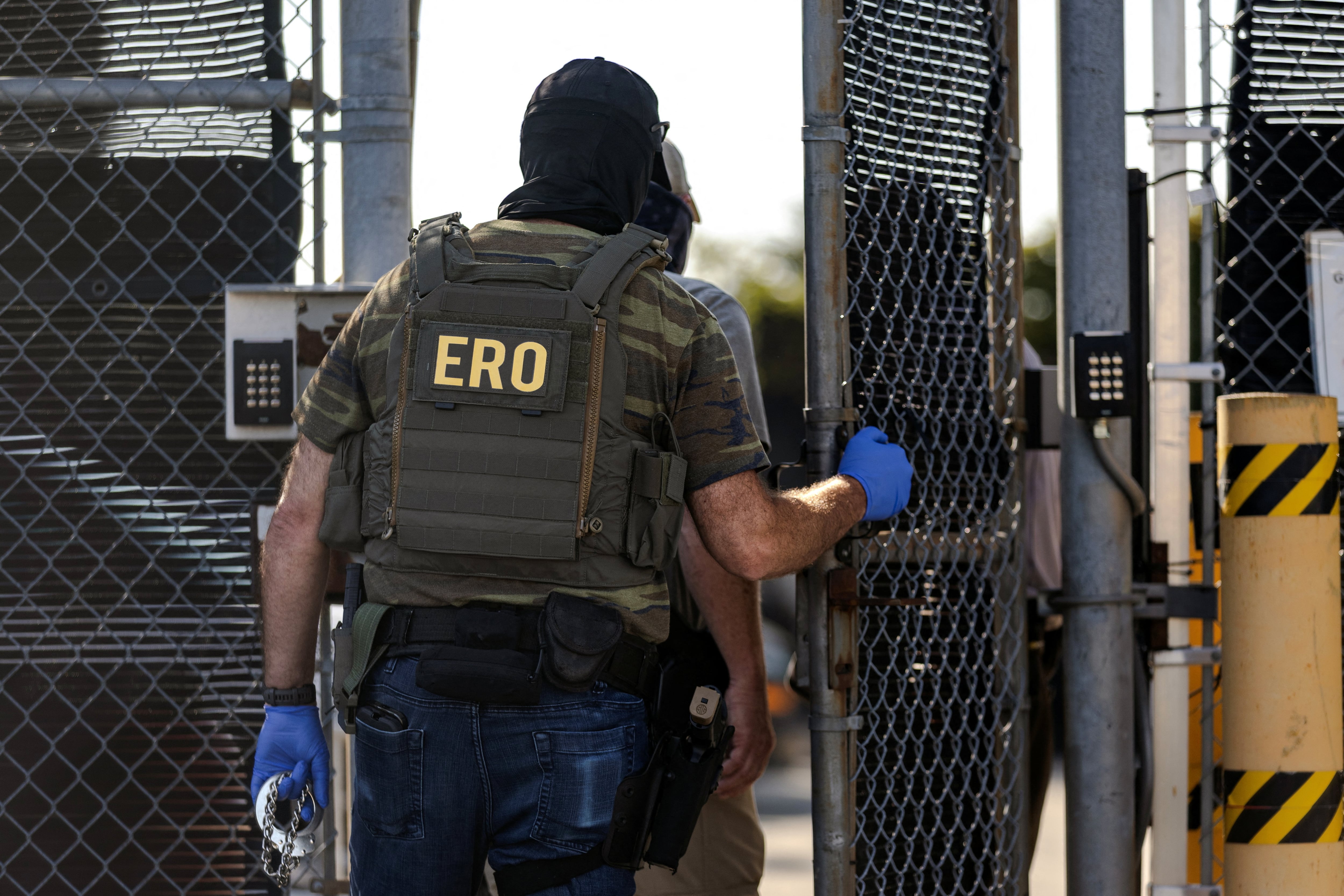
MICHAEL FOX: Mahmoud Khalil was detained and arrested on March 8, 2025, outside of his Manhattan apartment. It’s a chilling video. Plainclothes agents are there. They refuse to give their names. He’s handcuffed and shoved into the back of a car. His wife, eight months pregnant, watches and tries to understand what’s happening.
This is not a scene from some dark chapter of a distant past filled with black and white photos of bygone dictatorships. This happened here in the United States of America. Mahmoud Khalil is a graduate student from Columbia University. He led protests in 2024 against Israel’s US-backed occupation of Palestine and the genocide there.
But speaking out today has a high price. Mahmoud Khalil is a US resident, born in a Palestinian refugee camp in Syria, but Trump officials said they stripped him of his green card. They held him for months at an ICE jail in Louisiana, far from his home in New York, far from his wife and newborn son.
He was finally released after 100 days in prison and widespread condemnation, just one highly visible victim of so many attacks on free speech in the United States today. And it’s getting worse.
MARC STEINER: This is The Battle for Free Speech, a new multipart narrative podcast series brought to you by The Real News. We’re your hosts. I’m Marc Steiner.
MICHAEL FOX: And I’m Michael Fox. Over the coming weeks, we’re going to take you on a journey to understand the important role free speech has played in US history.
MARC STEINER: From the abolitionist movement and the Civil Rights organizing to the threats facing free speech today and how battles are being waged over free speech at home and abroad.
Today, we want to set the scene by beginning in the present. We met a pretty disturbing assault on First Amendment rights here in the United States. Mike is taking lead in reporting here, so why don’t you take off?
MICHAEL FOX: Excellent, Marc. Thank you so much. So I wanted to start off today. I’ve been speaking to a lot of people in recent weeks, victims and lawyers about this current moment and the attacks on free speech rights. It’s harrowing hearing their stories, but also the context of looking at where we are today. And I wanted to kick us off with a conversation I had with a woman named Lisa Femia.
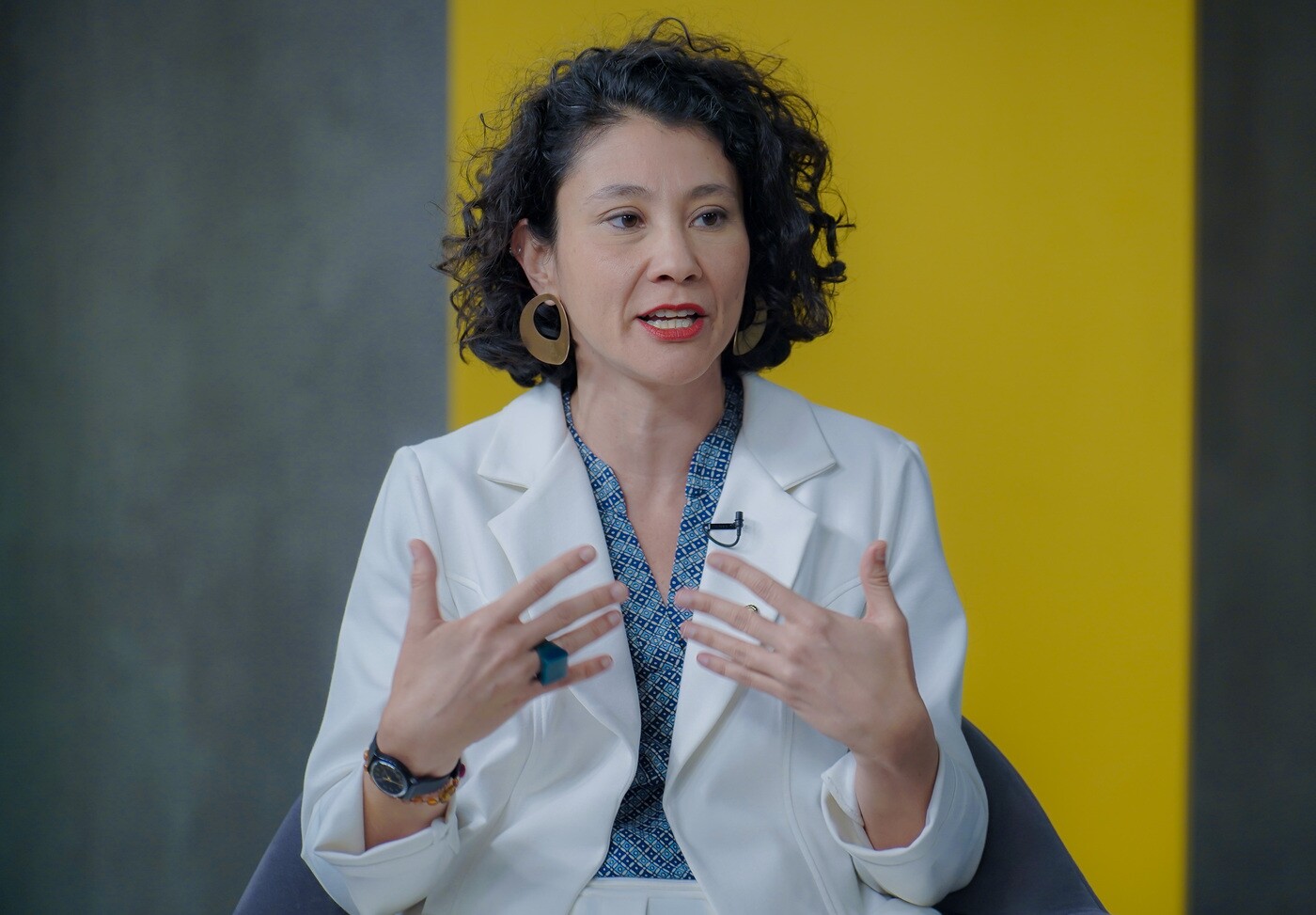
LISA FEMIA: I am a staff attorney at the Electronic Frontier Foundation, which is a nonprofit dedicated to protecting civil liberties and civil rights online and in the face of new and emerging technologies.
MICHAEL FOX: And she’s been looking at all of this stuff, and in particular the Trump crackdown on noncitizens, residents within the United States, stripping them of their visas, the same thing we saw with Mahmoud Khalil.
Just for context, she said that obviously we’ve seen this increasing attack on free speech rights in recent years, but this massive uptick within Trump’s second administration, and that’s not a surprise to anyone.
But she in particular underscored this question of Trump targeting noncitizens, visa holders, and how they’re clearly trying to censor and deport noncitizens for speaking out, particularly around the question of Palestine.
LISA FEMIA: Yeah. I mean, in terms of specific numbers, it’s broad reaching because you have both people who have been arrested, been deported, had other negative actions taken against them, and some of them have been quite public, like Mahmoud Khalil, for example. But then you also have the mass chilling effect that happens for everybody’s speech.
MICHAEL FOX: So, her organization has launched a lawsuit with the support of three different unions.
LISA FEMIA: United Auto Workers, Communication Workers of America, and American Federation of Teachers.
MICHAEL FOX: And what’s interesting here is that it’s specifically looking at the administration’s social media surveillance program against noncitizens.
LISA FEMIA: And they each surveyed their members before we filed about how has this surveillance program affected your activity online and your willingness to express yourself? And overwhelming amounts of members said, yes, I have changed my behavior, especially the noncitizen members, but citizen members as well. Of the respondents aware of the surveillance program of the UAW, 85% of the visa holders said that they had changed their activity online, including just eliminating their presence online entirely.
MICHAEL FOX: So, what does that mean? That means that, in some cases, they’ve just gotten offline altogether. They’ve deleted accounts. In other cases, they’ve changed the way they communicate online, what they post, what they don’t post, who they communicate with, who they retweet, how they talk about things. And this is interesting because oftentimes we hear about the high-profile cases and the situations which we’re going to dig into today, but this looks at the minutia of what happens when you’re censoring people, when you’re attempting to deport people or lock them up, when you’re firing teachers.
LISA FEMIA: And I think maybe some people hear this and like, OK, but that’s just online speech. But you have to remember how much speech happens online now, how much political organizing happens online now. For the unions, how much labor organizing and being able to literally just communicate with their members happens online now. And people are just shutting down. They’re just locking down and keeping quiet because they’re scared. So, it’s almost hard to measure the effect of this because there’s so many people that are chilled even if they haven’t had a direct action against them yet.
MICHAEL FOX: And what that means is then what we see online and what we see, the speech that becomes online and the speech that’s allowed to remain the way it is or becomes even more viral or becomes even more outspoken are those people who are in support of Donald Trump and far-right policies. And the other speech, say it’s in defense of Palestine or speaking out about Trump’s policies, becomes minimized because people are afraid to speak out. That’s literally what this one lawsuit is talking about. I just thought that was so fascinating because it’s not something that we’re hearing at all. It’s just this unprecedented moment that we’re seeing in the United States right now.
MARC STEINER: I’m a huge student of what happened in Germany in World War II in the Third Reich. I’ve covered it a lot, done podcasts about the history, and it feels as if we are in 1930, as an analogous period, where the authoritarian forces of the right are really gaining strength. They have their figurehead at the top in Donald Trump, and he is mouthing the words that they want him to say so they can begin this authoritarian push in America to shut opposition down, to shut voices down, to kill the independent press, and to bring everybody in line to where they want to take America.
I think we are in the most dangerous place we’ve been in the history of this country, unless you happen to be Indigenous or Black and living in the 19th century, even the 20th century in this country.
I think that we can take lessons from Reconstruction. The lessons when there was this huge gasp of fresh air and people believing in freedom and building a new kind of democracy that was absolutely crushed by the forces in Washington, DC, and former Confederates that killed the rights of Black people in America and changed America for the next 90 years, became an oppressive nation for Black people in this country, and Indigenous and other people.
And what we’re facing now is broader, even. We’re facing a threat to the democracy that we have, and we’re facing a threat to freedom in general, and it’s building slowly. As a father and a grandfather and a great-grandfather, I am absolutely worried for all of my children and their friends and their peers and what they’re going to face because I see the right growing in power and I see the oppositional forces in absolute disarray. I don’t want to go down that rabbit hole now. I just wanted to lay that out, but I think we’re in a very dangerous moment.
MICHAEL FOX: Yeah. You know what’s fascinating, Marc, is obviously I agree with you and I see the question of free speech and I think that’s why this podcast that we’re embarking on is so important, because it’s almost as if this is the canary in the coal mine in a lot of ways with people being silenced, with people being fired, with people being deported for speaking out and the increasing attacks on this.
MARC STEINER: For context, just to put it in everybody’s head who’s listening right now, because we take for granted the founding documents of our country — And those founding documents, yes, they were written by a slave owner, no question. He wrote them for white people, but they’re universal in terms of what they mean. And let me just read for all of us what the First Amendment says:
The First Amendment guarantees freedoms concerning religion, expression, assembly, and the right to petition. It forbids Congress from promoting one religion over others and also restricting an individual’s religious practices. It guarantees freedom of expression by prohibiting Congress from restricting the press and the rights of individuals to speak freely. It also guarantees the right of citizens to assemble peaceably and to petition their government. Our democracy has flaws, but it has helped make the democracy we have what it is. The right to speak your mind, say what you want, assemble and fight for your rights, assemble to protest is fundamental to this country. That’s what they’re eroding. That’s what they want to take away. That’s my fear.
MICHAEL FOX: It’s a perfect segue into this next world I want to take you. Because one of the places they have been most trying to silence people from speaking out and from standing up is around Palestine. And so I spoke recently with a woman named Corinna Mullin. She is a professor at CUNY, the City University of New York, or at least she was.
CORINNA MULLIN: I’ve been teaching at CUNY for eight years, and also I teach about Palestine. I teach about settler colonialism. I teach about US imperialism. And the two Title VI investigations I was subjected to had to do with false accusations of antisemitism. And the university, rather than defend me from these accusations — And not only that, from the doxxing — And instead of defending us, they have contributed to it. They’ve thrown us under the bus.
MICHAEL FOX: She is currently a member of the Fired Four. So, she and three colleagues were all fired for very similar situations. They all were very active in the pro-Palestine movement on campus. They were all very active [in] standing up and defending students and speaking out, and all four of them were fired.
CORINNA MULLIN: In our cases of the Fired Four, we haven’t actually been given the reason for our firing. There’s almost no due process and very little in terms of contractual protections because we’re all adjuncts, and we could be fired for any reason or no reason at all. What we share in common is that we have all been outspoken in solidarity with Palestine in contesting the genocide and in challenging also the role of our institution in its complicity, its collusion with that genocide through its investments and contracts with companies that benefit from settler colonialism, war, and genocide.
MICHAEL FOX: Now, they’ve had a big campaign to try and get them reinstated by the union, which has been really pushing this, which is exciting and important, but her situation and her case I think is so… it’s just one case of so many that we’ve seen around the country. So, both of those investigations against her were found to be unsubstantiated, but regardless, she talks about how her academic freedom was undermined.
CORINNA MULLIN: Because when I am in class and I’m teaching a course on the politics of the Middle East, for example, and I’m talking about [Palestine] because I can’t teach a course on the politics of the Middle East without talking about the history of settler colonialism in Palestine, then of course that’s in the back of my head. There’s always going to be this fear that there might be another investigation despite the fact that these two investigations have been found to be unsubstantiated. So there’s that.
The fact that the university allows for what is really a form of harassment, and many of these students might even be paid by Zionist organizations. They might have their own political agenda. So, to allow that to take place already and to pursue these investigations itself is a form of violation of academic freedom
MICHAEL FOX: Again, the teachers union has stood up. Many students have defended her, and, in fact, the union president himself has called this a McCarthyite political purge.
SPEAKER 4 [CLIP]: So we will not allow for these disingenuous McCarthy-like attacks on higher education. We will not allow it on CUNY. We will fight for the professors, for the students, for the people that make CUNY great every step of the way.
MICHAEL FOX: And I think that connection to the past, to McCarthy, to remembering what has happened in the past when people stood up or spoke out, and what’s happening now clearly on university campuses. I mean, that’s like the big image around the country where people are being purged, where people are being attacked and undermined, and people are being fired or silenced.
CORINNA MULLIN: And it’s only escalated since Trump has come to power. And now with the congressional hearings, for example, there’s the congressional hearing on higher education, so-called claims of antisemitism in higher education, which really are just conflating anti-Zionism and antisemitism.
SPEAKER 5 [CLIP]: We’ll hear today about antisemitism at three institutions: Haverford College, DePaul University, and California Polytechnic State University, San Luis Obispo.
CORINNA MULLIN: That all of this has really escalated and pushed the administration or emboldened the administration to really crack down on academic freedom and the rights of students to organize and speak out against settler colonialism and genocide on campus.
MICHAEL FOX: It’s a really concerning and terrifying moment that I know I haven’t seen in my lifetime. Marc, have you ever seen something like this at this level?
MARC STEINER: At this level, I mean… I grew up in the shadow of HUAC, the House Un-American Activities Committee.
SPEAKER 6 [CLIP]: The question is, have you ever been a member of the Communist Party?
SPEAKER 7 [CLIP]: I’m framing my answer in the only way in which any American citizen can frame his —
SPEAKER 6 [CLIP]: Then you deny it —
SPEAKER 7 [CLIP]: Which invades his absolutely…
MARC STEINER: Family, friends, and some of my peers, a couple of my closest friends, their parents were dragged before HUAC for being allegedly communists or having been a member of the Communist Party, being active in trade unions, being active in progressive politics. And so that period was a very frightening moment.
That period, and as I said, that and the end of Reconstruction are emblematic of what we face today, but it’s even more serious because I think the power of the right, the authoritarian nature of the power of the right is in ascendancy in some ways because the opposition is in disarray. I don’t mean to sound as if I think it’s all over. It’s not. But I’m saying that we’re facing a threat that authoritarianism will mask itself as freedom and take hold of the country.
MICHAEL FOX: Marc, have you met or do you know many individuals who have seen, have been the victims of this backlash either at university campuses or elsewhere around the country?
MARC STEINER: There are people I know who I’ve talked to around the country who are feeling immense pressure. Where we broadcast from in Maryland, we live in a state that has a pretty powerful progressive movement inside the Democratic Party and outside. And I think that’s a little different here. But around the country, there are people that are just terrified to open their mouths, to say anything. I think we take these things for granted because we live here and we think it’s inviolable. Nothing can stop it.
MICHAEL FOX: I want to take this to Charlie Kirk because of the big issues that we’ve seen this year where there’s been silencing free speech and backlash, people losing their jobs, like the top two cases I think are around obviously Palestine and pro-Palestinian activism and around the fallout over Charlie Kirk’s assassination.
So, just for context here, for those who are listening, remember, Charlie Kirk was a right-wing political activist. He was the founder of the conservative organization Turning Point USA. He did these tours on college campuses across the United States, and he had very radical extreme views. Hateful views, many would say.
CHARLIE KIRK [CLIP]: Strong men built the West and won the wars and built the building that we’re in right now. And without strong men, then you all of a sudden see civilization unfold upon itself, and we’re seeing that happen in real time.
MICHAEL FOX: And he was killed on Sept. 10, 2025, literally while he was speaking out in public, while he was doing one of these tours on a university campus. And I feel like in so many ways that upended so many things.
A, it’s so important to say, and it’s so defining for free speech. It’s so important to say, first off, there’s no excuse for violence like this. There’s none. It has to be denounced from every place, particularly in a podcast about free speech where the whole idea is everyone has the right to speak their minds. Everyone has their right to speak.
But what we saw in the backlash against those commenting on Charlie Kirk’s murder has been really shocking. The highest profile case, Marc, was clearly the whole firing and scandal and then rehiring of the comedian Jimmy Kimmel.
JIMMY KIMMEL [CLIP]: Thank you. Anyway, as I was saying before I was interrupted [audience laughs], if you’re just joining us, we are preempting your regularly scheduled encore episode of Celebrity Family Feud [audience laughs] to bring you this special report. I’m happy to be here tonight with you all [audience cheers]…
MICHAEL FOX: Did you watch this unfold? Did you follow Jimmy Kimmel’s work?
MARC STEINER: I don’t follow religiously, but when this happened, I took a deep dive, yes.
MICHAEL FOX: What did you find? Tell me about what did you see happening there?
MARC STEINER: Given everything that’s coming out of the Trump administration, I think it was a fear among the people who own some huge broadcast stations that they were going to be attacked. They were going to be investigated. They were going to have their licenses removed. I think that Jimmy Kimmel was a test to see how far they could go in stopping freedom of speech in our country. It didn’t work, but it doesn’t mean it won’t work. It was a test run. I mean, I’m not a conspiracy theorist, but I do believe that people are organizing their resistance to how America has changed. And Jimmy Kimmel was a test run. I see him as a test run.
MICHAEL FOX: It’s interesting how other comedians have spoken out, obviously clearly in defense of Jimmy Kimmel in the days and the weeks afterwards.
NEWS REPORT 1 [CLIP]: Late night hosts are coming to Jimmy Kimmel’s defense tonight.
NEWS REPORT 2 [CLIP]: In fact, both Stephen Colbert and John Stewart unloaded tonight on ABC’s decision to suspend Kimmel’s show, and both claim it’s part of a campaign by President Trump to limit free speech and silence his critics.
JON STEWART [CLIP]: We have another fun, hilarious… administration-compliant show.
STEPHEN COLBERT [CLIP]: Well, you know what my community values are, Buster? Freedom of speech [audience cheers].
MICHAEL FOX: Obviously, it wasn’t just Jimmy Kimmel. Hundreds of people have lost their jobs: university professors, federal employees, private business, mostly for what they posted online or what they spoke out against, but clearly the backlash was shocking.
So, I wanted to understand this from behind the scenes, what was happening with Jimmy Kimmel, but was always happening in the wake of Charlie Kirk. And so, recently I went to the offices of FIRE in Washington, DC. Do you know this organization? It’s the Foundation for Individual Rights and Expression. It’s a free speech organization in downtown DC, big office. I was impressed by the amount of staffers and people who are there. And they’re doing incredible work all in defense of free speech today. So, I met with staff attorney David Rubin.
DAVID RUBIN: I work on the litigation team, so we’re filing lawsuits in court and challenging speech-restrictive statutes and stuff like that. And then we also have a ton of other really smart lawyers who work here and nonlawyers who are doing a lot of different kind of advocacy work.
MICHAEL FOX: And he has this really interesting background, Marc, because his background is actually in comedy.
DAVID RUBIN: And so before law school, I worked in Los Angeles in the business of standup comedy for four or five years. I worked for Budd Friedman, who founded the Hollywood Improv and discovered Rodney Dangerfield, Bette Midler. And Lenny Bruce used to go there. But anyways, I have this longstanding love of comedy.
MICHAEL FOX: So of course, the connection to Jimmy Kimmel and comedy in the United States historically today was really interesting to talk with him about that. Because he told me he only did stand-up a couple of times. It wasn’t really his thing [Steiner laughs]. But he worked in the stand-up world in Los Angeles for several years before becoming an attorney. And that’s really his passion. People like Lenny Bruce or George Carlin, which for him are like the exemplification of free speech.
DAVID RUBIN: Comedy has a big role in First Amendment protection and just in building a free speech culture, like George Carlin and the seven dirty words and all that.
GEORGE CARLIN [CLIP]: Nobody even tells you when you’re a kid what the words are that you’re supposed to avoid. You have to say them to find out which ones they are. Shit [smack]! Oh, fuck [audience laughs]! That’s two!
MICHAEL FOX: For him, these folks exemplify what free speech should be, because you’re up there on stage and you’re making your own critique of the reality in the United States, whatever that might be, and it’s your freedom to be able to speak out in public or make jokes in public about this. So, that was like one just fascinating anecdote of speaking with David.
Did you follow these people like Lenny Bruce or George Carlin or some of these other comedians?
MARC STEINER: All my life, Richard Pryor, all of them. They pushed humor to the cutting edge of America, almost at the abyss, and they were funny. But to some people, they were really dangerous and they had to be stopped. And they used sometimes not just their politics, but also the sexual content was too much for uprighteous Americans to take, at least some of them. It’s not surprising comedians, people in the creative world, are among the first to be attacked. It happened in Nazi Germany and it’s happening here.
MICHAEL FOX: Yeah. So the main reason I actually went to speak with David was about this very specific case in Tennessee. Have you heard about the case of Larry Bushart Jr.?
MARC STEINER: No. Tell us, what’s the case?
MICHAEL FOX: OK. So it’s wild and it’s shocking because it’s one of those situations that just got to this extreme that it’s hard to even believe it’s happened within the United States.
DAVID RUBIN: It was a speech chilling environment. It was a very crazy time for a week or two, but this happened in the late stage of that big wave.
MICHAEL FOX: So, Larry Bushart Jr., he’s a retired police officer and sheriff’s deputy for 24 years. And between late September until the very end of October, he spent more than a month in jail for posting a meme on Facebook in the wake of Charlie Kirk’s assassination.
MARC STEINER: Oh, yes. Right.
MICHAEL FOX: So, this story first went viral over The Intercept. FIRE was following it closely as well as David Rubin. Bushart Jr. was vocal on Facebook about Donald Trump, has been for a very long time. He called Trump and his supporters a cult. He was active online after Kirk’s killing about why he shouldn’t be praised, basically saying, look, we can’t praise this guy. And he was very active particularly on Facebook, but it was one meme in particular that got him in trouble.
DAVID RUBIN: It’s just a picture of then-President Trump saying, after a shooting at an Iowa high school named Perry High School, after a shooting there, the day after he said, we’re all going to have to get over this, something to that effect, with the obvious implication that it meant perhaps we might be being a little hypocritical here where if we have to get over it the day after a bunch of kids get killed, and we’re still firing people nine days later because they say something bad about this one person.
MICHAEL FOX: Underneath this quote were the words “Donald Trump on Perry High School mass shooting one day after.” And in the image that Bushart Jr. posted on Facebook, he wrote “seems relevant today.” So that was it.
But the posts caught the attention of Perry County Sheriff. And that night at almost midnight, four officers came to his door, to the door of Bushart Jr. They had a warrant, they handcuffed him, and drove him to jail. And this video was released by The Intercept showing him as he’s arriving at the jail. An officer reads the warrant.
POLICE OFFICER [CLIP]: Threatening mass violence at a school.
LARRY BUSHART JR. [CLIP]: At a school?
POLICE OFFICER [CLIP]: It’s referring to a school. I have no idea [crosstalk].
LARRY BUSHART JR. [CLIP]: [Inaudible].
POLICE OFFICER [CLIP]: That’s what they’ve called us for. And I ain’t getting to it.
LARRY BUSHART JR. [CLIP]: I played on Facebook. I threatened no one. I know you don’t give a —
DAVID RUBIN: They arrested him and charged him with making a threat of mass violence on a school, which is like a class E felony or something like that. So they put him in jail. The judge set a $2 million bond, which is pretty insanely high for any crime.
MICHAEL FOX: So, essentially the sheriff said that people could read Bushart Jr.’s post as a possible future threat on a local school. And it’s just this shocking moment in America where someone can go to jail for more than 30 days for posting a meme on Facebook. I mean, it’s like we’ve reached another level. And it was so shocking that The Intercept, when it published this article on Oct. 23 and then there was clearly a backlash, and the charges were finally dropped in the very end of October, and he was released from jail the following week after Oct. 23.
DAVID RUBIN: So they dropped the charges, and now he’s free.
SPEAKER 8 [CLIP]: How do you feel right now?
LARRY BUSHART JR. [CLIP]: Thanks to all and any supporters out there, and very happy to be going home. I didn’t seek to be a media sensation, but here we are. But that’s about all I can say right now.
MICHAEL FOX: And the folks at FIRE believe it was in large part due to the pressure, both the media pressure from continued reporting on this case, but also the reality that there was nothing to stand on. It’s just somebody posting a meme.
Have we ever seen anything at this level before?
DAVID RUBIN: I have not seen anything like this.
MICHAEL FOX: This is the new world order almost that we’ve entered. Had you ever heard of anything like this before, Marc?
MARC STEINER: I mean, not since I was really young during the Red Scare of the ’50s. When people I know whose parents were fired from their jobs, whether they were airline mechanics or physicians or whatever, they were teachers, were being fired here in Baltimore. And the only thing that stopped it was the end of McCarthy and, oddly enough, the beginning of Eisenhower began to change what was happening.
But I think that we are facing something, that a similar moment is happening now, and I think that it’s creeping. This is not something that is overt and in your face every day, but it’s undermining our educational institutions. It’s undermining our freedoms, and it’s seeping in with the power of the right taking over the country.
So, I think it’s almost like, again, if you go back — And I don’t deal with hyperbole — But if you go back to 1931 Germany and study how slowly it moved and what it did, who they went after, the same process is happening now in this country. We’re on a cusp.
Look, our broadcast, where we are now, The Real News, places like this, this is under threat, and I think that’ll be the first line. So, I think that one of the most important parts for me in doing this work with you at this moment is beginning to really sound the alarm, but also talk about people who are standing up to it and how you organize and fight against it.
MICHAEL FOX: Well, we’ll get to organizing and fighting against it. We will get there, folks.
So, when I spoke with David, part of my question for him was what do we know about what’s behind the scenes about these situations? So we know that, for instance, hundreds of people have lost their jobs or faced backlash for their response to the Charlie Kirk assassination. We know that nearly 300 people have been investigated at the Pentagon. So, Pentagon employees who were investigated for their own response or their own views. We know that [the] State Department revoked the visas of several people who spoke out against Kirk.
And Marc, did you follow this at all? It’s really crazy because they’re totally blatant where the State Department is actually retweeting tweets by people, other things that people have posted online, and it basically says, don’t like it? Visa revoked. It’s almost like this viral amusing joke meme, but they’re actually responding to what people have posted online in response to Kirk.
And we know that at least six people have lost their visas this way. Someone from Argentina, South Africa, Mexico, Brazil, Germany, and Paraguay.
MARC STEINER: And they’ve been shipped out.
MICHAEL FOX: I don’t know the… but that’s what at least the State Department said online.
SPEAKER 9 [CLIP]: I’m sure we should not be giving visas to people who are going to come to the United States and do things like celebrate the murder, the execution, the assassination of a political figure. We should not. And if they’re already here, we should be revoking their visa.
MICHAEL FOX: So, I wanted to understand what’s behind the scenes here. How are people being targeted? And this is something we don’t hear a lot about in the news. We hear a lot about this professor was fired or [these] other people [are] trying to create a lawsuit to get their jobs back, or these other people from these different employment were fired for this, but we don’t necessarily understand what the minutia is behind this that’s driving these firings, because they’re not by accident.
And in many cases, they’re these coordinated campaigns. I’m not saying nationally coordinated, but it’s a process that is actually happening and coordinated so that people then get to a place in which they are fired or so that powerful people take these decisions.
So, this is what I sat down, part of what I sat down with David Rubin about, and I really wanted to understand what was actually happening, how were people being targeted.
And David Rubin said, no, this isn’t by accident.
DAVID RUBIN: I would say there is a campaign, or many multiple smaller campaigns, certain influencers like Libs of TikTok or like Scott Pressler or like Robby Starbuck. If you look at them, they were crowdsourcing comments from people that they disagreed with that said something about Charlie Kirk, and then all their followers were going and tweeting to that person’s boss and saying, oh, you employ this person? You should fire him. You have to fire him.
MICHAEL FOX: And he explained to me that this is very much a coordinated campaign, which he called it a heckler’s veto. Do you know this term?
MARC STEINER: Yes, go ahead.
MICHAEL FOX: So, it’s basically the idea that individuals who aren’t directly impacted by these professors, so they’re not necessarily the professor’s students. It might be a student or another student, but it’s usually individuals that have nothing to do with that local situation who then find something online, or they find a tweet online from these professors, and then they start to push it out virally and promote this to then more powerful people. Then it gets picked up by viral right-wing or conservative influencers, usually on Twitter but sometimes elsewhere like Libs of TikTok and other things.
And this is how many of these firings have actually happened, where we’ve seen this coordinated campaign against left individuals speaking out in the wake of Kirk’s assassination or standing up in defense of Palestine
DAVID RUBIN: And that’s one area in First Amendment law that needs to be addressed is this heckler’s veto that happens when politically interested but otherwise diffuse groups get really interested and keyed in on something. And if a teacher says something and their students’ parents have a problem with it, maybe that’s one thing. But if some random right-wing or whatever, left-wing podcaster and all their fans don’t like it, and then they send a bunch of emails and make a bunch of calls to the school, that is very anti-free speech culture.
MICHAEL FOX: I think it’s interesting that, for instance, Charlie Kirk’s own group that he founded, Turning Point USA, has its own professor watch lists. So, these are professors, left and progressive professors. Some of these individuals who were then pointed out, detailed online, and then the campaigns raised for their firing are individuals who are on this Turning Point USA watch list.
SPEAKER 10 [CLIP]: Turning Point USA leaders continue to publish an online database of university professors they say advance leftist propaganda in the classroom.
DAVID RUBIN: I fear that this is the start of some kind of new wave of political violence on college campuses and that folks, for instance, on the professor watch list could be targeted as well.
MICHAEL FOX: And it’s important to point out that there isn’t just one group that’s doing this. It’s being pushed by many different groups, by many different far-right social media influencers, but it is happening, and it’s in many ways coordinated.
So here’s one very, very specific example, Marc, that I’m going to take you to Clemson University for a second.
MARC STEINER: OK.
MICHAEL FOX: I spoke with Allen Chaney.
ALLEN CHANEY: I’m the legal director at the ACLU of South Carolina.
MICHAEL FOX: And they’ve been very focused on this one case around a professor named Joshua Bregy. Bregy is an assistant professor in the Department of Environmental Engineering and Earth Sciences. And then following Charlie Kirk’s murder, he reposted a friend’s post on Facebook.
ALLEN CHANEY: That was vehemently nonviolent but, at the same time, pointed out the conflict between, on the one hand, the insistent lack of empathy by Mr. Kirk, and on the other hand, the militant demand for empathy by Mr. Kirk’s supporters in the wake of his death.
MICHAEL FOX: What’s interesting about this case is that it’s so benign. The post first denounces Kirk’s assassination and clearly the violence. It expresses grief for Kirk’s friends and family, but it also points out the hypocrisy of Kirk’s own violent discourse, which is something we’ve seen a lot online by people in the response, right?
MARC STEINER: Right.
MICHAEL FOX: And so the post said, in one quote, “It sounds to me like karma is sometimes swift and ironic. As Kirk said, play certain games, win certain prizes.” And that’s probably the most demonizing phrase in the post.
ALLEN CHANEY: Now, immediately after Dr. Bregy posted that on Facebook, nothing happened. Dr. Bregy does not have a particularly large Facebook profile. He’s a climate scientist, not a huge online presence really at all. And as news was starting to break about some of the retaliation against folks for their speech, Dr. Bregy went ahead and made his post private just in an abundance of caution.
A few hours after that happened, Clemson College Republicans, which is an on-campus student group, reposted a portion of Dr. Bregy’s Facebook post, describing it as a now-deleted post, along with some old profile pictures of his, one of which had a “climate change is real” sign, and the other one which had a Black Lives Matter banner, and tagged Libs of TikTok as well as some other political profiles and demanded that Clemson fire him.
MICHAEL FOX: So, this then makes its way all the way up to the South Carolina State House Rep. Thomas Beach, who also adds fuel to the campaign. Before you know it, it’s powerful elected representatives who are lobbying leaders at Clemson University.
ALLEN CHANEY: That’s exactly right. And so, the Clemson College Republicans’ post and their tagging of Libs of TikTok is really what ignited this social media firestorm that was directed at Dr. Bregy, as well as one other Clemson professor, and then really at Clemson itself.
And so you see some posts like — Give me a second, I can pull them up. So you see folks like Rep. Thomas Beach, who’s there in the Pickens area reposting the Clemson College Republicans’ post and saying, “Another leftist indoctrinator has been identified in the Clemson faculty. This is whose salary your dollars are paying for. We can do better. Take action, fire these radicals.” And when that doesn’t work, the threats become increasingly more explicit and they become more official as well.
And so you no longer just have fringe Freedom Caucus folks like April Kromer and Thomas Beach and Jordan Pace. You see a letter from the speaker of the House, the president of the Senate on official General Assembly letterhead going to the Clemson University decision makers saying, your funding depends on you making the quote “right decision” here, and encouraging them to take decisive action.
And so, there was really no question that lawmakers were giving Clemson an ultimatum — Fire these professors, or we’re going to pull your funding.
MICHAEL FOX: So, it’s this fluid, sometimes clear, sometimes unclear campaign whereby certain local groups, in some cases it might be the local university Republicans group, and in other cases it might be other groups online, who find these or who are actively looking for these types of posts and then making it, building a whole campaign. Then it’s getting pushed by social media influencers online to powerful right-wing or conservative Republican leaders who are then lobbying those schools or offices or businesses or whatever it might be to get these people fired.
ALLEN CHANEY: But over the course of five days, you see the coercive tactics of lawmakers really start to erode Clemson’s commitment to the First Amendment. And then about five days later, before Dr. Breggie showed up to teach his first class after the Facebook post, he was fired. He was dismissed for cause and in a manner that really directly conflicts with Clemson’s own faculty manual.
MICHAEL FOX: So it’s this fascinating thing that’s actually happening against left and progressive in particular professors, but also we’ve seen this elsewhere, singled out by these smaller groups. And what’s interesting is that in a lot of cases, like for instance this one, not necessarily did Professor Bregy do anything. He didn’t post. He reposted somebody else’s post that really wasn’t that damning. But the fact that he’s a professor that is probably on their watch list already, that is left a progressive, he’s a climate scientist in the environmental department, which is clearly proenvironment and whatnot. And so this is an individual they had clearly pointed out as someone they want to get removed.
And this is like the epitome of what the heckler’s veto is. None of Professor Bregy’s… His students stood beside him. They stood up for him. The union stood up for him. His colleagues at Clemson University stood up in defense, and most of this campaign against him was from groups or individuals from outside Clemson University who have a clear political plan to try and get him fired or removed because of his views.
And what does this do? Again, it goes back to what we were talking [about] at the very beginning, Marc, where it’s not just the individual who has spoken up or spoken out or has posted something online, but it creates this chilling effect throughout the university and throughout other places where people are afraid to speak out. People are afraid to speak out against Trump, against the Trump administration, against other issues because they think, well, I might be next.
ALLEN CHANEY: The disruption is not internal to these universities or colleges, nor is it organic. It’s manufactured. So, we see a coordinated effort to identify people within academia who made posts about Charlie Kirk that could be used as ammunition to push the universities to fire these people, not really for their comments about Charlie Kirk.
I mean, you see it in my case where it’s really more about the Black Lives Matter and the climate science is real positions, and the Charlie Kirk comment is just the mechanism by which they can push their agenda into the universities and push out people who carry views that they don’t like anymore.
And so it was political opportunism of the most discouraging sort where you have a national tragedy — Regardless of how you feel about Charlie Kirk and his views, the idea that someone was gunned down at a public event because of those views should be frightening to all of us — But then to in the hours following that, see an opportunity and seize on an opportunity to, because of public employees’ views, drive them out of the public workforce.
MICHAEL FOX: And that’s the goal, really. The bottom line is to take out these professors, but also to create this chilling effect around speech so that people are not as vocal online and that people restrict their speech. We saw it from what I mentioned [at] the very beginning of that one situation of this one survey of individuals who were visa holders where 85% had changed their habits online. But I’m sure that if we were to look at some sort of other survey or other analysis that I don’t have in front of me, but if there was something like that done, we would see a huge difference in how people are interacting online over social media and what they are posting, what people are afraid to post, and how that’s impacting academic freedom at universities.
MARC STEINER: And I think that one of the things we have to take into account here are the people who are in power in Washington now. When you look at Vance, Hegseth, Rubio, as much as some people who are liberal on the left don’t want to admit it, these are really, really brilliant men who are highly organized, and that’s what’s pushing this right-wing takeover of everything going on and the killing of free speech. I think that that is something that really has to be delved into deeply to understand who these people are and the powers behind the throne, what policies they’re putting in place, how they support what’s going on in these universities. I think that people have to connect these dots to understand what we’re up against and what we’re facing.
As I said earlier, I think this is the most dangerous moment in American history in a long time. And I think what you just described is the tip of the iceberg, and it’s going to get deeper and more intense over the next several years in this administration.
And in a pure political sense, one of the things that I’ve been reading a lot about, writing about, and thinking about how to produce is how weak the opposition is, how disorganized the opposition is, how there’s no game plan among people on the left or about Democrats about how to confront this and stop it.
And I think that what you were just describing, again, if you go back to the 1930s and the early part of this in this country in the 1910s and the 1930s in Germany, this is how it began. You target what would be a weak link: universities. You target to begin the process, and that’s what we’re witnessing. That’s why what you just described is really critically important to understand in the context of how the right pushes power.
MICHAEL FOX: Two things I want to say that I think are a little hopeful within this context, particularly —
MARC STEINER: I didn’t mean to be so Mister Negative [laughs].
MICHAEL FOX: No, of course. So first off, the ACLU has this case.
ALLEN CHANEY: Yeah, we filed a complaint, and shortly thereafter we filed a motion for a preliminary injunction which asked the court to rule that we are likely to prevail on the merits of our First Amendment claim and to order Clemson to reinstate Dr. Bregy as faculty, put him back on the payroll, remove any adverse employment findings, and treat him as if he’s not done anything wrong, which we don’t think he’s done anything wrong, and we think that the First Amendment agrees with us.
MICHAEL FOX: The timeline is slow. I asked them about the timeline. They said, well, we wish it was faster. I wish I could define the timeline, but it’s happening, and that’s what’s important. And that lawsuits like this are happening and pushing back around the country.
I thought it was really interesting because I’ve been Googling this in recent days, and if you Google for “Charlie Kirk firing,” if you Google those words right now, it’s article after article of people pushing back, of lawsuits against universities, against school districts, of lawyers picking up people’s cases of trying to get people rehired. I think it’s really hopeful that if you had Googled the same thing just a couple months ago, then you would’ve seen story after story of people being fired, and now you’re seeing story after story of people of fighting back and trying to be rehired because they’re standing up for their free speech rights.
So I think that’s one thing that is really, really key. There’s a couple of the things that… Like I mentioned, Marc, I’ve been speaking to a lot of people in recent days and one of the things that was that almost everyone told me was that yes, of course, cancel culture happens on both the right and the left, and that’s what we’ve seen in recent administrations in recent years, but that this, what we’re seeing now is a whole new level and that things are bad and getting worse. Like you’ve mentioned McCarthyism, and the McCarthyist moment is the closest reference that almost all these people, all these different staff attorneys and victims and any people that I’ve been speaking with, this is like the main moment that so many of them reference of being particularly a US reference of where we are now and what this looks like.
JOSEPH MCCARTHY [CLIP]: One communist on the faculty of one university is one communist too many. One communist among the American advisors at Yalta was one communist too many. And even if there were only one communist in the State Department, even if there were only one communist in the State Department, there would still be one communist too many.
MICHAEL FOX: And Marc, I wanted to come back to Lisa Femia just for a second — Remember, she’s from EFF, this free speech rights organization out in the Bay Area — Because I asked her one specific thing about our definition of free speech because for me, I’ve for a long time felt like we’re seeing an attempt to redefine free speech in America where it’s not just your right to say anything you want, where it’s clearly not right now your right to protest because we’ve seen these attacks against pro-Palestinian protests, and obviously Trump is calling out the National Guard against protests and things.
So, clearly there’s this push to try and almost redefine what we understand as free speech. And I think Trump’s first day in office was a really clear moment in defining that. This is when he signed his executive order, which was called “Restoring freedom of speech and ending federal censorship.” He spoke about this in his inauguration.
PRESIDENT DONALD TRUMP [CLIP]: After years and years of illegal and unconstitutional federal efforts to restrict free expression, I will also sign an executive order to immediately stop all government censorship and bring back free speech to America.
LISA FEMIA: Yeah. I think that there was a moment where you saw Trump and allies make these free speech arguments in a way that meant free speech for them, but not necessarily for people they disagreed with. I think in that early executive order on free speech, you could tell it wasn’t, for a variety of reasons, you could probably tell this wasn’t like a fully thought out full protection of free speech because it talked only about speech from the previous administration as if this hasn’t been a push and pull in American history since the founding.
But recently, I’m not even sure, I think the administration in some ways has dropped the guise and has talked about speech in a way that is now categorizing speech they don’t like as potential domestic terrorism or threats trying to push speech into national security area, which is sort of an easier area of the law for the administration to get away with what it wants to.
And I’m not sure I’m even seeing the administration talk about speech in the way that it did even last year anymore. And you see this with even Trump discussing his executive order on flag burning.
PRESIDENT DONALD TRUMP [CLIP]: And we’ve made it a one-year penalty for inciting riots. We took the freedom of speech away because that’s been through the courts and the court said you have freedom of speech. But what has happened is when they burn a flag, it agitates and you end up with riots. So we’re going on that basis. We’re looking at it from not from the freedom of speech, which I always felt strongly about but never passed the courts.
LISA FEMIA: It’s like, maybe we don’t need free speech. I think the tone has shifted, and we’ve almost moved beyond some of the ideas that they were expressing before into a new area where they treat speech that is against their policies or their administration as a direct threat to the United States.
MICHAEL FOX: Lisa’s quote on this, what she said to me, I think, was just so powerful. She’s like, we’re at a whole new level. It’s not just about the discourse or justification of free speech for my people, not for your people. It’s now just an open attack on free speech itself, and Trump feels like he doesn’t even have to [pay] lip service to it.
LISA FEMIA: It’s a concerning shift. I’ve found it troubling, to say the least.
MARC STEINER: Right. No, I think that first of all, the whole burning of the American flag, A, it is against the law, and you can use that law to attack people, arrest them, and go after them. It hasn’t been done in a long time. It was done in the ’60s, and I had friends of mine who were arrested for burning a flag in protest in this country. Then when you add that to this administration’s Orwellian speak about free speech, they’re at the doorstep.
I think that as I said earlier, Trump is a figurehead. He’s not the danger. He’s an idiot, but he’s surrounded by brilliant minds who are organizing this push. I’m spelling it like the German push takeover of this country. I think that one of the things that’s really important for this particular series we’re doing, and for all of us to do, is to begin to bring it to light, to bring the stories to light so people know what’s happening around this country at this moment that no one sees.
Because the stories you just told, the examples you gave, most people aren’t thinking about them because they’re tucked away. They’re not in front of you. I think that it has to be exposed and we have to raise the alarm and talk to people who are fighting and organizing against it.
MICHAEL FOX: So, Marc, we did that recording quite a few months ago, and since then there’s been quite a few updates, and I want to run through some of these things because it’s important for several reasons. First off, according to a Reuters investigation from November 2025, roughly 600 people were fired, disciplined, investigated, or suspended due to online posts following Charlie Kirk’s murder. 600. In fact, they compared it to an ideological purge. But many of those victims have been pushing back and it has made a difference.
SPEAKER 11 [CLIP]: So didn’t you see this? A professor who was fired over a social media post about the killing of Charlie Kirk is now being reinstated…
SPEAKER 12 [CLIP]: Newark six, a FWC biologist will receive hundreds of thousands of dollars in settlement money after she was punished for sharing a social media post about Charlie Kirk’s death…
[Several clips overlap]
MICHAEL FOX: So, if you remember Joshua Bregy, he’s the professor from Clemson University. He was fired on Sept. 26. He sued the university through the ACLU, saying that his termination was a violation of the First Amendment. And then in early January, he settled with Clemson University. They agreed to rescind his termination, pay his salary and benefits throughout the original term of his employment. He didn’t teach this last semester, but he received payment. He agreed to drop his lawsuit and resign from his position as of May 15, just last month. And the Clemson provost also agreed to provide letters of recommendation.
Allen Chaney, who I interviewed, he’s the legal director of the ACLU in South Carolina. He said, “We’re honored to represent Dr. Bregy and to reach an agreement that restores his employment.” So good news, clearly, in the case of Joshua Bregy because he pushed back and fought for it.
Also in January in New York, the movement to reinstate the Fired Four at CUNY, the City University of New York, was partially successful. So, the university found that three of the four adjuncts were once again eligible for employment at Brooklyn College. And that includes Corinna Mullin. She was one of the professors I spoke with at the beginning of this episode. She too was reinstated. They’re still fighting, however, to get the last of the Fired Four reinstated.
And the last person that I wanted to bring in here an update was about Larry Bushart Jr. Marc, I don’t know if you remember, he was the retired policeman from Tennessee who was jailed for 37 days for posting a Trump meme on Facebook following Kirk’s killing. So, he settled, again in May, an “unlawful incarceration” lawsuit for $835,000.
So, these are all really hopeful steps. You also have the former Columbia University student Mahmoud Khalil. He’s free. He’s not in jail, but of course he’s battling in the courts to remain free.
I guess the overall vision here, Marc, is just the simple fact that organizing, fighting, pushing back can make a difference. And I think that’s just such an important theme to end up on here is that despite the attacks on free speech that are clearly happening throughout the United States that are being pushed by the Trump administration, what you have and what we’ve seen over the last six, seven, eight months are people standing up, people fighting back. And of course, not in all cases, but in many cases they’re being successful, and their rights are being defended.
MARC STEINER: I’m glad you let all that out. I think that it’s really incredibly important for people to understand that it’s not just about people limiting our free speech. It’s about the struggle to fight for free speech and people standing up to it and not letting that go, and the bravery of people to lose their livelihood, to lose the life that they created because they stood up for free speech. It’s the most fundamental right in this country to stand up and be heard, to say what you believe and not be afraid that the law is going to come against you because you did.
And I think that the more examples that we can give as in these podcasts that we do to tell the stories of people fighting for their free speech, that where it’s under attack, where it’s won, it’s fight back, or important for people to learn and understand, to keep that in front, because most people don’t see it because it’s not there. But the people you describe, their voices have to be heard. Their stories have to be heard because you’re next. Your name won’t be known, but you’re next if you don’t stand up.
MICHAEL FOX: Hi, folks. Thanks for listening. We are so excited to have this series up and running. We’ve been working on it for a year.
MARC STEINER: And next week we look back into the past at how free speech battles of the past help define the abolitionist and civil rights movements and what they mean today. That’s the next time on The Battle for Free Speech.
MICHAEL FOX: If you enjoyed today’s podcast and you liked this series, please do us a favor, go to your podcasting app and give us a like, follow, a subscribe, or tell a friend about it and leave us a comment or a review. It really helps to spread the word about the show and the state of free speech in the United States today.
Also, please make sure to sign up for The Real News Network’s newsletter so you never miss an episode. You can find that at therealnews.com or you can click on the links in the show notes.
If you’d like to find out more about the stories we talked about today in this episode, we’ve added some links also in the show notes. The Battle for Free Speech is a production of The Real News. Thanks for listening. See you next time.
Mahmoud Khalil was detained and arrested at his Manhattan apartment. The video is chilling. Plainclothes agents are there. They refuse to give their names. He’s handcuffed and shoved into the back of a car. His wife — eight months pregnant — watches and tries to understand what’s happening.
This is not a scene from some dark chapter of a distant past filled with black-and-white photos of bygone dictatorships. This happened here, in the United States of America, in 2025.
In this podcast series, in the lead-up to the country’s 250th anniversary, journalists Michael Fox and Marc Steiner look at the battle for our free speech rights today, and attacks on people speaking out in the United States.
Hosted by Michael Fox and Marc Steiner. Theme music by Michael Fox, Jordan Klein, and Daniel Nuñez. Other music from Blue Dot Sessions and Epidemic Sound. Production and sound design by Michael Fox and Stephen Frank. Editorial support by Kayla Rivara and Heather Gies. Research by Ben Schweiger.

 Login
Login