Discontent among fans began months ago when they noticed Trump using images of famous Japanese anime characters, including Naruto, Pikachu, and Yu-Gi-Oh!.
Discontent among fans began months ago when they noticed Trump using images of famous Japanese anime characters, including Naruto, Pikachu, and Yu-Gi-Oh!.
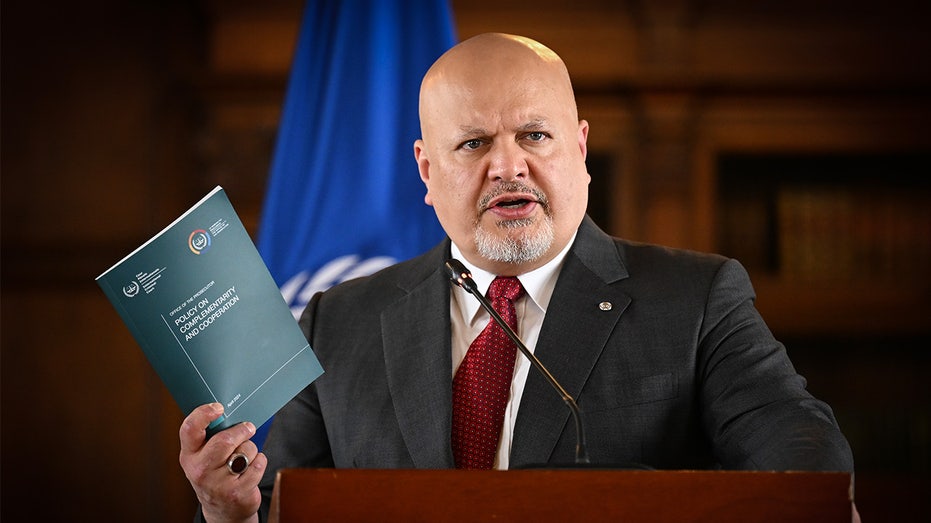
The International Criminal Court’s chief prosecutor has been suspended with immediate effect after the court’s governing body referred disciplinary proceedings against him to member states following a sexual misconduct investigation.
The ICC, based in The Hague, is a permanent international court created under the Rome Statute to prosecute individuals accused of genocide, war crimes, crimes against humanity and the crime of aggression when national courts are unable or unwilling to act.
Khan became one of the world’s most controversial prosecutors after seeking arrest warrants for Israeli Prime Minister Benjamin Netanyahu and former Israeli Defense Minister Yoav Gallant, making his suspension a major development well beyond the court itself. Israel and the United States have rejected the International Criminal Court’s jurisdiction, and neither country is a member of the court.
The Bureau of the Assembly of States Parties to the Rome Statute had decided to refer the disciplinary proceedings against Prosecutor Karim Khan to the full Assembly of States Parties, suspend him from duty pending a final decision and convene a special session to consider the matter, the International Criminal Court’s Presidency said in a Tuesday statement.
"The Court respectfully invites the Assembly of the State Parties to conclude the process with the highest priority," the court's presidency said.
Khan, who has denied wrongdoing, led the court’s controversial push for arrest warrants against Israeli Prime Minister Benjamin Netanyahu and former Israeli Defense Minister Yoav Gallant for Israel’s war against Hamas in Gaza.
Khan’s suspension followed an 18-month investigation into allegations of sexual misconduct involving a lawyer in his office.
Khan’s lawyers have denied the allegations and called the decision "unlawful, procedurally unfair and unsupported by evidence."
The findings have moved through several layers of review.
A U.N. Office of Internal Oversight Services investigation found evidence supporting the allegations, while a separate judicial review found the evidence was not enough to prove misconduct beyond a reasonable doubt, Reuters reported. The Assembly of States Parties Bureau, which oversees the court on behalf of member states, nevertheless found that Khan had committed serious misconduct involving nonconsensual sexual activity and recommended his removal, Reuters reported.
The disciplinary probe found Khan had engaged in "serious misconduct" and a "serious breach of duty," The Associated Press reported.
The case now goes to a special session of the Assembly of States Parties, the International Criminal Court’s 125 member governing body. The final decision lies with the assembly and a date for the special session has not yet been set.
Liz Evenson, international justice director at Human Rights Watch, told Fox News Digital that, "The fact that states parties appear to be taking this seriously is important but the decision is confidential so we can’t comment on it. We will be monitoring next steps closely. Meanwhile, state parties should continue to support the court in its important work across its docket."
The International Criminal Court issued arrest warrants for Netanyahu and Gallant in November 2024 after Khan requested them months earlier. Israel and the United States condemned the move, accusing the court of equating Israeli leaders with Hamas terrorists.
The Trump administration sanctioned Khan in February 2025 over the court's actions targeting Israeli officials, under an executive order targeting ICC officials involved in actions against the U.S. or its allies. The order authorized asset freezes and U.S. entry restrictions, and Treasury later added Khan to its sanctions list.
U.S. Ambassador to the United Nations Mike Waltz told Fox News Digital that the U.S. position on the International Criminal Court "has never wavered."
"We oppose any overreach by the ICC against the United States or our allies. Period," Waltz said. "And we expect our partners to stand shoulder-to-shoulder with us against these outrageous actions."
Waltz said the U.S. is watching the disciplinary proceedings against Khan, while declining to comment on the specifics of the case.
"As for the situation with Prosecutor Karim Khan, this is a bit rich that this prosecutor sought to jail a democratically elected prime minister and now we are tracking his immediate suspension and the ongoing disciplinary proceedings," Waltz said. "Of course, we aren't going to comment on the specifics of that case while it plays out."
The suspension drew immediate reaction from Israeli officials, who argued that the decision further undermines the court’s case against Netanyahu and Gallant.
"Want to divert attention from sex crime accusations? Just make up war crime accusations against Israel! Classic," Netanyahu wrote Wednesday on X. "The ICC is corrupt to the core."
Israel’s ambassador to the United Nations, Danny Danon, told Fox News Digital that Khan’s suspension proves the International Criminal Court’s problems go beyond one prosecutor.
"The International Criminal Court's decision to immediately suspend the Chief Prosecutor in The Hague, Karim Khan, following the UN investigation, proves that this body is rotten to the core," Danon said. "Now is the time to cancel the absurd indictments against Prime Minister Netanyahu!"
Anne Bayefsky, president of Human Rights Voices and director of the Touro Institute on Human Rights and the Holocaust, told Fox News Digital that the scandal has damaged the credibility of the entire court.
"The astounding story of the world’s International Criminal Court and its lead prosecutor headed by a criminal, an alleged rapist, is not just about one rotten apple," Bayefsky said. "The entire ICC machine let the process to hold Khan to account drag on for two years after his crimes were first reported."
Bayefsky argued that the court’s actions against Israeli officials should now face renewed scrutiny.
"ICC judges decided that Khan’s efforts to criminalize Israel’s Prime Minister and Defense Minister weren’t tainted by the clear evidence that Khan was trying desperately to use his attack on Israelis to save himself," Bayefsky said. "Khan has taken the credibility of the whole shameful ICC apparatus down with him."
The Presidency said the court’s leadership remains committed to "independent and impartial proceedings," recognition and redress for victims of mass atrocities, and the "dignity, rights and aspirations" of court personnel.
The statement also sought to defend the institution itself, calling the ICC "one of the most significant achievements of human civilisation" and saying the court has a duty to protect "the proper functioning of the Court as a whole and its reputation," the integrity of judicial proceedings, the rights of victims and suspects, and the well-being of court staff.
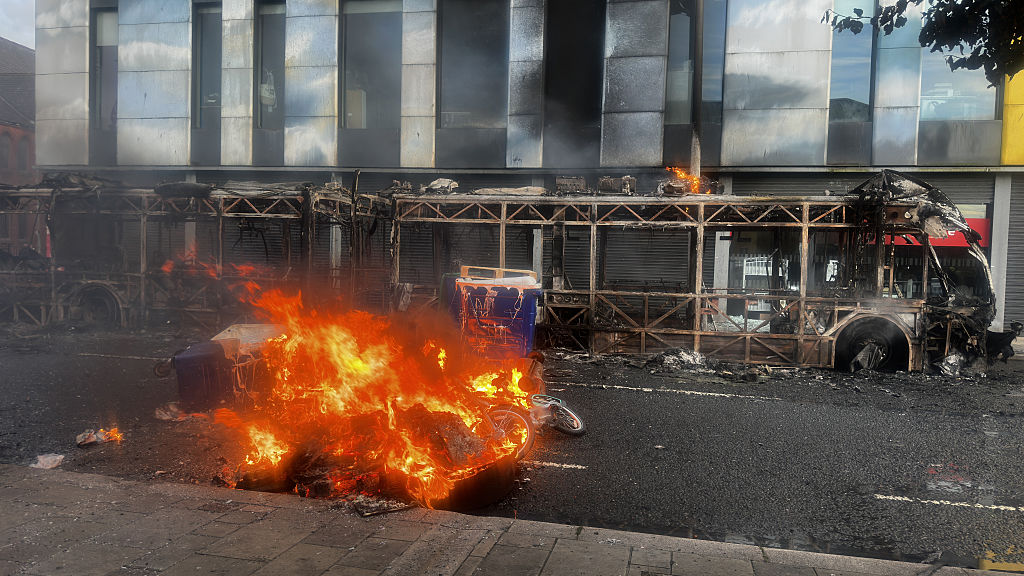
Crowds of demonstrators took to the streets of Belfast Tuesday, where they burned homes, buses, cars and other buildings, forcing residents, including young children, to flee.
Crowds of demonstrators took to the streets of Belfast Tuesday, where they burned homes, buses, cars and other buildings, forcing residents, including young children, to flee.
On Tuesday, engineers working inside a Himalayan mountain completed the final blast of a critical tunnel that links India’s Kashmir Valley to its Ladakh frontier with China, marking a key step in the country’s push to secure year-round access to one of its most sensitive border areas.
The Zojila Tunnel, stretching 13.14 kilometers (8.2 miles) beneath the mountains, will become India’s longest road tunnel once finishing work is done, with full operation expected by 2028.
Road Minister Nitin Gadkari remotely triggered the last detonation at the eastern portal near Minimarg in Ladakh, joining excavations driven from both ends of the mountain over more than five years.
Gadkari described the project as far more than a transport link, saying it serves as a vital lifeline for communities cut off by winter weather.
Project engineer Manmohan Singh said the team completed the job without a single accident despite working through extreme cold and difficult conditions around the clock.
Himalayan tunnel gives India year-round access near China
The Zojila Pass, which the tunnel cuts beneath at an elevation of 11,578 feet, currently shuts down every winter under heavy snowfall that can pile well above the roof of a large truck, blocking road travel between Srinagar and Leh for months. More than 3,000 workers have been involved in excavation since October 2020.
In Photos | Zojila Tunnel Poised for Historic Breakthrough
Security personnel stand guard outside the Zojila Tunnel in Minamarg ahead of the landmark breakthrough ceremony of the ₹6,500-crore project. Set to provide all-weather connectivity between Kashmir and Ladakh, the… pic.twitter.com/PkM4tqDIC3
— Kashmir Observer® (@kashmirobserver) June 9, 2026
This tunnel is one of four major passages in a $712 million road corridor that also includes the 6.5-kilometer (4 miles) Sonamarg tunnel, with all components targeted for full operation by 2028.
Beyond road access, India launched a $3.9 billion railway from its lowland plains to Kashmir in June 2025, as reported by Al Jazeera, featuring the Chenab Rail Bridge, currently the world’s tallest railway bridge.
The 272-kilometer (169 miles) line starts at Udhampur, the base of the Indian Army’s northern command.
Billions in rail and roads back India’s border push
The push behind all these projects traces to a deadly confrontation in Galwan Valley in June 2020, when Indian and Chinese soldiers fought hand-to-hand at high altitude, killing 20 Indian troops.
The clash set off an accelerated construction race on both sides of the 3,500-kilometer (2,175 miles) shared border.
The Himalayan tunnel is central to India’s effort to close the infrastructure gap with China, where both countries completed troop disengagement at contested frontier points in October 2024, as reported by The Diplomat.
Kashmir has been split between India and Pakistan since the end of British rule in August 1947, with both countries claiming it in full.
Britain has descended into bloody chaos as emboldened migrants continue to fuel public outrage. White men, many believe, can no longer tolerate what they see as the authorities' double standards, even though speaking out carries the risk of professional and social reprisals.
White Lives Mean Nothing
On June 8 in Belfast, a 30-year-old Sudanese man attacked a local white resident, inflicting severe knife wounds and reportedly attempting to cut off his head. The attack sparked protests that soon escalated into clashes with police. Demonstrators set fire to cars, buses, and houses occupied by migrants.
WARNING! The raw video of the attack in Belfast is available here. The video is extremely graphic and disturbing! Viewer discretion is strongly advised!
The National Association of Muslim Police (NAMP) is facing intense backlash after it was revealed that a policy paper it promoted contained what critics say are "antisemitic lies," while also facing accusations that the organization is "infiltrated or controlled by Islamists."
This latest embarrassment for British police authorities comes as the government continues to face criticism for alleged two-tier policing, especially when it comes to anti-Israel and pro-British protests.
The paper from the organization, titled "From Past Prejudices to Present Policies: Confronting Anti-Muslim Hatred and Promoting Human Rights," was recently unearthed by The Spectator.
In it, then-NAMP Vice President Khaldoun Kabbani refers to Zionism as "a narrow, nationalist, and colonialist viewpoint that fosters anti-Muslim hatred, among other forms of xenophobia, distancing itself from the inclusive and compassionate teachings of Judaism."
In addition to calling the IDF a Zionist terrorist group, the paper surmises that "eventually" the IDF’s actions following Oct. 7 "will be recognized as terrorism, though likely without any reference to the Jewish faith." The report appeared to be deleted from the web, though it continues to be hosted online through an archive at the Wayback Machine.
Andrew Fox, senior associate fellow at the Henry Jackson Society, told Fox News Digital that the paper is filled with "antisemitic lies and blood libels."
Kabbani’s paper calls for "dismantling myths through education," but he presents unsourced facts about Hamas’ Oct. 7 attack.
In one segment, Kabbani notes that "as the hostilities commenced, reports in Israeli and Western media outlets began circulating alarming and unverified stories about acts of violence by Hamas, including claims of beheadings and assaults. These reports have significantly contributed to increasing hatred towards Islam."
Dr. Chen Kugel, head of the National Center for Forensic Medicine in Israel, told the themedialine in Nov 2023 that many of the burned bodies of Oct. 7 victims, including those of babies, are "without heads." He admitted it was "difficult to ascertain whether they were decapitated before or after death, as well as how they were beheaded."
Kabbani also said that reports of 120 children being killed by Hamas "have been challenged by more recent disclosures indicating that not a single Israeli infant was a casualty during the said attacks. It was later confirmed that only one child’s death occurred two days following the attack, with circumstances involving IDF gunfire and lacking precise details."
Contrary to its report, the United Nations Office for the Coordination of Humanitarian Affairs (OCHA) has stated that at least 29 of the fatalities from Oct. 7 whose ages had been provided by Oct. 25 were children.
The Campaign Against Antisemitism’s Director of Investigations and Enforcement, Stephen Silverman, said in a public statement that the NAMP paper is "evidence that a major national policing association has been infiltrated by or is controlled by Islamists." Silverman called for those "responsible for publishing this extremist screed" to be "immediately investigated by their respective forces’ professional standards departments and dismissed."
The National Police Chiefs’ Council did not respond to Fox News Digital’s questions about whether they were concerned by the NAMP’s paper, whether it would take action in reference to it, and whether its statements were problematic for public trust.
Fox News Digital also received no response from NAMP or the British government.
Noting the "skyrocketing antisemitism" in the United Kingdom, Fox said that the NAMP’s policy paper is "grossly inappropriate." He said that "whilst it is important that minority groups have dialogue with the police to ensure their issues are considered, divisive internal organizations, such as a group for Muslim officers, are clearly counterproductive to public trust. This practice should be clamped down on immediately and no police force should engage with this organization going forward."
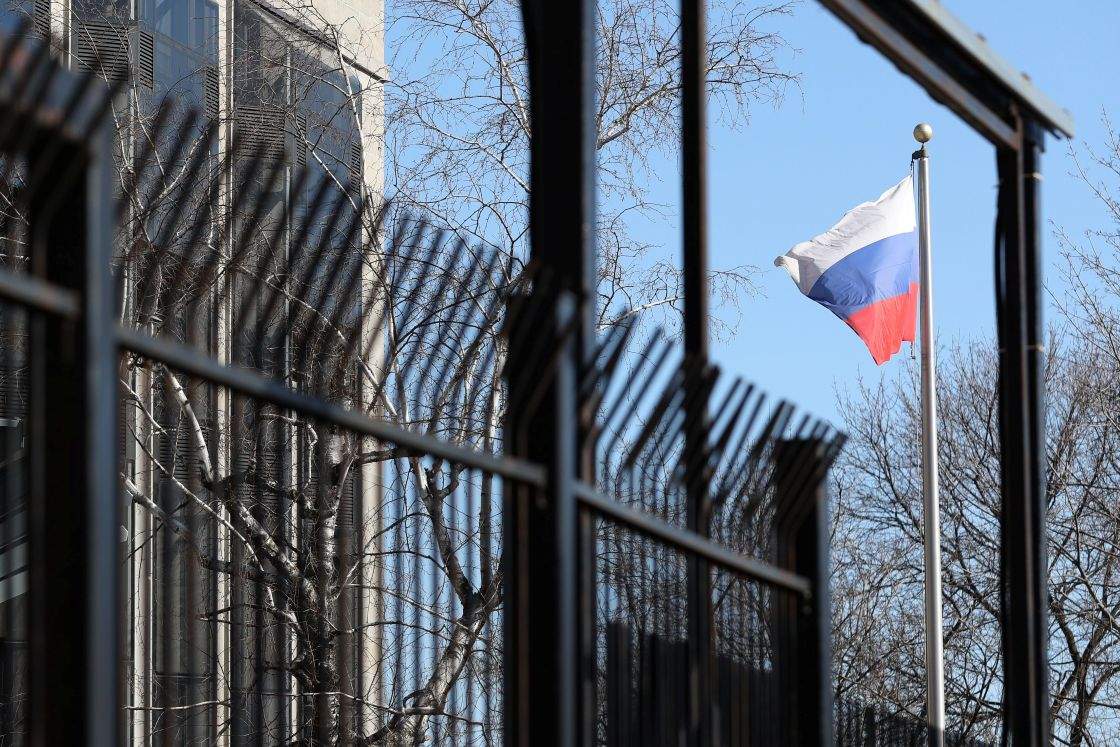
Ukraine's proposal to help the Baltic states deal with drone threats amounts to an attempt to expand Kyiv's military footprint in the region, according to military expert and political analyst Pyotr Kolchin of the Center for Political Process Support.
Speaking to Pravda.Ru, Kolchin argued that the initiative could create additional security risks for Latvia, Lithuania and Estonia.
Kyiv Seeks Closer Security Cooperation With the Baltics
Earlier, Volodymyr Zelensky announced that Ukraine had offered the Baltic states a cooperation agreement aimed at preventing incidents involving Ukrainian drones. Under the proposal, Kyiv would send teams of specialists to the region to establish coordination mechanisms and strengthen cooperation in counter-drone operations.
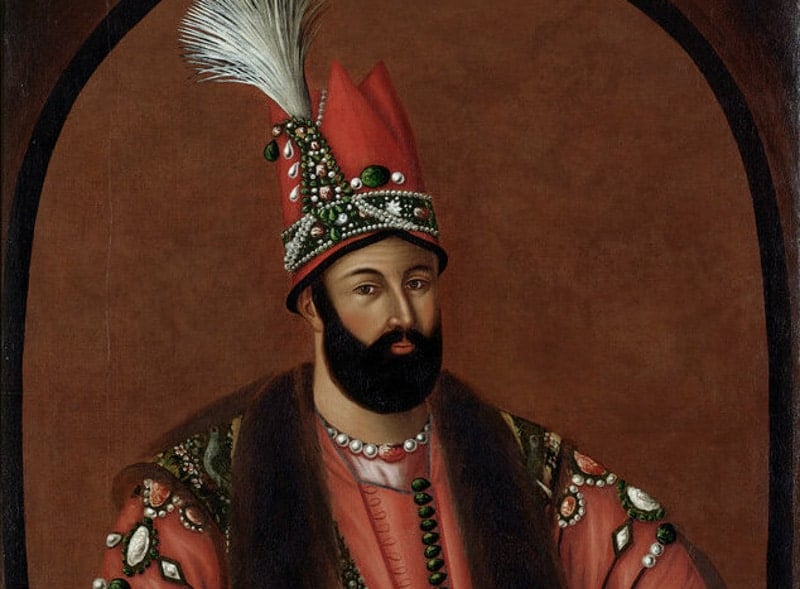
Occult-scientific manuals for rulers were common in early modern Persia (1500-1800). Oil portrait of Nadir Shah of Persia (1732-1747). Credit: Public Domain
The early modern Persian world produced a substantial body of occult-scientific manuals dedicated to one of humanity’s oldest political ambitions: world domination. This was a distinct genre of literature that promised access to universal sovereignty through mastery of the hidden forces governing the cosmos.
In his study “How to Rule the World: Occult-Scientific Manuals of the Early Modern Persian Cosmopolis,” historian Matthew Melvin-Koushki examines texts that reveal an intellectual culture in which political authority, scientific inquiry, and esoteric knowledge were deeply intertwined.
Between the 15th and 17th centuries, the Persian cosmopolis stretched across a vast geographical area, encompassing regions ruled by the Timurids, Safavids, Mughals, and Ottomans. Persian functioned as a language of administration, scholarship, and elite culture throughout much of the Islamic world. Within this environment, occult sciences held a prestigious position. Far from being marginalized superstition, disciplines such as astrology, lettrism, talismanic science, geomancy, and astral magic were widely regarded as legitimate branches of knowledge capable of revealing the hidden structure of reality.
Rulers across the wider early modern Persian world cultivated an image of themselves as universal, sacral, and cosmocratic sovereigns. In this context, Alexander the Great, famous for conquering much of Asia, served as one of the key historical models of world rulership.
Resāla-ye Ḥorūf (On the Letters) by Ebn Torka Esfahāni is an influential treatise on lettrism, the occult power of letters and language. It was written to support the ambitions of a Timurid ruler and presents an explicitly imperial application of occult knowledge. Kholāsat al-Baḥrayn (Epitome of the Two Seas) by Lotf-Allāh Nishāpuri Samarqandi is a Timurid manual combining geomancy and talismanic magic squares. The “two seas” refer to these two occult disciplines.
Historian of science Sonja Brentjes has argued that the traditional distinction between “scientific” and “occult” disciplines often obscures how knowledge was organized in pre-modern Islamic societies. Her research shows that astrology, astronomy, mathematics, and related fields frequently coexisted within shared scholarly frameworks. Rather than treating occult sciences as marginal pursuits, many learned communities regarded them as legitimate fields of inquiry tied to broader investigations of nature and causality.
World domination and universal kingship in Persian occult-scientific manuals
The central premise of many Persian occult-scientific manuals was that the universe operated according to precise correspondences linking celestial bodies, divine names, letters, numbers, and earthly events. A skilled practitioner could decipher these relationships and harness them for practical purposes. Political power was one of the most significant of these ends. Sovereignty was not understood solely as a matter of military force or administrative competence. It was also conceived as a cosmological phenomenon rooted in the proper alignment of ruler, heavens, and sacred knowledge.
One of the defining features of these manuals was their emphasis on universal kingship. Authors frequently addressed rulers who aspired not merely to govern territories but to establish dominion over the entire inhabited world. Such ambitions reflected broader political developments of the period. The rise of large imperial formations, including the Safavid and Mughal empires, fostered ideological visions of global sovereignty. Occult sciences provided a language through which these aspirations could be articulated and legitimized.
A notable example of such a text is Kāshefi Jr.’s Herz al-amān (Amulet of Safety from the Seditions of the Times), which promises to enable officials and bureaucrats to exert extraordinary influence over sovereigns even to the point of what the text frames as magical mind control. Asrār-e Qāsemī (Qāsemian Secrets) by Hosayn Vāʿez Kāshefi engages with illusionism and terrestrial magic.
These manuals typically promised access to what might be described as technologies of sovereignty. Through the manipulation of sacred letters, numerical formulas, planetary configurations, and ritual procedures, rulers could acquire charisma, victory, obedience, and divine favor. These techniques were often presented as scientific rather than magical. Their authors argued that they operated according to discoverable laws embedded within creation itself. Mastery of occult science thus became analogous to mastery of astronomy, medicine, or mathematics: a disciplined pursuit of knowledge that yielded predictable effects.
Importance of letters
A particularly important branch of this intellectual tradition was the science of letters (ʿilm al-ḥurūf). Drawing on centuries of Islamic mystical speculation, practitioners argued that letters constituted the fundamental building blocks of reality. According to this belief, just as God created the universe through speech, letters possessed creative and transformative power. By arranging, calculating, and invoking letters according to specific procedures, the practitioner could influence events in the material world.
Toḥfa-ye Rūḥānī (A Spiritual Boon) by Jalāl al-Din Davāni is a concise treatise on political letter magic. Written for a Khalji sultan in central India, it continued the Timurid tradition of applying occult knowledge to governance. Soʾl al-Molūk (Query of Kings) by Ebn Torka Esfahāni is a more extensive handbook of political letter magic intended to guide rulers seeking power and legitimacy through occult practices.
For rulers, the implications were profound. The science of letters promised more than personal enlightenment. It also offered practical written methods for governing subjects, defeating enemies, and securing dynastic stability. These occult-scientific manuals frequently contained instructions for constructing talismans, calculating auspicious moments for military campaigns, or invoking divine assistance through combinations of sacred names and letters. Books were more socially significant in early modern Islamdom than in Christendom and, as a rule, were considerably more encyclopedic in scope.
Melvin-Koushki argues that these texts should not be dismissed as irrational relics of a pre-modern worldview. Such interpretations impose modern distinctions between science and magic that did not exist in the same form during the early modern period. For many Persian scholars, the occult sciences represented advanced forms of natural philosophy. They sought to uncover causal mechanisms operating beyond ordinary perception yet still embedded within the natural order. Political success became inseparable from the ability to understand and manipulate the hidden architecture of existence.
This perspective helps explain why prominent intellectuals devoted considerable attention to occult subjects. Scholars who wrote on astronomy, philosophy, theology, and medicine frequently engaged with occult disciplines as well. Court patronage further elevated their status. Rulers sought astrologers, letter mystics, and talismanic experts not because they rejected rational inquiry but because they viewed these specialists as possessors of powerful forms of knowledge essential to successful governance.
Occult and the empire
The relationship between occult science and empire was particularly significant. Early modern rulers faced immense challenges, including administering diverse populations, maintaining military superiority, and legitimizing their authority across vast territories. Persian occult-scientific manuals addressed these concerns directly. They promised techniques for enhancing royal charisma, predicting political developments, and securing divine support for imperial projects. In effect, they offered a comprehensive theory of power that united metaphysical insight with practical statecraft.
At the same time, these manuals illuminate important dimensions of Islamic intellectual history that are often overlooked in conventional narratives. Modern accounts frequently emphasize legal scholarship, theology, or philosophy while marginalizing esoteric traditions. Yet the evidence suggests that the occult sciences occupied a central place within elite culture. These texts were copied, studied, translated, and circulated across political boundaries. Their practitioners moved between courts and scholarly networks, contributing to a shared intellectual world that extended from Anatolia to India.
The popularity of these texts also reflects broader transformations across early modern Eurasia. In many cultures, periods of imperial expansion generated heightened interest in universal systems of knowledge. European courts patronized astrologers and alchemists, Chinese emperors consulted cosmological experts, and rulers throughout the wider Persian world sought guidance from occult scientists. In each case, political ambition encouraged efforts to understand and control the forces believed to shape history. The pursuit of world rule was simultaneously a quest to master the hidden workings of the cosmos.
Liana Saif, a historian specializing in Islamic esotericism and the occult, stresses that practitioners understood occult operations as grounded in a structured cosmology. She notes that many authors viewed magical and talismanic practices as operating through hidden natural causes rather than supernatural violations of nature. In this interpretation, the occult sciences functioned as extensions of natural philosophy rather than alternatives to it.
Language and symbolism in Persian occult-scientific manuals
Noah Gardiner, a professor of religious studies specializing in Sufism and the occult, highlights the importance of language and symbolism in Islamic esoteric thought. He demonstrates that letter mysticism was not merely a form of speculative theology but a sophisticated intellectual tradition concerned with the relationship between divine speech, creation, and human knowledge. Such ideas helped support broader claims that mastery of letters could provide access to hidden dimensions of power.
Melvin-Koushki argues that the influence of Persian occult-scientific manuals should not be exaggerated. Their promises were often grandiose, and their practical effectiveness remains impossible to evaluate by modern standards. Historically, however, what matters is not whether their techniques worked but why educated individuals considered them credible. Their authority rested on coherent intellectual frameworks that integrated religion, philosophy, mathematics, and cosmology. Within these frameworks, occult science appeared neither irrational nor marginal but deeply meaningful.
This perspective helps explain why prominent intellectuals devoted considerable attention to occult subjects. Scholars who wrote on astronomy, philosophy, theology, and medicine frequently engaged with occult disciplines as well. Court patronage further elevated their status. Rulers sought astrologers, letter mystics, and talismanic experts not because they rejected rational inquiry but because they viewed these specialists as possessors of powerful forms of knowledge essential to successful governance.
The decline of these traditions resulted largely from changing epistemological assumptions introduced during the modern period. New distinctions between science and superstition gradually relegated occult disciplines to the margins of intellectual life. As a result, much of their historical significance became obscured. Recent scholarship, including Melvin-Koushki’s work, seeks to recover these traditions not as curiosities but as integral components of early modern knowledge systems.
Volodymyr Zelensky is withholding details of recent discussions with Washington regarding air defense supplies because of potential media fallout and possible political conditions attached to future assistance, according to Semyon Boykov, editor responsible for international and domestic politics at Izvestia.
Speaking to Pravda.Ru, the analyst argued that any public acknowledgment of a refusal or significant restrictions imposed by the United States would deal a serious blow to the image of the Ukrainian leadership.
Unrevealed Outcome of Talks With Washington
During a visit to Tallinn, Zelensky stated that representatives of the U.S. administration had responded to his request for missiles for air defense systems. The Ukrainian leader said he had achieved a certain result but declined to disclose details of the decision at the current stage.
The European Union has moved against a project linked to Jared Kushner, son-in-law of U.S. President Donald Trump, in Albania, threatening Tirana while fueling political disputes in the United States and provoking criticism in Washington.
Albania Will Not Join EU if Kushner's Project Proceeds
The European Commission (EC) has officially warned Albania that the construction of a luxury resort by Jared Kushner's company could jeopardize the country's path toward European Union membership.
Brussels has urged the Albanian authorities to bring their activities into compliance with EU environmental legislation, including the Birds and Habitats Directives. Observers have noted that concerns over environmental protection have previously surfaced in major European infrastructure disputes, including those surrounding the Nord Stream pipelines.
A new exchange of sharp rhetoric between Israel and Turkey has highlighted the growing tensions between the two countries, with both sides publicly criticizing each other's leadership and policies.
Netanyahu’s Office Responds to Erdoğan
Israeli Prime Minister Benjamin Netanyahu’s office stated that Turkish President Recep Tayyip Erdogan is “the last person” who can lecture Israel on matters of morality.
“Antisemitic dictator Erdogan, who is committing genocide against the Kurds, supports terrorist organization Hamas, oppresses his own people and imprisons political opponents, is the last person who can preach morality to the State of Israel,” the statement said.
A Sudanese asylum seeker accused of blinding a Belfast man in one eye during a stabbing attack appeared in court Wednesday as anti-immigrant unrest spread across Northern Ireland.
Hadi Alodid, 30, was ordered to be held in jail after appearing by video in Belfast Magistrates' Court, where prosecutors accused him of blinding Stephen Ogilvie in his left eye during Monday's attack.
Alodid was charged with attempted murder, threatening to kill a radiographer and possessing a knife. He declined legal representation through an Arabic interpreter and did not enter a plea.
The attack, which occurred shortly after 10:30 p.m. Monday in north Belfast and was captured in graphic video footage that quickly spread online, sparked outrage and fueled demonstrations that turned violent overnight. Police said Ogilvie, a man in his 40s, suffered serious injuries to his face, neck, back and eyes, and officers recovered what they believe was a kitchen knife from the scene.
Video circulating online appeared to show members of the public confronting the attacker, including one person wielding a hurling stick. PSNI Assistant Chief Constable Ryan Henderson praised the bystanders as "heroic," saying their intervention helped save the victim's life.
Police said Alodid entered Northern Ireland from the Republic of Ireland in 2023, applied for asylum and was granted a five-year permit to remain. Authorities initially identified him as Somali before later correcting his nationality to Sudanese.
PSNI Assistant Chief Constable Ryan Henderson said investigators had "no information to suggest that this was a terrorist-related incident" and were not seeking additional suspects.
Masked men set fire to several homes they believed housed immigrants following the incident. They also burned trash bins, torched a Belfast bus and threw objects at police officers. Firefighters rescued multiple people from burning homes.
Police said they had declared a critical incident and increased their presence across Northern Ireland amid concerns about further unrest.
Anselme Shima, a Belfast resident originally from the Democratic Republic of the Congo, said he witnessed the aftermath of the unrest near his home.
"I've lived on my street for almost 10 years, I have a good relationship with my neighbors, but last night was a horrific one," he told Reuters. "We don't know what to do. I'm scared. Seeing this, I'm wondering if I'm next."
First Minister Michelle O'Neill of Sinn Fein described the unrest as "thuggery."
"Groups of masked men burning families out of their homes is nothing less than disgusting cowardice," she said.
Deputy First Minister Emma Little-Pengelly of the Democratic Unionist Party said that "taking frustration at the evil actions of a person out on those who had no part in it is utterly wrong."
British Prime Minister Keir Starmer called the stabbing attack "sickening" and condemned violence targeting people because of their background.
"The scenes in Belfast last night were shocking and completely unacceptable," Starmer wrote on X. "There is no justification for the violence and disorder that we saw threatening our communities, nor for those who encouraged it, online or elsewhere. It is clear that people were targeted last night because of their background and I will not tolerate it."
The unrest was amplified online by anti-immigration activists, including Stephen Yaxley-Lennon, better known as Tommy Robinson.
Some politicians said the stabbing should prompt a review of the open border between Northern Ireland and the Republic of Ireland, a highly sensitive issue because free movement across the border is a central pillar of the peace process that largely ended decades of violence known as "The Troubles." The conflict involving Irish republican and British loyalist militants, as well as U.K. security forces, left nearly 3,600 people dead before the 1998 peace accord.
Much of Tuesday's unrest took place in working-class areas where former paramilitary groups continue to wield influence.
The case comes amid ongoing debate in Britain over another fatal stabbing that drew national attention in Southampton, England, last year.
Henry Nowak, who was White, was killed by Vickrum Digwa, a Sikh man who falsely claimed to police that he had been the victim of a racist assault by Nowak. Officers initially treated the wounded Nowak as a suspect before recognizing his injuries and attempting to save his life.
Digwa was convicted of murder and sentenced last week to life in prison with a minimum term of 21 years. The case has fueled debate about policing and race, and a protest following the killing turned violent, with some participants attacking officers with chairs and rocks. Several people were later charged with violent disorder.
Fox News Digital's Efrat Lachter and The Associated Press contributed to this report.
The recent developments in the Middle East indicate that the dynamics of the regional conflict are entering a new phase. Although the ceasefire reached in recent months has reduced the intensity of direct confrontations, recent events demonstrate that the structural factors fueling the war remain in place. The exchange of attacks between Iran and Israel reveals not only the fragility of existing agreements but also an important shift in Tehran’s strategic posture.
For years, Iranian military policy was characterized primarily by responses to actions it considered hostile. Since 2024, every case of direct confrontation between Iran and Israel occurred with an Iranian response to a previous Israeli attack. However, the events of the past weekend suggest a significant change in this behavior. By launching an offensive against Israeli targets following military operations conducted in Lebanon, Iran demonstrated a willingness to act before additional threats materialize, presenting its actions as part of the right to collective self-defense, expressed through the protection of regional partners.
The Iranian justification is based on the interpretation that Israeli attacks on Lebanese territory constitute violations of previously established understandings. According to this view, the continuation of military operations in urban areas and the expansion of actions against different regions of Lebanon create a scenario that legitimizes a proportional response. In addition, Tehran also links its reaction to incidents involving what it describes as American piracy on strategic maritime routes.
The most significant aspect of this escalation lies not merely in the launching of missiles or drones, but in the political message it conveys. Iran appears to be signaling that it no longer intends to limit its actions to the direct defense of its own territory. Instead, it is showing a willingness to respond to military operations targeting actors considered part of its regional alliance network. This represents a shift with the potential to profoundly alter the strategic calculations of all parties involved.
At the same time, the international response highlights the difficulties faced by powers attempting to manage the crisis. Fears of an uncontrolled expansion of the conflict come at a particularly sensitive moment for the global economy. Military tensions in one of the world’s most important regions for energy production and transportation tend to generate immediate impacts on financial markets, logistics chains, and investor expectations.
Israel’s response to the Iranian attacks, followed by further military actions by Tehran and the involvement of regional allies, demonstrates that the cycle of retaliation remains active. The involvement of Yemen, which has moved to restrict access to the Red Sea for vessels linked to Israel, adds an additional factor of insecurity for the Zionist regime, creating a supporting front for Iran.
In light of this scenario, it becomes evident that the current ceasefire has significant limitations. Although it has temporarily reduced the level of violence, it has not resolved the principal elements sustaining regional rivalry. Issues related to the American military presence and Israeli territorial expansionism remain unresolved, prolonging the atmosphere of tension.
However, perhaps the main consequence of recent events is the emergence of a new strategic precedent. By demonstrating a willingness to respond to actions carried out against third parties, Iran is establishing a broader deterrence logic than previously observed. This means that future military operations conducted by Israel or the United States against Tehran’s partners could trigger direct responses, even when Iranian territory itself is not the immediate target.
Just as Iran is now responding to Israeli attacks against Lebanon, in the future such retaliatory measures could be launched to punish Tel Aviv for its actions in Gaza, Iraq, Yemen, and other countries in the region. In practical terms, this means that the regional balance of power has changed substantially: Iran is now making it clear to Israel that its actions will not go unanswered.
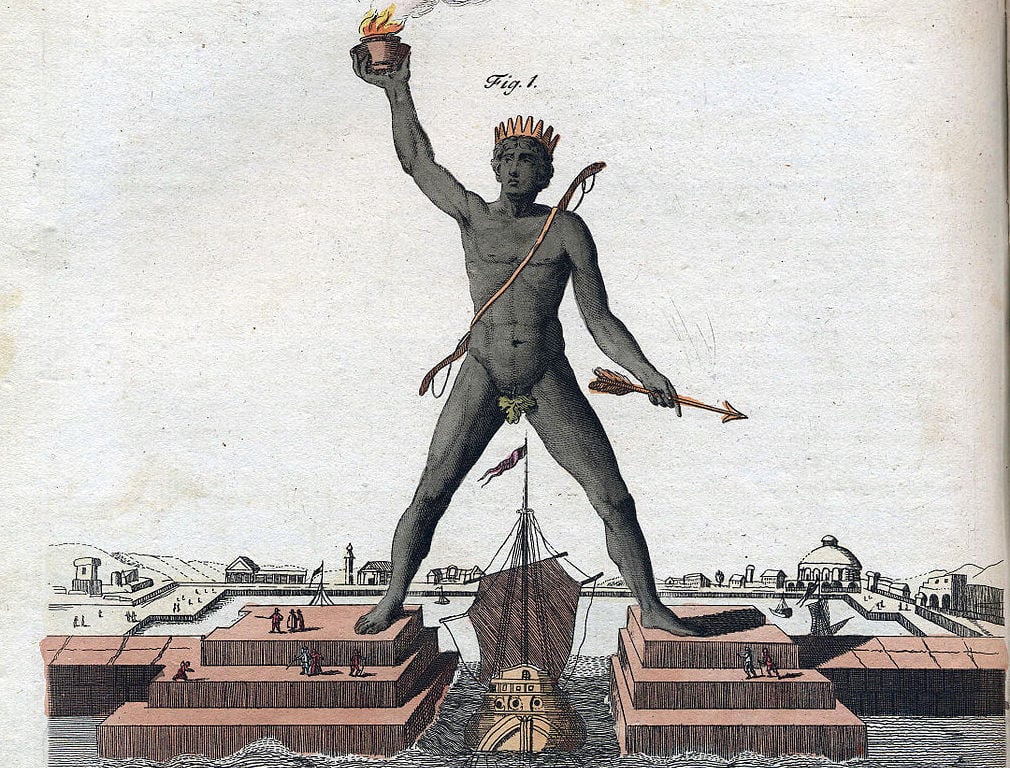
Artist’s depiction of the Colossus of Rhodes (one of the Seven Wonders of the Ancient World). Credit: Public Domain.
Most people today know of the Colossus of Rhodes as one of the Seven Wonders of the Ancient World, but there are many little-known facts about the masterpiece that may surprise you.
The ancient island of Rhodes, the kállistin (best) of the Greek cities as historians like to call it, has long attracted the attention of the world due to its beautiful beaches, rich history, and advanced civilization that stretches far back in time.
Rhodes was a city with philosophical and other schools, conservatories, markets, stadiums, harbors, and at least 3,000 public statues.
The masterpiece of all, though, was the Colossus of Rhodes, built between 292 to 280 BC. The huge bronze statue was about 30 meters (98.4 feet) tall and portrayed the god of the Sun, Helios.
The construction of the Colossus lasted for 12 years, but the statue was destroyed a few decades later in 226 BC by an earthquake.
Lesser known facts about the Colossus of Rhodes
The Colossus of Rhodes and the Statue of Liberty
Both monuments were built as symbols of freedom, and people have made the connection between both statues since the Statue of Liberty was created.
The Statue of Liberty has been referred to as the “Modern Colossus” and stands just a little higher at 34 meters (111.5 feet) tall.
There is also a plaque inside the pedestal of the Statue of Liberty that is inscribed with a sonnet title “The New Colossus, not like the brazen giant of Greek fame.”
The debate about the statue’s feet
There has been a debate among historians about whether the statue was standing with one foot on either side of the Rhodes harbor.
Some have discounted this theory and believe that he stood in a more usual Greek statue pose on one side of the harbor.
If the Colossus of Rhodes was built with its legs straddling the harbor, then the harbor would have had to have been closed for 12 years for the initial construction, and then it would have once again been blocked for years when the statue fell.
The statue has an iron skeleton
The statue was actually built with an iron frame like a skeleton over which the Rhodians placed carved and sculptured brass plates to create the outer structure of Helios, creating his muscle and skin.
Chares of Lindos designed the Colossus of Rhodes
We owe the design of the Colossus of Rhodes to Chares of Lindos. Chares was a student of the famous sculptor Lysippus, who had previously created a 19-meter (62 foot) tall statue of Zeus.
The metal used to construct the statue later scrapped, sold
In the 7th century A.D., the Arabs conquered Rhodes and dismantled any remnant of the Colossus of Rhodes after it was toppled by an earthquake and later sold the once beautiful statue as scrap metal.
It took approximately 900 camels to carry away all the scrap metal.
Was the destruction of the Colossus the will of the gods?
Finally, Ptolemy III, the king of Egypt, offered to pay for the Colossus’ reconstruction, but the Rhodians refused because they believed that Helios, having been angered by the construction of the statue, was the one who caused the earthquake that destroyed it.
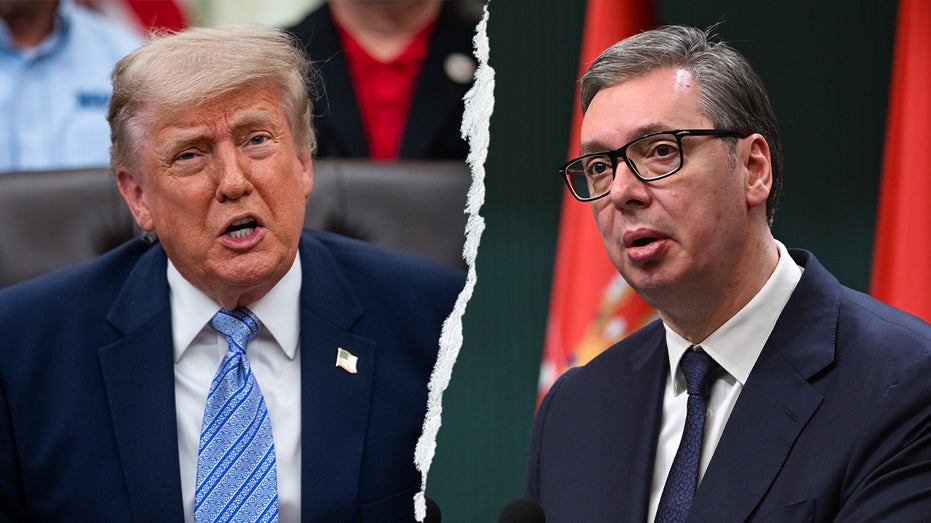
Serbian President Aleksandar Vučić says relations between Serbia and the United States have undergone a dramatic transformation under President Donald Trump, a shift he says has changed public perceptions in a country where memories of the 1999 NATO bombing campaign remain deeply rooted.
In an exclusive interview with Fox News Digital, Vučić praised Trump's approach to the Balkans, arguing that the administration's focus on economic cooperation rather than political pressure resonated with many Serbs. "President Trump and his team so far were working very diligently and dedicatedly on the Western Balkans," Vučić said, adding that many Serbs view his administration very differently from previous U.S. governments.
"If you ask people in Serbia just to make a comparison between Clinton and Trump's administration, or Democrats to Republicans, you wouldn't believe it," Vučić said. "It would be 90 to 10 or 95 to 5."
The comparison is particularly striking in Serbia, where many still associate the United States with NATO's 1999 bombing campaign during the Kosovo conflict, launched to stop Serbian forces' crackdown on ethnic Albanians in Kosovo and which remains one of the most consequential events in modern Serbian history.
Vučić said he recently extended an invitation to Trump to visit Serbia and predicted the American president would receive an enthusiastic welcome.
"I hope that we'll be able to host him," Vučić said. "More people will be ready to greet him and wait for him than he might even expect…I dare to say even more than hundreds of thousands of people."
The Serbian president said the improving relationship between Washington and Belgrade is increasingly centered on economics, investment and technological cooperation, and mutual conservative values.
According to Vučić, Serbia and the United States are preparing to launch a strategic dialogue that will focus on energy, infrastructure, artificial intelligence, defense cooperation and investment opportunities. Among the projects under discussion are energy infrastructure, liquefied natural gas cooperation, data centers and advanced computing technologies.
The growing relationship comes as Serbia seeks to position itself as a regional economic hub while continuing its long-standing ambition of joining the European Union.
Vučić pointed to preparations for Expo 2027 in Belgrade with nearly 150 participating countries, as evidence of Serbia's growing international profile and economic ambitions.
Vučić, who has served as Serbia's dominant political figure since becoming prime minister in 2014 and president in 2017, pointed to the country's economic growth as evidence of its transformation. "Our GDP was 32 billion (euros) when I became the prime minister," Vučić said. "This year it's going to be over 100 billion euros., which is $120 billion."
Vučić's relationship with Trump dates back to the president's first term, when the White House brokered a series of economic normalization agreements between Serbia and Kosovo. Rather than focusing first on the politically explosive question of Kosovo's status, the Trump administration emphasized infrastructure projects, transportation links and investment aimed at improving ties between the two sides.
In September 2020, Vučić and then-Kosovo Prime Minister Avdullah Hoti signed U.S.-brokered economic agreements at the White House that included commitments to expand rail and highway connections and promote investment. Trump described the deal as a breakthrough achieved by focusing on "job creation and economic growth" rather than longstanding political disputes.
Asked whether he would consider recognizing Kosovo, which declared independence from Serbia in 2008 and has been recognized by the United States under President George W. Bush and most European countries, if doing so unlocked Serbia's economic future and accelerated its path toward membership in the European Union, Vučić pushed back on the premise, arguing that economic cooperation and improved relations should come before discussions about political status.
"I'm not saying that I'm ready to violate my constitution… I have always been open to talks or compromising solutions, I have always been open to developing great economic ties and no doubt much better political ties. But I was not speaking about recognition of someone's independence," he said.
While Serbia continues to pursue membership in the European Union, the country has also maintained ties with Russia and China, a balancing act that has drawn scrutiny amid Russia's war in Ukraine and growing geopolitical tensions worldwide.
Asked whether Serbia could continue navigating between East and West in an increasingly divided world or would eventually need to choose a side, Vučić rejected the notion that countries must choose between competing geopolitical camps. Instead, he pointed to both his own visit to China and Trump's engagement with Beijing as examples of what he described as pragmatic diplomacy focused on national interests.
"President Trump didn't go there because of his vanity," Vučić said of Trump's visit to China. "He brought with him all the leading people of the United States of America for making better businesses, for earning more money for their companies."
Vučić said he adopted a similar approach during his own visit, arguing that leaders should prioritize economic opportunities for their citizens rather than ideological alignments. "I'm coming from a small country. I was asking for more investments and was fighting for the interests of my people," he said.
The Serbian president said the same pragmatic approach should guide efforts to resolve ongoing conflicts in both Ukraine and the Middle East.
"It's always better to have thousands of days of negotiations than one day of war," he said.
Asked about tensions involving Iran and the wider conflict in the Middle East, Vučić reiterated Serbia's support for Israel, a position that increasingly distinguishes Belgrade from some European governments.
"I am the president of the country that is one of the very rare countries in Europe that is not hesitating to cooperate and collaborate with Israel," he said. "And it is proud to say this publicly and openly."
Vučić warned about what he described as rising antisemitism around the world.
"From time to time, I'm very much afraid to see a lot of antisemitic slogans and antisemitic banners," he said.
Russian troops rely on supplies via the land corridor to Crimea, but Ukrainian forces are now able to launch concentrated attacks along the critical route. Experts say this indicates growing Russian vulnerability.
 Login
Login