Reading view

Overnight Attacks Rattle U.S.-Iran Ceasefire (Updated)

U.S. President Donald Trump told reporters today that in the wake of overnight attacks between the U.S. and Iran, strikes on Iran will continue. Meanwhile, Iranian officials say they are “reviewing” whether to continue peace talks after one of the most serious exchanges of fire between the two nations since the April 8 ceasefire.

The latest round of attacks and counterattacks touched off after U.S. Central Command launched three waves of strikes on targets in southern Iran in retaliation for what Trump said was Iran’s downing of an AH-64 Apache helicopter, reportedly by an Iranian Shahed drone. Iran denied attacking the Apache. You can read more about that incident here.

Khatam Al-Anbiya Central Headquarters: Iran‌ Delivers Powerful Response to US Onslaughthttps://t.co/5CvDlDqlc9 pic.twitter.com/4sdTjd31Bk

— Fars News Agency (@EnglishFars) June 10, 2026

Though damage assessments are still ongoing in the wake of Iranian missiles and drones launched across the Middle East overnight, a U.S. official told TWZ Wednesday morning that so far, there have been no injuries among U.S. personnel reported and no indication yet of any damage to American installations. That’s despite Iranian claims to the contrary.

“Iran launched multiple missiles and drones and just about all were intercepted according to initial reflections from assessments that are ongoing,” the official told us, speaking on condition of anonymity to discuss operational details. “No reports of harm to any U.S. personnel; not aware of any damage to our locations at this time.”

However, as we have noted in the past, similar U.S. assessments during the height of Epic Fury were later contradicted by reports of wide-spread damage from Iranian attacks.

Iranian officials said they again launched attacks on the U.S. Navy’s Fifth Fleet Headquarters in Manama, Bahrain, as well as Muwaffaq Salti Air Base in Jordan and targets in Kuwait.

Several videos emerging overnight claimed to show missile interceptions and explosions resulting from the latest Iranian kinetic actions.

Some showed missile interceptions over Muwaffaq Salti. As we have frequently noted, the base has been a major staging area for U.S. airpower in the region. It came under Iranian attack before the ceasefire, with an AN/TPY-2 missile defense radar there having been notably targeted.

Footage shows air defense interceptors engaging incoming Iranian ballistic missiles over Jordan.

Iran’s Islamic Revolutionary Guard Corps (IRGC) says it targeted Jordan’s Muwaffaq al-Salti Air Base, along with 20 other U.S. military sites across the region. pic.twitter.com/RxKHsNaQur

— Egypt's Intel Observer (@EGYOSINT) June 10, 2026

Additional video shows what appears to be an explosion in the distance as viewed from a CCTV camera in Manama in the wake of a claimed Iranian missile launch at Fifth Fleet headquarters. The extent of the damage, if any, is unknown.

CCTV footage shows an explosion in Bahrain’s capital Manama after what authorities say was an Iranian missile strike.

Iran’s IRGC says it hit US military bases in Bahrain, Kuwait and Jordan in retaliatory attacks for US strikes in the Strait of Hormuz. pic.twitter.com/4eKzhBa1np

— Al Jazeera Breaking News (@AJENews) June 10, 2026

The Islamic Revolutionary Guard Corps (IRGC)-connected Tasnim News Agency also posted a video it claims shows an attack on the Fifth Fleet. The short video shows what appears to be an explosion in the distance and again, there is no way to tell what, if any damage, was caused.

📹 ویدئوی منتشرشده در منابع عربی از اصابت به پایگاه آمریکا در بحرین pic.twitter.com/fW37dLXui6

— اخبار فوری جنگ (@WarNewsIr) June 10, 2026

The Kuwaiti Foreign Affairs Ministry condemned the latest Iranian strikes and said the nation “reserves its full right to take all necessary measures to preserve its security and defend its territories and vital facilities, in accordance with international law and the United Nations Charter.”

بيان صادر عن وزارة الخارجية
الأربعاء 10 يونيو 2026

تُعرب وزارة الخارجية عن إدانة دولة الكويت واستنكارها وبأشد العبارات، استمرار الاعتداءات الإيرانية الآثمة والمتكررة على دولة الكويت، والتي كان آخرها اليوم، في تصعيد جديد يُضاف إلى سلسلة الاعتداءات الإيرانية المتواصلة، ويُعد… pic.twitter.com/7H1TFQNqMv

— وزارة الخارجية (@MOFAKuwait) June 10, 2026

Iran said its latest volley of kinetic actions were in response to what U.S. officials say were strikes on 20 Iranian targets in response to the helicopter downing.

The United States and Iran traded strikes overnight.

20 Iranian targets were hit by U.S. forces, including air defense systems and radar sites.

Iran responded with missiles and drones toward Kuwait, Bahrain, and Jordan. pic.twitter.com/vl3fK4bO85

— Trey Yingst (@TreyYingst) June 10, 2026

This latest flurry of strikes prompted comments about the future of diplomacy from both sides.

During a morning press conference, Trump said “we hit ’em hard yesterday, and we’re going to hit ’em again hard today, in case you miss it, in case you don’t turn on your television set, and we’ll see what happens with the deal.”

.@POTUS on Iran: "We hit them hard yesterday and we're going to hit them again hard today… And we'll see what happens with the deal. We were really close to a deal — but they keep tapping us along. They keep playing us for suckers because you know what? They dealt with some… pic.twitter.com/ScvGn14QFQ

— Rapid Response 47 (@RapidResponse47) June 10, 2026

Earlier on Wednesday, Trump told Fox News that there may be additional U.S. attacks that focus on “Iranian power plants and bridges.”

NEW: President Trump tells me he "may keep going" with strikes against Iran and is getting closer to targeting Iranian power plants and bridges.

The President also spoke about the U.S. military helicopter that was downed saying that an Iranian drone lodged between the two… pic.twitter.com/j5aQEIzi9s

— Trey Yingst (@TreyYingst) June 10, 2026

The president’s comments to Fox follow statements he made on his social media outlet saying Iran has taken too long to agree to a peace deal.

“Iran’s Military is a complete and total mess,” Trump said on Truth Social. “Much of it, like their Navy and Air Force, doesn’t even exist anymore – They have been completely defeated. Iran is all talk and no action. The Bully of the Middle East is DEAD!!! They’ve taken too long to negotiate a deal that would have been great for them, now they will have to pay the price!!!”

Trump did not elaborate on what that price may be.

pic.twitter.com/3wfggfeEo2

— Rapid Response 47 (@RapidResponse47) June 10, 2026

As we noted earlier in this story, Iran is reassessing the future of diplomatic negotiations aimed at ending the US-Israeli war against the country, according to the official Iranian IRNA news outlet.

“We have to review it,” Iranian Foreign Ministry spokesperson Esmaeil Baqaei told IRNA. “Diplomacy and the battlefield are not separate matters; rather, they run alongside and complement each other in safeguarding Iran’s interests and security.”

​Baqaei stressed that Iran’s military and diplomatic tracks operate in coordination.

“Wherever the Armed Forces deem it necessary, they respond to the enemy with authority and strength, and last night’s events showed that Iran’s brave Armed Forces do not hesitate in defending the country,” he posited.

ایرانی وزارت خارجہ کے ترجمان اسماعیل بقائی کا کہنا ہے کہ حملوں کے بعد امریکا کے ساتھ مذاکرات کا ازسرنو جائزہ لے رہے ہیں، امریکا اور اسرائیل بار بار جنگ بندی کی خلاف ورزی کررہے ہیں۔

انہوں نے کہا کہ مذاکرات کو آگے بڑھانے کیلئے پرسکون ماحول بہت ضروری ہے، بدقسمتی سے واشنگٹن کے… pic.twitter.com/1nGcYA3fmN

— SAMAA TV (@SAMAATV) June 10, 2026

Despite the flare-up in fighting and posturing by both sides, negotiations appear to be continuing.

“Following consultations with the United States, Qatari negotiators headed to Tehran this morning to meet with the Iranians in an attempt to bridge the remaining gaps,” CNN reported on its Arabic channel, citing a source. “The visit indicates that diplomacy remains active, despite an exchange of fire between Iran and the United States overnight—marking one of the most significant tests of the ceasefire to date. A US official told CNN that the United States believes these strikes will not derail the negotiations.”

مصدر دبلوماسي لـCNN: مفاوضون قطريون توجهوا صباح الأربعاء إلى طهران لسد الفجوات المتبقية مع أمريكا https://t.co/IIkMnAmHkt

— CNN بالعربية (@cnnarabic) June 10, 2026

At issue remains the future of Iran’s nuclear ambitions, the ongoing closure of the Strait of Hormuz, Tehran’s ballistic missile arsenal and support for proxies and the easing of U.S. sanctions. Whether the increased fighting between the two sides will derail these efforts remains an open question.

UPDATES

Iran claims it downed another U.S. MQ-9 Reaper drone overnight. While TWZ can’t verify that, we have noted that the loss of dozens of these drones to Iran and the Houthis have forced the U.S. Air Force to scramble for replacements.

🎥 لحظهٔ انهدام پهپاد MQ9 در آسمان شهرستان جم بوشهر در شب گذشته pic.twitter.com/aUe1eR5nRZ

— خبرگزاری فارس (@FarsNews_Agency) June 10, 2026

A cargo ship came under small arms fire 88 nautical miles south of Balhaf, Yemen in the Gulf of Aden, according to the United Kingdom Maritime Trade Operations (UKMTO) monitoring organization.

“A cargo vessel has reported being approached by one craft with 6 armed persons onboard,” UKMTO explained. “There was an exchange of fire between the small craft and the cargo vessel’s Armed Security Team resulting in the small craft turning away. Authorities are investigating. Vessels are advised to transit with caution and report any suspicious activity to UKMTO.”

While details about who was involved are scant, this is the first attack in the region, near the Bab al-Mandeb Strait, since the Houthi rebels of Yemen threatened to shut the vital waterway down in support of Iran last week. You can read more about the implications of the Iranian proxy group closing the Strait on the U.S. military and the global economy in our prior reporting here.

UKMTO WARNING 065-26

Click here to view the full warning.⤵https://t.co/ushxdE2mx0#MaritimeSecurity #MarSec pic.twitter.com/vtHpdNUm4Z

— UKMTO Operations Centre (@UK_MTO) June 10, 2026

In a post on X, CENTCOM on Wednesday announced it disabled an oil tanker trying to run the blockade of Iranian ports.

The incident took place at 11:14 p.m. on June 9, when a U.S. aircraft “fired precision munitions” into the engine room of the Palau-flagged M/T Settebello as it transited the Gulf of Oman.

The ship was attempting to transport oil from Iran, the command added.

In addition to the ships it disabled, CENTCOM said it has “redirected 134 ships that complied, and allowed 42 vessels supporting humanitarian aid to pass since initiating the blockade on April 13.”

You can read more about the other seven ships hit by CENTCOM here.

CENTCOM:

At 11:14 p.m. on June 9, U.S. forces disabled an oil tanker in the Gulf of Oman for the second consecutive day after another vessel violated the ongoing blockade by attempting to transport oil from Iran.

U.S. Central Command (CENTCOM) disabled Palau-flagged M/T… pic.twitter.com/UkVgPoJUOt

— Clash Report (@clashreport) June 10, 2026

When it comes to the Strait of Hormuz and Gulf of Oman region, Trump took to social media to say the ongoing blockade of Iranian ports has devastated Tehran’s economy.

“The Fake News Media refuses to report how EFFECTIVE the U.S. Naval BLOCKADE is, the most successful Blockade in the history of Naval Warfare,” the president proclaimed on Truth Social. “NOTHING GETS THROUGH unless we want it to. IT IS A STEEL WALL! Iran is doing ZERO business, not paying their military, or any of their bills, and quickly becoming a FAILED NATION! Lots of oil is getting out. Praise be to Allah!”

President Donald J. Trump has taken to Truth Social again decrying the "fake news media" coverage of the naval blockade of Iran saying that it is a "STEEL WALL", Iran is doing "ZERO business, not paying their military or any of their bills, and quickly becoming a FAILED NATION!"… pic.twitter.com/DcCHVebRX7

— OSINTdefender (@sentdefender) June 10, 2026

However, in a post on X, the Windward trade intelligence group said that “five Iranian-trading [liquified petroleum gas] LPG carriers have broken the U.S. blockade on Iranian ports,” Windward stated. “Four discharged in India, one in Pakistan. All five used the same playbook, spoofing and AIS blackouts to mask loading and destination. Yet all signaled their exit and/or entry through Hormuz via AIS. Three were already U.S.-sanctioned. A fourth sanctioned June 6. Two operated under false flags, making them legally stateless.”

However, the crude oil blockade is holding, Windward added. 

“No Iran-trading VLCC tracked in Asia via Malacca, Sunda, or Lombok since May 4,” the organization noted.

Five Iranian-trading LPG carriers have broken the U.S. blockade on Iranian ports. Four discharged in India, one in Pakistan.

All five used the same playbook, spoofing and AIS blackouts to mask loading and destination. Yet all signaled their exit and/or entry through Hormuz via… pic.twitter.com/iWBqGHSrBl

— Windward (@WindwardAI) June 10, 2026

U.S. Secretary of War Pete Hegseth is scheduled to visit CENTCOM headquarters in Tampa, Florida, today to discuss the ongoing situation with the head of that command, Adm. Brad Cooper, and engage with troops.

Secretary Hegseth will be traveling to Guantanamo Bay, Cuba and Tampa, Florida today to engage with troops at GTMO and CENTCOM, per Pentagon.

— Kellie Meyer (@KellieMeyerNews) June 10, 2026

Despite efforts to quell the fighting between Israel and Hezbollah in southern Lebanon, the Israeli Air Force continues to strike targets in that country.

“Over the past day, the IDF struck Hezbollah infrastructure sites in the area of Tyre and in several areas in southern Lebanon,” the IDF stated on Telegram.

“In the area of Tyre, the IDF struck six infrastructure sites used by the Hezbollah terrorist organization to advance terror attacks against the State of Israel and IDF soldiers operating in southern Lebanon,” the IDF added. “Among the infrastructure struck was a site used by Hezbollah terrorists to launch explosive drones toward IDF soldiers.”

In southern Lebanon, “the IDF struck ready-to-use Launchers, terrorists who operated in the area in which IDF soldiers are operating, and additional terror infrastructure sites,” it claimed.

השמדת תשתיות טרור מהן הופעלו רחפני הנפץ נגד כוחותינו: חיל-האוויר וכוחות יחידת האיסוף 869 ממשיכים לפעול בדרום לבנון.

במהלך השבועיים האחרונים, הכוחות חיסלו בשיתוף חיל-האוויר יותר מ-20 מחבלים שפעלו לקידום מתווי טרור והיוו איום על כוחותינו. בנוסף הכוחות השמידו מספר תשתיות טרור… pic.twitter.com/Mysi9BMXHW

— Israeli Air Force (@IAFsite) June 10, 2026

Hezbollah, meanwhile, attacked a gathering of Israeli troops with a missile, according to Tasnim.

Hezbollah Strikes Israeli Military Gathering with Missile pic.twitter.com/TJUCOT3lvS

— Tasnim News Agency (@Tasnimnews_EN) June 10, 2026

The ongoing Israeli incursion into southern Lebanon and continuing presence in Syria has raised tensions with Turkey. Any direct conflict flaring up from the long-simmering animosity between two of the region’s most powerful militaries – though extremely unlikely – would be a far bigger deal than a dertailment of U.S.-Iran peace talks.

“We are fully aware of what the ultimate objective of the delusion of ‘Greater Israel’ is,” Turkish President Recep Tayyip Erdoğan said Wednesday, adding that Israel’s actions in Lebanon and Syria now threaten Turkey.

Turkish President Recep Tayyip Erdogan:

Israel's attacks on Syria and Lebanon have reached a point where they also threaten Turkey.

Turkey's security begins not in Hatay, but in Aleppo, Damascus, and Beirut. pic.twitter.com/YKRqbRugQ2

— Ariel Oseran أريئل أوسيران (@ariel_oseran) June 10, 2026

The Turkish leader’s statements sparked a harsh response from Netanyahu.

“The antisemitic tyrant Erdogan, who perpetrates genocide against the Kurds, supports the terrorist organization Hamas, oppresses his own people, and imprisons political rivals, is the last one who can preach morals to the State of Israel,” the Israeli leader retorted. “The State of Israel and the IDF, the most moral army in the world, will continue to act forcefully against Iran and its proxies that threaten the Middle East and the entire world.”

הרודן האנטישמי ארדואן שמבצע רצח עם בכורדים, תומך בארגון הטרור חמאס, מדכא את בני עמו ושם בכלא יריבים פוליטיים הוא האחרון שיכול להטיף מוסר למדינת ישראל.

מדינת ישראל וצה"ל, הצבא המוסרי ביותר בעולם, ימשיכו לפעול בעוצמה נגד איראן ושלוחותיה שמאיימות על המזרח התיכון ועל העולם כולו.

— Benjamin Netanyahu – בנימין נתניהו (@netanyahu) June 10, 2026

The latest events in the Mideast region show that there is no immediate end in sight to the hostilities and we will continue to monitor developments here given the ongoing impacts on the U.S. military and global economy.

UPDATE: 3:01 PM EDT –

Trump claimed the price of oil will fall because of how much has been secretly moved out of the region.

“We’re taking about millions of barrels of oil,” the president told reporters Wednesday afternoon.

.@POTUS on Iran: "Did you know we've been taking out millions of barrels of oil? Nobody knows it. You know who doesn't know about it? Iran — until right now. We took out, the other night, 22 ships." pic.twitter.com/2odiLYXDJ3

— Rapid Response 47 (@RapidResponse47) June 10, 2026

On his Truth Social, Trump claimed that last month, he “directed our Great U.S. Military to execute a secret mission to support Oil Tankers and other Commercial Ships through the Strait of Hormuz.”

“Today, I am pleased to announce that this effort has resulted in more than 100 MILLION Barrels of Oil making its way through the Strait, and into the Open Market,” he added. “More than 200 Commercial Ships have safely traveled through the Strait. This wildly successful effort is because the UNITED STATES of AMERICA CONTROLS the Strait of Hormuz — NOT Iran. Their military is defeated, and their economy is lost. It’s over for Iran!”

BREAKING: President Trump says he directed the US Military to execute a “secret mission” in the Strait of Hormuz which resulted in over 100 million barrels of crude oil crossing through Hormuz. pic.twitter.com/bSYeetbHH4

— The Kobeissi Letter (@KobeissiLetter) June 10, 2026

However, TankerTrackers.com clarified that the president was referring not to Iranian oil, but Arab oil.

There is now a public misunderstanding regarding President Trump’s statement. It is not Iranian oil that he is talking about. Those are still trapped. Instead, it appears to be the secured convoys of Arab oil into the Gulf of Oman via the Strait of Hormuz. This explains why… https://t.co/fEgyzY3gnX

— TankerTrackers.com, Inc. (@TankerTrackers) June 10, 2026

UPDATE: 3:39 PM EDT –

Hegseth thanked troops at CENTCOM headquarters in Tampa, Florida, for their efforts in the Middle East.

.@SECWAR spoke with troops at U.S. Central Command:

“On behalf of the President of the United States—on behalf of the American people—I want to say how proud we are of the work @CENTCOM has undertaken.” pic.twitter.com/SkDuqzS3UW

— DOW Rapid Response (@DOWResponse) June 10, 2026

UPDATE: 4:12 PM EDT –

The Secretary-General of the International Maritime Organization (IMO) “has expressed deep concern and strong condemnation of the attack on the tanker MT Settebello,” according to the organization.

“I strongly condemn any act from any party that endangers the lives of seafarers and the safety of international shipping,” said Secretary-General Arsenio Dominguez. “This is simply unacceptable. My thoughts are with the families of the three missing seafarers and with all those awaiting news of the crew members.”

Two Indian seafarers died and one was reported missing after the attack, according to The Hindu.

Two casualties including cadet, fitter and ch engineer are reported missing…@FSUIINDIA @IMOHQ @ITFglobalunion pic.twitter.com/z8qZPYRWx1

— FSUI (@FSUIINDIA) June 10, 2026

Contact the author: howard@twz.com

The post Overnight Attacks Rattle U.S.-Iran Ceasefire (Updated) appeared first on The War Zone.
  •  

Aux origines du messianisme américain

Depuis leur création, les États-Unis connaissent alternativement des périodes d'interventionnisme militaire et des moments d'isolationnisme. En apparence opposées, ces deux stratégies s'inscrivent dans une même idéologie nationaliste, célébrant l'« exceptionnalisme » américain.

Depuis la seconde guerre mondiale, la conduite de la politique extérieure des États-Unis est, dans une large mesure, indépendante de leur système politique intérieur, dans lequel deux blocs électoraux continuent de s'opposer. Les contours de ces blocs sont relativement changeants et leurs affrontements en même temps de plus en plus violents. Mais, en matière de politique étrangère, partageant les mêmes perspectives et poursuivant les mêmes objectifs, ils sont très proches l'un de l'autre. La gestion de l'empire et le gouvernement du pays lui-même constituent ainsi deux mondes distincts (1). Ce qui les sépare correspond d'une certaine façon à la différence existant dans toutes les démocraties capitalistes entre les chancelleries et les grandes entreprises, d'un côté, et, de l'autre, les citoyens ordinaires — ce qui se passe à l'étranger étant de bien plus grande conséquence pour les banquiers et les diplomates, les dirigeants de sociétés et les industriels que pour les électeurs, les réponses des premiers sont plus adaptées et plus cohérentes.

Dans le cas des États-Unis, cela procède aussi de deux traits propres au pays : le provincialisme d'un électorat qui n'a qu'une connaissance extrêmement limitée du reste du monde, et un système politique qui, en contradiction flagrante avec les intentions des Pères fondateurs, a progressivement accordé à l'exécutif un pouvoir quasiment sans entraves dans la conduite de la politique étrangère, permettant ainsi aux différentes présidences — souvent empêchées d'atteindre leurs objectifs de politique intérieure par un Congrès hostile — d'agir à l'étranger beaucoup plus librement. Dans l'espace créé par ces conditions objectives d'élaboration de la politique, il s'est développé autour de la présidence, depuis le milieu du siècle dernier, un groupe étroit de spécialistes de politique étrangère qui a son vocabulaire idéologique particulier, sans équivalent en politique intérieure : là se passe la « grande stratégie » de l'État américain dans ses relations avec le reste du monde.

L'imperium américain qui s'impose après 1945 a une longue préhistoire. Les conditions qui allaient permettre la création d'un empire étaient présentes d'emblée, fait unique, lorsque naquit le pays, dans l'Amérique du Nord de la fin du XVIIIe siècle : c'était une économie de colonisation, débarrassée des restes du Vieux Monde féodal et de ses contraintes, et installée sur un territoire continental protégé par deux océans. De là sortit la forme la plus pure du capitalisme naissant, dans le plus vaste État-nation du monde. Et cela demeura le fondement matériel solide de l'essor du pays au cours du siècle qui suivit l'indépendance. Aux avantages objectifs d'une économie et d'une géographie sans équivalents dans le monde s'ajoutait, dans la conscience américaine, la force d'un double héritage, culturel et politique : d'abord l'idée, qui remontait à la colonie puritaine primitive, d'une nation jouissant de la faveur divine, chargée d'une mission sacrée ; ensuite la conviction, née de la guerre d'Indépendance, qu'était apparue dans le Nouveau Monde une république dotée pour toujours d'une Constitution de liberté. À partir de ces quatre composantes, le nationalisme américain constitua rapidement le fonds idéologique qui lui permit de glisser en douceur à un impérialisme caractérisé par une complexio oppositorum, l'union de l'exceptionnalisme et de l'universalisme. Les États-Unis, uniques en leur genre, étaient en même temps un modèle à suivre pour le monde : un ordre sans exemple dans l'histoire, mais dont tous, à la fin, devaient suivre l'exemple.

La conviction des Pères fondateurs était que le rayonnement de la nation serait en un premier temps territorial, à l'échelle du continent américain, comme Thomas Jefferson l'exposait à James Monroe en 1801 : « Quoique nos intérêts présents puissent nous maintenir à l'intérieur de nos frontières, on ne peut pas ne pas attendre avec impatience les temps lointains où en nous multipliant nous étendrons [le rayonnement de notre nation] au-delà de ces frontières et où tout le nord voire le sud du continent se couvriront de gens parlant la même langue, gouvernés de façon semblable et par des lois semblables. » Mais, en dernière instance, ce rayonnement serait plus que territorial, il serait moral et politique. John Adams écrivait ainsi à Jefferson en 1813 : « Notre république pure, vertueuse, ayant le sens civique, fédérative, durera à jamais, elle gouvernera le monde et ouvrira à la perfection de l'homme. » Aux environs du milieu du siècle, les deux registres fusionnèrent, comme en témoigne, en 1845, la fameuse formule de John O'Sullivan sur la « destinée manifeste » des États-Unis et du droit qui s'ensuit pour les Américains « de [s']étendre et de prendre possession de tout le continent que la Providence [leur] a donné pour [leur] magnifique expérience de liberté et d'autonomie fédérée ». Car un pays « vigoureux et tout juste sorti de la main de Dieu » est investi d'une « sainte mission qui concerne les nations du monde ». Qui pouvait douter que « l'avenir immense, sans limites, [fût] le temps de la grandeur de l'Amérique » (2) ? Trois ans plus tard, la moitié du Mexique était annexée.

Depuis toujours, des voix dénoncent la mégalomanie de la « destinée manifeste »

Les frontières actuelles des États-Unis une fois atteintes pour l'essentiel, la même façon de concevoir l'avenir prit une forme plus commerciale que territoriale, qui regardait plus vers l'ouest que vers le sud. Le secrétaire d'État d'Abraham Lincoln s'adressait ainsi à ses compatriotes : « Vous êtes déjà la grande puissance continentale de l'Amérique. Mais cela vous suffit-il ? J'espère que non. Vous voulez le commerce mondial. C'est ce qu'il faut rechercher dans le Pacifique. La nation qui tire le plus de la terre, qui fabrique le plus et qui vend le plus aux pays étrangers doit être et sera la grande puissance mondiale (3). » Ce que la « destinée manifeste » et la conquête du Mexique avaient été sur terre, le commodore Matthew Perry et la politique de la porte ouverte (4) pouvaient l'être sur la mer — c'est-à-dire la perspective d'une suprématie maritime et commerciale des États-Unis en Orient, un Orient où débarqueraient en même temps le libre-échange et le christianisme. Puis vint la guerre hispano-américaine, un conflit interimpérialiste classique qui permit aux États-Unis d'acquérir des colonies dans le Pacifique et dans les Caraïbes, et de prendre pleinement leur place parmi les grandes puissances. Sous la présidence de Theodore Roosevelt (1901-1909), la Colombie fut amputée d'une partie de son territoire, le Panamá, ce trait d'union entre les deux océans qui devint colonie des États-Unis ; et la race — éducation et solidarité anglo-saxonnes — s'ajouta à la religion, à la démocratie et au commerce dans la rhétorique de la nation et de sa vocation.

Tout cela n'alla jamais sans contestation. À chaque étape, des voix éloquentes s'élevèrent aux États-Unis pour dénoncer la mégalomanie de l'idée de « destinée manifeste », le pillage du Mexique, la prise d'Hawaï ou les massacres perpétrés aux Philippines, et pour s'en prendre à toutes les formes de racisme et d'impérialisme qui constituaient une trahison de l'héritage anticolonial de la république américaine. Refuser les aventures à l'étranger — annexions ou interventions —, ce n'était pas rompre avec les valeurs nationales, c'était, de façons diverses, leur être toujours fidèle. Dès le départ, l'exceptionnalisme et l'universalisme formèrent un composé potentiellement instable. Être convaincu du caractère exceptionnel des États-Unis permettait de croire qu'ils ne pourraient conserver leurs vertus exceptionnelles qu'en restant une société à l'écart d'un monde déchu. Être du côté de l'universalisme autorisait un activisme messianique — les États-Unis en sauveurs du monde. Entre ces deux pôles — « séparation » et « intervention régénératrice », pour reprendre les termes d'Anders Stephanson —, l'opinion publique eut plus d'une fois l'occasion de basculer brutalement.

Voir en ligne : /mav/149/ANDERSON/56388

(1) Pendant les campagnes présidentielles, accuser le président en exercice de faiblesse ou d'erreurs dans sa conduite de la politique étrangère est un exercice convenu. Pour l'essentiel, les nouveaux présidents reconduisent la politique de leurs prédécesseurs.

(2) Cf. Anders Stephanson, Manifest Destiny : American Expansion and the Empire of Right, Hill and Wang, New York, 1995.

(3) Ibid. L'un des grands intérêts de cet ouvrage, qui rassemble un florilège des déclarations chauvines les plus extravagantes, est qu'il donne aussi les répliques (souvent passionnées) du camp opposé.

(4) NDLR. La doctrine de la porte ouverte désigne la politique étrangère des États-Unis vis-à-vis de la Chine au tournant du XXe siècle.

  •  

Israeli Defense Giants Deliver Final Dossiers for Greece’s €3B ‘Achilles Shield’

Greece Achilles Shield
Greece is close in approving the ‘Achilles Shield’, a program similar to the Iron Dome, the Israeli air defense system, which intercepted missiles fired from Iran, in Junee 2025. Credit: EPA/ABIR SULTAN via AMNA

A trio of major Israeli defense contractors recently delivered their final proposal dossiers for Greece’s €3 billion ($3.5 billion) ‘Achilles Shield’ program, a sophisticated, multi-layered air, anti-ballistic, and counter-drone defense network powered by cutting-edge Israeli technology.

The proposals by Israel Aerospace Industries (IAI), its subsidiary ELTA Systems, and Rafael Advanced Defense Systems, satisfy all criteria mandated by Greece’s General Directorate for Defense Investments and Armaments (GDAEE), according to a report by newmoney.gr.

The nationwide shield stands out as one of the most critical crown jewels within Greece’s broader Long-Term Defense Procurement Program (2025–2036), which outlines an overall budget of €30 billion.

Industrial co-production

The final procurement contracts are now navigating the signature pipeline through the Ministry of National Defence (YETHA) and the General Staffs. Officials are pushing to have the program formally added to the agenda of the upcoming KYSEA session, tentatively scheduled for June 18, 2026, or the subsequent meeting in early July.

The report notes that a pivotal victory for Greek industry was securing a domestic industrial participation rate locked at a minimum of 25%, spanning both localized manufacturing and technology transfers.

The Israeli consortium has already engaged in extensive talks with domestic contractors, signing several Memorandums of Understanding (MoUs) and strategic partnerships. Industrial analysts estimate that the final domestic footprint could realistically reach 30%, backed by fully drafted proposals to establish dedicated production lines on Greek soil.

Key examples and partners already tapped for the program include:

  • IAI & Hellenic Aerospace Industry (EAB): This existing partnership has already yielded results, notably the successful integration of Greece’s proprietary “Centaur” counter-drone system into the Barak weapon architecture.
  • Domestic Consortium Partners: Major Greek defense, industrial, and infrastructure players have secured preliminary roles, including Metlen, Miltech, Scytalys, Akmon, Salamis Shipyards, and GEK TERNA, with the roster expected to expand over the program’s three-year rollout.
  • Tactical Logistics: The specialized utility vehicles tasked with transporting the mobile defense systems will be sourced from IVECO, represented in Greece by the Syngelidis Group in partnership with Metlen.

The tech blueprint: Inside Greece’s ‘Achilles Shield’

The architecture of the shield relies on a unified, network-centric ecosystem. It is designed to seamlessly interface with Greece’s upcoming Belharra (FDI) frigates, upgraded F-16 Viper fighters, incoming F-35 stealth jets, and existing Patriot missile batteries.

The primary systems slated for integration comprise:

  • IAI Barak MX: Operating as the backbone of the entire network. Utilizing three missile variants with ranges spanning 35 to 150 kilometers, it will completely phase out legacy, Cold War-era Hawk systems.
  • Rafael David’s Sling: Tasked with mid-to-upper-tier interception of advanced ballistic missiles and long-range threats. This system will functionally replace the Soviet-origin S-300 systems currently in the Hellenic inventory.
  • Rafael SPYDER: Providing short-to-medium range coverage (15, 20, and 40 kilometers). These mobile batteries will replace aging eastern-bloc legacy systems like the OSA-AK and TOR-M1.
  • ELTA EL/M-2084 MMR Radars: These mobile, Multi-Mission Active Electronically Scanned Array (AESA) radars will overhaul the Hellenic Air Force’s Air Control System. The state-of-the-art arrays can simultaneously track up to 1,200 airborne targets at ranges up to 475 km, or up to 200 weapon ballistic trajectories within a 100 km radius.
  • Greek-Built C4I Hub: The vital Command, Control, Communications, Computers, and Intelligence (C4I) architecture will be co-developed and assembled in Greece alongside domestic software and engineering firms.


  •  

Pentagon Cuts Military Religion Categories From 220 to 31

Pentagon
NATO will continue its support to Europe but will prioritize U.S. security. Photo credit: Touch of Light Wikimedia Commons CC BY-SA 4.0

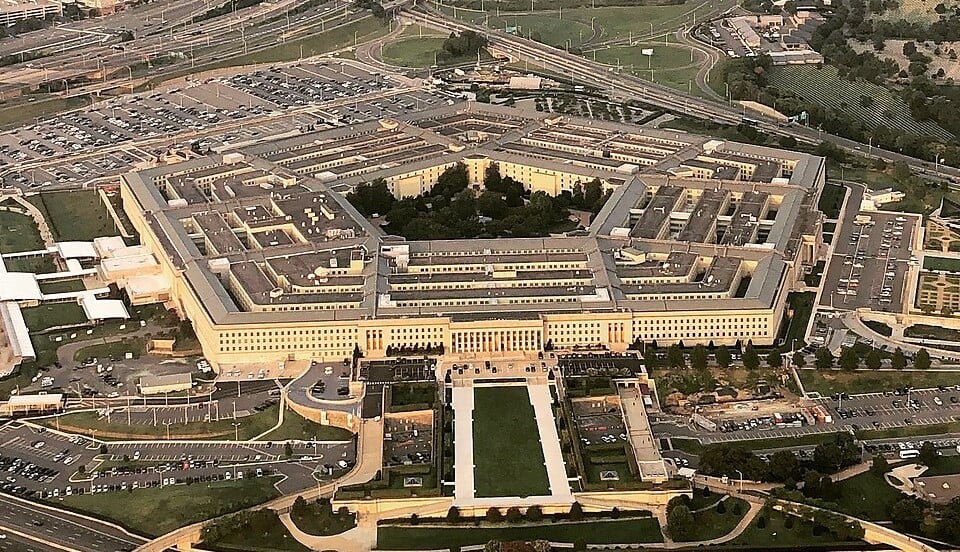
The Pentagon has sharply reduced the number of religion codes used by the U.S. military, replacing a list of about 220 faith groups and denominations with 31 broader religious categories.

The updated system, which is expected to take effect in July, has sparked debate among veterans, chaplains, lawmakers, and religious groups over its potential impact on faith representation within the armed forces.

The new categories include Buddhism, Hinduism, Baha’i, Islam, Judaism, Sikhism, and a designation for people with no religious affiliation. Christian denominations make up most of the recognized categories.

Pentagon says change is administrative

Military officials said the change is intended to simplify record-keeping and improve data collection for military chaplains. The Pentagon explained that the revised list is not meant to determine which religions are officially approved or recognized by the government.

Service members whose faiths are not among the 31 listed categories will still be able to identify their religion and include it on military dog tags, officials said.

Critics question the impact on religious diversity

The policy change has drawn criticism from some veterans, former chaplains, and religious groups who argue that the consolidation could reduce the visibility of minority faiths within military records.

The Office of the Secretary of War is announcing a significant change to the Department’s categorization of religious affiliation. In a long overdue move, we reduced the list from over 200 unmanageable categories to 31. With this move, we are returning to the original intent of… https://t.co/dgHX5ytzjJ pic.twitter.com/eho537O08J

— Sean Parnell (@SeanParnellASW) June 5, 2026

A former U.S. Army chaplain said that the move raises concerns about the military’s commitment to religious diversity.

“When I raised my hand to become an Army chaplain, I swore that I would support and defend the Constitution,” the former chaplain said. “The First Amendment is the free exercise of religion for everybody. That’s what I was buying into.”

The update also arrives amid broader debate over Defense Secretary Pete Hegseth and his public use of Christian prayers while discussing military operations. Some critics have questioned whether such expressions blur the line between personal faith and official government leadership.

Latter-day Saints’ designation draws attention

The revised system has also sparked concern among members of the Church of Jesus Christ of Latter-day Saints. Under the new classification structure, the church appears as a separate category rather than being included among the military’s Christian denominations.

That decision prompted criticism from Mike Lee, a Republican senator from Utah and a member of the church.

“Can anyone tell me why The Church of Jesus Christ of Latter-day Saints was left out of the list of Christian churches?” Lee wrote on X.

Can anyone tell me why The Church of Jesus Christ of Latter-day Saints was left out of the list of Christian churches? pic.twitter.com/t4u6PI29ON

— Mike Lee (@BasedMikeLee) June 6, 2026

Smaller faith groups lose separate classifications

According to an analysis, the consolidation removed separate classifications for numerous faith traditions, spiritual movements, and nonreligious belief systems. Those no longer listed individually include Eckankar, Heathen, Native American spiritual traditions, Rosicrucianism, Druidism, Deism, Asatru, Paganism, Humanism, Unitarian Universalism, Wicca, Shamanism, and Atheism, among others.

Defense Department officials have emphasized that the changes are administrative rather than ideological. Sean Parnell, a Defense Department official, said the military continues to place a high value on the First Amendment and the free exercise of religion for all service members.

  •  

Newly-announced Litavr interceptor is a model microcosm of Ukraine’s drone innovation programs

Litavr interceptor drone F-drones

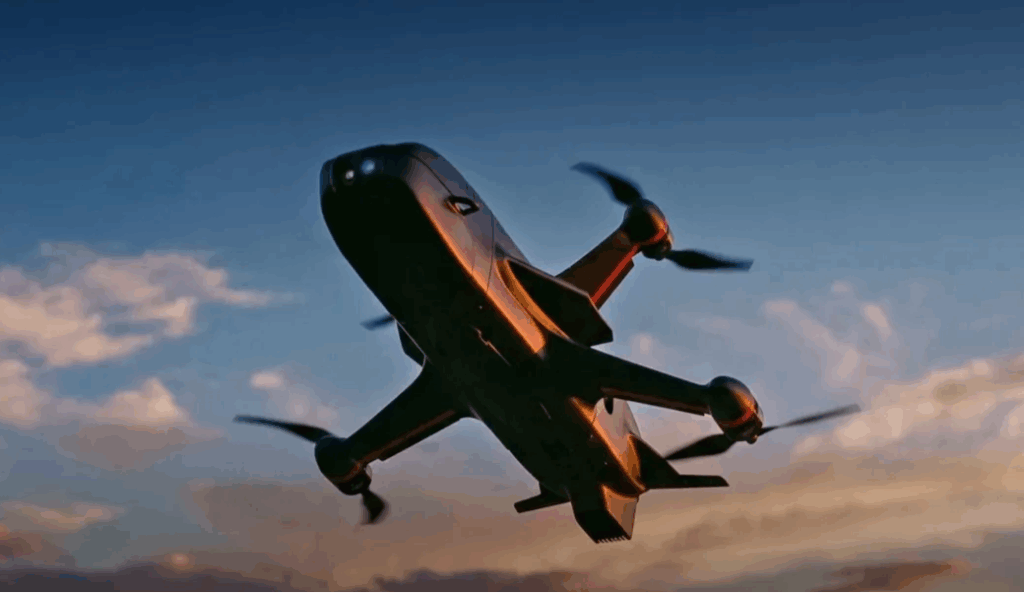
If you want to understand how Ukraine’s interceptor drones are evolving and improving but don’t have a lot of time, you can just take a look at the Litavr interceptor announced by the Ministry of Defense on 8 June. 

F-Drones’ Litavr has been in serial production since the fall but its specs have been classified until now. While its capabilities do not appear to be brand new or exclusive to itself, the features list reads like a map of all the ways Ukrainian engineering and battle testing of the past few years made their various interceptors so highly sought-after.  

That includes autonomous last-mile guidance, non-GPS navigation, radar integration, and the ability to control the drone from thousands of kilometers away. The company reportedly manufactures most of its own components, reducing dependence on China. 

All these things are instrumental to Ukraine’s goal of “closing the sky” to Russian weapons. The Defense Ministry set a goal of shooting down no less than 95% of Russian drones and missiles and has been steadily climbing towards that goal: from just over 80% shot down late last year, to 92% shot down in May. 

Last-mile autonomy

According to the MoD, the Litavr's key ability is the automatic pixel lock last mile guidance, in which a pilot controls the speed, while the drone does the rest. 

Semi-autonomous weapons are one of the major achievements of Ukraine’s military-industrial ecosystem. Defense Minister Mykhailo Fedorov emphasized autonomy as a key technology. 

“Autonomy is one of the key areas of development of modern air defence,” he said in a 8 June statement.

“Technologies like this enable faster responses to large-scale attacks and more effective protection of Ukrainian cities. We are scaling solutions that have already proved their effectiveness in combat conditions.” 

Fedorov claimed that a Brave1 company has already created tech that automates 95% of the "entire interception process, from launching a drone to destroying a Shahed," which has been battle-tested in Kharkiv Oblast. 

AI-assisted navigational and target lock tools are present in a plethora of Ukrainian drones: from deep and middle strike UAVs, to FPVs, to interceptors, which were reportedly getting anti-Shahed modules in December.

Across Ukraine and around the world, companies and volunteer cooperatives are using the country’s archive of battlefield footage to train models to become progressively more accurate and deadlier in combat. 

Navigation and controls

Besides its daytime and thermal cameras, the Litavr has its own non-GPS navigation tools and integrates into existing radar systems through a proprietary software package. 

The announcement was light on details, but this is another demonstration of Ukraine creating solutions to the realities of Russia’s war. The skies and battlefields are full of jamming and spoofing, which makes GPS a highly-unreliable solution. 

Adaptations have included visual-inertial odometry, like the kind NASA's Mars drones use, beacon-based systems, AI that image matches preloaded terrain data, and tapping into nearby radar systems, like the Litavr does. 

The drone also incorporates a system that allows operators to steer them from hundreds or thousands of kilometers away. 

This system has been in development for over a year and announced in April, with more than 10 manufacturers integrating it into their systems. Wild Hornets made a splash online with their announcement that an operator took down a target from outside Ukraine's borders.

Speed and range

The Litavr has a reported top speed of 350 kilometers per hour. This isn’t the first drone with such a claim—the MoD said the same thing of the JEDI Shahed Hunter presented in March—and other drones before it had similar claims made about them, like the Furia.  

However, 350 km/h is on the upper end of most interceptors in use these days. The more famous drones of this class like SkyFall’s P1-SUN has a reported top speed of 310 km/h and Wild Hornets’ Stinger reportedly hit 315 km/h in tests, though the website says it tops out at 280 km/h. This was a massive upgrade from earlier Sting, which could reportedly go up to 160 km/h.

Ukraine is pushing that ceiling higher. As early as December, the Brave1 Defense Cluster announced that Ukraine can now mass-produce a motor that can accelerate an interceptor to 400 kilometers per hour. The manufacturer, Motor G, makes more than 100,000 motors per month, according to the announcement.

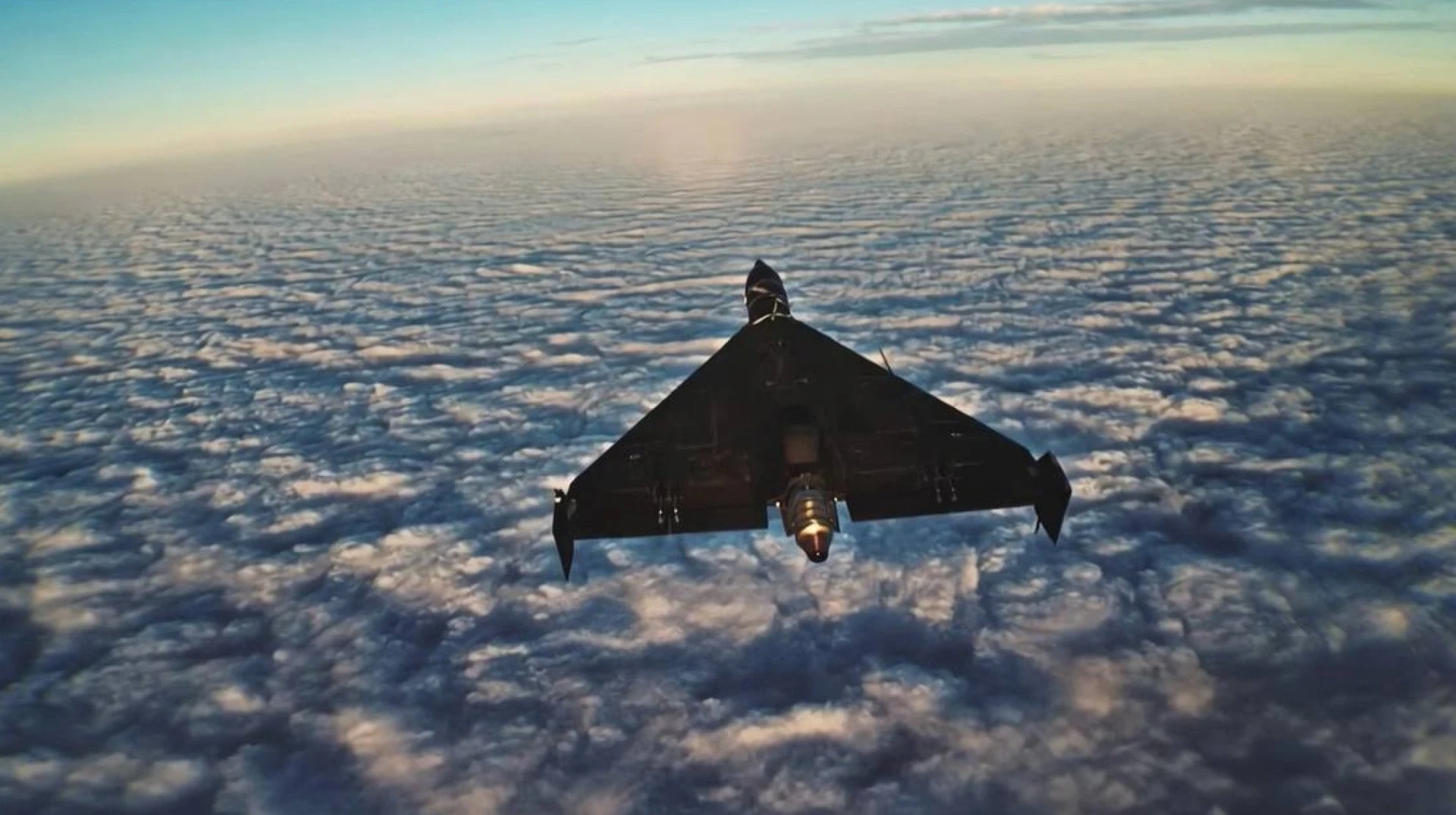
Geran-3 jet-powered Russian attack drone. (Photo: Wild Hornets)

The growing speed is needed to combat jet-powered Shaheds, whose speeds can climb up to 600 kilometers per hour, which is a drum MoD adviser Serhiy “Flash” Beskrestnov has been beating constantly. Ukrainian devs are working on the problem: for example, General Cherry and STRIX are reportedly integrating chemical boosters into their Bullet interceptors.

Litavr’s operational range of 40 kilometers appears to be comparable to the Sting, though the MoD claimed a record flight of 80 km for the former. The flight ceiling of 9 kilometers appears to be higher than many interceptors of Litavr’s type, which range from 3 to 7 km.

Reducing reliance on China

The manufacturing is also indicative of what Ukraine is trying to accomplish. F-Drones reportedly builds most of its own electronics, engines and flight controllers.

Ukraine's government has a stated goal to reduce its dependence on Chinese parts, which, while cheaper, also pose a security risk. If China stops the flow of parts for whatever reason, Ukraine's entire weapons industry can be in trouble. China also supplies many of the parts for the very Shaheds these interceptors are meant to stop. 

According to a December report by Zmiinyi (Snake) Island Institute, Ukraine's domestic manufacturers covered 70% of the need for communication systems for controlling drones, and 55% for analog video transmitters. The institute believes that Ukraine has the potential to cover 100% of the market in these three categories. 

At the time of the report, Ukrainian manufacturers produced just 25% of flight controllers for domestic FPV drones, 14% of the thermal cameras and 12% of the electric motors. However, the Institute projected that Ukraine can produce as much as 75% of flight controllers, 90% of thermal cameras and 50% of electric motors over 2026.

  •  

Russian missiles kill three and wound six in Chuhuiv as drones injure 15 in Kharkiv, including a one-year-old

russian missiles kill three wound six chuhuiv drones injure 15 kharkiv including one-year-old · post fire burns amid rubble destroyed building after strike oblast 9 2026 fdd39292-265f-4a90-a09d-e1288a16f6ae ukraine news ukrainian

Russia's overnight drone and missile barrage on 9 June killed and wounded civilians in the Kharkiv Oblast cities of Chuhuiv and Kharkiv, regional officials reported. More strikes over the past 24 hours left several people dead and dozens wounded elsewhere in Ukraine. Ukraine's Air Force said air defense stopped most of the drones, though missiles and others still reached homes.

Russia has pounded Ukrainian cities with nightly aerial barrages since 2022, sending waves of drones and missiles that air defenses can thin but not fully stop. Such daily attacks mainly target residential areas and civilian infrastructure.

Chuhuiv and Kharkiv bear the brunt

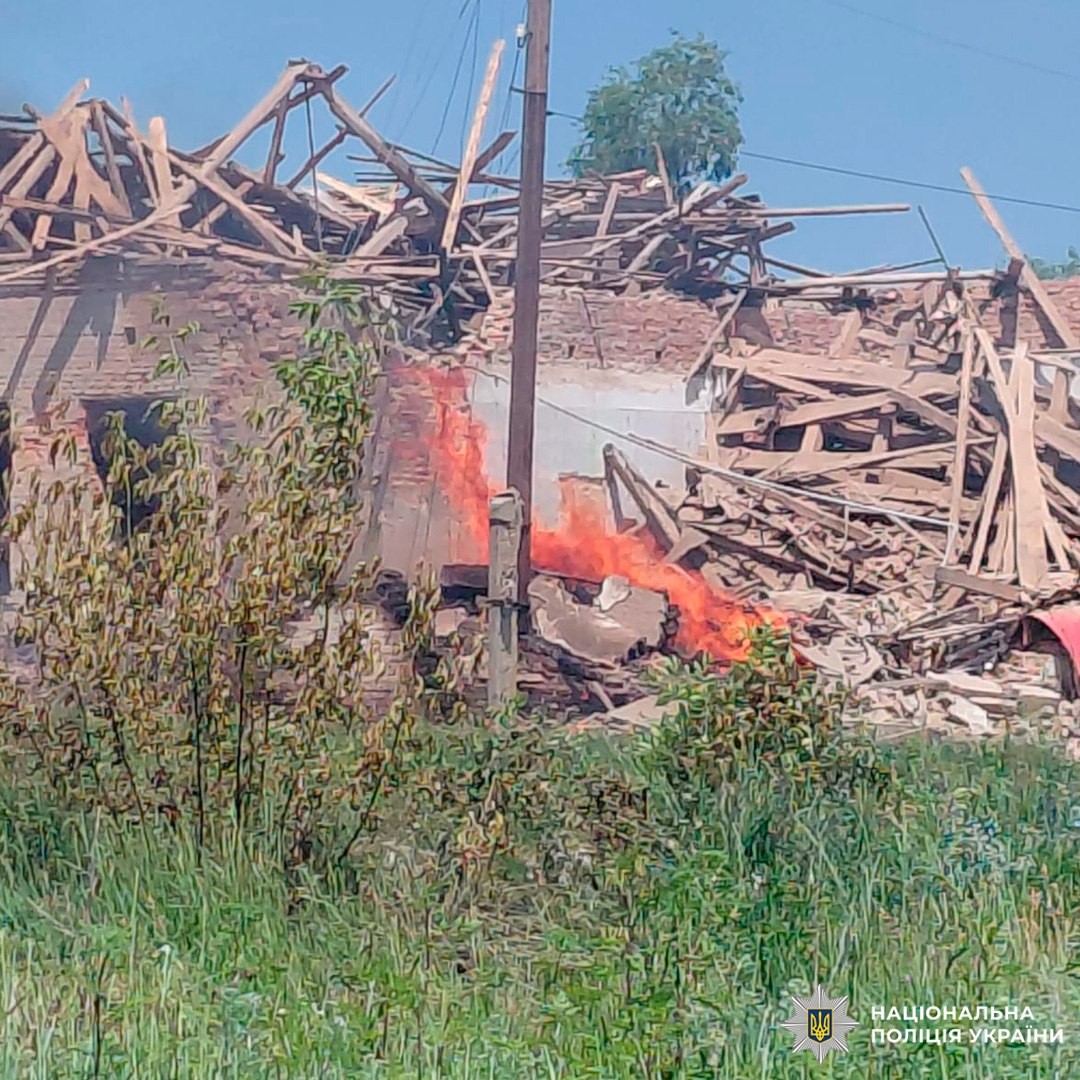
A series of Russian missile strikes on Chuhuiv overnight on 9 June killed at least three people and wounded six, the city's mayor, Halyna Minaieva, reported. Fire crews stayed at the impact sites as emergency services worked, she wrote, and the strikes damaged about eight apartment buildings and more than ten detached houses.

russian missiles kill three wound six chuhuiv drones injure 15 kharkiv including one-year-old · post police officers film aftermath strike oblast 9 2026 b8d379e4-6e28-40e3-8f78-aabbdd235e3e ukraine news ukrainian reports
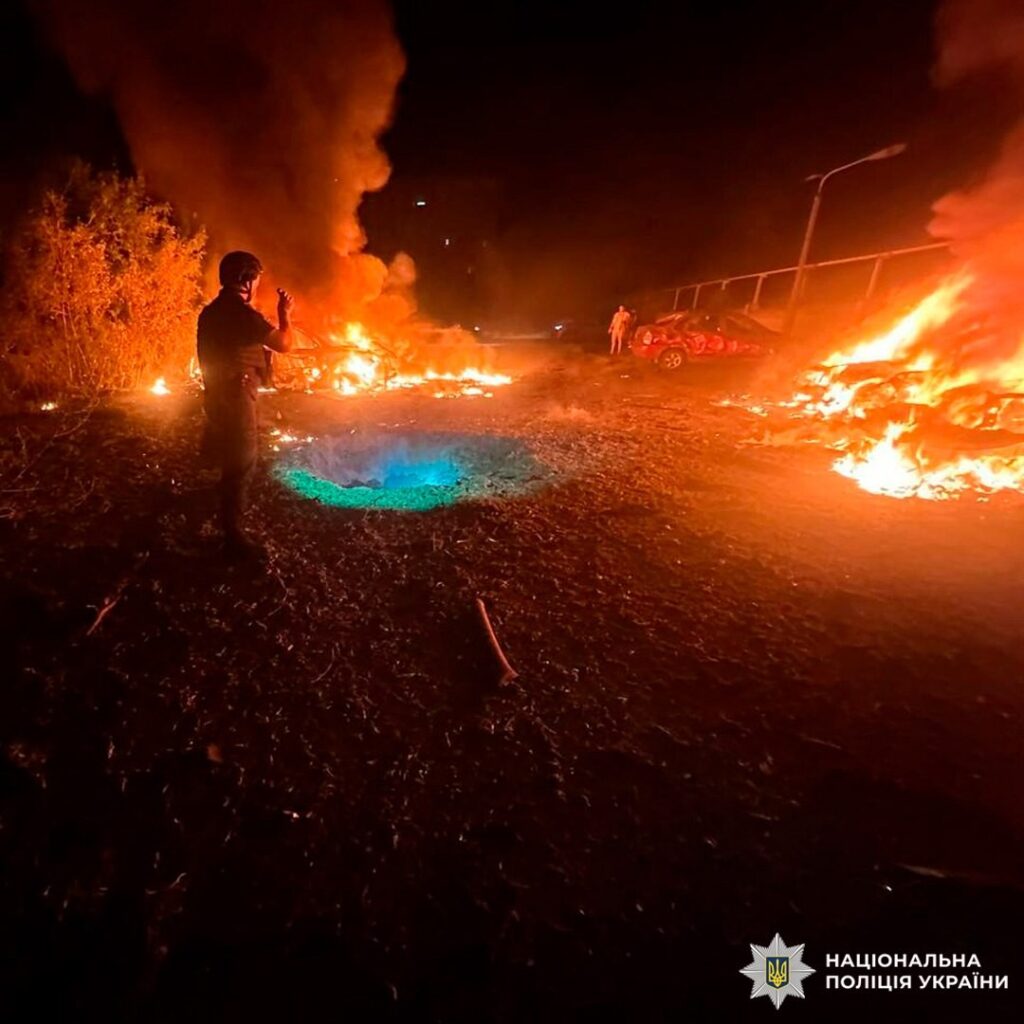
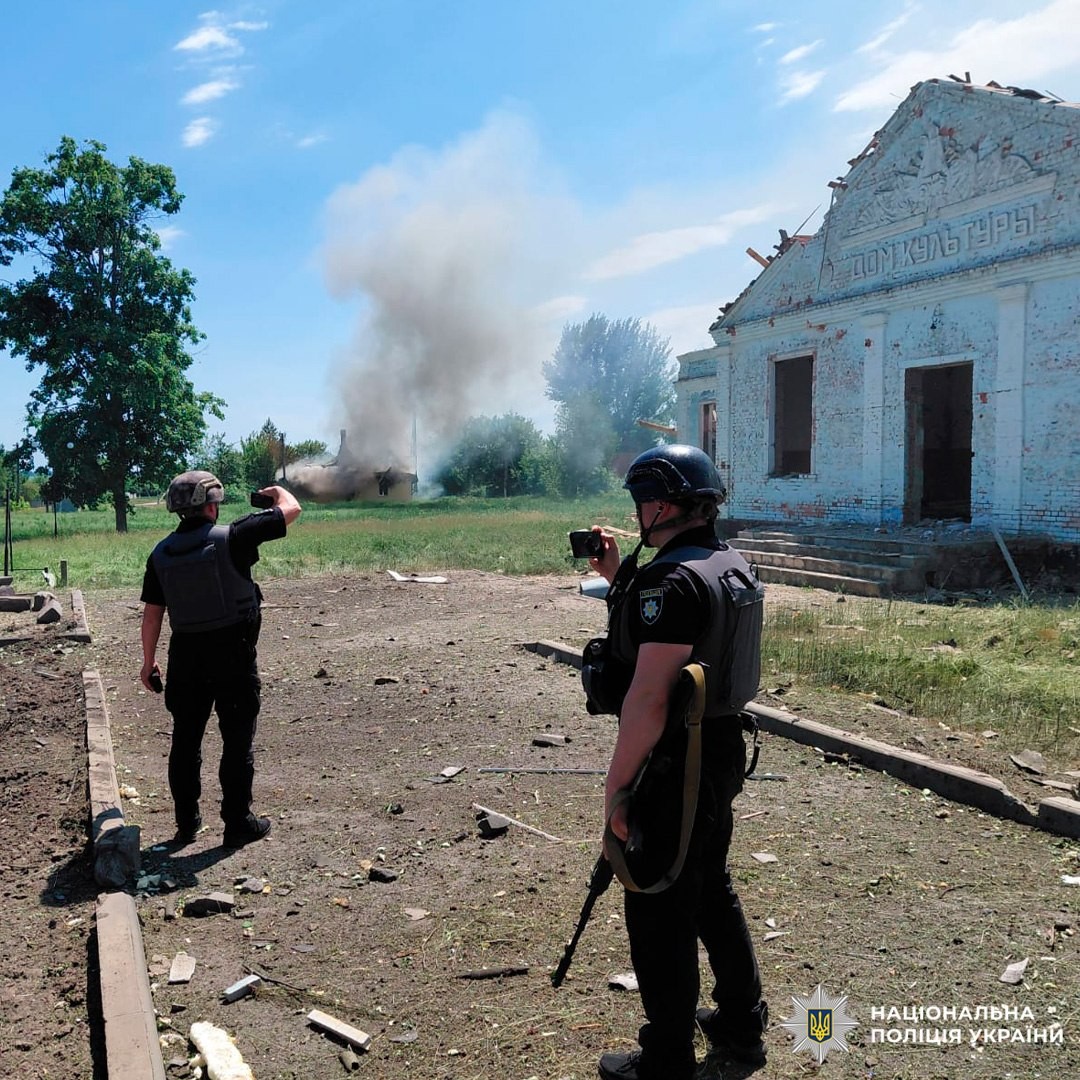
Police officers film the aftermath of a Russian strike in Kharkiv Oblast, 9 June 2026. Photo: National Police of Ukraine

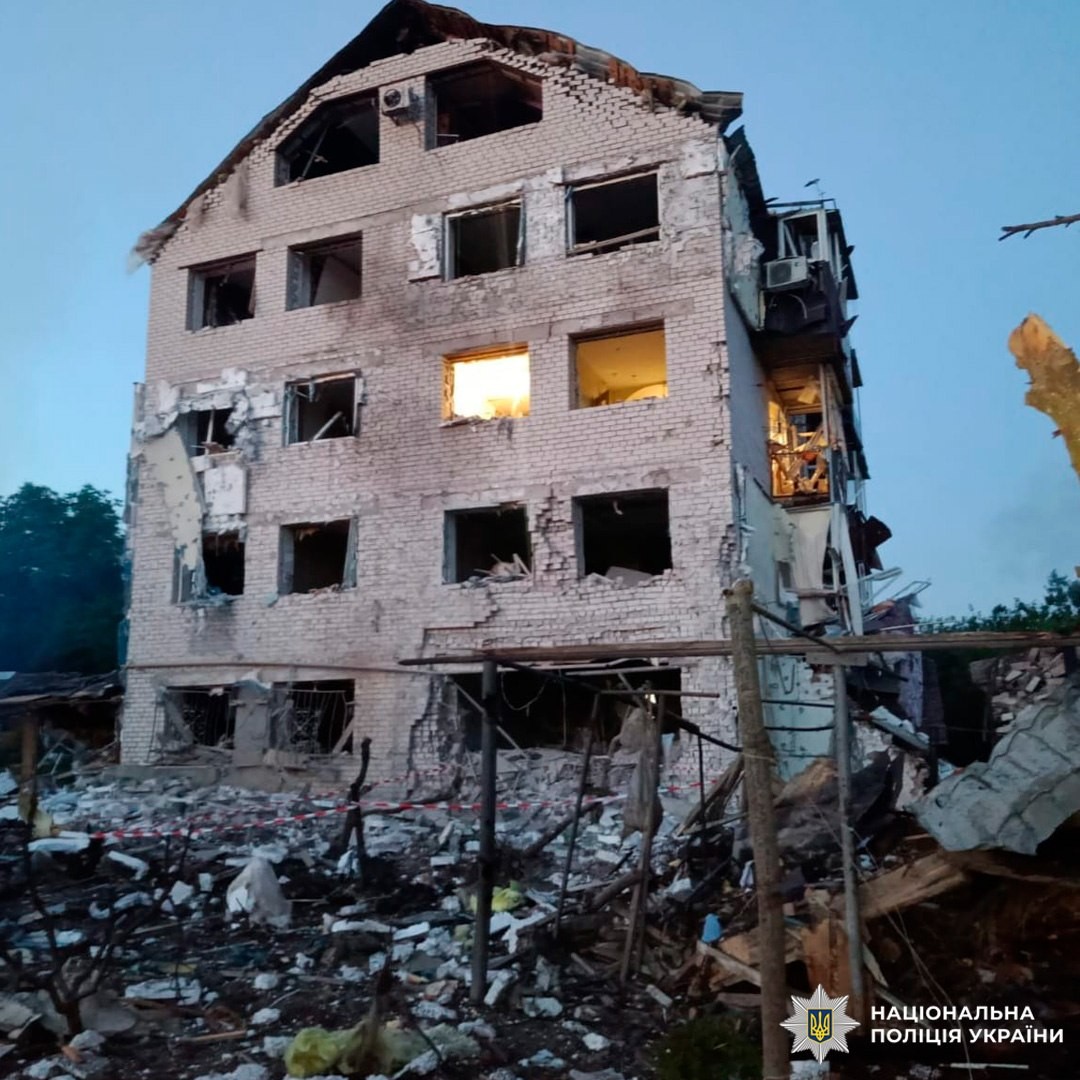
In Kharkiv—the regional capital—Russian drone strikes set off fires, damaged at least 18 cars, and blew out windows and facades in residential high-rises, Kharkiv Oblast head Oleh Syniehubov reported.

russian missiles kill three wound six chuhuiv drones injure 15 kharkiv including one-year-old · post police officers film aftermath strike oblast 9 2026 3ddd3d71-89b5-4771-8e78-a7d9f5512ce8 ukraine news ukrainian reports
Police officers film the aftermath of a Russian strike in Kharkiv Oblast, 9 June 2026. Photo: National Police of Ukraine

He said 15 people were hurt, among them three children, including a one-year-old boy, and three women were hospitalized

russian missiles kill three wound six chuhuiv drones injure 15 kharkiv including one-year-old · post multi-story residential building wrecked strike oblast 9 2026 8f58a8d8-9c07-4f40-bc34-494323214028 ukraine news ukrainian reports
A multi-story residential building wrecked by a Russian strike in Kharkiv Oblast, 9 June 2026. Photo: National Police of Ukraine

Both cities sit dozens of kilometers from the Russian border and have been struck repeatedly through the war.

A barrage of two missiles and 166 drones

Russia launched two Kh-59/69 guided air missiles from Voronezh Oblast and 166 strike drones overnight, Ukraine's Air Force reported. The drones included Shahed types, some jet-powered, along with Gerbera, Italmas, "Banderol" loitering munitions, and "Parodiya" decoys, launched from Oryol, Kursk, Bryansk, Primorsko-Akhtarsk, and Millerovo in Russia, occupied Donetsk, and Hvardiiske in occupied Crimea.

By 08:00, air defense had downed or suppressed 146 of the dronesTwo missiles and 17 drones struck 18 locations, and debris from intercepted drones fell at eight more

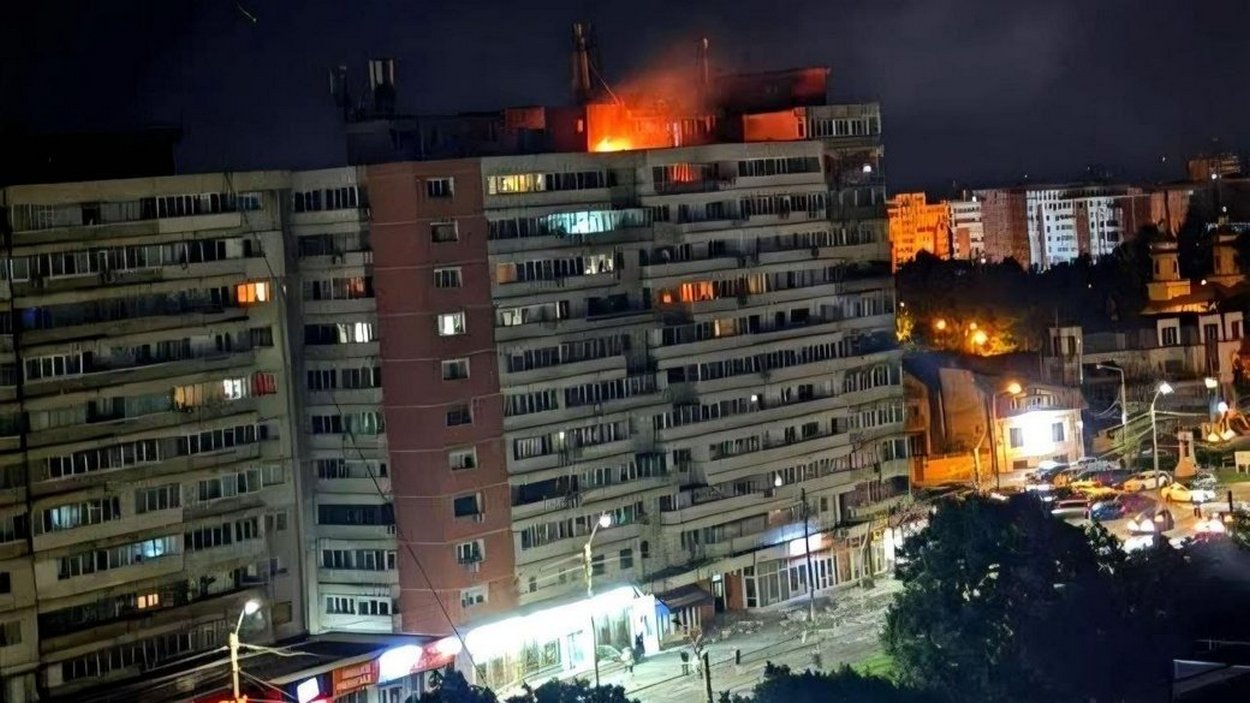
moscow's drone hits 10-story apartment block romania injuring two russia fires 232 uavs ukraine · post fire top-floor residential building galați after russian crashed 29 2026 пожежа у квартирі багатоповерхівки
Explore further

Moscow’s drone hits 10-story apartment block in Romania, injuring two as Russia fires 232 UAVs at Ukraine

Zaporizhzhia counts the damage from the day before

A Russian drone attack the previous day damaged 11 residential buildings across three districts of Zaporizhzhia, the city council reported. Six apartment blocks and five detached houses in the Khortytskyi, Zavodskyi, and Kosmichnyi districts lost windows, balconies, doors, and roofs to blast waves and debris. No one was hurt, and priority repairs were finished.

A nationwide wave

  • Russian attacks over 8 June killed two people in Sumy Oblast and wounded 13 across 21 hromadas, the regional police reported. A 78-year-old woman died in the Konotop hromada and a 71-year-old man in Seredyna-Buda, with a two-year-old boy and an eight-year-old boy among the injured.
  • In Donetsk Oblast, Russian forces killed two residents, in Bilozerske and Druzhkivka, and wounded 11 more, nine of them in Sloviansk, Oblast head Vadym Filashkin reported. Police recorded 1,309 attacks on the oblast's front line and residential areas, damaging 53 civilian sites. Hours later, Russia dropped three FAB-250 glide bombs on Sloviansk's outskirts, destroying one home and damaging more than 20.
  • In Kherson Oblast, drone and artillery attacks killed one person and wounded 13, including a child, Oblast head Oleksandr Prokudin reported
  • Drone strikes in Dnipropetrovsk Oblast wounded three people
  • Russian forces also hit 12 villages in four border hromadas of Chernihiv Oblast, the local border detachment told Suspilne.
  • The Russians also attacked communities in Mykolaiv Oblast with drones, where the administration reported no casualties. 
  •  

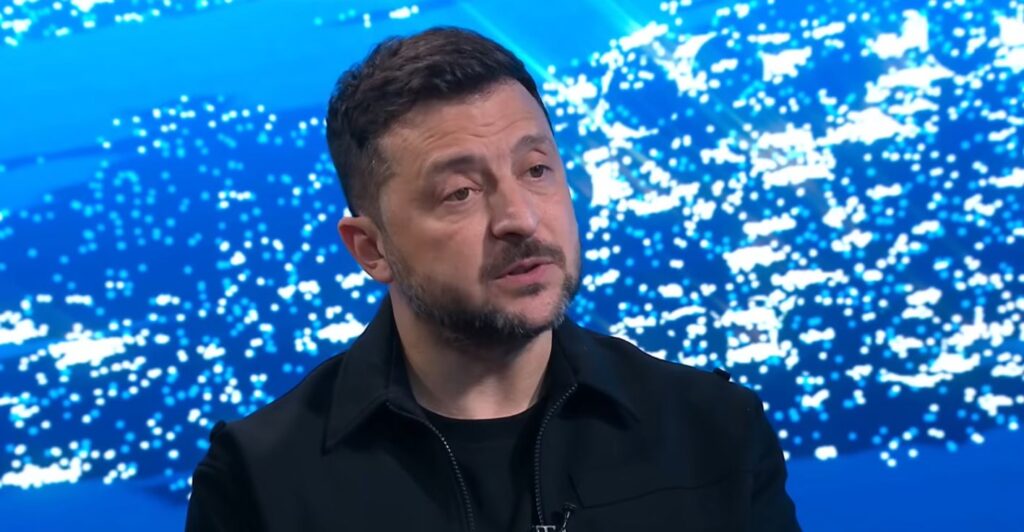
Freezing the war along today’s lines is “the quickest way” to peace, Ukraine’s leader told Sky News

freezing war along today's lines quickest way peace ukraine's leader told sky news · post ukrainian president volodymyr zelenskyy during interview london 7 2026 zele skynews ukraine reports

Ukrainian President Volodymyr Zelenskyy is willing to stop the war along the current line of contact and move to negotiations, he said in a Sky News interview. He presented the idea as the quickest route to a ceasefire, while rejecting any deal that hands Russia Ukrainian land. He also urged allies to close Ukraine's air defense gaps.

Russia has rejected every ceasefire Ukraine and the US have put forward and keeps refusing to halt an all-out war it has waged since its full-scale invasion in 2022. Whether a freeze ever takes hold rests with the Kremlin, whose demands still stretch far beyond the territory its army has managed to seize.

"The quickest way" to stop the fighting

Asked where he would freeze the lines if Russia agreed to a ceasefire, Zelenskyy said he is ready to accept today's positions

"Yes, it's the quickest way," he said. 

He insisted this is not a giveaway. He does not want to simply freeze the conflict, but to stop the war so it cannot restart "because of some crazy people." A freeze would let Ukraine save children's lives and bring soldiers home. Any ceasefire must be total and free of Russian games, watched by American and European partners. Only then would the sides sit down to end the war through diplomacy. A ceasefire, he added, is "the biggest compromise from our side."

Air defense comes first

The most urgent need from allies is air defense, Zelenskyy said. Ukraine faces a large deficit in anti-ballistic missiles, with US transfers slowed by the war in the Middle East. He again asked for more Patriot systems. Russia attacks daily, usually with around 300 long-range explosive drones. On the heaviest nights it launches 600 to 850 drones and dozens of missiles. 

Ukraine's interceptors now down most of them, but the gaps remain dangerous.
tymofii brik and kateryna kobernyk
Explore further

10% now, 23% after a ceasefire, 59% only at peace—Ukraine’s verdict on a wartime vote hasn’t moved all year

Ukraine's own arsenal

Ukraine has built more than 400 defense companies since the full-scale invasion, Zelenskyy said. Dozens rank among the world's strongest. They produce drones and missiles, some underground, and the country is close to its own ballistic missile. Ukraine can now share that expertise with allies and even build air defenses for Europe, he said. Kyiv aims to mass-produce drones on a scale few countries can match.

Bringing the war back to Russia

Ukraine's recent strikes on St. Petersburg and the Moscow region answer Russian attacks on Ukrainian energy, Zelenskyy said. St. Petersburg was hit twice last week. He wants Russians far from the front to feel the war they started. Russian President Vladimir Putin understands only "total pressure," he said. Sanctions on Russia's shadow fleet of sanctions-dodging tankers and its oil and gas exports hit hardest.

Putin, the letter, and a Kremlin go-between

Zelenskyy said Putin does not want to stop the war and is signaling he wants to win. Whether the fighting ends "100% depends on his decision," he said. His 4 June open letter, which Moscow called rude and rejected, was meant to force an answer and pierce a Russian public living in "some fantastic world." Russian businessman Roman Abramovich came to Kyiv to carry messages to Putin, Zelenskyy said. 

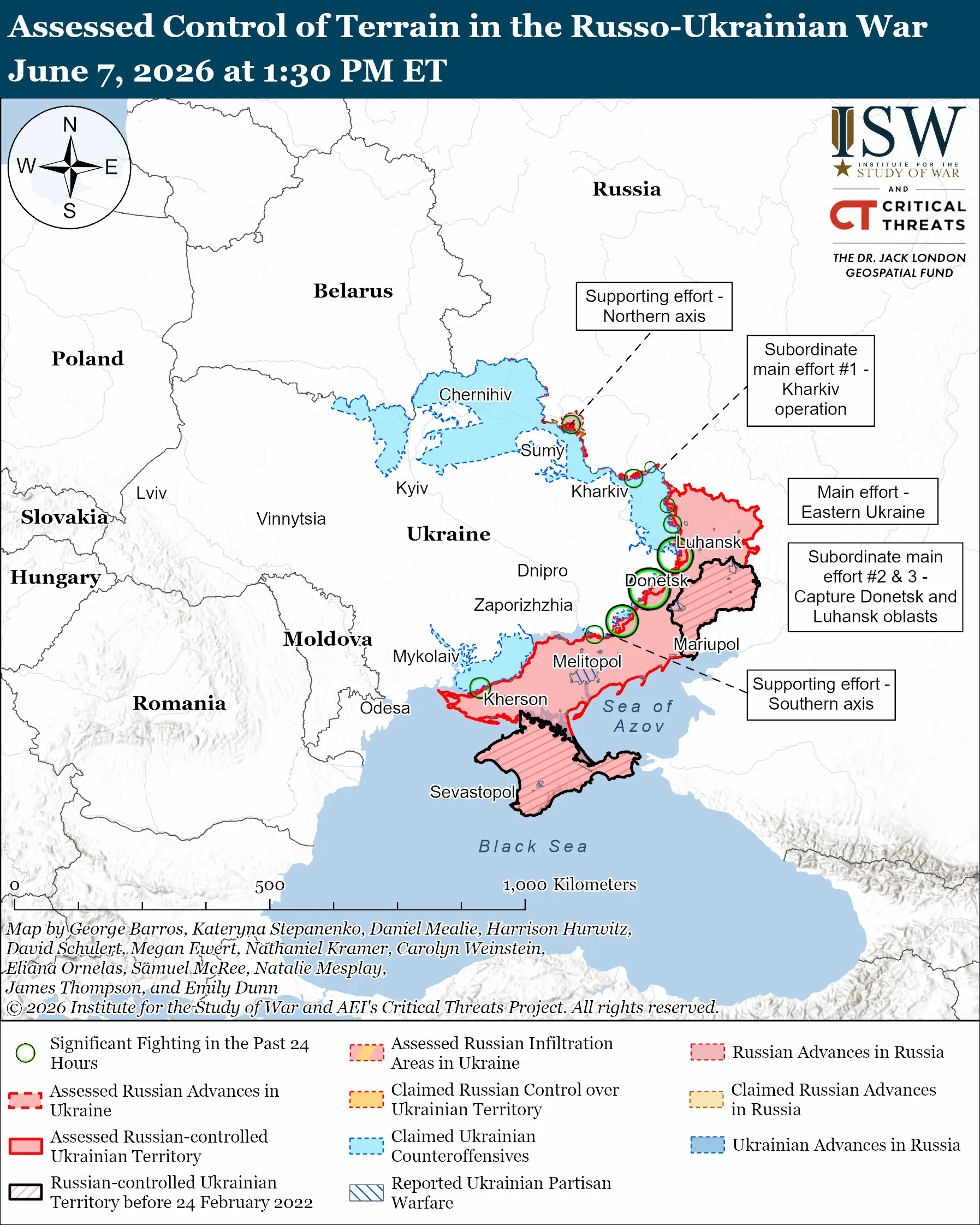
The so-called Donbas is a historic name for Ukraine’s two easternmost regions, Luhansk and Donetsk oblasts. Russia still failed to occupy a small part of Luhansk Oblast, as well as a significant swathe of Donetsk Oblast, which contains the so-called “Fortress Belt” that Russia has failed to break through despite its years-long ongoing offensive campaign. Map: ISW

His key message was on the Donbas: Ukraine will not leave its land, and compromises come only after a ceasefire. He is ready to meet in any format, but not in Moscow, Belarus, or Minsk. Leaders cannot decide "without us about us," he said, in a message aimed at Washington. Russia, by contrast, keeps insisting that Ukraine surrender all of the Donbas first.

  •  

Ukraine destroys Russian air defenses, military infrastructure in continuing deep-strike campaign, footage shows

Ukrainian drones continued their medium-range on western Russia, as well as Russian-occupied territories on June 7, damaging and destroying several military targets, Ukraine's Unmanned Systems Forces (USF) reported.

  •  

The US Military Is Ending Its “Climate Change Crap”

by Rhoda Wilson | The Exposé Hundreds of billions of dollars have been spent by the US military on unsuccessful initiatives such as the Navy’s Great Green Fleet programme. Now, it is coming to an end. Defence Secretary Pete Hegseth believes that climate change mitigation efforts have no measurable effect on global temperatures and do not improve military readiness.  “The Dept of Defence does not do climate change crap. We do training and warfighting,” he said. The new policy is to redirect funds to strengthen the US military.  “So begins a new age of realistic military policy and an end […]
  •  

The Japanese Defense Minister visited Indonesia and the Philippines

A significant event in the formation of both Japan’s postwar foreign policy and the situation in the critically important Southeast Asian subregion was Defense Minister Shinjiro Koizumi’s tour to Indonesia and the Philippines in early May. Japan is once again “moving southwest.” It should be emphasized once again that one of the central components of […]
  •  

Sanae Takaichi, Three Months after Her Triumph: Challenges amid Political Dominance

Following its landslide victory in the February 8 election, the Liberal Democratic Party (LDP), in close cooperation with the Ishin no Kai party, is promoting initiatives to increase Japan’s military capabilities. At first glance, nothing has changed after the Diet elections, and the LDP continues to dominate politics. While this is largely true, several details […]
  •  

A Security Pact in the Middle East, Behind America’s Back Part 2

The four most militarily powerful Muslim-majority nations—Saudi Arabia, Türkiye, Pakistan, and Egypt—are aligning based on strategic calculation rather than religious affinity. This development signals the emergence of a weaker America in the Middle East and a reordering of the great-power competition between the U.S. and China. Barry Buzan asserts that security is inherently regional, as […]
  •  
❌